
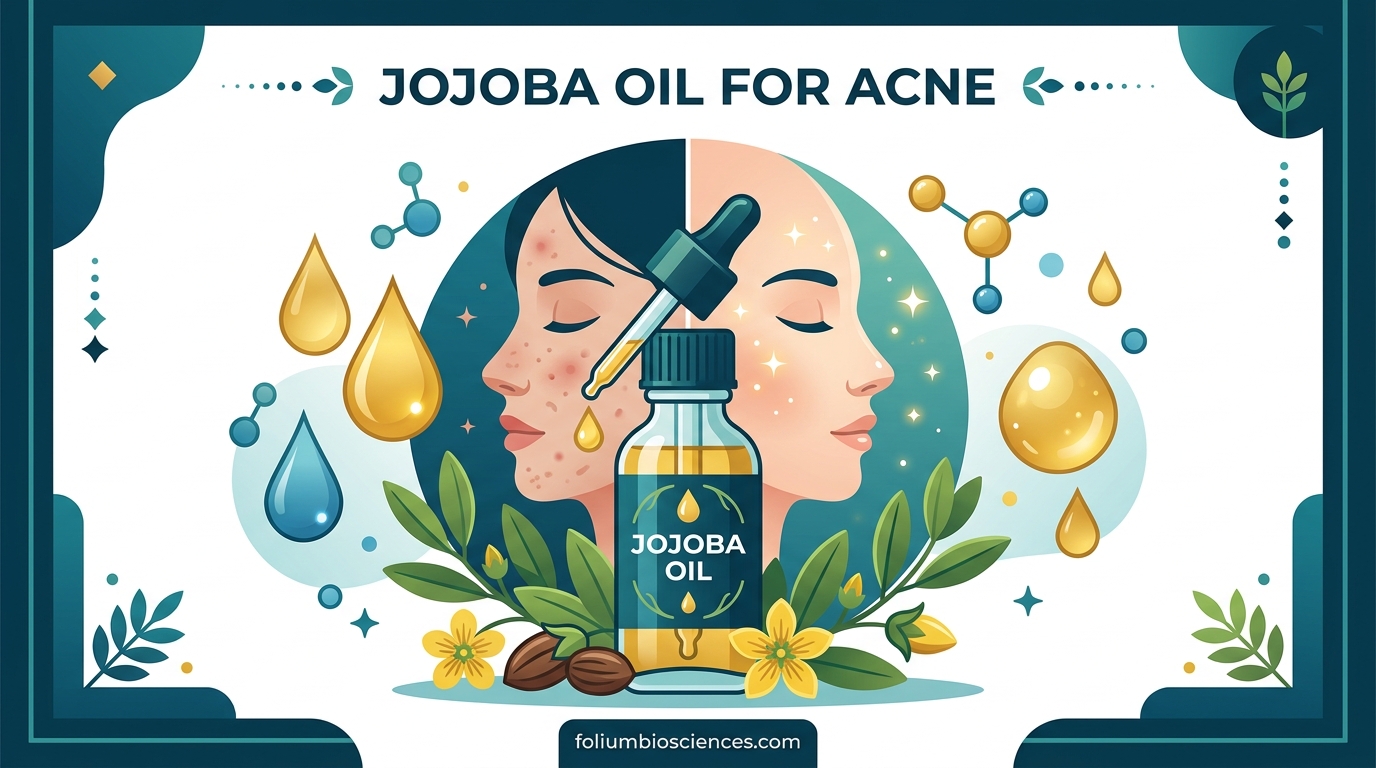
Putting oil on acne-prone skin sounds like a recipe for disaster. Most people with breakouts have spent years avoiding anything oily, assuming it will clog pores and trigger more pimples. Yet jojoba oil keeps showing up in skincare conversations as an exception to this rule. The question is: does jojoba oil actually help with acne, or is this just another skincare myth?
I spent weeks digging through clinical studies, dermatology research, and real user experiences to understand why this particular oil behaves differently. What I found surprised me. Jojoba oil is not actually an oil at all. Its unique chemical structure explains why it works for many people when other oils cause exactly the problems you are trying to avoid.
In this guide, you will learn the science behind why jojoba oil works for acne, how it compares to other facial oils on the comedogenic scale, and exactly how to use it without making your skin worse. We will also cover the fungal acne question that almost nobody talks about.
Table of Contents
What Is Jojoba Oil? (It Is Not Actually an Oil)
Here is the first thing that makes jojoba oil different: it is not technically an oil. Chemically speaking, jojoba oil is a wax ester extracted from the seeds of the Simmondsia chinensis shrub native to the southwestern United States and Mexico.
Most plant oils are triglycerides, which means they contain three fatty acids attached to a glycerol backbone. Jojoba breaks this pattern entirely. Its molecules are long chains of esters, not triglycerides. This difference matters more than you might think.
Your skin produces its own natural oil called sebum. Sebum is also a wax ester, not a triglyceride. This similarity is the key to understanding why jojoba oil behaves so differently from other plant oils on your skin. When you apply jojoba oil, your skin essentially recognizes it as something familiar rather than a foreign substance.
The Wax Ester vs Triglyceride Difference
Think of it this way: triglyceride oils like coconut oil, olive oil, and almond oil are built differently than your skin’s natural oil. Your skin cannot easily process them, so they sit on the surface or slip into pores and harden. This is what causes the clogged pores and breakouts you are trying to avoid.
Wax esters are structurally closer to sebum. They can penetrate the skin without triggering the same pore-clogging response. This is why jojoba oil is classified as non-comedogenic while many other plant oils are not.
Why Jojoba Oil Works When Other Oils Make Breakouts Worse
The acne-oil connection is not just about whether something is “oily.” It is about something called the comedogenic scale, a rating system that tells you how likely a substance is to clog pores. Understanding this scale explains why jojoba oil gets a pass when other oils do not.
The comedogenic scale runs from 0 to 5. A rating of 0 means the substance will not clog pores at all. A rating of 5 means it is highly likely to cause comedones, those small clogged pores that turn into blackheads and whiteheads. Your choice of oil matters because different oils land at very different points on this scale.
Comedogenic Scale Comparison: Jojoba Oil vs Other Oils
| Oil | Comedogenic Rating | Pore-Clogging Risk |
|---|---|---|
| Jojoba Oil | 2 | Low |
| Coconut Oil | 4 | High |
| Olive Oil | 2 | Low to Moderate |
| Almond Oil | 2 | Low |
| Sunflower Oil | 0 | Very Low |
| Safflower Oil | 0 | Very Low |
| Shea Butter | 0 | Very Low |
| Cocoa Butter | 4 | High |
Looking at this table, you might notice something interesting. Jojoba oil rates a 2 on the comedogenic scale, which puts it in the low-risk category. But coconut oil sits at a 4, meaning it has a much higher chance of clogging pores. This explains why some people swear by coconut oil for everything while others break out immediately.
However, the comedogenic rating is not the whole story. Jojoba oil’s rating of 2 is actually misleading because its wax ester structure means it behaves more like a 0 in practice. The scale was designed for traditional triglyceride oils, and jojoba’s unique chemistry does not fit neatly into the same framework.
The Sebum Mimicry Mechanism
Here is where things get interesting. When you apply jojoba oil to your skin, it does something other oils cannot do. It mimics sebum so closely that your skin cannot tell the difference. This triggers a biological response called negative feedback.
Your skin constantly monitors how much oil is present. When it detects adequate sebum on the surface, it signals the sebaceous glands to slow down production. Since jojoba oil looks and acts like sebum, your skin registers it as “enough oil already” and produces less of its own.
For people with oily, acne-prone skin, this is exactly what you want. Less sebum production means less oil to mix with dead skin cells and bacteria, which means fewer clogged pores and breakouts. This is the mechanism that makes jojoba oil potentially helpful for acne, not harmful.
Why Oleic Acid Content Matters
Another reason some oils cause problems while jojoba oil does not comes down to fatty acid composition. Many plant oils are high in oleic acid, a monounsaturated fatty acid that can disrupt the skin barrier.
High-oleic oils include olive oil, avocado oil, and almond oil. While these are healthy for eating, they are not always ideal for acne-prone skin. Oleic acid can compromise the skin barrier, leading to moisture loss and inflammation. This creates an environment where acne-causing bacteria thrive.
Jojoba oil has a different fatty acid profile. It contains a balance that does not disrupt the skin barrier in the same way. Some users on skincare forums have noted that switching from high-oleic oils to jojoba oil made a noticeable difference in their breakouts.
What Science Says About Jojoba Oil for Acne
Personal experiences are helpful, but clinical evidence matters too. Research on jojoba oil for acne has produced some promising results, though the body of studies is still growing.
A study published in the Journal of Dermatological Science tested jojoba oil clay masks on participants with acne. The participants applied the masks two to three times per week for six weeks. Results showed a 54% reduction in acne lesions. Inflammation also decreased significantly.
Another case study followed a participant with acne who used jojoba oil as part of their skincare routine. The researchers documented improvements in both inflammatory and non-inflammatory lesions. They attributed these changes to jojoba oil’s anti-inflammatory and antimicrobial properties.
Anti-Inflammatory Properties
Inflammation is a key driver of acne, especially the red, swollen, painful type. Jojoba oil contains compounds that help reduce this inflammatory response. One study found that jojoba oil reduced inflammation markers in skin cells.
This matters because treating inflammation is one of the most effective ways to improve acne appearance. Even if you cannot immediately stop new breakouts from forming, reducing inflammation makes existing acne look and feel better.
Antimicrobial and Antibacterial Effects
Cutibacterium acnes, formerly known as Propionibacterium acnes, is the bacteria primarily responsible for acne. Jojoba oil has demonstrated antibacterial activity against this organism in laboratory studies.
Research also shows that jojoba oil can inhibit the growth of Staphylococcus aureus and Pseudomonas aeruginosa, two other bacteria that can contribute to skin problems. This antimicrobial activity adds another layer of potential benefit for acne-prone skin.
Wound Healing Support
Acne lesions are essentially small wounds in the skin. When a pimple heals, the skin needs to repair itself without scarring. Studies suggest jojoba oil may support this wound healing process through its vitamin E content and moisturizing properties.
One study found that jojoba oil accelerated wound closure in experimental models. While more research is needed specifically on acne scars, this property suggests jojoba oil could help skin recover faster after breakouts.
How to Use Jojoba Oil for Acne
Knowing why jojoba oil works is only half the battle. You also need to know how to use it correctly. Application method matters almost as much as the ingredient itself.
Method 1: Oil Cleansing
Oil cleansing uses the principle that oil dissolves oil. Your skin produces sebum that mixes with dirt, sunscreen, and makeup. Water-based cleansers struggle to remove this oil-based grime. Oil cleansing solves this by using jojoba oil to dissolve and lift away excess sebum.
Step 1: Apply a small amount of jojoba oil to dry skin. Use about a teaspoon for your entire face.
Step 2: Massage gently for 30 to 60 seconds. Focus on areas with more oil production, like the T-zone.
Step 3: Wet a clean washcloth with warm water and place it over your face for 10 to 15 seconds. The steam helps open pores.
Step 4: Gently wipe away the oil. Rinse the cloth and repeat if needed.
Step 5: Follow with a gentle water-based cleanser if desired. This is called double cleansing.
Method 2: Moisturizer Application
Jojoba oil can replace or supplement your regular moisturizer. Because it mimics sebum, it can provide hydration without the heavy feeling of some creams.
Step 1: Cleanse your face and pat dry.
Step 2: Apply any water-based serums first. Oil should go on last to seal everything in.
Step 3: Place 2 to 4 drops of jojoba oil in your palm.
Step 4: Rub your hands together to warm the oil slightly.
Step 5: Press the oil into your skin rather than rubbing it. Focus on areas that need moisture.
Step 6: Allow 5 to 10 minutes before applying sunscreen or makeup.
Method 3: Clay Mask Mixing
The clinical study that showed 54% lesion reduction used jojoba oil mixed with clay masks. This method combines the oil-balancing effects of jojoba with the pore-clearing properties of clay.
Step 1: Mix 1 tablespoon of bentonite or kaolin clay with enough jojoba oil to form a paste.
Step 2: Apply to clean skin, avoiding the eye area.
Step 3: Leave on for 10 to 15 minutes. Do not let it dry completely.
Step 4: Rinse with lukewarm water and moisturize.
Step 5: Use 2 to 3 times per week for best results.
Method 4: Spot Treatment
For individual pimples, jojoba oil can be applied directly as a spot treatment. Its anti-inflammatory properties may help reduce redness and swelling.
Step 1: Apply a tiny amount of jojoba oil directly to the pimple using a cotton swab.
Step 2: Leave overnight.
Step 3: Rinse in the morning and apply sunscreen.
Always Patch Test First
Before using jojoba oil on your entire face, test it on a small area first. Apply a small amount to the inside of your wrist or behind your ear. Wait 24 hours. If you notice redness, itching, or irritation, do not use it on your face.
Even non-comedogenic ingredients can cause allergic reactions in some people. A patch test takes minimal time and could save you from a face full of irritation.
Jojoba Oil and Fungal Acne (Malassezia)
If you have spent any time on skincare forums, you have probably seen discussions about fungal acne. This is not actually acne at all, but rather an overgrowth of yeast called Malassezia that lives on everyone’s skin. When Malassezia grows out of control, it causes small, itchy bumps that look like acne but do not respond to traditional acne treatments.
Here is the problem: Malassezia feeds on fatty acids with carbon chain lengths between 11 and 24. Many plant oils contain these exact fatty acids, which means they can make fungal acne worse. This is why people with fungal acne often react badly to coconut oil, olive oil, and other common skincare oils.
Is Jojoba Oil Safe for Malassezia?
The good news is that jojoba oil appears to be safe for fungal acne. Remember that jojoba oil is a wax ester, not a triglyceride. Its molecular structure is different from the oils that feed Malassezia.
Forum users with fungal acne have reported positive experiences with jojoba oil. One user noted: “Jojoba oil has been a life saver. For people with sensitive skin, fungal acne, mild rosacea I truly cannot recommend this simple oil enough.”
The wax ester structure means Malassezia cannot easily metabolize jojoba oil for growth. This makes it one of the few oils that people with fungal acne can typically use without worsening their condition.
Other Fungal Acne-Safe Options
If you are dealing with fungal acne, squalane oil is another safe option. Like jojoba oil, squalane does not contain the fatty acids that feed Malassezia. Some people find success alternating between jojoba oil and squalane depending on their skin’s needs.
MCT oil (fractionated coconut oil) is also considered safe for fungal acne because the problematic fatty acids have been removed. However, regular coconut oil should be avoided.
Safety, Side Effects, and What to Expect
Jojoba oil is generally considered safe for topical use. However, that does not mean everyone will have a positive experience. Understanding what to expect can help you distinguish between normal adjustment periods and signs that jojoba oil is not right for your skin.
Purging vs Breaking Out
When you start using any new acne treatment, you might experience what is called purging. This happens when the treatment speeds up skin cell turnover, bringing underlying clogged pores to the surface faster than usual. Purging typically looks like small whiteheads in areas where you usually break out.
Breaking out from a product is different. If you develop new acne in areas where you do not usually get pimples, or if you develop cystic acne or painful lesions, that is likely a reaction to the product itself.
Jojoba oil does not typically cause purging because it does not increase cell turnover like retinoids or acids do. If you break out after starting jojoba oil, it is more likely that your skin is reacting to the oil itself.
How Long to Test Before Deciding
Forum discussions reveal mixed experiences with jojoba oil timelines. Some users see improvement within days. Others need several weeks to notice changes. A common recommendation is to try jojoba oil for at least 4 to 6 weeks before deciding whether it works for you.
One user reported: “I’ve been using it for a month now and my breakouts have not gotten any better or worse.” This suggests jojoba oil may not be a miracle cure for everyone, but it also does not automatically make acne worse.
When Dermatologists Disapprove
Some users have reported that their dermatologists do not recommend jojoba oil. This may be because dermatologists often prefer evidence-based treatments with more robust clinical backing, like benzoyl peroxide, salicylic acid, or prescription retinoids.
However, dermatologist disapproval does not necessarily mean jojoba oil is harmful. It may simply mean there are other treatments with stronger evidence behind them. If you are under dermatological care for severe acne, discuss jojoba oil with your provider before adding it to your routine.
Signs of Allergic Reaction
While rare, allergic reactions to jojoba oil can occur. Watch for these signs:
- Severe redness or rash
- Swelling
- Intense itching or burning
- Hives or welts
- Difficulty breathing (seek immediate medical attention)
If you experience any of these symptoms, stop using jojoba oil immediately and consult a healthcare provider.
Can You Use Jojoba Oil on Popped Pimples?
One question that comes up frequently is whether jojoba oil is safe to apply to popped pimples or open wounds. The answer is generally yes, with some caveats.
Jojoba oil’s wound-healing properties and antimicrobial effects may actually help minor skin injuries heal. Its vitamin E content provides antioxidant protection, and its moisturizing properties keep the area from drying out and scabbing excessively.
However, you should only apply jojoba oil to clean, gently drained pimples. Do not apply it to deep, bleeding wounds or areas with active infection. If you have picked a pimple and created an open wound, clean the area first, then apply a small amount of jojoba oil to support healing.
What to Look for When Buying Jojoba Oil
Not all jojoba oil is created equal. Quality varies significantly between brands, and these differences can affect how your skin responds.
Unrefined vs Refined
Unrefined jojoba oil is cold-pressed and retains more of its natural compounds, including vitamins and antioxidants. It has a golden color and a slightly nutty scent. Many people prefer unrefined oil for skincare because it contains more of the beneficial compounds.
Refined jojoba oil is processed to remove color and scent. It is clear and odorless. Some people prefer refined oil because it has a lighter feel and no smell. However, the refining process may remove some beneficial compounds along with the color and odor.
For acne-prone skin, either type can work. Unrefined may offer more antioxidant benefits, but refined may feel less heavy. Choose based on your personal preference and how your skin responds.
Organic Certification
Organic jojoba oil is grown without synthetic pesticides or fertilizers. While this is primarily an environmental consideration, some people prefer organic products to minimize exposure to potential contaminants.
Organic certification is not essential for effectiveness, but it does indicate higher production standards. If you are concerned about purity, look for USDA Organic or similar certifications.
Packaging Matters
Jojoba oil should be packaged in dark glass bottles to protect it from light degradation. Clear bottles or plastic containers may allow the oil to oxidize faster, reducing its shelf life and effectiveness.
Look for oils in amber or cobalt blue glass bottles with airtight caps. Store your jojoba oil in a cool, dark place to maintain freshness.
100% Pure vs Blends
Some products labeled as “jojoba oil” are actually blends containing other ingredients. For acne-prone skin, pure jojoba oil is usually the safest choice. You want to know exactly what you are putting on your skin.
Check the ingredient list. Pure jojoba oil should list only one ingredient: Simmondsia chinensis (jojoba) seed oil. Avoid products with added fragrances, essential oils, or other plant oils if you are trying to isolate how jojoba oil affects your skin.
Frequently Asked Questions
Does jojoba oil actually help with acne?
Yes, research suggests jojoba oil can help with acne. Clinical studies show it reduces inflammation and acne lesions. Its wax ester structure mimics sebum, which helps regulate oil production. It also has antibacterial properties against acne-causing bacteria. However, results vary by individual, and jojoba oil works best as part of a complete acne treatment routine.
Is jojoba oil ok for malassezia?
Yes, jojoba oil is generally considered safe for malassezia (fungal acne). Unlike triglyceride oils that contain fatty acids Malassezia feeds on, jojoba oil is a wax ester with a different molecular structure. This makes it difficult for the yeast to metabolize. Many people with fungal acne successfully use jojoba oil without worsening their condition.
Is jojoba oil an antifungal?
Jojoba oil has demonstrated some antifungal properties in laboratory studies, though it is not primarily classified as an antifungal treatment. Research shows it can inhibit the growth of certain fungi and bacteria. However, for confirmed fungal acne or skin infections, jojoba oil should complement rather than replace medical antifungal treatments prescribed by a healthcare provider.
Can I put jojoba oil on a popped pimple?
Yes, you can apply jojoba oil to a gently drained, clean pimple. Its wound-healing properties, antimicrobial effects, and vitamin E content may support healing and reduce scarring. Clean the area first, then apply a small amount of jojoba oil. Do not use it on deep, bleeding wounds or areas with active infection. For significant wounds or signs of infection, consult a healthcare provider.
Will jojoba oil cause breakouts?
Jojoba oil is rated as non-comedogenic with a low pore-clogging risk. Most people do not experience breakouts from jojoba oil. However, individual reactions vary. Some people may be sensitive to any topical product. Always patch test first. If you experience new breakouts in unusual areas or worsening acne after several weeks, discontinue use. What causes breakouts in one person may not affect another.
Do dermatologists recommend jojoba oil?
Dermatologist opinions on jojoba oil vary. Some recommend it as a gentle, non-comedogenic moisturizer for acne-prone skin. Others prefer treatments with more robust clinical evidence, such as benzoyl peroxide, salicylic acid, or prescription retinoids. Jojoba oil is generally considered safe but is typically viewed as a complementary option rather than a primary acne treatment. Consult your dermatologist for personalized advice.
Conclusion
Jojoba oil for acne works differently than other oils because it is not actually an oil at all. Its unique wax ester structure mirrors human sebum, allowing it to balance oil production rather than clog pores. The science supports its anti-inflammatory, antimicrobial, and wound-healing properties.
Compared to other plant oils, jojoba oil sits low on the comedogenic scale and is generally safe even for those with fungal acne concerns. It is one of the few oils that can legitimately claim to help rather than harm acne-prone skin.
That said, jojoba oil is not a miracle cure. It works best as part of a complete skincare routine that addresses all factors contributing to acne. Results vary by individual, and some people may find it does not work for their specific skin type.
If you have been avoiding all oils because of acne, jojoba oil might be worth testing. Start with a patch test, choose a quality unrefined or refined product, and give it 4 to 6 weeks before making your final assessment. Your skin might surprise you.