
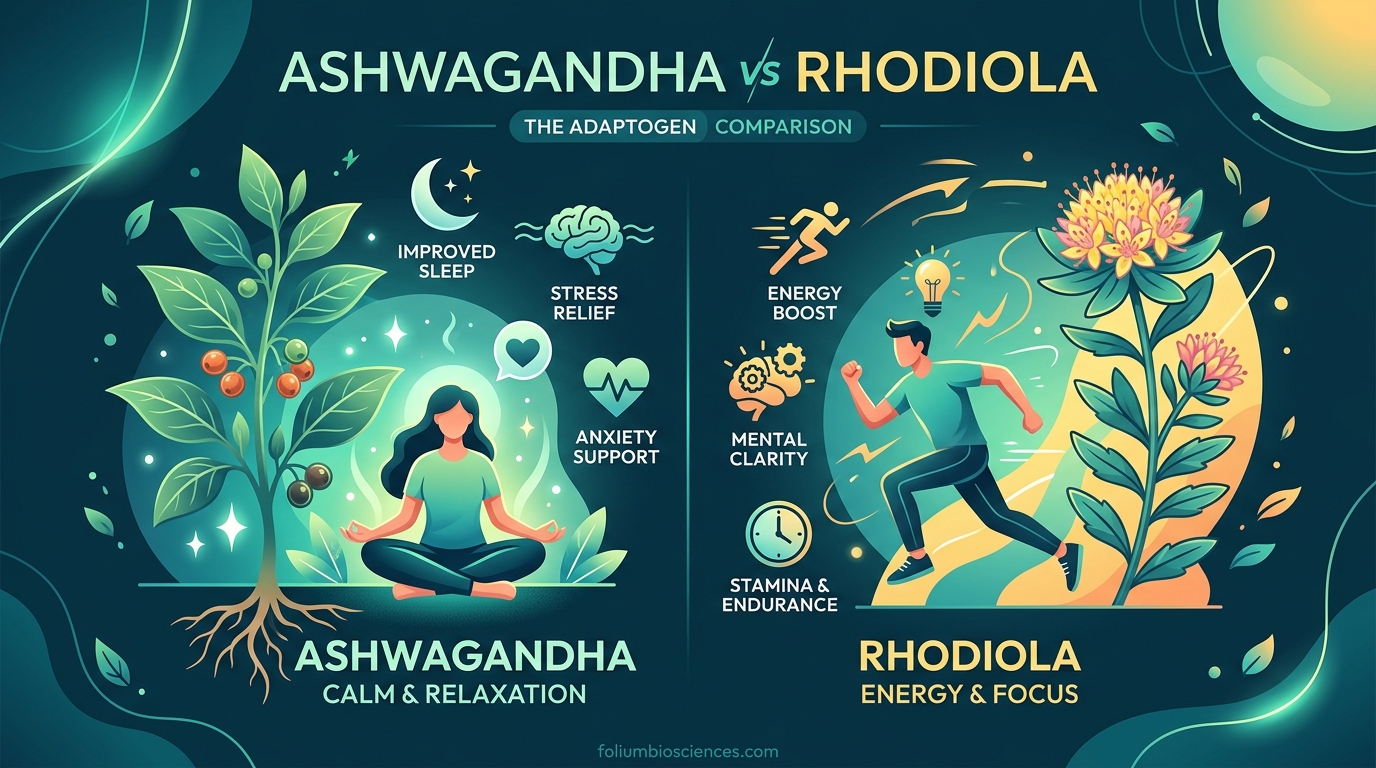
A comprehensive guide to choosing the right adaptogen based on your unique stress pattern, with comparison tables, personalization framework, and clinical evidence.
Introduction: Why Your Stress Type Matters
Stress is not a one-size-fits-all experience. The person drowning in deadlines experiences stress fundamentally differently than the athlete recovering from intense training, the student facing finals week, or the caregiver managing chronic burnout. Yet most adaptogen articles treat stress as generic, suggesting one herb for “stress” without distinguishing between the acute, short-term pressure of a work presentation and the grinding, cortisol-flooded exhaustion of months-long overwhelm.
This matters because ashwagandha vs rhodiola are not interchangeable. They work through different mechanisms, address different physiological pathways, and produce different effects that either align with or contradict your specific stress type. Choose incorrectly, and you may waste money on supplements that miss the mark entirely. Choose wisely, and you gain a powerful tool that works with your body’s natural stress response rather than against it.
Ashwagandha (Withania somnifera) and Rhodiola rosea represent two distinct approaches to stress management in the adaptogen category. Ashwagandha, a cornerstone of Ayurvedic medicine for over 3,000 years, excels at modulating the hypothalamic-pituitary-adrenal (HPA) axis and reducing cortisol levels over time. Rhodiola, native to the Arctic regions of Europe and Asia, takes a different path, influencing monoamine neurotransmitters and cellular energy production for more immediate effects.
In this comprehensive guide, we dive deep into the science behind both adaptogens, compare them across all the dimensions that matter, and most importantly, provide a personalization framework that helps you match your specific stress type to the right adaptogen. By the end, you’ll know exactly which herb fits your situation, how to dose it, when to take it, and whether combining both makes sense for you.
Key Takeaways
- Ashwagandha excels for chronic stress, anxiety, and sleep problems with effects building over 6-8 weeks
- Rhodiola works faster (days) and is better for acute stress, mental fatigue, and performance
- The two herbs work through different mechanisms and can be complementary
- Neither is universally “better” – the right choice depends entirely on your stress type
- This guide includes a personalization framework to match you to the ideal adaptogen
What Is Rhodiola Rosea?
Rhodiola rosea, also known as golden root, Arctic root, or roseroot, is a succulent plant that thrives in the cold, mountainous regions of the Arctic, as well as parts of Asia and Europe. Traditional use spans Scandinavian countries, Russia, and Mongolia, where it was employed to combat fatigue, improve mental performance, and survive harsh physical conditions. The historical context matters: this plant evolved to help organisms function under stressful, resource-scarce environments.
The primary active compounds in rhodiola are rosavins (including rosavin, rosin, and rosarin) and salidroside. These compounds are responsible for rhodiola’s adaptogenic effects, though they work through mechanisms distinct from ashwagandha’s approach. Quality matters significantly here: research suggests that many commercial rhodiola products contain inadequate levels of these active compounds, particularly salidroside, which is often present in insufficient concentrations in standardized extracts.
The mechanism of rhodiola centers on its effects on monoamine neurotransmitters including serotonin, dopamine, and norepinephrine. Rhodiola appears to inhibit the enzymes that break down these neurotransmitters, increasing their availability in the brain. Additionally, rhodiola influences beta-endorphin release and supports mitochondrial function, helping cells produce energy more efficiently under stress.
Unlike many adaptogens that work primarily through the HPA axis and cortisol modulation, rhodiola’s strength lies in its ability to enhance mental performance during stress without sedation. This makes it particularly suited for situations requiring alertness, focus, and sustained mental effort. The energized yet focused state it produces has been described by users as “calm energy” rather than the jitteriness associated with stimulants.
Clinical research on rhodiola is promising though less extensive than ashwagandha. Studies have examined its effects on fatigue, cognitive function, and stress response, with several randomized controlled trials showing benefits for mental performance and burnout symptoms. A 2011 study published in Phytomedicine found that rhodiola significantly reduced fatigue and improved attention in physicians during night shifts. However, the research base would benefit from larger, longer-term studies.
What Is Ashwagandha?
Ashwagandha (Withania somnifera) occupies a foundational position in Ayurveda, one of the world’s oldest medical systems originating in India over 3,000 years ago. The Sanskrit name “ashwagandha” translates to “smell of a horse,” referring both to the herb’s distinct odor and the traditional belief that it imparts the strength and vitality of a horse. This ancient wisdom has increasingly been validated by modern scientific investigation, with dozens of clinical trials examining its effects on stress, cognition, and overall well-being.
The primary active compounds in ashwagandha are called withanolides, a group of steroid-like lactones found predominantly in the root. KSM-66 and Sensoril are two well-researched standardized extracts that provide specific withanolide concentrations. The root’s composition can vary significantly between products, making extract standardization crucial for consistent effects. Look for products specifying withanolide content, typically 1.5-5% for KSM-66 and 10% for Sensoril.
Ashwagandha’s mechanism centers on cortisol modulation and HPA axis support. The HPA axis is your body’s central stress response system: when you encounter stress, the hypothalamus releases corticotropin-releasing hormone (CRH), which signals the pituitary gland to release adrenocorticotropic hormone (ACTH), which then prompts the adrenal glands to release cortisol. Chronic stress can dysregulate this system, leading to consistently elevated cortisol that damages health over time.
Research demonstrates that ashwagandha helps normalize cortisol levels rather than simply lowering them. A 2019 randomized, double-blind, placebo-controlled study published in the Journal of Alternative and Complementary Medicine found that participants taking ashwagandha experienced significant reductions in cortisol levels compared to placebo, along with improvements in perceived stress, anxiety, and sleep quality. A 2021 systematic review in the Journal of Ethnopharmacology confirmed these findings, reporting a pooled cortisol reduction of approximately 27.9% after 60 days of supplementation.
The calming, restorative effects of ashwagandha develop over weeks rather than days. Most users require 4-8 weeks of consistent supplementation before experiencing full benefits. This is not a “take today, feel better today” supplement. Instead, it works gradually to recalibrate your stress response system, building resilience against future stressors rather than providing immediate symptomatic relief.
Key Differences Overview
Understanding the fundamental differences between these two adaptogens is essential for making an informed choice. While both are classified as adaptogens and both help the body manage stress, their approaches differ substantially. The following comparison table highlights the key distinctions across all major dimensions.
| Dimension | Rhodiola Rosea | Ashwagandha |
|---|---|---|
| Primary Use | Acute stress, mental fatigue, performance | Chronic stress, anxiety, sleep |
| Origin | Arctic regions (Siberia, Scandinavia) | India, Middle East, Africa |
| Active Compounds | Rosavins, Salidroside | Withanolides |
| Primary Mechanism | Monoamine neurotransmitter modulation | Cortisol reduction, HPA axis support |
| Onset of Effects | 2-5 days | 2-4 weeks initial, 6-8 weeks full |
| Energy Effect | Energizing, alerting | Calming, restorative |
| Best For | Mental fatigue, deadlines, shift work | Chronic anxiety, burnout, insomnia |
| Sleep Impact | May interfere if taken late | Promotes relaxation, improves sleep |
| Standard Dosage | 200-400mg daily | 300-600mg daily (KSM-66) |
| Cycling Recommended | Yes (8-12 weeks on, 4 weeks off) | Can be taken year-round |
| Notable Research | Fatigue, cognitive performance | Cortisol reduction, anxiety, sleep |
| Drug Interactions | SSRIs, MAOIs (theoretical) | Thyroid medications, immunosuppressants |
This comparison reveals the core truth about ashwagandha vs rhodiola: they are not competing options but rather complementary tools suited to different situations. The choice between them should be driven by your specific stress type, timeline, and goals.
Effects on Stress and Anxiety
Both rhodiola and ashwagandha demonstrate anti-stress and anxiolytic (anxiety-reducing) properties, but they achieve these effects through different pathways and on different timescales. Understanding these differences is crucial for selecting the right adaptogen for your stress pattern.
Ashwagandha for Stress and Anxiety
Ashwagandha’s stress-fighting capabilities center on cortisol modulation. When you experience chronic stress, your HPA axis becomes dysregulated, often resulting in elevated baseline cortisol levels. This chronic cortisol elevation contributes to anxiety, sleep disruption, weight gain, cognitive impairment, and a weakened immune system. Ashwagandha helps restore HPA axis balance, normalizing cortisol production rather than simply suppressing it.
Clinical evidence for ashwagandha’s anti-anxiety effects is robust. Beyond the cortisol studies mentioned earlier, a 2019 randomized controlled trial published in the Journal of Clinical Psychiatry found that ashwagandha extract (600mg daily) significantly reduced anxiety scores compared to placebo in adults with generalized anxiety disorder. The study noted improvements emerging by week 4 and continuing through the 8-week intervention period.
For chronic stress characterized by persistent worry, feeling overwhelmed, physical tension, and sleep disruption, ashwagandha represents the more targeted choice. Its effects build gradually, making it unsuitable for acute stress situations, but providing sustainable, long-term stress resilience when used consistently.
Rhodiola for Stress and Anxiety
Rhodiola approaches stress differently, primarily through its effects on monoamine neurotransmitters. By inhibiting enzymes that break down serotonin, dopamine, and norepinephrine, rhodiola increases the availability of these mood-supporting chemicals in the brain. This mechanism is similar in concept to how certain antidepressants work, though rhodiola’s effect is considerably milder.
For acute stress situations – a looming deadline, an important presentation, a challenging exam – rhodiola can provide more immediate support. Users often report feeling calmer under pressure without the mental fog that sometimes accompanies acute stress. The energizing quality of rhodiola means you’re not trading alertness for calmness; instead, you get a sense of composed readiness.
However, rhodiola’s energizing properties can be a double-edged sword for anxiety sufferers. While it helps with anxiety driven by stress and fatigue, those with underlying anxiety disorders characterized by hyperarousal may find rhodiola exacerbates their symptoms. The same neurotransmitter effects that improve mood and focus can, in sensitive individuals, increase restlessness and sleep difficulties.
Which Is Better for Your Stress Type?
For chronic stress with anxiety: Ashwagandha is the clear choice. Its cortisol-modulating effects address the physiological root of chronic stress, and its calming properties provide relief without sedation or cognitive impairment.
For acute situational stress: Rhodiola often works better. Its faster onset and energizing effects help you perform under pressure without the mental fog of stress.
For anxiety accompanied by burnout and fatigue: The picture becomes more complex. If anxiety is the primary concern, start with ashwagandha. If fatigue dominates the picture, rhodiola may provide more immediate relief, though it could worsen sleep-related anxiety.
Energy and Fatigue Comparison
Energy and fatigue represent one of the clearest areas of differentiation between rhodiola and ashwagandha. This is where many people make the mistake of assuming both will provide similar effects, when in reality, they produce fundamentally different energetic profiles.
Rhodiola: energizing Without the Crash
Rhodiola’s effects on energy are notable precisely because they come without the crash associated with stimulants. Caffeine, for example, provides energy by flooding your system with adrenaline and blocking adenosine receptors, but when it wears off, you experience a rebound fatigue. Rhodiola works differently, supporting cellular energy production and neurotransmitter balance in ways that feel more sustainable.
The energy from rhodiola is often described as “calm alertness” or “focused energy.” Users report being able to work longer without the jitters or scattered thinking that can accompany stimulants. This makes rhodiola particularly valuable for mental fatigue, extended work sessions, shift workers, and anyone facing demanding cognitive tasks.
Research supports these observations. A double-blind, placebo-controlled study examining rhodiola’s effects on mental fatigue found significant improvements in cognitive performance, particularly for tasks requiring sustained attention and concentration. The participants taking rhodiola maintained performance levels while those taking placebo showed the expected fatigue-related decline over the study period.
Ashwagandha: Restorative Energy
Ashwagandha does not produce immediate energy. Instead, it supports what might be called “restorative energy” – the kind that comes from actually recovering from stress rather than pushing through it. By modulating cortisol and supporting sleep quality, ashwagandha helps you wake feeling more refreshed, maintain steadier energy throughout the day, and avoid the afternoon energy crashes common in chronic stress.
For people whose fatigue stems from chronic stress, poor sleep, or HPA axis dysregulation, ashwagandha addresses the root cause rather than masking symptoms. The energy improvements from ashwagandha typically emerge alongside reductions in anxiety and improvements in sleep, suggesting they result from overall stress system normalization rather than direct stimulation.
Practical Implications
If you’re facing a specific demanding period – final exams, a critical work deadline, a demanding athletic event – rhodiola may provide more immediate support for getting through it. Take it in the morning or early afternoon, and you may find yourself maintaining mental clarity and energy late into the task.
If you’re dealing with persistent fatigue that doesn’t seem to lift, poor sleep despite adequate time, or the kind of exhaustion that no amount of rest seems to fix, ashwagandha’s restorative approach targets the underlying dysregulation causing your fatigue. Give it 4-8 weeks to work, and you may find your energy returning as your stress system normalizes.
Sleep Impact
Sleep quality and stress are intimately connected. Chronic poor sleep elevates cortisol and dysregulates the HPA axis, creating a vicious cycle where stress causes poor sleep, which causes more stress. Both adaptogens interact with this cycle, but in opposite directions.
Ashwagandha’s Sleep-Supporting Properties
Ashwagandha demonstrates clear sleep-improving effects, making it particularly valuable for the estimated 60% of adults who report poor sleep quality during periods of high stress. The mechanism appears to involve both cortisol reduction and direct sleep-promoting compounds within the withanolide family.
Multiple studies have documented ashwagandha’s sleep benefits. A 2019 study in PLOS ONE found that participants taking ashwagandha showed significant improvements in sleep quality and morning alertness compared to placebo. The improvements were more pronounced in those with initially poor sleep quality, suggesting ashwagandha helps normalize sleep rather than simply acting as a sedative.
For individuals experiencing stress-induced insomnia – lying awake with racing thoughts, waking at 3 AM unable to return to sleep, feeling exhausted but unable to relax into rest – ashwagandha represents the more appropriate adaptogen choice. Its calming properties support the transition to sleep, and its cortisol-modulating effects address the physiological arousal that keeps stress survivors awake.
Rhodiola’s Potential Sleep Interference
Rhodiola’s energizing properties, while valuable during waking hours, can interfere with sleep if mistimed. Taking rhodiola too late in the day may result in difficulty falling asleep, restless sleep, or vivid dreams. This is not universal – some users report no sleep issues with evening rhodiola – but it is common enough that most practitioners recommend taking rhodiola only in the morning and early afternoon.
The stimulating effect of rhodiola stems from its neurotransmitter effects. By increasing norepinephrine and dopamine availability, it creates a state of alertness that can be counterproductive for sleep. For this reason, individuals with pre-existing insomnia, those who are particularly sensitive to stimulants, or anyone who needs to be asleep by a certain time should approach rhodiola with caution.
Making the Choice Based on Sleep
If sleep is your primary concern alongside stress, ashwagandha is clearly the better choice. Its sleep-supporting properties are well-documented, and it can be taken in the evening without interfering with rest.
If you sleep fine but struggle with daytime fatigue, rhodiola’s energizing effects can be valuable. Just be sure to take it early enough in the day that it doesn’t become a sleep problem.
If you experience both sleep disruption and daytime fatigue, ashwagandha should be your foundation since it addresses both. Some users then add a small morning dose of rhodiola for additional daytime energy, though this combination requires careful timing and individual titration.
Cognitive Performance
Cognitive function encompasses multiple dimensions: attention, memory, processing speed, executive function, and mental flexibility. Both adaptogens influence cognition, though through different mechanisms and with different emphasis.
Rhodiola’s Cognitive Benefits
Rhodiola’s most robust cognitive effects involve attention and mental performance under stress. Studies examining rhodiola’s cognitive effects consistently show improvements in tasks requiring sustained attention, selective attention, and working memory – particularly under conditions of fatigue or stress.
A study published in Phytomedicine examined rhodiola’s effects on mental fatigue during cognitively demanding tasks. Physicians working night shifts showed significant improvements in cognitive performance when taking rhodiola compared to placebo. The benefits appeared within days of starting supplementation and were maintained throughout the study period.
The mechanism involves supporting neurotransmitter availability – particularly dopamine and norepinephrine – in the prefrontal cortex, the brain region responsible for executive function and sustained attention. This explains why users often report improved focus and mental clarity rather than the scattered stimulation of caffeine.
Ashwagandha’s Cognitive Effects
Ashwagandha’s cognitive benefits are more indirect but equally important for long-term brain health. By reducing cortisol, ashwagandha protects the hippocampus – the brain region critical for memory formation – from cortisol’s potentially damaging effects. Chronic elevated cortisol is associated with hippocampal atrophy and memory impairment, suggesting that ashwagandha’s cortisol-modulating effects may support cognitive longevity.
Studies also suggest ashwagandha may have direct neuroprotective properties. Research indicates that withanolides support the growth of nerve processes and protect against oxidative damage in the brain. While this research is preliminary, it suggests potential long-term cognitive benefits beyond acute stress reduction.
For memory consolidation and protection against stress-related cognitive decline, ashwagandha appears beneficial. For acute mental performance and focus, rhodiola shows more immediate effects.
Practical Cognitive Enhancement
Students preparing for exams might consider rhodiola for pre-exam preparation and test-taking focus. The ability to sustain attention during long study sessions and maintain clarity under exam pressure makes rhodiola a popular choice in academic contexts.
Professionals managing chronic workload stress may benefit more from ashwagandha’s protection against cortisol-related cognitive impairment. The gradual improvement in sleep quality that accompanies ashwagandha supplementation also supports memory consolidation and daytime cognitive function.
Dosage and Timing Recommendations
Getting dosage and timing right is essential for both adaptogens. Unlike many supplements where “more is better,” adaptogens often have biphasic dose-response curves, meaning optimal effects occur within a specific dose range.
Rhodiola Dosage and Timing
The typical effective dose of rhodiola rosea ranges from 200-400mg daily of a standardized extract containing at least 3% rosavins and 1% salidroside. Some products standardize to higher concentrations, which may allow for lower doses. Look for extracts specifying their rosavin and salidroside content rather than just the total weight of extract.
Rhodiola works quickly – effects often become noticeable within 2-5 days. This rapid onset makes it easier to assess whether a particular product works for you compared to ashwagandha’s weeks-long build-up period.
Timing for rhodiola is critical: Take it in the morning or early afternoon. Taking rhodiola too late in the day (generally after 2-3 PM for most people) can interfere with sleep. Some users who are particularly sensitive find they need to take it even earlier. Starting with a single morning dose is wise, and you can assess whether a second early-afternoon dose works for you.
Cycling rhodiola is generally recommended. The standard protocol involves taking rhodiola for 8-12 weeks, then cycling off for 4 weeks before resuming. This cycling may help prevent tolerance and maintain sensitivity to its effects. Some practitioners suggest cycling is less necessary at lower doses, while others recommend it universally.
Ashwagandha Dosage and Timing
Ashwagandha dosing depends heavily on the extract type. KSM-66 (a popular full-spectrum extract) is typically dosed at 300-600mg daily, while Sensoril (a more concentrated form) is dosed lower at 125-250mg daily. These extracts have different compositions and effects, so they are not directly interchangeable on a milligram-to-milligram basis.
The most important thing about ashwagandha dosing is consistency. Unlike rhodiola, ashwagandha requires weeks of daily supplementation before full effects emerge. Skipping days or taking it inconsistently will prevent you from achieving its benefits. Set a daily reminder and take it at the same time each day.
Timing for ashwagandha is flexible, but many users find evening dosing optimal. The calming effects can support the transition to sleep, and taking it with dinner or before bed establishes a consistent routine. However, morning or midday dosing works for those who prefer it – the key is finding what works for your schedule and sticking with it.
Cycling ashwagandha is less universally recommended than rhodiola. Some practitioners suggest taking a 1-2 week break every 3-6 months, while others recommend continuous use. If you’ve been taking ashwagandha for several months and notice effects diminishing, a brief break may help restore sensitivity.
Starting doses and Titration
For both adaptogens, starting with the lower end of the dose range is prudent. This allows you to assess your individual response and tolerance. Some people are highly sensitive to adaptogens and may do better with half the standard dose, while others may need the higher range for optimal effects.
With rhodiola, you can often assess within a few days whether the dose is right for you. With ashwagandha, give any dose at least 2 weeks before concluding it’s not working, as the effects develop gradually.
Safety and Side Effects
Both rhodiola and ashwagandha are considered safe for most people when taken at recommended doses, but both can cause side effects in certain individuals, and both have specific contraindications worth understanding.
Ashwagandha Safety Profile
Ashwagandha has an excellent safety profile in the scientific literature. Reported side effects are generally mild and may include drowsiness, stomach upset, and rarely, headache or skin rash. These effects are typically dose-dependent and often resolve with continued use or dose reduction.
However, certain populations should exercise caution or avoid ashwagandha entirely:
- Pregnancy: Ashwagandha may be contraindicated during pregnancy due to its potential effects on hormone levels and the uterus. Traditional use suggests it may promote menstruation, which could threaten pregnancy.
- Thyroid conditions: Ashwagandha may stimulate thyroid activity, which could be problematic for people with hyperthyroidism or those taking thyroid medications.
- Autoimmune conditions: Because ashwagandha may stimulate immune function, individuals with autoimmune conditions such as rheumatoid arthritis, lupus, or multiple sclerosis should consult their healthcare provider before use.
- Medications: Ashwagandha may interact with thyroid medications, immunosuppressants, benzodiazepines, and barbiturates. Consult your healthcare provider if you’re taking any prescription medications.
Rhodiola Safety Profile
Rhodiola is generally well-tolerated, with side effects being uncommon at standard doses. When they occur, they may include headache, stomach discomfort, and in some cases, increased anxiety or irritability.
Important considerations for rhodiola:
- Stimulant sensitivity: Individuals who are particularly sensitive to stimulants or who have anxiety disorders may find rhodiola exacerbates their symptoms.
- Sleep disruption: As discussed, rhodiola can interfere with sleep if taken too late in the day.
- Bipolar disorder: Due to its potential effects on neurotransmitters, rhodiola should be avoided or used only under medical supervision in individuals with bipolar disorder.
- Medications: Theoretical interactions exist with SSRIs, MAOIs, and other medications affecting neurotransmitters. The evidence for significant interactions is limited but worth considering.
Drug Interaction Warning
If you are taking any prescription medications – particularly antidepressants, anti-anxiety medications, thyroid medications, or immunosuppressants – consult your healthcare provider before starting either adaptogen. This is especially important for ashwagandha with thyroid medications and rhodiola with serotonergic medications (SSRIs, MAOIs).
Both adaptogens are available over-the-counter and considered safe for most healthy adults. However, “safe for most” does not mean “safe for everyone.” Your individual health circumstances, medications, and sensitivities should guide your decision to use these supplements, ideally in consultation with a healthcare provider who understands your full medical history.
Which Adaptogen Matches Your Stress Type?
This is the personalization framework that sets this guide apart. Rather than offering a generic “ashwagandha is better for stress, rhodiola is better for energy” conclusion, we’ll help you match your specific stress pattern to the optimal adaptogen.
The key questions to ask yourself are:
- Is your stress chronic (lasting months+) or acute (situational, short-term)?
- Is your primary complaint energy/fatigue or anxiety/tension?
- Do you have sleep problems alongside your stress?
- Do you need same-day performance enhancement or long-term resilience building?
Based on these factors, here is the stress type matching framework:
Chronic Stress + Anxiety
You feel overwhelmed most days. Your stress is persistent, long-term, and often seems to have no clear endpoint. Physical symptoms include muscle tension, racing thoughts, and difficulty relaxing. Sleep is restless or insufficient despite being tired.
Acute Stress + Mental Fatigue
You face specific demanding situations – deadlines, exams, presentations – and need to perform well right now. Mental exhaustion from extended cognitive effort is your primary complaint. You need to maintain focus and clarity under pressure.
Burnout + Exhaustion
You’ve been running on empty for weeks or months. Nothing seems to restore your energy – not sleep, not vacation. The burnout is affecting your work, relationships, and sense of self. You need to rebuild your stress resilience from the ground up.
Performance + Focus Demands
You’re an athlete seeking performance edge, a professional with demanding cognitive work, or someone who needs to consistently show up at peak capacity. You value mental clarity, sustained attention, and efficient energy use during demanding periods.
Stress-Induced Insomnia
Your racing mind prevents sleep. You wake at 3 AM with tomorrow’s problems already spinning. The moment your head hits the pillow, your body won’t relax. Sleep improvement is essential to your stress recovery.
Shift Work + Irregular Schedules
Your schedule disrupts normal circadian rhythms. You need to maintain alertness during unconventional hours and rest when your biology says to be active. Rhodiola can support mental performance during demanding shifts.
The Overlap Zone: When Either Might Work
Some situations don’t clearly favor one adaptogen over the other. In these cases, consider:
- Mixed anxiety and fatigue: Start with ashwagandha if anxiety is more troubling; try rhodiola if fatigue dominates.
- General wellness support: Ashwagandha’s broader stress resilience benefits may be more valuable for long-term health.
- First-time adaptogen users: Ashwagandha’s gentler, more building effect may be easier to start with.
Can You Take Ashwagandha and Rhodiola Together?
The question of combining ashwagandha and rhodiola comes up frequently, and for good reason. Since these two adaptogens work through different mechanisms and address different aspects of stress, there’s a logical argument for using both simultaneously.
The Rationale for Combination
Ashwagandha provides the foundation: long-term stress resilience, cortisol normalization, sleep support, and gradual building of your stress capacity. Rhodiola provides targeted support: acute mental performance, energy during demanding periods, and quick relief from situational stress.
For individuals experiencing both chronic stress and acute performance demands – a manager under constant pressure who needs to deliver presentations, a student during a demanding academic period who must maintain focus – the combination may offer complementary benefits.
Safety Considerations
The combination is generally considered safe for most healthy adults, but there are important caveats:
- Start low: Begin with half the standard dose of each to assess your individual response.
- Watch for over-stimulation: The combination can be activating for some individuals, particularly those prone to anxiety.
- Timing matters: Take rhodiola in the morning, ashwagandha in the evening (or consistently at the same time).
- Listen to your body: If the combination causes jitteriness, anxiety, or sleep disruption, reduce doses or discontinue one.
Cycling Considerations
If you’re using both together, a practical cycling approach:
- Foundation: Take ashwagandha daily as your base.
- Targeted rhodiola: Add rhodiola during particularly demanding periods (deadline weeks, exam periods, intensive training), then cycle off when the demand passes.
- Assessment breaks: Every 8-12 weeks, consider taking a rhodiola break to assess whether you still need it.
The combination is not necessary for everyone. Many people achieve excellent results with either ashwagandha or rhodiola alone. The added complexity of the combination – more supplements, more variables to track, higher cost – should be justified by a clear need for both adaptogen’s distinct benefits.
Real User Experiences
Clinical research tells us about average effects in study populations, but individual responses to adaptogens vary considerably. Examining real-world user experiences provides context that controlled studies cannot.
Ashwagandha User Experiences
Across supplement forums and review platforms, ashwagandha users frequently report:
- Calm confidence: Many users describe a subtle but noticeable reduction in baseline anxiety combined with a sense of being more grounded and present. The phrase “I just feel calmer” appears repeatedly in user reviews.
- Sleep improvements: Users report falling asleep more easily, experiencing deeper sleep, and waking feeling more refreshed. The sleep benefits often emerge after the anxiety reduction.
- Emotional blunting: A subset of users – particularly those taking higher doses – report feeling emotionally dulled or experiencing “emotional blunting” sometimes described as “I don’t give a f.” This appears to be dose-dependent and may resolve with dose reduction.
- Delayed onset: Users consistently note that ashwagandha takes time – often 4-6 weeks – before effects become noticeable. Those expecting immediate results are often disappointed.
Rhodiola User Experiences
Rhodiola users commonly report:
- Quick onset: Unlike ashwagandha, rhodiola’s effects are often noticeable within the first week, sometimes within days. This faster feedback loop is valued by users.
- Mental clarity: Users describe improved focus, especially for demanding cognitive tasks. The mental energy is often described as “clean” without the jitteriness of caffeine.
- Sleep sensitivity: Users who are sensitive to stimulants or who take rhodiola too late commonly report sleep disruption. This is the most frequently mentioned drawback.
- Variable product quality: Experienced rhodiola users emphasize the importance of product quality, noting that many commercial products seem ineffective. They recommend looking for products with verified rosavin and salidroside content.
Combined Use Experiences
Users combining both adaptogens report mixed results. Some find the combination provides excellent coverage of both their chronic stress and acute demands. Others find it over-stimulating or difficult to parse which effects come from which supplement.
The most successful combined use reports typically involve:
- Lower doses of each (half the standard dose)
- Clear timing separation (rhodiola morning, ashwagandha evening)
- Specific high-demand periods rather than continuous combination use
- Self-experimentation to find the right individual ratio
Frequently Asked Questions
Conclusion: Making Your Decision
The choice between ashwagandha vs rhodiola ultimately comes down to understanding your own stress pattern. Neither adaptogen is universally superior. Both have earned their reputation in traditional use and modern research. The key is matching the right tool to your specific situation.
Choose ashwagandha if your stress is chronic, if anxiety and sleep disruption are prominent, if you need long-term resilience building rather than immediate performance, and if you’re willing to wait 4-8 weeks for full effects. Ashwagandha builds your stress capacity from the ground up, normalizing your HPA axis and reducing cortisol over time.
Choose rhodiola if your stress is acute and situational, if mental fatigue and performance under pressure are your primary concerns, if you need faster results, and if you’re willing to cycle the supplement to maintain effectiveness. Rhodiola provides targeted support when you need to show up and perform.
Consider both if you face both chronic stress burden and acute performance demands, if you’re comfortable managing a more complex supplement protocol, and if you’ve confirmed you tolerate both well individually first.
Whatever you choose, remember that adaptogens work best as part of a comprehensive stress management approach that includes sleep, movement, nutrition, and social connection. Supplements support resilience; they do not replace the fundamentals.