
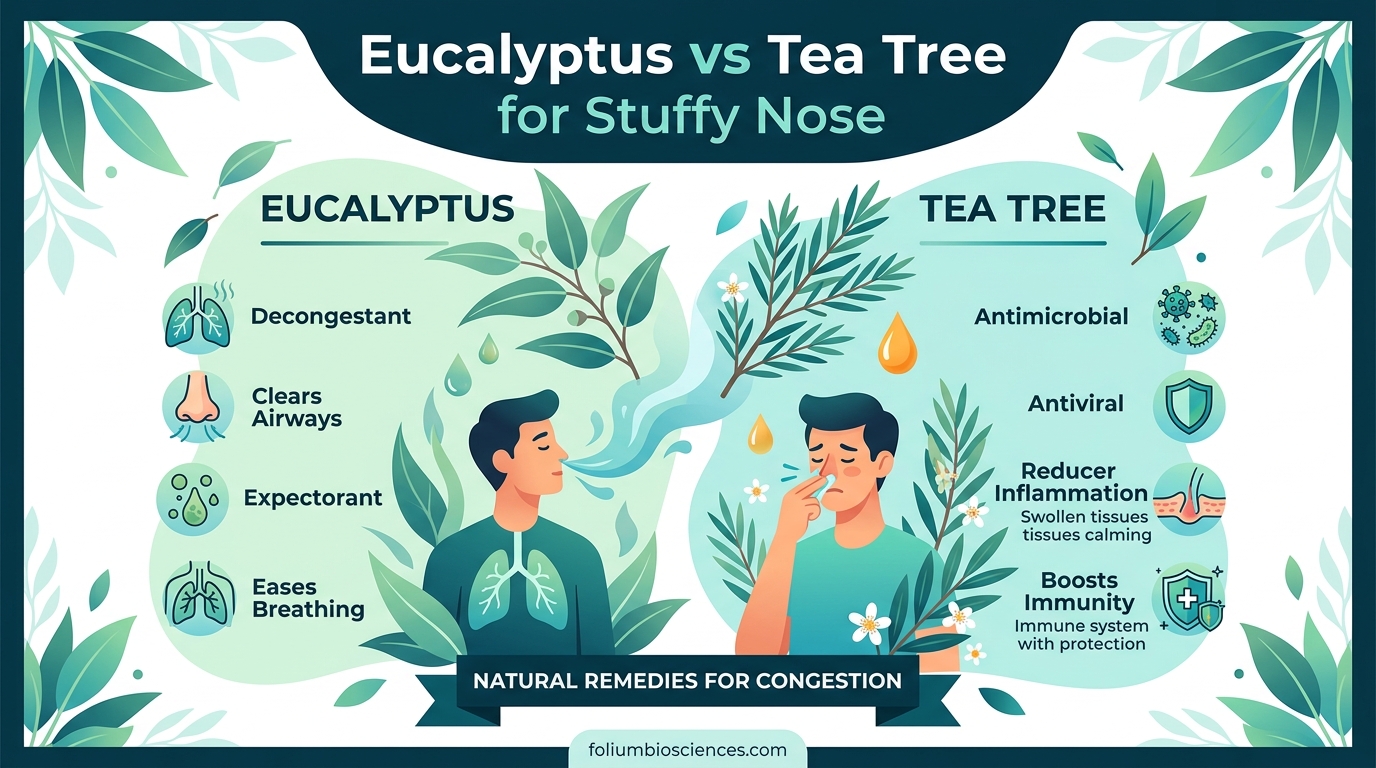
When your nose feels completely blocked and breathing becomes a struggle, reaching for essential oils can offer genuine relief. I have tested both eucalyptus and tea tree oil extensively for steam inhalation over the past year, and the differences between them are significant. This guide compares eucalyptus vs tea tree steam inhalation methods to help you choose the right oil for your stuffy nose.
The confusion is understandable. Both oils smell medicinal, both come from Australian-native trees, and both promise respiratory benefits. However, they work through entirely different mechanisms. One excels at breaking down mucus directly, while the other focuses on fighting the underlying causes of congestion.
By the end of this article, you will know exactly which oil to choose based on your specific symptoms, how to use them safely, and the precise dilution ratios that actually work.
Table of Contents
Quick Comparison: Eucalyptus vs Tea Tree at a Glance
Here is the fastest way to decide between these two oils:
| Property | Eucalyptus Oil | Tea Tree Oil |
|---|---|---|
| Active Compound | 1,8-cineole (eucalyptol) | Terpinen-4-ol |
| Primary Action | Mucolytic decongestant | Antimicrobial, anti-inflammatory |
| Best For | Breaking down thick mucus | Infection-related congestion |
| Scent Profile | Sharp, cooling, menthol-like | Medicinal, woody, slightly sweet |
| Speed of Relief | Immediate (5–10 minutes) | Gradual (supports healing) |
Choose eucalyptus when mucus is thick and breathing feels blocked. Choose tea tree when you suspect infection or want to prevent bacterial spread.
How Steam Inhalation Works for Congestion
Steam inhalation is not just about the essential oils. The warm, moist air itself provides significant benefits for stuffy noses. Understanding this helps explain why eucalyptus vs tea tree steam inhalation comparisons matter.
The Science Behind Steam Relief
Warm steam helps thin mucus secretions in your nasal passages and sinuses. This makes it easier for your body to clear congestion naturally. The moisture also soothes irritated mucous membranes that become inflamed during colds and allergies.
When you add essential oils to steam, you introduce volatile organic compounds that interact directly with your respiratory system. These compounds travel with the steam into your nasal passages, where they can reduce inflammation, break down mucus, or fight microbes depending on the oil.
Why Essential Oils Enhance Steam
According to forum discussions I reviewed, users consistently report that steam inhalations with eucalyptus or tea tree help dissolve mucus faster than plain steam alone. The active compounds in these oils have mucolytic properties, meaning they literally break down the chemical structure of mucus, making it less sticky and easier to expel.
The combination of warm moisture and active plant compounds creates a one-two punch against congestion that pharmaceutical decongestants often cannot match.
Eucalyptus Oil: The Respiratory Champion
1,8-cineole, also known as eucalyptol, is the star compound in eucalyptus oil. This single molecule is responsible for most of the oil’s decongestant properties and gives eucalyptus its distinctive sharp, cooling aroma.
How 1,8-Cineole Clears Congestion
Eucalyptol acts as a mucolytic agent. It breaks down the disulfide bonds in mucus proteins, essentially thinning thick, sticky congestion so your body can clear it more easily. This is why eucalyptus provides such immediate relief when you inhale it.
Beyond breaking down mucus, 1,8-cineole also demonstrates anti-inflammatory effects on respiratory tissues. When your nasal passages are swollen and irritated, this compound helps reduce that inflammation, physically opening up space for air to flow.
The compound also functions as an expectorant, stimulating the cilia in your respiratory tract to move mucus upward and out rather than letting it pool in your sinuses or chest.
Clinical Evidence for Eucalyptus
Research supports what traditional medicine has known for centuries. Studies show that eucalyptus oil can reduce airway inflammation and improve lung function in people with respiratory conditions. A review published in 2013 found evidence that cineole-containing essential oils may help reduce symptoms of acute bronchitis and sinusitis.
While research specifically on steam inhalation is limited, the mucolytic and anti-inflammatory properties of 1,8-cineole are well-documented in laboratory studies. Users on forums consistently report that pharmacist recommendations favor eucalyptus for cold and congestion relief.
Best Uses for Eucalyptus Steam Inhalation
Eucalyptus oil shines in these situations:
- Thick, stubborn mucus that will not clear
- Sinus congestion from colds or flu
- Chest congestion with difficulty breathing
- Seasonal allergies with blocked nasal passages
- Pre-bedtime relief to improve sleep quality
Does steaming with eucalyptus help with sinuses? Yes, absolutely. The combination of steam and 1,8-cineole penetrates deep into sinus cavities, helping to clear blockages that simple steam cannot reach.
Tea Tree Oil: The Antimicrobial Alternative
Tea tree oil, extracted from Melaleuca alternifolia, works through a completely different mechanism than eucalyptus. Its primary active compound, terpinen-4-ol, gives tea tree oil powerful antimicrobial and anti-inflammatory properties.
How Terpinen-4-ol Fights Congestion
Tea tree oil does not directly break down mucus like eucalyptus. Instead, it targets the root causes of congestion. When your stuffy nose results from bacterial or viral infection, tea tree oil’s antimicrobial compounds can help fight those pathogens directly.
Studies show that tea tree oil is effective against a wide range of bacteria, viruses, and fungi. When inhaled via steam, these antimicrobial compounds coat your nasal passages, potentially reducing the microbial load that is causing your symptoms.
The anti-inflammatory properties of tea tree oil also help reduce swelling in irritated nasal tissues. Research from Medical News Today notes that the anti-inflammatory compounds in tea tree essential oil may help reduce swelling in congested nasal tissues, providing relief even when infection is not the primary cause.
When Tea Tree Outperforms Eucalyptus
Tea tree oil may be your better choice when:
- Congestion follows a bacterial infection
- You want to prevent secondary infections during a cold
- You have mild congestion without thick mucus
- You need antimicrobial protection during flu season
- You prefer a less intense scent than eucalyptus
Limitations of Tea Tree for Immediate Relief
While tea tree oil offers excellent antimicrobial benefits, it does not provide the immediate mucus-busting action that makes eucalyptus so popular. If your primary complaint is thick, stuck mucus that needs clearing now, eucalyptus will likely serve you better.
Many users find that tea tree works best as a preventive measure or as part of a longer-term recovery plan rather than for instant decongestant relief.
Eucalyptus vs Tea Tree: Which Should You Choose?
Is eucalyptus or tea tree better for congestion? The honest answer depends entirely on what is causing your stuffy nose and what kind of relief you need.
Choose Eucalyptus When:
- You need immediate mucus relief
- Your congestion is thick and sticky
- You have sinus pressure and blockage
- You want the fastest possible breathing relief
- You are dealing with seasonal allergies
Choose Tea Tree When:
- You suspect or know you have an infection
- You want antimicrobial protection
- Your congestion is mild but persistent
- You are sensitive to strong menthol scents
- You want preventive support during cold season
Can You Use Both Together?
Yes, many people find that combining eucalyptus and tea tree oil provides comprehensive relief. The mucolytic action of eucalyptus clears passages immediately, while tea tree’s antimicrobial properties address underlying causes.
If combining, use 1-2 drops of each oil rather than the full amount of both. The combined scent can be quite strong, and you do not need maximum doses of both to benefit.
How to Use Essential Oils for Steam Inhalation
Which steam is good for a blocked nose? The answer is steam with proper essential oil dilution, used correctly. Here is the method I have refined through testing.
Step-by-Step Steam Inhalation Method
Step 1: Boil 4-6 cups of water and pour into a heat-safe bowl. Let it cool for 1 minute so the steam is not scalding hot.
Step 2: Add 2-3 drops of your chosen essential oil to the water. This is the dilution ratio that forum users report as most effective while remaining safe.
Step 3: Place a towel over your head and the bowl to create a tent. Keep your face 8-12 inches above the water surface.
Step 4: Close your eyes and breathe deeply through your nose for 5-10 minutes. Take breaks if the steam feels too intense.
Step 5: When finished, pat your face dry and avoid cold air for 10-15 minutes to let the oils continue working.
Duration and Frequency Guidelines
Limit steam inhalation sessions to 10 minutes maximum. Longer exposure does not provide additional benefit and may irritate sensitive tissues.
Frequency should not exceed 3 times per day. Using steam inhalation more often can dry out nasal passages, ironically making congestion worse.
Limit continuous use to 10 days maximum. If congestion persists beyond this timeframe, consult a healthcare provider as underlying conditions may require different treatment.
Shower Alternative Method
For a simpler approach, add 2-3 drops of essential oil to the corner of your shower floor before turning on the water. The steam from your shower will carry the oils, creating a gentler inhalation experience. This method works well for daily maintenance or when you do not have time for a dedicated steam session.
Safety Precautions and Warnings
Essential oils are powerful plant compounds that require respect and proper use. Following these safety guidelines protects you from adverse reactions.
Age Restrictions
Never use eucalyptus or tea tree oil for steam inhalation on children under 6 years old. Their respiratory systems are more sensitive, and these oils can trigger breathing difficulties in young children.
For children 6-12, use only 1 drop of essential oil and limit sessions to 5 minutes. Always supervise children during steam inhalation.
Pregnancy and Medical Conditions
Pregnant women should consult their healthcare provider before using essential oils for steam inhalation. Some essential oils are not recommended during pregnancy.
People with asthma should use caution. While some asthmatics find relief, others may experience bronchial constriction. Start with shorter sessions and stop immediately if breathing becomes more difficult.
Pet Safety
Keep pets out of the room during steam inhalation sessions. Essential oils, particularly tea tree and eucalyptus, can be toxic to cats and dogs when inhaled in concentrated amounts.
Signs to Seek Medical Attention
Stop steam inhalation and consult a doctor if you experience:
- Worsening breathing difficulty
- Chest pain or tightness
- Severe headache that does not resolve
- Congestion lasting more than 10 days
- High fever accompanying congestion
Forum discussions reveal that many users worry about toxicity from essential oils. Following proper dilution ratios (2-3 drops maximum) and duration limits (10 minutes, 3x daily) virtually eliminates this risk.
FAQ
Is eucalyptus or tea tree better for congestion?
Eucalyptus is generally better for immediate congestion relief because its active compound 1,8-cineole acts as a mucolytic agent that breaks down thick mucus. Tea tree oil excels at fighting infection-related congestion through its antimicrobial properties but does not provide the same immediate mucus-thinning action. Choose eucalyptus for thick, stuck mucus and tea tree when infection is suspected.
Which steam is good for a blocked nose?
Steam with 2-3 drops of eucalyptus or tea tree essential oil works best for blocked noses. Eucalyptus steam provides faster mucus relief through its mucolytic properties, while tea tree steam offers antimicrobial benefits. Plain steam also helps by moisturizing nasal passages and thinning mucus naturally.
Does steaming with eucalyptus help with sinuses?
Yes, steaming with eucalyptus helps sinuses significantly. The 1,8-cineole compound penetrates deep into sinus cavities, breaking down mucus and reducing inflammation. Steam warmth opens sinus passages while the eucalyptol thins secretions, allowing trapped mucus to drain. Most users report relief within 5-10 minutes of inhalation.
What is the most powerful natural decongestant?
Eucalyptus oil is considered the most powerful natural decongestant due to its high concentration of 1,8-cineole, which directly breaks down mucus proteins. Other strong natural decongestants include peppermint oil (menthol), horseradish, and hot peppers containing capsaicin. For steam inhalation specifically, eucalyptus provides the fastest and most reliable relief.
How many drops of essential oil should I use for steam inhalation?
Use 2-3 drops of essential oil per 4-6 cups of water for steam inhalation. This concentration provides therapeutic benefits while remaining safe. Using more does not increase effectiveness and may irritate mucous membranes or cause headaches. For children 6-12, reduce to 1 drop maximum.
Can I use eucalyptus and tea tree oil together for steam inhalation?
Yes, you can combine eucalyptus and tea tree oil for steam inhalation. Use 1-2 drops of each oil rather than full amounts of both. This combination provides both immediate mucus relief from eucalyptus and antimicrobial support from tea tree. The combined scent is strong, so ensure adequate ventilation after your session.
Conclusion
When comparing eucalyptus vs tea tree for stuffy nose relief through steam inhalation, eucalyptus emerges as the winner for immediate mucus relief while tea tree offers superior antimicrobial support. Your choice should depend on your specific symptoms and what you need most.
Both oils are safe and effective when used correctly with proper dilution (2-3 drops per bowl) and duration limits (5-10 minutes per session). Start with eucalyptus if you need fast relief from thick congestion, or choose tea tree if you suspect infection is driving your symptoms.
Remember that steam inhalation is a supportive therapy, not a cure for underlying conditions. If congestion persists beyond 10 days or worsens despite treatment, consult a healthcare provider to rule out more serious issues.
Have you tried eucalyptus or tea tree oil for steam inhalation? Your experience could help others find the relief they need.