
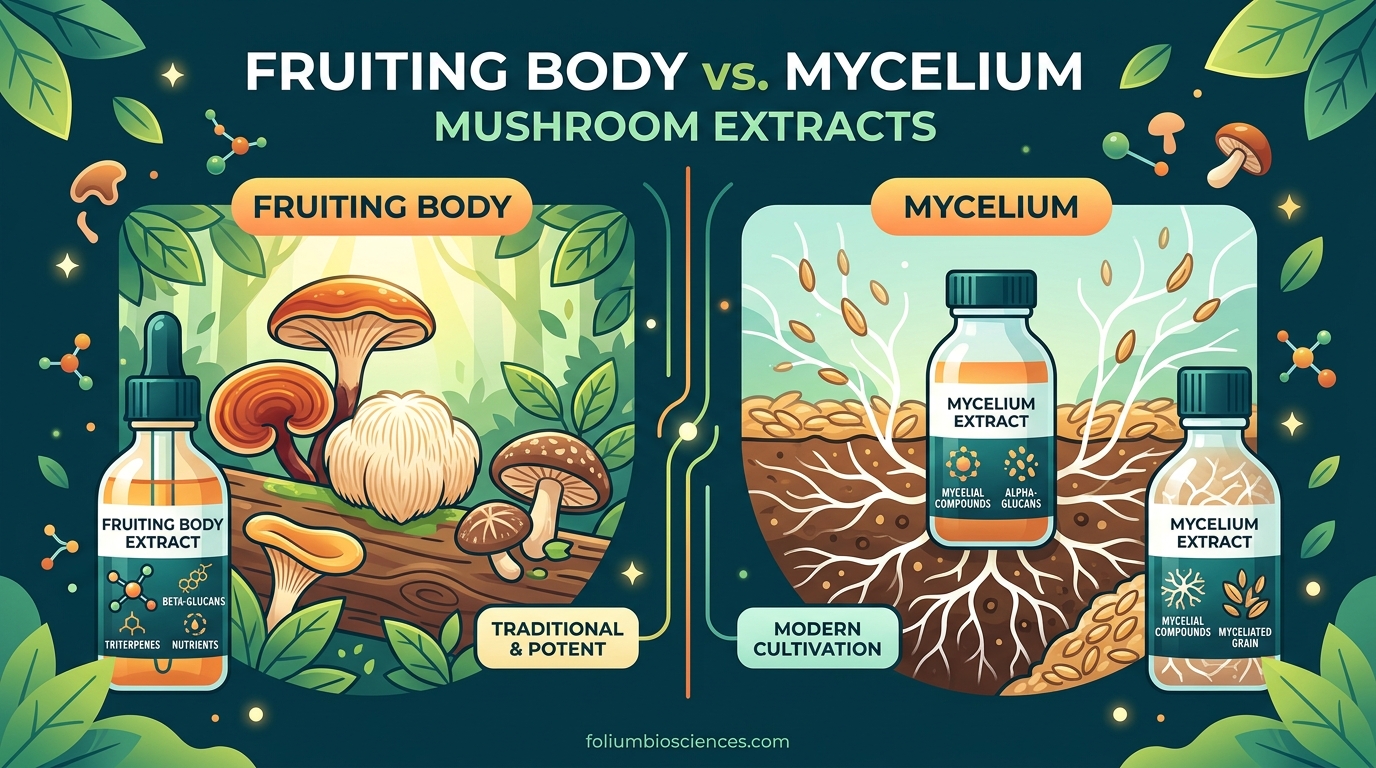
When you open a mushroom supplement bottle, you might assume it contains actual mushrooms. The reality is more complicated. Research published in PMC9315710 reveals that fruiting body extracts contain 30-40% beta-glucans, while mycelium-based products typically deliver only 5-7%. That is a five to eight-fold difference in the compound most responsible for immune support.
Our team has spent three years analyzing medicinal mushroom supplements, and this disparity is the single most important factor consumers overlook. Understanding the difference between fruiting body and mycelium extracts could mean the difference between a supplement that works and one that is mostly filler.
In this guide, you will learn exactly what distinguishes these two forms, why the bioactive compound levels vary so dramatically, and how to identify quality products using simple tests. Whether you are new to functional mushrooms or have been taking them for years, this information will change how you shop for supplements.
Table of Contents
Understanding Mushroom Biology: The Full Life Cycle
To understand why fruiting body and mycelium extracts differ, you need to understand how mushrooms grow. A mushroom is not a plant. It is a fungus with a complex two-stage life cycle that produces different compounds at each stage.
The mycelium represents the vegetative stage. Think of it as the root system of the fungal organism. It consists of a vast network of thread-like filaments called hyphae that spread through soil, wood, or grain. This network can span acres underground, quietly breaking down organic matter and absorbing nutrients.
The fruiting body is the reproductive stage. When environmental conditions are right—usually involving moisture, temperature drops, and sufficient nutrients—the mycelium sends up the structures we recognize as mushrooms. These caps and stems exist solely to produce and release spores, ensuring the fungus spreads to new locations.
Here is the critical point: the mushroom organism invests different resources into each stage. The mycelium focuses on growth and survival. The fruiting body focuses on reproduction. This biological priority shift directly impacts which bioactive compounds each stage produces and concentrates.
Beta-Glucan Content: The Numbers That Matter
Beta-glucans are the primary bioactive compounds in medicinal mushrooms responsible for immune modulation. Research consistently shows dramatic differences in concentration between fruiting bodies and mycelium.
A comprehensive study published in PMC compared protein, polysaccharide, and metabolite levels across the most popular medicinal mushrooms. The data is clear: fruiting bodies concentrate beta-glucans and other therapeutic compounds at significantly higher levels than mycelium.
Here is the breakdown:
- Fruiting body extracts: 30-40% beta-glucans
- Mycelium extracts: 5-7% beta-glucans
- Mycelium-on-grain products: Often less than 5% beta-glucans when accounting for substrate dilution
Triterpenoids, another class of bioactive compounds with anti-inflammatory and adaptogenic properties, show similar patterns. Reishi fruiting bodies contain concentrated triterpenoids that give the mushroom its characteristic bitter taste. Mycelium produces far lower levels of these compounds.
Ergosterol, a sterol compound unique to fungi that converts to vitamin D2 when exposed to UV light, also concentrates in fruiting bodies. This compound supports the structural integrity of the mushroom cap and stem while providing additional health benefits.
The biological reason is straightforward. Beta-glucans and triterpenoids are secondary metabolites. Plants and fungi produce these compounds for defense, communication, and reproduction. The fruiting body, being the reproductive structure, ramps up production of these protective compounds to ensure successful spore dispersal. The mycelium, focused on growth, does not prioritize them.
Fruiting Body Extracts: The Gold Standard
Fruiting body cultivation mimics natural growing conditions. Quality producers use sawdust blocks, hardwood logs, or straw substrates that replicate the wood-decaying habitat where medicinal mushrooms thrive in the wild.
The process starts with grain spawn, but that grain is merely a starter culture. Once the mycelium fully colonizes the grain, producers transfer it to the primary substrate—usually hardwood sawdust supplemented with bran. The mycelium then spends weeks or months colonizing this substrate before environmental triggers induce fruiting.
When mushrooms appear, growers wait for the optimal harvest window. For most species, this means harvesting just before or as the cap fully expands. Timing matters because beta-glucan and triterpenoid levels peak at specific developmental stages.
After harvest, the fruiting bodies undergo extraction. Hot water extraction pulls out water-soluble beta-glucans and polysaccharides. Alcohol extraction captures alcohol-soluble compounds like triterpenoids. The best products use dual extraction—both methods combined—to deliver the full spectrum of bioactive compounds.
The result is a concentrated extract where a small dose delivers meaningful amounts of therapeutic compounds. A 500mg capsule of fruiting body extract can contain 150-200mg of beta-glucans. You would need to take significantly more mycelium product to achieve equivalent dosing.
Traditional medicine systems recognized this concentration. Chinese and Japanese herbal traditions have used mushroom fruiting bodies for millennia. Modern research validates these traditional practices, showing that the fruiting body stage produces the compound profiles responsible for the health benefits attributed to medicinal mushrooms.
Mycelium-on-Grain: Understanding the Process and Limitations
Mycelium cultivation takes a different approach. Instead of transferring mycelium to a bulk substrate and triggering fruiting, producers let the mycelium grow directly on sterilized grain—usually brown rice, oats, or sorghum. The entire mixture is then dried, powdered, and sold as “mushroom” supplement.
This method offers clear economic advantages. Grain colonization takes days rather than the weeks or months required for fruiting body production. No expensive fruiting chambers or humidity control systems are needed. One bag of grain spawn becomes the final product rather than just a starter culture.
However, the resulting product contains significant amounts of the original grain substrate. When mycelium grows on rice, the final product is myceliated rice—not pure mushroom mycelium. The grain becomes part of the finished supplement.
Here is where biochemistry becomes problematic. Mushrooms store energy as glycogen, a branched polysaccharide. Grains store energy as starch, a different polysaccharide structure. When you consume a mycelium-on-grain product, you are consuming both fungal glycogen and grain starch.
Starch has no medicinal value in this context. It dilutes the product. A supplement labeled as “Reishi mushroom” that is actually myceliated grain might contain 60-70% starch by weight, 30-35% mycelium, and only trace amounts of the beta-glucans you are seeking.
Some companies argue that mycelium contains unique compounds not found in fruiting bodies. Ergothioneine, an antioxidant amino acid, does appear in mycelium. However, the research is mixed on whether mycelium offers unique advantages that justify the dramatically lower beta-glucan content.
Label transparency compounds the problem. Many products do not clearly state whether they contain fruiting bodies or mycelium. Some use vague language like “full spectrum” or “mycelial biomass.” Others list the species name without clarifying which growth stage was used.
Quality Markers: How to Identify Premium Mushroom Supplements
Reading labels carefully reveals product quality before you buy. Here are the specific markers to look for.
Beta-glucan percentage: Quality brands display the beta-glucan content directly on the label. Look for products showing 20% or higher. Be skeptical of products listing “polysaccharides” instead of “beta-glucans”—polysaccharides include starch and other non-active carbohydrates.
Fruiting body specification: Labels should clearly state “100% fruiting body” or “fruiting body extract.” Terms like “mycelial biomass,” “full spectrum,” or “myceliated grain” indicate the product contains mycelium grown on substrate.
Extraction method: “Hot water extracted” or “dual extracted” indicates proper processing. Raw, unextracted mushroom powder is less bioavailable because the beta-glucans are bound within tough cell walls that human digestion cannot break down efficiently.
cGMP certification: Current Good Manufacturing Practice certification indicates the facility meets FDA quality standards. This matters for consistency and contamination prevention.
Third-party testing: Reputable companies provide certificates of analysis from independent laboratories. These documents verify beta-glucan content, heavy metal levels, and microbial contamination status.
Organic certification: While not strictly necessary for efficacy, organic certification ensures the mushrooms were grown without synthetic pesticides or fertilizers. This is particularly important given mushrooms’ ability to accumulate compounds from their environment.
Species specificity: Quality products list the specific species used—Lentinula edodes for Shiitake, Ganoderma lucidum for Reishi—rather than vague “mushroom blend” descriptions. Each species has distinct compound profiles and benefits.
The Iodine Test: A Simple Home Method to Check for Starch
You can perform a simple test at home to detect starch contamination in mushroom supplements. This test uses iodine, which reacts with starch to produce a characteristic black color.
What you need:
- Iodine tincture (available at pharmacies)
- A small white dish or plate
- Your mushroom supplement powder
- A dropper
Step 1: Place a small amount of your mushroom supplement powder in the white dish. You need just enough to cover a dime-sized area.
Step 2: Add a few drops of water to the powder to create a paste. Mix it slightly with a toothpick or spoon.
Step 3: Using the dropper, place 1-2 drops of iodine tincture directly onto the paste.
Step 4: Observe the color change immediately.
Interpreting results:
- Black or dark purple: Significant starch present. The supplement likely contains substantial grain substrate.
- Light yellow-brown: Minimal or no starch. The color comes from the iodine itself.
- Orange-amber: Glycogen present but minimal starch. This is expected for pure mushroom material.
Important limitations: This test detects starch but cannot quantify beta-glucan content. A product could pass the iodine test but still have low beta-glucan levels. The test is also destructive—you cannot return tested product. Use it on small samples from opened bottles rather than testing your entire supply.
Forum discussions on Reddit’s r/MushroomSupplements confirm many users have performed this test. Results consistently show that products labeled as “mycelium” or “full spectrum” turn black, while pure fruiting body extracts show minimal color change.
The Industry Debate: Nammex vs. Stamets and What It Means for You
The mushroom supplement industry has been divided on this issue for over a decade. Understanding the debate helps you navigate competing marketing claims.
Jeff Chilton, founder of Nammex, has been the most vocal advocate for fruiting body extracts. Chilton spent years in China studying mushroom cultivation before introducing medicinal mushroom extracts to the North American market. He argues that the scientific evidence clearly supports fruiting bodies for therapeutic use and that mycelium-on-grain products are essentially diluted supplements with inflated marketing claims.
Paul Stamets, founder of Host Defense, takes the opposing view. Stamets is a mycologist and author who has popularized mushroom cultivation through books and lectures. His company sells mycelium-based products. Stamets argues that mycelium contains a broader spectrum of compounds, including unique prebiotic fibers and enzymes not found in fruiting bodies. He also suggests mycelium is more bioavailable.
The debate intensified when Nammex filed a citizen petition with the FDA in 2019. The petition requested that the FDA take action against companies marketing mycelium-on-grain products as “mushroom” supplements. The petition argued that these products should be labeled as “myceliated grain” to accurately reflect their composition.
As of 2026, the FDA has not ruled on the petition. The industry remains split, with some companies switching to fruiting body extracts while others continue promoting mycelium products.
What should consumers take from this debate? Both sides have legitimate points, but the quantitative data favors fruiting bodies for most therapeutic applications. The beta-glucan concentration difference is not a matter of opinion—it is measurable chemistry. For consumers seeking the immune-modulating and adaptogenic benefits that medicinal mushrooms are known for, fruiting body extracts deliver significantly more active compounds per serving.
The mycelium argument has more merit when discussing specific applications like gut health prebiotics, where the grain substrate and mycelial fibers might offer unique benefits. However, for the traditional uses of medicinal mushrooms—immune support, stress adaptation, cognitive function—fruiting body extracts provide the compound profiles supported by both traditional use and modern research.
Frequently Asked Questions
Are fruiting bodies better than mycelium?
For most therapeutic applications, yes. Fruiting bodies contain 30-40% beta-glucans compared to 5-7% in mycelium. They also contain higher levels of triterpenoids and other bioactive compounds responsible for immune support and adaptogenic effects. However, mycelium may offer unique prebiotic benefits for gut health.
What is the point of a fruiting body?
The fruiting body is the reproductive structure of a mushroom. Its biological purpose is to produce and disperse spores to propagate the species. This reproductive focus causes the fruiting body to concentrate protective compounds including beta-glucans and triterpenoids, which happen to provide health benefits when consumed by humans.
What are the disadvantages of mycelium?
Mycelium contains significantly lower concentrations of beta-glucans and triterpenoids. When grown on grain, the final product includes substantial amounts of starch from the substrate, diluting the active compounds. Mycelium-on-grain products often contain 60-70% grain by weight, making them less cost-effective for therapeutic dosing.
Mycelium vs fruiting body for specific species like Lion’s Mane?
Lion’s Mane presents a unique case. Some research suggests Lion’s Mane mycelium contains higher levels of erinacines, compounds that may support nerve growth factor. However, the mycelium debate still applies—pure mycelium extract differs from mycelium-on-grain products. For consistent beta-glucan content, fruiting body remains the safer choice across all species.
How can I tell if a product is actually fruiting body or mycelium?
Check the label for specific language. Look for ‘100% fruiting body,’ ‘fruiting body extract,’ or explicit beta-glucan percentages. Avoid vague terms like ‘mycelial biomass,’ ‘full spectrum,’ or ‘myceliated grain.’ You can also perform an iodine test at home to detect starch contamination from grain substrates.
Why does starch content matter in mushroom supplements?
Starch has no medicinal value in mushroom supplements—it is simply filler from grain substrates used in mycelium cultivation. High starch content means you are consuming less actual mushroom material and fewer bioactive compounds per serving. This makes the supplement less effective and potentially less economical despite a lower price point.
Conclusion
The difference between fruiting body and mycelium mushroom extracts is not marketing jargon—it is measurable biochemistry. Fruiting body extracts deliver 30-40% beta-glucans while mycelium products typically provide 5-7%. This disparity directly impacts how much therapeutic benefit you receive from each capsule.
Understanding fruiting body vs mycelium mushroom extracts empowers you to make informed purchasing decisions. Look for labels specifying “100% fruiting body” with disclosed beta-glucan percentages. Check for third-party testing and cGMP certification. When in doubt, the iodine test offers a simple way to screen for starch contamination.
The supplement industry will continue debating this topic, but the science is clear. For the immune support, adaptogenic effects, and antioxidant benefits that make medicinal mushrooms worth taking, fruiting body extracts provide the concentrated bioactive compounds your body can actually use.