
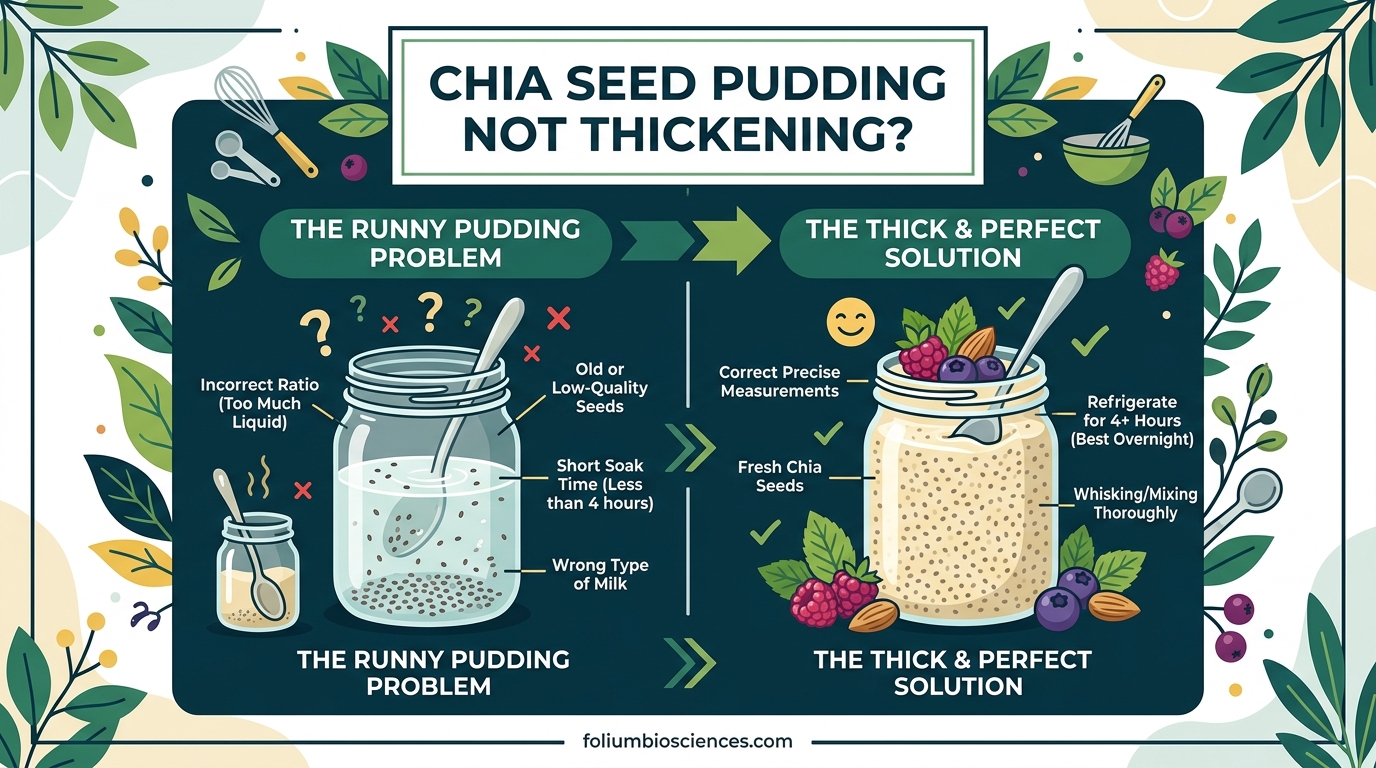
I opened my refrigerator one morning expecting to find a perfect jar of creamy chia pudding waiting for breakfast. Instead, I discovered a watery mess with chia seeds sunk to the bottom like sad little pebbles.
Sound familiar? If your chia seed pudding is not thickening, you are not alone. After months of trial and error and consulting with experienced home cooks, I have identified the six most common reasons this happens. The good news is that every single one has a quick fix. Let us walk through exactly why your pudding failed and how to save it.
Table of Contents
Chia Seed Pudding Not Thickening? Here’s Why
Chia seeds are hydrophilic, meaning they naturally absorb liquid and form a gel-like coating around each seed. This gel is what transforms liquid into pudding. When your chia pudding is too runny, something is blocking this natural gel formation process.
Understanding the science helps you troubleshoot. Each seed needs adequate liquid, proper distribution, sufficient time, and fresh seeds to do its job. Miss any of these elements and you end up with that disappointing watery texture.
Reason 1: You’re Using Too Few Chia Seeds
The most common reason for chia pudding not setting is simply not using enough seeds. Many recipes online are vague about measurements, leading to skimpy ratios that cannot produce proper thickness.
The problem occurs when you use too much liquid relative to your seeds. Each chia seed can only absorb so much liquid before reaching maximum capacity. Exceed that limit and the excess liquid stays liquid.
Quick Fix: Add 1-2 additional tablespoons of chia seeds to your runny mixture and stir thoroughly. Let it sit for another 30 minutes to absorb.
Prevention: Use the standard ratio of 3 tablespoons chia seeds to 1 cup of liquid. This creates reliable thickness every time.
Reason 2: Your Chia Seeds Are Too Old
Chia seeds lose their hydrophilic properties over time. If your seeds have been sitting in the pantry for two years, they may no longer absorb liquid effectively. This is a common but often overlooked cause of chia seeds not expanding.
Old seeds feel different. Fresh chia seeds are slightly glossy and firm. Stale seeds look dull and may feel softer or powdery.
Quick Fix: Test your seeds before making pudding. Place one tablespoon in a small cup of water and wait 15 minutes. If they form a noticeable gel coating, they are still good. If they sink without thickening the water, buy fresh seeds.
Prevention: Store chia seeds in an airtight container in a cool, dark place. Use them within one year of opening for best results.
Reason 3: You Didn’t Stir Properly
Improper stirring creates the dreaded clumping problem. When you dump chia seeds into liquid and give it one quick stir, the seeds clump together in globs. The outer seeds in each clump gel and seal off the inner seeds from liquid contact, creating lumpy pudding with dry seed centers.
Many people wonder why there are lumps in chia pudding. This is the answer. Clumped seeds cannot distribute evenly to thicken the entire mixture.
Quick Fix: If you already have clumps, whisk vigorously to break them apart. You may need to use a fork to press clumps against the side of your container to separate them.
Prevention: Stir three times total. Stir immediately after adding seeds, then again after 5 minutes, and once more after 15 minutes. This prevents clumping and ensures even distribution.
Reason 4: You’re Using the Wrong Liquid
Not all liquids hydrate chia seeds equally. Some people report that certain plant-based milks, particularly ultra-filtered or protein-fortified varieties, do not gel as well as standard options. This can leave you wondering why your chia pudding is watery despite following the recipe exactly.
Thicker liquids like full-fat coconut milk create naturally thicker pudding. Very thin liquids like water or skim milk require more careful attention to ratios.
Quick Fix: If your mixture is not setting, try adding a tablespoon of thickener like Greek yogurt or coconut cream. Alternatively, switch to a different liquid and start fresh.
Prevention: Dairy milk, standard almond milk, oat milk, and coconut milk all work reliably. Avoid ultra-filtered milks if you are having consistency issues.
Reason 5: You Added Seeds After Sweeteners
This is a subtle mistake that sabotages many puddings. When you add sweeteners, cocoa powder, or protein powder before the chia seeds, these dry ingredients coat the seeds and block liquid absorption. The seeds cannot properly hydrate through barriers of cocoa or powder.
Your overnight chia pudding fails because the seeds never get direct contact with liquid at the start when they need it most.
Quick Fix: Unfortunately, once mixed, you cannot undo this. Your best bet is adding extra seeds and stirring aggressively to compensate.
Prevention: Always add chia seeds to your liquid first. Stir them in completely, then add sweeteners, flavorings, or other dry ingredients. This sequence ensures proper seed hydration.
Reason 6: You Didn’t Give It Enough Time
Impatience kills many chia puddings. The seeds need adequate time to absorb liquid and form gel. While chia seeds start absorbing immediately, they need at least 2 hours to reach proper pudding consistency. Most people asking how long chia pudding takes to thicken underestimate this timeline.
Opening the fridge after just one hour reveals watery, unfinished pudding that disappoints.
Quick Fix: If you need pudding fast, use warm liquid instead of cold. Warm water or heated milk accelerates the gel process significantly. Your pudding will thicken in 30-45 minutes instead of hours.
Prevention: Make pudding the night before and refrigerate overnight. This gives seeds 6-8 hours to fully hydrate and creates the best texture.
The Perfect Chia Seed to Liquid Ratio
Getting the ratio right solves most thickening problems before they start. After testing dozens of batches, I have found the sweet spot that produces perfect chia pudding consistently.
The Golden Ratio: 3 tablespoons of chia seeds to 1 cup (240ml) of liquid.
This creates a pudding thick enough to eat with a spoon but not so thick it feels like paste. For a thicker, spoonable texture closer to Greek yogurt, use 4 tablespoons per cup. For a thinner, drinkable consistency, use 2 tablespoons.
Troubleshooting Guide:
- Too runny? Add 1 tablespoon more seeds per cup and wait 30 minutes
- Too thick? Stir in 2-3 tablespoons additional liquid
- Just right? You should be able to scoop it with a spoon without it running off
Frequently Asked Questions
How to fix chia seed pudding that didn’t set?
Add 1-2 tablespoons more chia seeds to the mixture and stir thoroughly. Let sit for 30 minutes. If still runny, your seeds may be old and need replacing.
Why is my chia seed pudding still runny?
Runny pudding usually means insufficient chia seeds, old seeds that lost their gelling ability, or not enough resting time. Check your ratio, test seed freshness, and allow at least 2 hours for proper thickening.
Why are there lumps in my chia pudding?
Lumps form when chia seeds clump together instead of distributing evenly. Stir immediately after adding seeds, then again after 5 minutes and 15 minutes to prevent clumping.
How long should chia pudding sit?
Chia pudding needs minimum 2 hours to thicken properly. For best results, refrigerate overnight (6-8 hours). Using warm liquid can reduce this to 30-45 minutes.
What ratio should I use for chia pudding?
Use 3 tablespoons chia seeds per 1 cup of liquid for standard pudding thickness. Use 4 tablespoons for thicker yogurt-like texture, or 2 tablespoons for thinner consistency.
Can I eat runny chia seed pudding?
Yes, runny chia pudding is safe to eat. The seeds have still absorbed nutrients from the liquid. However, the texture is less pleasant. You can blend runny pudding into a smoothie instead.
How to make chia pudding creamier?
Use full-fat coconut milk or add 2-3 tablespoons of Greek yogurt to your liquid. Blending the finished pudding also creates an ultra-creamy texture similar to mousse.
Why didn’t my chia seeds expand overnight?
Seeds that don’t expand overnight are likely old and have lost their ability to absorb liquid. Test seed freshness by placing in water for 15 minutes. Fresh seeds should form a visible gel coating.
Conclusion
If your chia seed pudding is not thickening, check these six factors: your seed-to-liquid ratio, seed freshness, stirring technique, liquid choice, ingredient order, and resting time. Nearly every pudding failure traces back to one of these causes.
The beauty of chia pudding is its simplicity once you understand these principles. With the right ratio, fresh seeds, proper stirring, and adequate time, you will get perfect, creamy pudding every single time. Your breakfast prep just became foolproof.
Ready to make your next batch? Grab those chia seeds, follow the 3-to-1 ratio, stir three times, and let it rest overnight. Tomorrow morning you will open your refrigerator to exactly what you wanted: thick, creamy, delicious chia pudding.