
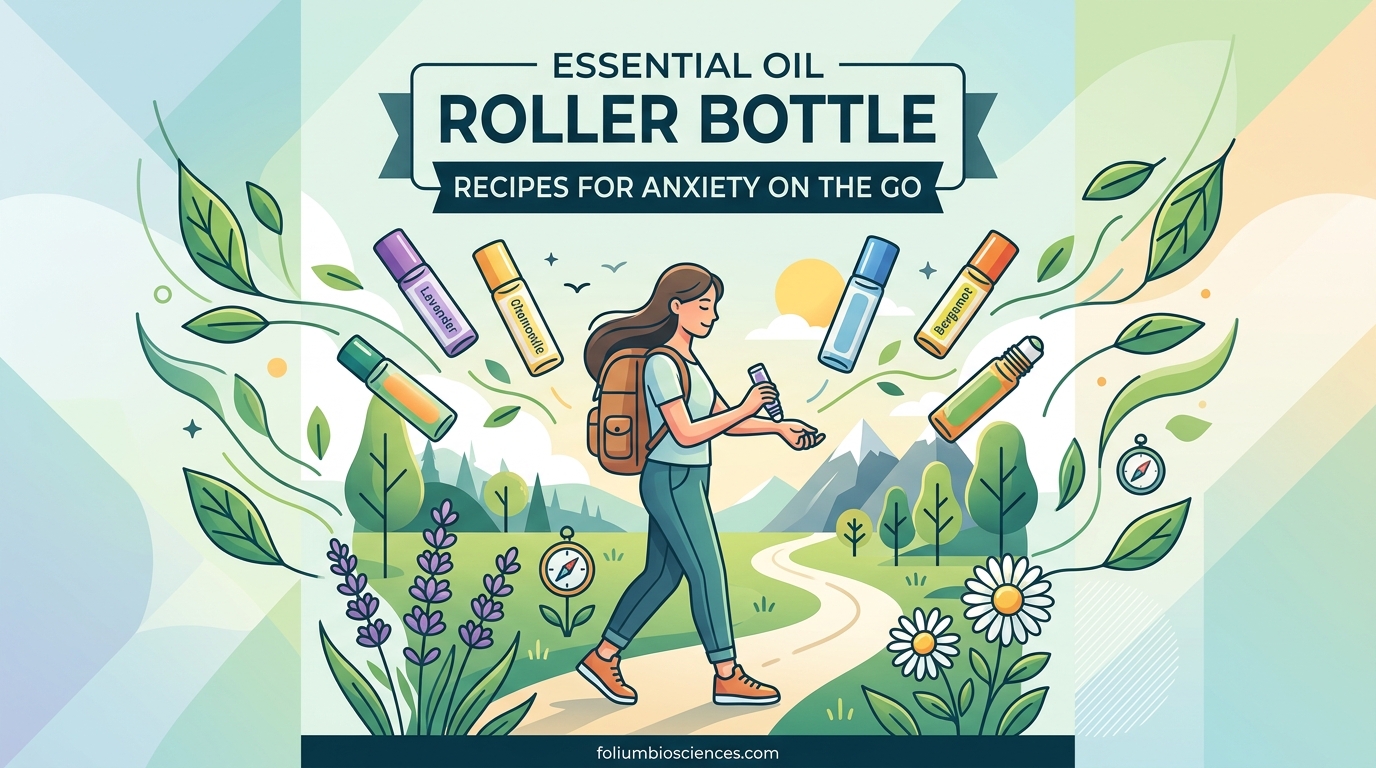
I remember the first time anxiety hit me during a work presentation. My hands shook, my heart raced, and I needed relief immediately. That was when I discovered essential oil roller bottle recipes for anxiety on the go. These portable little bottles became my secret weapon, fitting discreetly in my pocket and providing calm within minutes.
This guide teaches you how to make your own anxiety-relief roller bottles at home. You will learn exactly which essential oils work best, how to dilute them safely, and get seven specific recipes tailored to different anxiety situations. By the end, you will have everything needed to create effective blends that travel with you anywhere.
Table of Contents
Why Roller Bottles Are Perfect for On-the-Go Anxiety Relief
Roller bottles solve a specific problem that anxiety sufferers face daily. You cannot carry a diffuser to work, school, or on a plane. You need something discrete, portable, and immediate.
A roller bottle is a small glass container, usually 10ml, with a metal or plastic rollerball top. When you roll it across your skin, a thin layer of diluted essential oil transfers to your pulse points. The oil absorbs through your skin while the aroma reaches your olfactory system simultaneously.
Compared to other application methods, roller bottles win for portability. Diffusers require power and fill a room with scent, which is not always appropriate. Personal inhalers work well but require active use. Roller bottles apply in seconds and continue working passively. The scent stays with you, subtle enough that only you notice.
The Best Essential Oils for Anxiety Relief
Not all essential oils help with anxiety. Research supports specific oils for their calming effects on the nervous system. Here are the most effective options for your roller bottles.
Lavender remains the most studied essential oil for anxiety. Multiple clinical trials show it reduces anxiety scores and promotes relaxation. It works through the limbic system, influencing emotional responses directly. For most people, lavender provides reliable, gentle calming without sedation.
Bergamot stands out for uplifting anxiety relief. Unlike sedating oils, bergamot improves mood while reducing stress. Studies show it lowers cortisol levels and reduces heart rate. Note that bergamot is phototoxic, so avoid sun exposure on application areas for 12 hours.
Frankincense offers grounding and centering effects. It slows breathing and deepens meditation. Many users report it helps with racing thoughts and mental overwhelm. It blends well with almost any other oil.
Roman Chamomile provides gentle sedation. It works especially well for nighttime anxiety or when you need to wind down. Historical use spans centuries for nervous conditions.
Ylang Ylang reduces blood pressure and heart rate. Studies confirm its anxiolytic properties. It has a strong floral scent that some love and others find overwhelming, so test it before committing to a full blend.
Neroli comes from bitter orange blossoms and shows particular promise for stress and anxiety. Research indicates it may work as well as some prescription medications for anxiety symptoms, without the side effects.
Vetiver provides deep grounding. Its thick, earthy scent anchors scattered energy. Many users with severe anxiety or panic attacks find vetiver especially helpful when nothing else works.
Choosing the Right Carrier Oil
You cannot apply essential oils directly to skin. They are too concentrated and will cause irritation. Carrier oils dilute essential oils to safe levels while helping them spread across skin and absorb properly.
The carrier oil you choose affects your blend’s feel, absorption rate, and shelf life. Here is how the most popular options compare.
Carrier Oil Comparison
| Carrier Oil | Absorption | Skin Feel | Shelf Life | Best For |
|---|---|---|---|---|
| Fractionated Coconut Oil | Fast | Light, non-greasy | 2+ years | Most blends, beginners |
| Jojoba Oil | Medium | Similar to skin sebum | 2+ years | Facial application, acne-prone skin |
| Sweet Almond Oil | Medium | Soft, moisturizing | 1-2 years | Dry skin, body application |
| Aprikot Kernel Oil | Fast | Light, smooth | 1 year | Facial blends, sensitive skin |
| Grapeseed Oil | Fast | Very light | 6-12 months | Oily skin, quick absorption |
Fractionated coconut oil remains the most popular choice for roller bottles. It stays liquid at room temperature, unlike regular coconut oil. It absorbs quickly without leaving residue. Its long shelf life means your blends last longer. It has virtually no scent, so it does not compete with your essential oils.
Jojoba oil technically is a wax, not an oil. Its structure mimics human skin sebum, making it excellent for facial application. It rarely causes breakouts. However, it costs more than fractionated coconut oil.
Avoid olive oil and other cooking oils. They are too heavy, absorb poorly, and have strong scents that clash with essential oils.
Understanding Dilution Ratios for Roller Bottles
Proper dilution keeps you safe while ensuring effectiveness. For anxiety roller bottles, a 5% dilution rate works best. This concentration provides therapeutic benefits without overwhelming your system or risking skin irritation.
For a standard 10ml roller bottle, you need 10 drops of essential oil total. The remaining space fills with carrier oil. This ratio balances potency with safety.
Here is the breakdown:
- 10ml roller bottle = approximately 200 drops total liquid
- 5% dilution = 10 drops essential oil + 190 drops carrier oil
- 3% dilution = 6 drops essential oil + 194 drops carrier oil (for sensitive skin or children)
Never exceed 5% for daily use. Higher concentrations increase irritation risk without improving results. Your body processes essential oils efficiently at proper dilution.
For children or those with sensitive skin, reduce to 3% dilution. Pregnant women should consult healthcare providers and generally use lower dilutions.
How to Make Your First Roller Bottle for Anxiety
Creating roller bottles requires minimal equipment. The process takes about five minutes once you gather supplies.
Equipment Needed
- 10ml glass roller bottle with metal rollerball
- Small funnel or pipette
- Your chosen essential oils
- Carrier oil
- Labels or permanent marker
Step-by-Step Instructions
Step 1: Remove the rollerball from your bottle. Most pop off with gentle pressure. Some twist off. Set the rollerball aside on a clean surface.
Step 2: Add your essential oils using the dropper orifice reducer that comes with quality oils. Count carefully. For a 5% blend, add 10 drops total, combining oils according to your recipe.
Step 3: Fill the bottle almost to the top with carrier oil using a small funnel. Leave a small air gap so the rollerball fits without overflowing.
Step 4: Insert the rollerball firmly. Press down until it snaps into place. Screw on the cap.
Step 5: Shake gently to mix the oils with the carrier.
Step 6: Label your bottle with the blend name, date created, and ingredients. This matters for safety and when you want to recreate a successful blend.
Your roller bottle is now ready to use. Store it upright in a cool, dark place when not in your pocket or bag.
7 Essential Oil Roller Bottle Recipes for Different Anxiety Types
Not all anxiety feels the same. General worry differs from panic attacks, social anxiety, or test nerves. These seven recipes target specific anxiety situations with proven oil combinations.
1. Daily Calm Blend for General Anxiety
This all-purpose blend works for everyday worry and nervous tension. It combines the most researched anxiety oils for reliable results.
Ingredients:
- 4 drops lavender
- 3 drops bergamot
- 3 drops frankincense
- Fractionated coconut oil to fill
Lavender provides the calming foundation. Bergamot lifts mood while reducing stress. Frankincense grounds scattered thoughts. This blend suits morning application before work or anytime anxiety surfaces.
2. Emergency Panic Stop Blend
For sudden panic attacks or overwhelming anxiety spikes, you need fast-acting oils. This blend prioritizes rapid nervous system calming.
Ingredients:
- 4 drops vetiver
- 3 drops Roman chamomile
- 2 drops ylang ylang
- 1 drop frankincense
- Fractionated coconut oil to fill
Vetiver anchors you when everything feels chaotic. Roman chamomile sedates the nervous system. Ylang ylang slows racing heart rates. Frankincense deepens breathing. Keep this blend with you always for emergency moments.
3. Social Confidence Blend
Social anxiety requires a different approach. You need calm without appearing sedated. This blend reduces social anxiety while maintaining alertness and confidence.
Ingredients:
- 4 drops bergamot
- 3 drops neroli
- 2 drops lavender
- 1 drop geranium
- Jojoba oil to fill
Bergamot and neroli create an uplifting, confidence-boosting combination. Geranium balances emotions. Jojoba oil works well for facial application before social events. Apply to wrists before entering social situations.
4. Work Stress Survival Blend
Workplace anxiety presents unique challenges. You need focus alongside calm. Strong scents might disturb colleagues. This blend stays subtle while supporting mental clarity.
Ingredients:
- 4 drops frankincense
- 3 drops cedarwood
- 2 drops lavender
- 1 drop vetiver
- Fractionated coconut oil to fill
Frankincense and cedarwood ground without sedation. Cedarwood specifically supports focus and concentration. The scent profile stays earthy and subtle rather than floral. Apply before stressful meetings or during overwhelming workdays.
5. Test and Performance Anxiety Blend
Test anxiety combines worry with mental fog. You need calm clarity to perform your best. This blend specifically targets performance situations.
Ingredients:
- 4 drops clary sage
- 3 drops bergamot
- 2 drops rosemary
- 1 drop frankincense
- Fractionated coconut oil to fill
Clary sage reduces anxiety while supporting mental clarity. Rosemary improves memory and cognitive function. Bergamot calms without sedation. Use this before exams, presentations, or any performance situation.
6. Travel Anxiety Blend
Travel combines multiple anxiety triggers. Crowded spaces, uncertainty, and motion can overwhelm. This blend addresses travel-specific stress while being TSA-friendly.
Ingredients:
- 4 drops lavender
- 3 drops ginger
- 2 drops peppermint
- 1 drop Roman chamomile
- Fractionated coconut oil to fill
Ginger and peppermint address motion sickness that often accompanies travel anxiety. Lavender and Roman chamomile provide general calming. The 10ml size meets TSA liquid requirements for carry-on bags.
7. Sleep Support Blend for Nighttime Anxiety
Many people experience anxiety specifically at bedtime. Racing thoughts prevent sleep. This blend promotes both anxiety relief and sleep onset.
Ingredients:
- 5 drops lavender
- 3 drops Roman chamomile
- 2 drops vetiver
- Sweet almond oil to fill
This higher lavender concentration maximizes relaxation. Sweet almond oil provides extra skin nourishment before bed. Apply to wrists, temples, and the back of neck 30 minutes before sleep.
Where and How to Apply Roller Bottles for Maximum Relief
Application location affects how quickly and effectively oils work. Pulse points provide the best absorption because blood vessels sit close to the skin surface there.
The wrists remain the most popular application site. Easy to reach, discreet, and effective. Roll the bottle across your inner wrist three to four times. Some people rub wrists together gently to spread the oil. Others prefer to let it absorb naturally.
The temples work well for headache-related anxiety or when you need immediate scent exposure. Use gentle pressure when applying near the eyes. Do not get oils in your eyes.
Behind the ears provides another pulse point option. The scent rises toward your nose throughout the day. This location works well for social situations where you want subtle, ongoing aromatherapy.
The back of the neck at the base of the skull targets tension where many people hold stress. This works especially well for anxiety-related headaches.
Apply roller bottles as needed throughout the day. There is no strict limit at proper dilution. Most people reapply every two to four hours or during anxiety spikes. Trust your body. When you notice the scent fading or anxiety rising, apply again.
Safety Precautions and What to Avoid
Essential oils are powerful plant compounds requiring respect. Following safety guidelines prevents adverse reactions and ensures positive experiences.
Always dilute properly. Undiluted essential oils can burn skin and cause sensitization. Sensitization means developing an allergic reaction after repeated exposure. Once sensitized to an oil, you typically cannot use it again.
Watch for phototoxic oils. Bergamot, lime, lemon, grapefruit, and bitter orange can cause severe sunburn when applied to skin before UV exposure. Avoid sunlight on application areas for 12 hours after using these oils. Use bergamot FCF (furocoumarin-free) if sun exposure is unavoidable.
Perform a patch test before using a new blend extensively. Apply a small amount to your inner arm and wait 24 hours. No reaction means the blend is safe for you.
Pregnancy requires caution. Avoid clary sage during pregnancy. Use lower dilutions and fewer oils. Consult your healthcare provider. Some oils are completely contraindicated during pregnancy.
Medication interactions matter. Essential oils can interact with prescription medications, especially blood thinners and medications for anxiety or depression. Consult your doctor if you take regular medications.
Keep away from children and pets. Some oils are toxic to animals, especially cats. Store bottles securely. What helps you might harm them.
Quality matters enormously. Cheap oils often contain synthetic additives or minimal actual plant material. These provide no therapeutic benefit and may cause reactions. Look for oils labeled as 100% pure therapeutic grade. Third-party testing certificates add credibility. Reputable companies disclose Latin names, country of origin, and extraction method.
Storage, Shelf Life, and Travel Tips
Proper storage extends your blend’s effectiveness. Neglected blends oxidize and lose potency or cause skin irritation.
Store roller bottles upright in a cool, dark place. Heat and light break down essential oils faster. A bathroom cabinet works, but away from shower steam. A bedroom drawer or purse compartment works better.
Most roller blends last three to six months. Citrus oils oxidize fastest, sometimes within three months. You will notice when a blend goes bad. The scent changes, becoming harsh or rancid. The color may darken. If either happens, discard and remake.
Label each bottle with the creation date. This removes guesswork about freshness.
Travel considerations: The 10ml roller bottle size meets TSA liquid requirements for carry-on luggage. Pack it in your clear quart-sized bag with other liquids. Roller bottles rarely leak when properly sealed, but storing them in a small ziplock bag prevents disasters if they do.
Consider making travel-specific blends before trips rather than bringing your entire collection. Label them clearly. Keep your most important blend in an easily accessible pocket during flights or travel days.
Personalizing Your Blends and Troubleshooting
These recipes provide starting points. Individual body chemistry means oils affect everyone differently. Personalization improves results.
If a blend does not work after several uses, adjust the ratios. Some people need more lavender, less vetiver, or respond better to neroli than bergamot. Keep a simple journal noting which blends help and when.
Scent preferences matter too. An oil might work therapeutically but smell unpleasant to you. You will resist using it. Find alternatives with similar properties. Do not like vetiver? Try patchouli for grounding instead.
Some users report oils “stopping working” after weeks of use. This is olfactory fatigue, not actual tolerance. Your nose becomes accustomed to the scent. Try alternating between two different blends every few days. Or take a break from a specific oil for a week.
If skin irritation occurs despite proper dilution, you might have sensitivity to a specific oil. Discontinue use. Switch to gentler oils like lavender or Roman chamomile.
Frequently Asked Questions
What essential oils are best for anxiety?
The most researched essential oils for anxiety include lavender, bergamot, frankincense, Roman chamomile, ylang ylang, neroli, and vetiver. Lavender has the strongest scientific support. Bergamot works well for uplifting anxiety relief. Vetiver provides deep grounding for severe anxiety and panic.
How do you make a roller bottle blend?
Remove the rollerball from a 10ml glass bottle. Add 10 drops total of essential oils following your recipe. Fill almost to the top with carrier oil like fractionated coconut oil. Insert the rollerball firmly until it snaps in place. Cap and shake gently. Label with the blend name and date.
What carrier oil should I use for roller bottles?
Fractionated coconut oil is the most popular choice because it stays liquid, absorbs quickly, has no scent, and lasts over two years. Jojoba oil works well for facial application. Sweet almond oil moisturizes dry skin. Avoid cooking oils like olive oil.
How many drops of essential oil in a 10ml roller bottle?
For a 5% dilution, use 10 drops of essential oil total in a 10ml roller bottle. Fill the rest with carrier oil. For sensitive skin or children, reduce to 6 drops for a 3% dilution. Never exceed 5% for daily use to prevent irritation.
Are essential oils safe for anxiety?
Yes, when used properly. Always dilute essential oils before applying to skin. Perform a patch test first. Avoid phototoxic oils like bergamot before sun exposure. Consult your doctor if pregnant or taking medications. Quality matters. Use pure therapeutic grade oils from reputable sources.
How long do essential oil roller blends last?
Most roller blends last 3 to 6 months when stored properly in a cool, dark place. Citrus oils oxidize faster, sometimes within 3 months. Discard blends if the scent becomes harsh or the color darkens. Label bottles with creation dates to track freshness.
Can you apply essential oils directly to skin?
No, never apply undiluted essential oils directly to skin. They are too concentrated and will cause irritation or sensitization. Always dilute with a carrier oil to 5% or less for daily use. This means about 10 drops of essential oil per 10ml of carrier oil.
What is the dilution rate for roller bottles?
A 5% dilution rate works best for anxiety roller bottles. This equals 10 drops of essential oil in a 10ml roller bottle filled with carrier oil. For sensitive skin or children, use a 3% dilution with 6 drops of essential oil. Higher concentrations increase irritation risk without improving results.
Conclusion
Essential oil roller bottle recipes for anxiety on the go provide portable, natural support when you need it most. The seven blends in this guide address different anxiety types, from daily worry to panic attacks to social situations.
Start with the Daily Calm blend. It combines the most proven anxiety oils in a safe, effective ratio. Once comfortable, experiment with other recipes. Keep the Emergency Panic Stop blend with you always for unexpected anxiety spikes.
Remember that roller bottles work best as part of a broader anxiety management approach. They provide immediate relief, but addressing underlying causes through therapy, lifestyle changes, or medical support remains important for long-term wellbeing.
Your first roller bottle takes five minutes to make and costs a fraction of pre-made options. The independence of creating your own blends, knowing exactly what goes into them, adds another layer of confidence. Take that first step today.