
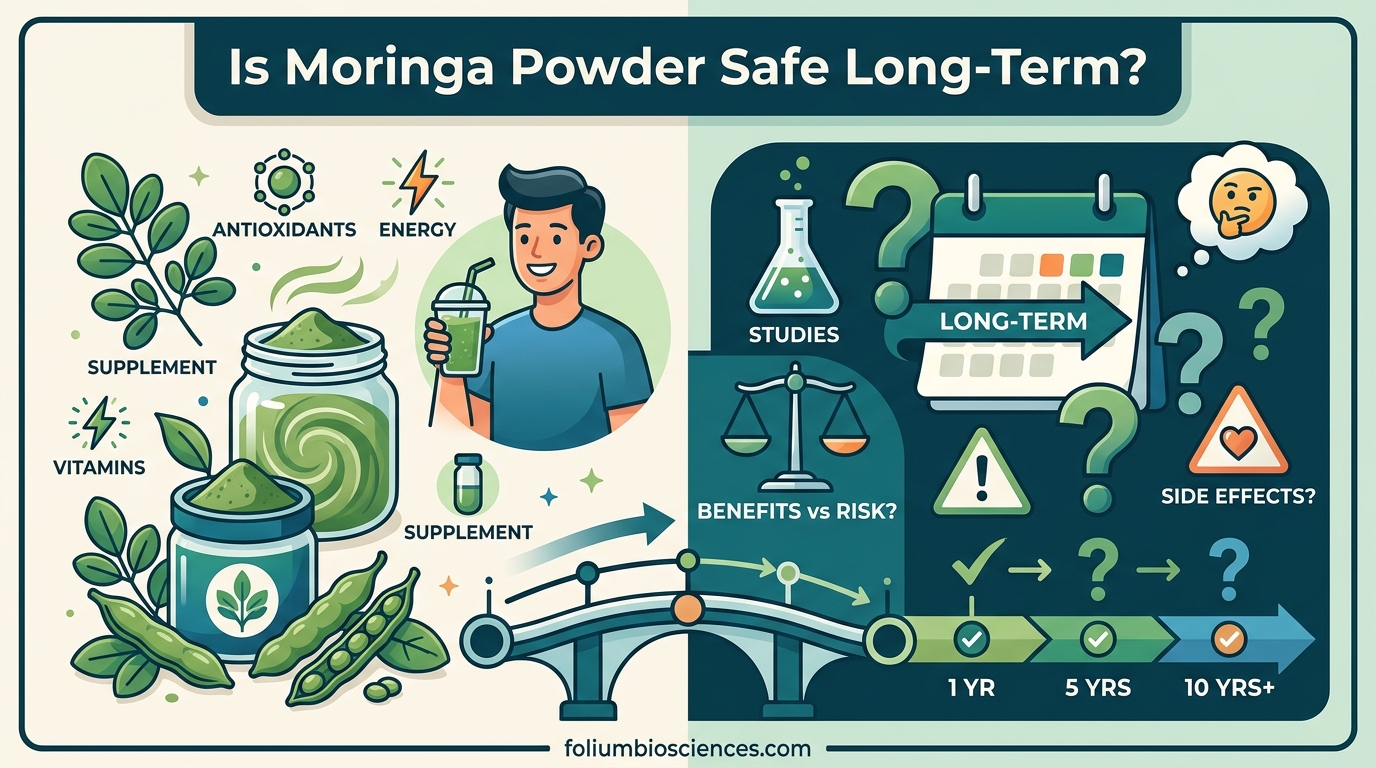
If you have been researching superfoods, you have probably encountered moringa powder. This green supplement made from the leaves of the Moringa oleifera tree has gained popularity for its impressive nutrient profile. But just because something is natural does not mean it is automatically safe for everyone or in any amount. In this article, we will answer the question on many people minds: is moringa powder safe long-term? We will also cover daily dose limits, drug interactions, special population warnings, and practical guidance for using this supplement safely.
Understanding moringa safety matters because many users take it daily without realizing it can interact with medications or cause side effects in certain health conditions. Our team has reviewed clinical studies, consulted medical databases, and analyzed real user experiences to give you evidence-based answers. By the end of this guide, you will know exactly what dose to take, which medications to watch out for, and how to recognize when you might be taking too much.
Table of Contents
What Is Moringa Powder?
Moringa powder comes from the dried leaves of the Moringa oleifera tree, native to parts of India and the Himalayan region. People have used moringa in traditional medicine for centuries, and modern research has started validating many of these uses. The leaves contain significant amounts of vitamins A, C, and B vitamins, along with minerals like iron, calcium, potassium, and magnesium. This nutritional density is why many call moringa a superfood.
The supplement is available in several forms. Moringa leaf powder is the most common, often sold in bags or capsules. You can also find moringa capsules, tablets, tea, and extracts. The powder form offers flexibility, allowing you to mix it into smoothies, juice, or food. Capsules provide a more convenient option for those who want consistent dosing without the earthy taste.
Research published in journals like the Journal of Food Science and Technology confirms that moringa leaves contain bioactive compounds including polyphenols, flavonoids, and glucosinolates. These compounds contribute to its antioxidant and anti-inflammatory properties. However, these same compounds are what can cause interactions with medications or unwanted effects in certain individuals. The key difference between moringa and many other supplements is that the leaves also contain spirochin, a compound that can be toxic in high doses, according to databases like RxList.
Most commercially available moringa powder comes from the leaf tissue rather than the root or bark, which contain higher concentrations of potentially harmful compounds. Always check that your supplement specifies leaf-only moringa if you want to minimize risks.
Is Moringa Safe for Long-Term Use?
Direct answer: Moringa leaf powder appears to be safe for most adults when taken at recommended doses for up to 90 days to 6 months, according to clinical research. However, comprehensive long-term safety data spanning years of daily use does not yet exist. The longest controlled studies on moringa supplementation have tracked participants for approximately six months, with no significant adverse effects reported at moderate doses.
WebMD notes that products containing moringa leaf have been used with apparent safety for up to 6 months. RxList similarly reports that moringa leaf products have been used safely for up to 90 days. These timeframes represent what researchers have studied, not necessarily a hard limit on safety. The absence of long-term studies does not prove danger, but it does mean we should be cautious about assuming indefinite use is risk-free.
The research gap exists partly because moringa has only recently gained widespread attention in Western supplement markets. Most existing safety data comes from traditional use in the countries where the tree grows natively, not from rigorous Western clinical trials. Everyday Health reports that studies using up to 2,000 mg of dried moringa leaf powder per kilogram of body weight showed no harmful effects, which provides reasonable reassurance for short-to-medium-term use.
If you plan to use moringa powder for more than a few months, consider discussing this with your healthcare provider. They may suggest periodic breaks or monitoring through blood tests to ensure your body is responding well to continued supplementation.
Daily Dose Limits: How Much Moringa Is Safe?
Finding the right moringa powder dosage requires understanding both general guidelines and specific limits based on your body weight and health goals. The dosage you choose should reflect whether you are taking moringa for general wellness or addressing a specific health concern.
For general wellness supplementation, most sources recommend 1 to 2 teaspoons of moringa powder per day, which translates to approximately 3 to 6 grams. This amount provides meaningful nutritional benefits while staying within safe parameters. When starting out, many users begin with half a teaspoon daily and gradually increase over one to two weeks.
Clinical studies have used higher amounts under supervision. Research published in the National Institutes of Health database shows that studies administering moringa have used doses ranging from 500 mg to 8,000 mg per day, depending on the form and study design. The general consensus among health databases is to stay below 70 grams per day, though such high amounts are not necessary for typical supplementation purposes.
Here are the commonly recommended dosage ranges by form:
- Moringa leaf powder: 3 to 6 grams daily (roughly 1 to 2 teaspoons)
- Moringa capsules: 500 to 1,000 mg taken 2 to 3 times per day
- Moringa tea: 1 to 2 cups daily using 1 to 2 teaspoons of leaves
- Moringa extract: Follow product-specific instructions, typically 250 to 500 mg daily
If you are using moringa for specific benefits like blood sugar management or inflammation reduction, you might consider the higher end of these ranges. However, increasing your dose should be gradual and monitored. Taking too much can lead to digestive upset and other unwanted effects.
Weight-based dosing from studies suggests that up to 2,000 mg per kilogram of body weight has been used safely. For a 150-pound adult, that would be roughly 136,000 mg, which far exceeds normal supplementation amounts. This shows a wide safety margin, but it does not mean exceeding the standard recommendations is wise.
The quality of your moringa supplement also affects dosing. Higher-quality, more concentrated products may require smaller amounts to achieve the same effect. Always read the label and follow the manufacturers suggested serving size unless your healthcare provider advises otherwise.
Drug Interactions: Medications That Moringa May Affect
Moringa powder can interact with several categories of prescription and over-the-counter medications. Understanding these interactions is critical if you are taking any regular medications. The primary mechanism involves the CYP3A4 enzyme system in your liver, which moringa may either inhibit or induce, affecting how your body processes certain drugs.
According to WebMD and Drugs.com, moringa may interact with medications metabolized by the CYP3A4 enzyme. This is important because CYP3A4 is responsible for breaking down roughly half of all prescribed medications. When moringa inhibits this enzyme, drug levels in your blood may rise higher than intended. When it induces the enzyme, drug levels may drop below therapeutic ranges.
Here is a severity-based breakdown of moringa drug interactions:
Moderate Interactions
Several medication categories have moderate interaction potential with moringa:
Blood pressure medications: Moringa may lower blood pressure, potentially amplifying the effects of antihypertensive drugs. This combination could cause blood pressure to drop too low, resulting in dizziness, lightheadedness, or fainting. If you take medications like lisinopril, amlodipine, or metoprolol, monitor your blood pressure closely if you start taking moringa.
Diabetes medications: Moringa has demonstrated blood sugar-lowering effects in some studies. Taking it alongside diabetes medications like metformin, insulin, or sulfonylureas may increase the risk of hypoglycemia. Symptoms of low blood sugar include shakiness, sweating, confusion, and in severe cases, loss of consciousness.
Thyroid medications: Moringa may affect thyroid hormone levels in the body. If you take levothyroxine or other thyroid replacement therapies, moringa could interfere with the absorption and metabolism of these drugs. Maintaining consistent thyroid levels requires careful monitoring when introducing or discontinuing moringa.
Diuretics (water pills): Moringa has mild diuretic properties. When combined with prescription diuretics like furosemide or hydrochlorothiazide, the effect may be additive, potentially leading to dehydration or electrolyte imbalances.
Minor Interactions
Other interactions exist but are considered less severe:
P-glycoprotein substrates: Some compounds in moringa may affect P-glycoprotein, a transport protein that moves drugs across cell membranes. This could alter absorption and distribution of certain medications, though clinical significance is less established.
Anticoagulant medications: While moringa does contain vitamin K, which is involved in blood clotting, the amounts in leaf powder are typically not high enough to significantly affect warfarin therapy. However, sudden increases in moringa consumption could theoretically impact clotting time. If you take blood thinners, discuss moringa use with your healthcare provider.
The best approach is to review all your medications with a pharmacist or physician before starting moringa. They can assess your specific drug regimen and advise whether any interactions are likely to be clinically significant for your situation.
Side Effects of Moringa Powder
Most people tolerate moringa powder well, especially when taken at recommended doses. However, side effects can occur, particularly when starting supplementation or when taking higher amounts than recommended. Understanding what to expect helps you distinguish between normal adjustment symptoms and signs that moringa may not be suitable for you.
Common mild side effects include digestive disturbances such as stomach upset, diarrhea, nausea, and gas. These symptoms often develop when first introducing moringa into your routine and typically resolve within a few days to a week as your digestive system adjusts. Starting with a low dose and gradually increasing can minimize these effects.
Some users report increased bowel movements or mild cramping. This is generally not dangerous but can be uncomfortable. Taking moringa with food rather than on an empty stomach often reduces digestive symptoms.
Less common side effects include headache, fatigue, and sleep disturbances. These may relate to the energizing properties of moringa or to individual sensitivity to certain compounds in the leaf. If you experience persistent headaches or sleep problems after starting moringa, consider reducing your dose or taking it earlier in the day.
According to RxList, rare adverse effects have been reported, including potential liver or kidney concerns with very high intake. The compound spirochin found in moringa has been associated with nervous system effects in animal studies at high doses. While human data is limited, it reinforces the importance of staying within recommended dosage ranges.
Certain individuals are more likely to experience side effects. Those with sensitive digestive systems, existing liver or kidney conditions, or multiple health concerns should approach moringa supplementation with extra caution. The same applies if you are taking other supplements or medications that affect liver function.
If you experience any severe or persistent symptoms while taking moringa, discontinue use and consult a healthcare professional. Allergic reactions, though rare, can occur and may present as rash, itching, swelling, or difficulty breathing.
Special Populations: Who Should Avoid Moringa?
Moringa powder is not appropriate for everyone. Specific health situations require either avoidance or careful medical supervision before using this supplement. This section addresses the populations that need to exercise particular caution.
Pregnancy and Breastfeeding
Pregnant women should avoid moringa powder. According to multiple medical databases including RxList and WebMD, moringa may have uterine-stimulating properties that could pose risks during pregnancy. The concern is that compounds in moringa might cause contractions or even miscarriage. This warning extends throughout pregnancy, not just the first trimester.
For breastfeeding mothers, the safety data is less definitive but remains a concern. Small amounts of moringa consumed in food are likely safe, but therapeutic doses through supplements are not well studied in nursing women. The compounds in moringa could pass into breast milk, and the effects on infants are unknown. Breastfeeding women should consult their healthcare provider before using moringa supplements.
Thyroid Conditions
If you have hyperthyroidism or hypothyroidism, moringa may complicate your condition. Moringa can influence thyroid hormone production and metabolism. For those with an overactive thyroid, moringa could potentially worsen symptoms. For those with an underactive thyroid taking medication, moringa might interfere with absorption or effectiveness of levothyroxine.
Medical News Today specifically addresses this concern, recommending that people with thyroid conditions speak with a doctor before using moringa. If you have a thyroid disorder and your healthcare provider approves moringa use, regular monitoring of thyroid function through blood tests becomes essential.
Children
The appropriate moringa dose for children is not well established in clinical literature. While moringa is nutritious, children’s smaller body size and developing systems make them more vulnerable to the effects of concentrated supplements. Generally, it is best to avoid giving moringa supplements to children unless specifically recommended by a pediatrician.
If a healthcare provider does recommend moringa for a child, the dose would need to be carefully calculated based on the child’s weight and health status. Smoothies or foods containing small amounts of moringa powder as a food ingredient may be different from concentrated supplement doses.
Kidney and Liver Conditions
Individuals with kidney disease or liver impairment should use moringa with extreme caution or avoid it entirely. Both organs are responsible for processing and eliminating compounds from the body, and added supplements may burden these systems. Some case reports have associated very high moringa intake with liver enzyme elevations, though the relevance to typical supplement doses is unclear.
If you have hepatitis, kidney stones, chronic kidney disease, or any other significant organ dysfunction, discuss moringa with your nephrologist or hepatologist before considering it.
Surgery Preparation
If you have an upcoming surgery, discontinue moringa at least two weeks before the procedure. The blood sugar and blood pressure effects of moringa could interfere with surgical outcomes or interact with anesthesia medications. After surgery, wait until your medical team clears you before resuming moringa supplementation.
Signs You May Be Taking Too Much Moringa
Even when starting with recommended doses, some individuals may experience symptoms indicating they are sensitive to moringa or have taken more than their body can handle. Recognizing these signs early helps you adjust your intake before more serious effects occur.
Here are five warning signs that you may be taking too much moringa:
1. Persistent digestive upset: While mild adjustment symptoms are normal, ongoing diarrhea, stomach pain, nausea, or bloating suggest your body is not tolerating the current dose. If symptoms persist beyond two weeks or are severe, reduce your intake.
2. Unusual fatigue or weakness: Moringa typically provides energizing effects, so unexpected tiredness may signal that your body is reacting negatively or that blood pressure has dropped too low.
3. Sleep disturbances: Difficulty falling or staying asleep, especially if you previously slept well, could indicate sensitivity to moringa or its stimulating compounds.
4. Heart palpitations or rapid heartbeat: These symptoms may relate to blood pressure changes or direct cardiovascular effects. Palpitations always warrant medical attention regardless of supplement use.
5. Thyroid-related symptoms: If you experience symptoms suggesting thyroid dysfunction, such as temperature sensitivity, unexpected weight changes, or mood shifts, your thyroid medication balance may be affected.
Symptoms of moringa overdose may also include headache, dizziness, and skin irritation in sensitive individuals. The timeline for symptom appearance varies. Some people notice effects within hours of taking a high dose, while others develop symptoms gradually over weeks of cumulative use.
If you experience severe symptoms such as difficulty breathing, chest pain, or severe allergic reactions, seek emergency medical care immediately.
How to Use Moringa Safely
Safe moringa supplementation involves more than just following dosage guidelines. The following four-step approach helps minimize risks while maximizing potential benefits.
Step 1: Start low and go slow. Begin with a quarter teaspoon of moringa powder daily, or the lowest dose your supplement recommends. After three to five days without adverse effects, you can increase to a half teaspoon. Continue this gradual approach until you reach your target dose. This minimizes digestive adjustment symptoms and gives you time to notice any unusual reactions.
Step 2: Choose quality products. Look for moringa supplements that specify they contain only moringa leaf, not the root, bark, or seeds which contain higher concentrations of potentially harmful compounds. Third-party testing certifications such as NSF International, USP, or ConsumerLab provide assurance of purity and potency. Avoid products with added fillers, artificial ingredients, or unclear labeling.
Step 3: Time your doses strategically. Taking moringa in the morning or early afternoon aligns with its potential energizing effects and minimizes sleep disruption. If you take prescription medications, space moringa at least two hours apart from your medications to reduce interaction risks. For thyroid medications specifically, the ideal gap may be four hours before or after.
Step 4: Monitor and maintain. Consider getting baseline blood tests before starting moringa, then follow-up tests after three months of consistent use. Key tests include complete blood count, liver function tests, kidney function tests, and thyroid panel if relevant. This documentation helps you and your healthcare provider assess whether moringa is working for you and not causing undetected problems.
Regular users sometimes take periodic breaks from moringa, such as one week off every two months. This practice is not medically required but may help prevent tolerance buildup and allows you to assess how you feel without the supplement.
When deciding whether to continue moringa long-term, weigh the benefits you experience against any side effects or inconveniences. If you notice meaningful improvements in energy, digestion, or other health markers, continuing at the lowest effective dose makes sense. If you notice no difference, the risk-benefit calculation shifts toward discontinuation.
Frequently Asked Questions
Are there any risks to taking moringa?
Yes, moringa carries risks including digestive upset, drug interactions with blood pressure and thyroid medications, and potential harm during pregnancy. People with kidney, liver, or thyroid conditions should consult a doctor before use.
Can I take moringa if I have hyperthyroidism?
Moringa may interact with thyroid medications and could affect thyroid hormone levels. If you have hyperthyroidism or hypothyroidism, discuss moringa with your healthcare provider before using it. Regular thyroid monitoring is essential if you take both.
What happens when you drink moringa everyday?
Drinking moringa daily at recommended doses is generally safe for up to 6 months based on current research. Benefits may include improved energy, antioxidant support, and nutritional supplementation. However, daily use beyond 6 months lacks long-term safety data.
Should I take moringa in the morning or at night?
Moringa is best taken in the morning or early afternoon due to its potential energizing effects. Taking it late in the day may disrupt sleep, especially for those sensitive to stimulating supplements.
Can moringa cause kidney damage?
Kidney damage from moringa is rare and typically associated with extremely high doses. However, people with pre-existing kidney conditions should use moringa cautiously or avoid it, as the kidneys help process and eliminate compounds from supplements.
How long can I take moringa safely?
Current research supports safe use of moringa leaf powder for up to 90 days to 6 months at recommended doses. Long-term use beyond this period lacks sufficient scientific data. Consider taking periodic breaks and consulting your healthcare provider for extended use.
What medications does moringa interact with?
Moringa may interact with blood pressure medications, diabetes drugs, thyroid medications, diuretics, and drugs metabolized by CYP3A4 enzymes. These interactions range from moderate to minor severity. Always review your medications with a healthcare provider before starting moringa.
Is moringa safe during pregnancy?
No, moringa is not considered safe during pregnancy due to potential uterine-stimulating properties. Pregnant women should avoid moringa supplements entirely. Breastfeeding women should also consult their doctor before using therapeutic doses.
Conclusion
Moringa powder can be a beneficial supplement for many adults seeking additional nutrients and antioxidant support in their diet. The answer to whether moringa powder is safe long-term is nuanced: it appears safe for most people at recommended doses for up to six months, but comprehensive long-term safety data spanning years does not yet exist in the scientific literature.
The key to safe moringa use lies in respecting its potential for drug interactions and individual variation. If you take medications for blood pressure, diabetes, thyroid conditions, or other health issues, the risk of interaction is real and warrants professional guidance. Pregnant women should avoid moringa entirely, and those with kidney, liver, or thyroid conditions should proceed only under medical supervision.
For healthy adults without these concerns, starting with a low dose of one-quarter to one-half teaspoon daily and gradually increasing to one to two teaspoons provides a reasonable approach. Choosing quality supplements tested by third parties, timing doses in the morning, and monitoring through periodic blood tests all contribute to safer supplementation.
Ultimately, the choice to use moringa long-term should be an informed one made together with your healthcare provider. They understand your complete health picture and can help you weigh the potential benefits against any risks specific to your situation. If you experience any concerning symptoms while taking moringa, discontinue use and seek medical advice.
With appropriate caution and smart supplementation practices, moringa can be part of a healthy wellness routine. Stay informed, start low, and listen to your body throughout your supplementation journey.