
I learned about rancid hemp seeds the hard way. I had bought a large bag, stored it in my pantry, and six months later I opened it to find an off-putting smell that ruined my morning smoothie. That experience taught me why hemp seeds require special attention.
Hemp seeds contain high levels of polyunsaturated fatty acids, particularly omega-3 and omega-6. These delicate oils make hemp seeds nutritious but also prone to oxidation. When exposed to heat, light, or air, those healthy fats break down and produce rancid compounds.
In this guide, I will show you exactly how to tell if hemp seeds have gone rancid using simple sensory tests. You will learn to identify spoilage through smell, taste, and visual cues before you ruin a recipe or risk digestive discomfort.
Table of Contents
Why Hemp Seeds Go Rancid
Hemp seeds are approximately 30% oil by weight. That oil is rich in polyunsaturated fatty acids, which are highly reactive with oxygen. This chemical reaction, called oxidation, is what creates rancidity.
When hemp seeds oxidize, they produce aldehydes and lipid peroxides. These compounds create the characteristic off-flavors and smells associated with spoiled nuts and seeds. The process accelerates dramatically when seeds are exposed to warmth, direct sunlight, or moisture.
Unlike saturated fats found in coconut or palm oil, the unsaturated fats in hemp seeds have molecular structures with double bonds that oxygen can easily attack. This makes them health-promoting when fresh but unstable when stored improperly.
How to Tell If Hemp Seeds Have Gone Rancid by Smell
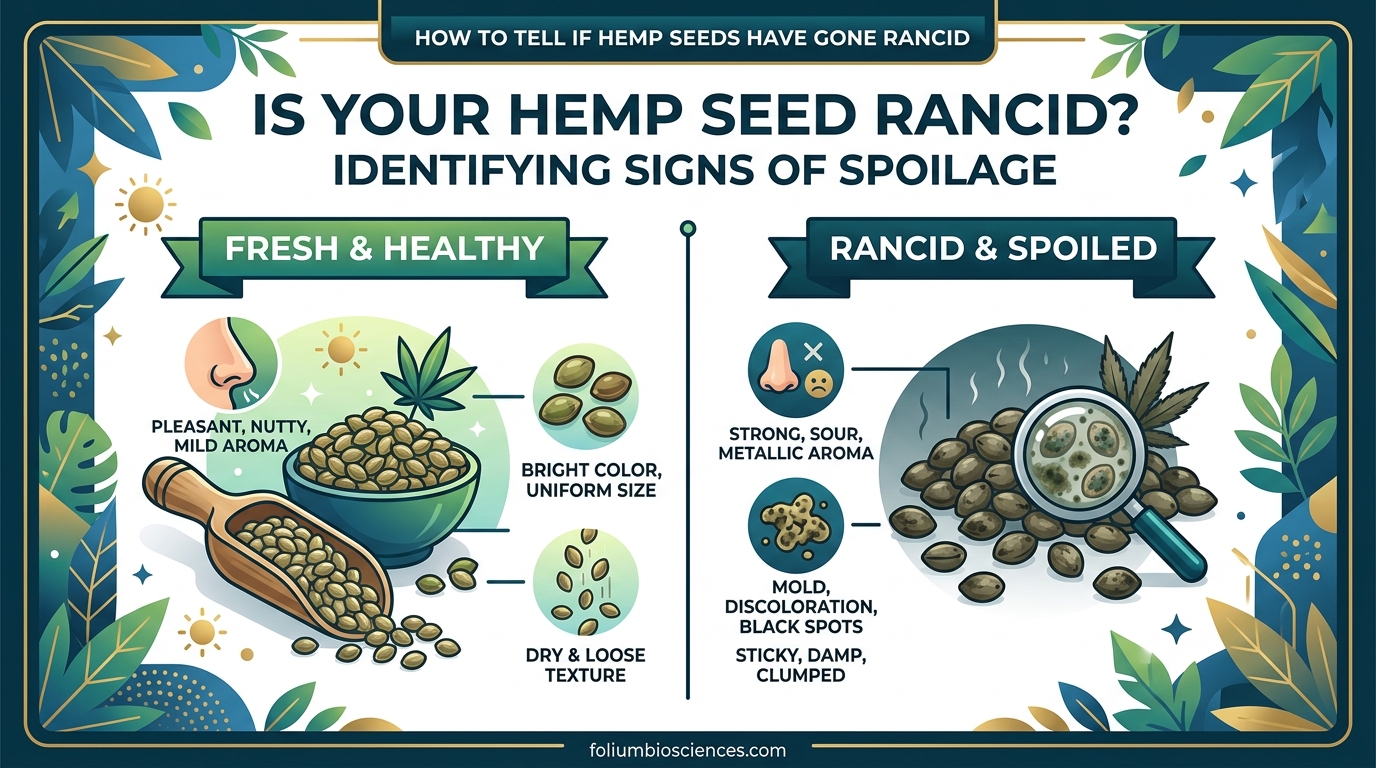
The smell test is your first and most reliable indicator of freshness. Fresh hemp seeds emit a mild, pleasant aroma that most people describe as nutty, earthy, or slightly grassy.
Rancid hemp seeds develop unmistakable off-odors. Based on forum discussions and research from the plant-based nutrition community, here are the specific smell descriptors that indicate spoilage:
- Fishy or marine-like odor – This is one of the most commonly reported signs of rancidity
- Musty or moldy scent – Indicates moisture exposure and potential mold growth
- Sour or sharp smell – Similar to old cooking oil or paint
- Chemical or paint-like aroma – Suggests advanced oxidation
- Stale or cardboard-like – Early stage rancidity before stronger odors develop
I recommend performing the smell test immediately upon opening a new package. This establishes your baseline for what fresh hemp seeds should smell like from that particular source.
One Reddit user in the PlantBasedDiet community noted they noticed a dramatic change when their hemp seeds got wet. Moisture accelerates rancidity faster than any other factor, so wet seeds should be used immediately or discarded.
Fresh vs Rancid Smell Comparison
| Fresh Hemp Seeds | Rancid Hemp Seeds |
|---|---|
| Mild, nutty aroma | Fishy or marine odor |
| Earthy, grassy notes | Musty or moldy scent |
| Neutral when unhulled | Sour or sharp smell |
| Pleasant seed-like smell | Chemical or paint-like |
Taste Test: Detecting Rancidity Through Flavor
If the smell test passes but you still suspect spoilage, the taste test provides confirmation. However, only taste a small amount and spit it out immediately if anything seems off.
Fresh hemp seeds have a mild, nutty flavor with subtle sweetness. They taste clean and pleasant, similar to sunflower seeds or pine nuts but more delicate.
Rancid hemp seeds develop distinct off-flavors:
- Bitter aftertaste – The most common indicator of oxidation
- Metallic flavor – Described by many forum users as tasting like pennies or blood
- Sour or acidic taste – Similar to spoiled oil
- Soapy or chemical flavor – Advanced rancidity
Multiple users on Reddit’s nutrition forums have reported that a metallic taste was their first sign of spoilage. This taste comes from the breakdown of fatty acids and the formation of free radicals. If you detect any metallic notes, discard the seeds immediately.
Always trust your taste buds. If something tastes wrong, it probably is. Food safety experts recommend discarding any food that tastes off, even if other indicators seem normal.
Visual Signs: Color Changes and Appearance
While smell and taste are more reliable indicators, visual inspection can reveal obvious spoilage signs. Hemp seeds and hemp hearts show different visual characteristics when fresh versus rancid.
Fresh hemp seeds display:
- Consistent light green to tan coloration
- Dry, free-flowing texture
- No clumping or sticking
- Uniform size and shape
Rancid hemp seeds may show:
- Darkening or yellowing – Seeds turn from green-tan to yellow-brown
- Clumping or sticking together – Oil seeping from oxidized seeds causes adhesion
- Visible mold – Fuzzy white, green, or black growth (absolute discard indicator)
- Oily or greasy appearance – Excessive surface oil indicates breakdown
According to storage research from hemp food suppliers, clumping is a particularly reliable indicator when combined with off-odors. The oils released during oxidation cause seeds to stick together.
If you see any mold, discard the entire package immediately. Mold can penetrate deeper than visible growth, making the entire batch unsafe to consume.
Fresh vs Rancid Visual Comparison
| Characteristic | Fresh | Rancid |
|---|---|---|
| Color | Light green to tan | Yellow to brown |
| Texture | Dry and loose | Clumped or sticky |
| Surface | Matte, natural | Shiny or oily |
| Mold | None | White, green, or black fuzz |
Hemp Seeds vs Hemp Hearts: Shelf Life Differences
Understanding the difference between hemp seeds and hemp hearts helps you set appropriate storage expectations. These terms are often used interchangeably but they have distinct characteristics.
Hemp seeds (whole seeds) include the hard outer shell. This natural protective coating shields the delicate oils inside from oxygen exposure. Whole hemp seeds last longer in storage because the shell acts as a barrier.
Hemp hearts (hulled hemp seeds) have had the outer shell removed. The exposed inner kernel contains the concentrated oils and protein. Without the protective shell, hemp hearts oxidize much faster.
Whole hemp seeds can last 12-18 months in the pantry if stored properly. Hemp hearts typically last only 3-6 months at room temperature before showing signs of rancidity.
This difference matters when purchasing. If you use hemp seeds occasionally, whole seeds offer better longevity. If you consume them daily and prefer the softer texture, hemp hearts work well but require refrigeration.
Shelf Life Guide: How Long Hemp Seeds Last
Storage method dramatically affects how long hemp seeds remain fresh. Here is what you can expect based on how you store them.
Pantry Storage
Unopened packages of hemp seeds last 3-6 months in a cool, dark pantry. Once opened, that timeframe drops to 1-3 months depending on temperature and humidity levels. Whole seeds last longer than hemp hearts.
Pantry storage works only if your kitchen stays below 70 degrees Fahrenheit and has low humidity. Warm or humid environments accelerate rancidity significantly.
Refrigerator Storage
Refrigeration extends hemp seed shelf life to 12 months or more. The cold temperature slows oxidation considerably. Store seeds in airtight containers to prevent moisture absorption and odor contamination from other foods.
Forum discussions consistently recommend refrigeration for hemp hearts. Multiple users reported their refrigerated hemp hearts stayed fresh for over a year, while pantry-stored batches went rancid within months.
Freezer Storage
Freezing offers the longest preservation. Properly frozen hemp seeds maintain quality for 24 months or longer. The freezing process essentially stops oxidation.
Store seeds in freezer-safe airtight containers or vacuum-sealed bags. Remove only what you need and return the rest to the freezer immediately. Allow seeds to come to room temperature before opening the container to prevent condensation.
Storage Method Comparison
| Storage Method | Unopened Shelf Life | Opened Shelf Life |
|---|---|---|
| Pantry (whole seeds) | 6 months | 3 months |
| Pantry (hemp hearts) | 3-4 months | 1-2 months |
| Refrigerator | 12 months | 8-12 months |
| Freezer | 24+ months | 18-24 months |
Best Practices for Storing Hemp Seeds
Proper storage prevents rancidity and protects your investment in these nutritious seeds. Follow these guidelines to maximize shelf life.
Use Airtight Containers
Oxygen is the primary enemy of hemp seed freshness. Transfer seeds from original packaging to airtight glass jars or containers with tight-fitting lids. Mason jars work excellently for this purpose.
Choose Opaque Packaging
Light exposure accelerates oxidation. Store seeds in opaque containers or keep clear jars in dark cabinets. Some hemp seed suppliers now use amber or opaque packaging specifically for this reason.
Control Temperature
Keep hemp seeds below 70 degrees Fahrenheit whenever possible. Every 10 degrees above this threshold approximately doubles the rate of oxidation. This is why refrigeration makes such a dramatic difference.
Monitor Humidity
Moisture causes immediate problems. Ensure containers are completely dry before adding seeds. If you live in a humid climate, consider adding a food-safe desiccant packet to absorb excess moisture.
Label and Date
Write the purchase date and expected expiration on your storage containers. This removes guesswork and helps you use older stock first. Include whether the seeds are whole or hulled since this affects shelf life.
Quick Storage Checklist
- Transfer to airtight container within 24 hours of opening
- Store in refrigerator for hemp hearts, freezer for long-term storage
- Keep away from heat sources like stoves and direct sunlight
- Check smell monthly even if stored properly
- Buy smaller quantities if you use seeds infrequently
Health Risks of Consuming Rancid Hemp Seeds
Eating rancid hemp seeds is unlikely to cause serious illness, but it is not recommended. The primary concerns involve digestive discomfort and reduced nutritional value.
Rancid oils contain oxidation byproducts including aldehydes and lipid peroxides. These compounds can irritate the digestive tract, causing nausea, stomach upset, or diarrhea in sensitive individuals.
The nutritional benefits of hemp seeds diminish significantly once rancidity sets in. The omega-3 and omega-6 fatty acids that make hemp seeds valuable break down into compounds that provide no health benefits. Antioxidants also degrade during oxidation.
Some research suggests that regularly consuming rancid fats may contribute to inflammation in the body. While occasional exposure to mildly rancid seeds is not dangerous, making it a habit could have negative health effects over time.
Trust your senses. If seeds smell or taste off, discard them. The cost of replacement is far lower than the discomfort of digestive issues or the lost nutritional value of consuming degraded food.
Frequently Asked Questions
How to tell if hemp seeds went bad?
Check for rancid smell (fishy, musty, or sour), bitter or metallic taste, clumping texture, and color changes from green-tan to yellow-brown. Fresh hemp seeds smell mildly nutty and taste pleasant. If any off-odors or flavors are present, discard the seeds.
What do rancid hemp seeds smell like?
Rancid hemp seeds smell fishy, musty, sour, or like paint or chemicals. Fresh seeds have a mild nutty aroma. The fishy odor is the most common indicator reported by users, caused by oxidation of the omega-3 fatty acids.
Does hemp seed go rancid?
Yes, hemp seeds go rancid due to their high oil content, particularly polyunsaturated omega-3 and omega-6 fatty acids. These delicate oils oxidize when exposed to heat, light, air, or moisture. Whole seeds with shells last longer than hulled hemp hearts.
How long are hemp hearts good for after opening?
Hemp hearts last 1-2 months in the pantry after opening, 8-12 months in the refrigerator, and 18-24 months in the freezer. Always store opened hemp hearts in an airtight container. Refrigeration is strongly recommended for opened packages.
Can expired hemp seeds make you sick?
Expired hemp seeds are unlikely to cause serious illness but may cause digestive discomfort including nausea or stomach upset. The oxidation byproducts can irritate the digestive tract. Seeds with visible mold should be discarded immediately as mold can produce harmful toxins.
Conclusion
Knowing how to tell if hemp seeds have gone rancid protects both your recipes and your health. The smell test remains your most reliable tool: fresh seeds smell nutty and mild, while rancid seeds develop fishy, musty, or sour odors.
Remember that hemp hearts spoil faster than whole seeds due to their exposed oils. Store them in airtight containers in the refrigerator or freezer for maximum freshness. Check your seeds monthly using the sensory indicators outlined in this guide.
With proper storage, hemp seeds can remain fresh and nutritious for months or even years. The small effort of transferring them to appropriate containers and keeping them cold pays off in better taste, preserved nutrition, and no unpleasant surprises in your morning smoothie.