
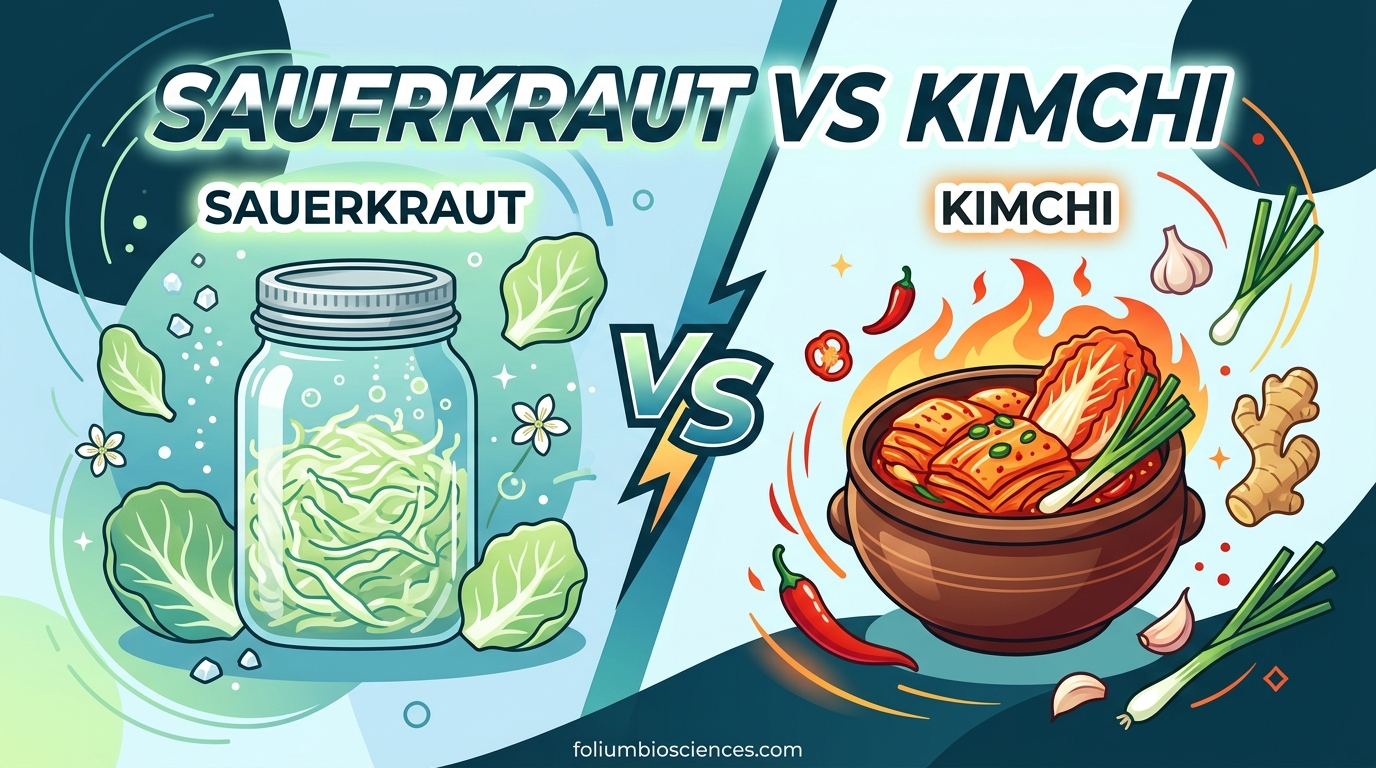
Both sauerkraut and kimchi rank among the most powerful probiotic foods you can add to your diet. These fermented vegetables have been staples in different culinary traditions for centuries, and modern research confirms what traditional wisdom long held: they support digestive health in meaningful ways. If you have ever wondered which one deserves a spot in your refrigerator, the answer might surprise you.
In this guide, our team breaks down everything you need to know about sauerkraut vs kimchi for probiotics and gut health. We examined the scientific research, compared nutrient profiles, and talked to nutrition experts to give you a clear picture. By the end, you will know exactly which fermented food fits your goals and preferences.
Table of Contents
What Is Sauerkraut?
Sauerkraut is a fermented cabbage dish with roots in Chinese cuisine that became a dietary cornerstone in Central and Eastern Europe, particularly Germany. The process involves finely shredding cabbage, layering it with salt, and allowing natural fermentation to occur over several weeks. The salt draws out moisture from the cabbage, creating the brine environment where beneficial lactic acid bacteria thrive.
Traditional sauerkraut relies on spontaneous fermentation, meaning no added starter cultures are necessary. The naturally occurring Lactobacillus bacteria on the cabbage leaves kickstart the process once the right conditions exist. This unrefined approach results in a product packed with live cultures and a distinctive tangy flavor that deepens as fermentation progresses.
You will find most store-bought versions pasteurized, which kills those valuable live bacteria. Look for refrigerated varieties with no vinegar listed in the ingredients if you want the probiotic benefits. Homemade sauerkraut or products from the refrigerated section at health food stores typically retain the active cultures that make this food so noteworthy for gut health.
What Is Kimchi?
Kimchi is a traditional Korean fermented vegetable dish that typically centers on Napa cabbage and Korean radishes. The preparation involves salting and seasoning the vegetables with a blend of garlic, ginger, chili flakes, and fish sauce or other savory agents before allowing fermentation. This combination creates the complex, bold flavor profile that defines authentic kimchi.
The spice level in kimchi varies widely based on regional preferences and household recipes. Some versions lean mildly tangy while others deliver significant heat. Beyond the heat, you will notice layers of umami and subtle sweetness that develop during fermentation. This complexity explains why kimchi has gained global popularity beyond Korean communities.
Korean households traditionally ferment large batches in earthenware vessels called onggi, burying them underground during colder months. Modern home cooks use glass or ceramic containers with similar success. The longer kimchi ferments, the more pronounced its flavors become and the higher the probiotic diversity typically grows.
How Lacto-Fermentation Works
Both sauerkraut and kimchi rely on lacto-fermentation, a process where beneficial bacteria convert sugars into lactic acid. This transformation preserves the vegetables while creating an acidic environment that inhibits harmful bacteria. The result is a tangy, shelf-stable food that actually improves over time in terms of probiotic potency.
The key players in this process are lactic acid bacteria, primarily species within the Lactobacillus genus. These microorganisms produce enzymes that break down complex carbohydrates into simpler compounds. As they work, they generate carbon dioxide, which creates the characteristic bubbles you may notice in actively fermenting vegetables, and lactic acid, which gives both foods their tartness.
The brine environment matters critically. Without sufficient salt, unwanted bacteria and molds can colonize the vegetables. Proper salting ensures the good bacteria dominate and the fermentation proceeds cleanly. This balance explains why homemade sauerkraut and kimchi recipes emphasize correct salt proportions and clean equipment.
Probiotic Content: Which Has More?
Research suggests kimchi may offer slightly greater microbial diversity compared to sauerkraut, though both are exceptional sources of beneficial bacteria. A study published in the Journal of Applied Microbiology found that kimchi contained a broader range of Lactobacillus species, including L. plantarum, L. brevis, and L. fermentum, among others.
Sauerkraut typically centers on a more limited set of strains, with Leuconostoc mesenteroides and Lactobacillus plantarum appearing most frequently. The diversity matters because different bacterial strains offer different health benefits. Having more varieties in kimchi may provide broader support for your gut microbiome, though sauerkraut remains an excellent choice.
Colony-forming units, or CFUs, measure the viable bacteria in a serving. Fresh, unpasteurized sauerkraut often contains between 1 and 10 billion CFUs per gram, while kimchi can range slightly higher depending on fermentation length and ingredients. Neither food requires enormous quantities to deliver meaningful probiotic benefits; even small servings of a few tablespoons provide billions of beneficial bacteria.
The strain diversity in kimchi contributes to what researchers call microbiome resilience. When you consume multiple beneficial species regularly, you create conditions where your gut community can better withstand disruptions from antibiotics, stress, or dietary changes. Sauerkraut offers robust support too, just with less variety in typical preparations.
Health Benefits of Sauerkraut and Kimchi
Gut Health and Digestion
Both foods support digestive health through their probiotic content and fiber. The beneficial bacteria help balance the gut microbiome, which influences everything from nutrient absorption to immune function. Regular consumption of fermented vegetables correlates with reduced symptoms of irritable bowel syndrome, or IBS, according to multiple clinical studies.
The fiber in both foods serves as prebiotics, meaning it feeds the beneficial bacteria already residing in your gut. This combination of probiotics and prebiotics creates what researchers call a synbiotic effect, where the food itself and its fermented inhabitants both contribute to gut health. You essentially get double the benefit compared to taking probiotics without prebiotic support.
Participants in a Korean study who consumed kimchi daily for four weeks showed measurable improvements in bowel regularity and reported fewer digestive complaints. Similar observations appear in European research on sauerkraut, where participants noted reduced bloating and more consistent digestion patterns. These are not dramatic medical results, but genuine improvements people notice in their daily lives.
Immune System Support
Your gut houses roughly 70 percent of your immune system, which means digestive health directly influences your ability to fight infections. The probiotics in both sauerkraut and kimchi support immune function by training your gut-associated lymphoid tissue to recognize harmless compounds versus genuine threats.
Studies link regular fermented food consumption with reduced upper respiratory infection rates. Older adults who included kimchi in their diets showed lower incidence of winter colds compared to control groups. While sauerkraut specifically has not received the same level of focused research, the underlying mechanisms apply equally given the similar probiotic profiles.
The vitamins created during fermentation also contribute to immune support. Both foods generate B vitamins and vitamin K through bacterial activity, and kimchi produces additional B vitamins and antioxidants from its spice components. These nutrients work alongside the probiotics to support overall immune competence.
Anti-Inflammatory Effects
Chronic inflammation drives many modern diseases, and both these fermented foods help combat it through multiple pathways. The probiotics themselves reduce inflammatory signaling in the gut, and the antioxidants in kimchi, particularly from chili and garlic, amplify this effect.
Research published in the British Journal of Nutrition found that participants consuming kimchi daily showed reduced markers of systemic inflammation after eight weeks. The study specifically measured C-reactive protein levels, which dropped significantly in the kimchi group. Similar anti-inflammatory effects appear in sauerkraut research, though typically through indirect measurements of gut health improvement.
The histamine content in fermented foods deserves mention for those with sensitivities. Both sauerkraut and kimchi contain histamine, which can trigger reactions in sensitive individuals. Longer-fermented versions contain higher histamine levels, so starting with shorter fermentation periods may help those with tolerance issues identify what works for their bodies.
Research on Specific Conditions
Studies have examined sauerkraut’s effects on breast cancer risk, with observational research suggesting regular consumption correlates with lower incidence. The mechanism likely involves bioactive compounds in cabbage called glucosinolates, which fermentation converts into more biologically active forms. Kimchi research has explored similar territory, with Korean epidemiological studies showing associations between regular kimchi consumption and reduced colorectal polyp formation.
Cholesterol management represents another area of emerging research. Both foods appear to support healthy lipid profiles, though the evidence remains preliminary. The probiotic effect on bile acid metabolism likely explains part of this benefit, as altered bacterial processing of bile can reduce circulating cholesterol levels. Kimchi’s garlic content may contribute additional cardiovascular support through its known lipid-modulating effects.
Nutritional Comparison
While probiotic content receives most of the attention, the overall nutritional profiles of these foods reveal important differences. Here is how they compare in a standard one-cup serving:
| Nutrient | Sauerkraut | Kimchi |
|---|---|---|
| Calories | 44 | 23 |
| Sodium | 939 mg | 747 mg |
| Vitamin C | 21 mg (35% DV) | 14 mg (24% DV) |
| Vitamin K | 30 mcg (38% DV) | 12 mcg (15% DV) |
| Fiber | 4 g (16% DV) | 2 g (8% DV) |
| Vitamin A | 2 mcg | 24 mcg (RAE) |
| Potassium | 370 mg | 305 mg |
| Iron | 1.5 mg (11% DV) | 0.9 mg (5% DV) |
Sauerkraut edges out kimchi in several micronutrients, particularly vitamin K and iron, while kimchi provides considerably more vitamin A from its beta-carotene content. The sodium levels in both warrant attention for those monitoring salt intake, though kimchi’s slightly lower sodium makes it marginally preferable for those managing blood pressure.
The calorie difference reflects kimchi’s lower cabbage density per volume and higher water content in typical preparations. For those watching caloric intake, kimchi offers a slight advantage, though both remain low-calorie foods that fit easily into most eating patterns.
Who Should Choose Which?
Choosing between sauerkraut and kimchi ultimately depends on your taste preferences, health considerations, and what you plan to do with the food. Neither is objectively superior; both deliver significant probiotic benefits. Understanding your priorities helps you make the right decision for your situation.
If you prefer milder flavors and simpler preparations, sauerkraut makes the logical choice. It integrates easily into sandwiches, hot dogs, and European-inspired dishes without overwhelming other ingredients. The straightforward tang works well where kimchi’s complexity might compete with certain recipes. Sauerkraut also tends to be less expensive and more widely available in standard grocery stores.
If you enjoy bold, complex flavors and do not mind heat, kimchi offers a more dynamic eating experience. The spice, umami, and fermented complexity create a more interesting sensory journey. Kimchi works as a side dish, a condiment, an ingredient in fried rice or noodles, or even a pizza topping for adventurous eaters. The versatility explains its exploding popularity in Western cuisines.
For those with specific health considerations, certain factors matter. People on MAOI medications should be cautious with both foods due to tyramine content, which builds up during fermentation. Those monitoring sodium for blood pressure management might prefer kimchi’s slightly lower levels, though both require portion control. People with histamine intolerance should start with shorter-fermented batches and monitor their responses.
Homemade versions of either food offer maximum probiotic potency and allow you to control ingredients and fermentation time. Starting with store-bought helps you develop your palate and understand your preferences before investing in equipment. Once you know you enjoy fermented vegetables regularly, homemade preparation becomes cost-effective and lets you customize the final product to your exact tastes.
Making the Right Choice for Your Gut
The sauerkraut vs kimchi debate has no single winner when it comes to probiotics and gut health. Both foods deliver measurable benefits through different bacterial profiles and nutritional compositions. Your best choice depends on flavor preferences, dietary restrictions, and how you plan to use the food.
Our team recommends trying both, starting with small portions to assess tolerance and preference. Many people find they enjoy both foods for different purposes, keeping both on hand for different meals and moods. Including variety in your fermented food consumption actually supports greater microbiome diversity, which makes a strong case for incorporating both into your regular rotation.
If you are seeking specific therapeutic benefits, consider rotating between the two to access their different strain profiles. Alternating weekly gives your gut exposure to the broader range of beneficial bacteria each offers. This approach also prevents flavor fatigue and keeps your meals interesting over time.
Frequently Asked Questions
What is better, kimchi or sauerkraut to take with probiotics?
Neither is objectively better for taking with probiotics. Both provide beneficial bacteria that support gut health. Kimchi offers slightly greater strain diversity, while sauerkraut provides more vitamin K and iron. Choose based on your taste preferences and nutritional goals.
What is the best fermented food for gut health?
No single fermented food claims the top spot for gut health. Kimchi, sauerkraut, kefir, yogurt, and miso all offer different bacterial strains and nutrients. Including a variety of fermented foods in your diet provides the broadest support for your gut microbiome.
Do I need to take a probiotic if I eat sauerkraut every day?
Many people get sufficient probiotic support from daily sauerkraut consumption without supplements. However, individual needs vary based on gut health status, diet quality, stress levels, and other factors. If you have specific digestive concerns, consult a healthcare provider about whether supplements add value to your routine.
Is sauerkraut just as healthy as kimchi?
Sauerkraut is equally healthy for many purposes, offering robust probiotic support and valuable nutrients like vitamin K. Kimchi provides greater bacterial diversity and more vitamin A due to its spice content. Both belong in a health-conscious diet, with the best choice depending on your specific nutritional needs and flavor preferences.
Why do Germans eat so much sauerkraut?
Sauerkraut became prominent in German cuisine partly due to practical reasons. The fermentation process preserved cabbage through harsh winters before refrigeration existed. The high vitamin C content prevented scurvy during long naval voyages. These practical advantages, combined with the distinctive flavor, cemented sauerkraut as a dietary staple.
Is kimchi ok for hypertension?
Kimchi contains sodium, so those managing blood pressure should monitor portions carefully. A typical serving of half a cup provides under 400mg of sodium, which fits within most dietary recommendations. Choosing lower-sodium homemade versions and controlling portion sizes allows hypertensive individuals to enjoy kimchi while managing their intake.
The Bottom Line
Both sauerkraut and kimchi stand out as exceptional probiotic foods that support gut health through different but complementary mechanisms. Kimchi provides greater bacterial diversity and more vitamin A, while sauerkraut offers higher vitamin K and iron content. Neither needs to replace the other; incorporating both into your diet maximizes the benefits available from fermented vegetables.
Start with small portions if you are new to fermented foods, and pay attention to how your body responds. The gut health advantages accumulate over time with consistent consumption rather than appearing after single servings. Make the choice that fits your palate, your kitchen habits, and your nutritional priorities, knowing you are doing something genuinely good for your digestive system.