
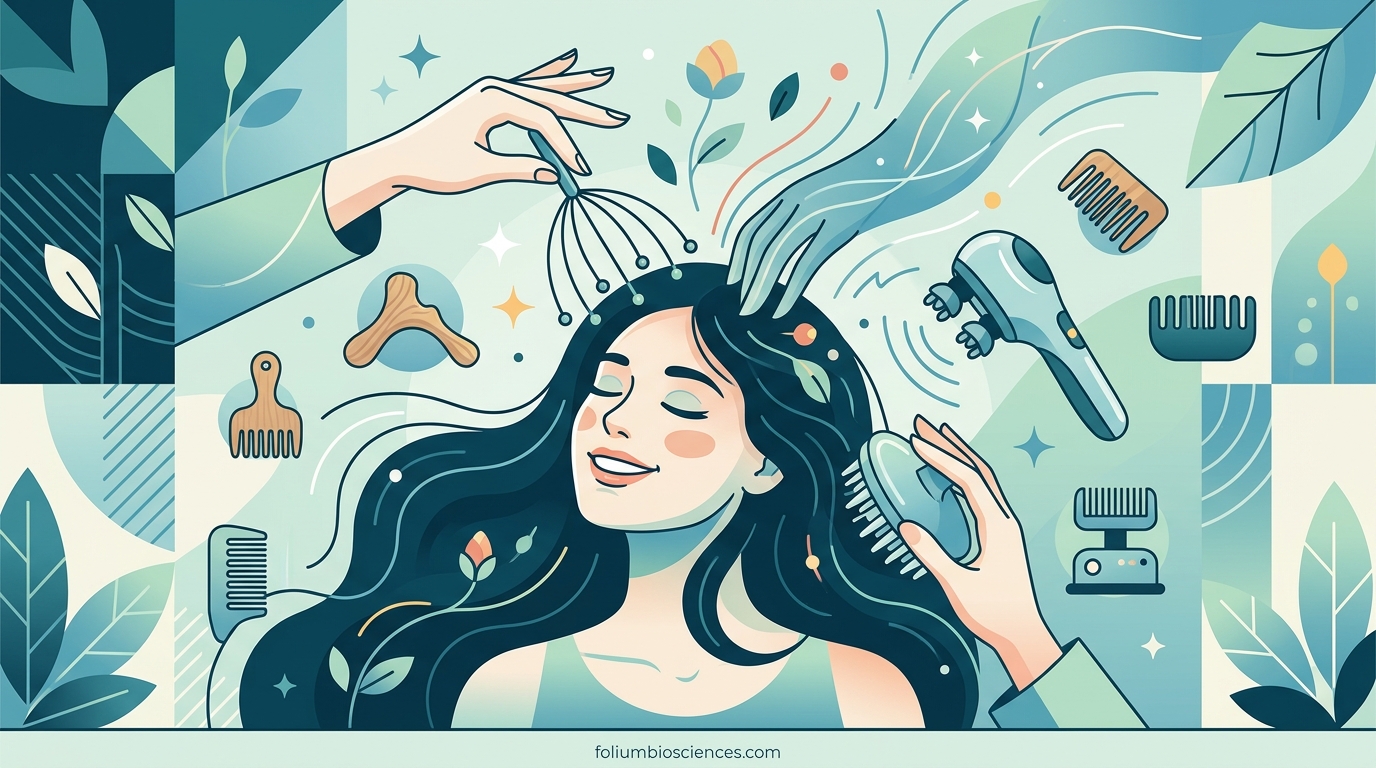
If you have spent any time on hair care forums lately, you have probably seen the buzz around scalp massage tools. Brands claim they stimulate hair growth. Influencers swear by them. But do these handheld devices actually work, or is this just another wellness trend that will fade away? The question matters because these tools range from $10 to $60, and you want to know if your investment will pay off.
This guide cuts through the marketing noise. We will look at silicone and bristle scalp massage tools, examine what science actually says about hair growth, and help you decide which type might work better for your situation. Our team reviewed clinical studies, consulted expert opinions, and analyzed real user experiences to give you an honest answer.
Table of Contents
What Are Scalp Massage Tools?
Scalp massage tools are handheld devices designed to stimulate the scalp through targeted pressure and movement. They come in two primary materials: silicone and bristle (typically nylon or plastic bristles mounted on a handle or pad). These tools have become increasingly popular in recent years as people seek natural ways to support hair health.
Silicone scalp massagers usually feature soft, flexible prongs or nodes that glide across the scalp. You often see them in the shower, used with shampoo to scrub the head. Their design focuses on gentle exfoliation and buildup removal. The prongs are typically rounded at the tips to prevent scratching or irritation during use.
Bristle scalp brushes typically have stiff but flexible tines that range from short and firm to long and bendable. Some look like oversized hairbrush heads. Others attach to existing handles or sit as standalone paddles. Their design targets stimulation and blood flow increase through more direct contact with the scalp.
Both types aim to improve scalp health through slightly different mechanisms. Neither is a magic solution for hair loss, but research suggests they may offer meaningful benefits when used consistently over time.
Silicone vs Bristle: Key Differences
The material choice matters more than most people realize. Here is how these two types stack up against each other in practice.
Silicone Scalp Massagers
Silicone massagers use soft, food-grade silicone prongs that feel gentle against the skin. They work exceptionally well for exfoliation because the flexible material reaches contours without scratching. Users often report that silicone tools feel like a relaxing scalp massage while they shampoo.
The primary benefits center on removal of product buildup, dead skin cells, and excess oil. If you use leave-in conditioners, styling products, or dry shampoo, silicone tools help clear the residue that can clog follicles over time. This clean environment may support healthier hair growth indirectly by removing barriers to follicle function.
Silicone tools tend to be more affordable and last longer because the material resists bacterial growth. They clean easily and dry quickly. However, the gentle action means they provide less direct stimulation to blood flow compared to bristle options. They are also generally quieter during use, which some users appreciate.
Bristle Scalp Brushes
Bristle brushes feature individual tines that penetrate deeper through hair to reach the scalp directly. The firmer options can feel intense, especially on a sensitive scalp. Users with thick hair often prefer bristles because the tines can part hair strands and reach the skin underneath more effectively.
The stiffness creates more mechanical stimulation, which may increase blood circulation more effectively than silicone. Better circulation means more oxygen and nutrients reaching hair follicles. Some users report a tingling sensation that they associate with activation of dormant follicles.
The trade-off involves gentleness. Bristle brushes can cause irritation if used too aggressively. They may also pull or tangle fine hair. Some users need to moderate pressure significantly to avoid discomfort. Additionally, bristle brushes may require more frequent replacement as the bristles can wear down over time.
Do They Actually Help Hair Growth?
This is the question everyone wants answered. The short answer is: maybe, with caveats. Let us look at what research actually shows and separate fact from fiction.
What the Science Says
A 2016 study published in the journal EBioMedicine examined the effects of scalp massage on hair thickness. Researchers found that men who massaged their scalps for just 4 minutes daily over 24 weeks showed increased hair thickness. The mechanism appeared to involve mechanical stress that triggered gene expression changes in hair follicles.
The study did not use silicone or bristle tools specifically. The participants used their fingertips. However, the principle likely extends to tool-assisted massage. The key factor is consistent, gentle pressure over time rather than the specific instrument used. This suggests that both silicone and bristle tools could potentially provide similar benefits if used correctly.
Another consideration involves DHT (dihydrotestosterone), the hormone linked to androgenetic alopecia (pattern baldness). Some evidence suggests improved scalp circulation might help reduce DHT buildup around follicles. However, this connection remains theoretical and not proven through large-scale human trials. More research is needed to confirm any direct relationship between massage and DHT reduction.
Healthline and other expert sources note that while scalp massage shows promise, it should not replace established treatments like minoxidil or finasteride. Think of massage as a complementary practice that supports overall scalp health rather than a standalone solution. The experts we consulted consistently emphasize that massage works best when combined with other hair care practices.
Realistic Expectations
For anyone expecting overnight results, prepare for disappointment. Forum users on Reddit’s r/tressless commonly report waiting 3-6 months before noticing any changes. Many add that massage alone was not enough, but combined with other treatments, it seemed to help. Users on r/finehair share similar experiences, noting that consistency was the key differentiator between those who saw results and those who did not.
The evidence suggests scalp massage works best for people with early-stage thinning or those looking to improve overall scalp condition. Advanced hair loss may not respond as well. The tools seem to support existing follicles rather than regenerate dead ones. If you have significant bald spots, massage tools will likely not reverse the condition on their own.
Benefits of Scalp Massage
Beyond the hair growth question, scalp massage offers several evidence-backed benefits worth considering for your overall hair care routine.
Improved Blood Circulation
Massage increases blood flow to the scalp. Better circulation delivers more oxygen and nutrients to hair follicles. Think of it like watering a plant: better blood flow feeds the roots, which may lead to healthier growth over time. The increased circulation also helps remove waste products from the scalp area more efficiently.
Product Buildup Removal
Even if you wash your hair regularly, residue from conditioners, serums, and styling products can accumulate. Silicone massagers excel at breaking down this buildup during shampooing. A clean scalp creates better conditions for hair to thrive. Over time, this buildup can create a barrier that prevents products from reaching the follicle, so removal is important.
Exfoliation and Dead Skin Removal
The scalp sheds skin cells just like the rest of your body. When these cells accumulate, they can create flakes, itching, and clogged pores. Both silicone and bristle tools help remove this layer, though silicone tends to be gentler on sensitive skin. Regular exfoliation can significantly reduce flaking and improve overall scalp comfort.
Reduced Tension and Stress Relief
Many users report that scalp massage feels relaxing and reduces tension headaches. This benefit extends beyond hair care. Taking a few minutes to massage your scalp can serve as a mental break during stressful days. Some users incorporate scalp massage into their evening routine specifically for this stress-relief benefit.
Better Product Absorption
If you use topical treatments for hair health (serums, oils, minoxidil), clean skin absorbs them more effectively. Removing the barrier of dead cells and buildup allows products to penetrate where they need to go. This means your expensive hair serums and treatments can work more efficiently after a good scalp massage session.
Strengthened Hair Strands
Some users report less breakage after regular scalp massage. This may result from improved scalp health overall, leading to stronger hair where it originates at the follicle. Healthier follicles produce stronger hair shafts that are more resistant to breakage during styling and daily activities.
How to Use Scalp Massage Tools
Knowing how to use these tools correctly matters. Poor technique can lead to irritation without benefit. Here is our step-by-step guide based on expert recommendations and real user experiences.
Step 1: Start with Dry or Damp Hair
Most people use scalp massagers in the shower with wet hair and shampoo. This works well for silicone tools focused on cleansing. Bristle brushes can be used on dry hair for stimulation or with conditioner for detangling. Some users prefer to use their tools on dry hair before showering to stimulate the scalp without product interference.
Step 2: Apply Gentle Pressure
Let the tool do the work. Pressing too hard can cause irritation or damage. Move the tool in slow, circular motions across different sections of your scalp. Spend 30-60 seconds per section. You should feel a gentle sensation without pain. If it hurts, you are pressing too hard.
Step 3: Focus on Problem Areas
If you have areas with more thinning or tension, spend extra time there. However, avoid focusing so much on one spot that you cause irritation. Balance across the whole scalp works better. Some users with specific concerns like receding hairlines concentrate on those areas but still maintain overall scalp coverage.
Step 4: Clean the Tool After Each Use
Rinse silicone tools thoroughly and let them dry. Bristle brushes may need more attention to remove hair caught in the bristles. Regular cleaning prevents bacterial buildup that could cause scalp issues. We recommend a weekly deep clean with warm water and mild soap for both types.
Step 5: Be Consistent
Experts recommend daily use for best results. This does not mean vigorous massage; even 2-3 minutes per day seems beneficial based on the 2016 study. Consistency over months is what produces noticeable changes. Mark your calendar or attach the routine to an existing daily habit like brushing your teeth.
How Long Should You Massage?
Research and expert opinions suggest 2-5 minutes daily is optimal. More than 10 minutes likely provides diminishing returns. Short, consistent sessions outperform occasional long sessions. Some users find success with just 60-90 seconds per day, especially when starting out. You can gradually increase duration as your scalp adjusts.
Silicone vs Bristle Comparison
Here is a direct comparison to help you decide which type might suit your needs better based on your specific situation.
| Feature | Silicone Massager | Bristle Brush |
|---|---|---|
| Best For | Sensitive scalps, buildup removal, gentle cleansing | Thick hair, deep stimulation, blood flow increase |
| Gentleness | Very gentle, minimal irritation risk | Can be harsh if too aggressive |
| Exfoliation | Excellent for dead skin and product residue | Good but may not reach all contours |
| Blood Circulation | Moderate improvement | High improvement with proper technique |
| Durability | Very durable, resists bacteria, easy to clean | Good but bristles may wear or break over time |
| Price Range | $10-$25 typically | $15-$40 typically |
| Ideal Hair Type | Fine, medium, chemically treated, sensitive | Thick, coarse, natural, resistant to tangling |
For most people, the choice comes down to primary goal and hair type. If you want gentle cleansing and exfoliation, go with silicone. If you want maximum stimulation and blood flow, bristle works better. Some users keep both and alternate based on their shower routine or specific needs on any given day.
Safety Tips and Side Effects
While scalp massage tools are generally safe for most people, certain situations warrant caution. Understanding potential risks helps you avoid common mistakes that could harm rather than help your scalp.
When to Avoid or Limit Use
If you have psoriasis, eczema, or other scalp conditions, consult a dermatologist before using these tools. Aggressive massage could worsen irritation or cause bleeding in severe cases. Even gentle tools might aggravate active flare-ups. Your dermatologist can advise whether massage is appropriate for your specific condition and what pressure level is safe.
Open wounds, scabs, or sunburned scalp should never be massaged. Wait for healing before resuming your routine. Applying pressure to damaged skin can cause pain, delay healing, and potentially introduce bacteria into the wound.
Signs You Are Overdoing It
Redness, soreness, increased hair shedding, or scalp pain indicate you are being too aggressive. Reduce pressure or frequency immediately. If symptoms persist, stop using the tool and consult a professional. Some temporary shedding after starting massage is normal, but significant increase in hair loss is not and should prompt immediate reduction in use.
Choosing the Right Tool for Your Scalp Type
If your scalp tends to be oily, silicone exfoliation benefits may help more effectively manage excess sebum. For dry scalps prone to flaking, gentle silicone can remove dead skin without over-drying. For normal scalps seeking stimulation, bristle options provide stronger effects. Understanding your scalp type helps you make a more informed choice between the two main materials.
Start with gentle sessions regardless of tool type. You can always increase intensity if your scalp tolerates it well. Erring on the side of caution prevents unnecessary damage and allows you to build up tolerance gradually over weeks of consistent use.
Frequently Asked Questions
Do silicone scalp massagers stimulate hair growth?
What is the best material for a scalp massager for hair growth?
What’s better for hair growth, scalp massager or scrubber?
Can a scalp massage tool help with hair growth?
How can I stimulate my hair follicles for hair growth?
How long should you massage your scalp to promote hair growth?
Conclusion
Scalp massage tools, whether silicone or bristle, can contribute to healthier hair and potentially support growth. The evidence is modest but real. These tools work by improving circulation, removing buildup, and creating better conditions for follicles to function properly.
Do not expect miracles. Scalp massage will not reverse significant hair loss on its own. However, as part of a comprehensive approach including good nutrition, proper hair care, and (if needed) medical treatments, it can be a valuable addition to your routine. Many users report that the tools become an essential part of their weekly hair care ritual.
The choice between silicone and bristle depends on your specific needs. Start with the gentler silicone option if you have a sensitive scalp or primarily want to remove buildup. Choose bristle if you have thick hair and want maximum stimulation. Many users find that having both serves them best depending on the day and their scalp condition.
Commit to consistent use over months before evaluating results. Give your scalp time to respond. With patience and proper technique, scalp massage tools may become a worthwhile investment in your hair health journey.