
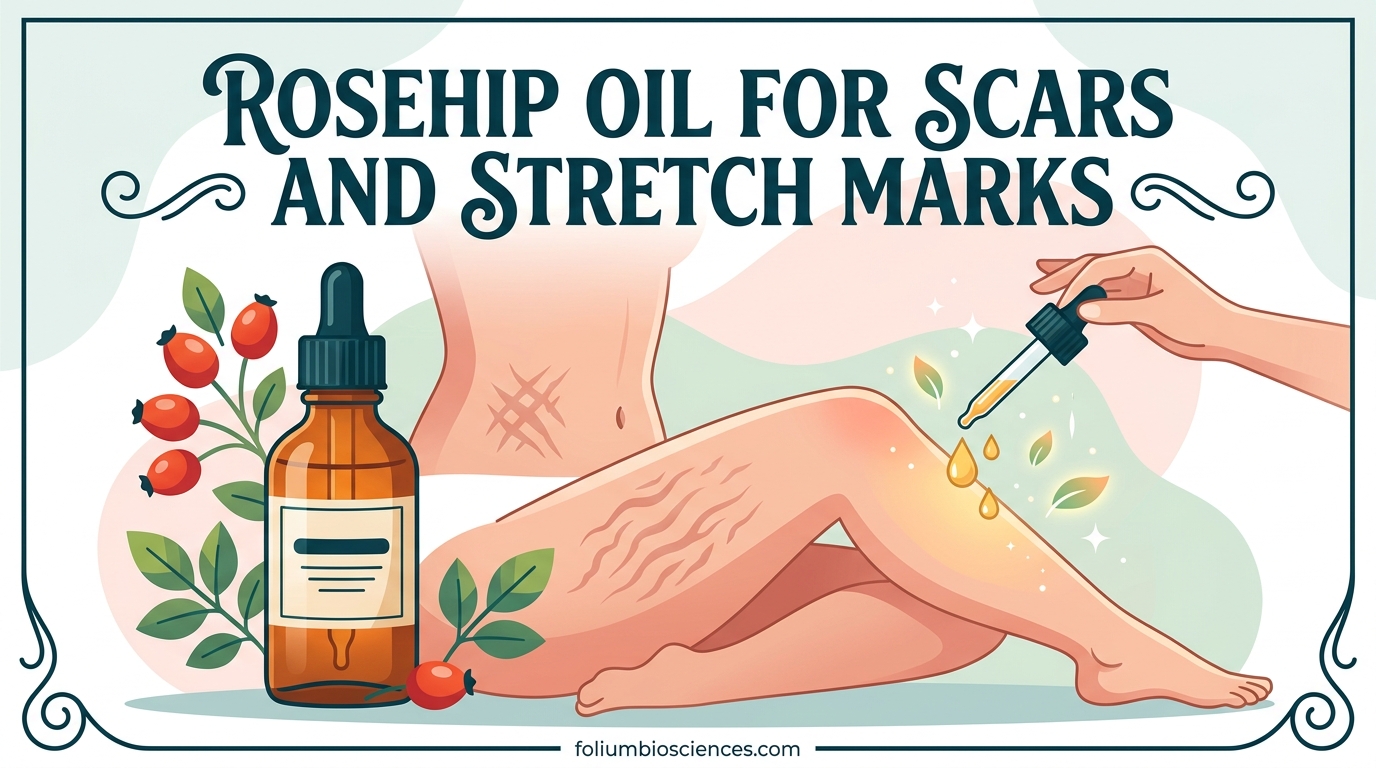
You can expect to see initial improvements from rosehip oil within 2 to 4 weeks, with more significant results appearing after 6 to 12 weeks of consistent use. Clinical studies back this timeline: one study with 160 postsurgical patients showed a 41% improvement in scar color after 12 weeks of daily application.
Another study demonstrated a 43% improvement in the appearance of stretch marks over the same period. These results depend on several factors including scar age, consistency of application, and product quality.
I have spent months researching the science behind rosehip oil and gathering real user experiences from forums and dermatological studies. In this guide, I will walk you through exactly what to expect week by week, how to apply rosehip oil for maximum results, and why some people see faster results than others.
Table of Contents
What Is Rosehip Oil?
Rosehip oil is the oil extracted from the hip (fruit) of a rose plant, specifically from the Rosa canina species native to Chile, Europe, and parts of Africa. The hip is the small, round fruit that forms after a rose has bloomed and lost its petals.
Unlike rose oil, which comes from rose petals and carries a strong floral fragrance, rosehip oil has a subtle, earthy scent and is extracted through cold-pressing or CO2 extraction of the seeds and fruit. This difference matters because rosehip oil contains a completely different nutrient profile focused on skin regeneration rather than fragrance.
Traditional communities have used rosehip oil for centuries, with records dating back to ancient Egyptians and Mayans. During World War II, British soldiers were given rosehip syrup for its vitamin C content. Today, it is prized in skincare for its ability to improve skin texture, reduce scarring, and restore elasticity.
Key Compounds That Make Rosehip Oil Effective
The effectiveness of rosehip oil comes from its unique combination of essential fatty acids, vitamins, and antioxidants. Understanding these compounds helps explain why it works for scars and stretch marks.
Essential Fatty Acids
Rosehip oil contains exceptionally high levels of linoleic acid (omega-6), typically comprising 47-50% of its total composition. It also contains alpha-linolenic acid (omega-3) at 33-40%, along with smaller amounts of oleic acid, palmitic acid, and stearic acid.
These fatty acids play a critical role because acne-prone and scarred skin often shows deficiencies in linoleic acid. When you apply rosehip oil topically, you replenish these essential fats that support the skin barrier and reduce inflammation.
Vitamin A (Tretinoin)
Rosehip oil contains natural forms of vitamin A, including beta-carotene, lycopene, and trans-retinoic acid (a form of tretinoin). Tretinoin is a well-documented ingredient for promoting cell turnover and collagen production, which are essential for scar healing.
This natural tretinoin content helps explain why rosehip oil can improve skin texture and reduce the appearance of scars without the harsh side effects often associated with prescription retinoids.
Vitamin C and Antioxidants
The oil contains vitamin C (ascorbic acid) and vitamin E (tocopherol), which work together as antioxidants to protect skin from free radical damage. These vitamins also support collagen synthesis and help fade hyperpigmentation associated with scars.
Flavonoids and polyphenols in rosehip oil provide additional antioxidant protection, helping to reduce the inflammation that can worsen scar appearance and delay healing.
How Rosehip Oil Works on Scars and Stretch Marks
Rosehip oil works through multiple mechanisms simultaneously, which is why it can be effective for different types of skin damage.
First, the linoleic acid content helps regulate skin cell membranes and improve skin texture. Studies show that people with acne-prone skin often have lower levels of linoleic acid in their sebum, creating a deficiency that contributes to microcomedone formation and poor healing.
Second, the vitamin A compounds stimulate collagen production and accelerate cell turnover. This process gradually replaces damaged scar tissue with new, healthy skin cells. Collagen is the structural protein that gives skin its strength and elasticity, and scars often form when collagen production is disrupted during wound healing.
Third, the anti-inflammatory properties of rosehip oil help reduce redness and post-inflammatory erythema (the red marks left after acne heals). By calming inflammation, the oil creates an environment where healing can occur more efficiently.
Fourth, the oil provides deep moisturization, which keeps scar tissue pliable and prevents the dryness that can make scars more noticeable. Well-hydrated skin heals faster and shows less textural irregularity.
How Long Until You See Results: Week-by-Week Timeline
The most common question people ask is how long rosehip oil takes to work. Here is what you can realistically expect based on clinical data and user experiences.
Week 1-2: Initial Hydration and Comfort
In the first two weeks, you will likely notice improvements in skin hydration and comfort. The oil absorbs quickly and leaves skin feeling softer and more supple. Some users report a subtle “glow” as the antioxidants begin to protect and nourish the skin.
Do not expect visible scar fading yet. At this stage, the oil is penetrating the skin barrier and beginning to deliver nutrients to deeper layers. Your skin is adjusting to the new fatty acid profile.
Week 3-4: Texture Improvements
By weeks three and four, you should start noticing textural improvements. Skin feels smoother, and you may see a slight reduction in the roughness around scar edges. Some users report that their skin appears more “even” in tone, though major fading has not occurred yet.
This is also when some people experience a brief purging phase if they are acne-prone. The increased cell turnover can bring underlying congestion to the surface before clearing it.
Week 6-8: Visible Fading Begins
Six to eight weeks is when most people start seeing visible changes in scar appearance. Redness begins to diminish, and scars may look slightly flatter. For stretch marks, you might notice the raised or indented texture becoming less pronounced.
Clinical studies show that by week 8, participants typically see a 20-30% improvement in scar color and texture. This is the point where many users become confident that the oil is working.
Week 10-12+: Significant Clinical Results
The 12-week mark is where clinical studies demonstrate the most impressive results. Research with postsurgical patients showed a 41% improvement in scar color and significant improvements in scar texture after 12 weeks of twice-daily application.
For stretch marks specifically, studies show a 43% improvement in appearance and a 32% improvement in depth after 12 weeks. These are measurable, documented outcomes, not just anecdotal reports.
After 12 weeks, continue using rosehip oil to maintain results. Some scars, particularly older or deeper ones, may require 4-6 months of consistent use for optimal results.
Effectiveness on Different Scar Types
Not all scars respond equally to rosehip oil. Understanding which types of scars and marks respond best can help set realistic expectations.
Acne Scars and Post-Inflammatory Erythema
Rosehip oil works well for flat red or brown marks left after acne heals (post-inflammatory erythema and hyperpigmentation). The vitamin C and A content helps fade these discolorations over 8-12 weeks.
For pitted or atrophic acne scars, results vary. Some users on skincare forums report improvements in the appearance of pitted scars over 3+ months of consistent use. However, deep ice-pick scars may not respond significantly to topical treatments alone.
Surgical Scars
The clinical study showing 41% improvement in scar color specifically tested postsurgical scars. Rosehip oil appears particularly effective for newer surgical scars during the remodeling phase (typically 3-12 months after surgery).
For older surgical scars (over 1 year), rosehip oil can still improve texture and color, but results may take longer and be less dramatic.
Stretch Marks (Striae)
Stretch marks respond differently depending on their age. New stretch marks (striae rubra) that are still red or pink respond better than older, white stretch marks (striae alba).
The 43% improvement in stretch mark appearance from clinical studies primarily reflects results on newer stretch marks. Older stretch marks can still improve, but expect a longer timeline and more modest results.
Hyperpigmentation and Sun Damage
Rosehip oil helps fade dark spots and sun damage through its vitamin C content and antioxidant properties. These marks typically show improvement within 6-10 weeks of consistent use.
How to Apply Rosehip Oil for Best Results
Application technique matters as much as the product itself. Here is the method that maximizes absorption and effectiveness.
Step 1: Cleanse Thoroughly
Start with clean, dry skin. Use a gentle cleanser and pat your face completely dry. Rosehip oil penetrates best on skin that is not damp or wet.
Step 2: Use the Right Amount
For facial application, use 2-4 drops. For larger areas like stomach or thighs for stretch marks, use enough to create a thin layer. More is not better; excess oil will sit on the surface and waste product.
Step 3: Warm and Activate
Warm the oil between your fingertips for a few seconds. This helps it spread more easily and absorb better.
Step 4: Massage Technique
Apply to the scar or stretch mark area and massage in small, circular motions for 1-2 minutes. Massaging increases blood flow to the area, which supports healing. Forum users consistently report that massaging twice daily yields better results than simply applying without massage.
Step 5: Layer Correctly
If you use other products, apply rosehip oil after water-based serums but before moisturizer. The general rule is thinnest to thickest consistency. Some users report good results combining rosehip oil with a thin layer of Vaseline applied over it for occlusion, especially overnight.
Step 6: Frequency
Apply twice daily, morning and evening, for best results. Clinical studies showing significant improvements used twice-daily application. Consistency is critical; skipping days will extend your timeline.
Factors That Affect Your Results Timeline
Why do some people see results in 6 weeks while others need 16 weeks? Several factors influence how quickly rosehip oil works for you.
Scar Age
Newer scars (under 1 year) respond faster to treatment because they are still in active remodeling phases. Older scars have fully formed collagen structures that are harder to remodel. However, rosehip oil can still improve older scars; it just takes longer.
Consistency of Use
This is the most controllable factor. Users who apply rosehip oil twice daily without skipping see results within the expected 6-12 week window. Inconsistent use stretches the timeline significantly.
Product Quality
Cold-pressed, organic rosehip oil retains more of the beneficial compounds than heat-processed or refined versions. Look for oil that is cold-pressed and packaged in dark glass bottles to protect from light degradation. Cheap, heavily processed oils may not deliver the same results.
Application Technique
Massaging the oil into scars increases circulation and absorption. Simply patting it on is less effective than working it into the skin with gentle pressure.
Skin Type and Genetics
Individual skin metabolism varies. Some people naturally produce collagen faster than others. Your genetic predisposition to scarring and healing also plays a role in how quickly you see results.
Rosehip Oil vs Bio Oil: Which Works Better?
This is one of the most common questions from forum users. Both products claim to improve scars and stretch marks, but they work differently.
Bio Oil contains mineral oil as its base, along with vitamins A and E, and botanical oils including calendula, lavender, rosemary, and chamomile. It also contains the synthetic fragrance ingredient BHT, which some users find irritating.
Rosehip oil is a single-ingredient product (or should be) with no fillers or mineral oil. It contains higher concentrations of linoleic acid and natural tretinoin compared to Bio Oil.
In terms of clinical evidence, rosehip oil has more direct research supporting its scar-healing benefits. Bio Oil has some studies but relies more on marketing and user testimonials.
User experiences on skincare forums are mixed; some prefer Bio Oil for its lighter texture, while others find rosehip oil more effective for stubborn scars. If you have sensitive skin, rosehip oil is often better tolerated since it lacks synthetic fragrances.
Safety Considerations and Side Effects
Rosehip oil is generally safe for most people, but there are important considerations to keep in mind.
Patch Testing
Always patch test new products. Apply a small amount to your inner arm and wait 24 hours. If you experience redness, itching, or irritation, do not use the product on your face or scars.
Purging vs Breaking Out
Some users report an initial increase in breakouts when starting rosehip oil. This could be purging (accelerated cell turnover bringing congestion to the surface) or a reaction to the oil. If breakouts persist beyond 2-3 weeks or worsen, discontinue use.
Photosensitivity
Due to the vitamin A content, rosehip oil can increase photosensitivity. Always use sunscreen during the day when using rosehip oil, especially on scars or areas being treated.
Accutane Interaction
If you are taking isotretinoin (Accutane), consult your dermatologist before using rosehip oil. The additional vitamin A from the oil could theoretically increase side effects, though most dermatologists consider topical vitamin A safe during treatment.
Shelf Life and Storage
Rosehip oil is unstable and oxidizes relatively quickly. Store it in a cool, dark place and use within 6 months of opening. If the oil smells rancid, discard it.
Frequently Asked Questions
How long does it take for rosehip oil to fade scars?
You can expect to see initial improvements in 2-4 weeks, with significant fading typically occurring after 6-12 weeks of consistent twice-daily application. Clinical studies show a 41% improvement in scar color after 12 weeks.
Does rosehip oil fade stretch marks?
Yes, rosehip oil can fade stretch marks. Clinical studies demonstrate a 43% improvement in the appearance of stretch marks after 12 weeks of use. Newer red stretch marks (striae rubra) respond better than older white ones (striae alba).
How long does rose hip oil take to show results?
Results vary by person and scar type, but most users report visible improvements within 6-8 weeks, with optimal results at 12 weeks. Consistency matters: twice-daily application yields faster results than sporadic use.
Can rosehip oil reduce scarring?
Rosehip oil can reduce the appearance of scars by promoting collagen production, improving skin texture, and fading discoloration. Studies show it is particularly effective for postsurgical scars and post-inflammatory erythema from acne. However, it cannot completely remove or erase established scar tissue.
Is rosehip oil better than Bio Oil for scars?
Rosehip oil has more clinical evidence supporting its effectiveness and contains higher concentrations of beneficial compounds like linoleic acid and natural tretinoin. Bio Oil is lighter in texture but contains mineral oil and synthetic fragrances. Individual results vary, and some users prefer one over the other based on their skin type.
How often should I apply rosehip oil to scars?
For best results, apply rosehip oil twice daily: once in the morning and once in the evening. Clinical studies showing significant improvements used this twice-daily frequency. Massage the oil into the scar for 1-2 minutes each application to increase absorption.
Conclusion
Rosehip oil for scars and stretch marks delivers measurable results, but patience and consistency are essential. Expect initial improvements within 2-4 weeks, visible fading by 6-8 weeks, and significant clinical-level results after 12 weeks of twice-daily application.
The research supports these timelines: 41% improvement in scar color and 43% improvement in stretch mark appearance are realistic expectations based on clinical data. Your results may vary depending on scar age, consistency, and application technique, but the evidence suggests rosehip oil is worth the commitment.
Start with a high-quality cold-pressed organic oil, commit to twice-daily application with massage, and track your progress with photos. The wait may feel long, but the improvement in skin texture and confidence is worth it.