
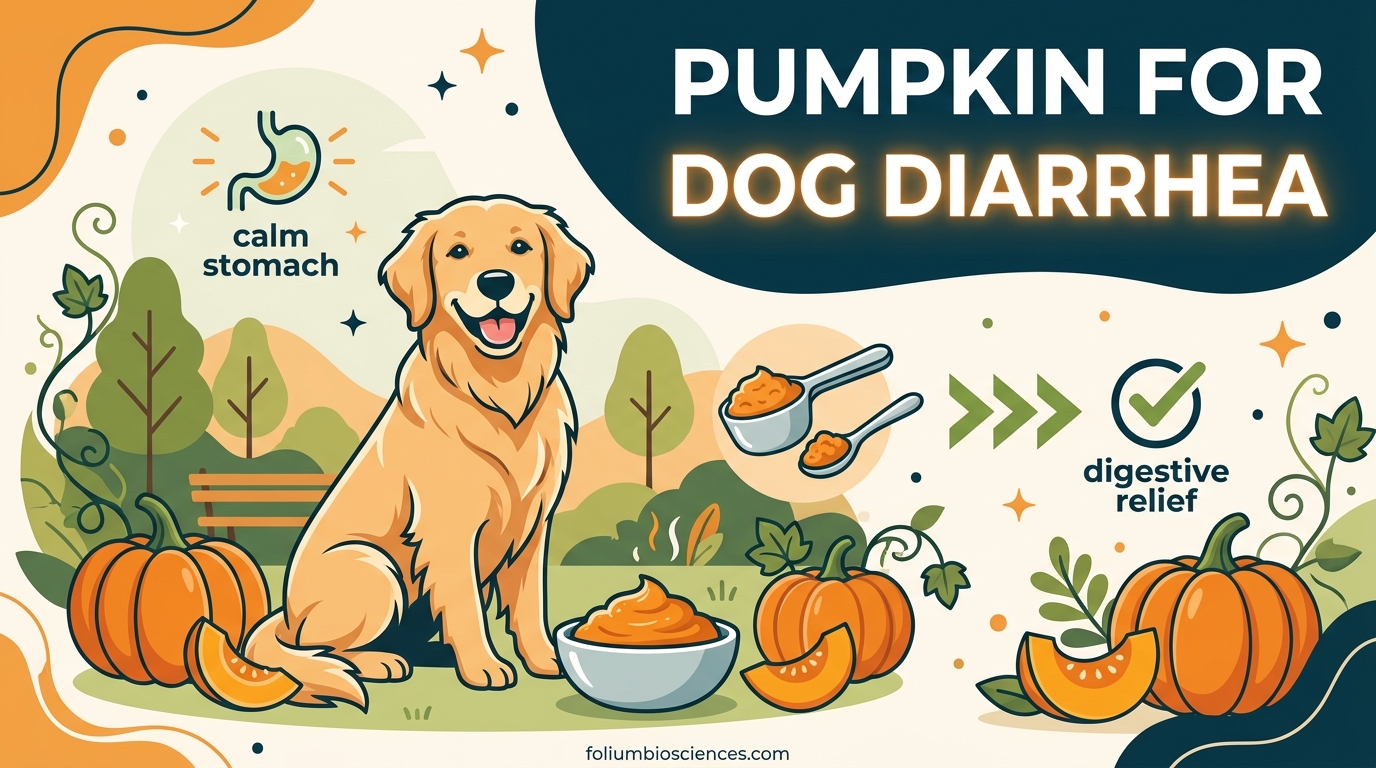
If your dog has diarrhea, you are not alone in reaching for a can of pumpkin. Pumpkin for dog diarrhea is one of the most widely recommended natural remedies by veterinarians and experienced dog owners alike. The general rule is simple: give 1 tablespoon of pure pumpkin per 10 pounds of body weight, mixed into each meal. Most dogs see firmer stools within 12 to 24 hours.
In this guide, we cover exactly how much pumpkin to give your dog based on their body weight, how it works, which types of pumpkin are safe, and when you should skip the home remedy and head straight to your vet.
Table of Contents
What Is Pumpkin and Why Does It Help Dog Diarrhea?
Pumpkin is a nutrient-dense squash that belongs to the Cucurbitaceae family. It is low in calories and rich in soluble fiber, which is the key compound that makes it effective for treating dog diarrhea. A single cup of canned pumpkin contains about 7 grams of dietary fiber, along with significant amounts of vitamin A, vitamin C, vitamin E, potassium, and beta-carotene.
The reason pumpkin works so well comes down to one thing: soluble fiber. Soluble fiber dissolves in water and forms a gel-like substance in the digestive tract. This gel absorbs excess water from loose stools and slows down digestion just enough to let the intestines do their job properly. Think of it like a sponge soaking up the extra moisture that causes runny stool.
Beyond fiber, pumpkin provides real nutritional value during a time when your dog may not be eating much. The potassium helps replace electrolytes lost through diarrhea. Beta-carotene (which the body converts to vitamin A) supports the immune system and helps repair the intestinal lining. Vitamin C and vitamin E act as antioxidants that reduce inflammation in the gut.
Veterinarians have recommended pumpkin as a first-line home remedy for mild canine diarrhea for decades. It is gentle, widely available, and most dogs accept it readily when mixed with their regular food. That said, it is not a cure-all, and we will cover the limitations later in this guide.
How Pumpkin Works to Firm Up Dog Stool
Understanding how pumpkin firms up dog stool helps you use it more effectively. The process involves three main mechanisms working together.
First, the soluble fiber in pumpkin absorbs excess water in the intestines. When your dog has diarrhea, food moves through the digestive tract too quickly, and the large intestine does not have time to absorb water from the waste. The soluble fiber in pumpkin acts like a thickening agent, binding with that excess water and adding bulk to the stool.
Second, pumpkin adds physical bulk to the intestinal contents. This bulk stimulates the normal stretching reflexes of the colon, which signals the body to slow down transit time. When food moves at a normal pace through the gut, the intestines can properly absorb nutrients and water, resulting in formed stool.
Third, the soluble fiber in pumpkin acts as a prebiotic. Prebiotics feed the beneficial bacteria already living in your dog’s gut. These good bacteria produce short-chain fatty acids that nourish the cells lining the colon and help restore a healthy gut microbiome. A balanced gut microbiome is essential for normal digestion and formed stools.
How Long Does It Take for Pumpkin to Work?
Most dog owners report seeing improvement within 12 to 24 hours after giving their dog pumpkin. The first bowel movement after adding pumpkin may still be loose, but by the second or third stool, you should notice a clear difference in consistency. If you do not see any improvement after 24 to 48 hours of consistent pumpkin feeding, it is time to contact your veterinarian. There may be an underlying issue that requires medical treatment rather than a dietary fix.
Pumpkin Dosage Chart for Dogs by Body Weight
The most common question dog owners ask is exactly how much pumpkin to give. The standard veterinary guideline is roughly 1 tablespoon of pure pumpkin per 10 pounds of body weight per day. Below is a clear breakdown by weight range so you can find the right amount for your dog quickly.
- Small dogs (under 10 lbs): 1 to 2 teaspoons of pure pumpkin per day. For tiny breeds like Chihuahuas or Yorkies, start with just 1 teaspoon mixed into food.
- Small-to-medium dogs (10 to 20 lbs): 1 to 2 tablespoons per day. This covers breeds like Shih Tzus, French Bulldogs, and Beagles.
- Medium dogs (20 to 40 lbs): 2 to 4 tablespoons per day. Suitable for Cocker Spaniels, Border Collies, and similar-sized breeds.
- Medium-to-large dogs (40 to 60 lbs): 4 to 6 tablespoons per day. This range fits Australian Shepherds, Pit Bulls, and Standard Poodles.
- Large dogs (60 to 80 lbs): 6 to 8 tablespoons per day. Appropriate for German Shepherds, Labradors, and Golden Retrievers.
- Extra-large dogs (80+ lbs): 8 to 10 tablespoons (roughly half a cup to two-thirds of a cup) per day. For Great Danes, Mastiffs, and other giant breeds.
These amounts are daily totals. For best results, split the daily amount across two meals rather than giving it all at once. For example, a 50-pound dog getting 5 tablespoons total would receive 2.5 tablespoons with breakfast and 2.5 tablespoons with dinner.
Specific Dosage Examples by Weight
Here are a few common weight-based scenarios dog owners search for:
How much pumpkin to give a 20 lb dog with diarrhea: Start with 1.5 to 2 tablespoons per day, split between meals. You should see improvement within 12 to 24 hours.
How much pumpkin to give a 50 lb dog: Give 4 to 5 tablespoons per day. Split this into 2 to 2.5 tablespoons per meal for best absorption and tolerance.
How much canned pumpkin for a small dog with diarrhea: For dogs under 15 pounds, stick to 1 to 1.5 teaspoons per meal. Small dogs have sensitive digestive systems, so starting with a smaller amount and working up is safer than giving too much at once.
Puppy Dosage Considerations
Puppies can have pumpkin for mild diarrhea, but you need to be more conservative with the amount. For puppies under 10 pounds, start with just half a teaspoon per meal. Puppies dehydrate faster than adult dogs, so if diarrhea persists for more than 12 hours or is accompanied by vomiting or lethargy, skip the home remedy and see your vet immediately. Puppy diarrhea can escalate quickly and may indicate parasites, infections, or dietary intolerances that need professional treatment.
How to Serve Pumpkin to Your Dog
Getting the pumpkin into your dog is usually the easy part, since most dogs enjoy the taste. But how you serve it matters for effectiveness and safety. Here is a step-by-step approach.
Step 1: Start with a small amount. Even though you know the target dosage for your dog’s weight, start with half the amount for the first meal. This gives your dog’s digestive system time to adjust to the added fiber. Going straight to a full dose can sometimes cause gas or bloating.
Step 2: Mix it thoroughly with food. The most effective method is stirring the pumpkin directly into your dog’s regular meal. Wet food works especially well because the pumpkin blends in seamlessly. If your dog eats dry kibble, add a small splash of warm water to help the pumpkin coat the kibble evenly.
Step 3: Feed twice daily. Split the daily dosage between two meals rather than one. This maintains a steady level of fiber in the digestive tract throughout the day, which produces more consistent results than a single large dose.
Step 4: Monitor stool quality. Check your dog’s stool after each bowel movement. You are looking for stool that holds its shape but is not rock-hard. Once the stool returns to normal consistency, you can begin tapering off the pumpkin over the next two to three days rather than stopping abruptly.
Creative Ways to Serve Pumpkin
If your dog is a picky eater or refuses food when their stomach is upset, try these approaches:
- Frozen pumpkin cubes: Spoon canned pumpkin into ice cube trays and freeze. Dogs often enjoy licking the cold cube, and the cold can be soothing on an inflamed digestive tract.
- Pumpkin on a lick mat: Spread a thin layer of pumpkin on a silicone lick mat. The licking motion can have a calming effect on dogs with mild nausea.
- Mixed with plain white rice: For dogs with moderate diarrhea, combining pumpkin with a small amount of plain cooked white rice creates a gentle, high-fiber bland diet that is easy on the digestive system.
- Stuffed in a Kong toy: Mix pumpkin with a little plain yogurt and freeze inside a Kong toy. This works well for dogs who have lost interest in their regular food bowl.
Types of Pumpkin: Which Kind Is Safe for Dogs?
Not all pumpkin products are created equal. Choosing the wrong type can actually make your dog’s diarrhea worse or even put their health at serious risk. Here is what you need to know.
100% Pure Canned Pumpkin (Recommended)
This is the best option for most dog owners. Look for cans labeled “100% pure pumpkin” or “solid pack pumpkin.” The ingredient list should contain exactly one item: pumpkin. Nothing else. Brands like Libby’s 100% Pure Pumpkin (not the pie filling version) are widely available and work well. Canned pure pumpkin has a consistent texture, is easy to measure, and contains a reliable fiber content.
Fresh Pumpkin
Fresh pumpkin is safe for dogs but requires more preparation. To prepare fresh pumpkin, remove the seeds and stringy pulp, cut the flesh into chunks, and either steam or bake it until soft. Then puree it in a blender or food processor until smooth. Do not add any salt, butter, oil, or spices. Fresh pumpkin has a higher water content than canned, so you may need to use slightly more to get the same fiber concentration. One advantage of fresh pumpkin is that it contains no risk of BPA from can linings or added sodium.
Pumpkin Pie Filling (DANGEROUS – Do NOT Use)
This is the most critical warning in this entire guide. Pumpkin pie filling is NOT the same as pure pumpkin, and it can be toxic to your dog. Pumpkin pie filling contains added sugar, spices (including nutmeg, which can cause seizures in dogs), and thickening agents. Most dangerously, some brands contain xylitol, an artificial sweetener that is extremely toxic to dogs and can cause fatal drops in blood sugar and liver failure even in small amounts.
Always check the label carefully. If the can says “pumpkin pie filling,” “pumpkin pie mix,” or lists anything other than pumpkin in the ingredients, put it back on the shelf. The risk is simply not worth it.
Pumpkin Powder Supplements
Pumpkin powder is a dehydrated form of pure pumpkin that you rehydrate with water before serving. It is convenient for travel and has a long shelf life. Follow the package directions for rehydration ratios. The fiber content per serving is generally comparable to canned pumpkin when prepared correctly. This option is worth considering if you want something portable or if you do not want to store leftover canned pumpkin.
Other Benefits of Pumpkin for Dogs
While most people reach for pumpkin when their dog has diarrhea, it offers several other health benefits that make it worth keeping in your pantry year-round.
Constipation Relief
Pumpkin is one of the few foods that helps with both diarrhea and constipation. The same soluble fiber that absorbs excess water during diarrhea also adds moisture and bulk to dry, hard stools during constipation. If your dog is straining to pass stool, adding a small amount of pumpkin to their food can help lubricate the digestive tract and promote regular bowel movements. The dosage is the same: roughly 1 tablespoon per 10 pounds of body weight.
Anal Gland Support
Many dog owners on forums report that regular pumpkin supplementation has resolved their dog’s chronic anal gland issues. The added fiber creates bulkier, firmer stools that naturally express the anal glands during bowel movements. If your dog scoots on the carpet frequently or needs manual gland expression at the vet, adding pumpkin to their daily diet may help. For this purpose, a smaller daily amount (about half the diarrhea dosage) is usually sufficient.
Weight Management
Pumpkin is low in calories and high in fiber, which makes it an excellent food topper for overweight dogs. Replacing a portion of your dog’s regular kibble with an equal volume of pumpkin reduces their calorie intake while keeping them feeling full. One tablespoon of pure pumpkin contains only about 5 calories. Always consult your vet before starting any weight loss plan, but pumpkin can be a helpful tool in a controlled weight management program.
Immune System Support
The beta-carotene, vitamin C, and vitamin E in pumpkin all contribute to immune system function. Beta-carotene converts to vitamin A in the body, which supports skin health, vision, and immune cell production. These vitamins are especially beneficial for senior dogs whose immune systems may need extra support.
Pumpkin Precautions: What to Watch Out For
Pumpkin is generally safe, but there are several precautions every dog owner should know before using it as a diarrhea remedy.
Too Much Pumpkin Can Cause Diarrhea
This sounds counterintuitive, but it is true. Overfeeding pumpkin can actually cause or worsen diarrhea because the sudden influx of fiber can overwhelm the digestive system. This is one of the most commonly reported issues in dog owner forums. Always start with a smaller amount than the full recommended dose and work your way up over two to three days. If your dog’s stool becomes too firm or they strain to pass it, cut back on the amount.
Vitamin A Toxicity from Long-Term Overfeeding
Pumpkin is rich in beta-carotene, which converts to vitamin A. While vitamin A is essential for dogs, excessive amounts over a long period can lead to vitamin A toxicity. This is not a concern for short-term diarrhea treatment (a few days to a week), but if you plan to feed pumpkin daily as a supplement long-term, keep the amount modest and discuss it with your veterinarian.
Allergic Reactions
Some dogs are allergic to pumpkin. Symptoms of a pumpkin allergy include itching, skin redness, ear infections, and gastrointestinal upset. If you notice any of these symptoms after introducing pumpkin, stop feeding it immediately and consult your vet. Forum reports suggest that allergic reactions to pumpkin are uncommon but do happen.
Can I Give My Dog Pumpkin Every Day?
For short-term diarrhea treatment, pumpkin is safe for several days to a week. For long-term daily use, a much smaller amount (1 to 2 teaspoons for small dogs, 1 tablespoon for medium dogs, 2 tablespoons for large dogs) is generally safe and can provide ongoing digestive support. However, you should not rely on pumpkin as a daily supplement without consulting your veterinarian, especially if your dog has chronic digestive issues that need proper diagnosis.
When to See a Vet Instead of Using Pumpkin
Pumpkin is an excellent home remedy for mild, straightforward diarrhea. But it is not a substitute for veterinary care when something more serious is going on. Contact your vet if you notice any of the following warning signs:
- Blood in the stool: Red blood or dark, tarry stools indicate internal bleeding or serious infection that needs immediate medical attention.
- Diarrhea lasting more than 48 hours: If pumpkin has not helped after two full days of consistent feeding, something else is going on that needs professional diagnosis.
- Vomiting along with diarrhea: The combination of vomiting and diarrhea causes rapid dehydration, which can become life-threatening within hours, especially in small dogs and puppies.
- Lethargy or refusal to eat: If your dog is barely moving, will not touch food (even with pumpkin mixed in), or seems disoriented, these are signs of a systemic problem.
- Puppy diarrhea: Puppies under six months dehydrate quickly. Do not wait more than 12 hours to seek veterinary care for puppy diarrhea, regardless of whether you have tried pumpkin.
- Fever: A rectal temperature above 103 degrees Fahrenheit indicates infection or inflammation that needs veterinary treatment.
- Repeated diarrhea after recovery: If the diarrhea keeps coming back after you stop pumpkin, your dog may have a food intolerance, parasite infection, or underlying condition that needs proper testing.
As a general rule, if your dog’s diarrhea is accompanied by any symptom beyond loose stool alone, it is better to call your vet than to wait. Pumpkin works best for simple, mild diarrhea in otherwise healthy dogs who are eating, drinking, and behaving normally.
FAQ
How much pumpkin should I give my dog for diarrhea by weight?
The standard guideline is 1 tablespoon of pure pumpkin per 10 pounds of body weight per day. For a 20-pound dog, give 1.5 to 2 tablespoons daily. For a 50-pound dog, give 4 to 5 tablespoons daily. Split the daily amount between two meals for best results. Always start with a smaller amount and increase gradually over two to three days.
How long does it take for pumpkin to firm up dog poop?
Most dogs show improvement within 12 to 24 hours after their first dose of pumpkin. The first stool may still be loose, but by the second or third bowel movement you should see noticeably firmer stool. If there is no improvement after 48 hours of consistent pumpkin feeding, contact your veterinarian.
Will pumpkin help my dog stop having diarrhea?
Yes, pumpkin helps with mild diarrhea in most dogs. The soluble fiber in pumpkin absorbs excess water in the intestines and adds bulk to stool. It works best for simple dietary indiscretion, mild stomach upset, or stress-related diarrhea. It will not help with diarrhea caused by infections, parasites, or serious medical conditions.
What is the fastest way to cure diarrhea in dogs?
The fastest approach combines several steps: withhold food for 12 to 24 hours (provide water), then introduce a bland diet of plain boiled chicken and white rice, add pure pumpkin for extra fiber support, ensure your dog stays hydrated, and consider a dog-safe probiotic. If diarrhea does not improve within 24 to 48 hours, see your vet.
Can I give my dog pumpkin every day?
Yes, in small amounts. For daily maintenance, give about half the diarrhea dosage: 1 to 2 teaspoons for small dogs, 1 tablespoon for medium dogs, and 2 tablespoons for large dogs. Long-term daily pumpkin can support digestion and anal gland health. However, discuss ongoing supplementation with your vet, especially if your dog has chronic digestive issues.
Key Takeaways on Using Pumpkin for Dog Diarrhea
Using pumpkin for dog diarrhea is a safe, effective home remedy when you follow the right guidelines. The dosage rule is straightforward: 1 tablespoon of pure pumpkin per 10 pounds of body weight per day, split between meals. Use only 100% pure pumpkin, never pumpkin pie filling, which can contain xylitol and other ingredients toxic to dogs.
Most dogs improve within 12 to 24 hours. If you do not see improvement after 48 hours, or if diarrhea is accompanied by vomiting, lethargy, blood in the stool, or other concerning symptoms, skip the pumpkin and call your vet. Pumpkin is a great first step for mild diarrhea, but it is not a replacement for professional veterinary care when your dog truly needs it.
Keep a can of pure pumpkin in your pantry as part of your dog care toolkit. When stomach trouble strikes, you will be glad you did.