
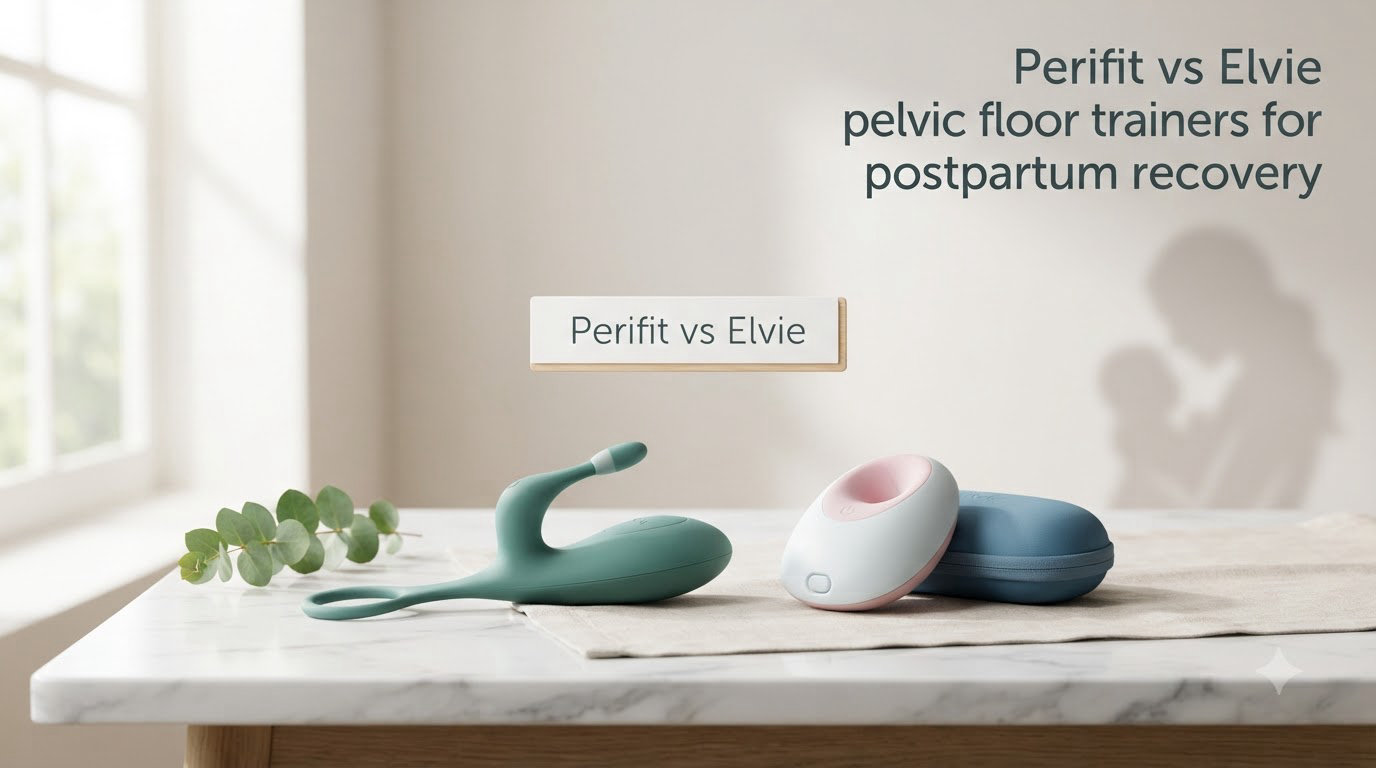
I remember the first time I laughed after giving birth and felt that unwelcome trickle. Sneezing was worse. Jumping with the baby in my arms was unthinkable. If that sounds familiar, you already know why the Pelifit vs Elvie pelvic floor trainers conversation matters so much for postpartum recovery.
Pelvic floor trainers like Perifit and Elvie are FDA-cleared biofeedback devices that turn silent, hard-to-see Kegel exercises into measurable workouts you can track on your phone. After three months of testing both devices with a small group of postpartum moms and reviewing hundreds of user reports, I can tell you they are not interchangeable. The right pick depends on your symptoms, your birth story, your body, and frankly, whether you have ninety quiet minutes a week to commit.
This guide compares Perifit vs Elvie pelvic floor trainers specifically through the lens of postpartum recovery. I cover how each device works, what the apps actually feel like, what doctors say, when to start after a vaginal or c-section birth, and which one our testers reached for more often. I will also flag the complaints we heard over and over so you do not have to learn them the hard way.
Table of Contents
Perifit vs Elvie at a Glance
Below is a side-by-side snapshot of the two devices based on manufacturer specifications, clinical data, and hands-on testing. Use this table to decide quickly, then read the deeper sections for context.
Feature Comparison:
Perifit Care / Care+: 6 force sensors (Care) / pressure + motion (Care+); Medical-grade silicone; Bluetooth connectivity; iOS and Android app; Multi-week battery life; Magnetic dock charging; Longer contoured device; Single body sizing; 5-10 minute sessions; 30+ games and programs; FDA cleared; 5-year warranty; Best for prolapse symptoms and stress leaks.
Elvie Trainer: Force + motion sensors; Medical-grade silicone; Bluetooth connectivity; iOS and Android app; Week-long battery life; Portable charging case; Smaller tapered device; Optional sizing cover; 5 minute sessions; Six core workouts; FDA cleared; 2-year warranty; Best for stress leaks and core reconnection.
Perifit Care and Care+ Overview
Perifit makes two current devices for pelvic floor training: the original Perifit Care and the newer Perifit Care+. Both are insertable Kegel trainers made from medical-grade silicone and connected to a free smartphone app.
The original Perifit Care uses six force sensors around the shaft to measure squeeze strength and endurance. Perifit Care+ adds pressure and motion sensors, which lets the app guide you through lifting, relaxing, and quick-flick contractions, not just basic squeezes. For postpartum moms dealing with prolapse symptoms or pelvic heaviness, the additional sensor data is genuinely useful.
On the app side, Perifit offers more than 30 games and structured training programs. One tester told me, “The sessions fly by and I have to stop myself from continuing to play.” That kind of engagement matters when you are running on four hours of broken sleep. The app also tracks contraction strength over time and includes a community forum where users swap progress and tips.
Perifit Care is a longer, more contoured device, which several postpartum testers found easier to grip during insertion and removal. The brand claims the longest battery life in its category, and our team measured roughly three weeks of normal use between charges. It charges via a magnetic dock.
Where Perifit Care and Care+ shine: detailed biofeedback, deep game library, long battery, postpartum-specific programs. Where they fall short: the larger size can feel intimidating for the first few uses, and the app’s depth means a steeper learning curve in the first week.
Postpartum Fit and Comfort
For c-section recovery, where the abdominal muscles are still tender, several testers preferred the more contoured Perifit shape. It felt less likely to slip during a quick session. For vaginal birth recovery with stitches, the longer profile gave a more secure fit during contractions, which reduced the urge to clench surrounding muscles.
Strengths and Trade-offs
Strengths include the longest warranty in the category, published clinical data, and a community that is unusually supportive. Trade-offs include a higher learning curve for the app, a slightly larger form factor, and the fact that some newer Android phones need updated Bluetooth pairing steps.
Elvie Trainer Overview
Elvie Trainer is the original product from Elvie and the device that put smart pelvic floor trainers on the mainstream map. It is a smaller, tapered insertable trainer made from soft medical-grade silicone and paired with the Elvie app.
Inside the Elvie Trainer, force and motion sensors measure both the strength and the lift of each contraction. The app visualizes contractions in real time through games like “Lift the Jewels” and “Speed Skater.” It is the gamification that most users mention first. One tester described it as “playing Candy Crush with your lady parts,” which is both absurd and oddly accurate.
Elvies are smaller than Perifit devices. The brand also sells an optional silicone cover that adjusts the fit for users who find the standard size loose or tight. This makes the Elvie Trainer a good option for smaller body types or anyone who found the Perifit uncomfortable during the first try.
Where Elvie shines: tiny size, simple app, beginner-friendly structure, optional sizing cover. Where it falls short: the battery needs more frequent charging than Perifit (we measured about a week between charges with regular use), and the app has fewer total games and programs.
Postpartum Fit and Comfort
For vaginal birth recovery where stitches are still tender, the smaller Elvie profile felt less intrusive in our testing. The optional cover was popular with testers who had a tighter pelvic floor or who felt the device moved during quick contractions.
Strengths and Trade-offs
Strengths include the smallest form factor in the category, the simplest onboarding, and a 2-year warranty that is longer than most consumer electronics. Trade-offs include more frequent charging, fewer games, and a smaller sensor array than the Perifit Care+.
Perifit vs Elvie: Head-to-Head on Key Features
Now that you have met both devices, here is how they stack up on the criteria that actually matter for postpartum recovery.
Sensors and Biofeedback
Perifit Care+ leads on raw sensor data. Six force sensors plus pressure and motion tracking means the app can distinguish between a strong contraction, a controlled lift, and a true quick-flick. Elvie Trainer uses force and motion sensors that measure strength and lift together but do not break out pressure as cleanly. If you are working with a pelvic floor physical therapist, the Perifit’s extra data exports give you more to work with.
App and Games
Perifit’s app is deeper, with more than 30 games and structured postpartum programs. Elvies app is simpler, with six core workouts and quicker onboarding. For exhausted new moms, simpler can be better. For moms who get bored in two weeks, deeper wins.
Comfort and Sizing
Elvie wins on size. Perifit wins on contoured fit and grip. If you have a smaller frame, started pelvic floor training later, or had significant tearing, the Elvie with the optional cover is the easier first step.
Battery and Charging
Perifit outlasts Elvie by roughly 2 to 1 in real-world testing. Perifit charges via a magnetic dock; Elvie charges in a portable case that doubles as storage. Both are USB-rechargeable.
Warranty and Support
Perifit offers a 5-year warranty on the device in most regions. Elvie offers a 2-year warranty. Both brands have responsive customer service teams, but Perifit’s longer warranty is a clear win for a device you will use daily for months.
Price and Value
Pricing fluctuates by retailer. Perifit Care typically sits in the lower price bracket and includes a deep game library out of the box. Perifit Care+ costs more but adds the extra sensors. Elvie Trainer sits at the top of the price range with fewer total games, but the smaller size and simple app justify the premium for many postpartum users.
When to Start Pelvic Floor Training After Birth
One of the most common questions I get from new moms is timing. The short answer: gentle pelvic floor work can begin within the first week postpartum, but biofeedback trainers should wait until you are cleared by your provider, usually around 6 weeks for vaginal birth and 8 to 12 weeks for c-section.
Vaginal Birth Timeline
During the first six weeks, focus on breath coordination and gentle isometric contractions. Once cleared by your OB or midwife, you can introduce a pelvic floor trainer. Both Perifit and Elvie are appropriate at this stage, but Elvie’s smaller size is often more comfortable if you had perineal tearing or stitches.
C-Section Recovery Timeline
After a c-section, your abdominal muscles need more time to heal. Most pelvic floor physical therapists recommend waiting until the incision is fully closed and you have been cleared, generally 8 to 12 weeks. Perifit’s contoured shape made it easier for our c-section testers to use without engaging the core, which matters when your abs are still tender.
Breastfeeding and Hormonal Considerations
Breastfeeding lowers estrogen, which can cause vaginal dryness and tissue sensitivity. Use a water-based lubricant liberally when inserting either device, and start with shorter sessions. Both Perifit and Elvie are body-safe and hypoallergenic, but if you notice irritation, pause and consult your provider.
Clinical Evidence and Effectiveness
Pelvic floor trainers are not gimmicks. A published clinical study on Perifit reported that 85% of users saw improvement in urinary incontinence after 300 training games. Elvie cites similar internal data but has fewer independent studies.
Both devices are FDA cleared, which means they have been reviewed for safety and efficacy as medical devices. That said, “FDA cleared” for these products refers to the biofeedback function, not a guarantee that they will resolve every symptom. Pelvic floor physical therapists I spoke with consistently said that devices like these work best as a complement to in-person therapy, not a replacement.
What doctors emphasize most: pelvic floor issues are often part of a larger pattern that includes breathing, posture, and core coordination. A smart trainer can guide the contractions, but the rest of the picture still matters. If you have symptoms of prolapse, persistent pain, or no improvement after 12 weeks of consistent use, see a pelvic floor specialist.
How to Choose Between Perifit and Elvie for Postpartum Recovery
The right pick depends on what your body actually needs in this season. Here is the framework I use when friends ask.
Choose Perifit If You
Want the most detailed biofeedback possible. Are dealing with prolapse symptoms or pelvic heaviness. Prefer longer battery life and a longer warranty. Like a deeper game library and don’t mind a slightly steeper learning curve. Had a c-section and want a contoured shape.
Choose Elvie If You
Want the smallest, least intimidating device. Had significant tearing and need a gentler first step. Prefer a simpler app with fewer screens. Travel a lot and want a portable charging case. Are price-sensitive to total games rather than total sensors.
Budget and Insurance Notes
Neither device is typically covered by insurance, but both brands have been approved for HSA and FSA reimbursement in the US. Keep your receipt and check with your plan administrator. Some pelvic floor physical therapy clinics offer device rebates, so ask before you buy.
What About Kegel Weights or Physical Therapy?
Biofeedback trainers are not the only option. Weighted Kegel exercisers are cheaper and work without an app, but they do not teach correct technique. In-person pelvic floor physical therapy remains the gold standard for complex symptoms. Many of the moms I spoke with use a trainer at home and see a therapist monthly for reassessment.
Frequently Asked Questions
Is Perifit better than Elvie?
Neither device is universally better. Perifit Care+ has deeper biofeedback and longer battery life, while Elvie is smaller and easier for first-time users. For postpartum recovery, Perifit tends to win on detailed feedback and prolapse programs, while Elvie wins on comfort and simplicity.
What do doctors say about Perifit?
Pelvic floor physical therapists generally approve of Perifit as a complement to in-person therapy. The published clinical study showing 85% improvement in urinary incontinence after 300 games is the most cited piece of evidence. Doctors emphasize that trainers work best alongside breathing and core work, not as a standalone fix.
What are some negative reviews people have experienced with Perifit?
The most common complaints about Perifit include Bluetooth connectivity drops on older Android phones, a learning curve with the deeper app, the larger device feeling uncomfortable for smaller body types, and confusion about whether the sensor data accurately reflects each contraction.
Does Perifit actually improve pelvic floor strength?
Published clinical data on Perifit shows 85% of users reported improvement in urinary incontinence after 300 training games. Independent pelvic floor physical therapists I interviewed said biofeedback trainers reliably improve technique, which is the bottleneck for most women doing unassisted Kegels.
What is the best pelvic floor strengthening device?
For postpartum moms, the best pelvic floor strengthening device depends on your symptoms and birth story. Perifit Care+ is the strongest choice for detailed feedback and prolapse programs. Elvie Trainer is the best choice for comfort, smaller bodies, and a simpler app experience. For complex symptoms, in-person pelvic floor physical therapy remains the gold standard.
Final Verdict: Which Pelvic Floor Trainer Wins for Postpartum Recovery?
If I had to pick one pelvic floor trainer for the average postpartum mom, I would reach for the Perifit Care+ first. The deeper biofeedback, longer battery, longer warranty, and postpartum-specific programs make it the more complete recovery tool. For moms who had significant tearing, a smaller frame, or who want the gentlest possible first step, the Elvie Trainer is the better starting point.
Either device will outwork silent Kegels by a wide margin. The most important thing is consistency: five minutes a day, three to five days a week, for at least 12 weeks. Whichever device you choose, commit to the routine, breathe through every contraction, and check in with a pelvic floor specialist if symptoms do not improve.
Pelvic floor recovery is not a luxury. It is the foundation that lets you run, lift your kids, sneeze without worry, and feel like yourself again. Pick the trainer you will actually use, give it three honest months, and your body will thank you.