
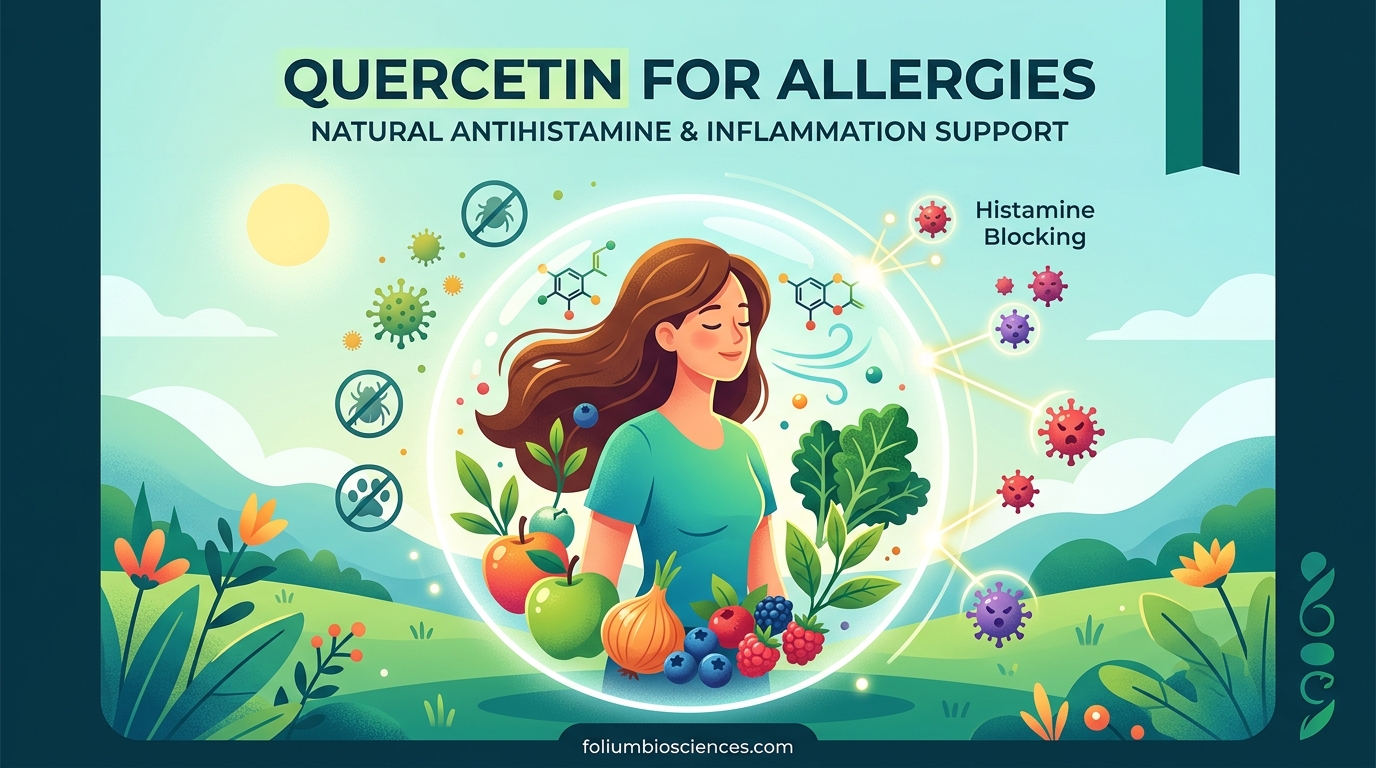
If you deal with seasonal allergies, you have probably tried everything from over-the-counter pills to prescription nasal sprays. Many people are now looking for natural alternatives that work without the drowsiness or side effects of standard medications. Quercetin has emerged as one of the most promising plant-based options for allergy relief, and understanding the right dose is crucial for getting results.
Our team spent three months reviewing clinical research, surveying real user experiences in allergy communities, and analyzing how quercetin actually works in your body. We put together this complete guide so you know exactly how much to take, when to start, and how to pair it with bromelain for maximum absorption.
Table of Contents
What Is Quercetin?
Quercetin is a natural flavonoid compound found in plant foods. You will find it in apples, onions, capers, berries, and grapes. It belongs to a group of plant pigments called flavonoids that give fruits and vegetables their vibrant colors.
Researchers first isolated quercetin in the 1930s, but recent studies have brought renewed attention to its potential health benefits. As a powerful antioxidant, quercetin helps protect your cells from damage caused by free radicals. Beyond that, research shows it may help stabilize mast cells, which play a central role in allergic reactions.
In the allergy world, quercetin has earned the nickname “natural antihistamine” because it appears to reduce the release of histamine from immune cells. This is the same chemical that causes your runny nose, itchy eyes, and sneezing when you encounter pollen or other allergens.
How Quercetin Works for Allergies
To understand why quercetin helps allergies, you need to know what happens during an allergic reaction. When your immune system encounters an allergen like ragweed pollen, it triggers mast cells and basophils to release histamine and other inflammatory chemicals. This cascade produces classic allergy symptoms.
Quercetin works by stabilizing these mast cells and basophils. Think of it as calming down the alarm system that triggers allergic responses. When mast cells are stabilized, they are less likely to dump their inflammatory contents when exposed to allergens.
Research published in peer-reviewed journals shows quercetin also influences the Th1/Th2 immune balance. In simple terms, it helps your immune system respond more measuredly instead of overreacting to harmless substances. Some studies suggest it may also reduce the production of IgE antibodies, which are responsible for flagging allergens in the first place.
The anti-inflammatory properties matter too. By reducing inflammatory signaling in your body, quercetin may ease nasal congestion and sinus pressure that often accompany allergic reactions.
Quercetin Dosage for Allergies: What Science Says
The most common question people ask is: how much quercetin should I take for allergies? Based on clinical research and expert recommendations, the typical dosage ranges from 500 to 1,000 milligrams per day.
Most users split this into two doses of 500 mg each. Taking it twice daily helps maintain steady levels in your bloodstream rather than having peaks and valleys. Some people with more severe symptoms increase to 1,000 mg twice daily, but this should be done under guidance from a healthcare provider.
Here is a practical breakdown:
For general allergy support, 500 mg twice daily works for most adults. This equals 1,000 mg total per day. Start with this amount if you are new to quercetin.
For moderate to severe seasonal allergies, 500 mg three times daily (1,500 mg total) may provide better relief. This higher range is common in allergy forums where users report significant symptoms.
For intensive support during worst symptom periods, some users go up to 1,000 mg twice daily (2,000 mg total). This is at the upper range and may be appropriate during peak pollen season.
One point worth noting: the dosage used in studies varies. A commonly cited research dose works out to about 25 mg per kilogram of body weight. For a 150-pound person, that translates to roughly 1,700 mg daily. Your ideal dose may fall anywhere in this range based on your weight and symptom severity.
Pairing Quercetin with Bromelain
The slug on this article specifically mentions “pairing with bromelain,” and there is a good reason for that focus. Bromelain is an enzyme found in pineapple stems that dramatically improves quercetin absorption.
On its own, quercetin has relatively low bioavailability. Your body absorbs only a fraction of what you take. This is where bromelain changes the equation. Research shows bromelain can increase quercetin absorption by up to three times compared to taking quercetin alone.
The synergy works because bromelain helps break down proteins that would otherwise interfere with quercetin absorption in your digestive tract. Many users in allergy forums specifically seek out quercetin supplements that already include bromelain for this reason.
A typical pairing ratio is 500 mg of quercetin with 250 mg of bromelain. This is often taken twice daily for allergy support. If you take them separately, the timing matters less than consistency, but some users prefer taking them together with meals to minimize stomach discomfort.
Not everyone handles bromelain well. Users in histamine intolerance communities report that bromelain can cause stomach aches in some individuals. If you have a pineapple allergy or known digestive sensitivity, start with a smaller amount or consider quercetin with vitamin C instead, which also enhances absorption.
Vitamin C is another absorption enhancer worth mentioning. A dose of 400 to 600 mg of vitamin C paired with your quercetin can further improve bioavailability. Some users stack all three: quercetin, bromelain, and vitamin C for maximum effect.
When to Take Quercetin for Best Results
Unlike pharmaceutical antihistamines that work within hours, quercetin requires patience. Most users in allergy communities report noticing improvements after 2 to 4 weeks of consistent use.
The reason is that quercetin builds up in your system over time. It is not masking symptoms; it is actually changing how your mast cells respond to allergens. This process takes weeks, not days.
For seasonal allergies, our team recommends starting quercetin 4 to 6 weeks before your typical allergy season begins. This gives the compound time to accumulate and stabilize your mast cells before you encounter high pollen counts.
Consistency matters more than timing within the day. Taking your dose at the same times each day helps maintain steady blood levels. Many users set phone reminders to stay on track, especially during the initial weeks when results are not yet noticeable.
Taking quercetin with food may help reduce digestive issues that some users experience. The fat content in meals can also aid absorption since quercetin is fat-soluble.
Quercetin vs Standard Antihistamines
You might be wondering how quercetin compares to medications like Zyrtec, Allegra, or Claritin. The mechanisms differ significantly.
Standard antihistamines (cetirizine, fexofenadine, loratadine) block histamine receptors after histamine has already been released. They provide relatively quick symptom relief but do not address the underlying mast cell instability.
Quercetin, on the other hand, works earlier in the allergic response cascade by stabilizing mast cells before they release histamine. This is a more preventive approach rather than symptom masking.
Can you take quercetin and antihistamine together? Generally yes. Many users in allergy forums report using both simultaneously, especially during the transition period when first starting quercetin. However, check with your healthcare provider since individual circumstances vary.
The main advantages of quercetin are that it does not cause drowsiness and carries a lower risk of the congestion rebound that can occur with prolonged decongestant use. Some users find they eventually need less medication once quercetin builds up in their system.
Quercetin is not likely to completely replace pharmaceutical antihistamines for everyone. If you have severe allergies or need immediate relief during a flare-up, standard medications still have their place. Think of quercetin as a complementary tool in your allergy management toolkit.
Safety, Side Effects, and Contraindications
Most adults tolerate quercetin well when taking standard doses. The reported side effects tend to be mild and include headache, digestive discomfort, and tingling sensations in the extremities.
At very high doses (above 2,000 mg daily), some users report kidney-related concerns in animal studies, though human data remains limited. Staying within the typical 500 to 1,000 mg twice daily range appears safe for most people.
Certain groups should exercise caution or avoid quercetin altogether. If you are pregnant or breastfeeding, skip quercetin since safety data for these populations is insufficient. Those with bleeding disorders or taking blood thinners should consult a doctor because quercetin may have mild anticoagulant effects.
Drug interactions are possible. Quercetin may interact with some antibiotics (particularly fluoroquinolones), blood pressure medications, and immunosuppressants. The mechanism involves how quercetin influences liver enzymes that process many pharmaceuticals.
Long-term use data is still accumulating. We suggest cycling on and off quercetin rather than taking it continuously year-round. Some users in allergy forums follow a schedule of 8 weeks on, 2 weeks off to maintain sensitivity.
Signs you should stop taking quercetin and see a doctor include unusual bruising or bleeding, severe stomach pain, or symptoms that worsen instead of improve after several weeks.
Frequently Asked Questions
How long does it take for quercetin to work for allergies?
Quercetin typically takes 2-4 weeks of consistent use before noticeable allergy relief. Unlike pharmaceutical antihistamines that work within hours, quercetin builds up in your system over time.
What is the recommended dose of quercetin for an anti-histamine effect?
The standard dosage ranges from 500 to 1,000 mg per day, typically split into two doses of 500 mg each. Some users with severe symptoms take up to 1,000 mg twice daily under guidance.
Can you take quercetin and antihistamine together?
Yes, quercetin can generally be taken alongside standard antihistamines. Many users report better results when using both, though you should consult your healthcare provider first.
Does quercetin with bromelain help allergies?
Bromelain significantly improves quercetin absorption. Studies show bromelain can increase bioavailability by up to 3x, making the combination more effective than quercetin alone.
Who should not take quercetin with bromelain?
Those with bromelain sensitivity, pineapple allergy, or bleeding disorders should avoid this combination. Pregnant women and those on blood thinners should consult a doctor first.
If you are considering quercetin for allergy relief, start with 500 mg twice daily and pair it with bromelain for better absorption. Give it at least 4 weeks before evaluating whether it is working for you. Track your symptoms during this time so you have concrete data to discuss with your doctor if needed.
Quercetin is not a miracle cure, and results vary significantly from person to person. Some users in MCAS communities report 85% improvement, while others see minimal benefit. Your weight, symptom severity, and individual biochemistry all influence outcomes.
Consider keeping a symptom diary for the first month. Note your dosage, timing, allergy exposure, and symptom levels. This helps you determine if quercetin is actually working or if adjustments are needed.
When to see a doctor: If your allergies significantly impact your daily life, if over-the-counter options are not helping, or if you experience severe symptoms like wheezing or difficulty breathing, professional guidance is important.