
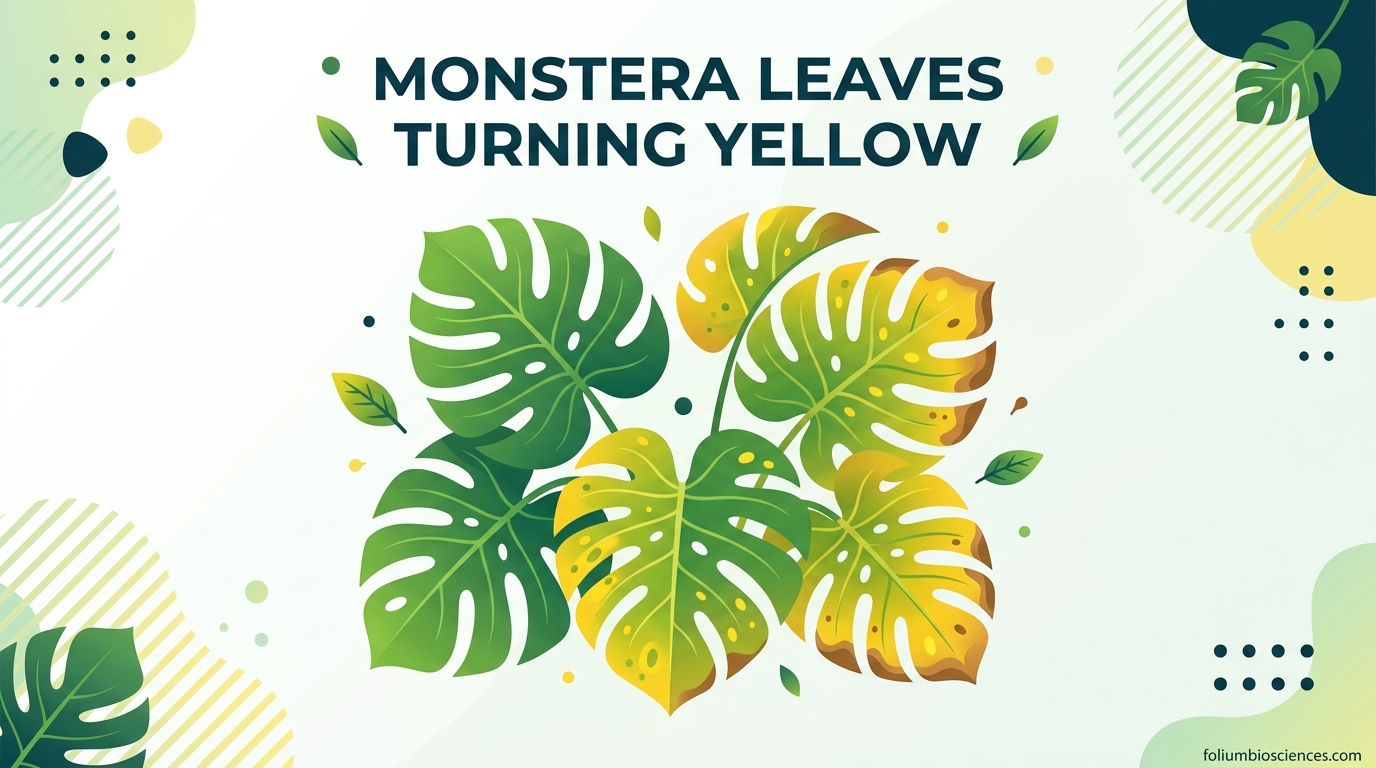
Seeing your Monstera leaves turning yellow is one of those moments that stops you in your tracks. I have been there, staring at a once-thriving plant wondering what went wrong. The good news is that yellow leaves are your Monstera’s way of asking for help, and once you know what to look for, the cause is usually easy to pinpoint.
This guide covers the six most common causes of yellowing Monstera leaves and, more importantly, how to tell them apart. By the time you finish reading, you will know exactly what your plant is trying to tell you and what to do about it.
A quick note before we start: yellow leaves will not turn green again. That is important to understand so you do not waste time waiting for recovery that will not happen. Your goal is to stop new leaves from turning yellow, and that starts with identifying the right cause.
Table of Contents
Cause #1: Overwatering (The Most Common Culprit)
Overwatering is responsible for more yellow Monstera leaves than every other cause combined. I see it constantly in plant forums and hear it from friends who swear they are “just being attentive” to their plants. The problem is that Monstera roots need oxygen, and when the soil stays wet, those roots suffocate and begin to rot.
What overwatering looks like
The leaves turn a soft, pale yellow, often starting from the lower part of the plant and working upward. The leaves may feel limp or mushy rather than dry and crispy. If you touch the soil and it feels soggy days after watering, that is your confirmation. You might also notice a musty smell coming from the pot, which indicates root rot has already set in.
Other telltale signs include brown spots with yellow halos on the leaves and stems that feel soft or look darker than usual at the base. If you gently pull the plant from its pot, the roots will look brown or black and feel mushy instead of firm and white.
How to fix it
Stop watering immediately and let the top two inches of soil dry out completely before your next watering. Check that your pot has drainage holes. If it does not, repot the plant into a container that does. If you suspect root rot, unpot the plant, trim away any brown or mushy roots with clean scissors, and repot in fresh, well-draining soil. Going forward, stick your finger into the soil up to your second knuckle. If it feels moist, wait another day or two.
Cause #2: Underwatering (Crispy Edges Give It Away)
Underwatering gets less attention than overwatering, but it is the second most common reason Monstera leaves turning yellow show up on plant owners’ radars. The tricky part is that both extremes cause yellowing, so you need to look at the texture and feel of the leaves to tell them apart.
What underwatering looks like
Unlike the soft, limp yellowing from overwatering, underwatered leaves develop crispy, dry brown edges before or alongside the yellowing. The leaves may curl inward or droop noticeably, and the soil will be bone dry, often pulling away from the edges of the pot. When you pick up the pot, it will feel surprisingly light.
The yellowing pattern tends to affect the oldest leaves first and may progress faster than overwatering yellowing. You might also notice the newer leaves looking smaller than usual or growing more slowly.
How to fix it
Give the plant a thorough soaking, letting water run through the drainage holes until it flows freely from the bottom. If the soil has become hydrophobic and water runs straight through without absorbing, try bottom-watering by placing the pot in a basin of water for 20 to 30 minutes. After that, establish a more consistent watering schedule. Most Monstera plants need water every 7 to 10 days, but always check the soil first rather than following a rigid calendar.
Cause #3: Light Problems (Too Much or Too Little)
Monstera plants evolved under the canopy of tropical forests, which means they are wired for bright, indirect light. Too much direct sun scorches their leaves, and too little light starves them of the energy they need to maintain healthy foliage. Both extremes can trigger yellowing, but the pattern looks different for each.
Too much light
Direct sunlight causes sunburned leaves that develop pale yellow or white patches, often on the side facing the window. These patches may turn brown and crispy over time. The yellowing is patchy and irregular, not uniform, and the leaves closest to the light source are affected first.
Too little light
When a Monstera does not get enough light, the yellowing is gradual and diffuse. Lower leaves yellow and drop off one by one over weeks. The plant may also develop leggy growth, meaning long spaces between leaves as it stretches toward whatever light is available. New leaves might emerge smaller than older ones or lack the characteristic splits and holes.
How to fix it
Move sunburned plants a few feet back from the window or filter the light with a sheer curtain. For light-starved plants, move them closer to a bright window or add a grow light. The sweet spot is a spot where you can read a book comfortably without turning on a lamp during the day. Rotate the plant every few weeks so all sides get even exposure.
Cause #4: Pest Infestation (Tiny Bugs, Big Damage)
Pests are sneaky. They often hide on the undersides of leaves or where stems meet the main plant, and by the time you notice the yellowing, an infestation can be well established. The most common pests that cause Monstera leaves turning yellow are spider mites, thrips, and mealybugs.
What pest damage looks like
Pest-related yellowing has a distinctive speckled or stippled pattern. Instead of the entire leaf turning yellow evenly, you will see tiny yellow dots or patches scattered across the leaf surface. Spider mites leave fine webbing between stems and leaves. Thrips cause silvery streaks alongside the yellowing. Mealybugs look like small white cottony clusters tucked into leaf joints.
You might also see sticky residue on the leaves or the surface below the plant, which is honeydew secreted by the pests. Black sooty mold growing on this honeydew is another sign that pests are present.
How to fix it
Start by isolating the affected plant from any nearby houseplants to prevent the infestation from spreading. Wipe down all leaves with a mixture of lukewarm water and a few drops of mild dish soap, paying close attention to the undersides. For heavier infestations, treat with neem oil spray every 3 to 5 days for two weeks. Check the plant thoroughly before returning it to its normal spot near other plants.
Cause #5: Nutrient Deficiency (When the Soil Runs Out of Food)
If your Monstera has been in the same pot for a year or more and you have not been fertilizing, the soil may simply be depleted of nutrients. Nitrogen deficiency is the most common nutrient issue, and it has a very specific pattern that makes it easier to identify than other causes.
What nutrient deficiency looks like
Nitrogen deficiency causes older, lower leaves to yellow first while new growth stays green. The yellowing starts at the tips and margins of the leaves and works inward. In severe cases, the entire leaf may turn pale yellow or almost white. Other nutrient deficiencies show different patterns: iron deficiency causes yellowing between the veins while the veins stay green, and potassium deficiency causes yellowing along leaf edges with brown scorching.
A key clue is timing. If the yellowing coincides with the growing season and your plant has not been fertilized in months, nutrient deficiency is a strong suspect.
How to fix it
Feed your Monstera with a balanced liquid fertilizer diluted to half strength every 4 to 6 weeks during spring and summer. If you suspect salt buildup from overfertilizing, flush the soil by running water through the pot for several minutes. Going forward, mark your calendar for regular feeding from March through September, and hold off during the dormant winter months when the plant grows more slowly.
Cause #6: Root Bound (Your Plant Has Outgrown Its Home)
This is the cause most plant guides overlook, and it is the one I see misdiagnosed most often in plant communities online. When a Monstera outgrows its pot, the roots circle the inside of the container, packing themselves so tightly that water cannot penetrate the root ball. The result is a plant that is simultaneously thirsty and sitting in water.
What root bound looks like
The yellowing from being root bound mimics underwatering because the roots cannot absorb water effectively. Leaves may turn yellow and droop even though you are watering regularly. You might notice roots growing out of the drainage holes or creeping over the top of the soil. Water may run straight through the pot without being absorbed, or the soil may dry out unusually fast.
Lift the plant gently from its pot to check. If you see a dense mass of roots circling the outside of the root ball with very little visible soil, your Monstera is root bound.
How to fix it
Repot your Monstera into a container that is 2 inches larger in diameter than the current one. Gently loosen the circling roots before placing the plant in fresh potting mix. If the root ball is extremely dense, you can make a few vertical cuts through the roots to encourage new outward growth. The best time to repot is in spring or early summer when the plant is actively growing and can recover quickly from the transition.
How to Tell the 6 Causes Apart: A Quick Diagnostic Guide
The whole point of this article is helping you figure out exactly which of these six problems your Monstera is dealing with. Here is a step-by-step diagnostic approach that works every time.
Step 1: Check the soil moisture. Stick your finger two inches into the soil. If it is soaking wet and you watered days ago, overwatering is your most likely cause. If it is bone dry and crumbly, underwatering is the prime suspect. If the soil feels fine but water ran straight through, suspect root bound conditions.
Step 2: Look at the leaf texture. Soft, limp, mushy yellowing points to overwatering. Crispy, dry, brown-edged yellowing points to underwatering. Speckled or stippled yellowing with tiny dots points to pests. Patchy, irregular pale spots suggest too much direct light.
Step 3: Check for pests. Examine the undersides of leaves and the joints where leaves meet stems. Look for tiny moving dots, webbing, cottony clusters, or sticky residue. If you find any of these, pests are the problem regardless of what else you see.
Step 4: Evaluate the light situation. Is your Monstera in a south-facing window getting direct rays? That is too much light. Is it in a dark corner across the room from the nearest window? That is too little. Gradual, diffuse yellowing with leggy stretching means insufficient light.
Step 5: Consider the timeline and season. If the yellowing started during the growing season and you have not fertilized in months, nutrient deficiency is likely. If the plant has been in the same pot for over a year, root bound conditions may be the issue. If only the oldest bottom leaf is yellowing and everything else looks healthy, it may simply be natural aging.
Step 6: Inspect the roots if still unsure. If the above steps have not given you a clear answer, gently unpot the plant and look at the roots. White, firm roots mean the root system is healthy, which points you toward light, nutrient, or pest causes. Brown, mushy roots confirm overwatering and root rot. A tightly packed circle of roots with little soil means the plant is root bound.
In many cases, more than one factor contributes to yellowing at the same time. A root bound plant, for example, can lead to underwatering symptoms even when you are watering frequently. Address the primary cause first, then monitor for improvement over the next few weeks.
Should You Cut Off Yellow Monstera Leaves?
Yes, in most cases you should remove fully yellow leaves. Once a leaf has turned completely yellow, it is no longer contributing energy to the plant through photosynthesis. In fact, the plant is spending resources trying to sustain a leaf that cannot recover. Cutting it off redirects that energy toward healthy growth.
Use clean, sharp scissors or pruning shears and cut the leaf stem close to the main stem. If a leaf is only partially yellow, you can wait to see if the yellowing stops once you address the underlying cause. But do not expect the yellow portion to turn green again, because once chlorophyll is lost from a leaf segment, it does not come back.
The one exception is natural aging. If only the oldest, lowest leaf is turning yellow and the rest of the plant looks vigorous and healthy, you can leave it until it dries up and falls off on its own. This is just the plant shedding its oldest foliage as part of normal growth.
FAQ
How to fix a yellow Monstera leaf?
Fix the underlying cause: reduce watering for overwatering, water thoroughly for underwatering, adjust light exposure, treat pests with neem oil, fertilize if nutrients are low, or repot if root bound. The yellow leaf itself will not recover, but stopping the cause prevents new leaves from yellowing.
Should you cut off a yellow Monstera leaf?
Yes. A fully yellow leaf cannot photosynthesize or turn green again. Removing it lets the plant focus energy on healthy new growth. Use clean scissors and cut near the main stem. The exception is a single oldest leaf yellowing naturally, which you can leave until it drops on its own.
What does a stressed Monstera look like?
A stressed Monstera shows yellowing leaves, drooping stems, brown or crispy leaf edges, slow or stunted growth, and may drop leaves. The specific pattern of yellowing, along with soil moisture and leaf texture, helps identify whether the stress comes from water, light, pests, nutrients, or being root bound.
Can a yellowing Monstera leaf turn green again?
No. Once chlorophyll breaks down and a leaf turns yellow, that tissue cannot produce chlorophyll again. The leaf will eventually dry up and fall off. Focus on fixing the underlying cause so new leaves stay green and healthy rather than hoping for recovery on damaged foliage.
Getting Your Monstera Back to Green
Dealing with Monstera leaves turning yellow is stressful, but it is also fixable. The six causes covered here, overwatering, underwatering, light problems, pest infestations, nutrient deficiency, and root bound conditions, account for nearly every case of yellowing you will encounter. Use the diagnostic steps in this guide to narrow down your specific situation, then take action with confidence.
Most Monsteras show visible improvement within 2 to 4 weeks of correcting the problem. New growth should emerge green and healthy, and existing leaves that are still partially green will stabilize. Be patient, stay consistent with your care routine, and your Monstera will reward you with the lush, split-leaf foliage that made you fall in love with it in the first place.