
If you have been struggling to fall asleep or wake up feeling unrested, you are not alone. Millions of people search for natural sleep aids every year, and magnesium supplements consistently rank among the most recommended options. But here is where it gets confusing: there are multiple types of magnesium, and not all work the same way for sleep.
In this guide, I will break down everything you need to know about magnesium glycinate vs citrate for sleep. You will learn exactly how each form works, which one is better for your specific situation, how much to take, and most importantly – when to take it for maximum effectiveness. Our team has spent months reviewing clinical research and real user experiences to give you actionable answers.
Table of Contents
What Is Magnesium Glycinate
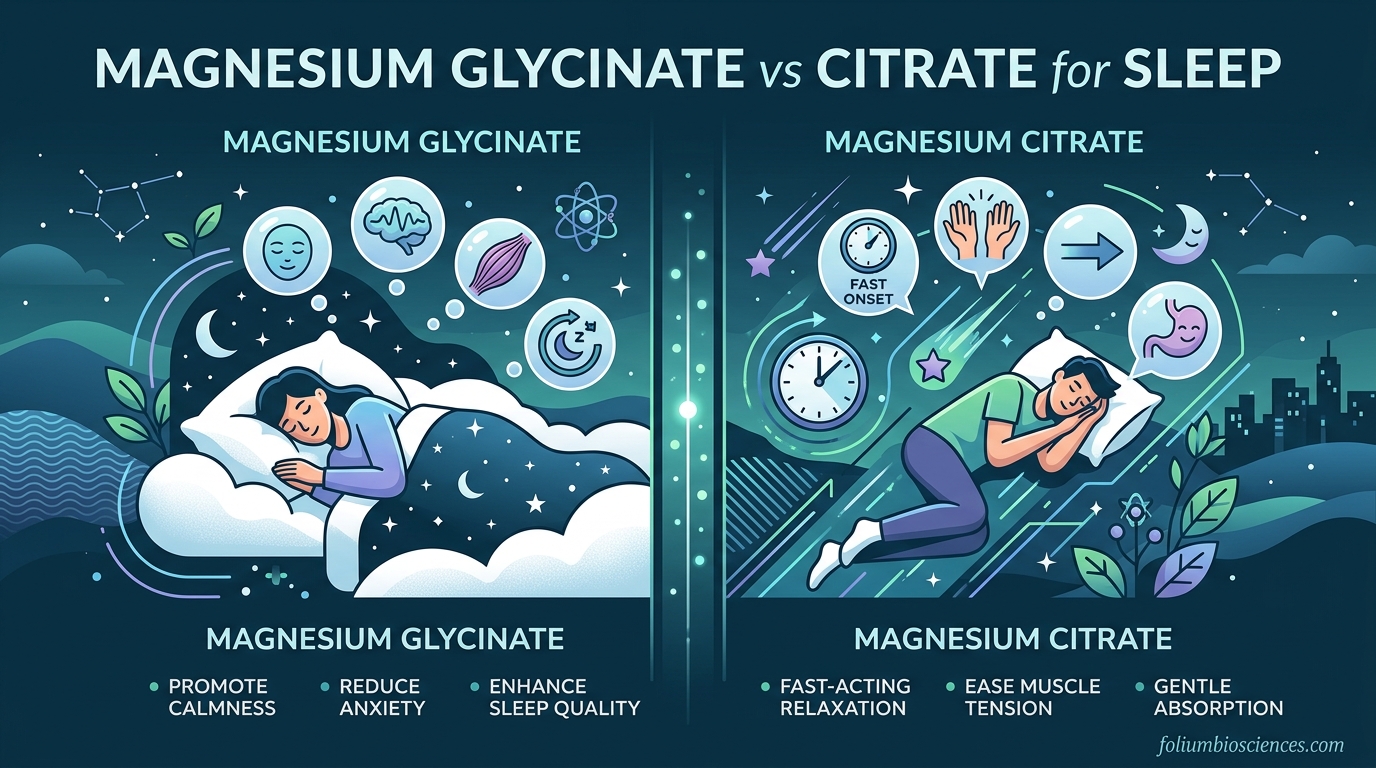
Magnesium glycinate is a chelated form of magnesium where the mineral is bound to glycine, a calming amino acid. This bond makes it one of the most bioavailable forms of magnesium, meaning your body absorbs it efficiently without the digestive upset common with other types.
The glycine component matters just as much as the magnesium itself. Glycine acts as an inhibitory neurotransmitter in your brain, essentially helping to quiet neural activity. This dual action – magnesium supporting GABA receptors while glycine promotes relaxation – makes glycinate particularly effective for sleep support.
Research published in the Journal of Research in Medical Sciences found that magnesium glycinate improved sleep quality in elderly adults without the laxative effects seen in other magnesium forms. The study participants reported falling asleep faster and experiencing fewer nighttime awakenings.
What Is Magnesium Citrate
Magnesium citrate combines magnesium with citric acid, creating a form that is highly soluble and reasonably well-absorbed. Unlike glycinate, which targets relaxation directly, citrate works differently. The citric acid component acts as a natural osmotic laxative, drawing water into your intestines.
This makes citrate a dual-purpose supplement. While it does provide magnesium that can support sleep, its primary reputation comes from digestive benefits. Many people use it specifically for occasional constipation relief. The magnesium absorption rate is good, though slightly lower than glycinate.
From our research into user experiences, some people report that citrate actually helps them sleep better precisely because it addresses digestive discomfort that was keeping them awake. However, the laxative effect can be a dealbreaker for those with sensitive stomachs.
Magnesium Glycinate vs Citrate: Head-to-Head Comparison
Choosing between these two forms depends on your primary goals. Let me break down the key differences in a way that makes your decision straightforward.
| Feature | Magnesium Glycinate | Magnesium Citrate |
|---|---|---|
| Bioavailability | Very High (80%+ absorption) | Good (60-70% absorption) |
| Best For | Sleep, anxiety, muscle relaxation | Sleep + constipation relief |
| Digestive Effects | Gentle, no laxative effect | Can cause loose stools |
| Calming Properties | Enhanced by glycine | Standard magnesium effects |
| Onset Time | 30-60 minutes | 30-60 minutes |
| Cost | Moderate to higher | Budget-friendly |
| Taste | Mild, tolerable | Slightly tart from citric acid |
The bioavailability difference matters because you want the magnesium to reach your nervous system, not just pass through your digestive tract. Glycinate excels here, delivering more elemental magnesium where it counts.
How Magnesium Supports Sleep: The Science
Understanding the mechanism helps you use magnesium more effectively. Magnesium supports sleep through three primary pathways that work together.
First, magnesium activates GABA receptors in your brain. GABA is your primary inhibitory neurotransmitter, essentially the brake pedal for your nervous system. When GABA activity increases, your brain transitions from active thinking to rest mode.
Second, magnesium activates your parasympathetic nervous system, commonly called the “rest and digest” state. This is the opposite of fight-or-flight mode. Your heart rate slows, blood pressure drops, and your body prepares for restoration.
Third, magnesium supports melatonin production. While it does not directly contain melatonin, adequate magnesium levels help your pineal gland produce this sleep hormone more effectively. Research from 2026 shows that magnesium supplementation can increase melatonin levels naturally.
Benefits of Magnesium Glycinate for Sleep
For pure sleep enhancement, glycinate has distinct advantages. The combination of highly absorbable magnesium plus the calming amino acid glycine creates a synergistic effect.
Users report falling asleep faster without the grogginess sometimes associated with sleep medications. The glycine component specifically helps quiet racing thoughts, making this form ideal for people whose insomnia stems from anxiety or stress.
Unlike citrate, glycinate does not act as a laxative. This means you can take higher doses for sleep support without worrying about digestive disruptions. For people with sensitive stomachs or those already taking other supplements, this gentleness is a significant benefit.
Forum discussions from r/Supplements reveal a consistent pattern: users trying both forms typically prefer glycinate for sleep specifically. One user noted they “slept deeper than in months” after switching from citrate to glycinate. Another mentioned glycinate helped them stay asleep through the night rather than waking at 3 AM.
Muscle relaxation is another key benefit. Many people hold tension in their shoulders, neck, or jaw without realizing it. Glycinate helps release this physical tension, making it easier to find a comfortable sleeping position.
Benefits of Magnesium Citrate for Sleep
Citrate should not be dismissed for sleep support. While glycinate gets the spotlight, citrate works well for the right person. If you experience occasional constipation alongside sleep issues, citrate addresses both problems with one supplement.
The cost factor matters too. Citrate is significantly less expensive than glycinate, making it accessible for daily use. For people on tight supplement budgets, citrate provides magnesium benefits at a fraction of the cost.
Some users actually prefer citrate even for sleep. The mild digestive effect can be welcome for those with sluggish digestion. If you tend to feel heavy or bloated at night, citrate might help you sleep better by addressing that discomfort.
However, timing matters more with citrate. Taking it too close to bedtime can result in middle-of-the-night bathroom trips, which defeats the purpose. Users recommend taking citrate earlier in the evening or adjusting the dose downward.
How Much Magnesium Should I Take for Sleep
Dosage recommendations require understanding “elemental magnesium” – the actual amount of pure magnesium in your supplement, not the total compound weight. A 400mg capsule of magnesium glycinate typically contains about 100mg of elemental magnesium.
For sleep support, most adults benefit from 200-400mg of elemental magnesium taken before bed. Start with the lower end and increase gradually based on your response.
Here are the recommended dietary allowances for context:
| Group | Recommended Daily Amount |
|---|---|
| Men 19-51+ years | 400-420mg |
| Women 19-51+ years | 310-320mg |
| Pregnant women | 350-360mg |
| Breastfeeding women | 310-320mg |
For sleep specifically, you can take slightly more than the RDA since you are targeting a therapeutic effect. However, do not exceed 600mg of elemental magnesium daily without medical supervision. More is not better and can cause serious side effects.
When reading labels, look for “elemental magnesium” or calculate based on the percentage. Magnesium glycinate is typically 14% elemental magnesium by weight. Magnesium citrate is approximately 16% elemental magnesium.
When Should I Take Magnesium for Sleep
Take magnesium 30 to 60 minutes before your intended bedtime. This timing allows absorption to begin as you start your wind-down routine.
The science supports this window. Magnesium begins activating GABA receptors within 30 minutes of consumption. Taking it too early means the peak effect might pass before you try to sleep. Taking it too late means you might still be digesting it when you want to be asleep.
Consistency matters more than exact timing. Your body responds to routines. Taking magnesium at the same time each evening helps reinforce your circadian rhythm. Many users incorporate it into their evening ritual alongside turning down lights and putting away screens.
With or without food is a common question. Magnesium absorbs well either way, though some people find taking it with a small snack prevents any potential stomach upset. The fat content is not important for absorption as it is with some vitamins.
Can I Take Magnesium Glycinate and Citrate Together
Yes, you can combine both forms safely, and some users find this approach ideal. The combination allows you to get the sleep-specific benefits of glycinate while addressing any digestive sluggishness with a smaller citrate dose.
If you want to try this approach, start with mostly glycinate and a small amount of citrate. For example, 300mg elemental magnesium as glycinate plus 100mg as citrate. This gives you the calming amino acids from glycinate with the digestive support from citrate.
The total elemental magnesium should still stay within recommended limits. Do not double your dosage just because you are using two forms. Track your total magnesium intake from all sources including food.
Some supplement companies now offer combination formulas that include multiple magnesium forms. These can be convenient but check the ratios to ensure glycinate is the primary component if sleep is your main goal.
Side Effects and Risks to Know
Magnesium from food sources is safe at any amount – your kidneys simply excrete excess. Supplements are different. High doses can cause problems.
Common side effects by form:
- Glycinate: Generally well-tolerated. Rarely causes digestive upset. Some users report vivid dreams or morning grogginess at high doses.
- Citrate: Loose stools or diarrhea are common, especially above 400mg elemental magnesium. This is the intended mechanism for constipation relief but problematic for sleep.
More serious risks include medication interactions. Magnesium can interfere with absorption of certain antibiotics, bisphosphonates for osteoporosis, and some thyroid medications. Take these medications at least 2 hours apart from magnesium supplements.
People with kidney disease should avoid magnesium supplements unless specifically prescribed. Your kidneys regulate magnesium levels, and impaired function can lead to dangerous accumulation.
Stop taking magnesium and consult a doctor if you experience irregular heartbeat, severe weakness, or breathing difficulties. These can indicate magnesium toxicity, though this is rare at normal supplement doses.
Which Form Should You Choose
Your primary concern should drive your choice:
Choose Magnesium Glycinate if:
- Sleep is your main or only concern
- You have anxiety or racing thoughts at bedtime
- You have a sensitive digestive system
- You want the most absorbable form
Choose Magnesium Citrate if:
- You want sleep support plus digestive regularity
- Constipation is a recurring issue
- Budget is a primary consideration
- You do not mind adjusting timing to avoid nighttime bathroom trips
If you try one form and do not see results after 2-3 weeks of consistent use, consider switching. Individual biochemistry varies, and what works for most people may not work for you. Some users find they respond better to citrate despite the common preference for glycinate.
FAQ
Which magnesium is best for sleep and anxiety?
Magnesium glycinate is the best choice for sleep and anxiety. The glycine amino acid bound to the magnesium acts as a calming neurotransmitter, providing dual relaxation support. It is highly bioavailable and gentle on the digestive system.
Can I take magnesium glycinate and citrate together?
Yes, you can safely take both forms together. Many users combine them to get the superior sleep benefits of glycinate while addressing digestive regularity with citrate. Keep your total elemental magnesium under 600mg daily.
How much magnesium should I take for sleep?
For sleep support, take 200-400mg of elemental magnesium 30-60 minutes before bed. Start at the lower end and increase gradually. Check your supplement label for elemental magnesium content, not just the total compound weight.
What is the difference between magnesium glycinate and citrate?
Magnesium glycinate is bound to glycine, a calming amino acid, making it ideal for sleep and anxiety with high absorption. Magnesium citrate is bound to citric acid, has a mild laxative effect, and is often used for both sleep support and constipation relief.
When should I take magnesium for sleep?
Take magnesium 30-60 minutes before your intended bedtime. This timing allows the magnesium to begin activating GABA receptors and promoting relaxation as you start your wind-down routine. Consistency at the same time each evening works best.
Conclusion
Both magnesium glycinate and citrate can support better sleep, but they work differently. For pure sleep enhancement without digestive effects, glycinate is the clear winner. Its superior bioavailability and calming glycine component make it ideal for falling asleep faster and staying asleep longer.
If you also deal with occasional constipation or want a more budget-friendly option, citrate remains a solid choice. Just be mindful of timing and potential digestive effects.
Remember that magnesium supplementation works best as part of a complete sleep hygiene approach. Combine it with consistent bedtimes, limited screen exposure before bed, and a cool, dark sleeping environment. Most people notice improvements within 2-3 weeks of consistent use. Start with the right form, dose correctly, and take it 30-60 minutes before bed for the best results with magnesium glycinate vs citrate for sleep.