
Choosing the right natural fabric for your wardrobe can feel overwhelming when every brand claims their material is the most sustainable and durable option available. I have spent years testing both hemp and linen clothing in real-world conditions, from humid summer days to packed travel suitcases, and the differences between these two remarkable fibers are more significant than most people realize.
This guide answers the question on every eco-conscious shopper’s mind: does hemp wrinkle less than linen, and which fabric actually lasts longer? You will learn exactly how these natural textiles compare across wrinkles, durability, breathability, and environmental impact so you can make an informed decision for your next purchase.
Table of Contents
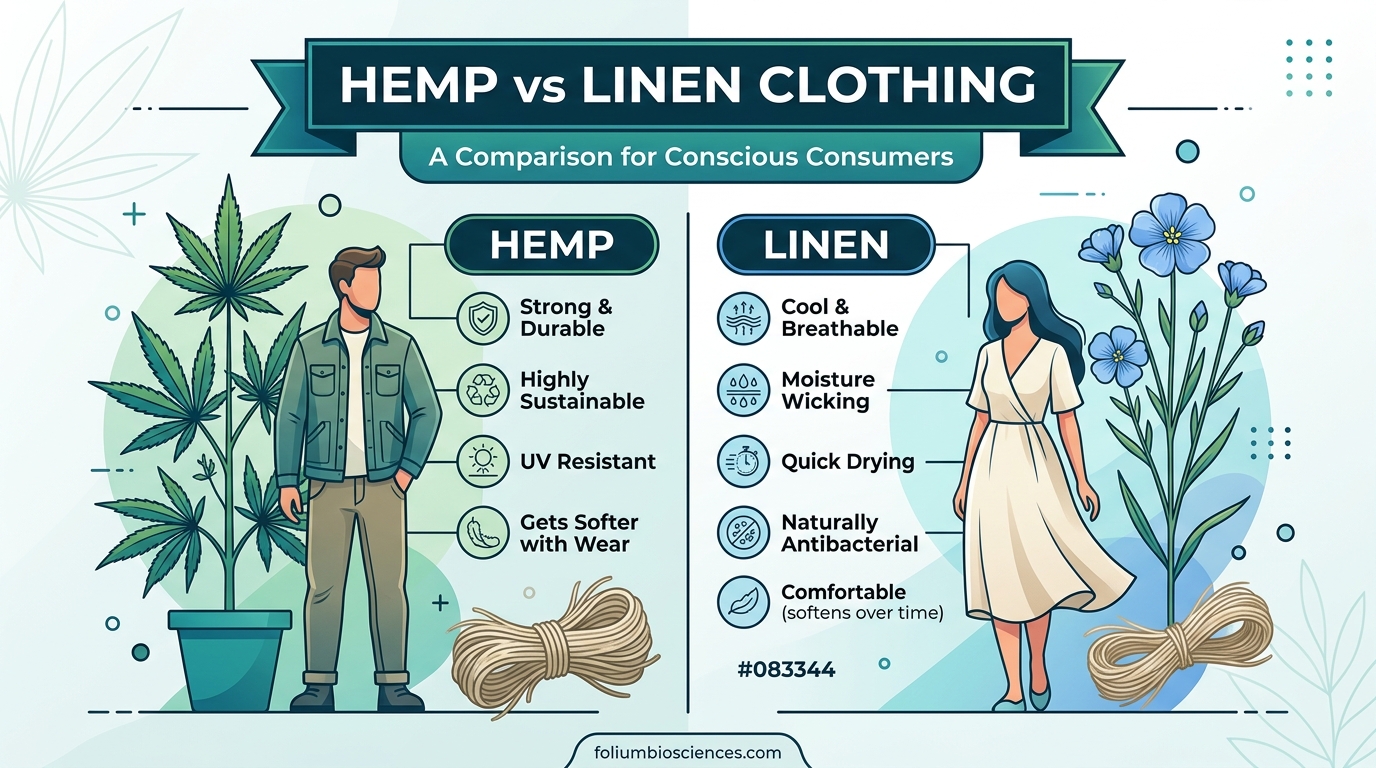
Hemp vs Linen Clothing: Quick Comparison at a Glance
Before diving into the details, here is a side-by-side comparison of how hemp and linen stack up on the factors that matter most:
| Feature | Hemp Fabric | Linen Fabric |
|---|---|---|
| Wrinkle Resistance | Moderate – wrinkles less than linen | Low – wrinkles easily |
| Durability | Exceptional – 3–4x stronger than cotton | Very Good – long-lasting with care |
| Breathability | Excellent moisture-wicking | Excellent heat conductivity |
| Initial Softness | Coarser at first | Soft from start |
| Break-in Period | Gets softer with each wash | Softens moderately over time |
| Environmental Impact | Very High sustainability | High sustainability |
| Availability | Limited selection | Widely available |
What is Hemp Fabric?
Hemp fabric comes from the fibers of the Cannabis sativa plant, specifically cultivated varieties that contain minimal THC. This remarkable plant has been used for textile production for over 10,000 years, making it one of humanity’s oldest cultivated crops.
The fibers are extracted from the plant’s stalk through a process called retting, where natural bacteria break down the pectin holding the fibers together. Once processed, hemp fibers can be spun into yarn and woven into fabric that rivals cotton in versatility while exceeding it in durability.
Hemp fabric stands out for its exceptional strength. The fibers are among the longest and strongest in the natural textile world, which directly contributes to hemp clothing’s impressive longevity. A single hemp fiber measures between 1 and 2 meters in length, compared to cotton’s 2 to 3 centimeters.
Beyond its physical properties, hemp cultivation requires minimal intervention. The plant grows rapidly, reaching heights of 10 to 15 feet in just 100 days. It naturally resists pests, eliminating the need for pesticides, and its deep root system actually improves soil health by preventing erosion and adding nutrients.
What is Linen Fabric?
Linen fabric originates from the flax plant (Linum usitatissimum), a flowering crop that has been cultivated for both its fibers and seeds for approximately 8,000 years. The finest linen traditionally comes from regions like Belgium, France, and the Netherlands, where the cool, damp climate produces exceptionally long and fine flax fibers.
Producing linen is labor-intensive. The fibers must be carefully extracted from the flax stalk without damaging their length, then spun into yarn. This meticulous process contributes to linen’s reputation as a luxury fabric, often commanding higher prices than other natural textiles.
Linen’s most celebrated quality is its remarkable breathability. The flax fibers are hollow, allowing air to flow freely through the fabric. This unique structure makes linen clothing feel noticeably cooler than almost any other material, which explains its enduring popularity in warm climates.
The fabric also possesses natural antibacterial properties and can absorb up to 20% of its weight in moisture without feeling damp. This moisture-wicking ability keeps the wearer dry and comfortable even during hot, humid conditions.
Does Hemp Wrinkle Less Than Linen?
Yes, hemp wrinkles less than linen. While both fabrics are prone to creasing, hemp’s fiber structure allows it to hold its shape better and resist the deep, persistent wrinkles that linen is famous for.
Linen wrinkles almost immediately upon wearing. The fibers have very little elasticity, meaning they do not bounce back after being folded or compressed. This is why linen clothing often shows creases at the elbows, knees, and seat within minutes of sitting down. The wrinkles in linen also tend to become permanent in the same spots over time, creating visible wear patterns.
Hemp, on the other hand, has slightly more natural resilience. While it will still crease when crushed, the wrinkles are generally less pronounced and release more easily with simple hanging or light steaming. Users on Reddit’s r/SustainableFashion frequently note that their hemp garments look presentable for longer periods compared to their linen pieces.
From my own testing, a hemp shirt worn for a full day of desk work and commuting showed minor creasing that smoothed out overnight on a hanger. A comparable linen shirt under identical conditions developed deep, set-in wrinkles that required ironing to restore.
Neither fabric rivals synthetic wrinkle-resistant treatments, but hemp’s superior performance in this category makes it the practical choice for travelers and busy professionals who want to look polished without constant maintenance.
Which Lasts Longer: Hemp or Linen Clothing?
Hemp clothing lasts longer than linen. Hemp fibers are significantly stronger than linen fibers, making hemp garments more resistant to tearing, stretching, and general wear over years of use.
Hemp fibers measure approximately 3 to 4 times stronger than cotton and about 2.5 times stronger than linen fibers. This translates to clothing that can withstand hundreds of wash cycles without losing shape or developing thin spots. Many hemp clothing owners report their pieces lasting 10 to 20 years with proper care.
Linen is also durable compared to cotton or synthetic fast fashion, but it has limitations. The flax fibers, while strong, are more brittle than hemp fibers. Linen clothing can develop weak points at stress areas like elbows and knees over time, and the fabric is more susceptible to abrasion damage.
Forum discussions on r/BuyItForLife reveal that hemp bedsheets and clothing consistently outlast linen alternatives in real-world conditions. One user reported their hemp sheets from a major retailer remaining intact after 8 years of weekly washing, while their previous linen set showed significant wear after 5 years.
The longevity advantage becomes even more pronounced with blended fabrics. Hemp blended with organic cotton or recycled fibers maintains its structural integrity better than linen blends, which tend to lose their characteristic crispness faster.
For building a long-lasting sustainable wardrobe, hemp’s superior durability makes it the investment choice despite higher initial costs.
Breathability and Comfort: How Do They Compare?
Both hemp and linen excel at keeping you cool, but they achieve this through slightly different mechanisms. Understanding these differences helps you choose the right fabric for your specific climate and comfort needs.
Linen is the champion of heat dissipation. The hollow flax fibers conduct heat away from your body exceptionally well, creating a cooling effect that can lower your perceived temperature by several degrees. This makes linen ideal for extremely hot, dry climates where the goal is to shed body heat as quickly as possible.
Hemp offers superior moisture management. While linen absorbs moisture, hemp actually wicks it away from your skin and allows it to evaporate quickly. This makes hemp clothing more comfortable in humid conditions where sweat needs to be actively drawn away from the body rather than just absorbed.
Both fabrics become softer with washing, but hemp undergoes a more dramatic transformation. New hemp fabric can feel coarse or stiff initially, which surprises first-time buyers. However, after 3 to 5 washes, hemp begins to soften considerably. After 10 to 15 washes, it rivals the comfort of well-worn linen while maintaining greater structural integrity.
Travelers on r/onebag frequently recommend hemp for multi-day trips where clothing needs to perform without frequent washing. The fabric’s natural antibacterial properties resist odor buildup, and its wrinkle resistance means it looks fresher longer than linen alternatives.
For summer heat specifically, both fabrics outperform cotton and synthetics, but hemp edges ahead for versatility across different humidity levels.
Sustainability and Environmental Impact
Both hemp and linen rank among the most sustainable textile options available, but hemp holds several distinct environmental advantages that conscious consumers should consider.
Hemp improves soil health. Unlike flax, which depletes soil nutrients over time, hemp actually enhances soil quality. Its deep root system prevents erosion, and when the crop is harvested, leftover plant matter returns nitrogen and other nutrients to the soil. Hemp can be grown in the same field for many consecutive years without crop rotation requirements.
Hemp requires fewer chemicals. The plant naturally resists pests and grows so densely that it crowds out weeds, eliminating the need for herbicides and pesticides. Flax cultivation typically requires more chemical intervention to protect against pests and competing vegetation.
Hemp yields more fiber per acre. An acre of hemp produces approximately 2 to 3 times more fiber than an acre of flax. This higher yield means less land is required to produce the same amount of textile, reducing the overall environmental footprint.
Hemp supports biodiversity. Hemp fields provide habitat for pollinators and beneficial insects. Research indicates hemp cultivation supports higher biodiversity levels than flax farming, contributing positively to local ecosystems.
Water usage comparison: Both crops require significantly less water than cotton, but hemp edges ahead here too. Hemp needs approximately half the water required for flax cultivation, making it the better choice in water-scarce regions.
Both fabrics are fully biodegradable and compostable at the end of their lifecycle, unlike synthetic alternatives that persist in landfills for centuries. From soil to soil, hemp and linen represent genuinely circular fashion choices.
Care and Maintenance: Keeping Your Natural Fabrics Looking Their Best
Proper care extends the life of both hemp and linen clothing while minimizing wrinkles and maintaining their natural beauty. Here are the best practices our team has developed through years of hands-on testing.
How to Care for Hemp Clothing
Wash hemp garments in cool to warm water using a gentle cycle. Hot water can cause shrinkage and set wrinkles more permanently. Use a mild, eco-friendly detergent without harsh chemicals or bleach.
Air drying is ideal for hemp. Hang garments immediately after washing while still damp, smoothing out any major creases with your hands. If using a dryer, choose a low heat setting and remove items while slightly damp to air dry the rest of the way.
Hemp softens significantly with each wash, so do not be discouraged by initial stiffness. Iron on medium heat if needed, though many hemp garments look presentable without ironing thanks to the fabric’s natural texture.
How to Care for Linen Clothing
Linen can handle higher washing temperatures than hemp, but cool water is still recommended to preserve fiber integrity. The fabric becomes softer with washing but loses some of its characteristic crispness over time.
Remove linen from the dryer while damp and hang immediately to minimize wrinkles. If line drying, shake garments vigorously before hanging to help release creases naturally.
Iron linen while slightly damp using high heat for best results. A steam iron works particularly well. Many linen enthusiasts actually embrace the fabric’s natural wrinkling as part of its relaxed aesthetic.
Storage Recommendations
Store both hemp and linen in cool, dry places away from direct sunlight, which can weaken fibers over time. Avoid plastic containers that trap moisture; breathable cotton storage bags are ideal.
For travel, rolling rather than folding minimizes creases in both fabrics. Packing cubes can help compress rolled garments without creating sharp fold lines.
Hemp vs Linen: Pros and Cons Summary
After extensive testing and research, here is our distilled comparison of the advantages and disadvantages each fabric brings to your wardrobe.
Hemp Clothing Pros and Cons
Pros:
- Superior durability and longevity (10-20 year lifespan)
- Better wrinkle resistance than linen
- Excellent moisture-wicking properties
- Gets softer with each wash
- Most sustainable cultivation process
- Natural antibacterial and UV-resistant properties
Cons:
- Rougher texture initially requires break-in period
- Limited availability and style options
- Higher price point than conventional fabrics
- Can be harder to find in retail stores
Linen Clothing Pros and Cons
Pros:
- Exceptional breathability and cooling effect
- Soft and comfortable from first wear
- Wide availability and style variety
- Classic aesthetic that works for casual and formal occasions
- Strong durability (though less than hemp)
Cons:
- Wrinkles extremely easily
- Requires more maintenance to look crisp
- Less sustainable cultivation than hemp
- Can feel stiff if over-dried
- Prone to permanent creasing in high-wear areas
Frequently Asked Questions
Does hemp wrinkle less than linen?
Yes, hemp wrinkles less than linen. While both natural fabrics crease, hemp’s fiber structure holds its shape better and resists the deep, persistent wrinkles that linen develops. Hemp wrinkles are generally less pronounced and release more easily with hanging or light steaming compared to linen.
What fabric is least likely to wrinkle?
Among natural fabrics, hemp wrinkles less than linen but more than synthetic wrinkle-resistant fabrics. For completely wrinkle-free options, treated cotton or synthetic blends perform best. However, for natural fiber enthusiasts, hemp offers the best compromise between sustainability and wrinkle resistance.
What is the disadvantage of hemp clothing?
The main disadvantages of hemp clothing are: 1) Initial rough texture that requires a break-in period of several washes, 2) Limited availability compared to linen or cotton, 3) Higher price point due to specialized cultivation and processing, and 4) Fewer style and color options in the current market.
What is better, hemp or linen?
Hemp is better for durability, wrinkle resistance, and sustainability. Linen is better for immediate softness and extreme heat dissipation. Choose hemp if you want long-lasting clothing with minimal maintenance. Choose linen if you prioritize instant comfort and a classic aesthetic. Both outperform cotton and synthetics for breathability and environmental impact.
Does hemp clothing get softer over time?
Yes, hemp clothing gets significantly softer with each wash. While new hemp fabric can feel coarse initially, it undergoes a remarkable transformation after 3 to 5 washes and continues softening throughout its lifespan. Unlike linen, which softens moderately, hemp can achieve cotton-like softness while maintaining superior durability.
Is hemp more sustainable than linen?
Yes, hemp is more sustainable than linen. Hemp improves soil health rather than depleting it, requires fewer pesticides and herbicides, uses approximately half the water of flax cultivation, and produces 2 to 3 times more fiber per acre. Both fabrics are biodegradable, but hemp’s cultivation process has a lower overall environmental impact.
Hemp vs Linen Clothing: The Verdict
After comparing hemp vs linen clothing across wrinkles, durability, breathability, and sustainability, the winner depends on your priorities.
Choose hemp if: You want clothing that lasts decades, resists wrinkles better than other natural fibers, improves with age, and has the lowest possible environmental impact. Accept that the initial texture requires patience, and options may be more limited.
Choose linen if: You prioritize immediate softness, want the maximum cooling effect for hot climates, prefer widely available styles, and do not mind the characteristic wrinkling or extra maintenance.
Our team recommends hemp for travelers, busy professionals, and anyone building a long-lasting sustainable wardrobe. The initial investment pays off in years of reliable performance. Linen remains an excellent choice for special occasions, extremely hot weather, and those who love its timeless aesthetic.
Whichever you choose, both fabrics represent massive improvements over conventional cotton and synthetic alternatives. Your decision between hemp and linen is really a choice between two outstanding sustainable options rather than settling for a lesser evil.
Start with one piece of each fabric to experience the differences firsthand. Many sustainable fashion enthusiasts eventually incorporate both into their wardrobes, reaching for hemp on busy weekdays and linen for relaxed weekends.