
When it comes to protecting your heart after 50, the foods you choose matter more than ever. Our team has spent months reviewing the latest research on hemp seeds vs flax seeds for heart health, and the findings might surprise you. Both seeds have earned their reputation as cardiovascular superfoods, but they work in different ways. This guide breaks down exactly what you need to know to make the best choice for your heart.
Table of Contents
Quick Comparison: Hemp Seeds vs Flax Seeds at a Glance
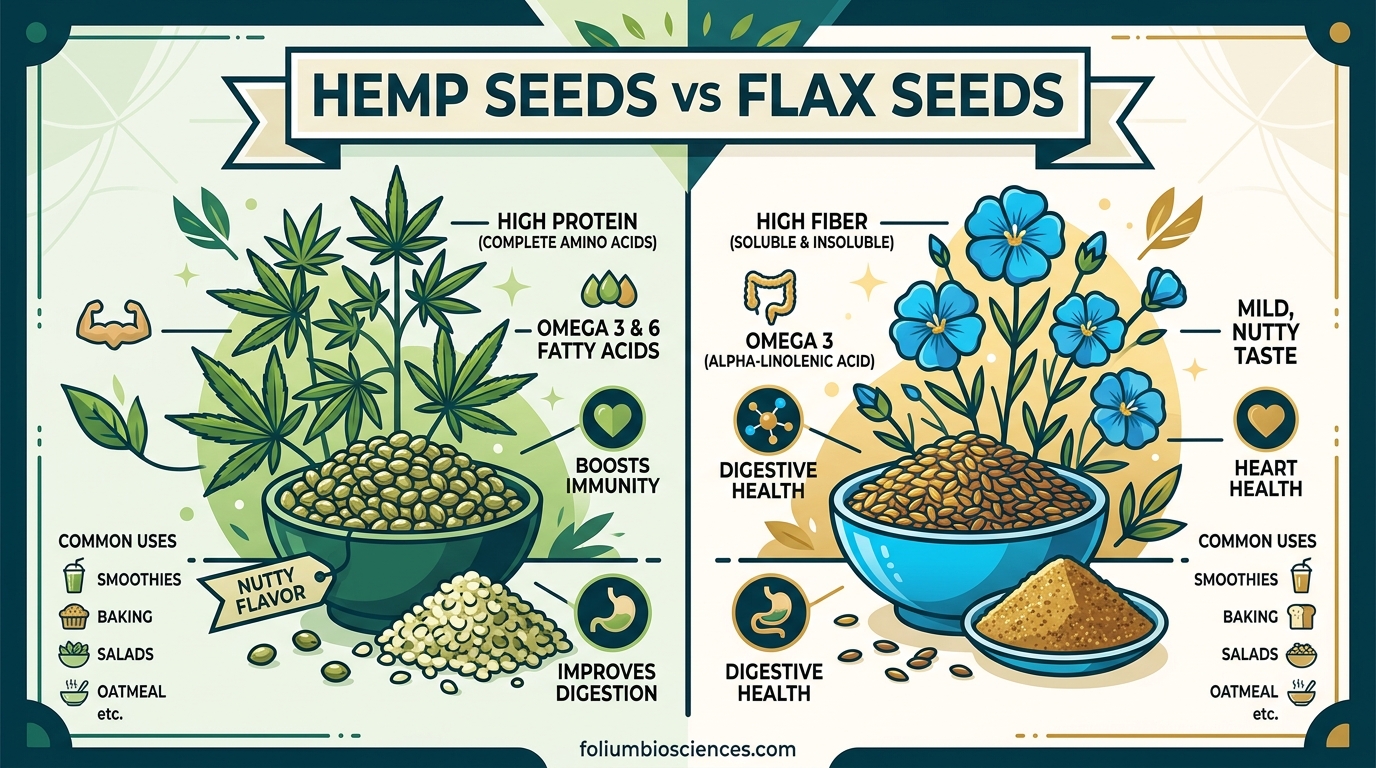
If you are looking for a quick answer before diving deep, here is the bottom line. Hemp seeds offer more protein and a better omega-6 to omega-3 ratio for heart health. Flax seeds provide more fiber and higher amounts of alpha-linolenic acid (ALA) per serving. Both support cardiovascular health, but your specific needs determine which is better for you.
For adults over 50, we recommend considering three factors: omega-3 content, protein needs, and digestive health benefits. Research from the NIH shows that both seeds have distinct advantages when it comes to heart health.
Omega-3 and ALA Content: How They Compare
Omega-3 fatty acids are essential for heart health, and both hemp seeds and flax seeds provide them. The key difference lies in the type and ratio. Flax seeds contain approximately 6,300 mg of ALA per tablespoon, making them one of the richest plant sources of this essential fatty acid. Hemp seeds offer about 1,000 mg of ALA per tablespoon, but they also provide gamma-linolenic acid (GLA), an anti-inflammatory omega-6 that flax seeds lack.
For heart health, the omega-6 to omega-3 ratio matters significantly. Hemp seeds have a naturally better ratio of approximately 3:1, which is closer to the ideal human ratio. Flax seeds have a higher omega-6 content relative to their ALA, though this varies by preparation method.
One important consideration for adults over 50 is bioavailability. Our bodies convert ALA to the more active EPA and DHA forms, but this conversion decreases with age. Flax seeds may require ground preparation for optimal absorption, while hemp seeds (often eaten as hemp hearts) are ready to absorb immediately.
Protein and Fiber: Different Strengths
Hemp seeds win decisively on protein content. They provide about 10 grams of protein per 3-tablespoon serving, making them a complete protein source with all nine essential amino acids. This is particularly valuable for adults over 50, who often need more protein to maintain muscle mass and support overall cardiovascular function.
Flax seeds lead in fiber content, offering about 8 grams per 3-tablespoon serving when ground. This fiber is split between soluble and insoluble types, both of which support heart health. Soluble fiber helps bind to cholesterol in the digestive system and remove it from the body. Insoluble fiber promotes healthy digestion and regularity.
The fiber in flax seeds also helps regulate blood sugar levels, which indirectly supports heart health. Stable blood sugar reduces the risk of developing type 2 diabetes, a major risk factor for cardiovascular disease. Hemp seeds offer about 1-2 grams of fiber per serving, making them the better choice if protein is your priority.
Hemp Seeds: Heart Health Benefits
Hemp seeds offer unique cardiovascular benefits that make them particularly valuable for adults over 50. The high arginine content (about 2,000 mg per 100g) supports the production of nitric oxide, which helps blood vessels relax and dilate. This can contribute to healthy blood pressure levels.
The GLA in hemp seeds provides anti-inflammatory benefits that protect the lining of blood vessels. Chronic inflammation is a key driver of atherosclerosis, the hardening of arteries that leads to heart attacks and strokes. By reducing this inflammation, hemp seeds may help slow the progression of cardiovascular disease.
Research published in PMC indicates that hempseed consumption may help improve lipid profiles by reducing total cholesterol and LDL (bad) cholesterol levels. The omega-3 content also supports healthy triglyceride levels, another important marker of cardiovascular health.
For seniors, hemp seeds are gentle on the digestive system and unlikely to cause the intestinal discomfort that some experience with high-fiber supplements. They can be easily added to smoothies, salads, and baked goods without significant texture changes.
Flax Seeds: Heart Health Benefits
Flax seeds have been studied more extensively for heart health, with multiple clinical trials supporting their cardiovascular benefits. The high ALA content directly supports heart function by reducing inflammation throughout the cardiovascular system and may help lower the risk of heart attacks.
One unique advantage of flax seeds is their lignan content. Flax seeds contain up to 800 times more lignans than other plant foods. These compounds have antioxidant properties that protect cells from damage and may help prevent the oxidation of LDL cholesterol, a key step in the development of atherosclerosis.
The fiber in flax seeds binds to cholesterol molecules and bile acids in the intestines, promoting their excretion. When the body uses cholesterol to replace these bile acids, blood cholesterol levels drop. Studies show that regular flax seed consumption can reduce LDL cholesterol by 5-10% in individuals with elevated levels.
Flax seeds may also support healthy blood pressure. The ALA content helps reduce inflammation in blood vessels and may improve their elasticity. Some studies report systolic blood pressure reductions of 5-10 mmHg in people who consume flax seeds regularly.
Why Heart Health After 50 Requires Special Attention
After age 50, cardiovascular risk increases significantly. The arteries naturally become less flexible, cholesterol plaques may accumulate, and blood pressure often rises. This makes dietary choices more important than ever for maintaining heart health.
Protein needs actually increase after 50 to help prevent age-related muscle loss, which is why hemp seeds can be particularly valuable. The loss of muscle mass slows metabolism and can contribute to weight gain, another heart health risk factor.
Omega-3 absorption becomes more critical with age because inflammation tends to increase. Both hemp and flax seeds provide anti-inflammatory benefits, but hemp seeds offer the additional GLA that may help balance the omega-6 dominance common in Western diets.
Blood sugar regulation also becomes more challenging after 50. The fiber in flax seeds can help moderate blood sugar spikes, reducing the strain on the cardiovascular system that comes from blood sugar fluctuations.
Daily Serving Recommendations for Heart Health
For heart health benefits, we recommend 2-3 tablespoons of hemp seeds per day. This provides about 7-10 grams of protein and a meaningful dose of omega-3s and GLA. Hemp seeds can be eaten raw, roasted, or blended into smoothies. There is no need to grind them for absorption.
For flax seeds, aim for 1-2 tablespoons of ground flax seeds daily. Whole flax seeds pass through the digestive system largely intact, so grinding is essential for accessing the nutrients inside. A coffee grinder or blender works well for this purpose. Ground flax seeds can be stored in the refrigerator for up to 90 days to preserve the delicate omega-3 content.
You can combine both seeds for maximum benefit. Many of our readers use 1 tablespoon of ground flax seeds plus 1-2 tablespoons of hemp seeds daily. This combination provides the advantages of both seeds while ensuring variety in your omega-3 intake.
Start with smaller servings if you are new to seeds, and increase gradually over 1-2 weeks. This allows your digestive system to adjust to the increased fiber content without discomfort.
Safety Considerations and Drug Interactions
Both hemp seeds and flax seeds are generally safe for most people. Hemp seeds contain only trace amounts of THC (less than 0.3%), which is insufficient to cause any psychoactive effects. Flax seeds are well-tolerated but should be ground for best absorption.
Important note: If you are taking blood thinners such as warfarin or aspirin, consult your healthcare provider before adding large amounts of flax seeds to your diet. The vitamin K in flax seeds (while minimal) may interact with blood clotting medications. Similarly, the omega-3 content in both seeds has mild blood-thinning properties.
People with digestive conditions should introduce seeds gradually. The high fiber content can cause bloating or discomfort initially. Staying well-hydrated helps the fiber move through the digestive system properly.
Those with allergies to cannabis or related plants should exercise caution with hemp seeds, though allergies are rare. Always start with a small amount when trying either seed for the first time.
How to Incorporate Hemp Seeds and Flax Seeds Into Your Diet
Hemp seeds have a mild, nutty flavor that works in both sweet and savory dishes. Sprinkle them on yogurt, oatmeal, or salads for an easy protein boost. They blend well in smoothies without adding noticeable texture. You can also use hemp seed oil for salad dressings, though the heat-sensitive nutrients are lost when cooking.
Flax seeds are more versatile in baked goods. Ground flax seeds make an excellent egg substitute in vegan recipes (1 tablespoon flax meal plus 3 tablespoons water equals one egg). Add them to pancakes, muffins, bread, or energy bars for a nutritional upgrade. Overnight oats with ground flax and hemp seeds make a heart-healthy breakfast that requires no cooking.
For the simplest approach, keep both seeds in your pantry and add them to whatever you are already eating. They complement most dishes without significant flavor disruption. Trail mix with hemp seeds, dried fruit, and dark chocolate makes a heart-healthy snack that actually satisfies.
Store hemp seeds in an airtight container in the refrigerator or freezer to prevent rancidity. Flax seeds (whole) keep for up to a year at room temperature, but ground flax should be refrigerated. Both seeds last longest when protected from heat, light, and oxygen.
Verdict: Which Is Better for Heart Health After 50?
After reviewing the research and considering the needs of adults over 50, our team concludes that both seeds offer valuable but different heart health benefits. If we had to choose one, flax seeds may have a slight edge for pure ALA content and the unique lignan benefits. However, hemp seeds provide superior protein and the anti-inflammatory GLA that becomes more important as we age.
The ideal approach combines both seeds in your daily diet. Use 1-2 tablespoons of ground flax seeds for maximum ALA and lignan absorption, plus 2 tablespoons of hemp seeds for complete protein and GLA. This combination addresses all the major heart health benefits without overloading your system with any single nutrient.
Your specific health goals should guide your choice. If you struggle with protein intake or muscle maintenance, prioritize hemp seeds. If you need to improve cholesterol levels or blood pressure, flax seeds may be slightly more beneficial. Either way, adding either seed to your diet represents a significant improvement over not using them at all.
FAQ
Is flaxseed or hemp heart better?
Both seeds offer heart health benefits, but flax seeds have slightly more ALA per serving and unique lignans. Hemp seeds provide more protein and GLA. For adults over 50, combining both seeds may be the best approach for comprehensive cardiovascular support.
Which seed is best for heart health?
Flax seeds may have a slight edge for heart health due to their higher ALA content and lignans that help reduce LDL cholesterol. However, hemp seeds offer valuable anti-inflammatory GLA and superior protein content. Both are excellent choices when incorporated regularly into a heart-healthy diet.
Are hemp seeds good for seniors?
Yes, hemp seeds are particularly beneficial for seniors. They provide complete protein for muscle maintenance, anti-inflammatory GLA for artery health, and are easy to digest. The arginine content supports healthy blood pressure, making hemp seeds an excellent addition to a senior nutrition plan.
Can heart patients eat hemp seeds?
Heart patients can generally safely consume hemp seeds as part of a balanced diet. The omega-3 content and arginine may actually support cardiovascular health. However, patients on blood thinners should consult their doctor due to the mild blood-thinning effects of omega-3s.
Can heart patients take flax seeds?
Yes, heart patients can typically consume flax seeds safely. Studies show flax seeds may help lower cholesterol and blood pressure. Patients on blood thinners should speak with their healthcare provider first, as flax seeds have mild anticoagulant properties.
Can you eat flax chia and hemp seeds together?
Yes, combining flax, chia, and hemp seeds is safe and may provide complementary benefits. Each seed offers different omega-3 profiles and nutrients. Start with small amounts to assess digestion tolerance, and aim for variety rather than large quantities of any single seed.
Can hemp seeds lower LDL?
Research indicates that hemp seed consumption may help reduce LDL cholesterol levels. The omega-3 fatty acids and fiber content both contribute to better lipid profiles. Studies show modest but meaningful reductions in total cholesterol and LDL when hemp seeds are consumed regularly.
Conclusion: Making Heart Health Seeds Work for You
The choice between hemp seeds vs flax seeds for heart health does not have to be either-or. Both seeds offer compelling benefits that support cardiovascular wellness, especially for adults over 50. We encourage you to experiment with incorporating both into your daily routine.
Start with small servings and gradually increase as your body adjusts. Keep a supply of ground flax seeds in your refrigerator and hemp seeds in the freezer for maximum freshness. Your heart will thank you for making these small but meaningful dietary changes.
Remember that seeds are one part of a comprehensive heart-healthy lifestyle. Regular movement, stress management, and working with your healthcare provider remain essential. Think of hemp and flax seeds as powerful tools in your cardiovascular wellness toolkit, not magic cures.