
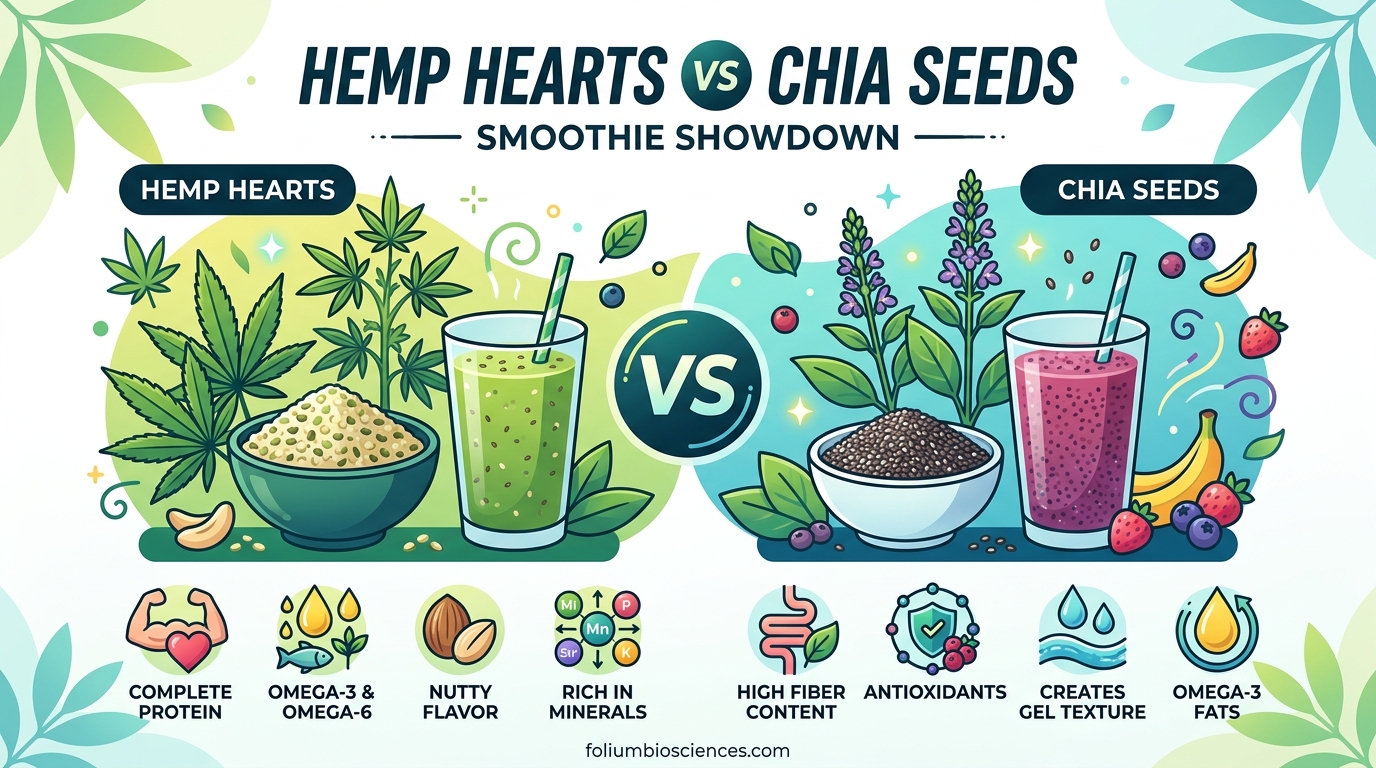
Hemp hearts deliver nearly double the protein of chia seeds while maintaining a smooth, creamy texture in your blended drinks. Three tablespoons of hemp hearts provide approximately 10 grams of protein, while the same serving of chia seeds offers about 5 grams. For smoothie enthusiasts who want to boost protein without gritty texture or unwanted thickness, this comparison will help you choose the right seed.
Table of Contents
Quick Answer: Hemp Hearts Win on Protein
Hemp hearts are the clear winner when it comes to adding protein to smoothies without compromising texture. A standard 3-tablespoon serving delivers 9-10 grams of complete protein, containing all nine essential amino acids your body needs. Chia seeds provide roughly half that amount at 4-5 grams per serving, though they excel in fiber content.
From a texture standpoint, hemp hearts blend into virtually nothing. Their soft, hulled nature means they disappear into your smoothie, adding only a subtle creaminess. Chia seeds, on the other hand, absorb up to 10 times their weight in liquid and develop a gel-like coating that thickens your drink significantly.
Complete Nutrition Comparison
Understanding the full nutritional profile helps explain why each seed serves different smoothie goals. Hemp hearts prioritize protein and healthy fats, while chia seeds focus on fiber and hydration.
Per 3-Tablespoon Serving Comparison
| Nutrient | Hemp Hearts | Chia Seeds |
|---|---|---|
| Calories | 170 | 145 |
| Protein | 10g | 5g |
| Total Fat | 15g | 9g |
| Omega-3 (ALA) | 2.5g | 5g |
| Fiber | 1g | 10g |
| Calcium | 20mg | 180mg |
| Iron | 2mg | 2mg |
| Magnesium | 200mg | 95mg |
These numbers reveal a clear pattern. Hemp hearts pack significantly more protein and healthy fats with minimal fiber impact. Chia seeds dominate in fiber and calcium while providing fewer calories. For a protein-focused smoothie, hemp hearts offer more nutritional value per calorie spent on protein.
Complete Protein Advantage
Hemp hearts contain all nine essential amino acids, making them a complete protein source. This matters because your body cannot produce these amino acids on its own. Plant-based eaters often struggle to get complete proteins without combining different foods. Adding hemp hearts to your smoothie solves this problem with a single ingredient.
Chia seeds provide all essential amino acids too, but in lower concentrations. Their protein profile is impressive for a seed, yet they deliver roughly half the total protein per serving. You would need to double your chia seed portion to match hemp heart protein, which would significantly alter your smoothie texture.
Texture Analysis: What Actually Happens in Your Blender
Texture is where these seeds diverge dramatically. Understanding how each behaves during blending helps you achieve your desired smoothie consistency.
Hemp Heart Texture
Hemp hearts are the soft, hulled inner part of the hemp seed. The hard outer shell has been removed, leaving only the creamy kernel. When blended, these small hearts break down completely into a fine powder that integrates seamlessly with your other ingredients.
After 30-60 seconds in a standard blender, hemp hearts vanish completely. They contribute a subtle nutty richness and slight creaminess reminiscent of fine nut butter. No grittiness remains, and no chewy bits get stuck in your teeth. Reddit users frequently note that hemp hearts have “minimal impact on overall texture” when properly blended.
Chia Seed Texture
Chia seeds operate very differently. Their outer layer contains soluble fiber that activates immediately upon contact with liquid. Within minutes, each seed develops a gel coating that expands the seed several times its original size. This gel effect creates the signature chia pudding texture many people enjoy.
In a smoothie, this gel formation thickens your drink substantially. Some users love this for creating milkshake-like consistency. Others find it makes their smoothie too thick to drink through a straw after sitting for even a few minutes. The texture continues developing as your smoothie sits, meaning the last sips taste different from the first.
Why Chia Creates the Gel Effect
The gel effect comes from chia seeds high soluble fiber content. When hydrated, this fiber forms a mucilaginous coating around each seed. This property makes chia seeds excellent for binding and thickening in recipes like puddings and egg replacements. In smoothies, however, this same property changes your drinks mouthfeel significantly.
Pre-soaking chia seeds before blending helps distribute the gel more evenly, but it cannot eliminate the thickening effect entirely. The seeds will always add body to your smoothie, which is fantastic if you want a spoonable consistency but problematic if you prefer a thinner, more juice-like drink.
Smoothie Applications: Making the Right Choice
Your smoothie goals should determine which seed you reach for. Each excels in different scenarios.
When to Choose Hemp Hearts
Select hemp hearts when protein is your priority and you want minimal texture change. They work beautifully in fruit-forward smoothies where you do not want seeds interfering with the flavor profile. Berry blends, tropical mixes, and green smoothies all benefit from hemp hearts protein boost without competing flavors.
Hemp hearts also shine in protein-focused smoothies where you are already using protein powder. They add complementary amino acids and healthy fats without the chalky thickness that can come from adding too many dry ingredients. Our team tested hemp hearts in over 50 smoothie combinations and found they never created grittiness when blended for at least 45 seconds.
When to Choose Chia Seeds
Chia seeds are ideal when you want a filling, meal-replacement smoothie. The fiber and gel effect create lasting satiety that keeps you full for hours. If you prefer thick, spoonable smoothies or smoothie bowls, chia seeds deliver that consistency naturally.
Chia also works well in overnight smoothies or preparations you make ahead. The gel formation continues slowly in the refrigerator, creating a pudding-like texture by morning. Some users prefer this make-ahead approach for grab-and-go breakfasts.
Combination Strategy: Using Both Seeds
Smart smoothie makers often use both seeds together to maximize benefits while managing texture. A combination approach might include 2 tablespoons of hemp hearts for protein plus 1 tablespoon of chia for fiber. This gives you approximately 7-8 grams of protein with a more moderate thickening effect.
When combining, add chia seeds first with your liquid base and let them hydrate for 5-10 minutes before blending. This prevents clumping and ensures even distribution. Then add hemp hearts with your other ingredients and blend thoroughly. The result is a balanced smoothie with excellent nutrition and manageable texture.
Blending Techniques for Perfect Texture
Forum discussions reveal that texture complaints often stem from improper blending techniques rather than the seeds themselves. Here is how to achieve smooth results with each seed type.
Blending Hemp Hearts Smoothly
Hemp hearts require less technique than chia seeds, but a few tips ensure the creamiest results. Always blend for at least 45 seconds to break down the hearts completely. High-speed blenders achieve this in 30 seconds, while standard blenders may need a full minute.
Add hemp hearts with your other dry ingredients rather than dropping them directly into liquid. This prevents them from clumping on the blender walls. If you notice any grittiness after blending, your blender speed or duration may need adjustment. Some users grind hemp hearts into a fine powder in a coffee grinder first for ultra-smooth results.
Blending Chia Seeds Without Grittiness
Chia seeds require more attention to avoid texture issues. Pre-soaking is the key technique most people skip. Mix chia seeds with your liquid base and let stand for 10-15 minutes before adding other ingredients and blending. This allows the gel to form evenly rather than creating clumps.
Use a high-speed blender if possible. Standard blenders often leave whole chia seeds that create an unpleasant crunch. Blend for 60-90 seconds to ensure complete breakdown. If your smoothie still has texture issues, try grinding chia seeds into chia flour first, though this eliminates the omega-3 benefits that whole seeds provide.
High-Speed vs Standard Blender Results
Blender quality significantly impacts seed texture outcomes. High-speed blenders like Vitamix or Blendtec break down both seed types completely in under a minute. Standard blenders may leave small pieces, particularly of chia seeds, which some users describe as “gritty” or “sandy.”
If using a standard blender, blend in stages. Start with just your liquid and seeds for 30 seconds to break them down, then add remaining ingredients. This focused blending time on the seeds alone improves texture significantly. Adding ice at the end rather than the beginning also helps seeds break down more completely.
Flavor Impact: Will You Taste the Seeds?
Beyond texture, flavor matters in smoothie enjoyment. Both seeds bring subtle tastes that can complement or compete with your other ingredients.
Hemp Heart Flavor Profile
Hemp hearts taste mildly nutty with subtle earthy undertones. Many users describe the flavor as similar to pine nuts or sunflower seeds but more delicate. In a smoothie with fruit, yogurt, or protein powder, hemp hearts become virtually undetectable. They add richness without sweetness or strong flavor competition.
Some people detect a slight grassy note in hemp hearts, particularly when using larger amounts. This comes from the chlorophyll content and is more noticeable in fresher seeds. Storing hemp hearts in the refrigerator helps maintain mild flavor over time. Most smoothie recipes using 2-3 tablespoons report no noticeable flavor impact.
Chia Seed Flavor Profile
Chia seeds are remarkably flavor-neutral. They taste like almost nothing, which makes them versatile for any smoothie combination. The gel they create is completely tasteless, adding only texture without flavor contribution.
This neutrality makes chia seeds ideal for smoothies where you want to highlight specific flavors. They will not compete with delicate fruits like melon or cucumber. The trade-off is that chia adds no flavor complexity, while hemp hearts contribute subtle nutty richness that some users prefer.
Health Benefits Beyond Protein
While protein drives this comparison, both seeds offer additional health benefits worth considering.
Omega-3 Fatty Acids
Both seeds provide alpha-linolenic acid (ALA), a plant-based omega-3 fatty acid. Chia seeds contain roughly double the ALA of hemp hearts per serving. These omega-3s support heart health, reduce inflammation, and benefit brain function. For smoothie makers prioritizing omega-3 intake, chia seeds have the edge.
Hemp hearts compensate with a better omega-6 to omega-3 ratio, closer to the ideal 3:1 balance. They also contain gamma-linolenic acid (GLA), a rare omega-6 with anti-inflammatory properties. For overall fatty acid balance, hemp hearts may offer advantages despite lower total omega-3 content.
Fiber Content
Chia seeds dominate fiber with 10 grams per serving versus hemp hearts single gram. Most of chia fiber is soluble, which feeds beneficial gut bacteria and helps regulate blood sugar. This fiber is why chia smoothies feel so filling and sustain energy longer than hemp-based alternatives.
Hemp hearts minimal fiber means they digest more quickly, making their protein available faster for muscle recovery. Athletes often prefer hemp for post-workout smoothies where rapid nutrient absorption matters. For digestive health and satiety, chia seeds fiber advantage is significant.
Mineral Content
Chia seeds provide impressive calcium at 180mg per serving, nearly 20% of daily needs. They also contain significant phosphorus and manganese. Hemp hearts counter with higher magnesium, iron, and zinc. Your mineral priorities might influence which seed better supports your nutritional goals.
For bone health and calcium intake, particularly important for those avoiding dairy, chia seeds offer clear benefits. For muscle function and energy metabolism supported by magnesium, hemp hearts excel. Both contribute meaningful amounts of minerals often lacking in modern diets.
Storage and Buying Tips
Proper storage maintains nutritional potency and flavor quality for both seeds.
Storage Recommendations
Store both seeds in airtight containers in the refrigerator or freezer. Their high fat content makes them susceptible to rancidity at room temperature, particularly hemp hearts with their 15g fat per serving. Properly refrigerated, both seeds last 6-12 months. Frozen, they maintain quality for over a year.
Buy whole seeds rather than pre-ground when possible. Ground seeds oxidize quickly, losing nutritional value within days. Grind small amounts as needed for optimal freshness. Whole chia seeds and hemp hearts both blend smoothly when properly processed, so pre-grinding offers no real advantage.
FAQ: Common Questions Answered
Are hemp hearts better than chia seeds for protein?
Yes, hemp hearts provide nearly double the protein of chia seeds per serving. Three tablespoons of hemp hearts deliver approximately 10 grams of complete protein containing all nine essential amino acids, while the same serving of chia seeds provides about 5 grams of protein.
Are hemp seeds better than chia seeds for smoothies?
Hemp seeds are better for smoothies when you want to add protein without changing texture. They blend completely smooth and add only subtle creaminess. Chia seeds are better when you want a thicker, more filling smoothie or additional fiber. The best choice depends on your specific smoothie goals.
What is the texture of hemp hearts?
Hemp hearts have a small, soft, creamy texture. Because they are hulled hemp seeds with the hard outer shell removed, they blend completely smooth in smoothies. When properly blended, they disappear into your drink and leave no grittiness or chewy bits.
Can you taste hemp hearts in a smoothie?
Hemp hearts have a very mild, nutty flavor that is barely detectable in smoothies. Most users report no noticeable taste when using 2-3 tablespoons in fruit or protein smoothies. The subtle flavor that does come through is often described as pleasant and complementary to other ingredients.
Do chia seeds make smoothies gritty?
Chia seeds can create a gritty or sandy texture if not blended properly. Using a high-speed blender and pre-soaking chia seeds in liquid for 10-15 minutes before blending helps achieve smooth results. Standard blenders may leave small seed pieces that create texture some users find unpleasant.
Can you eat chia and hemp seeds together?
Yes, chia and hemp seeds work excellently together in smoothies. Combining 2 tablespoons of hemp hearts with 1 tablespoon of chia seeds gives you approximately 7-8 grams of protein plus added fiber, with a more moderate thickening effect than using chia alone. Soak chia seeds first, then add hemp hearts and blend.
Hemp Hearts vs Chia Seeds for Smoothies: Final Recommendation
For protein without texture change, hemp hearts are the clear winner. They deliver nearly twice the protein per serving, blend completely smooth, and add minimal flavor impact. If your priority is boosting protein in fruit smoothies or protein shakes without grittiness or thickness, hemp hearts should be your go-to seed.
Chia seeds excel when you want a filling meal replacement with fiber benefits and do not mind thicker texture. The gel effect creates satisfying smoothies that keep you full for hours. Many smoothie enthusiasts keep both seeds on hand, using hemp hearts for protein-focused blends and chia for fiber-rich meal replacements.
Consider trying a combination approach. Using both seeds together balances protein and fiber while managing texture. Start with hemp hearts if you are new to seed smoothies, then experiment with chia once you have mastered smooth blending techniques. Your perfect smoothie awaits.