
Digestive enzymes vs probiotics is a question I get asked constantly in our community. People want to know which supplement they should take, when to take them, and whether they can use both together. The short answer: digestive enzymes should be taken 15-30 minutes before meals, while probiotics work best taken 30 minutes before meals or 30-60 minutes after. But there is much more to understand about how these supplements work and which one addresses your specific needs.
In this guide, I will explain exactly what each supplement does, when to take them for maximum benefit, and how to decide which one (or both) fits your situation. I have researched the science behind these supplements and talked with dozens of people who use them daily.
Table of Contents
What Are Digestive Enzymes and How Do They Work?
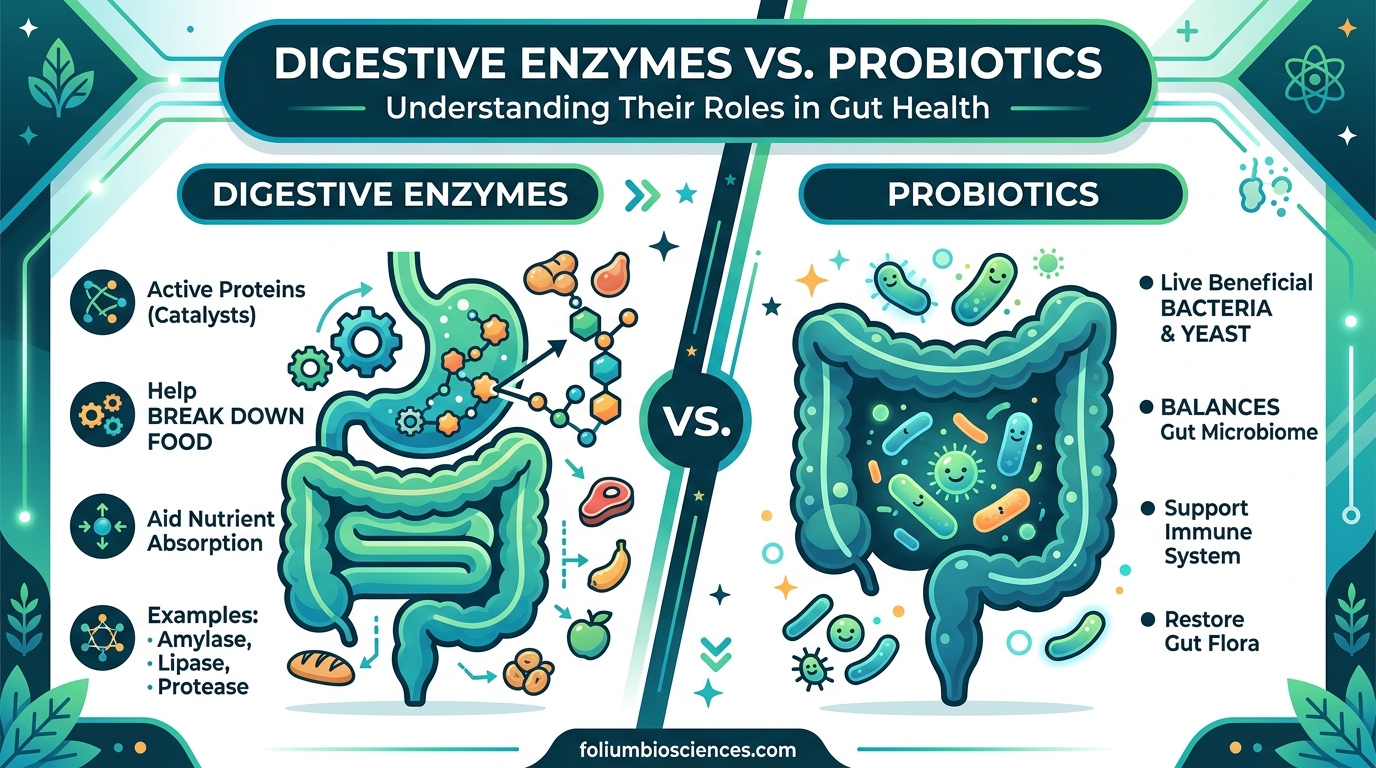
Digestive enzymes are specialized proteins that break down the food you eat into nutrients your body can absorb. Your body naturally produces these enzymes in the salivary glands, stomach, pancreas, and small intestine. When you eat, enzymes spring into action to dismantle carbohydrates, proteins, and fats into their building blocks.
There are several key types of digestive enzymes you should know about. Amylase breaks down carbohydrates into simple sugars. Protease handles proteins, breaking them into amino acids. Lipase digests fats into fatty acids and glycerol. Lactase specifically targets lactose, the sugar found in dairy products. Some supplements also include bromelain from pineapple and papain from papaya, which provide additional protein-digesting support.
Your enzyme production can decline due to age, stress, certain medications, or medical conditions like pancreatic insufficiency. When this happens, you might experience bloating, gas, and feeling uncomfortably full after eating. This is where digestive enzyme supplements come in. They provide the enzymes your body is not making enough of, helping you break down food properly and absorb nutrients efficiently.
What Are Probiotics and Why Do They Matter?
Probiotics are live beneficial bacteria that colonize your gut microbiome. Unlike enzymes that break down food, probiotics are organisms that live in your digestive tract and support overall gut health. They help maintain the delicate bacterial balance in your intestines, crowd out harmful bacteria, and support the integrity of your gut lining.
The most common probiotic strains you will see on supplement labels are Lactobacillus and Bifidobacterium. Lactobacillus strains primarily reside in your small intestine and help produce lactic acid, which inhibits harmful bacteria growth. Bifidobacterium strains live in your large intestine and are particularly important for breaking down fiber and producing short-chain fatty acids like butyrate, which nourishes your gut lining.
Probiotic supplements are measured in colony-forming units (CFU), which indicates how many live bacteria are present. Typical supplements range from 1 billion to 50 billion CFU per serving. Higher CFU counts are not always better. What matters more is getting the right strains for your specific needs and ensuring the bacteria are alive when you take them.
Key Differences Between Digestive Enzymes and Probiotics
Understanding the fundamental differences between these supplements helps you choose the right one. Digestive enzymes are proteins that act immediately to break down food. They do not colonize your gut or reproduce. Probiotics are living organisms that take up residence in your digestive tract and multiply over time.
Think of digestive enzymes as the workers breaking down your meal into usable parts. Think of probiotics as the residents maintaining the neighborhood where digestion happens. Enzymes address the mechanical process of digestion. Probiotics address the environment where that process occurs.
Benefits of Each Supplement Type
Digestive enzymes shine when you need immediate help breaking down meals. They reduce bloating and gas after eating, especially with larger or harder-to-digest meals. People with lactose intolerance find lactase enzymes particularly helpful. Those who have had their gallbladder removed often benefit from lipase supplements to help digest fats. Enzymes can also help if you notice undigested food in your stool or experience discomfort after eating certain foods.
Probiotics work more gradually to improve your overall gut health. They support immune function since approximately 70 percent of your immune system resides in your gut. Regular probiotic use can help restore bacterial balance after antibiotic treatment. They may reduce symptoms of IBS and support regular bowel movements. Some strains even produce neurotransmitters that affect mood and stress response through the gut-brain connection.
Digestive Enzymes vs Probiotics: Timing Guidelines
This is the core question that brings most people to this article. Let me give you the exact timing that works best based on how these supplements function in your body.
When to Take Digestive Enzymes
Take digestive enzymes 15-30 minutes before meals. This timing allows the enzymes to reach your stomach and small intestine before food arrives. When you eat, the enzymes are already in position to start breaking down your meal immediately. If you forget to take them beforehand, taking them with the first few bites of your meal still provides benefit, though pre-meal timing is optimal.
You should take digestive enzymes with every meal if you have chronic enzyme insufficiency, have had your gallbladder removed, or regularly experience digestive discomfort after eating. For occasional heavy meals or trigger foods, taking enzymes just for those situations works fine.
When to Take Probiotics
Probiotics should be taken 30 minutes before meals or 30-60 minutes after meals. The goal is to get the bacteria through your stomach when acid levels are lower. Your stomach produces hydrochloric acid to digest food, and this acid can kill probiotic bacteria before they reach your intestines where they need to colonize.
Taking probiotics before bed on an empty stomach is another effective strategy. Your digestive system slows during sleep, giving the bacteria more time to pass through the stomach and into the intestines alive. Many people find this timing convenient and effective.
Can You Take Digestive Enzymes and Probiotics Together?
Yes, you can take digestive enzymes and probiotics together. They do not interfere with each other. In fact, they work synergistically. The enzymes break down your food completely, providing better nutrition for the probiotic bacteria to thrive on. The probiotics maintain a healthy gut environment where enzyme activity can be most effective.
If you take both, follow this schedule. Take your digestive enzymes 15-30 minutes before eating. Take your probiotics 30 minutes before the meal or wait until 30-60 minutes after you finish eating. This staggered approach ensures both supplements can work optimally without stomach acid destroying the probiotics.
Special Medical Considerations
Certain medical conditions and medications require special consideration when choosing between digestive enzymes and probiotics.
GLP-1 Medications and Digestive Support
If you take GLP-1 medications like tirzepatide or semaglutide for diabetes or weight management, you may experience slowed digestion as a side effect. Digestive enzymes can help break down food more efficiently despite the slower transit time. Probiotics may also help maintain gut health, though some people find they need to start with lower doses to avoid additional digestive changes.
Hashimoto’s and Probiotic Considerations
People with Hashimoto’s thyroiditis often have gut issues alongside their autoimmune condition. Probiotics can support gut health and may help with the intestinal permeability sometimes associated with autoimmune conditions. However, start slowly as some people with Hashimoto’s are sensitive to changes in gut bacteria. Digestive enzymes can help if you experience bloating or feel food sits heavily in your stomach.
Post-Gallbladder Removal Protocol
After gallbladder removal, your body loses its storage reservoir for bile, which is essential for fat digestion. This makes lipase enzymes particularly valuable. Take a broad-spectrum digestive enzyme that includes lipase with every meal containing fat. This compensates for the missing bile storage and helps prevent diarrhea and discomfort after fatty meals.
After Antibiotics
Antibiotics wipe out both harmful and beneficial bacteria in your gut. After completing a course of antibiotics, probiotics are essential for repopulating your microbiome. Wait at least two hours after taking your antibiotic dose before taking probiotics to avoid the antibiotic killing the beneficial bacteria immediately. Continue probiotics for several weeks after finishing antibiotics to fully restore bacterial balance.
Frequently Asked Questions
Do digestive enzymes make you poop more?
Digestive enzymes can increase bowel movement frequency for some people, especially initially. As enzymes break down food more completely, more material reaches your intestines, potentially stimulating elimination. This usually normalizes after your body adjusts. If you experience diarrhea, reduce your dose or take enzymes only with larger meals.
What happens if you take digestive enzymes after eating?
Taking digestive enzymes after eating still provides benefits, though timing is less optimal. Enzymes work best when they are present as food arrives in your digestive tract. After-meal supplementation may help with remaining undigested food but is not as effective as pre-meal dosing.
Should I take digestive enzymes with every meal?
You should take digestive enzymes with every meal if you have chronic enzyme insufficiency, no gallbladder, or regular digestive discomfort. For general wellness, taking enzymes only with larger meals or foods that typically cause issues is sufficient. Listen to your body and adjust based on your symptoms.
Can digestive enzymes and probiotics cancel each other out?
No, digestive enzymes and probiotics do not cancel each other out. They serve completely different functions and work together synergistically. Enzymes break down food into nutrients, while probiotics are live bacteria that colonize your gut. Neither interferes with the other’s function.
How long does it take to see results from probiotics?
Most people notice probiotic benefits within 2-4 weeks of consistent use. Some experience changes within days, particularly in bowel regularity. Full microbiome shifts can take 2-3 months. If you do not notice benefits after 4-6 weeks, try a different probiotic strain or consult a healthcare provider.
What is the best digestive enzyme for no gallbladder?
The best digestive enzyme for people without a gallbladder contains high amounts of lipase, the fat-digesting enzyme. Look for supplements providing at least 10,000 USP units of lipase per serving. A broad-spectrum formula that also includes protease and amylase provides complete digestive support for all macronutrients.
Conclusion: Making Your Choice
Digestive enzymes vs probiotics is not always an either-or decision. Take digestive enzymes 15-30 minutes before meals if you need immediate help breaking down food. Take probiotics 30 minutes before or 30-60 minutes after meals to colonize your gut with beneficial bacteria. You can use both together for comprehensive digestive support.
If you experience bloating, gas, or feel overly full after eating, digestive enzymes are likely your best first choice. If you are recovering from antibiotics, have irregular bowel movements, or want to support overall gut health, start with probiotics. People with specific conditions like no gallbladder or those on GLP-1 medications should consider both supplements under guidance from their healthcare provider.
Remember that supplements support but do not replace a healthy diet and lifestyle. Prioritize whole foods, manage stress, stay hydrated, and get adequate sleep. These foundations, combined with the right digestive support, create the conditions for optimal gut health in 2026.