
If your cat has ever deposited a wet, tube-shaped hairball on your favorite rug at 2 AM, you know the drill. You clean it up, check on your cat, and wonder if there is something you should be doing differently. As a cat owner who has spent years testing different approaches, I can tell you that not all cat hairball remedies work the same way — or work equally well for every cat.
The three most common approaches are pumpkin (a natural fiber source), petroleum-based gels (lubricating pastes like Laxatone), and commercial hairball treats. Each one tackles the problem through a completely different mechanism, and each has real strengths and real limitations that most comparison guides gloss over.
In this guide, I am breaking down exactly how each remedy type works, what the research and veterinary community say about safety, and which option makes the most sense depending on your cat’s breed, age, and hairball severity. I have spent hours reading through forum discussions, veterinary guidelines, and real cat owner experiences to put together a comparison I wish I had when I first started dealing with this issue.
By the end, you will have a clear answer to which remedy type fits your cat best — and you will know when to skip home remedies entirely and head to the vet.
Table of Contents
What Are Hairballs and Why Do Cats Get Them?
Hairballs, technically called trichobezoars, form when your cat grooms itself and swallows loose fur. Most of that fur passes through the digestive tract and exits in the litter box without any problem. But some of it accumulates in the stomach, where it binds together with digestive fluids into a compact, tubelike mass that your cat eventually vomits back up.
This process is completely normal to a point. Most cats produce a hairball every week or two without any cause for concern. Cats are fastidious groomers by nature, and their tongues are covered in tiny backward-facing barbs called papillae that catch loose fur and pull it into the mouth during grooming.
However, some cats are much more prone to hairballs than others. Long-haired breeds like Persians, Maine Coons, and Ragdolls ingest significantly more fur during each grooming session. Indoor cats tend to shed year-round rather than seasonally, which means a steady supply of loose hair. Older cats with reduced mobility may struggle to groom efficiently, leading to matted fur they then ingest in larger clumps when they do groom.
The frequency issue matters more than most people realize. A hairball once every week or two is typical. A hairball every day, or multiple times per week, is a sign that something is off — either your cat is over-grooming due to stress or allergies, or their digestive system is not moving fur through efficiently enough on its own.
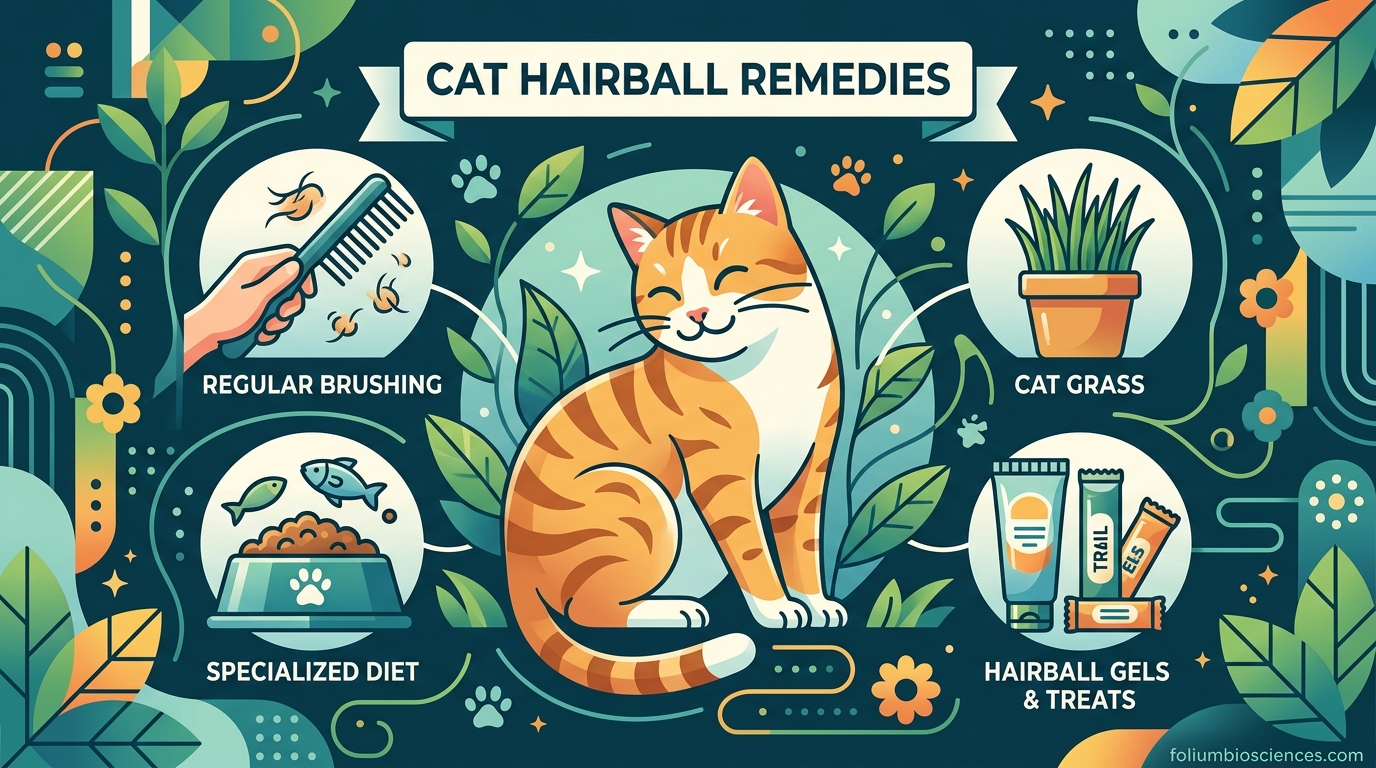
That is where cat hairball remedies come in. Each remedy type addresses the problem from a different angle: helping fur pass through the digestive tract before it has a chance to accumulate and form a hairball in the first place.
The Three Main Types of Cat Hairball Remedies
Before diving into each option in detail, it helps to understand the three fundamental approaches available. They are not interchangeable, and understanding how each one works makes it much easier to pick the right one for your cat.
Fiber-based remedies (pumpkin) work by adding bulk and moisture to your cat’s stool. The soluble fiber in pumpkin binds to hair in the digestive tract, carrying it through the intestines and out in the litter box rather than letting it accumulate in the stomach. Think of it as increasing the sweep efficiency of your cat’s digestive system.
Lubricating gels (petroleum-based) take a different approach. These products coat the inside of the digestive tract with a thin layer of petroleum-based lubricant, allowing hair to slide through the stomach and intestines without clumping together. They essentially make the digestive tract slippery so hair cannot build up.
Hairball treats combine elements of both approaches. Most contain added fiber (often psyllium husk or cellulose) along with ingredients that support digestive health, like omega-3 fatty acids or probiotics. The advantage is palatability — cats actually want to eat them, which solves the biggest problem with gels and pumpkin: getting your cat to accept the remedy in the first place.
Each approach has a place. Let me walk through them one at a time with the details that actually matter.
Pumpkin as a Natural Hairball Remedy
Pumpkin is widely considered the healthiest hairball remedy for cats, and for good reason. It is a single-ingredient, natural whole food that does more than just address hairballs — it supports overall digestive health, adds hydration to your cat’s diet, and provides vitamins A and C along with potassium. Unlike petroleum-based products, pumpkin adds actual nutritional value rather than simply passing through the system inert.
How Pumpkin Works Against Hairballs
The active component is soluble fiber. When your cat eats pumpkin, that fiber absorbs water in the digestive tract and forms a gel-like substance that binds to ingested hair. Instead of hair clumping together in the stomach, the fiber carries it through the intestines as part of the normal digestive process. The result: hair exits in the stool rather than being vomited back up.
This mechanism is slower and more gentle than petroleum-based lubrication. Pumpkin does not force anything through the digestive tract. It simply improves the efficiency of your cat’s natural digestive process. For cats with mild to moderate hairball issues, that gentle approach is often exactly what is needed.
Choosing the Right Pumpkin
Not all pumpkin products are safe for cats. Here is what you need to know before buying.
100% pure pumpkin puree (canned) is the best option. Brands like Libby’s canned pumpkin — not the pie filling, just pure pumpkin — are widely available and safe. Check the ingredient list: it should say “pumpkin” and nothing else.
Pumpkin pie filling is dangerous for cats. It contains added sugar, spices (including nutmeg, which is toxic to cats), and preservatives. Never give your cat pie filling.
Fresh cooked pumpkin works too. Roasted or steamed pumpkin, mashed without any seasoning, is perfectly safe. It just takes more effort to prepare.
Pumpkin powder supplements designed specifically for cats are another option. These are concentrated, shelf-stable, and easy to mix into wet food.
Pumpkin Dosage Guidelines for Cats
Dosage is one of the most common questions cat owners have, and most guides skip the specifics. Here are the generally recommended amounts based on veterinary guidance.
For an average-sized adult cat (8 to 10 pounds), start with 1 teaspoon of pure pumpkin puree mixed into wet food once daily. You can increase to 1 tablespoon per day if needed, but always start small and work up gradually over 5 to 7 days. Going straight to a large serving can cause loose stools.
For small cats and kittens (under 8 pounds), stick with half a teaspoon daily. For large-breed cats over 15 pounds, 1 to 2 tablespoons per day is appropriate.
Consistency matters more than volume. Giving a small amount of pumpkin every day is more effective than a large amount once a week. The fiber needs to be present in the digestive tract regularly to catch hair as it moves through.
Limitations of Pumpkin
Pumpkin is not a miracle cure, and I want to be upfront about its limits. For cats with severe or frequent hairballs — especially long-haired breeds producing multiple hairballs per week — pumpkin alone may not be enough. The fiber content helps move hair through, but it does not actively break up existing hairball masses the way a lubricating gel can.
Some cats also refuse to eat pumpkin, even when mixed into their favorite wet food. Cats can be suspicious of texture changes, and the orange color can trigger food avoidance in particularly finicky eaters. If your cat falls into this category, you may need to try a different approach entirely.
Finally, pumpkin only works as part of a feeding routine. If you free-feed dry kibble and rarely serve wet food, getting pumpkin into your cat’s diet consistently becomes much harder. The best results come from mixing it into a daily meal.
Petroleum-Based Gels: How They Work and Safety Considerations
Petroleum-based hairball gels have been the go-to remedy for decades. Products like Tomlyn Laxatone, Cat Lax, and Vetoquinol Laxatone are staples in pet stores and veterinary offices. They work fast, they are effective, and most cats tolerate them well. But there are legitimate questions about long-term safety that deserve honest answers.
How Petroleum Gels Work
The active ingredient in most hairball gels is white petrolatum (a pharmaceutical-grade petroleum jelly) combined with mineral oil. Some formulations add cod liver oil, soybean oil, or lecithin for flavor and additional lubrication. When your cat swallows the gel, it coats the lining of the stomach and intestines with a thin, slippery film.
That lubricating layer prevents ingested hair from sticking to the walls of the digestive tract or clumping together. Instead of forming a mass in the stomach, hair slides through the digestive system and passes in the stool. The gel itself is not digested or absorbed — it passes through the body unchanged and exits in the feces.
This mechanism is effective and fast-acting. Many cat owners report noticeable improvement within a few days of starting a petroleum gel regimen. For cats with acute hairball episodes or existing hairballs that need to be cleared, petroleum gels often produce results faster than fiber-based alternatives.
Popular Petroleum Gel Products
Tomlyn Laxatone is the most widely recognized brand. It comes in multiple flavors (malt, tuna, and chicken) and has been on the market for over 30 years. The original gel formula uses white petrolatum and mineral oil as the base, with soybean oil and lecithin added for palatability.
Cat Lax is a close competitor with a slightly different formulation. It uses white petrolatum along with liquid petroleum and linoleic acid. Many cat owners on forums report that their cats prefer the taste of Cat Lax over Laxatone, though this varies dramatically from cat to cat.
Vetoquinol Laxatone is the veterinary-grade version, often sold through vet offices. The formulation is similar to Tomlyn Laxatone but may be preferred by veterinarians for cats with ongoing hairball management needs.
How to Administer Petroleum Gels
Getting a cat to accept a sticky gel is a challenge most cat owners know well. Here are the methods that actually work, based on forum discussions and my own experience.
Mix it into food: Squeeze the recommended amount directly onto wet food and stir. Most cats will eat it without issue if it is well mixed with a strong-smelling food like tuna or salmon pate.
Dab it on the paw: Place a small amount on your cat’s front paw. Most cats will lick it off during grooming. This works best with the malt-flavored varieties, which many cats find appealing.
Direct oral administration: If your cat tolerates handling, you can gently open their mouth and place the gel on the roof of the mouth or back of the tongue. This is the most reliable method but requires patience and a cooperative cat.
The standard dosage for most petroleum gels is roughly half a teaspoon to one teaspoon, given 2 to 3 times per week for prevention. For active hairball episodes, the frequency can be increased to once daily until the problem resolves, then reduced to a maintenance schedule.
Safety Concerns With Petroleum-Based Products
This is where I need to be honest about the questions that concern many cat owners. Petroleum-based hairball gels are generally recognized as safe by the veterinary community for short-term and moderate use. The white petrolatum used in these products is pharmaceutical grade, not the same as industrial petroleum jelly. It passes through the digestive tract without being absorbed.
However, some concerns have been raised by holistic veterinarians and cat owners who prefer natural alternatives. The main worry is about long-term, daily use over months or years. Because petroleum-based products are not digestible, there are theoretical concerns about nutrient absorption interference — the lubricating film could potentially reduce the absorption of fat-soluble vitamins (A, D, E, and K) if given too frequently or in excessive amounts.
There is also a risk of aspiration if the gel is administered improperly. Cats with breathing issues or those that resist oral administration could accidentally inhale the gel, which is dangerous. Always administer slowly and watch for any signs of coughing or distress.
For cats with a history of constipation rather than hairballs, petroleum gels can actually make the problem worse in some cases by coating the stool and reducing water absorption in the colon. If your cat’s primary issue is constipation, a fiber-based approach like pumpkin may be more appropriate.
Many cat owners on Reddit and other forums express a clear preference for petroleum-free alternatives, especially for long-haired cats that need ongoing management. Products like Richard’s Organics (which uses vegetable oils instead of petroleum) are frequently recommended as alternatives by owners concerned about long-term petroleum exposure.
Commercial Hairball Treats: Do They Actually Work?
Hairball treats occupy a middle ground between natural fiber supplements and medicinal gels. They are appealing because cats actually enjoy eating them, which eliminates the biggest practical problem with both pumpkin and petroleum gels: getting your cat to accept the remedy consistently. But do they deliver enough active ingredients to make a real difference?
How Hairball Treats Work
Most hairball treats rely on added dietary fiber to increase the bulk and moisture content of your cat’s stool. Common fiber sources include psyllium husk, cellulose powder, and chicory root extract. Some formulations add omega-3 fatty acids (from fish oil) for anti-inflammatory benefits that support skin and coat health, which in turn reduces shedding.
A few premium treats also include probiotics to support gut health and improve overall digestive efficiency. The thinking is straightforward: a healthier digestive system moves hair through more efficiently, reducing the amount that accumulates in the stomach.
The fiber concentration in treats is typically lower than what you would get from a dedicated fiber supplement or pure pumpkin. This means treats work best as a preventive measure for cats with mild hairball issues rather than a treatment for cats already experiencing frequent or severe hairballs.
Popular Hairball Treat Options
Feline Greenies SmartBites Hairball Control are among the most popular. They use a combination of plant-based fibers and are formulated with a crunchy outside and creamy inside that most cats find appealing. They are low in calories and can be given as a daily treat without contributing to weight gain.
Temptations Hairball Control treats have a wider flavor variety and tend to be very palatable. They use cellulose as the primary fiber source. Cat owners on forums consistently report high acceptance rates, even from picky cats.
Inaba Churu Hairball Control purées take a different approach. These lickable treats contain dietary fiber in a creamy, high-moisture format. The liquid texture makes them ideal for older cats or cats with dental issues who struggle with crunchy treats. Many cat owners report that their cats go absolutely crazy for Churu products.
Pet Honesty Hairball Support Chews are a newer option marketed as a supplement-treat hybrid. They contain psyllium husk, omega-3 fish oil, and papaya extract. The soft chew format is easier for some cats to eat than crunchy treats.
Strengths and Limitations of Treats
The biggest strength of treats is compliance. If your cat will not eat pumpkin and fights you on gel administration, treats solve that problem entirely. You are not wrestling with your cat or sneaking ingredients into food. You are simply giving them something they already want.
The moisture content in some treats (especially lickable options like Churu) provides an additional benefit for cats on dry-food diets. Increased water intake supports overall digestive health and helps move hair through the system.
The limitation is potency. Treats contain modest amounts of fiber and active ingredients compared to dedicated remedies. For a cat producing multiple hairballs per week, treats alone are unlikely to resolve the issue. They work best as part of a broader approach that includes regular grooming and possibly a more concentrated remedy.
Calorie count is another factor to watch. Some hairball treats are calorie-dense, and indoor cats with lower activity levels can gain weight quickly if you are not accounting for treat calories in their daily food intake. Always check the calorie content per treat and factor it into your cat’s overall diet.
Pumpkin vs Petroleum Gels vs Treats: Which Remedy Is Most Effective?
This is the comparison most cat owners are looking for, and it is the question at the heart of this guide. Having examined each option in detail, here is a direct head-to-head breakdown across the factors that matter most.
Efficacy by Hairball Severity
Mild hairballs (1 to 2 per month): All three approaches can handle this level. Pumpkin and treats are both sufficient as daily preventives. Petroleum gels work too but may be overkill for occasional issues.
Moderate hairballs (1 to 3 per week): Pumpkin alone may not be enough. Petroleum gels provide the fastest relief for active episodes. A combination approach — treats for daily prevention plus gel for flare-ups — often works best.
Severe hairballs (daily or multiple per day): This level requires veterinary attention to rule out underlying conditions. Petroleum gels may provide temporary relief, but the root cause needs to be identified. Do not rely solely on over-the-counter remedies for severe cases.
Safety for Long-Term Use
Pumpkin wins on safety hands down. It is a natural food that provides nutritional benefits and has no known long-term risks at appropriate doses. You can give pumpkin every day for years without concerns.
Hairball treats are also safe for long-term daily use, provided you account for the calories. The fiber content supports healthy digestion, and the additional ingredients in quality treats (omega-3s, probiotics) provide secondary health benefits.
Petroleum gels are safe for moderate use but raise more questions for daily, long-term administration. While no definitive studies have proven harm from long-term use at recommended doses, the theoretical concerns about nutrient absorption and the preference of many veterinary professionals for fiber-first approaches make petroleum gels a better fit for periodic rather than daily use.
Ease of Administration
Hairball treats are the easiest to administer. Your cat comes running when you shake the bag. No mixing, no force-feeding, no paw-dabbing. This practical advantage should not be underestimated — the best remedy is the one your cat will actually accept consistently.
Pumpkin requires mixing into wet food, which works well for cats that eat wet food daily. If your cat eats only dry kibble, incorporating pumpkin becomes much more difficult.
Petroleum gels are the hardest to administer, especially with cats that resist handling. Even the paw-dab method fails with some cats who simply flick the gel off and walk away. For finicky cats, gels can become a daily struggle.
Cost Over Time
Pumpkin is the most affordable option. A can of pure pumpkin puree costs a few dollars and lasts weeks when given in teaspoon-sized portions. Treats fall in the middle range — more expensive than pumpkin but generally affordable for daily use. Petroleum gels vary widely in price, with name-brand options like Laxatone costing more per dose than generic alternatives.
Best Remedy by Cat Type
Kittens (over 4 weeks): Pumpkin is the safest starting option. Avoid petroleum gels unless specifically recommended by your veterinarian. Some treats are labeled for kittens but always check the age recommendation on the package.
Senior cats: Pumpkin provides the gentlest approach for aging digestive systems. Treats that include joint-supporting ingredients like omega-3s offer additional benefits. Petroleum gels may be appropriate but consult your vet first, especially if your senior cat has other health conditions.
Long-haired breeds: These cats often need the strongest approach. Many long-haired cat owners on forums report success with a combination strategy: daily treats or pumpkin for maintenance, plus petroleum gels during heavy shedding seasons.
Indoor-only cats: Indoor cats shed year-round rather than seasonally, so consistent daily prevention matters more than short-term intensity. Pumpkin or treats given daily are often the best fit.
Vet Recommendations and Safety Notes
Understanding what veterinarians actually recommend cuts through a lot of the confusion around cat hairball remedies. I have compiled the most common veterinary guidance based on published recommendations and forum discussions where vets have weighed in.
What Vets Typically Recommend First
Most veterinarians recommend a tiered approach. The first line of defense is always regular grooming — brushing your cat daily or every other day to remove loose fur before your cat can ingest it. No remedy can substitute for reducing the amount of hair your cat swallows in the first place.
The second recommendation is usually dietary fiber. Vets frequently suggest adding pumpkin or a fiber supplement to your cat’s food before reaching for petroleum-based products. The reasoning is straightforward: fiber supports overall digestive health, has nutritional benefits, and carries no safety concerns.
Petroleum gels are typically recommended when dietary changes alone are not sufficient. Vets see them as a useful tool for managing active hairball episodes or for cats that do not respond to fiber-based approaches.
Ingredients to Avoid
When choosing any hairball product, check the label for these ingredients that should raise concern.
Xylitol (birch sugar): Highly toxic to cats. This artificial sweetener appears in some human foods and supplements but should never be in a pet product. Check labels anyway.
Added sugars and molasses: Some treats and gels use sugar for palatability. Cats do not need added sugar, and it can contribute to obesity and dental problems.
Artificial colors and preservatives: BHA, BHT, and ethoxyquin are preservatives that have raised safety concerns. While they are approved for use in pet foods, many pet owners and holistic veterinarians prefer to avoid them.
Excessive mineral oil: Small amounts of mineral oil in hairball gels are standard, but large doses can interfere with nutrient absorption and cause diarrhea. Stick with products that use mineral oil as a minor ingredient rather than the primary active component.
Dosage Safety Guidelines
More is not better with any hairball remedy. Stick to the recommended dosages on product packaging or as directed by your veterinarian. Overdosing fiber (pumpkin) can cause diarrhea and dehydration. Overdosing petroleum gels can interfere with nutrient absorption and cause greasy stools.
For pumpkin, do not exceed 2 tablespoons per day for any cat. For petroleum gels, do not exceed the frequency recommended on the product label without veterinary guidance. For treats, follow the daily serving size printed on the package — it is calibrated to provide effective fiber without excess calories.
When to See a Vet: Warning Signs of Hairball Blockage
Hairballs are usually harmless, but they can sometimes cause intestinal blockages that are life-threatening. Knowing the warning signs can save your cat’s life.
Normal vs Abnormal Hairball Frequency
One hairball every week or two is normal for most cats. Long-haired breeds may produce them slightly more often. If your cat is producing hairballs daily, or if the frequency suddenly increases, something has changed and it is worth investigating.
Warning Signs That Require Veterinary Attention
Repeated retching without producing a hairball: If your cat is retching or gagging repeatedly but nothing comes up, a hairball may be stuck in the esophagus or intestinal tract. This is a medical emergency.
Loss of appetite lasting more than 24 hours: A cat that stops eating may have a blockage preventing food from passing through the digestive tract.
Lethargy and hiding: Cats in pain or discomfort often withdraw and become less active. If your normally social cat is hiding and refusing to interact, it could signal a serious problem.
Constipation lasting more than 48 hours: If your cat has not used the litter box for bowel movements in two days, a hairball blockage in the intestines is a possible cause.
Swollen or hard abdomen: If your cat’s belly feels firm or distended and they show signs of pain when touched, seek emergency veterinary care immediately.
Can Hairballs Cause Breathing Problems?
This is a question that comes up frequently in forums, and the answer is nuanced. Hairballs themselves are a digestive issue, not a respiratory one. However, severe coughing and retching associated with hairballs can sometimes be mistaken for asthma or respiratory infections. If your cat is making gagging sounds but producing nothing, or if breathing sounds wheezy or labored, have your veterinarian check for both respiratory conditions and potential blockages.
In rare cases, a large hairball in the stomach can press against the diaphragm and cause breathing discomfort. If your cat is exhibiting both respiratory symptoms and digestive symptoms simultaneously, veterinary evaluation is essential.
Prevention Tips Beyond Remedies: Grooming and Diet
No hairball remedy is as effective as preventing excess hair ingestion in the first place. Combining regular grooming with smart dietary choices creates a foundation that makes any remedy work better.
Regular Brushing
Daily brushing is the single most effective hairball prevention strategy. For short-haired cats, two to three brushing sessions per week using a fine-toothed comb or rubber curry brush removes most loose fur before your cat can ingest it during self-grooming.
Long-haired cats benefit from daily brushing with a slicker brush or undercoat rake. These tools reach through the topcoat to remove loose undercoat fur, which is the fur most likely to be swallowed during grooming. Many long-haired cat owners on forums report that consistent daily brushing reduced their cat’s hairballs more than any remedy they tried.
If your cat resists brushing, start with short sessions (just 30 seconds) and gradually increase the duration. Pair brushing with treats so your cat associates the experience with something positive. Most cats can learn to tolerate and even enjoy brushing with consistent, patient training.
Dietary Changes That Help
Feeding your cat a higher-quality diet with adequate moisture content can reduce hairball formation significantly. Cats on dry-food-only diets tend to produce more hairballs because they are chronically under-hydrated, which slows digestive transit time and gives hair more opportunity to accumulate in the stomach.
Adding wet food to your cat’s diet increases water intake and supports digestive motility. Even replacing one dry meal per day with wet food can make a noticeable difference in hairball frequency for some cats.
Some cat food brands offer specific “hairball control” formulas with added fiber. These can be effective as part of a broader strategy, but they should not be your only tool. The fiber content in these foods is generally modest and may not be sufficient for cats with moderate to severe hairball issues.
Hydration
A well-hydrated cat processes food and waste more efficiently, which means hair moves through the digestive tract faster. Consider adding a pet water fountain if your cat does not drink enough from a bowl. Many cats prefer flowing water and will drink significantly more from a fountain than a static bowl.
You can also add water or low-sodium chicken broth to dry food to increase moisture intake. Proper hydration benefits every part of your cat’s health, not just hairball management.
FAQ
What is the healthiest hairball remedy for cats?
Pumpkin is widely considered the healthiest hairball remedy because it is a natural, single-ingredient whole food that adds soluble fiber and nutrients without any synthetic chemicals. One teaspoon of 100% pure pumpkin puree mixed into wet food daily helps move ingested hair through the digestive tract while providing vitamins A and C. Unlike petroleum-based gels, pumpkin is safe for long-term daily use and carries no risk of nutrient absorption interference.
What do vets recommend for cat hairballs?
Most veterinarians recommend a three-step approach: (1) Regular daily brushing to remove loose fur before ingestion, (2) Adding dietary fiber like pumpkin or a vet-approved fiber supplement to your cat’s food, and (3) Using petroleum-based gels like Laxatone only when fiber alone is not sufficient. Vets emphasize that no remedy replaces good grooming habits, and any cat producing daily hairballs should be evaluated for underlying conditions.
Does petroleum jelly help cats with hairballs?
Yes, petroleum-based gels help cats pass hairballs by coating the digestive tract with a lubricating film that prevents hair from clumping in the stomach. Products like Tomlyn Laxatone and Cat Lax use pharmaceutical-grade white petrolatum that passes through the body without being absorbed. However, petroleum jelly should not be given long-term daily without veterinary supervision, as there are theoretical concerns about interference with fat-soluble vitamin absorption.
What is the vet’s best hairball control for cats?
The best veterinary-recommended hairball control combines daily grooming with dietary fiber supplementation. Vets frequently recommend pumpkin puree (1 teaspoon daily for average cats) as a first-line remedy, followed by products like Tomlyn Laxatone or Vet’s Best Hairball Relief tablets for cats that need additional support. For long-haired breeds, a combination approach of daily brushing, fiber supplementation, and periodic gel use during shedding seasons is most effective.
How much pumpkin should I give my cat for hairballs?
For an average adult cat (8 to 10 pounds), give 1 teaspoon of 100% pure pumpkin puree mixed into wet food once daily. You can increase to 1 tablespoon per day if needed. For small cats under 8 pounds, use half a teaspoon. For large cats over 15 pounds, 1 to 2 tablespoons is appropriate. Always start with a small amount and increase gradually over 5 to 7 days. Never exceed 2 tablespoons per day. Use only pure pumpkin puree, not pie filling.
Can hairballs cause breathing problems in cats?
Hairballs are a digestive issue and do not directly cause respiratory problems. However, severe retching from hairballs can be mistaken for coughing or asthma. In rare cases, a very large hairball in the stomach can press against the diaphragm and cause breathing discomfort. If your cat is wheezing, has labored breathing, or gags repeatedly without producing anything, see a veterinarian to evaluate for both respiratory conditions and potential intestinal blockages.
How often should I give my cat hairball gel?
For prevention, give hairball gel 2 to 3 times per week at the dosage recommended on the product label (typically half to one teaspoon per dose). For active hairball episodes, you can increase to once daily until the episode resolves, then return to the maintenance schedule. Do not exceed daily use for extended periods without consulting your veterinarian, as long-term daily use of petroleum-based gels may interfere with nutrient absorption.
Are petroleum-based hairball remedies safe for long-term use?
Petroleum-based hairball gels are generally safe for moderate, periodic use and are approved for over-the-counter sale. However, long-term daily use raises theoretical concerns about reduced absorption of fat-soluble vitamins (A, D, E, and K). Many holistic veterinarians and cat owners prefer petroleum-free alternatives like pumpkin or vegetable-oil-based products (such as Richard’s Organics) for long-term daily management. If your cat needs ongoing hairball support, discuss the best long-term strategy with your veterinarian.
Finding the Right Hairball Remedy for Your Cat
After comparing pumpkin, petroleum gels, and hairball treats across every angle that matters — efficacy, safety, ease of use, and cost — the clearest takeaway is that no single cat hairball remedy is universally best. The right choice depends on your cat’s hairball severity, breed, age, and willingness to accept different formats.
For most cats with mild to moderate hairball issues, I recommend starting with pumpkin puree mixed into wet food. It is the safest, most affordable, and most nutritionally beneficial option. If your cat refuses pumpkin or needs stronger support, hairball treats offer a palatable middle ground with the added benefit of daily compliance.
Petroleum-based gels like Laxatone remain the most effective fast-acting option for active hairball episodes and cats that do not respond to fiber alone. They work, but they are best used as a targeted tool rather than a daily supplement.
Whatever remedy you choose, pair it with regular brushing. No product on the market can compete with simply removing loose fur before your cat swallows it. A slicker brush, five minutes a day, does more for hairball prevention than any gel or treat.
And if your cat is producing hairballs daily, has stopped eating, or shows any of the warning signs I covered earlier in this guide, skip the remedies and call your veterinarian. Some hairball situations need professional attention, and no comparison guide can substitute for that.