
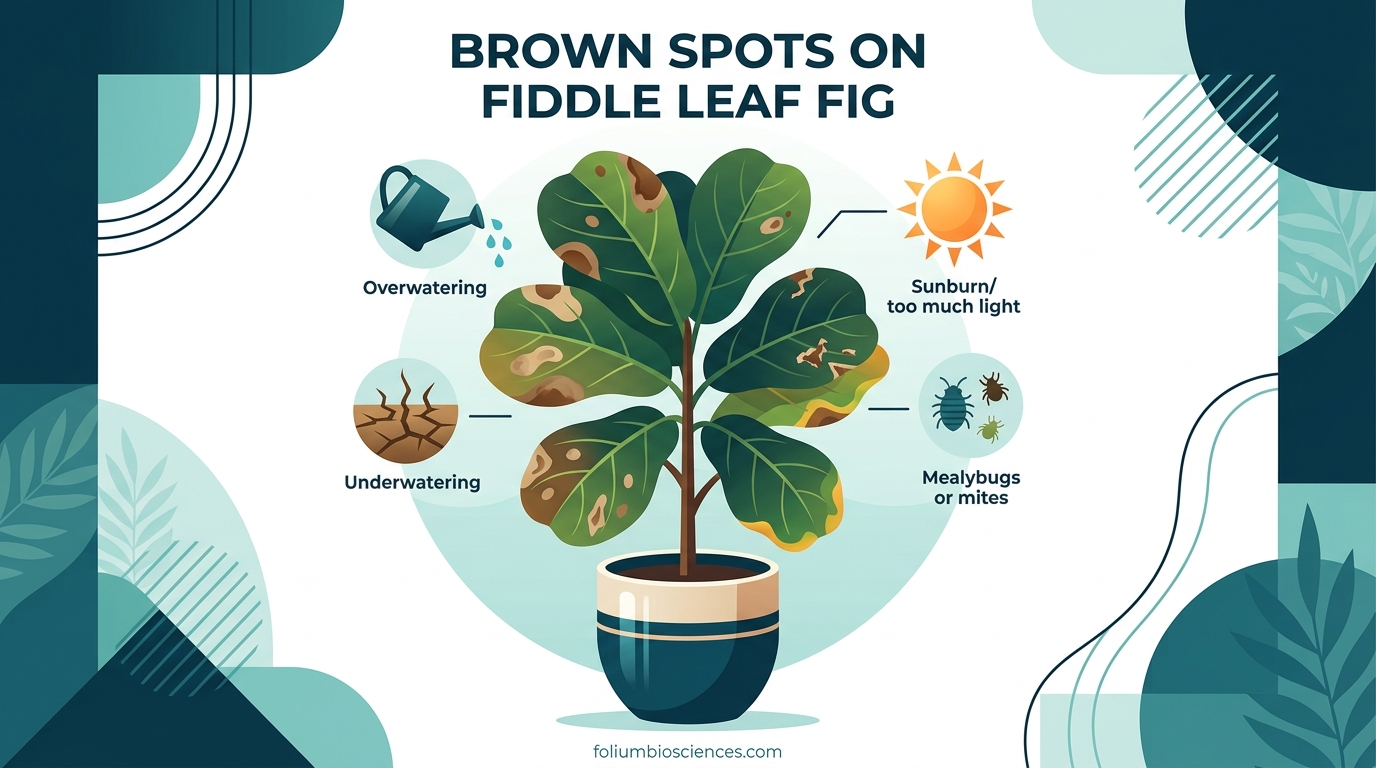
Seeing brown spots appear on your fiddle leaf fig leaves feels like watching your plant slowly decline right in front of you. I have been there, and it is one of the most stressful experiences for any plant parent. The good news is that brown spots do not automatically mean your plant is dying. The bad news is that figuring out what caused them requires some detective work, and using the wrong treatment can make things worse.
Brown spots on fiddle leaf fig plants typically come from one of three sources: edema, root rot, or bacterial infection. Each looks similar at first glance but requires a completely different approach to treat. This guide will help you identify which condition you are dealing with, walk you through the exact steps to save your plant, and explain how to prevent it from happening again.
Table of Contents
Quick Diagnosis: Identifying Your Plant’s Problem
Before diving into the details, here is a quick way to narrow down what is happening with your fiddle leaf fig. Answer these three questions to point yourself in the right direction:
1. What color are the brown spots?
Tiny reddish-brown or rust-colored dots usually mean edema. Dark brown or black spots that look water-soaked typically indicate root rot. Tan or light brown spots with yellow halos spreading outward usually point to bacterial infection.
2. Are the leaves turning yellow?
If the leaves stay green but develop brown spots, you are likely looking at edema or root rot. If the leaves are turning yellow as the brown spots spread, bacterial infection is the most likely culprit based on what our team has observed in hundreds of plant health consultations.
3. Are the spots spreading to new growth?
Edema tends to stay on the leaves where it first appeared and does not spread to new leaves. Root rot and bacterial infection both spread, but bacterial infection spreads much faster and can affect multiple leaves at once.
What Is Edema on Fiddle Leaf Figs?
Edema is a physiological disorder that happens when your fiddle leaf fig absorbs water faster than it can release it through transpiration. The plant cells literally burst from being overfilled, creating tiny raised bumps that turn brown as they damage. This is one of the most common causes of brown spots on fiddle leaf fig leaves, and the good news is that it is the easiest to fix.
The spots caused by edema are small, typically pen-point sized or smaller. They often appear reddish-brown at first and may look slightly crusty or raised to the touch. You will usually find them on the underside of leaves first, and they tend to appear on mature leaves rather than new growth. Forum discussions from plant parents reveal that edema spots sometimes go away entirely as leaves grow bigger, which is a key sign the diagnosis is correct.
The most common trigger for edema is inconsistent watering. If you let your fiddle leaf fig dry out completely and then water it heavily, the roots will absorb water too quickly for the leaves to process normally. Overwatering in general can contribute, but the real problem is the boom-and-bust cycle. Low humidity can make this worse because the leaves cannot transpire fast enough to keep up with water absorption through the roots.
How to Treat Edema
Adjusting your watering schedule is the most important step. Water your fiddle leaf fig when the top two inches of soil feel dry, not when the entire pot is bone dry. Bottom watering works well for many plant parents because it allows the soil to absorb water evenly without overwhelming the roots. Many community members report success with this method after experiencing edema from inconsistent watering.
Improve drainage by making sure your pot has adequate drainage holes. If the soil stays wet for more than a few days after watering, consider switching to a faster-draining soil mix. Adding perlite or orchid bark to your potting mix can help create air pockets that prevent water from sitting around the roots.
Increase humidity around your plant if your home is particularly dry. A humidifier near your fiddle leaf fig can help, or you can place the pot on a tray filled with pebbles and water. Just make sure the bottom of the pot is not sitting directly in the water.
Recovery Timeline for Edema
With corrected watering habits, you should see new healthy leaves emerge within two to four weeks. The existing leaves with edema spots will not heal, but they will not spread either. You can remove them if they bother you aesthetically, but leaving them will not hurt your plant. The key metric for recovery is new growth appearing without any spots.
What Is Root Rot on Fiddle Leaf Figs?
Root rot is caused by fungi or bacteria that attack the root system when soil stays consistently wet. Unlike edema, which is a physical disorder caused by water absorption, root rot is a disease process that actively destroys the roots. Once it takes hold, it can spread rapidly and is one of the most serious threats to fiddle leaf fig health. Our team has seen many plants decline within weeks when root rot goes untreated.
The brown spots from root rot typically look dark brown or almost black, and they often appear water-soaked or mushy. The leaves usually remain green, which is a key difference from bacterial infection, but brown spots spread across the leaf surface. In advanced cases, you may notice a musty smell coming from the soil, or the roots themselves may feel mushy and appear dark brown or black when you inspect them.
Many plant parents discover root rot only after checking the roots, even when the soil appeared to look normal on the surface. The problem is that roots sitting in water at the bottom of the pot rot first, while the top layer of soil dries out normally. This is why checking the root system directly is essential when diagnosing brown spots on fiddle leaf fig plants.
How to Treat Root Rot
First, carefully remove your fiddle leaf fig from its pot and examine the roots. Healthy roots should be light-colored and firm. Rotting roots will be dark, mushy, and may have a foul odor. Trim away all affected roots with clean, sterile scissors, cutting well back into healthy tissue. Do not be timid with this step because leaving any rotting roots will allow the problem to continue.
Repot your plant in fresh, well-draining soil. Do not reuse the old soil because it contains the pathogens that caused the rot. Make sure your new pot has adequate drainage holes, and consider sizing down slightly if the original pot was too large for the root system. Using a terra cotta pot can help because it allows soil to dry out more quickly than plastic pots.
Water sparingly after repotting. Many plant parents make the mistake of continuing to water heavily after treating root rot, which encourages the problem to return. Allow the soil to dry out more than you normally would, and only water when the top few inches feel dry.
Some plant parents discuss using hydrogen peroxide to treat root rot. A diluted solution can help oxygenate the soil and create an environment less favorable to anaerobic pathogens. Use one part three percent hydrogen peroxide to two parts water, and apply it once when you first notice the problem. Do not repeat this frequently because it can also harm beneficial soil organisms.
Recovery Timeline for Root Rot
Recovery from root rot takes longer than edema. You should start seeing new healthy root growth within four to six weeks, and visible improvement in leaf health within six to eight weeks. However, severe cases can take several months to fully recover. The plant needs time to regrow its root system before it can support healthy leaf growth again.
When Root Rot Might Be Too Late
If most of the root system has rotted away, or if the main stem feels soft and mushy, your fiddle leaf fig may not recover. Another bad sign is if leaves are falling off rapidly despite your treatment efforts. In these cases, you may need to accept that the plant is too far gone. However, if you catch it early and are aggressive with treatment, most fiddle leaf figs can recover from root rot.
What Is Bacterial Infection on Fiddle Leaf Figs?
Bacterial infection in fiddle leaf figs is caused by pathogenic bacteria that spread through water and enter the plant through small openings in the leaves. Unlike root rot, which affects the root system first, bacterial infection typically shows up on the leaves themselves and spreads from there. It is caused by bacteria such as Xanthomonas, which is a common pathogen in tropical plants.
The brown spots from bacterial infection typically start as small lesions that expand over time. They are usually tan to light brown in color, and they often have a yellow halo or ring around them. This yellowing is a key distinguishing feature from root rot, where the leaves typically stay green. The spots may also have a water-soaked appearance, especially when the infection is active.
Bacterial infections spread faster than root rot and can affect multiple leaves simultaneously. You may notice new spots appearing on previously healthy leaves within days of the first symptoms. The infection can travel down the leaf stem and affect other parts of the plant if left untreated. In severe cases, the entire plant can decline rapidly.
How to Treat Bacterial Infection
Start by removing all affected leaves immediately. Do not wait to see if the plant recovers on its own because every day of delay allows the infection to spread. Use clean, sterile scissors or pruning shears, and make your cuts well below the affected area. Disinfect your tools between each cut to avoid spreading the bacteria to healthy tissue.
Improve air circulation around your plant. Bacteria thrive in still, humid conditions, and increasing airflow can slow the spread significantly. Open windows, use a fan nearby, or move your fiddle leaf fig to a location with better ventilation. Avoid crowding your plant with other houseplants.
Reduce watering and avoid getting water on the leaves when you do water. Bacterial infections spread through water droplets, so keeping the leaves dry is essential. Water at the base of the plant and avoid overhead watering entirely.
Some plant parents use copper-based fungicides or bactericides to treat bacterial infections. These products can help slow the spread but are not a cure. They work best as a preventive measure or at the very first signs of infection. Apply according to package directions and repeat as recommended. Epsom salt is sometimes discussed in forums as a treatment, but its effectiveness for bacterial infection is not well-supported by evidence. It may help with overall plant health due to its magnesium content, but it will not stop a bacterial infection from spreading.
Recovery Timeline for Bacterial Infection
Recovery varies widely depending on how early you caught the infection and how aggressive you were with treatment. Mild cases may show improvement within a few weeks. Severe infections can take one to three months to fully resolve, and some plants never fully recover. The key is to be vigilant about new growth and remove any leaves that show recurring symptoms.
When Bacterial Infection Might Be Too Late
If the infection spreads to the main stem or the growing tip of the plant, recovery becomes very unlikely. Once the bacteria reach these critical areas, they disrupt the plant’s ability to transport water and nutrients throughout its system. If your fiddle leaf fig has multiple branches and one is severely infected, you may be able to save the healthy portions by removing the affected branch entirely.
Comparison: Edema vs Root Rot vs Bacterial Infection
Understanding the differences between these three conditions is essential for providing the right treatment. Here is a direct comparison of the key characteristics:
| Characteristic | Edema | Root Rot | Bacterial Infection |
|---|---|---|---|
| Spot Size | Tiny (pen-point sized) | Large, irregular patches | Medium, spreading |
| Spot Color | Reddish-brown, crusty | Dark brown to black | Tan to light brown |
| Leaf Yellowing | No | No (stays green) | Yes (yellow halos) |
| Primary Cause | Inconsistent watering | Overwatering, poor drainage | Bacteria in water |
| Spread Pattern | Stable, does not spread | Can spread slowly | Rapid spreading |
| Root Involvement | No | Yes (roots rot first) | No (leaf infection) |
| Recovery Difficulty | Easy | Moderate | Moderate to Difficult |
Emergency Treatment: First 24 to 48 Hours
If you just noticed brown spots on your fiddle leaf fig and want to take immediate action, here is what to do in the first two days. This emergency protocol works regardless of which condition you have, and it will give your plant the best chance of recovery.
Day 1 – Assessment: Examine your plant closely and try to identify which condition you are dealing with using the quick diagnosis guide above. Check the roots by gently removing the plant from its pot. Look at the soil moisture level and the color and texture of the roots.
Day 1 – Action: If you see any mushy, dark roots, trim them away immediately. If the soil is wet and compacted, consider repotting with fresh, well-draining soil. Remove any leaves with severe brown spots using clean scissors. Move your plant to a location with better air circulation.
Day 2 – Follow-up: Check the soil moisture before watering. If it still feels damp, do not water. Monitor your plant for any spreading of the brown spots. Take photos to track changes over time so you can judge whether treatment is working.
Prevention Tips for Brown Spots on Fiddle Leaf Fig
Preventing brown spots is much easier than treating them. A few simple changes to your care routine can dramatically reduce the likelihood of any of these conditions developing on your fiddle leaf fig.
Water consistently: Establish a regular watering schedule based on your home environment rather than following a rigid calendar. Check the soil every few days and water only when the top two inches feel dry. Avoid the boom-and-bust cycle of letting the plant dry out completely and then flooding it with water.
Ensure proper drainage: Your pot must have adequate drainage holes, and the soil should allow water to flow through freely. If water sits in the bottom of your pot tray for more than a few hours after watering, your drainage is inadequate. Consider adding perlite or orchid bark to your soil mix to improve aeration.
Provide adequate light: Fiddle leaf figs need bright, indirect light to thrive. Insufficient light reduces how quickly the plant can use water, leading to soil staying wet too long. However, avoid direct sunlight, which can cause sunburn that looks like brown spots but has a different texture.
Maintain appropriate humidity: These tropical plants prefer humidity levels between 30 and 65 percent. Very low humidity can contribute to edema, while very high humidity without airflow can encourage bacterial infections. A humidifier can help maintain consistent humidity in dry climates.
Inspect regularly: Check your fiddle leaf fig for any signs of brown spots or other issues at least once a week. Catching problems early makes treatment much more effective. Pay special attention to the undersides of leaves where edema spots often first appear.
Frequently Asked Questions
Why does my fiddle leaf fig have tiny brown spots?
Tiny brown spots on a fiddle leaf fig are most commonly caused by edema, which occurs when plant cells absorb water faster than they can transpire. Edema spots are typically small, reddish-brown, and appear on the underside of leaves first. They are usually triggered by inconsistent watering or low humidity.
How do you tell the difference between dry and root rot on fiddle leaf figs?
Root rot causes dark brown or black spots that look water-soaked, and the leaves typically stay green despite the spots. The roots will be mushy and dark when you inspect them. Dry or underwatering issues cause crispy, tan edges on leaves rather than discrete brown spots, and the entire leaf may curl or wilt.
How do you treat edema in fiddle leaf figs?
Treat edema by adjusting your watering schedule to water consistently when the top two inches of soil feel dry. Bottom watering can help prevent inconsistent absorption. Improve drainage with perlite in your soil mix and consider increasing humidity around the plant.
What does fungus look like on a fiddle leaf fig?
Fungal issues on fiddle leaf figs typically appear as dark brown or black spots that may have a fuzzy or web-like texture in advanced cases. Root rot is the most common fungal issue and affects the roots first, causing mushy, dark roots and brown spots on leaves that spread over time.
Can fiddle leaf fig recover from root rot?
Yes, fiddle leaf figs can recover from root rot if caught early. Remove all affected roots, repot in fresh soil, and water sparingly. You should see new healthy growth within four to six weeks. Severe cases where most of the root system is damaged may not recover.
What does Epsom salt do for fiddle leaf figs?
Epsom salt provides magnesium and sulfur, which can support overall plant health and green leaf color. However, it is not a treatment for brown spots caused by edema, root rot, or bacterial infection. Some plant parents use it as a supplement during recovery, but evidence for its effectiveness is anecdotal.
How to bring back a fig tree from root rot?
To save a fiddle leaf fig from root rot, remove it from the pot, trim away all dark and mushy roots, and repot in fresh, well-draining soil. Water sparingly afterward and provide bright, indirect light. Avoid fertilizing until you see new growth, which indicates the root system is recovering.
How do you fix edema in fiddle leaf figs?
Fix edema by correcting your watering practices. Water when the top two inches of soil are dry rather than on a fixed schedule. Bottom watering can help ensure even water absorption. Ensure your pot has good drainage and consider adding perlite to your soil mix to improve aeration and prevent water from sitting around the roots.
Conclusion
Brown spots on your fiddle leaf fig do not have to mean the end for your plant. Correctly identifying the cause is the first and most important step toward recovery. Whether you are dealing with edema from inconsistent watering, root rot from overwatering, or bacterial infection spreading through water droplets, taking action quickly dramatically improves your chances of saving your plant.
Most fiddle leaf figs can recover from these conditions with the right treatment and some patience. Edema clears up within weeks once you establish consistent watering habits. Root rot recovery takes longer but is entirely possible with aggressive root trimming and careful watering afterward. Even bacterial infections can be managed if you catch them early and remove affected leaves promptly.
The best approach is to inspect your plant regularly, water consistently, and address any problems as soon as you notice them. A healthy fiddle leaf fig with proper care is less susceptible to these issues, so focus on creating the right environment and your plant will reward you with beautiful, spot-free foliage for years to come.