

A cane can make everyday walking feel steadier when balance has become less predictable, but the right kind matters more than a flashy feature list. For the best walking canes for seniors with balance problems, I put a secure base, a handle that does not aggravate the hand or wrist, a realistic height range, and a documented weight capacity ahead of extras.
My leading all-around pick is the REHAND Foldable Adjustable Cane because its eight height settings, travel-friendly fold, ergonomic handle, and shock-absorbing all-terrain tip cover many common needs. For a senior who wants a cane that remains upright beside a chair, the GPTCAMP G1 and the REHAND Self-Standing Pivot Cane deserve a closer look; a clinician or physical therapist should help decide if a cane offers enough support.
A walking cane for balance adds a third point of contact with the ground and can shift some load away from a weaker or painful leg. It is not a substitute for professional assessment after a fall, sudden dizziness, new weakness, or a major change in walking ability.
Table of Contents
The REHAND, Medline Offset, and GPTCAMP G1 are the top three picks for steadier daily walking
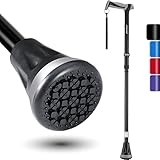


These three suit different priorities: compact travel storage, a familiar offset-handle format, or an upright quad base. A higher review count can be a useful signal, but a cane still has to fit the person, the flooring, and the amount of balance support needed.
These eight walking canes give seniors different ways to address balance problems in 2026
| Product | Specifications | Action |
|---|---|---|
| REHAND Foldable Adjustable Cane |
|
View Details |
| Medline Aluminum Offset Cane |
|
View Details |
| GPTCAMP G1 Quad-Base Cane |
|
View Details |
 Dynamo Prime Walking Stick Dynamo Prime Walking Stick |
|
View Details |
 LIXIANG Three-Footing Cane LIXIANG Three-Footing Cane |
|
View Details |
 Medline Small-Base Quad Cane Medline Small-Base Quad Cane |
|
View Details |
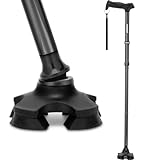 REHAND Self-Standing Pivot Cane REHAND Self-Standing Pivot Cane |
|
View Details |
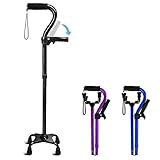 KingPavonini Dual-Handle Cane KingPavonini Dual-Handle Cane |
|
View Details |
The table is a starting point, not a prescription. A standard offset cane can be easier to place on stairs and through narrow rooms, while a quad or pivoting base can be more reassuring when a person needs the cane to stand by itself between steps.
1. The REHAND Foldable Adjustable Cane is the best all-around travel-ready choice
REHAND Walking Cane – Foldable, Adjustable, Collapsible Walking Canes for Men & Women, Heavy Duty All Terrain Tip, with Travel Bag | Walking Sticks for Seniors & Adults (Natural Black)
8 heights
14 inch fold
all-terrain rubber tip
Pros
- 8-step height range
- Ergonomic fatigue-reducing handle
- Shock-absorbing rubber base
- Travel bag and wrist strap
Cons
- Height range ends at 6 foot 5
- No self-standing base listed
I would start with this REHAND model for a person who needs a foldable cane for seniors without giving up a useful adjustment range. The aluminum shaft offers eight settings from 78 to 96 centimeters, which the listing says fits people from 5 feet to 6 feet 5 inches, and it folds down to 14 inches for a bag or car compartment.
Its published 4.7 rating comes from more than 12k reviews, the largest review base in this group. The review summary points to sturdy adjustment, a comfortable grip, and confidence from the all-terrain base, which matches the problems people often mention when they want one cane for errands and trips.
The technical distinction is the multilayer rubber structure at the bottom. REHAND describes it as slip-resistant and shock absorbing, while the PP and TPR ergonomic handle is made to reduce pressure on the palm; it also includes a wrist strap and travel bag.
The REHAND is strongest for seniors who need a compact cane for changing daily routines
This is a sensible choice for someone who moves from home floors to sidewalks and needs to stow a cane between uses. The low folded size is more practical than carrying a fixed shaft, and the broad stated fit range helps households that may share the cane only after each user resets its height.
I would still check that the tip makes full contact with the floor rather than assuming an all-terrain claim means every surface will feel the same. Wet tile, loose gravel, thick carpet, and a slope all call for slower steps and attention to the cane placement.
The REHAND is less suitable when a person needs a cane that stays upright unattended
This design is not listed as self-standing, so it may need to be leaned against a secure surface or kept within reach. Forum discussions repeatedly flag a fallen cane as an everyday annoyance, especially when standing from a sofa or reaching for it after using the bathroom.
Its stated upper user-height range also stops at 6 feet 5 inches. Anyone taller should have a therapist measure the needed cane height instead of stretching posture to make a shorter device work.
2. The Medline Aluminum Offset Cane is the best simple lightweight option
Medline Aluminum-Chrome Offset Walking Cane, Adjusts 29–38” & Supports Up to 300 Lbs. — Mobility Aid Provides Balance for Seniors & Adults
29 to 38 inches
300 lb capacity
foam offset grip
Pros
- 300 lb stated capacity
- Soft foam offset handle
- Push-button height lock
- Wrist strap and rubber tip
Cons
- Only chrome color listed
- 29 inch minimum height
The Medline Aluminum-Chrome Offset Cane is the uncomplicated pick in this lineup. At 11.2 ounces with a 29- to 38-inch adjustment range, it avoids the extra width and moving parts of a quad base while still listing a 300-pound capacity.
I like the offset-handle layout for a person who wants a familiar, straightforward walking cane for balance. Its 4.7 rating is based on nearly 3.9k reviews, and the supplied review summary repeatedly credits the sturdy feel and soft grip.
The push-button lock makes height changes easy to verify by sight and touch. A foam grip, wrist strap, and slip-resistant rubber tip cover three small details that matter in real use: hand comfort, preventing a drop, and traction at the floor.
The Medline is best for seniors who want a narrow cane for indoor paths and stairs
An offset cane is generally easier to thread through a tight kitchen, doorway, or stairway than a wide quad base. That does not make it the right answer for severe instability, but it can be a better everyday fit when the user needs light balance support and can place one tip accurately.
The 300-pound stated capacity gives this model a strong paper specification for its light weight. Capacity is not a measure of balance support, so a person who needs to bear heavily on the cane should ask a clinician whether a walker would be safer.
The Medline is less suitable for users who need hands-free standing support
This product has a single rubber tip rather than a listed self-standing base. It can be the better shape for narrow spaces, yet it is more likely to be leaned on furniture or placed on the floor when the user needs both hands.
The stated minimum setting is 29 inches, so a shorter adult should confirm fit before choosing it. A cane set too high pushes the shoulder up, and one set too low encourages an unsafe forward lean.
3. The GPTCAMP G1 is the best self-standing quad-base cane for many homes
GPTCAMP Walking Cane Quad Base Self Standing 300lbs for Seniors
Self-standing 4.3 inch base
31 to 36 inches
300 lb capacity
Pros
- Self-standing quad silent-base
- EVA foam offset handle
- 1.1 lb aluminum body
- Folds for storage
Cons
- Fit range ends at 6 foot 1
- Heavier than sub-one-pound options
The GPTCAMP G1 makes a strong case for a quad tip cane when the person is tired of a standard cane falling over. Its 4.3-inch-wide self-standing base, EVA foam padded offset handle, and 300-pound stated capacity focus on stability without turning the cane into a full-size walking aid.
It weighs 1.1 pounds and folds, so it remains manageable for many people who value portability. The listing specifies six height settings from 31 to 36 inches for users from 4 feet 9 inches to 6 feet 1 inch, and the product has a 4.7 rating across nearly 1.9k reviews.
The base is described as a non-slip Quad Silent-Base intended for all-terrain use. A self-standing cane can save repeated bending or reaching, but the wider footprint still needs a quick clearance check around furniture legs and narrow door thresholds.
The GPTCAMP is best for a senior who wants the cane upright beside a chair
The ability to leave the cane standing is the point of this design. It answers one of the most common user frustrations: a single-tip cane that slides down a wall or ends up on the floor just as the person needs it to stand.
The EVA foam offset grip is also relevant for long appointments or household tasks. A soft grip can reduce direct pressure, though a person with hand weakness should hold the handle in a store-like trial position before relying on any cane for a long walk.
The GPTCAMP is less suitable for tall users or very cramped interiors
The published fit range stops at 6 feet 1 inch, which rules it out for some taller people. Its quad base is also wider than a standard rubber tip, so users should practice turns near rugs, table legs, and bathroom doors before depending on it.
Forum users often praise quad bases for steadiness and also describe them as bulkier indoors. That trade-off is normal: more contact points can bring more reassurance, but they also require more deliberate foot and cane placement.
4. The Dynamo Prime is the best lightweight walking stick for outdoor-focused users under 150 pounds
Dynamo Prime Walking Stick for Seniors – Adjustable Walking Cane for Men and Women with Balance Issues – Lightweight & Sturdy All-Terrain Support for Posture & Stability – Blue
Under 1 lb
Cyclone all-terrain tip
150 lb capacity
Pros
- Under-one-pound listed weight
- Cyclone Tip for terrain
- Full-length foam grip
- Works as cane or walking stick
Cons
- 150 lb stated capacity
- Not a self-standing base
The Dynamo Prime is a different kind of pick: it is closer to a stable walking stick that can also serve as a cane or trekking pole. At under 1 pound, it addresses the fatigue concern that comes up when a heavier cane has to be carried for much of the day.
Its foam grip runs from top to bottom, and the Cyclone Tip is the key feature for outdoor terrain. The published rating is 4.6 from nearly 1.8k reviews, with the supplied review feedback highlighting the tip and the product’s versatility.
The limitation deserves equal emphasis: its stated capacity is 150 pounds. That is markedly below several other products here, so capacity must be a non-negotiable screening step rather than a small detail in the specifications.
The Dynamo Prime is best for lighter adults who walk on varied outdoor ground
The Cyclone Tip is intended to grip different surfaces, and the low listed weight may make it attractive for neighborhood walks, parks, and travel where a heavier quad cane would feel tiring. The full foam covering gives users more than one place to hold while repositioning the stick.
I would treat it as an outdoor-oriented stable walking stick, not an automatic choice for a senior with substantial balance loss. If the user leans hard on a cane, has repeated falls, or needs a device to remain upright during transfers, a clinician should assess a quad cane or walker instead.
The Dynamo Prime is not the right choice above its 150-pound stated capacity
Do not treat a published capacity as a flexible suggestion. This cane is listed for up to 150 pounds, and buyers above that figure should select a product with a documented higher capacity or seek a professional mobility recommendation.
It is also not listed with a self-standing or quad base. That can make it less convenient for a person who must release the handle frequently while shopping, cooking, or getting in and out of a chair.
5. The LIXIANG Three-Footing Cane is the best folding option with a broad low-to-mid height range
LIXIANG Walking Cane 3 in1 – Adjustable Lightweight Walking Sticks from 29-37 Inches,Balancing Mobility Aid for Men and Women
29 to 37 inches
3-footing self-standing base
250 lb capacity
Pros
- Self-standing three-footing base
- Foldable three-section design
- Ergonomic secure grip
- Two extra base feet
Cons
- 2.5 lb listed weight
- 37 inch maximum height
The LIXIANG model pairs a folding shaft with a three-footing base, making it a middle ground between a simple cane and a larger four-foot base. It adjusts from 29 to 37 inches, supports up to 250 pounds according to the listing, and arrives with two extra base feet.
Its 4.6 rating comes from 947 reviews. The supplied review summary points to the base stability, travel-friendly fold, and handle comfort, which are the features I would expect a balance-focused buyer to inspect first.
At 2.5 pounds, this is one of the heavier options in the comparison. That added weight may feel reassuring to some people, but it can also increase fatigue for a senior who must lift the cane with each step.
The LIXIANG is best for users who want a folding cane that can stand independently
The three-footing design is intended to make the cane freestanding, which can reduce the scramble to retrieve a dropped mobility aid. Its foldable three-section form also has a practical advantage for car rides and storage when the cane is not needed.
The ergonomic grip is meant to help reduce slipping. Grip comfort depends on hand size, arthritis symptoms, and how much body weight goes through the arm, so a user should stop if the wrist or shoulder becomes sore rather than pushing through discomfort.
The LIXIANG is less suitable for seniors who fatigue when lifting a cane
The listed 2.5-pound weight is substantial beside the sub-one-pound Dynamo or the 11.2-ounce Medline offset model. A heavier base may appeal to a person looking for a planted feel, but it is not automatically the safer choice if the user cannot pick it up smoothly.
The maximum published height is 37 inches. A taller user should not compensate by bending over the handle; proper fit and an upright posture come before the appeal of a folding base.
6. The Medline Small-Base Quad Cane is the best straightforward quad cane for recovery support
Medline Aluminum Quad Cane with Small Base, 300 lb Capacity, for Balance, Knee Injuries, Leg Surgery Recovery & Mobility, Portable, Sturdy Walking Aid for Seniors & Adults
Small four-foot base
29 to 38 inches
300 lb capacity
Pros
- Self-standing quad base
- Foam handle for grip
- 300 lb stated capacity
- Adjustable aluminum shaft
Cons
- Small base may suit some terrain better
- 2 lb listed weight
The Medline Small-Base Quad Cane keeps the familiar medical quad-cane format: four feet, a foam handle, a height-adjustable aluminum shaft, and a stated 300-pound capacity. It is built for users seeking more planted support than a single tip, including people recovering from a knee injury or leg surgery.
The cane adjusts from 29 to 38 inches and weighs 2 pounds. It has a 4.5 rating from nearly 1.7k reviews, with 77 percent of that feedback reported as five-star and users praising the foam grip and self-standing base.
A rubber pad on the bottom is listed for slippery surfaces. No cane can make a slick floor risk-free, so shoes, lighting, cleared paths, and a dry surface still matter just as much as the rubber under the base.
The Medline Small-Base Quad Cane is best for a user who needs a traditional four-foot base
A four-foot base gives the cane a standing position and multiple contact points. For a person recovering from surgery or feeling unsteady during short household walks, that can be more reassuring than a standard cane that must be leaned against a wall.
The small-base layout may be easier to maneuver than a larger quad design. It still needs practice: the entire base should reach the ground before weight is applied, especially when turning or stepping over an uneven doorway threshold.
The Medline Small-Base Quad Cane is less suitable for every outdoor surface
The listing itself notes that the small base may not fit all terrain. Uneven ground can leave one or more feet less evenly planted, so a person who spends much of the day on trails, loose stones, or rough lawns should ask about a different mobility aid.
At 2 pounds, it is portable but not featherweight. The right test is whether the user can advance the cane in a controlled way for the entire planned walking distance, not whether it feels comfortable for only a few steps.
7. The REHAND Self-Standing Pivot Cane is the best flexible-base choice for frequent stops
REHAND Walking Cane for Men & Women – Foldable, Adjustable, Lightweight, Self Standing Pivot Walking Cane, Soft Handle Grip, with Travel Bag, Walking Sticks for Seniors & Adults (Black)
Pivoting 4-prong base
8 heights
foldable with travel bag
Pros
- Self-standing rotating base
- Wide soft TPR handle
- 8 height settings
- Folds and includes a bag
Cons
- No warranty listed
- May feel too light for some users
This REHAND cane combines features that address several recurring senior mobility pain points: a self-standing base, a rotating four-pronged foot, a larger soft handle, and a collapsible aluminum frame. It is the model I would examine for a user who often pauses to unlock doors, use a checkout counter, or stand from a seat.
The cane has eight height settings intended for people from 5 feet to 6 feet 5 inches and includes a travel bag. Its 4.4 rating is based on nearly 9.9k reviews, and the review summary specifically highlights handle comfort, upright storage, and stability on varied surfaces.
The rotating base uses four non-slip rubber foot pads. That pivot can help the base keep contact as the cane angle changes, but it does not remove the need to move slowly and plant the base before transferring weight.
The REHAND Pivot Cane is best for people who dislike leaning a cane against furniture
The self-standing design is an everyday convenience feature with real safety relevance. If the cane is upright and reachable, the user is less likely to make an unsupported reach across a room after sitting down.
The longer, wider handle has soft TPR material and is described as reducing palm fatigue. That may be a better match for a person whose hand tires on a narrow T-grip, although numbness, severe arthritis, or one-sided weakness call for individual clinical guidance.
The REHAND Pivot Cane is less suitable for users who prefer a more substantial cane
The supplied review data notes that some users may find this cane too light. Lightweight construction can lower carrying fatigue, yet a person accustomed to a heavier quad cane may prefer the sensation of a more weighted base.
No warranty is listed in the product data. Check the wrist strap, folding joints, and rubber pads regularly, since a worn or loose part is a reason to pause use until it has been repaired or replaced.
8. The KingPavonini Dual-Handle Cane is the best choice for help standing from a chair
KingPavonini Adjustable Walking Cane for Men & Women, Stable 4-Prong Base
Second standing handle
4-pronged base
32 to 37.5 inches
Pros
- Second handle for standing
- Thick aluminum alloy
- Stable quad base
- Screw-coupled height setting
Cons
- Twist lock needs more effort
- 2 lb listed weight
The KingPavonini brings a useful specialist feature to this group: a second handle intended to assist with standing from a seated position. Along with its foam-padded offset handle, four-pronged base, and stated 300-pound capacity, that can make the transfer from chair to standing feel more controlled for the right user.
The shaft uses 1.2-millimeter aluminum alloy, compared with the 0.8- to 1.0-millimeter thickness cited for typical canes in the listing. It offers five height settings from 32 to 37.5 inches, folds for transport, weighs 2 pounds, and has a 4.4 rating from more than 2.3k reviews.
Its screw-coupled adjustment is designed to prevent accidental readjustment. That is a good security detail, though it may require more hand strength and patience than a quick push-button or flip lock.
The KingPavonini is best for a senior who needs a second point of hand support when rising
The second handle is the deciding feature. It can support the movement of standing from a chair, but it should not be treated as a substitute for a stable chair, good footwear, or a therapist’s transfer-training advice.
The optimized four-pronged base is intended to add stability while avoiding an oversized tripping hazard. For a person who needs a little extra control at sit-to-stand moments, that blend of base and handle design is more relevant than a folding feature alone.
The KingPavonini is less suitable for a user with limited hand strength for adjustments
The twist-style, screw-coupled joint may take more effort than a push-button lock. If arthritis or hand weakness makes the adjustment difficult, a caregiver should set the correct height and recheck it rather than letting the user force the mechanism.
The 2-pound listed weight may also be more than some people want to lift repeatedly. A device that is stable but tiring to advance is not a good long-walk choice, which is why an in-person mobility assessment has value.
Buying guidance starts with matching the cane’s support level to the person’s actual walking pattern
The safest walking cane for the elderly is not one single model. It is a properly fitted cane that has the right capacity, base, handle, and tip for the person’s strength and balance, used with a clinician’s advice when falls, weakness, neuropathy, surgery, or dizziness are part of the picture.
Do not choose by appearance alone. A standard or offset handle cane can work well for mild unsteadiness, while a quad or pivoting base can offer an upright stance and more contact points; a person who needs substantial weight-bearing support may need a walker or rollator instead.
A correctly fitted cane keeps the elbow slightly bent and the shoulders level
Stand in usual walking shoes with arms relaxed at the sides. The top of the handle should generally line up with the wrist crease, allowing a slight elbow bend when the cane is held; a physical therapist can make the final fitting call.
- Set the cane on the ground next to the leg that will use it and release any height lock only while seated or steady.
- Adjust one setting at a time until the handle reaches the wrist crease and the shoulder does not hike upward.
- Lock the mechanism fully, press down gently while supported, and inspect that the shaft has not shifted.
- Walk a short, clear indoor path before taking the cane outdoors or onto stairs.
Use the cane in the hand opposite the weaker, painful, or injured leg unless a clinician gives different instructions. Move the cane forward with that leg, then step through with the stronger leg; this pattern lets the cane share support on the side that needs it.
A clean, intact rubber tip and a clear walking path reduce avoidable risks
Check the rubber tip before every outing for smooth bald spots, cracks, embedded grit, or a loose fit. Replace a worn tip according to the product maker’s instructions, and never rely on a damaged base merely because the shaft still looks fine.
At home, remove loose rugs or secure them, clear cords and pet toys, and add light where hallways or stair landings are dim. The cane is one part of fall prevention; vision checks, medication reviews, footwear, leg strength, and home setup also affect balance.
Stairs are safest when the stronger leg leads up and the cane leads down
Use the rail whenever one is available and take one step at a time. Going up, lead with the stronger leg, then bring the cane and weaker leg to the same step; going down, place the cane first, then the weaker leg, then the stronger leg.
Do not try this on a busy staircase for the first time. A physical therapist can watch the technique after surgery, stroke, or a fall and adapt it to the user’s specific weakness or restrictions.
A cane may be appropriate when short walks feel unsteady but one hand can still manage support
Common signs include reaching for furniture while walking, slowing down because of fear of falling, feeling unsteady when turning, or needing a little help after a painful injury. Those signs are reasons to discuss mobility support early, not a reason for embarrassment.
Some seniors resist a senior mobility aid because it can feel like a loss of independence. I see it differently: a correctly matched device can help preserve routine trips, social visits, and confidence, while a family member can help by asking what activities matter most rather than pressuring the person.
A walker or rollator is usually the better answer when a cane no longer gives enough support
A cane is for mild balance support or unloading one leg when the user can still walk with fair control. A walker offers a larger support frame when more stability is needed, while a rollator adds wheels, hand brakes, and usually a seat for people who can control the brakes and need rest breaks.
Repeated falls, marked side-to-side swaying, inability to use the cane without grabbing furniture, or a need to bear a large amount of weight through both arms are reasons to ask a clinician about moving beyond a cane. Do not make that change based only on a product description.
Medicare coverage depends on medical need, plan rules, and the supplier process
Original Medicare may cover certain durable medical equipment when it is medically necessary and supplied through the required process, but a walking cane is not automatically covered for every person. Ask the prescribing clinician, the plan, and the supplier what documentation, eligibility rules, and approved suppliers apply before making assumptions.
Medicare Advantage plans can have their own networks and procedures. Keep any prescription or medical notes requested by the plan, and confirm the exact coverage details directly with the insurer because benefits and requirements can change.
These answers address the cane questions seniors and caregivers ask most often
What is the best walking cane for balance and stability?
The best cane for balance and stability matches the user’s height, weight capacity needs, hand comfort, and level of unsteadiness. A self-standing quad or pivoting base can help people who want more ground contact, while a properly fitted offset cane can suit mild balance support in narrow indoor spaces. A clinician should assess anyone with repeated falls or major instability.
What is the best walking aid for poor balance?
For mild balance problems, a correctly fitted cane may be enough. For more severe unsteadiness, repeated falls, or a need to put substantial weight through both arms, a walker or rollator may be safer. A physical therapist can assess gait, strength, stairs, and home conditions to recommend the right level of support.
Can walking canes help with balance issues?
Yes. A cane adds another point of contact with the ground and can support a weaker or painful leg when used at the right height and in the opposite hand. It cannot correct every cause of poor balance, so new dizziness, sudden weakness, or recent falls need medical attention.
Does Medicare pay for walking canes for seniors?
Coverage can depend on medical necessity, the type of Medicare coverage, required documentation, and the approved supplier process. Original Medicare may cover qualifying durable medical equipment under its rules, but a cane is not automatically covered. Contact the plan, clinician, and supplier for the current requirements.
What is the safest walking cane for the elderly?
The safest cane is one that fits correctly, stays within its stated weight capacity, has a sound rubber tip or base, and provides enough support for the user’s actual balance needs. A quad or pivoting base can help some users, but a walker may be safer for major instability. Professional fitting is especially important after a fall or surgery.
The REHAND Foldable Cane is the best overall starting point for many seniors in 2026
For many shoppers comparing the best walking canes for seniors with balance problems, the REHAND Foldable Adjustable Cane offers the broadest mix of height adjustment, compact storage, grip comfort, and a shock-absorbing tip. Choose the GPTCAMP G1 or REHAND Pivot Cane if an upright base is a daily priority, the Medline Offset Cane for simple lightweight support, and the KingPavonini if standing from a chair is the central challenge.
Before choosing any model, measure the user, check the stated capacity, inspect the base style against the home layout, and ask for clinical guidance when balance loss is more than mild. A cane should support independence, not ask a senior to take risks beyond what their balance can safely manage.
1 thought on “8 Best Walking Canes for Seniors with Balance Problems (September 2026)”