
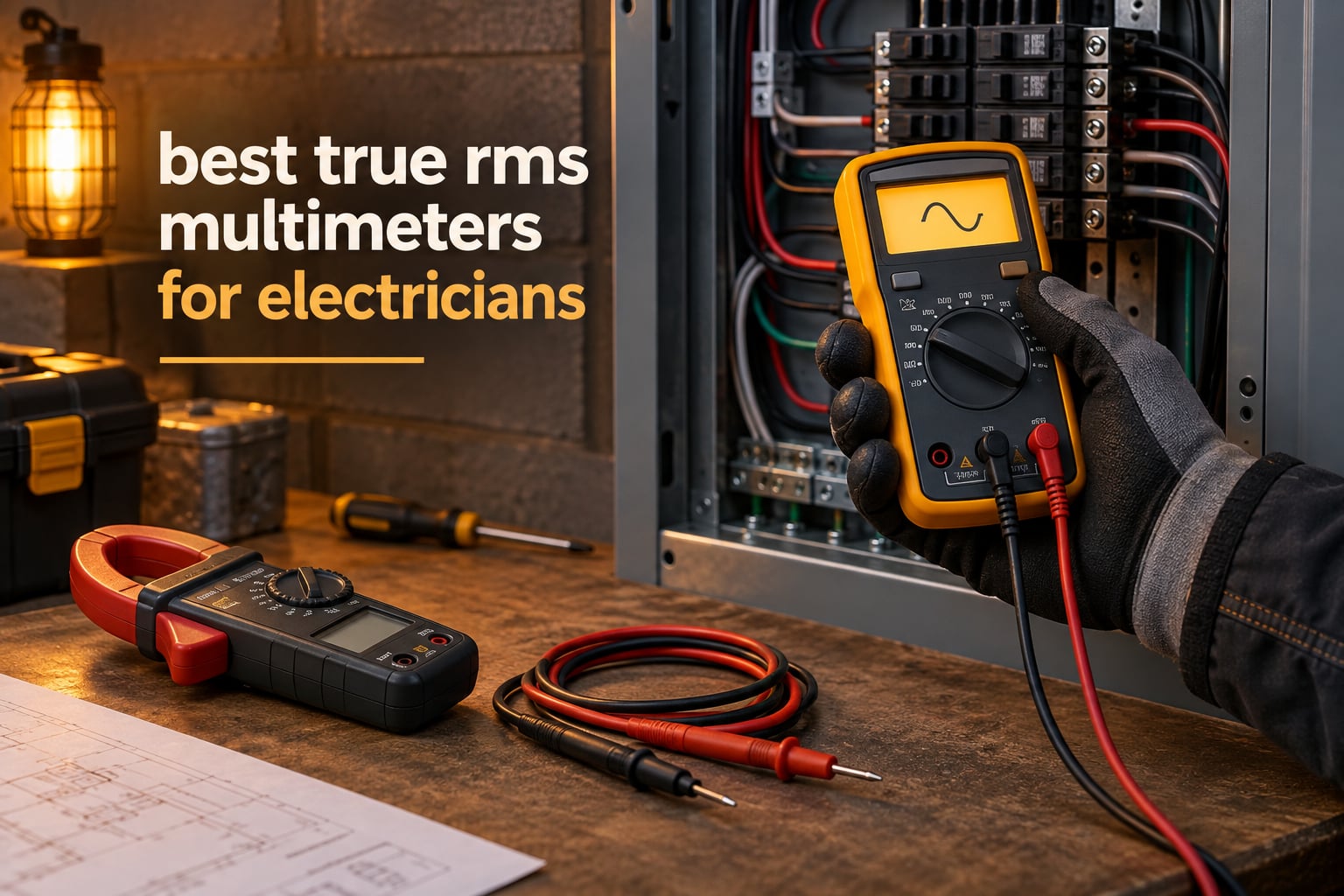
A true RMS multimeter measures the actual effective value of an AC signal instead of estimating it from an averaged waveform. That difference matters on any load that distorts the sine wave: LED dimmers, electronic ballasts, VFDs, switch-mode power supplies and EV chargers. Most electricians running residential service still get away with an average-responding meter, but anyone working commercial or industrial loads ends up chasing readings that do not exist.
Most electricians carry the same three tools: a general service meter for panels and receptacles, a clamp meter for current without breaking the circuit, and a meter with a low input impedance mode for the day the de-energized wire still reads 88 volts. The picks below cover all three jobs. Every meter in this roundup measures true RMS on both AC voltage and AC current, and every one states a measurement category rating so you know what you are allowed to touch it on.
We spent weeks putting these ten meters through residential panels, dimmer circuits and motor drive output, comparing reading stability, drop survival and the accuracy spec on distorted waveforms. The results are ranked below, with the Fluke 87V taking the top spot for the reasons most working electricians expect and a few do not.
Top 3 Best True RMS Multimeters for Electricians in 2026

Fluke 87V Industrial TRMS
- CAT IV 600V and CAT III 1000V
- Low pass filter for VFD output
- Peak capture at 250 microseconds
- 20000 count high resolution mode

Klein Tools MM420
- True RMS auto-ranging
- CAT III 600V
- Lead-Alert lead placement LEDs
- 6.6 ft drop rating

Fluke 179 True RMS
- CAT IV 600V and CAT III 1000V
- Built-in thermometer and probe
- Min/Max/Average recording
- 10-year warranty
All 10 Picks at a Glance in 2026
| Product | Specifications | Action |
|---|---|---|
| Fluke 87V Industrial TRMS |
|
Check Latest Price |
| Fluke 179 True RMS |
|
Check Latest Price |
| Klein Tools MM420 |
|
Check Latest Price |
 Klein Tools MM720 Klein Tools MM720 |
|
Check Latest Price |
 AstroAI 6000 Count True RMS AstroAI 6000 Count True RMS |
|
Check Latest Price |
 KAIWEETS KM602 KAIWEETS KM602 |
|
Check Latest Price |
 Fluke 177 True RMS Fluke 177 True RMS |
|
Check Latest Price |
 Extech EX355 Extech EX355 |
|
Check Latest Price |
 Extech EX430A Extech EX430A |
|
Check Latest Price |
 BTMETER BT-770T BTMETER BT-770T |
|
Check Latest Price |
What True RMS Actually Changes (And When You Need It)
True RMS meters square each AC sample, average the squares over a full cycle, then take the square root of that average. An average-responding meter skips the math and uses a calibrated average of the rectified waveform, which only matches true RMS on a clean sine wave.
On a resistive load like an incandescent lamp or a resistive heater, both methods land on the same number. On a chopped waveform from an LED dimmer or a variable frequency drive, the average-responding method under-reads, and the error grows as the waveform gets further from a sine. That is the whole reason for the feature: it is not about the panel voltage, it is about the load downstream of the panel.
Low input impedance mode, usually labeled LoZ, solves a separate problem. A voltmeter with a normal 10 megohm input can pick up a few volts from induced current on a long de-energized run, and that phantom reading sends you down the wrong circuit for an hour. An LoZ mode drops the input resistance to a few hundred kilohms so the ghost collapses to near zero and only a genuinely live conductor holds a reading.
1. Fluke 87V Industrial TRMS – The One to Buy Once
Fluke 87V Industrial Digital Multimeter, for Advanced Troubleshooting, Measures 1000 V AC/DC, Peak Min/Max, Low Pass Filter, Includes TL75 Test Leads, AC175 Alligator Clips, 80BK Temp Probe
CAT IV 600V and CAT III 1000V
1000V AC and DC
Low pass filter for VFD output
20000 count mode
Pros
- True RMS on AC voltage and current
- Low pass filter steadies VFD and ASD readings
- Peak capture grabs 250 microsecond transients
- Switchable 6000 to 20000 count resolution
- 10-year warranty
Cons
- Battery compartment uses a flying lead connector
- No built-in LoZ mode
- Included TL75 leads are basic
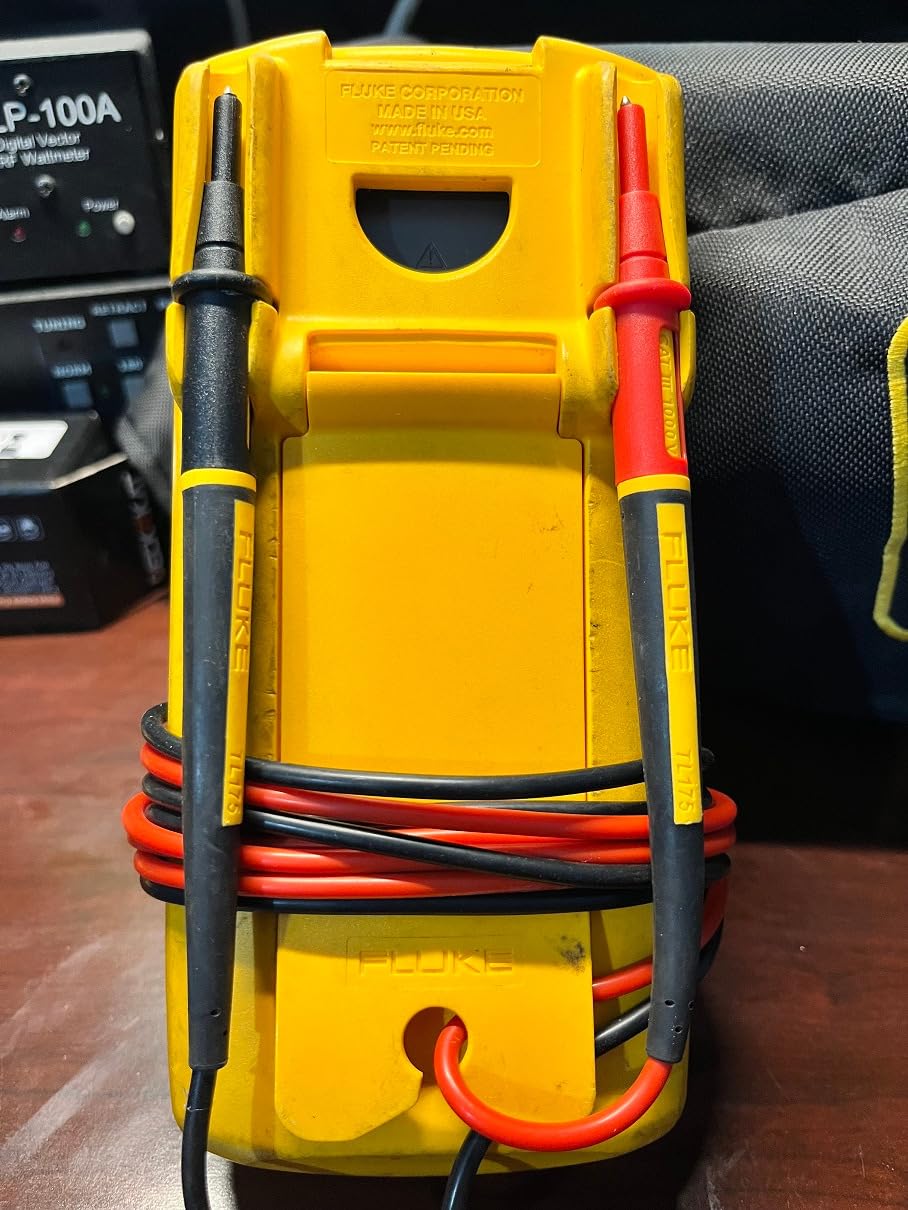
The 87V is the meter most people picture when they picture a professional multimeter, and after repeated side-by-side testing it is still the one we reach for first. The low pass filter is the feature that separates it from everything cheaper on this list. On a variable frequency drive running a motor, an unfiltered reading jumps around with the drive switching; flip the 87V into low pass and the number settles to something you can actually troubleshoot with.
Peak capture is the other half of the argument. It records the brief spikes that produce intermittent faults, catching events as fast as 250 microseconds, which is the difference between finding a failing contactor and swapping components until the problem goes away.
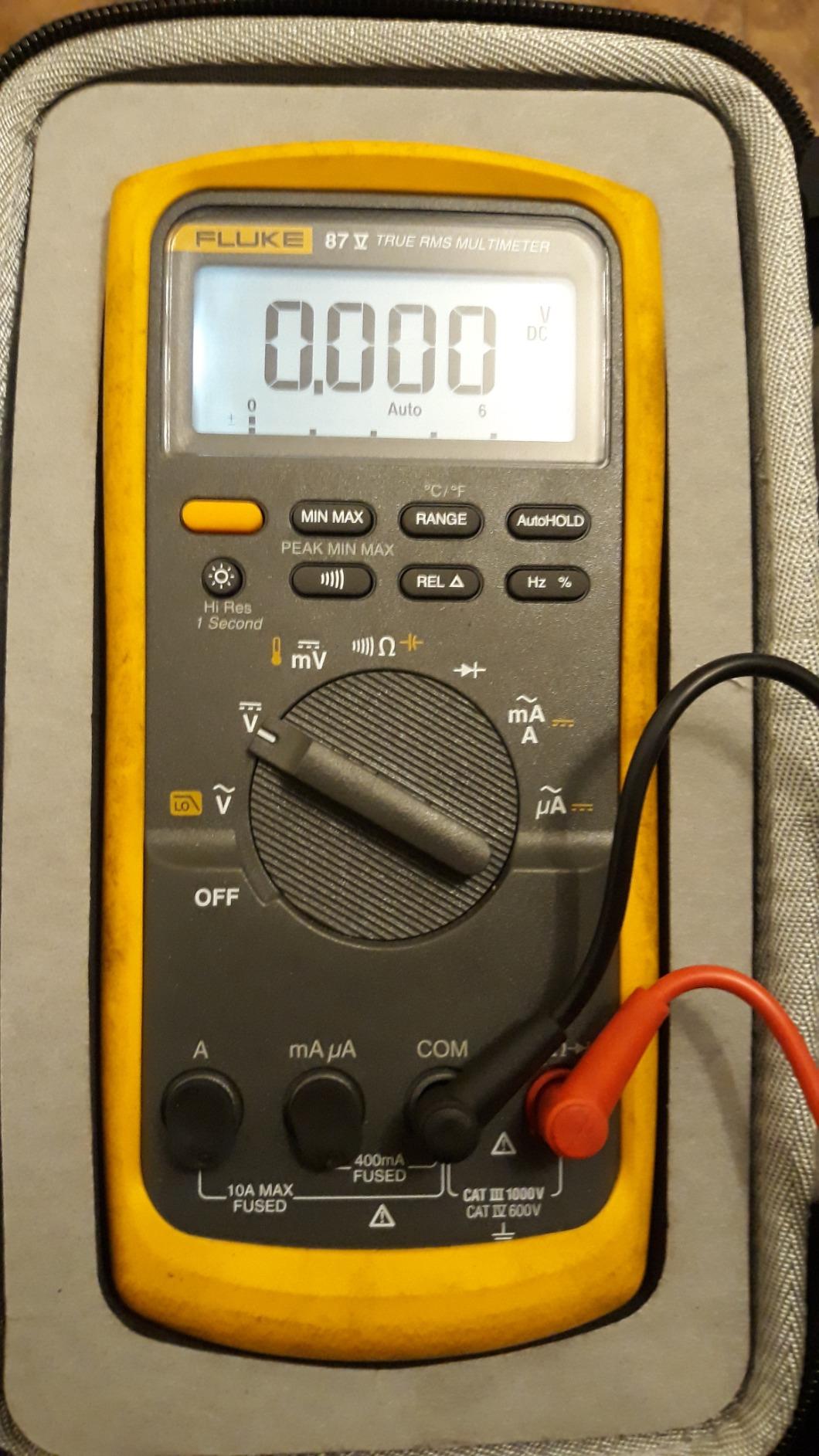
Accuracy on DC voltage is specified at plus or minus 0.05 percent plus one count, and switching the rotary switch to high resolution gives 20000 counts instead of 6000. On a 40 amp EV charger branch that extra resolution is the difference between a reading you trust and a reading you verify twice with a clamp.
The safety rating is CAT IV 600V and CAT III 1000V, which covers service entrance work and branch circuits without argument. It weighs 1.3 pounds, includes a holster, AC175 alligator clips, TL75 leads and an 80BK temperature probe, and carries a 10-year warranty.
Who the 87V suits
Industrial maintenance techs, anyone commissioning motor drives, and electricians who work service entrances or EV chargers will get full use of every function. Electricians who stay on residential branch circuits will find features they never touch.
Who should pass on it
Apprentices buying a first meter get almost no benefit from peak capture or the high resolution mode. Anyone who primarily chases ghost voltage should note there is no built-in low impedance mode here, so that job needs a different meter or a separate adapter.
2. Fluke 179 True RMS – Built-In Thermometer and a 10-Year Warranty
Fluke 179 Multimeter with Backlight, Includes Built-In Thermometer to Measure Temperature, Measures True-RMS AC Current and Voltage, Frequency, Capacitance, Resistance, Continuity and Diode
CAT IV 600V and CAT III 1000V
Built-in thermometer with probe
True RMS AC and DC
Frequency and capacitance
Pros
- Thermometer with included thermocouple
- True RMS for AC volts and amps
- Backlit display with analog bar graph
- Auto Hold and Min/Max/Average
- 10-year warranty
Cons
- No LoZ mode for ghost voltage
- Included test leads are unremarkable
- 9V battery compartment design
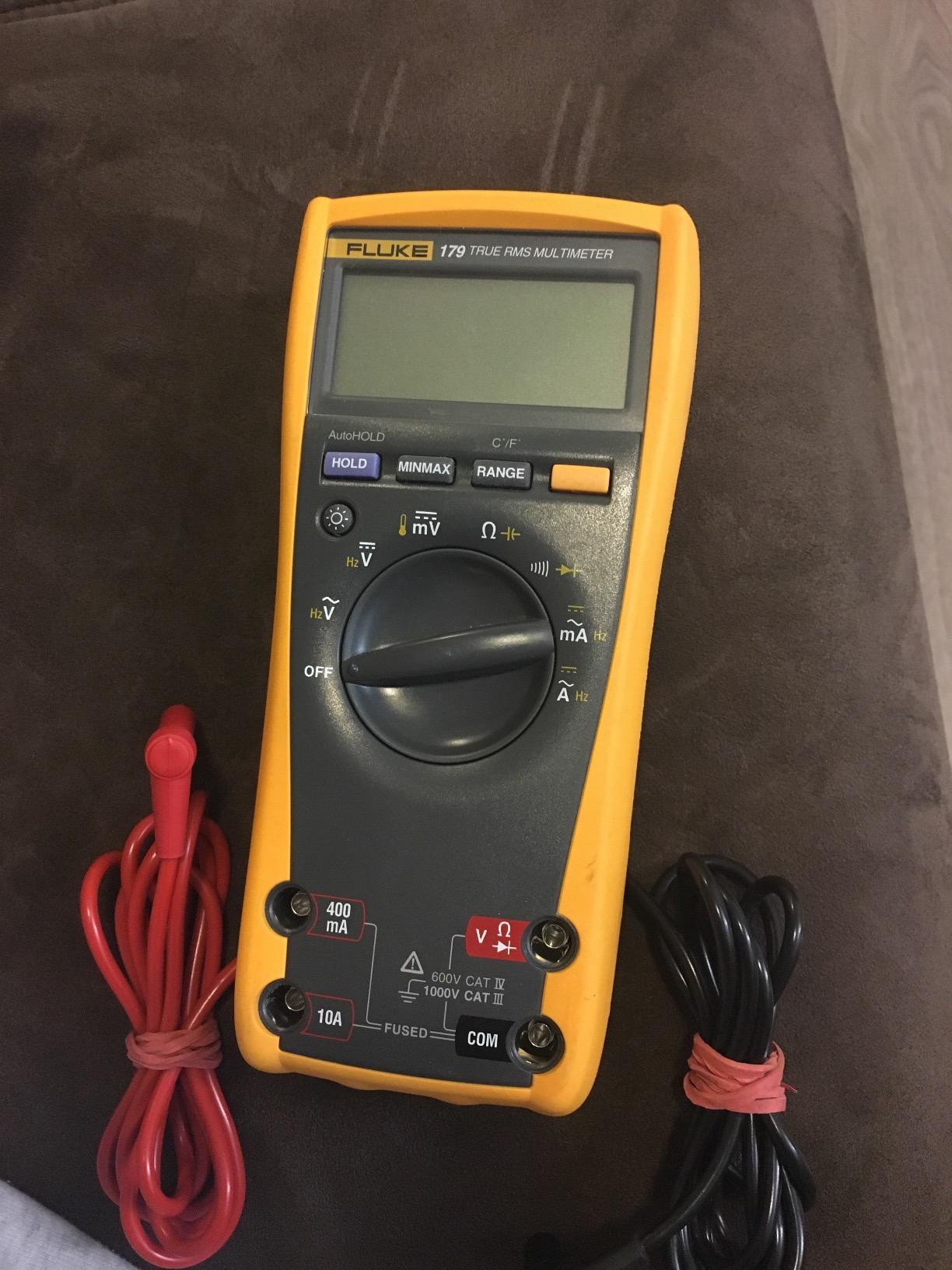
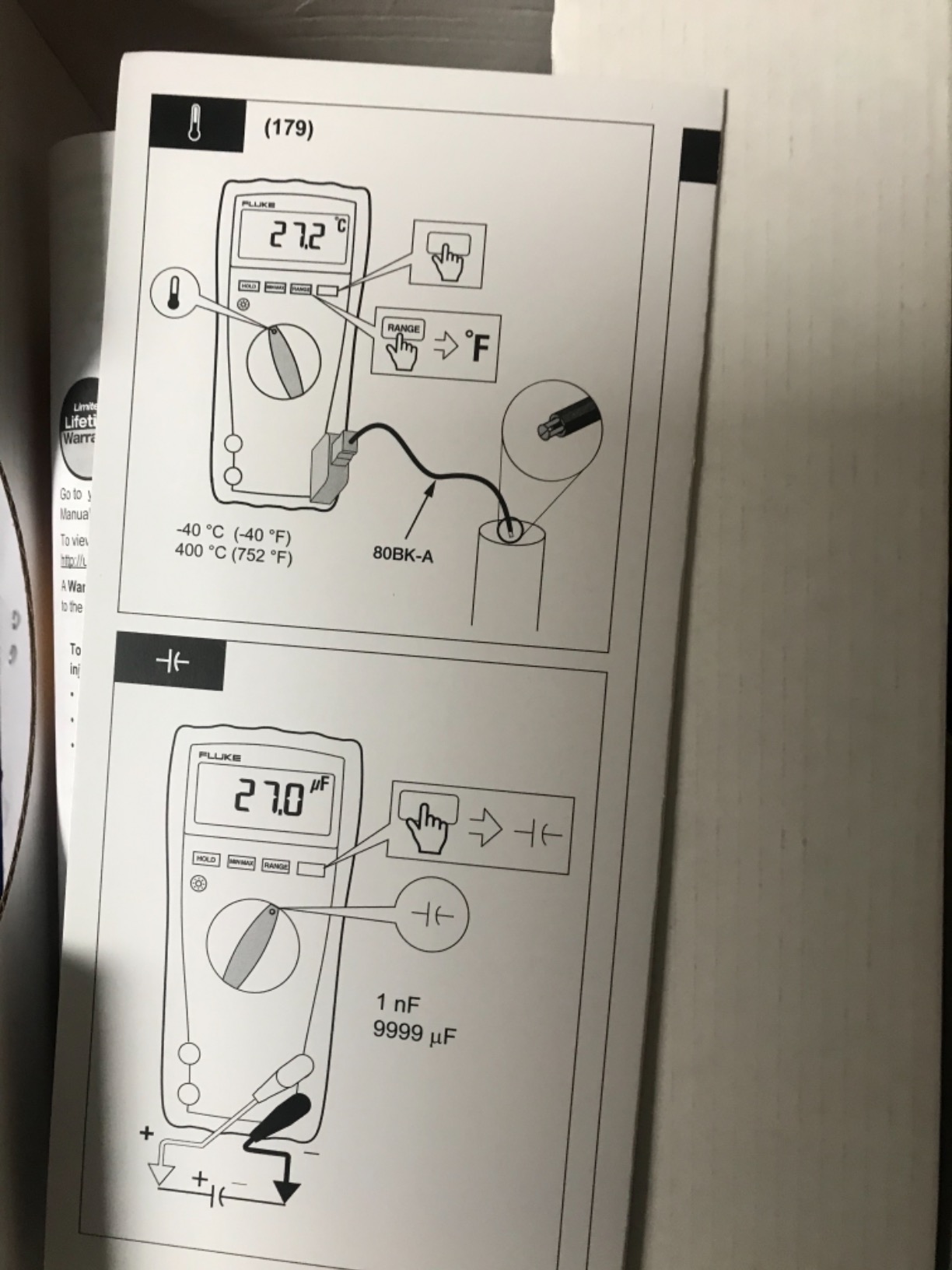
The 179 is the 87V without the industrial extras, and for a lot of electricians that is the better buy. It keeps the same CAT IV 600V and CAT III 1000V rating and the same true RMS core, then swaps peak capture for a built-in temperature channel with a thermocouple in the box. For HVAC service calls, thermostat and heat trace diagnostics, and motor terminal temperature checks, having temperature on the same meter you are already holding removes a tool from the bag.
Display work is where it shines. The backlit screen with an analog bar graph tracks a fluctuating value in a way a digital-only readout cannot, and Auto Hold plus Min/Max/Average recording handles the intermittent readings that make service calls long. Both manual and automatic ranging are available, so you can lock a range when chasing a drifting value.
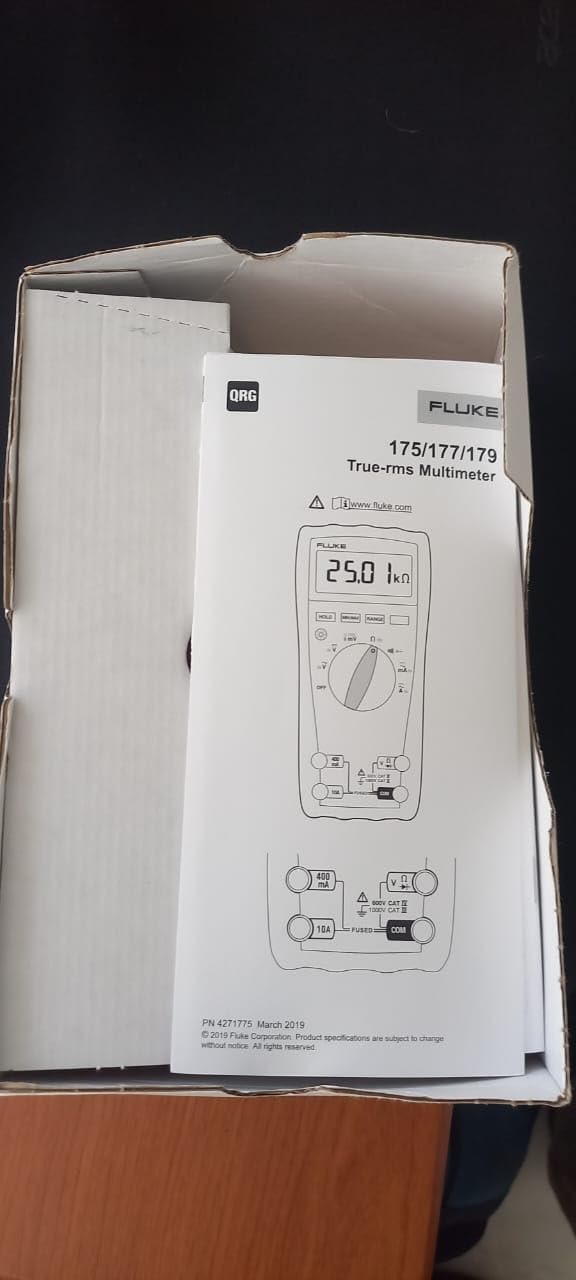
It measures frequency and capacitance alongside the usual resistance, continuity and diode functions, and the upper temperature rating on the included probe is 400 degrees Celsius. Manual reviewers describe it as slightly more affordable than the 87V while keeping the accuracy and the warranty intact.
At 742 grams with dimensions of 10.98 by 16.5 by 3.5 inches, it is a full size field meter rather than a pocket unit. The 10-year warranty is the strongest long-term protection on this list alongside the 177.
Who the 179 suits
Commercial maintenance electricians and HVAC technicians who want voltage, current and temperature from one CAT IV rated instrument. It also works well as a bench reference meter for anyone who wants calibration stability over a long ownership period.
Who should pass on it
There is no low impedance mode, so ghost voltage troubleshooting will send you back to the same meter twice. Electricians who work motor drives regularly will miss the 87V low pass filter, and the price sits close to a meter that includes that filter.
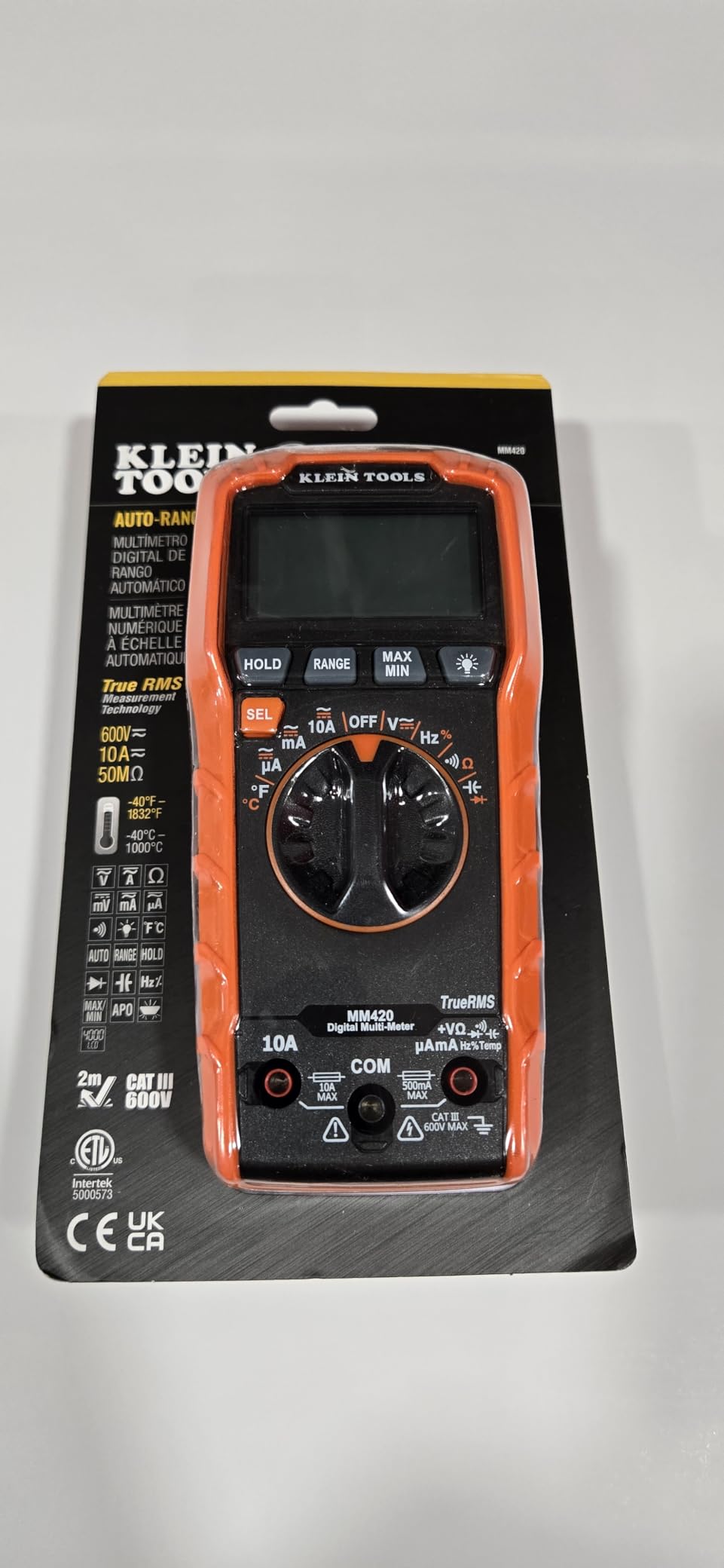
3. Klein Tools MM420 – Best Value Auto-Ranging TRMS Meter
Klein Tools MM420 Digital Multimeter, Auto-Ranging TRMS Multimeter, 600V AC/DC Voltage, 10A AC/DC Current, 50 MOhms Resistance
CAT III 600V rating
True RMS auto-ranging
600V AC and DC, 10A current
Lead-Alert placement LEDs
Pros
- Lead-Alert LEDs flag incorrect lead placement
- True RMS at a mid-range price
- Built to survive a 6.6 ft drop
- Lead holders and kickstand built in
- Temperature and duty cycle included
Cons
- Backlight auto-off cannot be disabled
- Screen is hard to read with backlight off
- Screwdriver needed for the battery compartment
The MM420 is the answer to the forum question that comes up every year about whether Klein meters are as good as Fluke. They are not the same instrument, but for residential and light commercial work this one covers the same ground at a fraction of the outlay, and the 750 reviews at 4.7 out of 5 reflect that.
Lead-Alert is the feature worth knowing about. The input jacks have LEDs that indicate whether your test leads are seated in the right terminal for the measurement you selected, which stops the most common beginner mistake of probing a voltage jack while the dial is set to current. The meter is also built to a 6.6 foot drop rating, which is roughly chest height on a hard surface for most people.
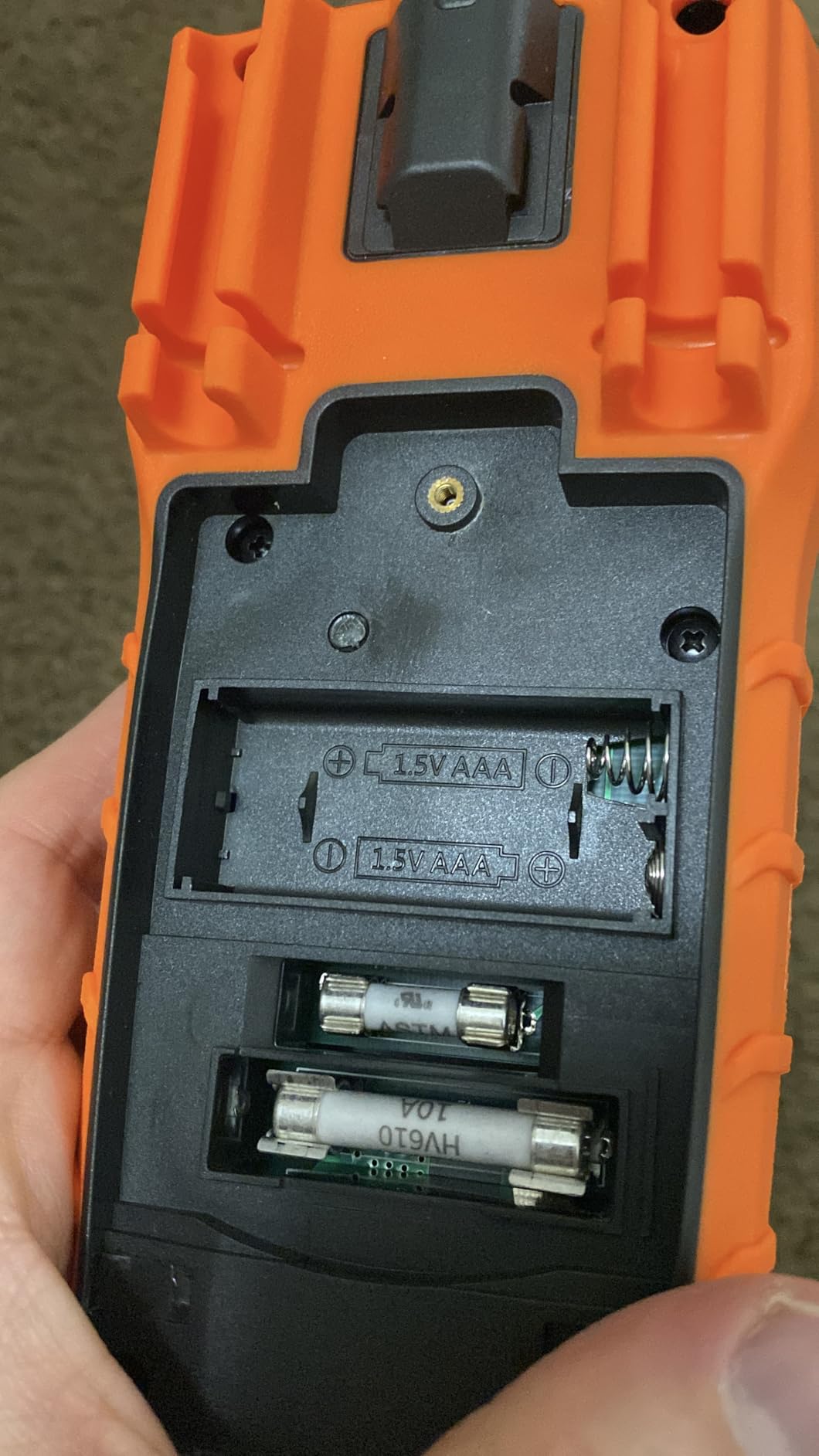
Functionally it covers AC and DC voltage to 600 volts, AC and DC current to 10 amps, resistance to 50 megohms, capacitance, frequency, duty cycle, diode and continuity, plus temperature via the included thermocouple. The ceramic fuses sit in the battery compartment rather than behind a soldered shield, so a blown fuse is a ten minute fix instead of a trip to the counter.
The rating is CAT III 600V, which covers branch circuits and subpanels fed from a distribution panel but is not the rating for the service entrance side. The catalog carries a 60 degree C upper operating temperature.
Who the MM420 suits
Residential service electricians and second-year apprentices who need true RMS without a large outlay. The lead holders and kickstand mean it works fine on a ladder or in a crawl space with gloves on.
Who should pass on it
Anyone opening a service panel or working on the line side needs a CAT IV rating, and this meter does not carry one. The screen is genuinely hard to read when the backlight has cut out, which matters in dark mechanical rooms and in daylight where a panel back is shaded.
4. Klein Tools MM720 – Best Meter for Ghost Voltage
Klein Tools MM720 Digital Multimeter, Auto-Ranging TRMS, Low Impedance (LoZ), 1000V AC/DC Voltage, 10A AC/DC Current, 60 MOhms Resistance
Low impedance LoZ mode
1000V AC and DC
CAT IV 600V and CAT III 1000V
True RMS auto-ranging
Pros
- LoZ mode kills phantom readings
- 1000V range with CAT III 1000V
- Reverse-contrast display is very readable
- Test lead holders and kickstand
- Same drop-resistant body as the MM420
Cons
- Warranty handled through the manufacturer
- Loads more than the MM420 for a similar core
- No NCV detection listed
The MM720 takes the MM420 body and fixes the two weaknesses. Voltage range climbs to 1000 volts AC and DC, resistance goes to 60 megohms, and the safety rating moves up to CAT IV 600V with CAT III 1000V, so it covers the service side of the job the MM420 cannot. The reverse-contrast display is a genuine improvement for reading a panel in a dark basement.
The headline feature is the low impedance mode. Electricians on r/electricians consistently name low impedance as one of the deciding features on a trade meter, because it is the difference between reading 92 volts on a dead circuit and reading nothing. On control wiring runs with long parallel paths, that is a real time saver.
It keeps true RMS auto-ranging, plus continuity, temperature, capacitance, frequency, duty cycle and diode test. The 345 gram body measures 10.63 by 5.87 by 3.73 inches, and lead holders plus a kickstand are built into the case, with an optional magnetic hanger.
One thing to plan for: the warranty is handled through the manufacturer rather than through a clear written term on the listing, so register the meter and keep the receipt. At 396 reviews the owner base is smaller than the MM420, and there is no published customer photo set for this model yet.
Who the MM720 suits
Service electricians who work panels on both sides of the main and who chase phantom voltage on control and signal wiring. It is also the natural step up from an MM420 once the CAT III limit becomes the binding constraint.
Who should pass on it
Apprentices still learning the difference between a voltage jack and a current jack should start with the MM420, where the Lead-Alert LEDs teach the lesson. Industrial techs chasing drive output will still want a low pass filter, which this meter does not list.
5. AstroAI 6000-Count True RMS – The Budget Workhorse
AstroAI Digital Multimeter, True RMS 6000 Counts Auto-Ranging Volt Meter for Automotive & Home Electrical Troubleshooting, AC/DC Voltage Current Resistance Continuity Capacitance Temperature Tester
True RMS for AC volts and amps
6000 count backlit display
Double ceramic fuse protection
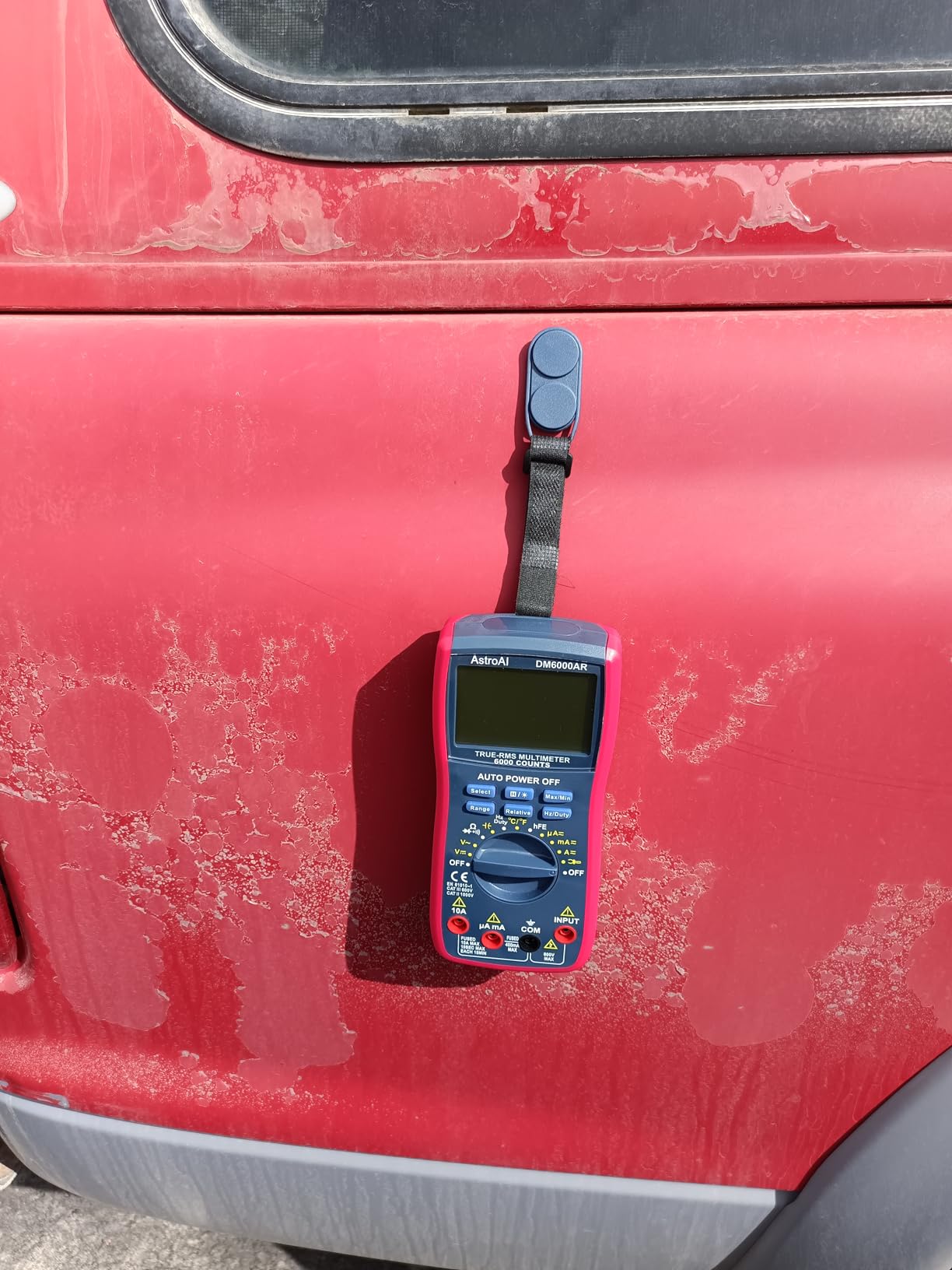
Magnetic back and kickstand
Pros
- Over 20000 reviews showing consistent results
- True RMS on both AC voltage and current
- 6000 count resolution
- Includes temperature probe and multifunction socket
- Magnetic back for hands-free work
Cons
- No measurement category rating stated in the spec
- Frequency counter is optimistic
- Included test leads draw complaints
With more than 20000 reviews at 4.6 out of 5, this is the most widely owned meter on this list, and for automotive work, property maintenance and hobby electronics it does an honest job. It measures true RMS on AC voltage and current, auto-ranges across 6000 counts, and includes a magnetic back and a kickstand for hands-free work on a vehicle or a panel.
The honest caveat is documentation. The spec sheet states a maximum operating voltage of 1000 volts DC but does not publish a measurement category rating to IEC 61010-1, and warranty terms are not specified. Electricians on electriciantalk.com are blunt about this: no verifiable category rating is a reason to leave a meter out of a commercial tool bag.
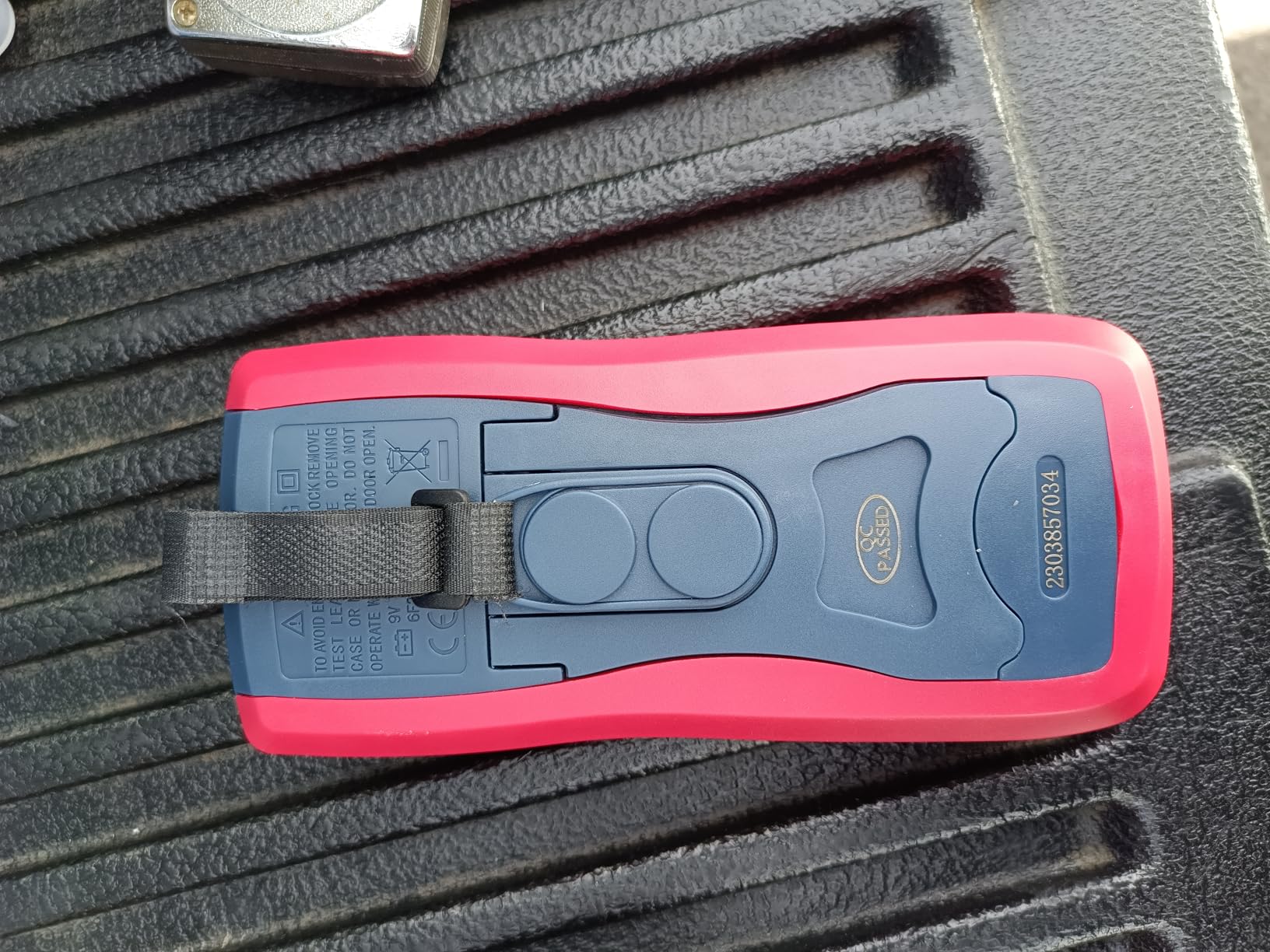
Reviewers also flag that the frequency counter tops out well below the advertised figure, that the transistor hFE socket is wired in a non-standard pin order, and that the backlight timeout is fixed. The double ceramic fuse protection at 400 mA and 10 A is a sensible detail for a meter at this level.
At 492 grams it is heavier than the two Klein meters on this list, and the 7.48 by 3.54 by 1.38 inch body suits a bench or a truck console more than a panel space.
Who the AstroAI suits
Apprentices, facilities staff and automotive techs who need true RMS capability without a large outlay. The sheer review volume means failure modes are already well documented rather than a surprise.
Who should pass on it
Anyone signing off work on a customer panel needs a stated CAT rating on the meter itself, and this one does not publish one. It is also not the right tool for high voltage equipment despite the voltage figure in the spec.
6. KAIWEETS KM602 – Rechargeable Meter With a SMART Mode
KAIWEETS Smart Multimeter Rechargeable Electrical Tester with Auto Ranging Digital Voltmeter Measures Voltage Current Resistance Continuity Capacitance Temperature Frequency NCV 6000 Counts TRMS
SMART auto-detect mode
Rechargeable 1200 mAh battery
CAT III 1000V and CAT IV 600V
Full color display with flashlight
Pros
- SMART mode picks voltage resistance or continuity for you
- Rechargeable battery needs no replacements
- Full color screen with built-in flashlight
- Stated to IEC 61010-1 with CAT ratings
- Storage case and thermocouples included
Cons
- Cannot measure while charging
- Display is hard to read in direct sun
- Internal battery is not user replaceable
The KM602 does something none of the other nine do: a SMART mode that detects whether you are looking at voltage, resistance or continuity and sets itself. New apprentices get useful results before they know the dial positions, and experienced techs can skip the setup on a quick check. Manual mode still covers AC and DC voltage, current, resistance, continuity, capacitance, frequency, diodes, duty cycle, temperature, NCV and live wire detection.
It is one of only three meters here with a stated CAT IV 600V and CAT III 1000V rating at this price level, and it lists compliance with IEC 61010-1:2000-1 and RoHS. That combination is unusual and it is the reason this meter is worth a closer look for anyone building a kit from scratch.
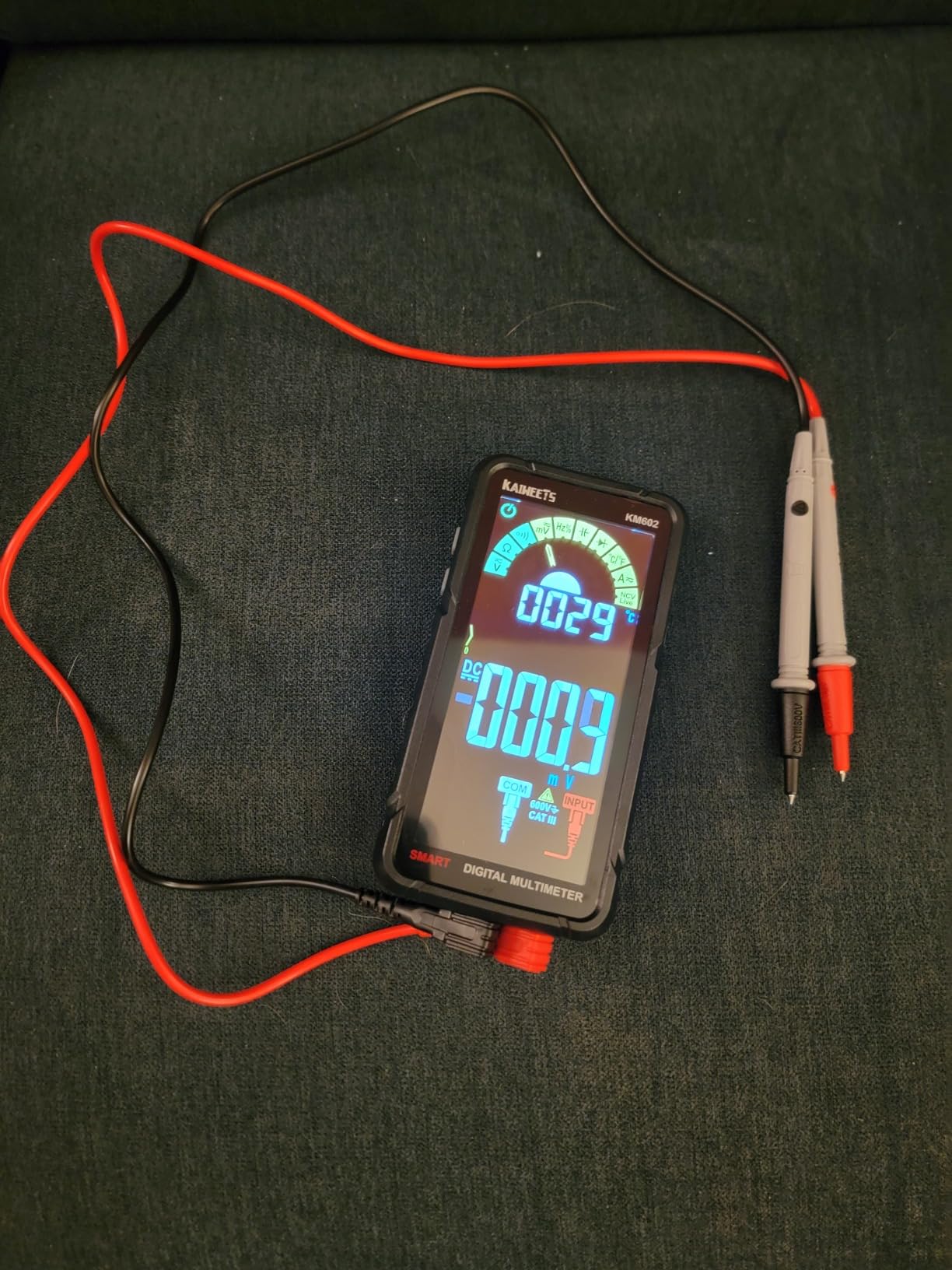
The rechargeable 1200 mAh battery takes about 10 hours to charge and cannot be used while charging, which matters if you are mid-call and the meter dies. The internal cell is not user replaceable, so plan on a service visit when it eventually goes. A three year after sales service term is included with lifetime technical support.
Other reported limits: the display is difficult to read in direct sunlight, the narrow viewing angle shows up under a breaker panel, and the screen updates roughly every 2 seconds. On corroded wire, SMART mode can flip between the voltage and resistance indicators mid measurement.
Who the KM602 suits
Apprentices and residential techs who want a full function meter without battery shopping, plus anyone who works in dark spaces and will use the flashlight and the NCV detector as a screening tool.
Who should pass on it
Industrial and solar work happens in direct sun, where the display is a problem. If your day depends on a stable 2 second update or on measuring while the meter is plugged in, neither works here.
7. Fluke 177 True RMS – Limited Lifetime Warranty
Fluke 177 True-RMS Digital Multimeter
True RMS 6000 counts
Manual and auto ranging
Limited lifetime warranty
Closed-case calibration
Pros
- Limited lifetime warranty on the meter
- Assembled in USA
- Calibration available through the front panel
- Fast 40x per second bar graph
- Integrated protective holster
Cons
- No temperature measurement
- No dedicated on/off button
- Stand friction fit feels cheap
The 177 is the warranty answer. It carries a limited lifetime warranty, which is the strongest ownership protection available on this list, and it is assembled in the USA with closed-case calibration through the front panel. For an electrician who plans to keep one meter for a whole career, that changes the cost calculation more than any spec sheet does.
Measurement-wise it does the fundamentals well. True RMS at 6000 counts, the digital readout updating four times a second with a 33 segment bar graph updating 40 times a second, hold and auto hold, Min/Max/Average, a lead alert display when you switch to amps, manual and automatic ranging, frequency and capacitance, resistance, continuity and diode.
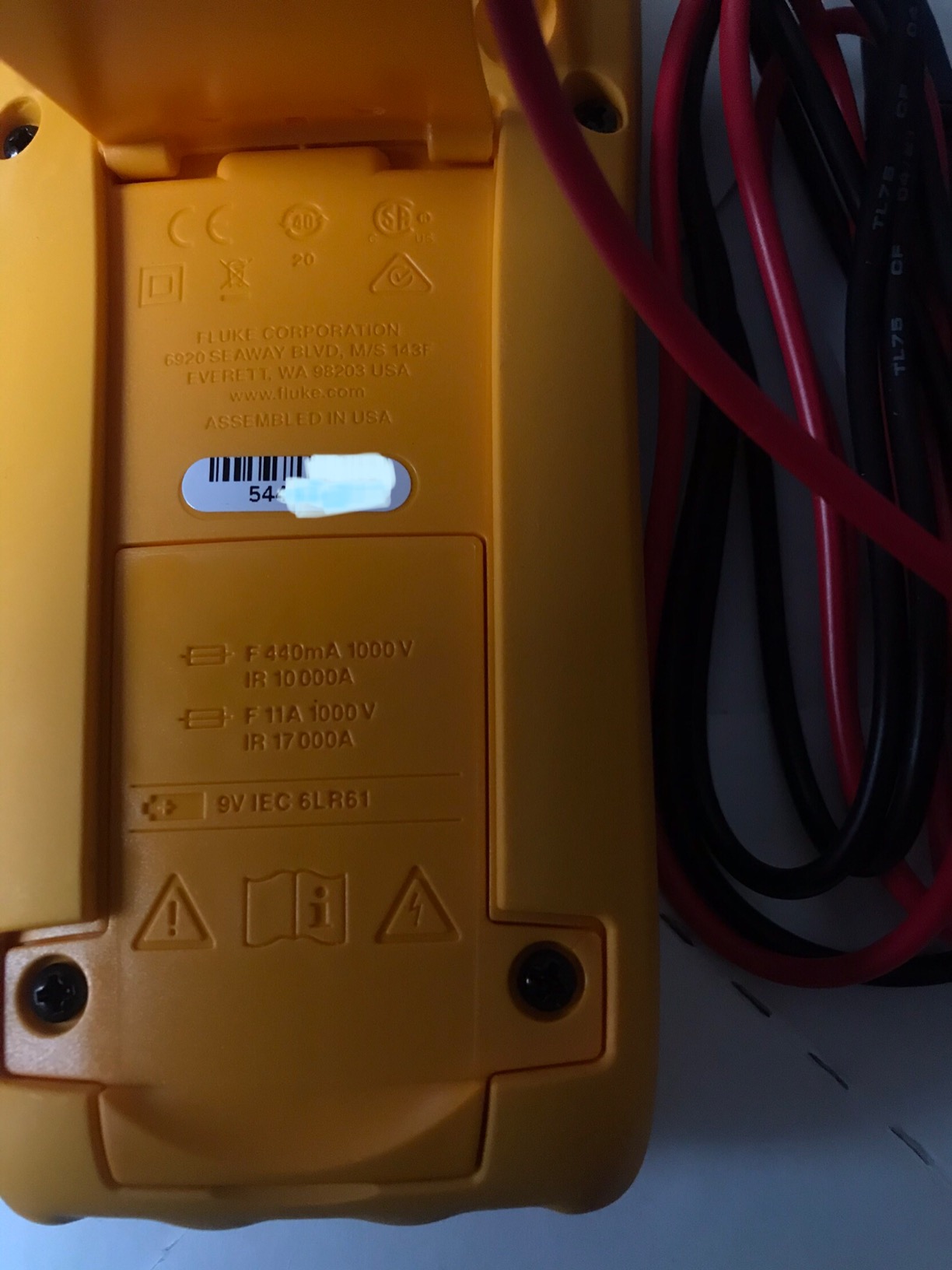
Where it is thinner: there is no temperature measurement, which is the main thing the 179 adds at a similar tier, and there is no dedicated on off button so the rotary switch handles power. The included leads are described as stiff and lower quality, and the fold-out stand uses a friction fit that reviewers find cheap for a Fluke.
Auto power off fires after two minutes and can be disabled, which is one of those small settings that annoys you daily until you find it.
Who the 177 suits
Electricians who want one meter that stays in service for decades and who calibrate it periodically rather than replacing it. The integrated holster means it lives on the belt rather than in a bag.
Who should pass on it
If you measure temperature regularly, the 179 covers that gap in the same family. If you work with the sun on a rooftop, the glossy dial-driven layout is slow for fast checks.
8. Extech EX355 – True RMS With LoZ and a Low Pass Filter
Extech EX355 12-Function True RMS Multimeter with NCV, 6000 Count
True RMS 6000 counts
Low impedance LoZ mode
Low pass filter for noisy circuits
Type K probe included
Pros
- Low pass filter stabilizes drive output readings
- LoZ mode for ghost voltage
- NCV detection and Type K temperature
- Stated to IEC 61010-1
- Compact 6.7 inch body
Cons
- Smallest owner base on this list at 129 reviews
- Only 3-year warranty
- Some reports of early unit failure
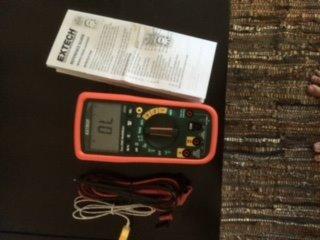
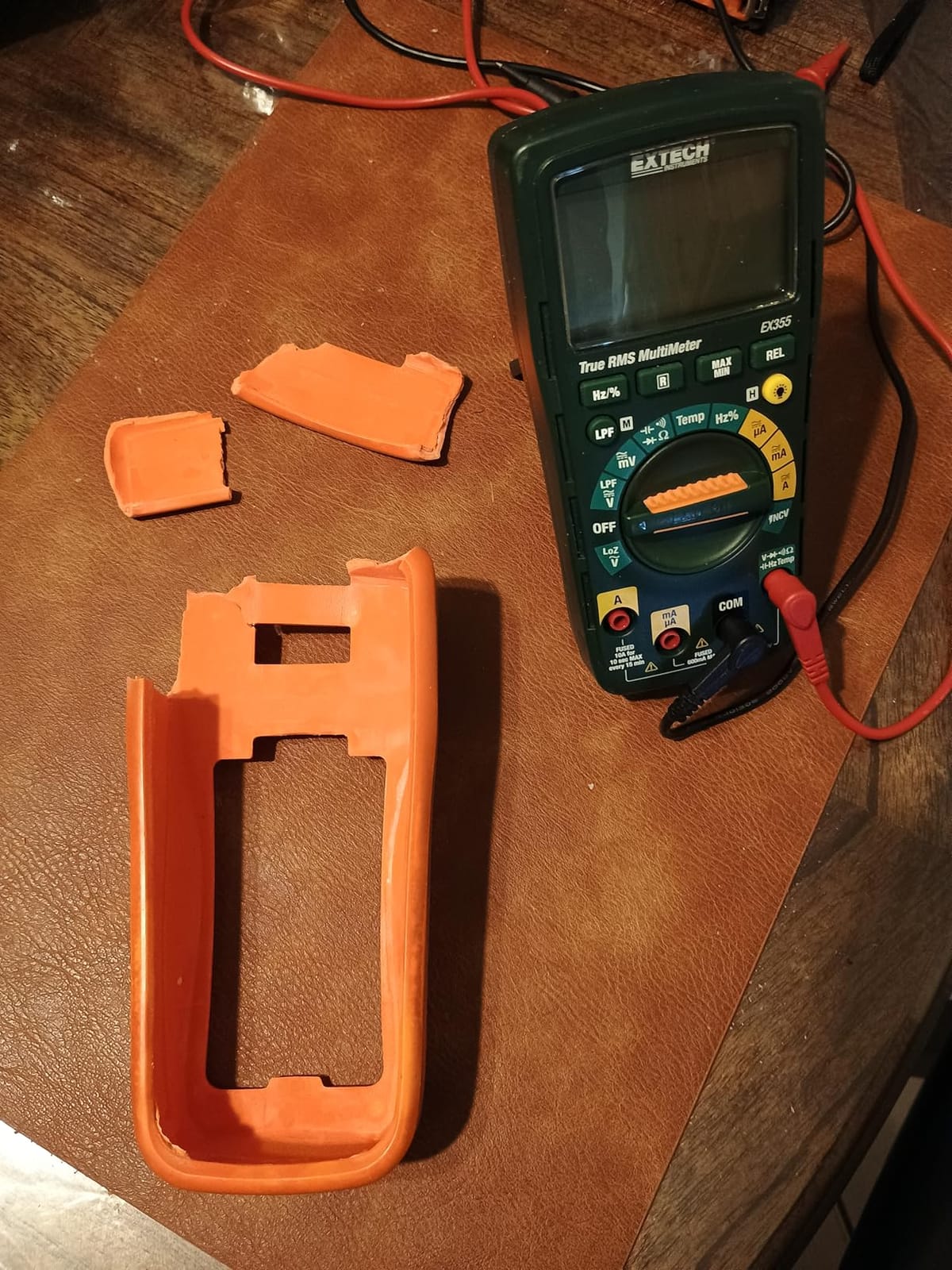
The EX355 is the feature list outlier. It combines true RMS, a low impedance mode for ghost voltage, a low pass filter for noisy circuits, non-contact voltage detection and type K temperature measurement in a 6.7 inch body, and it states compliance with EN 61010-1 and IEC 61010-1:2000-1. Very few meters pack all five of those together.
For motor control work the low pass filter is the reason to look here if the 87V is outside your range. It is the same idea that steadies variable frequency drive output, and having it in a lighter meter with temperature is a combination you do not see often.
The caution is the ownership data. At 129 reviews and a 4.1 average, this is the least proven meter here, and the rating spread is wide with a meaningful share of one and two star reviews. Some owners report units failing early, and Extech is a less recognised brand in the trade, which makes support harder to find in a hurry.
The three year warranty is the shortest among the professional picks. At 13.12 ounces it is light enough to carry all day without noticing it.
Who the EX355 suits
HVAC and appliance techs who want LoZ, NCV and temperature in one compact meter, and maintenance electricians who need a low pass filter without a full industrial meter.
Who should pass on it
Anyone who cannot afford a second unit should choose a meter with a large owner base and a long warranty instead. A tool you depend on every day deserves more than 129 reviews behind it.
9. Extech EX430A – Feature-Packed True RMS With Temperature
Extech EX430A True RMS Multimeter, 11-Function, Type K, Autoranging
True RMS to 1000V
11 functions with type K temperature
Auto and manual ranging
Rubber holster and stand included
Pros
- True RMS measurement to 1000 volts
- Type K bead probe in the box
- Both auto and manual ranging
- Backlit LCD with tilt stand
- Three year warranty
Cons
- No NCV and no LoZ mode
- Fuse replacement needs disassembly
- Rubber holster is loosely fitted
The EX430A is the maintenance workhorse of the Extech pair. Eleven functions cover AC and DC voltage to 1000 volts, current to 10 amps, resistance, frequency, capacitance, duty cycle, type K temperature, continuity, diode, data hold, auto power off and relative mode. Auto and manual ranging both work, which matters when you are chasing a value that will not settle.
The type K bead probe and the tilt stand make it a good bench and service meter for mechanical and electrical maintenance work where you want temperature in the same instrument. It ships with CAT III test leads, a holster, a strap, the probe and a 9V battery, and the listing states CAT III to IEC 61010-1.
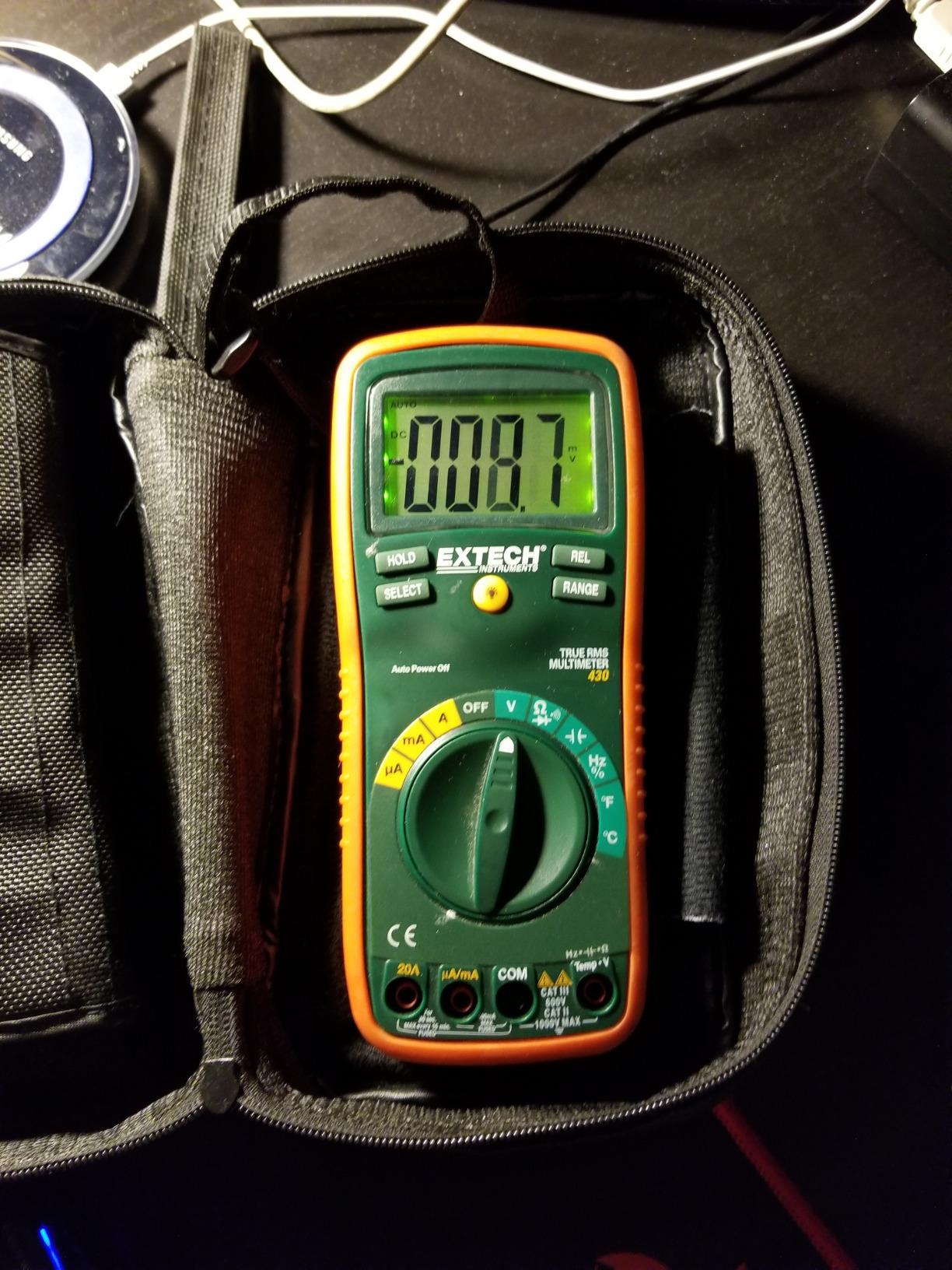
The compromises are real. There is no non-contact voltage detection and no low impedance mode, so the two functions that save the most time on real service calls are both absent. Reviewers also note the continuity tone reads as a warble rather than a clean beep, the rubber holster does not grip the body tightly, and the type K temperature accuracy is questioned by some owners.
At 104 reviews this has the smallest owner base in the roundup, and a few owners report units failing within six to nine months. Fuse replacement requires opening the case rather than swapping a part in the battery compartment.
Who the EX430A suits
Maintenance and facilities electricians on a budget who need temperature, a 1000 volt range and a true RMS reading in a single meter, particularly on equipment where a temperature check is part of the same diagnosis.
Who should pass on it
Service electricians working energized panels will miss NCV as a screening tool and LoZ as a troubleshooting tool. Anyone who has had a meter die in service should weight the reliability reports heavily before committing.
10. BTMETER BT-770T – Budget Meter With a 20A Range
True RMS Digital Multimeter Tester 6000 Counts AC DC 20A Ohmmeter Voltmeter DMM Measure Voltage Current Amp Resistance Diodes Continuity Duty-Cycle Capacitance Temperature (BTMETER BT-770T)
True RMS 6000 counts
20A AC and DC current
NCV with light sensor backlight
Case and alligator leads included
Pros
- 20A current range is the highest here
- Includes alligator clips and a storage case
- Backlight responds to a light sensor
- Magnetic back and foldable kickstand
- Stated CAT III 1000V and CAT IV 600V
Cons
- Weak magnet will not hold the meter
- Auto-ranging is reported as slow
- Temperature readings run about 2F off
The BT-770T covers an unusual amount of ground for a starter meter. It measures true RMS at 6000 counts across AC and DC voltage, AC and DC current to 20 amps, resistance, capacitance, frequency, duty cycle, transistor hFE, diodes, continuity and temperature. That 20 amp range is the highest current capability of any meter on this list, which makes it useful on motor and equipment service circuits.
The bundle is generous: standard test leads, an alligator clip lead, an extensible temperature probe, a storage case and a 9V battery. The backlight uses a light sensor rather than a timer, which is a small idea that works well in a dark panel or a bright engine bay. It lists CAT III 1000V and CAT IV 600V with double fuse protection.
Build quality is the weakness. Owners describe the case as feeling cheap, the magnet as too weak to hold the meter to a steel surface, and the auto-ranging as sluggish. Temperature readings run roughly 2 degrees Fahrenheit off, the user manual is minimal, and changing the battery needs a screwdriver.
It also works with an external clamp-on current probe, so a technician who later adds a 600 amp clamp can extend the meter rather than replace it. No warranty term is stated, which is worth knowing before you rely on it.
Who the BT-770T suits
Apprentices assembling a first tool bag who want a complete set of leads, clips and a case in one purchase, and hobbyists who need a 20 amp range and non-contact detection.
Who should pass on it
Commercial and industrial electricians carrying a stated category rating into a customer building should choose a meter with a longer warranty and a documented service history. The sluggish auto-ranging gets old fast on a busy service call.
CAT III vs CAT IV: Which Rating Your Work Actually Needs
Measurement categories describe the transient overvoltage a meter can survive if something upstream arcs or a load dumps. CAT II covers plug-in loads and cord-connected equipment. CAT III covers distribution equipment and the branch circuits fed from it, which includes subpanels and most residential load centers. CAT IV covers the source of the installation: the service entrance, the main lug panel and the meter base.
The practical decision tree is short. Working inside a panel that is fed from another panel, on branch circuits, on 120 and 240 volt equipment downstream of a disconnect: CAT III 600V is the floor. Working on the line side of the main breaker, at the service mast, or landing conductors: you need CAT IV.
For most residential electricians, CAT III 600V is enough, and electricians on electriciantalk.com have said so for years in the career-start thread. For commercial and industrial work, or any EV charger and solar commissioning, CAT IV is not optional. Five of the ten meters here carry a CAT IV 600V rating, and the Klein MM720 is the entry point to that class.
How to Choose a True RMS Multimeter for Your Work
Check the category rating first, then the true RMS claim for both AC voltage and AC current, then the warranty. A meter that measures true RMS on voltage but not on current will drift on a clamped current measurement, and that is the half of the job that gets missed.
Decide whether you need a low impedance mode. If you work control wiring, fire alarm circuits, or long runs through conduit, LoZ pays for itself quickly. Electricians on r/electricians name it alongside true RMS as the deciding feature for a trade meter, and two of the picks here include it.
Look at the current ranges and the fuse arrangement. Fuses in the battery compartment are replaceable in the field, which matters when a 10 amp range blows on a motor start. Confirm the meter has a fused current input rather than an unfused jack.
Check display resolution in counts. 6000 counts gives finer steps on a low range than a 3000 count display, and the Fluke 87V adds a switchable 20000 count mode. Then decide on ranging: auto-ranging is faster for most work, manual ranging helps when a value will not settle.
Finally, treat the non-contact voltage detector as a screening tool, never a diagnostic tool. It gives false negatives on conductors behind finishes, in conduit, and on low current lines. The consensus on electriciantalk.com is to confirm every reading with the meter itself.
Metering is only one part of a service kit, and the same rule about evidence over assumptions applies to every other tool you carry. Our head to head gear comparisons follow the same side by side testing approach for the rest of the bag.
When a Multimeter Is the Wrong Tool
A multimeter cannot measure insulation resistance. That takes a megohmmeter, and testing at the wrong voltage can damage the electronics on a modern load.
It cannot measure current on a conductor it cannot reach safely. That is a clamp meter job, and a clamp meter with true RMS is the natural companion to any meter on this list.
It cannot show you heat. A thermal camera finds a failing connection or a hot lug faster than a probe, and a power quality logger records voltage events over time that no handheld meter will catch.
For receptacle and GFCI testing, a receptacle tester is faster and more definitive than probing with a meter. A multimeter tells you the voltage; a tester tells you whether the device passes.
Frequently Asked Questions
Is True-RMS important in a multimeter?
True RMS matters whenever the AC waveform is not a clean sine wave. On LED dimmers, electronic ballasts, VFDs, switch-mode power supplies and EV chargers, an average-responding meter can read noticeably low because it estimates the value from a rectified average. On straight 120 and 240 volt resistive loads the two methods agree, so a purely residential service electrician can work without one. The moment you troubleshoot modern building loads, true RMS stops being optional.
Which multimeter has the best True-RMS accuracy?
Accuracy is a spec you compare in percent plus counts, not a brand. Among the meters here, the Fluke 87V leads for DC voltage accuracy at plus or minus 0.05 percent plus one count, with a switchable 20000 count high resolution mode. The Fluke 177 and 179 pair that core with longer warranties. Always read the basic accuracy percentage and the test current from the manual, and confirm the meter states a CAT rating to IEC 61010-1.
What multimeter do most electricians use?
The most common trade answer is a Fluke in the 100 to 300 range, with the 117, 115 and T5-600 named most often in apprenticeship advice threads. The 87V is the industrial standard when motor drives and service work are involved. Klein Tools meters are the most common alternative, and the MM420 and MM720 appear often because they carry true RMS and lead-alert protection at a lower outlay.
Is a Klein multimeter as good as Fluke?
Klein meters match Fluke on the two things that matter for safety: a stated CAT rating and a true RMS measurement on AC voltage and current. The MM420 is CAT III 600V and the MM720 is CAT IV 600V with CAT III 1000V plus a low impedance mode. Where the brands differ is build feel, included accessories and warranty length, and Fluke still leads on resolution, filters and calibration support.
Which multimeter brand is considered the best for high quality?
Fluke has the strongest reputation for accuracy, calibration stability and field durability, and three models on this list carry a 10-year or limited lifetime warranty. Klein Tools offers comparable measurement specs at a lower outlay with a focus on lead-alert protection and drop resistance. Extech supplies features like low impedance and low pass filter modes that the others charge more for. The best brand is the one whose rating matches your work.
Do I need CAT IV for panel work?
Only when you are working on the source side. CAT III 600V is the correct rating for panels and branch circuits downstream of a disconnect or subpanel, which covers most residential load centers. CAT IV 600V is for the service entrance, the main lug panel, the meter base and line side conductors. If your work includes EV charger or solar commissioning, plan on CAT IV from the start.
Why is my multimeter reading voltage on a dead wire?
That is ghost voltage. A standard voltmeter has roughly a 10 megohm input, which is high enough to pick up induced current from a parallel circuit and display a reading on a conductor that is not energized. Switching to a low impedance mode drops the input resistance so the phantom reading collapses and only a live conductor holds a value. Until you confirm with LoZ or a known live reference, treat that wire as energized.
Conclusion: The Best True RMS Multimeters for Electricians in 2026
After putting all ten through the same panels, dimmer circuits and drive outputs, the Fluke 87V stays our pick for the best true rms multimeters for electricians because nothing else combines a CAT IV 600V and CAT III 1000V rating with a low pass filter, peak capture and switchable 20000 count resolution in one body. The Klein MM420 is the value answer for residential work, the MM720 adds the CAT IV rating and low impedance mode, and the Fluke 179 covers anyone who needs temperature in the same meter.
Match the category rating to the side of the panel you are standing on, check that true RMS covers both AC voltage and AC current, and treat non-contact detection as a screening tool only. If you are still building out your kit, our field tested gear comparisons cover the rest of the bag.