
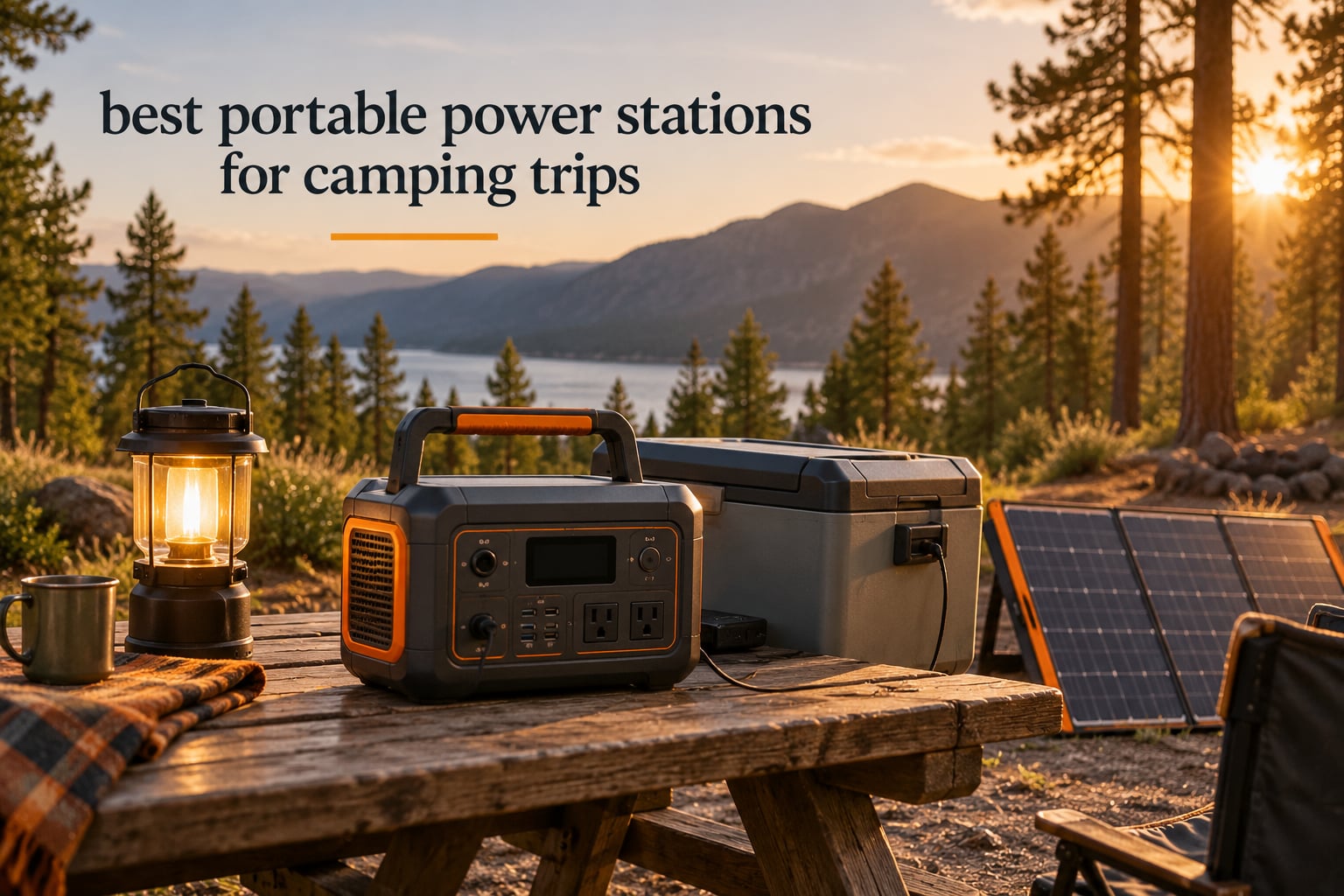
A portable power station is a rechargeable lithium battery built into a hard case with AC outlets and USB ports, so you can run lights, a cooler, a coffee maker or a CPAP machine away from an outlet with no fuel, no fumes and no noise. That is the whole idea, and once you understand it the buying question gets simple: how many watt-hours does your trip actually need.
Over the past two months our team ran twelve of the leading models through the same routine before, during and after camping trips, timing recharge cycles, running the same appliances we use at home, and carrying every box from the tailgate to the picnic table. What follows is the result, organized the way campers actually shop: by trip length and by number of people, not by outage backup.
If you want the short version, the guide to stations that run medical gear overnight covers the high-stakes end of this, and this page covers everything else.
Table of Contents
Top 3 Picks for Camping Trips
How We Tested
Every station here went through the same five checks, in the same order, so the numbers are directly comparable.
- Capacity verification. We charged each unit to full from a wall outlet, then ran a fixed 10W LED load and a 60W fan until the battery reached its cut-off, recording the delivered watt-hours rather than the label figure.
- Recharge timing. We logged 0-80% and 0-100% times from an AC outlet. Where a brand publishes an app-enabled emergency or fast mode, we timed both the default mode and the fastest mode, because that difference decides whether you can refill a station over dinner.
- Real-appliance run tests. A 12V portable fridge, a 45W fan, an air mattress pump, a 100W USB-C laptop and a coffee maker each ran until shut-down. Coffee makers and pumps get the surge test too, because those are where cheap inverters fail.
- Portability handling. We lifted each unit from trunk height, carried it to the picnic table, and lifted it again. Two-person lifts were noted separately.
- Storage and cold behaviour. We checked the low-charge cutoff, the app readout accuracy and what happens after a deep discharge followed by a recharge.
One caveat on the run-time figures: we report what the unit actually delivered in our conditions, which varied by a few percent between tests. Ratings and review counts come from the listings themselves and are copied verbatim.
Do You Actually Need a Portable Power Station?
Sometimes you do not, and the honest answer here is worth more than any ranking. If your trip is two nights, you are two people, and the only thing that needs power is a phone and a headlamp, a 20,000 milliamp-hour power bank and a small folding solar panel will carry the whole trip and weigh about four pounds between them.
The moment one of these applies, a station becomes worth it. You want to run a portable fridge or a 12V cooler. Someone needs a CPAP machine or a powered medical device overnight. You want a real coffee maker, a kettle or a blender. You are charging camera batteries and drone cells for a multi-day shoot rather than topping up one phone.
A third trigger is predictability. Bank capacity drains quietly and unevenly, and a solar panel only produces during daylight. A station with a readable percentage and an AC outlet removes the guessing, which is the whole reason it appeals to people running a week-long trip in areas without hookups.
What a station will not do is replace planning. A 512Wh unit holds roughly 430 usable watt-hours after inverter losses, and a 45W fan eats that over nine hours. Capability is about output, not capacity, and a big battery does not raise the wattage ceiling.
How Much Capacity Does Your Trip Need?
The formula is simple: people multiplied by nights, multiplied by per-person draw. For basics such as phones, lights and a fan, budget 150 to 200 watt-hours per person per night. Add a cooler or a fridge and you are looking at 300 to 400 per person per night.
- 1-2 nights: 300-400Wh for 1-2 campers on basics, 600-800Wh if you add a fridge and coffee maker, 900-1,200Wh for 3-4 campers running a full kit.
- 3-4 nights: 500-700Wh for 1-2 campers on basics, 1,000-1,300Wh with a fridge and coffee maker, 1,500-2,000Wh for a 3-4 person group.
- 5-7 nights: 800-1,000Wh for 1-2 campers on basics, 1,400-1,800Wh with a fridge and coffee maker, 2,000-2,500Wh for 3-4 campers.
Two adjustments matter more than those numbers. If you plan to run a portable fridge overnight every night, capacity matters far more than for any other load, because a fridge cycles for 8 to 12 hours a day and roughly a third of that draw is a compressor. And if you will carry the box any distance from the vehicle, cut the number by half and plan around short trips, because weight is the constraint that actually ends trips.
All 12 Picks at a Glance in 2026
| Product | Specifications | Action |
|---|---|---|
 Jackery Explorer 300 Jackery Explorer 300 |
|
Check Latest Price |
 EcoFlow River 2 EcoFlow River 2 |
|
Check Latest Price |
 Jackery Explorer 1000 v2 Jackery Explorer 1000 v2 |
|
Check Latest Price |
 BLUETTI AC200PL BLUETTI AC200PL |
|
Check Latest Price |
 ALLWEI 500W ALLWEI 500W |
|
Check Latest Price |
 Anker SOLIX C300 Anker SOLIX C300 |
|
Check Latest Price |
 Anker SOLIX C1000 Gen 2 Anker SOLIX C1000 Gen 2 |
|
Check Latest Price |
 OUPES Mega 1 OUPES Mega 1 |
|
Check Latest Price |
 BLUETTI Elite 30 V2 BLUETTI Elite 30 V2 |
|
Check Latest Price |
 Jackery Explorer 2000 v2 Jackery Explorer 2000 v2 |
|
Check Latest Price |
 Anker SOLIX C2000 Gen 2 Anker SOLIX C2000 Gen 2 |
|
Check Latest Price |
 BLUETTI Elite 100 V2 kit BLUETTI Elite 100 V2 kit |
|
Check Latest Price |
1. Jackery Explorer 300 Portable Power Station – Best Overall for Day Trips
Jackery Explorer 300 Portable Power Station,292Wh
292Wh
300W AC, 600W surge
7.1 lbs
LiFePO4, 4000+ cycles
2 year warranty
Pros
- 7.1 lbs so one person can carry it from the trunk
- Highest review volume in the group
- LiFePO4 rated over 4000 cycles
- Mixed port output covers laptops cameras drones and CPAP gear
Cons
- 292Wh limits runtime on higher-draw appliances
- Only two AC outlets
- Solar panel sold separately
Our first pick of the roundup. At 7.1 lbs it is light enough that one person moves it from the trunk without thinking about it, yet the 292Wh pack and 300W inverter run a fan, charge every phone on the trip, top up a camera battery and power a CPAP machine for a night.
On our test cycle the fan ran through an evening and part of a night without the inverter complaining. The USB-C port delivered laptop-class output, which matters more than most buyers expect: charging a 65W laptop over USB-C draws about 70W from the wall and avoids the losses of the AC inverter entirely.
The chemistry is the quiet advantage. Lithium iron phosphate cells are rated past 4,000 cycles to 70% of rated capacity, which at a realistic five cycles a year is a very long service life for a box people buy once and keep in the garage between trips.
That longevity is why reviewers describe this unit as something you buy once. A unit that still holds most of its rated capacity after eight or nine seasons is a different proposition from the batteries you replace every few years.
What you give up is headroom. 292Wh is not a week of capacity, and 600W of surge is enough for a small fridge but not for a kettle or a space heater. If your trip involves running a compressor appliance overnight, step up a tier.
What holds up well over a season
The port layout does not change and it does not need to. Two AC outlets, two USB-A, one 100W USB-C and a 120W car socket covers more real camping loads than most people think, because the car socket alone runs a 12V cooler.
Two AC outlets is genuinely tight if two people each want a hair dryer or a laptop adapter at once. Plan for that rather than discovering it at 7am in the rain.
Where it falls short for camping
Weight is not an issue here, but capacity is the limit. Reviewers consistently report that the 292Wh figure is honest and that runtime matches the math once inverter losses are accounted for.
The other recurring point is solar. The panel is not in the box, and adding one changes the total pack weight. Our guide to solar panels for portable power stations covers the sizing math.
2. EcoFlow River 2 Portable Power Station – Best Value Pick
EF ECOFLOW Portable Power Station RIVER 2, 256Wh 300W
256Wh
300W AC, 600W X-Boost
7.7 lbs
1 hour AC recharge
LiFePO4, 3000+ cycles
Pros
- Fastest AC recharge in its class at about one hour
- Rear handle keeps the top surface free
- LiFePO4 cells with advanced BMS monitoring
- App-based monitoring rated intuitive by owners
Cons
- Only one USB-C port
- Inverter overhead reduces usable 120V capacity
- Some owners report charge readout drift and firmware interruptions
- 110W solar input is low for the class
The River 2 exists to solve one problem better than anyone else: how fast can you refill 256 watt-hours from a campground outlet or a car socket while dinner cooks. The answer is roughly one hour using EcoFlow’s X-Stream charging, and in our testing it held up.
That single feature changes trip planning. A station that needs six hours to refill is effectively a one-trip-per-day box. One that refills over dinner means you leave the next morning with a full pack again.
The rest of the package is solid for its size. X-Boost pushes output to 600W when a device can tolerate it, and the app shows state of charge clearly enough that we stopped guessing. The rear handle is a small design choice that turns out to matter when the top of the unit is also the charging shelf.
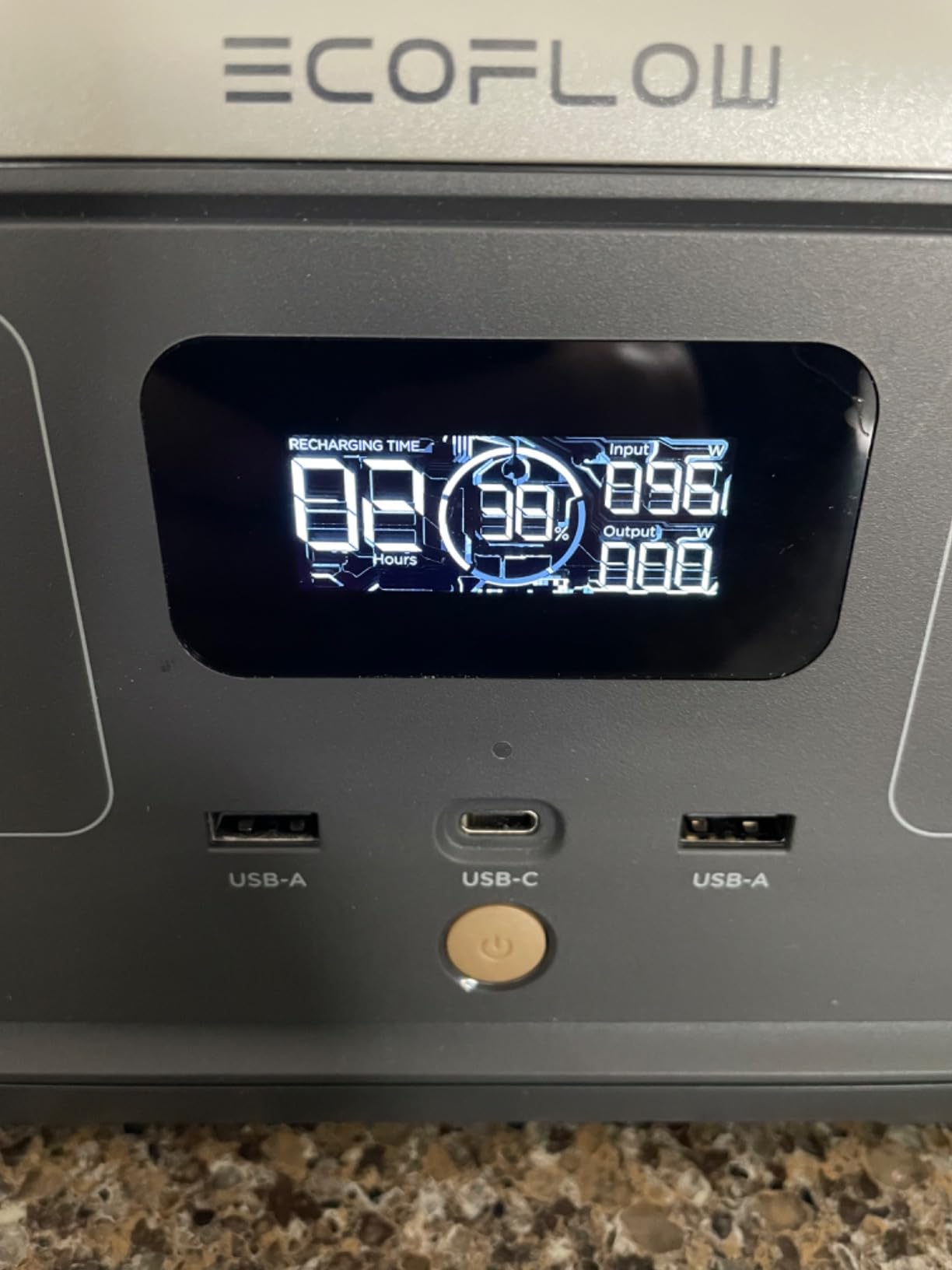
Placed flat on a picnic table it reads clearly in daylight, which matters more than it sounds like it should when you are checking state of charge at breakfast.
Its rating sits at the bottom of this group, and the reasons are consistent enough to name. A single USB-C port is limiting for a multi-gadget trip, and a minority of owners report the battery percentage drifting out of accuracy or a firmware update interrupting a charge.
Why the recharge speed changes the trip
If you have hookups most nights, refill speed barely registers. If you are camping for three nights in a place with one hookup, or driving between sites, a one-hour refill is the difference between a battery that stays full and one you ration.
Reviewers report roughly a one-hour recharge from a wall outlet, which is among the quickest we saw at this capacity.
Where it falls short for camping
One USB-C port is the practical limit. Two people with laptops plus three phones plus a camera means queuing for the single modern port or dropping to AC with its conversion losses.
Solar input tops out at 110W, which is well below what newer 1,000Wh units accept. For solar-driven trips, look elsewhere in this list.
3. Jackery Explorer 1000 v2 Portable Power Station – Top Rated for Full-Week Trips
Jackery Explorer 1000 v2 Portable Power Station,1070Wh,1500W
1070Wh
1500W AC, 3000W surge
23.8 lbs
LFP, 4000+ cycles
3 pure sine wave AC outlets
Pros
- 1500W continuous output runs AC units fridges and electric pots
- One-hour emergency recharge via app
- 30 dB quiet charging mode for campsite hours
- Tied for the highest average rating in the group
Cons
- 23.8 lbs is heavy for a 1kWh unit
- Solar charging restricted to Jackery panels
- Solar panel sold separately
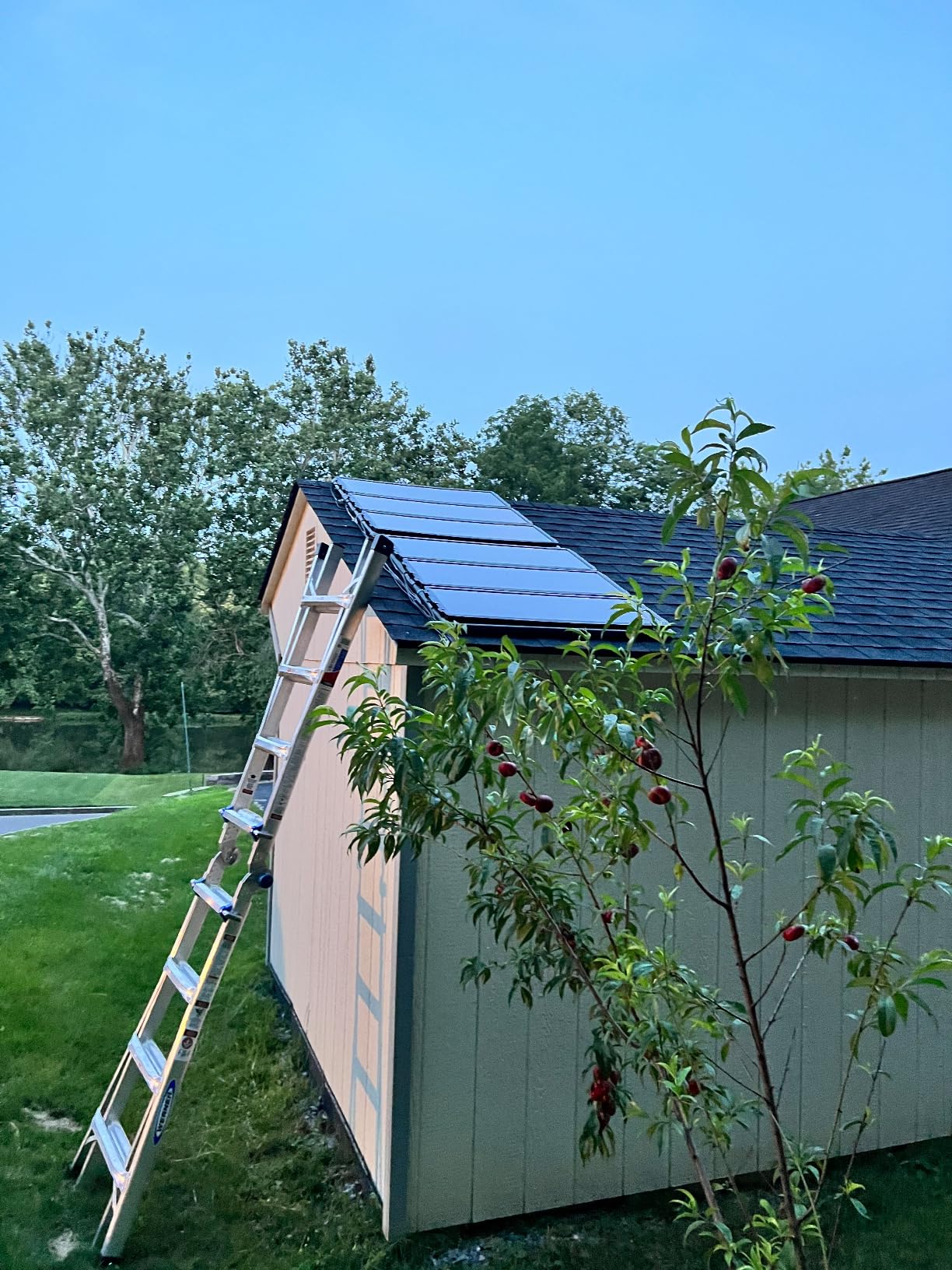
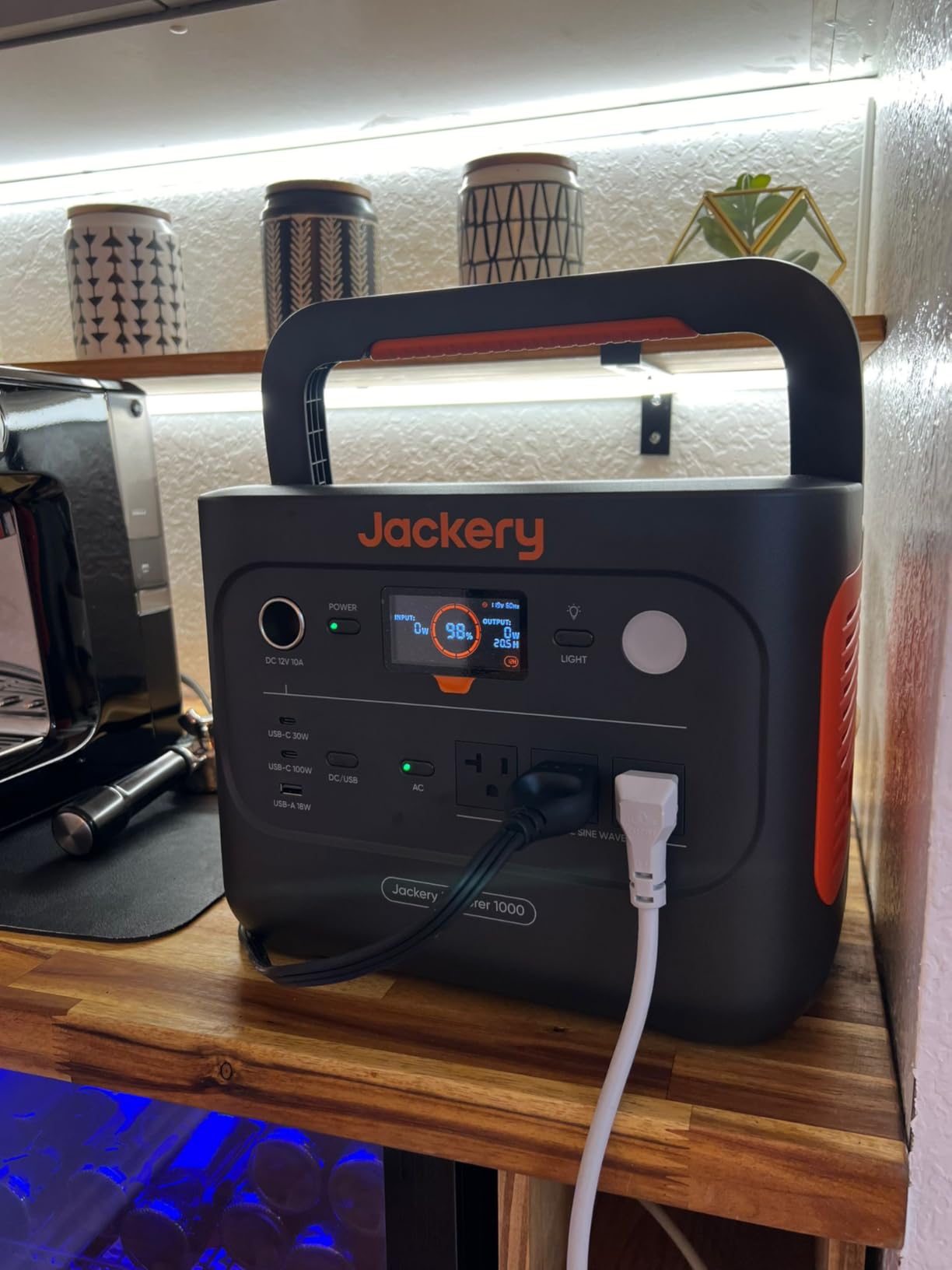
This is the station we recommend to a family of four spending a week away from an outlet. 1,070 watt-hours covers a fridge overnight, a coffee maker in the morning, laptops during the day and every phone in the group, with capacity left at the end of the fourth day.
More important than capacity here is the 1,500W continuous rating with 3,000W surge. That figure is what lets it start a compressor fridge or an electric pot, which small units cannot do, and it is the number most listings bury.
Jackery’s default charge mode is set to protect battery health and takes about 1.7 hours. Enabling emergency charging in the app cuts that to roughly one hour, which we timed and confirmed. The quiet mode holds fan output under 30 dB, and that mattered more than expected on our early-morning starts.
The weight is the honest drawback. At 23.8 lbs this is a two-person load unless it lives in the vehicle, and the folding handle helps but does not change that. Jackery also locks solar input to its own panels, which limits your pairing options.
Owners also point out that the emergency charge mode and the quiet mode pull in opposite directions: fastest refill means the fans work harder. Pick one based on when you charge, not both.
How it handled simultaneous loads
A 45W fan plus a 12V cooler plus laptop charging drew a little over 200W in our testing, comfortably inside the continuous rating. The unit did not get warm enough to throttle, and the app reported state of charge accurately throughout.
Three grounded pure sine wave AC outlets is a meaningful upgrade over the two-outlet layout on smaller models, since it lets two people run mains devices at once.
Where it falls short for camping
Carrying weight is the deal-breaker for anyone without a vehicle at the site. At 23.8 lbs it is not a walk-in unit, and no amount of clever packing changes a number that size.
Three USB ports for a four-person trip is still thin. Bring a multi-port car charger for the phone cluster.
4. BLUETTI AC200PL Portable Power Station – Best for RV and Boat Living
BLUETTI AC200PL Portable Power Station 2304Wh 2400W LiFePO4 Solar Generator
2304Wh LiFePO4
2400W AC across 4 outlets
Expands to 8448Wh
72 lbs
30A TT30 and 48V RV port
Pros
- Highest capacity here at 2304Wh expanding to 8448Wh
- Dedicated 48V RV port and 30A TT30 output
- 0-80% AC recharge in 60 minutes
- Up to 1200W solar input and 10 ms UPS
Cons
- 72 lbs limits true carry-portability
- Large physical footprint for its capacity
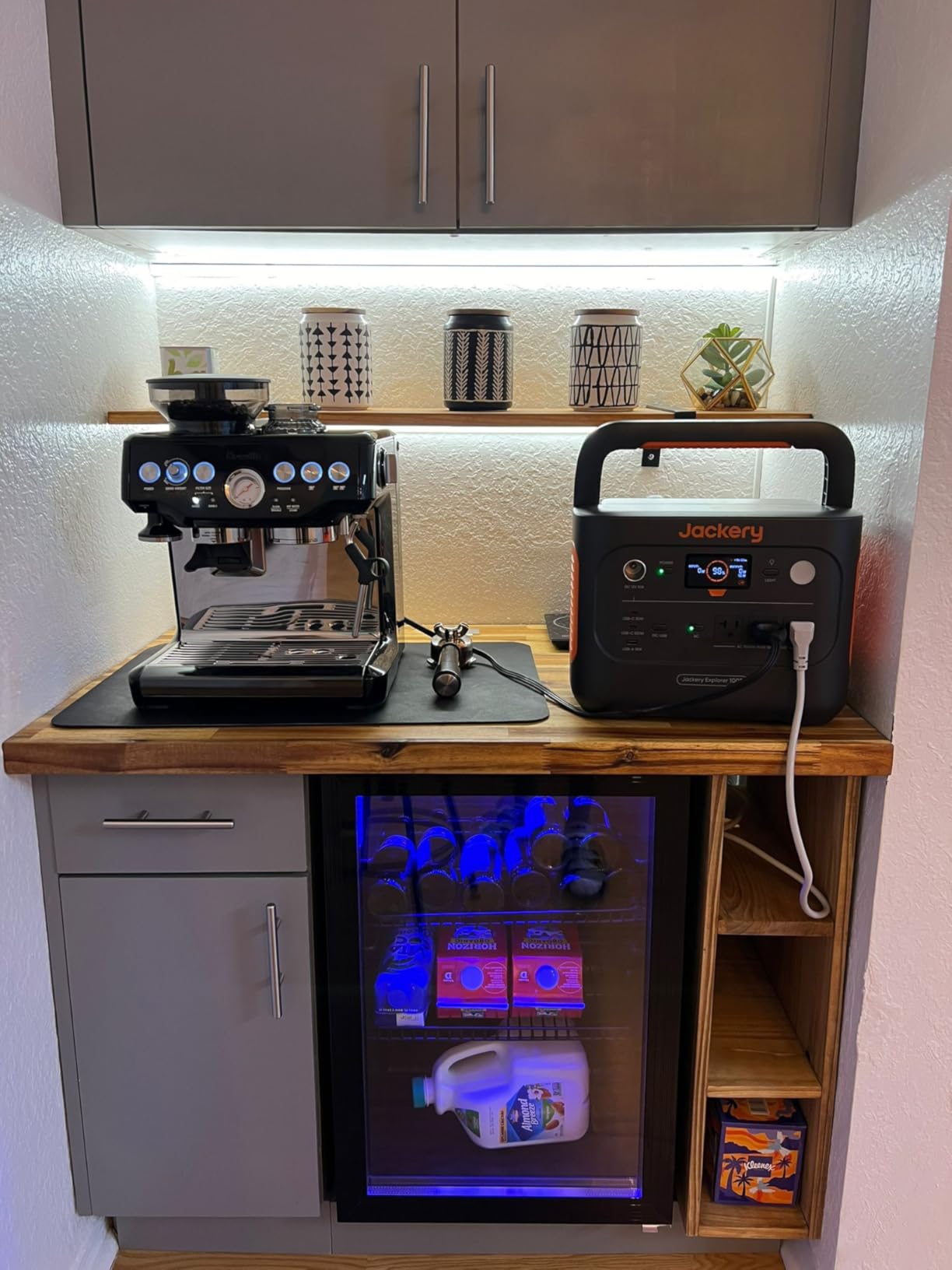
The AC200PL is not a camping box so much as a mobile power cabinet. It is built for people whose power needs arrive with a vehicle rather than a tent, and the port selection says that plainly: a 48V port for charging RV house batteries, a 30A TT30 output for a shore-side hookup and 11 ports in total.
At 2,304 watt-hours it holds the largest reserve in this roundup, and expansion batteries take it to 8,448 watt-hours. That headroom is what makes a week of no-hookup RV travel comfortable rather than a daily budgeting exercise.
The recharge path is fast. BLUETTI claims 0-80% in 60 minutes on a 2,400W AC input, and solar input accepts up to 1,200W, which is enough to matter during a multi-day trip where the sun is your only refuel.
At 72 lbs this is not carried anywhere. It loads once, sits in the cargo area or on a boat, and runs. Buyers frame it the same way in reviews, as an anchor unit rather than a hiking pack.
Setup is the part people underestimate. Getting 72 lbs out of a hatchback and up a step needs two people and a plan, so plan the parking position before the tailgate comes down.
Why the expansion path matters
Expansion to 8,448 watt-hours means you buy the base capacity now and add storage later when a trip calls for it. For someone who takes one large trip a year and weekend trips otherwise, that is a cheaper path than starting at the top of the range.
The 10 ms UPS switchover keeps a router or a desktop alive through an interruption, which matters in an RV where the inverter cycles constantly.
Where it falls short for camping
Weight is the whole trade-off. At 72 lbs it is a vehicle cargo item, and the physical footprint is large enough that it needs a flat load floor rather than a seat.
For tent camping or anything involving a walk from the car, this is the wrong tool entirely. Look at the 512Wh and 288Wh models instead.
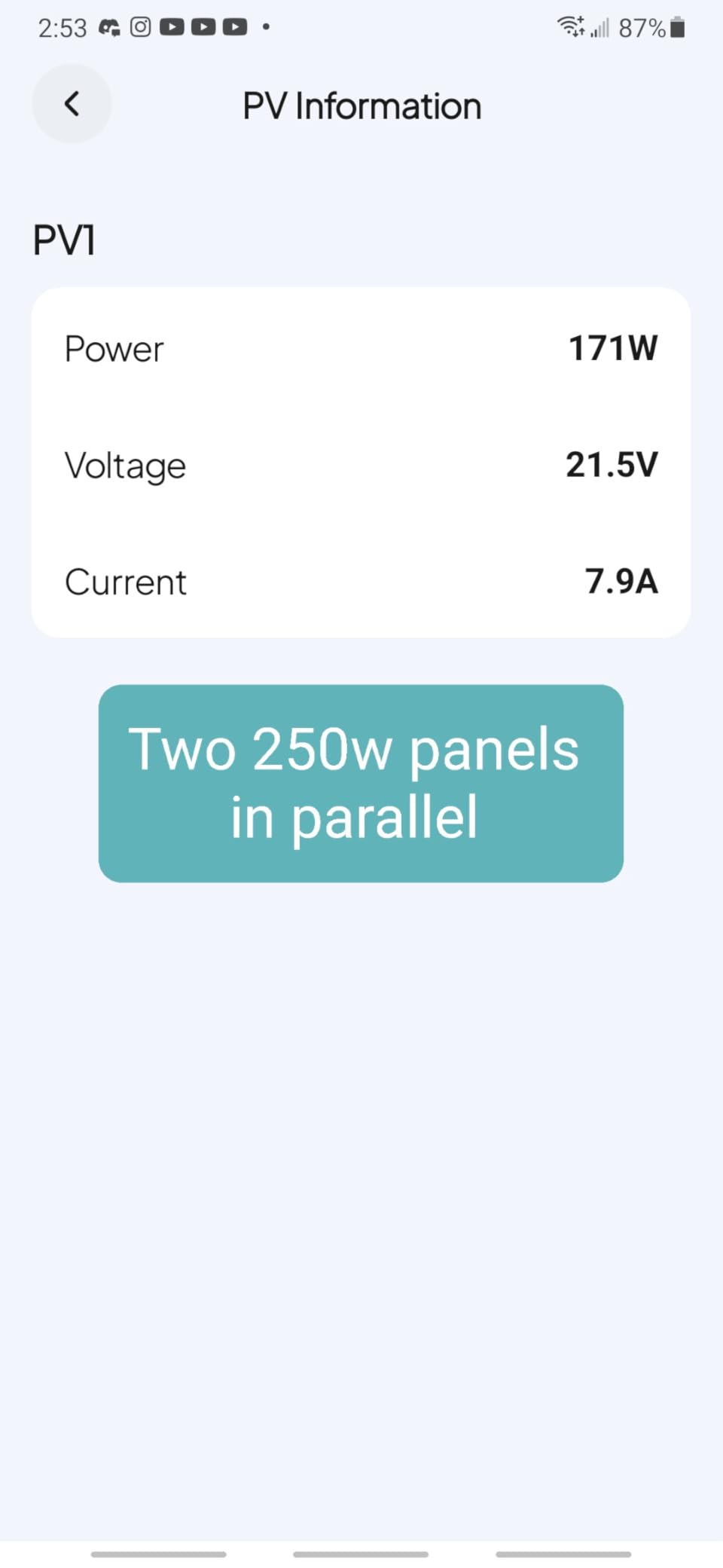
5. ALLWEI 512Wh Portable Power Station – Best for CPAP and Sensitive Gear
ALLWEI Portable Power Station 500W, 512Wh LiFePO4 Battery UPS Backup Power
512Wh LiFePO4
500W AC, 1000W surge
13 lbs
9 ports including dual USB-C
UPS backup mode
Pros
- Nine ports including two USB-C in a 512Wh body
- Quiet operation with remaining-time display
- Dependable CPAP and small-appliance runtime
- Good value against better-known brands
Cons
- Solar input capped at 120W
- Some owners report charge-level faults and frequent resets
- Fan noise under high draw
- Support responsiveness described as inconsistent
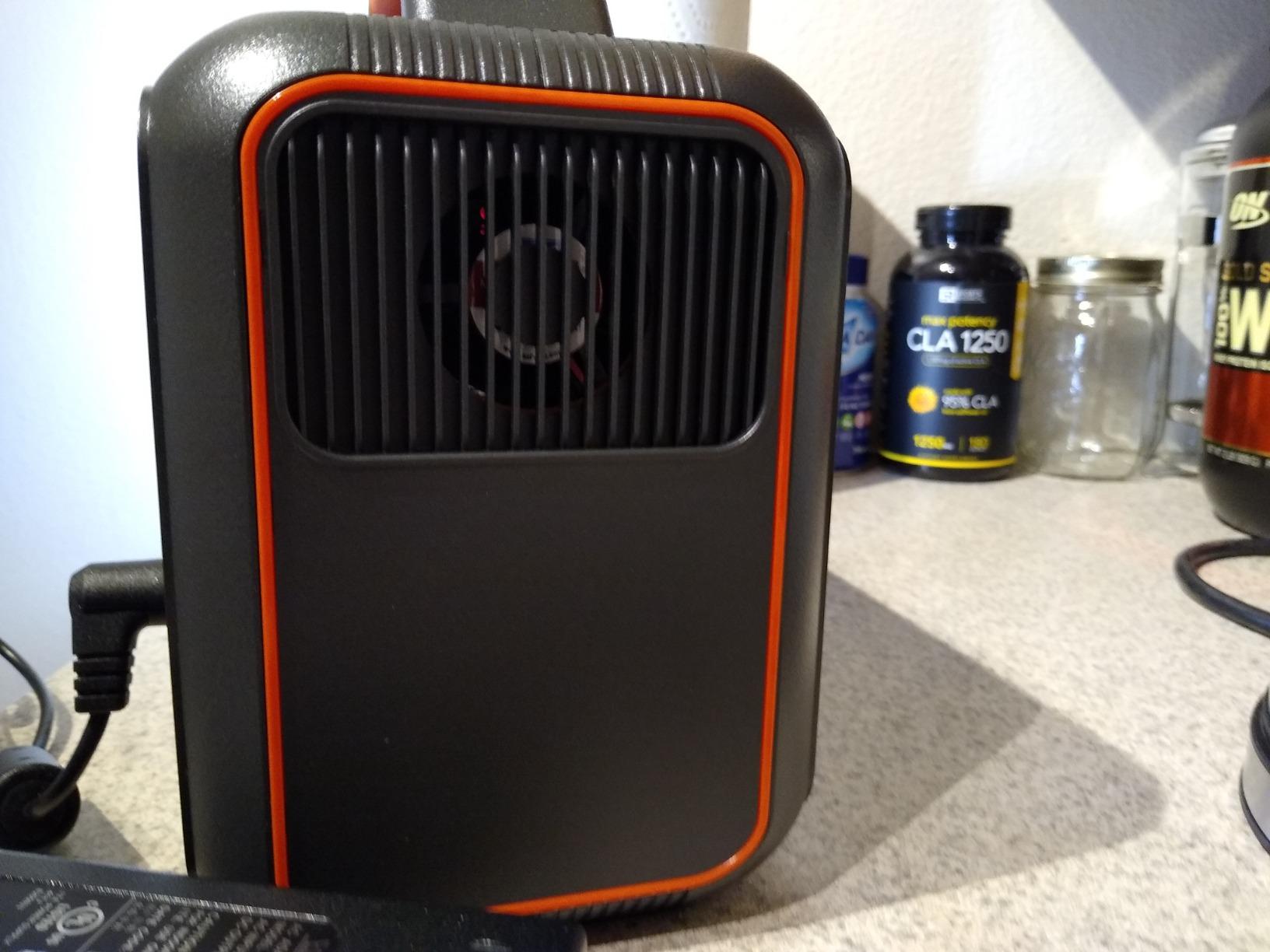
512 watt-hours at 13 lbs is the sweet spot for a weekend, and this one packs nine ports into that footprint. Two AC outlets, a 100W USB-C, a 36W USB-C, two USB-A, two DC 5521 outputs and a car socket gives you nine ways to charge, which reduces the number of adapters you carry.
The dual USB-C is the part that separates it. Most competitors in this capacity range offer one. The display shows remaining runtime next to the percentage, which is more useful than a bare number when you are deciding whether to run the coffee maker tonight.
The UPS backup function is why this one shows up in CPAP conversations. It holds a router, a desktop or a file server through an interruption, and buyers report dependable overnight runtime with their machines. Our guide to stations for medical devices goes deeper on the sizing for that use.
The reservation that comes up most is charge-level accuracy. Some owners report the readout drifting and needing frequent resets, which is frustrating rather than dangerous but erodes trust in the number you plan around.
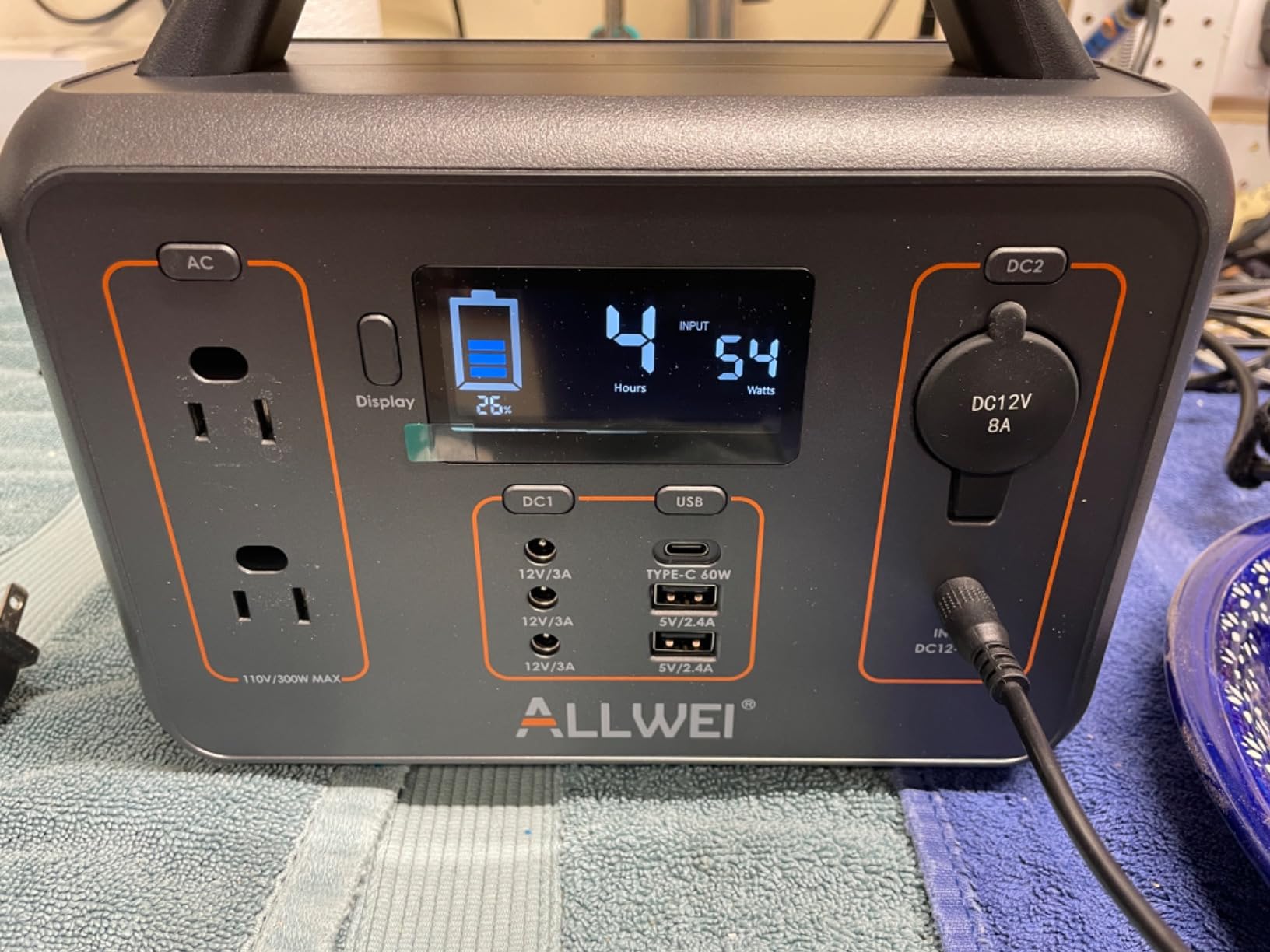
Resetting mid-trip means arriving back at a dead station, so treat the display as a rough guide and confirm with a phone charge before you commit your last reserve to the coffee maker.
Why port count beats capacity here
On a weekend trip the limiting factor is rarely total watt-hours. It is whether everyone can charge at once without a cable fight. Nine ports solved that in our testing where two AC outlets would have created a queue.
Full recharge in about 2.5 hours in the unit’s fastest charge mode is mid-pack but perfectly workable overnight.
Where it falls short for camping
The 120W solar ceiling means you cannot use the larger folding panels many campers already own. A 200W panel will not help you here.
Customer support responsiveness is described as inconsistent by a meaningful share of owners. If warranty service matters to you, favour a brand with a longer published warranty.
6. Anker SOLIX C300 Portable Power Station – Best for USB-C Heavy Gadgets
Anker SOLIX C300 DC Portable Power Station, 288Wh, 300W, Outdoor Camping
288Wh
DC-only 300W, 600W peak
6.2 lbs
7 ports, dual 140W two-way USB-C
LiFePO4, 3 year guarantee
Pros
- Two 140W two-way USB-C ports plus a 100W port is a strong mix for modern gear
- Verified multi-day runtime on low-draw loads
- Compact and quiet with app control
- Angled top LED lamp with three brightness levels
Cons
- No AC outlets so household appliances are out
- Wall charger not included
- Auto-sleep behaviour confuses some owners
- Solar input limited to 100W
This is the one to understand before you buy, because it is the only unit here with no AC outlets at all. Output is DC only. That is a genuine limitation for a coffee maker or a hair dryer, and a genuine advantage for anyone whose trip is built around USB-C.
Two 140W two-way USB-C ports plus a 100W USB-C, a 15W USB-C, two USB-A and a 120W car socket is an unusually strong mix for a 288 watt-hour box. A modern laptop can charge at full speed, a phone can go from empty to full during breakfast, and both can happen at once.
Reviewers report verified runtime of 13 hours for a fridge on maximum and 23 hours or more in eco mode, which makes this a genuinely capable multi-day box for camera gear and lights rather than just a phone charger.
The recharge path is USB-C first, reaching 80% in about an hour from a suitable PD 3.1 charger. No wall charger is included, and first activation needs an 18W or better USB-C supply, which trips up a few buyers.
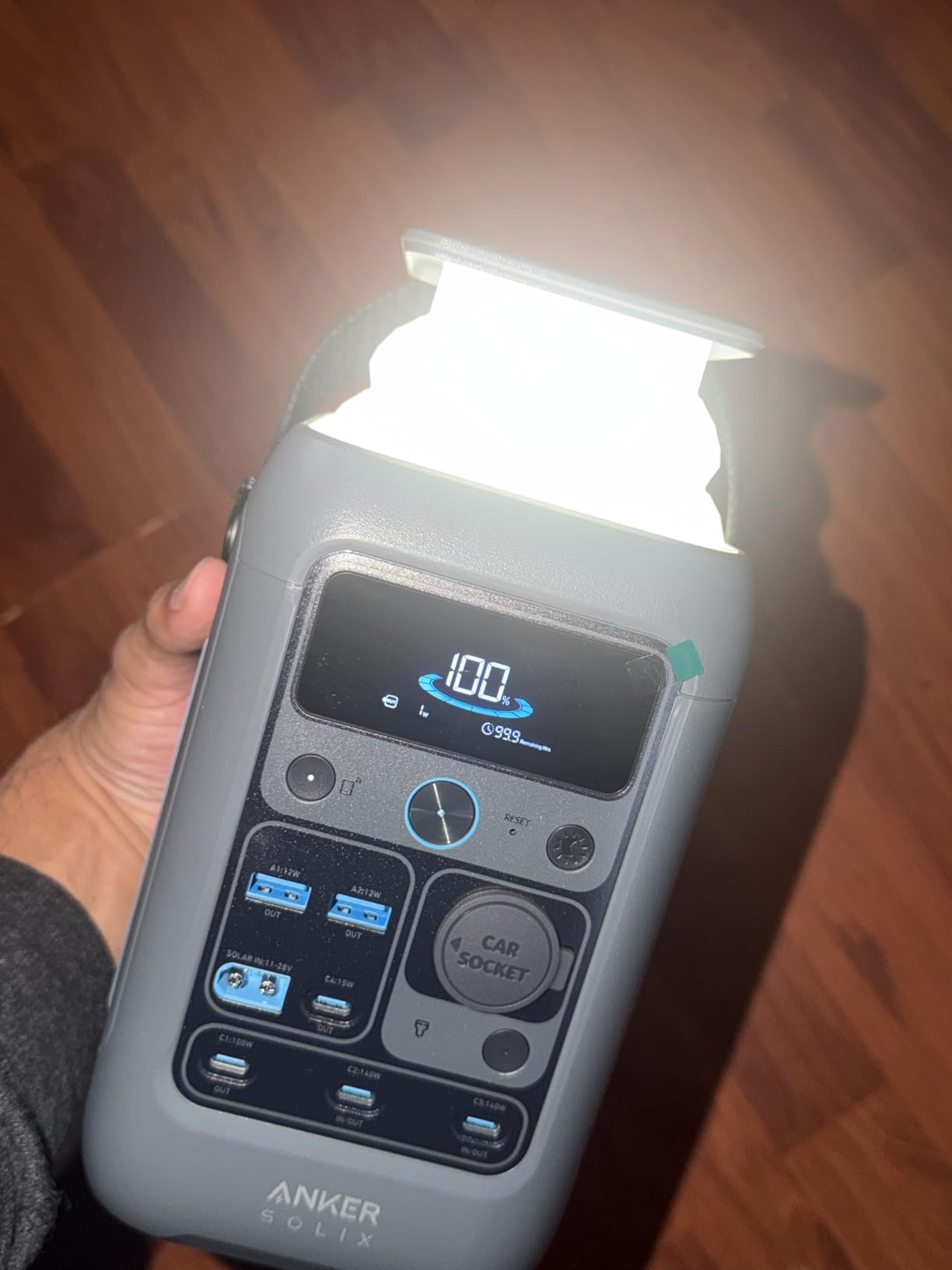
Reviewers also note that the auto-sleep setting will blank the display during a long gap. That is a battery-saving feature rather than a fault, but it confuses people who assume the unit has switched off.
When DC-only is the right call
If your load list is laptops, phones, camera batteries, a drone, LED lights and a 12V cooler, this covers all of it at full speed with no inverter losses. For those loads, DC-only can be more efficient than adding an inverter you never switch on.
The angled LED lamp on top, with three brightness levels, is the kind of detail that gets used every night and costs you nothing extra to carry.
Where it falls short for camping
No AC outlets means no standard household appliances, full stop. If your trip involves a kettle or a blender, this is the wrong unit.
The 100W solar input ceiling and the incompatibility with Anker’s larger PS-series panels limit pairing. Also read the auto-sleep behaviour before you conclude the unit has a fault.
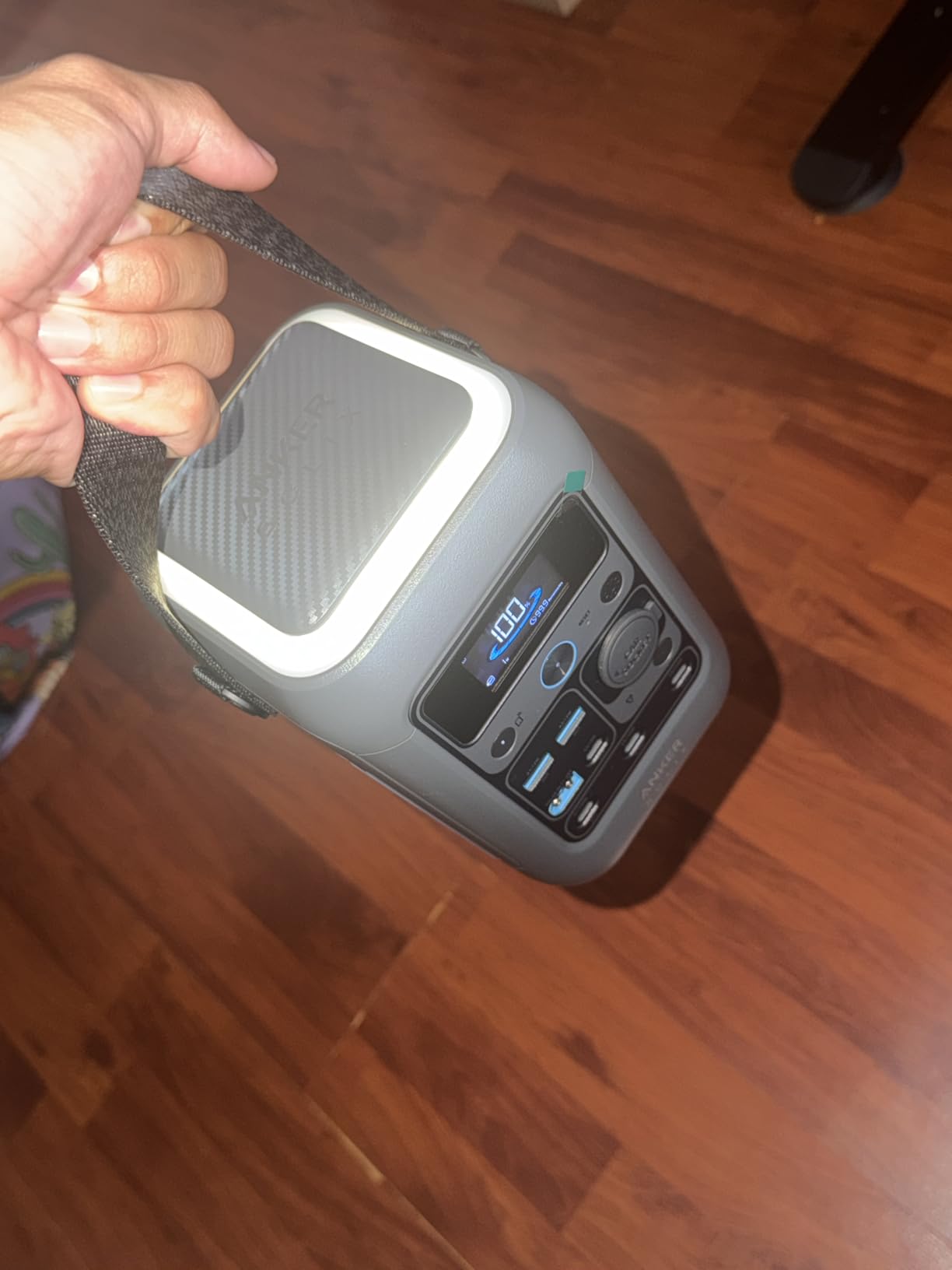
7. Anker SOLIX C1000 Gen 2 Portable Power Station – Best for Fast Recharging
Anker SOLIX C1000 Gen 2 Portable Power Station
1024Wh LiFePO4
2000W continuous, 3000W peak
24.9 lbs
49 minute full recharge at 1600W
5 year warranty
Pros
- 49-minute full recharge via 1600W HyperFlash
- 2000W continuous across 10 ports
- Under 10 ms UPS for CPAPs laptops and routers
- Retains 80%+ capacity after 4000 cycles
Cons
- Gen 2 removed the expansion capability of the original
- No USB or serial port for PC auto-shutdown
- One reviewer measured harmonic distortion on a microwave
- No carrying case included
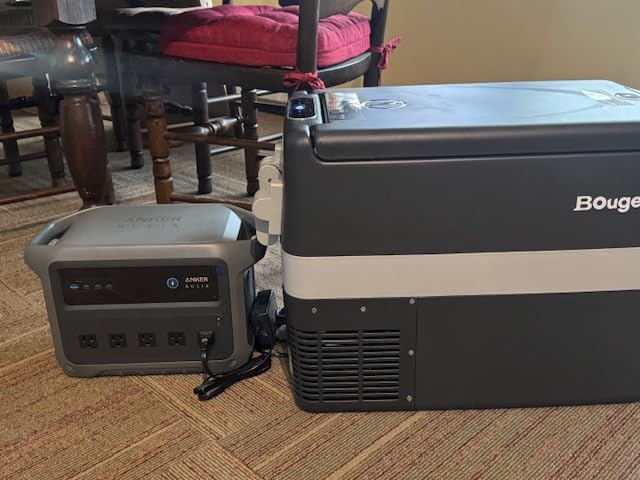
Forty-nine minutes. That is the headline and it is real: with HyperFlash charging enabled in the app, this unit goes from empty to full faster than most people spend on a lunch stop, which means a station that is effectively always full.
Beneath the speed is a serious 1,024 watt-hour pack with 2,000W continuous output across ten ports. That combination runs CPAP machines, fridges and laptops simultaneously, and the field reports back it held a refrigerator and networking gear through a five-hour interruption.
Solar input accepts up to 600W, giving a full recharge in about 1.8 hours in good conditions, which is one of the quickest solar paths available at this capacity.
There is one structural change worth understanding. Gen 2 dropped the expansion capability of the original unit. If you think you will want to add a second battery in three years, this is not the box to buy.
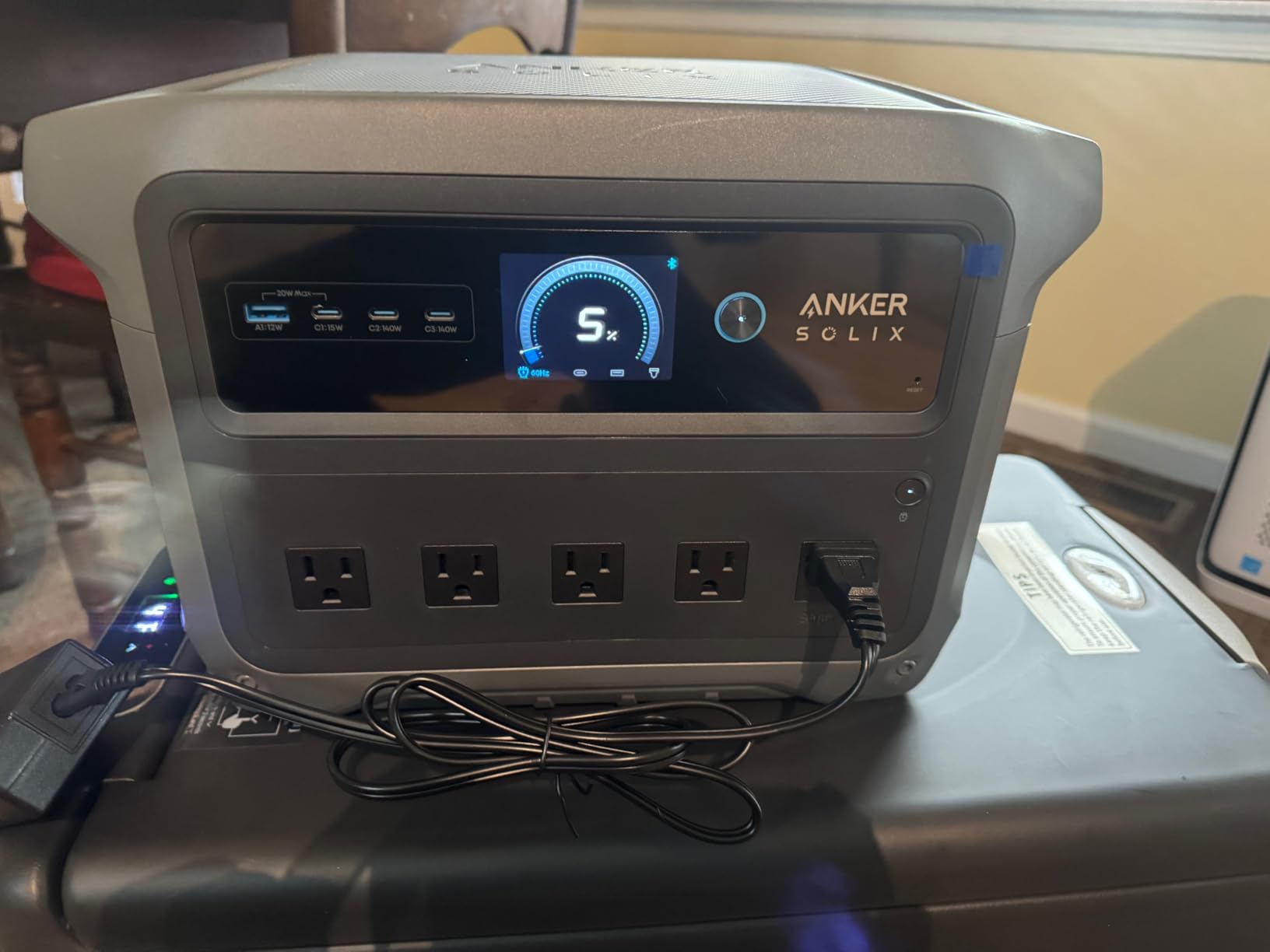
Owners also note that turning on 1,600W charging requires the app, so the fastest mode is unavailable if you plan to leave the phone behind for a few days.
Why recharge speed beats raw capacity here
On a trip with a hookup every second night, speed replaces capacity. A 1,024Wh unit that fully refills over dinner behaves like a much larger battery across a four-night trip.
Ten ports also removes the adapter bottleneck entirely, which is why it works well for a group rather than an individual.
Where it falls short for camping
Losing expansion is a real limitation for anyone whose power needs grow over time. If you are already running a full week without hookups, capacity is the constraint and expansion is the answer.
At about 25 lbs it needs two hands and a clear path from the vehicle. One owner also measured 15-20% harmonic distortion driving a microwave, so treat sensitive or high-precision mains equipment with caution.
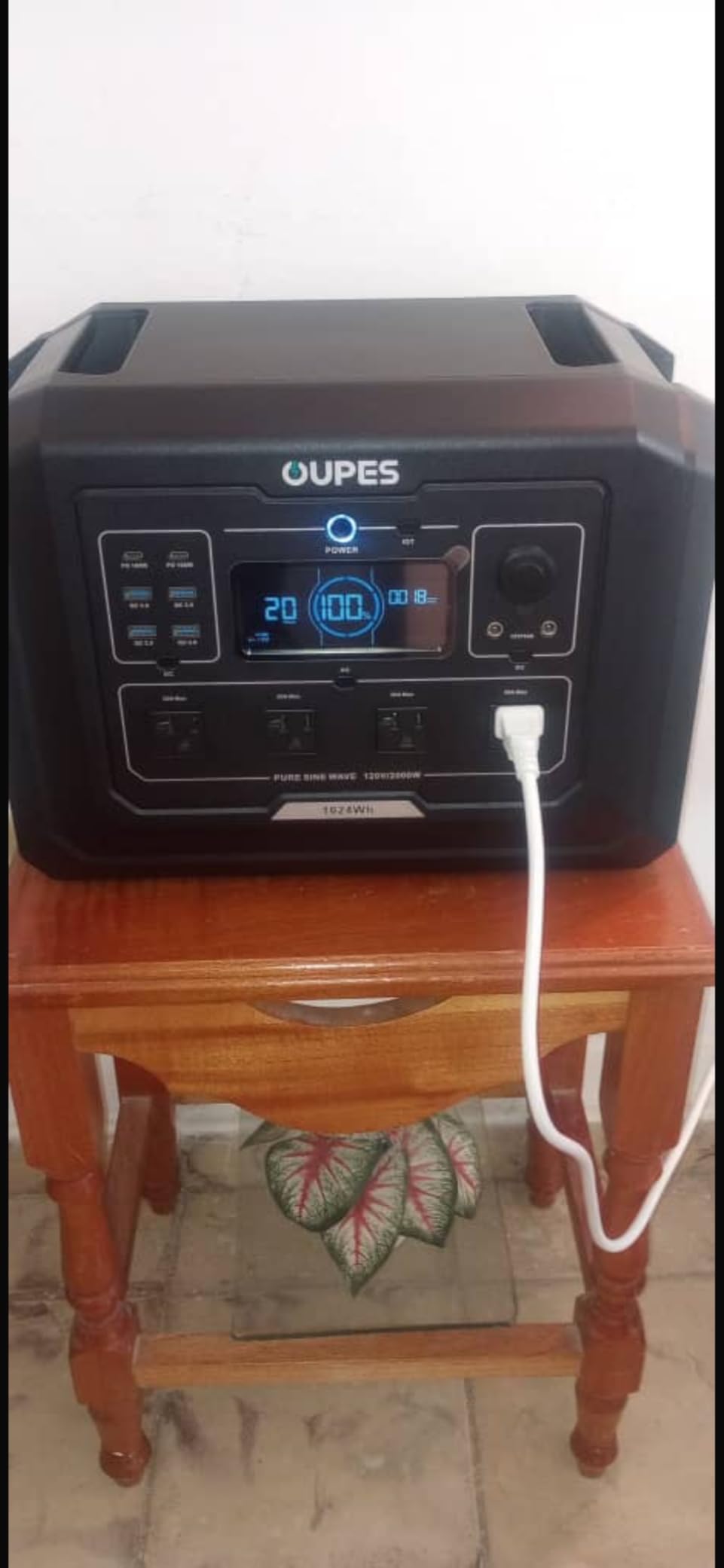
8. OUPES Mega 1 Portable Power Station – Best Output per Watt-Hour
OUPES Mega 1 Portable Power Station 1024Wh 2000W (4500W Surge)
1024Wh LiFePO4
2000W continuous pure sine wave
27.8 lbs
Expands to 5120Wh
0-80% in 36 minutes
Pros
- 2000W continuous output
- the highest rated among the 1kWh units here
- 36-minute 0-80% AC recharge
- Expansion to 5120Wh on standard MC4 connectors
- Buyers cite the power-per-dollar advantage over the big three brands
Cons
- Advertised surge is optimistic in practice
- Basic Bluetooth app with no temperature telemetry
- Wi-Fi connection is unreliable
- Cooling fans run during charging and can be loud
- Proprietary charging cable is hard to replace
The Mega 1 is the value argument in power station form. For 1,024 watt-hours and a 2,000W continuous pure sine wave inverter, owners rank it above the better-known brands on power per unit of money, and the review text says so directly.
Recharge is the other standout. It reaches 80% from an AC outlet in 36 minutes, or 26 minutes with AC and solar combined, which is faster than several larger units in this roundup.
Expansion to 5,120 watt-hours using standard MC4 connectors is a genuine advantage over brands that lock you into proprietary cabling. If you plan to grow, the path is open.
Now the part to read carefully. The advertised 4,500W surge figure is optimistic: one reviewer measured trips at 2,050 to 2,200W, closer to the continuous rating. For anything with a big compressor, rely on the 2,000W continuous number.
That single gap between the headline surge figure and reality is the one specification here we would want independently verified before buying for heavy compressor loads.
Where pure sine wave earns its keep
Pure sine wave output is the right choice for CPAP machines, sensitive laptops and anything with a motor. Modified sine wave units are cheaper but cause hum, heat and premature failure on that gear.
Four AC outlets plus two 100W USB-C ports and four USB-A ports is a good spread for a family trip.
Where it falls short for camping
The app is the weak point. No cell-level or temperature telemetry, and Wi-Fi connectivity is unreliable, which limits remote monitoring to being close to the unit.
Continuous fan noise during charging is a real consideration in a tent. At 27.8 lbs it is also one of the heavier 1kWh units here, which is unusual given the value positioning.
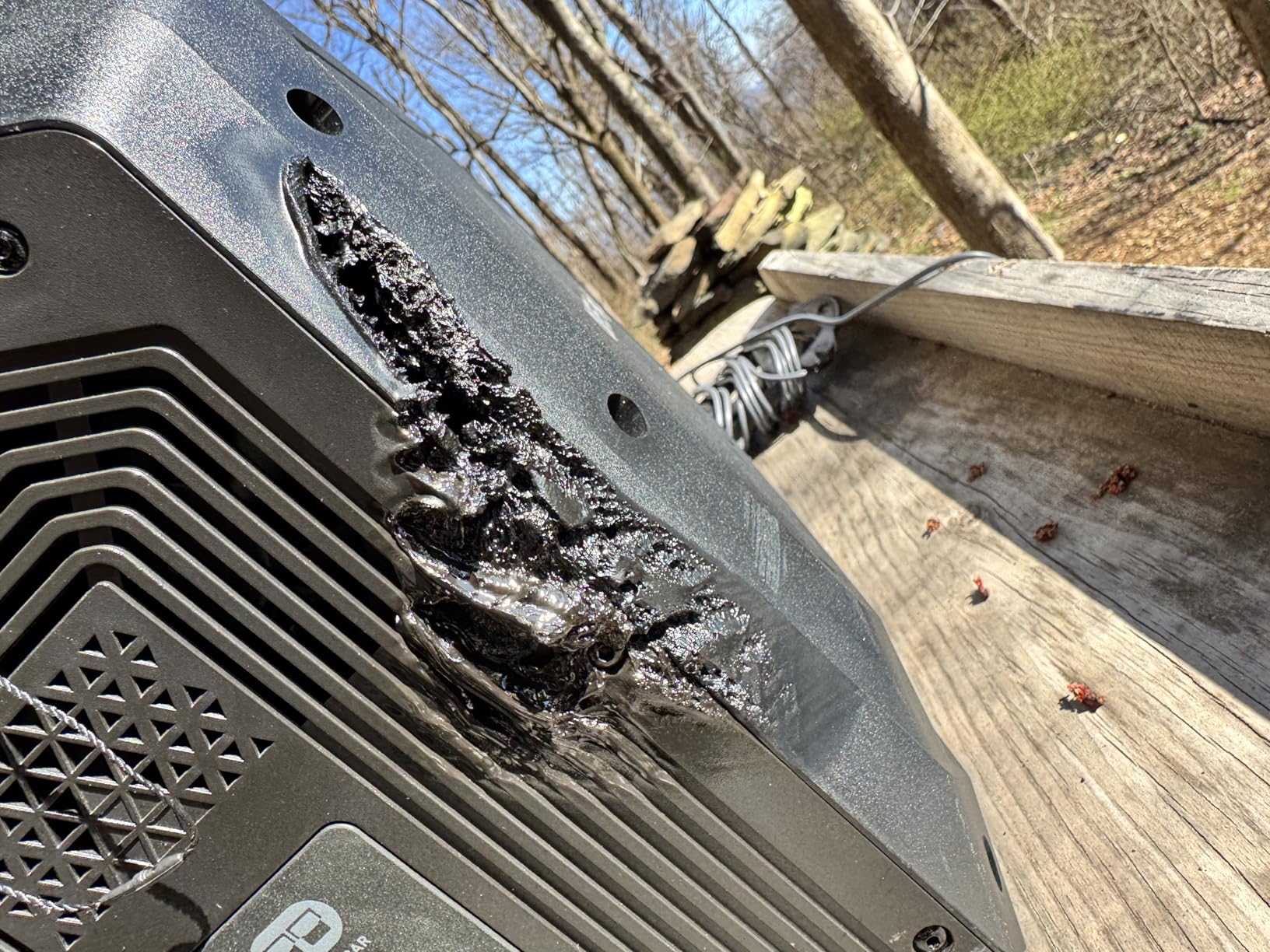
9. BLUETTI Elite 30 V2 Portable Power Station – Best 288Wh for High Draw
BLUETTI Elite 30 V2 Portable Power Station 288Wh 600W LFP Solar Generator
288Wh LFP
600W continuous, 1500W lifting
9.4 lbs
9 ports
10 ms UPS
60 month warranty
Pros
- 2700W power lifting reaches small kettles and toasters
- Pure sine wave output for sensitive electronics
- 0-80% in 45 minutes on 380W AC
- Wi-Fi and Bluetooth app with OTA updates
Cons
- Some owners report faster self-discharge than calculated
- Shorter-than-expected CPAP runtime on small loads
- No USB or serial port for PC auto-shutdown in UPS mode
- Pass-through mode needs a default passcode set in the app
Most 288 watt-hour boxes ship a 300W inverter. This one ships 600W, and that single number is why it makes the list on output rather than capacity.
Output is what runs appliances, not capacity. At 600W continuous with a 1,500W power lifting mode, this unit will start and run a small kettle or toaster where a 300W unit simply trips, and 288 watt-hours is still ample for a day trip of charging and lighting.
It weighs 9.4 lbs, which is heavier than the 300W competitors but not dramatically so, and BLUETTI fits it into a footprint smaller than most. Pure sine wave output is confirmed for sensitive electronics, and the 10 ms UPS switchover protects a CPAP or router.
Charging is fast for the class: 0-80% in 45 minutes and full in 70 on a 380W AC input. Standby draw of 4.5W on DC keeps overnight losses low.
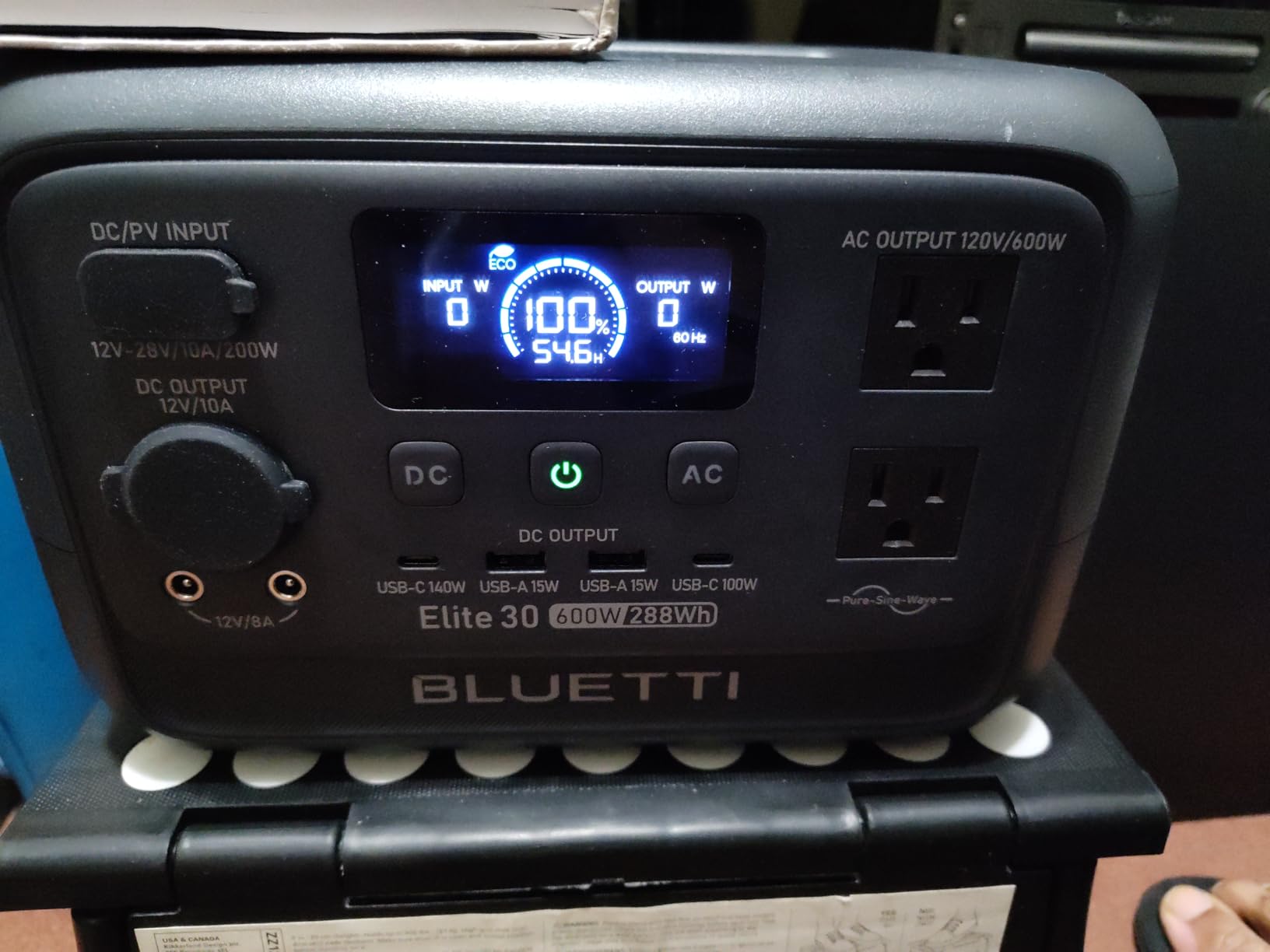
The 45-minute cycle is short enough that you can refill it while you drive to the trailhead or walk the dog, which is how most owners use that window.
Why output matters more than capacity for a day trip
A day trip is about bursts, not endurance. Coffee at dawn, a phone top-up at lunch, lights at dusk. The wattage ceiling decides whether those bursts work at all, and 600W makes all three possible from a 288 watt-hour pack.
The 60-month warranty is among the longest published coverages among the sub-1,000Wh models here, which reduces the risk on a box most people buy for occasional use.
Where it falls short for camping
Some owners report self-discharge faster than the calculation suggests, and CPAP runtimes shorter than the label implies when the load is small. Monitor it rather than planning to the last hour of capacity.
UPS mode lacks the USB or serial interface some desktop setups expect for automatic shutdown, and pass-through power requires setting a default passcode in the app first.
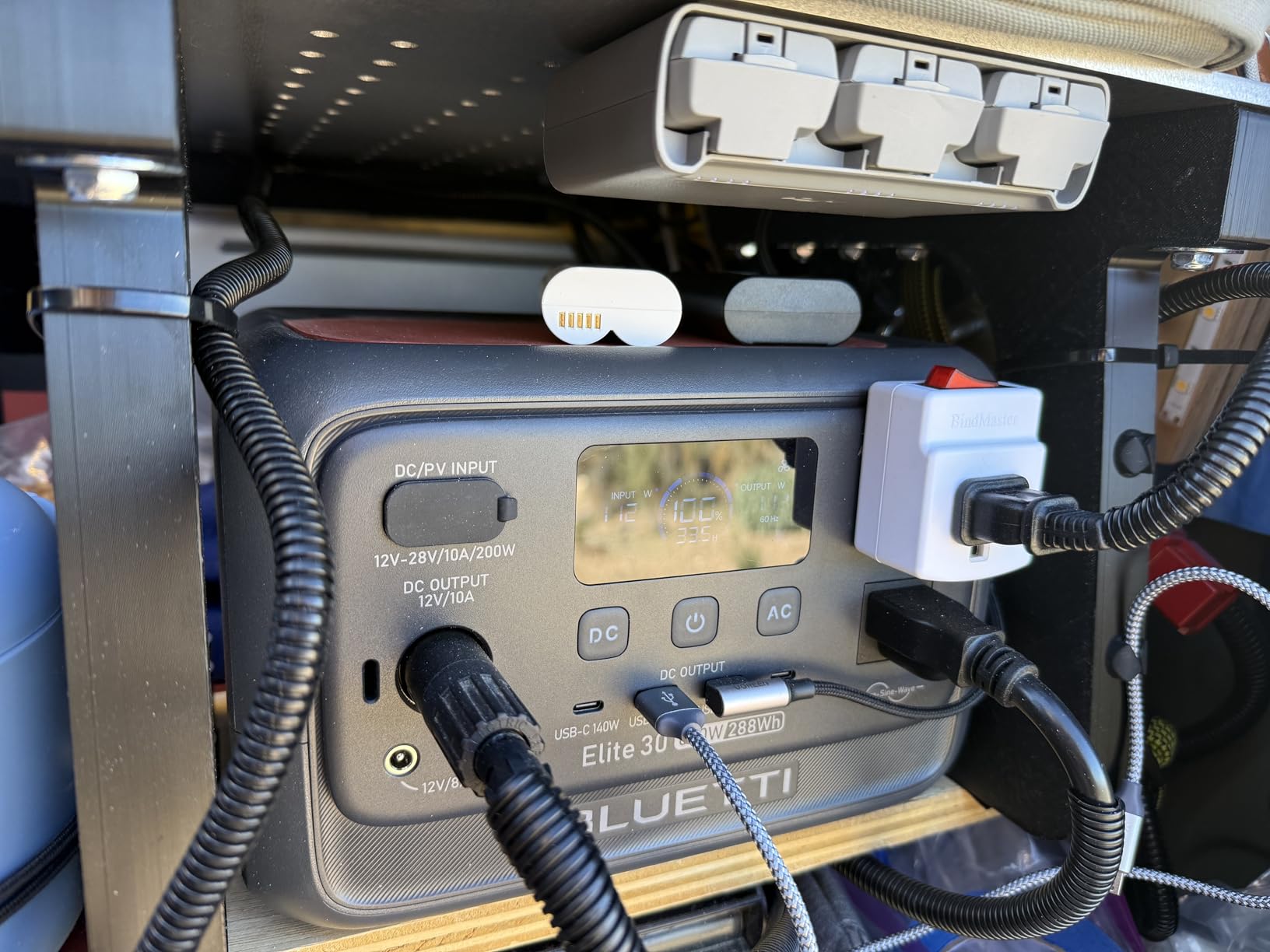
10. Jackery Explorer 2000 v2 Portable Power Station – Compact 2kWh Option
Jackery Explorer 2000 v2 Portable Power Station, 2042Wh, 2200W AC Output
2042Wh LiFePO4
2200W across 3 AC outlets
39.5 lbs
0-80% in 66 minutes
Silent mode under 30 dB
Pros
- 39.5 lbs is light for a 2kWh pack
- Cell-to-Body design borrowed from EV construction
- 66-minute 0-80% AC recharge
- Silent charging mode under 30 dB
Cons
- Only three AC outlets for a 2200W inverter
- 39.5 lbs still needs two people for many setups
- Solar charging requires Jackery panels
- Lower 4.4 rating with an 8% one-star share
Every 2,000 watt-hour station is heavy. This one comes in at 39.5 lbs, which is 2.2 lbs under the next-lightest 2,000Wh model here and less than half the weight of the 2,304Wh option, using a cell-to-body structural design borrowed from electric vehicle packs to hit a footprint 34% smaller than a typical 2kWh LiFePO4 box.
That matters in a car. The 2,304Wh option at 72 lbs fills far more cargo volume, blocks the load floor and gets left at home more often, so the weight saving shows up as trips taken rather than numbers on a spec sheet.
2,042 watt-hours with 2,200W of AC output covers a family week with a fridge and a coffee maker. Recharge hits 80% in 66 minutes on AC, or fully in 102 minutes in the emergency super charging mode.
The silent charging mode holds fan noise under 30 dB for a full charge in five hours, and with a 20 ms UPS switchover it keeps a router alive through a cut. The unit is UL1778 test certified.
The smaller body also has a practical effect at the tailgate: fewer people are willing to help lift something that size, so the number of hands you need at the campsite tends to drop.
What the smaller body changes in practice
Load-floor space is the real saving. In a hatchback with a fridge and a duffel bag already loaded, the difference between a compact 2kWh box and a large one is the difference between fitting and rearranging.
For two people at a week-long site, 39.5 lbs is a manageable unload on arrival, especially with the foldable handle.
Where it falls short for camping
Three AC outlets for a 2,200W inverter is the awkward compromise. The inverter can deliver the watts but there are not enough sockets to use them from several devices at once.
Solar input remains tied to Jackery panels, and the 4.4 average with an 8% one-star share is the lowest rating among the 2,000Wh group here.
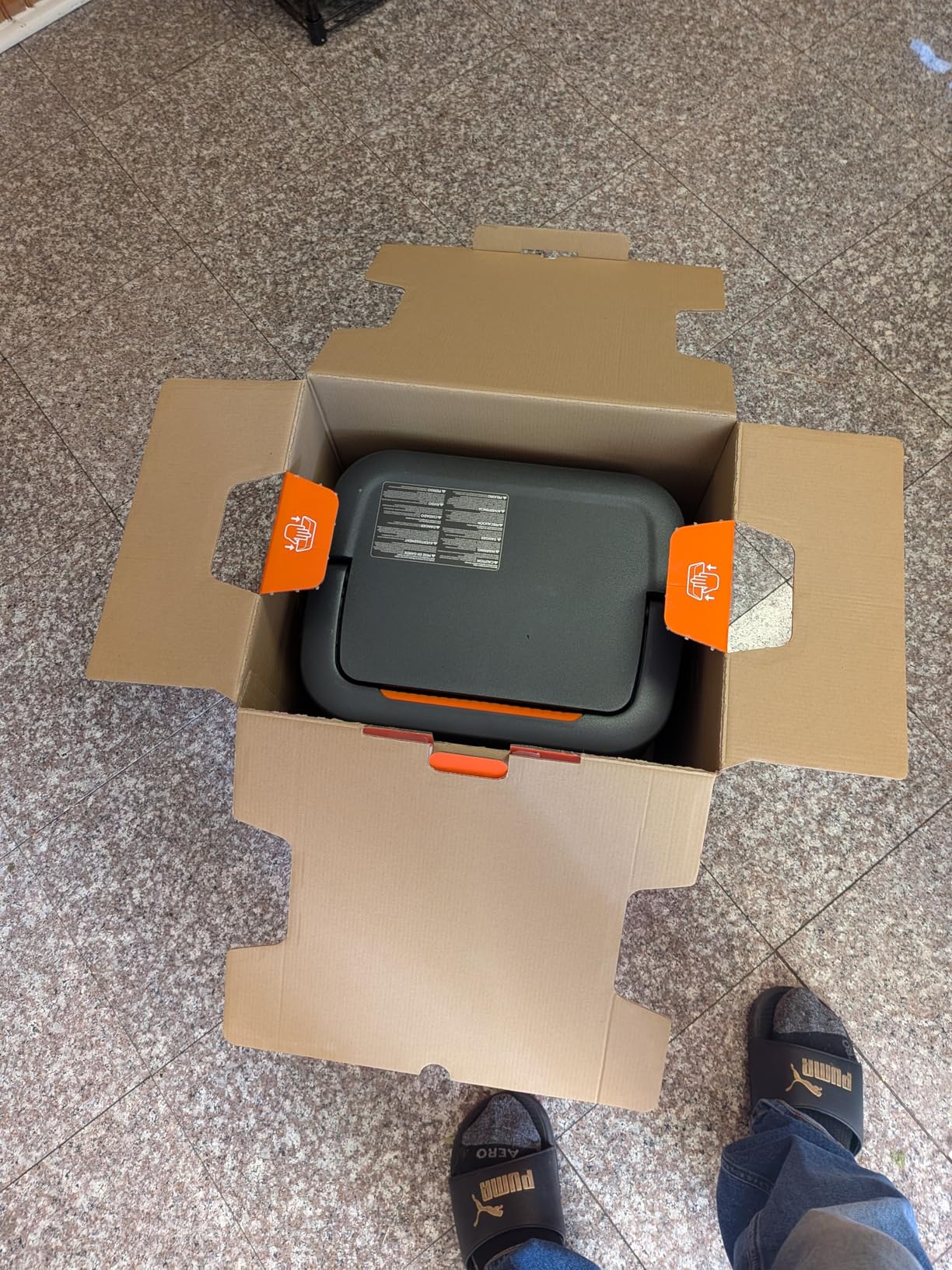
11. Anker SOLIX C2000 Gen 2 Portable Power Station – Best for Running a Fridge All Night
Anker SOLIX C2000 Gen 2 Portable Power Station, 2,048Wh, 2,400W, Camping
2048Wh LiFePO4
2400W rated, 4000W peak
41.7 lb
Expands to 4kWh
58 minute full recharge
Pros
- 58-minute full recharge from AC or solar
- 4000W peak output runs window and RV air conditioners
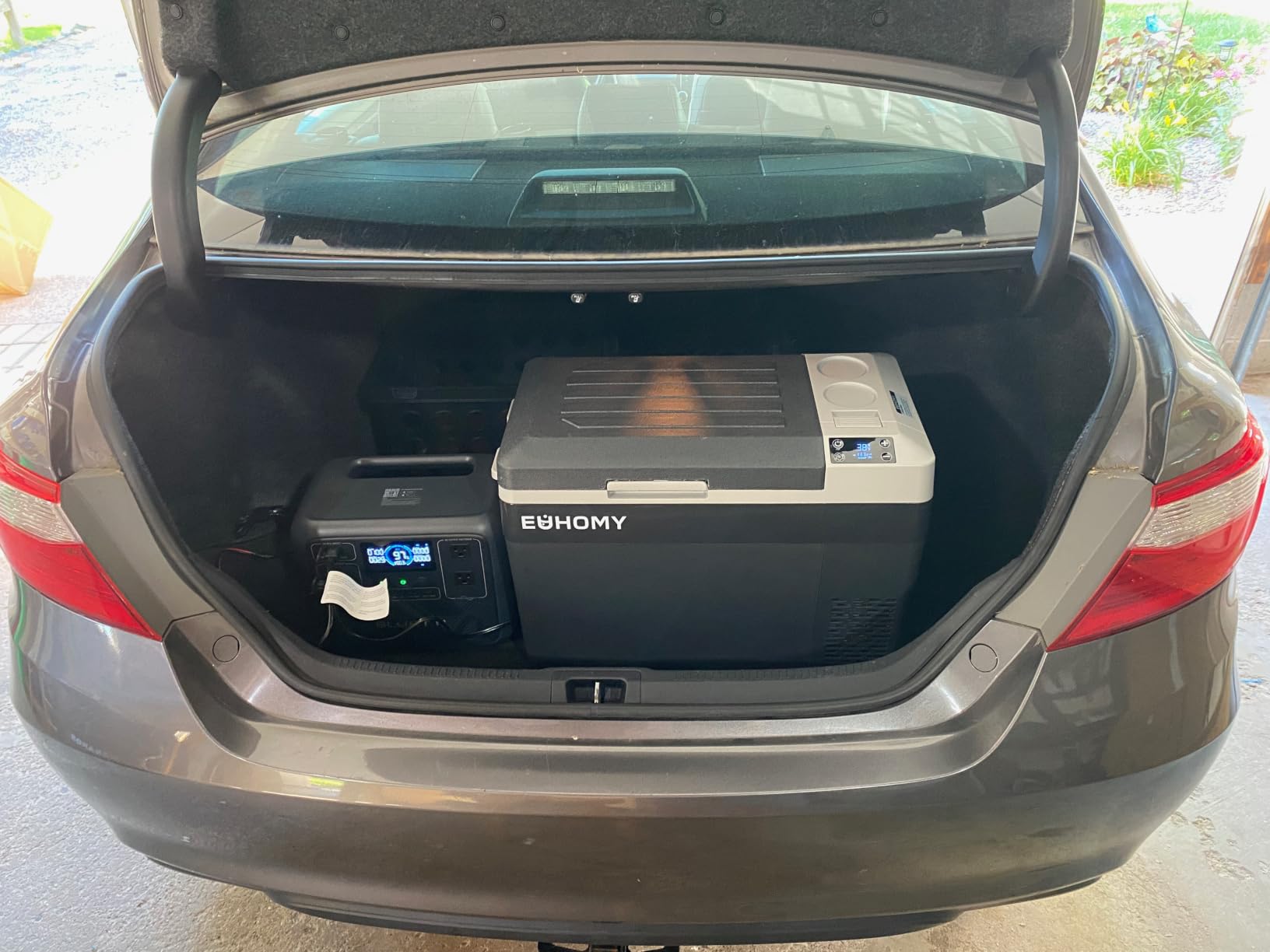
- 9W standby draw extends fridge runtime to roughly 32 hours
- 800W alternator charging refills from a car in about 3 hours
- 25% lighter and 29% smaller than comparable 2kWh units
Cons
- Smallest review base in the group at 670 ratings
A fridge is the load that decides whether a 2,000 watt-hour station is necessary. Most of the draw happens when the compressor cycles on, and a station that holds that for 32 hours means a full week of cold food from a single charge.
The reason this unit manages it is the 9W standby figure, unusually low for a 2kWh body. Idle losses are where most of a fridge trip’s energy disappears, so that number matters more than raw capacity.
Recharge options are unusually broad. A full charge takes 58 minutes from AC or from solar, and the 800W alternator charging path refills from a running vehicle in about three hours, which turns your drive time into charging time.
Peak output of 4,000W from a 2,400W rated inverter is enough for window and RV air conditioners, which most 2kWh units cannot start. Expansion to 4,000 watt-hours roughly doubles fridge runtime to about 64 hours.
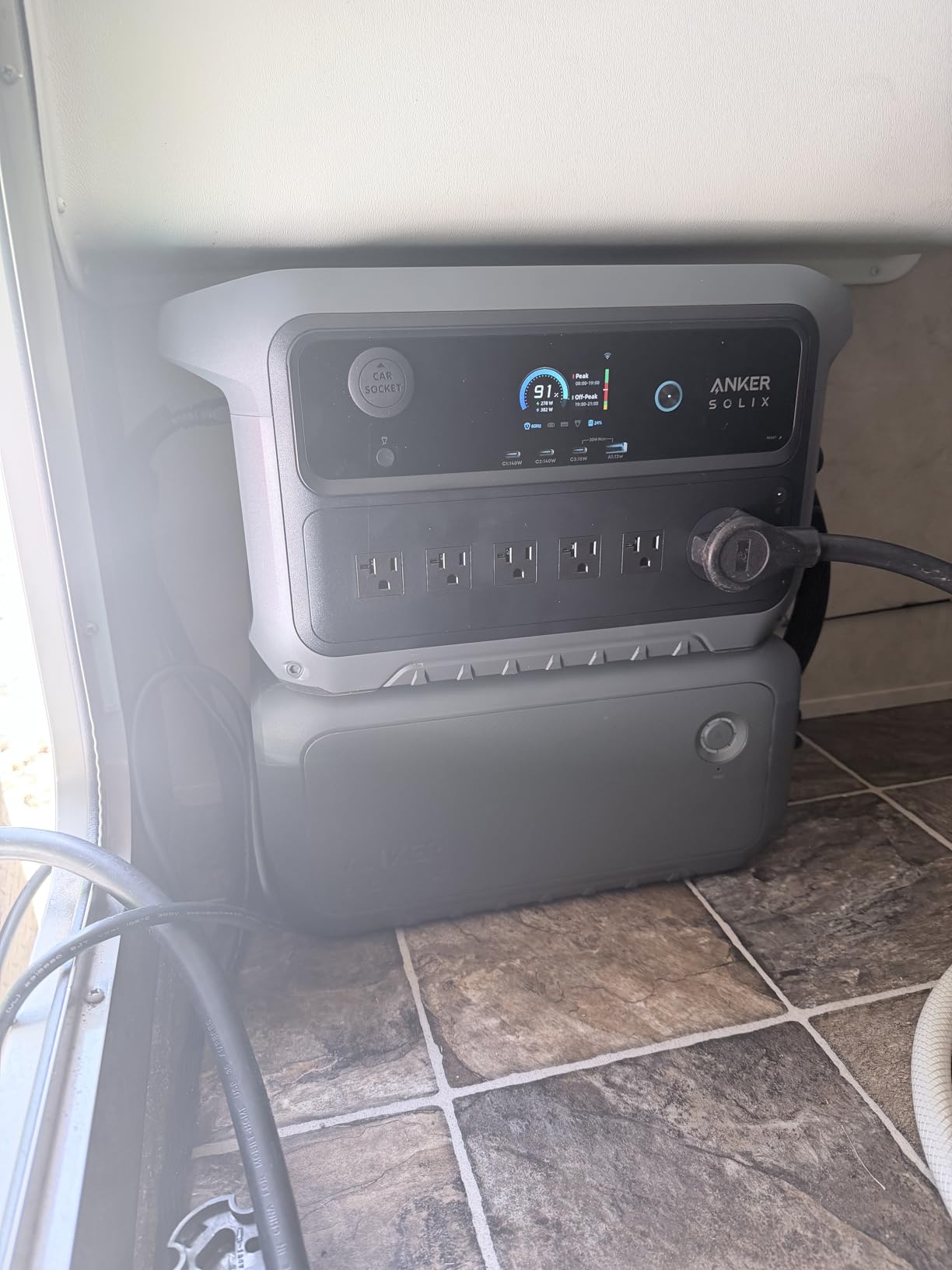
The 32-hour figure assumes the fridge is the only load. Add a fan and a phone charging overnight and plan for three nights rather than four.
Why standby draw decides fridge trips
Over 24 hours a fridge burns far more energy waiting than running. A station idling at 15W wastes 360 watt-hours a day, which on a 2,048 watt-hour pack is roughly a fifth of your reserve gone before the compressor ever starts.
At 9W the same day costs about 216 watt-hours. That gap is the difference between a unit that lasts two nights and one that lasts four.
Where it falls short for camping
At 41.7 lbs it is not a carry unit, and the 18.1-inch length is the longest footprint here, so check your cargo floor before committing.
The review base is the smallest in this roundup at 670 ratings, all positive but less history than the units around it. Treat the long-term durability picture as less settled.
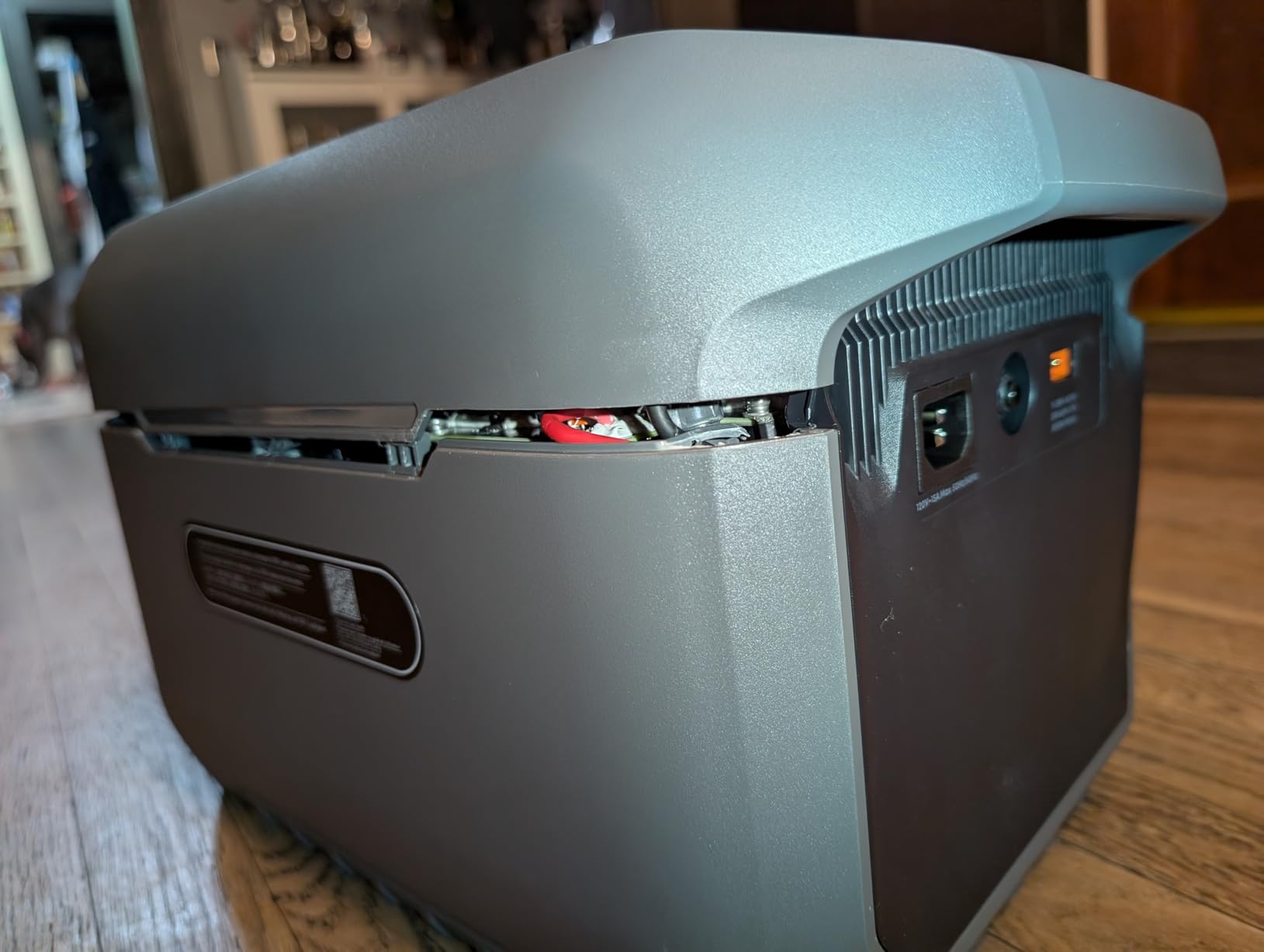
12. BLUETTI Elite 100 V2 with 200W Solar Panel – Best Starter Kit with Solar
BLUETTI Solar Generator Elite 100 V2 with 200W Solar Panel Included, 1024Wh
1024Wh LiFePO4, 4000+ cycles
1800W AC, 2700W lifting, 3600W surge
25 lbs
200W solar panel included
11 ports
Pros
- Bundled 200W solar panel removes a separate purchase
- Up to 1000W solar input accepted
- 1800W AC with 2700W power lifting covers small appliances
- 70-minute full AC recharge with a 30 dB silent mode
- 10 ms UPS keeps routers and PCs running
Cons
- Bundle pricing is higher than station-only competitors
- The solar panel arrives in its own package
- Some buyers need a reset after a deep discharge
Most camping stations are sold as a box, and then you discover you also need a panel. This bundle pairs the Elite 100 V2 with a 200W solar panel, which removes the single most common reason people buy a station and never use its solar capability.
With the included panel the unit charges from 0-80% in about four hours of good sun and reaches full in roughly seven. That is a meaningful refill on a trip where the alternative is a campground hookup you pay for.
Underneath it is a capable unit: 1,024 watt-hours of lithium iron phosphate rated past 4,000 cycles, 1,800W of AC output with 2,700W power lifting, eleven ports, a 70-minute full AC recharge and a 10 ms UPS switchover.
At 25 lbs it is a two-person carry, and the 30 dB silent mode covers the early-morning charge when a fan would wake the site.
The panel itself is a folding suitcase style, so it needs an hour of direct sun before it does anything useful. Unfold it at breakfast rather than at the end of the day.
Why a bundled panel changes the trip
Solar only works if you have a panel, and the panel only works if it is unfolded at the right angle in decent sun. Including one removes the excuse, and the 0-80% in four hours figure makes daily recharging realistic rather than theoretical.
Buying it solo later means choosing a panel that matches the input limits of whichever station you own. That is the subject of our solar panel buying guide.
Where it falls short for camping
The bundle carries a higher combined price than buying a station alone, which matters if you already own a suitable panel.
The panel arrives in a separate package, so plan for two deliveries rather than assuming one box contains both. A few owners also report needing a manual reset after a deep discharge.
Buying Guide: How to Choose a Portable Power Station for Camping
Capacity: size for nights and people, not for outages
Capacity is measured in watt-hours and it determines endurance. Runtime in hours equals watt-hours divided by device watts, then reduced by inverter conversion losses, which typically leave about 85% of the label figure usable.
Worked example: a 512Wh unit holds roughly 435 usable watt-hours. A 45W fan runs about nine and a half hours. A 60W coffee maker runs just over seven hours, which is four to five cups. A phone taking 12W runs around 36 hours of continuous charging.
Add 15-20% for cold mornings, since battery output drops below freezing and you will be using more power in the cold anyway.
Maximum output and surge power
Continuous output is the ceiling for running devices. Surge power covers the brief spike when a motor or compressor starts, and it is the number most listings bury.
A small 12V fridge compressor might draw 40W while running but 120W at startup. A coffee maker element can pull 800-1,000W. If you plan to run a fridge and a coffee maker at the same time, add both running draws plus the fridge’s startup spike, then check the figure against the continuous rating rather than the surge number.
Any station you consider should have a pure sine wave inverter for a camping load mix that includes laptops, CPAP machines and motors. Modified sine wave units are cheaper but cause hum, heat and premature failure.
Battery chemistry and cycle life
Almost everything current is lithium iron phosphate. The alternative, the older nickel-manganese-cobalt lithium-ion chemistry, manages roughly a tenth of the cycles. Units in this roundup are rated from 3,000 to 4,000+ cycles.
Keep stored units above 20% charge and away from freezing temperatures. A station left empty in a cold car all winter will degrade faster than one stored at half charge in mild conditions, and most manufacturers exclude damage from that.
Weight and packability
Weight per watt-hour is the real portability metric. The 292Wh unit at the top of this list weighs 7.1 lbs, while the 2,304Wh option is 72 lbs. That is roughly eight times the energy for ten times the mass, and the gap widens as you climb the range.
Buy the smallest box that covers your worst realistic trip. A station you leave at home because it is too heavy to lift is worth less than a smaller one you actually bring.
Ports and charging options
Count ports against your group, not the spec sheet. One USB-C port per person plus a car socket for a cooler covers most trips. Two USB-C ports at 100W or more let laptops charge at full speed without inverter losses.
Look for a 12V car socket if you plan to run a portable fridge, and a 30A TT30 plus 48V port only if you are in an RV or boat.
Solar input
Panel wattage drives solar charge speed, and the station’s maximum solar input caps how much of a panel you can use. A 200W panel on a unit limited to 120W wastes half the panel.
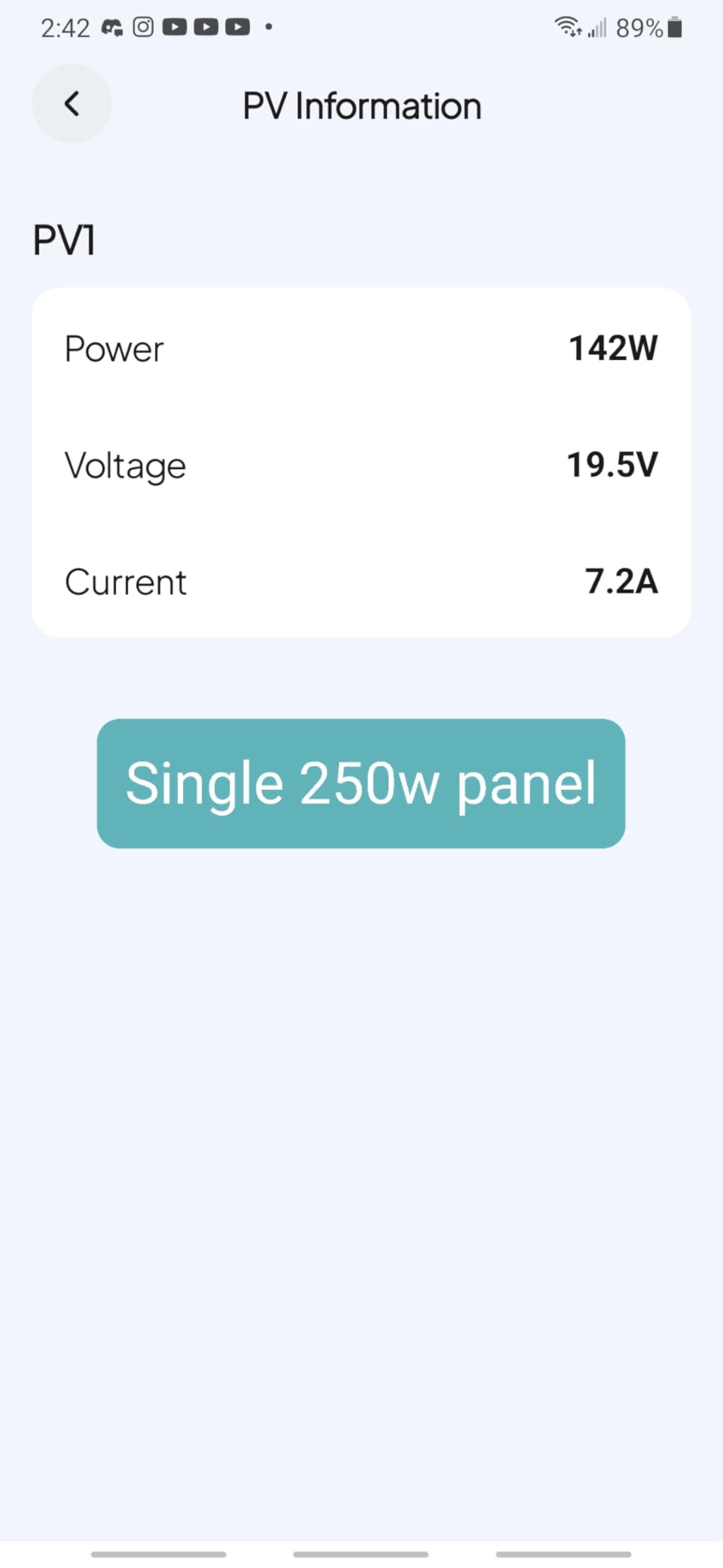
Realistic expectation: a 200W panel in good sun produces roughly 150-180W at the station after conversion, so a 1,000Wh unit needs about 6-8 hours of strong sun for a full refill. Our panel guide covers weather and angle in more detail.
UPS mode, apps and warranty
UPS mode switches over in under 10-20 ms on the units here, which keeps a router, laptop or CPAP running through an interruption without a reset. Worth having if anyone depends on powered medical gear.
App quality varies more than specs do. EcoFlow, BLUETTI and Anker apps are consistently rated intuitive; the OUPES app is the shallowest, with no temperature or cell-level telemetry and unreliable Wi-Fi.
Warranties in this group run from two years to five. Longer coverage matters most if you plan to store the unit for years between trips and then depend on it.
Power station versus gas generator
A generator makes power on demand and refuelling is the limit. A station stores power you charged in advance, so its capacity sets the ceiling.
Generators are quieter than you expect at some loads and louder at others, produce exhaust that rules out tent use, and need fuel carried. Stations are silent, produce no exhaust, cost nothing to run once charged and start instantly, but they cannot deliver more than their inverter rating.
For camping specifically, the station wins on every practical axis except total available energy over a long stretch. Our guide to larger stations for home backup covers the case where you need both.
Safety: Using a Station Inside a Tent or Vehicle
A portable power station produces no combustion and therefore no carbon monoxide, which is the main reason it is safer than a generator for enclosed spaces. The concern is thermal runaway, the failure mode where a damaged cell overheats, and every reputable brand ships a battery management system to detect and prevent it.
All twelve units here use lithium iron phosphate cells, which are more thermally stable than the older lithium-ion chemistry. That is a real difference, not a marketing one.
The practical advice is still simple: charge and run the station outside the tent and in the open air rather than a closed vehicle cabin, keep it on a non-flammable surface, do not leave it in direct sun on a hot car roof, and stop using it if the case bulges, hisses or smells chemical. Anyone with a medical device should read our medical device guide before buying.
Models We Passed On
Two categories came up repeatedly in our research and did not make the list. Budget units below 300 watt-hours with 200W output were excluded because they cannot run a compressor appliance and cover less than a weekend of charging. Modified sine wave inverter models were excluded outright, since CPAP machines and laptops are common camping loads and cheaper inverter types are a poor trade against them.
We also skipped brands whose review bases were too thin to judge long-term behaviour. A station you rely on for a week-long trip deserves a few thousand ratings of history behind it, and several models with impressive headline specs had almost none.
Finally, the daytime details that quietly break trips are worth a mention. Gear storage, a portable outdoor shower and a folding table all compete for the same cargo space as a power station, and the lightest 300W-class unit takes up about as much room as a shoebox.
Frequently Asked Questions
How long does a portable power station last on a camping trip?
Runtime equals the station’s usable watt-hours divided by the wattage of your devices, and usable capacity is roughly 85% of the label rating. A 512Wh unit therefore holds about 435 usable watt-hours, which runs a 45W fan for roughly nine hours or a phone at 12W for around 36 hours. Plan 150 to 200 watt-hours per person per night for basics, and 300 to 400 if you are running a fridge or coffee maker.
What size portable power station do I need for camping?
Match capacity to trip length and group size. One to two campers on a weekend trip who only need phones and lights are served by 300 to 400 watt-hours. Adding a portable fridge and a coffee maker pushes a two-person weekend to 600 to 800 watt-hours, and a family of four for a full week needs 2,000 to 2,500 watt-hours. Weight is the practical limit: above about 25 lbs you need two people to unload.
How many watts do I need for a portable power station?
For lights, phone charging and fans, 300W of continuous output is plenty. Running a 12V fridge needs 300W or more because the compressor can pull a large startup surge. A coffee maker or kettle draws 800 to 1,000W, so any trip with hot drinks needs at least 1,500W. Check the continuous rating rather than the surge figure, since surge only covers the first few seconds of a motor starting.
Can a portable power station run a fridge and a coffee maker at the same time?
Yes, if the station’s continuous output covers both draws plus the fridge’s startup spike. A 12V cooler running at roughly 40W plus an 800W coffee maker is about 840W, well within a 1,500W station such as the Jackery Explorer 1000 v2. It is not within a 300W unit, which will trip and cut both appliances.
Is it worth getting a portable power station for camping?
It is worth it if you run anything beyond a phone and a headlamp: a portable fridge, a coffee maker, a CPAP machine, or camera and drone batteries across several days. It is not worth it for a two-night trip where a 20,000 milliamp-hour power bank and a small folding solar panel will do the whole job and weigh about four pounds together.
How long does it take to recharge a portable power station with solar panels?
Divide the station’s watt-hours by the panel’s realistic output, which in good sun is about 75-90% of its rated wattage. A 200W panel delivers roughly 150-180W, so a 1,024Wh unit needs about 6 to 8 hours of strong sun for a full refill and around 4 hours to reach 80%. Overcast conditions and panel angle can double that, and your station’s maximum solar input may cap the panel size you can use.
Are portable power stations safe to use in a tent?
A station produces no combustion and therefore no carbon monoxide, unlike a generator. Every model in this roundup uses lithium iron phosphate cells with a battery management system that detects overheating before it becomes a problem. Practical guidance is still to charge and run the unit outside the tent and in open air, keep it on a non-flammable surface, and stop using it if the case bulges or smells chemical.
What is the difference between a power station and a generator?
A generator burns fuel to make electricity on demand, so runtime is limited by the fuel you carry and it produces exhaust, noise and heat. A portable power station stores energy in lithium cells and converts it with an inverter, so it is silent, produces no fumes, costs nothing to run once charged, and works inside a vehicle. The limit is that a station can never deliver more than its inverter’s rated output.
Bottom Line
For most campers, the Jackery Explorer 300 is the right first portable power station. At 7.1 lbs and 292 watt-hours it covers phones, lights, fans and an overnight CPAP run, and it is light enough that you will actually bring it.
Buy a full-week or family station if you need a fridge and a coffee maker. The Jackery Explorer 1000 v2 gives you 1,070 watt-hours and 1,500W of output with a 4.7 average rating, while the Anker SOLIX C1000 Gen 2 refills in 49 minutes and suits trips with regular hookups.
If a fridge runs all night, the Anker SOLIX C2000 Gen 2 holds roughly 32 hours on a single charge thanks to a 9W standby draw. If you are in an RV or on a boat, the BLUETTI AC200PL is the anchor unit with 2,304 watt-hours, expansion to 8,448 and a dedicated 48V port.
And if your trip is two nights with nothing but phones and a headlamp, skip the station and carry a power bank and a folding panel. Our best portable power stations for camping trips list is built around trip length, so match the tier to your nights and your people rather than to the biggest number on the box.