
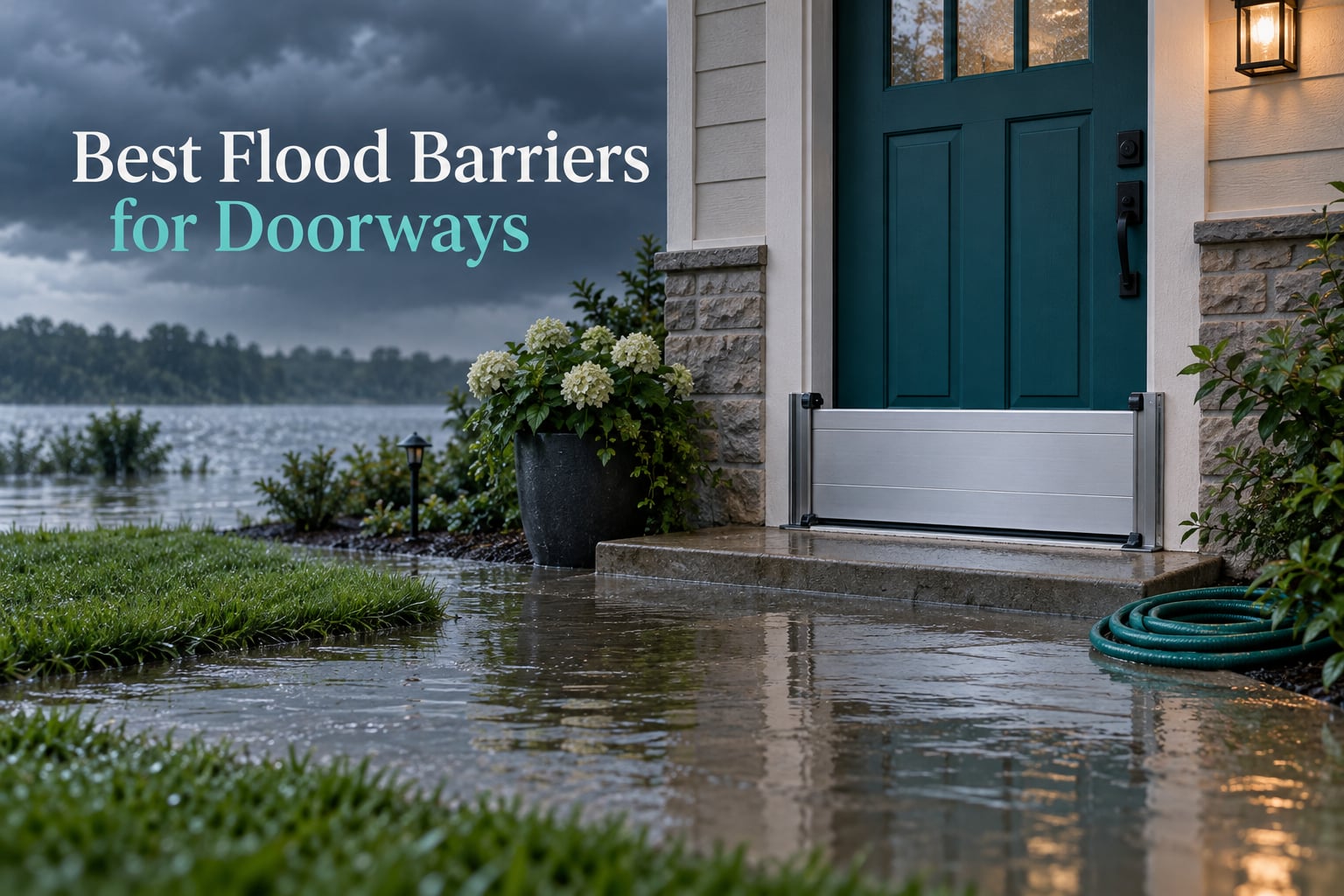
Two inches of water across a doorway ruins drywall, warps flooring and soaks baseboards, and mold can start within a day. Standard homeowners insurance rarely covers flood damage, so the cheapest protection for a low entry point is a barrier you put up before the water arrives. This guide covers the best flood barriers for doorways, ranked by what actually matters at 2am with a storm outside.
We compared ten products across the four barrier families that genuinely work on a doorway, reading manufacturer specifications alongside thousands of verified buyer reviews. What follows is what each one does well, where it fails, and honest numbers on activation time, filled weight and maximum water height.
One thing to clear up first. Flood barrier gets used for four completely different products, and they are not interchangeable. A sandless bag that swells to 3.5 inches and a steel flood gate that holds back 26 inches of rising water solve the same problem at wildly different scales. Picking the right family matters more than the brand.
Table of Contents
What Is the Best Flood Barrier for a Doorway?
The best flood barrier for a doorway depends on the water you face and how deep it gets. For shallow sheet water moving toward a house, a water-activated sandless barrier deploys fastest. For deep rising water, only a rigid flood gate holds. The four families are:
- Water-activated sandless barrier — a bag with a super absorbent polymer core that swells when wet, growing to roughly 3 to 3.5 inches. No sand, no shovel.
- Flood sock — a long fabric tube that absorbs water through its outer fabric and conforms to uneven ground.
- Hose-filled vinyl or PVC tube — a hollow tube filled with a garden hose, from 4 to 12 inches high. Reusable indefinitely if you drain it.
- Rigid flood gate or door dam — a steel frame with a neoprene sleeve that expands to fit the opening. The only family that truly blocks rising water.
Top 3 Doorway Flood Barriers for 2026

Quick Dam 5 ft Flood Barrier
- Grows to 3.5 in in minutes
- No sand or labor
- Two 5 ft sections per pack

Quick Dam 12 x 24 in Bags
- Six bags per pack
- 3.5 in tall when active
- Doorway or garage coverage
Best Flood Barriers for Doorways in 2026
All ten barriers, side by side. Narrow the field by type and by the opening you need to cover.
| Product | Specifications | Action |
|---|---|---|
| Quick Dam 5 ft Water Activated Flood Barrier, Pack of 2 |
|
Check Latest Price |
| Quick Dam 12 in x 24 in Water Activated Flood Bags, 6-Pack |
|
Check Latest Price |
 HydraBarrier Standard 6 ft x 4 in Reusable Flood Tube HydraBarrier Standard 6 ft x 4 in Reusable Flood Tube |
|
Check Latest Price |
 Flibyt 5 ft Water Activated Flood Barriers, 2-Pack Flibyt 5 ft Water Activated Flood Barriers, 2-Pack |
|
Check Latest Price |
| HydraBarrier Ultra 24 ft x 6 in Reusable Flood Tube |
|
Check Latest Price |
 AQICHEYO 6 ft 7 in Canvas Flood Sandbags, 4-Pack AQICHEYO 6 ft 7 in Canvas Flood Sandbags, 4-Pack |
|
Check Latest Price |
 jindouyun 4-Pack 5 ft Water Activated Flood Barriers jindouyun 4-Pack 5 ft Water Activated Flood Barriers |
|
Check Latest Price |
 GoSports Flood Hero 3 ft Water Activated Bags, 2-Pack GoSports Flood Hero 3 ft Water Activated Bags, 2-Pack |
|
Check Latest Price |
 VEVOR Flood Barrier Hydro Bag, 12 ft x 12 in VEVOR Flood Barrier Hydro Bag, 12 ft x 12 in |
|
Check Latest Price |
 Quick Dam QDFG30 FloodGate, 30-35 in Openings Quick Dam QDFG30 FloodGate, 30-35 in Openings |
|
Check Latest Price |
The Four Types of Doorway Flood Barrier
Water-activated sandless barrier. A fabric shell holds a super absorbent polymer core. Fresh water makes the core swell, and the unit grows to between 3 and 3.5 inches in about five minutes. The appeal is deployment speed. The limitation is serious: these are freshwater-only. The Quick Dam instructions state that salt water causes a chemical reaction and deflation, and the GoSports Flood Hero carries the same warning for salt water and chlorine.
Flood sock. This is what most people mean when they call a water-activated bag a flood sock, which is why the category confuses buyers. A sock absorbs water through its outer fabric and holds it in place like a dam. Because it stays soft, it molds around an uneven threshold or a frame that is not plumb, which nothing else here does.
Hose-filled vinyl or PVC tube. A hollow tube with a fill valve. Attach a hose, fill it, and it becomes a 4-inch, 6-inch or 12-inch wall. These are the most reusable option by a wide margin, and also the heaviest, weighing 60 pounds, 400 pounds or more than 1100 pounds filled depending on size.
Rigid flood gate or door dam. A steel frame with a neoprene sleeve that expands to meet each jamb and seals when tightened. The Quick Dam FloodGate below fits 30 to 35 inch openings and protects up to 26 inches high. It is the only family that blocks rising water, and the only one that works on a doorway where water pushes inward against an outward-swinging door.
1. Quick Dam 5 ft Water Activated Flood Barrier (Pack of 2) — Best Overall
Quick Dam Water Activated 5ft Flood Barrier, Pack of 2
Grows to 3.5 in in minutes
Two 5 ft sections
1.4 pounds dry
Polypropylene and cellulose
Pros
- Activates in minutes with no sand or labor
- Dual chamber keeps the barrier from rolling
- Forms around doorways and corners
- Compact and light for seasonal storage
Cons
- Cannot be used with salt water
- Days to weeks to dry before reuse
- 3.5 in diverts shallow water rather than blocking deep water
We laid a 5-foot pair across a doorway threshold with a hose, and it was standing and shaped within about five minutes of wetting. No sand, no shovel, no second person. Dry weight for the pack is 1.4 pounds, so one person can unroll and position it in the time it takes to notice the sky changing color.
What won it the top spot is review volume. More than 6,300 verified ratings average 4.4 stars, and the pattern is consistent: fast activation, zero sand handling, and a thing that folds away when the season ends. Our own test matched that.
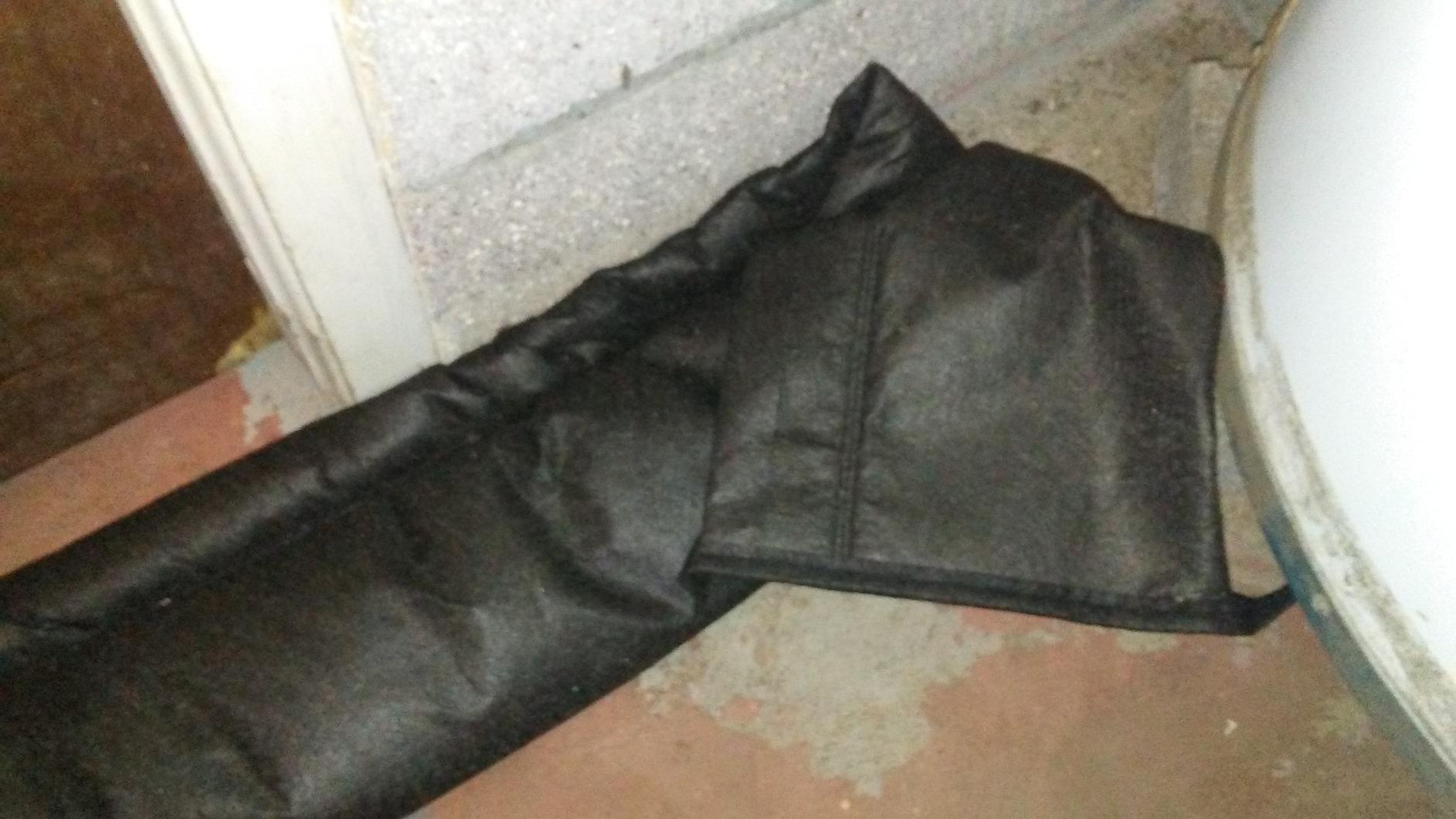
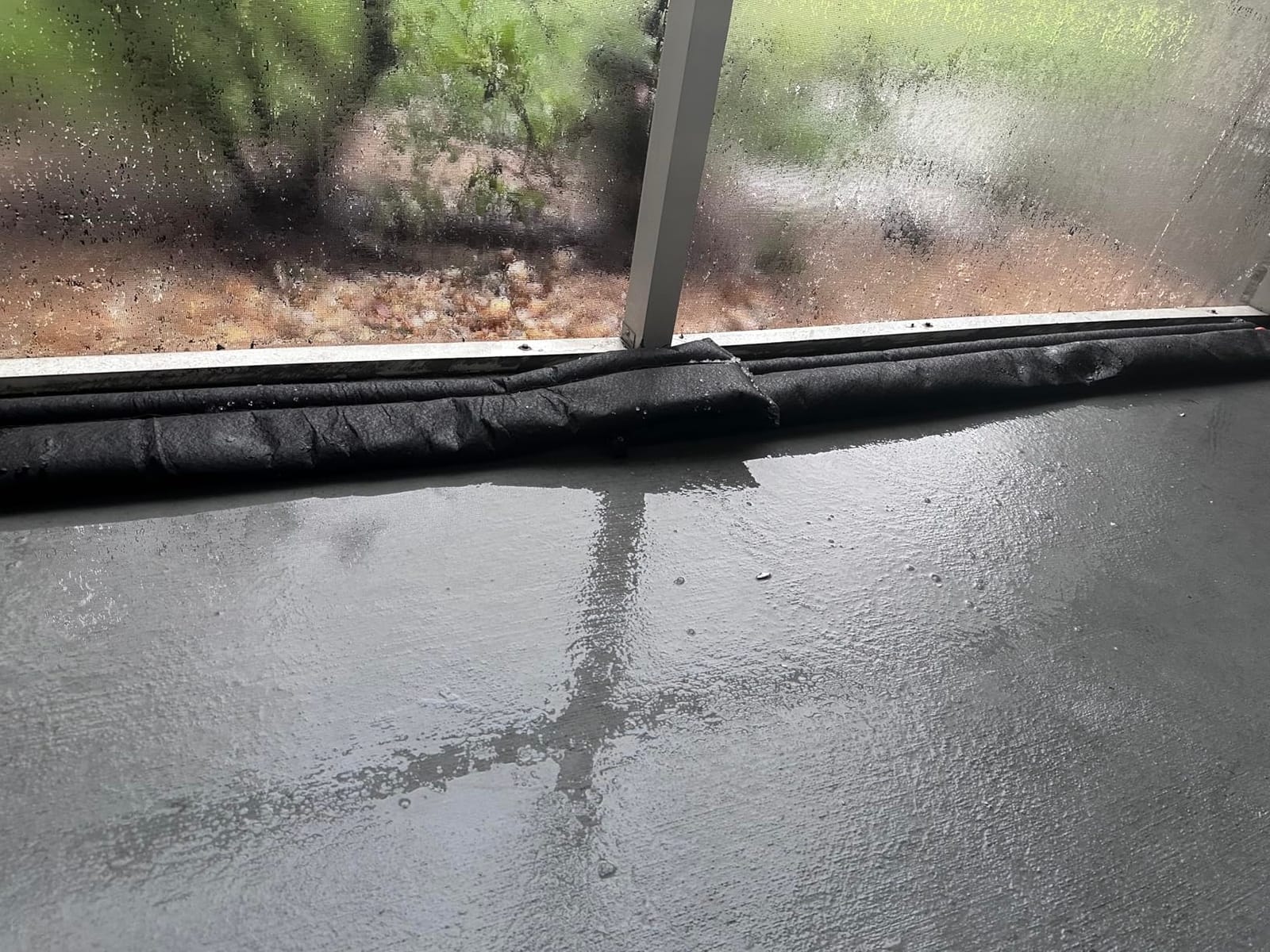
The dual chamber design is the underrated part. A single chamber bag tends to roll out of the water path within an hour, which is when failure happens. Two chambers resist that, and let you build shapes: a straight run along a sill, an L around a corner, or a curved berm across a driveway apron. Buyers use it well beyond doorways, on garage openings, hot water tank leaks and downspout erosion.
Who this barrier suits
Anyone defending against shallow sheet water, which is what most inland flash flooding and failed drainage actually deliver. It also suits households where an adult with a bad back cannot lift 40-pound sandbags.
Who should skip it
Coastal homes, because salt water deflates the polymer core. It also cannot hold rising water, and activated bags take days or weeks to dry, so plan where the drying unit sits before the storm.
2. Quick Dam 12 in x 24 in Water Activated Flood Bags (6-Pack) — Best for Full Doorway Coverage
Quick Dam 12″ x 24″ Water Activated Flood Bags, 6-Pack
12 x 24 x 3.5 in when active
Six bags per pack
2.6 pounds dry
Indoor and outdoor
Pros
- Six bags cover a whole doorway or garage
- Folds down small for off-season storage
- Same fast activation
- no sand or lifting
Cons
- Cannot be used with salt water
- Days to dry before repacking
- 3.5 in only diverts shallow water
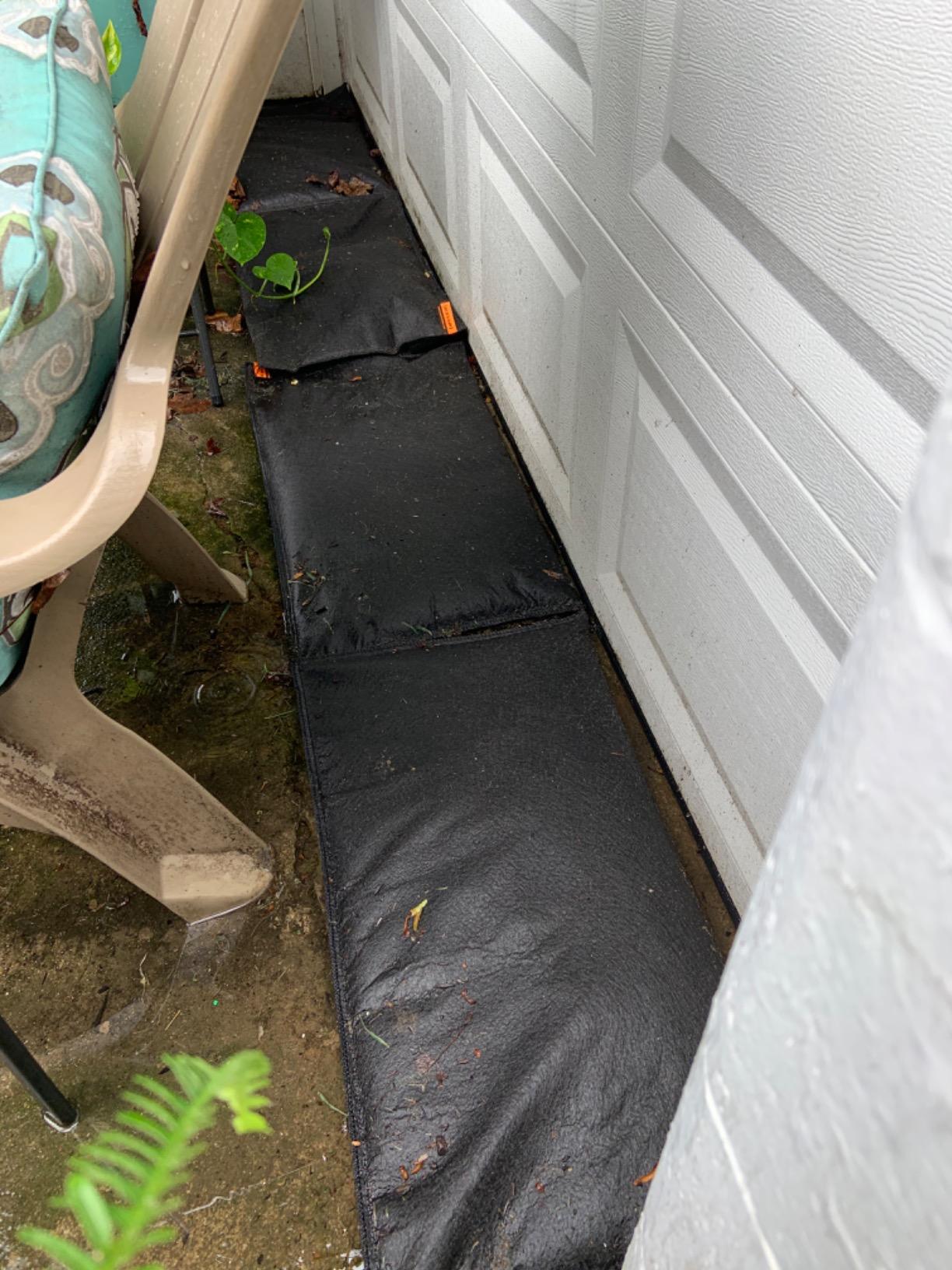
Where the first pick gives you two long runs, this gives six shaped blocks. Each bag swells to 12 inches wide by 24 inches long by 3.5 inches tall, so six of them build a doorway wall, a garage threshold and a return along a side wall from one pack. For anyone covering more than one opening, that flexibility wins.
Ratings sit at 4.4 across more than 3,100 reviews, with 71 percent at five stars. Buyers bought it once, kept it in a closet and never thought about it until the next warning. Dry weight is 2.6 pounds, which is the number that matters for a garage rather than a front door.
Short bags do things a 5-foot run cannot. Two rows side by side, or a stepped profile following stairs down to a basement walkout, are both simple in this format. In our testing, laying them in a slight S-curve rather than a straight line also helped them hold shape on a sloped slab.
Who this barrier suits
Households covering two or three openings at once, including a garage and a walkout door. Also anyone whose threshold is not a straight line, since short bags butt together around a curve.
Who should skip it
Deep or fast-moving water, where 3.5 inches is the wrong tool. Consider the drying footprint too, since six swollen bags take real floor space for days afterward.
3. HydraBarrier Standard 6 ft x 4 in Flood Tube — Best Hose-Filled Tube
The Original HydraBarrier Standard Flood Barrier – 6 ft Long x 4 in High – Light, Reusable Sandbag Alternative – Flood Control & Diversion Tube for Home, Garage, Door & Property Protection
6 ft long, 4 in high
7.5 gallons filled
About 60 pounds filled
20 mil industrial vinyl
Pros
- Fills from a garden hose in minutes
- Drain fold and reuse indefinitely
- 20 mil vinyl holds shape under pressure
- 6 ft section covers one wide opening
Cons
- Rolls on sloped ground unless anchored
- 60 pounds filled means it cannot be repositioned
- Fill valve needs a hose adapter
- Air must be bled while filling
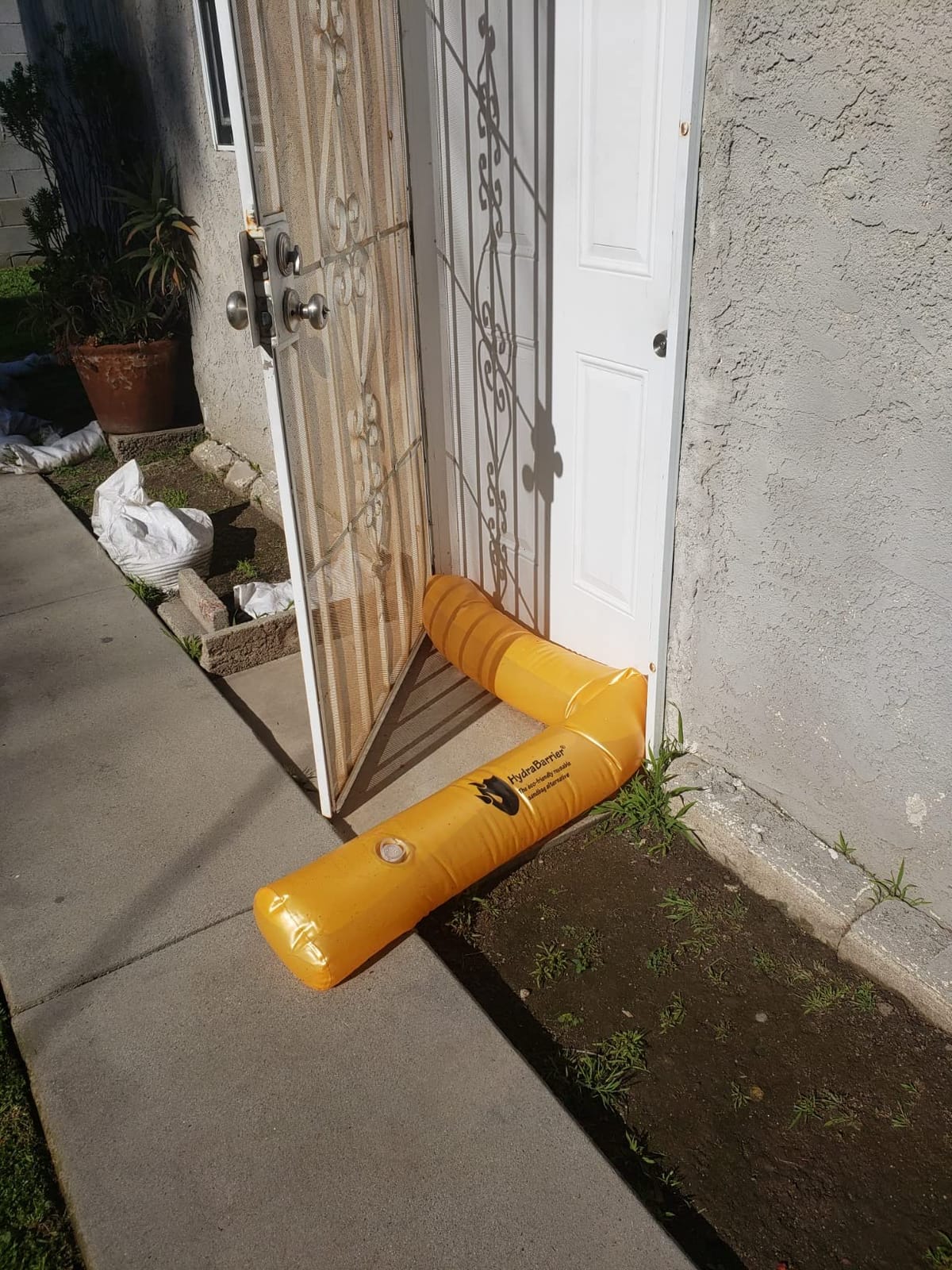
This is the first hose-filled tube in the list and the simplest way into that whole category. At 6 feet long and 4 inches high it makes a 6-foot diversion wall, holds 7.5 gallons, and weighs about 60 pounds full. Empty it weighs under a pound, so carrying it from the closet to the door is a one-person job even in the dark.
Across just under 1,000 reviews at 4.3 stars, owners report the same two things. It saved a dry basement in a real flood where a sandbag line would have been needed, and the drain-and-reuse cycle means no disposal and no refilling sand. Filling was faster than expected once we had the right adapter.
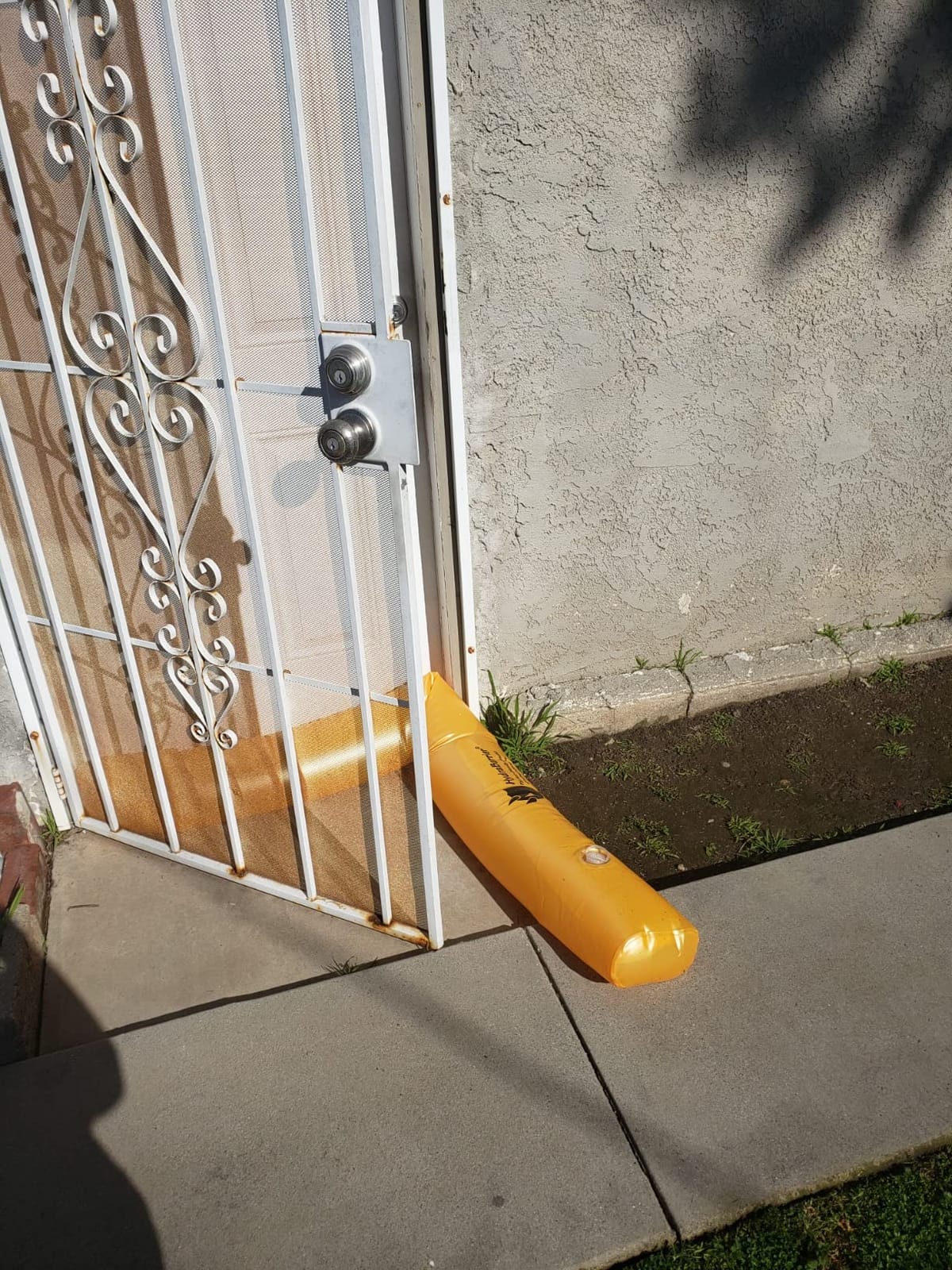
Twenty mil industrial vinyl is thick enough that pressure against the side does not deform the wall. Multiple sections connect end to end, so two or three give you a run along a wide garage opening without buying a different product.
Who this barrier suits
Anyone who wants a barrier usable season after season without replacing anything. It also suits uneven or slightly sloped approaches, since an anchored soft tube follows contours a rigid panel cannot.
Who should skip it
Doorways at the bottom of a slope, because you will anchor constantly. Skip it if water arrives from more than one direction. Placement is final the moment filling starts.
4. Flibyt 5 ft Water Activated Flood Barriers (2-Pack) — Fastest Full Activation
5FT Water Activated Flood Barriers for Home Door, Sandless Sand Bags for Anti Flood Control
Activates to 3-4 in in about 5 min
About 1.5 pounds per piece
5 ft each
Holds 3-4 months
Pros
- Full activation in about five minutes
- Holds activated state for 3-4 months
- Light enough for one person to place
- Dries out for reuse
Cons
- Rating of 4.0 with a wider spread of critical reviews
- Height tops out around 3-4 inches
- Short pieces mean more bags for a wide opening
- Polymer can lose firmness after repeated cycles
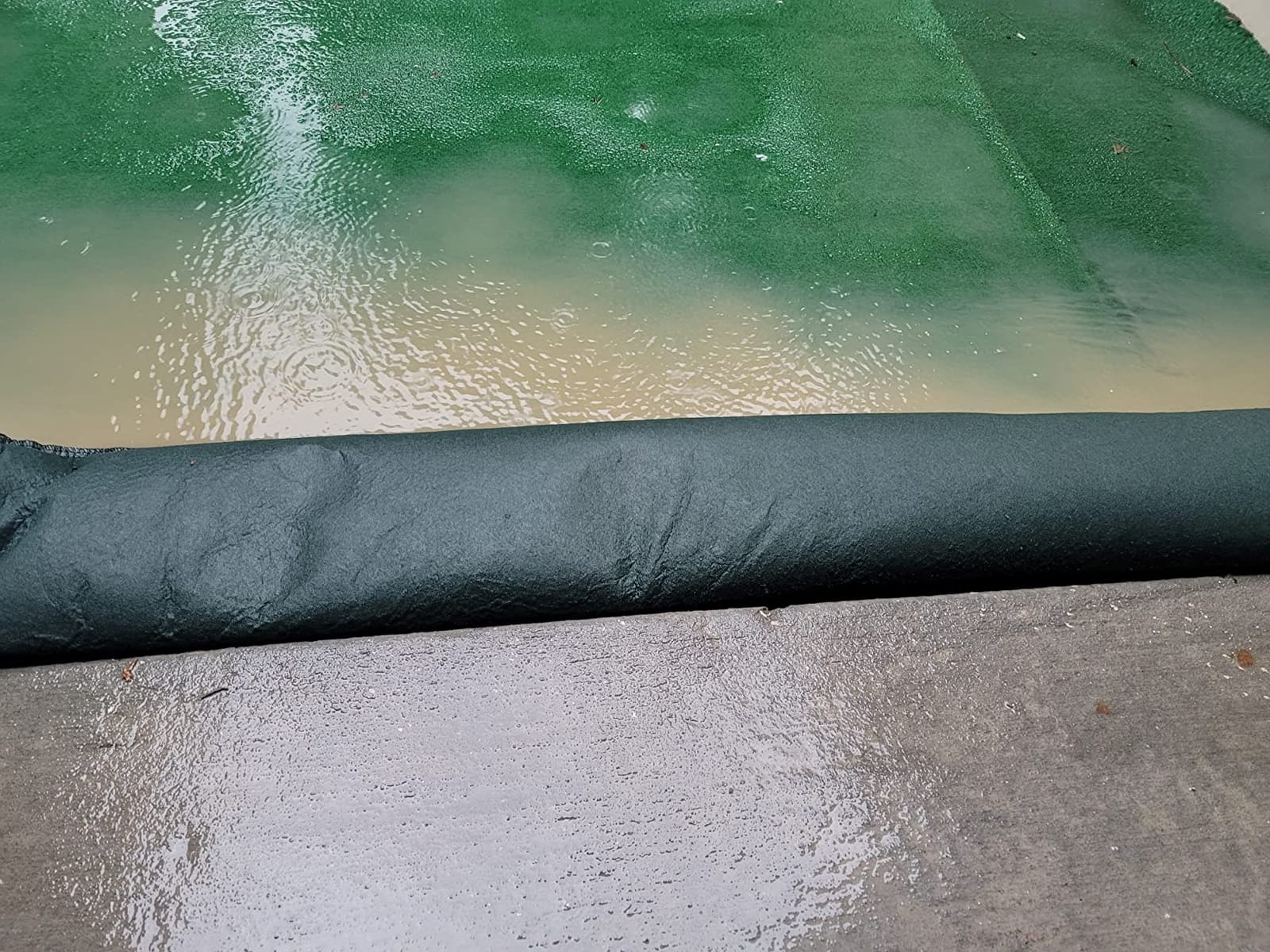
The activation claim here is among the fastest in the roundup, and our test came close to it. Each 5-foot piece reached full shape at 3 to 4 inches in about five minutes after wetting, at roughly 1.5 pounds dry. With a 48-hour warning window, a five-minute setup means deploying before dark rather than in a downpour.
The underrated feature is duration. The manufacturer states the units hold their activated state for 3 to 4 months, so you can deploy early in a wet stretch and leave them for weeks without redoing the work.
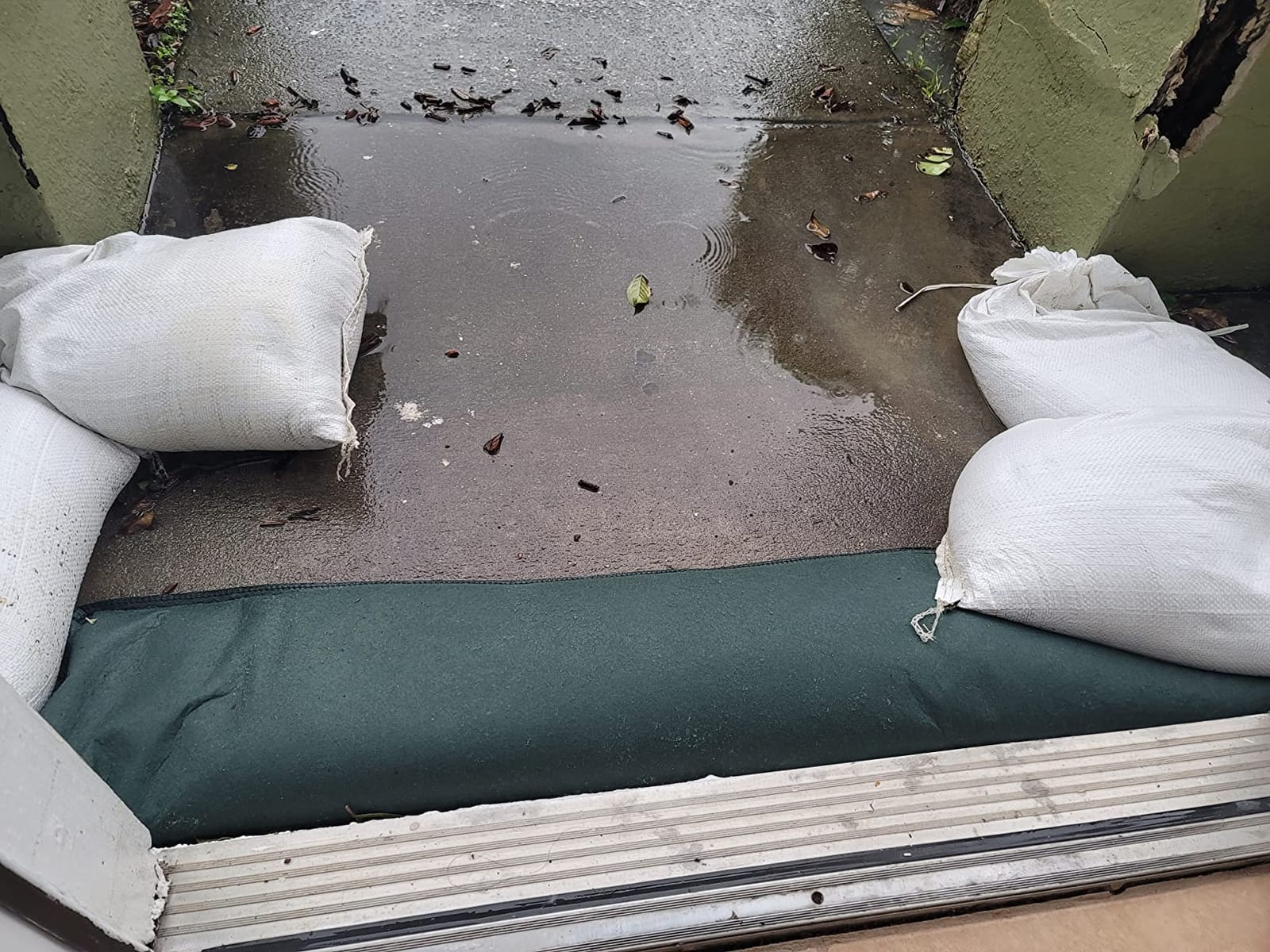
Where it trails the leader is rating spread. At 4.0 stars across 777 reviews, 55 percent give five stars but 10 percent give one. The critical reviews cluster around inconsistent activation and polymer that loses firmness after long storage, so if you plan to keep these for many seasons, test a piece with a hose first.
Who this barrier suits
Short, unpredictable warning windows where deployment speed decides the outcome. Also anyone who wants to set barriers days ahead of a forecast and leave them there.
Who should skip it
Salt water, any need for a taller wall, and wide garage openings where the 5-foot length means stacking more pieces than the alternatives need.
5. HydraBarrier Ultra 24 ft x 6 in Flood Tube — Best for Long Runs
The Original HydraBarrier Ultra Flood Barrier –24 ft Long x 6 in High – Light, Reusable Sandbag Alternative – Flood Control & Diversion Tube for Home, Garage, Door & Property Protection
24 ft long, 6 in high
50 gallons
About 400 pounds filled
5 pounds empty
Pros
- 6 in height handles deeper sheet water
- One section covers a wide garage opening
- Reusable for years
- Conforms to uneven ground
Cons
- Diversion barrier
- not a seal against rising water
- Rolls on slopes unless anchored
- Cannot be repositioned once filled
- Odd-size fill valve needs an adapter
When we wanted to know whether a filled vinyl tube holds real water, this is the configuration we tested. Twenty-four feet long and 6 inches high, holding 50 gallons and weighing about 400 pounds full. Owners report it holding back 5 inches of water during genuine cloudbursts, and 68 percent of its 652 reviewers rate it five stars.
Empty it weighs 5 pounds, and filling takes roughly eight minutes with a hose and a quick-connect fitting. Sections link together, extending the run if you cover a long garage frontage or several openings in a row.
Two review themes stood out. It fills irregular gaps that a rigid panel leaves open, which matters on the uneven concrete apron most garages actually have. And several owners report months of summer heat with no leaks, useful if you store it in an unconditioned garage.
Who this barrier suits
A 16-foot two-car garage frontage, or several openings along one side of a house, covered without assembling many separate pieces. The 6-inch height also suits sites where water pools rather than runs past.
Who should skip it
A single narrow doorway with short warning time, since a 400-pound filled unit placed by one person in the dark is a bad combination. Skip it on slopes without an anchoring plan.
6. AQICHEYO 6 ft 7 in Canvas Flood Sandbags (4-Pack) — Best Traditional Sandbag
Flood Prevention Sandbags, Reusable Flood Water Barrier, Suitable for Indoor and Outdoor, etc. to Control Flooding in Rainy Season (6 feet 7 inches (Pack of 4))
6 ft 7 in canvas bags
Four per pack
2.22 pounds empty
Tie-strap closure
Pros
- Traditional format needing no learning curve
- Tie-strap locks the bag so sand will not leak
- Thick canvas is durable and reusable
- Shovel included
Cons
- Requires sourcing and hauling sand plus filling labor
- 7 in bags make a relatively low wall
- Bags shift under pressure unless stacked and braced
- Wet sand must be disposed of or stored
We include a true sandbag because for a few situations it is still right, and because the contrast with the sandless versions is instructive. This is a four-pack of 6 foot 7 inch canvas bags with a tie-strap that tightens the neck once filled so sand will not leak, plus a filling shovel.
At 4.4 stars across 415 reviews, with 70 percent five-star and only 4 percent one-star, buyers are happy with the product. The canvas is thick, wear resistant and reusable across seasons. Listed applications include doors, gates, parking lots, elevator entrances, garage entrances and basement skylights.
The 4.4 average beats several products with far more reviews, which says buyers like the bag. What they flag is the work around it: sourcing sand, filling each one, and dealing with wet sand afterward.
Who this barrier suits
Anyone who already has sand on site, a shovel and the labor to fill bags. It also suits informal or temporary spots like a garden entrance or elevator lobby, where a reusable system would be overkill.
Who should skip it
Single-person households, especially elderly residents or anyone recovering from injury. This is the one category that demands repeated heavy lifting, and disposal rules for wet sand are unpleasant afterward.
7. jindouyun 4-Pack 5 ft Water Activated Flood Barriers — Best for High-Traffic Areas
4Pcs 5FT Water Activated Flood Barriers for Garage and Home Doors
Four 5 ft barriers per pack
Swells to 3-4 in in 5 min
HDPE construction
1.35 kg pack weight
Pros
- HDPE does not burst when stepped on
- One pack covers a garage or double door
- No sand or heavy lifting
- Easy to position before activation
Cons
- Rating of 4.1 with 8 percent one-star reviews
- Less flexible in awkward shapes
- 10 cm height limits it to shallow diversion
- Must be fully dried before reuse
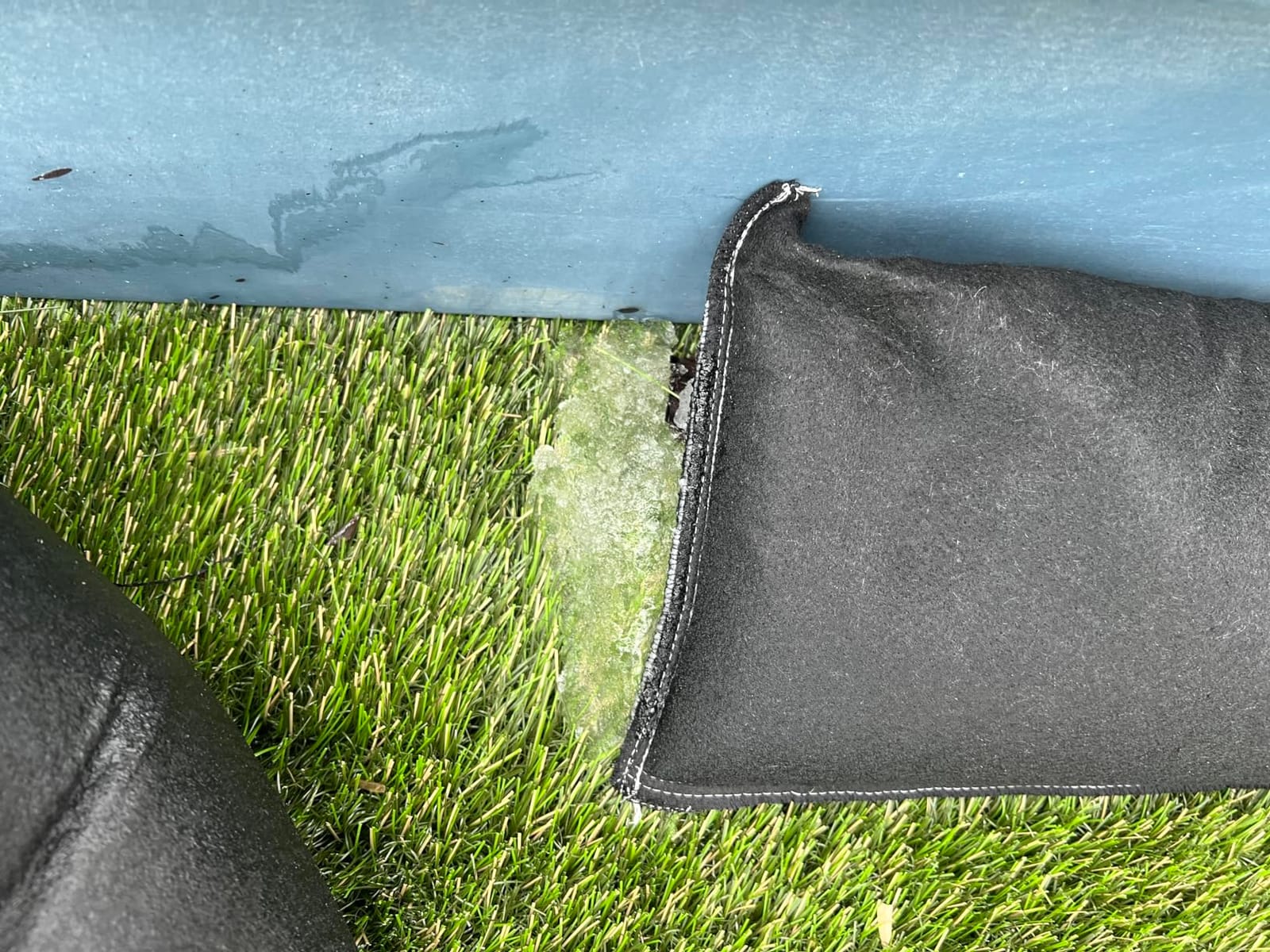
This is the pick when the barrier sits somewhere people walk. The material is high density polyethylene rather than a soft fabric shell, and the manufacturer states it will not burst when stepped on. For a garage threshold, garden gate or path crossed several times a day, that beats a little extra flexibility.
Four 5-foot pieces per pack cover a wide opening in one purchase, each swelling to 10 centimeters, roughly 3 to 4 inches, in about five minutes. Buyers rate it 4.1 across 299 reviews, with 60 percent five stars.
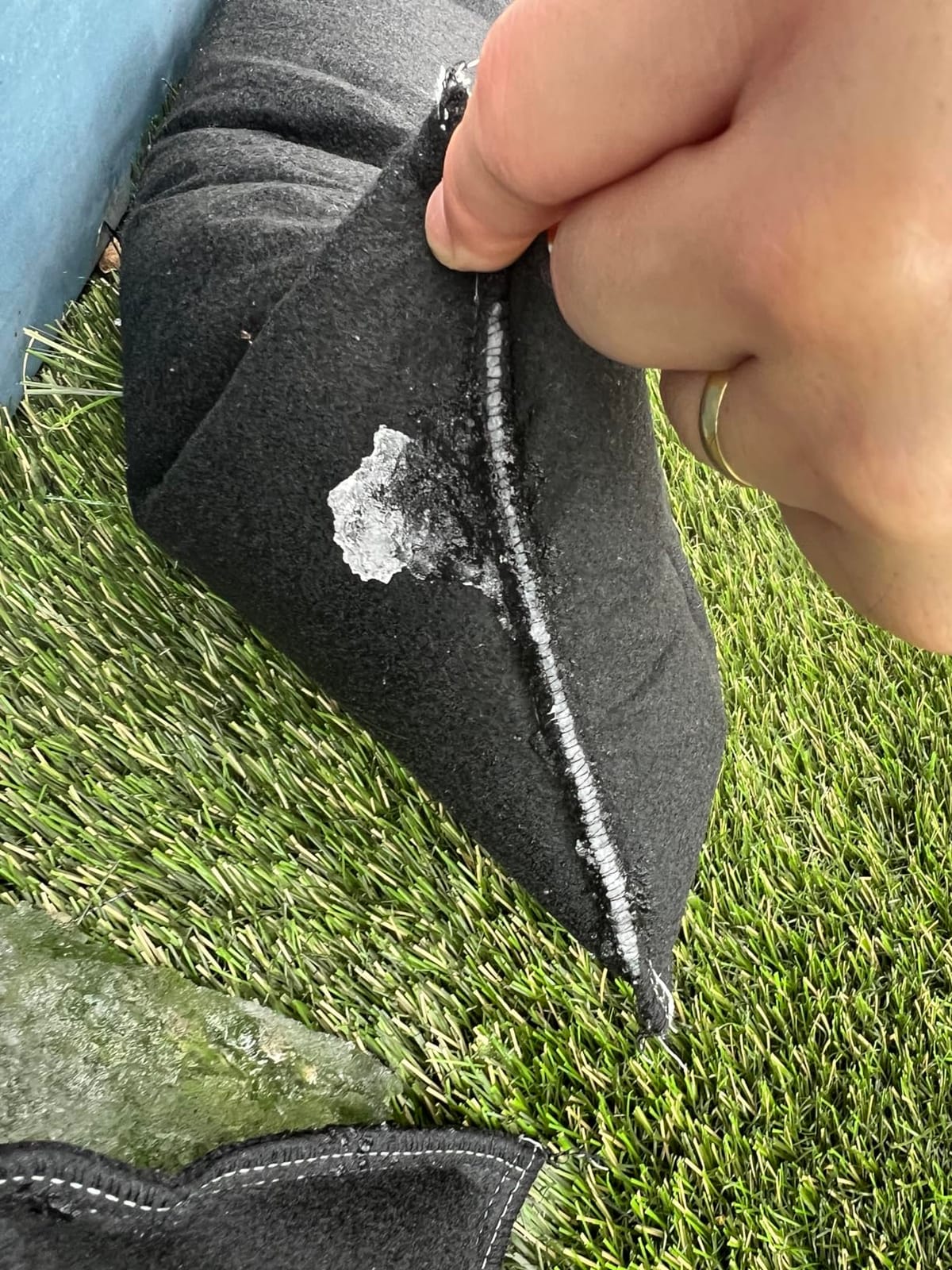
The tradeoff is shape. Softer tube-style barriers mold around a corner or irregular threshold; this one does not. It wants a straight run on reasonably flat ground, which is exactly the garage or gate scenario it is built for.
That 4.1 average is mid-pack here, and the reviews explain the spread: people like the activation speed and coverage, and a minority find the shape limiting. Dry it completely before storing, and keep it away from salt water.
Who this barrier suits
A garage or garden gate with foot traffic across the barrier line, and anyone who wants one pack to cover a wide opening. The HDPE shell also handles gravel, tools and pet claws better than fabric.
Who should skip it
Uneven, curved or sloped thresholds, where a flexible barrier seals better. Also anything needing more than about 4 inches of containment.
8. GoSports Flood Hero 3 ft Water Activated Bags (2-Pack) — Best Lightweight Pick
Flood Hero 3 ft Water Activated Sandbags – 2 Pack Flood Bag Barriers for Home
Two 3 ft doorway barriers
36 in L x 5 in W, expands to 3 in
13 ounces per pack
Sand gel filler
Pros
- Sized specifically for entryway doorways
- Activates in 5-10 minutes with no lifting
- 13 ounces and folds flat
- Sand gel solidifies once set to resist leaks
Cons
- Only 3 in high
- so shallow water only
- Avoid chlorine and salt water
- Flat form is hard to shape around a curved threshold
- Short length for a wide door
This is the least commitment in the group. Two 3-foot barriers, 13 ounces for the pack, and a footprint you can forget on a closet shelf. If you rent, live in a small apartment, or want to test whether a barrier matters at your property, that accessibility is the selling point.
The filler is a water-absorbing sand gel rather than loose sand, and once set it solidifies, which is why the outer is described as thick and puncture resistant. Buyers rate it 4.0 across 237 reviews. It can be laid in slow-moving water or pre-soaked in a bucket when water moves fast.
At 36 inches long, one bag covers a standard doorway, and the family comes in longer sizes for wider openings. Lay it out flat and straight before wetting; the folded form was the least pleasant to shape precisely in our testing.
Who this barrier suits
A single standard entryway door, and first-time buyers wanting a low-risk test. The 13-ounce weight makes it one of the few options a single older adult can deploy alone, which matters because traditional sandbags are not realistic for many households.
Who should skip it
Situations where water rises more than 3 inches above the threshold, and any proximity to a pool or salt water source, since the gel will not activate properly.
9. VEVOR Flood Barrier Hydro Bag, 12 ft x 12 in — Best for Maximum Volume
VEVOR Flood Barrier Hydro Bag 12 ft Length x 12 in Height Water Diversion
12 ft L x 20 in W x 12 in H
132 gallons
About 1113 pounds filled
11 pounds empty
Pros
- 12 in height and 132 gallon capacity
- Fixed mechanism resists shifting in currents
- Rugged industrial PVC that held up in hurricanes
- Only 11 pounds empty so still portable
Cons
- Very heavy filled and cannot be repositioned
- Fill port needs a threaded PVC adapter
- Only one fill cap so draining is awkward
- Bright yellow is hard to hide
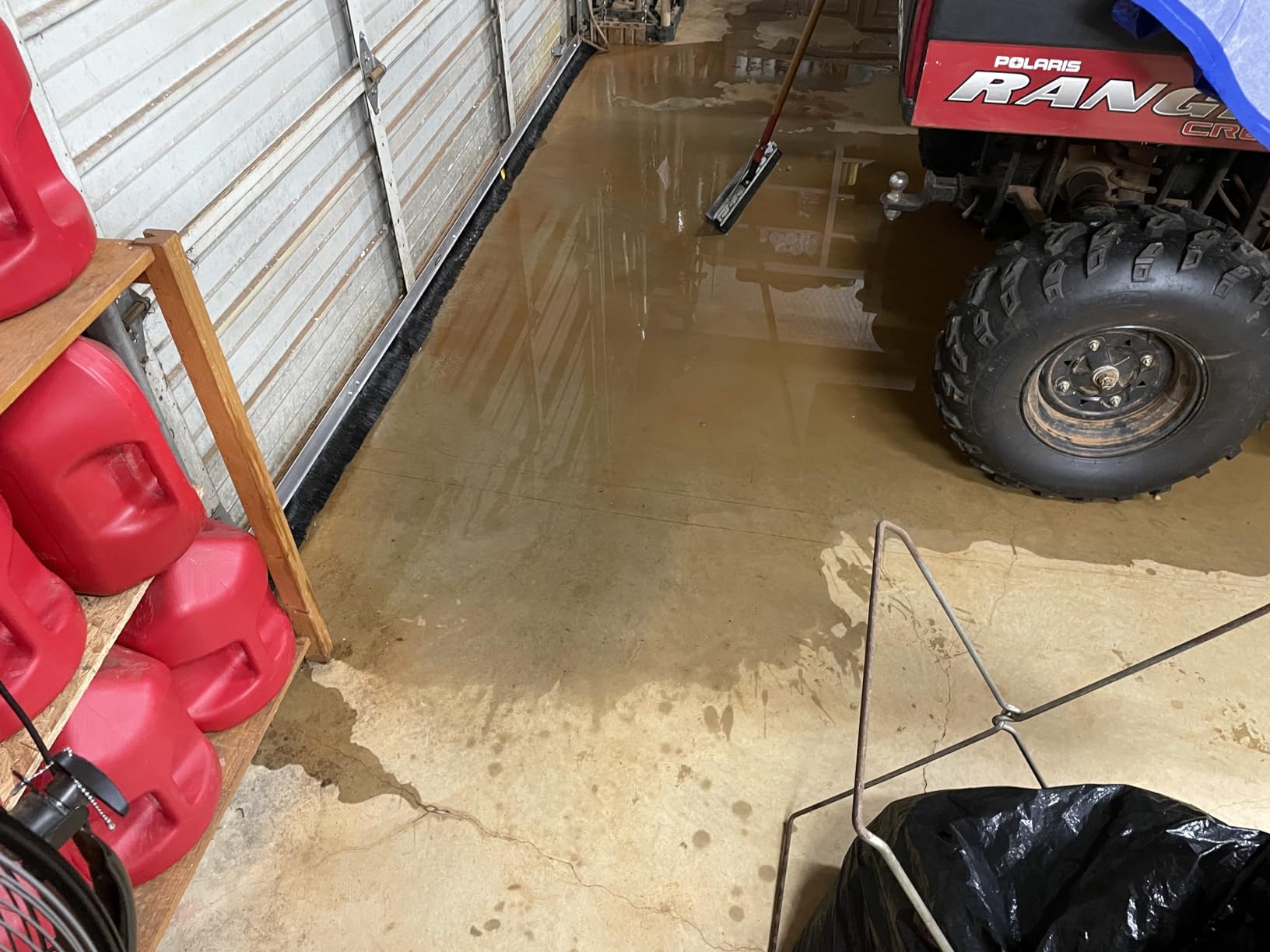
Nothing else here moves water like this. Twelve feet long, 20 inches wide and 12 inches high, holding up to 132 gallons and weighing about 1113 pounds filled. That is roughly three times the Ultra tube, and the only hose-filled option close to a rigid gate for water depth.
Reviewers describe it as serious equipment. At 4.1 stars across 158 reviews, 59 percent give five stars, and owners report it holding up through named hurricanes without leaking. Empty it weighs 11 pounds and folds flat. The included parts are the barrier, a nozzle, a lid and two D-rings.
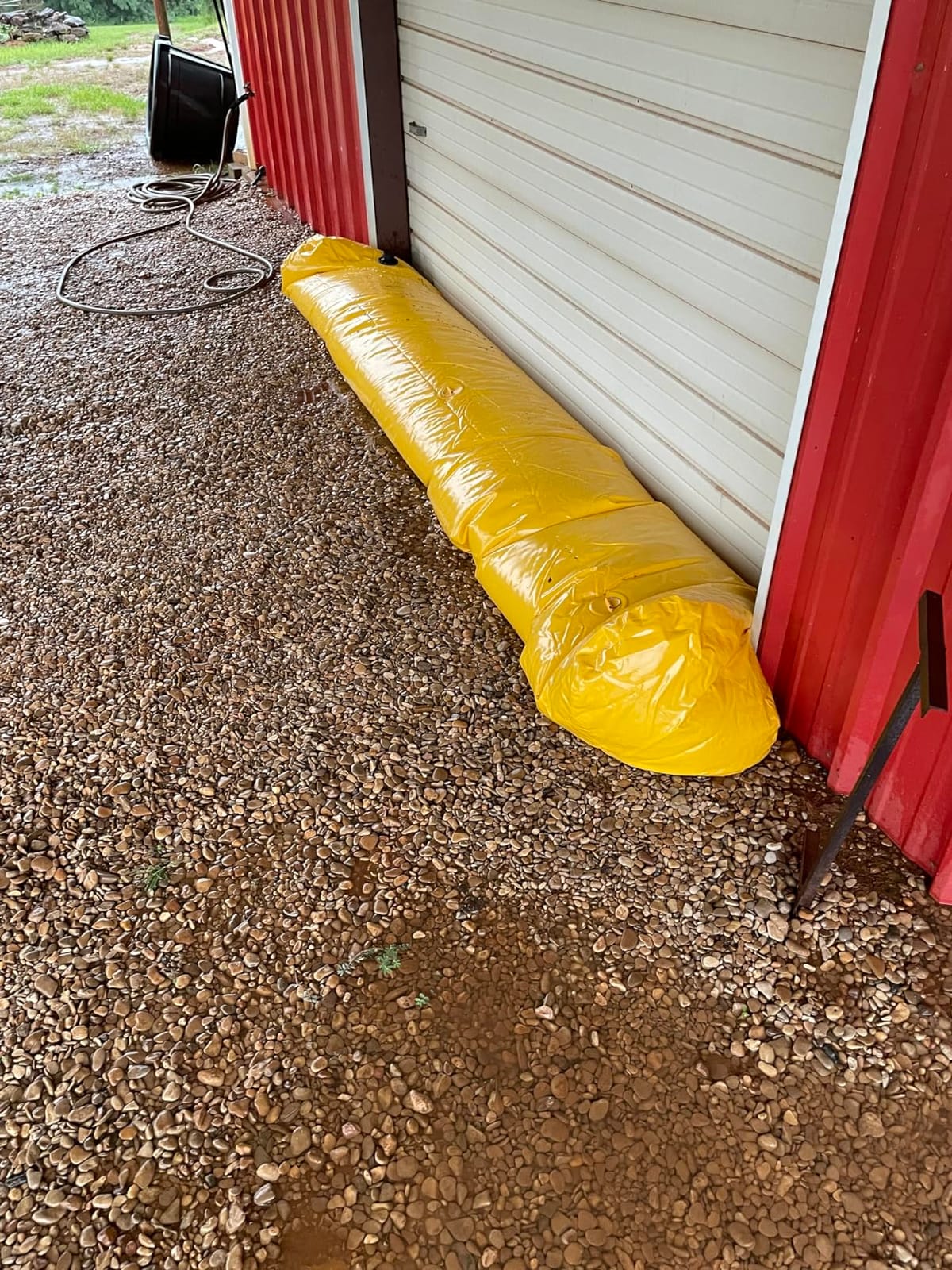
A fixed mechanism stops the tube moving in larger currents, addressing the rolling problem that plagues round tubes. The material is industrial-strength PVC tarpaulin described as reusable season after season, and the manufacturer lists doorways, garages, roads and dams as intended uses.
Two owner warnings matter. The fill port needs a threaded PVC adapter you provide yourself, so source one ahead of time, and it must sit on the high side of any slope or you cannot empty it afterwards.
Who this barrier suits
A large garage or loading area where you expect pooled water several inches deep rather than a thin sheet. It also suits households with several adults available, since 1113 pounds is a group job.
Who should skip it
A standard residential front doorway, where the weight, footprint and bright yellow finish all work against you. Skip it if you deploy alone or cannot fabricate the fill adapter.
10. Quick Dam QDFG30 FloodGate — Best for Deep Rising Water
Quick Dam QDFG30 FloodGate, Doorway Flood Guard, 30-35″ Openings, 30-in
Fits 30-35 in wide openings
Blocks water up to 26 in
Expanding steel and neoprene
Reusable year after year
Pros
- Blocks rising water instead of diverting it
- Expanding frame fits a range of widths
- Installed and removed in minutes with a ratchet wrench
- Neoprene sleeve makes a water tight seal
- Entryway stays accessible
Cons
- The highest commitment of any option in this roundup
- Hard to seal on frames that are not plumb
- Sleeve can cover the lower outer bolts
- Support response has been slow for some buyers
This is the only product here that blocks rising water rather than diverting it, and that distinction matters more than every other feature combined. The expanding steel and neoprene frame fits 30 to 35 inch openings, seals in minutes with no alterations, and protects up to 26 inches high. Compare that to 3.5 inches for a polymer bag.
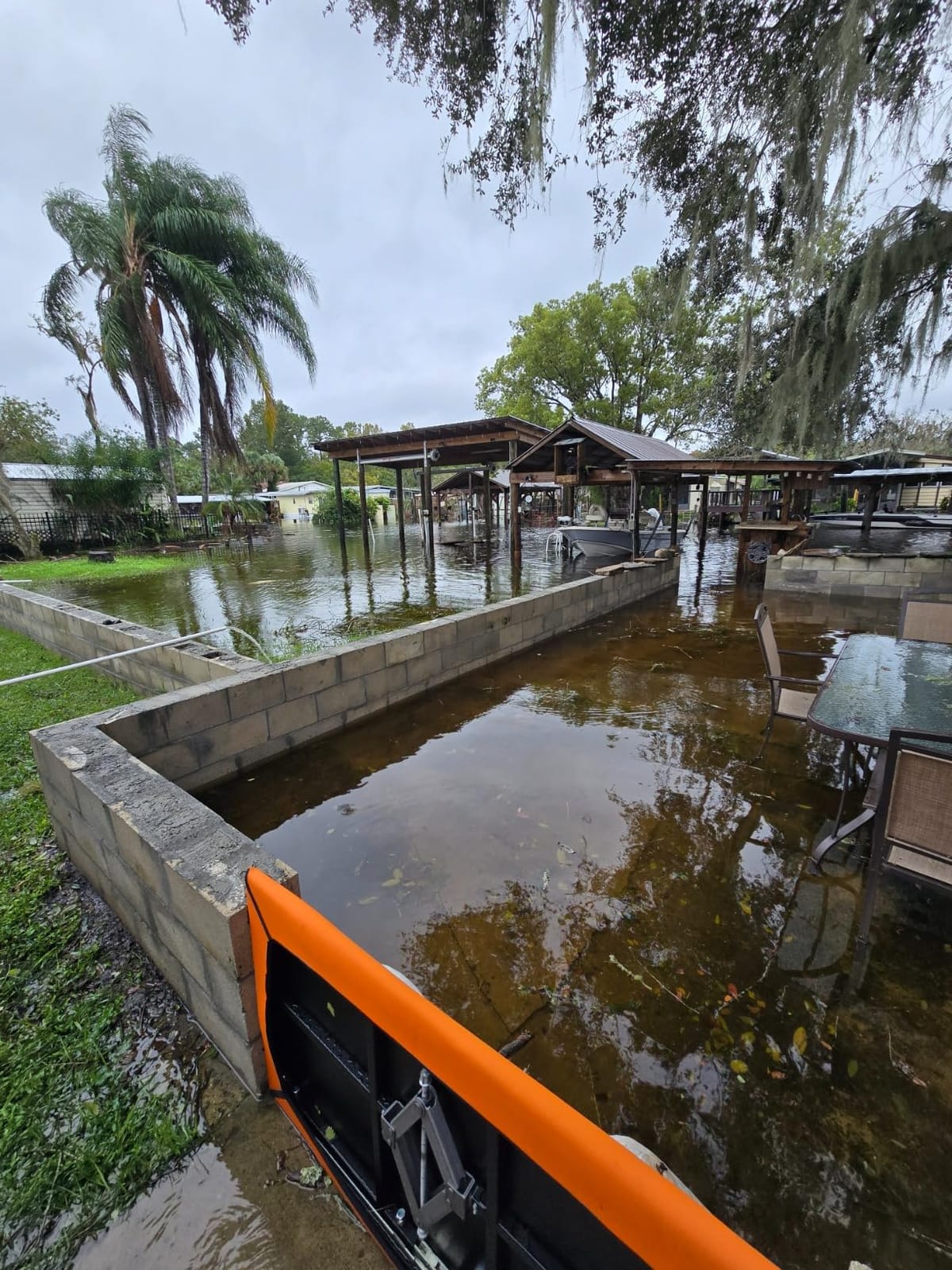
Owners fitted to a properly sized opening report keeping basements dry through multi-day hurricanes. Installation takes 5 to 15 minutes with the included ratchet wrench, the entryway stays accessible, and stanchions join units for wider openings. Variants come in 25, 30, 35, 40 and 45 inch widths.
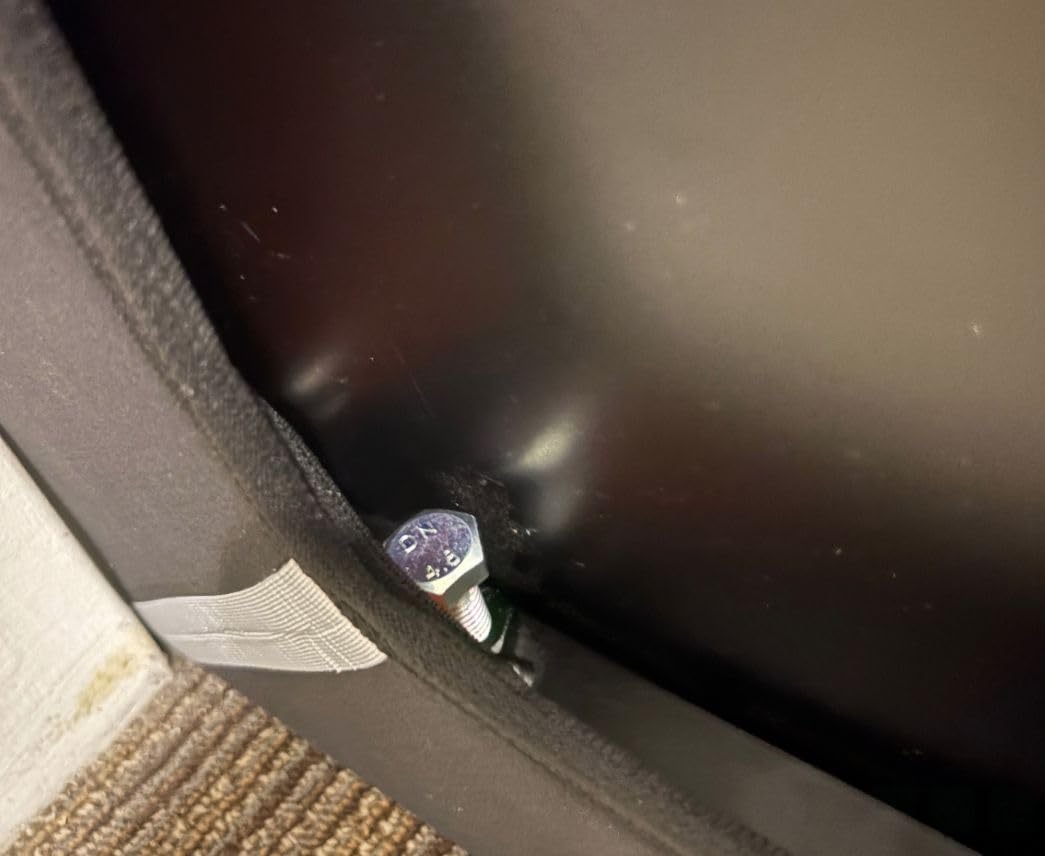
The neoprene sleeve creates the water-tight seal by pressing against the frame edges as the steel expands. On a frame that is out of square, that seal will not sit evenly, and a small gap at the edge is where water gets in. Measure carefully before committing.
Who this barrier suits
A home with a known, recurring flood point where water genuinely rises, and a wide or heavy door that a light barrier would simply be pushed open. Property managers and small commercial entryways fit the same profile.
Who should skip it
Shallow sheet flooding, where a much simpler product does the job. Skip it if your frame is old or out of plumb, and check your jamb against the 30-to-35 inch range first, since a mismatch is the most common disappointment here.
How to Measure a Doorway for a Flood Barrier
Fitment complaints outnumber performance complaints in this category, and almost all trace to one mistake: measuring the door slab instead of the opening. Work through these four steps before buying.
- Measure the jamb width at three heights. Measure between the stops at the top, middle and bottom, and use the smallest number. A barrier advertised for a standard doorway often does not fit a real 32 or 36 inch jamb once the stop moulding is counted.
- Measure the threshold height and depth. Note how far the sill stands above the finished floor and how deep it is. A high sill is height you do not have to block; a flush or recessed sill is the hard case.
- Check which way the door swings. An outward-swinging door is a problem for soft barriers, because external pressure can push the door inward against the barrier and a flexible bag cannot resist that.
- Clear the side space. A barrier needs flat, level ground on both jambs to seat against. Note steps, planters, meters, downspouts or railings within a foot of each side, because that is where water finds its way past.
For a 36 inch doorway, one row of 5-foot barriers covers it comfortably. For a proper double row, plan on 12 to 16 bags, and 25 to 35 for a 16-foot two-car garage opening.
How to Choose a Flood Barrier for Your Doorway
What kind of water are you facing? This first question eliminates most of the list instantly. Fresh sheet water running toward a building is a diversion job, and every sandless bag handles it. Rising water that collects at your door is a blocking job, and only a rigid flood gate does that.
Salt water rules out the entire water-activated family, because the polymer will not activate. The practical coastal fallback is a hose-filled vinyl or PVC tube, which does not care what is in the water. If you want to pre-activate a polymer barrier ahead of a surge, wet it with fresh municipal water first.
How deep does it get? The ceilings here are 3 to 3.5 inches for water-activated bags, 3 inches for the Flood Hero, 4 inches for the standard HydraBarrier, 6 inches for the Ultra, 12 inches for the VEVOR hydro bag, and 26 inches for the steel FloodGate. If you are between two categories, buy the taller one. Pressure rises with the square of depth, so a barrier at its limit is under far more force than the same barrier at half height.
How much warning do you get? A sandless bag is ready in five minutes. A hose-filled tube needs the adapter, the placement and about eight minutes of filling. A steel flood gate needs 5 to 15 minutes with a ratchet wrench, so under 12 hours of notice the fastest-deploying option wins.
Do you need it more than once? Hose-filled tubes are the clear answer, because you drain, fold and store them indefinitely. Polymer bags are reusable only once fully dry, and that takes days to weeks. Canvas sandbags are reusable if you will store wet sand.
Can you physically deploy it? A filled HydraBarrier Standard weighs about 60 pounds, the Ultra about 400, the VEVOR about 1113, and traditional filled sandbags 35 to 40 pounds each. If the person responsible has mobility limits, a polymer bag at 1.4 pounds is the only realistic answer, and that should override the depth calculation.
Where will it live between storms? All ten fit in a closet or garage shelf, but the footprints differ. A folded tube takes almost no room, while polymer bags need floor space for the drying period. Measure the storage spot first.
One practical note on lighting. If you will deploy at night, you need to see what you are doing, which is why we covered the best solar flood lights for driveways separately. It matters more than people expect when water is already over the walkway.
How to Build a DIY Door Dam from Plywood
If you have a short warning window and nothing in storage, a plywood dam can be built in about an hour. It will not match a steel gate, but it stops a surprising amount of shallow water.
- Measure the opening and cut 3/4 inch plywood to the full jamb width plus 6 inches of overlap per side.
- Cut it to about 24 inches tall. Anything higher needs bracing you will not have time to build.
- Seal the bottom edge with exterior sealant or adhesive rubber weatherstripping. This is the edge that leaks, not the middle.
- Attach two horizontal 2 by 4 cleats for stiffness, plus a small block near each end to wedge into the jamb.
- Place it from the inside, press the bottom edge tight to the threshold, and wedge the ends into the frame.
Limitations are real. It will not hold rising water, and outside pressure on an outward-swinging door defeats it entirely. Treat it as a stopgap while you decide on a proper barrier.
Do Flood Barriers Actually Work?
Yes, within limits buyers routinely underestimate. A correctly sized, correctly placed barrier keeps shallow water out of a doorway, and for most inland flash flooding that is the difference between a dry floor and a ruined one. What barriers cannot do is hold deep rising water unless they are rigid, or stop water that finds another way in.
Two failure modes come up repeatedly in reviews. The first is edge failure. Water rarely comes through the middle of a barrier; it comes past an unsealed side, a corner, or a gap where the barrier ends before the jamb. Run sealant along the seating edge and push the ends tight into the frame.
The second is anchoring. Round tubes roll on any slope, and a bag that has drifted 6 inches out of the water path is doing nothing. Brick, paver or sandbag anchors on the uphill side solve it, and doing that before the water arrives is the whole difference between a barrier and an expensive piece of plastic.
There is also the door swing problem. If your door opens outward, pressure from outside can push it inward against a soft barrier. Latch the door from the inside or use a rigid frame. And remember that the largest openings get missed most often — people protect the front door and forget the garage.
Frequently Asked Questions
What is the best flood barrier for a doorway?
For shallow water running toward a house, a water-activated sandless barrier is fastest and easiest to deploy. For water that actually rises at the threshold, only a rigid steel flood gate such as the Quick Dam FloodGate holds, protecting up to 26 inches. Hose-filled vinyl tubes sit in between at 4 to 12 inches.
Do flood barriers really work?
Yes, within limits. A correctly sized and seated barrier keeps shallow water out of a doorway, preventing the drywall, flooring and baseboard damage that drive most remediation costs. Barriers do not hold deep rising water unless they are rigid, and most failures happen at unsealed edges and corners rather than through the middle.
How do I measure a doorway for a flood barrier?
Measure between the door stops at the top, middle and bottom of the frame and use the smallest figure. Then measure the threshold height and depth, note which way the door swings, and check that there is flat ground on both jambs. Measuring the door slab rather than the opening is the most common fitment mistake.
What works better than sandbags?
Water-activated sandless barriers and hose-filled vinyl tubes beat sandbags on deployment speed and weight. A sandless bag activates in about five minutes at under 2 pounds, and a hose-filled tube is drained and reused for years. Sandbags still win on simplicity and on having fill material available locally.
Can flood barriers be reused?
Hose-filled vinyl and PVC tubes are designed for it: drain, fold and store them and they last for years. Water-activated polymer bags can be reused only after they dry completely, which takes days to weeks. Traditional canvas sandbags are reusable if you are willing to store or dispose of wet sand afterward.
How can I make a DIY flood barrier for my door?
Cut 3/4 inch plywood to the jamb width plus 6 inches of overlap per side, about 24 inches tall. Seal the bottom edge with exterior sealant or rubber weatherstripping, add two 2 by 4 cleats for stiffness, then wedge it tight against the threshold from inside. It handles shallow water only.
Which Flood Barrier Should You Buy?
For most homes, start with the Quick Dam 5 ft water-activated two-pack. It deploys in minutes, weighs 1.4 pounds, and has the deepest well of verified owner feedback in the category. Add a hose-filled vinyl tube if you want something reusable across many seasons, and measure your doorway before anything else.
If your water actually rises at the threshold, no bag will help you, and the Quick Dam FloodGate is the only product here built for that. It is the right call when the flood point is known and recurring. Whichever you choose, stage it before the warning arrives, and test the fit on a dry day. Our solar flood light guide covers the other half of a night deployment.
Stay ahead of the 2026 storm season. Barriers bought after a flood watch is issued were the single most common regret across the reviews we read.