
If you are building a kit for a trip or a three-day outage, the filter you choose has to work when your hands are cold and the water is brown. The best emergency water filters for backpacking share a few traits: they run without electricity, they clear protozoa like giardia and cryptosporidium, and they keep working after being dropped. We went through twelve filters rated by actual owners and lined up what each one is genuinely good at.
This list covers personal straws, squeeze filters, gravity systems and one pump unit. Every entry is a microfilter rather than a purifier, which matters: a 0.1 or 0.2 micron hollow-fiber membrane traps bacteria and protozoa but leaves viruses alone. That is the right call for most backcountry water, and the wrong call if you are travelling internationally or drawing from water near human waste.
Our picks lean heavily on owner feedback rather than spec sheets, because the failure modes that end trips are rarely in the marketing. Slow flow, freeze damage and grit tolerance came up again and again, so each section below tells you who the unit suits and where it will let you down. If you want the broader category instead, we also cover water filters for backpacking in more depth.
Everything here was reviewed for 2026 and picks are ordered by how well each filter holds up in real conditions, not by weight alone.
Table of Contents
Top 3 Emergency Water Filters for Backpacking
Three units cover most emergency-kit needs. One is the default choice for a pocketable everyday filter, one is the ultralight option for people who count every gram, and one is the pick for people who care most about published certification.
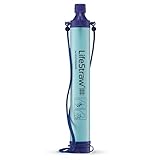
LifeStraw Personal Water Filter
- 0.2 micron filtration
- 4000 liter life
- No pumping required
- Pocket sized

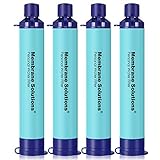
Membrane Solutions S1 Straw
- Triple NSF ANSI certified
- Five stage filtration
- 0.1 micron pores
The LifeStraw Personal takes the top slot on the strength of owner volume and a 4.8 rating across more than 125k reviews, with no pump or spare parts to manage. The Sawyer Mini is the pick if every gram matters, since the filter itself weighs two ounces. The Membrane Solutions straw is the one to buy if you want an independent certification behind the claims rather than a brand’s own test numbers.
All 12 Emergency Water Filters at a Glance in 2026
Here is the full lineup in one place. Weight, pore size and method matter more in an emergency than brand loyalty does, so scan the last column before you buy.
| Product | Specifications | Action |
|---|---|---|
| LifeStraw Personal Water Filter |
|
Check Latest Price |
| Sawyer SP128 Mini |
|
Check Latest Price |
| Membrane Solutions S1 Straw |
|
Check Latest Price |
 Sawyer SP129 Squeeze System Sawyer SP129 Squeeze System |
|
Check Latest Price |
 LifeStraw Peak Series LifeStraw Peak Series |
|
Check Latest Price |
 Survivor Filter PRO Survivor Filter PRO |
|
Check Latest Price |
 Katadyn BeFree 1L Katadyn BeFree 1L |
|
Check Latest Price |
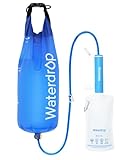 Waterdrop Gravity Straw Kit Waterdrop Gravity Straw Kit |
|
Check Latest Price |
 Sawyer SP160 Gravity System Sawyer SP160 Gravity System |
|
Check Latest Price |
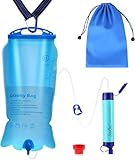 SimPure 3L Gravity Filter SimPure 3L Gravity Filter |
|
Check Latest Price |
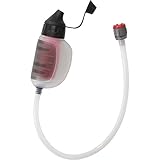 MSR TrailShot MSR TrailShot |
|
Check Latest Price |
 Platypus QuickDraw Platypus QuickDraw |
|
Check Latest Price |
What Makes a Filter Emergency-Ready
The best portable water filter for emergency use is a hollow-fiber microfilter rated to 0.1 or 0.2 micron absolute, light enough to sit in a pocket, and operable with one hand and no spare parts. It clears bacteria and protozoa from untreated stream, lake and rainwater, which covers the overwhelming majority of real backcountry water. A purifier adds virus removal, and that capability only becomes necessary when water sits near human or livestock waste or when you cross borders with questionable tap water.
Four things decide whether a filter is genuinely emergency-ready:
It works without moving parts or batteries. Squeeze, gravity and straw designs all pass this test. A hand pump works too, but only if your arm still functions after a day of hauling gear.
You understand what it does not remove. No microfilter in this roundup neutralises viruses, and none of them lower dissolved minerals or chemical contamination. Owners of straw-style filters sometimes assume otherwise, and the assumption is the reason people get sick.
It is easy to clear. Filters clog. Membrane Solutions, Sawyer and Platypus all allow reverse-flow backflushing, and that single maintenance step separates a filter that recovers from one that ends a trip.
It survives being dropped or frozen. Users repeatedly report that a filter can break from a freeze or a hard drop and there is no way to tell afterwards. Hollow-fiber membranes are the vulnerable part, so keep yours in a pocket rather than at the bottom of a pack.
For a wider look at larger-volume setups, our guide to gravity water filters for emergency preparedness covers the bucket-and-reservoir end of the market.
1. LifeStraw Personal Water Filter – Best Emergency Water Filter Overall
LifeStraw Personal Water Filter for Hiking, Travel and Emergency, Blue, 1PK
0.2 micron filtration
4000 liter rated life
0.04 kg
No pumping required
Pros
- 4.8 stars across 125764 reviews
- Ranks first in Camping and Hiking Water Filters
- Pocket sized with no pumping or chemicals
- 1000 gallon rated filter life
Cons
- Lowest rated capacity here at 4000 liters
- Personal straw volume rather than a group system
- No virus removal
The LifeStraw Personal is the filter I reach for first when someone asks for one device that does everything right. It weighs 0.04 kg, needs no pump, no bag and no syringe, and reviewers report water that tastes clean straight from a stream. That combination of simplicity and owner volume is why it ranks first in Camping and Hiking Water Filters.
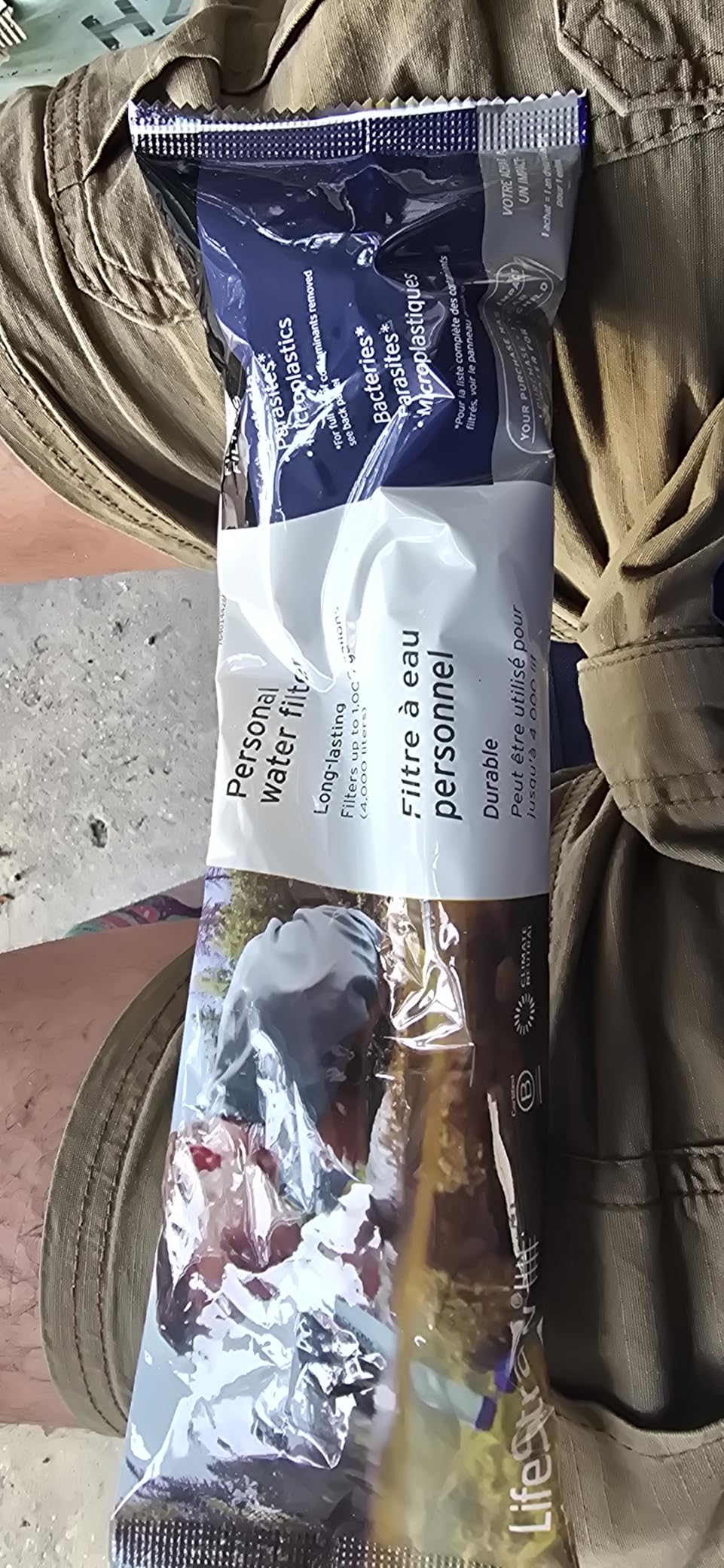
Filtration runs at 0.2 microns, which handles turbidity and takes out microplastics down to one micron. The stated removal figures are 99.999999 percent of bacteria including E. coli and Salmonella, and 99.999 percent of parasites including giardia and cryptosporidium. The membrane is BPA free and tested to US EPA, NSF and ASTM protocols.
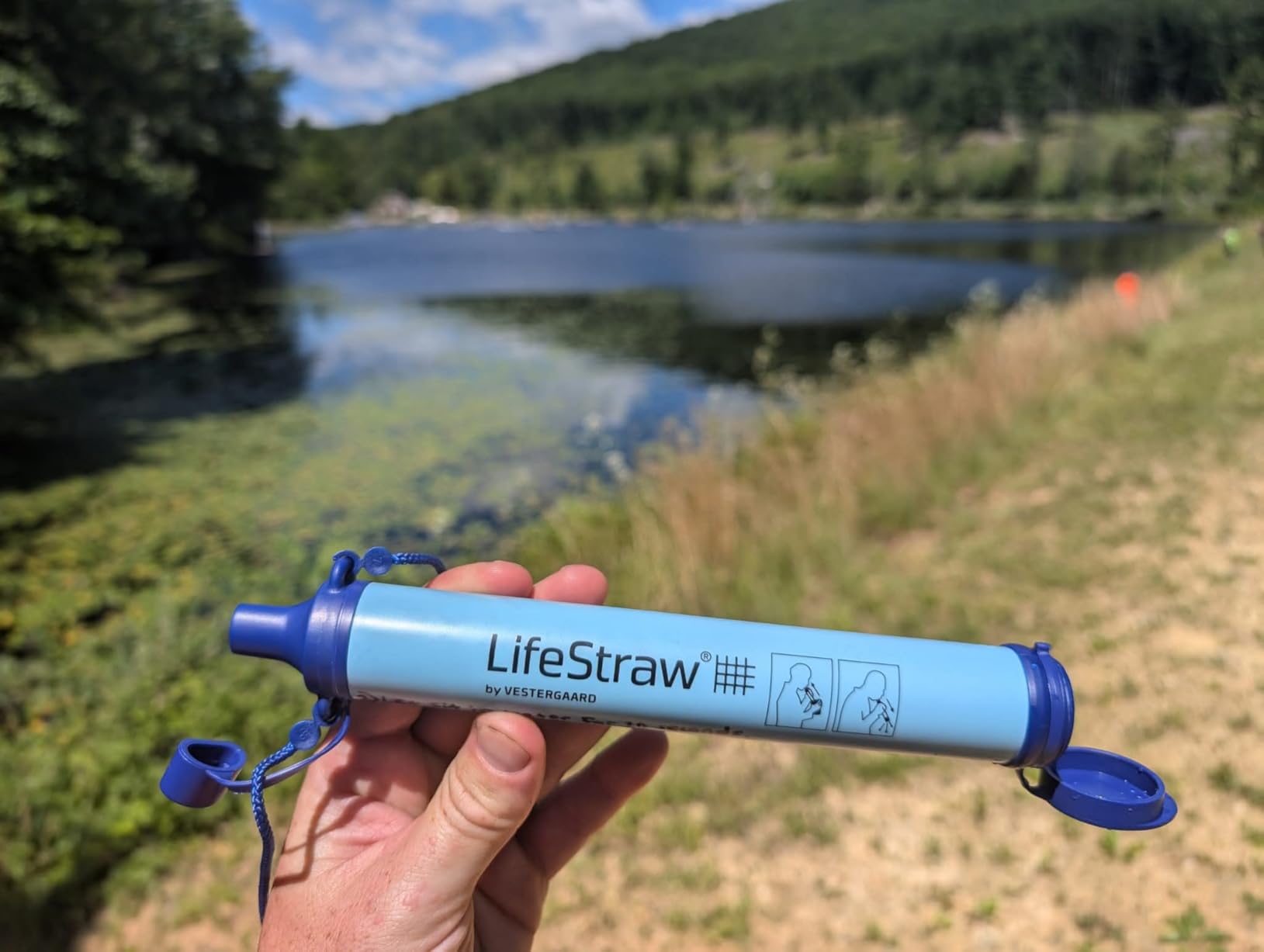
The honest limit is capacity. The rated life is 4,000 liters, at the lower end of this group, and you drink through the straw at a drinker’s pace rather than filling a camp reservoir. For a solo hiker, a two-person weekend or a household go-bag restock, that is plenty. For filtering cooking water for four people over a week, it is the wrong tool.
It is also a filter, not a purifier, so viruses and dissolved contaminants pass straight through. Keep it away from water below camps, livestock troughs and any source in a country where tap water is not trustworthy.
When it earns its place
It wins on day-to-day convenience. No assembly, no priming, no learning curve, and it drinks straight from the source, which is the fastest possible path to safe water when you are cold and moving late.
It is also the easiest of the twelve to brief someone else on. Hand a non-hiker the straw, show them where to immerse it, and they are producing safe water in seconds.
When it will not be enough
Two situations rule it out. A group trip where you need liters of water per hour for cooking needs a gravity or pump system. Travel in a region with documented waterborne viral outbreaks needs a purifier instead.
Owner feedback is also blunt about the volume ceiling. Reviewers consistently describe it as a personal straw rather than a camping system, and that framing is accurate.
2. Sawyer SP128 Mini – Best for Ultralight Packing
Sawyer Products SP128 Mini Water Filtration System, Single, Blue
0.1 micron hollow fiber
2 ounces (41 g)
Rated to 100000 gallons
Pros
- Only 2 ounces and fits in the palm of a hand
- 0.1 micron element rated to 100000 gallons
- Runs as straw bottle filter or pack filter
- Individually tested three times by the manufacturer
Cons
- Slower flow from a pouch than larger squeeze systems
- Membrane must be protected from freezing and impact
- Cleaning plunger needed regularly to hold flow
The Sawyer Mini is the answer when the question is what can I carry and barely notice. At 2 ounces the filter element sits in the same weight class as the lightest straw in this roundup, and owners describe it as inexpensive, small, reliable and long lasting. That is exactly the pitch for an emergency kit you have to keep on your person.
Behind it is a 0.1 micron absolute inline hollow-fiber element rated by the manufacturer to 100,000 gallons, removing 99.99999 percent of bacteria and 99.9999 percent of protozoa plus 100 percent of microplastics. Sawyer tests every Mini individually three times before it leaves the factory, which is a meaningful quality signal when your water is the only water.
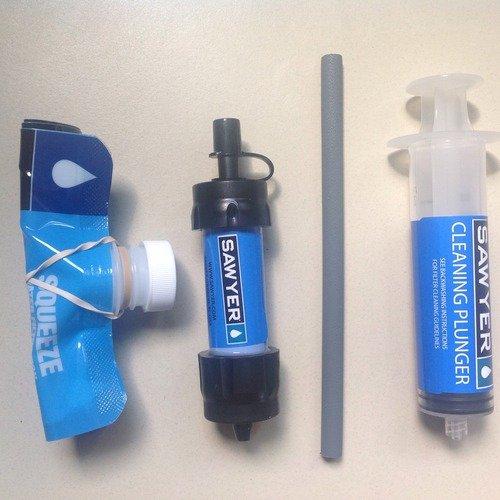
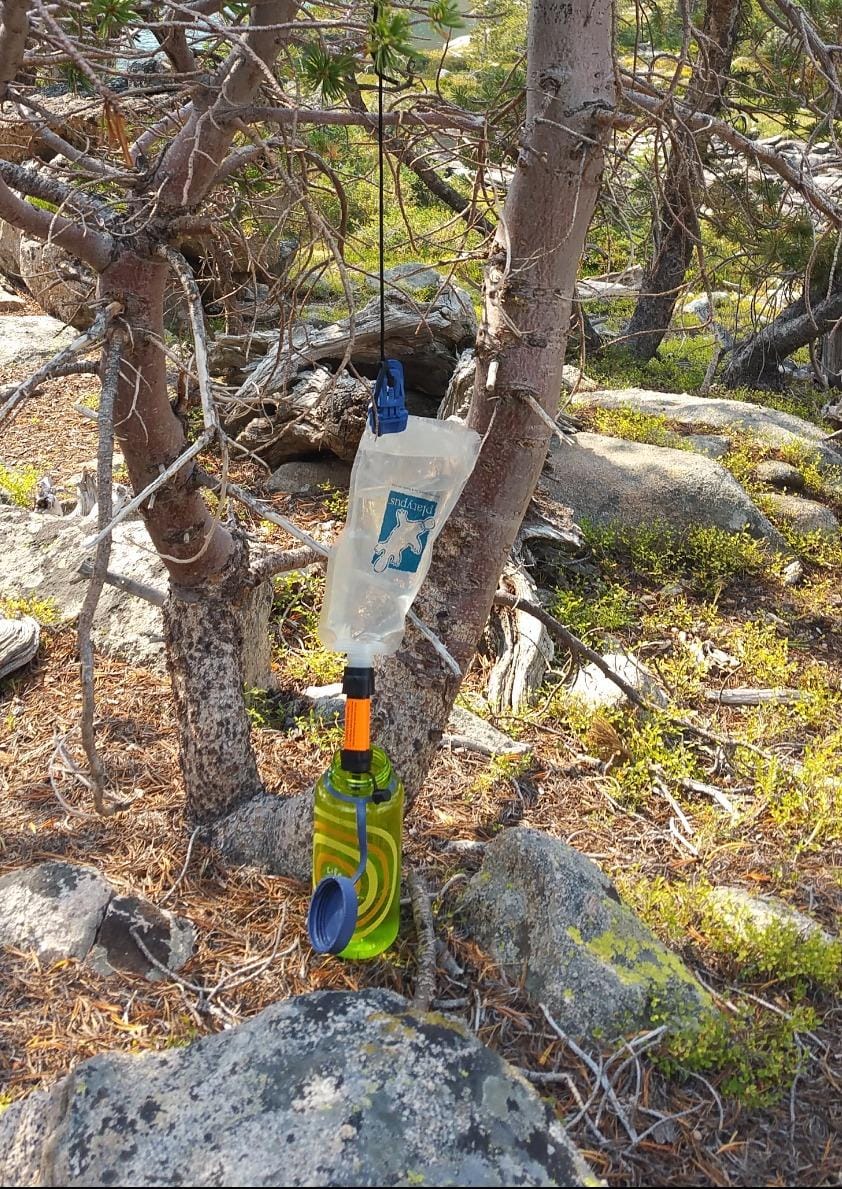
Flexibility is the real feature. The Mini works with the included 16 ounce pouch, with standard 28 mm bottles, with hydration packs, or as a plain drinking straw. The same filter therefore serves a bikepacking trip, a bug-out bag and a countertop emergency without a second purchase.
What you give up is speed. Reviewers report that squeezing water from the small pouch is slower than running a full-size squeeze system, and that the cleaning plunger has to be used on a routine or flow drops off. Neither is a dealbreaker at solo volume.
When it earns its place
Weight-constrained hikers, thru-hikers on long resupplies, and anyone assembling a kit where every item must earn its space. Two ounces is the number that matters here.
It also suits travelers who want one filter that adapts to whatever bottle they happen to be carrying rather than a fixed system.
When it will not be enough
It is a straw-and-bottle device, not a system for filling bottles quickly. A family group filtering an afternoon’s worth of water will spend too long squeezing.
Freeze damage is a real risk with this membrane, and the 0.1 micron pore size means silty desert water will slow it faster than a coarser element would.
3. Membrane Solutions S1 – Best for Certified Filtration
Membrane Solutions Personal Water Filter Straw S1 (Blue, 4 Pack)
0.1 micron five stage
500 ml per minute
1320 gallon capacity
Pros
- Only straw here certified to NSF ANSI 42 372 and 401
- Five stages including coconut shell carbon
- 2 ounces and 7.1 inches long
- Removable ends extend element life
Cons
- Drinkers flow rate rather than a system flow
- Does not lower dissolved minerals or TDS
- Multipack listings may mean extra straws
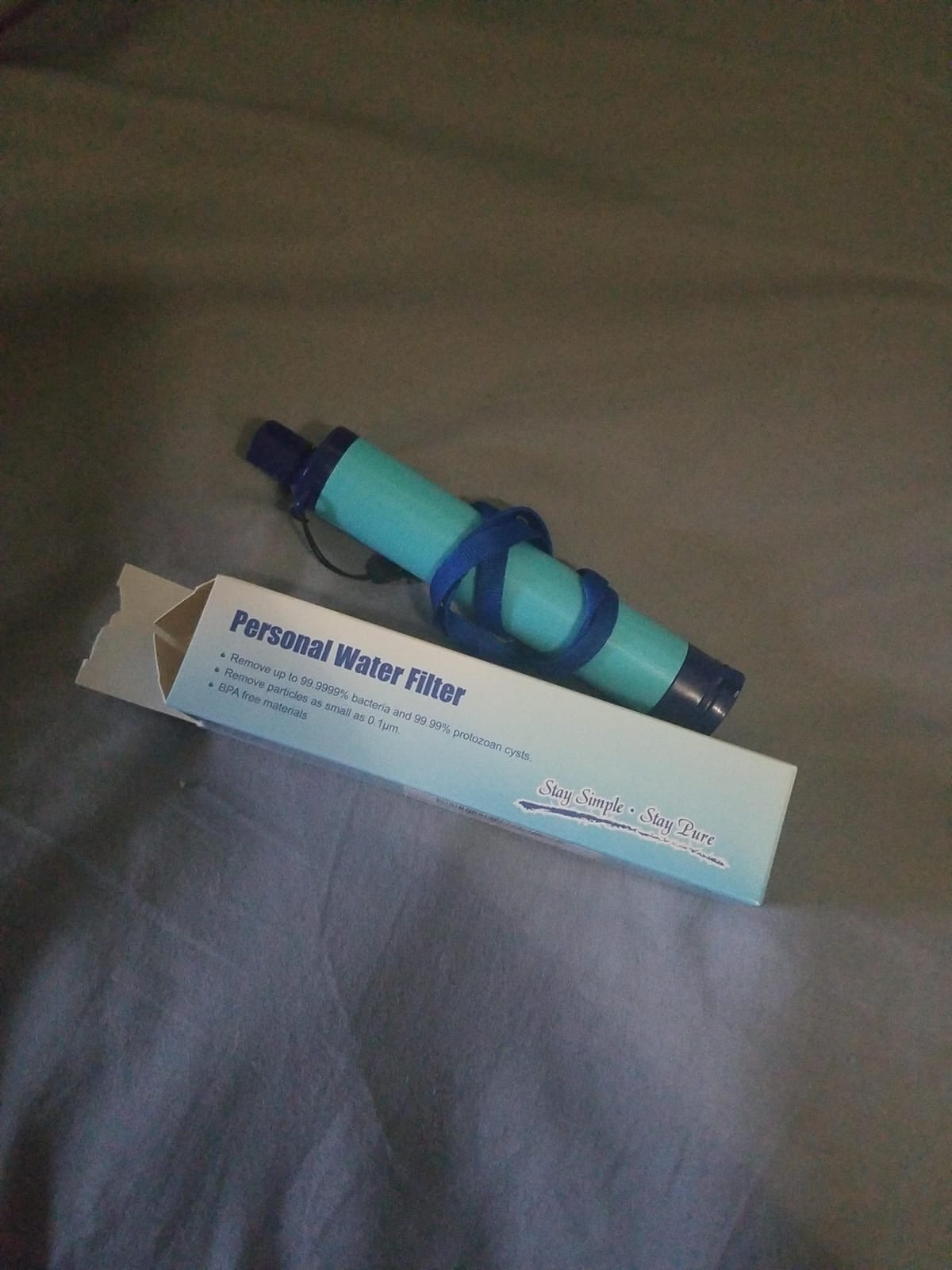
Where most competitors publish their own test results, the Membrane Solutions straw publishes independent certification. It is triple certified to NSF/ANSI 42, 372 and 401, and it is the only unit in this roundup that carries all three. If you are buying for people who will question your water, that is worth more than an extra feature.
The filtration path is five stages: a coarse screen, double PP cotton fibre, coconut shell activated carbon and a hollow-fiber ultra membrane at 0.1 micron. Flow runs up to 500 ml per minute and the rated capacity is 1,320 gallons, or 5,000 liters. Reviewers like the taste improvement the carbon stage brings, which matters when you are drinking the same creek for four days.
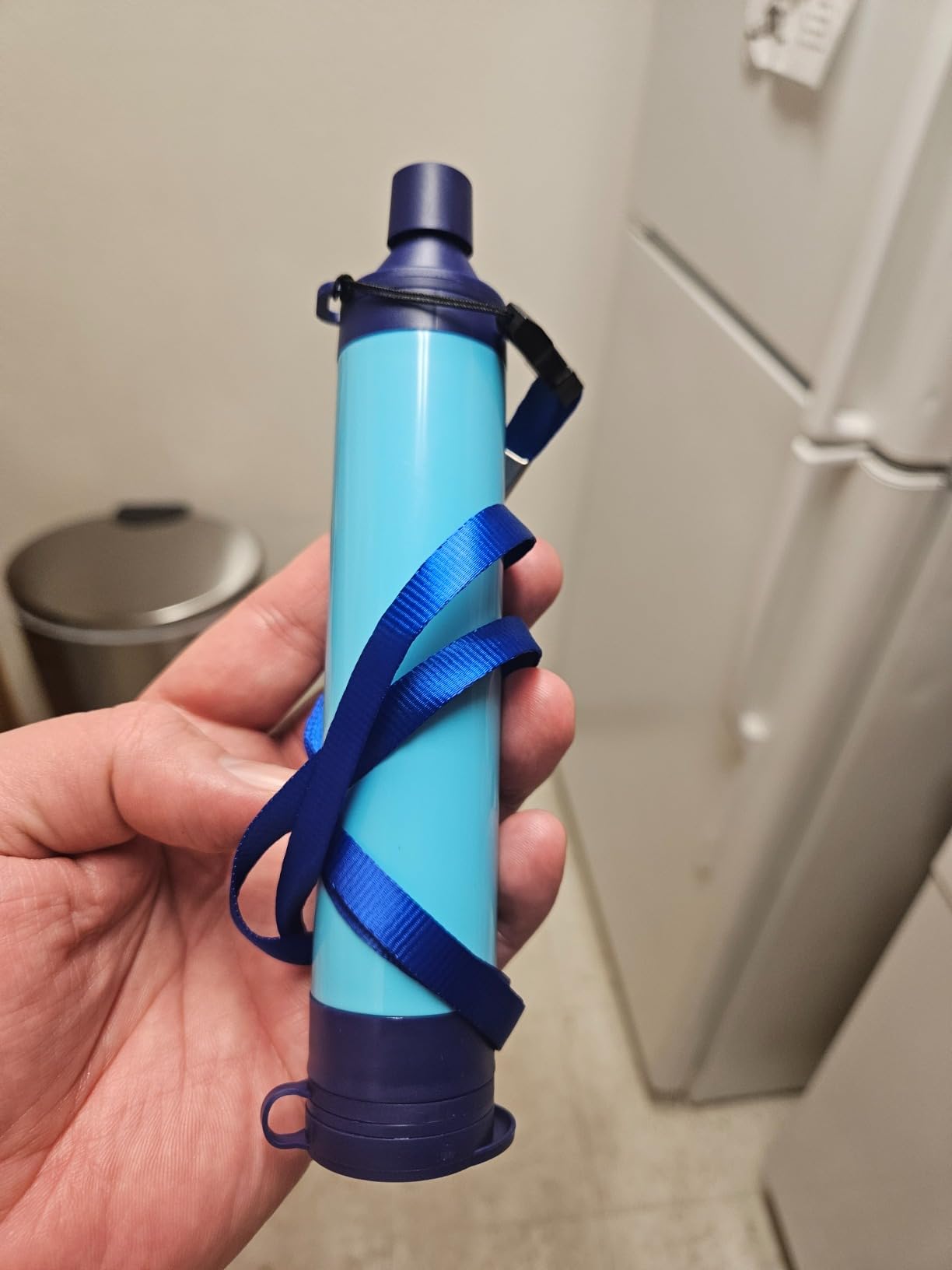
Both ends unscrew, which lets you backflush the element and extend its life instead of discarding it. It fits any 28 mm threaded bottle, cup or glass, so the same straw works on a Nalgene, a travel mug and a glass jar at home.
The trade-off is flow. Owners describe the output as a drinker’s rate, appropriate for filling your own bottle over a few minutes but not for producing liters at a time. The straw is also sold in multipacks, which suits stocking a household go-bag.
When it earns its place
It is the pick when documentation matters more than litres per hour. Families, school groups and anyone filtering water for other people benefit from a certification you can point to.
It also works well as a household preparedness item, where a second filter in a drawer is cheap insurance against a damaged first unit.
When it will not be enough
It will not lower total dissolved solids, so it does nothing for hard water, salt intrusion or chemical runoff. If your source is likely to carry dissolved contamination, you need a different category of device.
Filtering a group is outside its design point. Plan on a second method for anything beyond personal use.
4. Sawyer SP129 Squeeze System – Best for a Versatile Setup
Sawyer Products SP129 Squeeze Water Filtration System w/Two 32-Oz Squeeze Pouches, Straw, and Hydration Pack Adapter
0.1 micron hollow fiber
1.7 liters per minute
71 g for the full kit
Pros
- 1.7 liters per minute squeeze flow
- Two 32 oz pouches plus pack adapters included
- Works as straw bottle gravity or inline filter
- Lifetime warranty on filter defects
Cons
- Included pouches can split with repeated use
- Needs periodic backflushing to hold flow
- Membrane must be kept from freezing
The Sawyer Squeeze is the default answer to backpacking water filter questions, and owner discussion backs that up. On r/backpacking it is repeatedly named alongside the Katadyn BeFree as a one-stop-shop pick, and on the ar15.com SHTF thread it gets credit for handling sand and gunk. It is the filter most people end up owning.
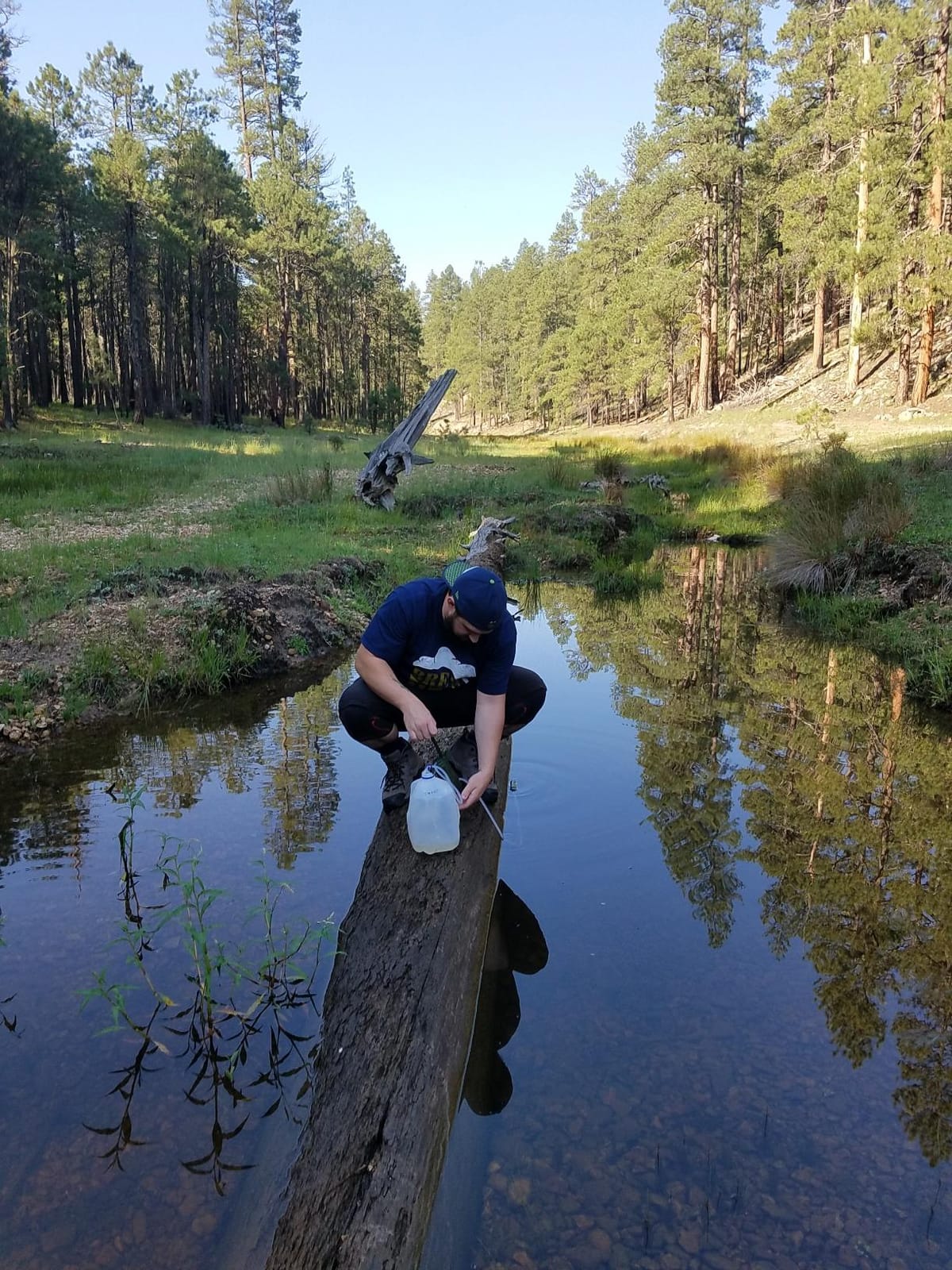
Performance is strong. The 0.1 micron absolute hollow-fiber element is rated to 100,000 gallons and moves water at up to 1.7 liters per minute when squeezed, which is enough to refill bottles quickly. The kit weighs 71 g including the filter, which is still 2 ounces of filter and the rest is pouches and adapters.
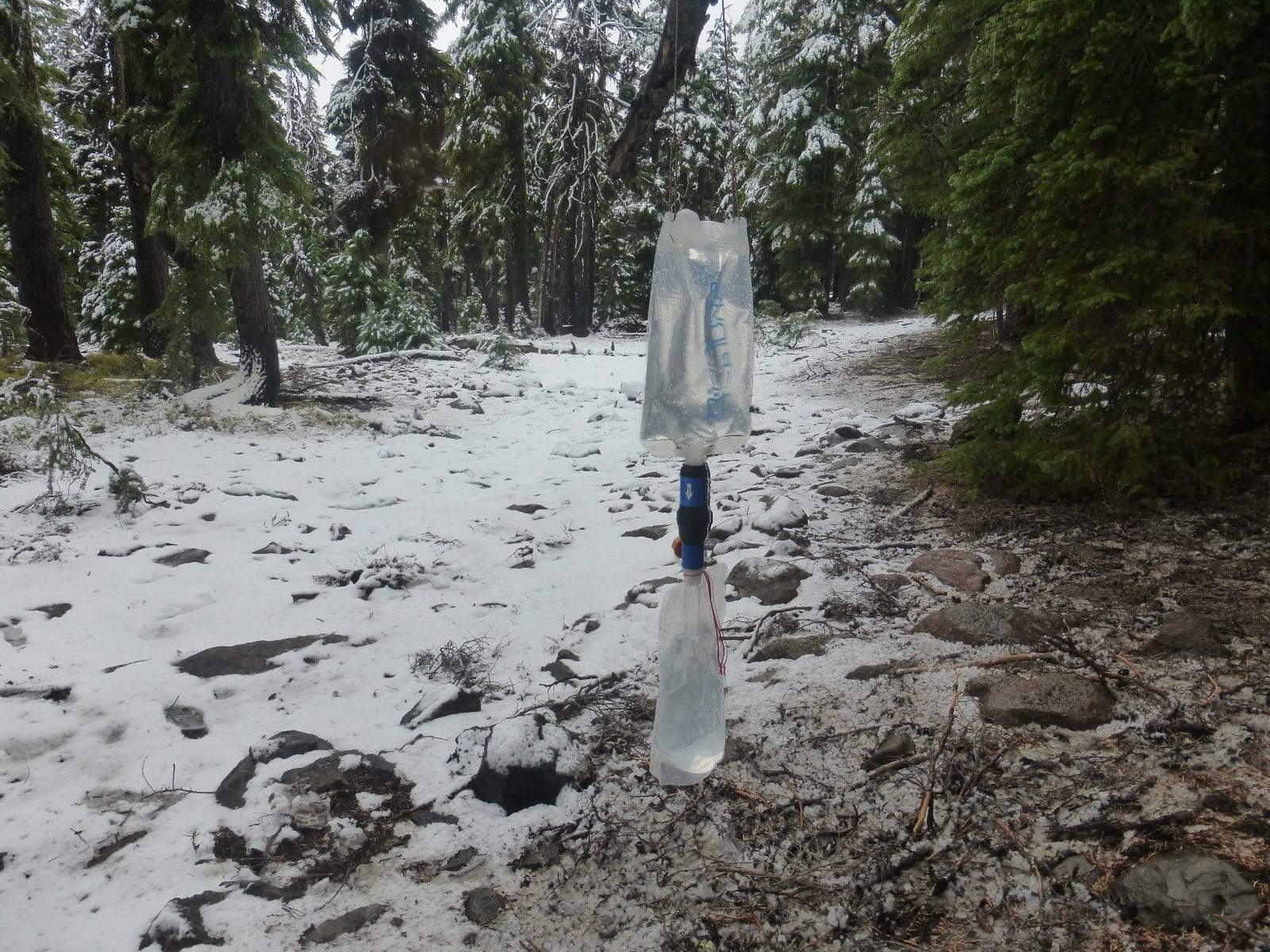
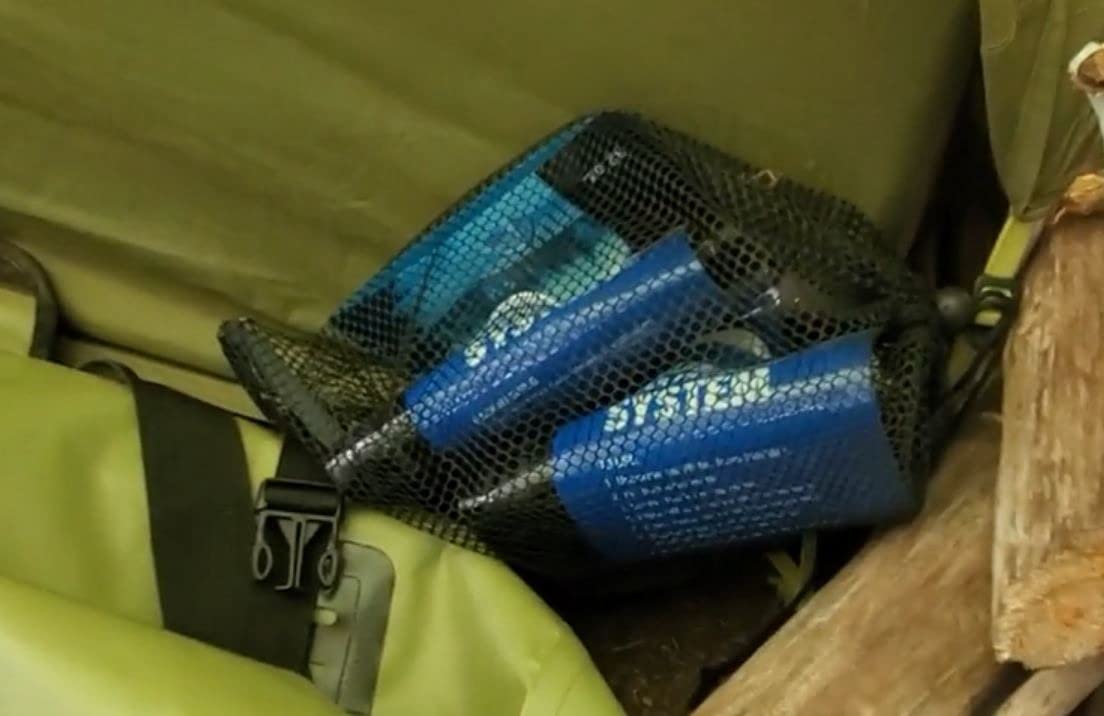
The box holds two 32 oz collapsible BPA-free pouches, a replaceable pop-up drinking straw, hydration pack adapters and a mesh storage bag. The filter can be run four ways: squeezing a pouch, screwed onto a 28 mm bottle, gravity fed from a dirty bag, or inlined into a hydration pack.
That configuration flexibility is why this one shows up in so many kits. The same unit covers trail use in the morning and camp water production in the evening. Sawyer also offers a lifetime warranty on filter defects, which matters for a device you may keep for a decade.
When it earns its place
It suits most two-person and three-person trips, and it suits people who move between roles during a day. Squeeze it at a stream, then hang it inline at camp.
It is also a strong primary with a second method in reserve. Forum regulars consistently recommend carrying drops or tablets alongside a filter rather than trusting one device.
When it will not be enough
The included pouches are the weak point. Owners report that they can split with repeated squeezing, and many replace them with standard 28 mm bottles, which work better anyway.
Flow still needs maintenance. If you skip backflushing, the 0.1 micron pores will silt up faster than almost anything else in this roundup.
5. LifeStraw Peak Series – Best for Faster Straw Flow
LifeStraw Peak Series Personal Water Filter for Hiking, Camping, Travel, and Emergency Preparedness, 1 Pack, Mountain Blue
Microfiltration membrane
2.5 liters per minute
1000 gallon rated life
Pros
- Rated 2.5 liters per minute
- Removable threaded cap for bottles and hoses
- Resists clogging from sand and silt
- BPA free drop resistant body
Cons
- Best on clear water - murky sources need pre-filtering
- Personal straw volume not a group system
- Listing images unclear on how many straws ship
The Peak Series exists because the original LifeStraw straw moved water too slowly for regular use. This version runs at 2.5 liters per minute, and owners report that they can fill a smart water bottle without a fight. It carries a 1,000 gallon rated life and the same 99.999999 percent bacteria and 99.999 percent parasite removal figures.
The re-engineered membrane is the story. It is built to resist clogging from sand and silt, which is the specific complaint that ends trips in desert and post-storm water. The removable threaded bottom cap also lets it attach to bottles or a gravity hose, so it is no longer a straw-only tool.
Users who switched from the older straw mostly report faster output and easier bottle attachment. The 4.7 rating sits across 5,582 reviews, with 85 percent of ratings at five stars, so the improvement is broadly recognised rather than a marketing claim.
When it earns its place
It is the right pick for hikers who drink straight from a source and refill bottles constantly. The threaded cap also lets it work as a small gravity unit, which is unusual for a straw.
Silt resistance makes it a better backcountry companion than the original straw when you are dealing with sandy desert water.
When it will not be enough
It is still a personal-volume device. Filtering for a group means you will be squeezing one bottle at a time all evening.
Murky sources with heavy suspended sediment will overwhelm any 0.1 micron class element. Pre-filter through a cloth or a coffee filter before the water reaches the membrane, and owners with silty water report that pre-filtering is what restores useful flow.
6. Survivor Filter PRO – Best for Virus Coverage
Survivor Filter PRO Portable Water Filter for Camping, Survival & Emergency
0.01 micron ultra stage
500 ml per minute
100000 liter capacity
Pros
- Only unit here with a 0.01 micron stage and virus testing
- Carbon stage reduces heavy metals and taste
- Rated 100000 liters across main elements
- Hose clip and quick connects for a hydration pack
Cons
- Heaviest unit here at 12.8 ounces
- Pump needs sustained arm effort
- 0.1 micron stage clogs on silty water
The Survivor Filter PRO is the only unit here with a genuine virus claim, and that changes what it is for. Its three-stage path runs a 0.1 micron pre-filter, an activated carbon stage, then a 0.01 micron ultra filter, and the manufacturer reports removal of 99.999 percent of tested virus along with staph, bacteria and protozoa. The carbon stage also reduces heavy metals to NSF/ANSI standards and fixes a lot of objectionable taste.
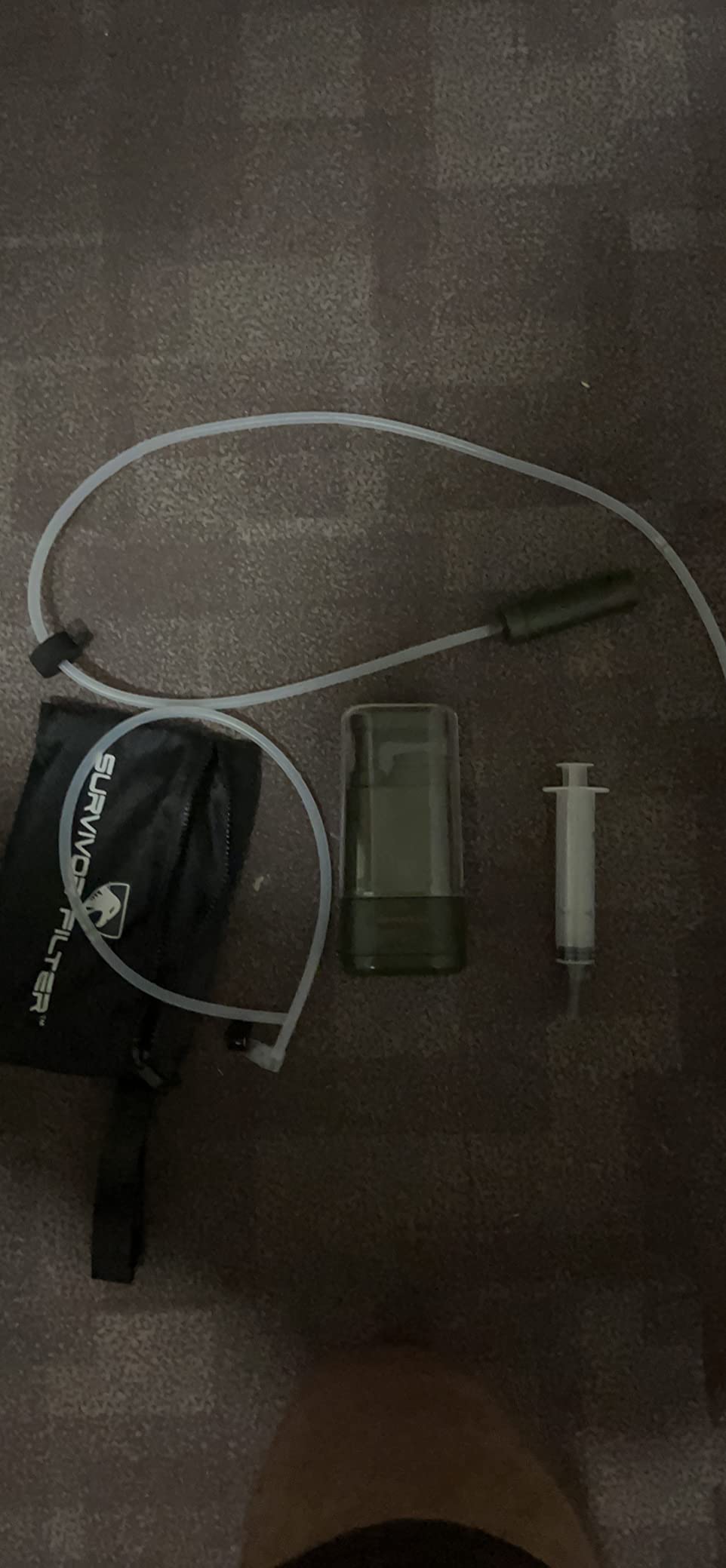
Owners consistently call it the best-tasting output in this group, including from algae-heavy and rusty sources, and they place it in emergency and go-bag duty rather than on ordinary backcountry trips. Rated life is 100,000 liters across the main elements, and a backwash syringe, hoses, clip and carrying case are all included in the box.
The trade-offs are weight and effort. At 12.8 ounces it is by far the heaviest unit in this roundup, and filling several bottles means sustained pumping rather than a squeeze. Its published operating range of 32 to 120 degrees Fahrenheit is also the widest here, which matters for desert heat and cold starts alike.
Keep the carbon element in mind as a consumable. It carries a much shorter service life than the fibre elements, and it is the stage doing the heavy metals and taste work.
When it earns its place
It is the pick for a household go-bag, where weight barely matters and the widest protection does. It also suits travel where tap water quality is uncertain and viral risk is real.
If you filter water near human or livestock waste, this is the unit in the list that was designed for it.
When it will not be enough
Twelve ounces is a lot of dead weight for a fast hiker, and a pump is a poor companion to a full pack. For miles-covered travel, a straw or squeeze filter is the better tool.
Silty water still clogs the 0.1 micron pre-filter, so carry a separate pre-filter if you are working in desert or storm runoff conditions.
7. Katadyn BeFree 1L – Best as an All-in-One Bottle
Katadyn BeFree AC 2-Stage Filter Collapsible Travel Water Bottle 1L, Clear
0.1 micron hollow fiber
2 liters per minute
2.24 ounces
Pros
- Roughly 2 liters per minute flow
- Bottle and filter in one piece
- Collapses flat when empty
- No pump or backflushing tools needed
Cons
- Dry membrane can add a plastic taste
- Not compatible with non standard reservoir threads
- Hollow fiber membrane cannot be frozen
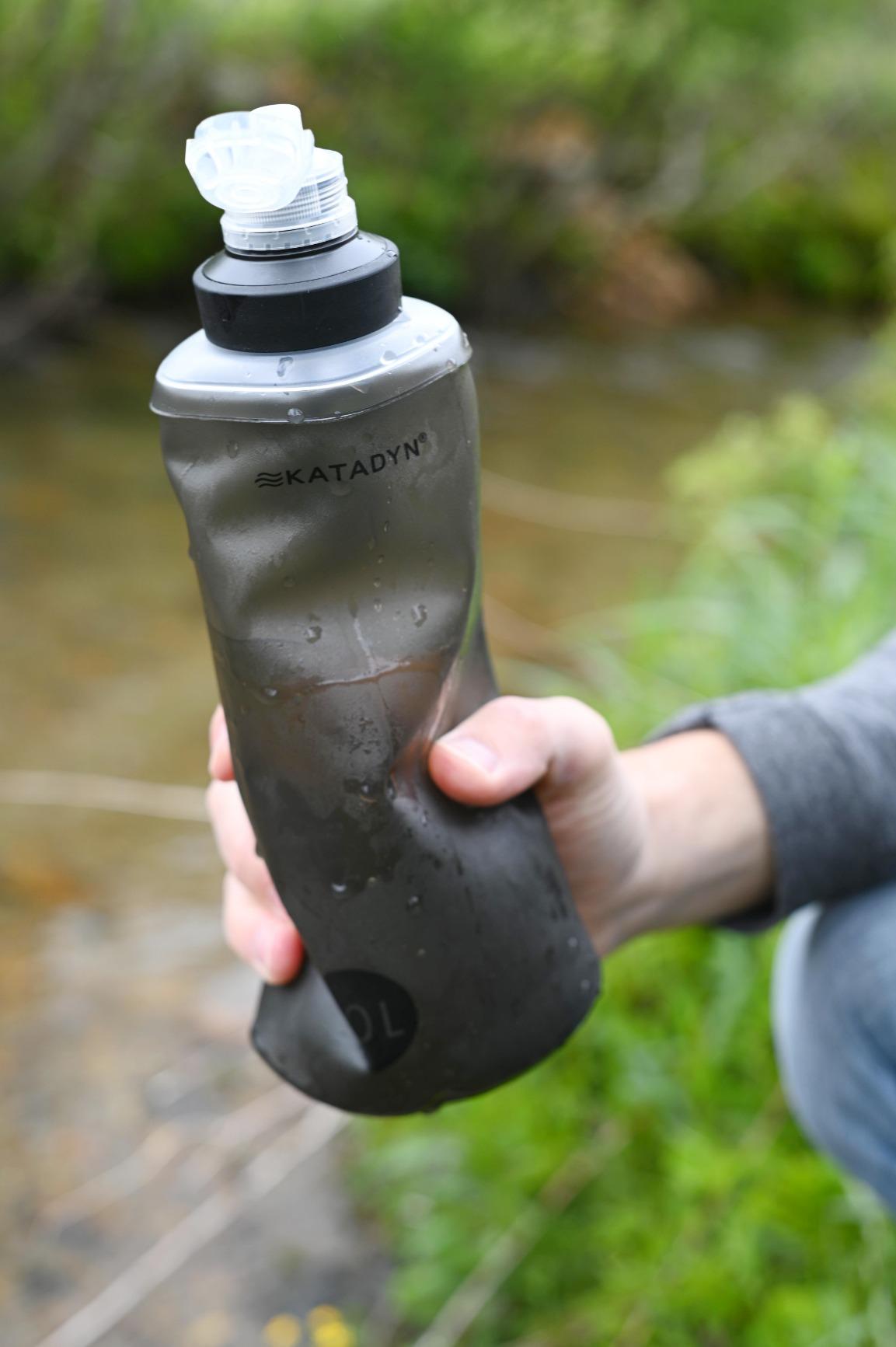
The BeFree is the pick when you do not want a separate dirty bag, a syringe or a second bottle. The filter is built into a 1 liter collapsible bottle, so you fill from the source, screw the top on and squeeze. On r/backpacking users describe it as a convenient one-stop shop, and at 2.24 ounces with the bottle collapsed it packs flatter than most integrated systems of that size.
Flow is strong, filling at up to 2 liters per minute through a 0.1 micron hollow-fiber membrane with a rated capacity of 1,000 liters. Cleaning is a shake or a swish, which removes the syringe from your kit entirely. That single design choice is why so many people end up with one in the pack.
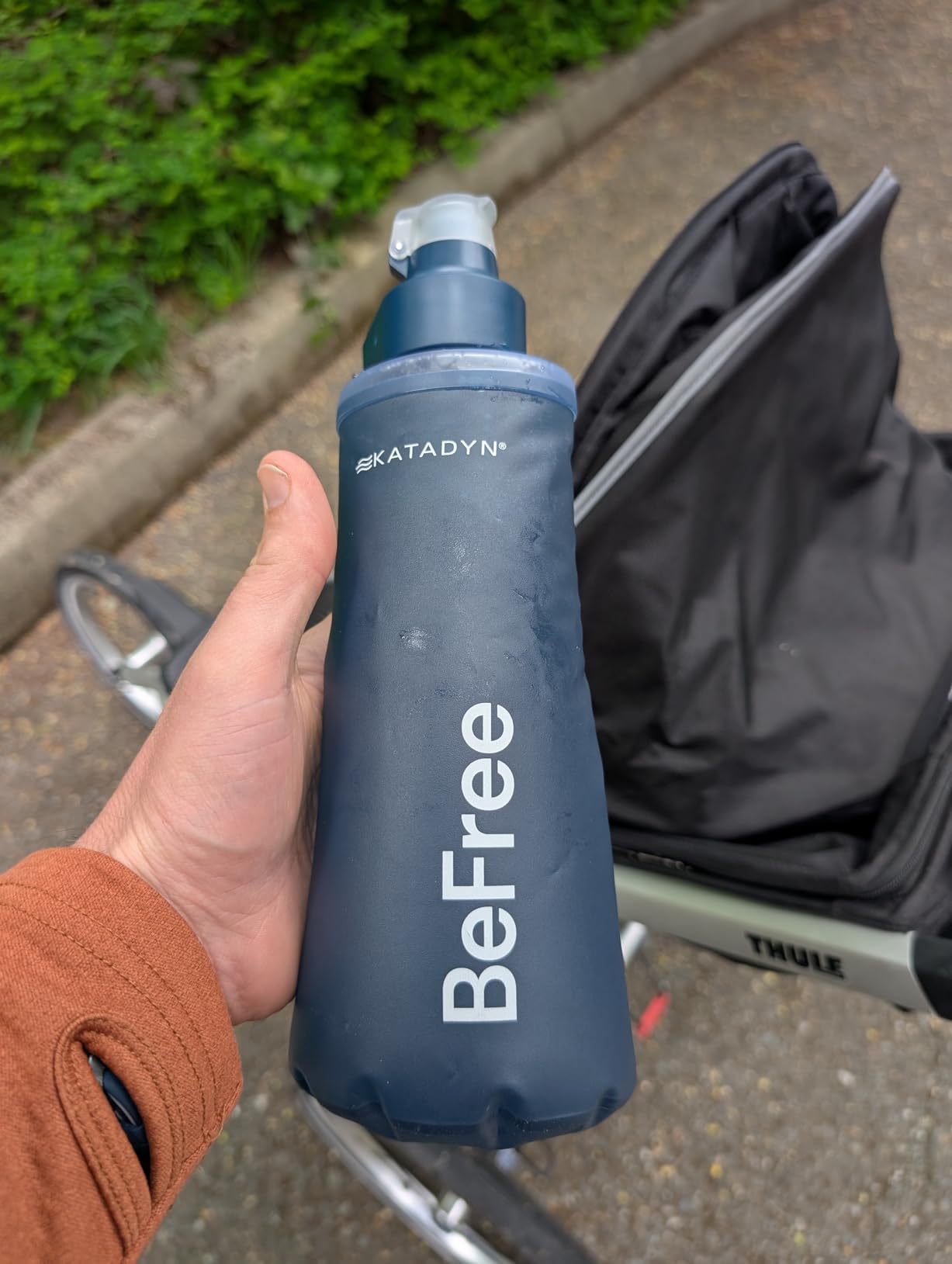
Two drawbacks recur in owner feedback. Water filtered through a dry membrane can carry a chemical or plastic taste, particularly in the first few litres after storage, so flush it before drinking. And the thread is not compatible with HydraPak and other non-standard reservoirs, so it will not replace a filter on a soft flask.
The membrane cannot be frozen, which matters more in shoulder season than most buyers expect. Keep it on your body overnight rather than in a pack that sits against a cold wall.
When it earns its place
It suits beginners and fast packers alike, because there is almost nothing to figure out. Fill, squeeze, drink, repeat, and the cleaning motion is one movement.
For anyone who lost a syringe on a previous trip, the tool-free maintenance is the deciding factor.
When it will not be enough
It will not accept soft flasks or non-standard threads, and a 1,000 liter rated life is the shortest among the squeeze systems here. Heavy desert use will use that up faster than the figure suggests.
Flavour sensitive drinkers should flush the first litres, and anyone crossing a border with questionable tap water needs virus protection this unit does not provide.
8. Waterdrop Gravity Straw Kit – Best for Gravity Setups
Waterdrop Gravity Water Filter Straw, Camping Water Filter, 0.1 Micron
0.1 micron membrane
700 ml per minute
1400 gallon rated life
Pros
- Straw ships with a 1.5 gallon gravity bag
- 700 ml per minute flow
- Removable mouthpiece allows field backflushing
- 1400 gallon capacity
Cons
- Rated only to 300 ppm TDS
- 30 day limited warranty
- Bag collar sized for 27.5 mm bottles
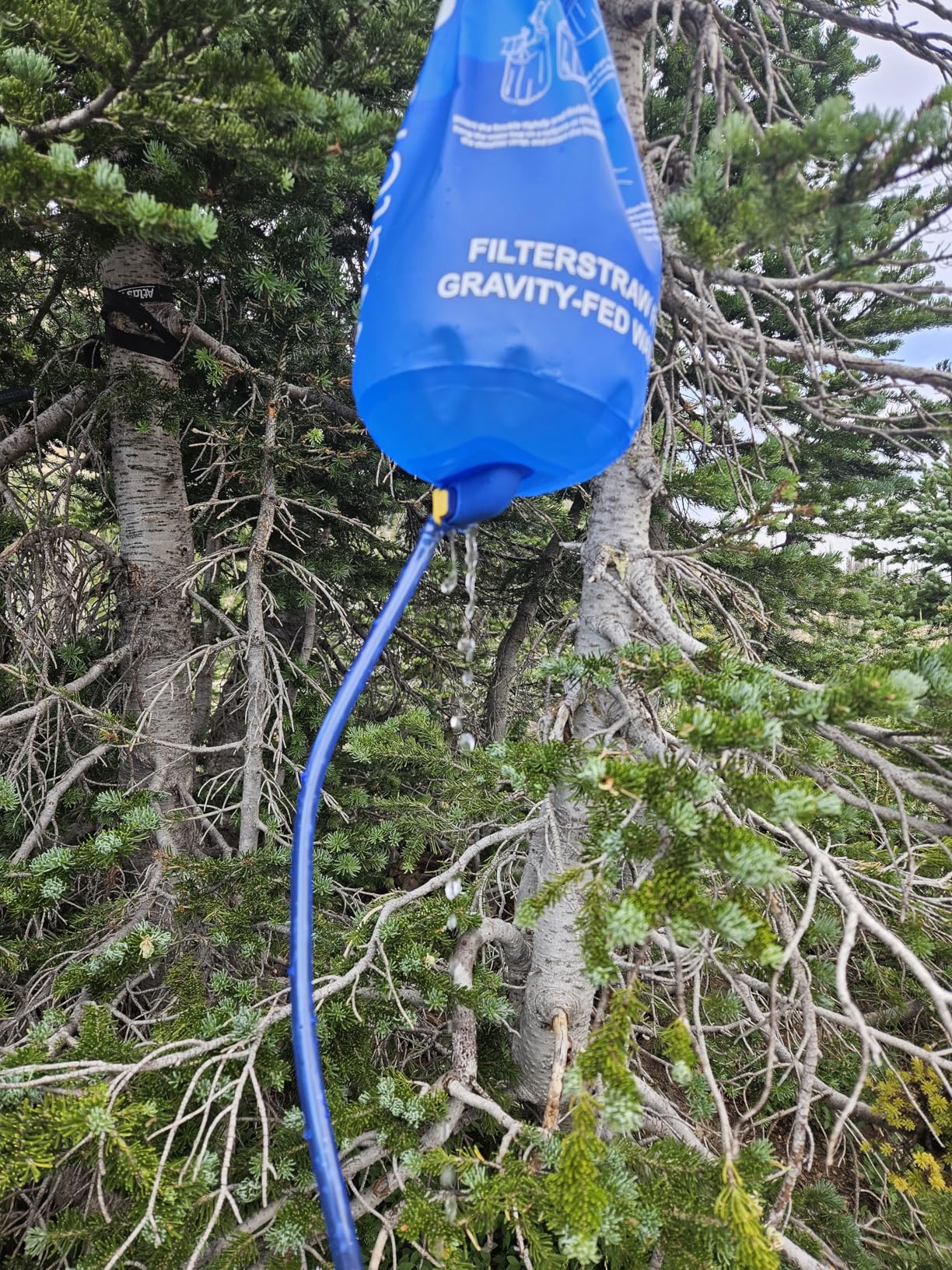
Most gravity systems ask you to buy the bag separately. This kit arrives complete, with a 0.1 micron ultrafiltration straw, a 1.5 gallon gravity-fed bag and a 16 oz pouch, which means you can hang it at camp on the same afternoon it arrives. Buyers like the combination, and the 4.6 rating across 4,126 reviews reflects generally solid filtration.
Flow is 700 ml per minute, and the rated capacity is 1,400 gallons or 5,300 liters. The removable mouthpiece is a genuinely useful detail in an emergency, because unscrewing it lets you backflush the element and recover flow without a syringe. Chlorine, sediment, sand and bad taste are all reduced, and one-star ratings sit at just 2 percent of the total.
Two limits are worth knowing before you rely on it. It is rated for sources up to 300 ppm TDS, lower than most units here, so heavily mineralised desert sources are outside its envelope. And the warranty is a 30 day limited filter warranty, the shortest in the group, which reflects the consumable nature of the element rather than build quality.
There is also a fitting detail. The bag collar is sized for 27.5 mm bottles, narrower than the common 28 mm standard, so check the thread before you assume your bottles will work.
When it earns its place
It suits base camp, a family vehicle kit or anyone who wants hands-free camp water without extra parts. The 1.5 gallon reservoir is a meaningful jump over squeeze volumes.
The in-field backflush matters most after a long stretch of collecting from silty sources, where flow would otherwise fade across a trip.
When it will not be enough
High-TDS water is out of scope at 300 ppm, so skip it near saline flats and hard mineral seeps.
The short warranty and the narrow bag thread are the two things that cause returns. Check both before the trip rather than at the water.
9. Sawyer SP160 Gravity System – Best for Hands-Free Camp Use
Sawyer Products SP160 One Gallon Gravity Water Filtration System w/Dual-Threaded Mini Filter, Blue/White/Clear
0.1 micron dual threaded element
43 g for the kit
One gallon reservoir
Pros
- Hands free gravity filtration at camp
- One gallon reservoir for cooking and cleanup
- Dual threaded filter also works squeezed
- Filter rated to 100000 gallons
Cons
- Reservoir opening awkward on shallow streams
- Bag resists collapsing and will not pack flat
- Bulky cap spoils packability
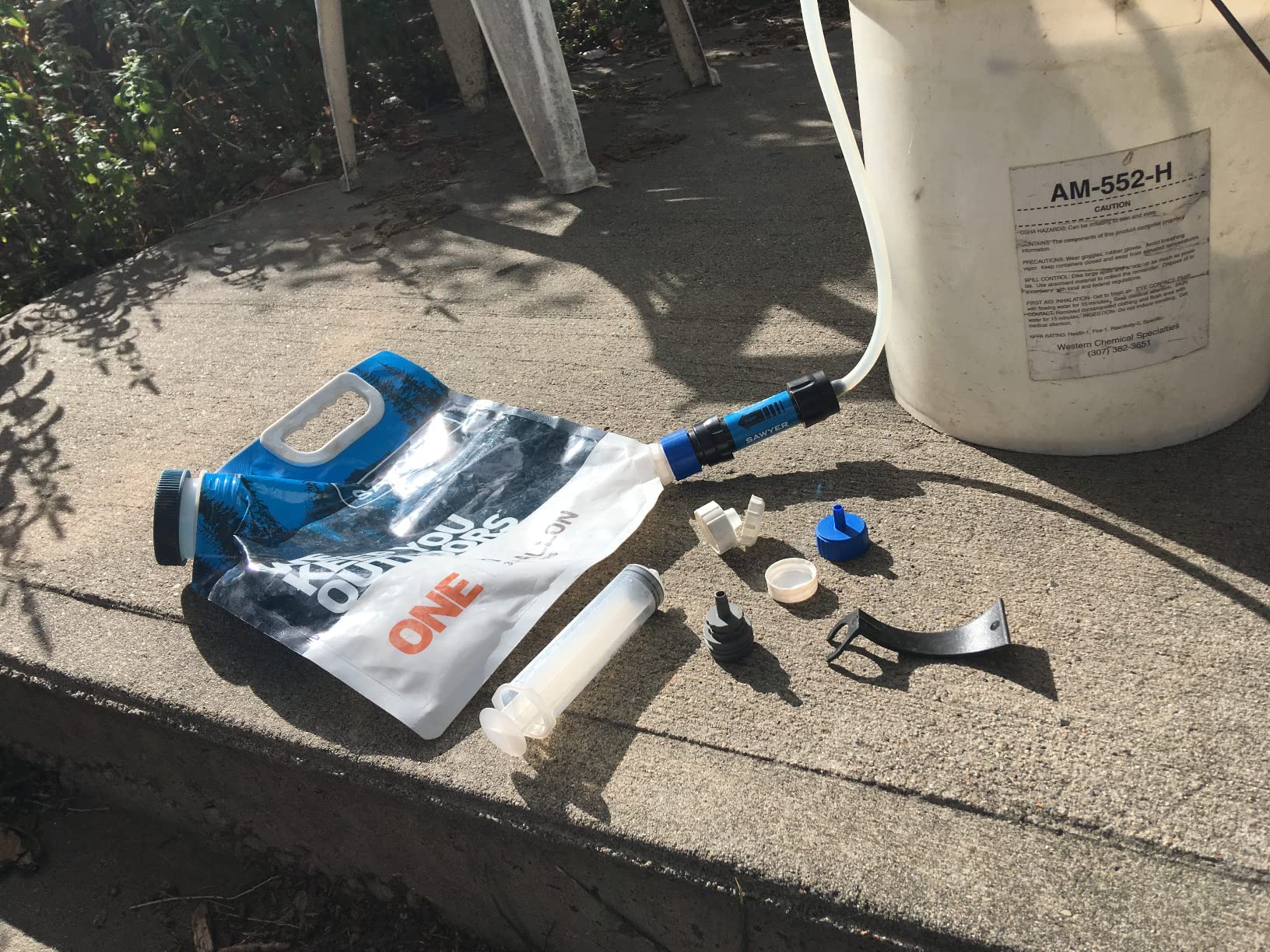
The SP160 turns the Sawyer Mini into a camp system by adding a one-gallon reservoir and a gravity hose. Once the bag is filled and hung, filtration runs hands-free for the rest of the day, which is the difference between a filter you use and a filter you work. The dual-threaded Mini element can also be squeezed directly when you only need a bottle.
The filter is the same 0.1 micron absolute hollow-fiber unit rated to 100,000 gallons, with a cleaning plunger and coupling included. The whole kit is 43 g, and the element is rated for sources up to 2,000 ppm TDS, which is a wide envelope for backcountry water. Owners rate the filter itself highly for taste and reliability.
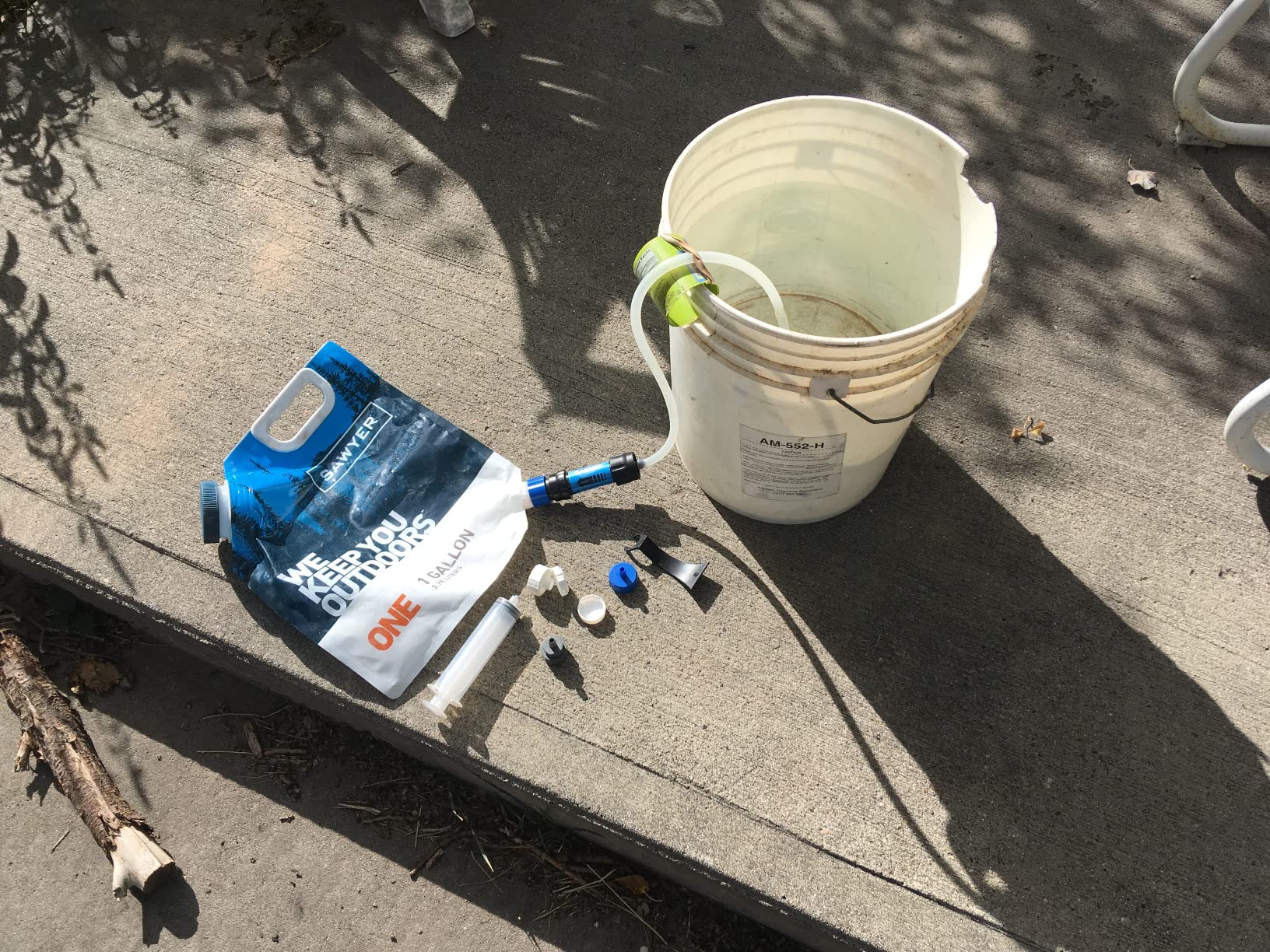
The bag is where the complaints live, and they are consistent. Owners report the reservoir opening is awkwardly placed for filling from shallow or slow-moving water, the semi-rigid material resists collapsing so the bag will not pack flat, and the bulky cap sticks out even when it is flattened. Some also find the included male-to-male bottle adapter restricts flow.
None of that matters much if the kit lives in a vehicle or at base camp, and all of it matters if you are carrying it on a through-hike.
When it earns its place
It is a strong choice for base camp, family camping and vehicle kits where you need cooking and cleanup water at volume. One gallon covers a real meal without repeated trips to the stream.
You get Sawyer element longevity and capacity with gravity convenience, which most competitor kits at this level do not combine.
When it will not be enough
A bag that refuses to flatten and a cap that stands proud of the compressed profile make this a poor choice for a small pack. Choose the Sawyer Squeeze instead for moving days.
Filling from ankle-deep water is genuinely awkward, so plan to fill from a deeper point or a pool rather than a thin ribbon of flow.
10. SimPure 3L Gravity Filter – Best for Group Gravity Flow
SimPure Portable Gravity-Fed Water Filter with 3L Bag
0.1 micron hollow fiber
27 liters per hour
2.8 ounces with bag
Pros
- 3 liter gravity bag with tree strap
- Carbon and PP stages improve taste
- Rolls small at 2.8 ounces
- 27 liters per hour suits group collection
Cons
- Bag holds closer to 2.25 to 2.4 liters
- Slim bag is hard to dry fully after washing
- Air bubbles in the line can stall starting flow
The SimPure is the value pick for group gravity filtration, and owners mostly like the ratio of water produced to weight carried. The 3L TPU bag hangs from the included tree strap for hands-free filtering, and the whole system rolls down to 2.8 ounces. For a family or a group of four, producing water at camp without pumping is the whole point.
Filtration is multi-stage: a 0.1 micron hollow-fiber ultrafiltration membrane, a 5 micron coconut shell activated carbon stage and a 0.2 micron PP fibre stage. Rated flow is 27 liters per hour and rated life is 5,000 liters. The 29.5 inch extension tube lets you drink straight from the bag or connect to a bottle.
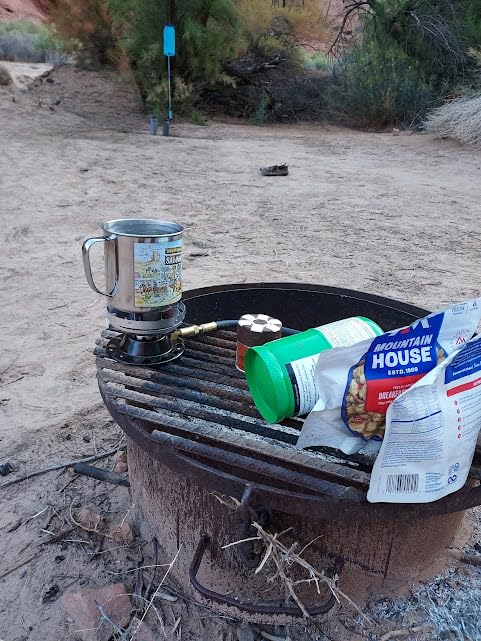
Three owner complaints recur. The bag holds closer to 2.25 to 2.4 liters in practice rather than the stated 3, which matters for planning volumes. The slim bag is hard to dry completely after washing, which raises the chance of mould. And air bubbles entering the line can stall the initial flow until you clear the tube.
Some owners also report a chemical or plastic taste, though many describe the output as better tasting than competing filters. The carbon stage is the reason for the difference between those two experiences.
When it earns its place
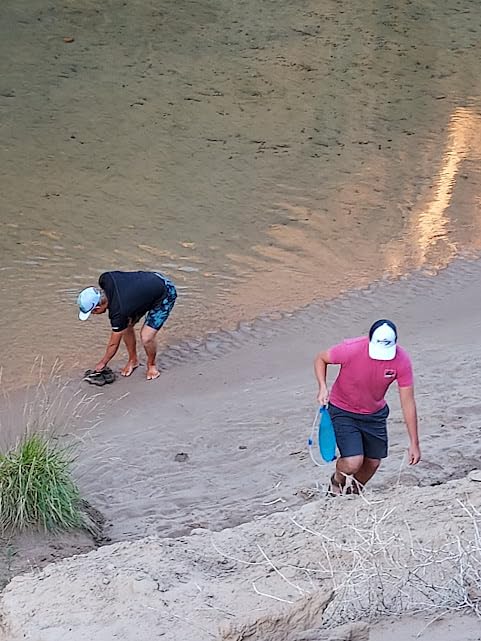
It suits group trips where each person would otherwise squeeze their own water, and for anyone who wants more than a one-litre system without carrying a pump.
The tree strap and extension tube make it practical for camp use, and the low packed weight keeps it realistic for a group that is splitting gear.
When it will not be enough
Plan your water math on the smaller real capacity rather than the printed three litres. Overestimating by a quarter is an easy way to run short on a long camp.
Drying the bag thoroughly after cleaning is essential, and if you cannot hang it open in the sun, choose a system with a wider bag opening.
11. MSR TrailShot – Best for Dirty Sources
MSR TrailShot Ultralight Backpacking and Camping Squeeze Water Filter
Hollow fiber membrane
1 liter in 60 seconds
5.44 ounces
Pros
- No dirty bag bottle or syringe needed
- One liter filtered in 60 seconds
- Built in coarse pre-filter
- Neutral taste with no plastic aftertaste
Cons
- Soft rubber inlet tube nicks easily
- Less convenient than rigid bottle filters
- No virus or chemical removal
The TrailShot solves a problem the other squeeze filters share: they need a dirty bag, a bottle or a syringe to push water through. This one uses a simple bulb and a detachable 15 inch cord, so there is nothing else to pack and nothing to lose. Users prize that simplicity, and paddling forum users describe MSR filters as lightweight and compact for travel and emergency use.
Throughput is one liter in 60 seconds, filtered to 99.9999 percent bacteria and 99.9 percent protozoa removal across up to 2,000 liters with no chemicals. The built-in coarse mesh pre-filter at the inlet is what lets it keep working in silty water where finer elements stall, and back-pump cleaning restores flow without any tool.

It is usable down to 33 degrees Fahrenheit, which is close to the lowest published figure in this roundup and matters on cold morning starts. Taste is neutral, with no plastic aftertaste reported.
The recurring negatives are physical rather than functional. The soft rubber inlet tube nicks easily and no protective sleeve is included, and soft tubing is less convenient than a rigid bottle when you are filling from a bank or a pool. It is also a filter rather than a purifier, so viruses and dissolved contaminants pass through.
When it earns its place
It is the pick for anyone tired of juggling components, and for silt-heavy water where a coarse pre-filter built into the inlet is the difference between working and stopped.
It suits older hikers and families with mixed experience, since there is only one technique to learn and no accessory that can go missing.
When it will not be enough
Protect the inlet hose. That is the part most likely to fail first, and a nick in a soft rubber tube is an emergency in itself.
If your water carries chemicals, salt or viral risk, this unit will not address it. Match it to the source, not to the marketing.
12. Platypus QuickDraw – Best for Clean Taste
Platypus Quickdraw Ultralight 1 Liter Backpacking Water Filter System, ConnectCap & DrinkCap
Hollow fiber filter
3 liters per minute
3.36 ounces
Pros
- Best taste among squeeze filters in this group
- 3 liters per minute squeezed
- ConnectCap fits any 28 mm bottle
- Tool free shake to clean maintenance
Cons
- Threads need an extra half turn to stop leaks
- No syringe included for backflushing
- Smallest review base in the group
The QuickDraw is the newest name here and the one whose owners are the most enthusiastic. Users switching from Sawyer or comparing against Katadyn point to better taste, faster flow and a more rugged feel, and at 4.7 stars with 85 percent five-star ratings the sentiment is clear despite a small sample of 172 reviews. Treat that smaller review base as a fair caution.
Flow is the highest of any squeeze device in this list, at 3 liters per minute squeezed and 1.75 liters per minute in gravity mode. The hollow-fiber element is individually tested to the NSF and EPA P231 protocol, removing 99.9999 percent of bacteria and 99.9 percent of protozoa. At 3.36 ounces it is among the lightest full systems here, filter included.
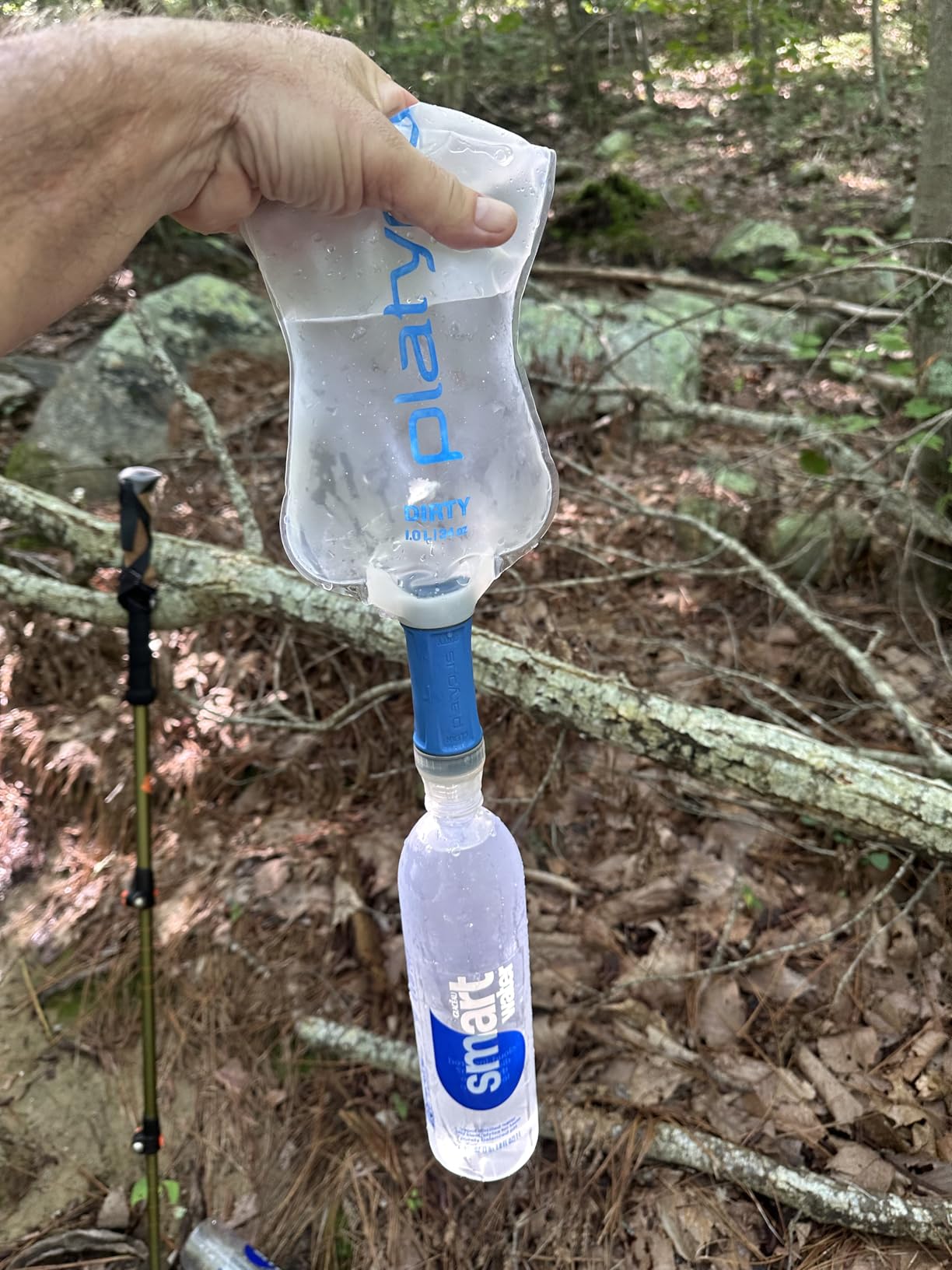
The ConnectCap threads onto any 28 mm bottle, including Smartwater and Cnoc bags, so it is unusually flexible for a fixed system. Maintenance is tool-free: shake to clean or backflush with the included gasket. It is made in the USA with a limited lifetime warranty.
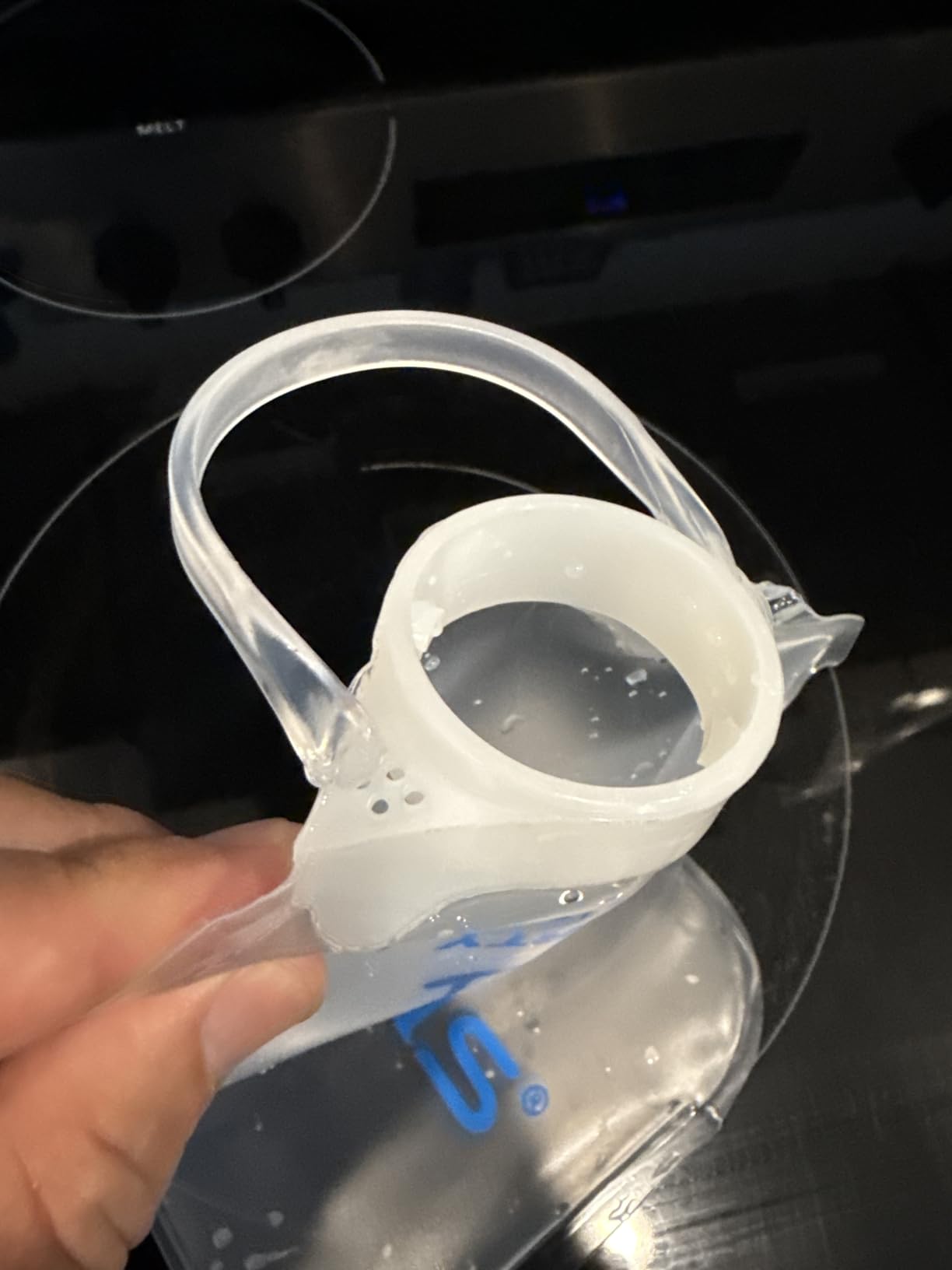
One practical warning from owners: the threads need an extra half turn past what feels tight, or the connection will leak. That single habit accounts for most of the complaints. It also ships without a syringe, and the membrane cannot be frozen and needs regular integrity testing.
When it earns its place
It wins for taste-sensitive users and for anyone refilling bottles constantly, since 3 liters per minute is the fastest squeeze flow in this roundup. The flavor advantage shows up most clearly on water with organic off-flavors.
It also suits bikepackers and fast hikers, since at 3.36 ounces for a complete system it is light for what it does.
When it will not be enough
The 172-review base is the honest limitation here. Long-term durability evidence is thin, and buyers in outdoor forums consistently want years of service data before committing to a new brand.
Budget for a learning curve on the fittings, and remember that a freeze-damaged hollow-fiber membrane has to be replaced rather than repaired in the field.
How to Choose an Emergency Water Filter for Backpacking
Start with volume, because that decides the category before weight does. A solo hiker drinking three to four liters a day will use somewhere near 25 liters of filter life a week, so even a 4,000 liter straw like the LifeStraw Personal outlasts most trips. A group of four running camp water for cooking and cleanup is a different order of magnitude, which puts gravity systems such as the Sawyer SP160 or the SimPure 3L into range and rules out personal straws entirely.
Next, decide whether you need virus removal. A microfilter handles bacteria and protozoa, which is what you face on ordinary domestic backcountry water. Virus protection only becomes necessary for international travel, water below camps, and sources near livestock. Only the Survivor Filter PRO carries a virus claim, and it does so with a 0.01 micron stage and carbon rather than with a lighter design.
Third, factor freeze exposure. Hollow-fiber membranes are damaged by freezing, and the Katadyn BeFree, Platypus QuickDraw and Sawyer systems all carry that limitation explicitly. In shoulder season, keep your filter in a pocket. If you cannot keep it warm, chemical drops become your primary method rather than your backup.
Fourth, plan for maintenance. Every filter in this roundup except the Katadyn BeFree relies on backflushing to hold flow, and models such as the Membrane Solutions S1 and the Waterdrop straw do it with a removable end rather than a syringe. Filters that ship with a syringe give you a tool; filters that do not still work if you have a dirty bag and a clean bottle.
Fifth, consider grit. Desert and post-storm water carries sediment that clogs 0.1 micron elements faster than anything else. A built-in coarse pre-filter, as on the MSR TrailShot, or a re-engineered clog-resistant membrane, as on the LifeStraw Peak Series, saves you from carrying an extra cloth bag. Reviewers on an SHTF forum raise this constantly because it is the difference between drinking and waiting.
Finally, check the fitting standard. Most systems use the 28 mm bottle thread, but the Waterdrop bag collar is sized at 27.5 mm and the Katadyn BeFree is incompatible with non-standard soft flask threads. Buying the filter before you check which bottles you already own is the most common avoidable mistake in this category.
What to Do When Your Filter Freezes, Clogs or Stops Flowing
Total flow failure is the single most repeated complaint in user discussion, and freeze damage is the one users fear most because it leaves no visible sign. One widely repeated description among users is that a filter can break if dropped or frozen and it is very hard to tell whether it is broken. Here is a decision rule that covers most cases.
Step one, backflush before you diagnose. Attach a clean bottle, reverse the flow and push hard for thirty seconds. Most perceived failures are silt sitting on the outside of the membrane, and a backflush clears it. Models with a removable mouthpiece or a cleaning plunger make this possible without buying anything.
Step two, if it froze, treat it as bacteria-only. A frozen hollow-fiber element often keeps removing bacteria and protozoa but loses virus protection and much of its rated flow. Test the flow first. If it still moves water steadily after a backflush, it is usable on ordinary backcountry sources. It is not something to trust on suspect water.
Step three, pre-filter the source. If your water is silty, run it through a coffee filter, a bandana or a cut-off section of dirty bag before it reaches the element. A surprising number of clogging complaints resolve at this step rather than at the filter.
Step four, switch to your second method. This is why forum users carry two independent approaches. Chemical drops and tablets require no equipment, no flow and no clear water, so they cover the exact case where a mechanical filter has failed.
And keep the failure simple. If a filter gives zero flow after a backflush and a pre-filter, stop spending time on it and treat your water another way. The rule is speed, not sentiment.
Building a 72-Hour Emergency Water Kit
A filter alone is not a kit. The same device that handles a clear alpine stream can be useless against brown post-flood water, so redundancy matters more than any single upgrade. That redundancy thinking carries over to fixed home systems too, where our guide to whole house water filters for city water covers the permanent-installation end of the same problem.
1. A primary filter. For a go-bag, weight is not the constraint, so the Survivor Filter PRO earns its place with the widest removal claims. For a hiking kit, the Sawyer Squeeze or the Sawyer Mini covers the same ground at a fraction of the weight.
2. A dirty water bag. A one-gallon reservoir lets you collect water at a stream and filter it back at camp rather than standing there squeezing. The Sawyer SP160 and the Waterdrop kit both include one, which is the reason to pick those over a bare straw.
3. Chemical drops or tablets. Chlorine dioxide drops need no equipment and no clear water, and they cover viruses that no filter here addresses. Users consistently describe carrying them as a backup rather than a primary.
4. A pre-filter cloth. A coffee filter, a bandana or a square of cut-up dirty bag material handles sediment before it reaches the membrane. It weighs nothing and it prevents most clogs.
5. A backflush tool. Whether that is the included syringe, cleaning plunger or simply a second bottle, backflushing is the difference between a filter that recovers and one that does not.
The same five items serve a hurricane kit, a boil-water advisory or a pipe failure, which is why the best emergency water filters for backpacking and the best home preparedness filters overlap so heavily. The categories are the same problem at different scales.
Frequently Asked Questions
What is the best portable water filter for emergency use?
The best portable water filter for emergency use is a hollow-fiber microfilter rated to 0.1 or 0.2 micron absolute, light enough to carry on your body and operable without batteries or spare parts. The LifeStraw Personal is the simplest starting point, the Sawyer SP128 Mini is the lightest hollow-fiber pick, and the Survivor Filter PRO adds the widest removal claims. Carry chemical drops alongside any of them.
Do emergency water filters work?
Yes, for the contaminants they are designed to remove. A 0.1 or 0.2 micron microfilter clears bacteria and protozoa such as giardia and cryptosporidium, which is what makes untreated stream, lake and rainwater drinkable. None of the filters in this roundup remove viruses, chemicals or dissolved minerals, so they are not appropriate for every source.
Can you really drink any water with LifeStraw?
Only if the water is clear and the source is one a filter can handle. The LifeStraw Personal reduces turbidity to 0.2 microns and removes bacteria, parasites and microplastics, so clear stream, lake and rainwater are fine. Very silty or sediment-heavy water clogs any straw, and water near human or livestock waste needs virus protection this device does not provide.
What is the best water filter system for backpacking?
It depends on group size and how you travel. Solo hikers and fast packers do well with an integrated squeeze filter such as the Katadyn BeFree or the Platypus QuickDraw. Pairs and small groups are best served by the Sawyer Squeeze at 1.7 liters per minute. Groups of four or more need a gravity system like the Sawyer SP160 or the SimPure 3L.
Which backpacking water filter is better, the MSR or the Katadyn?
The Katadyn BeFree is lighter and faster, filtering at up to 2 liters per minute at 2.24 ounces with no syringe required. The MSR TrailShot needs no dirty bag at all and has a built-in coarse pre-filter that handles silty water better, plus the lowest published minimum temperature at 33 degrees Fahrenheit. Choose Katadyn for speed, MSR for dirty sources and simplicity.
Is Brita or LifeStraw better?
Neither is built for backcountry water. Brita cartridges are designed for tap water and reduce taste and chlorine rather than removing pathogens from untreated sources. A LifeStraw is a genuine 0.2 micron microfilter that removes bacteria and parasites, which is why it belongs in a hiking kit and a Brita does not. For home emergencies, look at a filter rated to 0.1 micron absolute.
Can you use a water filter after it freezes?
Often yes, for bacteria and protozoa, but test the flow first. A frozen hollow-fiber membrane commonly keeps filtering while losing virus protection and much of its rated flow. Backflush it, and if it still moves water steadily you can use it on ordinary backcountry sources. Do not rely on it for suspect water, and keep filters on your body overnight in freezing conditions.
The Bottom Line
For most people, the LifeStraw Personal is the right first purchase from the best emergency water filters for backpacking list: it takes no technique to learn and carries more owner history than anything else here. Hikers counting grams should take the Sawyer SP128 Mini instead, and anyone who wants published certification behind the claims should pick the Membrane Solutions S1.
Move up the list when volume forces you to. The Sawyer Squeeze and the Katadyn BeFree cover pairs and small groups, the Sawyer SP160 and SimPure 3L cover real groups, and the Survivor Filter PRO is the one to pack when virus risk or water quality is uncertain. Add chemical drops to whichever you choose, because the best emergency kit is the one that still works when the filter stops.
All twelve were reviewed for 2026. Check the current specifications before you commit.