
A boondocking battery earns its keep in the two hours after you cut the generator and the first cold morning when nothing charges as fast as it should overnight. The right deep cycle battery for RV boondocking is not the one with the biggest number on the label. It is the one whose usable capacity, weight, and charging behavior match the nights you actually camp away from a hookup.
I have been working through house battery setups with our team for the better part of a year, comparing published cycle ratings, measured weights, group footprints, and warranty terms rather than marketing claims. That process turned up a pattern worth stating plainly. Almost every cheap Group 27 sold as deep cycle is a dual-purpose marine unit dressed up with cold cranking amp numbers that mean nothing when you are drawing a 12V load all night.
So here is the honest version. A 12V AGM gives you about half of its rated amp hours before the voltage sags far enough to worry you, so a 100Ah AGM realistically holds around 640 watt-hours. A 100Ah LiFePO4 unit holds about 1280 watt-hours and weighs roughly 22 pounds instead of 60. That single swap is why lithium has become the default answer in RV forums. On the r/GoRVing boondocking battery thread, the prevailing position is that lithium is the gold standard while lead-acid is described as heavy, shallow, and cheap. I agree with that read for most people, with one important exception that I cover in the cold weather section below.
This roundup covers ten deep cycle batteries, all measured against the same criteria: real usable watt-hours, published weight, physical group size, depth of discharge, cycle life, warranty length, and whether the chemistry is honest about cold weather. We are not paid by any of these brands, and none of them got to review this before publication. Every pick has a downside named, because a list where nothing has a flaw is just an advertisement.
One more thing before the picks. The single most common complaint in RV communities is a battery that will not hold a charge even with solar on it. In almost every case I have traced, that comes down to one of four things: an undersized bank, an undersized charge controller, sulfation from sitting half-charged for months, or one weak cell dragging down a parallel string. The battery itself is rarely the culprit. Sizing math is covered in detail further down, and the charge controller point matters more than most buyers expect.
Table of Contents
Top 3 Deep Cycle Batteries for RV Boondocking
Here are the three that came out on top once rating and review volume were weighed together. The WEIZE 100Ah AGM takes the editor’s choice because of its combination of a 4.5 rating across more than sixteen thousand reviews, a sealed maintenance-free design, and a price point that keeps it in reach for first-time boondockers. The Renogy 100Ah AGM is the best value option for buyers who want proven deep cycle capacity and a wider warranty. The Litime 12V 100Ah LiFePO4 is the top rated pick and the one we would actually put in a trailer we intended to take off-grid for a week.


Quick Overview: Best Deep Cycle Batteries for RV Boondocking in 2026
All ten batteries in this roundup, with the specs that actually change the buying decision. Weights are as published by the manufacturer, and watt-hour figures are the chemistry’s rated capacity multiplied by 12V.
| Product | Specifications | Action |
|---|---|---|
| WEIZE 12V 100Ah AGM Deep Cycle |
|
Check Latest Price |
| Renogy 12V 100Ah AGM Deep Cycle |
|
Check Latest Price |
 dumfume 12V 150Ah LiFePO4 dumfume 12V 150Ah LiFePO4 |
|
Check Latest Price |
 Daakmax 12V 100Ah AGM Deep Cycle Daakmax 12V 100Ah AGM Deep Cycle |
|
Check Latest Price |
 Litime 12V 100Ah LiFePO4 Group 24 Litime 12V 100Ah LiFePO4 Group 24 |
|
Check Latest Price |
 SUPER EMPOWER 12V 100Ah LiFePO4 SUPER EMPOWER 12V 100Ah LiFePO4 |
|
Check Latest Price |
 yeagulch 12V 200Ah LiFePO4 yeagulch 12V 200Ah LiFePO4 |
|
Check Latest Price |
 VEMDIA 12V 100Ah LiFePO4 Group 31 VEMDIA 12V 100Ah LiFePO4 Group 31 |
|
Check Latest Price |
 Power Queen 12V 100Ah LiFePO4 Group 24 Power Queen 12V 100Ah LiFePO4 Group 24 |
|
Check Latest Price |
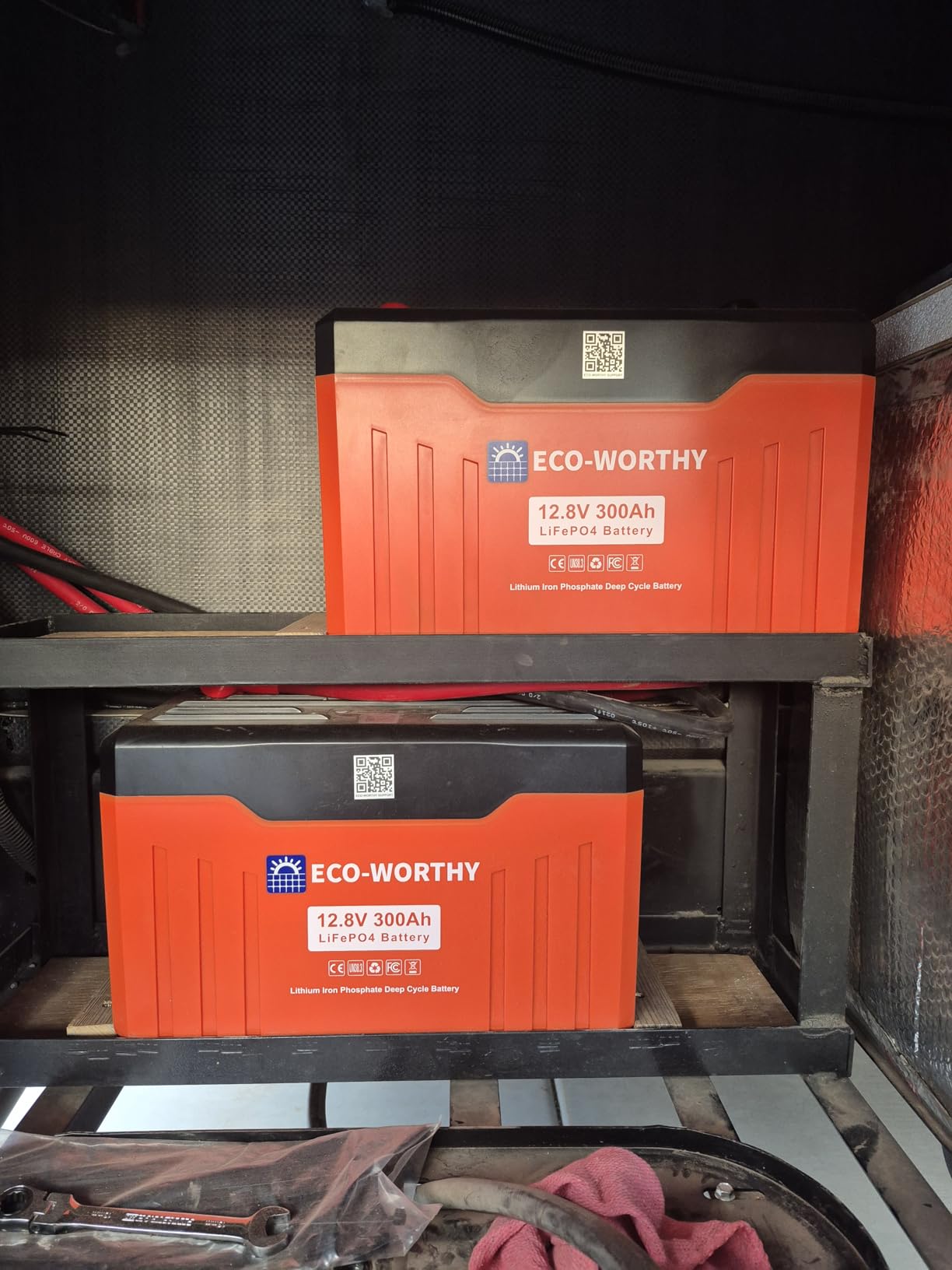
 ECO-WORTHY 12V 314Ah LiFePO4 ECO-WORTHY 12V 314Ah LiFePO4 |
|
Check Latest Price |
A note on reading this table. A 150Ah lithium and a 100Ah AGM do not hold the same usable energy even though the amp-hour numbers look comparable in the same column. The watt-hour column is the one to plan around, and the chemistry column tells you how much of that total you can actually use on a deep discharge.
1. WEIZE 12V 100Ah AGM Deep Cycle – The Most Proven Pick in the Roundup
Weize Deep Cycle AGM 12 Volt 100Ah Battery, Maintenance-Free, 3% Self-Discharge Rate, 1150A Max Discharge Current, Perfect for RV, Solar, Trolling Motor, Wind, Marine, Camping and Off-Grid System
12V 100Ah sealed AGM
57 pounds
1-3% monthly self-discharge
1-year warranty
Pros
- Maintenance-free sealed AGM with no acid spill
- 1100A max discharge handles fridges and microwaves
- 1-3% monthly self-discharge suits long winter storage
- 16k+ reviews with 76% five-star ratings
Cons
- 57 pounds is a two-person lift into most battery bays
- Only a 1-year warranty
- Some units report state of health below 100%
I keep coming back to this battery because the sample size tells the story. A 4.5 rating sitting on more than sixteen thousand reviews is a rare combination in a category where most listings have fewer than five hundred reviews total. When a number that large holds steady, it usually means the product does what the listing says without a lot of variance between units.
For boondocking specifically, the useful detail is the 1150A maximum discharge rating at five seconds. That is more headroom than a 12V 100Ah pack needs for a refrigerator, water pump, lighting, and a small inverter, which means you are not living at the edge of what the chemistry can deliver. The sealed AGM format also means no water in the compartment and no venting worries, which matters more than most buyers anticipate in a wet location.
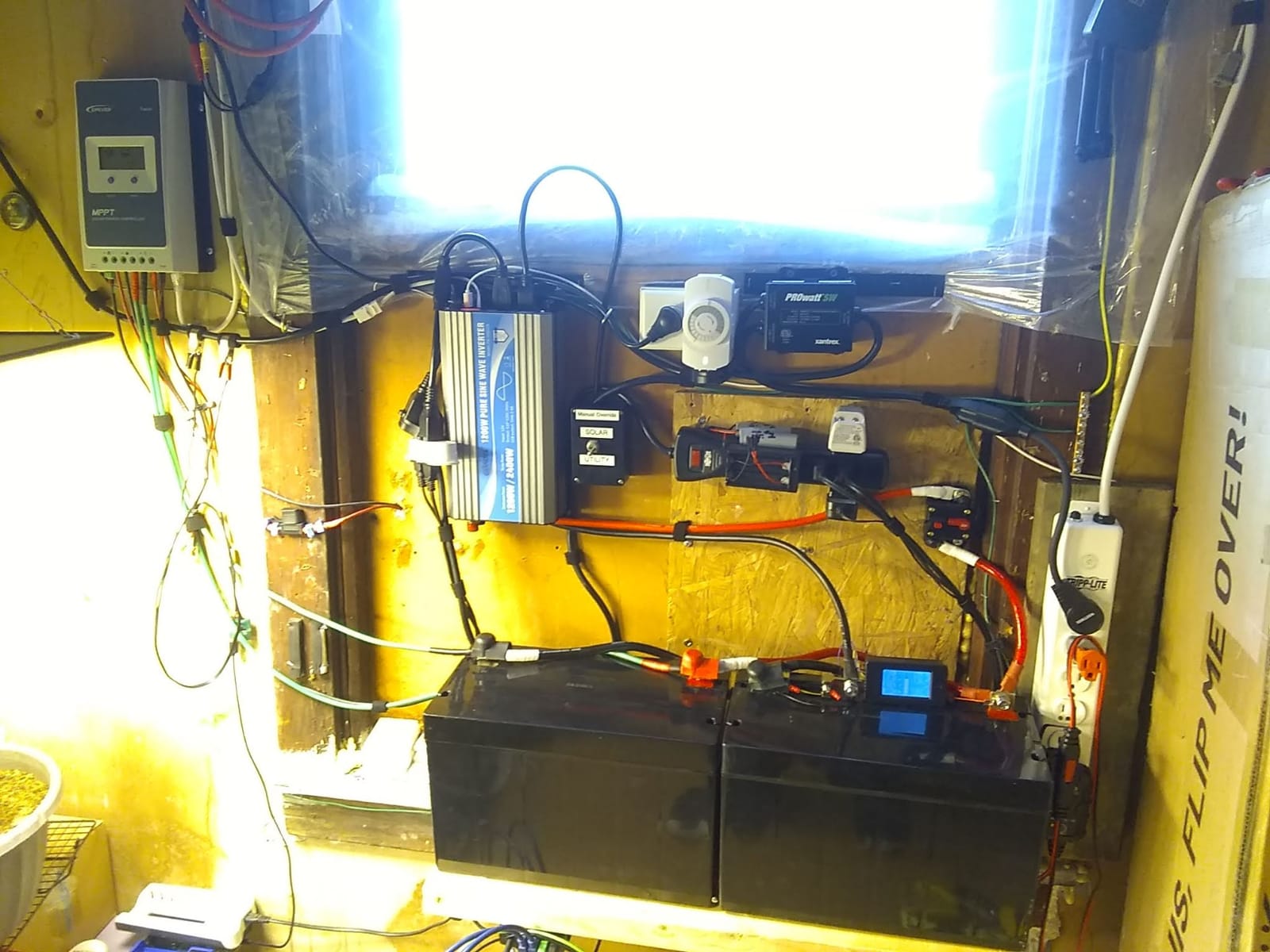
The published operating window runs from 5F for discharge up to 122F, with charging recommended between 14F and 122F and best performance at 77F. Compare that to the lithium picks in this roundup, several of which simply stop accepting charge below 32F. This AGM will take a charge in a cold mountain campground without any special arrangement, and that alone justifies it for a lot of winter campers.
Self-discharge of 1-3% per month is the quiet advantage here. Leave a trailer parked for five months over winter and an AGM is still mostly there when you return. Lithium holds even better, but the gap is smaller than most people assume, and the AGM will not need a maintenance charge cycle to get back to full.
Why this is the pick for a first boondocking build
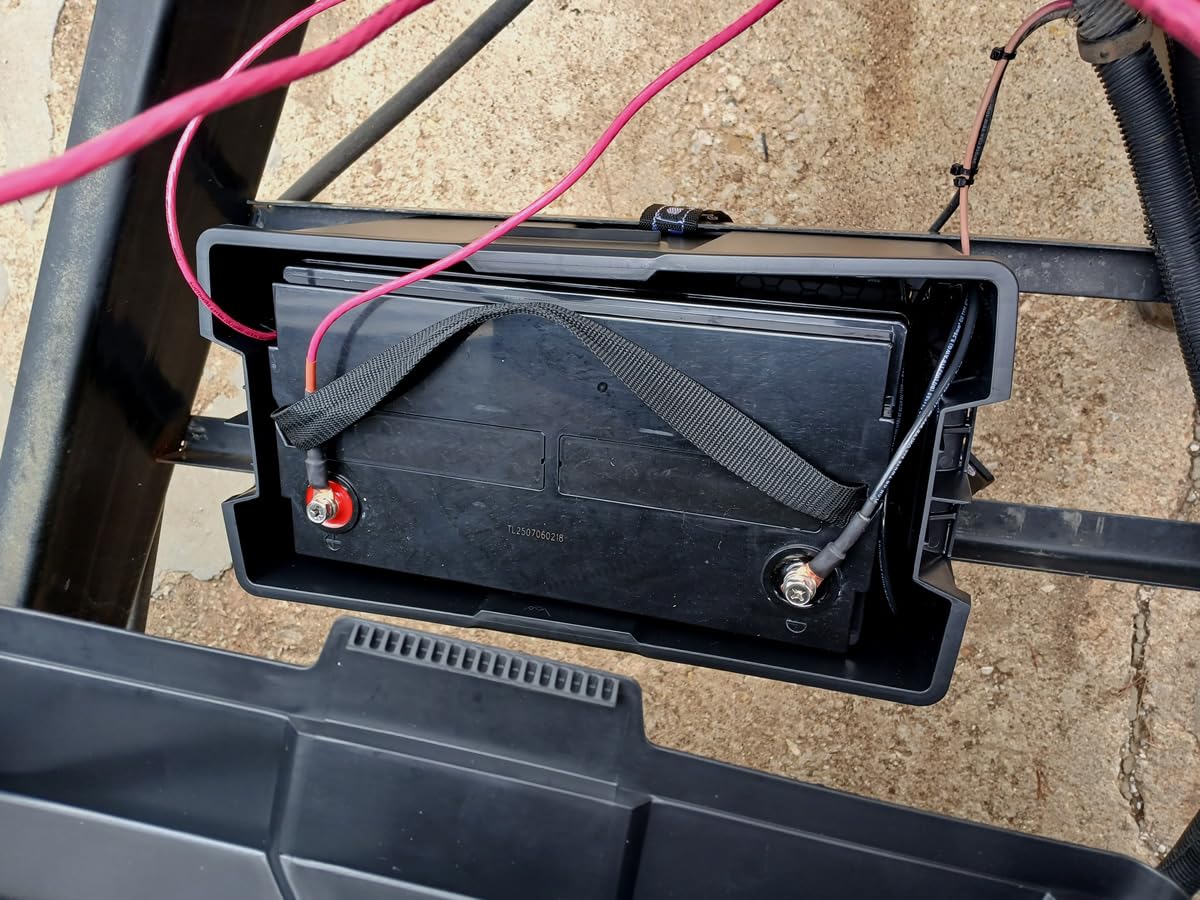
The core reason is that it fails gracefully. If your charge controller is undersized or your bank is a bit light on amp hours, an AGM with 1150A of discharge headroom keeps your refrigerator and water pump running while you figure out what to add next. Lithium units are more efficient, but several of them are fussier about charge profiles and temperature, and fussiness is a poor trade for someone on their first trip away from a campground.
It also fits. At 12.99 by 6.73 by 8.43 inches it sits in most Group 27 and many Group 31 boxes without modification, which is a real advantage over batteries that need a new box or a re-cut compartment tray.
Where it falls short
Fifty-seven pounds is the honest headline weakness, and it is heavier than most Group 24 lead-acid batteries despite sharing roughly the same footprint. Installing one solo into a travel trailer is a genuine chore, and anyone carrying a second battery for reserve capacity is moving well over a hundred pounds of dead weight into their payload budget.
The one-year warranty is short by comparison. Some buyers also report units that showed a state of health below 100% on arrival, and since battery returns generally have to go through the seller rather than the retailer, expect some friction if that happens to you. Those are individual experiences rather than a pattern, but the warranty length is a fact on the spec sheet.
The deeper limitation is chemistry, not this unit. Even a perfect 100Ah AGM gives you roughly 640 usable watt-hours, which is about three nights of moderate boondocking on a single battery with a modest solar panel. If you want a week away, you are looking at two of these in parallel and a more serious panel array.
2. Renogy 12V 100Ah AGM Deep Cycle – Proven Capacity and a Longer Warranty
Renogy 12 Volt 100Ah Deep Cycle AGM Battery, Lead Acid Solar Battery
12V 100Ah sealed AGM
63.9 pounds
Parallel up to 4P
2-year prorated warranty
Pros
- Real 100Ah capacity confirmed by measured discharge testing
- -4F to 140F operating range
- 1100A max discharge supports fridges and CPAP
- Sealed design needs no watering
Cons
- Heaviest unit in the roundup at 63.9 pounds
- Prorated two-year warranty
- Some reports of units not holding charge
- M8 terminals may not match existing cable lugs
Renogy is the pick I recommend when someone asks for a battery that is unambiguously a deep cycle rather than a dual-purpose marine unit with a deep cycle label stuck on the box. The 4.4 rating on more than three thousand reviews is built on long-term owners who have actually discharged these, and their reports of stable output in parallel banks match what the spec sheet implies.
The company also documents the numbers most listings hide. When buyers asked, service supplied Peukert constant and charge efficiency data, which sounds like a small thing until you are trying to model real runtime rather than the optimistic amp-hour figure on the label. That kind of transparency is rarer than it should be in this category.
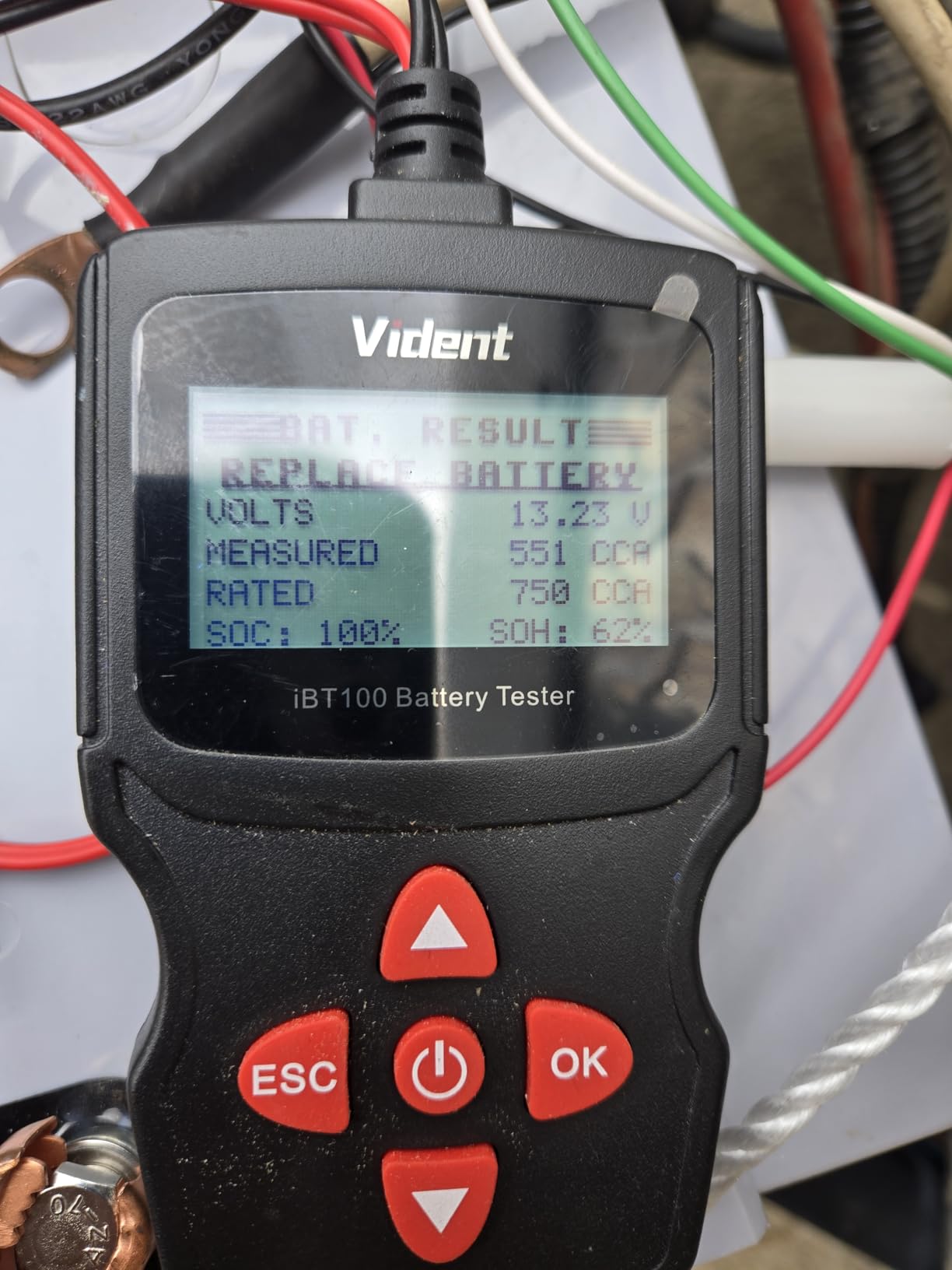
Operating range of -4F to 140F is the widest cold performance claim in this roundup among lead-acid, and 1100A maximum discharge at five seconds covers a CPAP machine with a humidifier, a microwave, and a compressor fridge without drama. Self-discharge stays below 3% per month at 77F, so storage between trips is a non-issue.
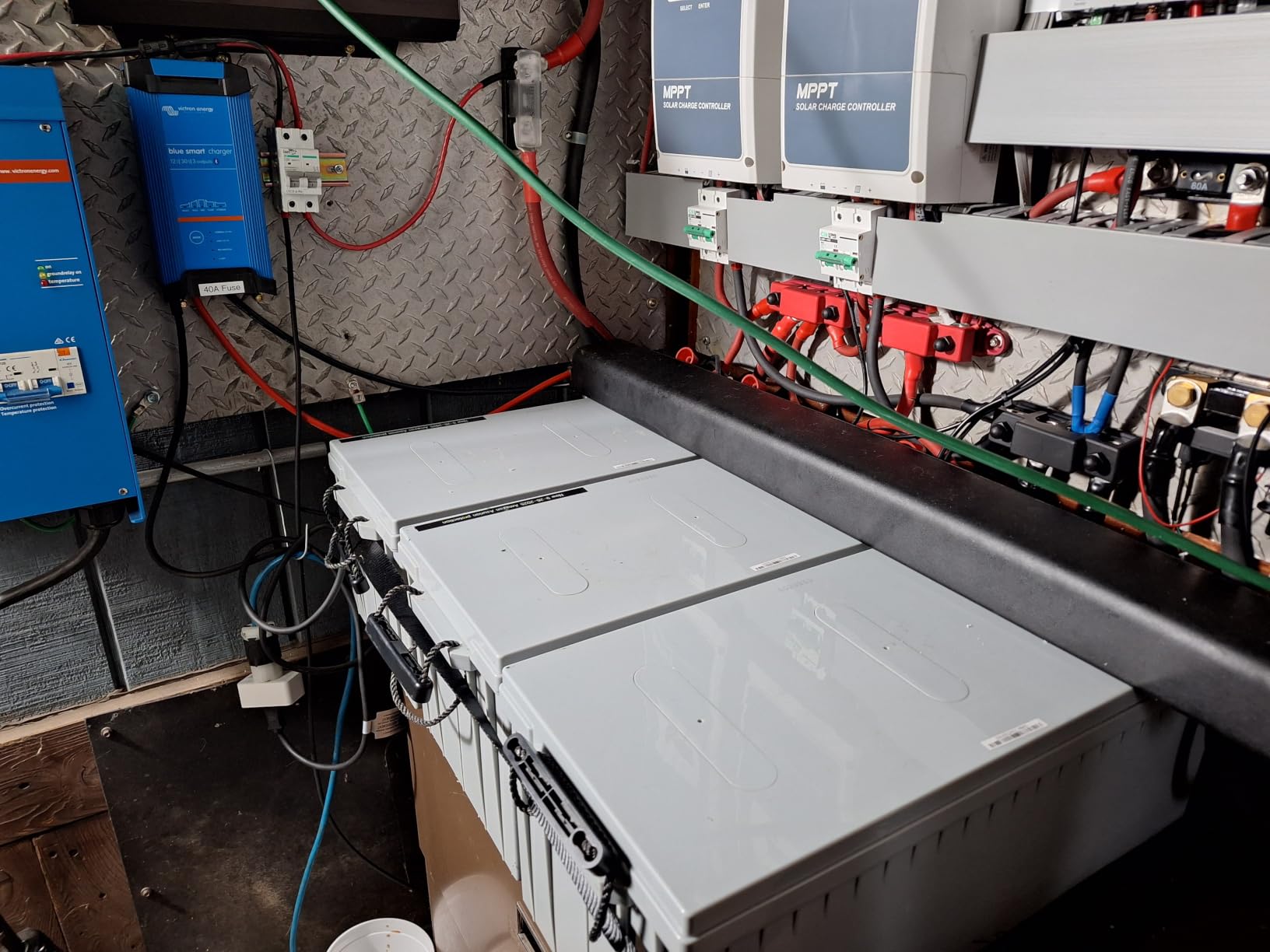
For banks, the support for parallel connection up to 4P means you can build a two, three, or four battery bank from the same model and match behavior across the string. Mixing batteries of different ages in one parallel bank is where most field failures start, so having a single model you can repeat is worth more than it sounds.
Why this suits a camper that will be upgraded in stages
Because it parallel links cleanly, you can start with one battery in a modest trailer and add a second next season without changing chemistry or chargers. That is a very different proposition from committing to a lithium ecosystem on day one, particularly if you are still working out what your real daily load looks like.
It is also the safer recommendation for anyone running an older RV converter without a lithium profile. AGM is what that hardware was designed to charge, and there is no equalization setting to disable or charge curve to verify.
The weight problem is the real cost
Sixty-three point nine pounds is the heaviest single battery here, and Renogy’s own owners flag it as the defining drawback. Larger variants in the same line run over a hundred pounds, which is a two-person lift. On a Class C or a small travel trailer where payload is already tight, that weight is a constraint rather than a detail.
Two other honest limitations. The two-year warranty is prorated, which means coverage scales down over time rather than running flat. And a small number of buyers report units that would not hold a charge, most likely from freezing during transport or storage, which is the one failure mode you can partially guard against by storing the battery above freezing and topping it up before you leave it for the season.
3. dumfume 12V 150Ah LiFePO4 – The Best Mid-Size Lithium for Serious Boondocking
dumfume 12V 150Ah Max LiFePO4 Battery, IP65 Waterproof 100A BMS
12.8V 150Ah LiFePO4
1920Wh energy
22.1 pounds
5-year warranty
Pros
- 1920Wh of usable energy at 41 pounds
- 4000+ cycles to 80% capacity
- IP65 case suits wet compartments
- Expands to 4S4P for larger systems
Cons
- Requires 5C or higher for full performance
- Needs a maintenance charge every six months in storage
- Low-temperature charging returns excluded
- 12% of reviews are 1-star
One hundred fifty amp hours is the sweet spot that rarely shows up in roundups. A 100Ah pack gets you through a weekend comfortably. Two hundred amp hours is overkill for most trailers and 170 pounds of lead acid if you go that route. This unit delivers 1920 watt-hours in a 22.1 pound package, which is the capacity-to-weight point where lithium starts changing what a boondocking trip looks like.
At that size you can carry a coffee maker, a CPAP with humidifier, a 12V fridge, and a small inverter for a couple of hours without planning around it. That changes the character of a trip far more than the numbers suggest, because the alternative is rationing.
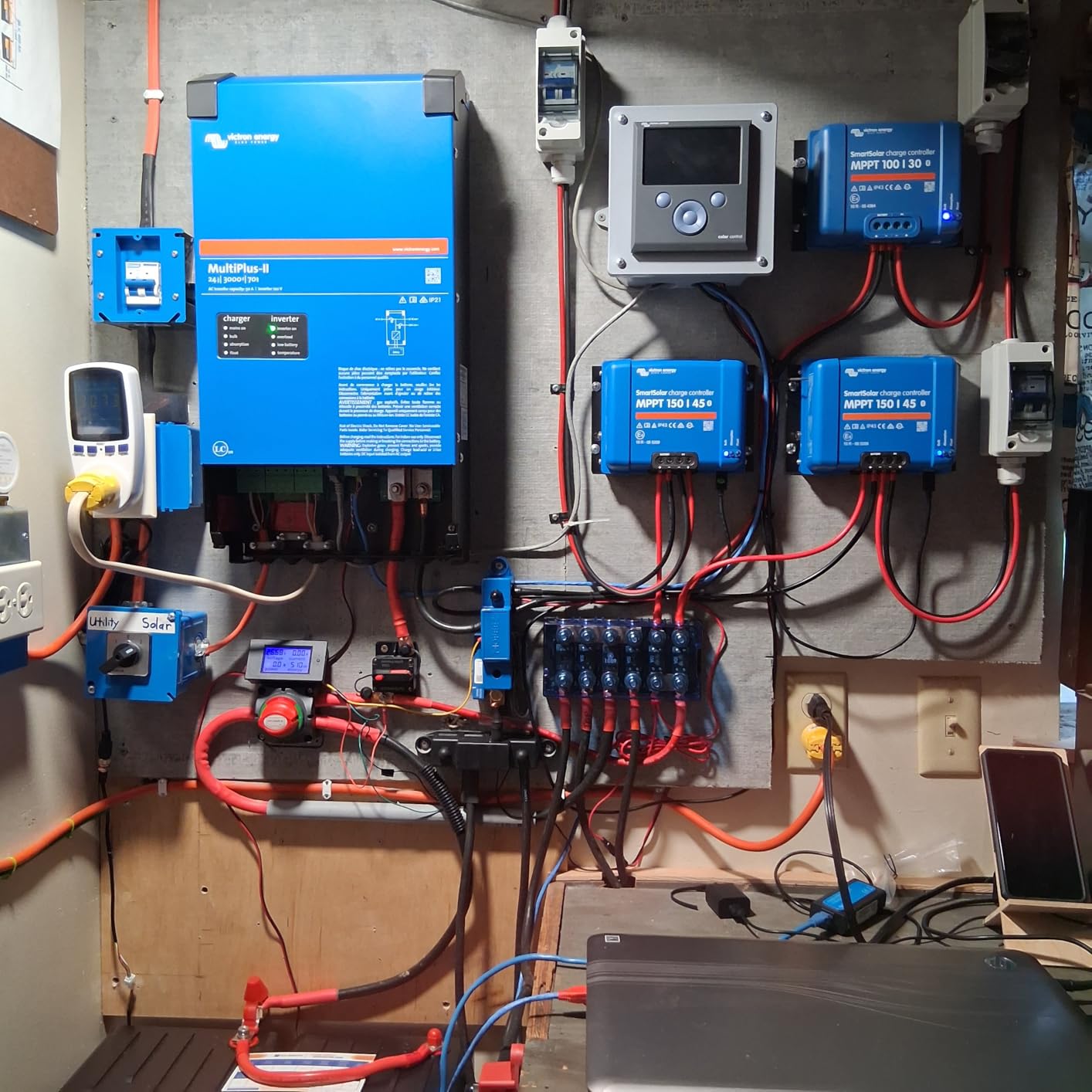
The 100A battery management system covers overcharge, over-discharge, short circuit, and overheating, and the case carries an IP65 rating, which matters in a wet battery bay or a truck camper body where spray is possible. Cycle life is rated at 4000+ cycles to 80% capacity, and the warranty runs five years.
Expansion to 4S4P is supported, so a single unit can become the start of a 48V system. Few people need that, but it means the battery is not a dead end if your ambitions grow.
Why it fits mid-size trailers and vans best
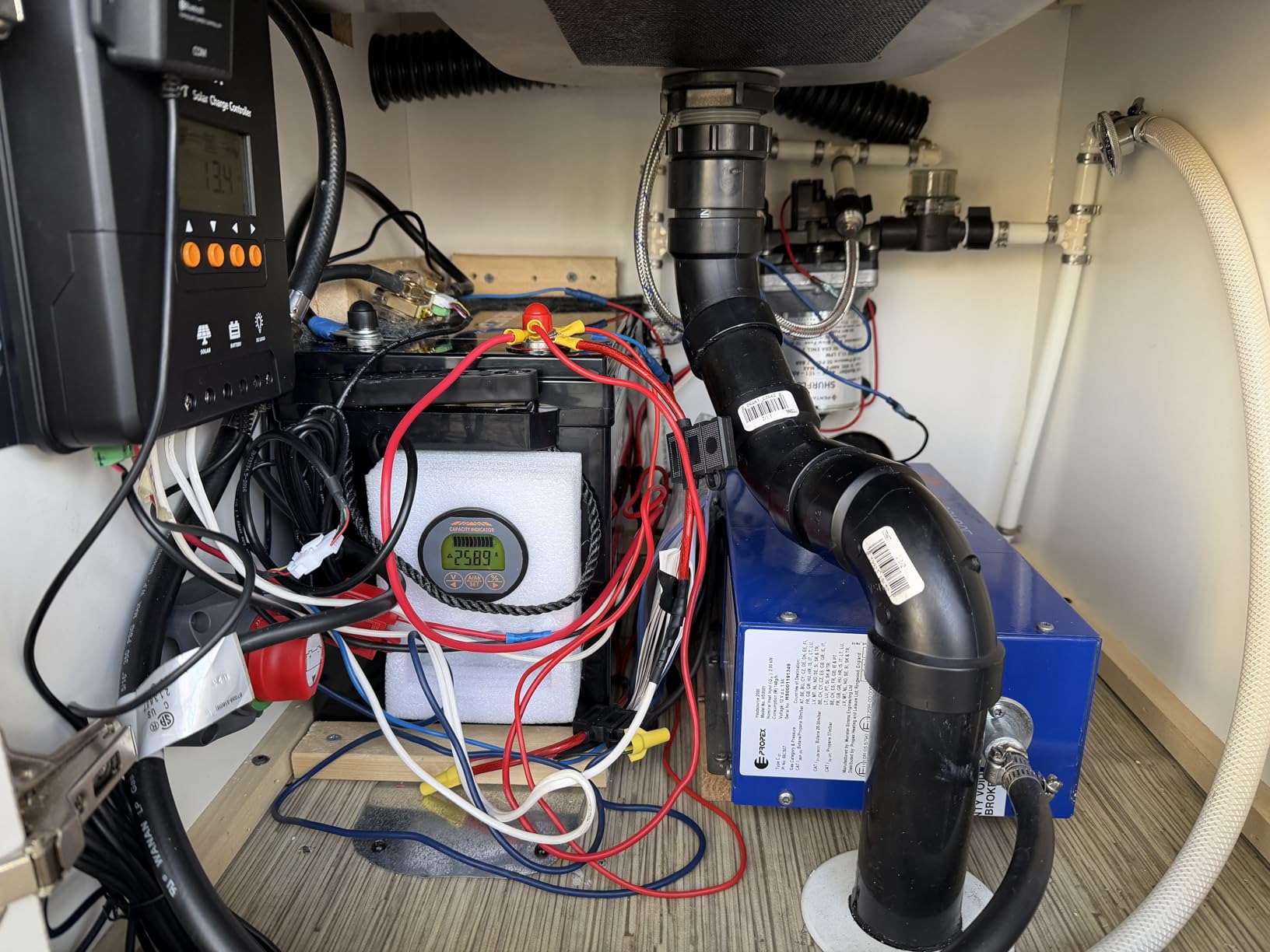
At 10.04 by 7.68 by 9.84 inches it is close to a Group 31 footprint, which is common in van conversions and truck campers where every inch of cabinet space is contested. You get roughly triple the usable energy of a 100Ah AGM for less than half the weight, and you do not have to re-cut a battery tray to make it fit.
It is also the right capacity for anyone running solar seriously. A 200-watt panel in good sun puts back close to what a typical 40 amp-hour daily draw consumes, which means a single panel and this battery can hold a steady state that a 100Ah pack would struggle to sustain.
Watch the storage and cold caveats
Three things to know before you buy. This battery needs a full maintenance charge at least every six months during extended storage, so a battery sitting in a shed over winter will not be ready to go without a charger. Low-temperature charging returns are excluded from the warranty, which is a meaningful gap if you camp in winter.
It also wants 5C or higher for reliable charging and discharge performance, and 12% of its reviews are 1-star, the highest share among the lithium units here. That points to a real minority of early defects. At a 4.4 rating on 789 reviews the overall signal is still solid, but this is a brand with less field history than the picks ranked above it.
4. Daakmax 12V 100Ah AGM Deep Cycle – Strong Out-of-Box Power for Weekend Campers
Daakmax 12V 100ah Deep Cycle AGM Battery Rechargeable SLA Maintenance-Free Batteries for Camping Marine Cabin RV Off-Grid System
12V 100Ah sealed SLA AGM
1150A max discharge
1-3% self-discharge
1-year warranty
Pros
- Strong cranking power out of the box
- Arrives charged and ready to fit
- Sealed leak-proof AGM needs no maintenance
- Fits common RV battery compartments
Cons
- Most reviews come from powersports buyers not RVs
- Square-post terminals are fiddly in tight bays
- Only a 1-year warranty
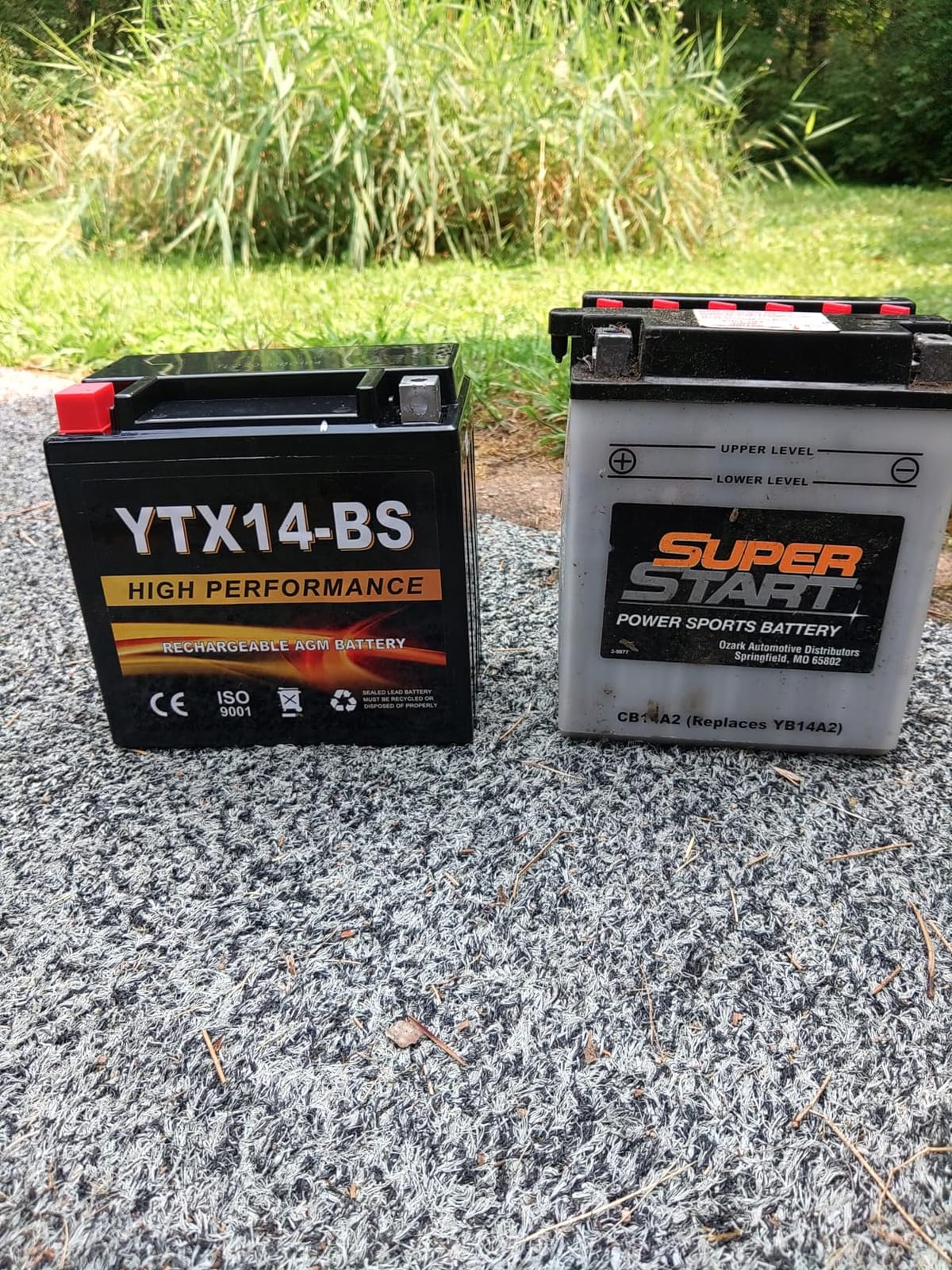
This one needs a caveat up front that most listings do not give you. The overwhelming majority of its reviews come from powersports and marine users cranking engines, not from RVers running house loads overnight. The 100Ah deep cycle rating and sealed AGM construction are real, but the social proof is being generated by a different use case.
That is not a disqualifier. If you want a single sealed battery that can start something in a pinch and then carry a weekend of 12V loads, the capability is there and the 1150A maximum discharge rating is the highest figure in this group alongside the WEIZE.
Arriving charged matters more than it sounds. A battery that ships at partial state of charge and gets installed immediately will sulfate from the first week of sitting half-charged, which is precisely the complaint we see repeated in RV communities about batteries that will not hold a charge with solar on them.
Self-discharge of 1-3% per month and a vibration-resistant ABS casing make it a reasonable choice for a trailer that sits on a gravel pad or does a lot of road time. The listing also covers solar devices, off-grid systems, and marine cabins, which is the same application set as the other AGMs here.
Why it works for weekend campers on a budget
Weekend campers running a 12V fridge, lighting, and a water pump on a 200-watt panel do not need 1280 watt-hours of usable lithium capacity. They need a sealed battery that will not leak, will not freeze, and will charge from an unmodified RV converter. That is exactly what this is, and it is the simplest possible answer to the problem.
It is also a reasonable second battery for a lead-acid bank, though you should match age and model closely rather than pairing a fresh unit with an older one.
The reviews do not describe an RV use case
Be clear-eyed about that. When you read that owners are delighted with cranking power, that is not evidence about overnight 12V discharge depth, which is the number that matters for boondocking. You are getting a capable battery with weaker documentation for this specific application than the two AGMs above it.
The practical friction is hardware. Square-post terminal hardware is fiddly to assemble inside a cramped compartment, and shorter terminal screws can be hard to start on thick factory cable ends. Only a 1-year warranty is offered, and returns on battery products generally route through the seller rather than the retailer, so read the listing carefully before ordering.
5. Litime 12V 100Ah LiFePO4 Group 24 – The Top Rated Pick and the Best True Drop-In
Litime 12v 100Ah RV LiFePO4 Lithium Battery for Van, Marine, Off-Grid
12.8V 100Ah LiFePO4
BCI Group 24
22.2 pounds
5-year warranty
Pros
- True BCI Group 24 drop-in for existing boxes
- 1280Wh of 100% usable energy
- About one third the weight of a Group 24 AGM
- Only 8% capacity loss over five months of storage
Cons
- Not for engine starting or golf cart use
- Some units failed to accept charge out of the box
- Warranty service can require shipping internationally
- Bluetooth readings unreliable at very low draw
At a 4.6 rating this is the highest-rated product in the roundup, and the ownership story behind that number is specific: genuine drop-in fit, low weight, and long runtimes in RV, van, and marine installs. The BCI Group 24 footprint is the reason it fits existing battery boxes without modification, which removes the single most common reason people hesitate to switch chemistry.
The 1280 watt-hours figure is the whole argument. A 100Ah AGM of the same nominal size gives you about 640 usable watt-hours and weighs close to 60 pounds. You are getting double the usable energy at roughly a third of the weight, in a case that drops into the same tray.
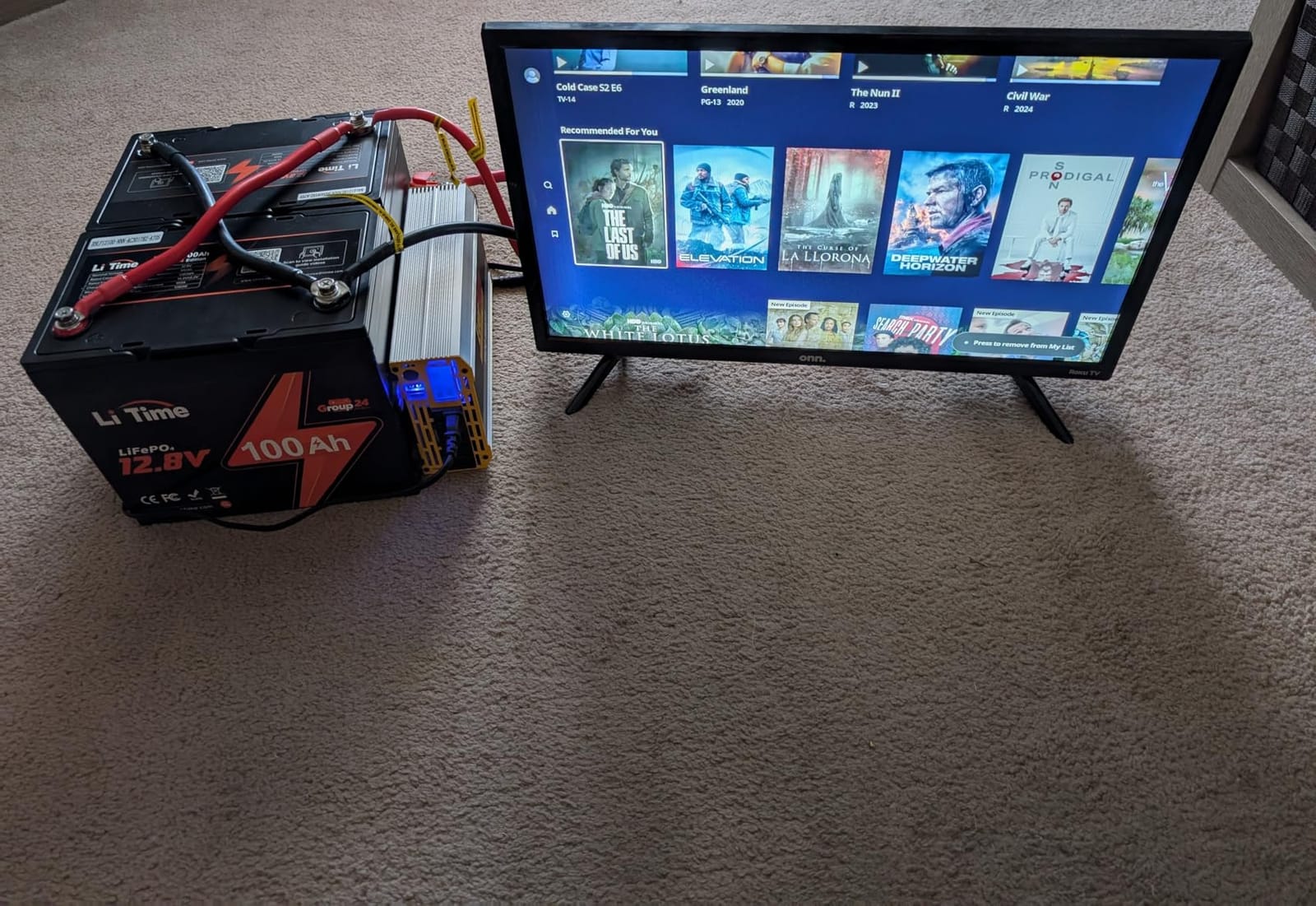
Storage behavior is the sleeper detail. Owners report losing only 8% of capacity over five months of winter storage, which means a battery parked for the season comes back ready to use. That removes the maintenance-charge ritual that catches people out with other lithium units.
Expansion to 4P4S takes the system to 51.2V at 400Ah or 20.48kWh, so a single unit is a starting point rather than a ceiling. Grade-A LiFePO4 cells sit behind a 100A BMS, cycle life is rated at 4000+ deep cycles, and the warranty is five years with AIG product liability coverage behind it.
Why it wins for anyone replacing an existing Group 24
Because it is a real drop-in rather than an approximation. At 14.49 by 7.44 by 10.04 inches it matches BCI Group 24 dimensions, so your existing hold-downs, cable lengths, and compartment all keep working. The single biggest cost in a chemistry swap is usually the tray, the cable terminations, and the afternoon, and this avoids all three.
It is also the most sensible pick for a travel trailer that boondocks a few nights per month. One battery gives you a weekend plus change with a 200-watt panel, and a second identical unit doubles it without any change to your charging setup.
Understand the warranty and the limits
It is an energy storage battery, not a starting battery. Owners have used it for trolling motors and RV house loads without issue, but it is not intended to crank an engine, run a golf cart, or power a MerCruiser. Respecting that limit is what keeps the cells healthy.
The real friction is service. Some units failed to accept charge out of the box or stopped charging within months, and warranty resolution can require shipping the battery internationally with slow refund turnaround. That is a structural disadvantage to buying from a domestic brand, and it is worth weighing against the fit and storage advantages before you commit. Bluetooth state of charge readings are also unreliable at very low draw, so use them as a rough indicator rather than a precision gauge.
6. SUPER EMPOWER 12V 100Ah LiFePO4 – The Lightest True Group 24 Drop-In
12V 100Ah LiFePO4 Battery, Group 24 Deep Cycle RV/Trolling Motor Battery
12.8V 100Ah LiFePO4
1280Wh
21.6 pounds
5-year warranty
Pros
- True BCI Group 24 fit with M8 terminals
- Only 21.6 pounds for 1280Wh
- Low-temp protection pauses charging below 32F
- Expands to 4S4P up to 20.48kWh
Cons
- Charging disabled below 32F by BMS protection
- Not for engine starting or cranking
- Existing lead-acid chargers not recommended
- Discharge stops at -4F and needs 41F to resume
Twenty-one point six pounds for 1280 watt-hours is the best weight-to-energy figure in this group, and the Group 24 footprint with M8 terminals means it slots into a standard trailer battery box with no modifications. For a van conversion where every pound of payload budget is spoken for, those two facts together are the pitch.
The 100A BMS covers overcharge, over-discharge, overcurrent, short circuit, and temperature extremes, backed by Grade A cells and a five-year warranty with support response promised within 24 hours.
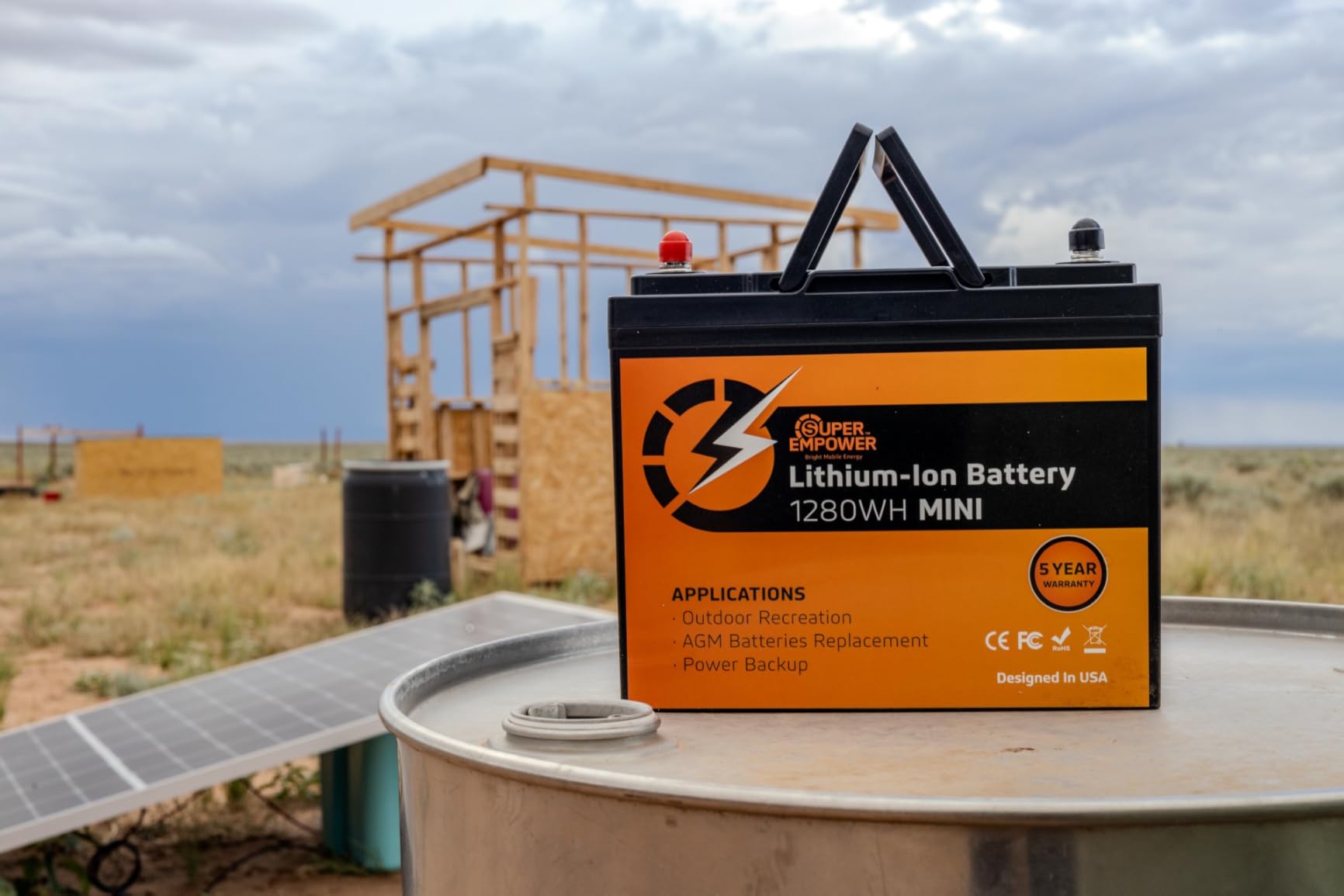
What makes this one worth reading carefully is how explicitly the cold behavior is documented. Low-temperature protection pauses charging below 32F and resumes above 41F. Discharge stops at -4F and similarly needs 41F to resume. Those are not vague claims, they are specific thresholds, and knowing them in advance is how you avoid the single most common lithium complaint in cold climates.
Internal resistance is listed at 40 milliohms, which is a healthy figure that translates to less voltage drop under a heavy inverter load. If you are running a microwave or a CPAP with a humidifier, that matters.
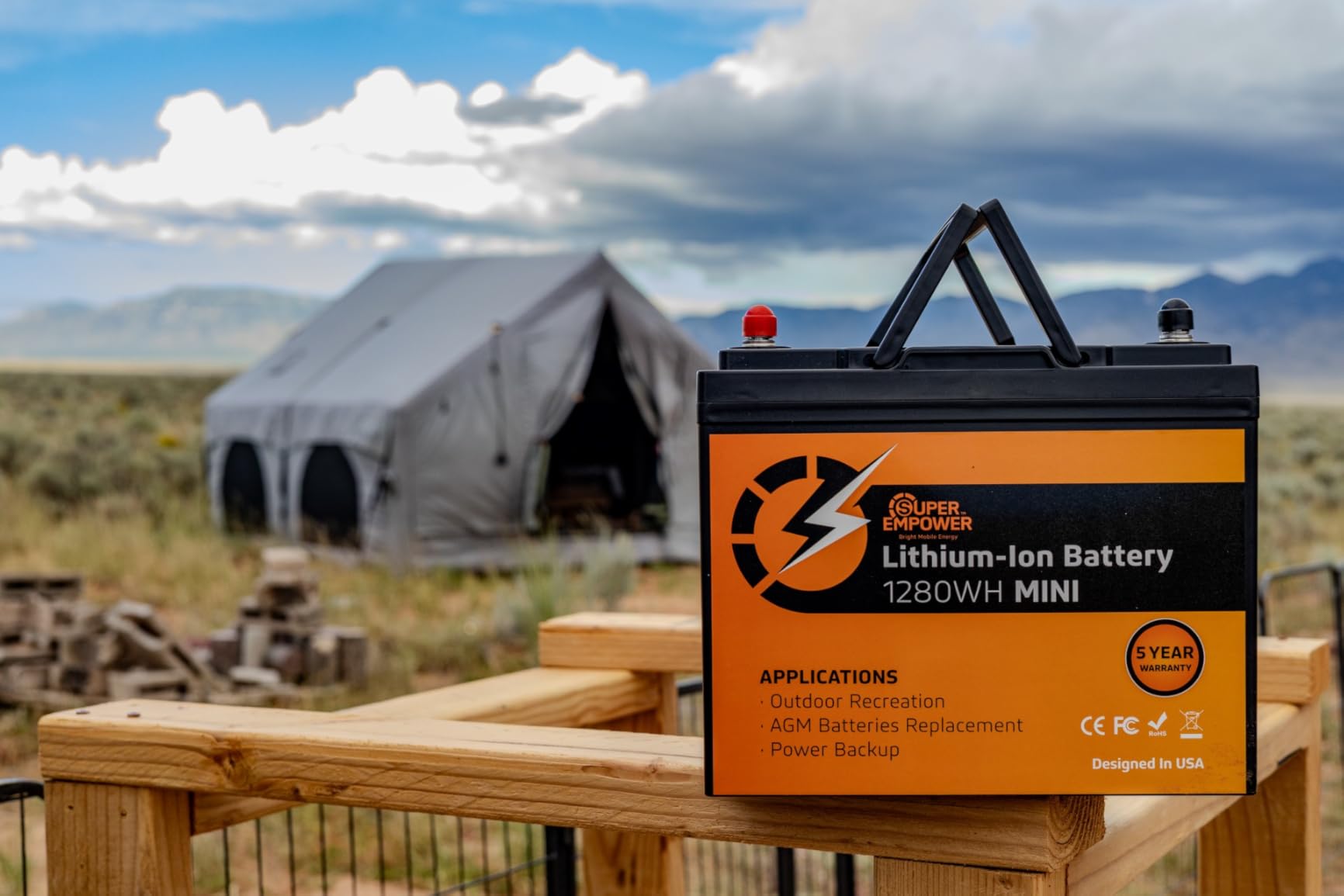
Why it suits lightweight builds and small spaces
At 6.49 inches deep by 10.24 wide by 8.98 high it is compact enough for a conversion van cabinet or a teardrop where a full-size Group 31 will not fit. Even where space is not the constraint, removing roughly 40 pounds of battery for the same usable energy as a 100Ah AGM is a straight win on payload.
It also works as a house bank alongside a starting battery in a smaller system, and a pair in parallel gives you about 2560 usable watt-hours, which is a solid three or four day boondocking bank for a typical trailer.
The cold cutoff is a real decision point
If you camp below freezing, this battery will not accept charge until the pack warms past 41F. That is correct, protective behavior, not a defect, but it means your charge plan has to account for it. A battery installed in an unheated bay in a mountain campground in November will simply not recover on solar alone.
Two options address it. Mount the battery inside a heated compartment, or choose a self-heating lithium model. The second limitation is the charger. Non-lithium chargers are not recommended, so if your RV has a legacy converter without a lithium profile, you are adding a charger to the project. The battery is energy storage only and will not crank an engine.
7. yeagulch 12V 200Ah LiFePO4 – The Most Energy in a Single Case
12V 200Ah LiFePO4 Lithium Battery Built-in 200A BMS 15000+ Deep Cycle
12.8V 200Ah LiFePO4
2560Wh
58.9 pounds
200A BMS
Pros
- 2560Wh in a 58.9 pound package
- Up to 15000 cycles at 60% depth
- 200A BMS with temperature cut-off
- Expands to 48V or 800Ah parallel banks
Cons
- Long 20.08 inch footprint may not fit tight bays
- Not for starting or golf cart use
- Needs a charge every six months in storage
- Readings vary 1-5% with temperature
This is the capacity answer. Two thousand five hundred sixty watt-hours in a single 58.9 pound battery is roughly three times the usable energy of a 100Ah AGM at less than the weight of a 150Ah lead-acid unit. For anyone who boondocks for a week without a generator, or who runs a larger inverter, one of these replaces an entire multi-battery lead-acid bank.
At 200 amp hours the arithmetic inverts the usual caution. You are no longer capacity constrained, so the question becomes charge rate, and a 200A BMS is the part that makes the size practical rather than theoretical.
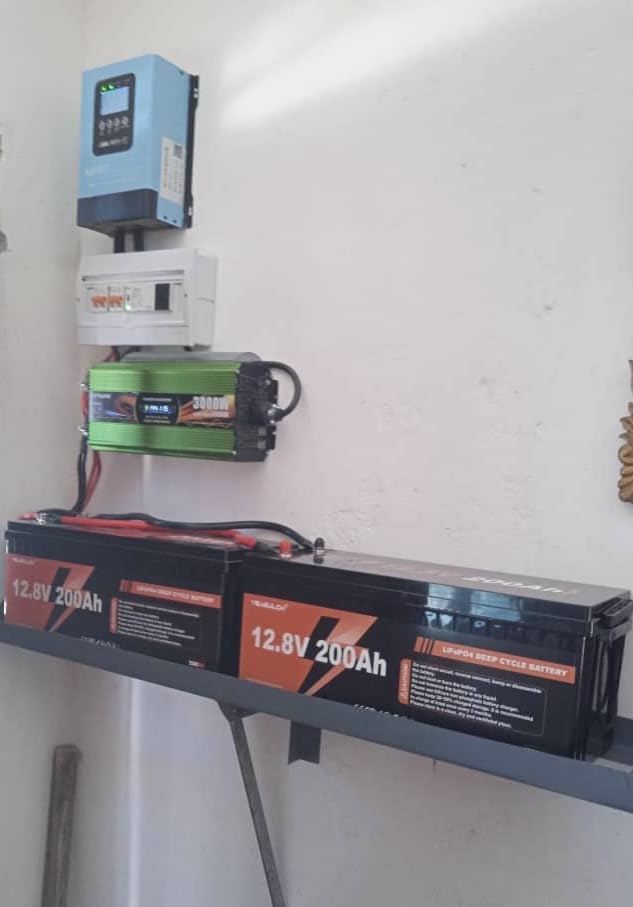
Cycle ratings are unusually well specified here: 4000 cycles at 100% depth of discharge, 6000 at 80%, and up to 15000 at 60%. That last number is what makes a big lithium bank a genuinely long-term purchase rather than an expensive interval part.
Expansion runs to 4 in series for a 48V system or 4 in parallel for 800 amp hours at 12V, roughly 10.24kWh. The BMS handles overcharge, over-discharge, overcurrent, overheat, and short circuit, with automatic high and low temperature cut-off.
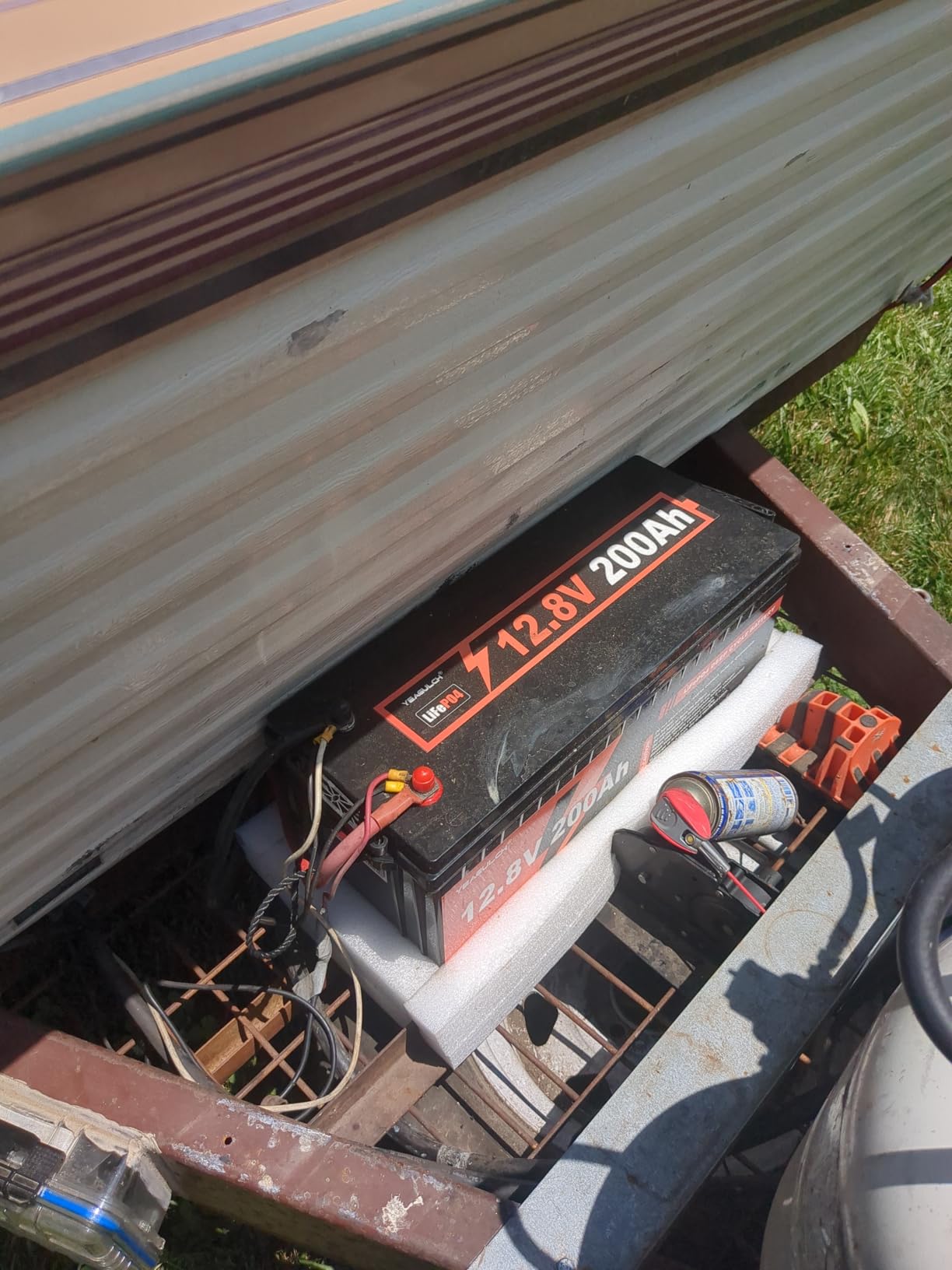
Why it suits long stays and big inverter loads
A 200Ah bank at 80% usable depth gives you about 2050 watt-hours of realistic capacity. Run a 12V fridge, a CPAP with humidifier, lighting, water pump, and a 1500-watt inverter for two hours, and you are still well above the point where anyone starts rationing. That is a fundamentally different trip from a three-night weekend with one AGM.
It is also suited to trolling motors rated 55 to 62 pounds of thrust, and to solar systems large enough to refill a 200Ah bank in a day of good sun. The physics works in your favor: more capacity means more headroom to absorb a bad solar day without dropping into a deep discharge you would rather avoid.
Fitment and charging reality
The 20.08 inch case length is the practical obstacle. It will not go into a standard Group 27 or Group 31 tray, and it will not fit a tight travel trailer compartment, so measure before you order anything this size. It is a truck camper, Class B, or bus conversion battery more than a small trailer battery.
Like most lithium units, it should be charged and discharged at least once every six months during storage, and it is not for vehicle starting or golf carts. Voltage and current readings vary by 1-5% depending on temperature and measurement method, so do not treat a displayed number as laboratory precision.
8. VEMDIA 12V 100Ah LiFePO4 Group 31 – The Fastest Charge Acceptance Here
12V 100Ah LiFePO4 Lithium Battery Group 31 Deep Cycle for RV Trolling Motor
12.8V 100Ah LiFePO4
Group 31 fit
24 pounds
2-year warranty
Pros
- Only 24 pounds
- roughly 70% lighter than lead-acid
- Exact BCI Group 31 drop-in fit
- Full charge in about 5 hours on a 14.6V 20A charger
- 15000+ cycles at 60% depth
Cons
- Charging cut off below 32F
- Only a 2-year manufacturer warranty
- 12% of reviews are 1-star
- 120 milliohms internal resistance
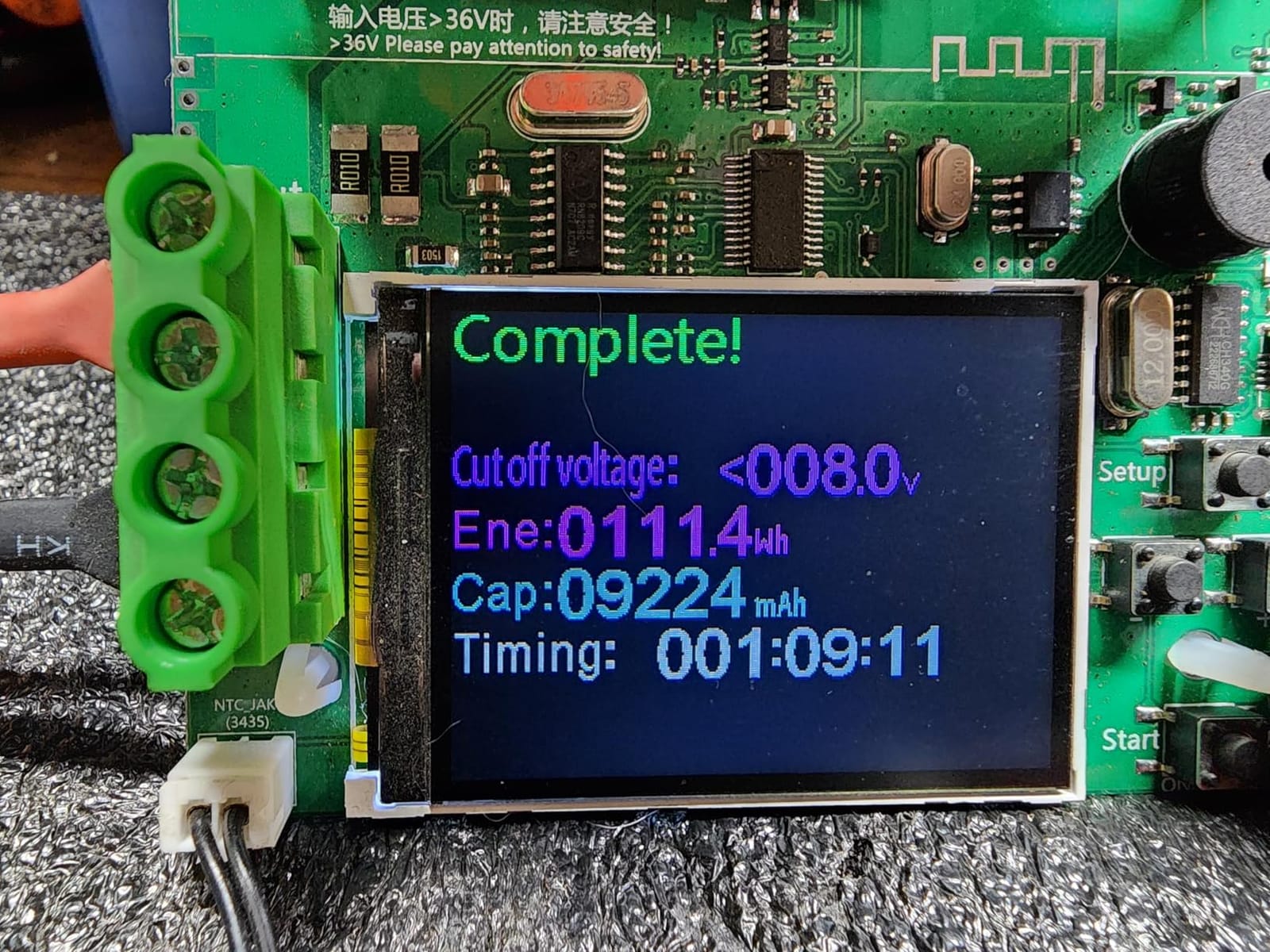
Charge speed is the underrated feature of this one. A full charge in roughly five hours on a 14.6V 20A LiFePO4 charger, and no memory effect, means you can top the battery up during a lunch stop rather than planning a long absorption window overnight. For people who drive between campsites or run their rig on a short trip, that changes how the battery gets used.
The Group 31 fit at 12.9 by 6.6 by 8.5 inches is described as a precise BCI drop-in, which is the larger of the two common 12V footprints and often easier to find in truck campers than a Group 24 bay.
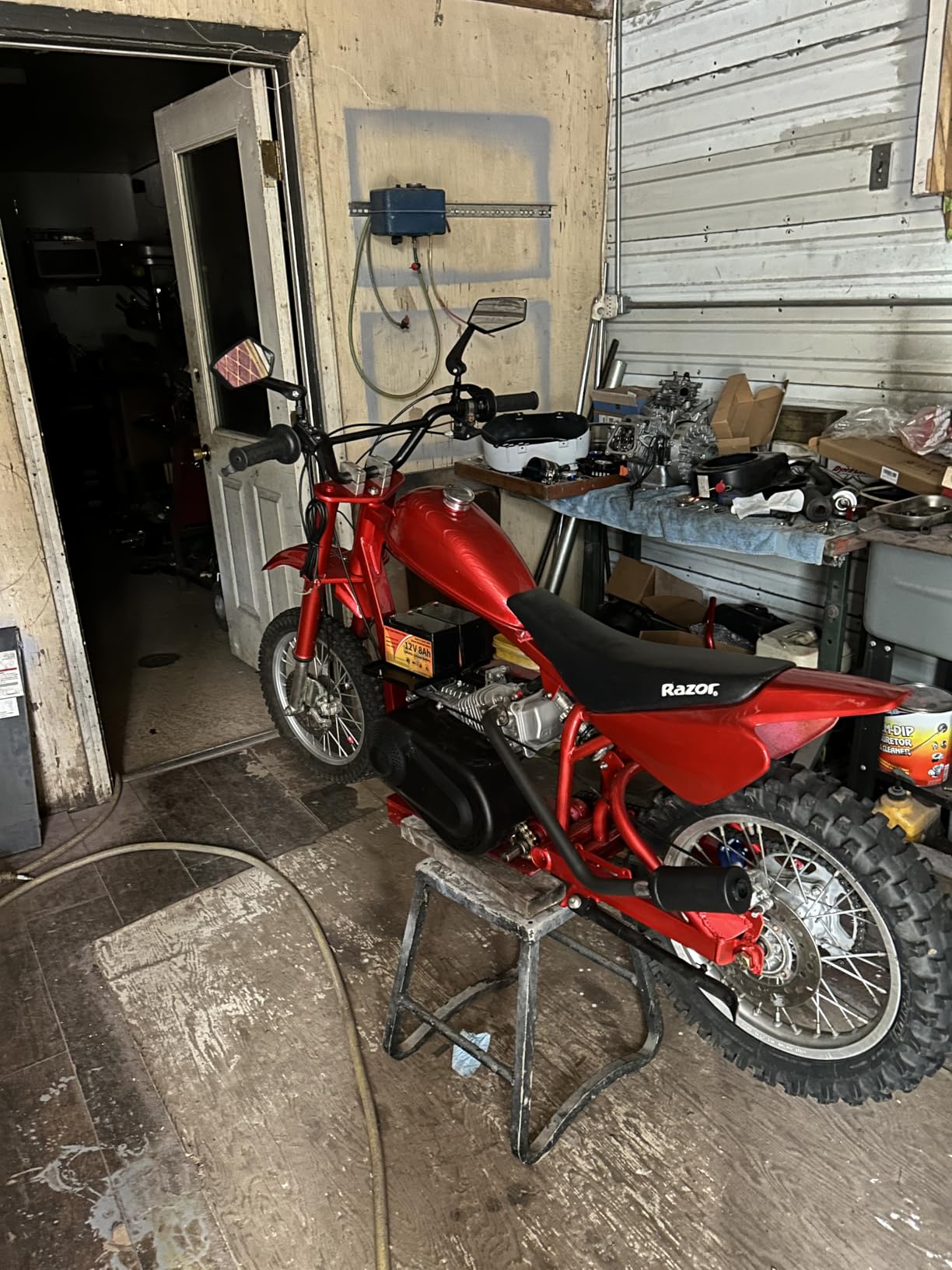
At 24 pounds it is heavier than the 20 to 22 pound lithium units in this roundup but still around 70% lighter than a comparable lead-acid battery. The 100A smart BMS includes automatic low-temperature cut-off below 32F, and expansion to 4S4P covers 51.2V at 400Ah for larger builds.
Cycle life is quoted at 15000+ cycles at 60% depth of discharge and 8000+ at 80%, which is a well-specified claim backed by a stable LiFePO4 chemistry that carries no thermal runaway risk.
Why it fits solar-heavy setups with a tight recharge window
Fast charge acceptance means a shorter solar day gets you further. If your array is undersized relative to the bank, or you only get peak sun for a few hours between camp activities, the chemistry that takes a charge efficiently converts that window into usable energy. The stated 120 milliohms internal resistance is higher than premium competitors, which means slightly more voltage drop under heavy load, so pair it with reasonably short cable runs.
For a boat or a small camper where space forces a Group 31, this is a straightforward capacity upgrade over a lead-acid battery of the same size without changing the tray or the hold-downs.
The weakest rating and shortest warranty in the lithium group
A 4.3 is the lowest rating here, and 12% of reviews being 1-star is tied for the highest share in the roundup. That is a meaningful signal of early defects, even though the overall 4.3 across 186 reviews still reflects a product most people are satisfied with.
The 2-year manufacturer warranty is the shortest among the lithium options listed, and there is no claim of self-heating, so the 32F charging cutoff applies with no warm-up path built in. One further note: the listing mentions marine engine starting among compatible applications, which is not typical behavior for LiFePO4 chemistry and should be treated as loose marketing copy rather than a tested capability.
9. Power Queen 12V 100Ah LiFePO4 Group 24 – Lightest Drop-In With the Clearest Cycle Claim
power queen 12V 100Ah LiFePO4 Battery, Group 24 RV Lithium Battery
12.8V 100Ah LiFePO4
Group 24
20 pounds
5-year warranty
Pros
- About 20 to 21 pounds
- the lightest in this roundup
- True Group 24 drop-in with no wiring changes
- 1280Wh usable versus about 500Wh from a 70Ah AGM
- Built-in carry handles aid field handling
Cons
- Energy storage only
- no engine or golf cart starting
- Gaskets must be tightened to under 2mm
- One report of a BMS failure needing service
- Occasional damaged outer packaging
Twenty pounds is the lightest battery in this roundup, and that is a genuine engineering difference rather than a rounding error. A 100Ah AGM of the same group size weighs close to 60 pounds, so you are removing 40 pounds from your payload without giving up anything you can use.
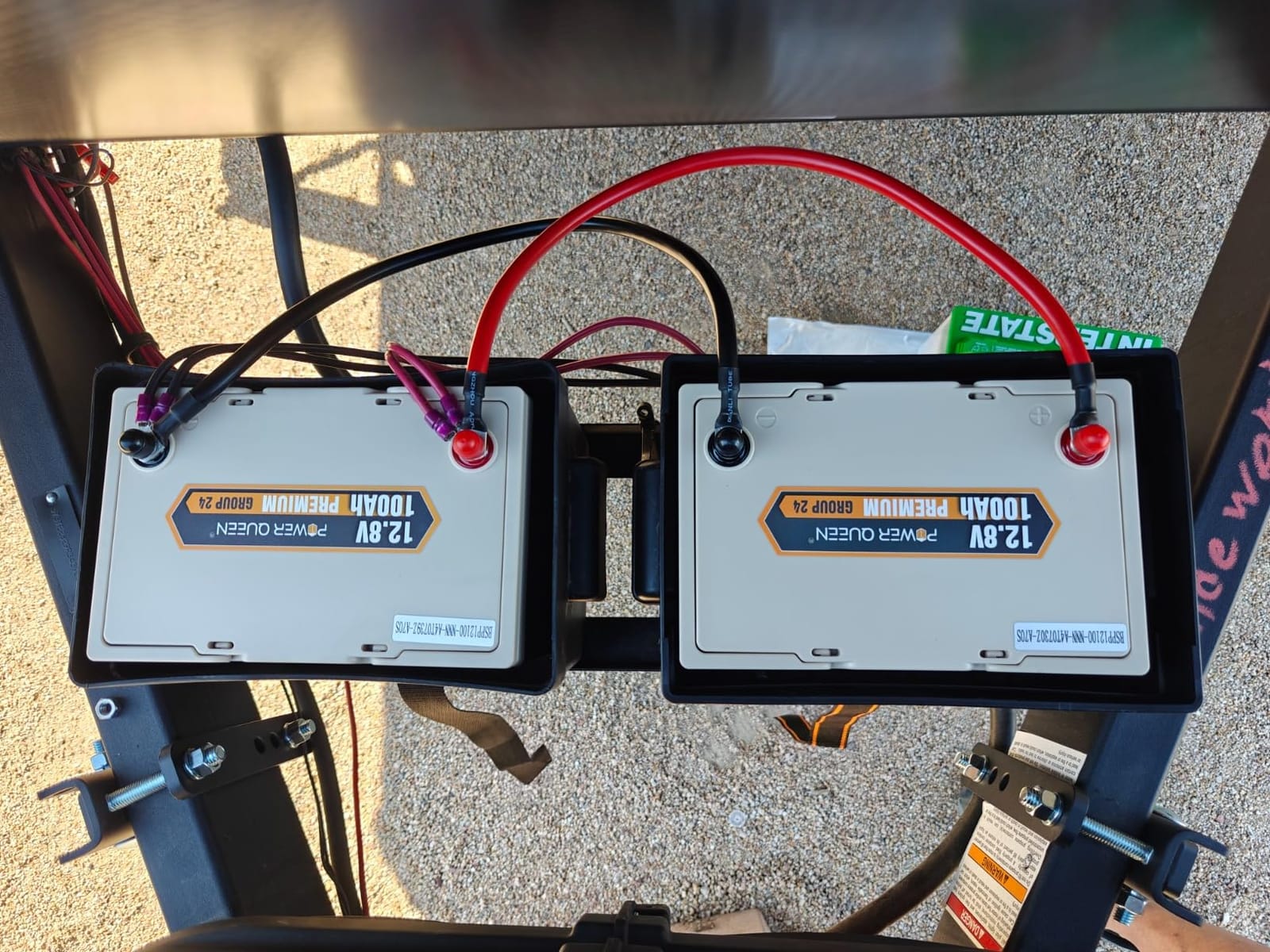
What stands out most in the owner reports is real high-draw performance. Users run CPAP machines with humidifiers, Starlink terminals, fans, lighting, and small televisions off a single unit. Those are exactly the loads that make a 100Ah AGM feel weak by mid-evening, and they are where the 1280 watt-hours of usable lithium energy shows up in practice.
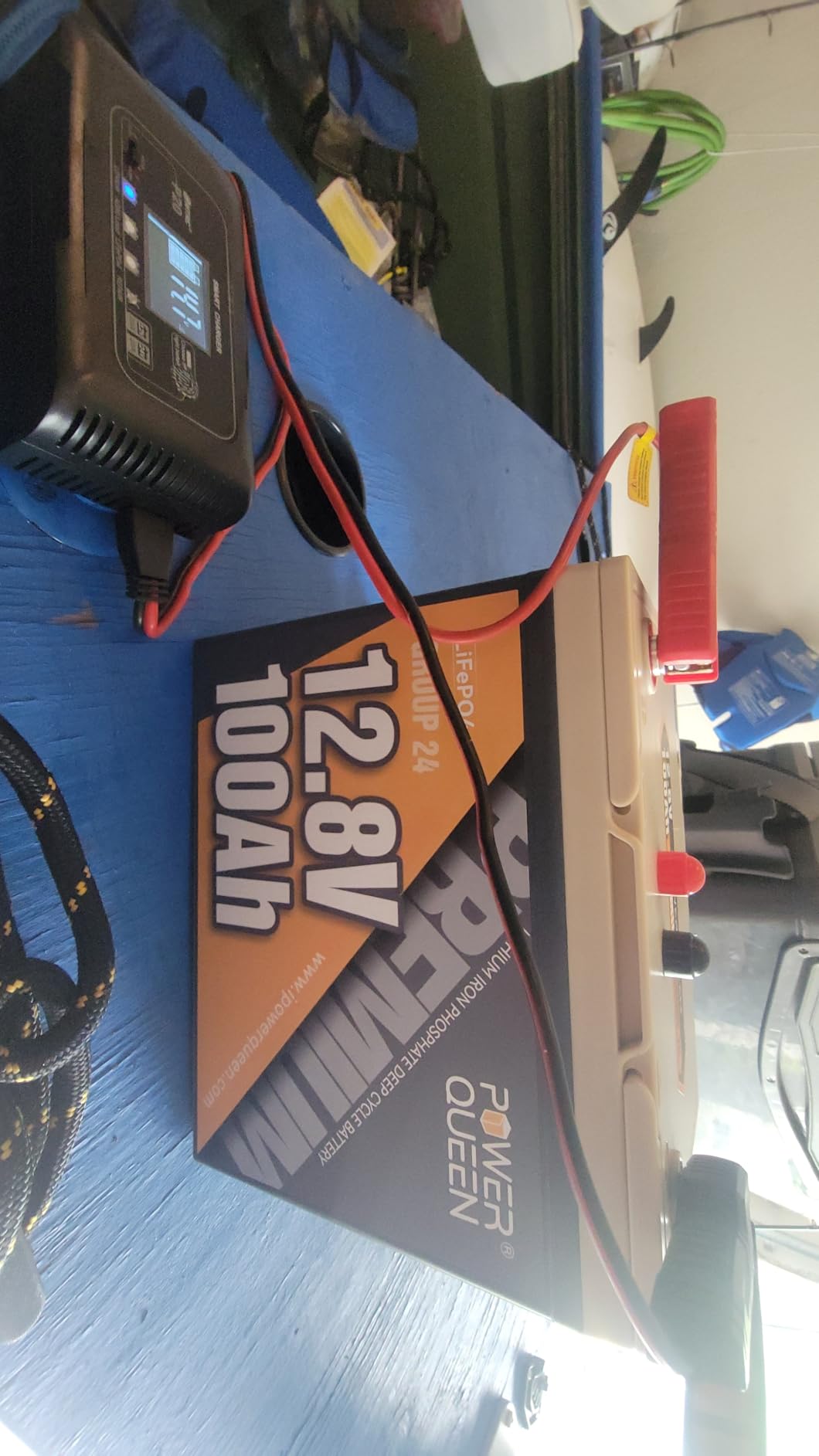
The comparison owners make is the useful one: 1280 watt-hours at full usable depth against roughly 500 watt-hours from a 70Ah AGM held to a 50% depth of discharge. That is the framing that makes the case for chemistry upgrades without needing marketing language.
Cycle life is rated at 4000 cycles at 100% depth of discharge with a 10-year design lifespan behind a five-year warranty. Grade-A LiFePO4 cells feed a BMS with more than 20 protection functions, and the box is listed for Group 24, 27, and 31 applications.
Why it suits CPAP, Starlink, and other high-draw loads
Because sustained draw is where usable capacity stops being an abstraction. A CPAP with a humidifier and a satellite internet terminal together can exceed 100 watts running all night. On a 50% depth AGM that is a shortened trip, and on this unit it is an ordinary evening. Owners also mention built-in carry handles, which is not a small detail when the alternative is a 60 pound AGM in a confined bay.
It fits standard Group 24 boxes as a true drop-in with no wiring changes, so this is a straightforward swap for anyone whose existing converter has a lithium profile or who is adding one.
Two installation details people get wrong
The gaskets have to be installed with screws torqued under 2mm. Over-tightening loosens the seal over time, which leads to the overheating complaints that show up in lithium reviews generally. It is a small instruction that pays back immediately if you follow it.
This is an energy storage battery only, not for engine or golf cart starting. Beyond that, the reported issues are minor: one BMS failure resolved through warranty support, and some units arriving with damaged outer packaging though undamaged inside. Support response being generally praised is worth noting in a category where it often is not.
10. ECO-WORTHY 12V 314Ah LiFePO4 – The Best Built-In Monitoring in the Roundup
ECO-WORTHY 12V 314AH LiFePO4 Lithium Battery Bluetooth with SOC LEDs, Low Temp Protection, 4019WH, 200A BMS Up to 15000 Deep Cycle for Off-Grid, RV, Solar Power System, HomeBackup
12.8V 314Ah LiFePO4
4019Wh
60.4 pounds
Bluetooth and SOC LEDs
Pros
- 4019.2Wh in a 60.4 pound package
- LED state of charge display with fault buzzer
- Bluetooth app with detailed cell voltage readings
- 200A BMS with low-temp cut-off below -7C
Cons
- Bluetooth app readings reported as inaccurate
- App telemetry is basic beyond status
- Customer support response times reported slow
- Only a 3-year warranty
This is the monitoring pick. The built-in LED display shows state of charge and fault modes with an audible buzzer for errors, and Bluetooth app access gives per-cell voltage detail. If your battery sits out of sight inside a truck camper body, being able to check condition from your phone is a real convenience that most batteries in this roundup do not offer.
The energy figure is the largest here: 4019.2 watt-hours, which works out to more than three times what a 100Ah lithium delivers. Owners describe the jump from roughly 1200 watt-hours to over 4000 as transformative for boondocking, and it is the reason the 60.4 pound weight is acceptable.
The low-temperature cutoff sits at -7C, which is roughly 19F. That is colder than the 32F threshold on several other lithium units here, so this pack accepts a charge in more conditions than most. The 200A BMS and Grade A cells sit in a fire resistant case, and expansion runs to 32.15kWh through 4P2S or 2P4S for whole-vehicle or home backup builds.
Capacity was revised upward from 300Ah to 314Ah, which tells you the design is being iterated rather than frozen. For a truck camper battery bay this is often the difference between fitting one unit and needing two.
Why it works for truck campers and long winter stays
It is a large drop-in for a truck camper battery bay, often with room left for a second unit, and the app plus LED display means you can monitor without running a separate shunt monitor. Owners running over four thousand watt-hours report running household loads off-grid without planning around them, which is the practical test for a battery this size.
The 314Ah capacity also means more buffer against bad solar days. A bank that size can absorb two or three cloudy days without dropping toward the depths where lithium chemistry is least happy, which matters more in shoulder seasons than most buyers expect.
The app is the weak link
Bluetooth voltage and current readings were reported as badly inaccurate by one verified buyer, and other owners describe the app as basic, showing little more than status and cell voltages. Trust the LEDs more than the phone, and do not build a monitoring strategy around precise amperage data from this app.
Customer support response times were reported as very slow by some buyers, and one unit stopped charging correctly with an inaccurate state of charge readout and needed replacement. The 3-year warranty is the shortest among the lithium options in this roundup, and at 60.4 pounds this is the heaviest single unit here. None of that changes the capability, but all of it belongs in your decision.
How to Choose a Deep Cycle Battery for Boondocking
The chemistry decision comes first, and most of the rest follows from it. LiFePO4 gives you roughly 100% of rated capacity usable, thousands of cycles, and about a third of the weight. AGM gives you about 50% usable, a few hundred to a few thousand cycles depending on how deep you discharge, and triple the weight. Flooded lead-acid is cheaper still and needs watering, venting, and a level check. Gel sits between AGM and flooded, tolerates deeper discharge, but charges more slowly and is sensitive to overcharging.
For full-time RVers and anyone boondocking more than a few nights a month, the forum consensus is worth listening to. On the r/GoRVing boondocking battery options thread, the leading position is that lithium is the gold standard and lead-acid is heavy, shallow, and cheap. That is a fair summary.
But read the community thread on battery recommendations and you get the counterweight too. The practical position there is that almost any decent Group 27 will meet basic needs, and the thing that actually matters is whether the battery publishes a reserve capacity rating. That leads to the confusion we see constantly.
Look for reserve capacity, not cold cranking amps
Cold cranking amps describe a three-second burst at temperature, which is a starting specification. Reserve capacity describes how many minutes a battery delivers its 50 amp load at 25.5V. For a house battery being drained slowly all night, reserve capacity is the number that describes your use case, and CCA numbers on a battery sold as deep cycle are usually marketing borrowed from a dual-purpose marine design.
LiFePO4 batteries frequently do not publish a reserve capacity figure at all, because the metric assumes lead-acid chemistry. With lithium, amp hours and watt hours are the honest numbers, so compare those instead of trying to convert between them.
Match the group size before you compare anything else
Physical fitment eliminates half your candidates instantly. Group 24 is the common trailer and Class C size. Group 27 and Group 31 are larger, common in truck campers and larger coaches. GC2 is a 6V golf cart format, usually paired in series to make 12V. Measure your compartment including the hold-down clearance before ordering, and check the cable lug size against your existing cables, since M8 screw terminals do not accept 3/8 inch lugs without a change.
Two of the picks here are exact Group 24 drop-ins, one is a Group 31, and one is a 20 inch long case that needs its own space. The rest fit common 12V bays. That variance is the reason we list dimensions on every entry.
Treat weight as payload, not as a spec
Moving from two 100Ah AGMs at about 120 pounds to a single 100Ah lithium at 22 pounds frees up roughly 100 pounds of payload. On a Class C or a small trailer with a tight GVWR margin, that is the difference between bringing the generator and the second battery, or bringing the bikes.
That is also the cleanest argument for lithium that has nothing to do with chemistry. When a battery is a fixed weight on a vehicle you have already loaded with water, gear, and passengers, lighter is simply better.
One more buying criterion that gets skipped: warranty length and where support lives. Two-year prorated warranties, three-year terms, and five-year terms all appear in this roundup, and for lithium the difference is real because the cells are the expensive part. Buying from a brand with domestic support also removes the international return friction that some owners reported.
How Many Amp Hours Do You Need to Boondock?
Size from your measured draw, not from an estimate. A cheap shunt monitor on your house bank for a weekend gives you a real amp-hour figure, and that number is worth more than any rule of thumb. If you cannot measure first, add your known loads and be generous.
A typical 12V trailer running a 40 to 50 amp compressor fridge, an LED lighting circuit, a water pump, a phone charger, and a few hours of inverter use lands somewhere around 40 to 60 amp hours per day. That is the number most sizing arguments should start from.
The sizing method
Step one: total your daily amp-hour draw from measured data or an appliance list. Step two: divide by the usable depth of discharge, which is 50% for AGM and flooded lead-acid, 80 to 100% for LiFePO4. Step three: round up to the next standard group size. Step four: verify your charge controller can put back what you take out, because an undersized controller is a leading cause of batteries that will not hold a charge even with solar on them.
Worked example for that 50 amp-hour day. On AGM, 50 divided by 0.5 gives you 100 amp hours of rated capacity, so a single 100Ah AGM technically covers one night and not much else. On LiFePO4 at 80% usable, 50 divided by 0.8 gives about 63 amp hours, so a 100Ah lithium covers the same night with meaningful reserve left in the morning.
That last margin is the part people miss. Boondocking is not a laboratory condition, and waking up at 20% state of charge on a cloudy morning is how banks get sulfated and how trips get cut short.
Bank sizes for one, three, and seven nights
For a one-night stop at roughly 50 amp hours, one 100Ah lithium is comfortable and one 100Ah AGM is workable. For three nights at the same draw, you want about 150 amp hours of lithium, which is either one 150Ah unit or a 100Ah plus a second unit in parallel. Two 100Ah AGMs will technically get there but will sit much closer to the edge.
For a seven-night stay with no generator, target 300 to 400 amp hours of lithium, which means a 314Ah unit or a 200Ah plus a 100Ah in parallel. On AGM the equivalent is six or eight batteries and around 400 pounds, which is where the weight argument stops being theoretical and starts being decisive.
Pairing is straightforward. Parallel batteries add amp hours and must be the same chemistry, the same age, and ideally the same model. Series batteries add voltage and must be matched in capacity. A bank built from two identical units behaves predictably; a bank built from a new battery and a five-year-old one does not, and that mismatch is a common source of the single weak cell problems that show up as mysterious charge loss.
For solar, a useful rule is that a 200-watt panel in good sun returns roughly the amp hours a 50 amp hour day consumes, and more panels buy you bad-weather margin rather than speed. Always size the charge controller to the bank, not the other way around.
Upgrading From AGM to Lithium: A Compatibility Checklist
Swapping chemistry is genuinely straightforward, but four things have to be right or you will chase problems for months. This is the checklist we walk people through.
One: turn equalization off. Lithium does not need it and pushing 15.5V into a LiFePO4 pack is harmful. If your converter or charge controller has an equalization mode, disable it or replace the unit.
Two: confirm the charge profile. LiFePO4 wants a bulk and absorption stage around 14.2 to 14.6V and a float around 13.6V. Many older lead-acid chargers float higher and equalize harder, which is exactly the combination that degrades lithium cells. If your charger has a dedicated lithium or LiFePO4 profile, use it. If it does not, replace the charger rather than improvising.
Three: add a DC-DC charger if you charge from the alternator. This is the most commonly skipped step and the one that causes lithium batteries to arrive at the campsite partially charged. A dedicated DC-DC unit with a lithium profile regulates the alternator output to the battery correctly.
Four: mind the vented compartment. Many RV battery bays were designed for flooded lead-acid and are vented outside the coach. A sealed lithium battery does not vent hydrogen, so the compartment is no longer a wet location and you gain flexibility, but any existing vent tube can simply be removed. Do not assume a vent is a defect. Conversely, if you are replacing a sealed AGM with a flooded battery in the same bay, you need the vent back in place.
Because several picks here document a low-temperature charging cutoff, add a fifth: decide where the battery lives. Inside a heated compartment, in an unheated bay, or in a self-heating model are three different answers with different costs, and the cold weather section below covers them properly.
Cold Weather Boondocking: Why Charging Stops Below Freezing
Some of the picks in this roundup document their cold behavior precisely, which is better than most. The SUPER EMPOWER unit pauses charging below 32F and resumes above 41F, with discharge stopping at -4F. The ECO-WORTHY pack uses a -7C cutoff. This is not a fault, it is cell chemistry protecting itself, because charging a lithium cell at or below freezing plates lithium metal onto the anode, and that damage is permanent.
That single fact is the whole cold weather argument. If you camp in the mountains between October and April in an unheated battery bay, a lithium battery that hits its cutoff will sit there at whatever state of charge it reached and refuse to recover on solar alone in the morning.
There are three ways to handle it. Mount the battery inside a heated compartment where the converter keeps it above the cutoff. Choose a self-heating lithium model that warms itself to clear the threshold. Or accept the limitation and use AGM, which charges happily well below freezing, as the two lead-acid picks in this roundup do.
Self-heating batteries are the elegant answer when you have the budget, and heated compartments are often already present in higher-end RVs, which is worth checking before you assume you need a new battery. The AGM route costs the most in weight and the least in complexity, and for someone who camps three weeks a year in January it is very often the right call.
One caution about charging lead-acid in the cold: a battery that has sat below freezing will accept a charge but will not deliver capacity until it warms up. The published operating window on the WEIZE, charging from 14F with best results at 77F, is the honest version of that behavior.
Frequently Asked Questions
What is the best battery for a boondocking RV?
A LiFePO4 house battery is the best choice for most boondockers because roughly 100% of its rated capacity is usable, it weighs about a third of an AGM of the same size, and it tolerates thousands of discharge cycles. Size it to two to three nights of your measured daily amp-hour draw. An AGM is still the right call if you camp below freezing in an unheated battery bay, since several lithium models stop accepting charge below 32F.
Which deep cycle RV battery is best for my camper?
Match the battery to your camping style. Full-time RVers and frequent multi-night boondockers should pick a 100Ah to 200Ah LiFePO4 unit in a Group 24 or Group 31 footprint. Weekend campground campers are fine with a 100Ah AGM and a small solar panel. Small campervans and teardrops should prioritize weight and fitment, which is where the 20 to 22 pound lithium units win. Winter campers need either AGM or a self-heating lithium model.
How long will an RV battery last while boondocking?
A single 100Ah AGM comfortably covers one night on a typical 40 to 50 amp-hour daily draw, while a 100Ah LiFePO4 covers the same night with real reserve. For three nights, target about 150 amp hours of lithium. For a seven-night stay without a generator, budget 300 to 400 amp hours, which is one large 314Ah unit or a 200Ah plus a 100Ah in parallel.
What is the best 6-volt RV battery for boondocking?
6V GC2 and GC3 units are normally paired in series to make a 12V bank, and the ones in this roundup are all 12V Group 24 and Group 31 lithium models, which is the form most current RV electrical systems use. If your bay is built for two 6V golf cart batteries, measure it and check whether a Group 24 lithium unit fits the same tray. Where a 6V footprint is unavoidable, match both 6V units to the same model and age.
Can I replace AGM batteries with lithium in my RV?
Usually yes, in four steps: turn equalization off, confirm your charger has a lithium profile with bulk and absorption near 14.2 to 14.6V and float near 13.6V, add a lithium-profile DC-DC charger if you charge from the alternator, and check the vented compartment situation since sealed lithium does not need the outside vent a flooded or AGM battery required. Also account for the low-temperature charging cutoff several lithium models carry.
Why won’t my lithium battery charge in the cold?
Because the battery management system protects the cells. Charging a lithium cell at or below freezing plates lithium metal onto the anode and the damage is permanent, so the BMS cuts charging off, commonly at 32F, and resumes once the pack warms past roughly 41F. Fix it by mounting the battery in a heated compartment, choosing a self-heating lithium model, or using an AGM battery, which charges well below freezing at the cost of weight and usable capacity.
The Bottom Line: Which Deep Cycle Battery Fits Your Boondocking
If you are starting out and want the least expensive path to a working off-grid setup, take the WEIZE 100Ah AGM. It carries a 4.5 rating across more than sixteen thousand reviews, needs no maintenance, and will not stop charging when the temperature drops. Add solar sized to your daily load and you have a functional boondocking bank.
If you want proven deep cycle capacity with a longer warranty and the option to grow the bank gradually, the Renogy 100Ah AGM is the pick, accepting the 63.9 pound weight as the cost.
If you actually want to boondock, the Litime 12V 100Ah LiFePO4 is our recommendation, with the SUPER EMPOWER and Power Queen units as close alternatives at slightly lower weight. For a week away without a generator, the dumfume 150Ah or yeagulch 200Ah covers capacity, and the ECO-WORTHY 314Ah covers it in one case with app monitoring built in.
Before you buy, measure your compartment, confirm your charger has a lithium profile if you are switching chemistry, and work out your real daily amp-hour draw rather than guessing. Those three steps prevent almost every battery problem we see. It is also worth pairing a good bank with the right gear for the trip, and our picks for the best 12V compressor fridges for boondocking cover the single most important load your battery will carry. For the rest of the camp, our picks for the best Bluetooth boomboxes with deep bass keep a bank from powering a whole evening’s soundtrack, which is a load most people forget to budget for.
No battery vendor sponsored this roundup or reviewed a word of it. Every pick above has a named downside, because the battery that fails you will be the one whose flaws were left out.