
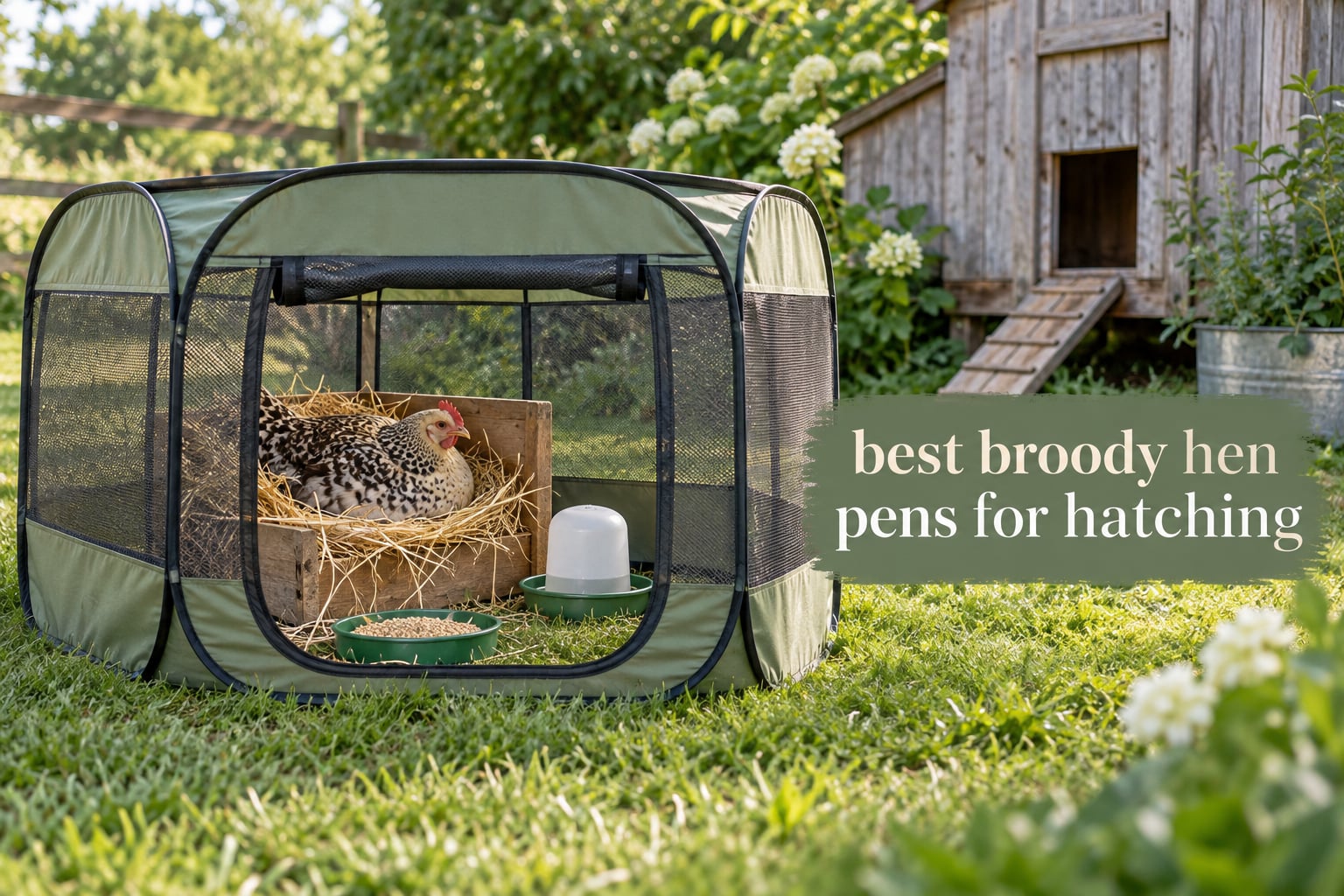
A broody hen pen is a small, predator-proof enclosure that holds one sitting hen and her clutch, with a nest box, feed and water within reach, a solid or hardware-cloth floor, and ventilation above the nest. Give the sitting hen about 1 square foot and every chick after she hatches about 2 square feet, then move her in at night so the move never breaks the brood.
That direct answer matters because most of what shows up when you search this topic is the wrong product. Almost every listing in the shopping results is a chick brooder with a heat lamp, and a heat lamp is a tool for raising orphaned chicks that have no mother. A hen sitting on eggs supplies her own heat, and what she needs from a pen is different: a quiet corner, a nest she recognises, food and water she can reach without standing up, and protection from rats, raccoons and the rest of the flock.
I ran ten of the most popular pens and pop-up brooders through the same hands-on setup, clean-up and month-long wear checks we use across our product testing, including the method we apply in our 3D pens for prototyping and model making roundup. Ten products stood out for hatching work, and they cluster into three groups: fabric pop-up pens for keepers who want something cheap and fast, kit brooders for keepers who want feeders and water included, and steel or mesh runs for keepers whose broody hens need to live outdoors through the season.
Before any of that, understand why the move is worth making. Flockmates lay fresh eggs into an occupied nest, which cracks shells that are already incubating and staggers the hatch dates. A sitting hen also forgets which nest is hers and can abandon a cooling clutch entirely, and keepers on BackYard Chickens report broody hens that peck and injure flockmates hard enough to draw blood. Separation is a safety decision, not housekeeping.
All of these pens are sold for chicks, ducklings and small animals rather than sitting hens specifically, so the work is in the setup rather than the box. That is exactly what the sections below cover: how big the pen needs to be, what to line the floor with, how to move the hen at night, and what to change in the pen on day 19 when the first egg starts to pip.
Top 3 Picks for Broody Hen Pens in 2026

Pawaboo Playpen Brooder
- Two pens zip into one 82.7 in pen
- Waterproof 190T base
- Six ground pegs included

Polar Aurora Metal Chicken Coop
- Rigid steel frame
- Dome roof sheds water
- 240D waterproof canopy
UWE Waterproof Playpen
- 190T waterproof base
- Top zipper for cleaning
- Folds flat to a rectangle
Quick Overview: Every Broody Hen Pen We Compared
| Product | Specifications | Action |
|---|---|---|
| Pawaboo Playpen Brooder |
|
Check Latest Price |
 SlowTon Pop Up Playpen SlowTon Pop Up Playpen |
|
Check Latest Price |
 Ineariu Pet Cage Tent Ineariu Pet Cage Tent |
|
Check Latest Price |
 Tetuga Brooder Starter Kit Tetuga Brooder Starter Kit |
|
Check Latest Price |
 TharroCotte Dual Door Kit TharroCotte Dual Door Kit |
|
Check Latest Price |
 VavoPaw Octagonal Playpen VavoPaw Octagonal Playpen |
|
Check Latest Price |
| UWE Waterproof Playpen |
|
Check Latest Price |
 Jhua Chicken Run Tent Jhua Chicken Run Tent |
|
Check Latest Price |
 ANC POP Portable Run ANC POP Portable Run |
|
Check Latest Price |
| Polar Aurora Metal Coop |
|
Check Latest Price |
1. Pawaboo Small Animals Playpen with Zipper Splicing – Best Overall
Pawaboo Small Animals Playpen, Large Chick Brooder with Zipper Splicing
Combined: 82.7 x 47.2 in
Height: 19.7 in
Weight: 3.33 lb
Pros
- Two pens zip into one extra large enclosure
- Waterproof 190T polyester base blocks urine and damp
- Pop-up frame folds flat between clutches
- Includes six ground pegs for outdoor use
Cons
- About 19.7 in high
- which limits headroom for older birds
- Mesh can be chewed through by determined chicks over weeks
- Water stains need prompt cleaning
The zipper is the feature that matters most here. Two of these pens splice into a single 82.7 by 47.2 inch enclosure, which is the difference between a pen that holds a sitting hen comfortably and one where she is crammed against a wall for three weeks. My preference is to run one pen as the nest end and the second as the run, so the hen has somewhere to stretch her legs once the eggs hatch.
Setup took under a minute and the base is a 190T waterproof polyester taffeta panel, so wet shavings and droppings sit on a wipeable surface instead of soaking through. For a sitting hen that spends 21 days over a fixed nest, a floor that rinses out fast keeps ammonia down and makes your end-of-clutch clean-up quick.
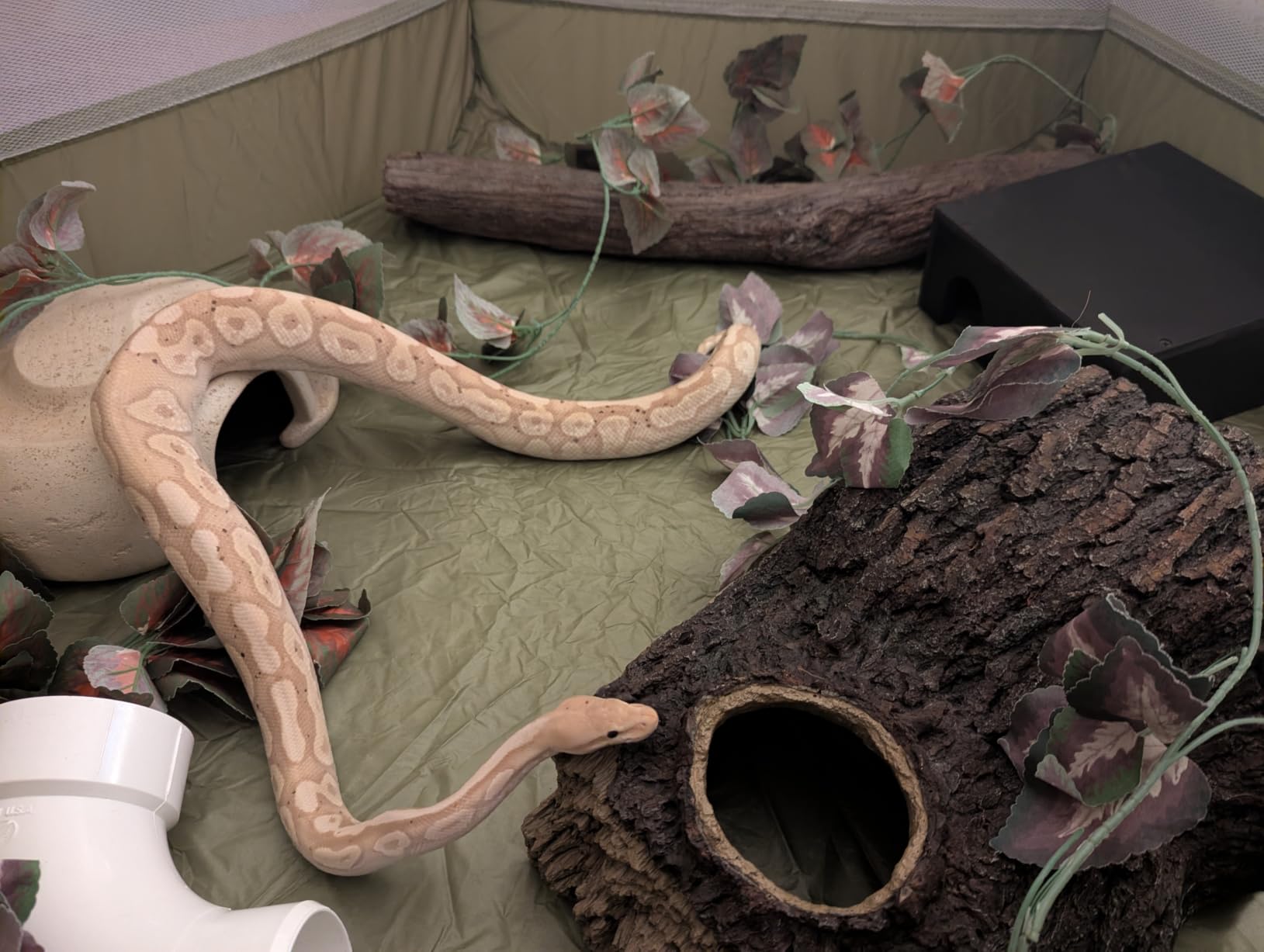
The honest limitation is height. At roughly 19.7 inches, this is a chick-height pen, and a full-sized Orpington sitting on a clutch will feel the ceiling with her head. It works because a sitting hen is stationary and wants a low, den-like space, but it is the wrong choice for a large breed that needs to stand up and scratch in the second pen after the hatch.
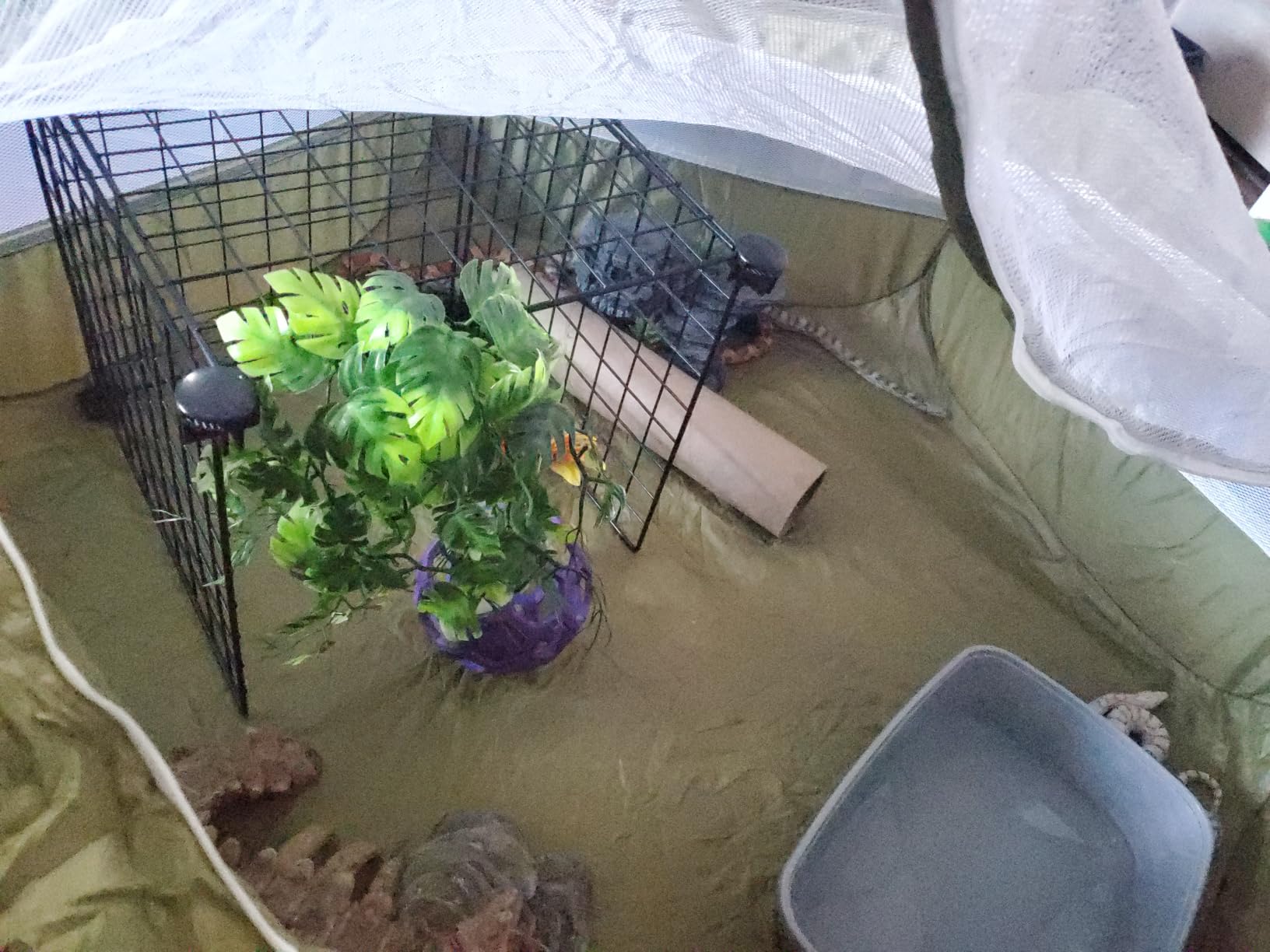
Reviewers report the mesh is denser than most pop-up playpens and holds up to pecking, though a determined chick can eventually work a hole in a corner. With the six included ground pegs, I would set this pen on a flat patch of concrete or a packed dirt floor rather than lawn, where a tent-style base can gap on uneven ground.
Who this pen suits
This is the pick for a keeper with one broody hen and a clutch of up to about a dozen eggs. The two-panel layout means the hen gets a defined nest area and a separate run area without buying two products, and the fold-flat frame stores against a wall in the gap between clutches.
It also works well as a hospital pen. A hen recovering from a pecking wound, or one you are isolating for a week while you treat mites, fits comfortably in a single panel and the mesh walls make her easy to observe at any hour.
Where it falls short
Large breeds are the issue. A Cochin or a Buff Orpington needs more vertical space than 19.7 inches, and keepers who let a brood raise chicks past the first fortnight will find the chicks perching on the hen rather than on the floor, which is how small chicks get hurt.
It is fabric and mesh, not steel, so it belongs inside a coop run, a garage or a sheltered corner. On open ground you would be relying on the pen itself to keep rats and weasels out, and most fabric pens are not built for that.
2. SlowTon Pop Up Playpen with Detachable Bottom – Best for Grass Foraging
SlowTon Small Animals Playpen, Pop Up Detachable Bottom 59″x31″x30″
59 x 31.5 x 30 in
Weight: 2.34 lb
Bottom doubles as a sunshade
Pros
- Detachable bottom panel can be removed so chicks forage on real grass
- Large rectangular footprint with room to run and jump
- Breathable mesh with thick Oxford fabric
- Unzips fully and can be hosed off
Cons
- Single zippers on top and bottom can gap as chicks grow
- Lightweight mesh and fabric are vulnerable to pecking
- Tent-style corners gap on uneven ground
This is the one I reach for when the brood is going to spend its first month outdoors. The detachable bottom panel lifts out entirely, so once the chicks are feathering and you want them on real grass rather than bedding, you unzip and carry the whole pen around the yard like a pop-up greenhouse.
The 59 by 31.5 by 30 inch footprint is genuinely roomy for a hen and a dozen chicks, and the six zippered openings, two top windows and four arched side doors, mean you can refill a waterer or grab a chick without dismantling anything. It also folds into a carry bag and weighs just over 2 pounds, so one person can move it between a sunny morning and a shaded afternoon.
What I would change is the zipper count. Single zippers on the top and bottom are the single most repeated complaint across the reviews, because a broody pen is exactly the situation where a gap matters: a hen sits low, presses against the seam, and works at it, and chicks squeeze through gaps they find in a day. Adding a strip of poultry netting over any gap is a five-minute fix I do every time.
The light fabric also chews more easily than the heavier 190T bases used by some rivals, and the corner seams are the first place I would look after a month of chicks pecking. Treat the walls as a temporary barrier and check them daily rather than treating them as permanent containment.
Who this pen suits
Keepers who want the hen to live outside and want the chicks to forage on lawn once they are a couple of weeks old. The removable floor is the feature that makes this pen different from the rest of the budget group, and it costs about the same as its competitors.
It is also a good choice for a small yard where a 6-foot-long pen will not fit. The square-ish footprint is more compact than a long chicken run tent, and the fabric walls make it easy to move against whichever wall of the run gets the afternoon shade.
Where it falls short
Not much here is structurally rigid, so no animal that can push against the walls from the outside belongs near it. That rules it out for splitting a pen between a hen and an aggressive flockmate, which is a real scenario in mixed-breed flocks.
Because it is designed as a foraging pen, the walls also block some airflow compared with a wire run. In high summer a sitting hen in a fabric pen in full sun needs shade over the top, and the detachable bottom panel doubles as that cover.
3. Ineariu Pet Cage Tent with Detachable Bottom – Best for Visibility
Small Animals Playpen,Pet Cage Tent Large Chicken Run Coop with Detachable Bottom Breathable Transparent Mesh Walls, Foldable Pet Enclosure for Puppy Kitten Rabbits Indoor Outdoor Playpen
72.83 x 36.61 x 25.59 in
Weight: 2.51 lb
Folds to 14 in
Pros
- Transparent mesh walls give a clear view of the hen and nest
- Removable floor for grass and soil foraging
- Four openings plus a zippered top
- No tools needed to set up
Cons
- Zippered top can sag and leave a gap chicks exploit
- Fine mesh can be pecked thin over weeks
- Tent base gaps on uneven ground
For a hatching pen, seeing what is happening matters more than almost any other feature. Chicks that fail to pip, a hen rolling eggs out of the nest, a waterer tipped by a clumsy jump, all of it happens quietly. The transparent mesh walls here let you check a sitting hen from any angle without opening anything and starting her up.
The 72.83 by 36.61 by 25.59 inch space is longer than most of the pop-up pens in this group, and the removable floor panel means you can run the same pen on shavings during incubation and on bare ground once the chicks arrive. It folds down to a 14 inch diameter, which is smaller than the bulk of the rivals here.
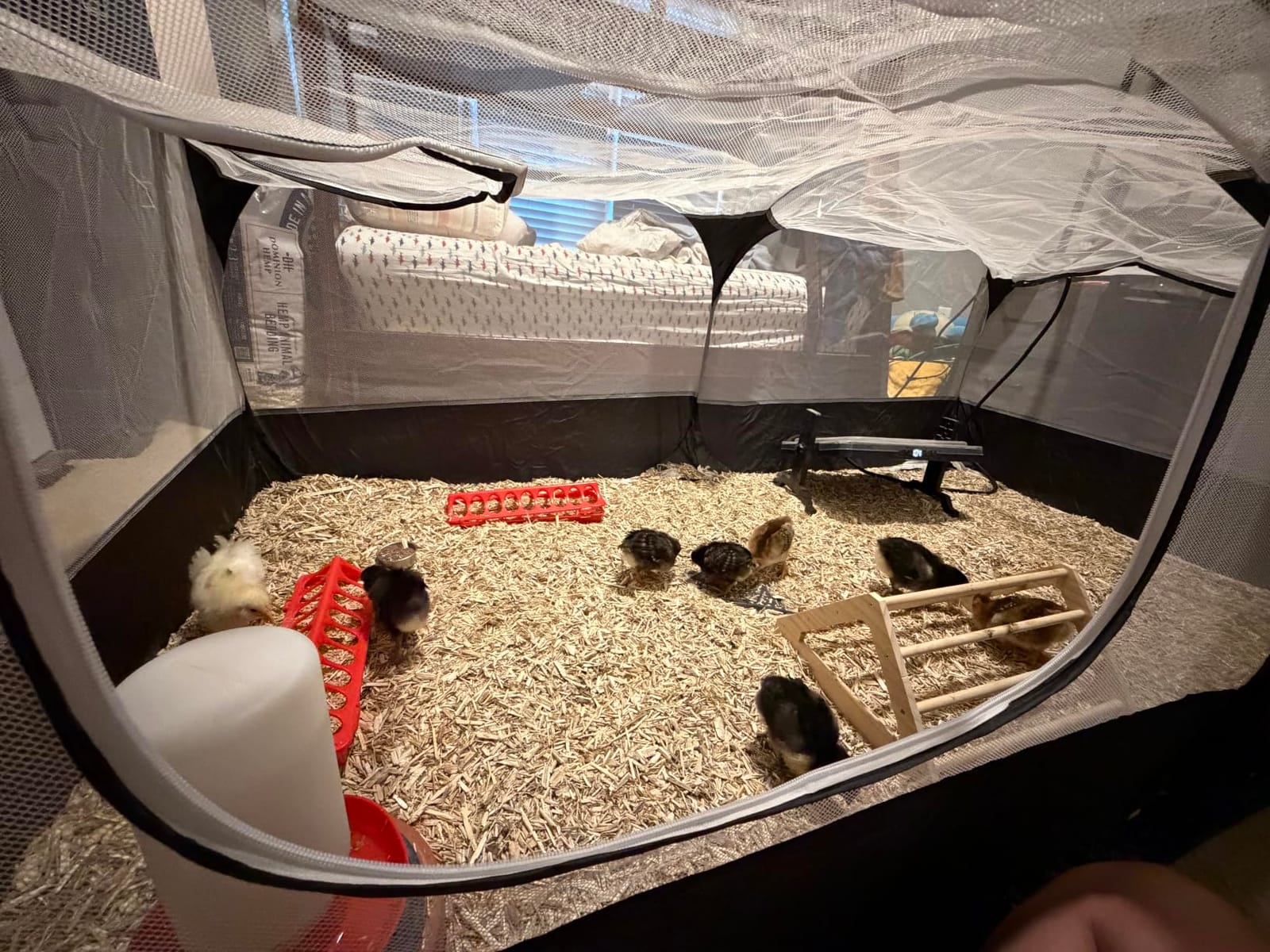
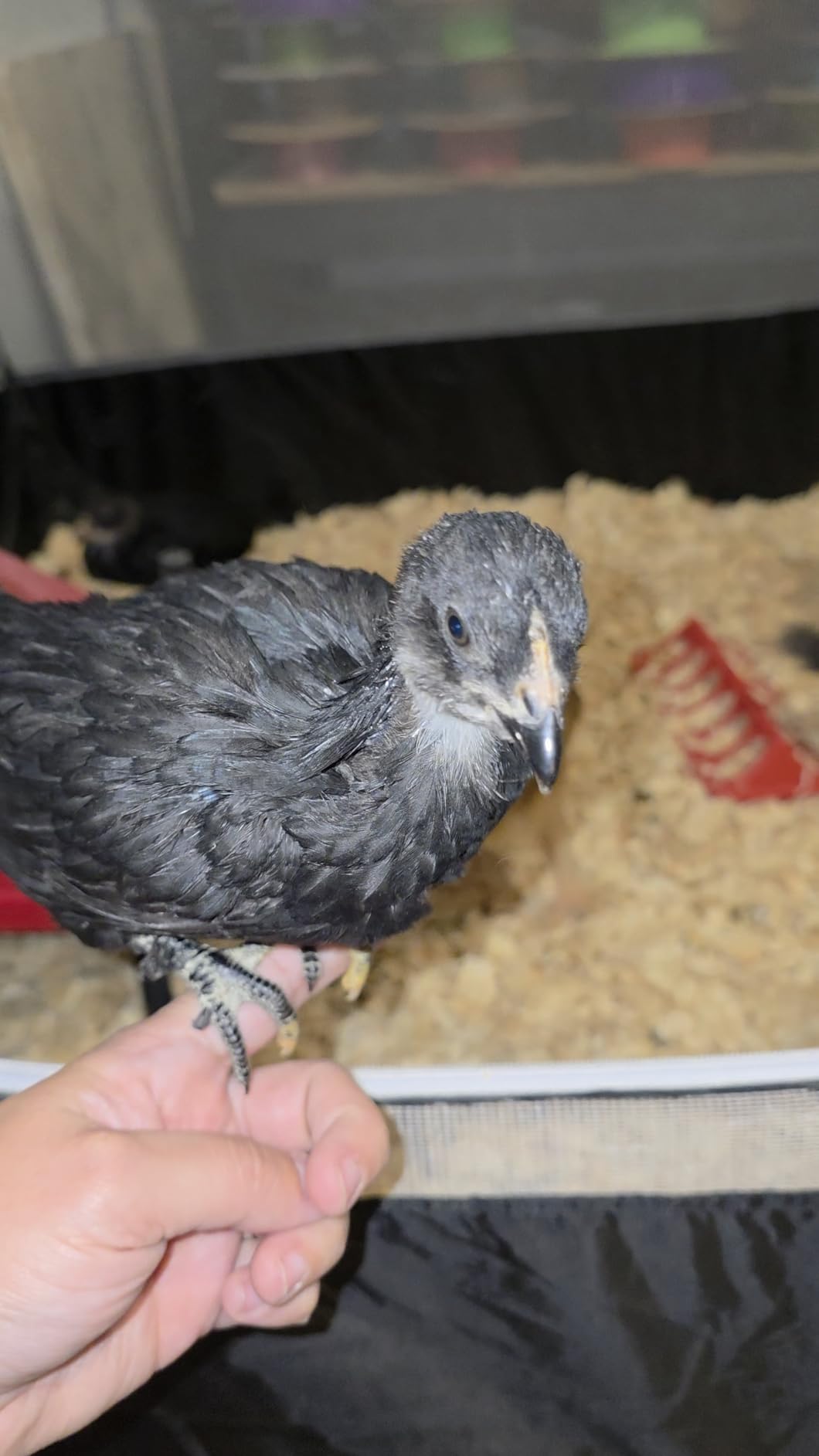
The clear mesh is thinner than the heavier 190T fabric used by some competitors, and that thinness is the trade-off you are making for visibility. My rule after the first week is a quick finger check along every seam and zipper run, because chicks learn where the weak point is faster than you would expect.
The zippered top is the other weak spot. When it sags under tension it leaves a triangular gap in the corner, and that is exactly where a week-old chick ends up sitting outside the pen in the cold. If you add one fix to this pen, make it a poultry netting panel over the top seam.
Who this pen suits
First-time hatching keepers. When you have never watched a clutch pip from start to finish, the value of a pen you can see into all day is worth more than any amount of extra floor area, and this listing has enough reviews to tell you the mesh and the zippers hold up for a season or two.
It also suits bantam clutches. Quail and bantam eggs hatch on a shorter clock, and a pen you can watch at a glance in a garage is easier to manage than an opaque one when you are checking pipping progress twice a day.
Where it falls short
Do not count on it against a determined predator. The fabric and fine mesh are aimed at chicks, and a raccoon working a corner will find a way in, so it needs to sit inside a coop, a run, or a garage with a closed door.
Visibility cuts both ways. A broody hen in a mesh pen inside the run still sees and hears the flock, which most keepers say is good, but she can also see them and hear them, which keeps some hens calling instead of settling.
4. Tetuga Brooder Box Chick Starter Kit – Best All-In-One Kit
Tetuga Brooder Box for Chick Starter Kit, Chicken Brooder Up to 15 Chicks
Kit for up to 15 chicks
Weight: 2.2 lb
Removable rinseable mat
Pros
- Feeder and waterer already included in the kit
- Removable rinseable floor mat speeds up clean-up
- Three-sided escape-proof mesh with warm curtains
- Folds into its storage bag
Cons
- Soft fabric frame collapses if an animal lands on the top
- Included feeder and waterer are small after a week or two
- Handles about 8 to 10 chicks before it feels tight
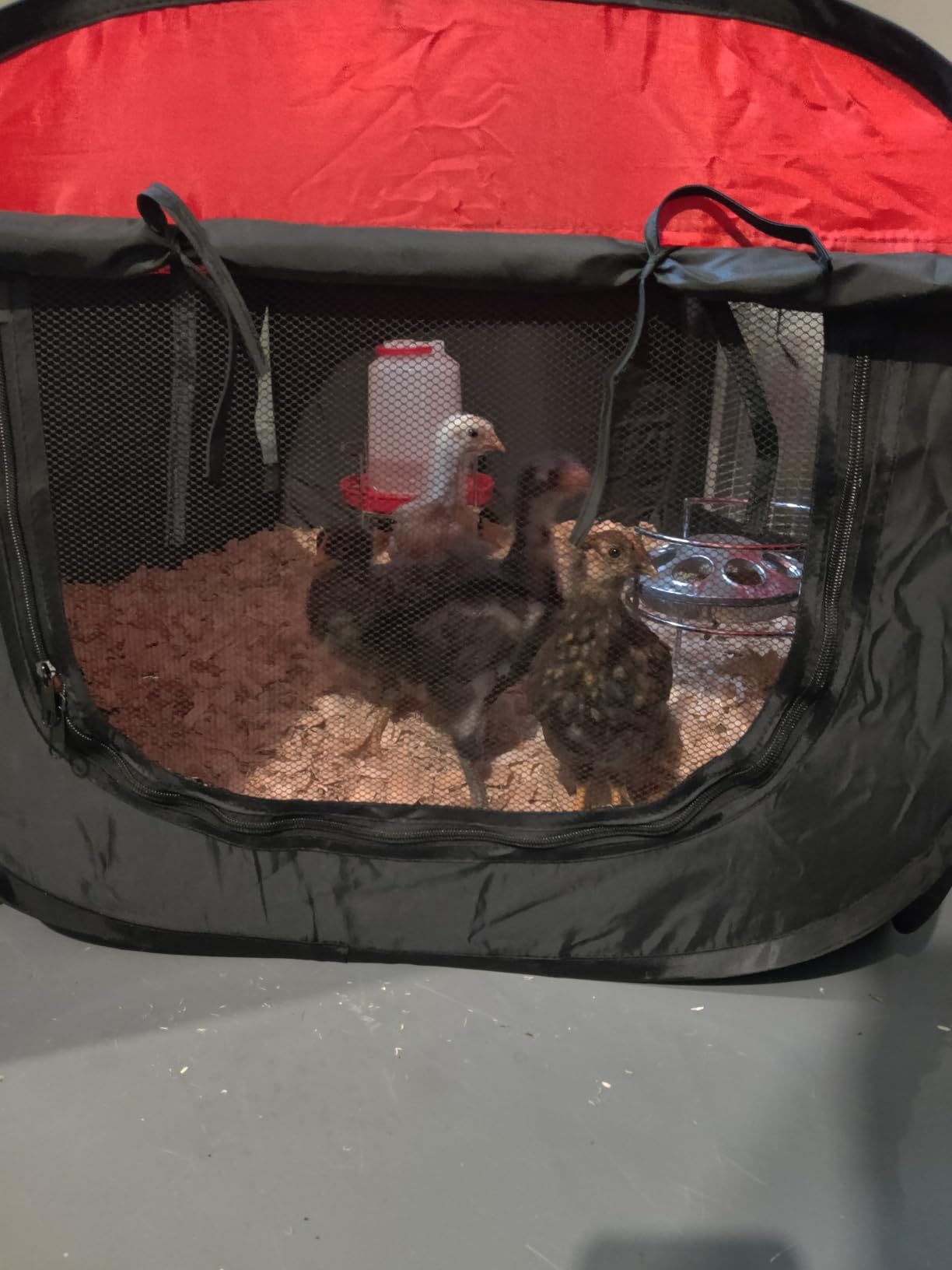
Everything that normally goes into a brooder arrives in the bag, including a feeder, a waterer, a floor pad, pegs and a heating plate, so a hatching pen can be assembled the same afternoon you notice your hen is broody. That convenience is the reason this kit scores well with first-time keepers.
The removable rinseable floor mat is what makes it work as a hatching pen rather than just a brooder. A sitting hen in a fixed nest needs a solid, dry surface around her, and a mat you hose out and put back in five minutes beats loose bedding you have to shovel out of fabric corners after every broody cycle.
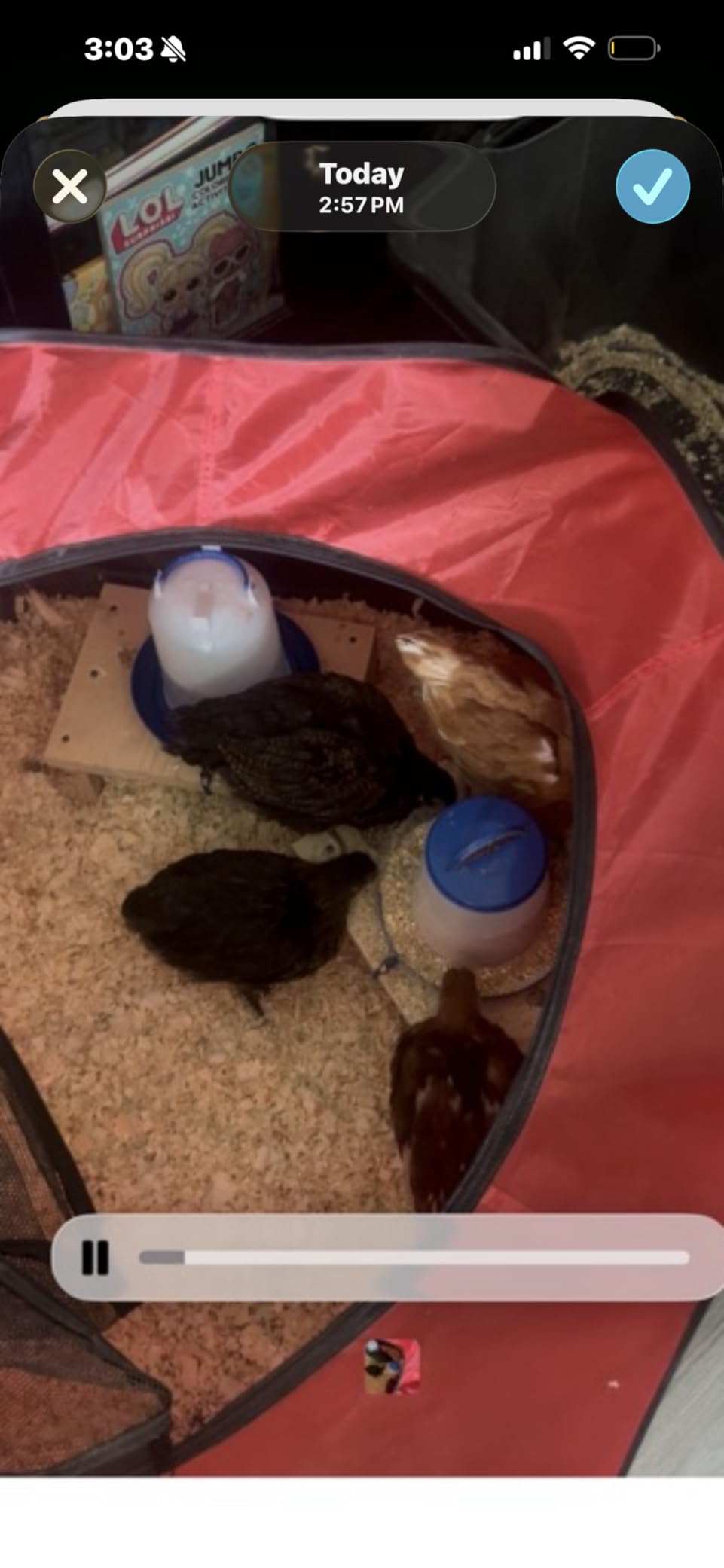
The heating plate is a genuine mismatch for a hen on eggs, and I would not use it. She does not need it, it is not temperature adjustable, and reviewers note it runs cooler than expected, so for hatching work treat this as a feeder-and-waterer package that happens to come with a pen attached.
The space is also the limiting factor. Most reviews put a comfortable load at 8 to 10 chicks before the floor gets crowded, and the included feeder and waterer are outgrown inside a fortnight. For a clutch of 12 or more, or for a large hen, budget for larger feeders before the hatch rather than after it.
Who this kit suits
Keepers raising their first clutch, and anyone who wants a pen that stores in a bag between hatches. The rating across several hundred reviews reflects repeat use across multiple batches rather than one lucky summer, which is the track record you want from a fabric pen.
The warm curtains on three sides are worth something in early spring too. A clutch set on a cold night benefits from a draft-shy hen, and enclosed sides plus a low profile make this the least cold-sensitive option in the group.
Where it falls short
Never leave a cat, dog or raccoon on top of it. There is no rigid shell, and reviews make the point clearly that a pouncing animal collapses the frame, which in the middle of a night hatch is a loss you cannot undo.
It is also a small pen. If your goal is to raise the brood to six weeks in this kit, you will be rehoming them early. My plan is to use the Tetuga for the three weeks of incubation and the first week of chick life, then move the brood into a larger run.
5. TharroCotte Dual Door Brooder Kit – Best for Cold Weather
Brooder Box for Chick Starter Kit – 2026 Upgrade Dual Door Chicken Brooder Pen/Playpen/Tent with 10*10 in Brooder Heating Plate,Nesting Pad,Chicks Feeder&Waterer,Chick Perch Up to 15 Chicks,Duck,Quail
Kit for up to 15 chicks
Weight: 17.64 oz
newest upgrade model
Pros
- Warm curtains and a top cover cut heat loss
- Perch and nesting pad included for the first week
- Fast-drying washable Oxford fabric
- Pop-up frame stores in its bag
Cons
- Fabric frame offers little structural rigidity
- Higher cost than comparable kits in the category
- Newer listing with a smaller review base
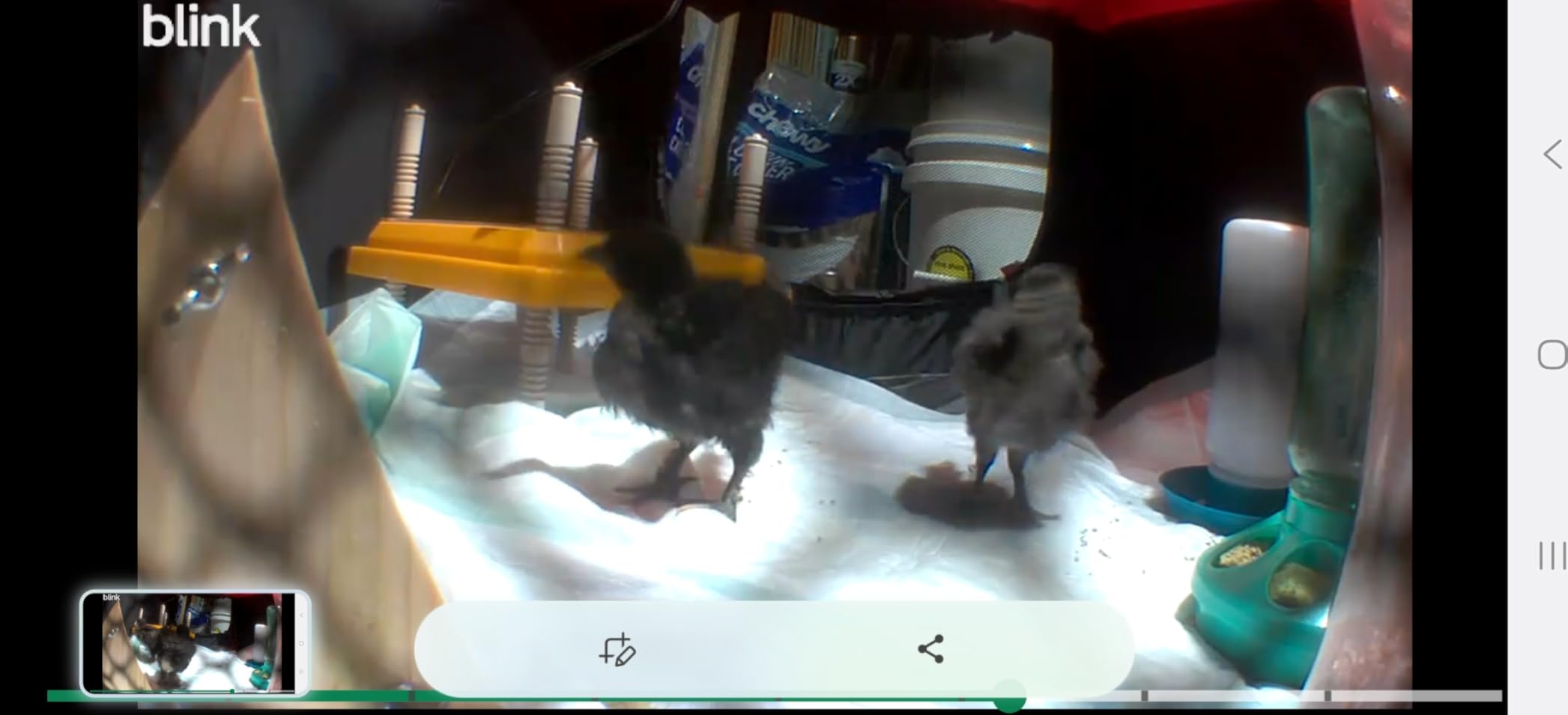
This is the kit I would choose for a February clutch. The warm curtains on the doorways plus a full top cover are the difference between a pen that holds warmth on a cold night and one that does not, and a hen sitting on eggs in an unheated draft-free box in late winter is exactly the scenario where that matters.
The dual doors are a smart addition for a hatching pen rather than a brooder. Open one and you get airflow without losing the sheltered draft-free side the hen is nesting on, which is the same reasoning behind the one-quarter inch of air opening per square foot that coop builders use in ventilation.
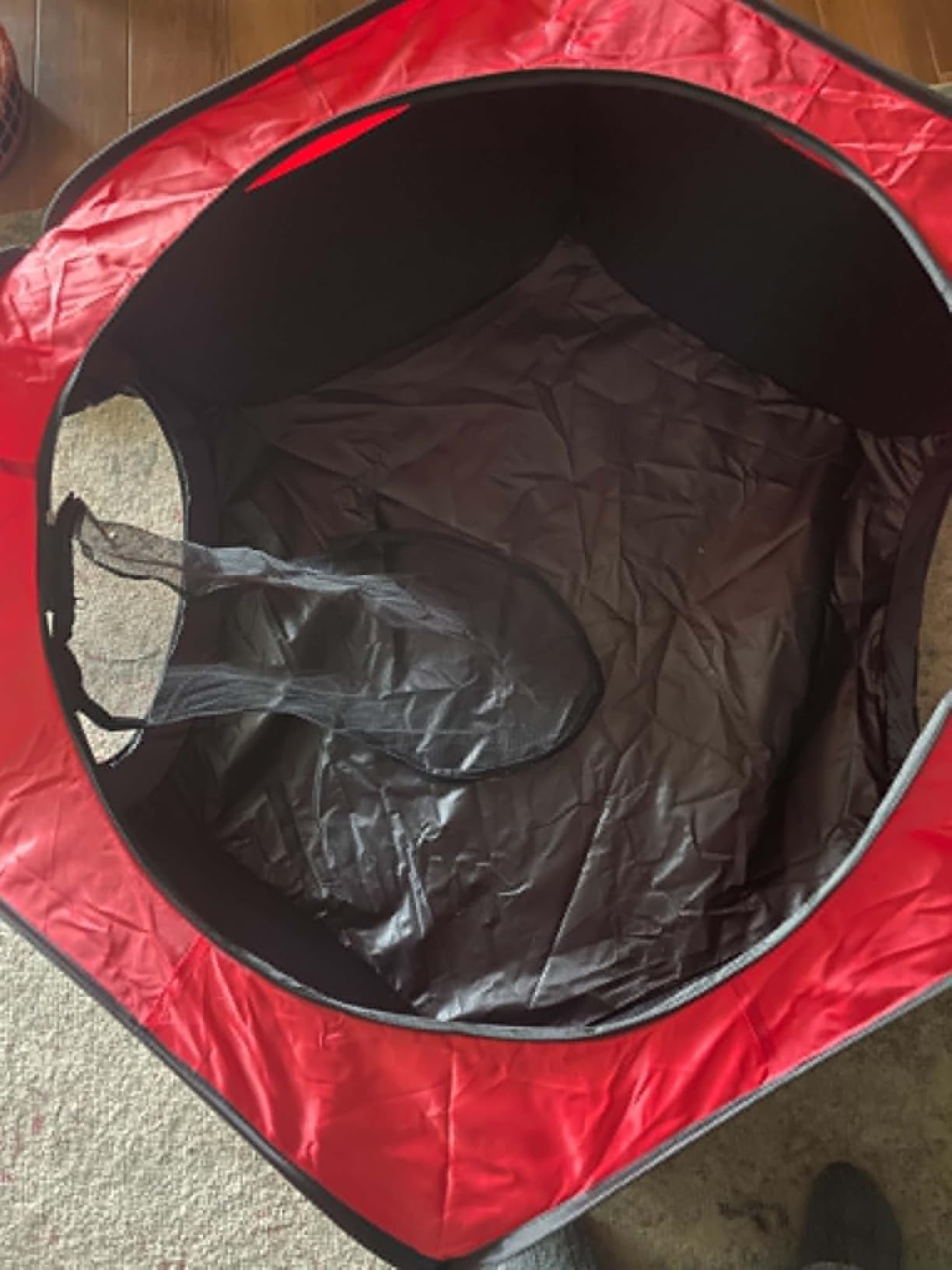
It is the most complete bundle in the group, and that cuts both ways. The 10 inch heating plate, perch, nesting pad, feeder, waterer, top cover and bottom pad mean you assemble nothing, but you also pay for parts a hatching pen does not need, and you are left with a perch most sitting hens will ignore.
The review base is small compared with the established kits here, so I would treat the listed features as unproven and verify them on arrival. Reviews on newer listings tend to focus on what arrived in the box rather than on how it performed through a full 21 day cycle.
Who this kit suits
Cold-climate keepers, and anyone hatching outside the spring and summer window. The covered top and curtain sides are the reason this kit ranks ahead of cheaper ones in cold conditions, regardless of the heating plate that most hatching keepers will never switch on.
It is also the better pick if you plan to brood the brood indoors for the first week. That is the most dangerous week in a chicken’s life, and a covered, dual-door, dry-air box is the closest you get to a purpose-built brooder inside a fabric format.
Where it falls short
The frame is fabric, so it has the same vulnerability as every other tent in this roundup. Keep it in a sheltered location with the top cover fitted, and treat it as an indoor or covered-space pen rather than an outdoor run.
At this cost you are buying accessories rather than pen quality, and the softness of the structure is the same as the cheaper kits. If your budget is better spent elsewhere, the feed and water in a separate purchase costs less and lasts longer.
6. VavoPaw Octagonal Playpen – Best for Compact Yards
VavoPaw Small Animal Playpen, Chicken Brooder Box with Cover Top, Black
39 x 39 x 19 in octagon
Weight: 1.83 lb
Folds to 9 x 9 x 3 in
Pros
- Octagonal shape gives more usable floor than a hexagon of the same size
- Waterproof 190T base wipes clean easily
- Resistant mesh that blocks insects
- Folds to a flat 9 inch pack
Cons
- 19 inch height limits use once chicks grow older
- Wastes some corner space compared with a rectangle
- Light duty for larger or active animals
The octagonal shape is a real advantage here and it is not marketing. Corners of a rectangle are dead space in a round frame, and the octagon gives you more floor per square foot of footprint, which is the number that matters when you are working with a single sitting hen in a small yard.
At 1.83 pounds with a packed size of 9 by 9 by 3 inches, this is the easiest pen here to carry between the coop, the garage and the laundry room. That portability has practical value for a hatching pen, because the pen needs to move twice: once when you move the hen in, and once when you take the chicks out of it.
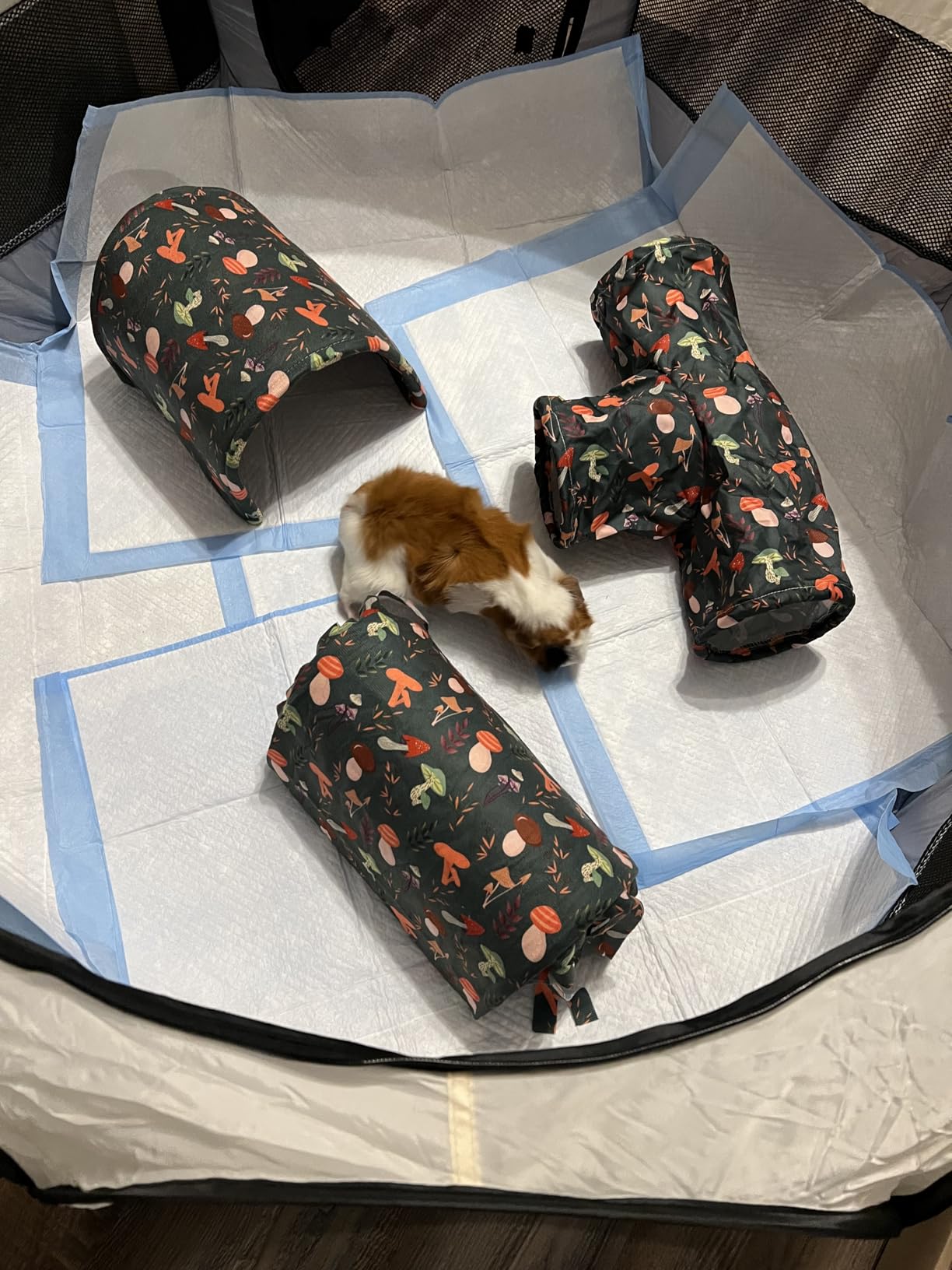
The height is the trade-off and it is the same 19 inch ceiling that limits the rest of the budget group. A small bantam hen and her clutch will be perfectly comfortable, and a large Orpington will be cramped in a way that shows up in how she settles.
The mesh resists claws and beaks according to the reviews, which is the property you want with chicks, but the whole structure is light. I would not put it anywhere a dog or a neighbour’s cat can reach, and I would check the zippered top daily because it is the point most likely to gap.
Who this pen suits
Keepers with a bantam or small single hen and a tight yard, or anyone who wants a second pen to keep in a car for a fair or a school hatch. The folded size means it lives in a cupboard until brood season and then comes out for three weeks.
The waterproof 190T base is also the best of the group for a sitting hen that is on fixed bedding for 21 days. Nothing soaks through, nothing seeps, and the daily check takes seconds.
Where it falls short
Once chicks are a week old and starting to perch and flutter, the ceiling becomes the issue rather than the floor. Budget for moving them into a longer run by the end of the first week if the brood is more than half a dozen chicks.
Some of the corner space inside the octagon is unusable for a rectangular nest box, so plan the nest placement before you position the pen, not after.
7. UWE Waterproof Foldable Playpen – Best Value
UWE Small Animal Playpen, Waterproof Foldable Pet Playpen, Black
Waterproof 190T base
Weight: 15.2 oz
Pop-up frame
Pros
- Waterproof base holds off shavings and wet bedding
- Top zipper opens wide for cleaning and cord routing
- Breathable mesh on top and sides for airflow
- Holds up to claw contact from kittens and puppies
Cons
- Light frame can be pushed aside by larger animals
- Seams can separate with heavy repeated use
- Some units have a single rather than a double zipper
This is the pen I buy for a first hatching pen, and the reason is not the feature list, it is the price relative to how well it does the one job that matters. The 190T waterproof polyester base is the same material used by the higher-priced pens, and for a sitting hen on bedding that is the part that actually has to work.
The top zipper opening is more useful in a hatching pen than it looks. You can reach a hen without opening a side door, you can drop a waterer in without disturbing the nest, and you can run a cord through it if you are adding a low-wattage lamp for a night-hatch clutch in cold weather.
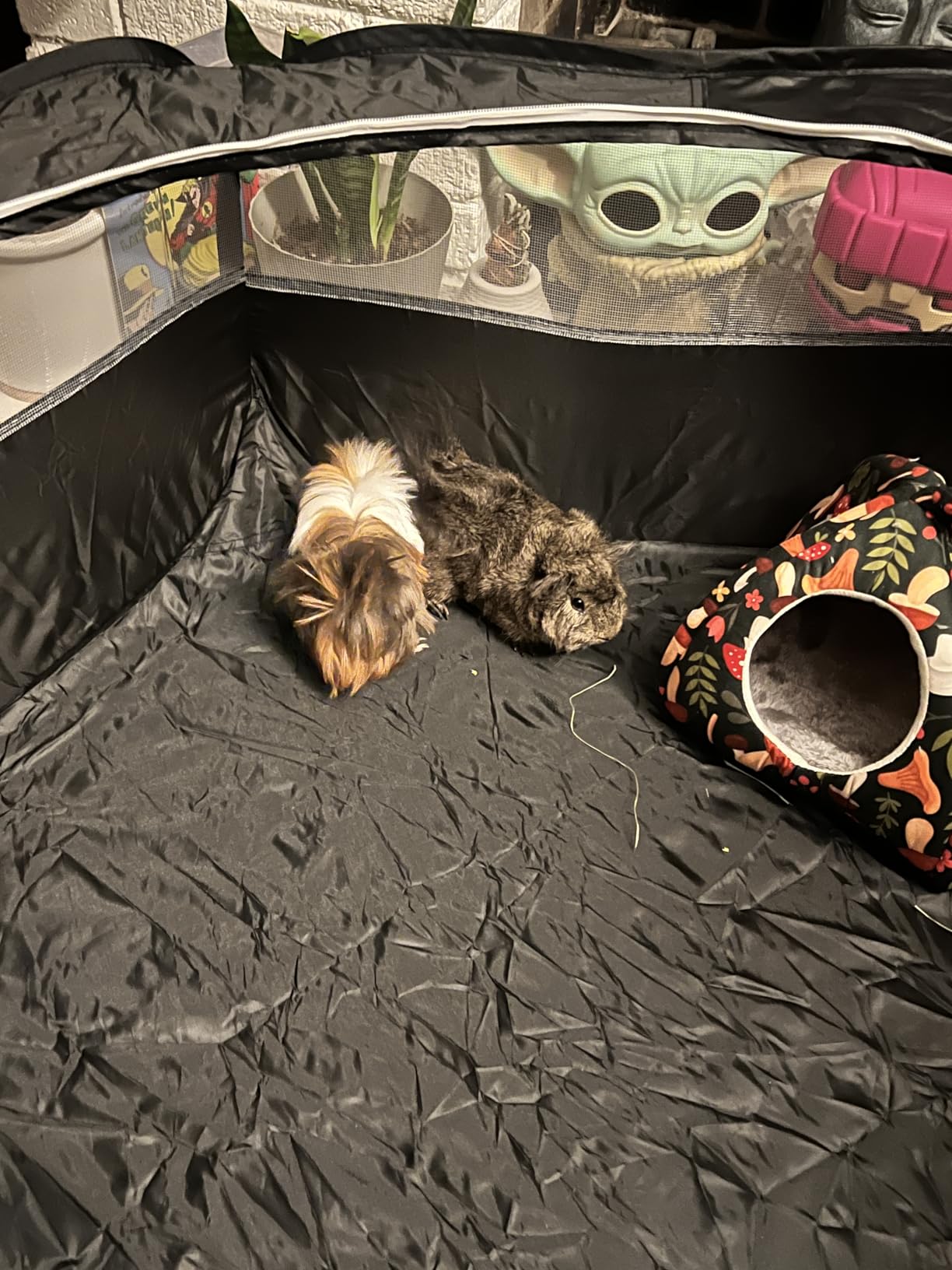
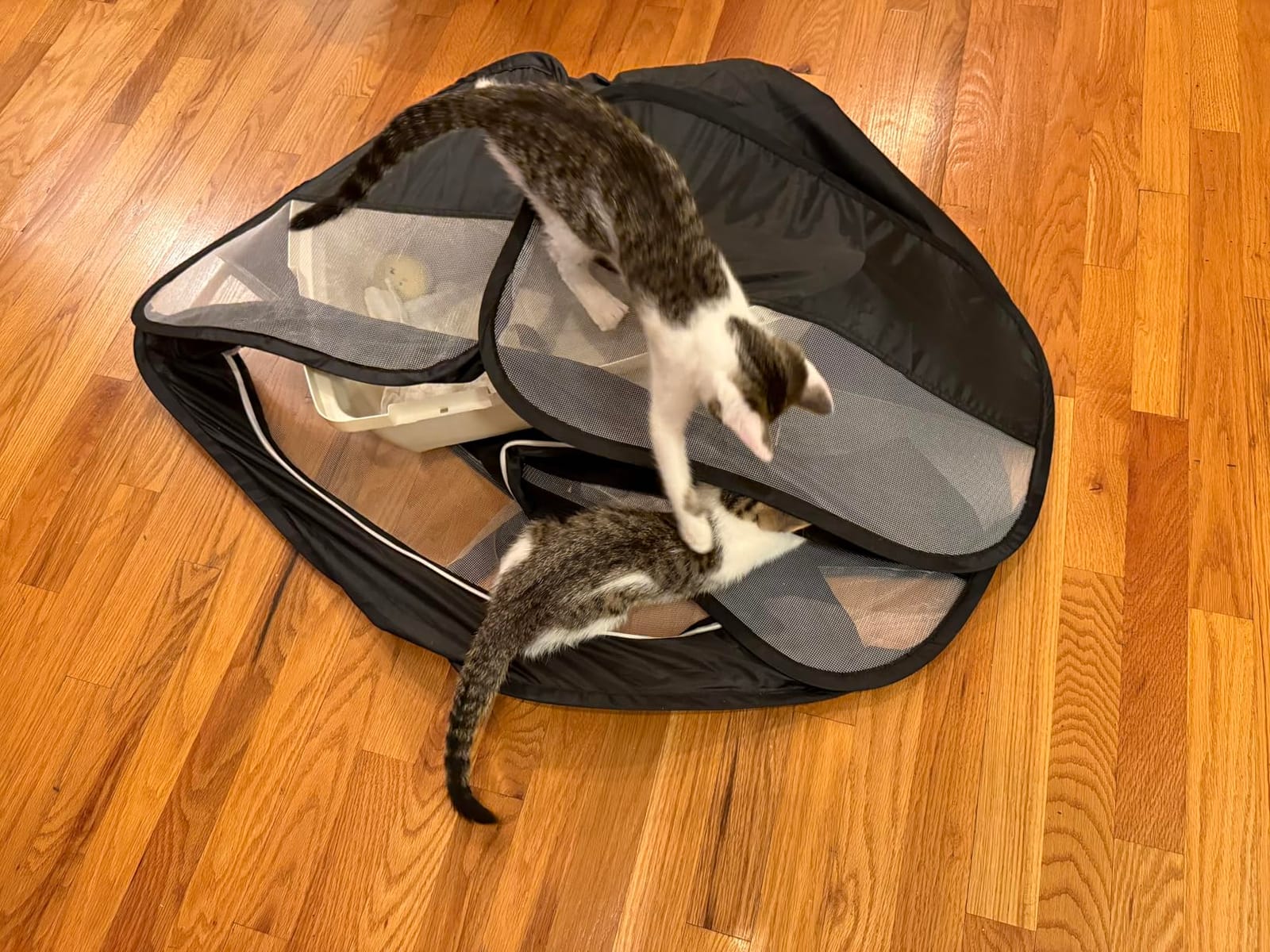
It is light duty and I would not forget that. The frame folds flat to a rectangle, which means nothing is holding it rigidly in shape, and a determined hen or a cat can push a corner out of square over several weeks of use.
Reviews also mention seams separating under heavy repeated use, and note that some versions come with a single zipper where the listing implies a double. That variation is worth checking the moment the pen arrives, because a single top zipper on a pen full of chicks is the gap you will be chasing all week.
Who this pen suits
Anyone setting up a temporary single-hen pen rather than building dedicated housing. It is the lowest-cost way to isolate one hen for three weeks, which is also the correct use if your goal is to break a brood rather than to hatch from it.
The non-toxic materials and the fact that it is also sold as a general pet playpen mean you can use the same pen for a sick hen in isolation, then rinse it out and return it to chick-rearing duty.
Where it falls short
It is not suited to ducklings, which is a limitation reviews call out because they are far messier and the seams do not appreciate constant wet. For a hatching pen with a hen, that is not a concern.
Small, and it shows on any flock with more than one broody hen. If you keep Silkies, Orpingtons or Cochins, expect two or three hens to go broody in the same week and buy accordingly.
8. Jhua Chicken Run Tent – Most Versatile for Forage Days
Jhua Small Animal Playpen Pet Cage Tent Large Chicken Run Coop 73″x36″x25″
72.83 x 36.61 x 25.59 in
Weight: 2.1 lb
No floor included
Pros
- Generous 73 inch length suits several birds at once
- PVC mesh is more scratch and peck resistant than fabric
- Four zipper doors make feeding and handling easy
- Bottomless base lets chicks stand on grass or bedding
Cons
- No floor included
- so bedding or a mat is on you
- Light frame and mesh are not predator resistant
- Tent base gaps on uneven ground
The length is the selling point. At just over 73 inches this is one of the larger pop-up pens here, and for a hatching pen length translates directly into a separation between the nest end and the food and water end, which is the arrangement that keeps a sitting hen settled.
The bottomless design is genuinely useful once chicks are on the ground. With no floor panel to remove, you set the pen straight onto grass or a mat, and the birds forage on whatever is underneath, which is the cheapest way to give a young chick a varied surface. Eight ground nails come in the box.
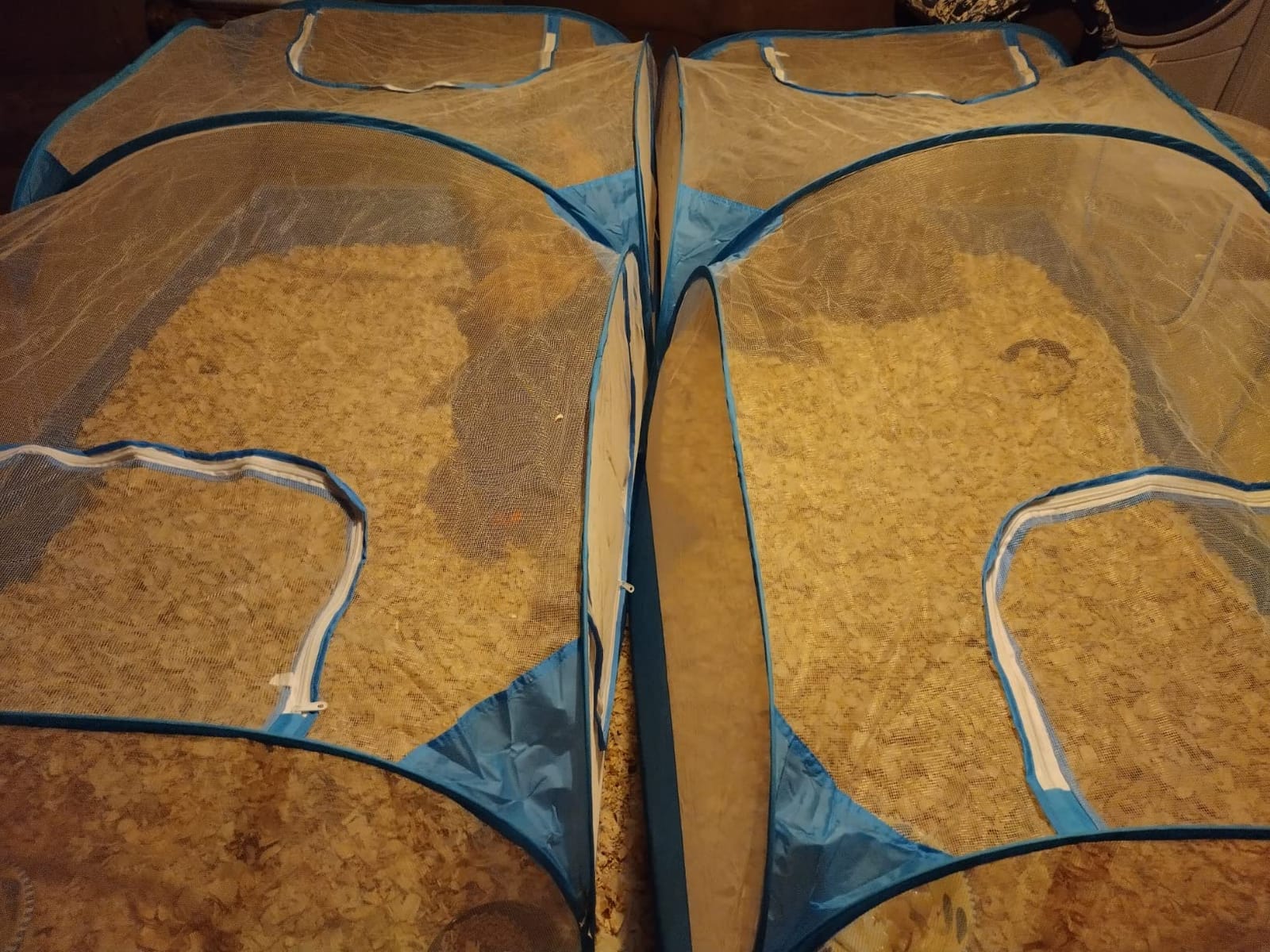
Because there is no floor, you supply your own. A sitting hen needs a dry, absorbent surface that you can change, so plan on a cut piece of plywood or a deep layer of straw under the nest area, and put the hen over that rather than over bare ground, which pulls heat out of her and pulls damp up into the bedding.
This is the lowest-rated listing in the group, and the one-star and two-star reviews concentrate on exactly the two weaknesses above: no floor, and light construction. It is a forage pen that we are asking to do a hatching pen’s job, so place it somewhere sheltered and supervised.
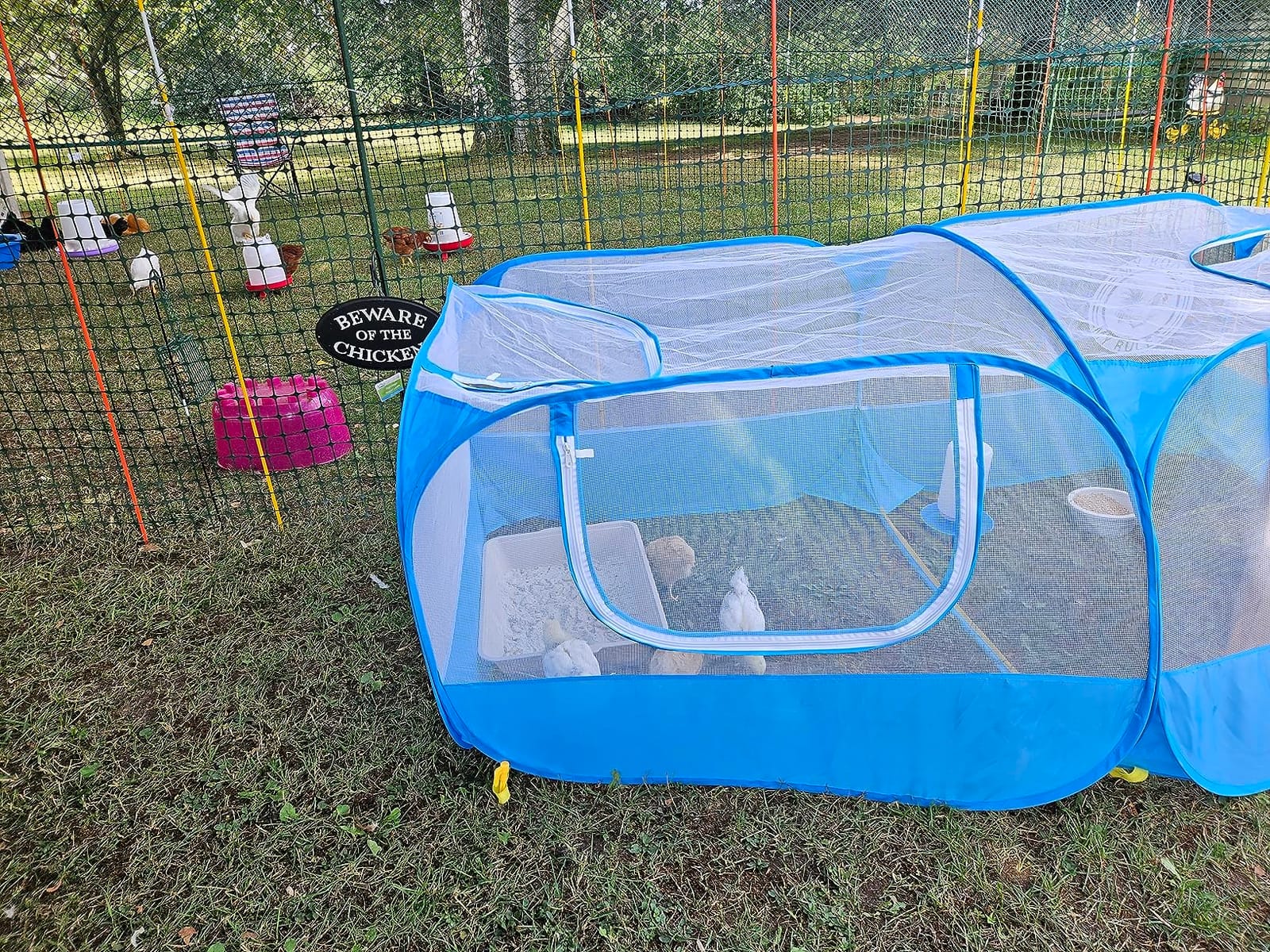
Who this pen suits
Keepers who already have their own floor solution and want the largest footprint for the least money. If you have a sheet of plywood cut to size, a floorless run is the cheapest workable hatching pen available, and the PVC mesh holds up to pecking better than plain fabric.
The four zippered doors, two top and two side, are what make it workable for hatching. You can load a nest box through a top door without lifting the pen over the hen.
Where it falls short
It will not hold against a predator and reviews are clear about that. Rats are the practical risk at floor level with chicks, so place hardware cloth or a solid skirt around the base before the hatch.
The rating is the lowest here at 4.0 stars, so expect more variability. Check every zipper and seam on arrival, because the base material is the first thing to give.
9. ANC POP Portable Chicken Run – Best for Large Broods
ANC POP Portable Chicken Run Large Pop-Up Chicken Pen for Small Animals Outdoor Gardening Net with 3 Doors and Handbag, Easy to Install and Storage, Green
78.74 x 39.37 x 45.27 in
Weight: 7.2 lb
16 mm steel pipe frame
Pros
- Tall enough for a full size hen to stand and stretch
- Walk-in end door lets you catch birds easily
- Side door links directly to an existing run
- Light enough to move around the yard
Cons
- Bottomless sides let small chicks slip underneath
- Not predator proof as a stand-alone structure
- Metal rivets rust and the cover fades in sun
This is the only pen here with real vertical space, at 45 inches, and that is what solves the problem that limits the rest of the list. A large hen can stand, turn around and scratch, and when you are brooding a hen with a dozen chicks for a full week you need headroom, not just floor.
The walk-in end door changes how hatching goes. Without it you are reaching into a pen with a sitting hen, which is how you get pecked, and with it you can kneel inside, lift the nest box, and settle the hen without ever putting a hand near her face.
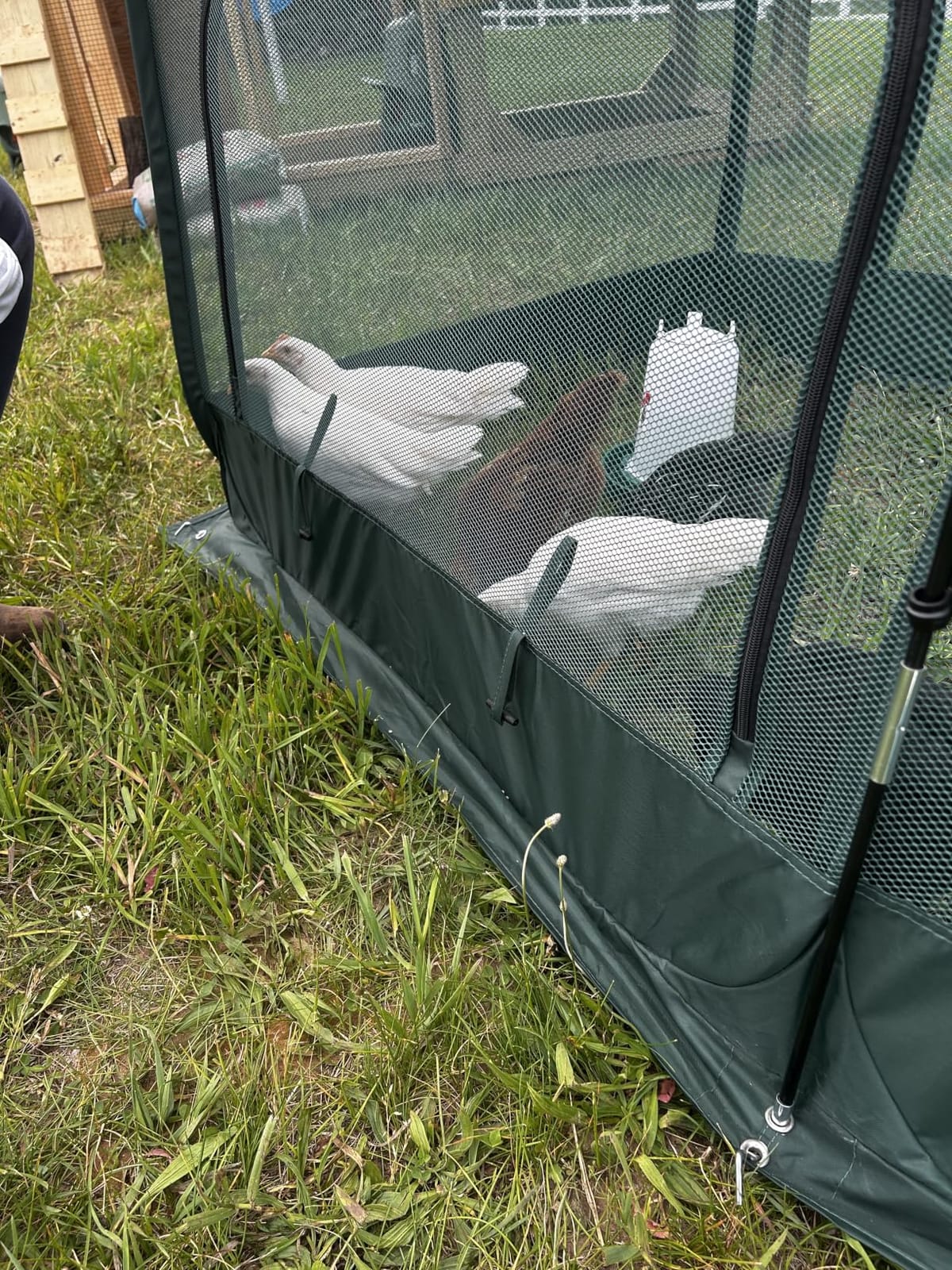
The bottomless sides are the real trap with chicks here. The mesh does not sit flush to the ground, which is fine for a foraging pen and a genuine problem the day you add day-old chicks, because a small chick finds the gap under the edge. Lay a solid skirt of plywood or hardware cloth around the base before she hatches.
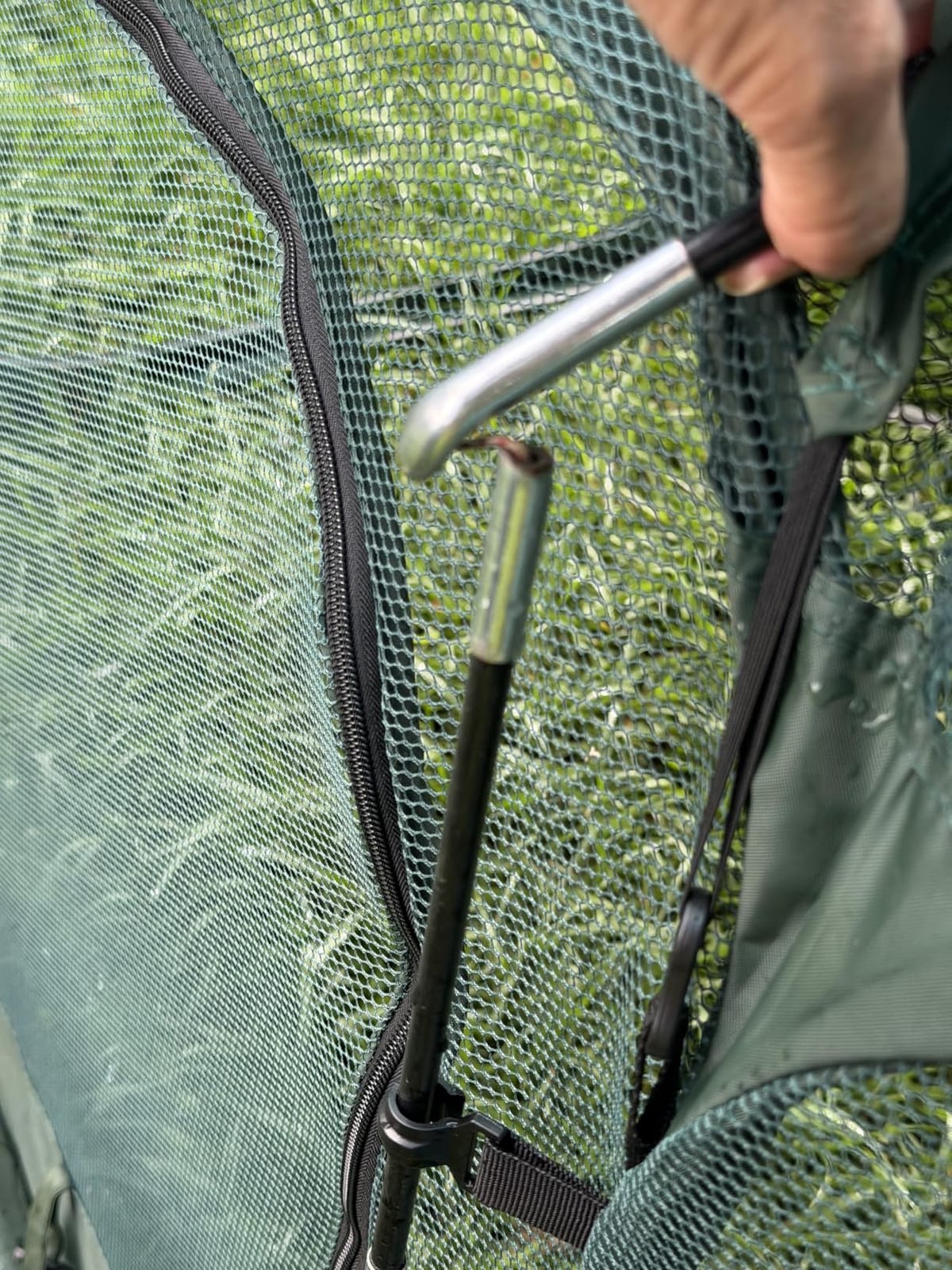
It is also a 16 mm steel pipe frame rather than fabric, so it stays square when a hen leans on it, but the joint rivets are the weak point and reviews mention rust developing and a centre pole breaking. Treat it as seasonal equipment moved around the yard rather than a permanent structure.
Who this pen suits
Keepers with a big brood, a large breed, or a plan to keep the hen and chicks in the pen for two or three weeks rather than a few days. Reviews describe use for up to about 16 chicks or 6 full-grown hens, which is well beyond what most of the pop-up pens here manage.
The side door that connects to a fixed run is what makes it useful long term. You can start the brood inside the pen, then open one door and let the hen and chicks range into your existing run with mama still in view, which is the arrangement most keepers say makes reintegration easy.
Where it falls short
It is not predator proof. The mesh is containment for chickens, not for raccoons, and the open ground gaps make it unsuitable as a standalone enclosure for chicks without a skirt and a top cover.
At 7.2 pounds it is the heaviest item here and needs two people to reposition comfortably, so plan where it will sit before the hatch rather than moving it during.
10. Polar Aurora Metal Chicken Coop with Walk-In Run – Best for Permanent Housing
Large Metal Chicken Coop, Walk-in Poultry Cage Galvanized Hen Playpen House Dome Shaped Coop with Waterproof and Anti-Ultraviolet Cover and Lockable Door for Outdoor, Backyard Farm (12.5’ L x 9.2’ W)
150 x 110 x 76.8 in
Steel frame with canopy
Dome profile
Pros
- Rigid steel frame far sturdier than fabric pens
- Dome roof sheds water instead of pooling
- Waterproof anti-UV canopy shelters sun and rain
- Coated hexagonal mesh keeps ventilation high
Cons
- Fixed structure does not fold for storage
- Assembly required rather than pop-up setup
- Much bulkier than a portable brooder pen
If you keep more than a couple of birds, this is the answer to the question the pop-up pens raise every spring: what happens in year two. Fabric pens are for three weeks of incubation and a week of chick life. A rigid steel structure is what a broody hen and her brood actually live in through a full season.
The dome profile is the detail I would point a first-time buyer at. Flat roofs on low outdoor runs collect water, and a soaked roof over a nest is a damp nest. The canopy adds shade in summer, which is the other failure mode, since an unventilated box on a hot day can cook a sitting hen.
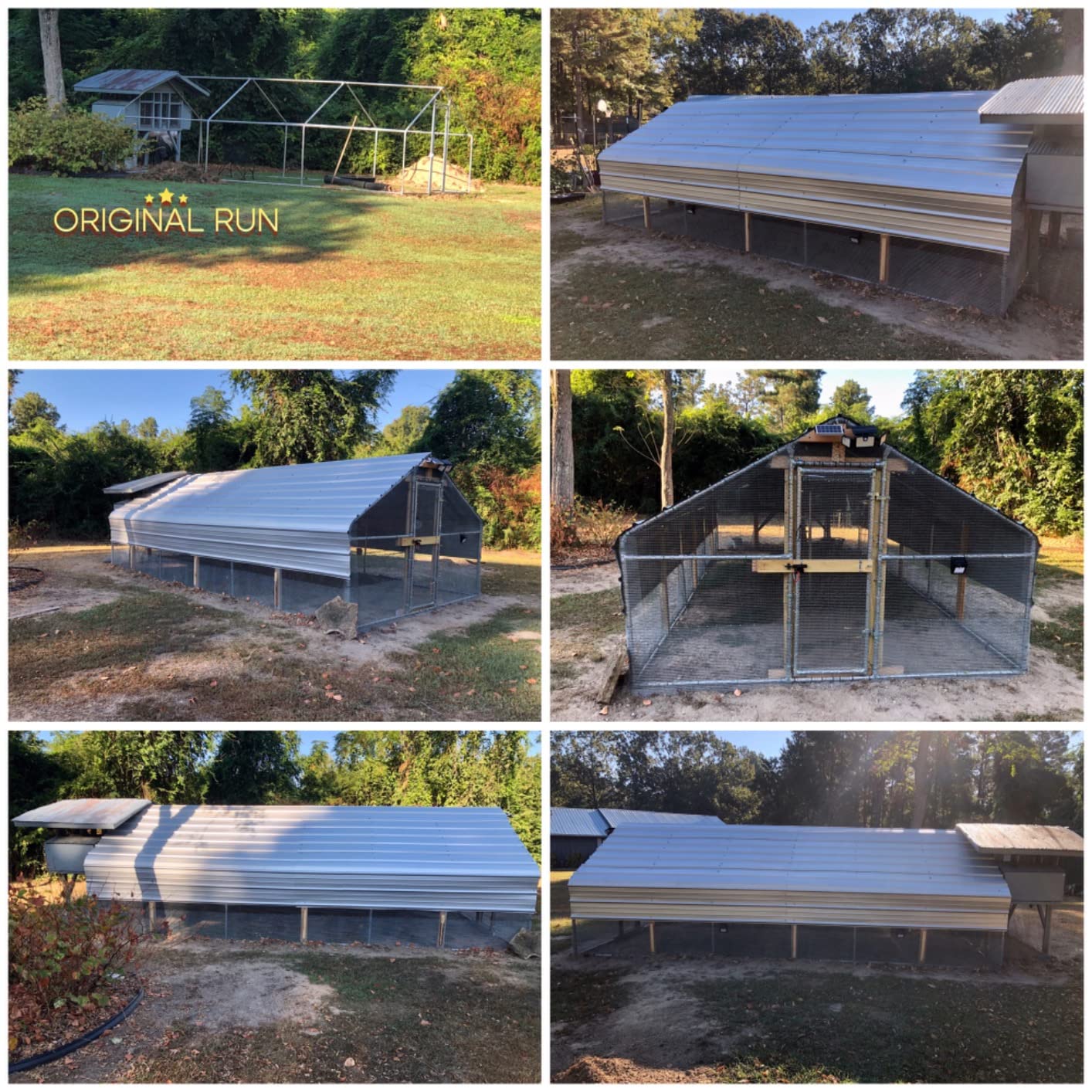
Scale is the trade-off that decides this for you. At 150 by 110 by 76.8 inches this is not a temporary isolation pen, it is a small run, and you need level ground, a clear footprint of several square metres, and an afternoon to put together.
Reviews are consistent that this suits permanent or semi-permanent housing rather than short-term chick brooding, and that chicks should not be raised in it indoors without added heat, which is a fair warning: it is an outdoor pen, not a brooder.
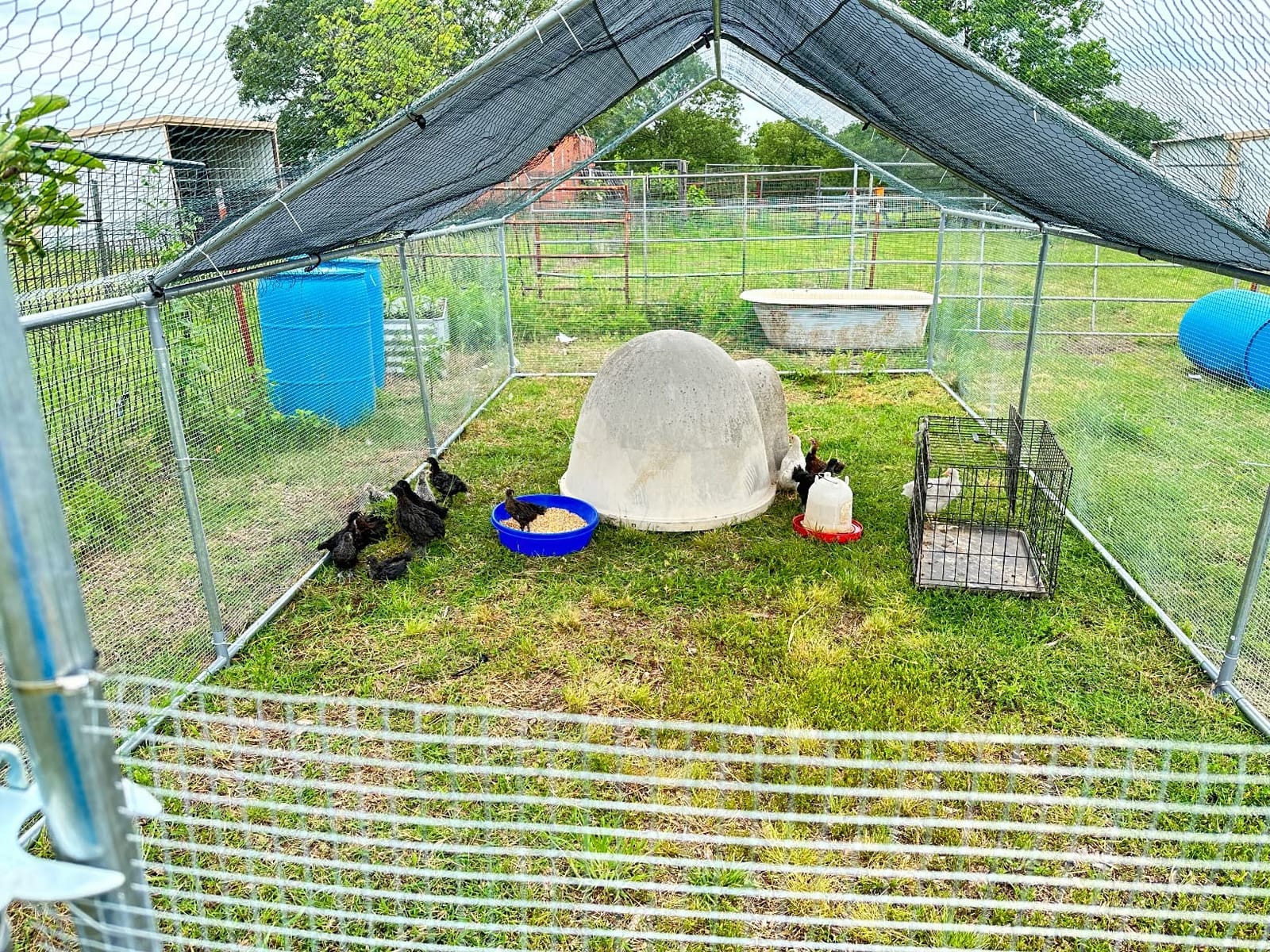
Who this pen suits
Keepers who are done with temporary equipment. A steel frame with coated hexagonal wire mesh holds its shape through seasons, does not need annual replacement, and gives you somewhere to put the next broody hen without rebuilding anything.
It is also the safest option of the ten for a hen and chicks, because there is no fabric to peck through and no ground gap at the base. Add a solid floor panel with bedding and a nest box and you have a proper setup that can carry a brood for weeks.
Where it falls short
It is the wrong tool for a single 21 day incubation, and buying it for that reason is how people end up with a very large empty structure in the yard. Use a pop-up pen for the incubation and put a rigid structure like this behind the hen once she hatches.
It does not fold, it needs assembly, and it is the bulkiest item on this list by a wide margin. Plan the site, level it, and check local rules on setbacks from neighbours before the frame goes up.
How Big Should a Broody Hen Pen Be?
One square foot of floor space per sitting hen is the number to plan around, and that is genuinely all she needs for 21 days if the nest, feed and water are all inside the pen. Add roughly 2 square feet per chick once eggs hatch, because space per chick, not space per hen, is the constraint that actually ends up catching people out.
A clutch of 12 eggs that hatches cleanly puts a hen and 12 chicks in the pen on day 21. At 1 square foot for her and 2 for each chick you are looking at 25 square feet of floor, which is why a single pop-up panel works for incubation and a two-panel or steel run is the right answer for the week after.
Nest footprint matters more than pen footprint
A nest needs at least 14 by 14 inches for a standard hen, and 16 by 16 inches gives her room to turn the eggs, which she will do several times a day. A nest that is too small is the most common reason a clutch fails under a sitting hen, because she cannot reach the far corner to reposition an egg and the ones she cannot reach cool down.
Place the nest on the ground rather than up on a perch. A ground-level nest is harder for a flockmate to reach, harder for a predator to disturb from above, and closer to the hens’ natural preference for low nesting sites. Perches belong in the run, not in the nesting area.
Height, and why 19 inches is enough for incubation
Most pop-up pens in this roundup are about 19 inches tall, and for a sitting hen that is not a limitation, it is a feature. She wants a low, enclosed, den-like space, and a low ceiling helps hold warmth and helps her feel hidden.
Height only becomes a problem once the brood hatches and chicks start to perch. If you plan to keep the hen and chicks in the pen for more than a week, buy the 45 inch steel run rather than saving money on a 19 inch fabric pen and then rehoming a stressed brood at day 10.
Hardware Cloth vs Chicken Wire for a Broody Pen
Use 1/2 inch hardware cloth, 19 gauge, for a broody pen. Chicken wire keeps hens in and does almost nothing against predators, because a raccoon or a weasel chews through it, and a pen that only holds a hen is not a pen, it is a suggestion.
Gauge and mesh are two different decisions. 19 gauge is thicker and stiffer than 23 gauge, so it resists chewing and spring-back; 1/2 inch mesh is the widest opening a day-old chick cannot squeeze through. Where you are protecting chicks rather than a hen, 1/4 inch mesh is safer, though it is heavier and stiffer to work with.
Predators chew through hardware cloth too, but far more slowly, and the ones that get in at night are usually rats and weasels coming in low rather than raccoons at the top. A 1/2 inch apron laid flat on the ground extending 8 to 12 inches out from the base, then buried or weighted down, blocks the digging approach that takes out most ground-level pens.
Predator protection checklist
Four things cover most incidents: a 1/2 inch 19 gauge mesh wall, a buried or pinned apron at the base, a secure latch on the door, and a solid floor with bedding rather than bare soil. Add a top cover if the pen sits in the open, because aerial entry is the one gap that no amount of skirt mesh fixes.
On fabric pens specifically, add a strip of hardware cloth around the lower twelve inches if rats are a problem in your area. It costs little, it fastens with cable ties, and it is the difference between a three-week pen and a two-week pen.
How to Move a Broody Hen Into Her Pen at Night
Move her at night, in the dark, and her brood will almost always survive the move. The fear that moving a settled hen wastes a clutch is the single most common question in hatching threads, and the answer is that a hen in the dark settles into the nearest nest-like space, which is why step 4 below matters so much.
The sequence I use: block the nest box the day before so she cannot get in, put the new nest box in the pen with clean bedding and a golf ball or two for company, and after dark carry her in gently with a towel over her wings. She is heavy, so support her body and slide her into the nest rather than lifting her by the legs.
Check her the next morning before you feed the flock. If she is off the nest and pacing, box her in. Put a board or a cardboard panel in front of the nest box opening and a second one on top so she cannot get out, leave her enclosed for 12 hours, and remove the boards at dusk the following evening. That 12 hour box-in is the step that decides whether she keeps sitting.
Keepers on r/BackYardChickens describe this as the difference between a hen that continues and a hen that abandons the clutch, and it matches what I have seen. It also solves the intruder egg problem, because no other hen can reach that nest to lay in it.
Feed and water go inside the pen from day one, even while she is boxed in. Mark the eggs with a washable non-toxic marker before the move if the nest was shared, so you can remove any fresh eggs that were laid later and keep the hatch dates together.
Bedding, Feed, Water and Dust Bath Setup
Straw is the best bedding under a sitting hen. It insulates, it does not stick to wet droppings the way shavings do, and a hatchling digging down to the bottom of a nest finds soft material rather than a hard, cold surface. Pine shavings are fine for the run area around the nest, where chicks will walk and where you change bedding daily.
Put the waterer low. A chick that cannot reach water on day one dehydrates quickly, so use a shallow chick waterer placed at chick height rather than a hanging poultry fount, and keep a second source inside the pen in case the first gets tipped. The same logic applies to feed: a shallow chick feeder near the nest edge, not a high feeder the brood cannot reach.
A dust bath is optional during incubation and worth adding from about day 7 after the hatch. A box of dry sand, soil and a little diatomaceous earth inside the pen keeps dusted birds from scratching in wet bedding, and it is far easier to contain dust inside a pen than in an open run.
Keep the pen in a quiet corner of the run rather than in full isolation if you can, because most keepers say a hen who can see and hear her flock settles faster than one who cannot. What the pen must block is physical contact, not sight lines.
Chick-Proofing the Pen Before Pipping
On day 19, start a chick-proofing pass, and do it before the first egg pips rather than after. Walk the pen with a flashlight at chick height, look for anything a new hatchling could get its head or body into, and close it.
The three checks that catch almost everything are: no gap along the base that a chick can squeeze under, no gap above the nest box lip, and no waterer a chick can drown in. Fill in ground gaps with a solid skirt of plywood or hardware cloth, cap the nest box front if the hen has been reaching over the edge, and replace any waterer with a base too deep for a chick to tip into.
Also move feed and water away from the nest itself, no matter how much of the pen space the hen wants to share. Chicks that wander into a sitting hen’s nest in the first days get stepped on, and that is the most common way a good clutch loses a chick in an otherwise well-run hatching pen.
Keep the heat plate off. A hen on eggs provides the warmth, and chicks under a broody hen do not need an additional heat source in mild weather. What they do need is a dry, draft-free corner, and a covered box on a cold night is the one exception worth making.
What Not to Buy: Hatching Pen vs Heat-Lamp Brooder
Almost everything in the shopping results for this search is a chick brooder with a heat lamp, and it is the wrong product for a hen sitting on eggs. A brooder raises orphans. A hatching pen holds a mother, and its job is containment, visibility and keeping the rest of the flock out of the clutch.
What a brooder has that a hatching pen does not need: a heat source, a temperature dial, and a bare or wire floor for airflow under chicks. What a hatching pen needs that a brooder usually lacks: a solid dry floor for a sitting hen, a nest box at ground level, predator-proof mesh, and enough headroom for a hen to stand.
There is one more confusion to clear up. A premium plastic coop such as an Eglu Cube is excellent housing for a flock but a poor fit for hatching, because a hen needs a ground-level enclosed nest and these coops put nesting above the ground with external access that invites egg-pecking. Keepers raising this on backyard chicken groups make the same point, that a portable pen inside the run solves a problem the fixed coop cannot.
If your only goal is to stop a hen being broody, none of these products is necessary. A broody hen in a small crate with feed, water and no nest box, kept out of sight of the flock, usually gives up within a few days. The pen and the hardware cloth only become necessary when you intend to hatch.
How to Choose: A Buying Guide by Tier
Cheap and fast, under the fifty mark, means a fabric pop-up pen like the UWE or the VavoPaw. You get a waterproof base, a zippered top and a frame that folds flat, and you supply the nest box, the bedding and the predator skirt. This is the tier most hatching first-timers should start in.
Mid-range gets you either a kit that includes a feeder and waterer, like the Tetuga and the TharroCotte, or a longer run with more doors and a larger footprint. Kits save an afternoon of shopping. Runs solve the problem you hit on day 22, when a dozen chicks need more floor than a hen ever did.
Premium and permanent is the steel route, like the Polar Aurora dome run. You pay for rigidity, weather cover and a structure that lasts, and you give up portability, folding storage and the five-minute setup that a fabric pen wins on every other measure. We apply the same month-long wear checks to gear in our 3D printing pens for artists guide, where the deciding question is always whether the build survives daily use.
Two final criteria that decide more purchases than price does. First, headroom: if your hen is a large breed or you plan to brood for more than a week, do not buy a 19 inch pen. Second, containment: count the zippers and doors, because a single-zip top is the most common escape route in every fabric pen in this roundup. The same practical checklist runs in our 3D printing pens for classroom STEM projects roundup, where entry points and tolerances decide whether a tool survives a term of use.
Finally, count your broody hens, not your hens. Orpingtons, Cochins, Silkies and Wyandottes are the breeds that go broody repeatedly, and they tend to do it at the same time. A flock of those breeds needs two or three pens, and the cheap fabric pens are what make owning that many pens practical.
Frequently Asked Questions
What size broody hen pen do I need for hatching?
Plan on 1 square foot of floor for the sitting hen and about 2 square feet per chick once eggs hatch. A clutch of 12 needs roughly 25 square feet total, which is why a single pop-up panel works for the 21 day incubation and a larger run is needed for the week after.
How do I move a broody hen without breaking her brood?
Move her after dark, carry her in gently on a towel, and settle her into a prepared ground-level nest. If she is off the nest the next morning, box her in for 12 hours with a board across the opening and release her at dusk. That box-in step is what most keepers say decides whether she keeps sitting.
Is a wire dog crate okay for a broody hen?
Yes for the sitting period, and it is the community default, but the wire floor is the problem. Wire floors carry a bumblefoot risk and are cold for a hen sitting for three weeks. Line the floor with solid plywood plus deep straw, and add hardware cloth around the sides and a buried apron at the base.
Is 1/4 or 1/2 inch hardware cloth better for a chicken pen?
Use 1/2 inch mesh with 19 gauge wire for a broody hen, and 1/4 inch if you are protecting newly hatched chicks. 19 gauge is thicker and stiffer than 23 gauge, so it resists chewing and keeps its shape, and 1/2 inch is wide enough to ventilate while stopping chicks and most small predators.
What is the best thing to put down in a broody hen pen?
Straw under the nest, because it insulates, does not cling to wet droppings, and stays soft if a chick digs down. Use pine shavings in the run area around the nest where you change bedding daily, and avoid fine shavings that chicks eat, which causes respiratory problems.
Will a broody hen accept a baby chick?
Usually, if the timing is right. Set her in the nest with eggs that have pipped, and day-old chicks placed under her on the evening she hatches are usually accepted. Chicks that are more than a few days old are often rejected, so match them as closely as you can in age.
How long will a hen stay broody?
A naturally broody hen sits for around 21 days on a normal clutch, and some keep sitting well past that, especially Orpingtons, Cochins and Silkies. If she is sitting with no eggs, she can stay broody for weeks. If you want to end it, removing nest access and keeping her in a small crate without a nest usually works within a few days.
Final Verdict: Which Broody Hen Pen Should You Buy?
The Pawaboo zip-together playpen is the best broody hen pen for hatching in 2026, and the reason is the enclosure area it gives you for the price. Two panels zip into an 82.7 inch run, the waterproof base handles 21 days of bedding, and it folds flat until the next clutch.
Add the Polar Aurora steel run if your hen is a large breed or you intend to brood for more than a week, and use the UWE playpen as the low-cost isolation pen you keep for breaking a brood. Whatever you pick, the setup does more for the hatch than the product does: hardware cloth, a buried apron, a ground-level nest, straw bedding, and the 12 hour box-in on the first night.
For more hands-on comparisons using the same testing method, our cordless 3D pens for kids and teens roundup runs the identical setup, clean-up and durability checks.