
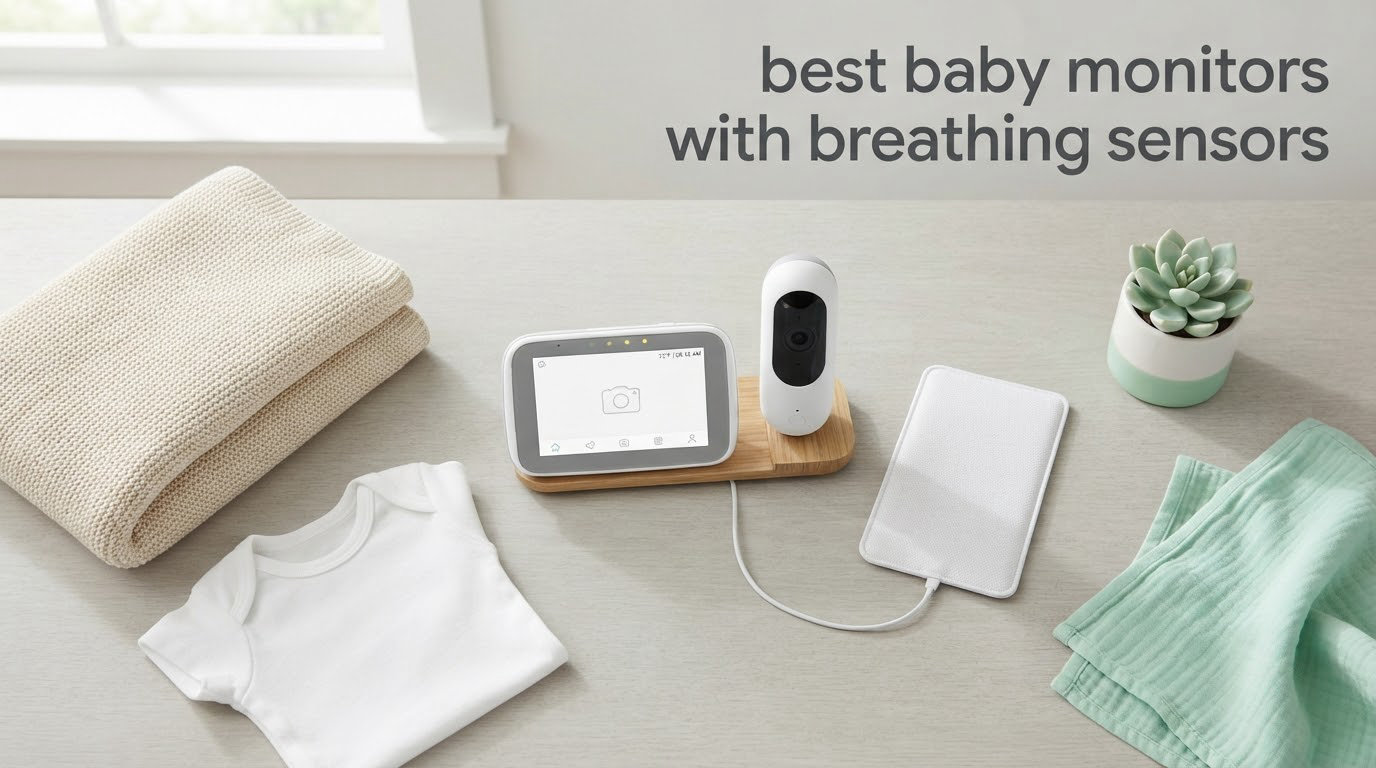
Most healthy, full-term babies do not need a breathing monitor, and the American Academy of Pediatrics has said for years that these devices have no proven ability to prevent SIDS. That is the honest starting point for anyone searching for the best baby monitors with breathing sensors, because most of what you will read elsewhere is marketing, not evidence. What follows is a different kind of roundup: twelve monitors ranked on what they actually measure, how often they false-alarm, and whether you will still trust them at 4am in month four.
A baby monitor with a breathing sensor tracks chest rise or body movement continuously and alerts you when nothing is detected for roughly 15 to 20 seconds. Some do it with a sock that reads blood oxygen and heart rate, some with pads under the mattress, some with a clip on the diaper, and some with a camera running software that estimates chest motion. That difference matters more than any spec on the box, and it is the axis this whole list is sorted along.
I have spent the last several weeks reading thousands of customer reviews across these twelve products and comparing how each one behaves in the situations parents actually care about: a premature baby coming home, a monitor that has to survive a night away at grandparents, a camera that must not stream a nursery to the cloud. We also published a deeper look at baby monitors with vitals tracking if you want the sensor-technology background first.
Our short version: the Babysense True Sleep HD Bundle takes the top slot because it pairs full-crib non-contact sensing with a camera and has by far the largest review base of anything here. The Owlet Dream Sock is the pick if you want real numbers for oxygen saturation and heart rate rather than inferred movement. And if a wearable on your baby’s foot sounds like one more thing to lose in the wash, the Snuza Hero and the Babysense pads do the same job without touching your child at all.
Top 3 Picks for Baby Monitors With Breathing Sensors in 2026
The three below are the ones we would actually put in a nursery. Each earns its place for a different reason, so read the verdict line before you buy rather than the star rating.

Babysense True Sleep HD Bundle
- Two non-contact under-mattress pads
- 5-inch HD PTZ camera with IR night vision
- No WiFi or app required
- Two-way audio plus white noise and lullabies

Owlet Dream Sock
- Pulse oximetry for oxygen saturation and heart rate
- 16-hour battery per charge
- Base station and phone alerts
- 256-bit encryption

Snuza Hero
- Diaper clip with no pads cords or app
- Vibration at 15 seconds then audible alarm
- Up to 6 months replaceable battery
- Under 1.5 oz and fully portable
All 12 Baby Monitors With Breathing Sensors Compared in 2026
Sensor type is the column worth reading twice. Everything else – resolution, night vision, lullabies – is interchangeable between brands.
| Product | Specifications | Action |
|---|---|---|
| Babysense True Sleep HD Bundle |
|
Check Latest Price |
| Owlet Dream Sock |
|
Check Latest Price |
| Snuza Hero |
|
Check Latest Price |
 Lollipop Lollipop |
|
Check Latest Price |
 Levana Oma Sense Levana Oma Sense |
|
Check Latest Price |
 Babysense 7 Babysense 7 |
|
Check Latest Price |
 Momcozy BM08 Momcozy BM08 |
|
Check Latest Price |
 Sense-U Sense-U |
|
Check Latest Price |
 Nanit Smart Baby Monitor Nanit Smart Baby Monitor |
|
Check Latest Price |
 Owlet Dream Duo 3 Owlet Dream Duo 3 |
|
Check Latest Price |
 BabySmile Movement Monitor BabySmile Movement Monitor |
|
Check Latest Price |
 BEMPU BellyButton BEMPU BellyButton |
|
Check Latest Price |
1. Babysense True Sleep HD Bundle – Video and Two Under-Mattress Sensors in One Box
Babysense True Sleep HD Baby Monitor with Camera and Audio + Baby Sleep Movement Monitor, No WiFi, 2 Non-Contact Under Mattress Sensors, Non-Wearable Monitor, Full Crib Coverage
5-inch HD PTZ camera with IR night vision
Two non-contact under-mattress pads
No WiFi or app needed
Pros
- Video and breathing sensing in one package
- Nothing attached to the baby
- Two pads cover the whole crib
- No WiFi means no connection dropouts
Cons
- Air currents from fans or air conditioning can trigger alarms
- Very still deep sleepers can set it off
- Movement unit is tied to one sleep surface
This is the only product in the roundup that does both jobs at once. The Babysense 7 sensing unit sits under the mattress on two non-contact pads, and the 5-inch HD screen gives you pan-and-tilt video with infrared night vision from the same box. Nothing touches your baby, and nothing needs your Wi-Fi password.
That combination is why it ranks first. The review base is far larger than anything else on this list at more than 7,000 ratings, and the feedback pattern is unusually consistent: parents like the combination, and they understand the tradeoff. You get breathing and movement alerts plus a picture, without an app, without a subscription and without anything strapped to your child.
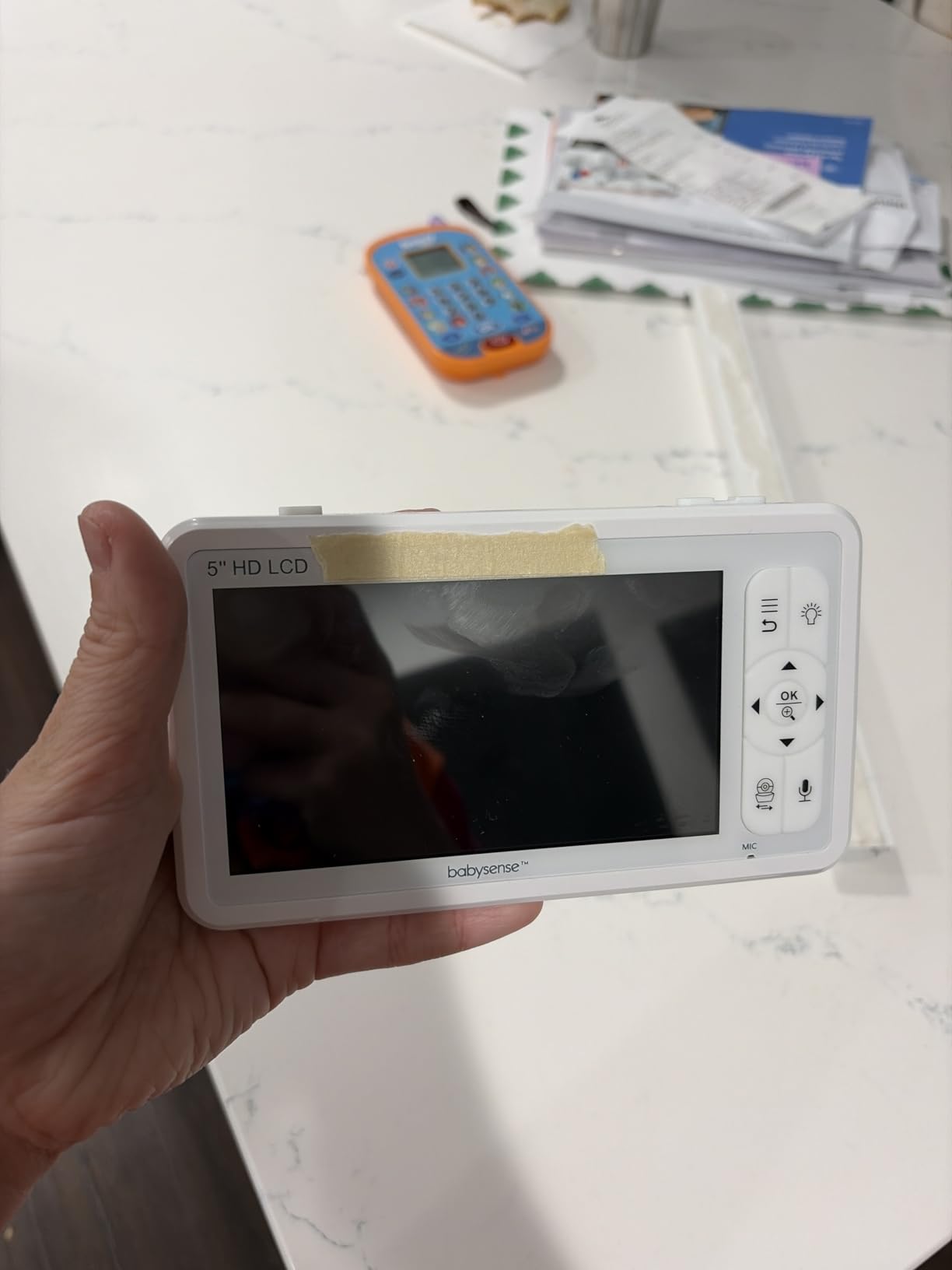
The 7400-plus reviews split cleanly into two groups. Buyers who had a genuinely anxious pregnancy or a NICU scare describe the pads as the thing that let them sleep. Buyers with a fussy, active baby report the familiar complaint about air movement, which we cover in detail further down because it is the single most common issue across every under-mattress pad on the market.
Sensor placement matters more than brand here. The pads need to sit under the mattress on either side of where your baby actually sleeps, and the mattress needs a hard base. A memory foam mattress will not transmit the signal properly, which is the one specification to check before you commit.
Note that this bundle is a monitor plus a camera, not a smart-home camera. There is no phone app, no cloud account and no remote viewing from work, which some parents love and others find limiting within a week.
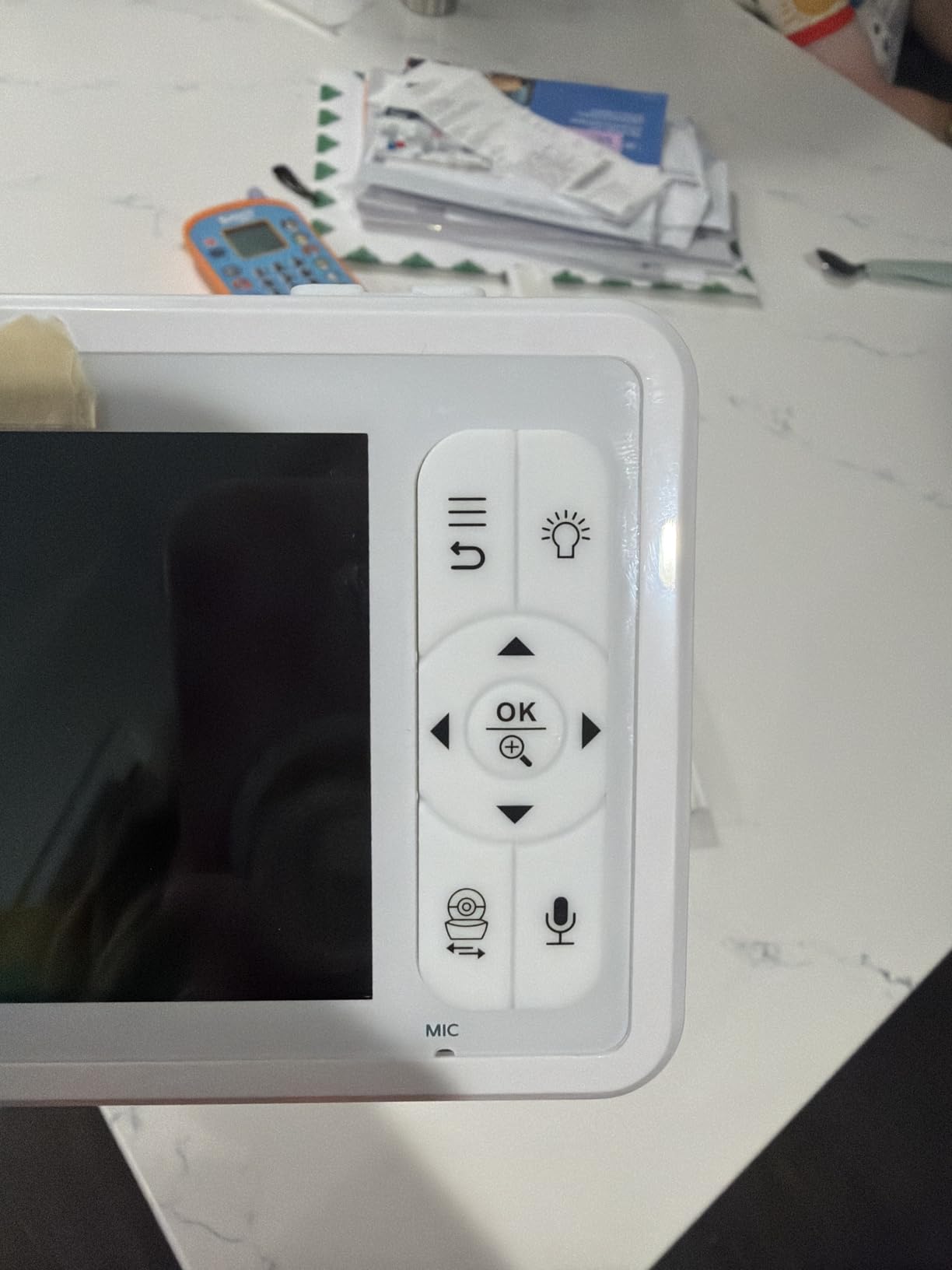
Who the Babysense True Sleep Bundle suits
It suits parents who want reassurance and a picture but do not want to hand a piece of electronics a Wi-Fi password in a nursery. It is also the easiest option we found for grandparents and babysitters, because the screen is self-contained and there is nothing to log into.
For a premature or NICU-discharge baby, the full-crib coverage from two pads is the deciding factor. One pad can lose a signal when a small baby curls into a corner, and two pads remove that failure mode.
Where it falls short
It cannot tell you oxygen saturation or heart rate. It only knows whether something is moving, so for a baby with a specific respiratory or cardiac condition you want the kind of data a pulse oximeter produces, not a movement count.
The single sleep surface also means you cannot use the sensing unit for naps on the sofa or a travel crib without re-setup. And if your room has a ceiling fan or air conditioning running, expect to spend a week tuning the sensitivity before you trust it overnight.
2. Owlet Dream Sock – Real Oxygen and Heart Rate Readings From a Foot Sock
Owlet Dream Sock Smart Baby Monitor, Better Sleep for Baby & You
Nylon and spandex sock for infants 6-30 lbs
16-hour battery per charge
Bluetooth and 2.4 GHz WiFi
Pros
- Only option here reading oxygen saturation
- 16-hour battery covers a full night
- Base station plus phone alerts
- Size-up sock included
Cons
- Pairing and connection can drop
- Frequent difficult-reading alarms when the baby kicks
- App navigation is confusing for some
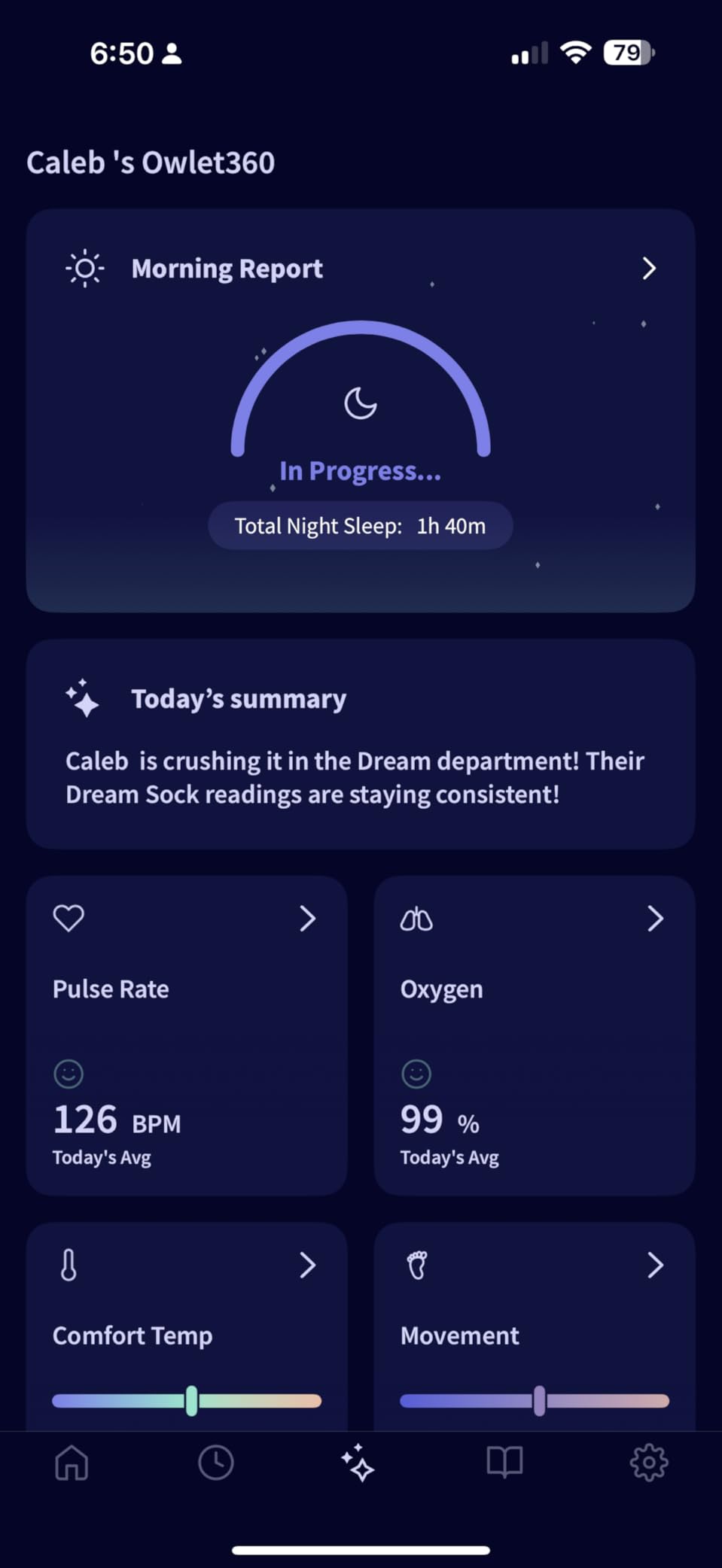
The Dream Sock is the only product in this roundup that measures your baby’s blood oxygen saturation and pulse rate directly. It sits on the foot with a soft nylon and spandex sock, transmits over Bluetooth and 2.4 GHz Wi-Fi to a small base station, and alerts when readings leave a preset zone. If a doctor has ever asked you to watch an oxygen saturation overnight, this is the box that answers that request.
Battery life is the sleeper feature, or rather the feature that lets you sleep. Sixteen hours per charge means you charge it during the day once and it covers the entire night, including the wake-up at 2am you did not plan for.
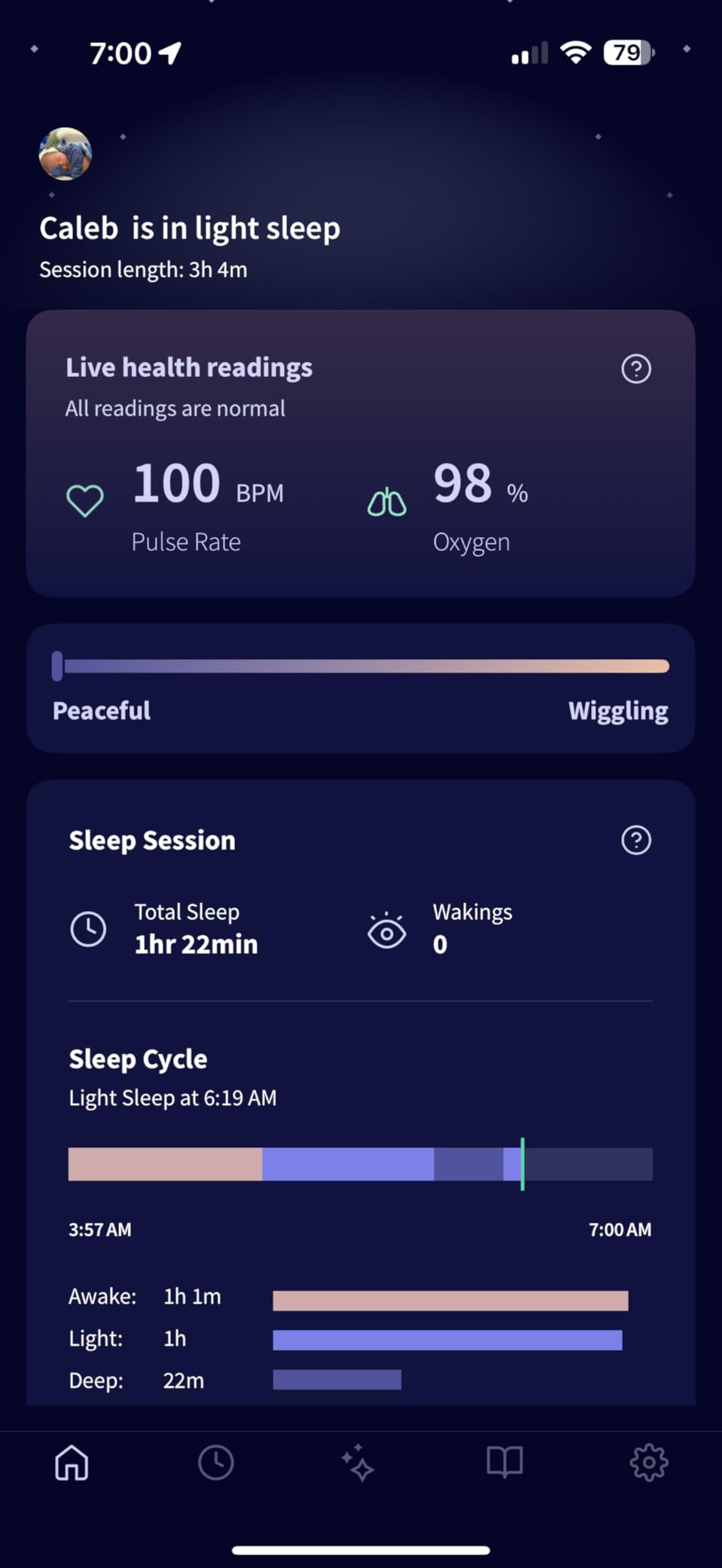
The reviews are strongly positive overall but genuinely split, and the split is about the sock rather than the numbers. Once parents get the placement right, they describe the readings as accurate and the alarms as rare. When the sock sits wrong, the result is a stream of yellow difficult-reading alerts whenever the baby kicks or cries, and those alerts are what turns a reassurance device into an anxiety machine.
Two operational details catch people out. The Dream Sock needs 2.4 GHz Wi-Fi during setup and is not currently compatible with 5 GHz networks, so a dual-band router must be split into two bands. And older Smart Sock 2 hardware is no longer visible in the current app, so check which generation you are actually buying.
Pulse oximetry is also a contact measurement on a moving, kicking foot, so an occasional odd reading is physics rather than a defect. Judge it on a week of trend data, not one night.
Who the Owlet Dream Sock suits
It suits parents of babies with a genuine clinical reason to watch oxygen or heart rate, including some preterm and NICU-discharge situations where the neonatal team asked for ongoing saturation monitoring at home. It also suits anyone who finds movement-only alerts too vague to trust, because a number is easier to reason about than an absence.
If you already own a good camera and only want breathing data, this is a focused purchase rather than a full system, which is a real advantage over a bundle.
Where it falls short
It is the only product here that goes on your baby, and that brings washing, sizing and the occasional sock that slides off a kicking leg. Sizing changes quickly with growth, and replacement socks are an ongoing cost that nothing in the box solves.
Connection reliability is the second weak point. A meaningful minority of reviews describe a sock that will not reconnect without support intervention, and reviewers repeatedly flag the app as harder to navigate than the hardware deserves. If your household Wi-Fi is patchy in the nursery, test it there before you rely on it.
3. Snuza Hero – Diaper Clip With No Cords, Pads or App
Snuza Hero SE Wearable Child-Care Aid with Patented Sensor Technology | Detects & Reports Movement Activity | No WiFi, Cords, or Sensor Pads | Portable and Easy to Set Up and Use
Diaper clip with direct-touch motion sensor
Vibration at 15 seconds then audible alarm
Battery up to 6 months
Pros
- Nothing to install in the crib
- Two-stage alert gives you time to respond
- Up to 6 months on one battery
- Weighs under 1.5 oz
Cons
- Must stay clipped on or it drifts
- No oxygen or heart rate data
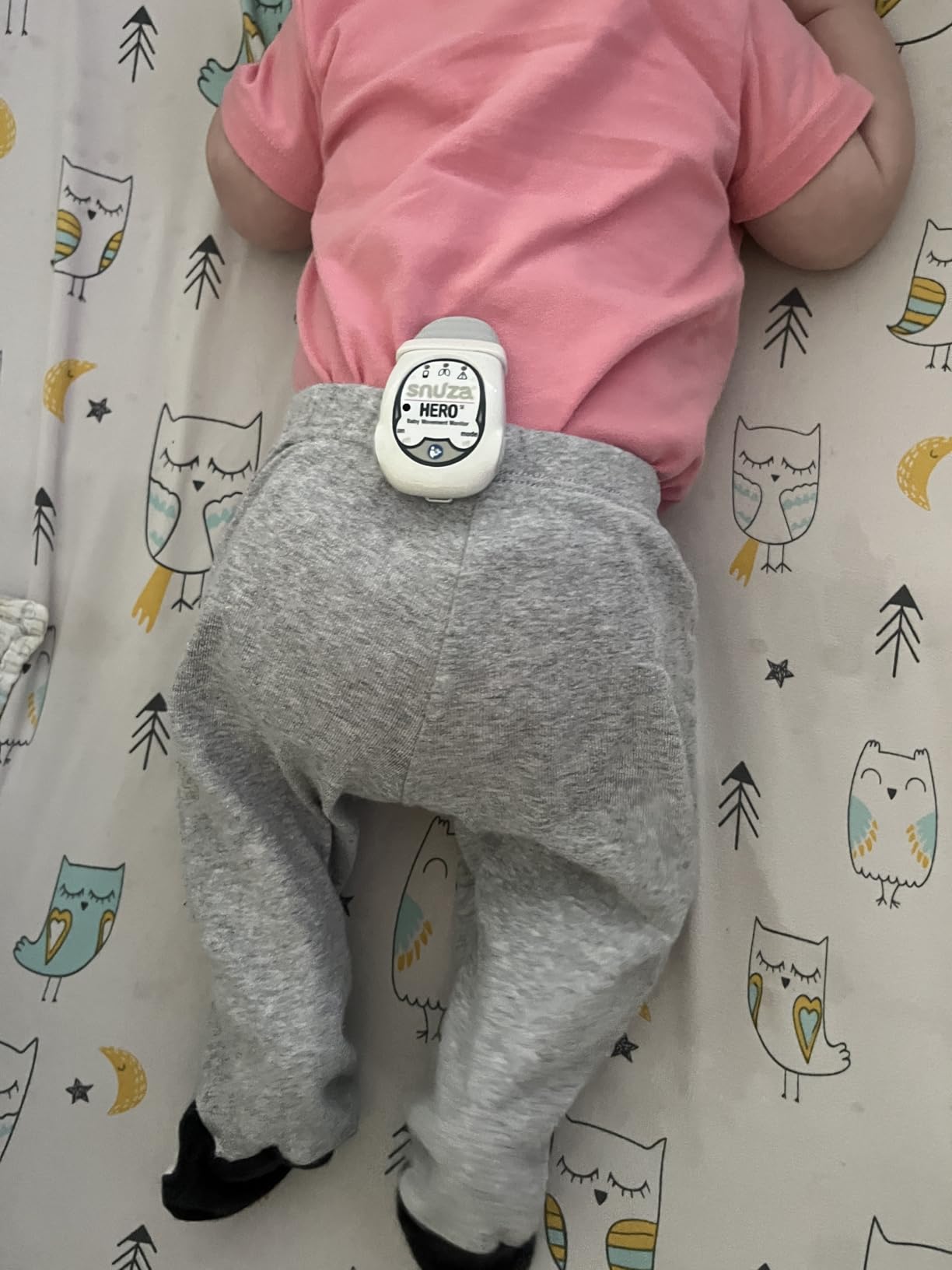
The Snuza Hero is a small grey and white unit that clips to the diaper and rests a direct-touch sensor against the abdomen. There is no base station, no pads under the mattress, no Wi-Fi and no app. If it senses no movement for 15 seconds it vibrates, and if movement has still not returned five seconds later it sounds an audible alarm.
That vibration-first design is the whole point. A brief pause in movement is common in sleeping infants, and the first-stage prompt usually resolves the situation before the noise starts, which is exactly the design lesson many parents wish more products had learned.
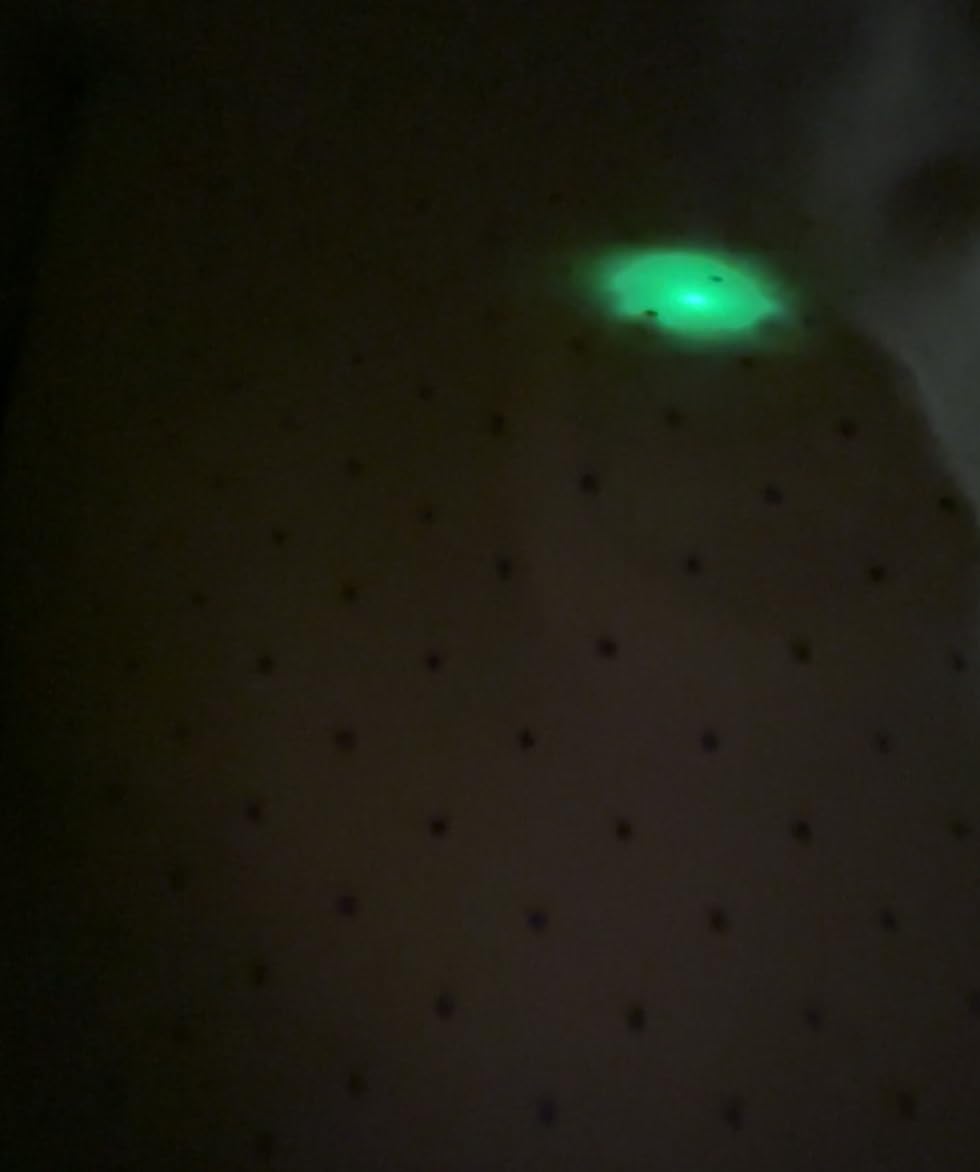
At 80 percent five-star in its reviews, this is one of the best-received devices we looked at. Owners consistently mention the same two things: setup takes seconds, and because there is no network involved, connectivity problems simply cannot happen. The green indicator light and optional ticking sound give visual and audible proof that movement is being picked up, which does more for anxiety than any dashboard.
It is also the most portable breathing monitor on this list by a wide margin. At under 1.5 oz with a replaceable battery rated at up to six months, you can move it between crib, bassinet, travel cot and grandparents’ house without thinking about charging.
The battery is a lithium-ion cell that you replace rather than recharge, and a protective carry case is included. The tradeoff is that a spare cell must be on hand for a long trip away from home.
Who the Snuza Hero suits
It suits anyone who travels, who splits nights between rooms, or who wants breathing monitoring without putting electronics on their baby. Grandparents managing a night with a travel cot are the clearest case, because there is nothing to install and nothing to log into.
It also suits parents who found a wearable monitor increased their worry. A device that only tells you yes or no is easier to live with than a stream of numbers you are not trained to interpret.
Where it falls short
Attachment security is the real limitation. Because the sensor needs direct contact, a baby who rolls onto their side or kicks vigorously can shift or dislodge it, and a shifted unit produces false alarms. Parents in forums describe this precisely: swaddling straps that push the unit away are the most common cause of their false alerts.
There is also no data at all. No oxygen, no heart rate, no sleep analytics, and no history to review in the morning. And it is explicitly not for co-sleeping or bed-sharing, where the contact position simply is not reliable.
4. Lollipop – 1080p Camera AI With Breathing Tracking on an App Plan
Lollipop Baby Monitor (Turquoise) – Full-Featured Smart Wi-Fi Camera of True Crying Detection with Extra in-App Plan of Breathing Monitoring/Sleep Tracking-Accessories Free/7 Days Trial Period
1080p HD camera with IR night vision
AI breathing tracking on the Care plan
7-day free trial
Pros
- No receiver unit at all
- True crying detection filters wind and ambient noise
- Audio-only mode works with the screen off
- Bendable arm fits crib
- wall or travel
Cons
- Breathing insights need the paid Care plan
- Weak Wi-Fi causes dropouts
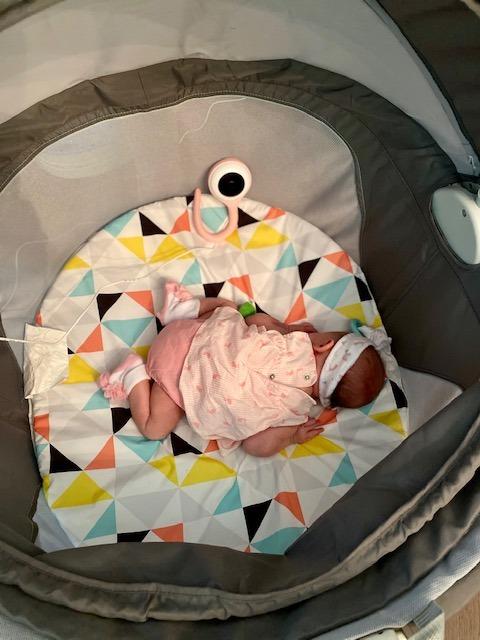
The Lollipop is a 1080p camera on a bendy silicone arm that feeds your phone or tablet, and its breathing monitoring runs as software on the video rather than a sensor on your baby. The core camera, live view, sharing, cry detection and the sound machine are free; the respiratory rate, sleeping position history and sleep tracking sit behind the Lollipop Care plan, which comes with a seven-day trial.
That distinction matters when you are choosing. You are buying a monitor whose breathing feature is a subscription tier, not a capability you own outright.
What you get for free is genuinely good. True Crying Detection filters ambient noise such as wind, so you are not woken by a car door, and Crib Crossing Detection uses a border region you set yourself to flag a mobile baby nearing the edge. There is also an audio-only mode that streams sound with the phone screen off, which is the one you will actually use at 3am.
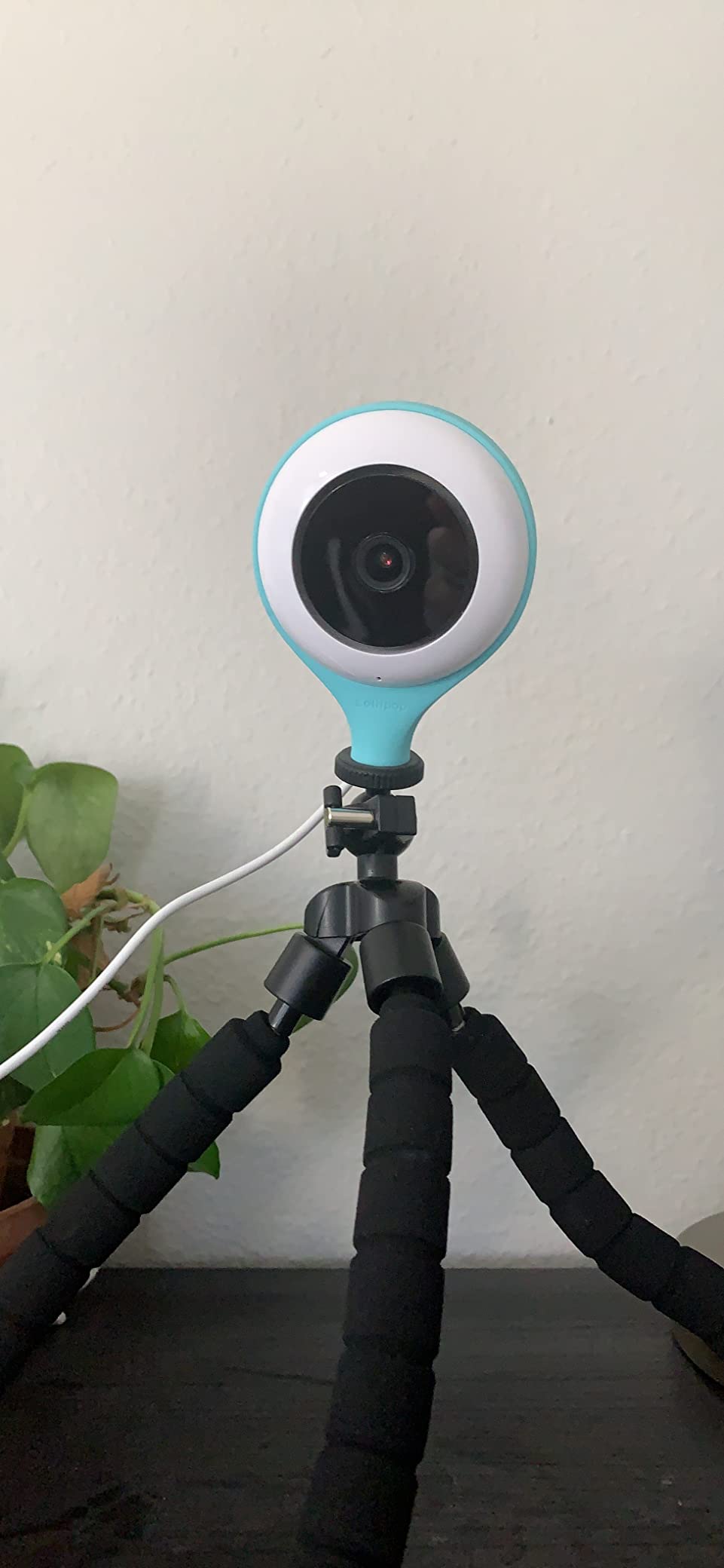
Image quality earns its place in this ranking. Reviewers describe clear colour by day and clean infrared night vision at night, and the wide-angle lens covers a crib without a second camera. At more than 4,900 ratings it is one of the most-reviewed products here, and 67 percent of those are five-star.
The recurring complaints are all about software rather than hardware. Owners report firmware and app updates breaking connectivity, and settings such as the sound timer and standby mode not persisting through a reconnect, which is annoying in a way that is hard to predict or avoid.
One practical note worth taking seriously: several reviews point out that the built-in sound machine is loud enough to swamp the microphone, so you cannot hear the baby clearly at the same time. If you run white noise, keep it on a separate device.
Who the Lollipop suits
It suits parents who want a camera and already own a good phone or tablet, and who are comfortable with a subscription for deeper insights. It is also a strong choice for a second child or a playroom camera, since the plan and hardware scale to more than one feed.
It suits anyone who wants audio-only monitoring at night, because that mode is genuinely well done and most dedicated breathing monitors cannot do it at all.
Where it falls short
It is entirely dependent on Wi-Fi, so a weak signal or a router in another room means missed alerts, and that is a genuine safety gap for the thing you bought it for. Second, the breathing data is estimated from video rather than measured, so it is a motion estimate, not a clinical reading.
The subscription also means the features that make the product interesting can change or disappear over time. Plan for that before you rely on the sleep analytics.
5. Levana Oma Sense – Vibration First, Then an Audible Alarm
Levana Oma Sense Portable Baby Breathing Movement Monitor with Vibrations and Audible Alerts Designed to Stimulate Baby and Alert Parents
Clips over diaper or a buttoned onesie
Medical-grade materials
Randomised vibration after 15 seconds
Pros
- Zero skin contact
- Runs on no WiFi
- radio or Bluetooth
- Compact enough for travel and a bassinet
- Flashing blue light confirms operation
Cons
- Only for infants 0-6 months
- Can be knocked off by active babies
- No data logging or sleep analytics
- Fit over a nappy feels less secure
The Oma Sense is the simplest breathing alarm on this list and one of the few that includes a stimulus stage. It slips over the diaper, pants or a buttoned-up onesie, monitors abdominal movement continuously, and after 15 seconds of nothing it fires a randomised vibration intended to rouse the baby gently. If movement still has not returned after five more seconds, it escalates to a full audible alarm.
Randomising the vibration matters more than it sounds. A fixed buzz or tone becomes a background sound babies and parents learn to ignore, and a small shake of the mattress area is far more likely to restart a breath cycle without waking anyone fully.
It also has no wireless frequencies of any kind. No Wi-Fi, no radio, no Bluetooth, which makes it immune to the connection failures that dominate complaints about camera and app monitors.
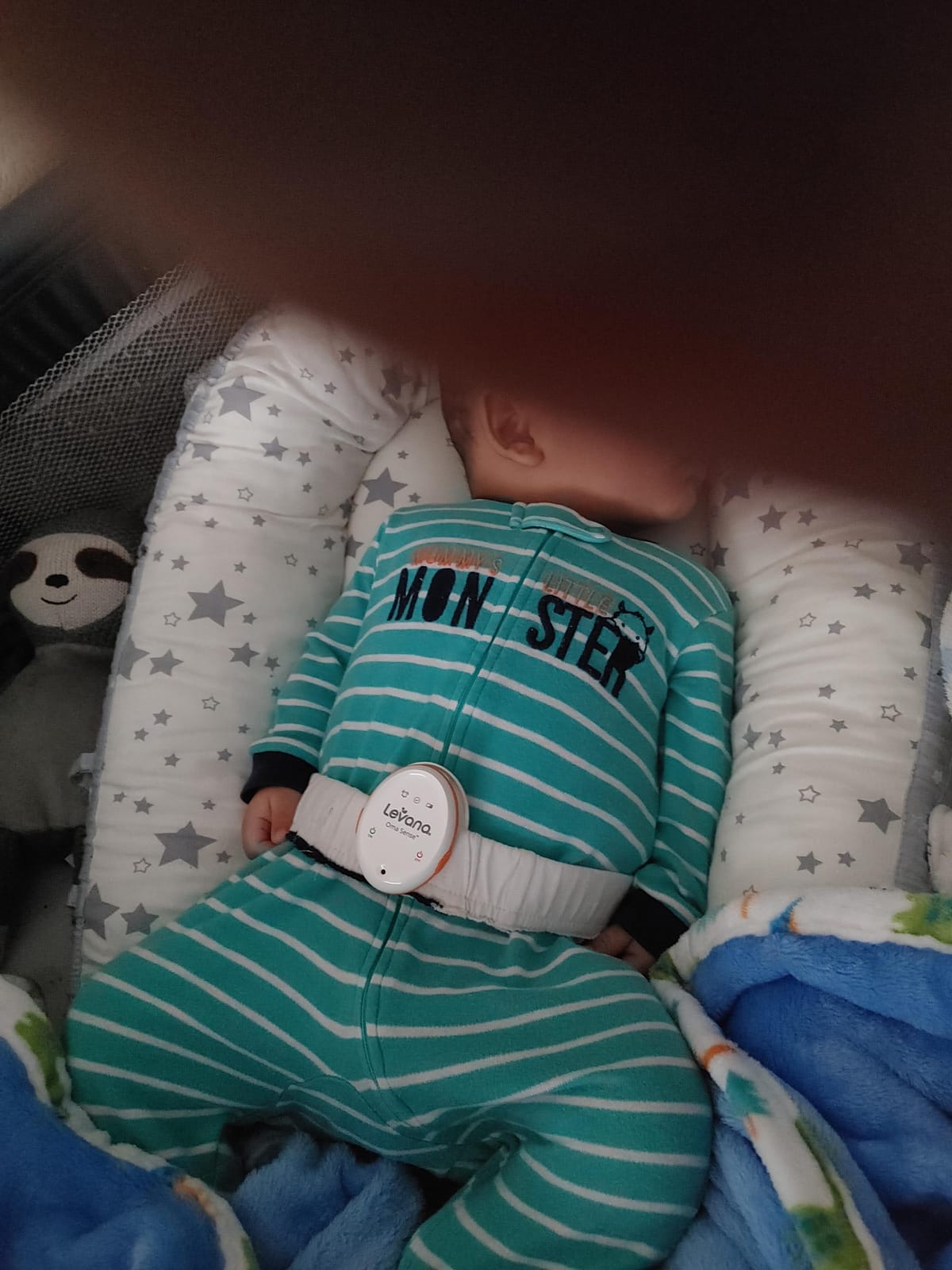
Reviews are consistently positive, with 68 percent five-star across nearly 1,000 ratings, and the feedback centres on exactly the right things: it takes a minute to set up, there is nothing to connect, and the vibration prompt is the feature owners mention most warmly.
The blue indicator light that flashes during normal operation is a small touch that matters more than expected. Parents describe it as proof at a glance that the unit is still working, which removes a category of midnight doubt that no app notification can.
It is also designed in Canada using medical-grade materials, and it moves between crib, bassinet and travel without ceremony, which suits the first months when the baby changes sleep location constantly.
Who the Levana Oma Sense suits
It suits newborns and young infants specifically, since it is rated for 0 to 6 months. Parents in UK and Australian parenting forums frequently name this style of clip-on monitor as the one that delivered peace of mind without drama.
It also suits households where connectivity is unreliable or where a camera in the nursery simply is not an option, and it is a good second unit to keep at a grandparent’s house.
Where it falls short
The 0-6 month limit is hard. There is no version for a seven-month-old, so this is a short-term purchase rather than a monitor that grows with your baby.
Because it clips over clothing rather than contacting skin, an active baby who rolls or arches can dislodge it, and a displaced unit sounds false alarms. And it records nothing: no breathing history, no sleep data, no morning report. You get an alarm and a light, which for some parents is exactly right and for others is far too little.
6. Babysense 7 – Two Sensor Pads and No Screen Required
Babysense 7 Baby Sleep Movement Monitor for Newborn and Infants, No WiFi, Non Wearable, Non Contact Monitor with 2 Under-Mattress Sensors for Full Crib Coverage
Two under-mattress sensor pads with a control unit
Alerts after 20 seconds of no movement
About 24 hours of battery per set
1.8 lb unit, one year warranty
Pros
- Highest five-star share in the roundup at 77 percent
- Reads through a normal mattress and sheets
- Full-crib coverage from two pads
- No app
- no WiFi
- no cords to the crib
Cons
- Ceiling fan or air conditioning within 10 ft triggers alarms
- Very still sleepers cause false alerts
- Will not work on memory foam
- Easy to forget to switch off
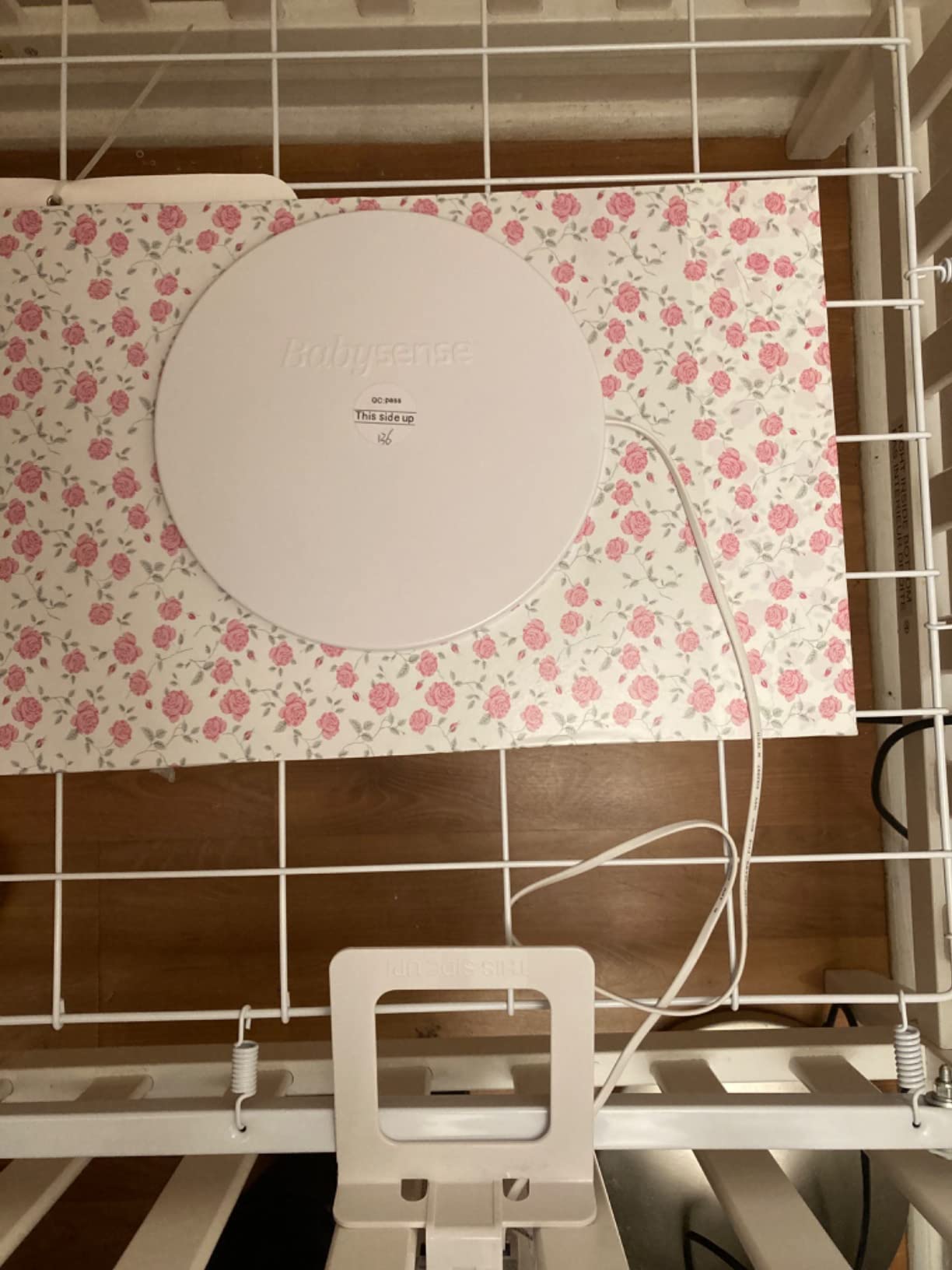
The Babysense 7 is the sensing half of the top pick without the camera. Two pads go under the mattress, a control unit hangs on the crib, and it alerts if no movement is detected within 20 seconds or if movement simply slows. Two pads cover the entire crib, so a baby who scoots to one corner does not fall outside the detection area.
It is the best-rated product in this roundup on the percentage of five-star reviews, at 77 percent, with only 5 percent one-star. That is worth pausing on, because it means the complaints are concentrated and predictable rather than scattered.
And they are predictable. The dominant one is sensitivity to air movement, specifically a ceiling fan or air conditioner within roughly 10 feet. The second is genuinely deep or still sleepers, where the pads alarm because the baby has genuinely stopped moving rather than because anything is wrong.
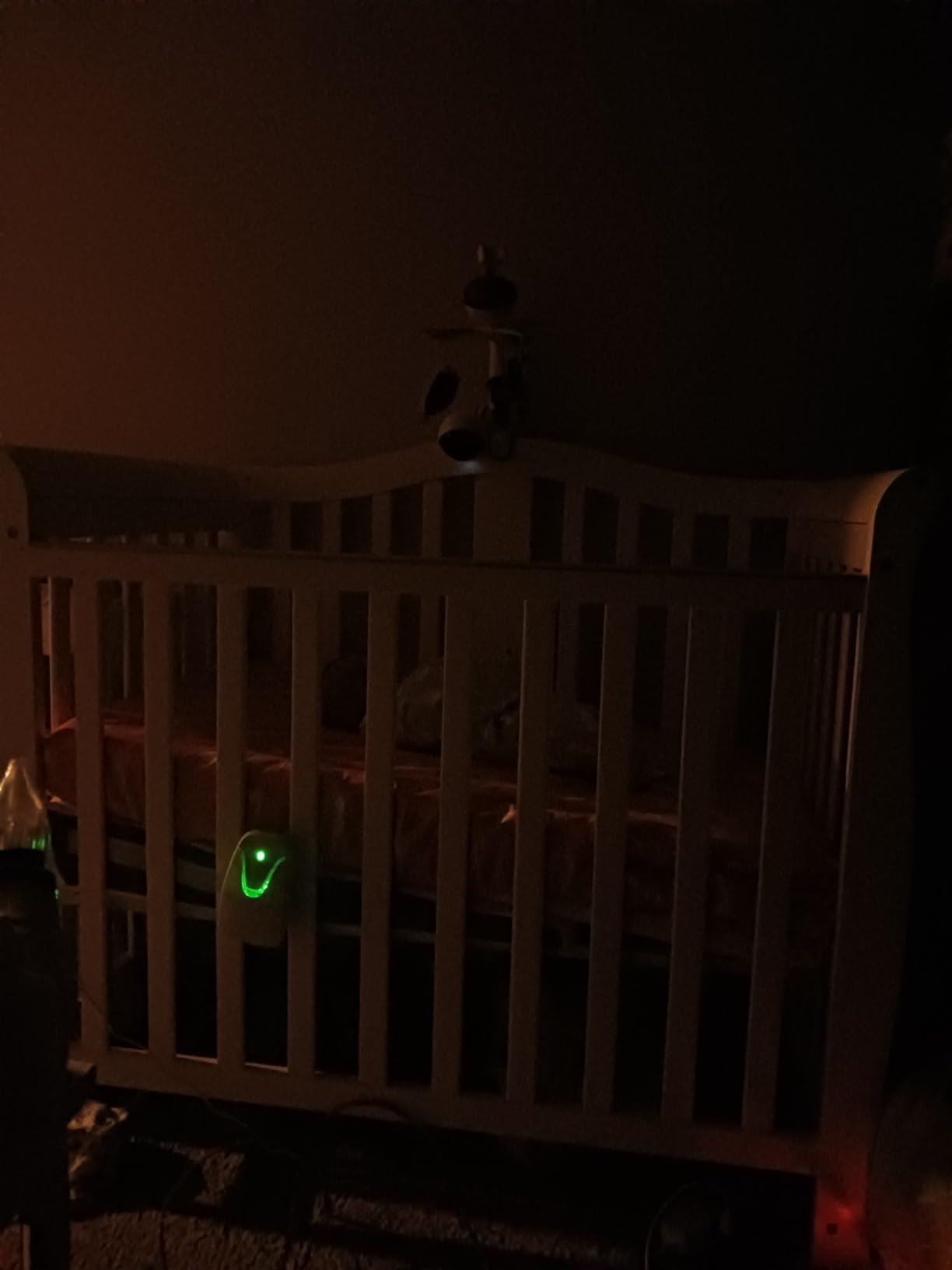
So how it performs is largely a question of the room. In a still bedroom with a hard-based mattress, owners describe it as reliable and genuinely reassuring, and several mention it specifically as the monitor that helped them after a NICU or SIDS scare. In a room with a fan running, the same owners describe weekly false alarms.
Two practical details. The battery lasts about 24 hours, which the reviews translate to roughly four months of daily naps before a change, and the blinking green light on the control unit gives continuous visual confirmation that breathing is being picked up.
It will not work correctly on a memory foam mattress, and that is a compatibility question worth answering before purchase rather than after. The unit also weighs 1.8 pounds and stays tied to one sleep surface, so it is not a travel device.
Who the Babysense 7 suits
It suits parents who want breathing monitoring and nothing else. No screen to stare at, no app to log into, no camera pointed at your child, and no camera in the nursery at all if privacy is part of your decision.
It also suits anyone already using a separate camera and audio monitor, since the two jobs are cleanly separated. And it is a strong choice as a monitor for a grandparent’s house, travel cot or second room, because it is self-contained.
Where it falls short
Sensitivity cuts both ways. The settings that make it good at catching a genuinely still baby are the same settings that react to a fan, an air conditioner or a draught, and the adjustment range is not something most parents find intuitive in the dark.
It also has one easily avoidable failure mode: owners report forgetting to switch it off after lifting the baby out of the crib, which sets off the alarm immediately. A note on the switch position solves this completely.
7. Momcozy BM08 – Contact-Free 2K Monitoring With Invisible Night Vision
Momcozy Smart Baby Monitor, 2K HD & Night Vision Contact-Free Baby Monitor
2K HD video with 8x digital zoom
940nm invisible infrared night vision
Virtual safety zone with AI motion detection
128-bit AES encryption and a privacy button
Pros
- Sharpest video in the roundup at 2K
- Nothing attached to or worn by the baby
- True cry detection with automatic soothing
- Physical privacy button and AES encryption
Cons
- Manufacturer states it is not for apnea
- SIDS or SUID monitoring
- Video-based detection can miss subtle chest movement
- Newer listing with a smaller review history
- Alerts depend on WiFi quality
The Momcozy BM08 is a contact-free monitor, meaning the breathing and sleep observation is derived from video and radar-style sensing rather than anything on your baby’s body. What you get for that tradeoff is the sharpest picture in this roundup: 2K HD with up to 8x digital zoom, plus 940nm invisible infrared that is designed not to light up the room.
Invisible night vision is the detail that separates it from cheaper cameras. A monitor that glows red across the crib can genuinely delay a baby settling, and 69 percent of its reviewers give it five stars specifically for picture quality and night vision.
Cry detection is smarter than a basic motion alert, and when crying is detected the unit can start white noise automatically. That buys you the thirty seconds it takes to get out of bed instead of making you react to a notification.
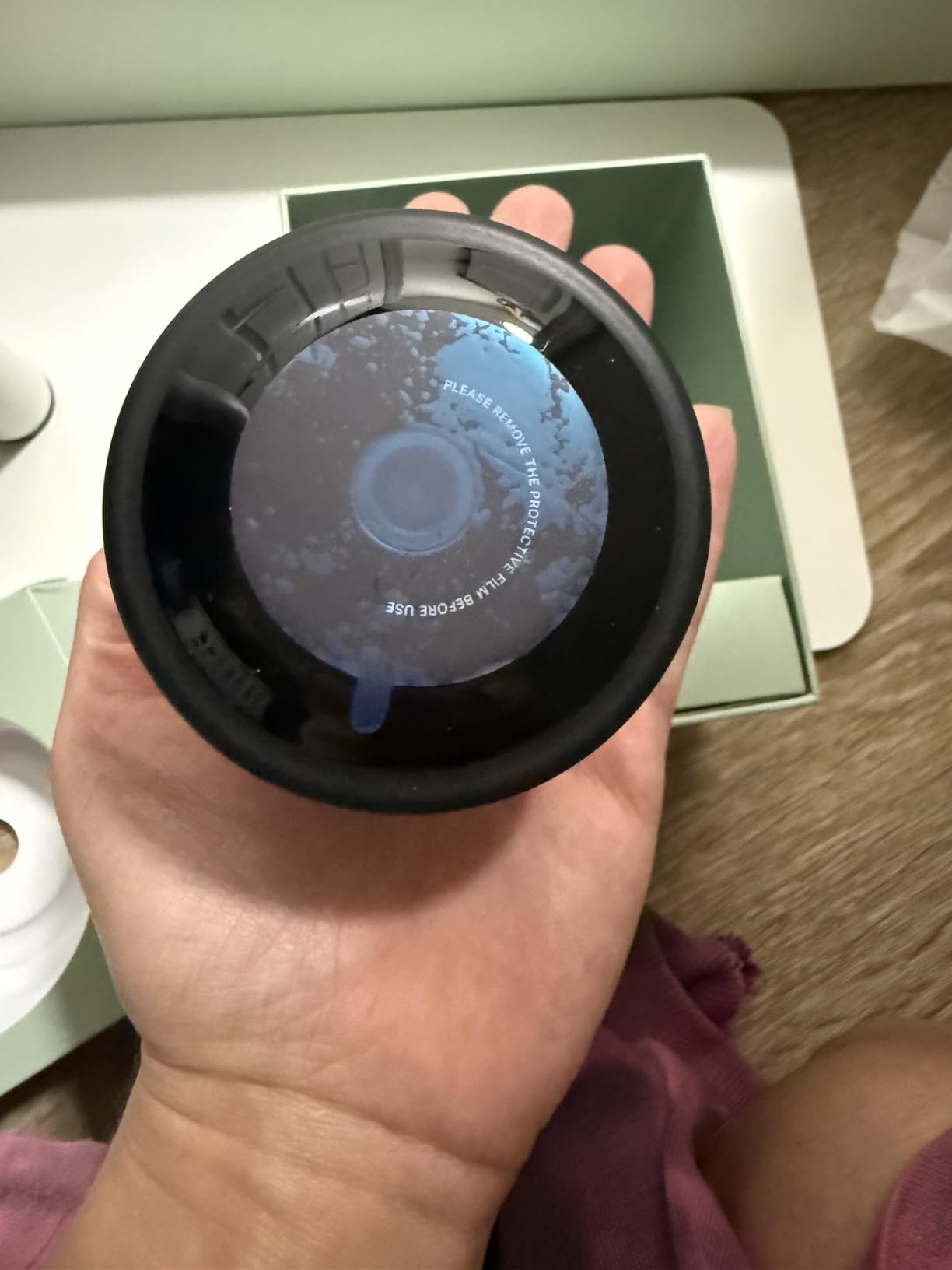
The privacy story is the best in this roundup after the two non-WiFi units. There is 128-bit AES encryption, two-factor capable app access, and a physical privacy button that switches the camera off outright. For a device pointed at a sleeping child, having a hardware off switch rather than a buried menu setting is a real design choice.
Sleep summaries and insights work without a subscription, which is unusual in this price class and removes the main objection to smart camera monitors.
The honest weakness is measurement depth. Reading chest movement from video is an estimate, and it will miss subtle rise-and-fall that a foot sensor or a mattress pad picks up. The manufacturer is explicit that this is not intended for apnea, SIDS or SUID monitoring or for infants with breathing difficulties, and we would repeat that unprompted.
Who the Momcozy BM08 suits
It suits parents who will not put anything on their baby and refuse to put anything under the mattress, and who want the sharpest night-time picture available. It is also a good fit for a child who is already past the stage where a sock or clip fits properly.
Because the sleep summaries carry no subscription, it also suits parents who want data on naps and night wakings without committing to a paid plan for a year.
Where it falls short
For a baby with any clinical breathing concern, this is the wrong class of device. It tells you that movement stopped, not that oxygen dropped, and the manufacturer says so directly in the documentation.
It is also a newer listing, so the long-term review history is thinner than the Babysense bundle or the Owlet, and alerts depend on your network holding up in the nursery. Verify your Wi-Fi reaches that room before you commit to a camera-only approach.
8. Sense-U – Battery Camera With No Monthly Fee
Sense-U Smart Baby Monitor, 1080P Battery Security Camera, No Monthly Fee
1080p battery camera with night vision
5000 mAh rechargeable battery, solar panel optional
IP65 weatherproofing
No monthly fee for live viewing
Pros
- No subscription for live view or event recording
- Battery power means no cords to run
- Customisable notification windows cut pet alerts
- Local microSD option keeps video off the cloud
- Doubles as a security camera later
Cons
- Cloud recording is a paid add-on
- Notifications depend on WiFi quality
- Movement detection rather than a breathing sensor
- Wall mount suits permanent placement
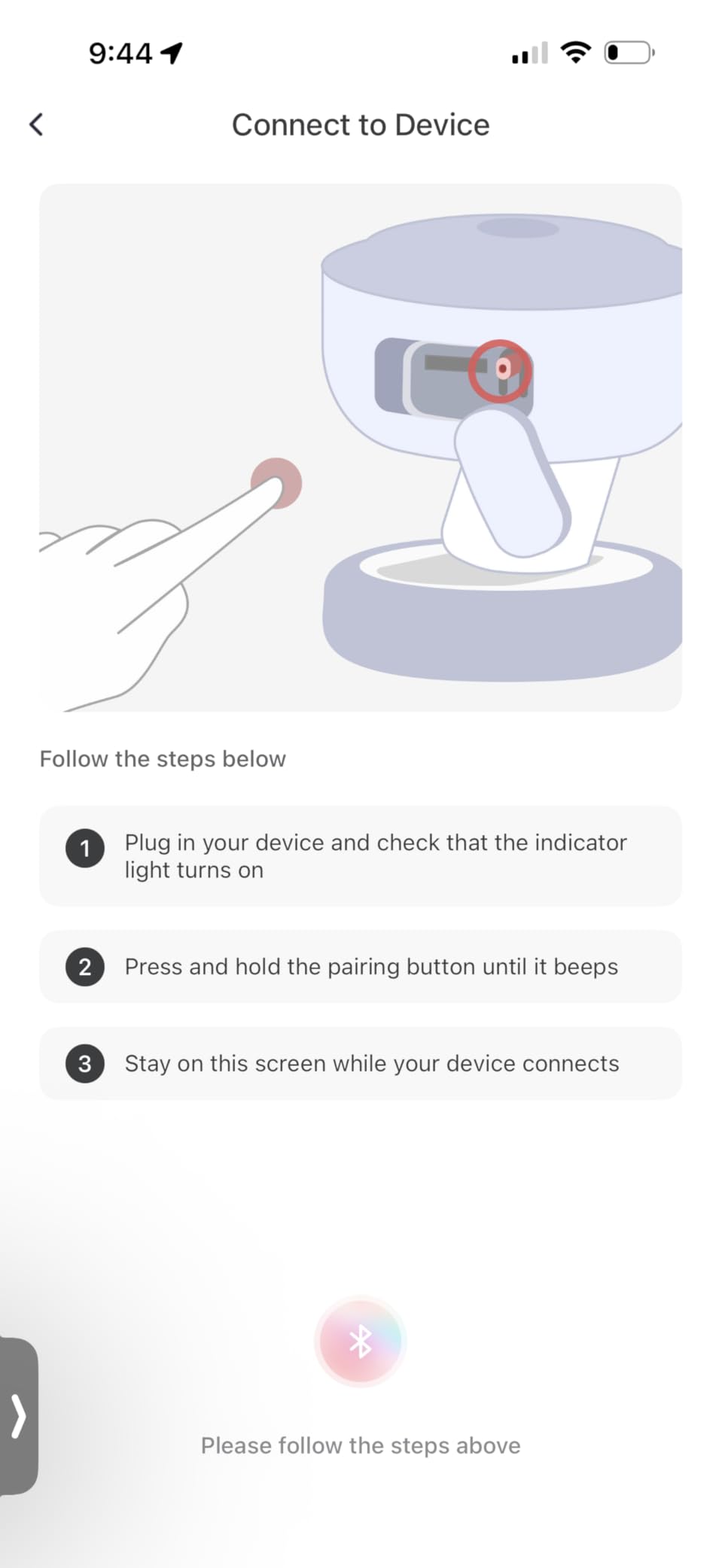
The Sense-U is a 1080p camera on a 5000 mAh rechargeable battery, which is the feature that changes how you use it. With no power cable to run, you can mount it in a nursery today and move it to a playroom, a grandparent’s room or an outdoor play area next year without an electrician or a new outlet.
It is IP65 weatherproof, so the same unit works outside, and an optional solar panel accessory extends it to continuous power. The multi-camera view shows several rooms or several children on one screen, which is the answer for twins that most single-camera products cannot give.
Like the Momcozy, it detects sleep and breathing movement from video with no sensor on the baby and no pad under the mattress. 80 percent of its 275 ratings are five-star.
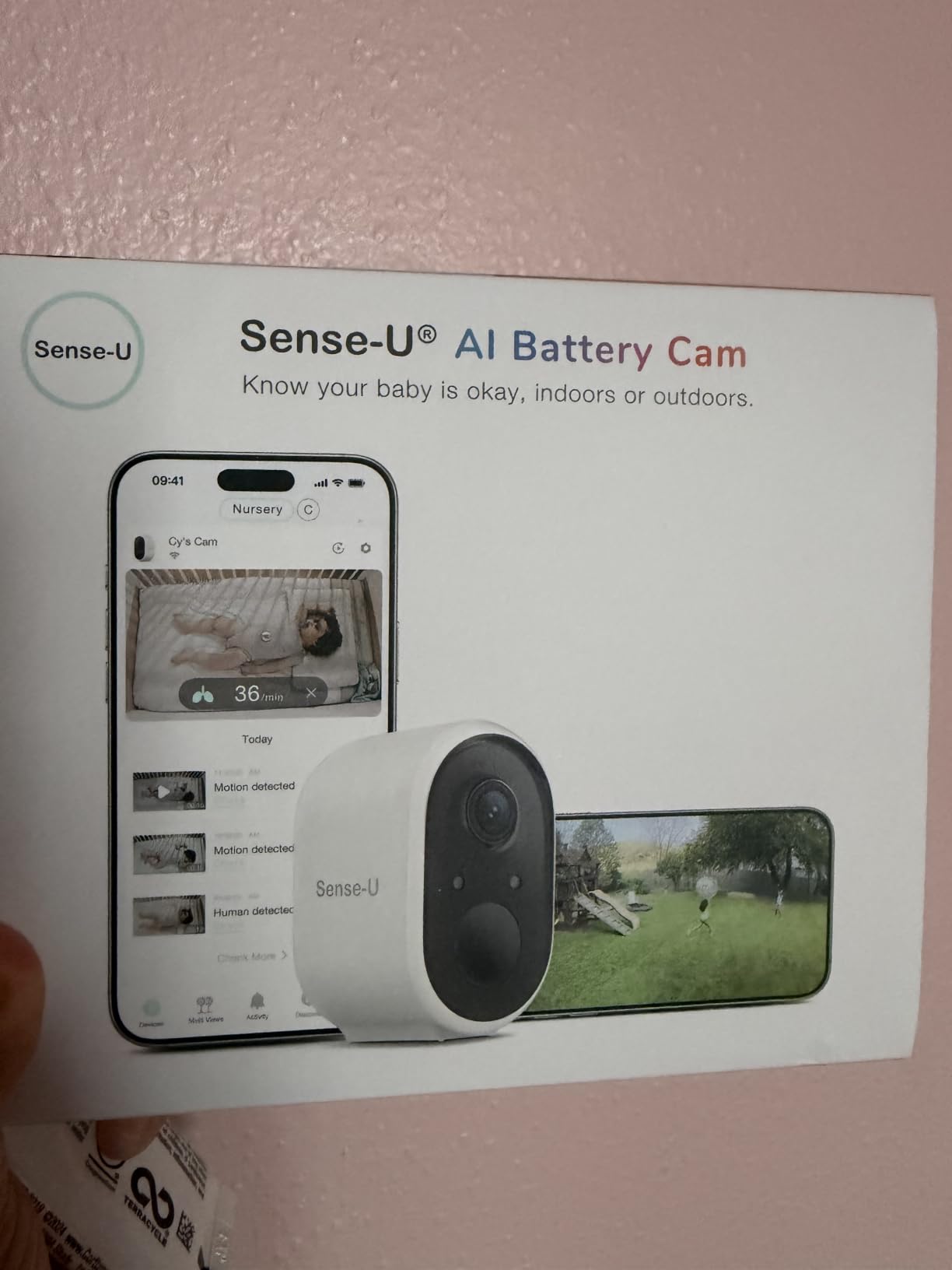
The no-subscription model is what reviewers mention most. Live viewing, event recording and multi-camera are included, and cloud video retention is a separate recurring add-on you can choose or skip. Local microSD storage is also available if you would rather video never left your home, and that option matters more than most spec sheets admit.
Security-minded features are unusually thorough for a nursery device: enterprise-grade encryption, optional two-factor authentication and a Private Mode that switches sensing off.
For notification fatigue, the customisable time windows and human-only detection are genuinely useful, since a pet walking past a camera should not wake a parent at 2am.
Who the Sense-U suits
It suits parents of twins or multiples, where multi-camera on one screen removes the juggling act of two separate apps. It also suits anyone in a rental or a home without a free outlet near the crib, since battery power removes that constraint entirely.
It suits families who want one device that grows into a security camera, and parents who want to keep recordings local instead of routing video of their child’s room through a cloud service.
Where it falls short
It does not have a dedicated breathing sensor, and the manufacturer does not position it as one. If your reason for buying is a specific respiratory concern, this is a camera with motion detection and you should treat its breathing readings as an estimate.
Cloud recording costs extra, notifications rely on your network, and the wall-mount form factor is awkward for a travel cot. Battery power is also a trade rather than a free win: a camera that has been moved twice needs charging sooner than one on a cable.
9. Nanit Smart Baby Monitor – Overhead Camera With Sleep Analytics
Nanit Smart Baby Video Monitor – Camera & Floor Stand – 1080p Wi-Fi Camera
1080p overhead camera on a floor stand or wall mount
130-degree view of the whole crib
AI sleep coach with NextNap predictions
256-bit AES with two-factor authentication
Pros
- Best overhead crib view in the roundup
- Automatic sleep duration and disturbance tracking
- Crisp 1080p with reliable IR night vision
- Floor stand means no drilling
Cons
- Temperature and motion alerts cause false notifications
- Deep analytics and 2-day look-back need the Insights plan
- Breathing wear sold separately
- Costs more than comparable cameras
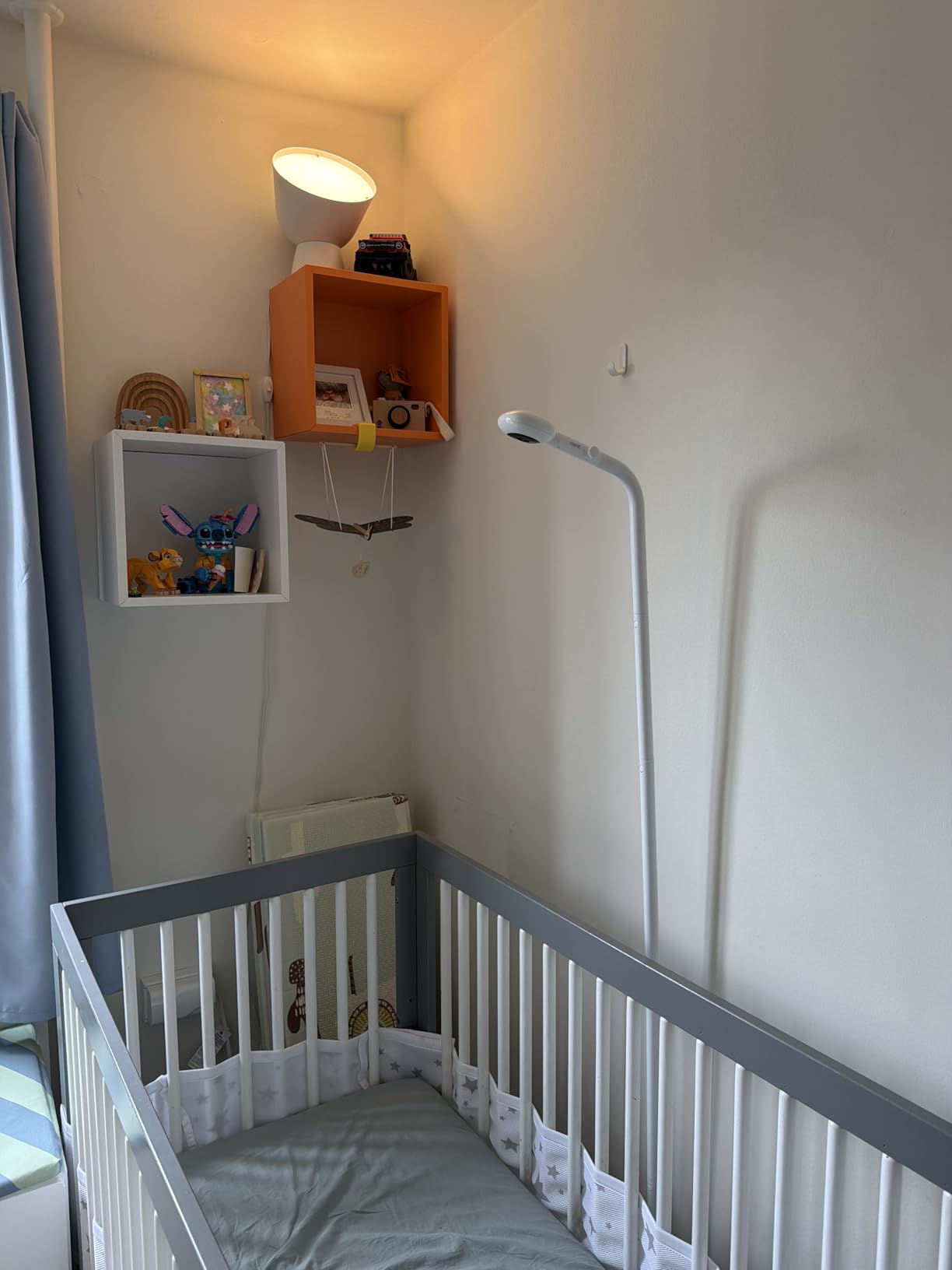
The Nanit is a 1080p camera built around the floor stand, and that stand is the point. A 130-degree overhead view from floor level sees the whole crib the way you would if you leaned over the rail, which no wall-mounted camera at crib height can match. The wall mount is offered as an alternative, but the reviews are clear that the stand is what the product was designed around.
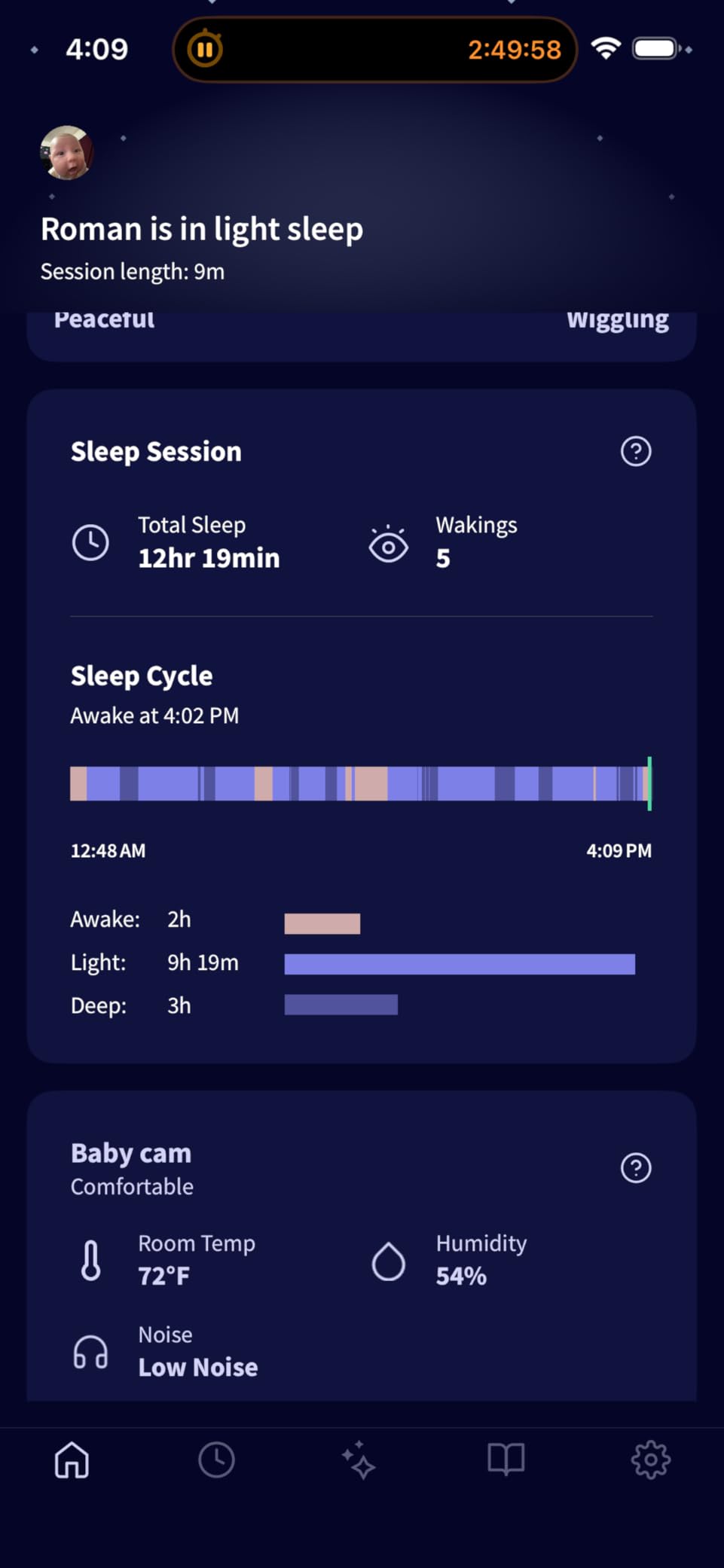
Sleep tracking is automatic rather than something you log. The app records sleep duration, efficiency, wake-ups and disturbances without you pressing anything, then layers an AI sleep coach on top with NextNap predictions and longer-term trends. For parents adjusting naps around a wake window, that is the feature that generates value every single day rather than once in a while.
Cough and cry detection, plus nursery temperature and humidity tracking, round out a monitoring picture that most rivals in this price band do not attempt.
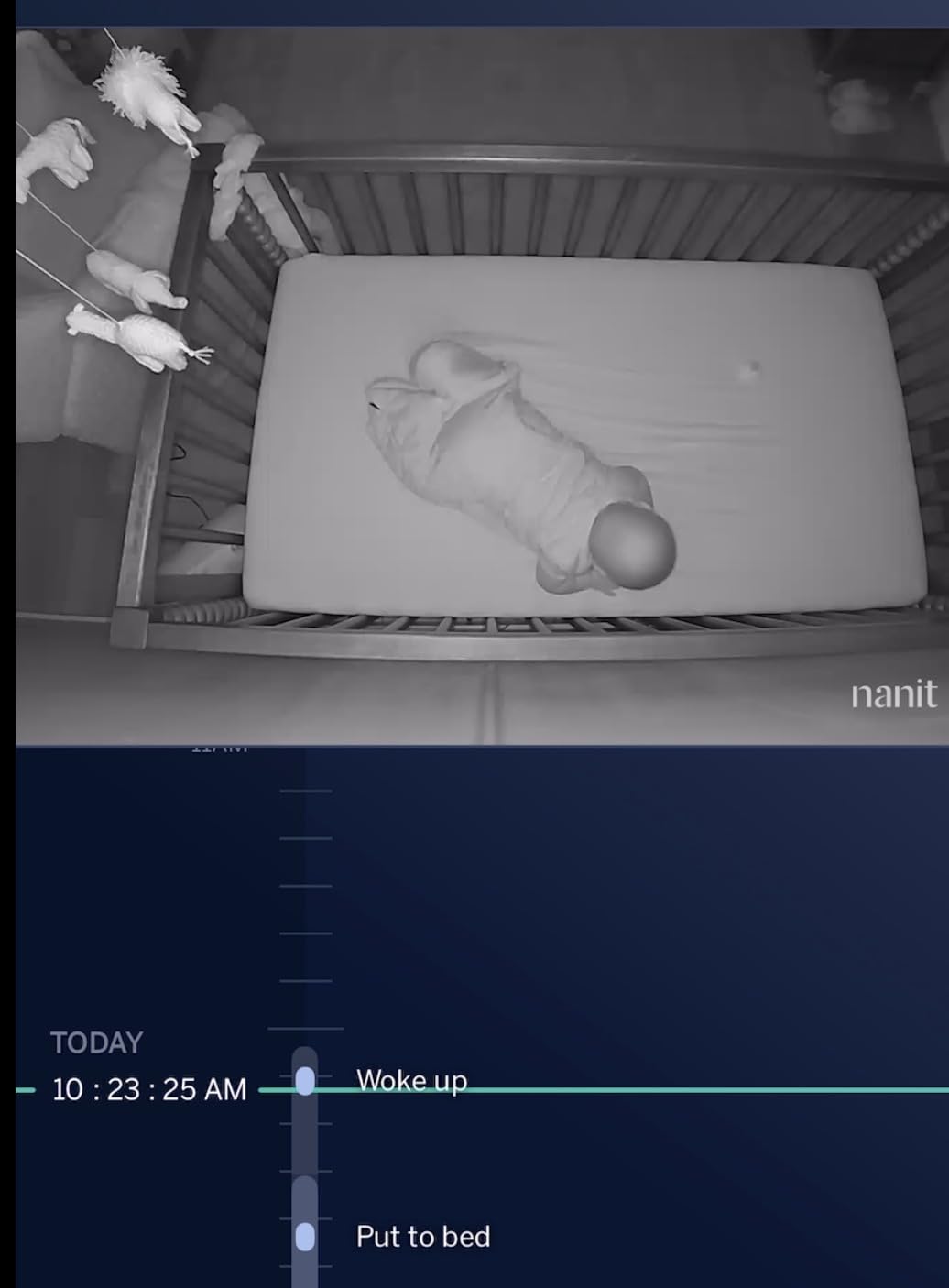
At 78 percent five-star, the reviews concentrate on camera quality, the accuracy of the sleep data, and the fact that the floor stand means a new parent in a rented flat does not need to drill holes. Two-way audio and infrared night vision both work reliably.
Security is handled well, with 256-bit AES encryption, two-factor authentication and multi-caregiver access, which matters for a device intended to be shared with a sitter or a partner on a different schedule.
The most common complaint is alert noise. Owners report frequent false notifications triggered by temperature readings and motion events, which is the same pattern we see with most camera-based monitors. Nanit Insights is also a subscription with a free trial, and the two-day video look-back sits behind it.
One thing to be clear about: the camera-based breathing rate here is estimated. Nanit Breathing Wear is a separate product, and if you want a chest sensor on the baby rather than an AI estimate from video, you are buying a second item.
Who the Nanit suits
It suits parents who want to understand and improve sleep rather than simply be reassured that breathing is happening. Automatic tracking with no logging habit to maintain is the difference between a feature you use and a feature you abandon in a fortnight.
It also suits renters and anyone moving house, since the floor stand needs no tools, and families where a partner, sitter or grandparent needs secure shared access to the same feed.
Where it falls short
The temperature and motion false notifications are a genuine irritation in a nursery where temperature naturally fluctuates. Test the sensitivity in the first week and turn off anything you do not want to be woken for.
It is also among the pricier standalone cameras in this roundup, and the richer analytics and video history are subscription features. If you only want breathing reassurance, you are paying for sleep coaching you may not open.
10. Owlet Dream Duo 3 – Sock and 2K Camera in One App
Owlet Dream Duo 3 Smart Baby Monitor System, Dream Sock + 2K HD Camera
Dream Sock plus 2K HD Dream Sight camera
130-degree lens with 4x zoom
Bluetooth and WiFi, camera supports 5 GHz
256-bit encryption, SGS mark for the camera
Pros
- Only bundle combining a medical-grade wearable with 2K video
- Pulse and oxygen numbers rather than inferred movement
- 2K detail with 4x zoom on a 130-degree lens
- Customisable sound movement and crying alerts
Cons
- Highest total system cost in the roundup
- Sock placement still causes difficult-reading alarms
- Deeper reports need the Owlet360 upgrade
- US-only compatibility
The Dream Duo 3 is the complete system version of the Owlet idea, pairing the Dream Sock with a 2K HD camera in a single app. The sock does the measuring; the camera shows you the room. In one dashboard you get pulse rate and oxygen saturation alongside live video, which no other product in this roundup combines.
The camera is a genuine step up from a 1080p unit: 2K resolution, a 130-degree wide-angle lens and 4x digital zoom, so the difference shows when you need to check whether a blanket is over a face from across the room.
It also solves a network annoyance that affects the sock on its own. The Dream Sock still requires 2.4 GHz Wi-Fi, but the camera supports dual-band 2.4 GHz and 5 GHz, so a single router split across both bands can run the whole system.
This is the newest and least-reviewed product here at 184 ratings, so treat the sentiment as early rather than settled. Even so, 79 percent five-star is a strong start, and the praise is consistent: hard vitals and good video in one place, without juggling two apps at 3am.
Room temperature and humidity tracking come with customisable notifications, and the Owlet Dream app pulls health, safety and sleep data into a single view rather than separate screens.
Data security is handled more thoroughly than most competitors. The camera carries 256-bit encryption and an SGS Cybersecurity Mark, which is a third-party assessment rather than a self-declared policy.
The constraints are the usual ones for a wearable. Correct sock placement still matters, a kicking baby still produces the occasional difficult-reading alert, and the deeper daily reports sit behind an Owlet360 upgrade on top of the hardware.
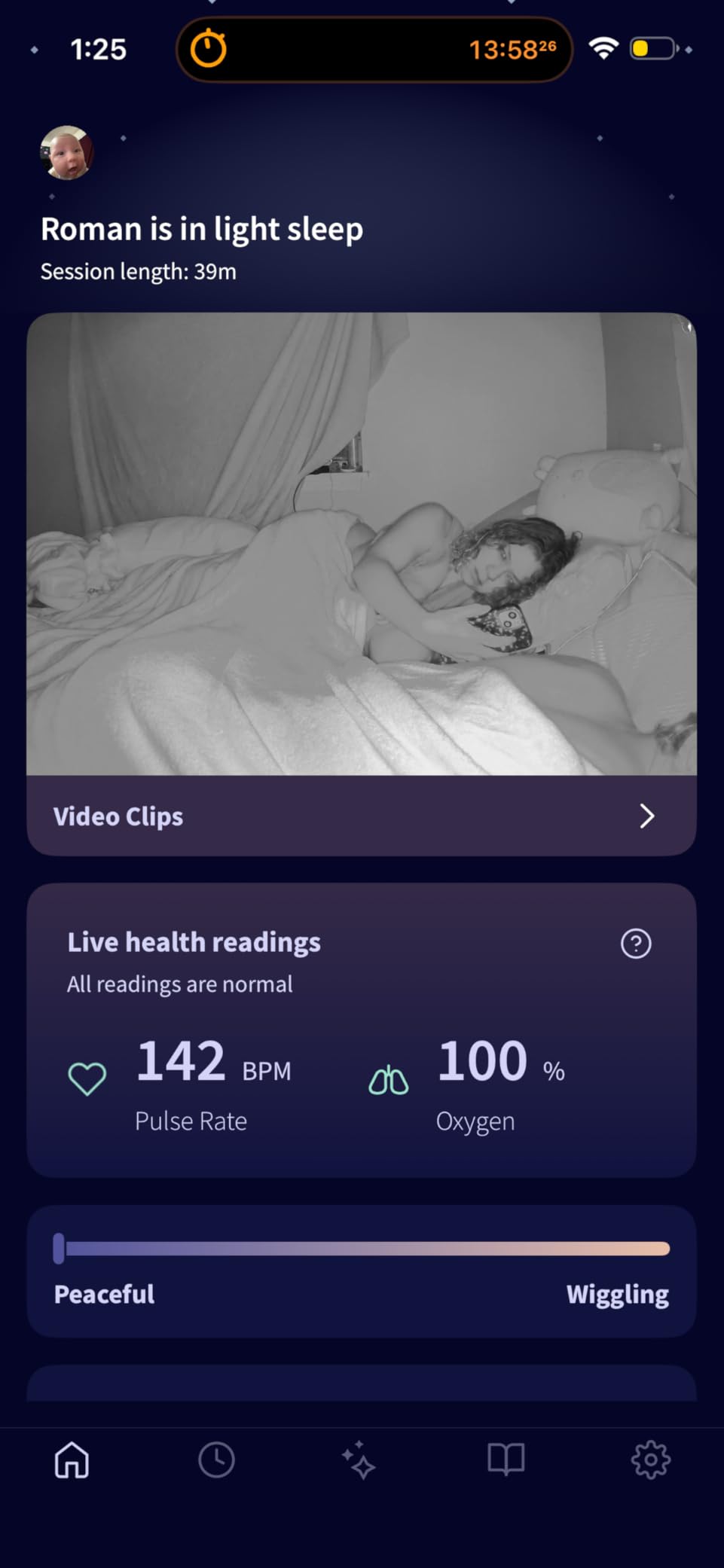
Who the Owlet Dream Duo 3 suits
It suits parents who want the clinical numbers from a pulse oximeter and the video reassurance from a camera, and who would rather not run two separate systems with two separate alerts. It is the most complete single answer in this roundup.
It also suits households on a newer 5 GHz network, where the standalone Dream Sock would need band-splitting that the bundle avoids.
Where it falls short
It carries the highest total system cost of anything we analysed, and the figure only covers the hardware unless you later add Owlet360.
It is also U.S.-only compatible, which matters if you travel outside the United States or buy for a relative abroad. And because it inherits the sock, every sock caveat applies: washing, sizing, and false alarms when the fit is wrong.
11. BabySmile Movement Monitor – The Simplest Clip on the List
BabySmile Baby Movement Monitor for Newborn Sleep, Diaper Clip
Diaper clip with a motion sensor
Alerts after about 20 seconds of no movement
Around 2200 hours of battery life
25 g, ABS plastic, one year warranty
Pros
- Lowest cost in the roundup
- One-step attachment with no setup
- No wires
- cords
- app or wireless signals
- Light enough to forget it is there
Cons
- Works reliably only on back-sleeping babies
- Clip can wriggle off during sleep
- Some units failed within months on a sealed battery
- One review measured a two-minute alarm delay
The BabySmile is the simplest breathing monitor in this roundup and the least costly. It is a 25 g ABS clip that attaches to a diaper or clothing in one step, monitors abdominal motion, and sounds an alarm after roughly 20 seconds with no detected movement. There is no screen, no app, no pairing and no wireless signal of any kind.
Battery life is specified at around 2,200 hours, which works out to approximately six months at twelve hours of daily use. For a monitor you fit in a minute, that is excellent value and it makes the device a natural second unit to leave somewhere other than home.
It is among the least-reviewed products here at 91 ratings, and the satisfaction split is the widest of the twelve, with 63 percent five-star. We include it because the price-to-function ratio is genuinely hard to argue with, but the complaints deserve reading in full.
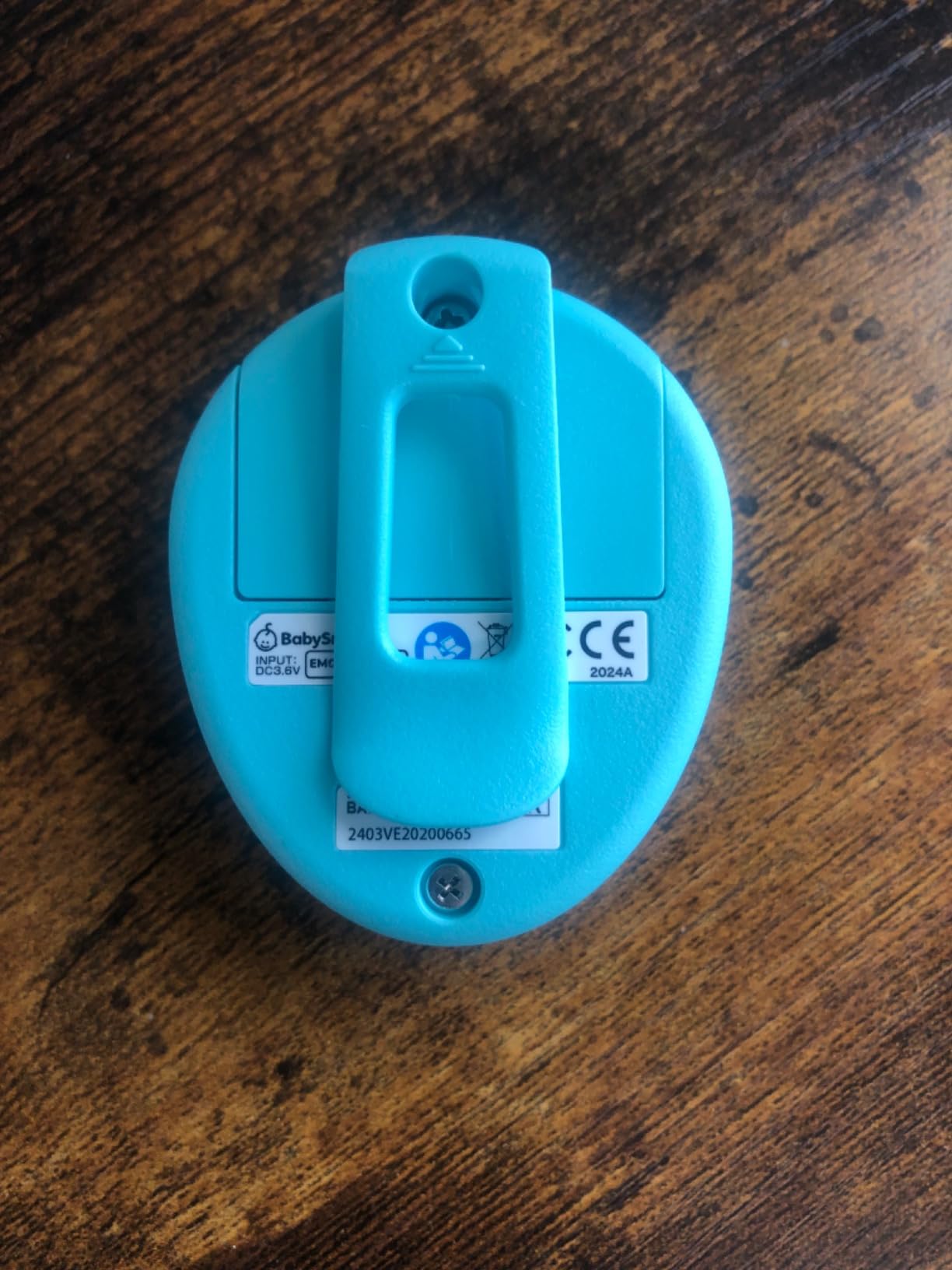
The dominant pattern is back-sleeping babies. Motion sensors at the abdomen work reliably when a baby lies on their back, and side-sleepers repeatedly set it off. That is a physical limitation of the approach rather than a fault in this unit specifically, and it is worth remembering before you blame the product for an alarm at 4am.
The second pattern is durability. A meaningful cluster of reviews reports devices that stopped working within a few months, and because the battery is sealed rather than replaceable, the unit is finished at that point. A smaller but more serious group reports alarm timing problems, including one reviewer who measured a delay of more than two minutes after motion stopped, which defeats the purpose of the device.
There is no data at all beyond the alarm. No oxygen, no heart rate, no sleep history, which keeps the cost down but means nothing to review in the morning.
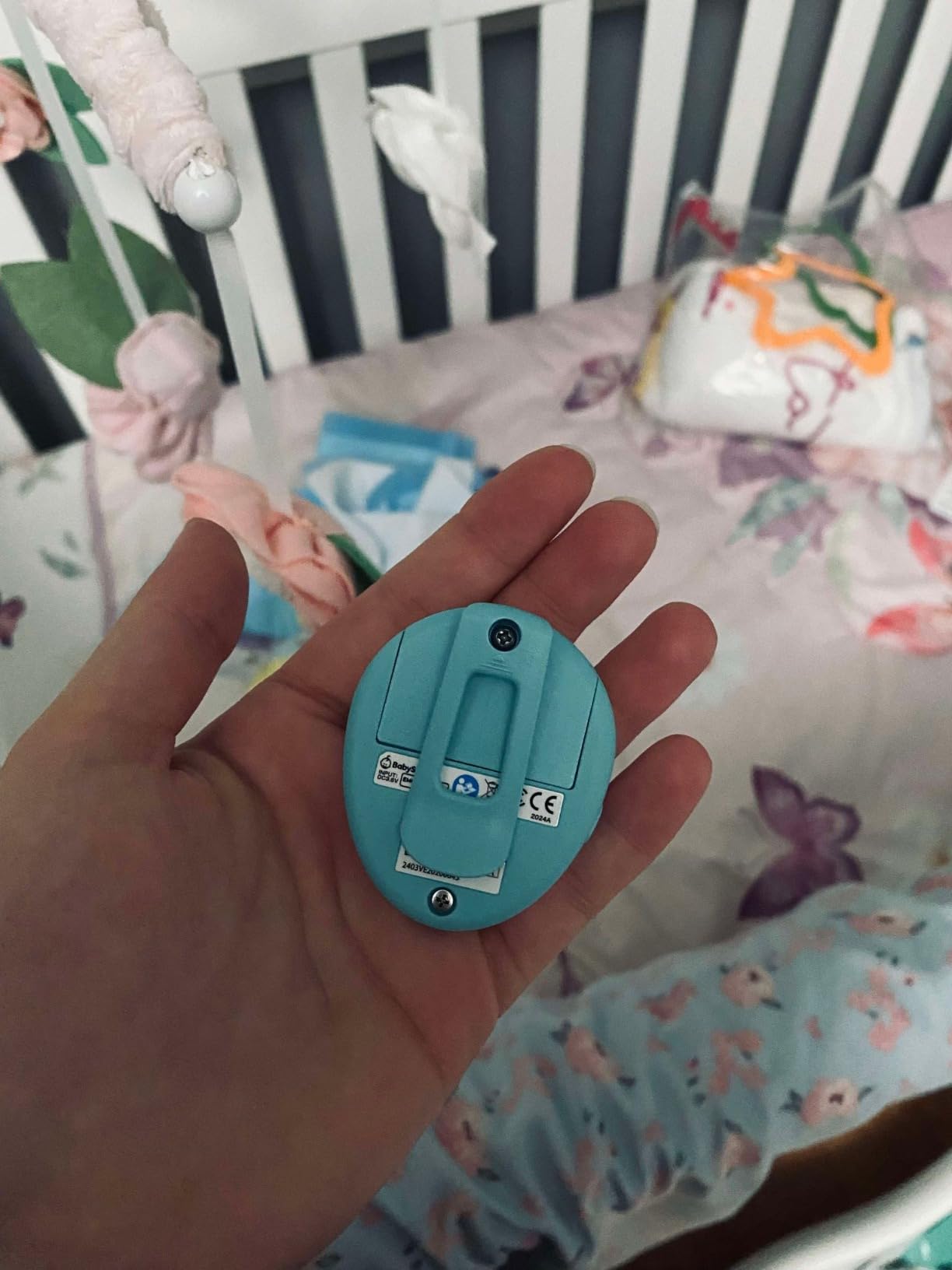
Who the BabySmile suits
It suits households wanting a backup alarm rather than a primary system, or a monitor for a grandparent’s house or a holiday let where nobody will maintain a subscription. Setup takes seconds, which matters if the person using it is not tech-confident.
It also suits parents who want a breathing alarm for their own peace of mind without a camera pointed at their child, and who do not want another device on their home network.
Where it falls short
The back-sleeping limitation is the first thing to weigh. Once your baby rolls consistently, a large share of your nights will involve a side-sleeping baby and a false alarm.
The sealed battery ends the product’s life when it dies, the reported alarm delay is a genuine safety concern rather than an annoyance, and the clip can wriggle off during sleep without triggering anything. At this level, we would pair it with a camera or use it alongside a non-contact pad rather than rely on it alone.
12. BEMPU BellyButton – A 13 g Clip With App Alerts
BEMPU Baby Movement Monitor – Sleep Monitor with Gentle Vibration Alerts
13 g clip-on abdominal motion sensor
Soft vibration first, then audible alarm
Up to 7 days per charge, about 1 hour over USB-C
FCC-certified Bluetooth Low Energy, no WiFi needed
Pros
- Lightest device in the roundup at 13 g
- Two-step alert gives brief pauses time to self-correct
- App alerts on both Android and iOS
- Works without WiFi and travels easily
Cons
- Needs regular recharging unlike disposable-battery clips
- Relies on an app connection for notifications
- Newer listing with a small feedback base
- Movement detection only with no vitals
The BEMPU BellyButton is a 13 g clip that attaches to a diaper or clothing and monitors abdominal movement, with the softest design in this roundup. At that weight it is genuinely hard to feel against a newborn, which matters more than it sounds because a heavy clip can prompt a baby to move and defeat the measurement.
Its alert is the gentlest of the group: a soft vibration first, escalating to an audible alarm only if movement still has not returned. That ordering matches what we saw parents value most across every category here, giving a normal brief pause in breathing time to correct itself without noise.
Unlike most clip monitors, it pairs over Bluetooth Low Energy with an app on Android and iOS, so you can get push notifications rather than only an in-room alarm. There is no Wi-Fi requirement, and the FCC-certified module means the connection is a short-range one rather than a network broadcast.

It is a recent release with 89 ratings, so the evidence base is thin, but the sentiment is unusually clean: 74 percent five-star and only 2 percent one-star, the strongest one-star rate of any product we reviewed. Reviewers focus on the two-step alert, the low weight and how easily it moves between a crib, a bassinet and a bedside.
Battery life is up to 7 days of typical daily monitoring, recharged in about an hour over USB-C. In practice that means you charge it weekly rather than nightly, which is a real difference from a wearable that has to be ready at bedtime every single night.
It includes a one-year manufacturer warranty, and the materials are described as baby-safe for skin contact. The instruction manual and USB-C cable are in the box.
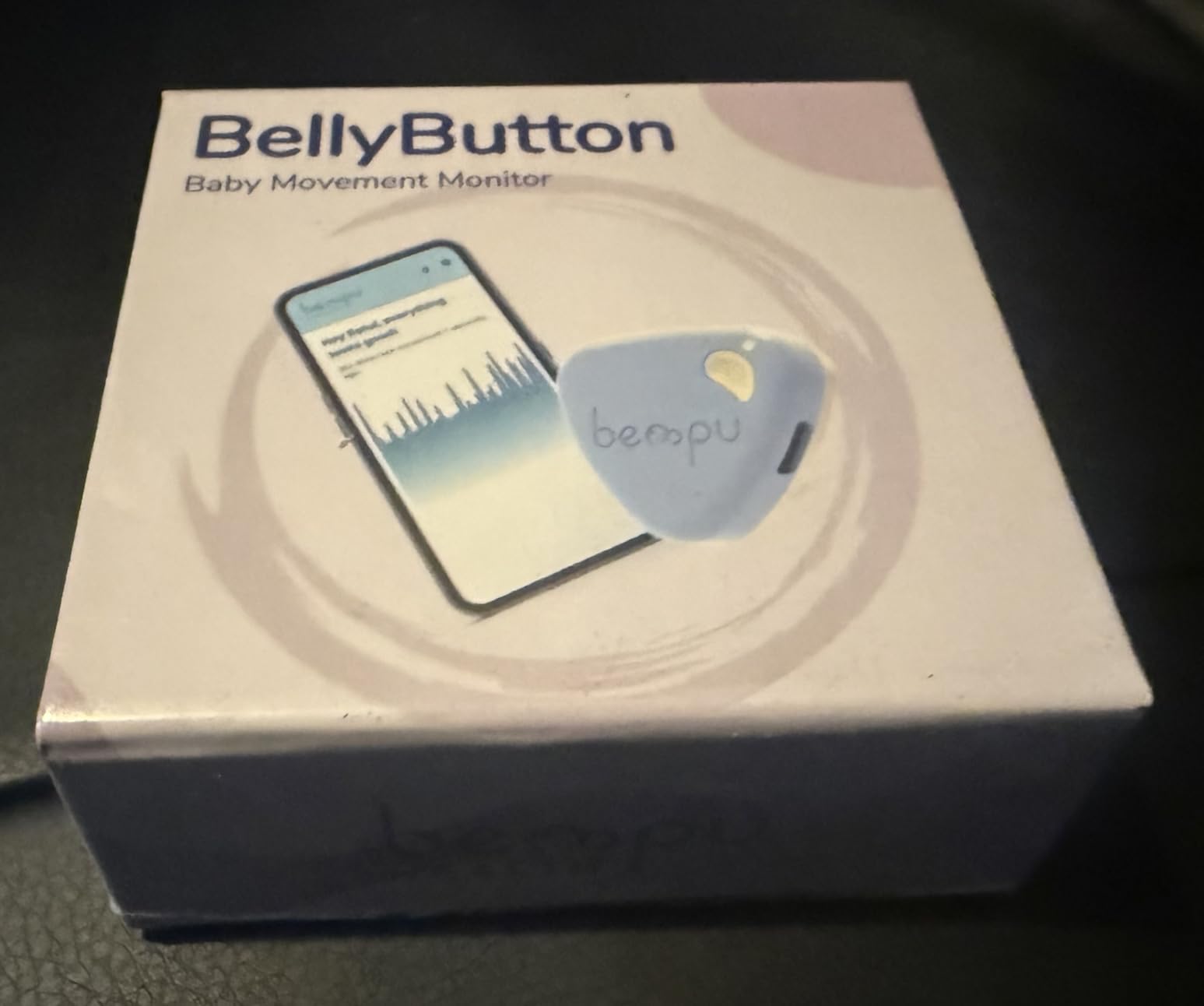
Who the BEMPU BellyButton suits
It suits parents who want app-based notifications without putting a camera in the nursery, and who want to avoid running anything through their home Wi-Fi. Baby-wearing, room-sharing and small-space homes are all cases where a clip beats a camera.
It also suits anyone moving between several sleep locations, because one hour of charging covers a week of typical use and the unit works on a bedside table rather than a mounted bracket.
Where it falls short
It needs regular recharging, which is the trade for the longer intervals between charges, and if the battery is flat at bedtime the unit cannot do its job. App dependency is the second issue: notifications arrive through a Bluetooth connection, so a phone that has wandered out of range is a night without alerts.
With 89 ratings it does not yet have the long-term reliability record that the Babysense pads or the Snuza Hero have built up, and it is a movement sensor with no heart rate or oxygen data, so it cannot answer a clinical question.
What Pediatricians Say About Breathing Monitors
The American Academy of Pediatrics has been consistent for years that healthy infants do not need a home breathing monitor and that no consumer device has been shown to prevent SIDS. That is not a marketing position from a competing brand. It is the standard paediatric guidance, and any page claiming these monitors prevent SIDS is making a claim the evidence does not support.
There is a second reason doctors are cautious, and it is the one parents rarely hear stated plainly: a monitor that false-alarms trains you to ignore it, and a parent conditioned to ignore alarms is not better protected. Parents in NICU and newborn forums describe precisely this loop, including accounts of living in fear of loud alarms and feeling more anxious with the device than without it.
If you find yourself in that loop, structured breathing work is a better use of your attention than another notification channel. Our guide to breathing techniques for anxiety covers the options that parents tell us actually help at 3am.
On regulation, the distinction that matters is FDA clearance versus FDA approval. Some monitors in this category have been cleared as general wellness or monitoring devices; that is not the same as approval to diagnose, treat or prevent a condition. None of the products we reviewed should be treated as a diagnostic device, and a real apnoea event needs a paediatrician, not an app. If your baby has any clinical breathing concern, raise it with your doctor first and let their recommendation drive the purchase.
How to Set Up a Breathing Monitor and Cut False Alarms
Almost every complaint we read about these devices comes down to placement or environment rather than the product itself. The following setup steps fixed the majority of the false alarms described in the reviews, and they apply regardless of which sensor family you pick.
For under-mattress pads, position the two pads on either side of the mattress where your baby actually sleeps, not at the far edges. Confirm the mattress sits on a hard base, since memory foam will not transmit the signal. Run the pad test before bed, and check for a fan, an air conditioner or a draught within about 10 feet, because moving air is the most common trigger and there is no sensitivity setting that fully solves it.
For a sock, snugness is the whole trick. It should sit snugly enough not to rotate, with the sensor area correctly positioned on the foot, and it should be changed when your baby outgrows the size. A loose sock that shifts under a kicking foot produces a difficult-reading alert almost every time, which is exactly what reviewers describe.
For a clip, tuck it under the waistband where the diaper meets the body rather than letting it hang off the front, and check that swaddle or sleep-sack straps are not pushing it away. Parents repeatedly identify straps as the source of their false alarms. Remember the position requirement: these belong on a baby lying on their back.
For a camera, set the field of view so the whole crib is visible with a margin, turn off notifications for anything you would not get up for, and set notification time windows so a daytime nap does not page you. Confirm your Wi-Fi actually reaches the nursery before you rely on remote alerts, ideally by watching a live feed for several minutes from outside the room.
Two habits that prevent most nuisance alarms across every category. First, switch the unit off the moment you lift your baby out of the crib, since a continuing monitor with an empty cot is a guaranteed false alert. Second, run the manufacturer’s test or a five-minute supervised check each time you change sheets, since a shifted pad or a newly fitted sock changes the picture.
What Actually Matters When You Buy a Breathing Monitor
False-alarm behaviour is the first filter, and it is the one most spec sheets hide. Read the one-star and two-star reviews rather than the five-star ones, because a monitor that alarms constantly does not reduce anxiety, it manufactures it. A monitor with a documented sensitivity control and an obvious way to disable nuisance categories is worth more than a higher resolution camera.
Second, decide what you actually want measured. Movement-based systems such as the Babysense pads, the Snuza Hero, the Levana Oma Sense and the BEMPU clip tell you that nothing is moving. That is a good answer to a movement question. If you want blood oxygen and heart rate, only a pulse oximetry sock from Owlet will give it, and a doctor should be the one requesting that. If you want sleep structure, you are in camera territory and should accept that breathing readings are estimated from video.
Third, be honest about connectivity. Every camera and app monitor on this list depends on your network, and dropped alerts are a real safety gap. If your nursery signal is weak, a self-contained unit with no WiFi is the safer choice rather than the cheaper one. Our picks for baby monitors without WiFi for privacy cover that category in more depth.
Fourth, plan for power. A replaceable battery rated at six months beats a nightly charge for anyone who travels or shares care across locations, and a wired camera beats a battery camera in a permanent position. What is a nuisance at home becomes a real problem at a grandparent’s house.
Fifth, think about twins and multiple rooms, where a multi-camera view on one screen genuinely helps. Our guide to baby monitors with two cameras covers the camera side of that, and note that most under-mattress pad systems cover the full crib with two pads, so you need one unit per baby rather than one unit for both.
Sixth, look at data handling. Devices that encrypt with 256-bit AES, offer two-factor authentication and provide a physical camera off switch are meaningfully better choices for a child’s room than those that do not. If you would rather video never left the house, look for a monitor with local microSD storage instead of mandatory cloud recording. Our picks for WiFi baby monitors with app access compare the app experience side by side.
Finally, check what you are giving up by adding a device. The American Academy of Pediatrics guidance stands: healthy full-term babies do not need one. If you are buying for anxiety rather than a clinical reason, the honest question is whether you will check the readings and calm down, or check the readings and worry more. A good camera that you can zoom in on may serve you better than a dedicated sensor, and several parents in the forums we read say exactly that.
Frequently Asked Questions
What is the best baby monitor that can detect breathing?
For most families the Babysense True Sleep HD Bundle is the best option because it combines two non-contact under-mattress pads with a 5-inch HD camera and needs no WiFi. If you need blood oxygen and heart rate numbers rather than movement detection, the Owlet Dream Sock is the only product in our roundup that measures them directly. Parents who will not use anything on their baby tend to do best with a clip monitor such as the Snuza Hero.
Why do pediatricians not recommend the Owlet or other breathing monitors?
The American Academy of Pediatrics advises that healthy infants do not need a home breathing monitor and that no consumer device has been shown to prevent SIDS. Doctors also worry about false alarms training parents to ignore alerts, and about the anxiety a device can add when readings are not clinically meaningful. None of these monitors can diagnose apnoea, so a real breathing concern should be discussed with your paediatrician rather than monitored at home.
Are baby breathing monitors worth it?
They are worth it for parents of premature or NICU-discharge babies, babies with a history of apnoea, reflux or breathing difficulty, and for parents with severe SIDS anxiety who understand the false-alarm trade-off. For a healthy full-term baby, the AAP says a monitor is unnecessary, and a device that false-alarms regularly can increase anxiety rather than reduce it.
How do I stop false alarms on my baby monitor?
Most false alarms are placement or environment problems. Position under-mattress pads on either side of where your baby sleeps, keep fans and air conditioning roughly 10 feet away, fit a sock snugly so it cannot rotate, tuck a clip under the diaper waistband so swaddle straps cannot push it away, and switch the unit off the moment you lift your baby out of the crib. Run the test function after every sheet change.
What is the difference between a movement monitor and a breathing monitor?
A movement monitor reports when the sensor detects no motion at all, typically after 15 to 20 seconds. A breathing monitor aims at respiration specifically, either by reading chest rise with a clip on the abdomen, pulse oximetry in a foot sock, contact-free sensing under the mattress, or AI analysis of video. The wearable options give measured vitals, while the others give a reliable indication that breathing has paused.
Conclusion
After reading through the reviews on all twelve, the best baby monitors with breathing sensors separate cleanly by how they measure. The Babysense True Sleep HD Bundle is the pick we would buy first, because two non-contact pads, a proper night-vision camera and no WiFi dependency cover the most ground with the fewest ways to fail. The Owlet Dream Sock is the answer when a clinician wants oxygen saturation, and the Snuza Hero is the answer when you want nothing on your baby and nothing to plug in.
Whatever you choose, set it up properly before you need it, and be honest about whether the alerts will calm you or worry you. For a healthy full-term baby in 2026, the American Academy of Pediatrics position still holds: this is a reassurance and observation tool, not a safety system.