
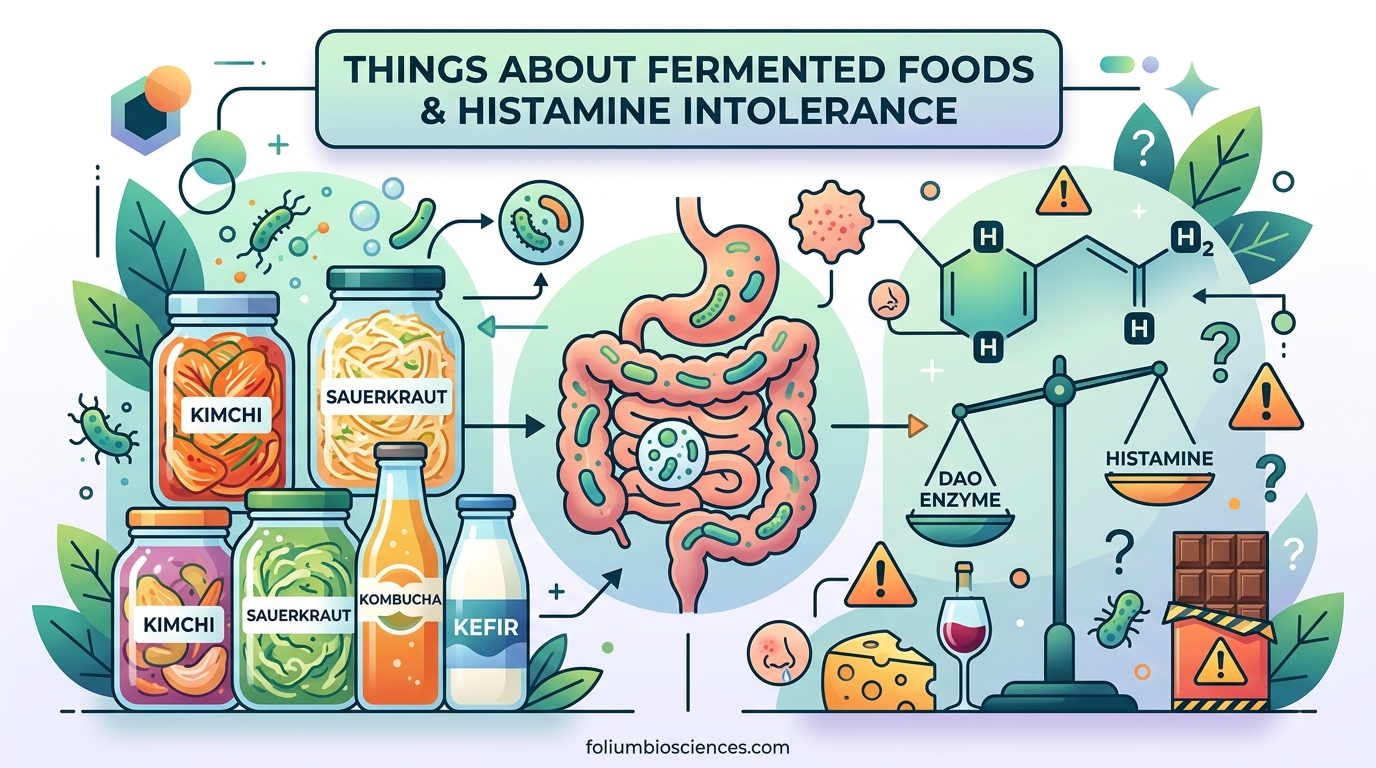
If you have histamine intolerance, fermented foods present a confusing dilemma. These foods offer proven gut health benefits, yet they naturally contain histamines that your body may struggle to break down. The answer depends on which fermented foods you choose, your current histamine tolerance level, and whether you address the underlying causes of your sensitivity.
This guide walks you through how histamine intolerance works, which fermented foods are safer options, and how to gradually rebuild your tolerance over time. By the end, you will know exactly how to approach fermented foods with confidence.
Table of Contents
What Is Histamine Intolerance and Why Does It Matter?
Histamine intolerance is not a food allergy. It is a metabolic condition where your body cannot properly break down histamine from food. The primary enzyme responsible for this process is diamine oxidase (DAO), which lives in your gut lining and kidneys. When DAO activity is impaired, histamine from food accumulates faster than your body can clear it.
Several factors can reduce DAO enzyme function. Gut inflammation from conditions like SIBO or leaky gut can damage the cells that produce DAO. Certain medications, including some antibiotics and antihistamines, can also interfere with enzyme activity. Some people are born with genetic variations that result in naturally lower DAO production.
When histamine builds up in your system, it overflows into your bloodstream and triggers allergy-like symptoms. This is not an IgE-mediated allergy, which means standard allergy testing often comes back negative. The distinction matters because the treatment approach differs significantly between intolerance and true allergic reactions.
The Histamine Bucket: Understanding Cumulative Load
Health experts use the “histamine bucket” analogy to explain why symptoms occur. Think of your body as a bucket that collects histamine from all sources throughout the day. These sources include dietary histamine from fermented foods, histamine produced by gut bacteria, and histamine released during immune responses to environmental triggers.
Your personal bucket size depends on your DAO enzyme capacity, gut health status, and genetic factors. Once the bucket overflows, you experience symptoms regardless of which specific food “caused” the reaction. This explains why you might tolerate a high-histamine food occasionally but react severely when combining it with other histamine sources on the same day.
Portion size matters more than most people realize. A large serving of sauerkraut may push you over your threshold while a small garnish does not. This is why tracking both portions and combinations helps identify your actual tolerance level rather than simply avoiding all fermented foods permanently.
Why Fermented Foods Can Trigger Histamine Reactions
Fermented foods are problematic for people with histamine intolerance for two main reasons. First, the fermentation process itself can increase histamine levels in food. Bacteria break down the amino acid histidine into histamine during fermentation, particularly in protein-rich environments like dairy and meat products.
Second, aged foods continue to accumulate histamine over time. The longer a fermented food sits, the more histamine it develops. This is why fresh, young ferments typically contain less histamine than aged versions of the same product. Commercially aged cheeses and long-fermented sauces are particularly high in histamine.
Not all fermented foods are equal in this regard. Vegetable fermentations generally produce lower histamine levels than dairy or meat fermentations because vegetables contain less histidine, the amino acid precursor to histamine. Understanding this difference allows you to make strategic choices about which ferments to include in your diet.
High-Histamine vs. Low-Histamine Fermented Foods
Knowing which fermented foods fall into each category helps you make safer choices. The general principle is that animal-based ferments tend toward higher histamine, while plant-based ferments trend lower. However, preparation methods and aging time create significant variation within each category.
Higher Histamine Fermented Foods to Approach With Caution:
Aged cheeses like parmesan, gouda, and aged cheddar contain significant histamine due to the long fermentation and aging process. The histamine content increases substantially as the cheese matures, with some aged varieties containing over 1000mg per 100g. Yogurt and kefir made from cow’s milk vary widely, with Greek yogurt typically containing moderate to high levels depending on fermentation time and bacterial strains used.
Wine, particularly red wine, contains histamine from the fermentation process, and this is why some people react to even small amounts. Histamine levels in wine range from 3mg to 190mg per glass depending on the type and aging process. Soy sauce and miso are fermented from soybeans and contain meaningful histamine levels that can trigger reactions in sensitive individuals.
Fish sauce, a staple in many Asian cuisines, is particularly high in histamine and other biogenic amines. These compounds form during the long fermentation of fish products and can reach extremely high levels. Aged fermented meats like certain sausages also contain elevated histamine due to the protein-rich fermentation environment.
Lower Histamine Fermented Foods That Are Generally Better Tolerated:
Fresh sauerkraut made from cabbage only tends to be lower in histamine, especially when consumed soon after production. The key is choosing products with minimal aging and no added high-histamine ingredients like fish sauce. Some brands now offer fresh, refrigerated sauerkraut that has not been aged extensively.
Young coconut kefir or water kefir typically has lower histamine than dairy-based versions. These plant-based alternatives provide probiotic benefits without the histamine load of traditional dairy ferments. Properly fermented vegetables without fish paste or shellfish-based ingredients, such as standard vegetable kimchi, are usually well-tolerated in small portions.
Fresh, short-fermented vegetable pickles made at home give you control over fermentation time and ingredients. Starting with fresh vegetables and short fermentation periods of 3-7 days helps minimize histamine development while still preserving probiotic benefits. Many people with histamine intolerance find they can tolerate these homemade versions in moderation.
Forum users with histamine intolerance consistently report that vegetable-only ferments work better for them than dairy or fish-based products. One Reddit user noted that homemade sauerkraut in small portions did not trigger reactions while store-bought aged versions did. Another found that kimchi made without fish paste was tolerable in moderate portions when combined with other low-histamine foods.
Symptoms of Histamine Intolerance
Recognizing the symptoms helps you distinguish histamine intolerance from other conditions that may present similarly. Symptoms typically appear within minutes to hours after eating high-histamine foods, though cumulative effects can show up later in the day depending on your bucket threshold.
Common symptoms include headaches or migraines, particularly after eating aged cheeses or drinking wine. These often occur in the evening after a high-histamine meal. Skin reactions such as flushing, itching, or hives are frequent manifestations that many people mistake for food allergies.
Digestive symptoms like bloating, abdominal pain, or diarrhea occur in many people with histamine intolerance. These symptoms often overlap with IBS and other digestive conditions, which is why histamine intolerance is frequently misdiagnosed. Nasal congestion, sneezing, or runny nose can mimic seasonal allergies, making it difficult to distinguish between environmental and food-based triggers.
Some people experience heart palpitations or dizziness when their histamine bucket overflows. These symptoms can be particularly frightening and are often investigated extensively before histamine intolerance is considered. The timing and pattern of symptoms provide important clues for diagnosis when combined with dietary tracking.
If symptoms consistently appear after fermented foods and resolve when you avoid them, histamine intolerance is likely the cause. However, if you experience severe reactions including throat swelling or difficulty breathing, seek emergency care immediately as these may indicate a true allergy rather than intolerance.
Who Should Limit Fermented Foods
Certain conditions make fermented foods more likely to cause problems for people with histamine intolerance. Understanding whether you fall into one of these categories helps you approach the decision strategically and with appropriate medical guidance.
Mast Cell Activation Syndrome (MCAS) involves overreactive mast cells that release histamine excessively in response to various triggers. People with MCAS often have severe reactions to all fermented foods because their baseline histamine is already elevated from mast cell degranulation. Working with a specialist familiar with MCAS is essential for managing this condition safely.
SIBO and gut dysbiosis can impair DAO enzyme production and damage the gut lining where DAO is produced. Forum discussions reveal that many people see significant improvement in their histamine tolerance after treating underlying SIBO. Addressing gut health through appropriate treatment often allows gradual reintroduction of fermented foods that were previously triggering.
Hashimoto’s and other thyroid conditions have documented connections to histamine intolerance. Thyroid hormones influence DAO enzyme activity, and some people find that managing their thyroid condition improves their tolerance to high-histamine foods significantly. Working with a practitioner who understands this connection is helpful for managing both conditions.
Long COVID has emerged as a cause of new-onset histamine intolerance in many people since 2026. Forum users consistently report developing symptoms after COVID infection that they never experienced before, including reactions to fermented foods they previously tolerated without issues. This suggests that COVID-related immune and gut dysfunction may trigger histamine intolerance in susceptible individuals.
Building Tolerance to Fermented Foods Over Time
You do not necessarily have to avoid fermented foods forever if you have histamine intolerance. Many people successfully rebuild their tolerance through a strategic approach that addresses underlying causes first and then gradually introduces low-histamine options.
The graduated exposure protocol starts with very small portions of low-histamine fermented foods, such as one teaspoon of fresh sauerkraut. You maintain this serving size for several days while tracking symptoms in a food diary. If no reaction occurs, you slowly increase the portion over subsequent weeks.
The key is going slowly and not adding new fermented foods while your bucket is full from other histamine sources. Choose low-histamine days for introducing new ferments and avoid combining multiple high-histamine foods in the same meal. This methodical approach allows your DAO enzyme system to adapt gradually.
Healing your gut provides the foundation for lasting tolerance improvement. This means addressing SIBO if present, reducing gut inflammation through appropriate protocols, and restoring healthy microbiome diversity through diet and targeted probiotics. Some people find that probiotic supplements containing specific strains help rather than hurt during this process.
Supporting DAO enzyme production through nutrition may help as a complementary strategy. DAO requires copper, vitamin B6, and vitamin C as cofactors for optimal function. Ensuring adequate intake of these nutrients through food or supplements supports your body’s natural enzyme production. Some people benefit from DAO enzyme supplements taken before high-histamine meals, though this addresses symptoms rather than underlying tolerance.
Testing for Histamine Intolerance
If you suspect histamine intolerance is affecting your relationship with fermented foods, proper testing helps confirm the diagnosis and guides treatment decisions. Unfortunately, no single test definitively confirms the condition, so diagnosis typically involves ruling out other causes.
DAO enzyme blood testing measures diamine oxidase levels in your blood. Lower DAO activity suggests reduced capacity to break down histamine and supports a histamine intolerance diagnosis. However, this test has limitations because DAO levels fluctuate throughout the day and blood measurements may not accurately reflect gut enzyme activity.
The elimination diet remains the gold standard for diagnosis. You remove all high-histamine foods for two to four weeks, then systematically reintroduce them while tracking symptoms in detail. If symptoms correlate with reintroduction and resolve with avoidance, histamine intolerance is likely the cause.
Working with an allergist or functional medicine practitioner familiar with histamine intolerance provides the best outcomes. They can help distinguish it from MCAS, true allergies, and other conditions that mimic histamine intolerance symptoms. They can also guide you through the elimination and reintroduction process safely.
Frequently Asked Questions
Are any fermented foods low in histamine?
Yes, fresh vegetable ferments like young sauerkraut, coconut kefir, and vegetable pickles made without fish or shellfish ingredients are generally lower in histamine. The key is choosing short-fermented products consumed fresh, not aged versions. Homemade pickles fermented for 3-7 days are typically safer than aged commercial products.
Does Greek yogurt have high histamine?
Greek yogurt typically contains moderate to high histamine levels. The fermentation process concentrates proteins and histamine, and Greek yogurt is generally higher in histamine than regular yogurt due to the straining process. If you have histamine intolerance, it is best approached cautiously or avoided, especially if made from cow’s milk.
Is kimchi bad for histamine intolerance?
Traditional kimchi made with fish sauce or shrimp paste is high in histamine and likely to trigger reactions in sensitive individuals. However, kimchi made without these high-histamine ingredients, using only vegetables and standard seasonings, may be better tolerated in small portions when consumed fresh rather than aged.
Can Hashimoto’s cause histamine intolerance?
Hashimoto’s and other thyroid conditions have a documented connection to histamine intolerance. Thyroid hormones influence DAO enzyme activity, and some research suggests thyroid dysfunction can reduce histamine clearance. Managing thyroid dysfunction through appropriate treatment often improves histamine tolerance symptoms.
The Bottom Line
Fermented foods are not universally off-limits with histamine intolerance, but they require a strategic approach based on understanding your personal threshold. Vegetable-based ferments consumed fresh and in small portions are generally safer than aged dairy or fish-based products that tend toward higher histamine content.
Understanding your histamine bucket and what fills it helps you make informed choices about portions and combinations rather than simply avoiding all fermented foods permanently. Building tolerance takes time, but addressing underlying conditions like SIBO or gut inflammation often leads to significant improvement in tolerance over months of dedicated effort.
If you suspect histamine intolerance is limiting your relationship with fermented foods, start by working with a healthcare provider familiar with this condition to confirm the diagnosis and rule out more serious conditions like MCAS. With proper diagnosis and a graduated approach, many people successfully reintroduce these gut-health-promoting foods into their diets and regain the benefits they previously had to avoid.