
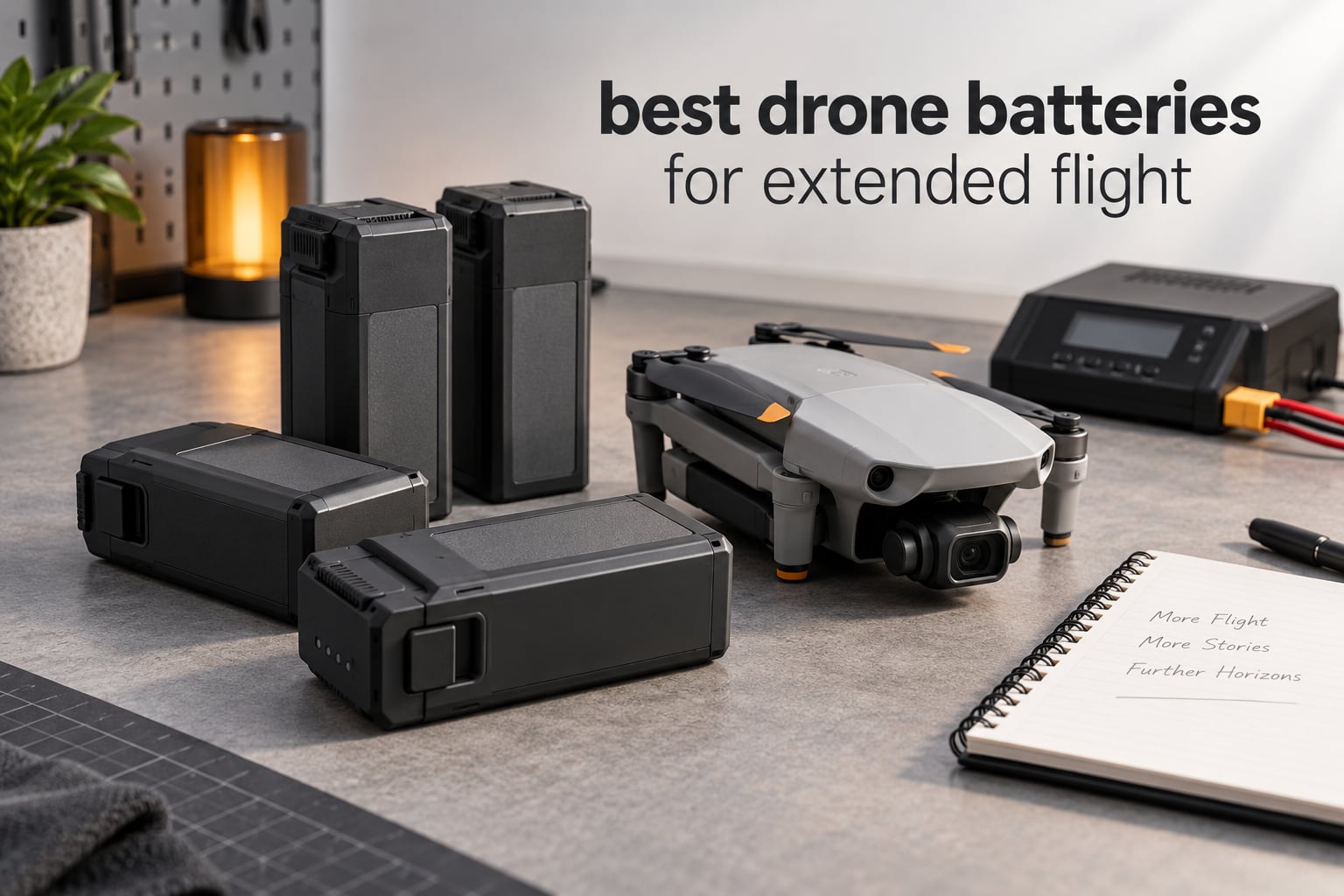
The single biggest limit on how long a drone stays up is the pack bolted into its belly, and most pilots reach for the same wrong answer: buy a bigger battery. A larger pack stores more energy, but it also weighs more, and every extra gram has to be lifted against gravity on every single flight. Picking the right pack for the job means matching chemistry, cell count, capacity and discharge rating to one specific airframe, not simply buying the biggest number on the shelf.
That is what this roundup is for. We went through ten packs that cover the whole spectrum, from OEM DJI intelligent flight batteries for consumer camera drones to 6S high-capacity LiPo packs for large multirotors and RC platforms. Each entry lists real capacity, nominal voltage, weight, cycle expectations and the honest trade-offs buyers report after putting them in the air.
We also answer the questions these products raise constantly: which chemistry actually flies longest, why a 120C rating is wasted money on an endurance build, how to estimate flight time before you buy, and what happens to a pack that drains while it sits in a bag over winter. The buying guide at the end ties it all together, including storage, charging, safety and the rules for carrying spare lithium packs in your hand luggage.
If your battery budget is currently going toward a pack for a different kind of machine, it may help to first check what your airframe can actually take. Some related reading that pairs well with this guide: our picks for deep cycle batteries for RV boondocking covers endurance and storage discipline in a different form factor, and if you are still training on a simulator before committing to a heavy pack, our guide to flight sticks for flight simulators is the cheaper place to start.
Table of Contents
What Drone Battery Lasts the Longest?
The longest-flying drone batteries are high-capacity Li-ion or LiPo packs matched to the airframe’s voltage, not the highest-capacity pack you can physically fit. Flight time is set by usable watt-hours divided by average power draw, so energy density and weight matter more than raw mAh:
- High-energy Li-ion cells in 18650 or 21700 format give the best minutes per gram on long-range and mapping builds.
- Large LiPo packs in the correct S-count stay the practical choice for aerial photo and cinema drones, where the flight time is set by the airframe rather than the chemistry.
- Flight time derates hard in real conditions. A quoted figure assumes sea level, no wind, a constant cruise speed and a full pack.
The remaining sections rank all ten picks, then break down the chemistry, sizing, charging and safety rules that decide how much of that headline number you actually get.
Top 3 Picks for Extended Drone Flight

DJI Mini 3 Series Battery Plus
- Up to 51 minutes on Mini 3
- 47 minutes on Mini 3 Pro
- Works across Mini 4 Pro and Mini 3 family
- 150 g per pack

Zeee 6S 6000mAh 100C Two-Pack
- 6S 22.2V 6000mAh 100C LiPo
- EC5 connector
- Two matched packs for rotation
- 833 g per pack

DJI Mavic 3 Intelligent Flight Battery
- 46 minutes max
- 40 minutes hovering
- 14.4V 5000mAh Lithium Polymer
- 335.5 g per pack
Best Drone Batteries for Extended Flight at a Glance in 2026
| Product | Specifications | Action |
|---|---|---|
| DJI Mini 3 Series Intelligent Flight Battery Plus |
|
Check Latest Price |
| DJI Mavic 3 Intelligent Flight Battery |
|
Check Latest Price |
 DJI Air 3S Intelligent Flight Battery DJI Air 3S Intelligent Flight Battery |
|
Check Latest Price |
 HOOVO 3S 6500mAh 120C EC5 Two-Pack HOOVO 3S 6500mAh 120C EC5 Two-Pack |
|
Check Latest Price |
 HOOVO 6S 6200mAh 120C EC5 HOOVO 6S 6200mAh 120C EC5 |
|
Check Latest Price |
 HRB 6S 6000mAh 50C EC5 HRB 6S 6000mAh 50C EC5 |
|
Check Latest Price |
| Zeee 6S 6000mAh 100C Two-Pack |
|
Check Latest Price |
 OVONIC 6S 6000mAh 120C Two-Pack OVONIC 6S 6000mAh 120C Two-Pack |
|
Check Latest Price |
 OVONIC 6S 6500mAh 100C Two-Pack OVONIC 6S 6500mAh 100C Two-Pack |
|
Check Latest Price |
 Zeee 6S 5200mAh 100C EC5 Zeee 6S 5200mAh 100C EC5 |
|
Check Latest Price |
1. DJI Mini 3 Series Intelligent Flight Battery Plus – Best Overall for Extended Flight
DJI Mini 4 Pro Mini 3 Series Intelligent Flight Battery Plus, Compatibility: DJI Mini 4 Pro, DJI Mini 3 Pro, DJI Mini 3
150 g
Lithium Ion
Smart cell monitoring
Fits Mini 4 Pro, Mini 3 Pro and Mini 3
Pros
- Genuine 40-50 minute real-world flights
- Cross-compatible across three Mini airframes
- Noticeably better top speed and climb than the standard pack
- 150 g keeps the aircraft under the 249 g registration threshold when flying the Mini 3
Cons
- Plug tab on the charger end can crack with repeated insertion
- Capacity fades gradually with heavy cycling
- Only useful on the Mini 4 Pro and Mini 3 family
This is the pack that changed what a sub-250 g drone could do. The standard Mini battery is famously short-lived, and moving to this Plus version roughly doubles the air time on the same tiny airframe. Buyers regularly report 35 to 47 minutes in real conditions rather than the headline number, which is the honest figure you should plan around.
What surprised me most is the speed difference. A heavier pack sitting in the same airframe changes how the aircraft feels immediately, and the jump in top speed and climb rate is large enough that the drone stops feeling like a toy. For anyone moving from the standard pack to this one, the first flight after the swap is usually the moment the battery decision clicks.
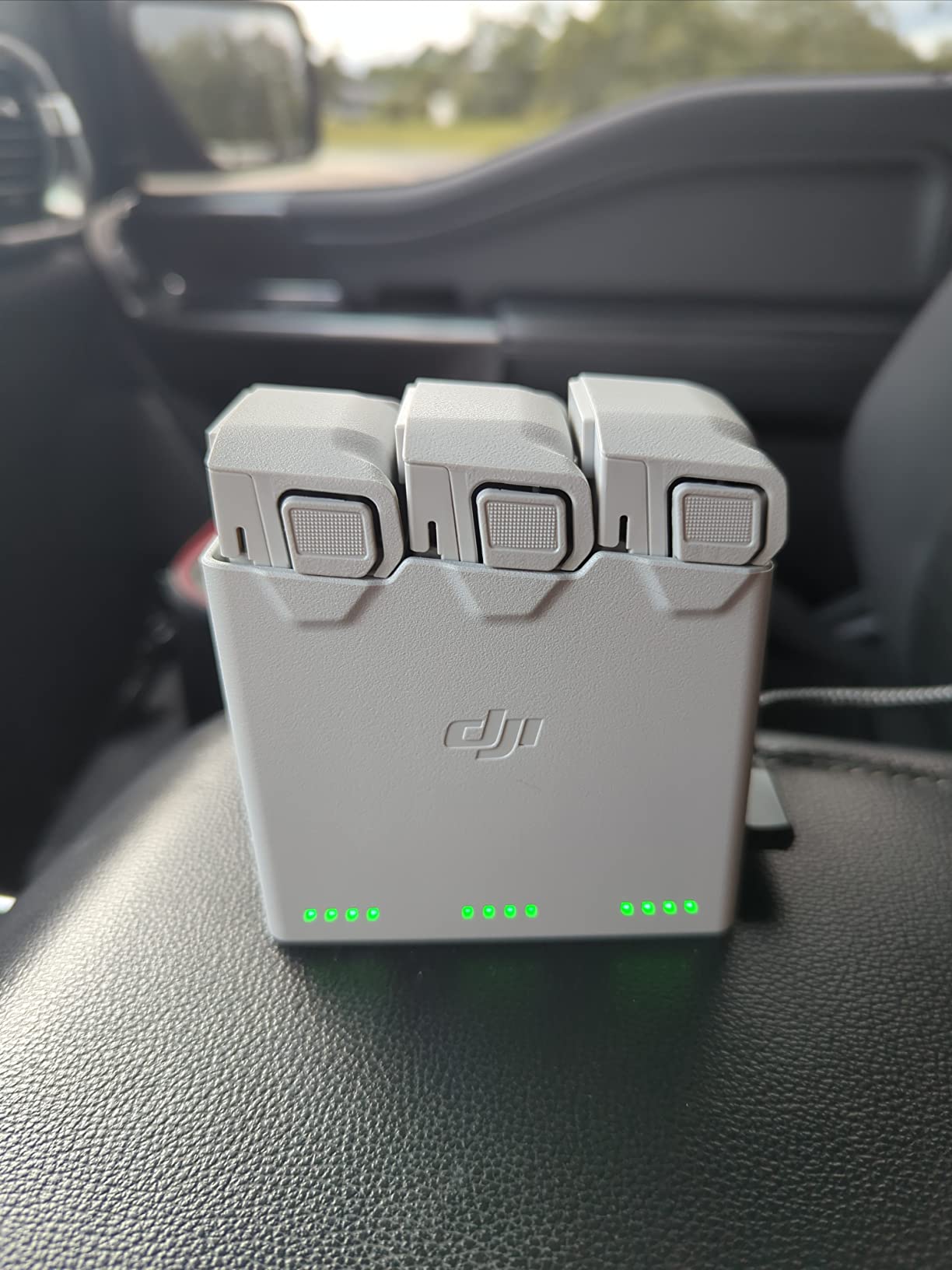
Because the same pack fits the Mini 4 Pro, the Mini 3 Pro and the Mini 3, it is the natural choice for anyone who owns more than one of the three. A single battery bank covering several airframes removes the most annoying part of shooting days: waiting on a charger. The self-monitoring cell status also means a tired pack tells you it is tired before you fly it into a shortened return.
The honest weakness is physical rather than electrical. The tab on the plug cracks if you lever the connector out of the charger housing instead of pulling it straight, and that is the single most repeated mechanical complaint in reviews. Treat the connector gently and this is a pack with a long service life; some owners put 150 or more charge cycles on theirs before seeing meaningful capacity loss.
Who This Battery Suits
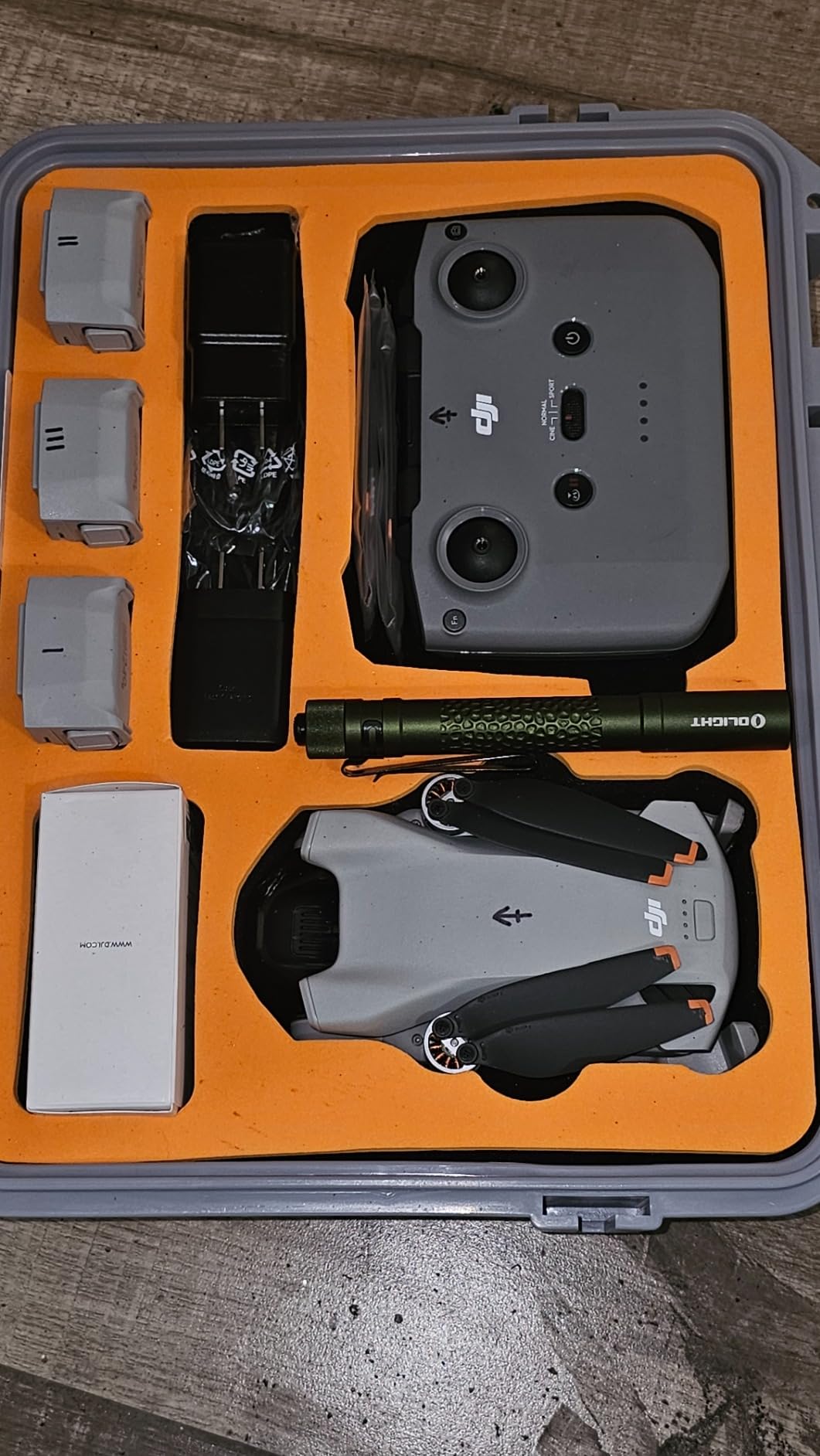
This suits Mini 3, Mini 3 Pro and Mini 4 Pro owners who are frustrated by the standard pack’s endurance and want to keep flying without carrying a larger aircraft. Photographers working short client sessions on one location will get roughly an hour of usable flight from two packs, which is usually more than a day’s shooting needs.
It also suits anyone who cares about registration weight. Buyers point out that keeping the aircraft under the 249 g threshold is a real practical constraint in some countries, and at 150 g this pack is light enough to preserve that flexibility where a larger aftermarket pack would push you over it.
Who Should Skip It
Skip it if you do not own one of those three Mini airframes. There is no cross-platform fit, and the intelligent battery management only speaks to DJI hardware, so a third-party drone gains nothing from it.
Also skip it if your real problem is cycle life. Owners with several aircraft typically buy multiple cheaper standard packs and rotate them instead, which spreads the cycling and keeps more spares in rotation. One Plus pack means all your flights hit the same cells.
2. DJI Mavic 3 Intelligent Flight Battery – Best Long-Running Pack for Mavic 3 Owners
DJI Mavic 3 Intelligent Flight Battery
14.4V 5000mAh Lithium Polymer
335.5 g
46 minutes max, 40 hovering
Fits the full Mavic 3 family
Pros
- Longest-running battery in the Mavic 3 family
- Drop-in fit across the whole Mavic 3 lineup including Enterprise
- Intelligent battery health reporting
- Recharges in the standard DJI hub setup
Cons
- 335.5 g each adds up fast in a travel kit
- Premium cost per pack versus third-party LiPo
- Only a single pack in the box
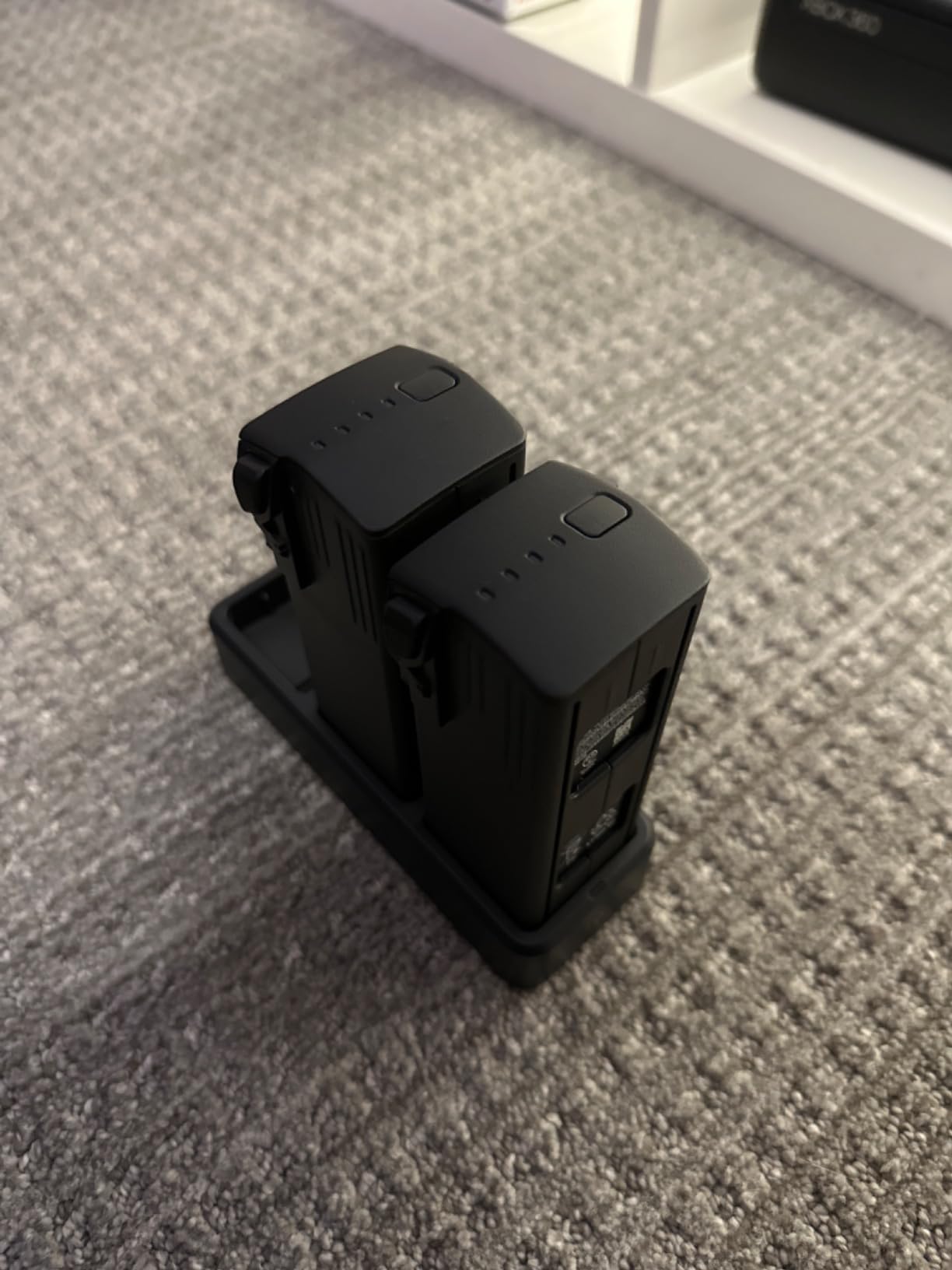
The Mavic 3 battery is the least glamorous recommendation here and one of the most reliable. It is the OEM pack for the platform, it delivers the quoted 46 minutes at speed and 40 minutes hovering, and it needs no guessing about compatibility. For a working Mavic 3 that flies a full day, this is simply the pack that fits.
Its advantage over every aftermarket alternative is the battery management system. The app reports cell health, cycle counts and remaining capacity, and the aircraft will refuse to arm with a pack it considers depleted. That telemetry is the argument for buying OEM on any drone you use commercially, because it turns pack condition into data instead of a guess.
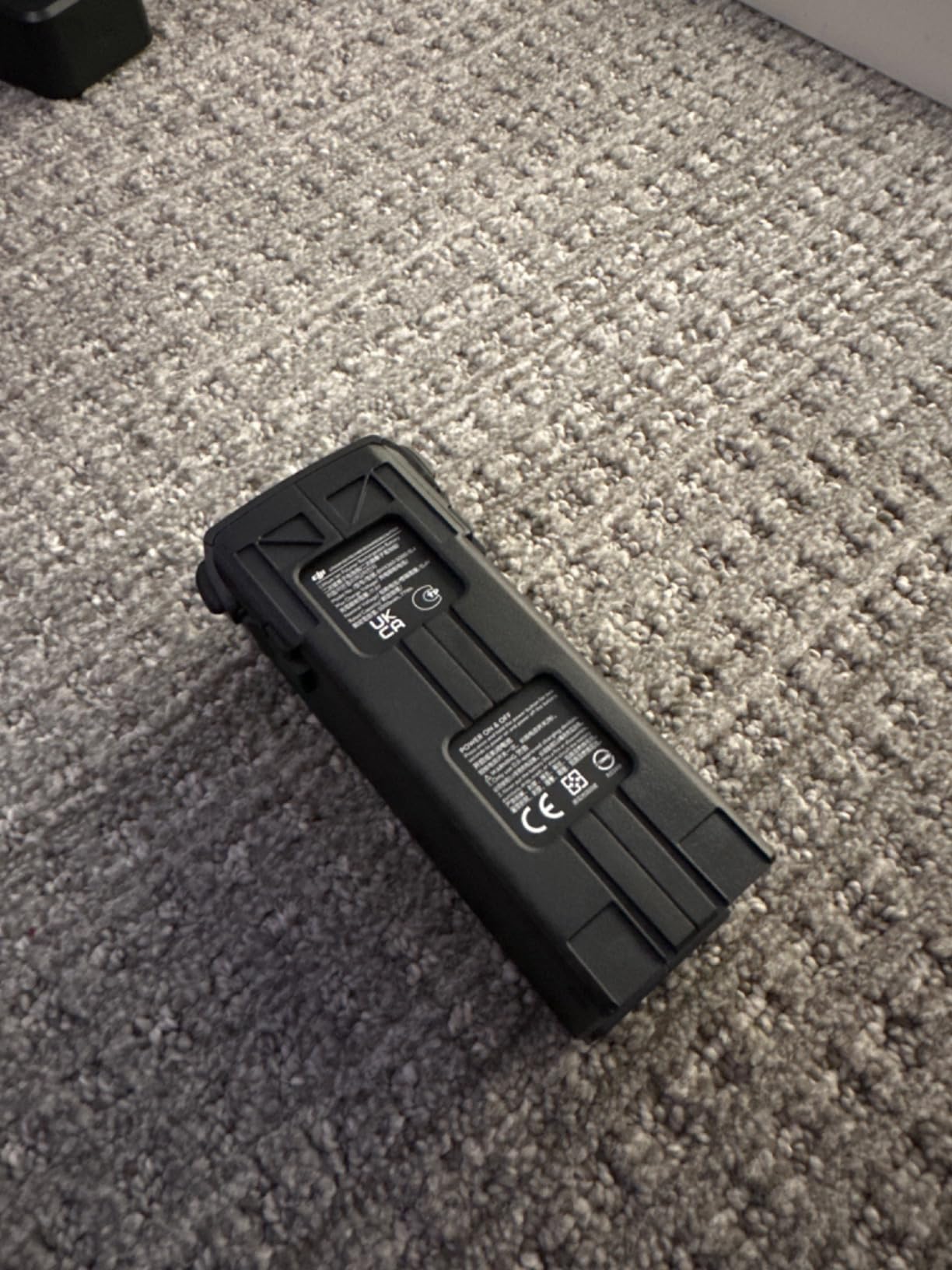
Where the platform’s own ecosystem shows its strength is interchangeability. The same pack works across the Mavic 3, 3 Pro, 3 Classic, 3 Cine and Enterprise variants, so a single battery bank can be shared across an entire fleet without any charging or firmware hassle. For survey and inspection operators running mixed Mavic 3 airframes, that alone justifies the purchase.
The two accepted trade-offs are weight and cost. At 335.5 g per pack, three or four of them in a case is a meaningful load before you count the aircraft and props, and the per-pack cost is well above what a generic 6S pack costs. Buyers still choose it, because a third-party pack that the aircraft does not recognise is worth nothing.
Who This Battery Suits
This suits Mavic 3, Mavic 3 Pro, Mavic 3 Classic, Mavic 3 Cine and Enterprise owners who fly long days and want one battery type to cover all of it. Cinema crews working a single location will get roughly two hours of flight from four packs, which is a normal shooting block.
It also suits commercial operators who need the app telemetry. Having a printed cycle count and a cell health report for every pack in the fleet changes how you manage replacement, and that data does not exist on a generic pack.
Who Should Skip It
Skip it if you fly long range on a custom-built quad or a fixed-wing platform, where the airframe accepts any 6S pack and you have far more options at your disposal. The OEM pack is bought because of the platform lock-in, not because the cells are exceptional.
Also skip it if weight is the constraint. A long-range endurance build gains nothing from a 335.5 g pack with an integrated BMS, and the same budget spent on high-energy Li-ion cells would add more flight time per gram.
3. DJI Air 3S Intelligent Flight Battery – Best for Multi-Hour Air 3S Shoots
DJI Air 3S Intelligent Flight Battery
17.2V 14.6A Lithium Polymer
246 g
45 minutes on the Air 3S
QuickTransfer while powered off
Pros
- Up to 45 minutes of flight on the Air 3S
- Off-State QuickTransfer moves files while the drone is off
- Lighter at 246 g than the Mavic 3 pack
- Genuine OEM pack that behaves like the original
Cons
- Only interchangeable within the Air 3 and Air 3S platform
- One pack in the box so you need several to cover a long shoot
- Does not fit Air 3S owners who fly cold weather without preheat
Forty-five minutes of flight on a camera drone of this class is the difference between planning a shoot location and covering one. The Air 3S battery sits in a sweet spot: substantial endurance without the 335.5 g heft of a Mavic 3 pack, which matters when you are walking to a site rather than launching from a truck.
Off-State QuickTransfer is the feature that quietly changes a working day. You can pull high-speed files to your phone with the aircraft powered down, so footage starts uploading to your phone before you have even removed the props. Reviewers who run four packs report spreading cycles across them and still getting roughly two hours of flying out of a single charge session.
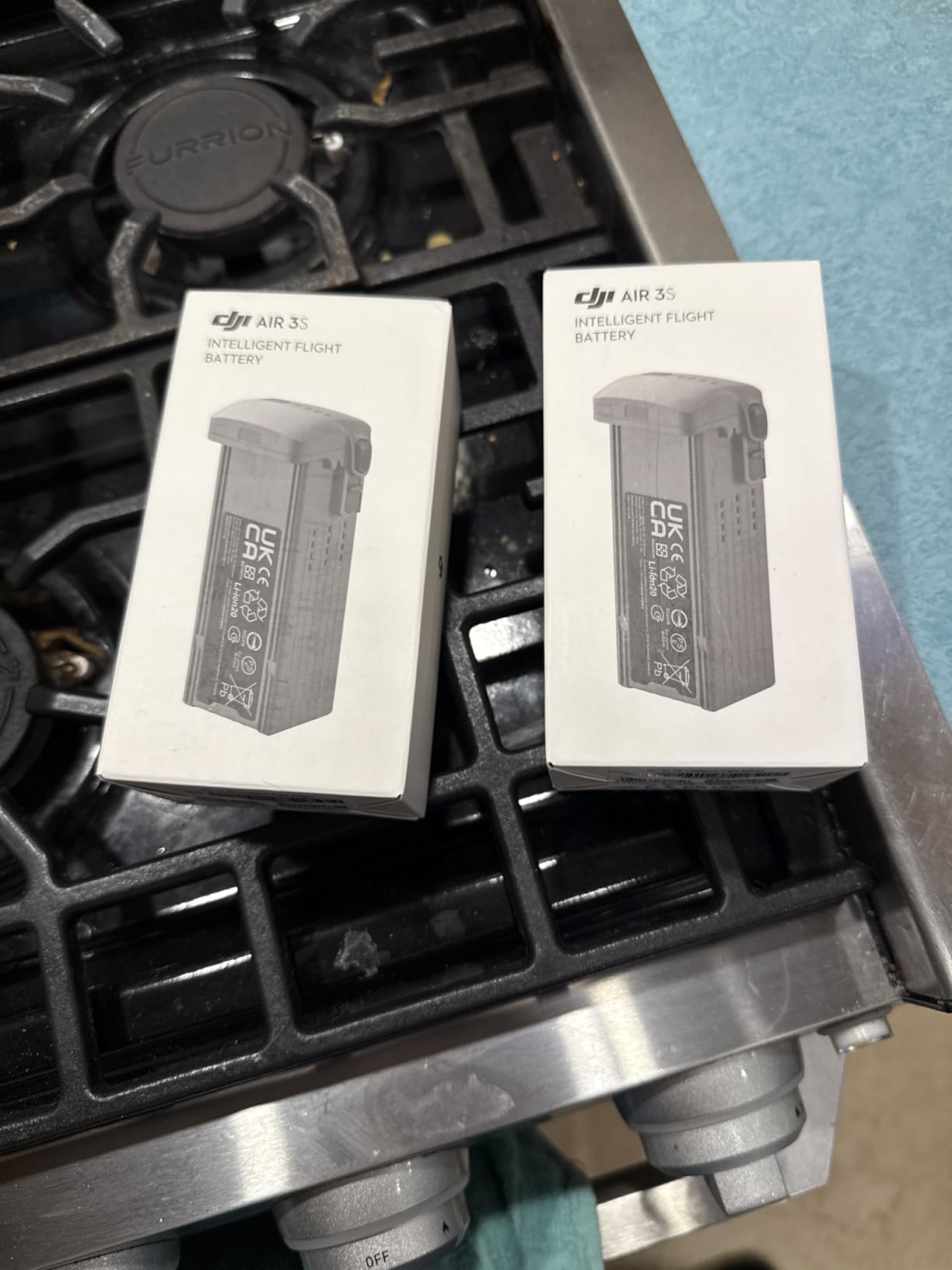
Charge behaviour is the other quiet strength. It arrives sealed in DJI packaging, recharges without issue, and reports cell health through the familiar app. The 17.2V 14.6A Lithium Polymer pack is a standard OEM unit, which means it behaves predictably in cold and warm conditions instead of surprising you.
The limitation is simple and it is not negotiable: it fits the Air 3S and Air 3, nothing else. If your battery bank needs to cover mixed platforms, this pack does not travel between them, and you will be carrying two charger setups and two sets of spares.
Who This Battery Suits
This suits Air 3S and Air 3 owners shooting real estate, short films and client work where a single location needs more than one battery worth of footage. At 246 g, it is light enough to carry three of them without the kit becoming a workout.
It also suits anyone tired of swapping SD cards and cables between flights. QuickTransfer while powered off removes the slowest part of the post-flight routine, and over a long day that is worth more than a small gain in flight time would be.
Who Should Skip It
Skip it if you own anything outside the Air 3 family. The form factor and connector are not shared with the Mini or Mavic platforms, so this is a single-platform investment only.
Skip it as a solo pack for a full day. One pack is 45 minutes, and the review pattern is clear that serious users run four and rotate. If you only want to buy one battery, plan on a very short flying window and add more later.
4. HOOVO 3S 6500mAh 120C EC5 Two-Pack – Best Budget 3S Pack for Long Run Times
HOOVO 3S 11.1V Lipo Battery 6500mAh 120C RC Lipo Batteries EC5 Plug 2 Packs
3S 11.1V 6500mAh
120C continuous discharge
Up to 200Wh/kg
EC5 plug, two packs
Pros
- High 6500mAh capacity in a compact 3S footprint
- Up to 200Wh/kg energy density
- Two-pack set allows rotation between flights
- Flat voltage across the pack per buyer reports
- 150+ cycle life claimed
Cons
- Will not power a 6S system
- Requires a LiPo balance charger
- EC5 connector and 139mm length must match your bay
For 3S builds, this is where extended flight is cheapest to get. At 6500mAh in a 3S1P layout the pack packs serious capacity into a footprint most small quadcopters can accept, and the 200Wh/kg claim is respectable for the class. Reviewers consistently single out run time as the reason they came back.
Getting two matched packs is the real value here. Rotation means you can charge one while you fly the other, and spreading the cycling across two packs instead of one roughly doubles how long you go before any single cell has seen hundreds of cycles. For a hobby build flown on weekends, that is the difference between a pack that lasts seasons and one that does not.
The 120C continuous discharge rating is far more than an endurance quad will ever pull, and that is fine. Excess C-rating on a pack used gently tends to mean more internal mass and a heavier cell chemistry chosen for burst current, not endurance. Here it simply guarantees the pack will never be the limiting factor when you punch out of a hover.
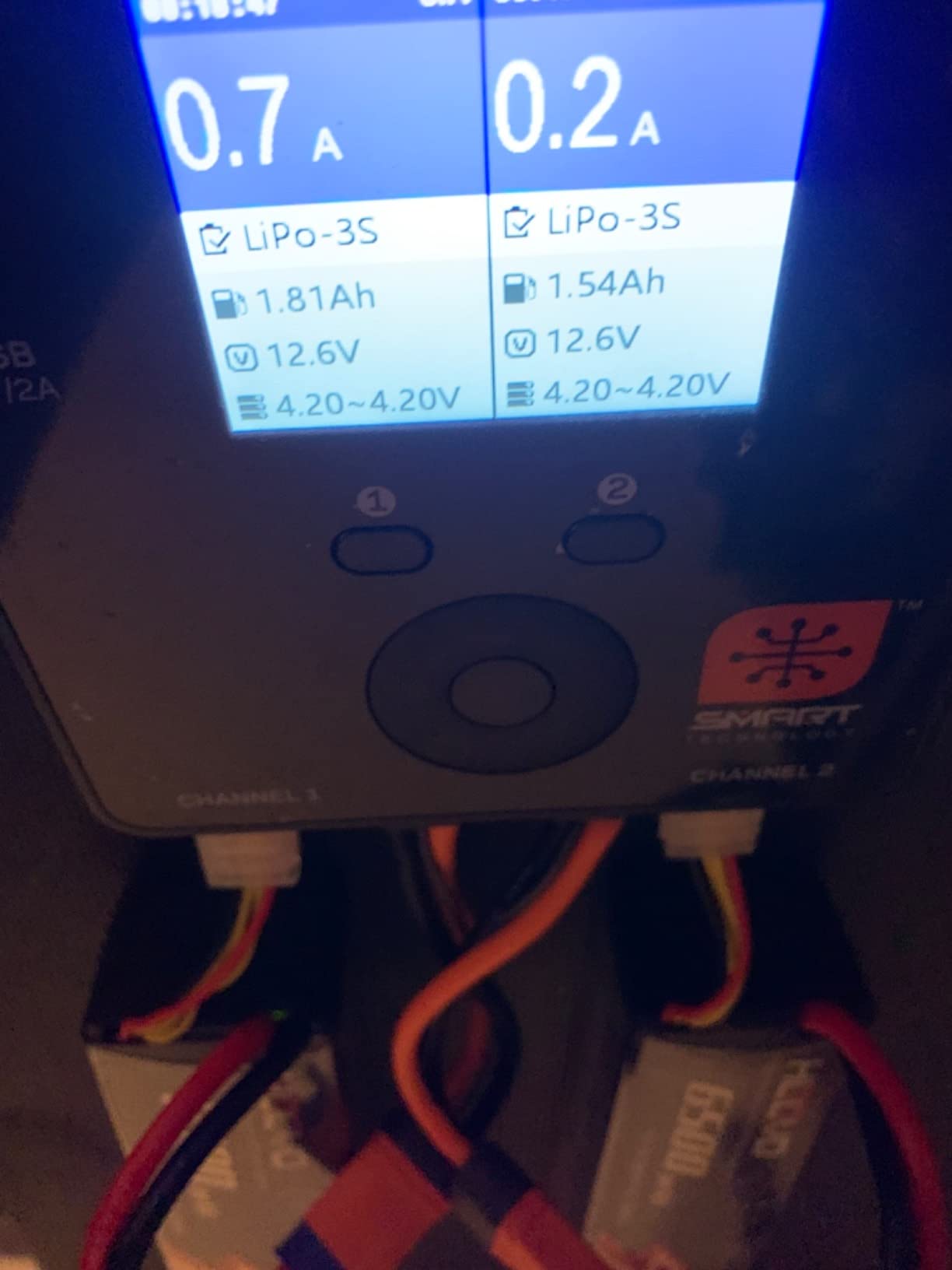
Two things to check before buying. The 139 x 47 x 37mm case and EC5 plug have to match your existing pack exactly, and you need a LiPo balance charger, which a lot of first-time buyers of smart-battery drones will not own. Charging is specified at 0.5C to 1C, with a ceiling of 4.2V per cell and a floor of 3.2V on discharge.
Who This Battery Suits
This suits 3S RC and multirotor builders who want longer run times on a fixed-wing aircraft, a boat or a small quad without changing the power system. The flat voltage buyers report keeps throttle response predictable for the whole flight, not just at the start.
It also suits anyone building their first pack collection. Two matched cells at 3S is a manageable voltage to charge safely, and the two-pack format teaches rotation habits that pay off when you move up to 6S.
Who Should Skip It
Skip it if your power system is 4S or higher. A 3S pack will not power a 6S ESC, and no amount of capacity compensates for a voltage mismatch. Check your nominal voltage before anything else.
Skip it if you have no balance charger. A pack charged without balancing drifts, and cell imbalance is the leading cause of packs that puff or die early. This is the single most common buyer mistake with entry-level LiPo purchases.
5. HOOVO 6S 6200mAh 120C EC5 – Best for Large Multirotors and Heavy 6S Builds
HOOVO 6S LiPo Battery 22.2V 6200mAh 120C with EC5 Plug Softcase RC Battery
6S 22.2V 6200mAh
120C discharge
Up to 300Wh/kg
837 g including case and plug
Pros
- Strong punch and good runtime for a budget-priced 6S pack
- Up to 300Wh/kg energy density for the weight
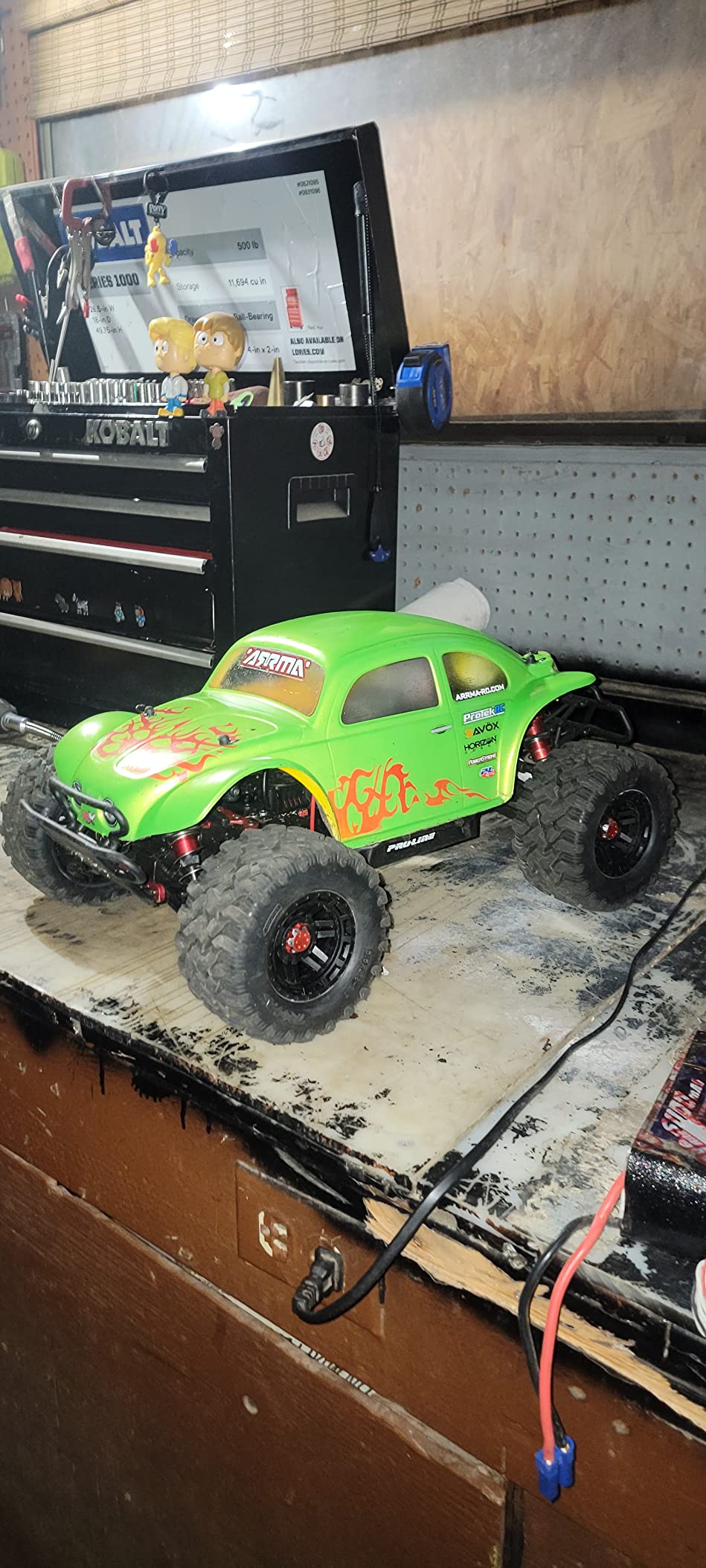
- Fits common 6S platforms such as the Arrma Typhon 6S and Kraton 6S
- Very low cost per pack
Cons
- Cell-to-cell imbalance develops over time and needs more frequent balance charging
- Some owners report a cell failing well before a year of use
- Internal resistance varies more between cells than premium-brand packs
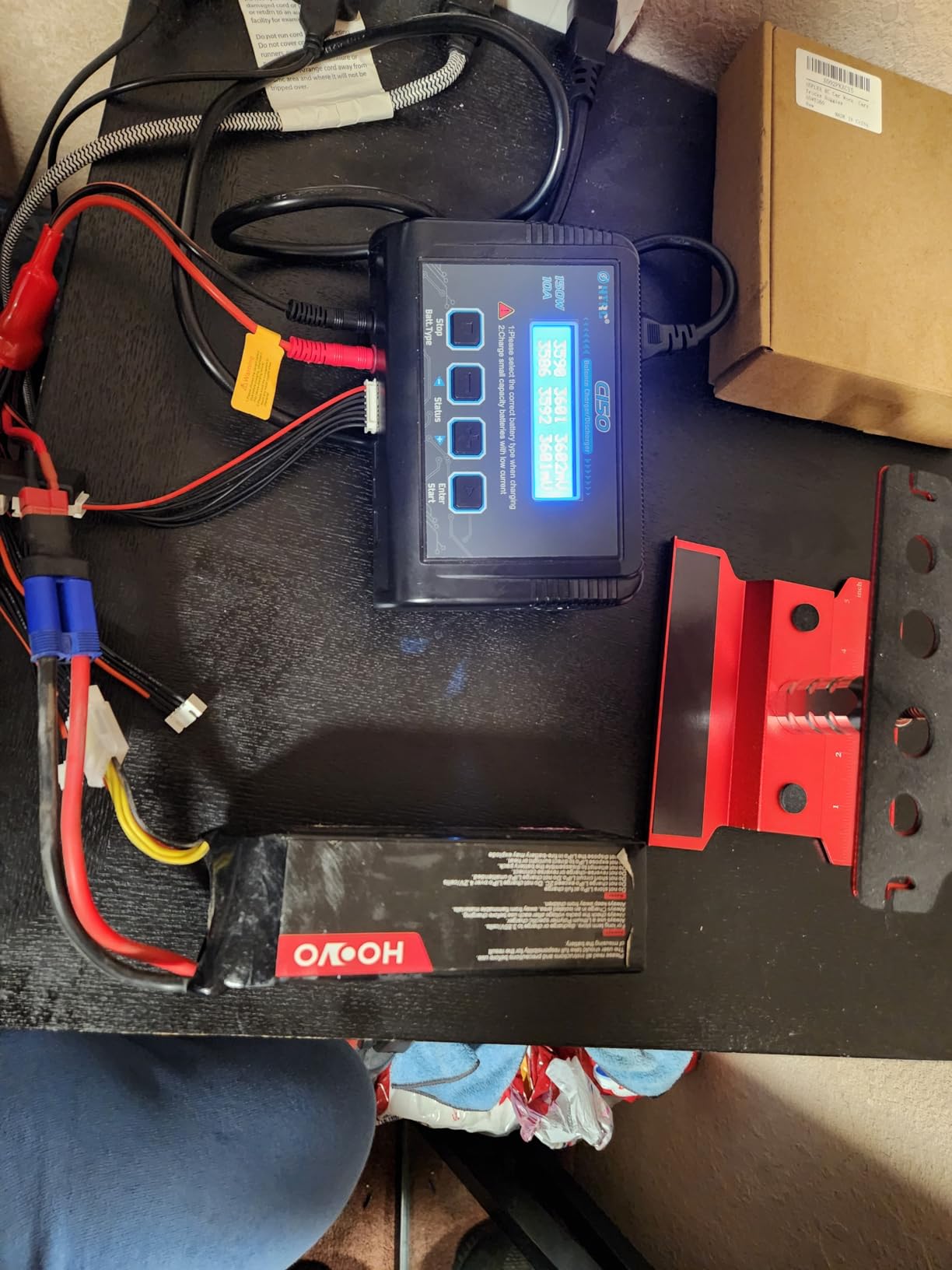
The 300Wh/kg figure is the headline reason to look at this pack. At 837 g including the case, wires and plug, that is a lot of stored energy for a 6S pack at this level, and on a large multirotor where the airframe can carry the mass, it translates directly into more time aloft per cycle than a heavier pack of equal capacity.
Power delivery is the other draw. The 120C rating means there is effectively no throttle-driven voltage sag when you punch out of a hover or climb hard, which is exactly the behaviour buyers describe. It fits common 6S ground platforms, so it works as widely as it performs.

Where this pack divides opinion is longevity. Feedback is genuinely split: many owners are happy with power and runtime, while several report cell imbalance developing and at least one account of a cell dying inside the first year. Internal resistance also varies more between cells here than in premium-brand packs, and rising impedance is the most reliable early warning that a pack is finished.
That does not make it a bad pack, but it changes how you should treat it. Balance-charge every time, inspect cells visually through the case, and plan on a shorter service life than a premium 6S pack. Budget for it as a consumable rather than an investment.
Who This Battery Suits
This suits pilots on a budget who need a lot of 6S capacity and mass is not the limiting factor. Large multirotors, 1/8 scale trucks and 600-class helicopters can all absorb 837 g without complaint, and at that point capacity per gram is what matters.
It also suits anyone who wants headroom above their stock pack’s output. The 120C rating means the pack is never the bottleneck, so a failure in flight is far more likely to be a prop, motor or ESC issue than a voltage sag.
Who Should Skip It
Skip it if your airframe is a small or light multirotor. At 837 g this pack can exceed the payload budget on its own, and adding mass to a light frame is the fastest way to lose the endurance you were trying to gain.
Skip it if you intend to keep batteries for years. The imbalance and early cell-failure reports make this a pack to cycle hard and replace, not one to store and rely on later. If longevity matters more than capacity per gram, spend more per pack.
6. HRB 6S 6000mAh 50C EC5 – Best Straightforward 6S Pack for a First 6S Build
HRB 6S 6000mAh Lipo Battery EC5 22.2V 50C Compatible with RC Plane
6S 22.2V 6000mAh
50C discharge
EC5 connector
809 g, clear heat-shrink case
Pros
- Punchy discharge with good longevity for the price
- Cells charge evenly and stay consistent over many cycles
- Clear heat-shrink case makes a puffing cell easy to spot
- Heavy-gauge wire supports high-current setups
Cons
- EC5 connector wires can back out of the shell when unplugged
- Some voltage sag under very high-current ESC and prop combinations
- Heavier than smaller 6S packs of the same capacity
This is a long-standing value pack, and the reason it keeps selling is simple consistency. Owners using it in EDF jets, trucks and large-scale planes report cells that charge evenly and hold consistent charge and discharge behaviour over many cycles, which is precisely the behaviour you want from something you are cycling weekly.
The clear heat-shrink case is a safety feature that costs nothing. Being able to see a single swollen cell the moment it starts to puff means you catch a dangerous pack before it becomes a dangerous pack, rather than discovering the problem in a charge bag. At 809 g for 6000mAh, the weight is unremarkable for 6S.
Two recurring cautions show up in reviews. The first is the EC5 connector, where the wires can push back out of the plastic shell when unplugged, and a connector that backs out mid-flight is a fire risk rather than an inconvenience. The second is voltage sag under very high-current ESC and aggressive prop combinations, which is expected at a 50C rating and shows up only when you lean on the pack hard.
Who This Battery Suits
This suits a first 6S build where you want a proven pack with a track record and visible cells. The even charging behaviour makes it forgiving, and the clear case means new owners can learn to inspect a pack properly without guessing.
It also suits anyone who values a straightforward 6S pack without marketing inflation. A 50C rating is more than enough for most 6S multirotors, and you are not paying for burst capability you will never draw.
Who Should Skip It
Skip it if your airframe is weight-sensitive. 809 g for 6000mAh is a fair trade, but it is not a light pack, and lighter 6S options in the same class exist at lower capacity.
Skip it if you fly at sustained maximum current. A 50C rating is not a limitation in normal use, but under a heavy prop and full-throttle climb you will see more sag than a 100C or 120C pack, and that can trigger a voltage-based failsafe or a brownout mid-manoeuvre.
7. Zeee 6S 6000mAh 100C Two-Pack – Top Rated 6S Set for Long 6S Missions
Zeee 6S Lipo Battery 6000mAh 22.2V 100C with EC5 Connector (2 Packs)
6S 22.2V 6000mAh
100C discharge
EC5 connector
833 g per pack, two-pack set
Pros
- High 100C rating with steady voltage across the pack
- Consistent capacity and cycle life across both matched packs
- Two-pack set makes rotation between flights straightforward
- Well-regarded balance of price and performance in the 6S class
Cons
- Heavier at roughly 833 g per pack which matters on small multirotors
- Requires a LiPo balance charger
- EC5 connector and 155.5mm length must match your bay
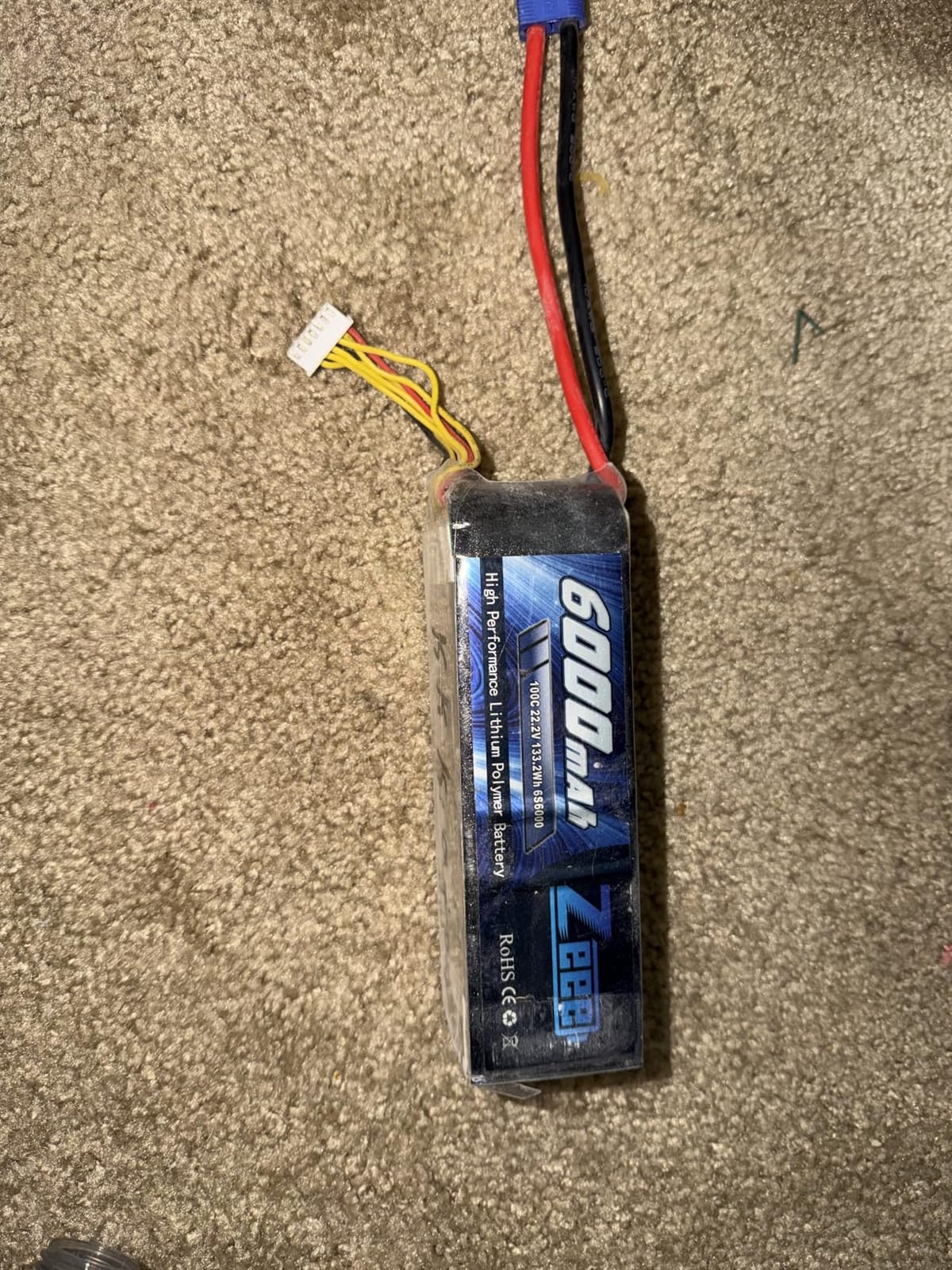
Of everything in the 6S category, this is the pair we would put in a build first. The 100C rating gives more than enough headroom for a large multirotor while staying well short of the weight penalty of a 120C cell, and reviewers consistently describe the discharge curve as flat, which means the pack delivers what it promises for the whole flight rather than sagging in the back half.
Consistent behaviour across the two packs is the detail that matters most in a set. When two matched cells behave identically, rotation actually works as intended and you can trust your voltage readings. Where a mismatched pair forces you to plan around the weaker cell, that advantage disappears, and buyers here report matching capacity and cycle life between packs.
With a matched two-pack set, an extended 6S mission gets much simpler. You charge one, fly the other, and the cycling spreads across both rather than hammering a single pack. On a long mapping or inspection job that means fewer swaps, fewer charges on a single pack, and a longer total service life across the set.
At 833 g per pack, this is not a light option, and on a small multirotor the mass is the first thing to check. Charging is specified at 0.5C to 1C with a LiPo-specific balance charger only, and every one of these packs should be balance-charged to keep the cell delta inside a safe window.
Who This Battery Suits
This suits 6S builders running long multi-sortie missions, where a matched pair removes the guesswork from rotation and keeps voltage readings comparable between packs. Flat discharge also makes it a sensible choice if your ESC or flight controller uses a low-voltage warning threshold.
It also suits anyone who wants high burst capability without moving to the heaviest 6S cells available. A 100C rating covers aggressive climbs, sharp turns and aggressive props while keeping the pack at a weight most large airframes can carry.
Who Should Skip It
Skip it if your build is a small multirotor with a tight payload limit. At 833 g per pack, two of them in a battery bay sized for lighter cells is the difference between a build that hovers well and one that does not.
Skip it if you only need occasional long flights. For a weekend flier, a single mid-range 6S pack is a simpler purchase. The two-pack format pays off when you fly often enough for rotation to be part of the routine.
8. OVONIC 6S 6000mAh 120C Two-Pack – Best for Low Internal Resistance at 6S
OVONIC 6S LiPo Battery 6000mAh 22.2V 120C RC Battery with EC5 Connector (2 Pack)
6S 22.2V 6000mAh
120C discharge
JST-XHR-7P and EC5
830 g per pack, 350+ claimed cycles
Pros
- High 120C rating for headroom on demanding 6S setups
- Claimed 350+ cycle life and low internal resistance
- Two-pack set allows rotation and doubles available flight time
- Backed by a one-year warranty and ISO certification
Cons
- Manufacturer recommends its own OVONIC charger
- One of the heavier 6S 6000mAh options at 830 g
- Modest review base limits long-term durability data
Internal resistance is the quiet spec that decides whether a pack feels good or merely works, and this is where the OVONIC 6S 6000mAh earns its place. A lower-resistance pack wastes less energy as heat, sags less under load, and recovers faster between bursts, which is exactly what you notice as a pilot when the aircraft feels immediate rather than slightly soft.
The company claims 350 or more cycles, up to 12 percent longer running time, 6 percent faster charging, 5 percent lighter weight and 4 percent lower resistance than a baseline pack. Treat those as marketing until you have measured them yourself, but the direction of the claims is the right one for an endurance build, and reviewers do independently praise the power output relative to cost.
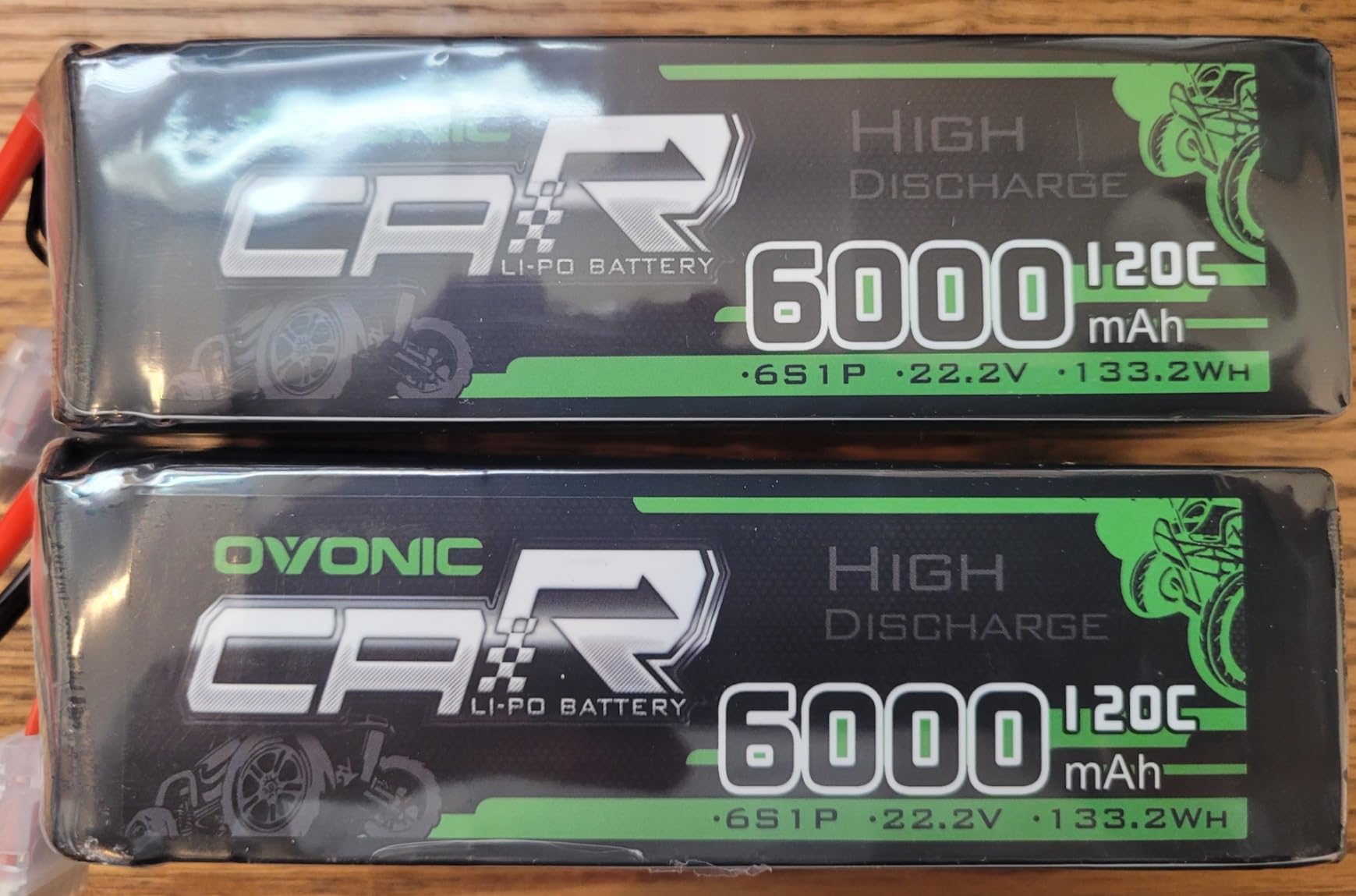
It is a two-pack set with a JST-XHR-7P charging plug and an EC5 discharge connector, sized at 155 x 50 x 48mm and 830 g per pack. The stated compatibility covers common 6S platforms such as the Kraton 6S and Typhon 6, so it is a straightforward swap on those airframes if your bay and connector match.
Two cautions. The manufacturer recommends its own OVONIC charger for best results, which is a sensible default for any pack you are serious about, and the review base here is modest, so long-term durability data is thinner than the rating alone would suggest. Verify capacity yourself early rather than trusting a claim you cannot check.
Who This Battery Suits
This suits 6S pilots who want headroom and low sag rather than maximum capacity. On a large multirotor or a power-hungry fixed-wing platform, a 120C pack with low internal resistance gives cleaner throttle response and less wasted heat over a long mission.
It also suits anyone who wants a warranty behind the pack. A one-year warranty and ISO certification give a bit of protection on a consumable, which matters more if a single failure would interrupt paid work.
Who Should Skip It
Skip it if you want the most flight time per pack in the 6S class. At 6000mAh in a 830 g case it is a punchy pack rather than a capacity pack, and a 6500mAh alternative in a similar footprint will fly longer on the same airframe.
Skip it if you are still deciding on a charger. Following the manufacturer’s own charger recommendation is the safest route with this pack, and adding a charger to the budget changes the arithmetic against more affordable alternatives.
9. OVONIC 6S 6500mAh 100C Two-Pack – Highest Capacity 6S Pack in This Roundup
OVONIC Lipo Battery 6500mAh 100C 22.2V 6S RC Battery with EC5 Connector for RC Plane DJI Quadcopter RC Airplane RC Helicopter RC Car Truck Boat 2pcs
6S 22.2V 6500mAh
100C discharge
820 g per pack
Slimmer 146 x 45 x 55mm case
Pros
- Higher 6500mAh capacity than most 6S packs in the same class
- Low internal resistance and longer runtime than budget alternatives
- Slimmer and shorter case can fit tighter battery bays
- Two-pack set supports rotation to spread cycle life
Cons
- Manufacturer recommends its own OVONIC charger
- Low review count limits long-term durability data
- 820 g per pack is still substantial mass
This is the largest capacity pack in the roundup, and on paper that is exactly what an endurance pilot wants: 6500mAh in 6S at 820 g per pack. The claimed advantages over a baseline include 12 percent longer running time and 4 percent lower internal resistance, and the real feedback aligns on capacity and power delivery being the reason people buy it.
The slimmer case is more useful than it sounds. At 146 x 45 x 55mm the pack is shorter than most 6S packs of this capacity, which means it fits bays that a longer pack will not, and that is often the real constraint on a large multirotor. Packs get rejected for physical fit far more often than for electrical reasons.
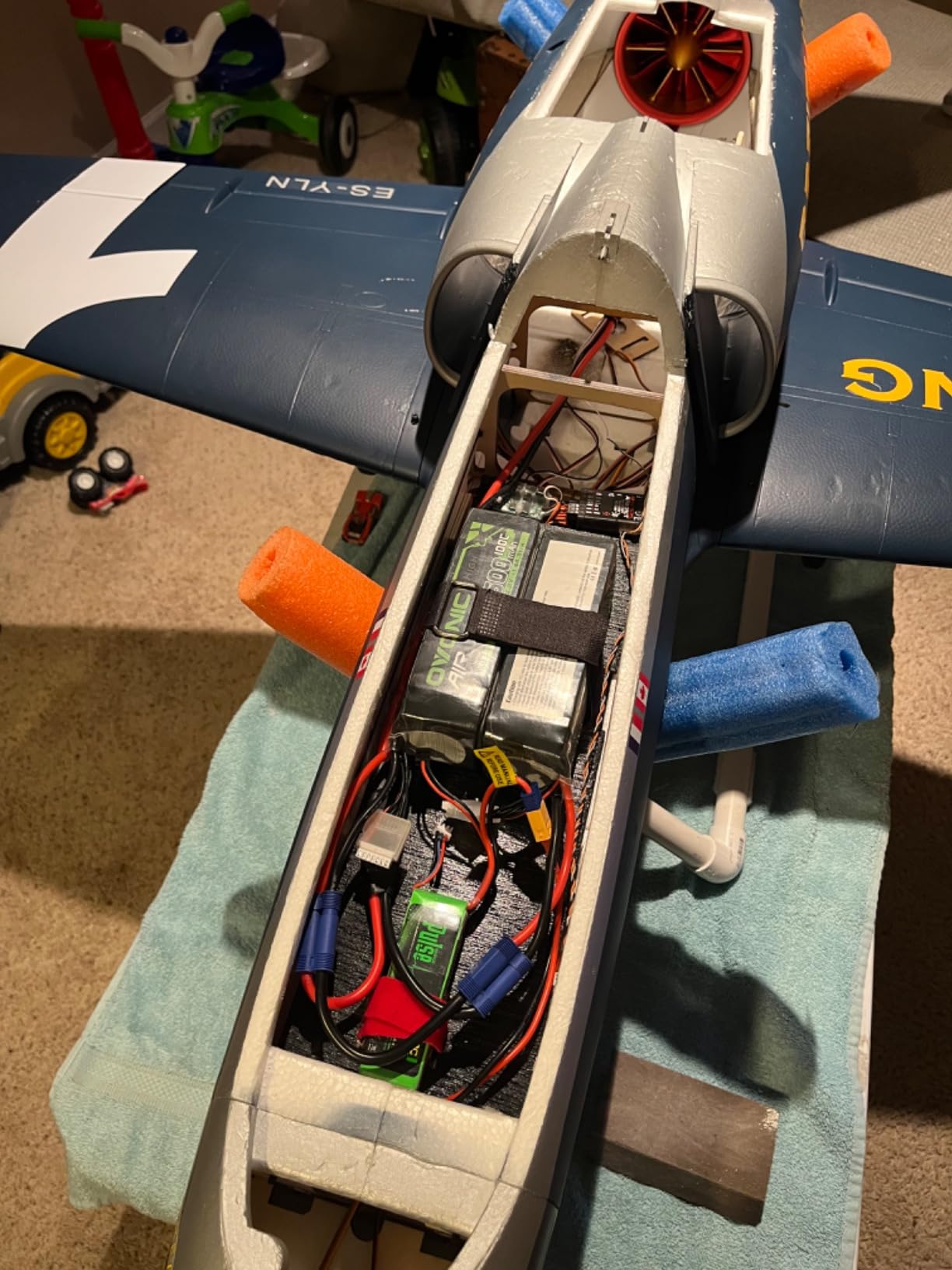
With two packs in the set, rotation is straightforward, and spreading cycles across two cells is the simplest way to extend total pack life. The pair also covers the classic one-charging-one-flying rhythm that lets a 6S aircraft stay productive through a full session without a second charger.
The honest limitation is data. With a smaller review base than the other packs here, the long-term durability picture is genuinely uncertain, and the rating sits a little below its siblings. Treat it as a good-capacity pack whose longevity you will need to verify yourself, and measure cell delta after a few dozen cycles to see where it is heading.
Who This Battery Suits
This suits 6S pilots whose airframe has a tight battery bay and cannot accept a longer case, since the shorter footprint is what makes the extra capacity possible in the first place. It is the pragmatic choice when you want maximum mAh that will physically fit.
It also suits owners who prefer a 100C rating to a 120C one. For endurance flying, 100C is more than enough current, and avoiding a higher-C cell can mean a lighter pack for the same capacity.
Who Should Skip It
Skip it if longevity evidence matters more than capacity. A small review base means you are buying on claims rather than on a long public record of packs that have been cycled for seasons.
Skip it if your bay is sized for a long soft-case pack and you are not trying to maximise capacity. In that situation a 6000mAh pack with a stronger review record is the more sensible purchase at nearly the same weight.
10. Zeee 6S 5200mAh 100C EC5 – Best Weight-Saving 6S Pack for Multirotor Endurance
Zeee 6S Lipo Battery 5200mAh 22.2V 100C with EC5 Connector
6S 22.2V 5200mAh
100C discharge
EC5 connector
753 g per pack with 12-month warranty
Pros
- Lightest 6S pack here at roughly 753 g
- 100C rating gives ample headroom for large models
- Single-pack format keeps cost per battery down
- 12-month warranty included
Cons
- Only 5200mAh so runtime per pack is shorter than 6000mAh options
- Single pack means no matched second battery for rotation
- Requires a LiPo balance charger
Weight is the number that decides whether an endurance build works, and at roughly 753 g this is the lightest 6S pack in the roundup. Every gram you remove from a battery bay comes back as flight time, so on a large multirotor where mass is the binding constraint, the lighter pack can deliver more total air time than a heavier one with more nominal capacity.
The 100C rating gives plenty of headroom for large fixed-wing and helicopter models, and buyers specifically call out solid voltage under load, which is what you want from a pack that has less cell mass to work with. The 12-month warranty also gives some reassurance in a class where long-term data is thin.
The compromise is capacity. At 5200mAh you are giving up roughly 13 percent of the energy of a 6000mAh pack, so each individual flight is shorter. Whether that is a good trade depends entirely on your airframe: if you are mass-limited, the lighter pack wins on total sortie time, and if you are not, the bigger pack wins on simplicity.
It is also a single pack, so there is no matched second battery to rotate to. For a first 6S setup that is fine, since you will be adding packs as you go anyway. Charging is specified at 0.5C to 1C with a LiPo balance charger only, and it should never be left charging unattended.
Who This Battery Suits
This suits 6S multirotor builders who have already discovered that adding capacity stopped paying off because the aircraft got too heavy. When payload is the limit, a lighter pack at a lower capacity is the correct answer, not a compromise.
It also suits buyers who want a single pack with a warranty behind it. The 12-month coverage and low per-pack cost make it an easy first step into 6S ownership.
Who Should Skip It
Skip it if you want to maximise flight time per pack and mass is not the issue. A 6000mAh pack in a similar footprint will simply stay up longer, and the weight difference may not change how your aircraft behaves at all.
Skip it if you plan to fly long sessions from a single charge. One 5200mAh pack is a shorter window than any 6000mAh option here, and without a second pack you will be waiting on the charger more often than you want.
How to Choose a Drone Battery for Longer Flight Time
Match the S-count and voltage before anything else
The S-count is the number of cells wired in series, and each cell contributes 3.7V nominal. A 3S pack is 11.1V, a 4S is 14.8V and a 6S is 22.2V. This value is not adjustable, and the only safe rule is that the pack’s nominal voltage must fall inside the range your ESC and motors are rated for. Feeding a 6S pack to a 3S system will destroy it immediately, and running a 3S pack on a 6S system will make the aircraft underpowered and stress the electronics.
Capacity in mAh, or Ah once divided by 1000, is the next value to check. 6500mAh is 6.5Ah, and larger capacity means more stored energy for the same voltage. This is the number most people chase, and it matters, but only after voltage and fit are settled.
Choose the chemistry that matches the mission
LiPo and Li-ion are the two chemistries that matter for drones today. LiPo packs deliver very high burst current at low weight in a soft pouch format, which makes them the default for racing, freestyle and camera drones where the airframe is designed around a specific pack. Li-ion cells in 18650 or 21700 format store more energy per kilogram, which makes them the better choice for long-range and endurance builds that can tolerate a cylindrical pack and a slightly higher mass.
On the safety question that comes up constantly, neither chemistry is automatically safer than the other. A Li-ion pack has a higher thermal runaway threshold in most cylindrical formats, while a LiPo can puff and go into thermal runaway at lower energy. What actually determines safety in either case is the battery management system, balance charging, storage discipline and physical inspection. A cheap LiPo charged without balancing is more dangerous than a well-managed Li-ion pack.
NMC and LFP matter mainly for industrial work. NMC packs carry higher energy density and are the better choice when every sortie has to cover distance, while LFP packs trade some of that for far more charge cycles and better thermal stability. The rule of thumb is simple: if you fly every day and the cost per flight hour matters, LFP wins; if you fly once a week and range matters, NMC wins.
Understand why high C-rating wastes money on endurance builds
The C-rating describes how much current a pack can deliver relative to its capacity. A 6000mAh pack rated 100C can theoretically deliver 600 amps, and a 50C version of the same capacity delivers 300 amps. For an endurance quad hovering at a few amps per motor, either number is an order of magnitude more than needed.
That excess capability costs weight. Cells built for high continuous discharge are physically larger or contain more active material per amp of rating, which means a 120C pack is usually heavier than a 50C pack of the same capacity. On an endurance build that extra mass comes directly out of your flight time. Chasing 100C or more on a long-endurance drone is spending money to be heavier.
High C-rating is genuinely worth paying for when the aircraft demands burst current, such as an EDF jet, a heavy-lift helicopter or a racing quad pulling hard acceleration. For mapping and long-range flying, a moderate rating with good internal resistance behaviour is the correct target.
Estimate flight time before you buy
A simple estimation formula helps you size a pack for a specific airframe: flight time in minutes equals capacity in Ah divided by motors multiplied by the current draw per motor, times 60, times 0.8. The 0.8 factor accounts for real-world losses, voltage sag, wind and the reserve you should always keep in the pack.
Worked through, a 6Ah pack on a four-motor aircraft drawing 10A per motor gives 6 divided by 40 multiplied by 60 multiplied by 0.8, which is 7.2 minutes. The same 6Ah pack on four motors drawing 4A each gives 6 divided by 16 multiplied by 60 multiplied by 0.8, which is 18 minutes. The motors’ current draw, not the pack, is the variable that decides the answer.
This is also the fastest way to understand a small micro quad question. A 1800mAh pack is 1.8Ah, and on a 2.5-inch craft with four motors pulling roughly 8A each, the formula gives 1.8 divided by 32 multiplied by 60 multiplied by 0.8, which is about 2.7 minutes. It is a small number, but it is the correct one for that airframe, and no chemistry changes it.
Published DJI figures follow the same logic, with the caveat that they are measured at a constant speed in windless conditions at sea level. A 45-minute figure measured flying forward at 32.4 kph in a windless environment is a laboratory number, and a real sortie with any wind, any payload and any climbing will come in below it. Plan with a 20 to 30 percent derate and you will rarely be disappointed.
Understand the weight penalty on capacity
Flight time does not scale linearly with mAh. Add capacity and the pack gets heavier, and a heavier aircraft needs more power to hold altitude and to fly at cruise, so some of the extra energy you just added is spent lifting the extra energy. The practical result is that doubling pack capacity rarely gives you double the flight time, and past a certain point it gives noticeably less.
This is why the lightest 6S pack in the roundup is a legitimate endurance choice rather than a compromise. If your airframe is at its payload limit, removing grams can return more flight time than adding capacity ever would. Check the payload budget first, then decide which direction to move.
One more weight effect worth knowing: packs that are noticeably heavy in a small frame can introduce vibration and reduce control authority, which pilots describe directly in community discussion. It is another reason to keep the pack matched to the airframe rather than as large as the bay allows.
Charge, store and cycle packs properly
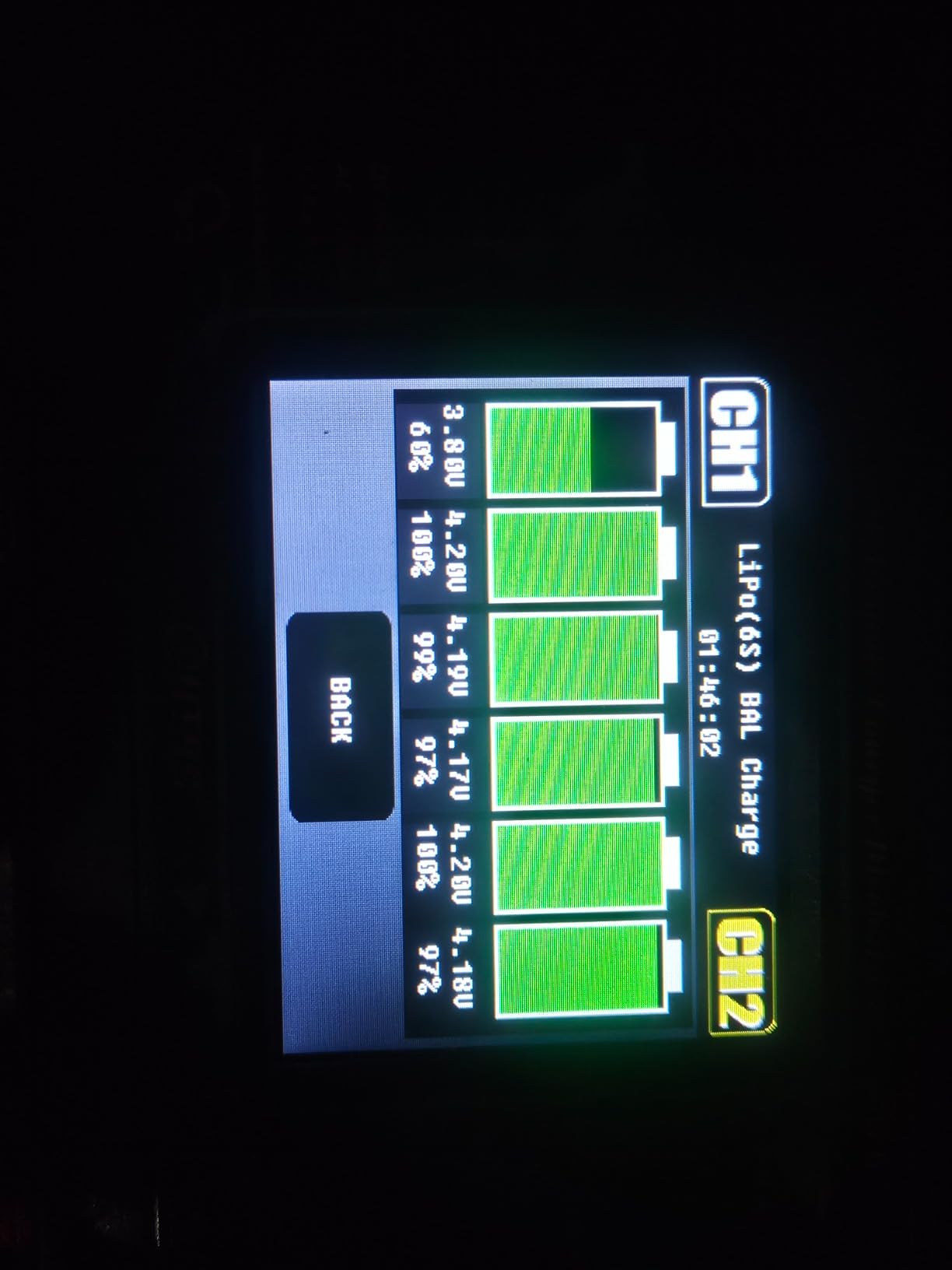
Charge lithium packs with a LiPo-specific balance charger at 0.5C to 1C, never unattended, and never above 4.2V per cell. Balance charging keeps the cell delta small, and a target of under 0.03V between the highest and lowest cell is a good rule. If a pack is regularly showing a wider spread, retire it rather than trying to recover it.
For storage, charge to about 3.8V to 3.85V per cell and leave the pack at roughly 50 to 60 percent state of charge. Fully charged storage stresses the cells and a depleted pack cannot be recovered, so the middle is where longevity lives. Store away from direct sun and heat, and if you are storing for months, top every pack up periodically.
Expect 150 to 350 charge cycles on LiPo packs in this roundup, with the OVONIC packs claiming 350 or more. Real-world degradation often arrives earlier than the cycle figure suggests, and community reports of packs becoming noticeably weak within about a year of normal use are common enough that you should plan for replacement rather than assume the cycle count is a promise. The 20-80 rule helps: using only part of the charge window reduces stress on the cells and extends service life. The same rotation discipline shows up outside aviation, and our picks for cordless hedge trimmers with dual batteries cover it in a completely different form factor.
Watch internal resistance as the early warning. A rise of more than 10 percent within 30 cycles is a reliable signal that a pack is finished, and a cell delta that grows by more than 0.01V per month points the same way. Any pack that has puffed must be retired immediately, not stored and not reused.
Know when to choose OEM over aftermarket
On DJI platforms the case for OEM is that the battery management system reports cell health, cycle counts and remaining capacity, and the aircraft refuses to arm with a pack it considers depleted. On consumer camera drones, that telemetry is usually worth the higher per-pack cost, particularly if you fly commercially.
For aftermarket DJI packs, the honest answer is that the community verdict is split. Some owners report third-party packs performing comparably or better than OEM at a fraction of the cost, particularly early in their life, while the general caution is that a pack the aircraft cannot read is a pack you must judge by eye and by voltage alone. Treat the low cost as buying the loss of telemetry, and check cell balance yourself after every few cycles.
One behaviour worth expecting from smart batteries generally is a slow self-discharge while the pack sits unused, which is why owners find themselves topping up batteries over winter. A top-up every few weeks is a normal part of storing intelligent flight batteries rather than a defect.
Temperature, safety and travel
Lithium cells perform best between roughly 15 and 35 degrees Celsius. Below about 5 degrees, expect reduced available capacity and a voltage that sags under load, which is where preheat functions matter for spring flying. Above 40 to 42 degrees, charging should be inhibited, and a pack that has just flown needs to cool before it goes on a charger.
Charge lithium packs inside a fire-resistant bag or a metal bin with a lid, never on an unattended surface, and never where a failure would block an exit. Retire any puffed pack immediately and do not attempt to discharge it. Disposal means soaking in salt water for 24 to 48 hours and then taking it to a battery recycling facility, never a household bin.
For air travel, spare lithium packs go in carry-on baggage only, in your personal bag, with terminals protected against shorting. That applies to smart batteries and loose cells alike, and checked baggage is not permitted for spares. Keep the packs with you for the whole journey rather than gate-checking them.
Finally, know what to do when a pack dies in flight. Fly it home on a low throttle, avoid aggressive inputs, keep an eye on descending airspeed rather than distance, and land as soon as you have a safe option rather than trying to stretch the pack. If the aircraft starts falling from altitude, the priority is a controlled landing on whatever is below, not protecting the drone.
Frequently Asked Questions
What drone battery lasts the longest?
High-energy Li-ion cells in 18650 or 21700 format give the most minutes per gram on long-range and mapping builds, because energy density decides flight time once voltage and weight are fixed. Large LiPo packs in the correct S-count remain the practical choice for camera drones, where flight time is set by the airframe. Headline figures are measured at constant speed in windless conditions, so derate by 20 to 30 percent for real flying.
Which is safer, Li-ion or LiPo?
Neither is automatically safer. A cylindrical Li-ion cell generally has a higher thermal runaway threshold, while a LiPo can puff and enter thermal runaway at lower energy. Real-world safety is decided by the battery management system, balance charging, storage at 3.8V per cell and regular physical inspection. A cheaply made LiPo charged without balancing is more dangerous than a well-managed Li-ion pack.
Are DJI drone batteries allowed on planes?
Spare lithium drone batteries are permitted in carry-on baggage only, with terminals protected against shorting and the packs kept in your personal bag rather than gate-checked. Checked baggage does not allow spares. This applies to DJI intelligent flight batteries and to loose cells, and the rule is the same regardless of battery size. Confirm with your airline before travelling, since watt-hour limits can still apply.
Can a drone fly for 3 hours?
Not on a single battery pack in normal use. Long-endurance airframes with Li-ion packs and a payload-efficient design can reach figures well beyond consumer drone claims, but they carry multiple packs and swap between them in the air. A single consumer camera drone pack delivers 40 to 50 minutes at best, and a heavy-lift industrial aircraft with dual packs is the only realistic route to a three-hour mission.
How long does a 1800mAh battery last in a drone?
A 1800mAh pack is 1.8Ah, and on a 2.5-inch craft with four motors drawing about 8A each the worked estimate is roughly 2.7 minutes of flight time. On a much larger or more efficient airframe drawing only 2A per motor, the same pack can fly considerably longer. Motor current draw, not the battery alone, decides the result.
What happens if a drone battery dies while flying?
Fly it home on low throttle and avoid aggressive inputs, watching descending airspeed rather than distance to home. Land as soon as there is a safe option instead of trying to stretch the remaining charge. If the aircraft is already falling, prioritise a controlled landing on whatever is below rather than protecting the airframe. Many aircraft can accept a reduced power output from a depleted pack to limp home.
What drone has a 30-minute flight time?
Most modern camera drones with an intelligent flight battery pack fall in the 30 to 45 minute range, with figures quoted as up to 51 minutes on the DJI Mini 3 and 46 minutes on the Mavic 3. The Air 3S pack is quoted at up to 45 minutes. These are laboratory figures measured at constant speed in windless conditions, so real flights land lower.
Do aftermarket DJI batteries work?
They can work physically, and community owners report some third-party packs performing comparably to OEM units at a fraction of the cost. The catch is that a non-OEM pack is usually not read by the aircraft, so you lose cell health reporting, cycle counts and the depleted-pack arming protection. If you buy aftermarket, check cell balance yourself after a few cycles and treat it as buying the loss of telemetry.
What is the typical lifespan of a DJI battery?
Most LiPo packs in this class are rated for 150 to 350 charge cycles, with premium claims reaching 350 or more. In practice, owners commonly report noticeable capacity loss within about a year of normal use, which is earlier than the cycle figures suggest. Storing at 3.8V per cell and roughly 50 to 60 percent charge, avoiding full charges and heat, and rotating several packs all extend service life.
Final Verdict: Picking the Right Battery for Extended Flight
The DJI Mini 3 Series Intelligent Flight Battery Plus takes the top spot because it does the hardest thing well: it adds roughly double the endurance of the standard pack to an airframe that is already at its registration weight limit, and it does so with genuine app telemetry and cross-platform compatibility. If you own a Mini 3, Mini 3 Pro or Mini 4 Pro, that is the correct purchase, and nothing else in this roundup competes with it on that airframe.
The rest split cleanly by platform. Mavic 3 owners should take the OEM Mavic 3 pack, and Air 3S owners the Air 3S pack, because the battery management system is worth more than any price difference. For 3S builds, the HOOVO 6500mAh two-pack is the value pick, and the rotation benefit alone justifies buying a matched set rather than a single pack.
Among the 6S options, the Zeee 6000mAh 100C two-pack is the most balanced all-rounder for large multirotors, the Zeee 5200mAh is the one to choose when payload is the binding constraint, the OVONIC 6500mAh pair is for anyone who needs maximum capacity that still fits a tight bay, and the OVONIC 6000mAh pair is for pilots who want low internal resistance and sag-free throttle response. The HRB 6S pack stays a solid value option for a first 6S build, and the HOOVO 6S 6200mAh delivers the highest energy density per gram in the roundup at a budget level.
Whatever you choose, the best drone batteries for extended flight are the ones matched to your voltage, your payload limit and your charging discipline. Buy the pack your airframe was designed for, rotate rather than drain, and store at 3.8V per cell. That last habit alone will outlast most of the differences between these ten products.