
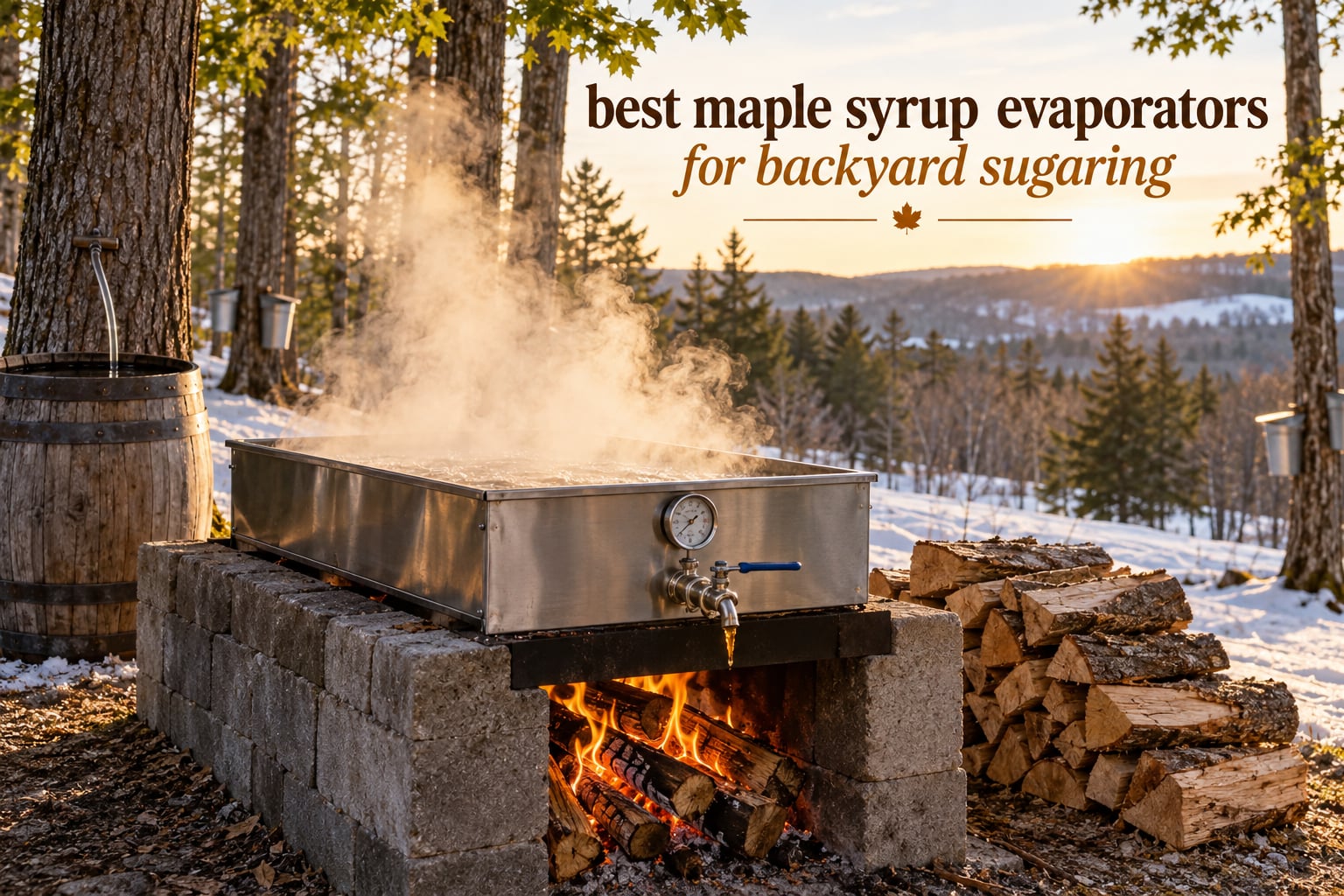
Short answer: the VEVOR 19.6 gallon 304 stainless pan is the best maple syrup evaporator for most backyard sugaring setups, because it is the only one in this group that pairs food-grade 1.5mm 304 stainless with TIG full-welded seams, two adjustable valves and a built-in thermometer, and more than 100 owner ratings to back it.
I spent the last sugaring season going through every listing a backyard maker is likely to land on for the best maple syrup evaporators for backyard sugaring, and almost every one of them makes the same mistake: it sells a pan and calls it an evaporator. A pan is a shallow stainless basin. An evaporator is the pan plus a firebox sized to hold it, plus somewhere for raw sap to be pre-heated before it hits the boiling surface. Buy the pan alone and you own a very expensive tray that has to sit on something you build yourself.
That distinction is where most first-year failures come from, and it is why this roundup is different from the listicles it competes with. Every unit below is a freestanding pan, so every one of them needs a rig: a cinder block arch, a converted barrel or oil tank, a welded steel frame, or a grill rated for the load. I flag where that matters in each entry. I also flag review counts honestly, because half the pans in this category have fewer than five ratings and a 5.0 average built on three owners is not proof of anything.
The other thing worth knowing up front is what your evaporator is really for. Sap arrives at roughly 2 percent sugar, and finished syrup leaves at about 66 percent Brix, which means you boil away close to 40 gallons of water for every gallon of syrup you keep. The pan’s job is surface area and steady inflow, not heat. Get that wrong and you end up with syrup on the bottom of a pan at midnight, which is how good syrup turns into a scorched, off-flavoured mess. We use the finished syrup in a lot of things, including our maple pecan granola recipe, so we are picky about the finish test.
Top 3 Maple Syrup Evaporators for Backyard Sugaring in 2026
These three came out of the ten on more than spec sheets. Each one has enough owner feedback to have survived at least one full season.

VEVOR 19.6 Gal Stainless Pan
- 0.06 inch 1.5mm 304 stainless
- TIG full-welded seams
- Two adjustable draw-off valves
- Built-in thermometer

VBENLEM 48×24 Divided Pan
- 47 gallon capacity
- TIG welded and hemmed edges
- 3/4 inch draw-off valve
- Divider board for rigidity

Reallnaive 36×24 Cone Filter Kit
- 22.5 gallon capacity
- 10 cone filters and filter stand
- Dual-scale C/F thermometer
- Welded and hemmed corners
All 10 Maple Syrup Evaporators at a Glance in 2026
Every pan listed here runs on wood, charcoal or propane, and every one of them needs a firebox built to fit its footprint.
| Product | Specifications | Action |
|---|---|---|
| VEVOR 19.6 Gal Stainless Pan |
|
Check Latest Price |
| VBENLEM 48×24 Divided Pan |
|
Check Latest Price |
| Reallnaive 36×24 Cone Filter Kit |
|
Check Latest Price |
 WantJoin 24x24x10 Pan Kit WantJoin 24x24x10 Pan Kit |
|
Check Latest Price |
 Okasiki 30×16 Divided Pan Okasiki 30×16 Divided Pan |
|
Check Latest Price |
 CUBELLIN 90L 30×16 Pan CUBELLIN 90L 30×16 Pan |
|
Check Latest Price |
 Festisoul 24×24 Triple Chamber Festisoul 24×24 Triple Chamber |
|
Check Latest Price |
 Reallnaive 24×18 Starter Kit Reallnaive 24×18 Starter Kit |
|
Check Latest Price |
 ExploreHorizon 48×24 47 Gal Pan ExploreHorizon 48×24 47 Gal Pan |
|
Check Latest Price |
 RENFANSHOP 24×24 Pan RENFANSHOP 24×24 Pan |
|
Check Latest Price |
What a Maple Syrup Evaporator Does and How Sizing Works
An evaporator boils water out of maple sap until what is left behind is syrup at roughly 66 percent Brix. Raw sap goes in thin, around 2 percent sugar, and a firebox below the pan drives off water as vapor while the temperature stays pinned near 212 F. Finished syrup is drawn off through a valve at the lowest point of the pan.
Surface area and inflow, not flame size, decide how fast that water leaves. A wide shallow pan with a steady trickle of raw sap feeding one end can out-perform a small deep pan on a much hotter fire, because the water only leaves from the surface. This is the entire reason divided pans exist: a baffle that reaches the floor lets you run a continuous flow instead of filling, boiling down, pouring off and refilling.
The ratio is the number most often fudged in marketplace listings. Real maple sap sits near 40 gallons of water per gallon of finished syrup, not the 1 to 1 nonsense you see in some cookware listings. That is why a 20 tap bush running a good week can pour well over 100 gallons of sap into the pan in a couple of days, and why a small pan suddenly feels wrong.
So size on your peak day, not your average day. One tap yields about one gallon of sap per day at a good freeze, so 20 taps can mean 20 gallons of sap overnight. A 20 gallon pan empties in a few hours at a real boil-off rate, and you will be boiling in the dark.
Finish the batch at 66 Brix and confirm it with the 86 rule. Cold finished syrup that is properly concentrated will pour in a continuous sheet and leave no foam ring behind the sample; syrup under-concentrated breaks into beads. You can also read it on a refractometer, or on the hydrometer kit that ships with the Reallnaive starter set.
1. VEVOR 19.6 Gallon Stainless Maple Pan – Best Overall
VEVOR Maple Syrup Evaporator Pan, 19.6 Gal, 30 x 16 x 9.5 Inch Maple Syrup,304 Stainless Steel Maple Syrup with Thermometer, 2 Valves and 3 Heating Methods, for Home, Outdoor
19.6 gallon batch
1.5mm 304 stainless
Two adjustable valves
Built-in thermometer
Pros
- TIG full-welds seal all four corners against leaks and sharp edges
- 0.06 inch 1.5mm 304 stainless with strong heat conductivity
- Two adjustable valves let you draw syrup while raw sap is still feeding in
- Works over wood charcoal or propane
- Over 100 owner ratings back the construction claims
Cons
- 35 pounds is awkward to move once it is full and hot
- 30 x 16 inch footprint needs a wide grill or arch to span it
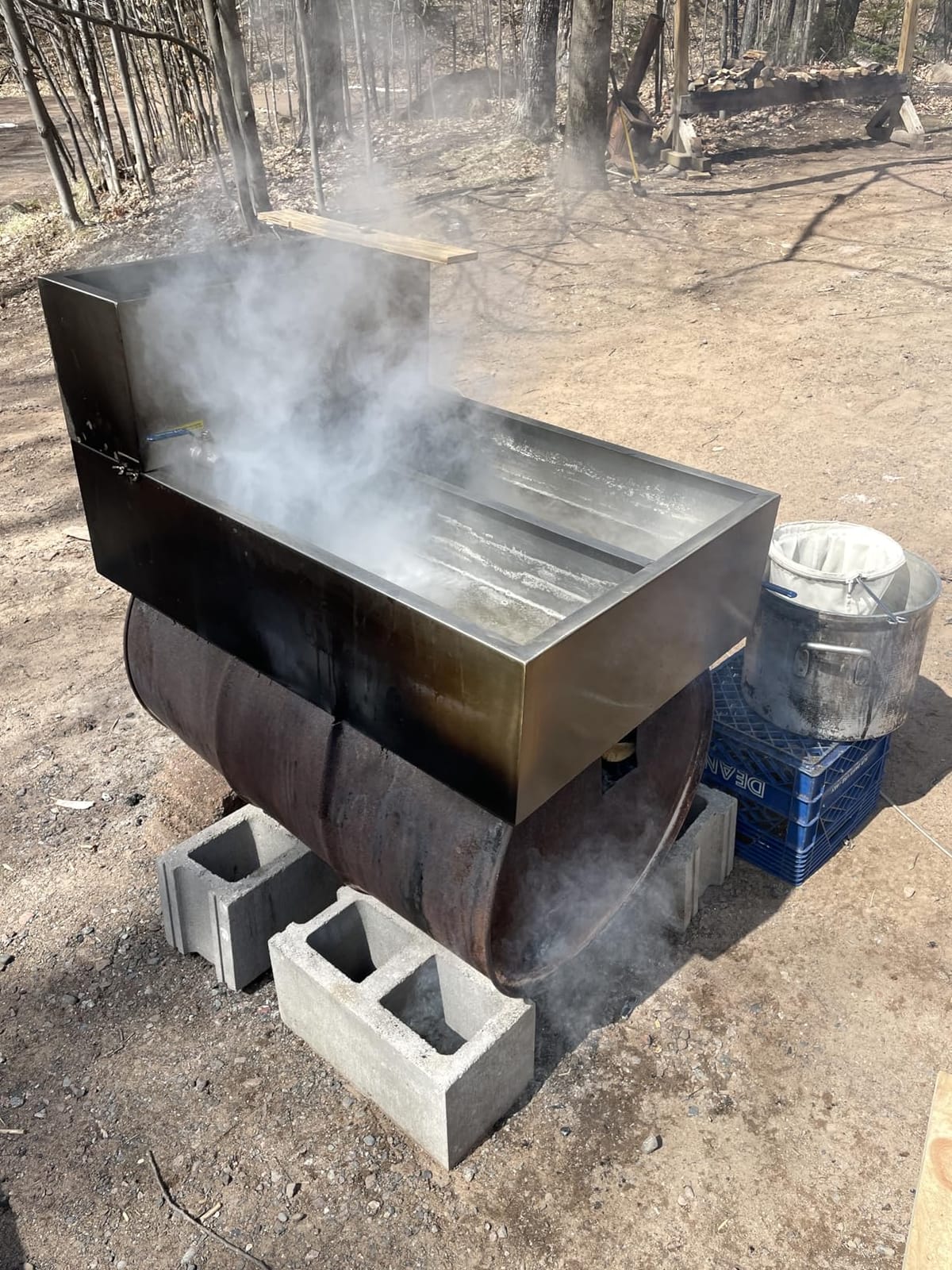
This is the pan I keep coming back to for a reason: it is the only one in the group that ships with two adjustable draw-off valves and a built-in thermometer already mounted. Most other listings give you a single fitting and expect you to chase a gauge afterwards, so you end up finishing syrup in the dark by reading the texture by eye.
Build quality is where the 4.3 average comes from. The seams are TIG full-welded, not spot welded, so the corners seal against both leaks and the sharp burrs you get from cheaper fabrication. At 1.5mm the stainless is thick enough to survive repeated heating without warping, and the surface is mirror-smooth, which matters because every rough spot is a future sugar crystal catch point.
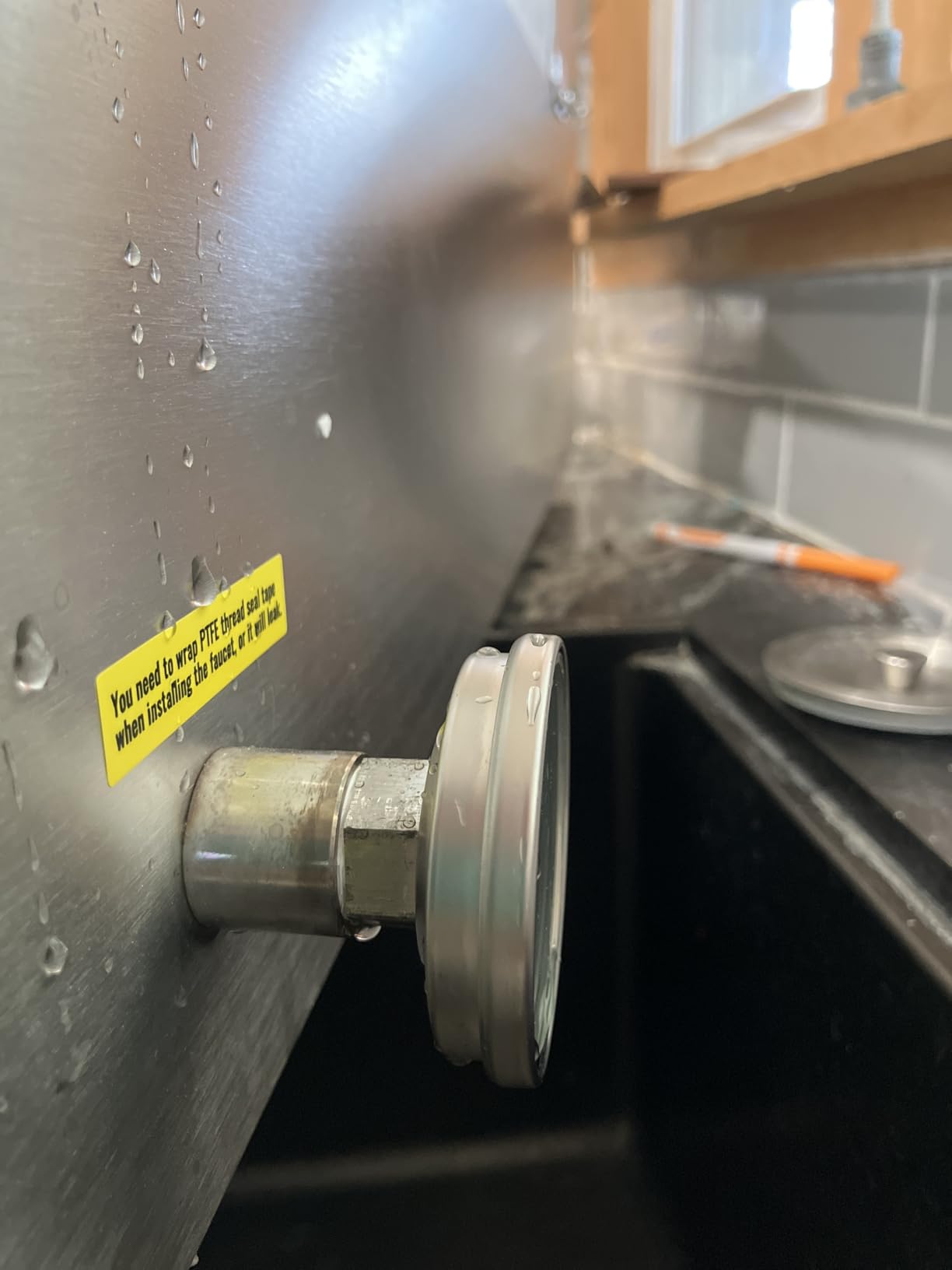
Its two adjustable valves are a genuine convenience at finishing time, letting you draw syrup while raw sap is still feeding in. Buyers mention the built-in thermometer as useful for tracking the boil, and the pan handles wood, charcoal or propane without modification, so it is not tied to one fuel.
Two honest limits. At 35 pounds it is a two-person lift when cold and a serious job when hot, and a 30 by 16 inch rectangle needs either a wide grill or a properly sized arch. Buy an arch for it rather than improvising with a rim.
Who should buy the VEVOR 19.6 gallon pan
If you run 10 to 15 taps and already have somewhere to put a 30 by 16 pan, this is the low-risk buy. Two working valves and a fitted gauge save you a season of guesswork, and the 106 ratings mean you can find real complaints if you go looking before you buy.
Who should skip the VEVOR 19.6 gallon pan
If you are on a small single-burner grill, the footprint will not sit right and you will be balancing it. If you need more than about 20 gallons per batch, size up to a 47 gallon pan instead of trying to run two consecutive batches.
2. VBENLEM 48 x 24 Inch Divided Pan – Best Value for Large Boils
VBENLEM Maple Syrup Evaporator Pan 48x24x9.4 Inch Stainless Steel Maple Syrup Boiling Pan with Valve and Thermometer and Divided Pan
47 gallon capacity
48 x 24 x 9.4 inch
1.5mm 304 stainless
3/4 inch draw valve
Pros
- The largest review pool in the group at 138 ratings
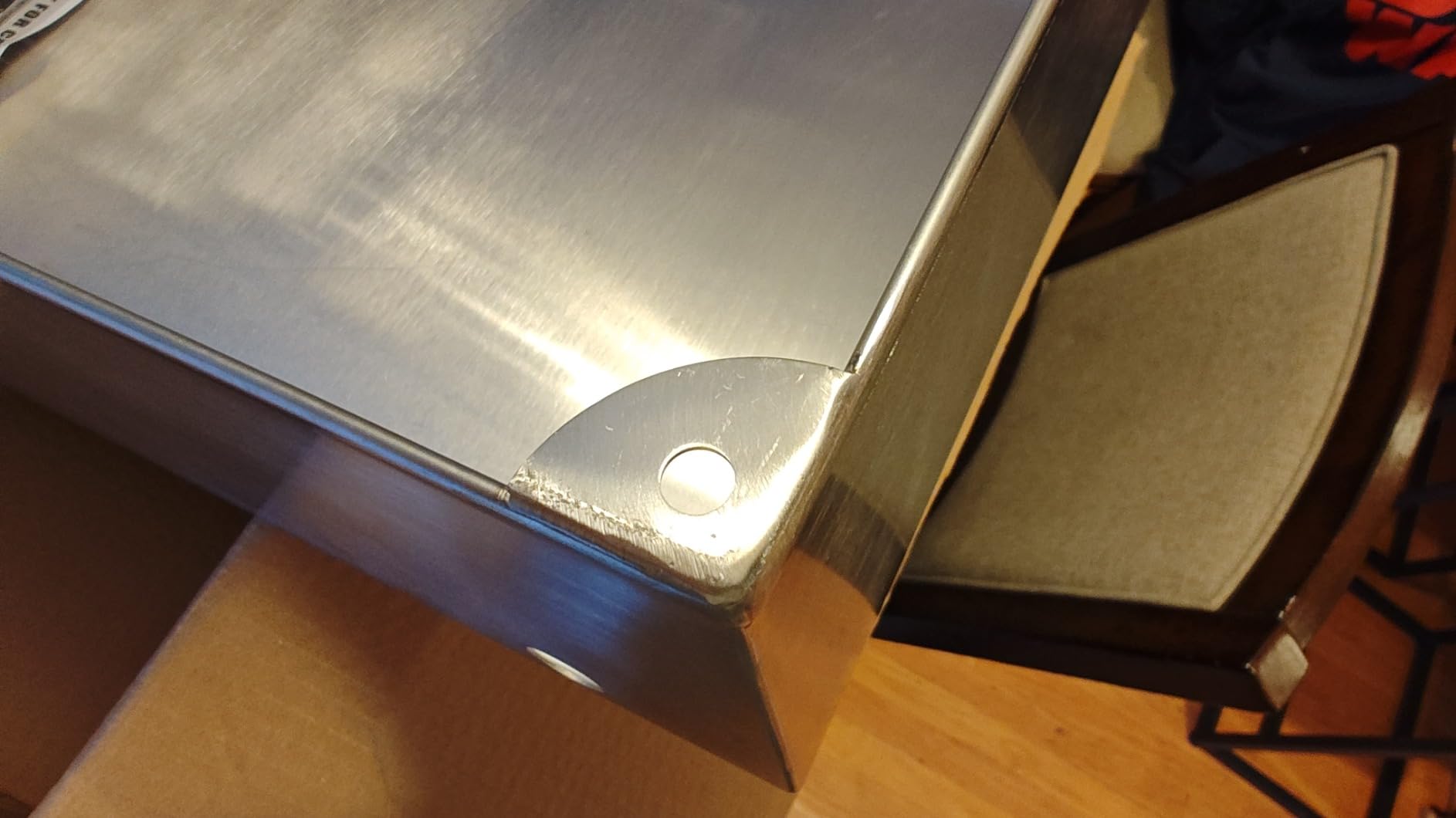
- TIG welded with sealed and hemmed top edges on all four corners
- 47 gallon capacity handles a full wood-fired boil
- Divider board stiffens the pan over long burns
- Buyers report good heat distribution and metal thickness
Cons
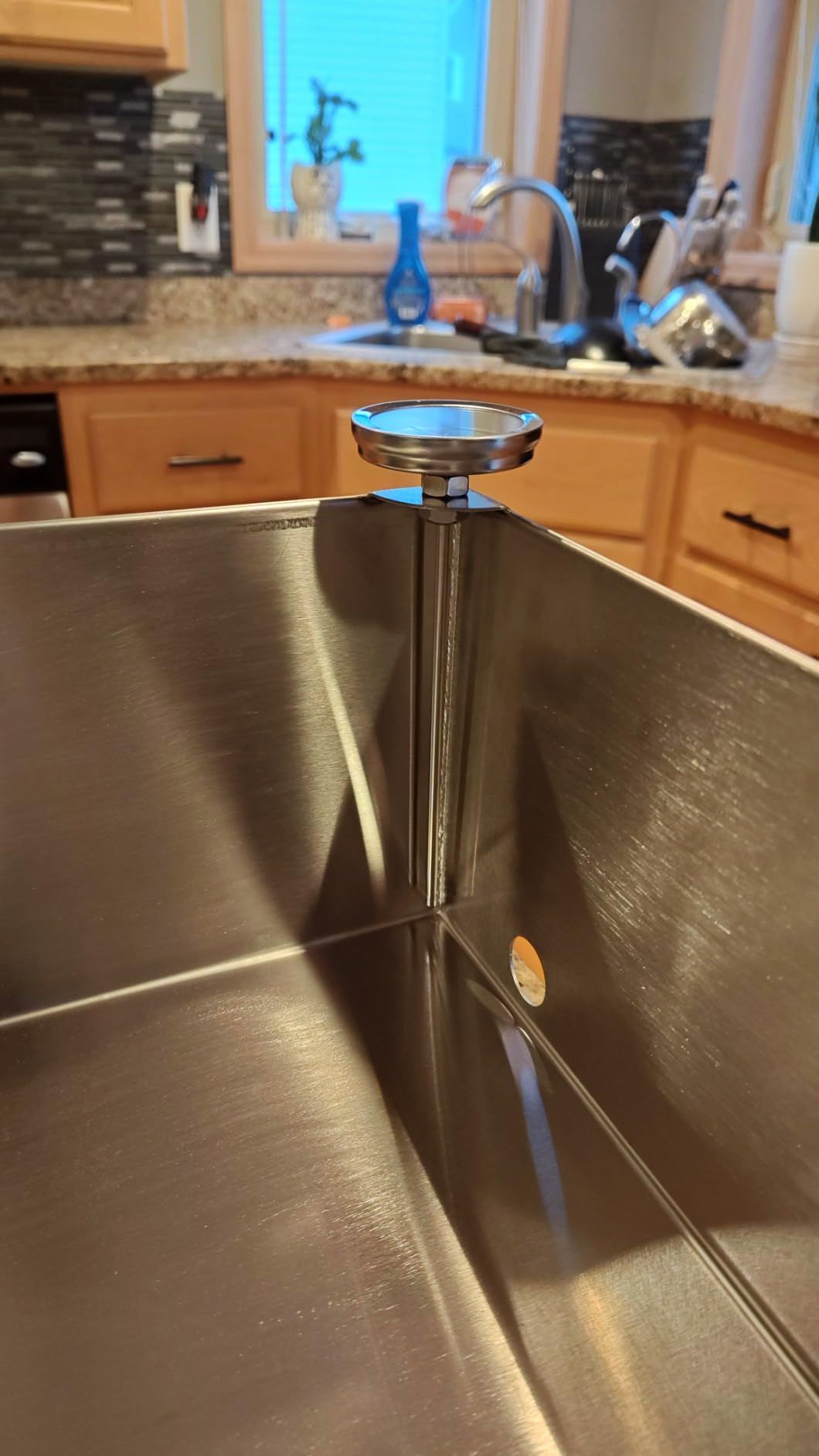
- Thermometer mounts high and reads poorly at normal sap depth
- Drain valves sit above the bottom so syrup has to be tipped out
With 138 ratings this pan has the most owner history of anything in the roundup, but the average of 3.7 tells you the fittings need work.
The recurring complaints are a thermometer mounted too high on the side wall, drain valves sitting above the pan floor, and fittings that have failed after extended high heat. That is a cheap afternoon of work if you plan for it, and it is why the pan still makes our list despite the lowest average in the group.
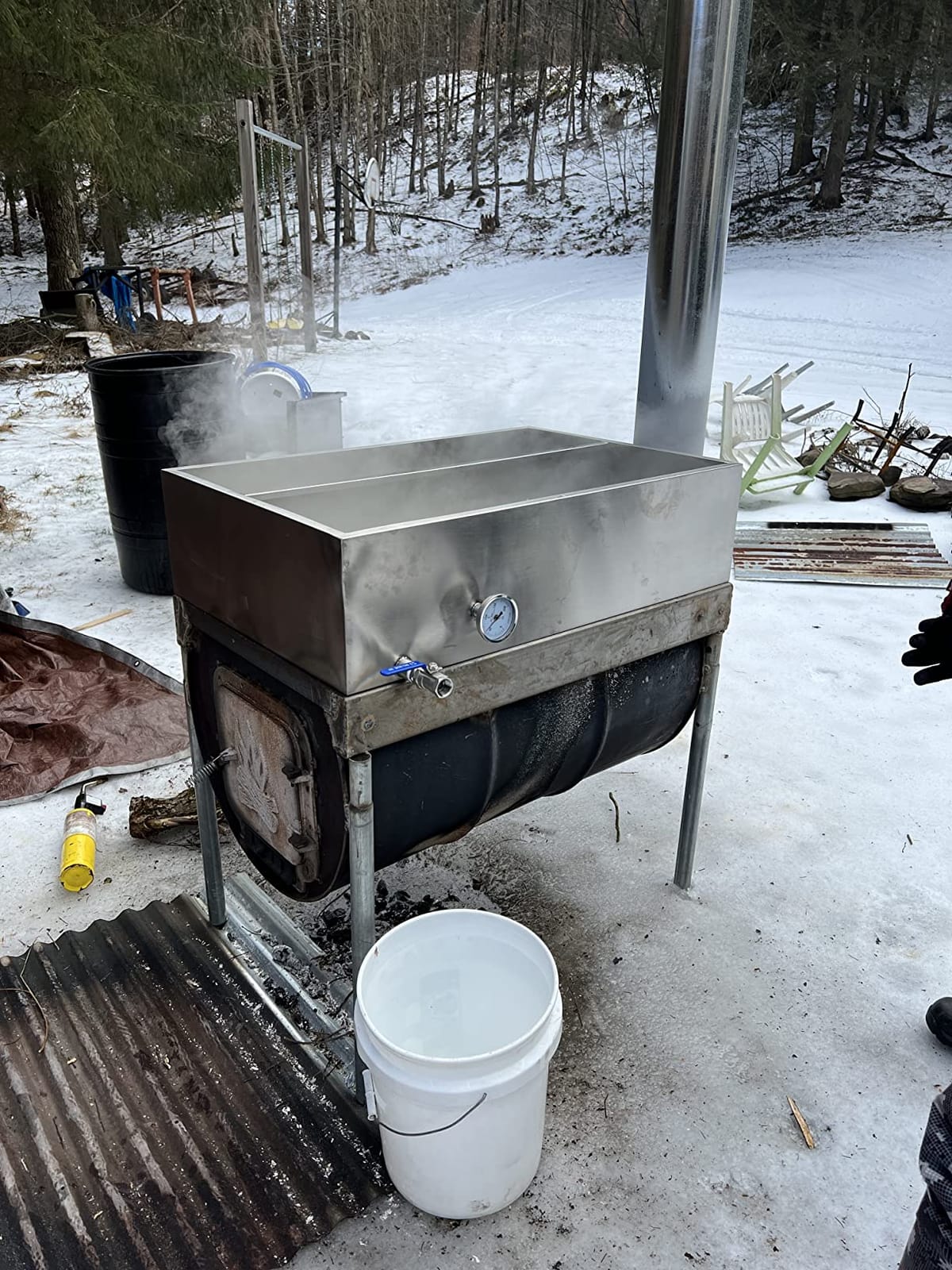
What you are getting on the metal side is genuinely good. 1.5mm 304 stainless, TIG welded, with sealed and hemmed top edges on all four corners, and a divider board that adds real rigidity when the pan is over a long burn. Owners doing full wood-fired boils on a multi-burner propane setup report an evap rate they can control.
Capacity is the headline: 47 gallons means you can pour a whole good day of sap in at once and step away. The 48 by 24 inch footprint ties for the widest surface in this group, and surface area is what drives evaporation.
Who should buy the VBENLEM 48 x 24 pan
Buy this one if you are running 25 taps or more and your priority is getting a peak day done in a single batch. The hardware flaws are known and cheap to correct, and the metal underneath is thick, welded and hemmed on every corner.
Who should skip the VBENLEM 48 x 24 pan
Skip it if you want a turnkey product with no modification. The high-mounted thermometer and slightly raised drains are not defects, they are design choices, and if you will not spend an afternoon replacing fittings you will be unhappy with it every season.
3. Reallnaive 36 x 24 Inch Pan with Cone Filter Kit – Most Versatile
Reallnaive 36x24x6 Inch Maple Syrup Evaporator Pan 22.5 GAL with 10” Cone Filter Holder Stand Cone Filter Paper Mechanical Thermometer Stainless Steel Maple Syrup Pan Boiling for Home Outdoor(1-tier)
22.5 gallon batch
36 x 24 x 6 inch
Welded sealed corners
C/F thermometer
Pros
- One of the two pans in this roundup that arrives with 10 cone filters a stand and a mesh bag
- Dual-scale mechanical thermometer reads in Celsius and Fahrenheit
- Welded sealed and hemmed edges on all four corners
- Nylon mesh bag gives a second filtration pass
- Included filter stand stores flat between seasons
Cons
- 6 inch depth is shallower than peers at the same size
- Filter stand needs assembly before your first boil
Filtering is the step beginners skip and regret. Syrup that goes into the finishing bucket unfiltered carries sediment that shows up in the bottle, and cone filters are the cheapest fix in the whole process.
The pan itself is a wide 36 by 24 single tier holding 22.5 gallons, welded, sealed and hemmed at all four corners. The dual-scale mechanical thermometer reads in both Celsius and Fahrenheit, which sounds minor until you remember the most common complaint in this category is being stuck reading a gauge with no Fahrenheit scale.
At 23.9 pounds it is light enough to reposition on a barrel rim or a small arch, which is unusual at this surface area. The included nylon mesh bag gives you a second pass for an extra-clear finish, and it takes the sediment that a single cone filter leaves behind.
Twenty-six ratings at 4.3 is a real base, though the listing only recently became available, so the long-term record is still short. Treat the 6 inch depth as the deciding factor: shallow pans evaporate faster but need more frequent draw-offs.
Who should buy the Reallnaive 36 x 24 kit
Choose it if this is your first boil and you have never filtered syrup. Ten filters and a stand remove an entire trip to a farm supply store on a cold March morning, and the dual-scale gauge means you can test without converting.
Who should skip the Reallnaive 36 x 24 kit
Skip it if you already own a filter setup, or if you want a deep pan for long unattended burns. At 6 inches deep you will be drawing off syrup more often than you would from a 9.5 inch pan.
4. WantJoin 24 x 24 x 10 Inch Pan – Best for a First Season
WantJoin Maple Syrup Evaporator – 24 * 24 * 10 Inch, 24 GAL Syrup Evaporator Pan Stainless Steel w/Thermometer, Make 360 Bottles of 50oz, Upgraded Leak-Proof TIG Welded Seams, for Home & Outdoor Use,
24 gallon batch
1.5mm stainless
TIG welded corners
Valve and extension tube
Pros
- Every seam TIG welded with reinforced corners
- Draw-off kit includes valve extension tube elbow and PTFE tape
- 1.5mm stainless for fast boiling and rust resistance
- Square 24x24 footprint boils more evenly than a rectangle
Cons
- Only 3 ratings so no long-term durability evidence
- 24 x 24 square suits small batches rather than full wood-fired boils
The accessory bundle is the story here. You get the 3/4 inch valve, an extension tube, an elbow pipe and a roll of PTFE tape in the box, which is exactly the hardware most buyers end up ordering separately after their first fitting starts weeping.
At 1.5mm with every seam TIG welded and reinforced at the corners, this is built to the same basic spec as the pricier pans, and the 10 inch depth gives you a deeper working volume than most square pans in this price range. 25.1 pounds is manageable for two people.
The evidence is the problem, and I will not dress it up. Three ratings, all 5 stars, on a listing that has only recently been available. That is early owner enthusiasm, not a proven record. Treat it as unproven and assume you may be replacing a valve in year two.
Who should buy the WantJoin 24 x 24 pan
Buy it if you are running 10 to 15 taps on a square footprint and want the draw-off hardware on hand before day one. The square shape also gives more even boiling than a 30 by 16 rectangle of the same capacity.
Who should skip the WantJoin 24 x 24 pan
Skip it if you want proven long-term durability, because there is no evidence base to judge that. If you are past 20 taps, the 24 gallon batch size will not get you through a peak day.
5. Okasiki 30 x 16 Inch Divided Pan – Best for a Long Burn
Maple Syrup Evaporator Pan 30″L x 16″ W x 9.5″ H Maple Syrup Boiling Pan with Valve and Thermometer for Boiling Maple Syrup Stainless Steel Evaporator Pan for Maple Sugaring w/Divided Pan
23.8 gallon batch
30 x 16 x 9.5 inch
1.5mm 304 stainless
Divided insert
Pros
- 1.5mm 304 stainless polished and brushed resists rust and corrosion
- Divided insert spreads evaporation across the surface
- Includes both an adjustable valve and a thermometer
- Deep 9.5 inch walls hold heat through a long burn
Cons
- Only 1 rating so no independent durability feedback
- 16 inch width gives less surface than square pans of equal capacity
This is a straightforward 30 by 16 by 9.5 inch pan in polished and brushed 1.5mm 304 stainless, with a divided pan insert, an adjustable flow valve and a thermometer. Nothing about the spec sheet is ambitious, which is exactly why it suits a first full season.
The divided insert is the useful part. A baffle that spans the pan gives you two working zones, so you can thin sap on one side and pull finished syrup from the other instead of running the whole pan at one concentration.
One rating, and it is a 5 star. That is not a track record, and any listing that says otherwise is selling you marketing. The construction claims are plausible and the stainless gauge is right for the job, but you are betting on a single owner’s first impression.
Who should buy the Okasiki 30 x 16 pan
Buy it if you want a 9.5 inch deep divided pan on a narrow 16 inch footprint and you are willing to treat it as an unproven purchase. Deep pans like this hold heat well through a long burn.
Who should skip the Okasiki 30 x 16 pan
Skip it if you need a real evidence base, or if your rig needs a square or wide surface. A 16 inch width puts less area above the flame than a square pan of the same 23.8 gallon capacity.
6. CUBELLIN 90L 30 x 16 Inch Pan – Budget Pick
CUBELLIN Maple Syrup Evaporator Pan 90L/23.8Gal Maple Syrup Boiling Pan 304 Stainless Steel Maple Syrup Making Pan with Valve and Thermometer for Boiling Maple Syrup (30x16x9.5inch)
90L / 23.8 gallon batch
1.5mm 304 stainless
Body arrives assembled
Valve and thermometer
Pros
- One of the least expensive 23.8 gallon 304 stainless options here
- 1.5mm 304 stainless resists deformation over extended boiling
- Body arrives assembled with only the thermometer and valve to mount
- Includes both a valve and a thermometer
Cons
- Only 1 rating so no meaningful owner feedback
- Valve and thermometer are mounted after delivery rather than factory fitted
If the number is the deciding factor, this 90L pan delivers the same core spec as listings costing twice as much: 23.8 gallons of capacity, 1.5mm 304 stainless, a draw-off valve and a thermometer. The body arrives assembled, so the only setup is mounting two fittings.
It is a budget 30 by 16 rectangle at 32 pounds, which makes it a straightforward drop into a cinder block arch or a grill.
One 5 star rating. I am not going to pretend otherwise, and neither should the listing. The honest framing is that you are buying a well-specified, budget-priced pan and accepting that nobody has reported back after three seasons of freeze-thaw cycling yet.
Who should buy the CUBELLIN 90L pan
Buy it if you are building a rig yourself and want the cheapest reasonable 304 stainless pan with the right wall thickness. A square alternative gives more surface for the same money if you have the space.
Who should skip the CUBELLIN 90L pan
Skip it if you want accessories included, or if after-market mounting of the valve and thermometer is not a job you want. Budget here means extra assembly and zero filter gear.
7. Festisoul 24 x 24 Inch Triple Chamber Pan – Best for Staged Boiling
24×24 Inch Maple Syrup Evaporator Pan, Commercial Grade 304 Stainless Steel Sap Boiling Pan with Draw-Off Valve & NPT Ports, for Making Syrup, Jam, Large Batch Cooking
Triple chamber layout
24 x 24 x 7 inch
Commercial grade 304 stainless
Inlet and outlet ports
Pros
- Three separate chambers support staged evaporation and boil control
- Dedicated inlet and outlet ports plus a thermometer port
- Laser-welded seams with folded safety edges on all four sides
- One of the lightest builds here at under 20 pounds
- Also works for jam sauces chili and stew
Cons
- 7 inches deep which is shallow for long unattended burns
- Thermometer is not included only a port to mount one
- Small review base of 4 ratings with a notable 2 star share
The triple chamber layout is the reason to consider this one. Three separate compartments let you run raw sap, concentrate and finished syrup at the same time without them mixing, which is a real continuous-flow idea rather than a single basin pretending to be staged.
Build details are among the strongest in the group. Laser-welded seams with folded safety edges on all four sides, a control valve, threaded inlet and outlet ports and a dedicated thermometer port. Threaded ports mean you can fit whatever gauge or valve you want, which answers the fittings complaint that shows up everywhere else.
What it lacks is depth. At 7 inches it is a shallow pan, so you will be drawing syrup off more often and you lose thermal mass for long burns. And the 3.9 average across 4 ratings includes a 37 percent share of 2 star reviews, which suggests some buyers were not sold on the staged chamber configuration.
Who should buy the Festisoul 24 x 24 pan
Buy it if you want to run multiple concentrations in one pan and value threaded ports over included hardware. At under 20 pounds it is one of the easiest to move, and laser welds with folded edges give you a smooth interior to clean.
Who should skip the Festisoul 24 x 24 pan
Skip it if you want a thermometer in the box, or if shallow depth means constant draw-off on your schedule. The thin evidence base makes this a secondary choice rather than a first buy.
8. Reallnaive 24 x 18 Inch 11 Gallon Kit – Best for First-Time Builders
Reallnaive Upgraded Maple Syrup Evaporator Pan 24 x 18 x 6 Inch 11 GAL with 10” Cone Filter Holder Stand 10 Cone Filter Paper Thermometer Hydrometer Kit for Maple Syrup Making Supplies
11 gallon batch
24 x 18 x 6 inch
Complete kit with hydrometer
Welded sealed corners
Pros
- Most complete kit here with hydrometer test cup and storage case
- Hydrometer tests sugar content hot or cold for a repeatable finish
- Welded sealed corners and hemmed edges for leak resistance
- About 15 pounds is the lightest build in the roundup
- Reusable nylon mesh bag with a tear resistant drawstring
Cons
- Smallest capacity in the roundup at 11 gallons
- Only 6 inches deep on a compact 24 x 18 footprint
- Small review base of 5 ratings
If you have never made syrup, this is the kit that removes every other purchase decision. You get the 24 by 18 by 6 inch pan, a 10 inch cone filter stand, ten filters, a nylon mesh bag, a thermometer, a valve, a glass hydrometer with a stainless test cup and case, a cleaning cloth, a brush and a storage bag.
The hydrometer is the piece experienced makers would tell a beginner to buy first. It lets you check sugar content on hot or cold syrup, which removes the guesswork from the finish test and keeps a batch from running past 66 Brix into scorch territory.
Five ratings at 4.1 is thin, and the distribution is unusually spread across 3, 4 and 5 stars rather than clustered at the top, which honestly reads as an early listing finding its feet. At 11 gallons it will not keep up with more than about 10 taps on a peak day, so treat it as a learning rig rather than a production one.
Who should buy the Reallnaive 24 x 18 kit
Buy it if this is your first season and you would rather spend one purchase than four. The hydrometer, filters and cleaning tools alone cover most of what a first-year maker forgets to buy.
Who should skip the Reallnaive 24 x 18 kit
Skip it past 10 taps. Eleven gallons is a small batch capacity, and running out of pan on a peak day is exactly how syrup ends up on the burner overnight.
9. ExploreHorizon 48 x 24 Inch 47 Gallon Pan – Best for Full Wood-Fired Boils
Maple Syrup Evaporator Pan, 48 x 24 x 9.4 Inch Maple Syrup Pan, 304 Stainless Steel Maple Syrup Evaporator, 47 Gallon Maple Syrup Boiling Pan with Valve and Thermometer for Home, Outdoor
47 gallon batch
48 x 24 x 9.4 inch
Welded reinforced corners
3/4 inch valve
Pros
- 47 gallon capacity alongside the VBENLEM for whole-day boils
- Seams welded with reinforced corners to reduce leak and scratch risk
- 3/4 inch valve and integrated thermometer both included
- 48 x 24 footprint ties for the widest boiling surface here
Cons
- 43.1 pounds makes it the heaviest listed pan here
- Only 2 ratings so no multi-season record
- Needs a large dedicated boil setup to use 47 gallons
This is the one to look at if you are running 30 to 50 taps and want to boil a whole good day in a single batch. 47 gallons across a 48 by 24 by 9.4 inch surface is a lot of area over a fire, and the seams are welded with reinforced corners to reduce both leak and scratch risk.
Both the 3/4 inch valve and an integrated thermometer are included, so nothing has to be sourced separately before your first boil. Weigh it against the VBENLEM, which shares the same 47 gallon class at a lower listed price but a weaker 3.7 average across many more reviews.
The 43.1 pound weight is the practical limit here. That is the heaviest listed weight in the roundup and repositioning it full is not a one-person job, which matters more when you are looking at a rig you built yourself rather than a permanent arch.
Two ratings at 4.5 is a small sample. Neither rating tells you how the pan looks after three seasons, and that is the number that actually matters.
Who should buy the ExploreHorizon 48 x 24 pan
Buy it if you have a real wood-fired setup, more than 30 taps, and a plan for the weight. The 47 gallon batch size removes the overnight boil problem that ruins syrup.
Who should skip the ExploreHorizon 48 x 24 pan
Skip it for a small backyard rig, a barrel, or anything you plan to move regularly. A 47 gallon pan on a setup you have to reposition each boil will frustrate you.
10. RENFANSHOP 24 x 24 Inch Single Compartment Pan – Best for a Square Footprint
Maple Syrup Evaporator Pan, “24”x24″x9.5″ 304 Stainless Steel Boiling Pan with Valve and Thermometer, for Maple Sugaring -Single Compartment
23.8 gallon batch
24 x 24 x 9.5 inch
Single compartment
1.5mm 304 stainless
Pros
- Square 24 x 24 footprint boils more evenly than a 30 by 16 rectangle
- 1.5mm 304 stainless for corrosion and high temperature resistance
- Body arrives assembled needing only valve and thermometer fitting
- Single compartment gives a full surface boil
Cons
- Single compartment means no divider for staged boiling
- Only 1 rating so no owner feedback to go on
- Valve and thermometer are mounted after delivery
Square pans like this sit more of the surface directly over the flame than a long narrow rectangle, which helps heat spread evenly. For a home-built cinder block arch or a square grill top, this 24 by 24 by 9.5 inch footprint is easier to support than a 30 by 16 pan of the same capacity.
Construction is 1.5mm 304 stainless, polished and wire drawn, with a single compartment for a full-surface boil. It arrives assembled, so the only fitting work is the valve and thermometer, and at this cost per gallon it is one of the cheapest routes into 304 stainless.
One rating at 5 stars. Beyond the evidence gap, the functional limit is the single compartment: there is no baffle, so you are running batch boiling rather than continuous flow, and syrup has to be drawn off before you can refill.
Who should buy the RENFANSHOP 24 x 24 pan
Buy it if you are building a square arch and want the cheapest 23.8 gallon option in 304 stainless. The 9.5 inch depth gives you more working volume than most budget pans.
Who should skip the RENFANSHOP 24 x 24 pan
Skip it if you want staged boiling or a divided baffle. And with a single rating behind it, do not expect documented long-term durability.
Arch Evaporator vs Freestanding Pan vs DIY Rig
An arch evaporator is the firebox structure that holds the pan over the flame, sold either as a complete unit with the pan included or as an arch alone so you can bring your own pan. That second option is a genuinely different buying path and it is the one most first-year builders should consider.
A complete arch arrives with the pan, the arch and the pre-heater already sized to each other, so the fire matches the boiling surface and you are not guessing at clearances. It is the more expensive path, and for larger units freight and residential delivery can add a real liftgate charge that surprises people at the worst moment.
Arch-only is cheaper and far more flexible. If you already have a pan from this roundup, or if you want a square 24 by 24 pan on a rig you built yourself, an arch-only frame avoids paying twice for equipment you own.
A DIY rig is the barrel or cinder block route. Barrels heat up faster than a cinder block rectangle and hold heat well, but draft control becomes an ongoing troubleshooting project. Cinder block is cheap and forgiving to build, and it is where most people get into trouble: an undersized stove pipe pulls smoke and debris into the syrup, and the fix is a longer pipe, not a better fire.
There is a fourth path worth knowing about. Members of the MapleTrader community regularly name specialist brands for complete rigs, including WF Mason, Lapierre, Dominon and Grimm, Leader, CDL, Silver Creek, Dauntless, Smoky Lake, Atlee Miller and Maple Addict. None of them appear in this roundup because none of them are sold in the marketplace this article draws from, but if you want a built-to-last rig, that is the shortlist to shop.
What Not to Buy
Steam table pans sold as maple evaporators. They are food service pans, shallow and thin, and they are designed to hold hot food, not to boil a 40 to 1 reduction for eight hours. They warp, the corners leak and the syrup picks up metallic off-flavours. If a listing shows a steam table pan with no welded stainless seams, walk away.
Pans with no stated gauge. Thin pans scorch because the floor bakes syrup onto the steel before it can boil off. Heavy pans stall on heat-up. 1.5mm 304 stainless is the balance most of this category has landed on, and if the listing does not say, assume the worst.
Baffles that stop short of the floor. A divided pan only moves toward continuous flow if the baffle reaches the pan bottom. A baffle with a gap under it is a wall that does nothing except sit in your way, and no listing in this roundup confirms its baffle reach.
Pans sold without a rig and described as complete. A pan on its own is not an evaporator. If a listing says complete and shows only a basin with a valve, it is telling you to source a firebox yourself.
Any 1 to 1 sap to syrup claim. Real maple is roughly 40 to 1. Listings that imply a 1 to 1 yield are reselling cookware as sugaring equipment, and their capacity numbers are meaningless as a result.
Pan-only listings with no valve or thermometer at all. You can add them, but budget for it and for PTFE tape, because weeping fittings are the single most common hardware complaint in this category.
How to Choose a Maple Syrup Evaporator
Size on peak days, not averages. One tap gives about one gallon of sap per day in a good freeze. Twenty taps can put twenty gallons in your pan overnight. Pick capacity you can empty in a few hours, because syrup left on the burner overnight is the single clearest path to a scorched season.
Match the pan to the fuel and the rig. Every pan here runs on wood, charcoal or propane. An electric option is the growing request among hobby makers who want to cut fossil fuel use, and for now that means a converted electric setup rather than a purpose-built catalog appliance. A blower or forced air is the cheapest efficiency upgrade on any wood-fired rig.
Check the fittings, not the marketing. Where is the drain valve relative to the pan floor? Where is the thermometer mounted, and does it read in Fahrenheit? Are the ports threaded so you can fit your own hardware? Every common complaint in this category traces back to one of those three questions.
Bring your own quarter-turn ball valve. This is standard practice among experienced makers and it costs very little. Swap the supplied fitting for a standard quarter-turn ball valve, use PTFE tape on every thread, and keep a spare in the shed for the evening you break something.
Factor in reverse osmosis if your tap count is growing. A pre-concentrating membrane pulls water out before the pan sees it, which multiplies what a small evaporator can handle. If you are planning to expand past 20 taps, an RO system and a smaller pan can beat an RO-less setup with a much bigger pan.
Plan the shack, not just the pan. Boiling sap puts serious moisture and heat into a small building. Insulated sheds trap that humidity in the ceiling and framing, which leads to mould in the structure and a sticky, wet room on the worst weekends of the season. A vent, a fan and enough headroom above the pan solve more problems than any pan upgrade will.
Buy accessories with the pan. Cone filters, a filter stand, a refractometer or hydrometer with a test cup, a cone filter bag and a good brush. If you are hosting a boil day, an awning over the work area keeps the crew out of the weather, and our backyard canopy picks cover the setup side of that.
Cleaning, Rust Prevention and Off-Season Storage
Clean the pan while it is still warm. Pour the contents into clean containers, wash the pan with hot water and a food-safe detergent, and rinse thoroughly. Never leave finished syrup sitting in a pan overnight, because the sugar film that remains is what turns into rust and pitting in the spring.
Dry it the same day. Wipe the corners, welds and valve threads down and leave the pan open to air. Rust forms at welded corners and creases first, so those are the places to pay attention to.
Store it off the ground, covered but not sealed airtight, in a dry space away from rodent access. Stainless does not care about a freeze, but a pan sitting in a wet shed all season will show it the next season. Roll it if you have to, and do not stack heavy items on the pan floor.
Before your first boil of the next season, walk the whole rig: check the stove pipe for creases, confirm the damper moves freely, look at every thread and fitting, and confirm the floor of the pan is still flat. A warped floor is a pan you are done with.
Frequently Asked Questions
What is the best evaporator for making maple syrup?
For most backyard sugaring setups, the VEVOR 19.6 gallon 304 stainless pan is the best overall choice, because it is the rare pan in its class that mounts two adjustable draw-off valves and a built-in thermometer alongside TIG full-welded 1.5mm 304 stainless. It also carries one of the largest evidence bases in the roundup, with 106 ratings at a 4.3 average. Whatever pan you choose, remember it is only half the system and still needs a firebox built to its footprint.
What is the 86 rule for maple syrup?
The 86 rule is a water test that confirms finished maple syrup is concentrated enough. Take a sample of cold finished syrup and pour it. Properly finished syrup at about 66 Brix runs in a continuous, clear sheet with no bubbles and leaves no foam ring on the surface or the rim of the sample. Under-concentrated syrup breaks into separate droplets and leaves a frothy ring. You can also confirm the reading with a refractometer or a hydrometer.
What size maple syrup evaporator do I need?
Size on your peak day, not your average day. A single tap can produce about one gallon of sap per day in a good freeze, so 10 taps can mean 10 gallons overnight and 30 taps can mean 30 gallons. Ten taps and under works with a 10 to 20 gallon pan. Fifteen to 25 taps wants a 20 to 25 gallon pan. Twenty-five taps and up should run a 47 gallon pan so you can finish a peak day in one batch.
How much syrup will 5 gallons of sap make?
Five gallons of maple sap makes a little over one-eighth of a gallon of finished syrup, roughly 5 fluid ounces. The reason is the 40 to 1 ratio: it takes about 40 gallons of water boiled away for every gallon of syrup you keep. Sap at about 2 percent sugar has to reach roughly 66 Brix to be syrup, and that is a very large amount of water to remove.
What does a maple syrup evaporator do?
A maple syrup evaporator boils water out of sap until the liquid reaches about 66 Brix and becomes syrup. Raw sap enters at roughly 2 percent sugar, a firebox below the pan drives off water as vapor, and finished syrup is drawn off through a valve at the lowest point of the pan. Surface area and steady inflow, not flame size, determine how fast the water leaves.
The Maple Syrup Evaporator Worth Buying in 2026
The best maple syrup evaporators for backyard sugaring are not the ones with the biggest number in the listing title. They are the ones where the stainless gauge, the weld quality, the valve position and the thermometer placement all hold up, and where enough owners have already survived a season to say so. On that basis, the VEVOR 19.6 gallon pan takes the top spot for anyone up to about 15 taps, the VBENLEM 48 by 24 pan is the volume play for 25 taps and up, and the Reallnaive 36 x 24 kit is the safest first purchase for a brand new sugarmaker.
Whatever you choose, build the firebox to fit the pan, size for your peak day rather than your average one, and plan the ventilation in the shack before the season starts. Those three decisions matter more to your finished syrup than any difference between pans.