
The question that comes up again and again on hunting forums is simple: what is the best game camera for a food plot that sends pictures to your phone? The honest answer is that the camera matters less than two decisions you make before you buy anything — whether your plot actually has usable cellular coverage, and what shape your plot is. Get those right and eight solid options remain. Get them wrong and even a top-rated camera will frustrate you all season.
That is why this roundup of the best trail cameras for food plots is organised around plot geometry rather than brand. One camera wins an open field where deer walk in from any direction. A different one wins a narrow funnel between two timber edges. A third is the right call for a remote plot with no service at all, where a solar panel and a lithium cell are doing the work of a monthly bill.
We worked through eight cameras over a season of scouting, weighing them on the things that actually decide whether a camera is useful at a food plot: trigger speed when a buck walks fast, whether the flash reaches far enough to identify antlers, how the camera behaves in the dark, what it costs to run month to month, and whether it survives February. Every camera below writes to an SD card you retrieve or pulls images over a network to your phone. None of them requires you to hand a card over a fence.
If you want the short version before you read further, the GardePro E6 2.0 is the one we would hang first on most plots. Hunters already shopping for cellular-only hardware can start with our cellular trail camera roundup, and anyone monitoring a yard, barn or equipment row should read our trail cameras for property security and wildlife instead.
Table of Contents
Top 3 Trail Cameras for Food Plots
These three cover the widest range of food plot situations. The GardePro E6 2.0 is the generalist, the WOSPORTS 64MP 4K is the lowest-friction option when you do not want a plan, and the Moultrie Edge 2 is the pick when you need images arriving on your phone without walking to the plot.

GardePro E6 2.0 WiFi
- 4K video and 64MP stills
- 0.3s trigger
- 940nm no-glow infrared
- No monthly fee

WOSPORTS 64MP 4K
- 0.2s trigger and 120 degree zone
- 32 no-glow IR LEDs
- 2 inch aiming screen
- No app and no plan

Moultrie Edge 2 Cellular
- 4G LTE with Auto Connect
- 36MP stills and 1080p video
- 100 ft detection
- 8GB internal plus cloud
All 8 Cameras at a Glance in 2026
Everything below sits in one table so you can compare the numbers that decide a food plot purchase: capture resolution, trigger speed, how far the camera sees, how far the flash reaches, and how the images get to you.
| Product | Specifications | Action |
|---|---|---|
| GardePro E6 2.0 WiFi Trail Camera |
|
Check Latest Price |
| WOSPORTS 64MP 4K Trail Camera |
|
Check Latest Price |
 CEYOMUR 4K 68MP Solar WiFi Trail Camera CEYOMUR 4K 68MP Solar WiFi Trail Camera |
|
Check Latest Price |
 MAXDONE Solar Trail Camera WiFi Bluetooth MAXDONE Solar Trail Camera WiFi Bluetooth |
|
Check Latest Price |
 GardePro E8 2.0 WiFi Bluetooth Trail Camera GardePro E8 2.0 WiFi Bluetooth Trail Camera |
|
Check Latest Price |
| Moultrie Edge 2 Cellular Trail Camera |
|
Check Latest Price |
 SEHMUA 2K Live Streaming Trail Camera SEHMUA 2K Live Streaming Trail Camera |
|
Check Latest Price |
 Digitgarden 4K 48MP WiFi Trail Camera Digitgarden 4K 48MP WiFi Trail Camera |
|
Check Latest Price |
How We Picked These Cameras
Every camera here was judged against the same five questions, and each one has to win on the question that matches its category. Trigger speed was checked against the manufacturer figure, then sanity-checked against owner reports, because a spec sheet number and a field number are rarely the same thing. We also compared detection range against flash range separately, because buyers confuse those two constantly and the gap between them is what produces blank or washed-out photos.
Night performance got equal weight. A food plot camera earns its keep after dark, when most deer movement happens and when a buck’s rack is the only thing you cannot afford to miss. That meant looking at infrared wavelength, LED count, and the number of owners reporting motion blur or overexposed subjects past a certain distance.
Running cost came third, followed by physical durability. On durability we leaned on multi-season owner reports rather than marketing language, since a camera that quits in a cold month costs you a whole week of buck data. We also weighted the practical friction that does not appear on a spec sheet: how long the app takes to connect, whether the battery compartment is usable with gloves on, and whether the screen is where you can actually see it when you are aiming the camera at a tree.
What we could not do is measure real detection distances in the field ourselves, so where a claim comes from owner reports we say so. Two of the biggest complaints in hunting forums are the same complaints we found in the reviews: cellular coverage that dies in timber, and photo volumes in the rut that overrun a plan. Both are covered in the buying guide below.
1. GardePro E6 2.0 WiFi Trail Camera — Best Overall for Food Plots
GardePro E6 2.0 WiFi Trail Camera, 4K Video, Dual Antennas
4K video and 64MP stills
0.3s trigger, 110 degree zone
940nm no-glow infrared
Monthly fee: none
Pros
- No monthly fee and no cellular dependency
- Strong feature set including 4K video and 64MP stills
- Best-in-group motion sensitivity among budget cameras we compared
- On-screen review without pulling the SD card
- 940nm no-glow infrared avoids spooking deer
Cons
- Screen sits inside the lid so you only see it when the camera faces the wrong way
- Very tight battery compartment that needs a flat screwdriver
- App transfers stall when pulling more than five or six files at once
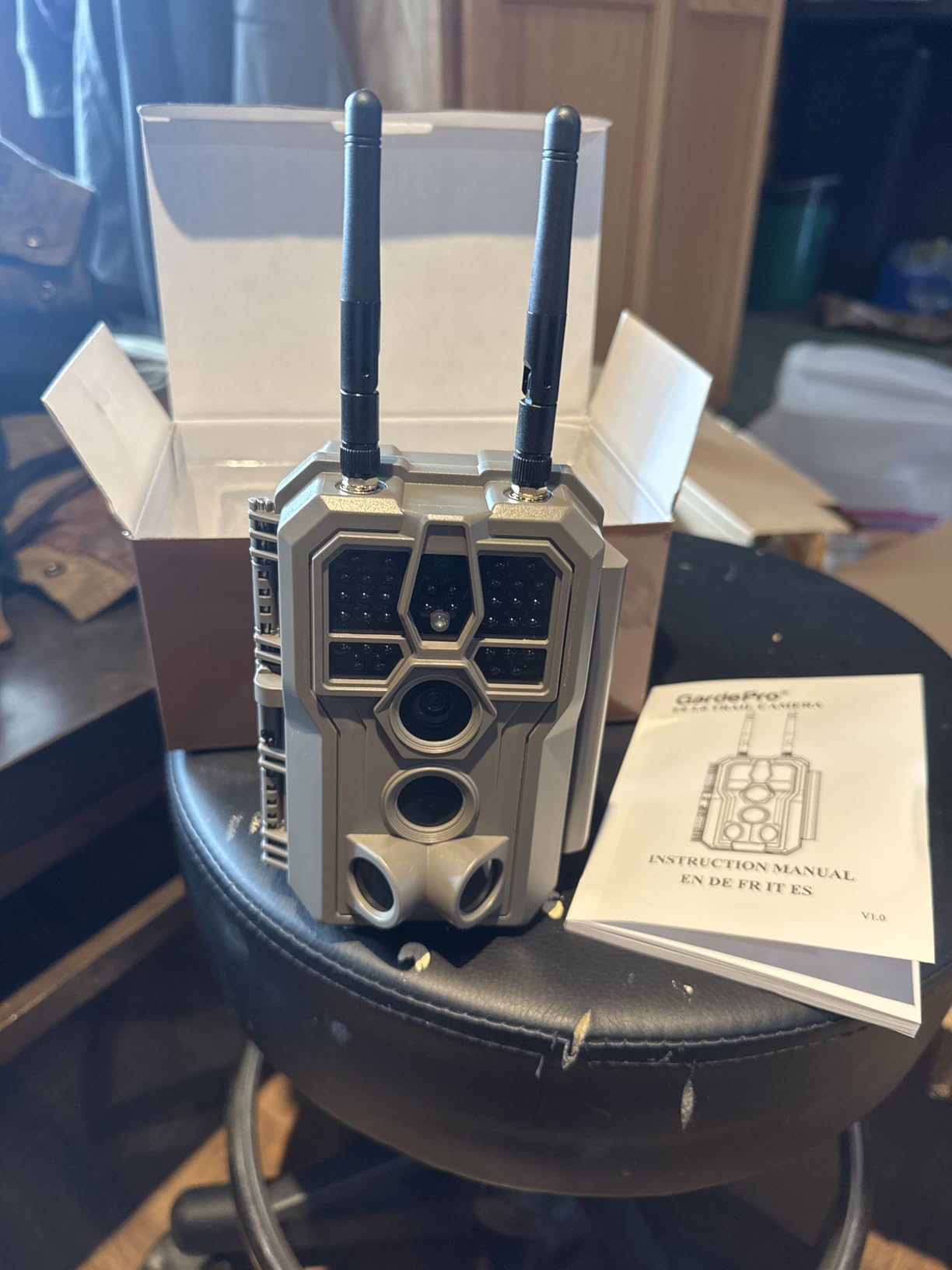
This is the camera we end up recommending first, and the reason is not a single headline specification. It is that the E6 2.0 does the things that matter at a plot without asking you to subscribe to anything or stand under a tree to look at a screen. The connection is direct to your phone over the camera’s own low-power WiFi, so there is no plan, no carrier question and no monthly line item, and the same unit works in timber where a cellular camera would simply go quiet.
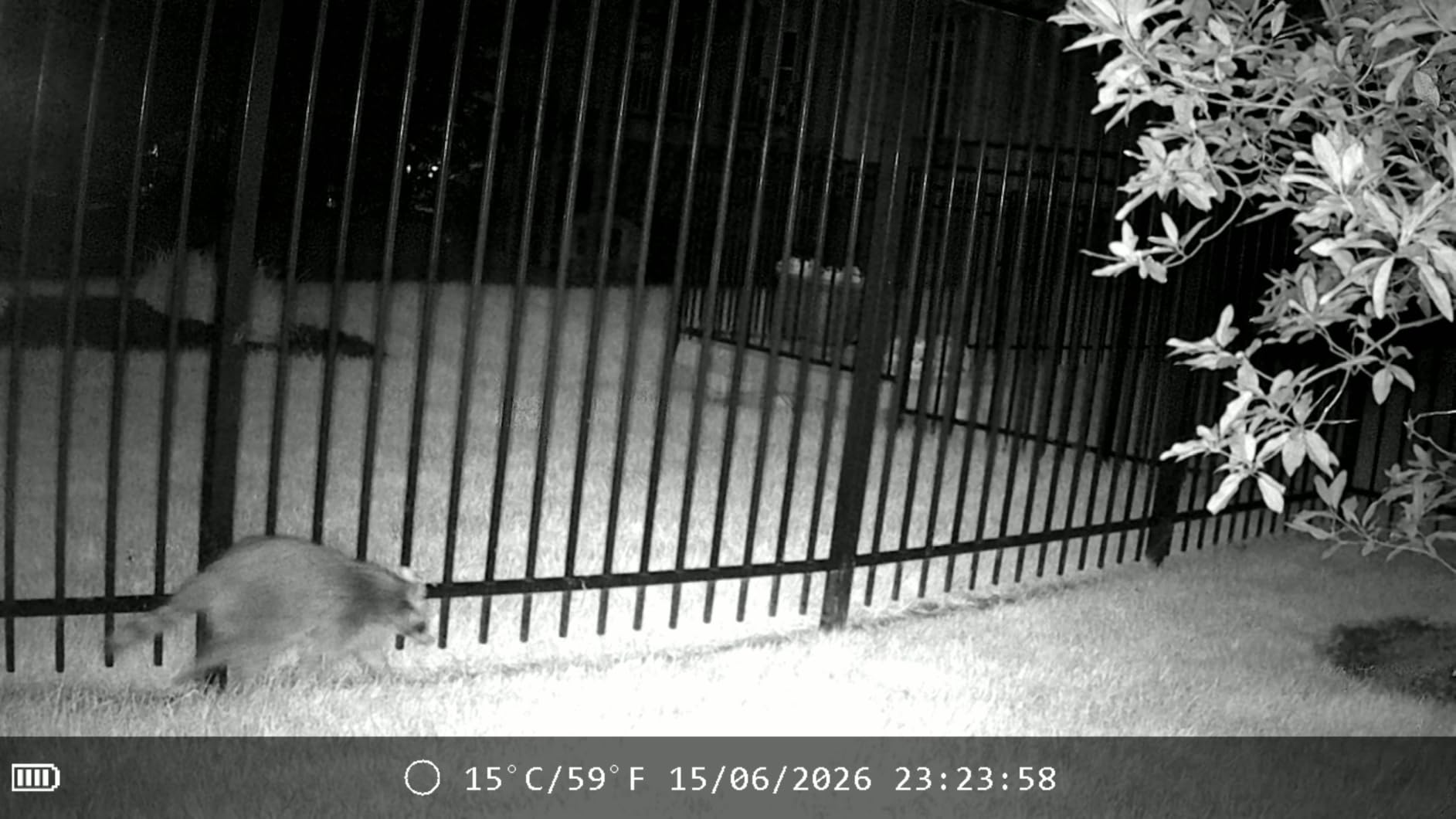
Capture is 4K video with synchronised audio and stills up to 64MP, and the trigger is quoted at 0.3 seconds across a 110 degree detection angle. Owners consistently single out the motion sensitivity as the best in the group among cameras at this tier, which matters when a buck walks a scrape line at speed through your plot. Night work is handled by 940nm no-glow infrared reaching about 85 feet, and reviewers report recognizable detail on deer between roughly 50 and 90 feet.
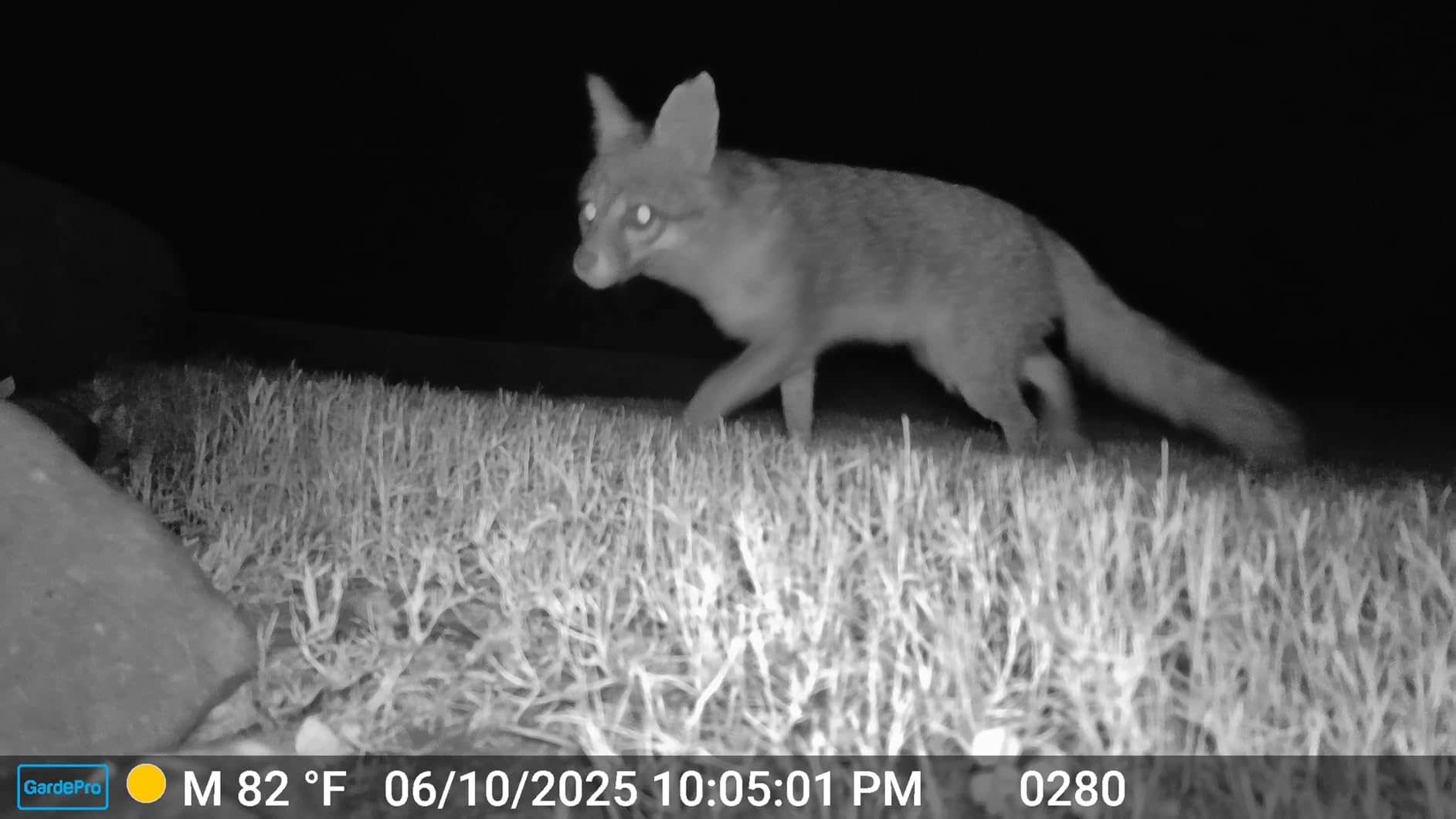
Power is eight AA batteries, and the stated ceiling is around 30000 daytime or 13000 nighttime photos, with a compatible solar panel available as a separate add-on. That volume figure is theoretical rather than guaranteed, and owners do report faster drain when the camera is set to record video rather than stills. For a plot running mostly photo mode through the rut, the battery budget is comfortable.
Storage is a full-size SD card up to 512GB with loop recording, and you can review, download and change settings from the app without opening the case. Modes cover motion, time-lapse and hybrid. The card slot sits on the bottom of the body, which means you can drop a card while changing lenses in the dark and it is not obvious whether it has seated.
Where we would mount it in a food plot
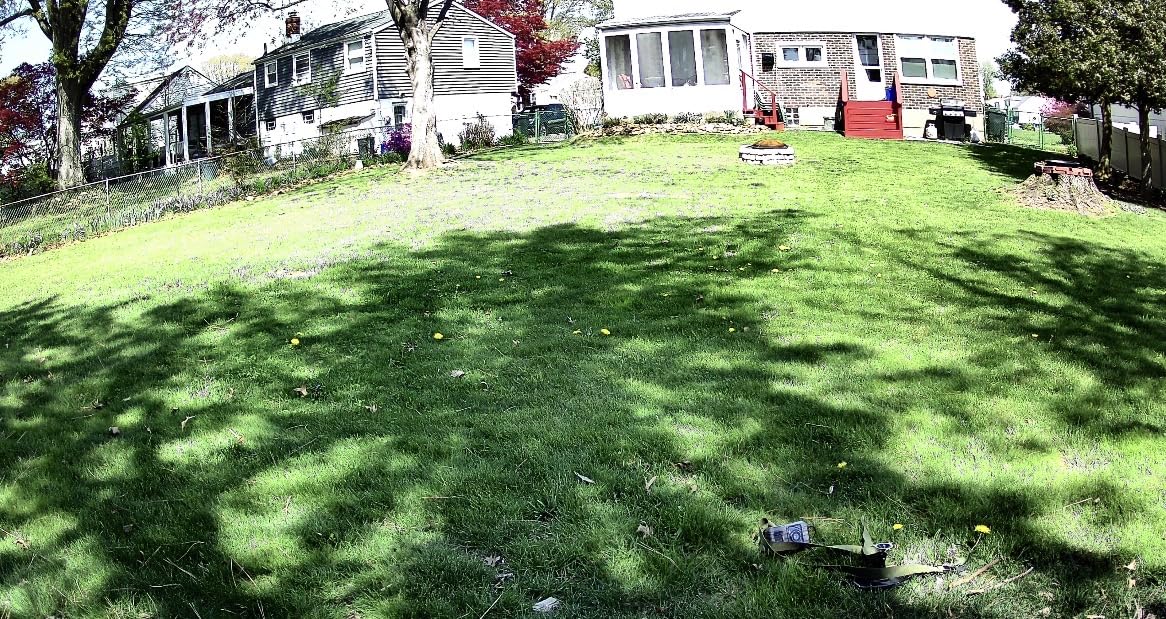
The E6 2.0 suits a plot entrance or a corner funnel, because a 110 degree zone and a 0.3 second trigger cover the approach, the pass and the exit without wasting frames on open ground. Strap it to a post at roughly four to five feet with a slight downward tilt, angled across the entry rather than straight down the funnel mouth, so bodies are side-on rather than coming at you head first.
Because the screen faces inward behind the lens, aim it the hard way. Walk the plot, stand where the deer will stand, and adjust by watching the app preview from a few feet back until the frame is filled with the plot opening and not with sky or bare ground.
Where it falls short
The physical design is the weak point. The battery compartment lid is tight enough that owners reach for a flat screwdriver, which is unpleasant on a cold morning in the dark, and the bottom-mounted card slot is easy to fumble. The app is also reported to stall when you try to pull more than five or six files in one go, which bites exactly when you want to review a busy Saturday morning.
It also has a 2.0 inch rear screen, and a minority of owners report units stopping during sustained high heat. If your plot is a wide-open field rather than a funnel, the narrower lenses in this list are a better match, and if you genuinely need images on your phone from a remote plot, the cellular section of this guide explains why a plan is the right trade.
2. WOSPORTS 64MP 4K Trail Camera — Best Value With No Plan
WOSPORTS Trail Camera(Non-Cellular Non-WiFi) 64MP 4K 0.2S Trigger Motion Activated,Game Camera with No-Glow Night Vision 2.0”LCD 120°Wide for Outdoor Scouting Wildlife Monitoring Home Security
64MP stills and 4K video
0.2s trigger, 120 degree zone
32 no-glow IR LEDs, 80 ft
Non-cellular, no app
Pros
- Zero subscription and no connectivity to configure
- 0.2s trigger with a 120 degree detection angle
- 2 inch color screen visible with the door open for easy aiming
- 32 invisible 940nm IR LEDs give genuine no-glow night use
- Owners report cameras still working after a year
Cons
- Battery holder is extremely tight and needs a flathead screwdriver
- Settings are lost when batteries are removed to recharge
- Included nylon strap is poor quality and threads through rather than clamps
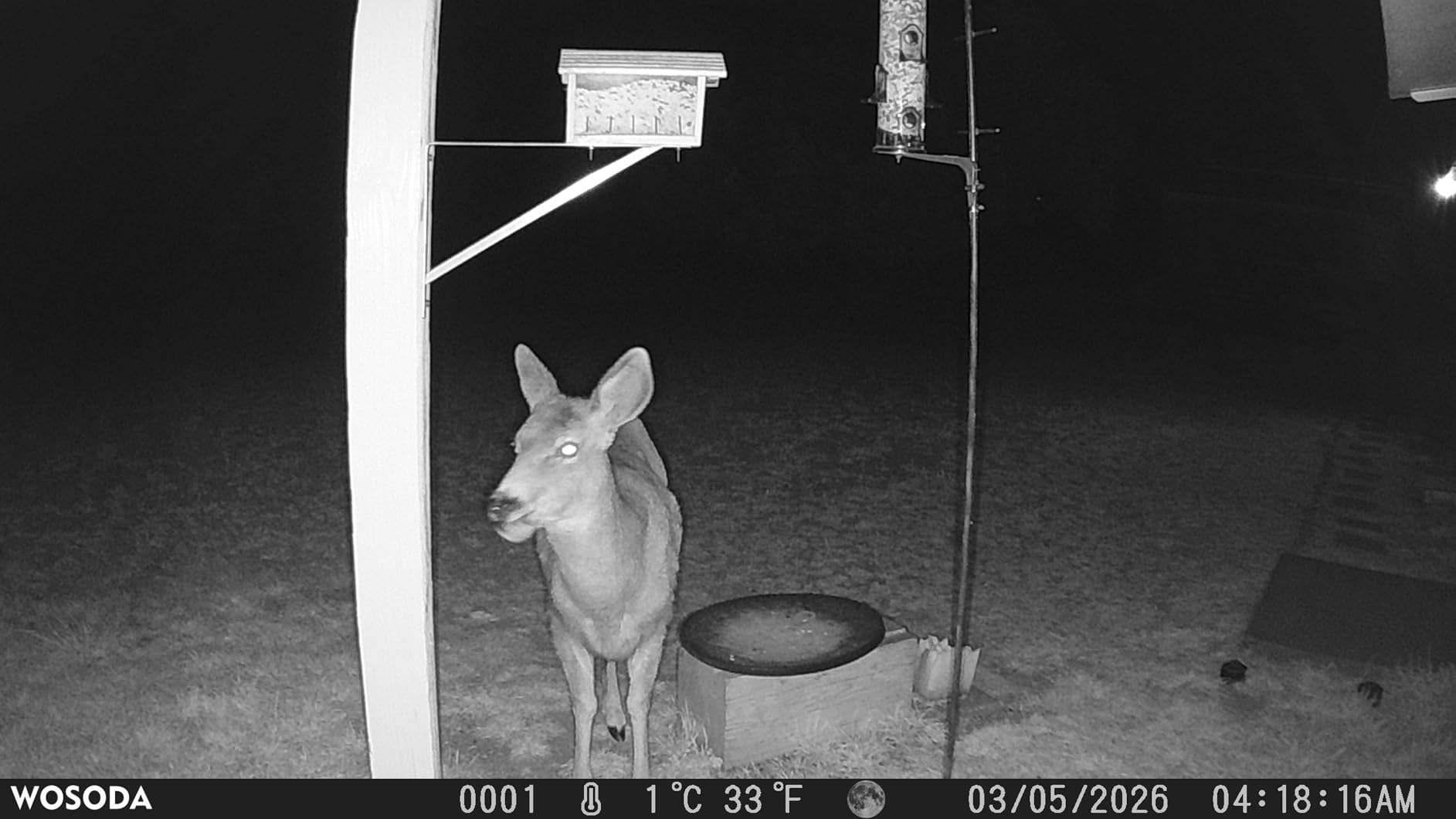
This is the camera to buy if the phrase subscription makes you stop reading. There is no connectivity protocol at all: push buttons, an on-device screen, a card you pull, and nothing else. For a low-traffic plot, a remote corner, or a first season where you just want to know whether deer are using the plot at all, that simplicity is worth more than any app feature.
On paper it is a capable no-plan camera. Still resolution runs up to 64MP and is adjustable across six settings, video captures at 4K or 1440p, and the trigger is quoted at 0.2 seconds over a 120 degree angle with a one to three shot burst mode. Night range is about 80 feet using 32 infrared LEDs at 940nm, the invisible wavelength that will not put a visible red eye-shine on a buck at thirty yards.
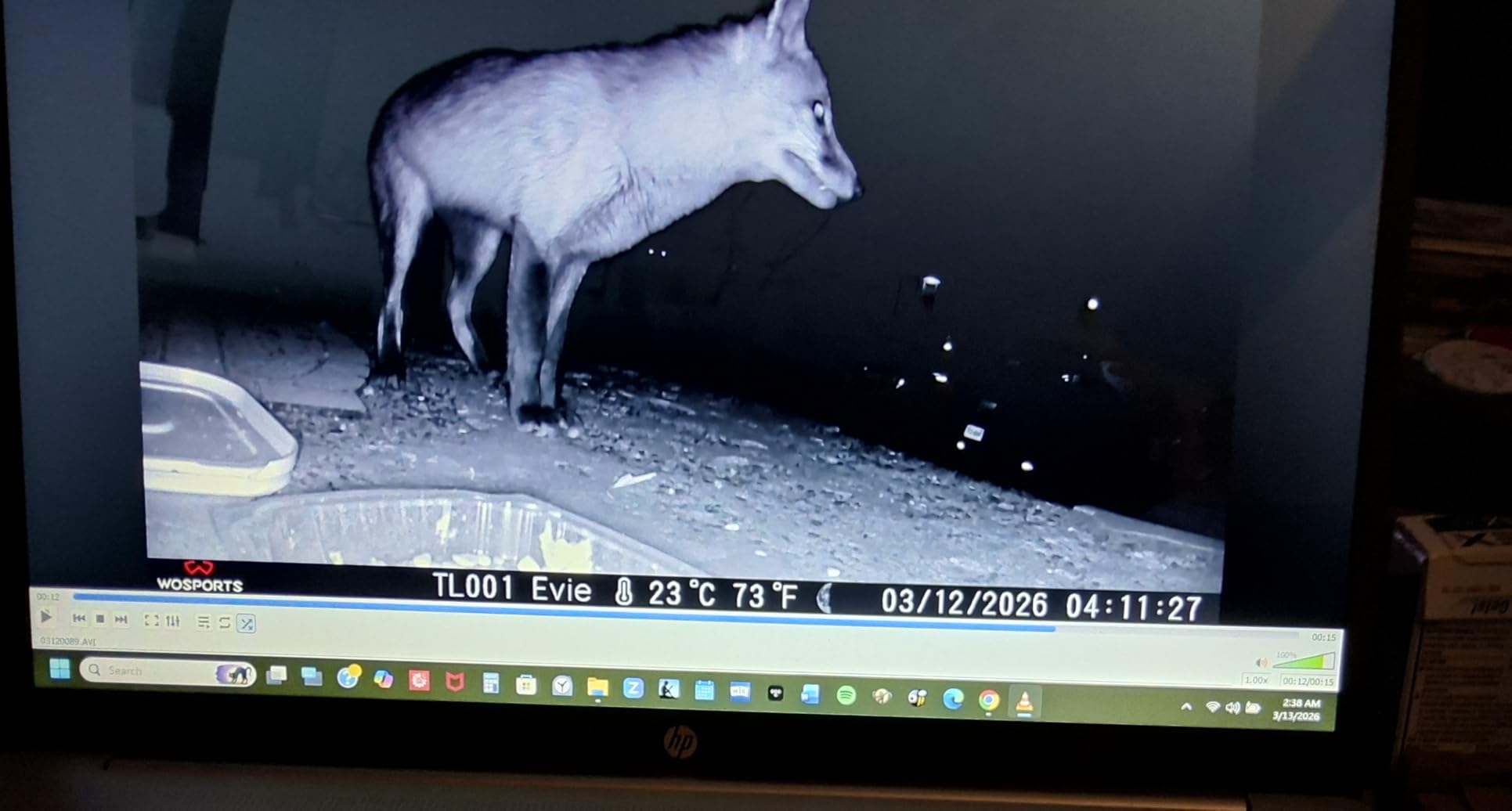
One detail that matters more than it sounds: the 2 inch color screen is on the back of the camera and visible with the door open, so you can frame the shot without guessing. Budget cameras almost always hide the screen behind the battery pack. Here you can stand under the tree, open the door, look through the LCD and walk the trigger zone before you strap it up.
Power is eight AA batteries, with a rechargeable lithium pack or a compatible solar panel available separately. Owners report cameras still working after twelve months or more on lithium cells, which fits a season-plus deployment well. The housing is IP66 rated and the camera weighs about 0.55 kg, so it is not a burden to carry in for a card swap.
Where we would mount it in a food plot
The 120 degree zone makes this a good fit for a plot corner where two trails meet, because one camera covers both approaches without a second mount. Put it four feet up on a post at the outside corner, aimed diagonally across the corner so the detection cone covers the trail mouths but not the open field, where every wind-blown stalk would otherwise trigger it.
Set it to single shot or a short burst rather than a long multi-shot, and set the detection sensitivity down a notch if the browse is thick. On a busy plot the difference between two frames and ten frames per animal is the difference between a readable card and a card you never get through.
Where it falls short
The battery cartridge is the recurring complaint, and it is genuinely stiff enough that you will need a flathead screwdriver to push cells out. More annoying still, settings are lost when you pull the batteries, so a mid-season battery change means re-running your configuration. The included nylon strap is also weak and threads through the buckle rather than clamping, so budget a proper strap with a lock.
A minority of owners report cameras failing around the nine-month mark, and some report the date and time resetting in the field. Detection is also described as less sensitive than WiFi models in side-by-side testing, and night images fall apart beyond close range. Treat it as a plot-coverage camera rather than a trophy-identification camera, and pair it with a higher-resolution unit if antler scoring is the goal.
3. Moultrie Edge 2 Cellular Trail Camera — Best for Cellular Plots
Moultrie Edge 2 Cellular Trail Camera 2-Pack – 36MP, Low-Glow Flash
36MP stills and 1080p video
4G LTE with Auto Connect
100 ft detection, low-glow
8GB internal plus cloud
Pros
- Sends photos and video to your phone over a cellular network
- Auto Connect works across major US networks without swapping SIMs
- 100 ft detection with a low-glow flash that does not disturb wildlife
- 8GB internal memory plus cloud storage means no card management
- App offers Game Plan analysis and activity charting
Cons
- Ongoing data plan subscription required for cellular transmission
- Narrow 50 degree viewing angle for a food plot
- IP65 rating is slightly below the IP66 housings here
- Video tops out at 1080p while WiFi models reach 4K
This is the only true cellular camera in the group, and that single fact defines both its strength and its limitation. It transmits photos and video straight to your phone through a 4G LTE connection, so a plot two miles down a logging road stops being a scheduled chore. You check the app from the truck, you see which bucks showed up overnight, and you do not swap a card in the rain.
The connection is the part to understand. Auto Connect runs across all major US networks with no SIM swapping and no third-party plan purchase, which removes the single most common reason cellular cameras fail in the field. Hunters report the support side as US-based and responsive, and the app adds Game Plan pattern analysis, activity charting and interactive maps on top of alerts.
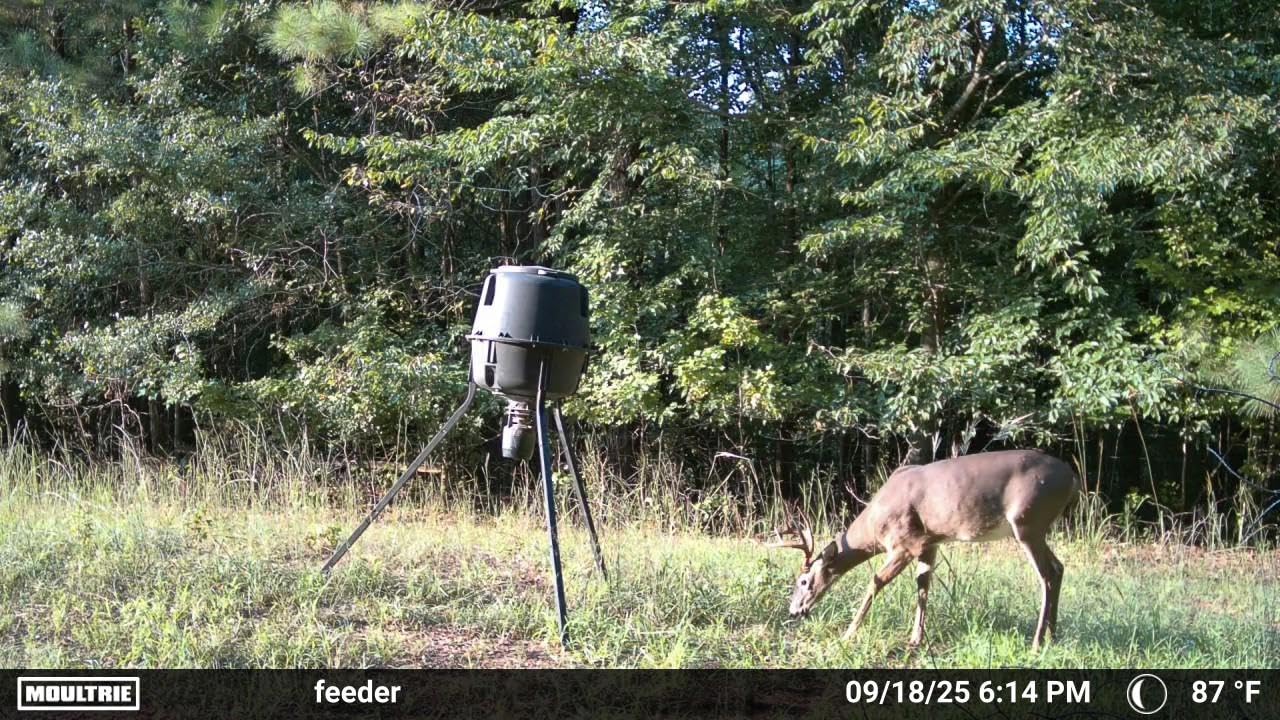
Capture is 36MP stills and 1080p HD video with audio at 30fps, driven by an image sensor that reviewers single out for low-light performance. Detection reaches 100 feet on a low-glow infrared flash. Storage is 8GB built in plus unlimited cloud storage in the app, so you do not need an SD card at all, though the camera will record to one if you want a local copy.
Mounting is unusually flexible for a cellular unit. A 1/4-20 threaded male post means it fits the Easy Aim Mount, Flex Mount, Camera Stake and similar hardware, which matters if you already own Moultrie mounting gear. The warranty runs two years from activation, and the body carries an IP65 rating with a 50 degree viewing angle.
Where we would mount it in a food plot
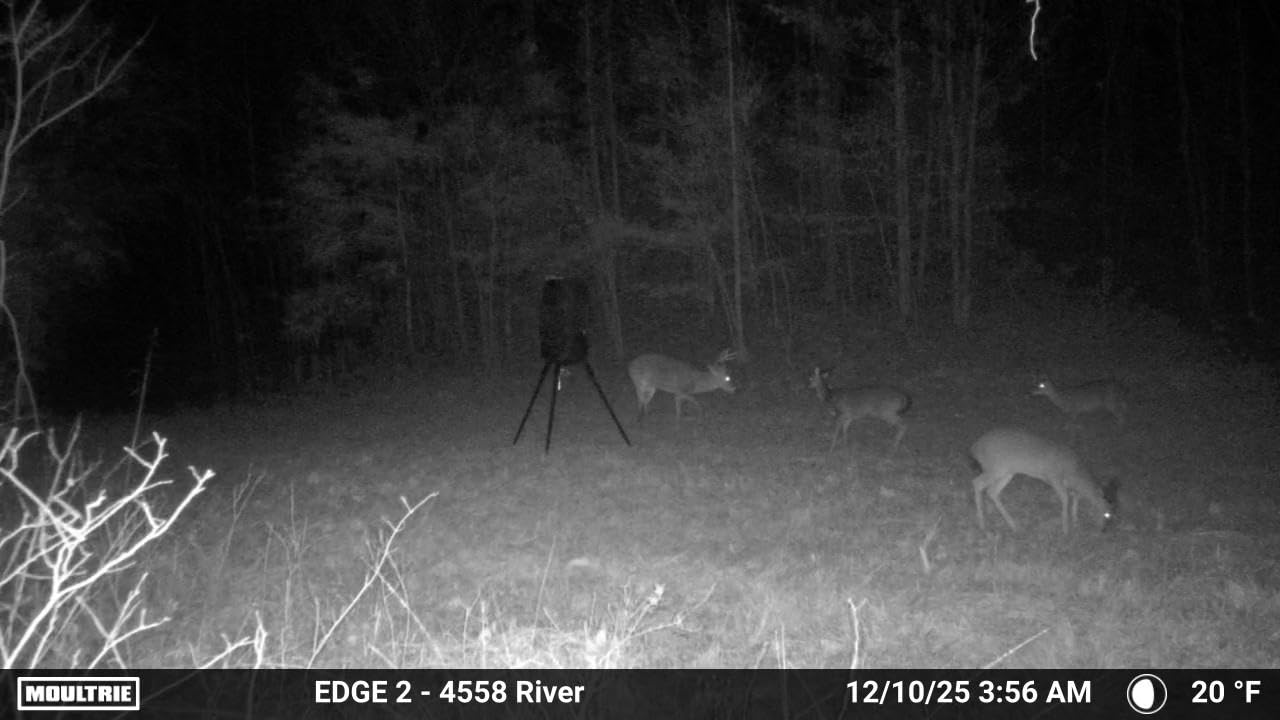
A 50 degree lens is narrow for an open plot, so this camera belongs on a defined movement line. Aim it at a scrape, a funnel between two timber edges, or the trail where deer funnel into the plot from the woods. That narrow cone is a feature in that position: every frame is a usable side-on buck shot instead of a wide field containing one distant animal.
Before you buy anything cellular, stand at the exact mount point with your own phone and confirm you have bars. Coverage maps are optimistic in rolling timber and canyons, and the discovery that your plot is a dead zone usually happens after the camera is already strapped to a tree.
Where it falls short
The subscription is the whole ballgame, and it is a per-camera ongoing cost rather than a one-time purchase. Forum complaints about cellular cameras are overwhelmingly about plan economics at multi-camera scale, so if you plan to run four or five of these, the running cost can exceed the hardware cost several times over in a season.
The 50 degree viewing angle and the 1080p video ceiling are real limits next to the 4K WiFi models here, and the IP65 housing sits one notch below the IP66 bodies most competitors ship. Solar and battery accessories are sold separately too. If your plot is wide open, or you want antler detail from across a large field, this is the wrong shape of camera.
4. CEYOMUR 4K 68MP Solar WiFi Trail Camera — Best for Night Detail Without Cell Service
CEYOMUR 4K 68MP Solar WiFi Trail Camera, Game Camera with 32GB TF Card
68MP stills and 4K video
Solar plus 5200mAh cell
0.1s trigger, 3 PIR sensors
850nm infrared
Pros
- Solar panel and internal battery remove battery swaps entirely
- 68MP stills and 4K video with sound at 30fps
- 850nm infrared gives clearer night footage than 940nm units
- 0.1s trigger across a 120 degree zone captures approach pass and exit
- 32GB card pre-installed and a two year warranty
Cons
- 850nm infrared emits a faint red glow rather than being no-glow
- Only two high power IR LEDs so night range is shorter than most
- Built-in WiFi reaches only about 33 ft
- Needs an 8 hour USB charge before the solar panel takes over
The defining feature is power. A solar panel sits on the top of the housing and charges a built-in 5200mAh battery, with four AA cells as backup for cold snaps or long stretches of overcast weather. Once that initial charge is in, the camera is a set-and-forget device, which is the honest answer to the cold-weather battery anxiety that shows up in every hunting forum thread about cameras dying in February.
Image quality is the second argument. Still resolution is quoted at 68MP and video records 4K with sound at 30fps in up to three-minute clips. The trigger is 0.1 seconds across a 120 degree zone with three PIR sensors, and a one to ten photo burst setting lets you capture the full arc of an animal walking through rather than a single ambiguous frame.
Night performance is where this camera makes its case, and the reason is infrared wavelength rather than raw range. It uses 850nm LEDs, which several owners say produce clearer night footage than 940nm-based cameras. The trade is honest: 850nm emits a faint red glow instead of being fully invisible. If deer spooking is your concern rather than detail, read the no-glow section of the buying guide before choosing.
Connectivity is Bluetooth plus a short-range built-in WiFi hotspot, reaching roughly 33 feet, used to preview, download and change settings through the app without pulling the card. A 32GB TF card comes pre-installed and supports up to 256GB, the housing is IP66 rated, and there is a two-year warranty with a stated 24-hour support response.
Where we would mount it in a food plot
This suits a plot with no reliable phone coverage, where a solar panel and a large internal cell remove both the subscription and the battery logistics. Strap it high on a south-facing post with a clear sky above the panel, and expect the first week to be spent charging rather than filming — the internal battery needs about eight hours on USB before the solar panel runs the show.
Give it a mid-plot position with a long approach in frame, since three PIR sensors and a 120 degree zone reward distance. With only two high power LEDs, a subject at 40 to 50 feet will record more cleanly than one at the far fence line.
Where it falls short
Two LEDs is the constraint that defines this camera. Rated night range is about 20 meters and night capture is black and white, so a large plot with deer crossing at the far end will produce soft, low-detail frames. If your plot is wide and you need to identify a rack at 80 feet, pair it with a higher-LED camera rather than relying on it alone.
The 33 foot app range means you are standing at the tree for every download, which starts to feel like work after the second week. The faint red glow of 850nm infrared can spook deer at close range, and a minority of buyers find the extra bulk of the solar housing awkward on a slim strap. It also carries a much lower sales-rank movement than the other solar options here, so treat long-term parts support as uncertain.
5. MAXDONE Solar Trail Camera — Best All-In-One Solar Setup
MAXDONE Solar Trail Camera WiFi Bluetooth, 4K 64MP Night Vision Game Camera
64MP stills and 4K video
Solar plus 6000mAh lithium
0.1s trigger, 100 degree zone
65 ft low-glow infrared
Pros
- Attached solar panel and 6000mAh battery remove battery swaps
- Image and video quality praised as the best among moderately priced trail cams
- Free app with no subscription and local data storage
- Small lightweight body with both strap and swivel base mounting
- Sensitive detection and IR night vision reaching a useful distance
Cons
- App takes a long time to connect to the camera
- Power switch and card slot sit on the underside
- Case does not open like a traditional trail cam
- WiFi hotspot range tops out around 55 ft
Where the CEYOMUR is a panel plus a battery, the MAXDONE is closer to a single sealed object. The solar panel is permanently attached to the housing and feeds a built-in 6000mAh rechargeable lithium cell, so there is no battery compartment, no cartridge and no cold-morning screwdriver job. Owners consistently name that as the decisive feature, and it is a real one when you are checking a plot in month two.
Capture is 64MP stills and 4K video at 30fps, with a 0.1 second trigger over a 100 degree detection angle and a five-shot burst. Owners rate the image quality as the strongest among moderately priced cameras, and the 18 infrared LEDs deliver about 65 feet of low-glow night vision, which is a sensible compromise between range and spooking.
Control runs over Bluetooth and WiFi 6 through a built-in hotspot reaching roughly 55 feet, with a free app and no subscription and data stored locally. A 32GB TF card is pre-installed and supports up to 256GB, and extras include timestamps, time-lapse, programmable operating hours, audio recording, a programmable detection zone, loop recording and password protection.
That programmable detection zone deserves attention on a food plot, because narrowing the active area to the funnel is the single most effective way to control how many photos a busy plot generates. The housing is IP66 rated for rain, snow and heat, and the body measures under six inches long, so it mounts on a slim strap or the included swivel base.
Where we would mount it in a food plot
This is our pick for a plot you genuinely cannot visit often, because the power system means the only reason to walk in is to check the card. The 100 degree zone and five-shot burst work well over a mineral lick or seed pile where animals linger rather than pass through, since the burst catches head turns and body language instead of one departing frame.
Mount it at four feet with a slight downward tilt and keep the solar panel clear of the strap buckle and any overhanging branch. A partial day of shade can be the difference between a full season of recordings and a camera that goes quiet in the second month.
Where it falls short
The app is the main friction point. Owners report a long connection time before the camera responds, and first-time WiFi setup requires the phone to be held almost against the camera. The 55 foot hotspot range is also short enough that you are physically at the tree for downloads.
Everything is on the underside, including the power switch and the card slot, which is awkward on a tripod and means you cannot open the case the way you would a traditional trail camera. A minority of owners report cameras with failing infrared capture and black-screen recordings, so test night recording before you rely on it for rut data.
6. GardePro E8 2.0 WiFi Trail Camera — Best for Quiet Detection and Long WiFi Reach
GardePro E8 2.0 WiFi Bluetooth Trail Camera, 4K Video, Dual Antennas
64MP stills and 4K video
WiFi 6 reach to 165 ft
0.1s trigger, 120 degree zone
940nm no-glow IR
Pros
- Strong WiFi reach with reliable connections reported from 60 yards
- Very few false triggers in owner reports
- Good day and night image quality with a wide deep IR spread
- Picks up sound well and detects small animals
- Durable stout case that has survived harsh winters
Cons
- Battery life falls well short of the advertised claim
- App connection takes a minute or more
- Some reports of trigger speed nearer 1-2 seconds in practice
- Latest app update repeatedly prompts for location services
The E8 2.0 is the step up from the E6 2.0, and the difference is reach. It uses WiFi 6 with dual antennas, quoted to about 165 feet in open areas, and owners report reliable connections from 60 yards with a clear line of sight. On a large open food plot that means you can stand at the field edge and pull the day’s images without walking to the camera.
Capture is 64MP stills and 4K Ultra HD video with synchronised audio, on a 0.1 second trigger across a 120 degree PIR angle with bursts of up to five frames. That speed matters at a plot, where a spooked buck is already moving at a fast walk by the time the second frame lands.
The reason this one earns a place in a food plot roundup is the false-trigger rate. Owners repeatedly describe very few false triggers, which sounds trivial until you remember that a wind-blown sapling across a detection cone can eat an entire week’s card. The lens is narrower at 70 degrees than the E6 2.0, so it rewards careful aiming rather than covering everything.
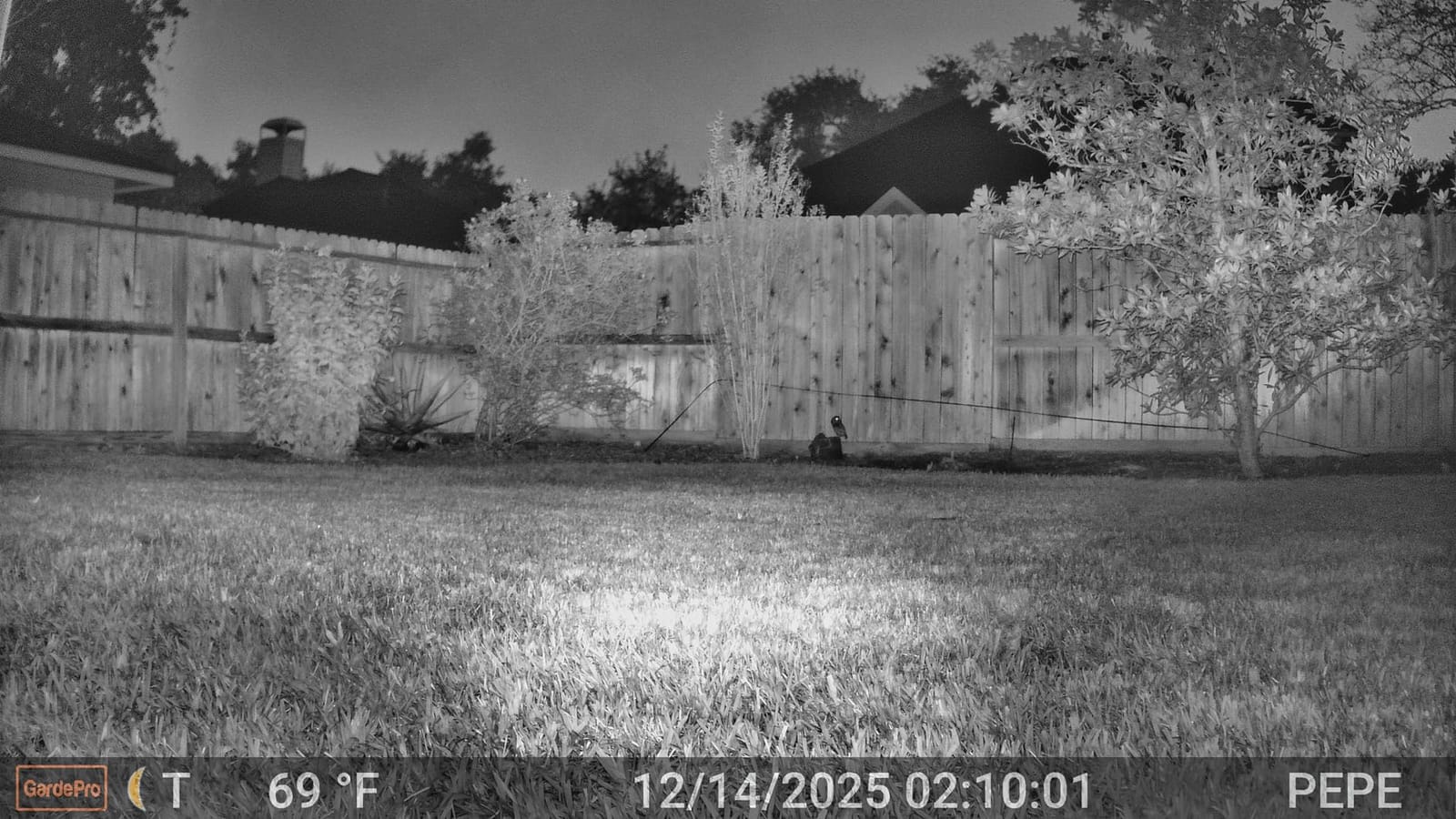
Night is handled by 36 invisible 940nm no-glow infrared LEDs reaching about 100 feet, the best no-glow range in this group. Owners praise the wide, deep infrared spread and report that the microphone picks up sound well enough to identify what disturbed an animal. The housing is IP66 rated, and the case is described as stout enough to have survived harsh winters and heavy rain.
Where we would mount it in a food plot
Put the E8 2.0 on a plot edge with the 70 degree lens pointed along the timber transition rather than into the field. A browse line is where a camera earns its keep, because the animal stops and you get a clean side-on profile with the antler rack separated against a dark background instead of blending into standing corn.
Because the LCD sits deep inside the housing, aim it from the app rather than the screen. The long WiFi reach means you can fine-tune the frame from across the plot, which is the main reason to choose this over the cheaper E6 2.0.
Where it falls short
Battery life is the top complaint and it is a significant one: owners report real-world performance falling well short of the advertised claim, so plan on more frequent swaps than the spec suggests or add the compatible solar panel. App connection taking a minute or more is the second recurring note, and some users report connectivity failures answered by automated support emails.
Some buyers also find the practical trigger speed nearer one to two seconds than the advertised 0.1s, and moving fog can trigger the camera and appear as floating artifacts. The most recent app update repeatedly prompts for location services with no way to disable it. None of this ruins the camera, but it is the reason it sits below the E6 2.0 despite better night range.
7. SEHMUA 2K Live Streaming Trail Camera — Best for Watching a Plot Live
SEHMUA Trail Camera, 2K HD Live Streaming Game Camera AI Animal Detection
2K live stream to phone
4G LTE on three carriers
4W solar with 7800mAh cell
850nm infrared
Pros
- Live 2K video streaming and phone remote access through the app
- 4G LTE works on Verizon
- T-Mobile and AT&T with a free trial period
- 4W solar panel supplies continuous power
- AI species recognition and activity prediction in the app
- 0.2s trigger with an adjustable PIR sensor and 120 degree coverage
Cons
- Data plan required after the trial and it cannot be shared between cameras
- Cloud storage and AI species identification are paywalled after the trial
- SIM card is fixed and works only in the US
- microSD card up to 128GB is not included
Live view is the difference here. Most cellular cameras send you a photo when something triggers. This one streams 2K video to your phone on demand, so during the rut you can open the app at a scrape and watch a buck work it in real time. That is a genuinely different way to scout, and it is the reason this camera is worth a plan when the other cellular option here only sends stills and short clips.
The connection runs over 4G LTE on Verizon, T-Mobile and AT&T with a built-in prepaid SIM and a trial period before billing starts. The catch, and it is the one that shows up in every review of this camera, is that each camera needs its own separate plan and plans cannot be shared. That makes a single-camera deployment reasonable and a five-camera network expensive.
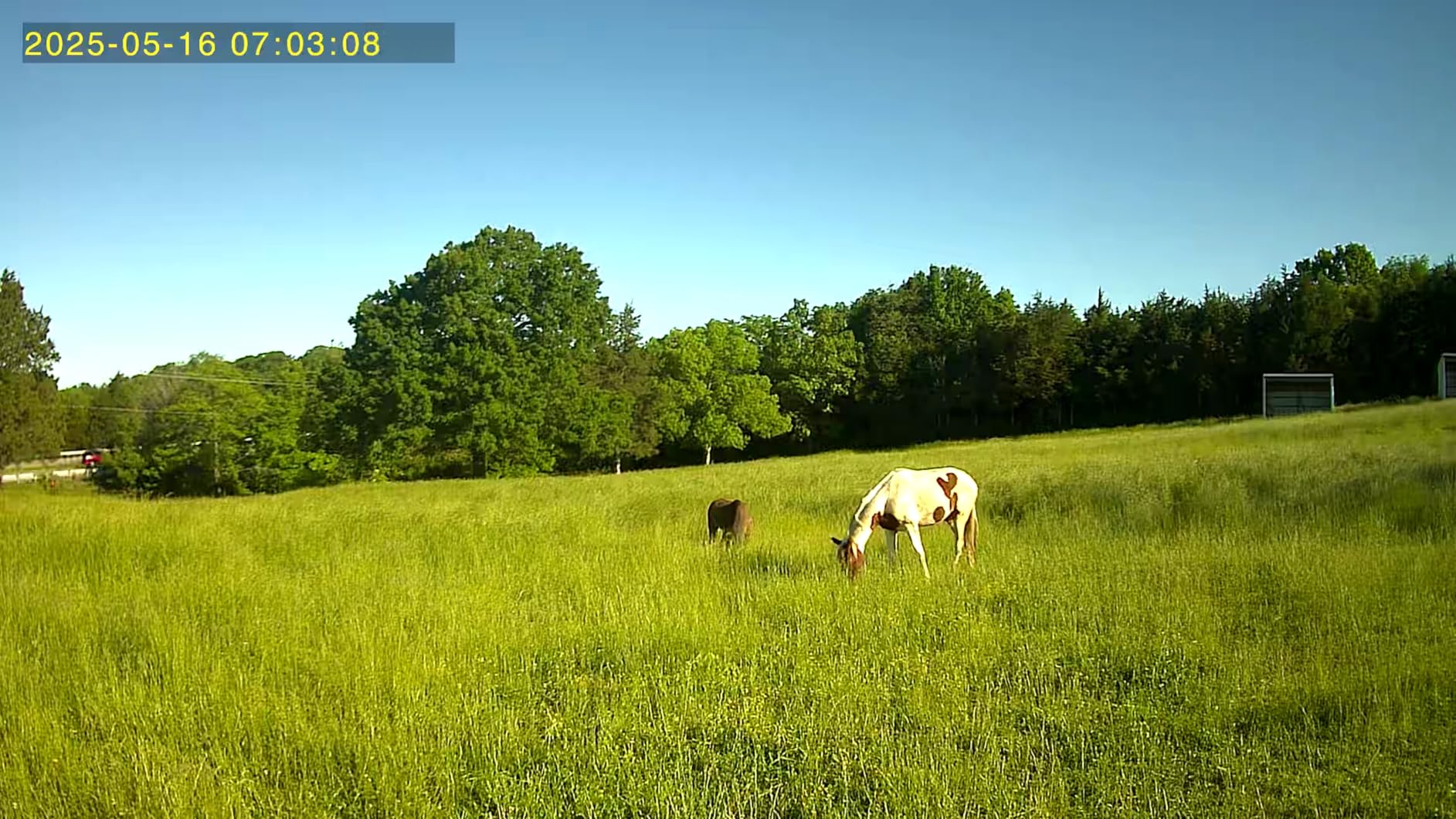
Power is handled by a 4W solar panel and a 7800mAh battery, so the camera is effectively maintenance-free after installation. Trigger speed is 0.2 seconds with an adjustable PIR sensor, coverage is 120 degrees, and night vision runs to about 82 feet on 850nm low-glow infrared with a 3x hybrid zoom for pulling detail out of a distant animal.
The app adds AI species recognition and a seven-day activity prediction, though species identification and cloud storage become paywalled features after the trial window. Storage is either a microSD card up to 128GB, which is not included, or cloud storage with its own trial. The housing carries an IP66 rating for year-round outdoor use.
Where we would mount it in a food plot
Live streaming pays off when the action happens in a predictable spot, so this belongs over a scrape, a mineral lick or a bait station rather than spread across an open field. A 120 degree field with a 3x zoom means one camera can confirm species and rack size without you driving over to read the card.
Because it is solar and cellular, it also works as a security camera on a barn or equipment row, which is a use we cover separately in our trail cameras for property security and wildlife guide. Check coverage at the mount point before you commit.
Where it falls short
The cost stack is the honest drawback. A per-camera data plan is required after the trial, the plan cannot be shared, and the cloud storage and AI species identification that make the app useful are themselves subscription features. Buyers who expected one payment are the source of most one-star reviews on this camera.
The SIM is fixed and non-detachable, and the camera is US-only, which matters for anyone reading this from Canada or Mexico. There is also no memory card in the box, and the 850nm infrared emits a faint red glow at close range. Night capture is also lower resolution than the 4K stills models elsewhere in this list.
8. Digitgarden 4K 48MP WiFi Trail Camera — Most Versatile for Basic Plot Coverage
Digitgarden WiFi Trail Camera 4K 48MP, Night Vision Game Camera for Wildlife Hunting, 0.1s Trigger IP66 Waterproof (32GB Card Included)
48MP stills and 4K video
940nm no-glow IR to 100 ft
0.05-0.3s trigger to 98 ft
32GB card in box
Pros
- 940nm invisible infrared with a 100 foot night range and no red glow
- 4K video and 48MP stills owners describe as exceptional for the price
- Built-in WiFi with an app lets you check footage without climbing to the camera
- Fast trigger catches moving subjects
- 32GB card and card reader included in the box
Cons
- WiFi range repeatedly reported as dropping around 30 feet
- Camera will not record while the app is open
- SD card recognition is unreliable on some units
- Shutter speed is slow and not adjustable so animals are caught mid-pass
The Digitgarden does something the pricier WiFi cameras do not: it gives you a 100 foot no-glow night range on a genuinely low budget. The 940nm invisible infrared, paired with adaptive lighting, produces a clean night image without the red eye-shine that puts a deer on alert, and owners consistently single that out as the standout feature.
Day capture is 4K video and 48MP stills, and the trigger is quoted between 0.05 and 0.3 seconds with a PIR sensor covering up to 98 feet. There is no monthly fee and no home network requirement: the camera runs its own local WiFi signal that you join with the TrailCam Pro app to preview, adjust settings and download files.
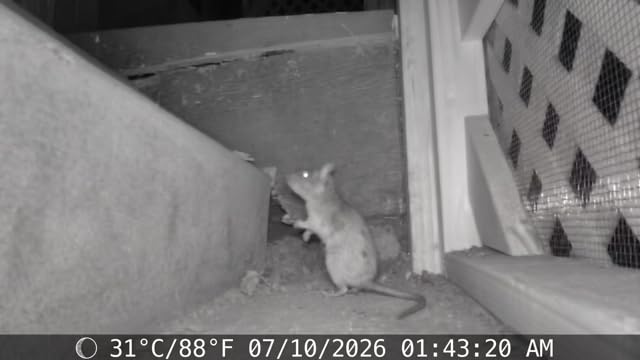
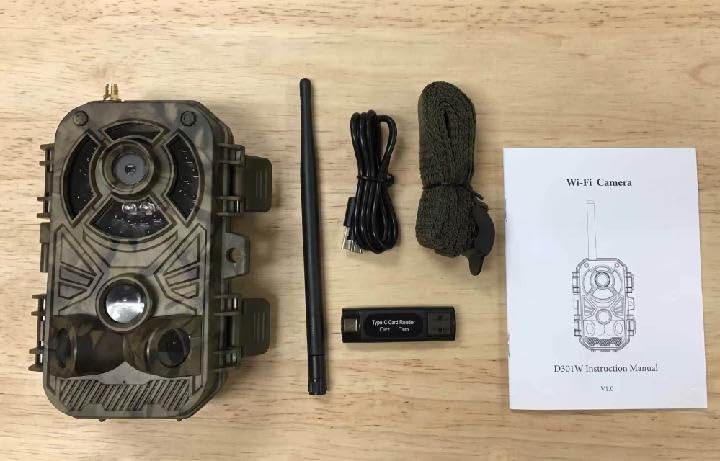
A 32GB microSD card and a card reader are in the box, which removes the most common first-day trip to the shop. Other features include custom monitoring periods, timestamps, password protection and loop recording, and the housing is IP66 rated for rain, snow and desert heat.
What makes it a budget pick rather than a mistake is the trade you are making. You give up WiFi range, shutter speed control and a degree of build quality, and you keep resolution, night reach and the app. On a plot where you need to know how many deer are using the seed pile and nothing more, that is a sensible exchange.
Where we would mount it in a food plot
Treat it as a coverage camera for a single corner or a plot entrance. Bring the 98 foot PIR range to bear by aiming across the plot rather than along its edge, and use the 100 foot infrared throw on a plot no wider than about 60 feet, where your subject will be inside the lit area rather than at the edge of it.
Download files in batches of a few rather than trying to pull a full day at once, since short WiFi range and slow shutter speed are its two weak spots. The app’s live view doubles as your aiming screen, which matters because there is no usable rear display.
Where it falls short
The WiFi range is the headline problem, repeatedly reported as dropping around 30 feet. That is a genuine climb up a tree every time you want to check the plot. Worse for a scouting workflow, the camera will not record while the app is open, so an hour spent sorting images is an hour of missed deer.
Shutter speed is slow and not adjustable, so animals are often caught mid-pass rather than head-on, and that limits how useful the frames are for antler scoring. Durability reports are mixed, with a failed screen after a year and a unit that stopped taking photos after two. SD card recognition is also unreliable on some units unless you change adapters.
Where to Mount a Camera in a Food Plot
Most disappointing food plot photos are placement failures, not hardware failures. A blown-out white buck at forty feet usually means the camera was aimed at an animal closer than its flash can expose for. Work through these five positions in order and the picture quality changes on its own.
1. The plot entrance funnel. This is the highest-value position on any food plot, because it is where deer commit and where you learn travel direction. Mount four to five feet up on a post inside the funnel, angled diagonally so the detection cone covers the approach and the exit without covering open field.
2. The edge transition. Where timber meets the plot boundary, a camera on the browse line records animals paused and facing side-on, which is the only angle where antler size is readable. Set it on the woodland side of the edge, aimed along the transition rather than out into the plot.
3. The corner. Where two trails meet at a plot corner, a single wide-angle camera covers both approaches. This is where the 110 and 120 degree lenses earn their place, and where a narrow 50 degree lens like the Moultrie is the wrong tool.
4. Over the mineral lick or seed pile. Animals linger here instead of passing through, so a burst setting and a fast trigger catch behaviour instead of a departing frame. Keep the camera close enough that the animal falls inside the flash range rather than beyond it.
5. Downwind of the attractant. If you can identify which way the prevailing wind runs, position the camera so the animal is side-on to the lens rather than walking toward it. A head-on approach at night is the most common cause of both blank shots and featureless black-and-white frames.
On mounting hardware, strap to a post rather than a tree wherever the land allows. A post can be moved between plots at the end of the season, it does not scar a tree, and it keeps the camera at a consistent height, which is what makes your time-lapse comparisons meaningful next year. Set the strap so the camera sits level with a slight downward tilt, not nose-up, and check the aim in the app before you walk away.
Cellular or SD Card: Which One Fits Your Plot
Carrier coverage is the first filter and it is the one people skip. Stand at the exact spot where the camera will hang, on the same carrier as your phone, and confirm you have usable signal. A cellular camera in a pocket of thick timber will transmit some images and silently drop others, and you will not know which deer you missed until the season is over.
If coverage is solid, cellular earns its cost in convenience. You check the plot from the truck, you learn which buck is working the scrape, and you can change settings before a visit instead of during one. That is worth a monthly plan for a plot with heavy deer traffic, and it is the reason the Moultrie Edge 2 and the SEHMUA exist in this roundup at all.
If coverage is marginal or absent, the honest answer is that no subscription plan fixes the problem. In that case a no-plan camera is not a compromise, it is the correct choice. The WOSPORTS and the CEYOMUR both send nothing over a network and will run all season without a bill, and the cost you pay is a scheduled walk to the tree.
Forum consensus splits along the same line: cellular for plots with reliable service, SD cards for low-traffic or remote plots. The mistake is buying a cellular camera for a dead zone because the spec sheet was better. Our cellular trail camera comparison covers the coverage and cost questions in more depth if you have confirmed signal.
How to Choose the Right Trail Camera for Your Food Plot
Match the lens to the plot shape before anything else. An open field with deer arriving from any direction needs wide coverage and a camera that will not be triggered by every stalk of wind-blown vegetation. A defined trail, scrape or funnel needs a narrower lens pointed at a specific spot, because a wide lens in a narrow lane wastes most of its frames on the trees beside it.
Know the difference between detection range and flash range. Detection range is how far the motion sensor notices movement. Flash range is how far the infrared light actually illuminates a subject. A camera with 100 feet of detection and 65 feet of flash will happily record a blank frame of a buck standing at 90 feet, which is the single most common complaint in owner reviews of every brand.
Choose 940nm infrared for no spooking, 850nm for clearer night detail. 940nm is invisible to deer and to human eyes, so nothing glows red. 850nm puts out a faint red eye-shine but produces noticeably clearer night images. Choose 940nm when deer pressure is high or the plot is close to a road, and 850nm when identification quality matters more.
Plan power for the whole season, not the first week. Cold weather drains cells faster, and dead batteries in February are the failure mode hunters complain about most. Eight lithium AA cells give the longest run, a rechargeable lithium cartridge or an attached solar panel removes the swap entirely, and plain alkaline cells are the shortest answer of the three.
Budget photo volume as a settings problem. A busy October plot can generate hundreds of images in a week, which is how owners end up hitting a plan cap or filling a card with frames of nothing. The fix is a shorter multi-shot burst, a narrowed PIR zone around the actual approach, and higher motion sensitivity. Owners also report PIR over-sensitivity as the most common first-season mistake, and it is entirely avoidable.
Set a first-season timeline. Install well before the rut rather than the week of it, run a time-lapse and a motion mode side by side for the first week to learn your baseline activity, and pull the cameras before the season ends so you are not replacing batteries in a hard freeze. The data is only useful if you collect it before you need it.
On the recurring question of Moultrie versus Tactacam, the practical difference sits in the app and the plan rather than the hardware. Moultrie is widely reported as dependable over multi-year use with the strongest app ecosystem, including species sorting, moon phase overlays and mapping tools, and its cameras carry USA-based support. Tactacam is equally well regarded in the field for reliability. Decide on which app you will actually open every week and how you feel about per-camera plan pricing at the scale you intend to run.
Before You Hang a Camera: Rules and Ethics
Trail camera use is regulated differently in every state, and the rules are changing. Do not assume a camera that is legal on your own ground is legal everywhere you might hang one. Before installing, check your state game commission for current restrictions on camera use for scouting and for location sharing, and follow any registration or reporting requirements that apply to the property you are hunting.
On ethics, the guidance from deer hunting organisations such as the Boone and Crockett Club is the standard most hunters aim for: a cell camera used to locate and share the location of a live deer for the purpose of hunting it is a real-time scouting tool, and it is not considered fair chase in the eyes of many. The same camera used to count and manage the deer living on your own land is a wildlife management tool. How you use it decides which one it is.
Two practical habits cover most of the risk. Keep camera data on your own property and off any publicly shared mapping platform where deer pressure builds, and remove cameras at the end of the season rather than leaving them running year-round on ground where a non-hunter might reasonably expect privacy.
Frequently Asked Questions
What is the number one rated trail camera for a food plot?
For most food plots the GardePro E6 2.0 is the strongest all-round choice, because it pairs 4K video and up to 64MP stills with a 0.3 second trigger, a 110 degree detection zone and 940nm no-glow infrared, and it needs no monthly plan. If your plot has no usable cellular coverage, the WOSPORTS 64MP 4K is the safer pick because it has no connectivity to fail. If you need images on your phone, the Moultrie Edge 2 is the cellular option in this group.
Should I buy a cellular trail camera or an SD card camera for a food plot?
Buy cellular if your plot has solid coverage and heavy deer traffic, because you will check activity from your phone instead of scheduling card swaps. Buy an SD card camera if coverage is marginal or absent, or if the plot sees light traffic. A cellular camera in a dead zone will silently drop images, and no plan fixes that.
Can a trail camera work without cell service in my woods?
Yes, if you choose a non-cellular model. The WOSPORTS 64MP 4K has no connectivity protocol at all and records to an SD card you retrieve, and the CEYOMUR and MAXDONE use a short-range local WiFi hotspot that reaches roughly 33 and 55 feet respectively. Only true cellular cameras such as the Moultrie Edge 2 need a network, and they need a data plan on top of the camera.
How high should a trail camera be mounted in a food plot?
Four to five feet is the working range for a food plot, mounted on a post and given a slight downward tilt. Aim the lens across the approach or along the edge transition rather than straight at the animal so you get side-on frames. Aiming is best done from the app preview, and you should walk the trigger zone before you leave.
How do I stop a trail camera from taking too many photos?
Narrow the PIR detection zone to the actual approach, raise the motion sensitivity a notch or two, and shorten your multi-shot burst from a long sequence to two or three frames. On a busy plot this is usually a settings problem rather than a camera problem, and owners report over-sensitive PIR as the most common first-season mistake.
What state is banning trail cameras?
Regulations on trail camera use, particularly for scouting and for sharing deer locations, vary by state and are subject to change. Check your state game commission for current rules before installing a camera, and follow any registration or reporting requirements that apply to the land you are hunting. Treat guidance from hunting organisations such as the Boone and Crockett Club on fair chase as separate from the legal question and follow both.
The Verdict on the Best Trail Cameras for Food Plots
After a season of working through eight cameras, the best trail cameras for food plots separate cleanly by plot shape rather than by price. The GardePro E6 2.0 wins the general case with 4K video, 64MP stills, a 0.3 second trigger and no monthly plan. The WOSPORTS 64MP 4K is the pick when you want zero subscriptions and a screen you can actually aim with. The Moultrie Edge 2 is the answer when you need your plot reporting to your phone.
For remote plots with no service, the CEYOMUR and MAXDONE remove the two problems that end most seasons early: a dead battery and a camera that cannot send anything. For live viewing during the rut, the SEHMUA streams in 2K if you accept a per-camera plan and a US-only SIM. The GardePro E8 2.0 handles a large open plot with long WiFi reach, and the Digitgarden covers a basic corner at the lowest outlay.
Before any of them goes up, check coverage at the mount point, aim the camera from the app preview, and set the PIR zone to the actual approach. Those three steps decide more about how useful your season’s data will be than another two megapixels ever will. Check your state game commission on camera rules, and check our cellular trail camera comparison if you are still deciding whether a plan fits your land.