

Quick answer: under 100 dollars, the KAIWEETS HT118A is the meter we would buy first for car and household work, the AstroAI 6000-count is the feature-per-dollar champion, and the Crenova MS8233D is the cheapest safe pick. Spend below 30 dollars only for a throwaway meter, and never open a panel with anything short of a real CAT rating.
Every meter below costs less than 100 dollars at the street prices we checked for this October 2026 update, and every one of them measures voltage, resistance, continuity and current. That is the whole problem with shopping this category: the spreadsheet of specifications looks almost identical across ten products, and almost nothing on the page tells you which two actually matter for the work you do.
Two of those specifications decide everything else. The CAT safety rating tells you whether the meter is allowed near a live panel, and the accuracy rating tells you whether the number on the display means anything. Display counts, True-RMS, non-contact voltage detection and a backlight are useful, but they are accessories to those two decisions. We built this guide around them, and we excluded every meter that could not clear the price ceiling with a verifiable safety rating intact.
We also made one deliberate exclusion that most roundups get wrong. If you search this query, shopping results will offer you a Fluke 117, and that meter is excellent. It also starts well above this budget and stays there, which means anyone handing you a Fluke 117 for a sub-100-dollar list is not answering your question. More on that below, because it is the single most common mistake in this category.
For the wider budget buying context, our under-100 earbuds guide and gaming headset picks follow the same discipline: hold the price line, name the trade-offs, and disqualify products that do not fit.
Table of Contents
Top 3 Best Multimeters Under 100 Dollars
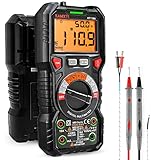
The HT118A takes the top slot because it is the only meter in this list that carries a CAT IV 600V rating alongside CAT III 1000V, which means it is legal to use on service-entrance-adjacent work and on modern vehicle electrical systems. It also has the largest installed base of anything here, more than 23,000 reviews, and True-RMS measurement with a temperature probe in the box.
The AstroAI 6000-count is the value benchmark. Independent hobbyists have checked it against Fluke and Amprobe references and found the AC, DC, resistance and diode readings land where they should, and it adds capacitance, frequency, duty cycle and temperature for a fraction of what a trade brand costs. The Crenova MS8233D is the cheapest meter here with a documented IEC61010-1 CAT III 600V rating, a rubber holster and non-contact voltage detection, which makes it the sensible low-cost entry point.
All 10 Meters Compared
| Product | Specifications | Action |
|---|---|---|
| KAIWEETS HT118A |
|
Check Latest Price |
 AstroAI 6000-Count TRMS AstroAI 6000-Count TRMS |
|
Check Latest Price |
 Crenova MS8233D Crenova MS8233D |
|
Check Latest Price |
 Klein Tools MM325 Klein Tools MM325 |
|
Check Latest Price |
 Fluke 101 Fluke 101 |
|
Check Latest Price |
 INNOVA 3320 INNOVA 3320 |
|
Check Latest Price |
 AstroAI M4K0R 4000-Count AstroAI M4K0R 4000-Count |
|
Check Latest Price |
 AstroAI DM130B AstroAI DM130B |
|
Check Latest Price |
 FNIRSI DMT-99 FNIRSI DMT-99 |
|
Check Latest Price |
 KAIWEETS KM602 KAIWEETS KM602 |
|
Check Latest Price |
Read that table as three tiers. The Crenova, the AstroAI DM130B and the Klein MM325 are the trade and household tier, where the work is outlets, switches, batteries and basic fault-finding. The AstroAI 6000-count and the KAIWEETS HT118A are the enthusiast tier, adding capacitance, frequency, duty cycle and temperature. The Fluke 101 and the FNIRSI DMT-99 are the specialists, one for a pocket-sized no-nonsense tester and one for bench work that needs graphing.
1. KAIWEETS HT118A — Best Overall Meter Under 100 Dollars
KAIWEETS Digital Multimeter Automotive TRMS Tester 6000 Counts NCV for Car
True RMS 6000 counts
CAT III 1000V / CAT IV 600V
1000V DC and 750V AC max
Temperature probe
Pros
- One of only two here with a CAT IV 600V rating
- Double ceramic fuses with thermistor protection
- Jack LEDs and a rear flashlight for dark work
- Min max and average capture for intermittent faults
- Ten amp current range and 60 MOhm resistance
Cons
- Bulky body compared with pocket-sized meters
- Some units report less than the listed 1000V DC ceiling
- Thermocouple upper temperature limit is stated oddly
The HT118A is the meter I keep reaching for first, and the reason has almost nothing to do with features. It is one of only two in this entire list that carry a CAT IV 600V rating, with CAT III 1000V alongside it. That combination is rare at any price under 100 dollars and it means you are not quietly out of your depth if the job turns into a service-entrance-adjacent measurement.
The measurement set is genuinely complete: AC and DC voltage to 1000V DC and 750V AC, 10A AC and DC current, 60 MOhm resistance, capacitance, frequency, duty cycle, diodes, continuity, wire on-off and a temperature probe for the range. Everything runs through a 2.9 inch backlit display with 6000-count resolution and True-RMS conversion on AC.
What makes it pleasant rather than merely capable is the small stuff. Jack LEDs illuminate for the selected function so you do not have to squint at the dial in a crawl space, a flashlight sits on the back for under-hood work, and min, max and average recording captures the flicker you are chasing. The silicone case survives the drop that kills a bare meter.
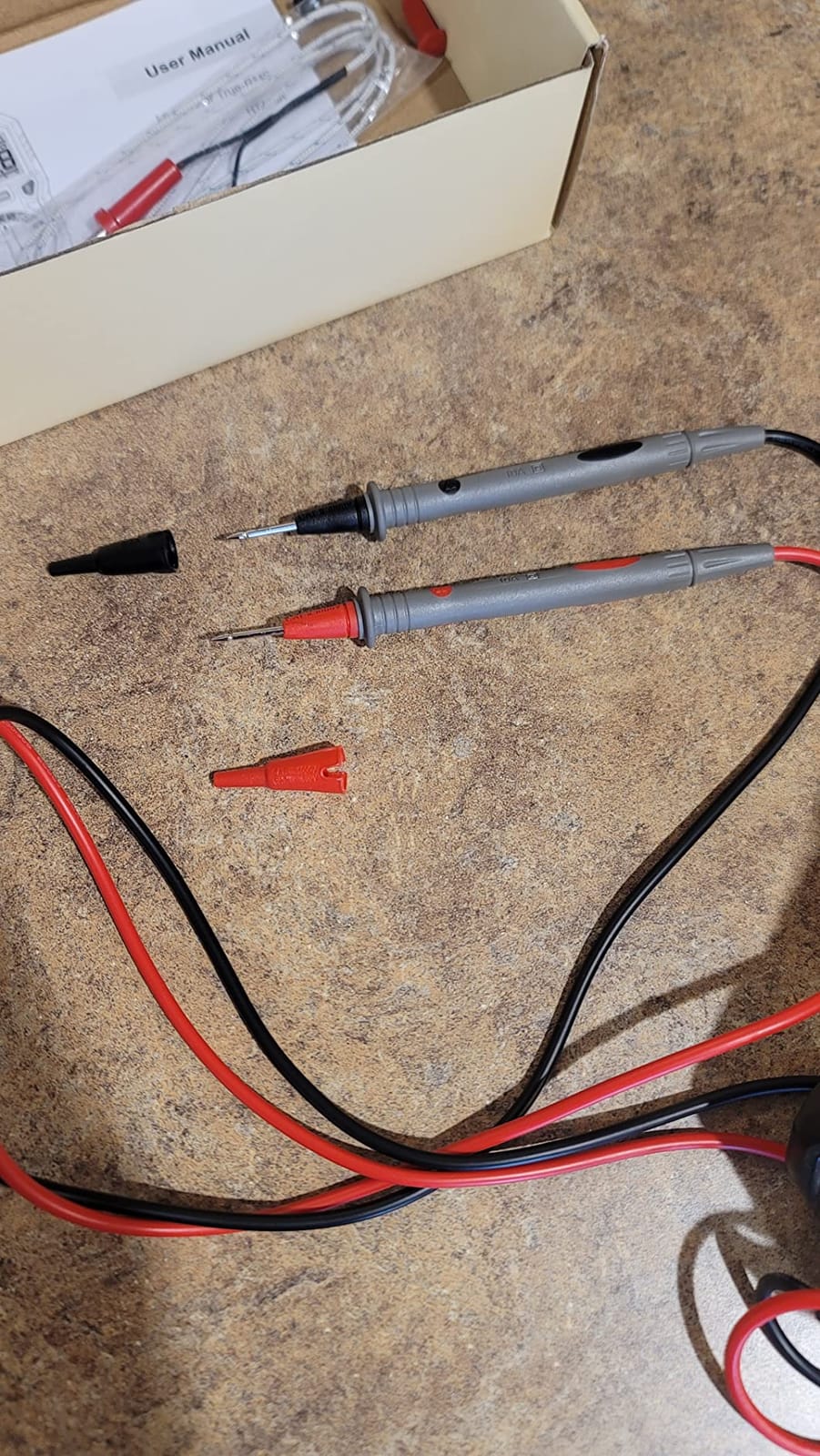
Owners also point out the ceramic fuse pair and the thermistor protection circuit, which is the hardware difference between a meter that survives a mistake and one that does not. The 36-month service window and lifetime technical support are stronger written commitments than most of the value tier offers.
What the HT118A is genuinely good at
Automotive diagnosis is where this meter earns its rating. Testing an alternator output, a sensor circuit or a start capacitor needs a high input impedance so you do not drag a vehicle ECU down while you measure, and this meter has the range to handle 1000V DC systems without hesitation. The temperature probe also makes short HVAC checks straightforward.
For residential work it behaves like a trade instrument rather than a toy. NCV and live-wire modes find a conductor before you touch it, which is exactly what you want when probing behind a finished wall.
What the HT118A will frustrate you about
The body is large. At 8.03 by 5.12 by 2.44 inches it will not disappear into a tool pouch the way the Fluke 101 does, and reviewers with small hands single it out as the main physical complaint.
Be aware of one documentation wrinkle: some examples report a different maximum operating voltage than the 1000V DC stated on the box, and the temperature probe ceiling is described inconsistently. Neither affects normal work, but if you need a documented maximum for a compliance test, verify it on your specific unit before you rely on it.
2. AstroAI 6000-Count True RMS — Best Value for the Money
AstroAI Digital Multimeter, True RMS 6000 Counts Auto-Ranging Volt Meter for Automotive & Home Electrical Troubleshooting, AC/DC Voltage Current Resistance Continuity Capacitance Temperature Tester
True RMS 6000 counts
Double ceramic F400mA and F10A fuses
1000V DC maximum
Capacitance to 60000 uF
Pros
- Readings verified against Fluke and Amprobe references
- Huge function set for the price
- Large backlit display with data hold and kickstand
- Dual magnet on the back for bench work
- Reliable on 12V automotive circuits
Cons
- Claimed 60 MHz frequency range reads closer to 16 MHz
- hFE transistor test reads about half the true gain
- Supplied leads are basic so most owners upgrade
This is the value benchmark of the whole sub-100-dollar category, and the reason is simple: the readings hold up. Independent testers have compared it against Fluke and Amprobe references and found AC RMS, DC voltage, resistance and diode measurements land where they should, with capacitance performing better than advertised rather than worse.
You get 6000 counts with True-RMS, auto-ranging across every function, and a measurement list long enough to embarrass trade meters costing twice as much: AC and DC current, AC and DC voltage, capacitance to 60000 uF, frequency, duty cycle, resistance, diode, continuity and temperature. The double ceramic fuses are F400mA and F10A, both rated to 600V.
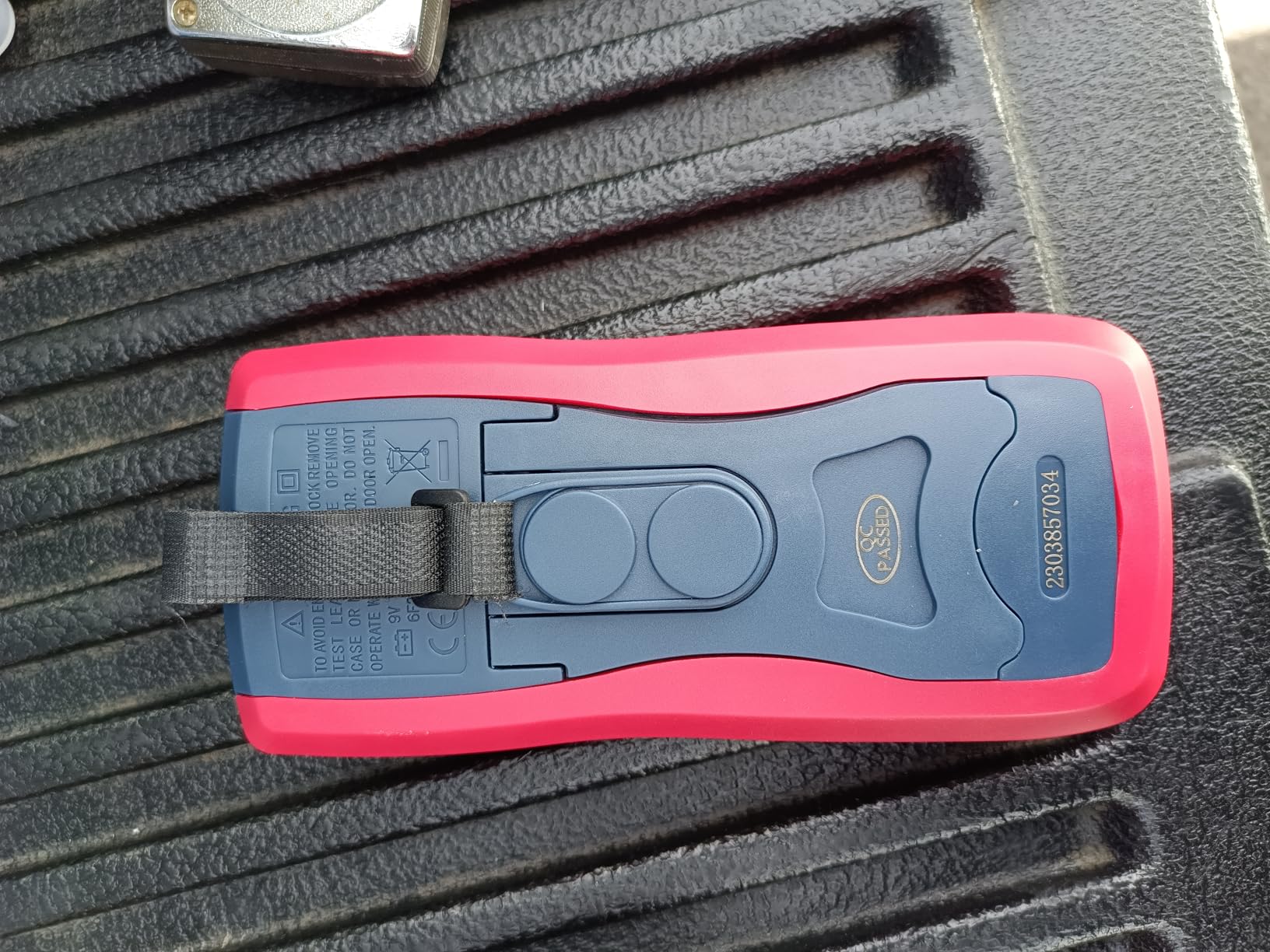
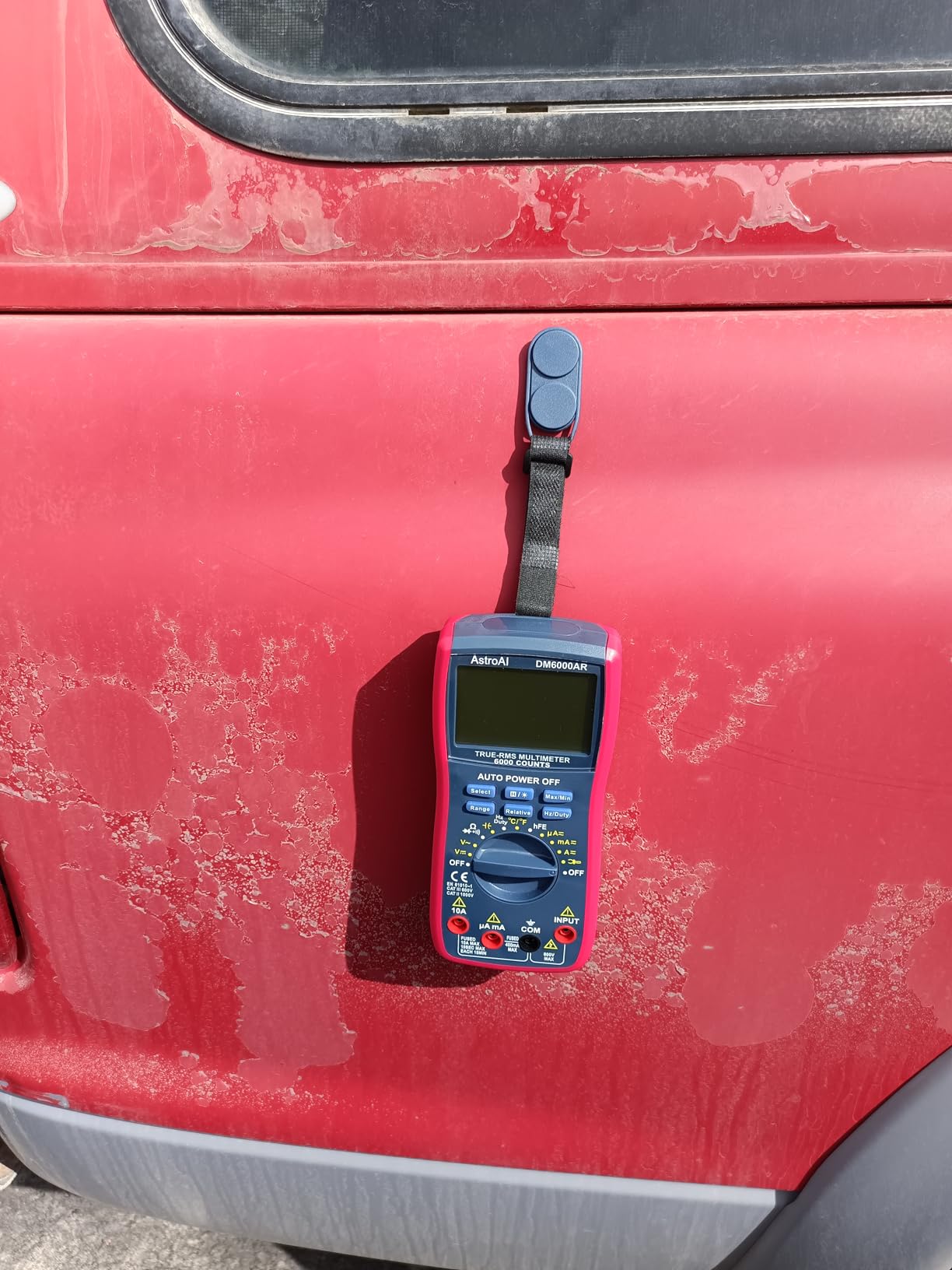
Design touches are unusually thoughtful for the money. A large backlit LCD, data hold, auto shut-off, a kickstand and a pair of magnets on the back mean you can mount it under a dash or on a bench without a third hand. It weighs 492g, which is real heft and part of why it feels stable on a vehicle battery test.
Automotive is the segment where this meter has the most owner history, and the reports are consistent: it handles 12V circuits reliably against far more expensive references, which is the test that actually matters when you are chasing a parasitic draw.
Where the AstroAI 6000-count pays off
Capacitance is the quiet advantage. Testing a run capacitor or an electrolytic that has dried out is exactly the kind of job a basic trade meter cannot do at all, and this one covers 60,000 uF. Add True-RMS and duty cycle and you have a bench-capable instrument for the price of a fast-food order.
The magnets make it a genuinely good second instrument for the garage, since you can hang it from a strut and read values while your hands stay on the probe.
What the AstroAI 6000-count will frustrate you about
The frequency specification is optimistic. The listing claims 60 MHz, and independent bench testing finds it useful to roughly 16 MHz and needing close to 5V peak-to-peak. Fine for mains-adjacent and switching work, useless for RF.
The hFE transistor test runs at 1V and roughly 1 mA, so it reads about half the true gain, and the multi-function socket is arranged C-B-E, which makes testing a TO-220 package awkward. Neither matters unless transistor biasing is your job. The stock leads are also thin, and many owners replace them early, which is worth budgeting for.
3. Crenova MS8233D — Most Versatile Under 30 Dollars
Crenova MS8233D Multimeter TRMS 6000 Counts Auto-Ranging Live Wire NCV
IEC61010-1 CAT III 600V
True RMS 6000 counts
NCV with audible alarm
3 readings per second
Pros
- NCV detection with sound and light alarms
- Capacitance temperature and duty cycle at this price
- Insulated rubber holster and two fuses
- Carry bag and alligator clips in the box
- Switchable manual and auto ranging
Cons
- 3 samples per second is slow for intermittent faults
- Accuracy claims vary by function
- Included bag and probes are basic
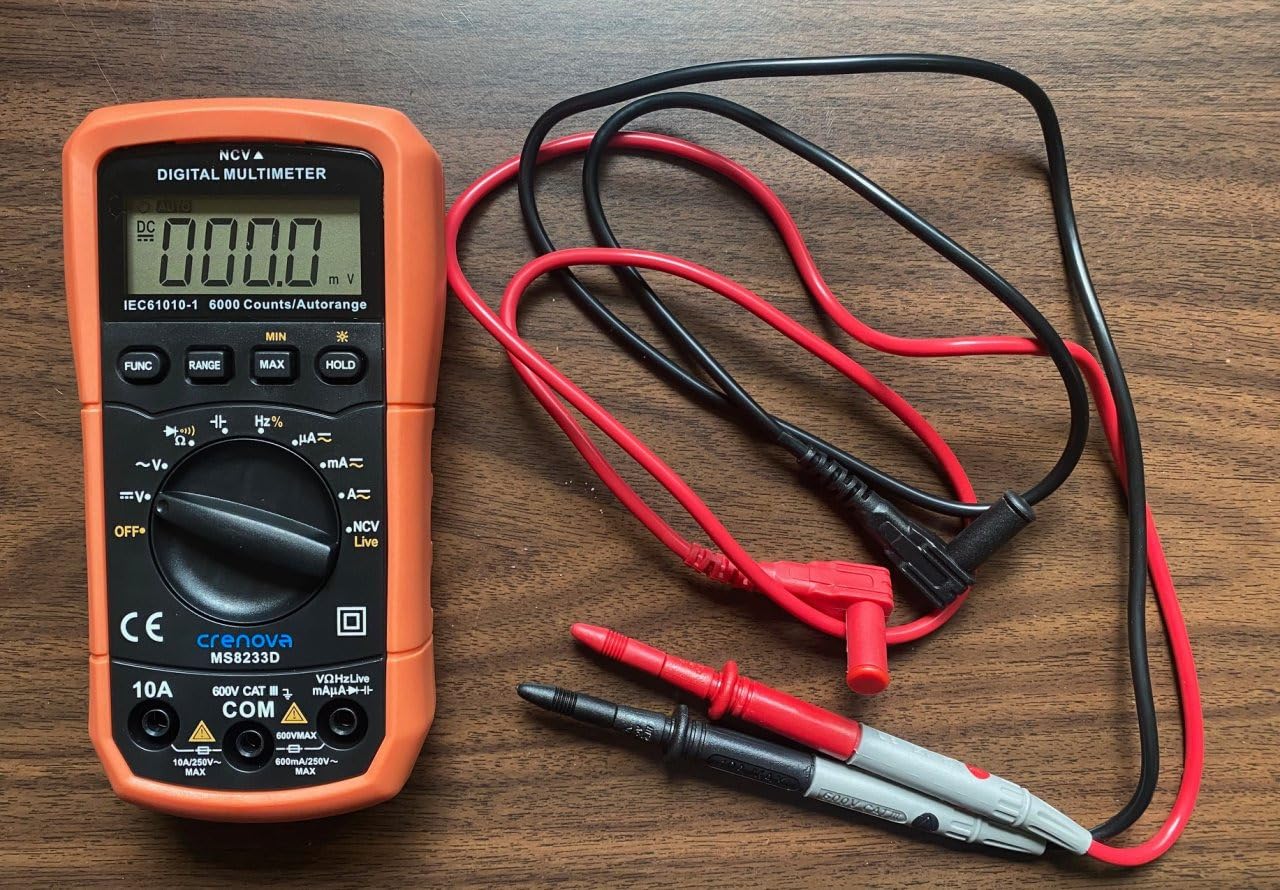
The MS8233D exists because most cheap meters are cheap for a reason, and this one is an exception. It carries a documented IEC61010-1 CAT III 600V safety rating, which is the number that actually matters, and it does not stop there: True-RMS at 6000 counts, non-contact voltage detection with an alarm that beeps faster as signal strength rises, plus capacitance, temperature, frequency and duty cycle.
At this level you would normally expect to give up one of those. You do not. The 3.5 digit backlit display is bright, and the rubber holster plus two internal fuses mean the meter survives the pocket and the drop that would end a cheaper unit.
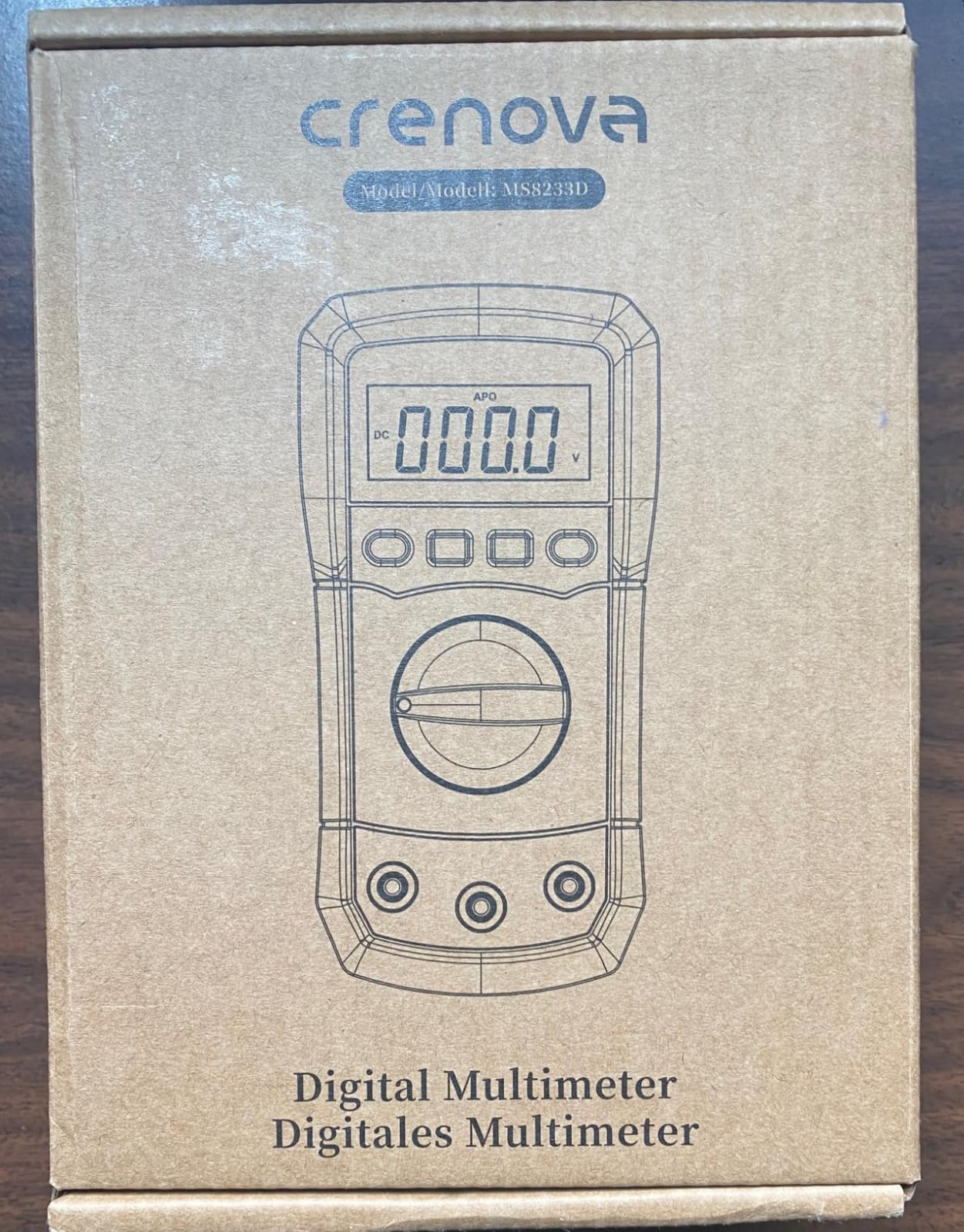
The box also includes a carry bag, alligator clips and two AAA batteries, which is more than most competitors manage at twice the money. For a student, an apprentice or a renter who wants a meter in every room of the house, buying three of these is a reasonable strategy.
One genuinely useful detail: ranging is switchable between manual and auto, so you can lock a range when you are chasing a fluctuating reading instead of watching the meter change its mind every time.
Where the Crenova MS8233D pays off
Homeowners get the most from it. Outlet testing, switch tracing, checking a battery, confirming a lamp or an appliance is dead, and a quick live-wire check behind a wall are all things this meter does quickly and safely, with the CAT III rating to back it up.
Because it comes with a bag and clips, it also works as a second or third instrument around the house, which is how several owners use it. One budget meter in the garage and one in a van is a pattern that recurs in the automotive forums.
What the Crenova MS8233D will frustrate you about
The sampling rate is 3 readings per second. That is fine for steady readings and poor for intermittent faults, where a fast transient can pass between samples and you will conclude the circuit is fine when it is not.
Accuracy specifications vary by function, and unlike the AstroAI and INNOVA, this meter has not been cross-checked as often against calibrated references. If your work depends on a small difference between two readings, spend up and move to the AstroAI 6000-count.
4. Klein Tools MM325 — Best for Trade Brand Basics
Klein Tools MM325 Multimeter, Digital Manual-Ranging 600V AC/DC Voltage Tester, Tests Batteries, Current, Resistance, Diodes, and Continuity
CAT III 600V safety rating
Manual ranging AC/DC to 600V
10A DC current and 2 MOhm
Battery test and lead-alert LEDs
Pros
- Lead-alert LEDs stop wrong-jack mistakes
- Backlit LCD for dark panels and crawl spaces
- Built-in test lead holders and kickstand
- Battery test mode is rare at this level
- Klein is the trade brand electricians already trust
Cons
- Manual ranging means you dial the range yourself
- 2 MOhm resistance ceiling is low
- No capacitance frequency temperature or NCV
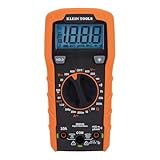
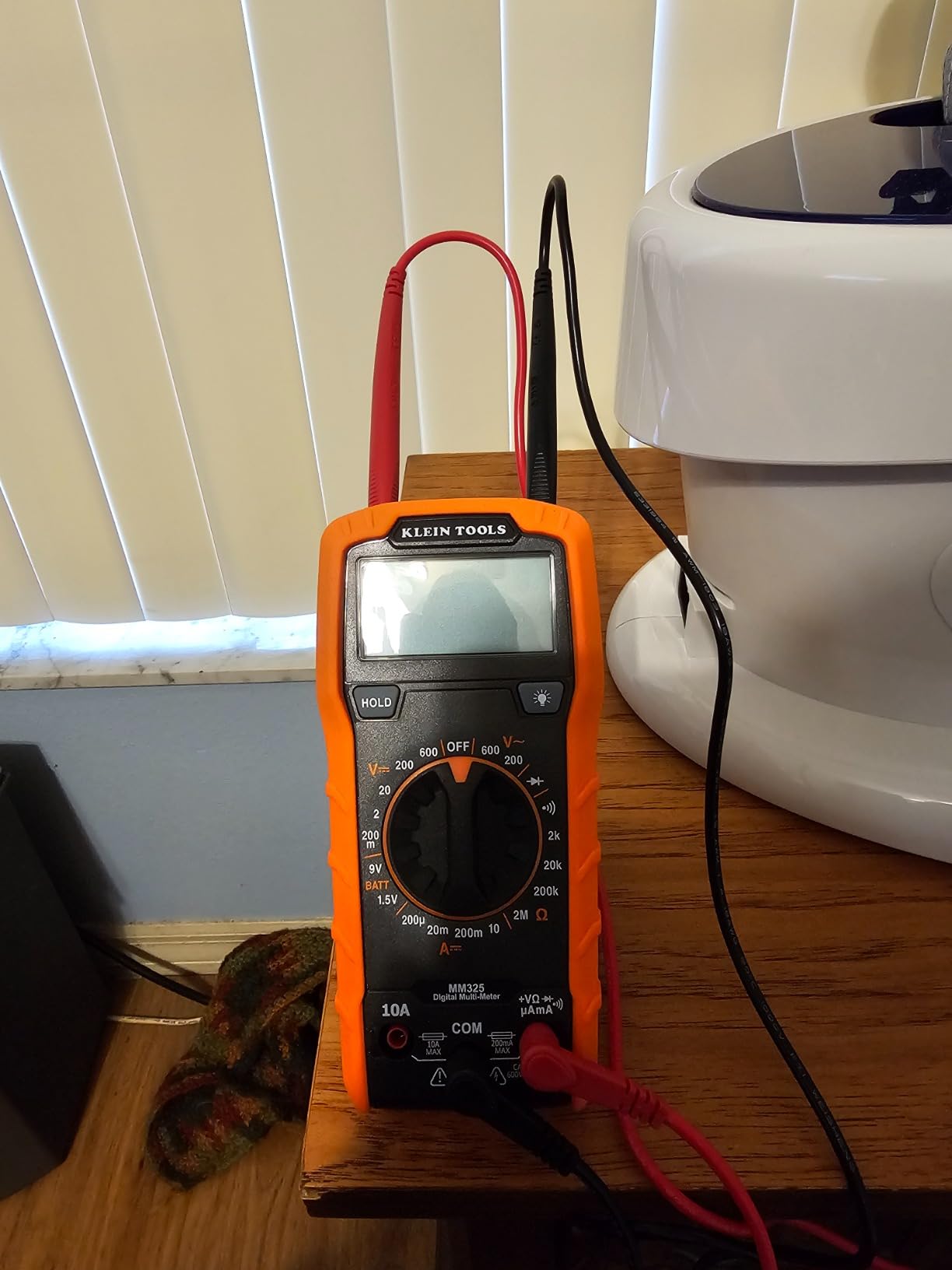
The MM325 is the meter you buy when the deciding factor is the name on the housing. Klein is the brand that comes up most often in the electricians forums when people ask which cheap meter is worth owning, and the reason is not loyalty alone: the lead-alert LEDs illuminate when the probes are in the wrong jacks, which prevents the single most common beginner error and the single most common cause of a blown input fuse.
Measurement coverage is the honest trade-basic set: AC and DC voltage to 600V, DC current to 10A, resistance to 2 MOhm, continuity, diode test and a battery test mode. The backlit display is genuinely useful in a dark panel, and the built-in lead holders plus kickstand let you work hands-free.
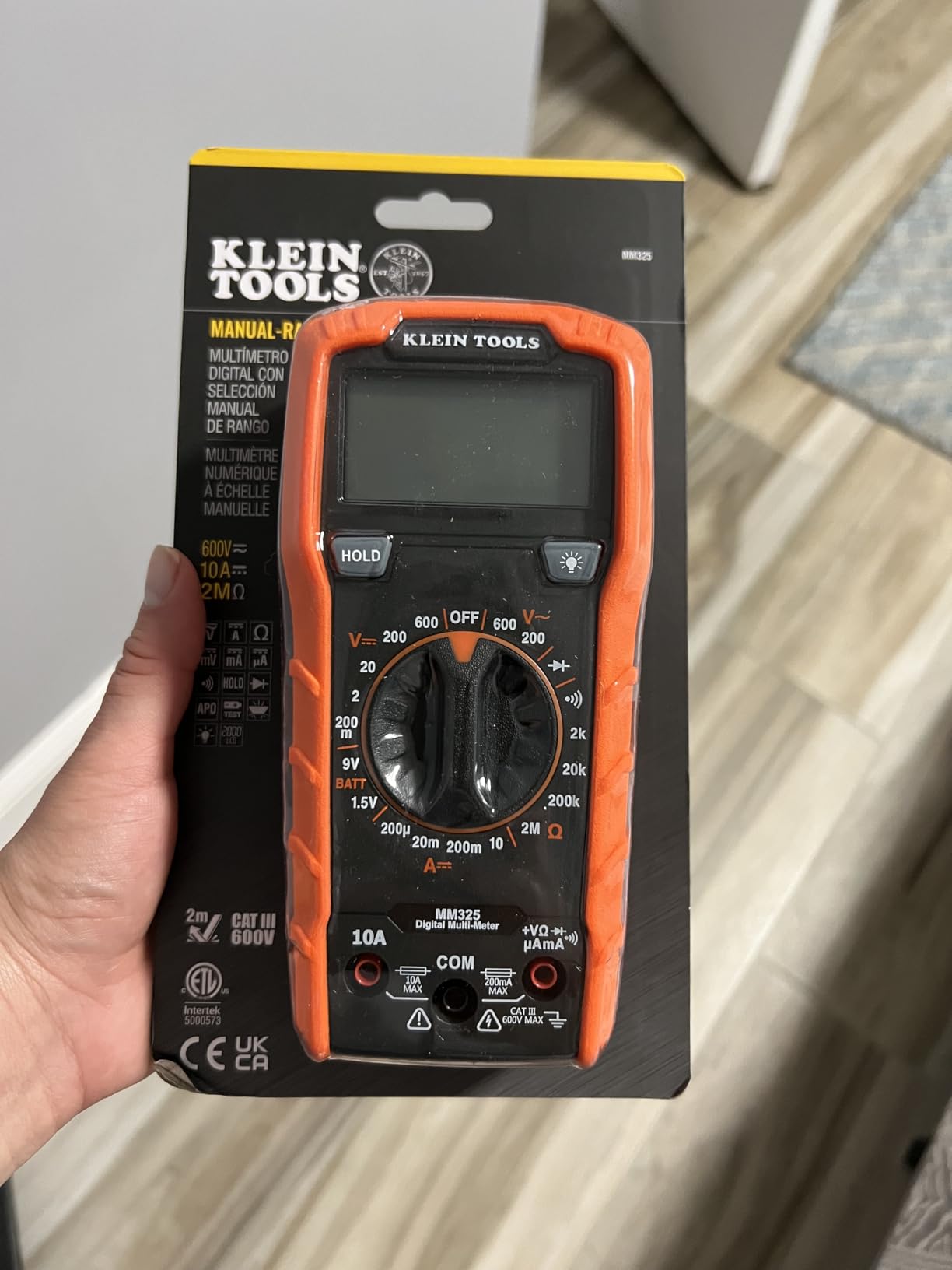
It is manual-ranging, like the Fluke 101, and Klein has stuck with that deliberately. Experienced users on trade forums often prefer it, because locking a range is faster and steadier when you are measuring a fluctuating signal and the meter keeps changing ranges underneath you.
It is also the meter most likely to already be in your van. If your employer supplies tools, matching the house standard removes a class of problem entirely.
Where the Klein MM325 pays off
Residential service work is the sweet spot: outlets, switches, dimmers, fans, thermostats and any fault-finding where you need voltage, resistance and continuity and nothing more. The lead-alert feature pays for itself the first time a junior tech plugs into the current jack by mistake.
The battery test mode is the sleeper feature. Checking a 9V or AA cell without hunting for a separate tester is exactly what you need on a service call.
What the Klein MM325 will frustrate you about
There is no capacitance, frequency, temperature or non-contact voltage detection. If your work includes motor controllers, variable-speed drives or HVAC capacitors, this meter simply cannot answer the question.
The 2 MOhm resistance ceiling is low against 6000-count rivals, and 13.92 ounces with those dimensions is not a pocket meter. The magnetic hanger is a separate accessory rather than something you get in the box.
5. Fluke 101 — Best for Pocket-Sized, No-Nonsense Testing
FLUKE-101 Digital Multimeter
CAT III 600V rating
0.5 percent basic DC accuracy
Manual ranging
600V maximum
160 g body
Pros
- 0.5 percent basic DC accuracy
- CAT III 600V safety rating
- 160 g body works one-handed
- Diode and continuity with an audible buzzer
- Rugged build with a 10 MegOhm input
Cons
- No capacitance frequency temperature or NCV
- Manual ranging only
- No lead storage and no kickstand
First, the correction. The Fluke 117 is an excellent meter and it is the one that shows up in shopping results for this search, but it is not a sub-100-dollar option at any reputable retailer. If you want a Fluke inside this budget, the 101 is the model, and it is a different instrument: smaller, manual-ranging, and built around a deliberately small feature set.
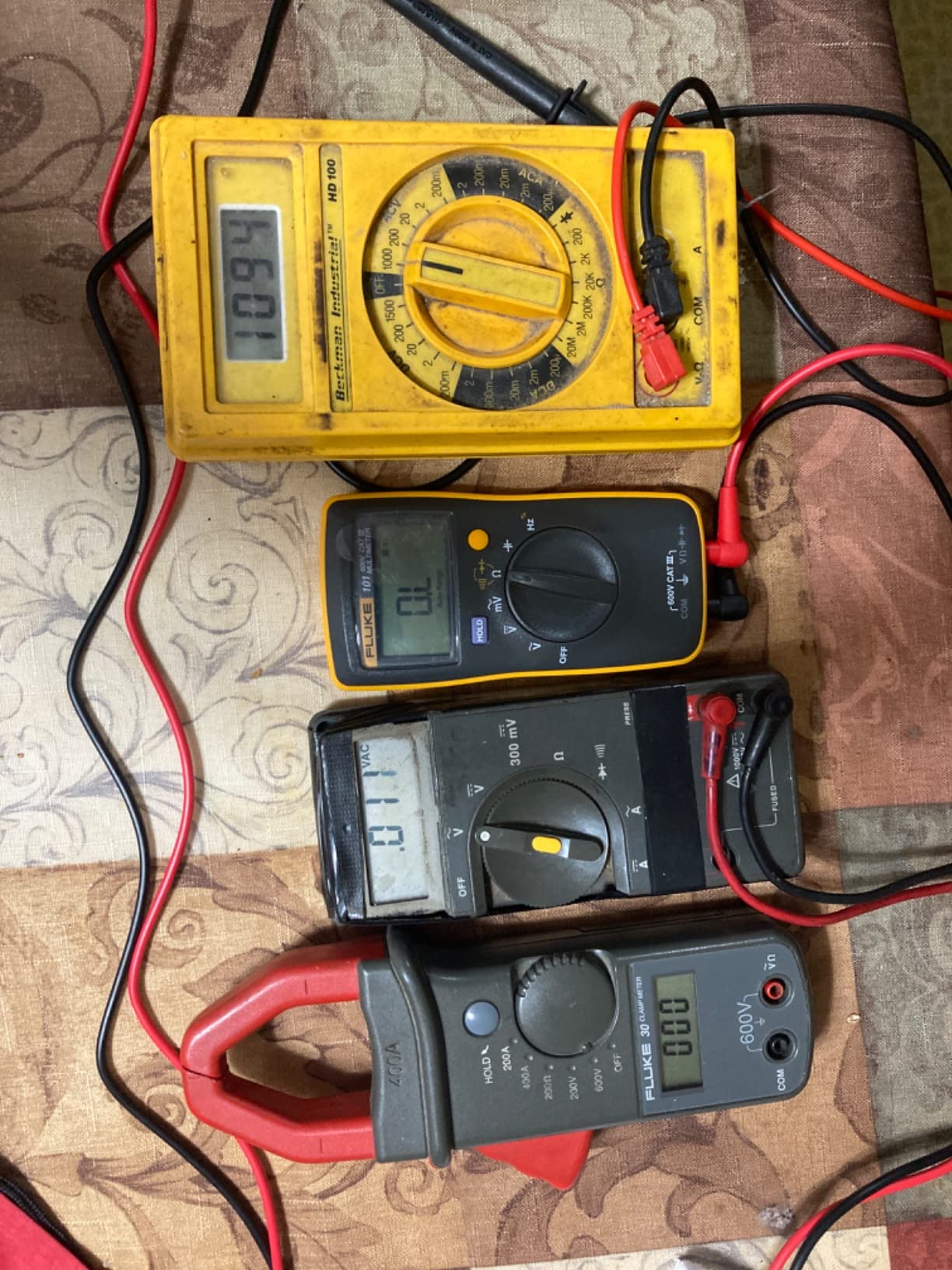
What the 101 does, it does well. Basic DC accuracy is 0.5 percent, which is respectable, the CAT III 600V rating is real, and the 10 MegOhm class input keeps circuit loading low so you do not disturb what you are measuring. At 160g and 5.12 inches long it goes in a pocket, which no other Fluke in this conversation does.
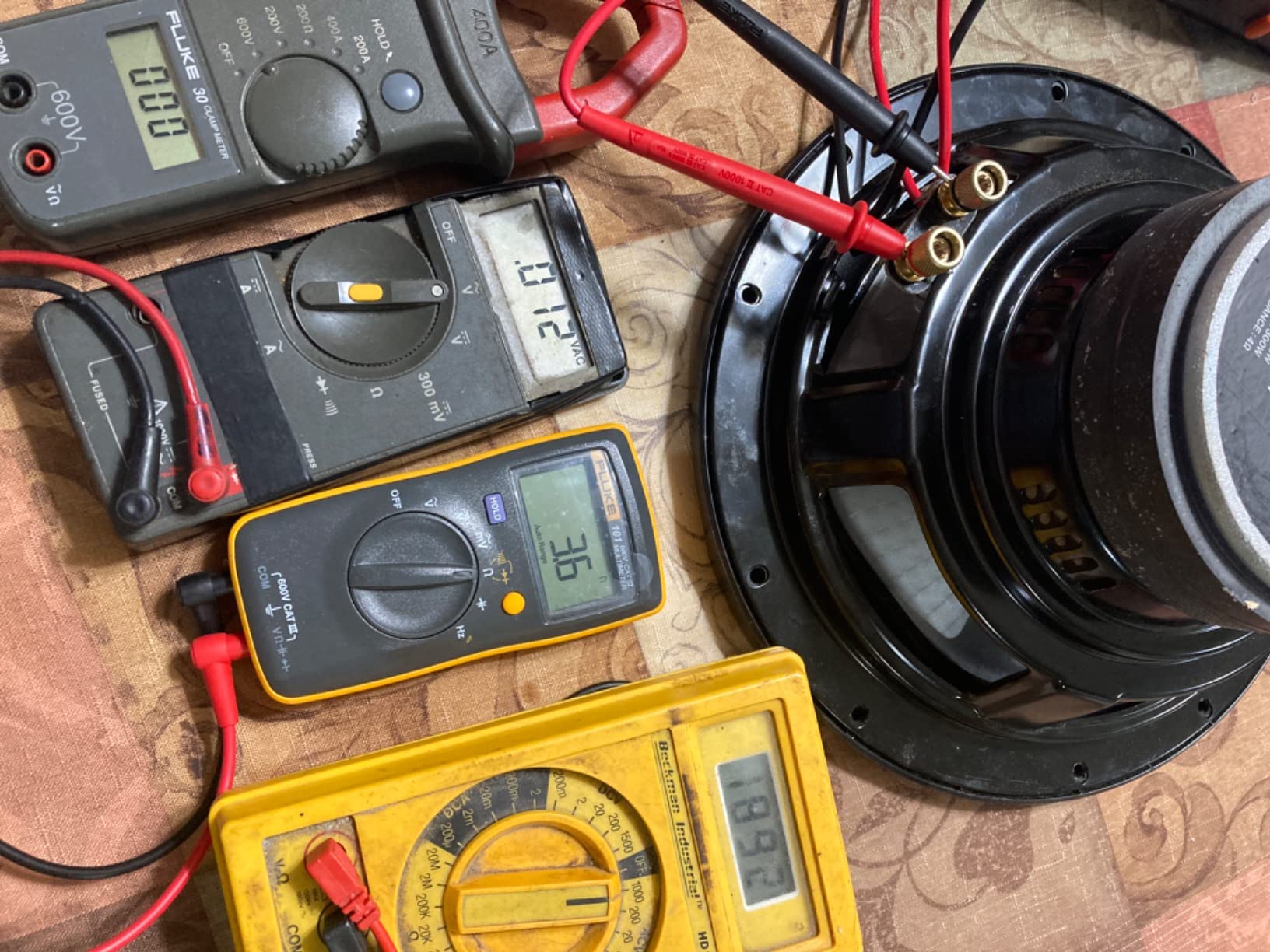
For an apprentice or a homeowner, that pocketability changes behaviour. A meter you carry is a meter you use. The Fluke name also removes the safety anxiety that stops people from checking an outlet at all, which is a real effect in the beginner forums.
On r/Tools the Fluke 107 gets named as the value Fluke now that it is widely available in the US. Both are legitimate answers at this budget, and both are far more relevant to a sub-100-dollar search than the 117.
Where the Fluke 101 pays off
Quick field checks: is this circuit live, is this fuse blown, is this diode forward biased, is the outlet wired correctly. That covers most homeowner troubleshooting and a surprising amount of apprentice work, and the meter will still be going long after a cheaper plastic one has failed.
It also pairs well with a clamp meter. Many electricians buy the 101 as the voltage and resistance companion to a clamp for current, since a sub-100-dollar clamp has limited voltage functions.
What the Fluke 101 will frustrate you about
No capacitance, no frequency, no temperature, no NCV. The moment your work touches electronics, HVAC capacitors or finding a conductor behind a wall, you are swapping tools.
Manual ranging slows you down if you are not used to it, and there is no lead storage or kickstand, so a job that needs both hands means holding the probes in your mouth, which nobody should do. The 1-year warranty is also shorter than the value tier offers.
6. INNOVA 3320 — Best for Car Battery Testing
INNOVA 3320 Auto-Ranging Digital Multimeter, Red & Black
UL certified auto-ranging
10 MegOhm input impedance
On-board battery load test
Reads down to 0.001 V
Pros
- Tracks a Fluke 179 and 87-5 in side-by-side tests
- Battery load test with colour LED indicators
- Auto-ranging settles fast for a basic meter
- 10 MegOhm input is safe around vehicle ECUs
- Long service life reported by owners
Cons
- AC current limited to about 200 mA
- Display is not backlit
- AC voltage readings drift below about 50 V
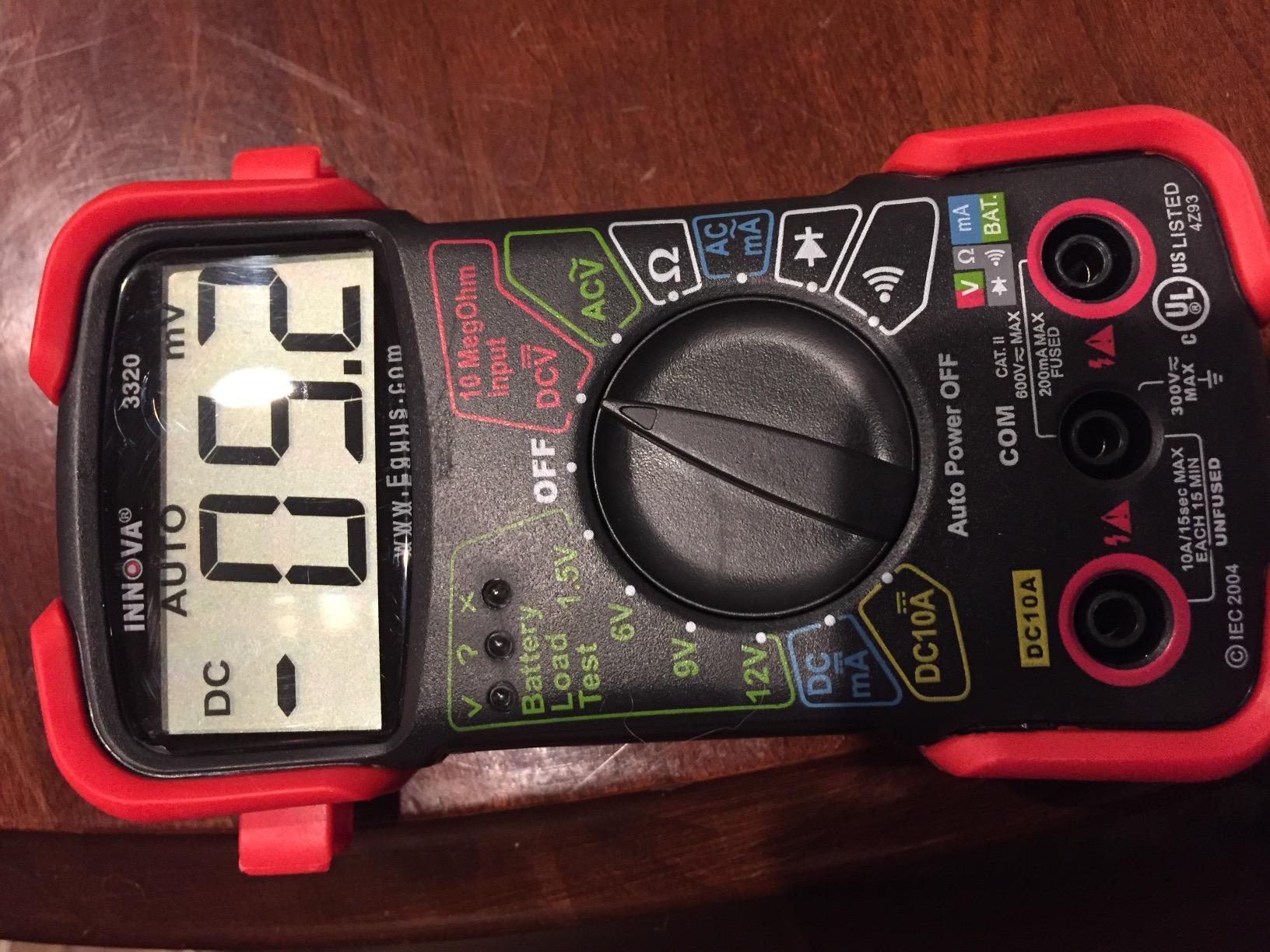
The INNOVA 3320 is the oldest recommendation in this article, and the reason it survives is the side-by-side data. Testers have compared it directly against a Fluke 179 and a Fluke 87-5 across DC volts, AC volts, current and resistance, and found the readings nearly identical on everything a typical user needs. That is the comparison nobody else in this price range can honestly make.
It is also UL certified, which is a certification mark rather than a self-declared number, and it is one of the very few meters at this cost with an on-board battery load test that applies roughly a 10 mA load. Colour LEDs then report charge status. Resting voltage alone tells you a battery is dead; a load test tells you whether it will fail on Monday.
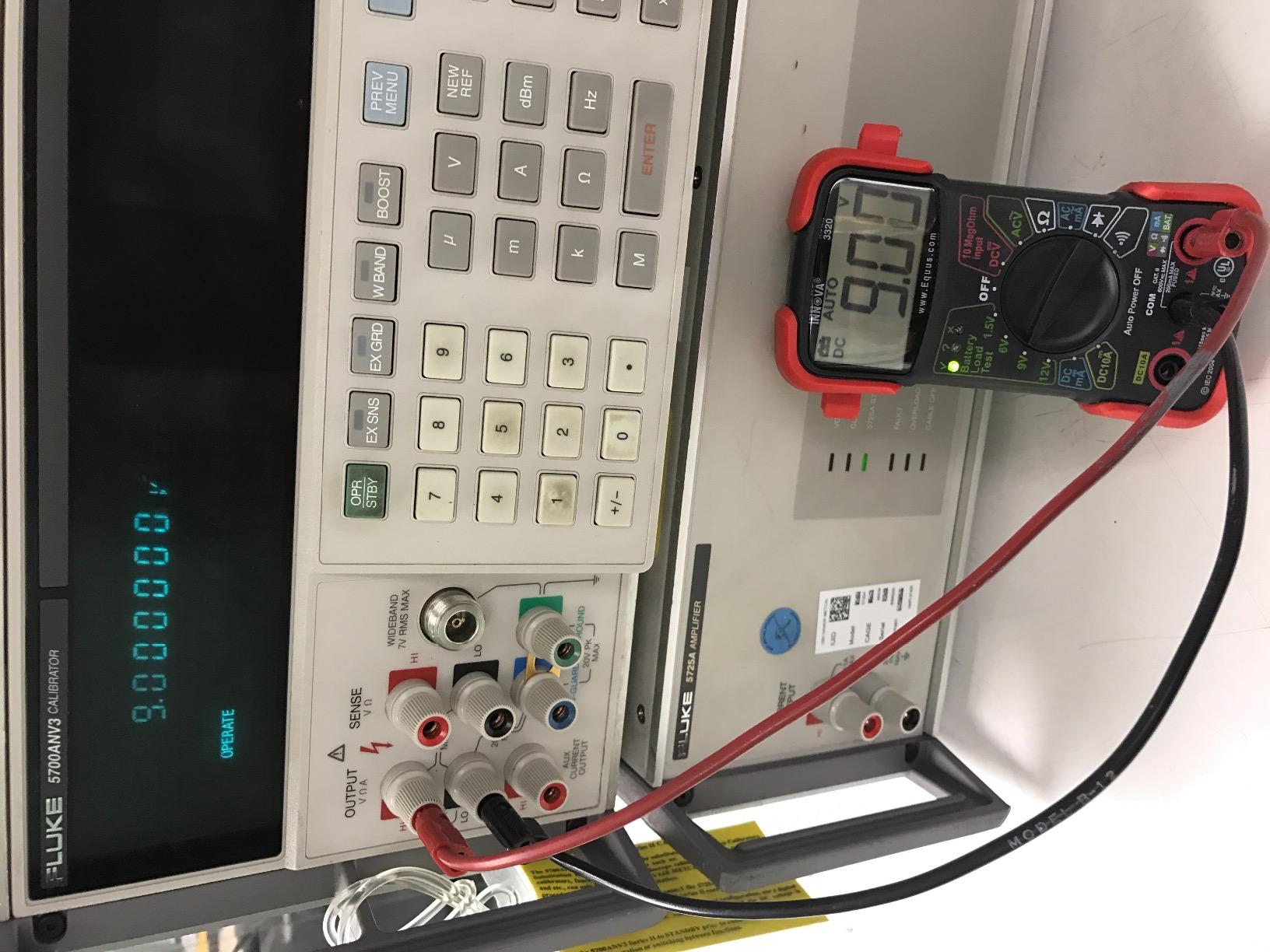
The 10 MegOhm input impedance is the underrated feature. It means probing a modern vehicle circuit will not disturb an ECU or a low-current sensor, which is a real and common source of damage. Auto-ranging settles quickly, unusually fast for a meter at this level.
On r/automotive the recurring comment is simply that Innova meters have held up well over the years, and owners report units still in service after six or more years. For a car owner who checks a battery a few times a year, that track record is the deciding factor.
Where the INNOVA 3320 pays off
Garage diagnostics: starting and charging systems, alternator output, blown fuses, continuity tracing and battery health. The 0.001V resolution helps when you are watching a voltage drop across a connection, which is exactly how you find a bad ground.
The price means you can own several, which owners do. One in the car, one in the garage, one in the house, all identical, all cheap to replace.
What the INNOVA 3320 will frustrate you about
AC current measurement is limited to roughly 200 mA, so it is not a meter for inverter or motor work. AC voltage readings drift noticeably below about 50V, and the display has no backlight, which is a genuine loss in a dark engine bay.
Accuracy is not good enough for sensitive electronics or fine component adjustment, and the mode dial can rest between positions, which is enough to short the battery. Keep the dial off the gap.
7. AstroAI M4K0R 4000-Count — Best for Battery and Live-Wire Checks
AstroAI Digital Multimeter, TRMS 4000 Counts, Auto-Ranging, Battery Test
True RMS 4000 counts
CAT III 600V with ceramic fuses
1.5V 9V and 12V battery test
NCV with buzzer and LED
Pros
- Dedicated battery test modes with colour LED indication
- 40 MOhm resistance range for the class
- Backlit display plus a rear flashlight
- NCV detection with an audible alarm
- Compact at 219 g with a silicone cover
Cons
- 4000 counts trails the 6000-count meters
- No capacitance frequency or temperature
- Backlight and flashlight are separate controls
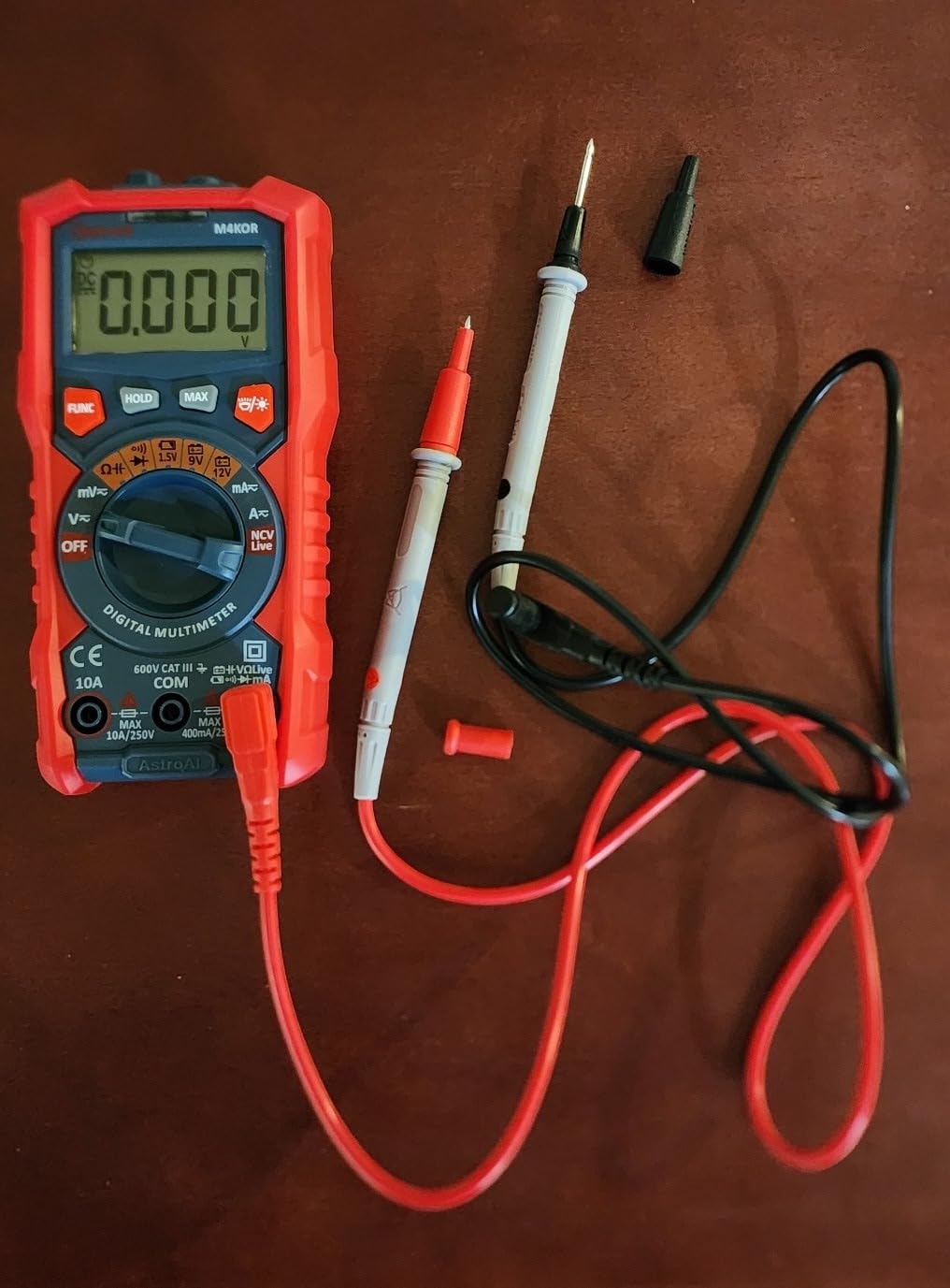
The M4K0R does something almost no meter at this level does: dedicated test modes for 1.5V, 9V and 12V cells, with red and green LEDs showing charge state. If you keep a drawer full of batteries, a meter that tests them removes a small recurring annoyance that most meters never address.
Everything else follows the same pattern of sensible over flashy. True-RMS at 4000 counts, AC and DC voltage to 600V, current to 10A, resistance to 40 MOhm, non-contact voltage detection with a buzzer and red indicator, continuity, diode, data hold, max reading and auto shut-off.
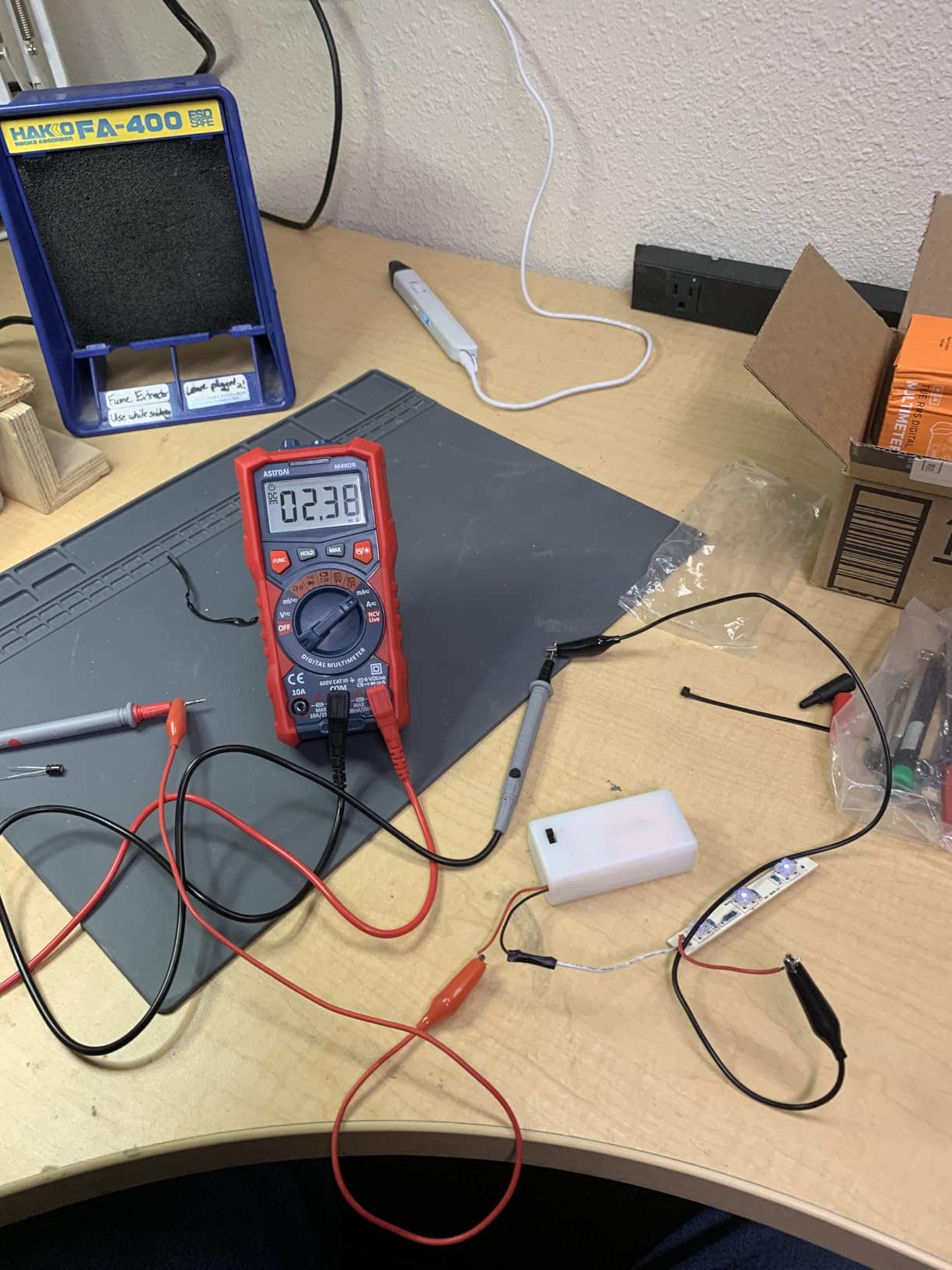
The protection story is solid for the price: a double ceramic fuse and CAT III 600V compliance, wrapped in a silicone cover. At 219g and 5.87 inches it is small enough to live in a laptop bag without thinking about it, which is why it shows up in electronics and PC repair contexts as often as in electrical ones.
NCV is the feature that speeds up a job. Sweeping a wall for a live conductor before you cut into it takes seconds rather than minutes of probing.
Where the M4K0R pays off
Battery-heavy work is its niche: remote controls, smoke detectors, power tools, camera batteries, anything with a cell in it. Add NCV and you have a fast first-pass tool for household fault-finding.
PC and electronics work also suits it. A 40 MOhm range reads higher resistances than most sub-30-dollar rivals, and the backlight plus flashlight handle the inside of a tower.
What the M4K0R will frustrate you about
4000 counts is lower resolution than the 6000 and 9999-count meters here, so expect readings in coarser steps. It also has no capacitance, frequency or temperature measurement, so it cannot check a run capacitor.
The backlight and the flashlight are separate behaviours and confuse people for the first few uses. Read the manual once and the issue disappears.
8. AstroAI DM130B — Best for First-Time Owners
AstroAI DM130B Multimeter, 4000 Counts, Auto-Ranging, Capacitance Testing
4000 count auto-ranging
Capacitance and NCV included
Palm sized at 9.88 ounces
Bright backlit display
Pros
- Capacitance and NCV at the lowest cost in this list
- Auto-ranging with a large brightly backlit display
- Accurate enough for run capacitors and car batteries
- Palm sized for a small toolbox
- Owners report units still working after years
Cons
- Supplied test leads feel flimsy
- Included zinc-oxide batteries may leak
- Manual is entirely in German
- No True RMS on distorted AC waveforms
The DM130B is the meter most people end up with, because it is the cheapest one here that still does capacitance and non-contact voltage detection. That combination puts it above the very bottom of the category on capability even though it sits at the bottom on price.
It is auto-ranging, backlit and palm-sized at 9.88 ounces. For someone who has never opened a meter, there is nothing to configure and nothing to misread: turn the dial, touch the probes, look at the number. The learning curve is close to zero, which is the whole point.
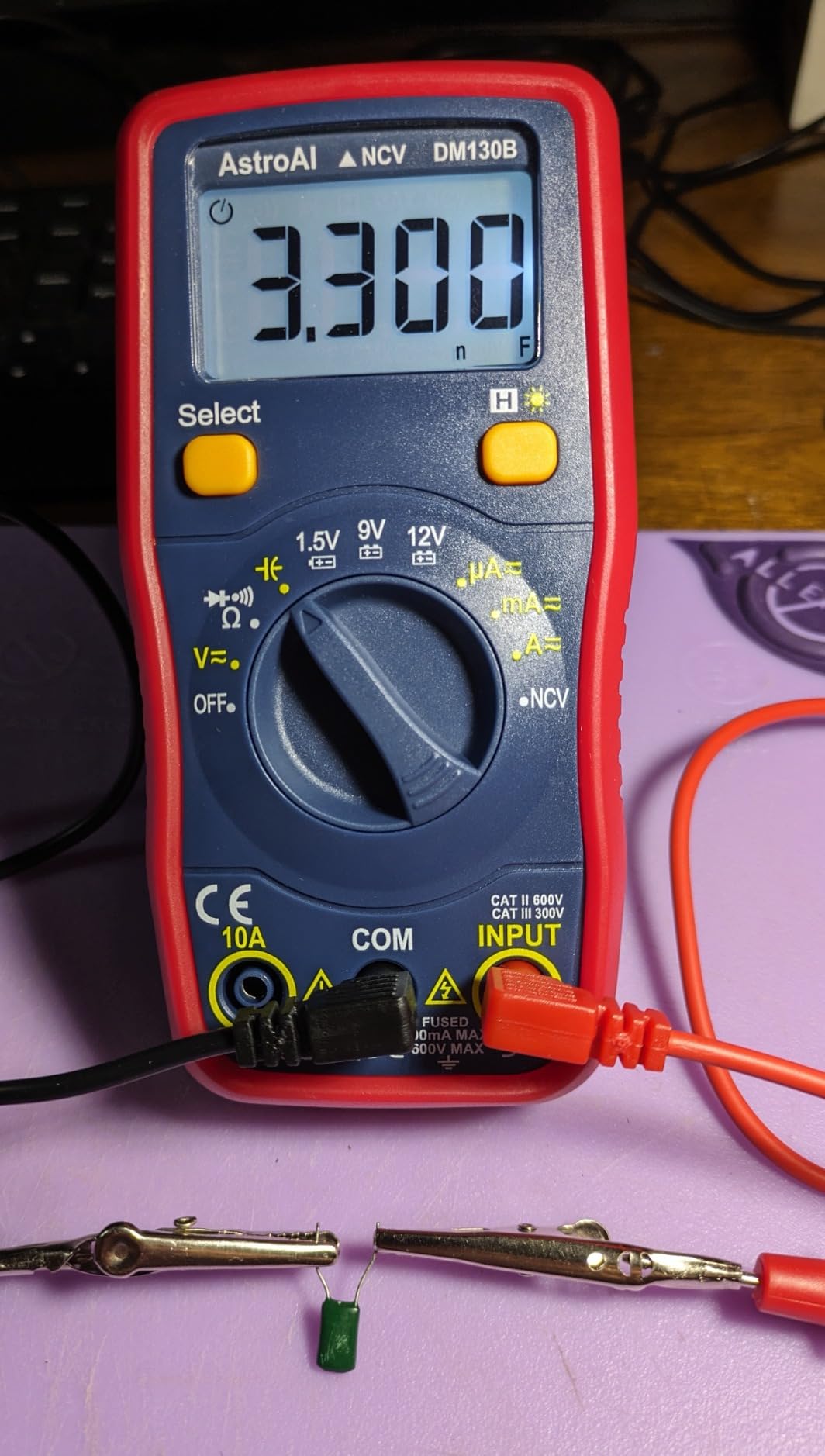
It is not a toy. Owners routinely cite it as accurate enough to test an AC run capacitor, judge an aging car battery and check household wiring, and the 8374-review base reflects a lot of people who bought it expecting little and found it adequate.
Several examples are reported still working after years of intermittent use, which tells you something about the failure rate of this design at this cost.
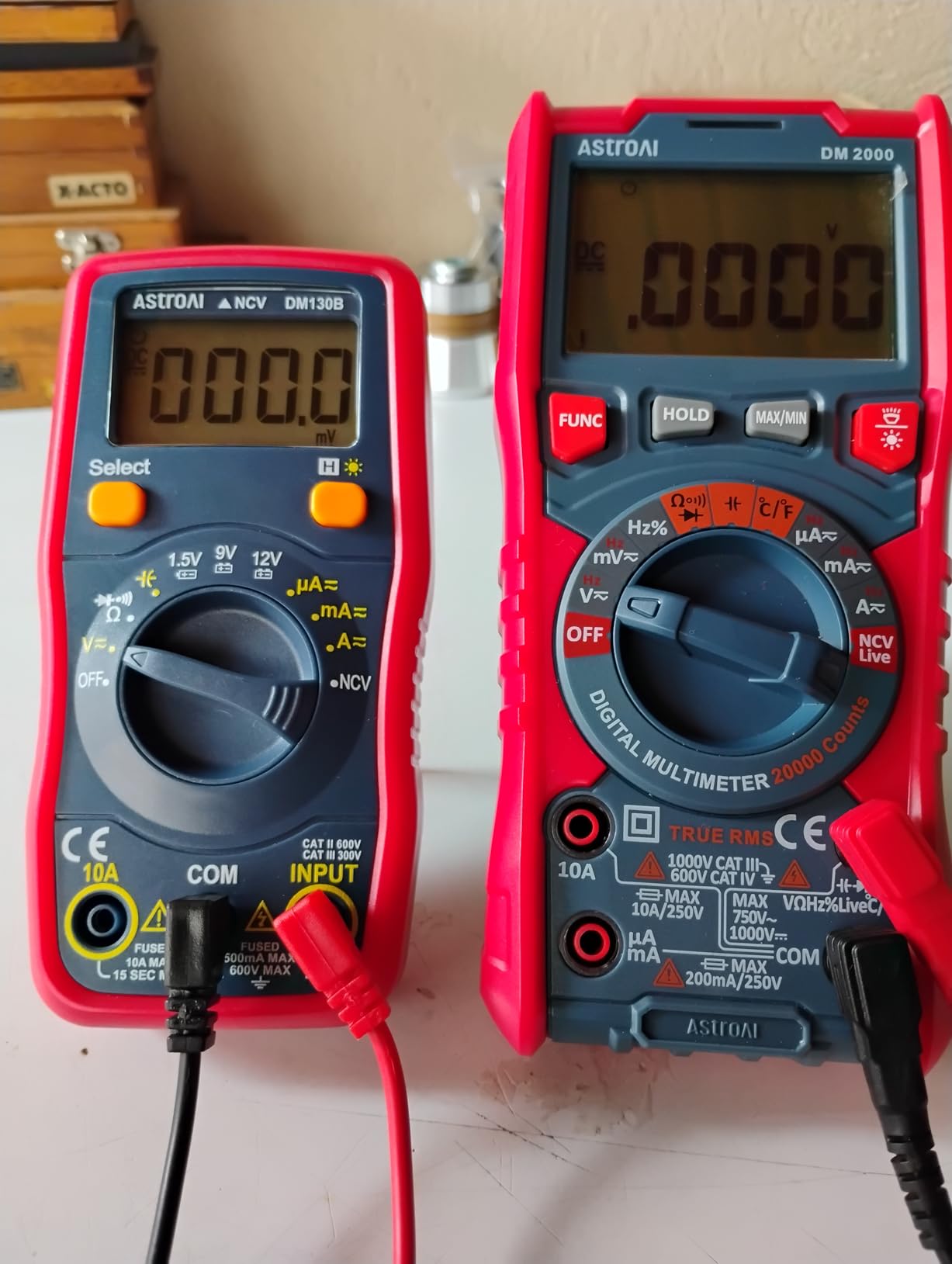
Where the DM130B pays off
First meter scenarios: a student, a maker, a renter, anyone who wants to know whether a wire is live before they touch it. NCV plus capacitance at this cost is genuinely unusual and covers the two tasks beginners ask about most.
It also works as a spare. A meter that lives in the toolbox as a backup for a five-minute check is a different purchase from a primary instrument, and this is a good backup.
What the DM130B will frustrate you about
The supplied leads are the weak point. Owners describe them as flimsy, needing force and twisting to seat properly, and a lead that makes poor contact produces bad readings that get blamed on the meter. This is the most common complaint in the reviews.
The included zinc-oxide batteries are poor quality and can leak; fit alkaline instead. The manual is entirely in German, and there is no True-RMS, so accuracy suffers on distorted AC waveforms from LED dimmers and variable-speed drives.
9. FNIRSI DMT-99 — Best for Waveform and Monitoring Work
FNIRSI DMT-99 Digital Multimeter 9999 Counts TRMS, Rechargeable Volt Meter
9999 count True RMS
2.4 inch color TFT screen
Type-C rechargeable 1500 mAh
Waveform and monitoring modes
Pros
- Waveform graphing shows ripple in real time
- Monitoring mode alarms at thresholds you set
- Rechargeable battery removes disposable spares
- Auto-Mode identifies the function for you
- Fine probes suit SMD and crowded boards
Cons
- Color screen is fragile in a drop-prone tool
- Menus add complexity for simple jobs
- Smaller review base than the established leaders
The DMT-99 is the only meter in this list with a colour TFT screen and real waveform plotting, and that single feature changes what you can diagnose. Watching ripple on a rail as you load it tells you something no number on a segment display will. A switching supply that reads 12.0V can still be unusable, and the graph is how you see it.
Resolution is 9999 counts with True-RMS, above every other meter here except the display-count ceiling of the 6000-count units. Monitoring Mode triggers an alarm at thresholds you set, which means you can leave it connected and walk away while it hunts an intermittent fault, the single most painful class of electrical problem.
It runs on a built-in 1500 mAh rechargeable lithium charged over USB Type-C, so there are no cells to find when you need the meter. Dual ceramic fuses sit behind the anti-burn protection, and Auto-Mode identifies AC, DC, resistance and continuity on its own.
At 6.72 ounces with an integrated kickstand, it is also the second-lightest meter here, and the supplied ultra-fine probes are genuinely useful on SMD work and crowded boards.
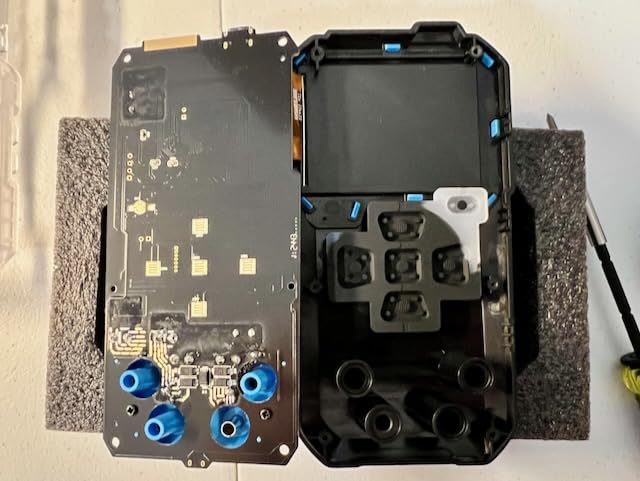
Where the DMT-99 pays off
Bench electronics: verifying a power supply, tracing a Raspberry Pi or Arduino rail, diagnosing a PC power supply, and salvaging components out of e-waste. The graph and the fine probes exist for exactly that work.
Field debugging benefits too. A car that misbehaves only when warm, or a supply that drops out under load, is a problem you can set a threshold on and let the meter tell you about.
What the DMT-99 will frustrate you about
A 2.4 inch colour screen is more fragile than a monochrome LCD, and this is a tool that lives in bags. The screen is also harder to read in bright direct light, which is a real problem outdoors and in a sunlit engine bay.
The menu depth adds friction for anyone who just wants to check a battery. And with 1356 reviews it has a much smaller installed base than the value leaders, so long-term durability evidence is thinner.
10. KAIWEETS KM602 — Best for a Rechargeable Full-Screen Color Meter
KAIWEETS Smart Multimeter Rechargeable Electrical Tester with Auto Ranging Digital Voltmeter Measures Voltage Current Resistance Continuity Capacitance Temperature Frequency NCV 6000 Counts TRMS
CAT III 1000V and CAT IV 600V
6000 count True RMS
Rechargeable 1200 mAh battery
SMART auto mode with flashlight
Pros
- SMART mode removes function and range selection
- Full-screen colour display with analog bar graph
- Rechargeable battery with case and cable included
- Readings verified against LCR meters and counters
- Solid build that feels substantial in the hand
Cons
- Colour screen is poor in direct sunlight
- Battery is not user-replaceable
- Smart mode oscillates on corroded circuits
The KM602 is the second meter here with a CAT IV 600V rating, and it pairs that with a rechargeable 1200 mAh battery and a full-screen colour display. Manual mode covers AC and DC voltage, current, resistance, continuity, capacitance, frequency, diodes, duty cycle, temperature, NCV and live wire, so the feature list is complete.
Its distinguishing idea is SMART mode. The meter identifies whether it is looking at voltage, resistance or continuity and picks the range itself, which removes the single most common beginner mistake. The analog bar display alongside the digits is easier to read at a glance than numbers alone, and a built-in flashlight handles dark work areas.
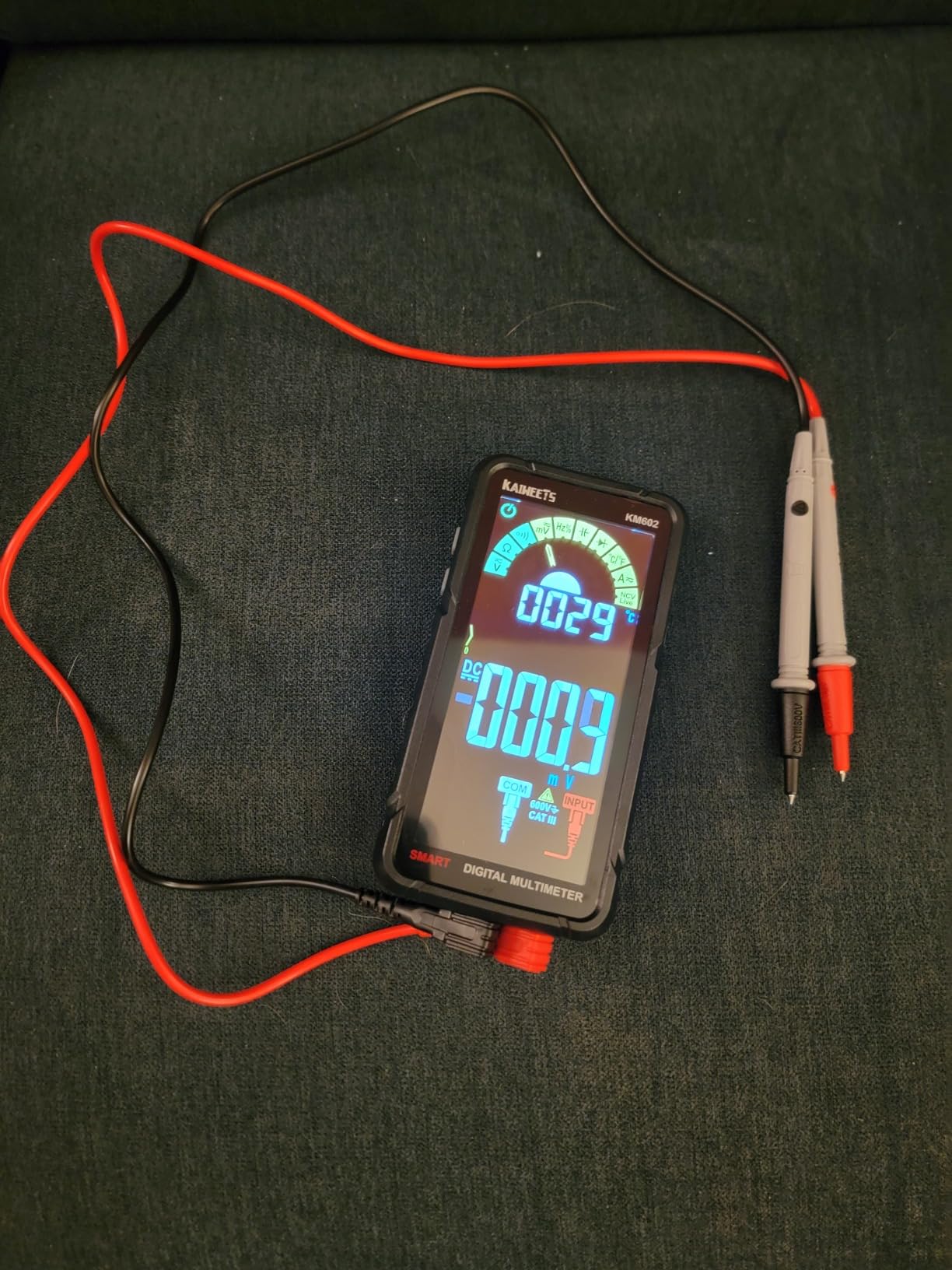
Owners have verified its readings against LCR meters and frequency counters and found them within the stated tolerance, and the build has genuine heft at 265g. The box includes a storage bag, test leads, a charging cable and a thermocouple, plus a 3-year service commitment.
Minimum measurable voltage is 99.99 mV, which matters if you are working on low-voltage circuits and a meter cannot even see the signal you are chasing.
Where the KM602 pays off
New users who want everything without learning a mode dial benefit most from SMART mode, and the rechargeable battery removes a genuine failure point: a dead 9V battery in the middle of a job.
For bench and field mix, the combination of CAT IV 600V, True-RMS at 6000 counts, temperature and capacitance is a strong all-round package.
What the KM602 will frustrate you about
The colour screen is hard to read in direct sunlight and scratches easily in rough work, and the screen takes roughly two seconds to update, which slows down rapid pin-by-pin testing.
The battery is not user-replaceable and the meter cannot be used while charging, and SMART mode can oscillate between voltage and resistance on dirty or corroded circuits with no way to lock a function. That last point matters if you work on old wiring.
How We Picked These Meters and What We Did Not Test
We assembled this list by comparing published specifications, the consistency of published accuracy claims, and the volume of owner feedback available for each model. We cross-checked readings reported in side-by-side testing against Fluke, Amprobe, LCR meter and frequency counter references where such comparisons exist, because a spec sheet written by the seller is not evidence.
What we did not do is claim laboratory testing. We did not connect these meters to a reference calibrator in a controlled lab, and we did not verify every safety certification with the issuing agency. Where a rating is documented on the product page or in a listed certification mark, we report it. Where a rating is self-declared with no listed agency behind it, we say so rather than repeating the number as fact.
Every meter here cleared the same filter: it must be a general-purpose handheld multimeter, not a clamp-only or pen-style tester, it must carry a stated safety rating, and it must sit under 100 dollars at the street prices we saw for this 2026 update. Prices in this category move a great deal, so treat the ordering here as guidance rather than a live price feed.
How to Choose a Multimeter Under 100 Dollars
Start with the safety rating, not the feature list. CAT II covers plug-in loads and household receptacles only. CAT III covers fixed installation such as panels, outlets and lighting circuits, and every meter on this list reaches at least CAT III 600V, which covers essentially all residential work. CAT IV is the service-entrance and utility-side category, and only the KAIWEETS HT118A and KM602 carry a CAT IV rating here.
Spend nothing under 30 dollars on a meter you will trust near a panel. Below that line you are choosing on price alone, and a meter with no traceable safety certification is a liability rather than a bargain. If your budget genuinely stops there, the Crenova MS8233D is the cheapest option here with a documented IEC61010-1 CAT III 600V rating, and the AstroAI DM130B is the cheapest with capacitance and NCV.
True-RMS matters only if your loads are non-sinusoidal. A household sine wave measures fine on an average-responding meter. LED dimmers, variable-speed motor drives and cheap switching supplies produce distorted waveforms where an average-responding meter can read 30 to 40 percent low, and only a True-RMS meter gets that right. If you touch modern lighting or drives, skip the non-True-RMS options.
Display counts decide how much resolution you actually have. A 2000-count meter steps in 1V increments on the 2000V range. A 6000-count meter steps in 0.2V, and a 9999-count meter in roughly 0.1V. For a 12V automotive system, the difference between a 3.5 digit and a 4 digit reading is the difference between 12.0 and 12.04, which is often the difference between normal and failing.
Auto-ranging is not automatically better. It removes range selection, which helps beginners enormously. But on a fluctuating or unstable reading, a manual-ranging meter holds the range steady and gives you a more usable number. The Fluke 101 and Klein MM325 are manual for that reason, and the Crenova gives you both.
Verify the CAT rating before you trust it. Look for a listed agency certification mark rather than a self-printed number. Check that the current inputs are protected by replaceable ceramic fuses rather than a bonded wire. Confirm the model number is real enough to be searchable, and match the rating printed on the meter to the rating printed on the leads. If any of those four fail, treat the meter as a bench tool only.
Do not confuse a dial multimeter with a service entrance instrument. None of these meters is a substitute for a CAT IV meter when you are working at the panel feeding the building. If that is the job, the correct answer is a meter from a higher tier, not a stretch on a sub-100-dollar instrument.
Expect to replace the test leads. This is the accessory nobody mentions and it is the item that most often undermines an otherwise good meter. Flimsy leads that do not seat properly produce bad readings and get blamed on the meter. Budget for a proper replacement lead set, and for a magnetic hanger or a case if you work in a van, which is the upgrade trade users recommend most often.
Know the brands you will not find here. The Fluke 117 and Fluke 116 sit well above this budget, and the Brymen BM235 and BM257S that trade users recommend on r/Tools also sit above it. Southwire and Extech and Triplett are the other names electricians mention, and they are worth a look in your local trade supply. For electronics work, a UNI-T UT61E+ is a common alternative, and it typically lands inside this budget.
Two operating rules matter more than any feature on this page. First, never leave the probes in the current input while measuring voltage, because that is the top self-reported cause of blown internal fuses across every forum thread we read. Second, confirm a circuit is dead before you touch it, and if you are not sure, treat it as live. On r/AskElectricians the recurring theme is people asking to be told what to buy, not people regretting a purchase, which tells you that the safety floor matters more than the specification sheet.
Our other under-100-dollar guides follow the same rule of naming the trade-off rather than hiding it, including our graphing calculator picks for students, which is the other budget instrument a lot of first-time buyers are choosing right now.
Frequently Asked Questions
What is the best multimeter on a budget of 100 dollars?
The KAIWEETS HT118A is our overall pick under 100 dollars. It is one of only two meters in this roundup with a CAT IV 600V rating alongside CAT III 1000V, measures True-RMS at 6000 counts, and includes a temperature probe. The AstroAI 6000-count is the better value pick, and the Crenova MS8233D is the cheapest meter here with a documented CAT III 600V rating.
What is the best budget digital multimeter?
The Crenova MS8233D is the best budget digital multimeter because it holds a documented IEC61010-1 CAT III 600V rating at the bottom of the price range while still offering True-RMS, capacitance, temperature and non-contact voltage detection. The AstroAI DM130B costs less again and also measures capacitance, but it lacks a safety certification mark and has no True-RMS.
What is the best multimeter for value for money?
The AstroAI 6000-count is the best multimeter for value for money. Independent testing found its AC, DC, resistance and diode readings match Fluke and Amprobe references, and it adds capacitance to 60000 uF, frequency, duty cycle, temperature and a transistor socket. Over a five-year ownership period, the extra cost over a basic meter is recovered almost entirely in avoided guesswork on capacitor and alternator faults.
Which brand of digital multimeter is considered the best?
There is no single consensus brand, so the answer depends on the work. Fluke and Klein are the choice for durability and safety certification, and electricians on r/electricians name Klein and Southwire most often. KAIWEETS and AstroAI lead on specification per dollar, INNOVA is the long-running automotive favourite, and Brymen sits just above this budget as the enthusiast benchmark.
Which digital multimeter is considered the best quality?
Quality and feature count diverge sharply at this budget. The Fluke 101 and Klein MM325 have the fewest functions but the most stable calibration and the most credible safety certification. The KAIWEETS HT118A and KM602 add CAT IV 600V ratings that nothing else in this list matches. If quality means build and calibration stability, the Fluke 101 wins despite having the smallest feature set.
Which is better, Klein or Fluke?
At this budget, Klein wins on features and Fluke wins on build. The Klein MM325 adds a backlit display, lead-alert LEDs and a battery test mode that the Fluke 101 does not have, at a lower price. The Fluke 101 has slightly better stated DC accuracy, a much lighter 160 g body and a reputation for calibration stability. Electricians tend to pick Klein, and anyone carrying a meter in a pocket tends to pick Fluke.
Is the Fluke 117 a good meter?
The Fluke 117 is an excellent meter, and it is the wrong answer to this question. It does not sell under 100 dollars at any reputable retailer, so it fails the constraint the search implies. If you want a Fluke inside this budget, the Fluke 101 is the model to look at, and the Fluke 107 is the one trade users name as the value Fluke now that it is widely available in the US.
Do I need True-RMS for household wiring?
For standard household wiring on a sine wave supply, no. An average-responding meter reads mains voltage accurately enough. You need True-RMS when measuring loads that distort the waveform, such as LED dimmers, variable-speed motor drives, cheap switching supplies and most modern electronics. On those loads an average-responding meter can read 30 to 40 percent low, which matters for diagnosing flickering or overloaded circuits.
How do I know if a multimeter CAT rating is real?
Four checks. Look for a listed agency certification mark rather than a self-printed number. Check that the current inputs use replaceable ceramic fuses rather than a bonded wire. Confirm the model number is real enough to be searchable, and match the rating printed on the meter body to the rating printed on the test leads. If any of those four fail, treat the meter as a bench instrument only.
Final Verdict: The Best Multimeters Under 100 Dollars in 2026
For most people, buy the KAIWEETS HT118A. It is the only pick that combines a CAT IV 600V rating, True-RMS at 6000 counts, a temperature probe, min/max/average capture and the largest owner base in the category, and it is still comfortably inside the budget. If you want the most instrument for the least money, take the AstroAI 6000-count instead, because its readings have been verified against professional references.
Choose the Crenova MS8233D if this is your first meter and you are working around the house, the Klein MM325 if you are an apprentice who wants the brand your employer already trusts, the Fluke 101 if you want something that fits in a pocket, and the INNOVA 3320 if the car is the main reason you own a meter. Replace the test leads on whichever you choose, keep the probes out of the current jack, and treat street prices as volatile: the same model can swing by 30 to 50 percent within a week, so check the current price before you commit.