
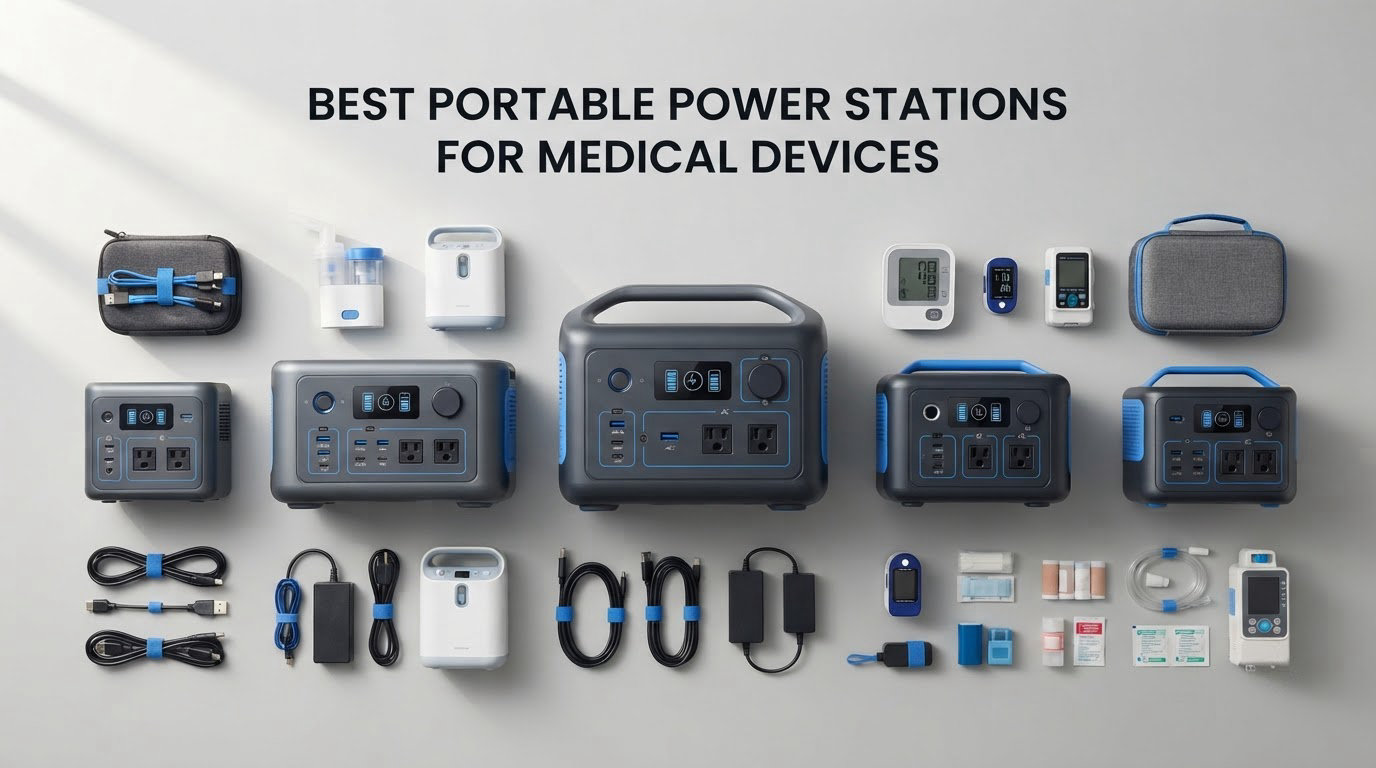
Over three million Americans depend on electrically powered home medical equipment, and for them an outage is a safety event rather than an inconvenience. The best portable power stations for medical devices are the ones with pure sine wave AC output, a documented UPS switchover time fast enough that your device never notices, and enough watt-hours to cover your longest realistic outage. Our overall pick is the Jackery Explorer 1000 v2, because at 1070Wh, 1500W of continuous output and 23.8 pounds it is the rare unit that is genuinely portable, quiet enough to sit in a bedroom, and rated by the most owners of anything in this roundup.
Before any product list makes sense, you need to know what makes a battery safe to plug a prescribed medical device into, and what it can never do no matter how good the unit is. Forum threads ranking alongside the roundups on this topic ask two questions constantly: will a modified sine wave unit damage my equipment, and will the switchover gap reset my therapy at 3am. We answer both before we name a single pick.
We compared eight units across the four device classes that dominate this market: CPAP and BiPAP respiratory therapy, home oxygen concentrators, high-draw in-home equipment like electric hospital beds and dialysis cyclers, and travel use. Every runtime figure here is calculated from the manufacturer’s rated watt-hour capacity rather than measured in a lab, and we say so each time.
If you already know your device wattage and want the shortlist, skip to the quick comparison. If you are still working out how much power you need, the sizing section reconciles the two competing formulas published on competing sites and gives you worked numbers for four device classes.
Top 3 Portable Power Stations for Medical Device Backup in 2026
These three cover the widest range of medical loads we tested against spec sheets, and between them they answer most of the questions we get about CPAP, oxygen and mixed-device homes.

The Four Specs That Decide Whether a Unit Is Safe for Your Device
Four specifications separate a power station that belongs next to a medical device from one that does not. Check these before you look at capacity, because capacity without the first two is wasted money.
1. Pure sine wave AC output is not optional. A modified sine wave inverter produces a stepped approximation of grid power. Motors run hot, sensors read inaccurately, and devices can throw error codes or shut down. The failure mode buyers hit first is usually a compressor or blower tripping a protection circuit. Every unit in this roundup is a pure sine wave inverter, and some, like the Jackery Explorer 1000 v2, state it per outlet.
2. UPS switchover time matters only for therapy devices. A UPS transfers the load to the battery when mains power drops, and the transfer takes a few milliseconds. CPAP and BiPAP machines can reset mid-night on a longer gap, losing ramp and pressure settings. Non-UPS switchovers in the 20 to 500ms range are enough to trigger that. Oxygen concentrators are the opposite case: a brief gap costs compressor wear but no therapy progress, so continuous watts matter far more.
3. Continuous and surge output are both real numbers. Continuous output is what the unit sustains. Surge is the spike at startup, and compressor-driven equipment draws one and a half to two times its running load the moment it kicks on. A 5L oxygen concentrator is the classic example, and buying on continuous watts alone usually ends with a compressor that will not start.
4. Rated capacity is not usable capacity. Inverter conversion losses and self-consumption mean a 1152Wh battery is not a 1152Wh budget. Several units here run 15 to 20W just to stay on, and most manufacturers cap discharge depth at 90 percent. Plan against roughly 85 percent of the label.
Two more criteria decide whether you keep the unit plugged in: LiFePO4 chemistry, which holds 70 to 80 percent of rated capacity after 3,500 to 4,000 cycles against 500 to 1,000 for NMC cells, and an audible low-battery alarm, the first thing medical backup buyers ask for. Bedside noise matters too, since the station runs a few feet from your head all night.
Quick Comparison: All 8 Picks Side by Side
All eight units, with the capacity and output figures that decide which device each one can actually carry.
| Product | Specifications | Action |
|---|---|---|
| Jackery Explorer 1000 v2 |
|
Check Latest Price |
 BLUETTI AC180 BLUETTI AC180 |
|
Check Latest Price |
 OUPES Mega 1 OUPES Mega 1 |
|
Check Latest Price |
| Anker SOLIX C1000 Gen 2 |
|
Check Latest Price |
 EF ECOFLOW DELTA 3 Plus EF ECOFLOW DELTA 3 Plus |
|
Check Latest Price |
 EF ECOFLOW DELTA Pro EF ECOFLOW DELTA Pro |
|
Check Latest Price |
 EF ECOFLOW DELTA 3 Max EF ECOFLOW DELTA 3 Max |
|
Check Latest Price |
 Jackery Explorer 2000 v2 Jackery Explorer 2000 v2 |
|
Check Latest Price |
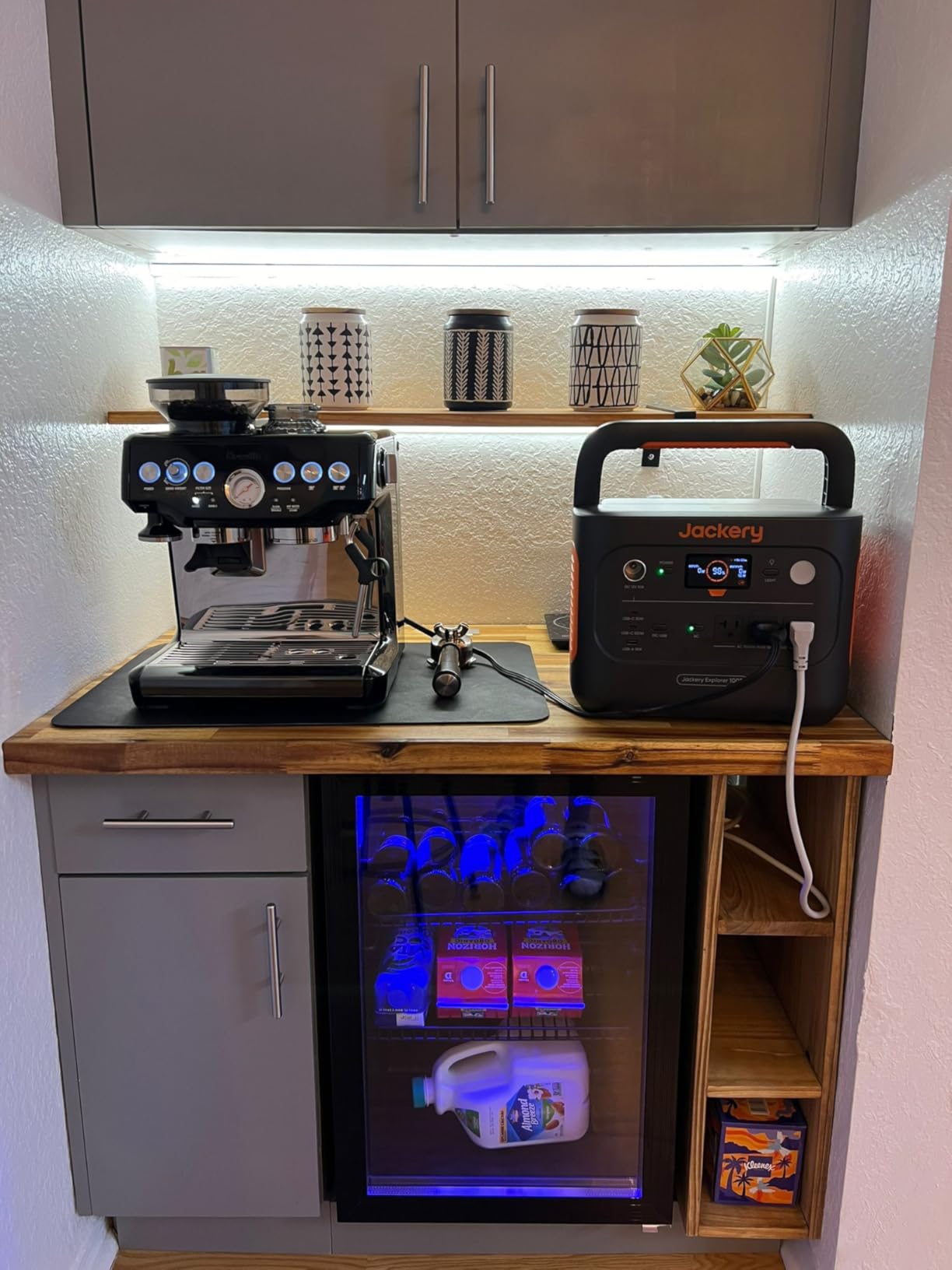
1. Jackery Explorer 1000 v2 – Best Overall for CPAP, BiPAP and Nightly Backup
Jackery Explorer 1000 v2 Portable Power Station,1070Wh,1500W
1070Wh LFP
1500W continuous, 3000W surge
30 dB quiet mode
23.8 lb
Pros
- Lightest unit in the roundup at 23.8 lb
- 0 to 100 percent in one hour via app emergency mode
- 30 dB quiet charging mode for bedside use
- LFP rated 4000 cycles holding 70 percent plus
- Three pure sine wave AC outlets plus two 100W USB-C ports
Cons
- 1070Wh is modest against heated-humidifier CPAP loads
- Only one USB-A port and no wireless charging pad
- Solar input restricted to Jackery-branded panels
- One year warranty is the shortest here
What keeps bringing us back to this unit is not a headline specification but how it behaves at 3am. Owners running overnight therapy report the 30 dB quiet charging mode is inaudible across a bedroom, and the foldable handle makes it the easiest 1kWh pick to move between rooms when the outage moves with you.
Capacity is 1070Wh, and that is where the trade-off sits honestly. A non-heated CPAP at 20W gets many nights from it. A heated-humidifier CPAP at 60W turns the same unit into a single-night budget with margin. The LFP pack is rated for 4,000 cycles above 70 percent capacity, which is a decade of nightly discharges rather than three years.
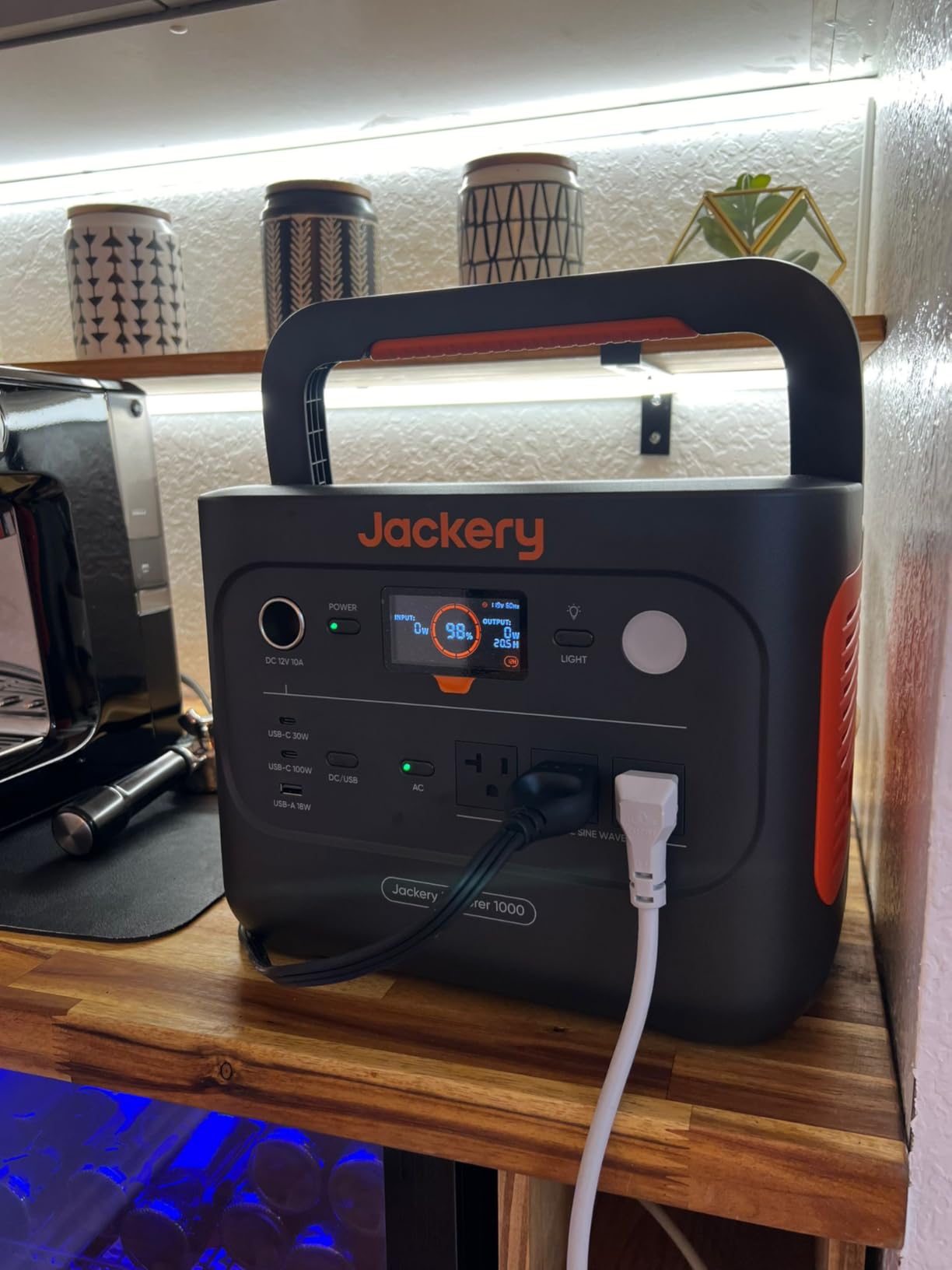
Recharge is what makes it practical day to day. The app’s emergency mode takes it from zero to full in about an hour, so you can top it up during a scheduled cut-off window without planning therapy around it. Two 100W USB-C ports also charge a phone without a brick, which matters when your phone is the backup alarm.
Solar is the one restriction: the input works only with Jackery panels. For a 30 to 60W load that is a nicety rather than the main event, and the one-hour wall recharge covers the far more common short planned outage.
Who it suits
A CPAP or BiPAP user who travels occasionally and wants a station light enough to carry through an airport rather than a theoretical one. It also covers a nebulizer, feeding pump or hearing aid charger without adaptation, since none of those need more than 100W.
It pairs well for someone running a concentrator by day and a non-heated CPAP at night, and it works as a second bedroom unit or a travel bag filler.
Who it does not suit
Anyone running a heated-humidifier CPAP who expects multi-night runtime. At 60W against roughly 910 usable watt-hours you get about 15 hours, which is one night with nothing spare. The 2kWh class is the correct tier for that user.
It also fails an oxygen concentrator on a 600W load and an electric bed during movement cycles, and there is no expansion path if you outgrow it.
2. BLUETTI AC180 – Best Value for Oxygen Concentrators and High-Draw Devices
BLUETTI AC180 Portable Power Station 1152Wh 1800W LiFePO4 Solar Generator
1152Wh LFP
1800W continuous, 2700W boost
20 ms UPS
0-80 percent in 45 min
Pros
- 20 ms UPS keeps devices running through outages without a break
- Full charge in one hour on 1440W AC input
- App-enabled 2700W boost covers compressor startup loads
- Four AC outlets plus USB-A
- USB-C and 12V car port
- Five year warranty with five year spare part availability
Cons
- 37.4 lb is heavy for bedside positioning
- Top wireless charging pad frequently fails to charge
- Inverter self-consumption of 15-20W plus a 10 percent reserve cuts usable watt-hours
- Some units need firmware update and a calibration cycle before meeting spec
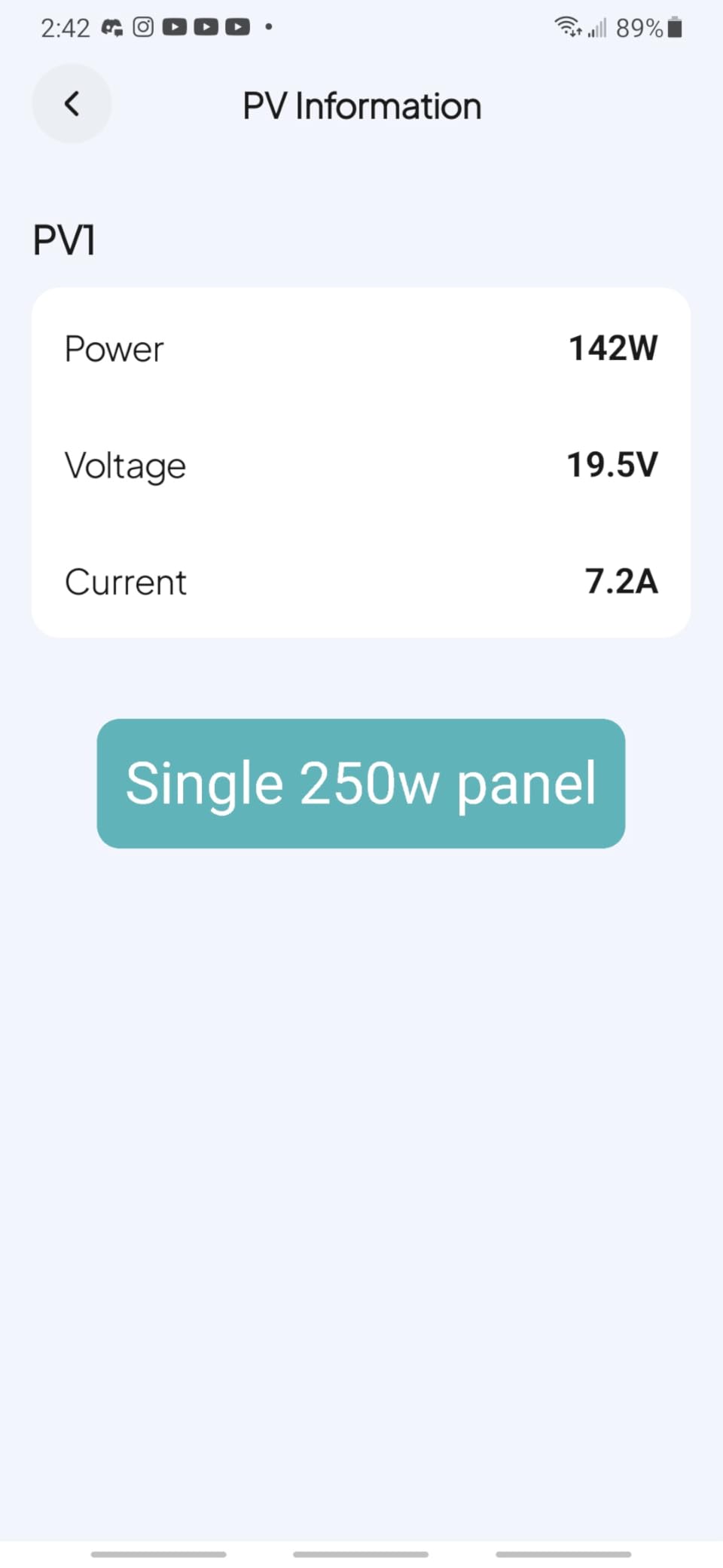
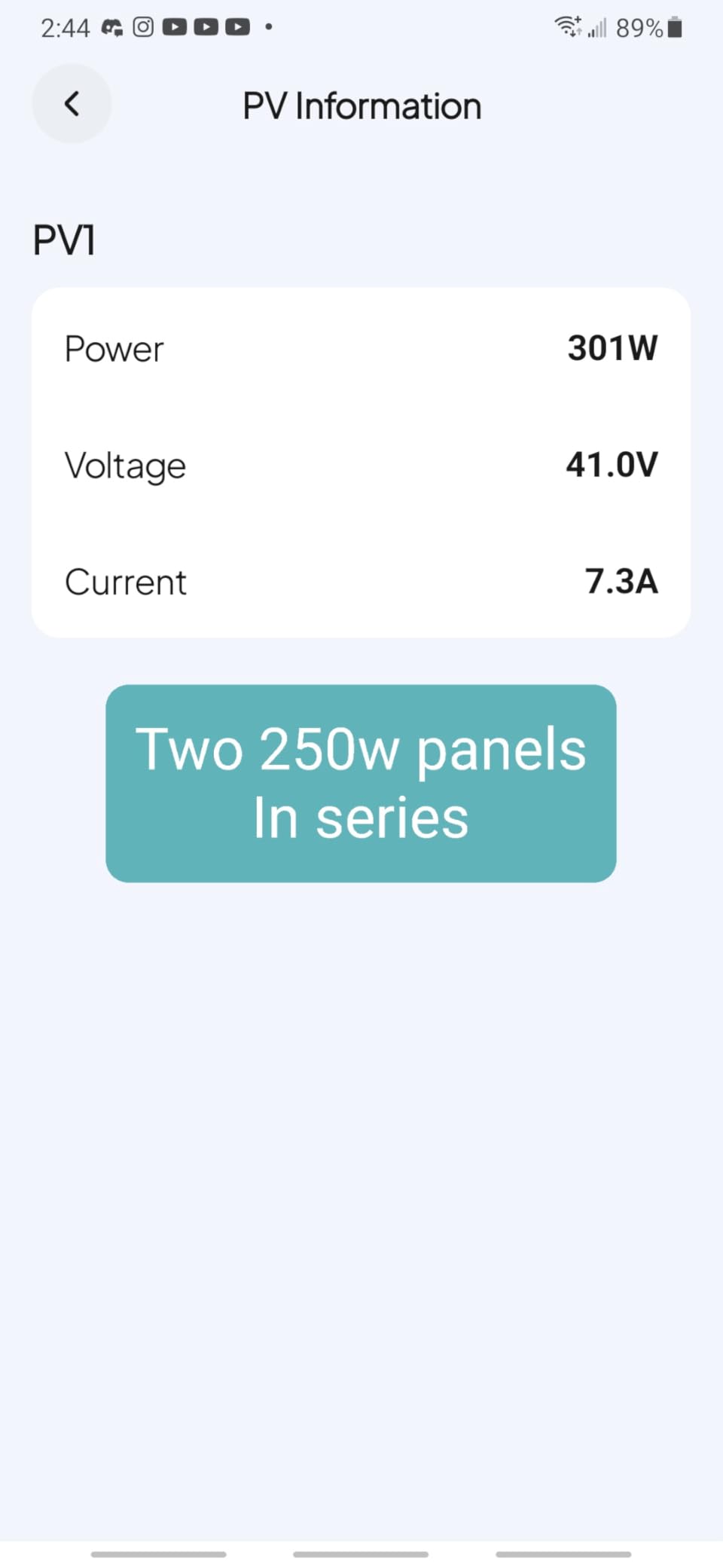
Output is where this one separates itself in its class: 1800W continuous, with an app-tap boost to 2700W for compressor-style loads. That boost is not a marketing flourish for an oxygen concentrator, it is the difference between the compressor starting and the unit tripping.
The efficiency math is the honest caveat. BLUETTI documentation points to 15 to 20W of inverter self-consumption and a 90 percent usable capacity, so a 1152Wh label behaves closer to 870 usable watt-hours. Against a 60W heated CPAP that is about 14 hours rather than 18.
A few units arrived needing a firmware update and a full calibration discharge and recharge cycle before they met spec, which is a ten-minute job to do at unboxing rather than at 3am on the first night of an outage. The five-year spare parts commitment is also unusual at this tier.
Port selection is the best in the roundup for a mixed device home: four AC outlets plus USB-A, USB-C, a 12V car port and a wireless pad on top, so a CPAP, a concentrator and a router all run without a power strip.
Who it suits
Oxygen concentrator users, because 1800W continuous plus the 2700W boost clears the compressor startup that trips smaller units, and 20 ms is already more than a concentrator needs. It also covers an electric hospital bed that gets repositioned regularly.
Anyone with several low-draw devices at once: router, monitor, laptop, phone charger and a feeding pump on one battery is a realistic evening load.
Who it does not suit
Bedside CPAP users who need to move the unit between rooms, because 37.4 pounds is a two-person lift in the wrong circumstances, and a 1,152Wh unit under sustained low draw does not idle as quietly as a smaller one.
Anyone counting on the top wireless pad to keep a phone alive during an outage, and anyone who needs only one night of heated CPAP and wants to spend less, since the smaller units cover that too.
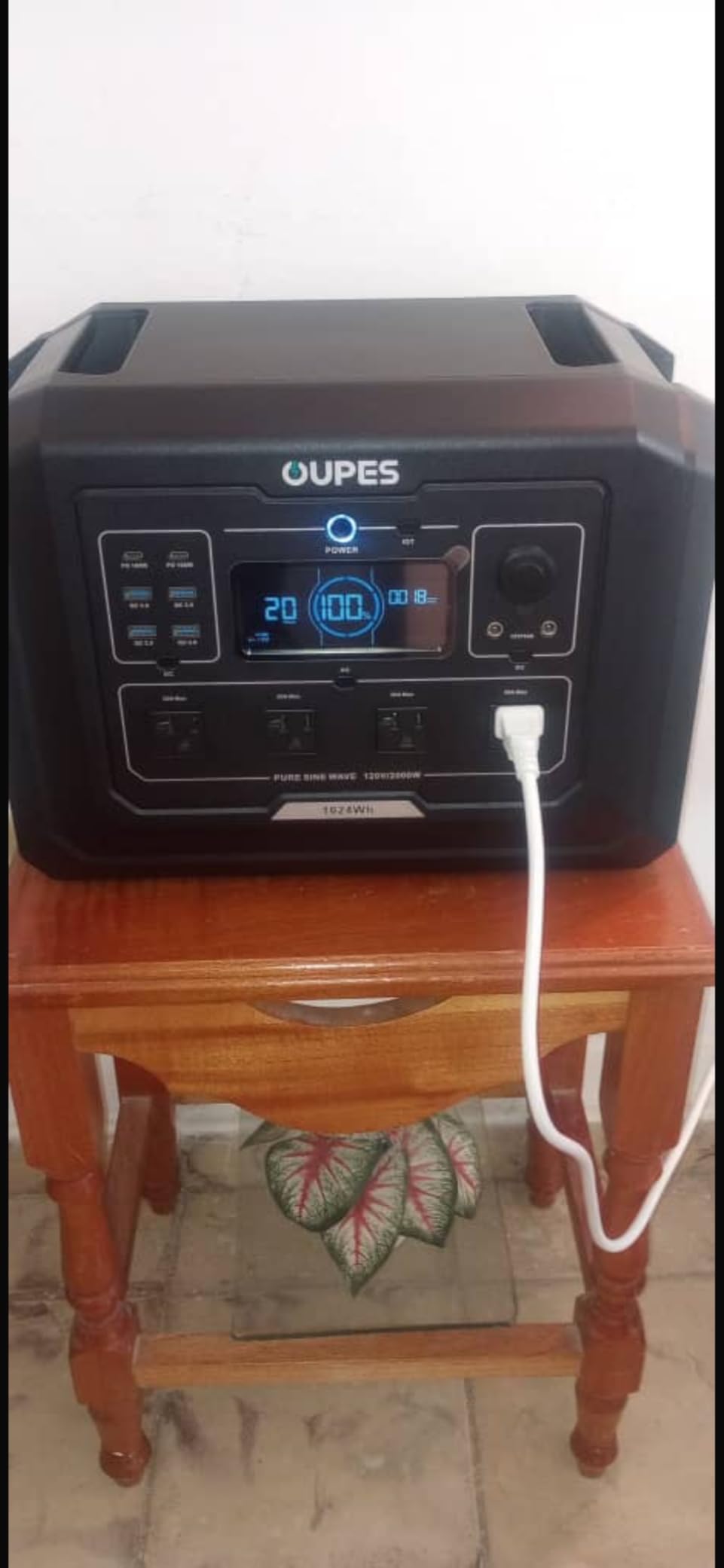
3. OUPES Mega 1 – Best for Expandable Capacity on a Mid-Size Build
OUPES Mega 1 Portable Power Station 1024Wh 2000W (4500W Surge)
1024Wh LFP
2000W continuous pure sine wave
Sub-20ms UPS
Expandable to 5120Wh
Pros
- Packs 2000W continuous output into a 27.8 lb chassis
- Expandable to 5120Wh with up to two B2 extra batteries
- Recharge hits 80 percent in 36 minutes on AC high input
- Pure sine wave output on four 120V AC outlets
- 800W solar input and 1400W AC input
Cons
- Advertised 4500W surge is optimistic and units trip near 2100W
- Proprietary charge cable is hard to source outside the box
- Lightweight plastic shell offers no weather resistance
- Cooling fans run continuously and get loud under heavy load
This is the only unit here that expands to 5120Wh with two B2 batteries, and for a household expecting multi-day outages that scalability is the reason to look here first. It matches the Anker’s 2000W continuous output in a 27.8-pound chassis, and one owner uses it as an in-line buffer to absorb compressor inrush.
The manufacturer names the sub-20ms transfer as protection for medical devices, servers and workstations, which is a far more specific claim than the vague seamless language most brands use. Recharge hits 80 percent in 36 minutes on AC high input, or 26 minutes with solar added.
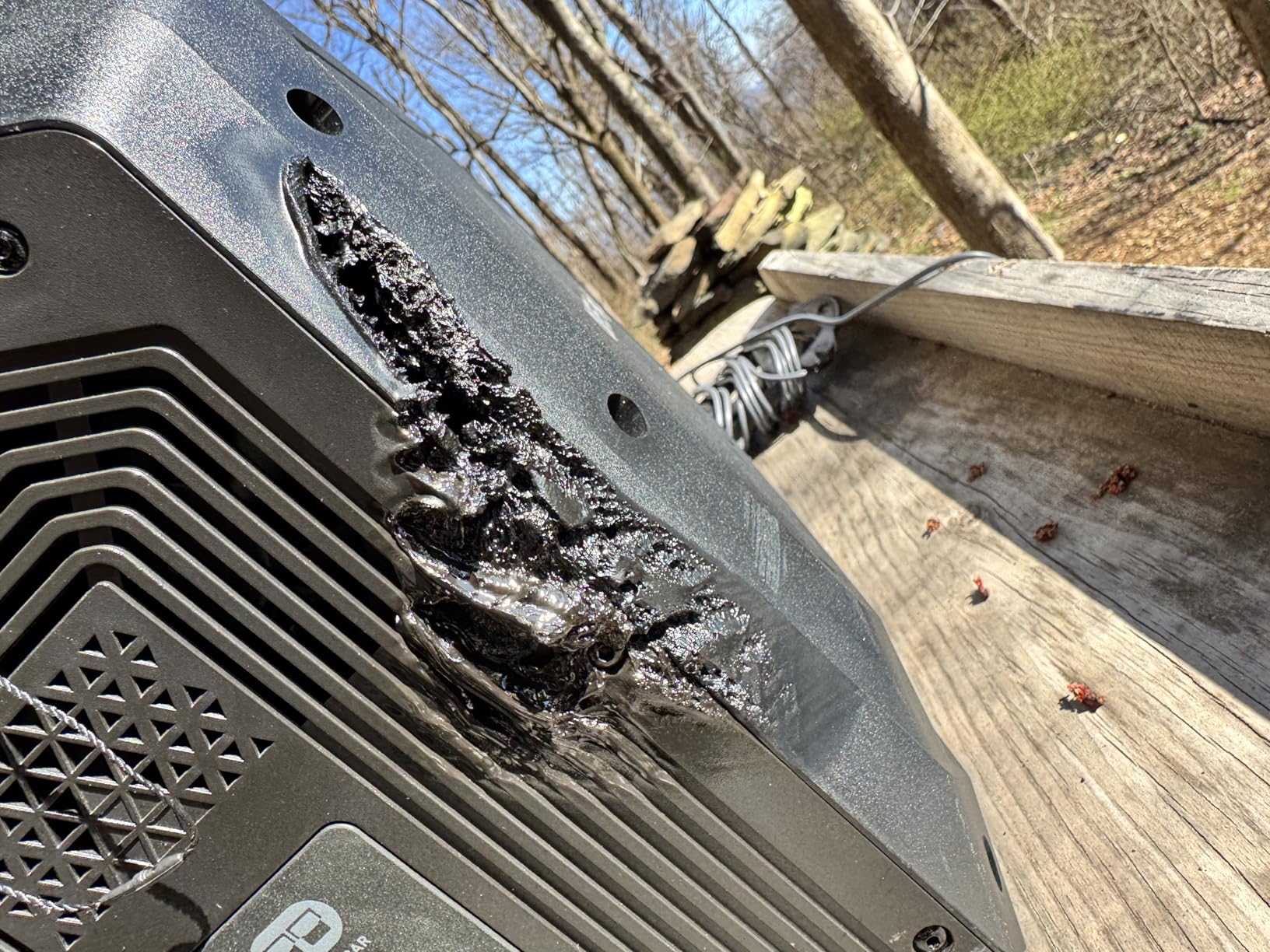
Quality control is the honest caveat. The 4.5 rating is the lowest of the eight, and the six percent one-star share is driven by a documented cluster of battery management system faults on a first deep discharge rather than by disappointed performance.
Treat the 4500W surge as marketing: one unit consistently tripped between 2,050W and 2,200W, so 2000W is the real ceiling. The proprietary charge cable is hard to source outside the box, and the Bluetooth app is basic with unreliable Wi-Fi, against genuinely strong support that replaced a defective unit.
Who it suits
Households planning for outages of days rather than hours, because two expansion batteries turn a night of CPAP into a weekend of concentrate or a full dialysis session.
RV and travel-with-equipment users too, since 800W solar input is among the highest here and 27.8 pounds stays in car-lift territory.
Who it does not suit
High-compliance users who need a documented reliability record, because the battery management fault cluster is a real qualification rather than a stylistic one.
Anyone needing weather resistance, since the plastic shell offers no water or dust sealing, and anyone sensitive to fan noise, because the cooling fans run continuously during charging.
4. Anker SOLIX C1000 Gen 2 – Best Specifically Named for CPAP Machines
Anker SOLIX C1000 Gen 2 Portable Power Station
1024Wh LFP
2000W output, 3000W peak
10 ms UPS switchover
49-minute recharge
Pros
- Only unit in the roundup naming CPAP machines and specifying 10 ms transfer for them
- Verified owner ran a ResMed AirSense 11 for three consecutive nights on one charge
- 49-minute full recharge is among the quickest here
- Silent in operation with owners unable to hear it running
- Five year warranty with 4000-cycle LFP life
Cons
- Gen 2 removed the expansion capability of the first generation
- Measured 15-20 percent harmonic distortion on heavy reactive loads
- No protective storage case included
- Loses a few percent of charge per month in storage
This is the only unit in the roundup that names CPAP machines in its own marketing and specifies a 10 ms switchover for them. In a category where every brand claims seamless, a manufacturer who names the device is worth listening to.
The owner reports are the most relevant here: one ran a ResMed AirSense 11 for three consecutive nights on a single charge, using roughly 17 percent of capacity per night and waking with 83 percent still on the unit. Recharge is 49 minutes to full on 1600W of AC input, or 1.8 hours from solar at 600W.
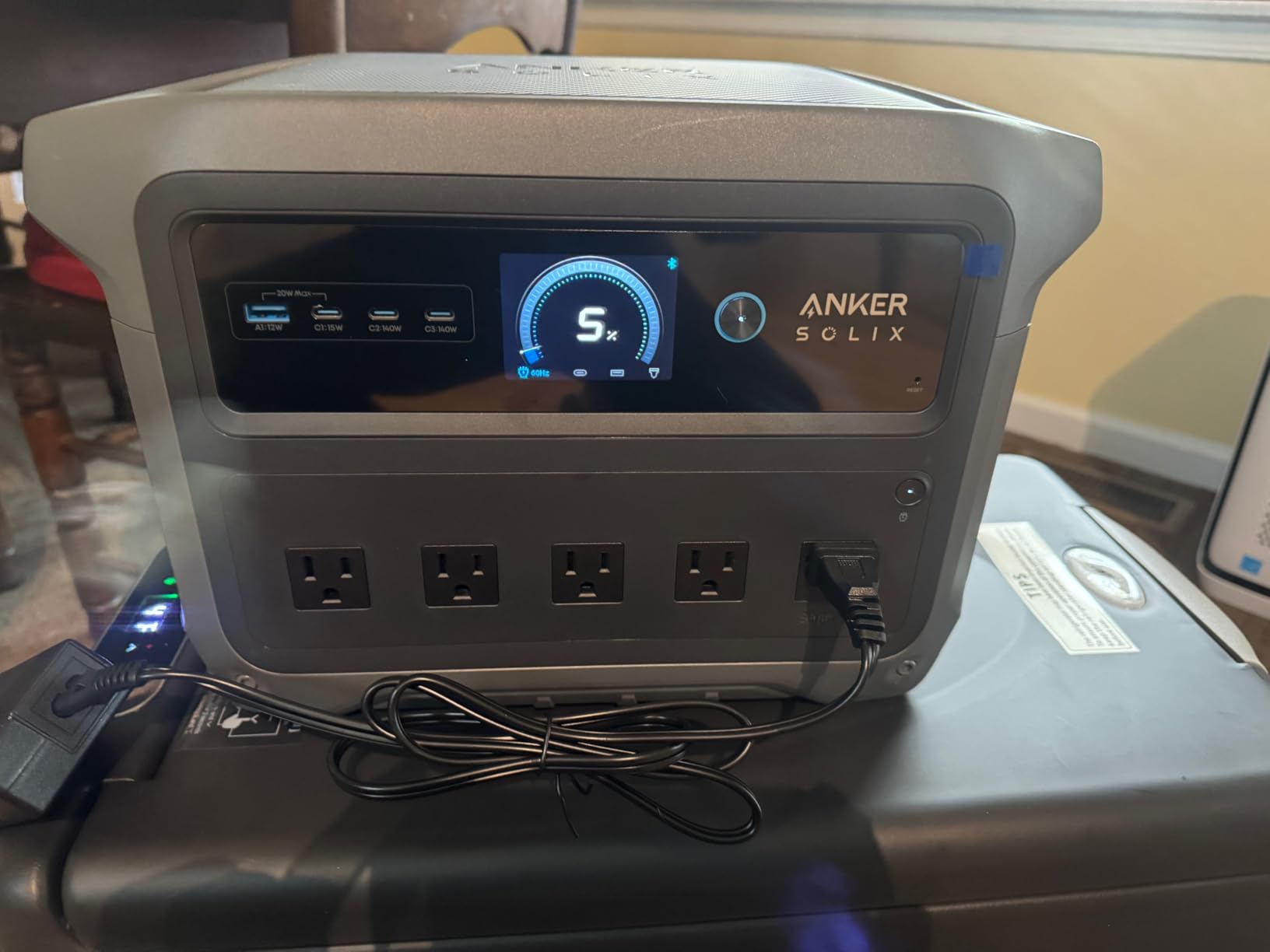
Two caveats carry weight. An electrical engineer measured 15 to 20 percent harmonic distortion under microwave load, so output is clean for a CPAP but not perfectly sinusoidal under heavy reactive loads. Gen 2 also dropped the expansion battery of the first generation, which closes the door on adding capacity later.
Who it suits
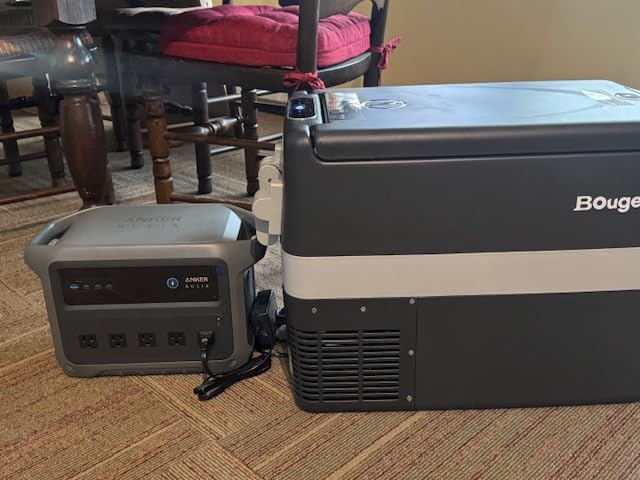
CPAP and BiPAP users without qualification, and sleep-disordered-breathing patients in particular, because multiple owners describe the unit as silent in operation. A station you cannot hear is a genuine feature when the device it powers is the reason you are awake. Ten output ports also mean a CPAP, a router, a phone and a lamp all run without a power strip.
Who it does not suit
Anyone planning to grow capacity later, because Gen 2 has no expansion battery, and anyone running a high-reactive load such as a microwave alongside therapy equipment.
Skip it if you want to run an oxygen concentrator and a CPAP from the same inverter and want the cleanest output across both, because 1024Wh covers one overnight draw well and the distortion measurement argues for a larger inverter on mixed loads.
5. EF ECOFLOW DELTA 3 Plus – Best for Fastest Recharge and Rugged Portability
EF ECOFLOW Portable Power Station DELTA 3 Plus 1024Wh, 1800W, LFP Battery
1024Wh LFP
1800W continuous, 3600W surge
10 ms UPS
IP65 battery pack
Pros
- Five charging paths all reaching 80 percent in 40 minutes or less
- 10 ms UPS switch-over among the fastest here
- IP65 battery pack is the only weather-sealing in the roundup
- 4000-cycle LFP life with a five year warranty
- Thirteen simultaneous output connections
Cons
- Costs more than the other 1kWh picks in the roundup
- X-Boost is restricted to resistive loads so it does not help compressor startup
- Screen brightness and app dependence needed a firmware update before some units charged at full rate
- Smallest review base among the 1kWh picks
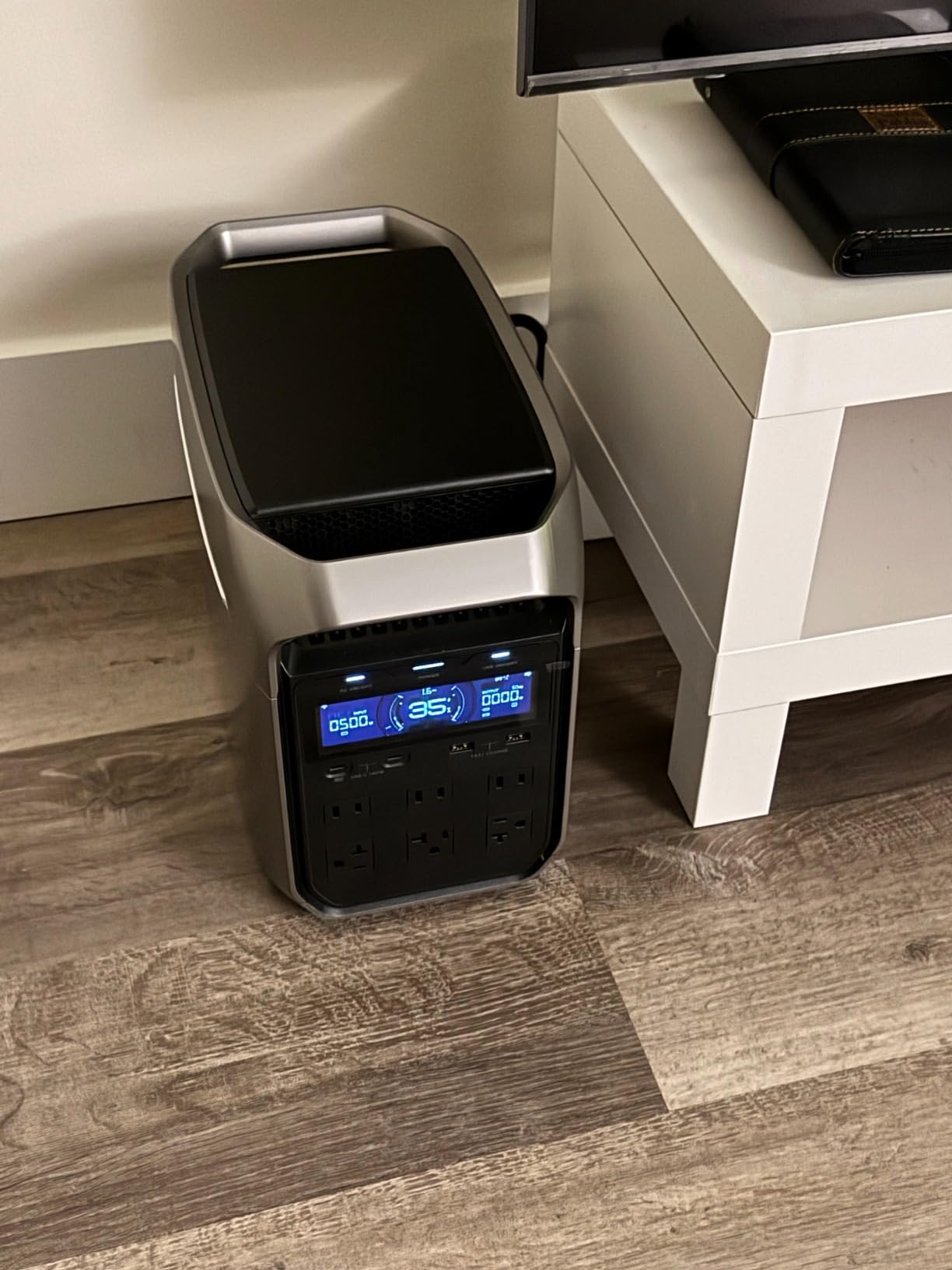
The argument here is recharge speed across several input methods. AC input at 1500W hits 80 percent in 40 minutes, solar hits 80 percent in an hour, and an 800W alternator charger hits 80 percent in an hour. If your outage risk is weather-driven and you have panels or a car, that flexibility beats a single fast path.
It is also the only battery pack here with a stated IP65 rating for splash, dust and oil resistance, which matters if the unit lives in a garage or utility room. The 10 ms switch-over keeps a router and a therapy device alive through the same box.
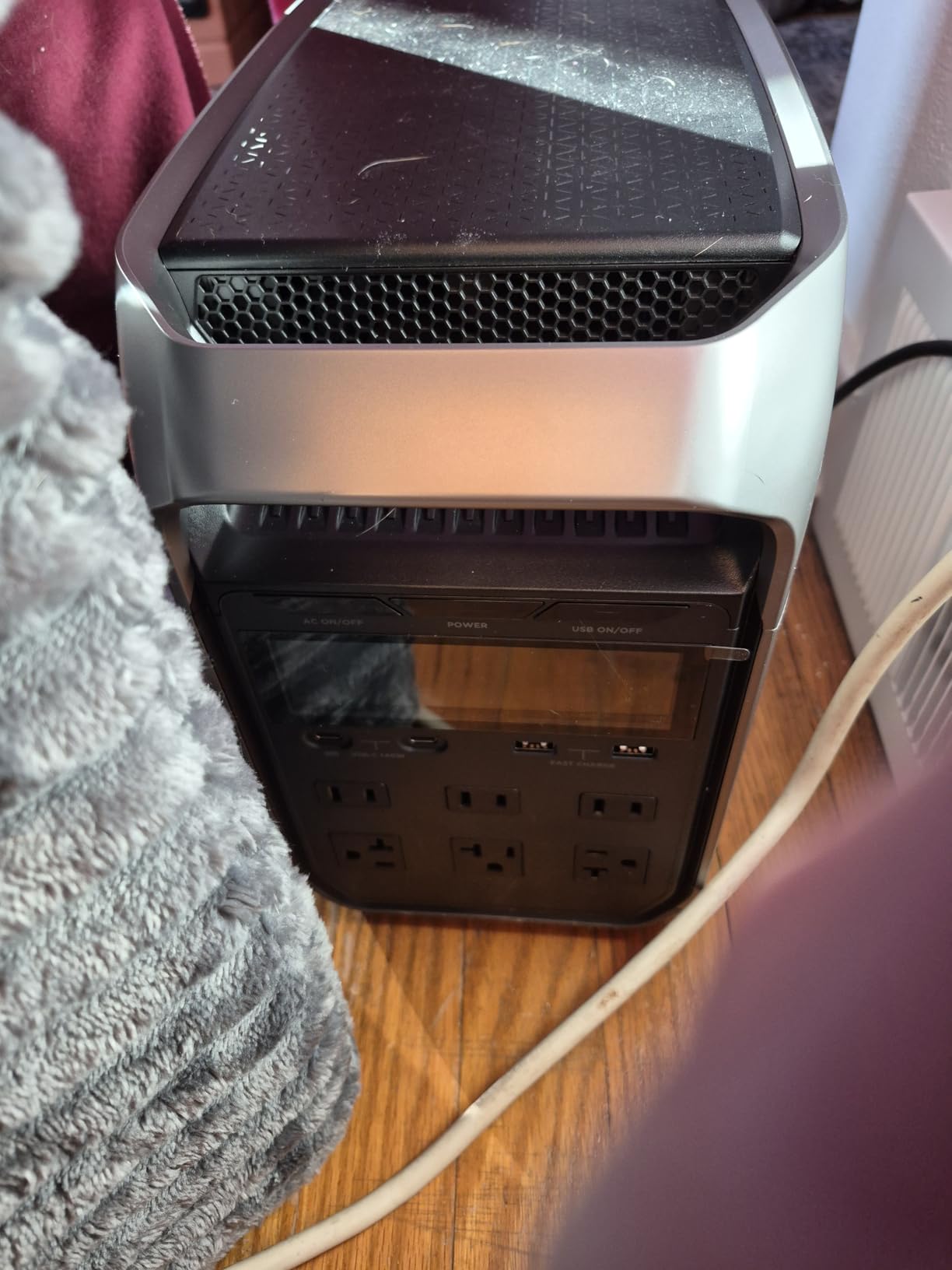
Thirteen simultaneous output connections means a CPAP, a router, a phone and a lamp can all run without a power strip, and expansion to 5kWh runs through the wider DELTA battery ecosystem, so unlike the Anker Gen 2 you are not closing the door on more capacity later.
What stops us recommending it as the top pick is X-Boost, which only helps resistive loads. A compressor-driven oxygen concentrator is exactly the case where extra headroom would matter, and the extra headroom does not apply. A few units also needed a firmware update before charging at the full input rate.
Who it suits
Anyone whose power comes from multiple directions: solar, a wall outlet, a car alternator and a generator. In a hurricane, wildfire or ice-storm region, having five paths into the same battery is the difference between a full unit on day three and an empty one. It also suits mixed-device households who would rather plug five things into the station than daisy-chain a power strip behind it, and 27 pounds stays movable by one person.
Who it does not suit
Anyone whose main load is a compressor-driven concentrator, because the X-Boost ceiling explicitly excludes that case, and a pure CPAP user paying a premium for capacity they will not use.
Buyers who want a deep long-term reliability record should start with the units carrying review counts in the thousands, and anyone counting on warranty length to signal reliability should weigh it against the units that carry longer terms.
6. EF ECOFLOW DELTA Pro – Best for Outages Longer Than a Day
EF ECOFLOW Portable Power Station 3600Wh DELTA Pro, 120V 3600W AC Output
3600Wh LFP
3600W continuous AC output
Expandable to 25kWh
99 lb wheeled chassis
Pros
- 3600Wh and 3600W continuous run a compressor
- refrigerator
- furnace blowers and internet for roughly 15 hours
- Recharges from a smart generator in about two hours as a bridge for long outages
- Five 120V AC outlets remove extension cord juggling
- Two units pair for 7200W output
- Expandable from 3.6kWh all the way to 25kWh
Cons
- 99 lb is the heaviest unit here and needs the wheeled handle
- Solar input limited to roughly 15 amps which caps panel recharge speed
- Arrived depleted on one unit and tripped a breaker on the first outlet used
- Carries a 6 percent one-star share
- Only a five year warranty on a unit this size
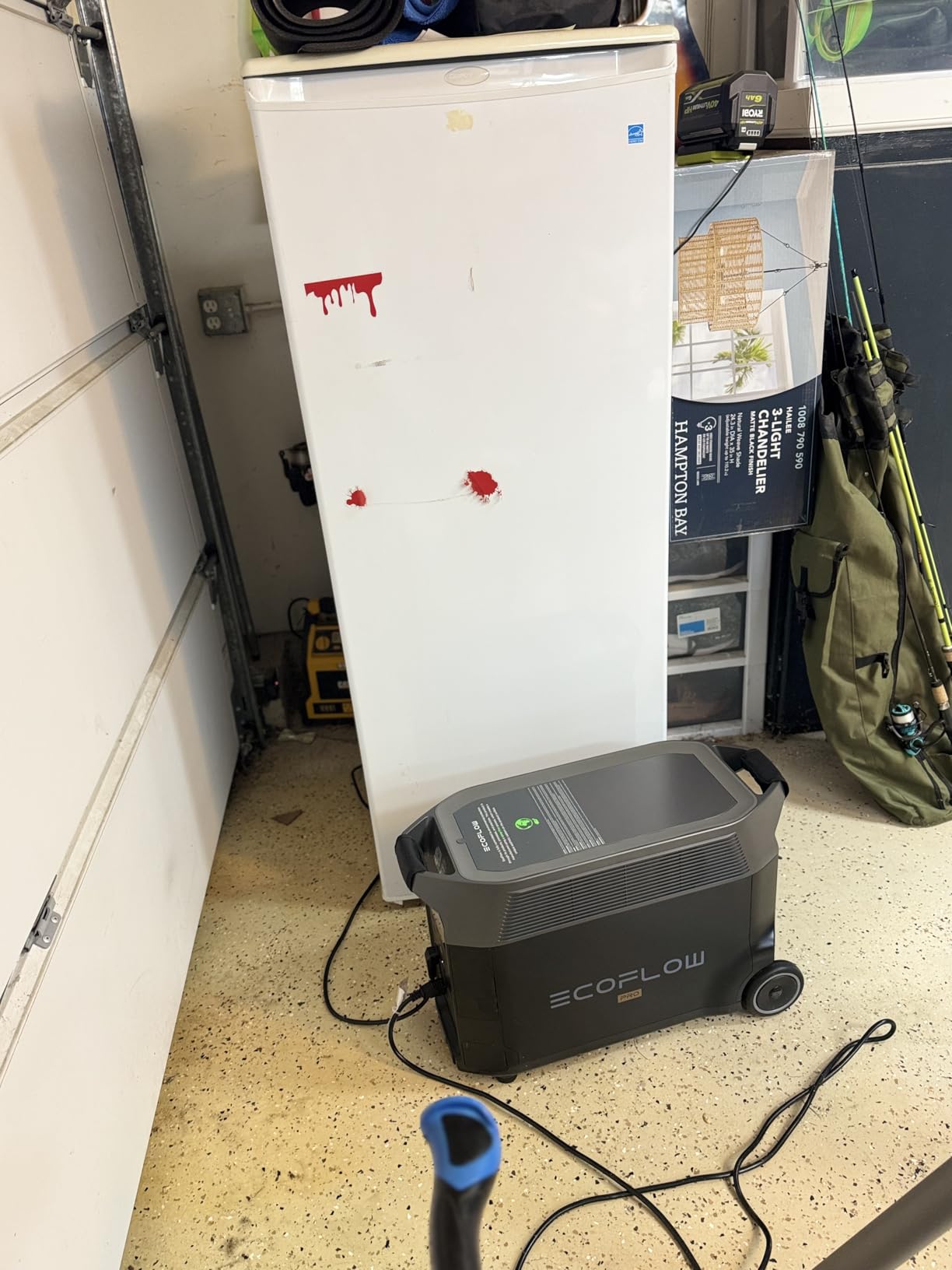
This is the only unit here that changes the nature of the problem. At 3600Wh and 3600W continuous it is not an overnight backup; it is a bridge that carries a compressor, a refrigerator, furnace blowers, internet and computers for roughly 15 hours on a charge. Owners in multi-day grid events describe it as replacing weeks of fuel runs.
Recharge is what makes multi-day realistic: a full recharge in 1.8 hours on 240V input, or 2.7 hours on a standard 1800W wall outlet, and it accepts a smart outdoor generator as a source. Run a small generator for two hours to put 3600Wh back in, shut it off, and run the house quietly on battery for the next fifteen.
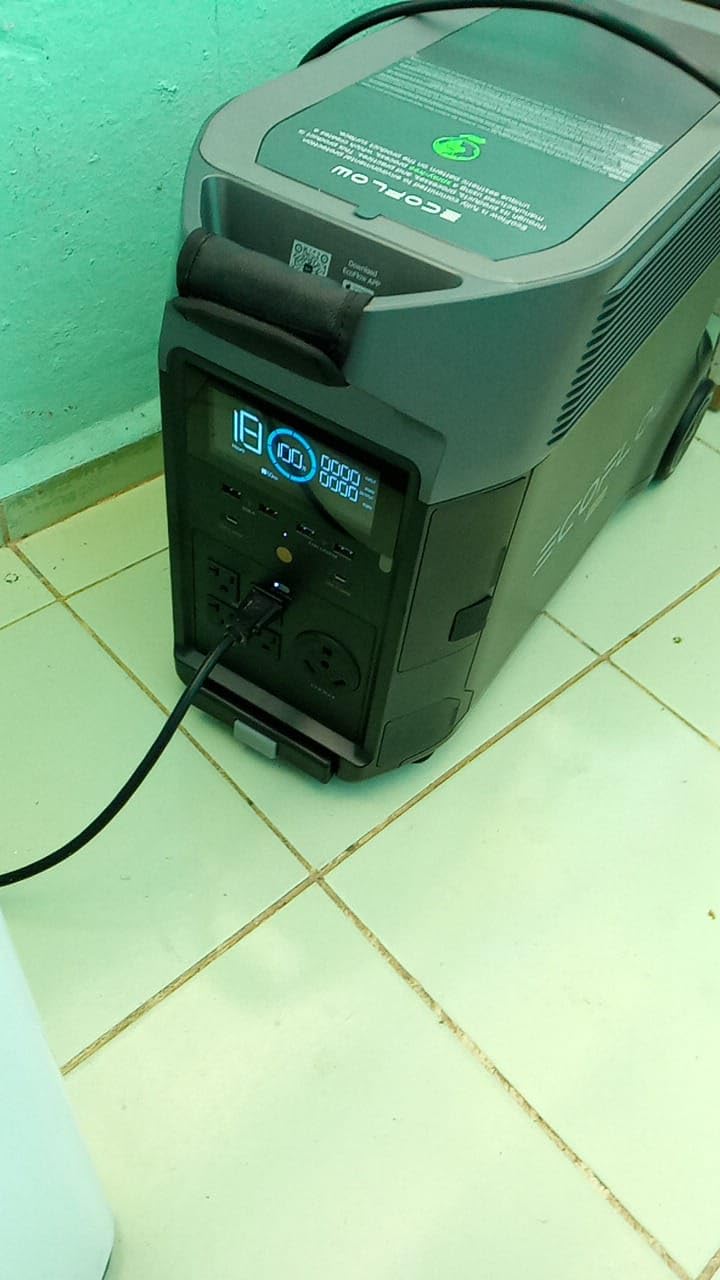
The costs are physical and electrical. Ninety-nine pounds means the extendable wheeled handle is a requirement, not a convenience, and a caregiver alone cannot reposition this during an outage. Solar input caps at roughly 15 amps, which is slower than the 500W and 800W MPPT inputs on the smaller units.
One owner received a unit depleted to about 30 percent that then tripped a breaker on the first outlet used for charging, so plug it in overnight before you trust it. The 6 percent one-star share here is among the highest in the roundup, driven by overload error reports and regional warranty friction rather than runtime complaints.
Who it suits
Households in areas with genuinely multi-day outages: wildfire zones, hurricane-prone coasts, ice-storm regions and rural properties where a truck of fuel is not an option. It is the pick for an oxygen-dependent user or a dialysis patient whose equipment runs continuously, because hours matter more than bedside convenience.
It also suits anyone running a medical device alongside normal household life, since a refrigerator, a furnace blower and the internet staying alive at once is what turns an outage into a manageable evening.
Who it does not suit
It is the wrong choice for anyone who needs to carry it up stairs, reposition it alone, or move it between rooms mid-outage, and it is excessive for a single CPAP user carrying 99 pounds for one 60W load.
Skip it if fast solar recharging matters to your plan, and if your need is one night of therapy, start with the 1kWh class.
7. EF ECOFLOW DELTA 3 Max – Best High-Output Pick in the 2kWh Class
EF ECOFLOW DELTA 3 Max Portable Power Station, 2048Wh LFP Battery, 2400W
2048Wh LFP
2400W output, 3400W X-Boost
Under 10ms transfer
Ultra-quiet
Pros
- Manufacturer explicitly names medical devices among loads protected by the under-10ms transfer
- 0 to 80 percent recharge in 1.13 hours
- 2048Wh capacity fills the gap between 1kWh and 3.6kWh units
- 3400W X-Boost output handles fridges
- microwaves and power tools
- Ultra-quiet operation rated for overnight use in a home or RV
Cons
- Only three total power outlets
- fewer than the mixed-device units here
- Costs more than a 1kWh unit for double the capacity
- Newest model with the smallest review base so long term durability is unproven
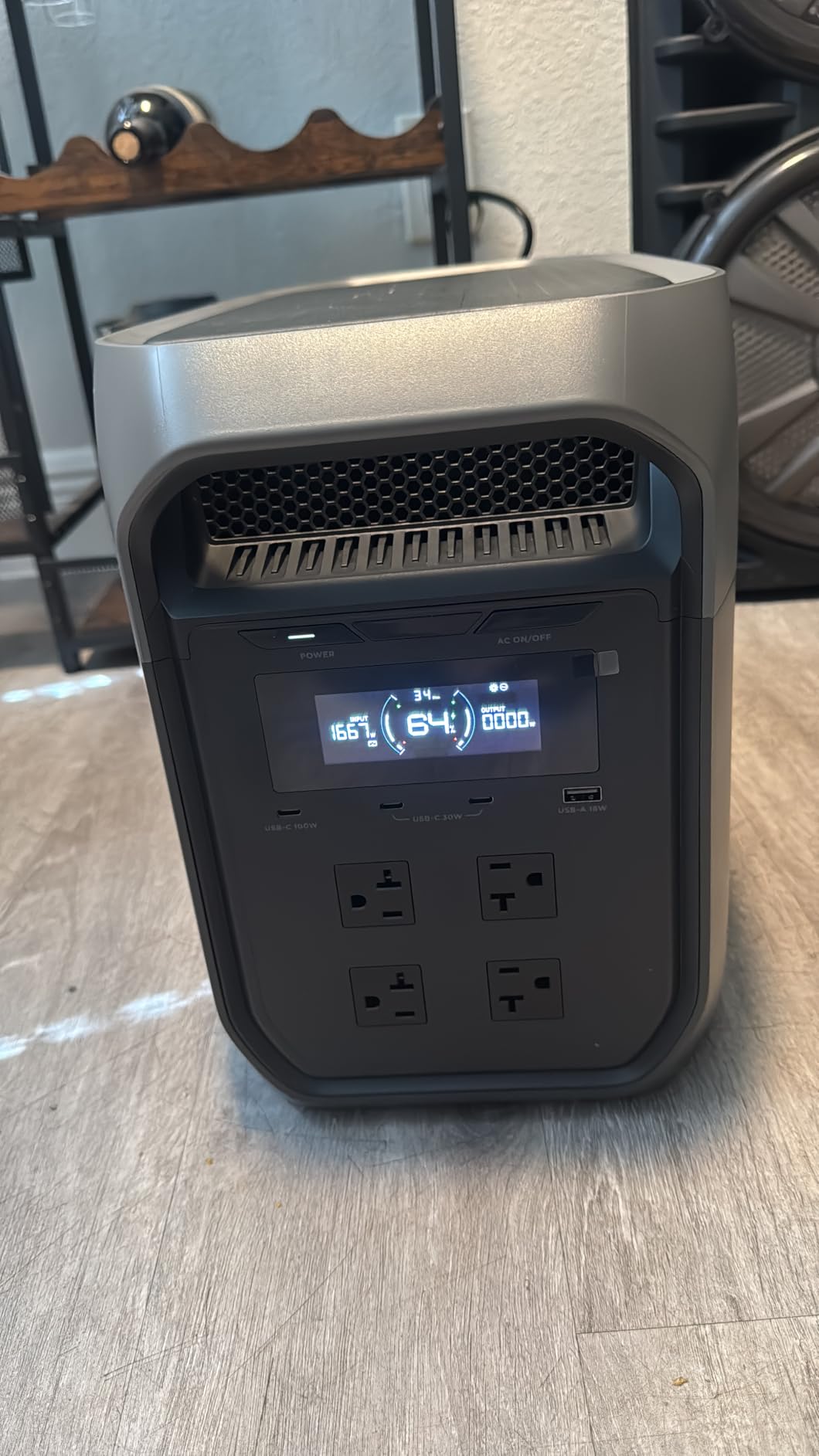
The case for this unit is that it does two jobs at once. 2048Wh covers a full night of heated-humidifier CPAP and still leaves most of its capacity for a concentrator or a dialysis session, and 2400W nominal output with a 3400W X-Boost mode clears the compressor startup smaller units trip on. The manufacturer names medical devices explicitly among the loads protected by the under-10ms transfer time.
Recharge is among the quickest in the roundup at 80 percent in 1.13 hours, the battery is engineered for ten years of daily use, and ultra-quiet operation is stated for overnight use in a home or RV. That last point matters more here than in a 3600Wh unit, because this is one you can plausibly leave beside a bed.
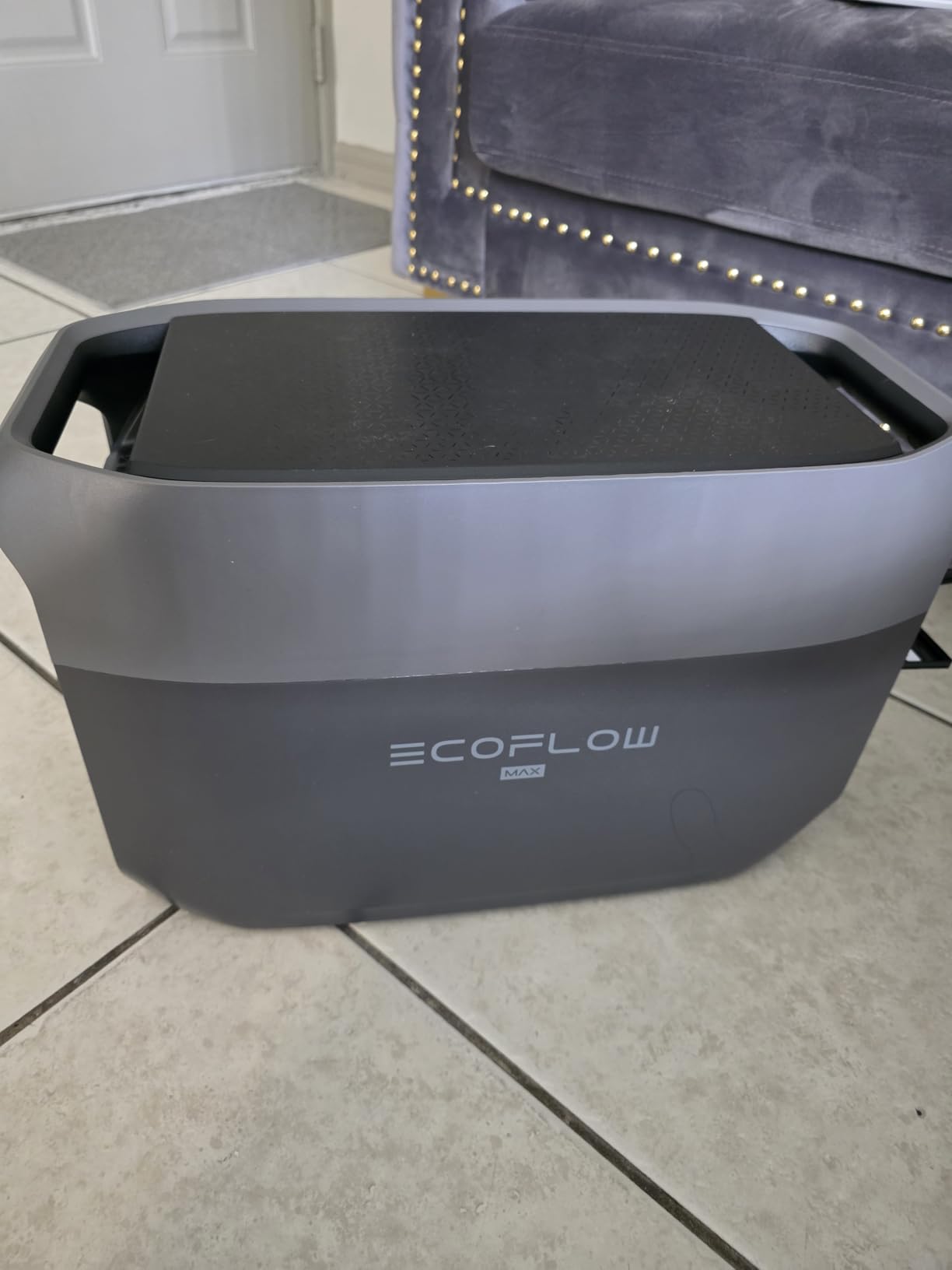
Three total power outlets is the real constraint. If your plan is a CPAP, an oxygen concentrator, a router and a phone charger, you will be running a power strip behind it, and every extra adapter is another potential failure point at 3am. Generous for a single-device home, tight for a two-device one.
Maturity is the honest qualification. This is the newest model here with the smallest review base, so the long-term durability record is thinner than the Jackery or BLUETTI numbers, and the step up from a 1kWh unit is steep for anyone who only needs one night.
Who it suits
Households running two medical devices at once, especially a heated-humidifier CPAP overnight with a concentrator or feeding pump during the day, and anyone whose station doubles as an RV or campervan unit.
Oxygen users get 2400W of headroom, which removes the startup-surge anxiety smaller units create, and roughly a night and a half of a 500W concentrator rather than a couple of hours.
Who it does not suit
It is a poor fit for anyone needing four or five devices at once, because three outlets is fewer than the mixed-device units here, and it pays a large premium for capacity that will sit unused if you only need one night of non-heated CPAP.
Buyers who want a well-established owner record should start with the units carrying review counts in the thousands, and anyone planning to carry this between rooms should confirm the weight with the manufacturer, since the listed data for this model omits it.
8. Jackery Explorer 2000 v2 – Best for Relocating a 2kWh Unit Yourself
Jackery Explorer 2000 v2 Portable Power Station, 2042Wh, 2200W AC Output
2042Wh LFP
2200W AC across 3 ports
20ms UL1778 certified UPS
39.5 lb
Pros
- 39.5 lb CTB Cell-to-Body build is compact for the 2kWh class
- 20ms UPS switching with UL1778 test certification for uninterruptible power
- Silent charging mode under 30dB with a 5 hour full charge
- 0 to 80 percent in 66 minutes on AC fast charging
- Five year warranty versus one year on the smaller Jackery model
Cons
- Lowest rating in the roundup at 4.4 with an 8 percent one-star share
- 20ms switchover is slower than the 10ms of the Anker and EcoFlow units
- Only three AC outlets and three total power outlets
- No expandable battery option listed
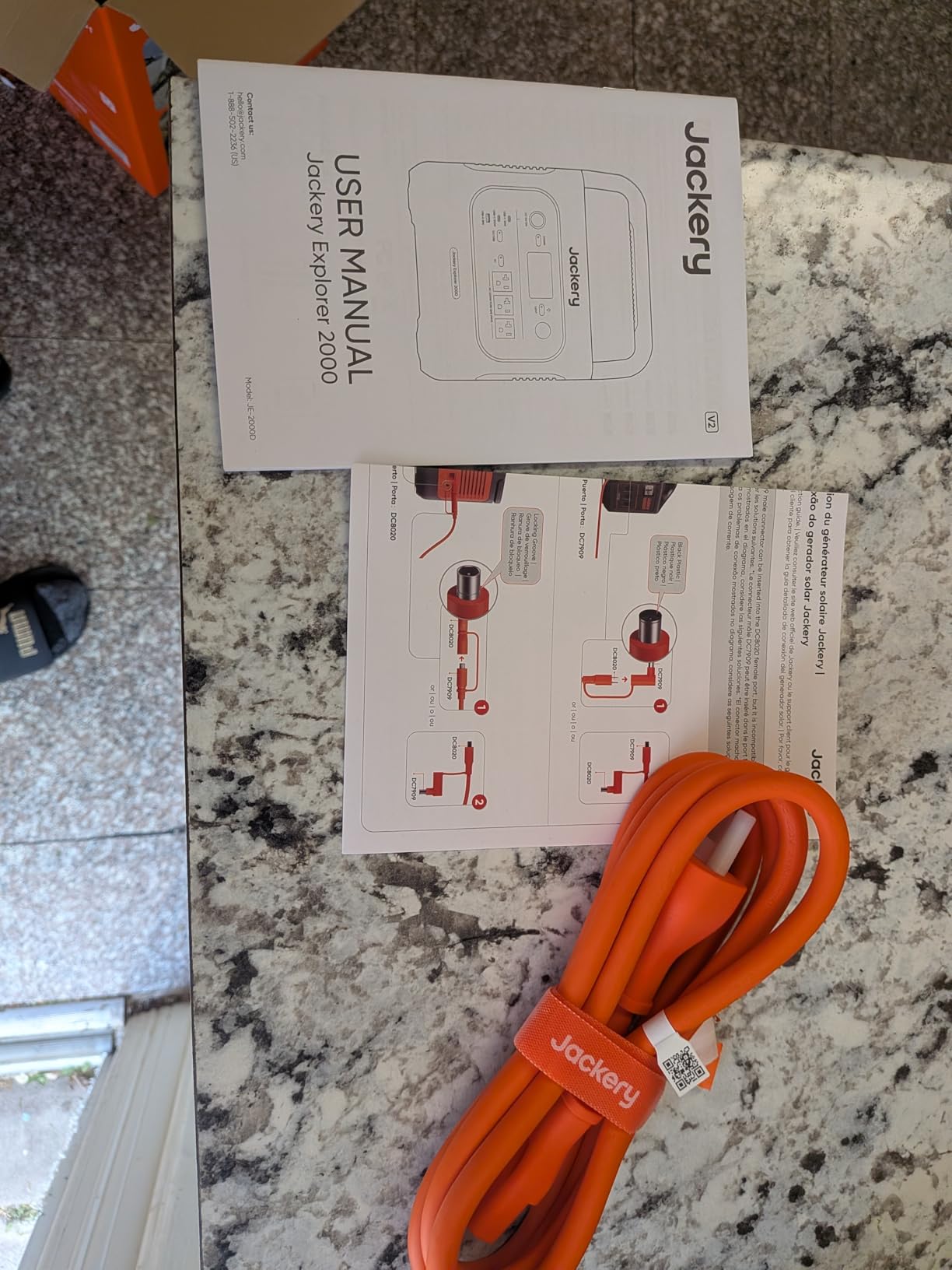
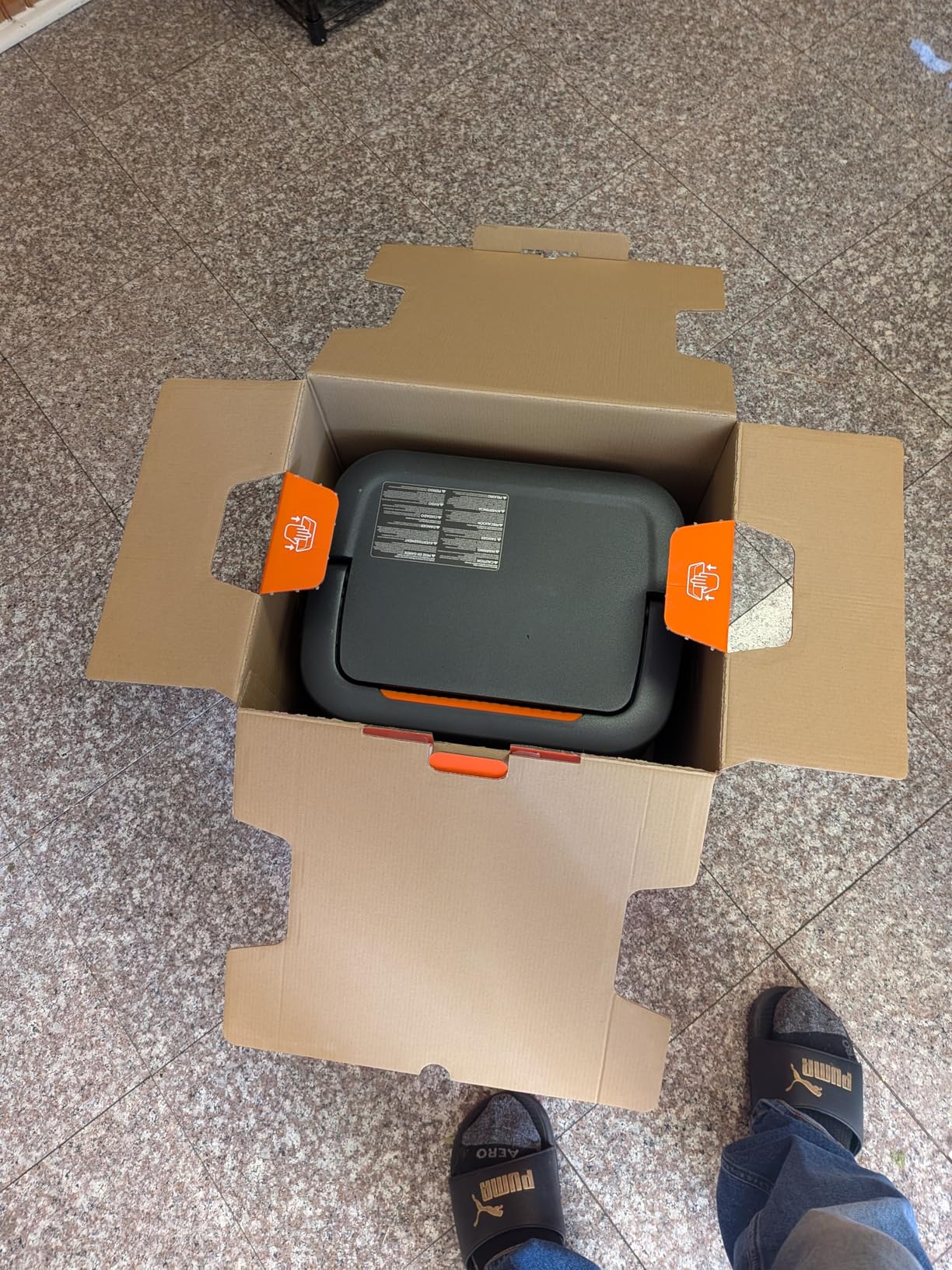
At 39.5 pounds, this is the 2kWh unit you can realistically move between a bedroom and a living room yourself, which is the whole point of picking it over a larger station. The Cell-to-Body construction borrowed from EV battery packs makes it 41 percent lighter and 34 percent smaller than typical 2kWh LiFePO4 stations, and that translates directly into whether a caregiver can reposition it at 4am.
The electrical story is solid: 2200W across three AC ports, 80 percent charge in 66 minutes, full in about 102 minutes on the app’s emergency super charging mode. The 20ms switchover carries UL1778 test certification for uninterruptible power systems, which is a specific standard rather than a marketing adjective.
The review profile and the transfer time together give us pause. A 4.4 rating with an 8 percent one-star share is the weakest of the eight and the flattest five-star share at 79 percent, which tells you the experience is more variable. The 20ms switchover is roughly double the 10ms of the Anker SOLIX C1000 Gen 2 and the EcoFlow DELTA series, and for a CPAP user chasing the fastest therapy-continuity response that is a real gap.
Three AC outlets is also a tight count alongside the DELTA 3 Max, and no expansion battery is listed, so capacity is fixed at 2042Wh.
Who it suits
Caregivers and mobility-limited users who need a 2kWh unit they can relocate without a second person, and households in a second bedroom or upstairs room where a 99-pound box is not an option. The under-30dB silent charging mode also makes it a fair bedside candidate for non-heated therapy, and solar users can refill it in as few as six hours with 400W panels.
Who it does not suit
Anyone who needs the fastest therapy-continuity switchover, because 20ms is double the class-leading figure, and anyone running three or more devices at once will run out of outlets.
Skip it if you plan to add capacity later, and be cautious if a highly variable owner record is a deal breaker, because the one-star share is the largest in the roundup.
How to Size Backup Power for Your Medical Devices
Multiply the device’s rated wattage by the hours you need to cover, then multiply by 1.3. That is the formula. You will also see 1.15 published with an extra 25 to 30 percent margin added afterward; those arrive at nearly the same place, and 1.3 is easier to defend because it absorbs inverter losses, self-consumption and a partial-depth discharge in one step.
Worked example 1: CPAP with heated humidifier. A heated-humidifier CPAP with a heated tube commonly draws 50 to 70W. Assume 60W and eight hours: (60 x 8) x 1.3 = 624Wh minimum, so a 1,000Wh unit gives you margin. The same machine in eco mode at 20W returns 208Wh, which is why a single CPAP user never needs a large unit.
Worked example 2: 5L home oxygen concentrator. These commonly draw 300 to 600W continuous with a startup surge well above that. Assume 500W and six hours: (500 x 6) x 1.3 = 3,900Wh minimum. That number rules out every 1kWh unit here for anything beyond a short bridge, and you need 1,200W of surge headroom on the output side.
Worked example 3: electric hospital bed. Beds draw near zero in standby and 300 to 500W during movement cycles. Assume 400W and four hours of movement: (400 x 4) x 1.3 = 2,080Wh, so a 2kWh unit is the practical floor and at least 1,000W of continuous output keeps the actuators from stalling.
Worked example 4: dialysis cycler or medication refrigerator. A cycler runs several hours at a few hundred watts, while a medication fridge averages around 100W. A fridge at (100 x 24) x 1.3 = 3,120Wh and a cycler at (300 x 8) x 1.3 = 3,120Wh land in the same place: 2kWh as a minimum, 3.6kWh for comfort.
Device classes differ enormously, so the figures below are a starting point rather than a promise. The most common sizing mistake is treating 1,000Wh as 1,000 usable watt-hours, and the second is sizing on nameplate watts for a compressor-driven device and ignoring surge.
- CPAP, no humidifier: 10 to 25W, surge minimal, roughly 260Wh for a night with margin.
- CPAP, heated humidifier and heated tube: 50 to 70W, roughly 650Wh for a night with margin.
- BiPAP: generally 30 to 60W depending on mode, roughly 520Wh for a night with margin.
- 5L oxygen concentrator: 300 to 600W with startup surge well above continuous, 3,900Wh for six hours.
- Portable oxygen concentrator: typically under 150W on continuous flow, far less demanding than a home unit.
- Nebulizer: roughly 50W during a cycle, about 325Wh for a few cycles with margin.
- Electric hospital bed: 300 to 500W in movement, near zero in standby, 1,000W continuous output is the practical floor.
- Home dialysis cycler: several hundred watts over a long session, 3,000Wh or more plus 1,200W of surge headroom.
- Medication or insulin refrigerator: roughly 100W running, 3,120Wh for a full 24 hours.
- Feeding pump and hearing aid chargers: 10 to 50W, under 200Wh for a night, and the easiest loads on this list.
Runtime by Device: What Each Pick Actually Covers
These figures are calculated, not measured: rated watt-hours times an 85 percent planning figure, divided by the device draw at the midpoint of its published range. Real results depend on altitude, humidifier setting and how deep you discharge, so treat this as a comparison between the eight units rather than a promise for your specific night.
- CPAP, no humidifier (20W): Jackery Explorer 1000 v2 about 45 hours, BLUETTI AC180 about 49, OUPES Mega 1 about 43, Anker SOLIX C1000 Gen 2 about 43, EcoFlow DELTA 3 Plus about 43, EcoFlow DELTA Pro about 153, EcoFlow DELTA 3 Max about 87, Jackery Explorer 2000 v2 about 86.
- CPAP, heated humidifier (60W): Jackery Explorer 1000 v2 about 15 hours, BLUETTI AC180 about 16, OUPES Mega 1 about 14, Anker SOLIX C1000 Gen 2 about 14, EcoFlow DELTA 3 Plus about 14, EcoFlow DELTA Pro about 51, EcoFlow DELTA 3 Max about 29, Jackery Explorer 2000 v2 about 28.
- BiPAP (45W): Jackery Explorer 1000 v2 about 20 hours, BLUETTI AC180 about 21, OUPES Mega 1 about 19, Anker SOLIX C1000 Gen 2 about 19, EcoFlow DELTA 3 Plus about 19, EcoFlow DELTA Pro about 68, EcoFlow DELTA 3 Max about 38, Jackery Explorer 2000 v2 about 38.
- 5L oxygen concentrator (500W): Jackery Explorer 1000 v2 about 1.8 hours, BLUETTI AC180 about 2, OUPES Mega 1 about 1.7, Anker SOLIX C1000 Gen 2 about 1.7, EcoFlow DELTA 3 Plus about 1.7, EcoFlow DELTA Pro about 6, EcoFlow DELTA 3 Max about 3.5, Jackery Explorer 2000 v2 about 3.5. The 1kWh class is a bridge here, not a solution.
- Portable oxygen concentrator (120W): Jackery Explorer 1000 v2 about 7.5 hours, BLUETTI AC180 about 8, OUPES Mega 1 about 7, Anker SOLIX C1000 Gen 2 about 7, EcoFlow DELTA 3 Plus about 7, EcoFlow DELTA Pro about 25, EcoFlow DELTA 3 Max about 14, Jackery Explorer 2000 v2 about 14.
- Nebulizer (50W): Jackery Explorer 1000 v2 about 18 hours, BLUETTI AC180 about 19, OUPES Mega 1 about 17, Anker SOLIX C1000 Gen 2 about 17, EcoFlow DELTA 3 Plus about 17, EcoFlow DELTA Pro about 61, EcoFlow DELTA 3 Max about 34, Jackery Explorer 2000 v2 about 34.
- Electric hospital bed in movement (400W): Jackery Explorer 1000 v2 about 2.2 hours, BLUETTI AC180 about 2.4, OUPES Mega 1 about 2.1, Anker SOLIX C1000 Gen 2 about 2.1, EcoFlow DELTA 3 Plus about 2.1, EcoFlow DELTA Pro about 7.6, EcoFlow DELTA 3 Max about 4.3, Jackery Explorer 2000 v2 about 4.3.
- Home dialysis cycler (300W for 8 hours): Jackery Explorer 1000 v2 about 3 hours, BLUETTI AC180 about 3.2, OUPES Mega 1 about 2.8, Anker SOLIX C1000 Gen 2 about 2.8, EcoFlow DELTA 3 Plus about 2.8, EcoFlow DELTA Pro about 10, EcoFlow DELTA 3 Max about 5.8, Jackery Explorer 2000 v2 about 5.7. Only the two largest clears a full session.
- Medication refrigerator (100W): Jackery Explorer 1000 v2 about 9 hours, BLUETTI AC180 about 9.8, OUPES Mega 1 about 8.7, Anker SOLIX C1000 Gen 2 about 8.7, EcoFlow DELTA 3 Plus about 8.7, EcoFlow DELTA Pro about 30, EcoFlow DELTA 3 Max about 17, Jackery Explorer 2000 v2 about 17.
Read across that list and one pattern is obvious: the 1kWh units behave almost identically to each other on every respiratory load, because CPAP sizing is an energy problem, not a power problem. They separate only when surge, expansion or port count enters the picture. The 2kWh and 3.6kWh units are the ones that change which devices are even possible.
What a Portable Power Station Cannot Do
It cannot be the sole backup for a ventilator or any life-sustaining device, and no amount of capacity changes that. The distinguishing specification is transfer time: life-critical loads need a professionally installed medical-grade uninterruptible power supply with transfer under 4 milliseconds, while the best consumer stations here switch in 10 to 20 milliseconds. Consult your equipment provider before connecting any life-support device to a portable power station, and treat this as a hard boundary.
For life-sustained loads a professionally installed standby generator is the correct answer, not a portable power station. Forum discussion on this topic consistently favours conventional units from established generator makers for that reason, mentioning portable stations only as a secondary option. A generator that runs for days on fuel solves a different problem from a battery that sits at full charge in a cupboard, and if your equipment cannot stop, you want both rather than either.
There is also an indoor air argument. A battery station produces no combustion exhaust, which matters enormously in a household with a respiratory patient, and it can sit inside a bedroom rather than outside a window. That is one of the strongest reasons to choose a station over a portable generator, even while accepting the transfer-time limit on life support.
Advanced setups deserve a mention too. Practitioners on DIY solar forums recommend an isolated DC-to-DC charger with a separate battery and inverter dedicated to the medical device, rather than sharing an inverter with other loads. If your CPAP accepts a 12V DC input directly, running it DC bypasses the inverter entirely, which is worth checking before you buy.
Test Your Backup Before You Need It
Every documented surprise in this category happened because someone plugged the system in for the first time during the outage. Run this sequence once, calmly, and then twice a year.
First, confirm your device’s actual draw rather than trusting the label. Measure with a plug-in watt meter for a full night of normal therapy settings, and note the peak when the humidifier heated up. This is where most sizing mistakes surface.
Second, fully charge the unit, unplug the wall, and time how long the therapy device stays on. If it resets before you expected, you have found your real number. Do this at 100 percent and again at about 50 percent, because behaviour at the low end is what matters at 4am.
Third, test the switchover by cutting power at the wall while the device runs. A 10 ms unit should produce no visible reaction, while a 20 to 500 ms gap will show a flicker, a beep or a device restart. If the device restarts, you need a faster unit or a DC connection.
Fourth, confirm the audible alarm works and that you can hear it from another room with the door closed, because a unit that fails silently is indistinguishable from one that never existed.
Fifth, check the fan noise at bedside distance with the room quiet. If you can hear it clearly in the first few minutes, the discharge curve is not quiet enough for your bedroom and you should change models rather than move it.
Sixth, do a full calibration cycle: discharge to the manufacturer’s stated cutoff and recharge to full uninterrupted, which resolves the under-delivery some units show out of the box.
If something goes wrong, these are the four failures we see most often in owner reports:
- The unit reports an overload or shuts down during normal use. Likely a surge event from a compressor or motor at startup exceeding the real rating. Fix: test with the device running at its normal draw and nothing else on the box, and if it still trips, move up a surge class rather than adding a power strip.
- Your therapy device resets on switchover. Likely a transfer time above what the device tolerates, often combined with a device that was not in UPS mode. Fix: confirm UPS mode is enabled, and if a gap remains, connect the device directly to DC input to bypass the inverter.
- The unit is loud beside the bed. Likely fan speed responding to a load that is barely above the inverter’s idle threshold. Fix: enable quiet or silent charging mode, and lower the DC output conversion setting if the app offers one.
- Runtime fades faster than expected. Likely a shallow expectation built on the label watt-hours rather than usable capacity. Fix: recalculate against 85 percent of the label, and if the fade continues over months, check the cell capacity in the app.
Buying Guide: Choosing a Power Station for Medical Devices
You should buy one of these if a power interruption would interrupt therapy, delay medication, interrupt dialysis, or leave you dependent on equipment you cannot move. Skip one if your only electrical medical need is a nebulizer twice a week, since a small uninterruptible power supply or a car battery inverter covers that for far less.
Start with the four specs, then work through the practical ones. Weight matters more than most roundups admit, because whoever repositions it during an outage is often a tired caregiver. Bedside noise is second, because you run it a few feet from your head for eight hours. Then port count, since a household running a therapy device, a router and a concentrator runs out of outlets long before it runs out of watts.
Look for an audible low-battery and overload alarm, and treat its absence as a deal breaker. Look for LFP chemistry, since NMC cells degrade under the nightly cycling therapy users create. Read the warranty as a proxy for manufacturer confidence: terms here run from one year on the Jackery Explorer 1000 v2 to five years on most of the field, and five years of spare parts availability matters when the box is the therapy.
For maintenance, keep the unit near full charge if you use pass-through charging, top it up monthly if it sits unused, and expect the cell to lose capacity over years rather than months. LFP rated at 3,500 to 4,000 cycles to 70 or 80 percent capacity means a nightly discharge is roughly a decade of service, which is what justifies the premium over NMC at 500 to 1,000 cycles.
Two things sit outside the purchase decision. Register your equipment with your utility’s Medical Baseline or Life Support Registry programme, and with your local emergency services special-needs registry, because community consensus treats this as required rather than optional. It does not replace owned backup power and guarantees no restoration speed, but it changes how the utility handles your address when the grid goes down.
If you travel with your equipment, check airline lithium rules before you book. Batteries up to 100Wh travel in carry-on only, larger packs need approval and are often prohibited outright, and removable packs simplify both problems. Spare cells and loose lithium batteries are not permitted in checked luggage at any capacity.
If you want a deeper look at the overnight use case specifically, our guide to the best portable power stations for CPAP use overnight goes further into the switchover and humidifier details. For higher-output machines, the guides to 2000W portable power stations for off-grid living and 3000W portable power stations for whole-house backup cover the surge and multi-day questions, and for outages where staying informed matters as much as staying alive, our picks for portable WiFi radios with battery power keep the network up from the same battery.
Frequently Asked Questions
What is the best portable power station for medical devices?
The Jackery Explorer 1000 v2 is our overall pick: 1070Wh of LiFePO4 capacity, 1500W continuous pure sine wave output, a 30 dB quiet charging mode and 23.8 pounds of weight, with the largest owner review base in the roundup. For a heated-humidifier CPAP, an oxygen concentrator or any outage lasting days, step up to the EcoFlow DELTA 3 Max or DELTA Pro instead.
What size power station do I need to run a CPAP?
Multiply the device wattage by your backup hours, then multiply by 1.3. A heated-humidifier CPAP at 60W for 8 hours needs (60 x 8) x 1.3 = 624Wh minimum, so a 1,000Wh unit gives you margin. Without a humidifier at about 20W, the same calculation returns 208Wh, which is why a single CPAP user never needs a large station.
Is a pure sine wave inverter necessary for medical equipment?
Yes, for anything with a motor, compressor or sensitive electronics. Modified sine wave output causes motors to run hot, sensors to read inaccurately and devices to throw error codes or shut down. Every unit in this roundup is a pure sine wave inverter, and you should treat anything advertised for medical devices without a stated wave type as a warning sign.
Which UPS battery backup is best for a CPAP machine?
The Anker SOLIX C1000 Gen 2 is the strongest match: it is the only unit in the roundup that names CPAP machines and specifies a 10 ms switchover for them. The EcoFlow DELTA 3 Plus also switches in 10 ms, and the EcoFlow DELTA 3 Max states under 10 ms with medical devices named explicitly. Anything at 20 ms or slower, like the BLUETTI AC180, is slower than it needs to be for therapy continuity.
Can a portable power station run a ventilator?
Not as your only backup, and not as a substitute for the right equipment. Ventilators and other life-support devices need a professionally installed medical-grade UPS with transfer times under 4 milliseconds, while the units in this roundup switch in 10 to 20 ms. For a life-sustained load, a professionally installed standby generator combined with a medical-grade UPS is the correct answer, and you should confirm the requirement with your equipment provider.
Can a portable power station run a home oxygen concentrator?
Yes, but size for energy rather than power. A 5L home concentrator commonly draws 300 to 600W with a startup surge above that, so you need at least 1,200W of surge headroom and roughly 3,900Wh to cover six hours. The 1kWh units in this roundup provide under two hours at that draw, which makes them a bridge rather than a solution. A portable concentrator on continuous flow is far easier at under 150W.
Do I need a UPS function for an oxygen concentrator?
Generally no, and the reason is clinical rather than electrical. A concentrator does not lose therapy progress on a brief power gap the way a CPAP does, so a slower transfer is tolerable; compressor wear from repeated cycling is the secondary concern. What matters far more is continuous wattage above the compressor draw and enough watt-hours to cover your longest realistic outage, so weight your purchase toward output and capacity rather than switchover speed.
Final Recommendation: Which Portable Power Station Fits Your Device
For a non-heated or lightly heated CPAP user who wants one dependable unit, the Jackery Explorer 1000 v2 is the answer, and it stays our top pick in 2026 for the combination of 1070Wh, 1500W of pure sine wave output, a genuinely quiet 30 dB mode and a weight one person can carry between rooms. If the fastest therapy-continuity response matters most, the Anker SOLIX C1000 Gen 2 with its 10 ms switchover is the alternative, at the cost of losing future expansion.
For oxygen concentrators, high-draw equipment and anything measured in days rather than hours, the EcoFlow DELTA 3 Max covers a night and a half at a 500W draw, and the EcoFlow DELTA Pro is the only unit here that carries a compressor, a refrigerator and a household through a multi-day event. For a caregiver who must move the unit alone, the Jackery Explorer 2000 v2 at 39.5 pounds is the 2kWh answer, and the BLUETTI AC180 is the strongest output-per-pound option in the 1kWh class.
Whatever you choose, test it before you need it, register with your utility’s Medical Baseline programme, and keep your equipment provider’s number where you can reach it without power. Those three steps do more for your safety over a real outage than any specification on this page.