
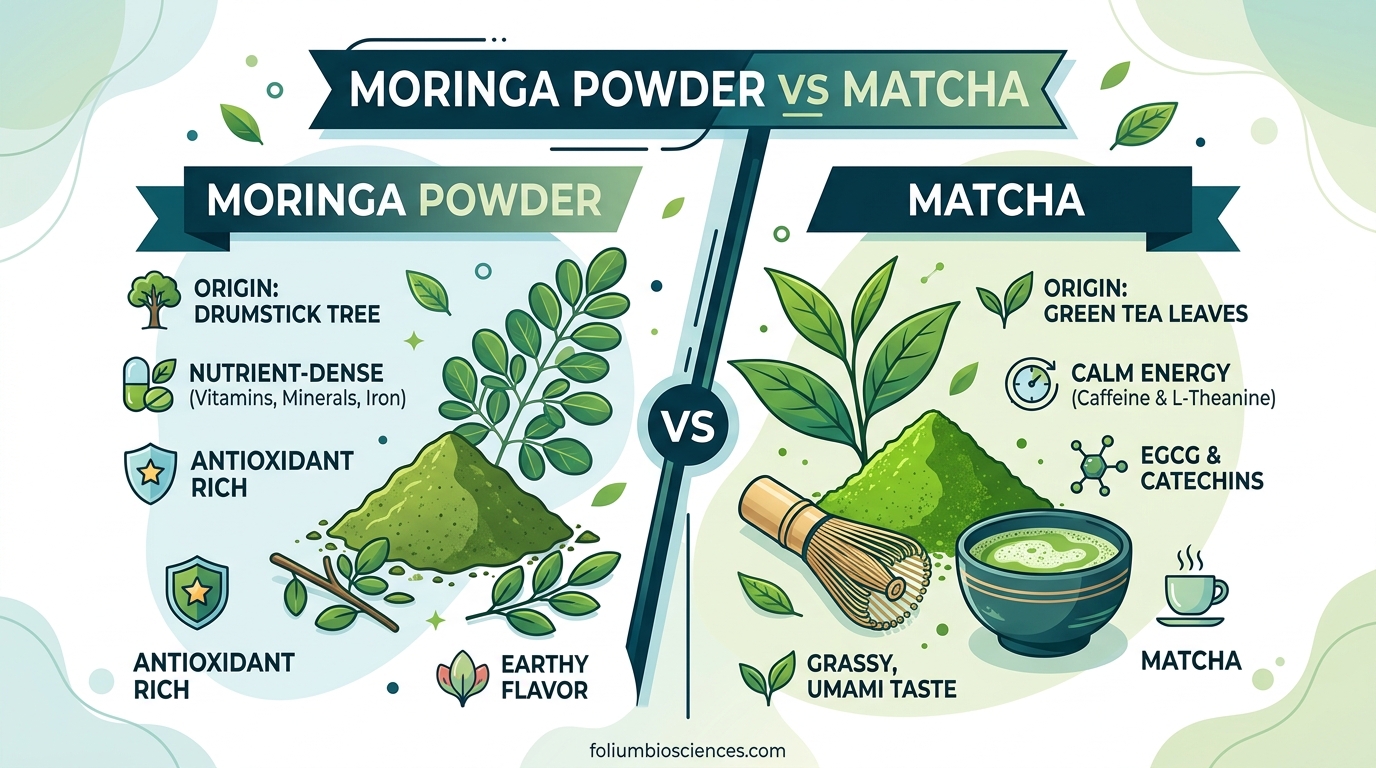
Matcha and moringa both come as vibrant green powders promising energy and health benefits. The main difference? Matcha contains natural caffeine with L-theanine for calm alertness, while moringa delivers caffeine-free energy through its dense micronutrient profile. Both pack impressive antioxidant power, but they work through different compounds and mechanisms.
I have been comparing superfood powders for years, and this matchup confuses people more than most. They look similar. Both are green. Both get called superfoods. But your body processes them very differently.
This guide breaks down everything you need to know about Moringa Powder vs Matcha. You will learn how their energy effects compare, which antioxidants each provides, and how to choose the right one for your lifestyle.
Table of Contents
What Is Moringa Powder?
Moringa powder comes from the dried leaves of the Moringa oleifera tree, also known as the drumstick tree or miracle tree. Native to India and parts of Africa, this plant has served as a nutritional staple in Ayurvedic medicine for thousands of years.
The leaves get harvested, dried at low temperatures, and ground into a fine green powder. This minimal processing preserves the dense nutrient content that makes moringa noteworthy.
Key Nutrients in Moringa
Moringa contains impressive amounts of vitamin A, vitamin C, calcium, iron, and potassium. A single serving delivers significant percentages of your daily needs for these essential nutrients.
The protein content surprises most people. Moringa provides all nine essential amino acids, making it a complete plant protein source. This matters for vegetarians and anyone looking to boost protein intake from plants.
Fiber content also exceeds matcha significantly. Moringa supports digestive health through both soluble and insoluble fiber.
Unique Compounds in Moringa
Quercetin stands out as a primary antioxidant in moringa. This flavonoid fights inflammation and supports cardiovascular health.
Chlorogenic acid, another key compound, shows promise for blood sugar regulation. Research published in the Journal of Food Science and Technology highlights its potential metabolic benefits.
Isothiocyanates give moringa some of its distinctive properties. These sulfur-containing compounds support cellular health and detoxification pathways.
What Is Matcha Powder?
Matcha comes from shade-grown green tea leaves ground into a fine powder. Unlike regular green tea where you steep and discard the leaves, matcha consumption means you ingest the entire leaf.
The shading process happens 3-4 weeks before harvest. Farmers cover the tea plants to block direct sunlight. This increases chlorophyll production and boosts amino acid content, particularly L-theanine.
After harvesting, leaves get steamed, dried, and stone-ground into the bright green powder recognized worldwide.
Ceremonial vs Culinary Grades
Ceremonial grade matcha represents the highest quality. Made from the youngest, most tender leaves, it offers the sweetest, smoothest flavor with minimal bitterness. This grade works best for traditional tea preparation.
Culinary grade costs less and tastes more robust. The slight bitterness works well in lattes, smoothies, and baked goods. Do not assume culinary means lower quality. It simply suits different purposes.
Key Nutrients in Matcha
Matcha shines for its catechin content, particularly epigallocatechin gallate (EGCG). Research consistently identifies EGCG as one of the most potent antioxidants found in food.
L-theanine deserves special attention. This amino acid promotes alpha wave production in the brain, creating a state of calm alertness. Combined with caffeine, it produces the smooth, sustained energy matcha drinkers describe.
Chlorophyll levels exceed regular green tea due to the shading process. This supports the detoxification claims often associated with matcha consumption.
Moringa Powder vs Matcha: Nutritional Comparison
Both powders deliver impressive nutrition, but their strengths differ. Understanding these differences helps you choose based on your specific health goals.
Vitamin Content
Moringa provides more vitamin A, vitamin C, and vitamin E per serving. These vitamins support immune function, skin health, and cellular protection. If micronutrient density matters most to you, moringa takes the lead.
Matcha contains notable B-vitamins and vitamin C, though in smaller amounts. Its nutritional strength lies more in phytonutrients than vitamin density.
Mineral Content
Calcium, iron, and potassium levels run higher in moringa. A 10-gram serving of moringa powder provides about 25% of your daily iron needs. Matcha contains these minerals but in smaller quantities.
For vegetarians concerned about iron intake, moringa offers an advantage. The vitamin C content also enhances iron absorption, creating a synergistic benefit.
Protein and Fiber
Moringa delivers 3-4 grams of protein per 10-gram serving. The complete amino acid profile makes this protein high quality and bioavailable. Fiber content ranges from 2-3 grams per serving.
Matcha contains minimal protein and fiber. The health benefits come primarily from antioxidant compounds rather than macronutrients.
Quick Comparison Table
| Nutrient | Moringa (10g) | Matcha (10g) |
|---|---|---|
| Calories | 35–40 | 25–30 |
| Protein | 3–4g | 1–2g |
| Fiber | 2–3g | <1g |
| Iron | 3–4mg (20–25% DV) | 0.5–1mg (3–6% DV) |
| Calcium | 150–200mg (12–15% DV) | 20–30mg (2% DV) |
| Vitamin C | 8–10mg (10–12% DV) | 2–3mg (2–4% DV) |
| Caffeine | 0mg | 35–70mg |
Energy and Focus: The Caffeine Difference
The energy effects represent the most significant practical difference between these powders. Your caffeine sensitivity should heavily influence this choice.
How Matcha Provides Energy
Matcha contains 35-70mg of caffeine per serving, depending on grade and preparation. This equals roughly one-third to one-half the caffeine in a cup of coffee.
The magic comes from L-theanine. This amino acid slows caffeine absorption and modulates its effects. Instead of the jittery spike and crash from coffee, matcha produces what researchers call calm alertness.
Studies show L-theanine increases alpha brain wave activity. These waves associate with relaxed concentration. You feel awake and focused without the anxiety caffeine sometimes produces.
Moringa: Caffeine-Free Energy Support
Moringa contains zero caffeine. The energy boost comes from nutrient density rather than stimulation.
The iron content supports oxygen transport in blood. B-vitamins aid cellular energy production. Protein stabilizes blood sugar. Together, these factors help combat fatigue without any stimulant effects.
For caffeine-sensitive individuals, pregnant women, or anyone avoiding stimulants, moringa offers genuine advantages. You get energy support without sleep disruption or anxiety.
Best Times to Use Each
Matcha works best in the morning or early afternoon. The caffeine content makes it ideal for starting your day or powering through the post-lunch slump. Avoid matcha after 2 PM if caffeine affects your sleep.
Moringa offers flexibility. Since it contains no caffeine, you can drink it morning, afternoon, or evening without affecting sleep quality. Some users report it works well as a pre-workout supplement for evening exercise.
Consider your schedule and caffeine tolerance when choosing. Both support productivity, but through different mechanisms.
Antioxidant Comparison: EGCG vs Quercetin
Both powders offer impressive antioxidant protection, but through different compounds. Understanding these differences helps you choose based on your health priorities.
Matcha’s EGCG Advantage
Matcha delivers extremely high concentrations of epigallocatechin gallate (EGCG). This catechin represents the most studied antioxidant in green tea.
Research from the National Institutes of Health shows EGCG protects cells from oxidative damage. It scavenges free radicals and supports cellular health through multiple pathways.
Studies link regular EGCG consumption to cardiovascular benefits, metabolic support, and skin protection from UV damage. The compound shows particular promise for supporting healthy aging processes.
Moringa’s Diverse Antioxidant Profile
Moringa takes a broader approach to antioxidant protection. Instead of relying heavily on one compound, it provides multiple antioxidants working through different mechanisms.
Quercetin leads the charge. This flavonoid shows anti-inflammatory properties and supports cardiovascular health. Research indicates quercetin helps protect blood vessels and supports healthy blood pressure.
Chlorogenic acid adds another dimension. Studies suggest this compound supports glucose metabolism and may help maintain healthy blood sugar levels already in normal range.
Beta-carotene, vitamin C, and vitamin E round out the antioxidant team. This combination provides comprehensive oxidative stress protection.
Which Has More Antioxidant Power?
The answer depends on how you measure. Matcha contains higher concentrations of specific catechins, particularly EGCG. This makes it exceptionally potent for the specific benefits EGCG provides.
Moringa offers broader antioxidant diversity. The ORAC value (oxygen radical absorbance capacity) runs high for both, but moringa’s variety of compounds may offer more comprehensive protection.
For targeted antioxidant support, particularly for skin and metabolic health, matcha excels. For comprehensive nutritional antioxidant coverage, moringa shines.
Taste, Preparation, and Best Uses
Practical factors matter as much as nutrition. If you do not enjoy the taste or preparation feels complicated, you will not stick with either habit.
Matcha Taste Profile
High-quality matcha tastes grassy, slightly sweet, and carries umami notes. Ceremonial grade offers the smoothest experience. Lower grades taste more bitter and astringent.
The flavor divides people. Some love the complex, vegetal taste. Others find it challenging at first. Most people develop appreciation over time.
Moringa Taste Profile
Moringa tastes earthy, somewhat like spinach or other leafy greens. Many users detect slight peppery or spicy notes. The flavor proves milder than matcha for most people.
Forum discussions reveal mixed reactions. Some find moringa easier to drink straight. Others prefer it mixed into smoothies where the earthy taste blends well with fruits.
Preparation Methods
Traditional matcha preparation requires a whisk and bowl. You sift the powder, add hot water (not boiling), and whisk until frothy. This ritual appeals to many users.
Modern shortcuts work fine too. Blenders create excellent froth. Hand frothers suffice for lattes. The key is avoiding boiling water, which makes matcha bitter.
Moringa preparation proves simpler. Stir into water, juice, or smoothies. It dissolves easily without special equipment. Heat does not damage the flavor as significantly.
Recipe Ideas
Matcha shines in traditional tea, lattes with oat milk, and baked goods. The slight sweetness works in desserts. Many people enjoy matcha lemonade for a refreshing twist.
Moringa works best in smoothies, green juices, and savory applications. The earthy flavor complements vegetable soups and sauces. Some users sprinkle it on salads.
Both blend well into protein shakes. The green color signals nutritional content to your brain before you even taste it.
Additional Health Benefits
Beyond energy and antioxidants, both powders support health in various ways. Understanding these additional benefits helps you prioritize based on your specific goals.
Skin Health Support
Matcha’s EGCG shows particular promise for skin health. Research indicates it helps protect collagen from breakdown and supports skin elasticity. The antioxidant content also helps defend against UV damage when consumed regularly.
Moringa supports skin through multiple pathways. Vitamin A promotes cell turnover. Vitamin C aids collagen synthesis. The anti-inflammatory compounds help calm skin from within.
Gut and Liver Health
Moringa contains significant fiber, supporting digestive regularity and feeding beneficial gut bacteria. Traditional Ayurvedic medicine uses moringa for digestive support.
Matcha’s chlorophyll content supports the body’s natural detoxification processes. The catechins help protect liver cells from oxidative stress.
Important Considerations
Moringa may interact with certain medications. The compounds can affect thyroid function, blood sugar, and blood pressure. Consult your healthcare provider if you take medications for these conditions.
Matcha’s caffeine content requires consideration for pregnant women and those with anxiety disorders. While L-theanine moderates effects, the caffeine still affects your system.
Some individuals report allergic reactions to matcha, including itching and rashes. Start with small amounts when trying either powder for the first time.
Can You Take Moringa and Matcha Together?
Yes, combining both powders creates what some users call a half-caf approach. This strategy offers unique benefits worth considering.
Mixing allows you to reduce caffeine while maintaining some stimulant effect. You get the L-theanine from matcha plus the nutrient density from moringa. The flavor combination works better than you might expect.
Try a 1:1 ratio to start. Adjust based on your caffeine tolerance and taste preferences. Some users prefer 2:1 moringa to matcha for minimal caffeine with maximum nutrition.
This approach works especially well for people transitioning away from higher caffeine intake. The moringa helps bridge the gap as you reduce matcha consumption.
Which Should You Choose?
Your choice depends on your priorities, lifestyle, and body chemistry. Here is how to decide.
Choose Matcha If…
- You want the calm, focused energy L-theanine provides
- You enjoy the ritual of tea preparation
- You are seeking specific antioxidant support from EGCG
- You tolerate caffeine well and drink it in the morning
- You prefer a grassy, umami flavor profile
Choose Moringa If…
- You want energy support without caffeine
- You need higher iron, calcium, or protein from plants
- You prefer simpler preparation
- You want flexibility for evening use
- You value broad nutritional coverage over specific compounds
Decision Summary
Neither powder wins outright. They serve different purposes for different people. Matcha excels for focused energy and specific antioxidant benefits. Moringa shines for caffeine-free nutritional support.
Consider trying both. Many health enthusiasts keep both powders on hand, choosing based on the time of day and their current needs.
Frequently Asked Questions
Which is more beneficial, matcha or moringa powder?
Neither is universally superior. Matcha offers stronger specific antioxidant benefits from EGCG and provides calm energy through L-theanine and caffeine. Moringa delivers broader nutritional coverage with vitamins, minerals, protein, and fiber without caffeine. The more beneficial choice depends on your specific health goals and caffeine tolerance.
Is matcha the most powerful antioxidant?
Matcha contains extremely high levels of EGCG, one of the most potent antioxidants studied. However, antioxidant power depends on the specific free radicals being targeted. Moringa offers a broader range of antioxidant compounds including quercetin, chlorogenic acid, and multiple vitamins. For EGCG specifically, matcha is unmatched. For overall antioxidant diversity, moringa provides more variety.
Can moringa help with an enlarged prostate?
Some preliminary research suggests moringa may support prostate health through its anti-inflammatory and antioxidant compounds. Studies on rats have shown promising results, but human clinical trials remain limited. Moringa should not replace medical treatment for prostate conditions. Consult your healthcare provider before using moringa for specific health conditions.
Can I take moringa if I have hyperthyroidism?
People with hyperthyroidism should exercise caution with moringa. The plant contains compounds that may affect thyroid hormone levels. Some animal studies suggest moringa could influence thyroid function. If you have hyperthyroidism or any thyroid condition, consult your healthcare provider before adding moringa to your routine. Start with small amounts and monitor your symptoms carefully.
Can you take moringa and matcha together?
Yes, combining moringa and matcha is safe and potentially beneficial. Many users report enjoying a half-caf approach by mixing both powders. This provides reduced caffeine with sustained energy benefits. Try a 1:1 ratio initially, then adjust based on your preferences. The flavors complement each other reasonably well, especially in smoothies or lattes.
Which tastes better, moringa or matcha?
Taste preferences vary significantly between individuals. Matcha offers a grassy, umami flavor that many find complex and enjoyable, while others find it challenging. Ceremonial grade tastes smoother than culinary grade. Moringa tastes earthy and slightly peppery, similar to leafy greens. Most people find moringa milder and easier to drink straight, while matcha offers more flavor complexity for those who appreciate it.
Conclusion
Moringa Powder vs Matcha represents a choice between two excellent but different superfoods. Matcha delivers focused, calm energy through caffeine and L-theanine, plus unmatched EGCG antioxidant content. Moringa provides caffeine-free nutritional support with complete protein, essential minerals, and diverse antioxidants.
Your ideal choice depends on your caffeine tolerance, nutritional priorities, and lifestyle needs. Many people ultimately use both, selecting matcha for morning focus and moringa for afternoon nutrition.
Start with whichever aligns best with your current goals. Both powders reward consistent use with noticeable benefits for energy, antioxidant protection, and overall wellness.