
Your skin loses its youthful bounce as the years pass. That loss of firmness, the fine lines that seem to appear overnight, the subtle sagging you notice in the mirror — these are signs of declining skin elasticity. Beneath the surface, your body’s collagen production is slowing down, and the collagen you once abundant supply of begins to fray and break down. By the time you reach your 30s, your skin is producing roughly 1% less collagen each year, creating a gradual but unmistakable shift in how your skin looks and feels.
This is where collagen supplementation enters the picture. Two primary sources dominate the market: marine collagen (derived from fish skin and scales) and bovine collagen (sourced from cows). Both claim to support skin health, but if your primary goal is improving skin elasticity, the choice becomes more nuanced. The science behind each type differs significantly in terms of collagen composition, bioavailability, and how effectively they target the specific mechanisms that keep skin firm and resilient.
This comprehensive guide breaks down everything you need to know about marine collagen versus bovine collagen specifically for skin elasticity. By the end, you’ll have a clear understanding of which type aligns best with your skin goals, lifestyle, and dietary preferences.
Table of Contents
Understanding Collagen and Skin Elasticity
Before diving into the comparison, it helps to understand what collagen actually does for your skin. Collagen is the most abundant protein in your body, functioning as the structural scaffold that keeps skin firm, plump, and elastic. Think of it as the steel beams and concrete that give a building its shape and structural integrity.
Your skin relies primarily on two types of collagen: Type I and Type III. Type I collagen accounts for roughly 80% of your skin’s collagen content and is primarily responsible for skin strength and elasticity. Type III collagen supports skin elasticity and is often found alongside Type I in younger skin. As we age, both types decline, but the loss of Type III particularly affects the skin’s ability to bounce back and maintain its youthful texture.
When you consume collagen supplements, the collagen proteins are broken down into smaller peptides during digestion. These collagen peptides (also called hydrolyzed collagen) are then absorbed through the gut and distributed throughout the body, where they can stimulate your skin’s own collagen production. The efficiency of this process — how well your body absorbs and utilizes these peptides — is what researchers call bioavailability, and it’s the key factor that differentiates marine from bovine collagen.
What Is Marine Collagen?
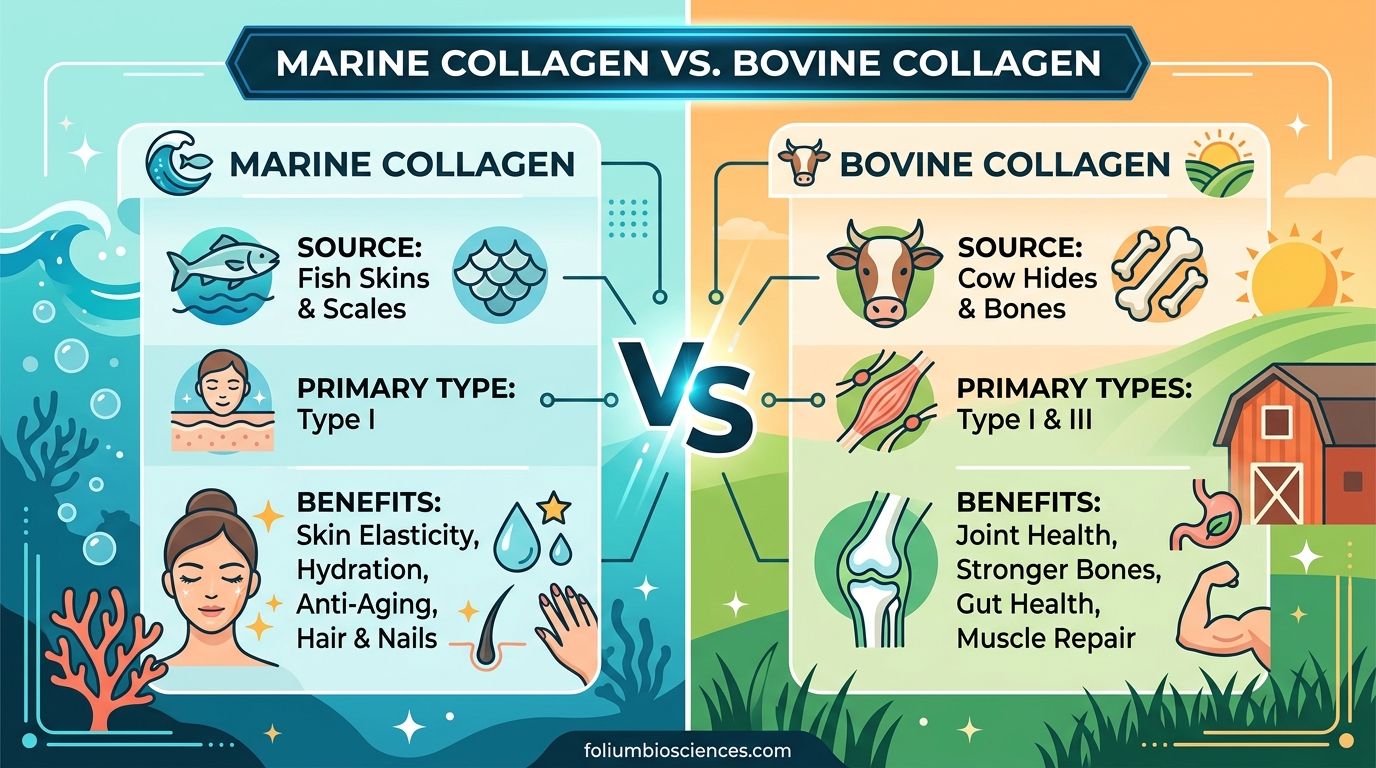
Marine collagen is derived from the skin, scales, and bones of fish — typically wild-caught species like cod, salmon, or tilapia. The sourcing process involves extracting and hydrolyzing these tissues to create a powder that dissolves easily in both hot and cold liquids.
Collagen Type Composition
Marine collagen is overwhelmingly Type I collagen, comprising approximately 90% of its content. This is significant because Type I is the collagen type most directly responsible for skin elasticity and firmness. When you consume marine collagen peptides, you’re providing your body with the specific building blocks your skin uses to maintain its elastic properties.
Bioavailability Advantages
Research consistently shows that marine collagen has superior bioavailability compared to bovine sources. The collagen peptides in marine collagen have a smaller molecular weight on average, meaning they’re absorbed more efficiently through the intestinal wall. Studies have demonstrated that fish-derived collagen peptides can reach peak blood concentrations faster and remain bioavailable longer than their mammalian counterparts.
One study published in the Journal of the Science of Food and Agriculture found that marine collagen peptides showed significantly higher absorption rates in human intestinal cells compared to bovine collagen. This enhanced absorption translates to more collagen building blocks reaching your skin cells where they’re needed most.
Skin Elasticity Benefits
Multiple clinical studies have examined marine collagen’s effects specifically on skin elasticity. A 12-week randomized controlled trial involving women with mild signs of skin aging found that daily marine collagen supplementation significantly improved skin elasticity measurements compared to placebo. Participants showed measurable improvements in skin firmness and hydration levels throughout the study period.
The Vogue magazine feature on marine collagen noted that dermatologists often recommend marine-based sources specifically for patients focused on skin health, citing the smaller peptide size and Type I concentration as key advantages for topical anti-aging benefits.
Pros and Cons for Skin
Advantages:
- High concentration of Type I collagen (most relevant for skin elasticity)
- Superior bioavailability and absorption rates
- Smaller peptide size penetrates skin cell membranes more effectively
- Suitable for pescatarians and those avoiding beef
- Generally neutral or mild taste
Considerations:
- Typically more expensive than bovine alternatives
- Source traceability matters (wild-caught vs. farm-raised)
- Not suitable for vegetarians or vegans
- Allergy concerns for those with fish sensitivities
What Is Bovine Collagen?
Bovine collagen is sourced primarily from the hides, bones, and cartilage of cows — most commonly from grass-fed animals. The collagen undergoes similar hydrolysis processing to create the powdered supplement form. Bovine collagen has been studied extensively and represents the most researched collagen source on the market.
Collagen Type Composition
Unlike marine collagen’s Type I dominance, bovine collagen typically contains a combination of Type I and Type III collagen. The exact ratio varies by product, but many bovine collagen supplements provide roughly 40% Type I and 30% Type III, with the remaining percentage being other connective tissue proteins.
Type III collagen is particularly interesting for skin health because it’s commonly found alongside Type I in younger skin. Some researchers believe that maintaining Type III levels may contribute to skin’s youthful appearance and elasticity, though this remains an area of ongoing study.
Bioavailability Considerations
Bovine collagen peptides generally have a larger average molecular weight compared to marine collagen. While still well-absorbed (studies show bovine collagen peptides do make it into the bloodstream after oral consumption), the absorption process takes somewhat longer, and peak concentrations may be lower than what you’d achieve with marine collagen.
However, bioavailability isn’t the only factor that determines effectiveness. The presence of Type III collagen in bovine sources may offer complementary benefits that partially offset the bioavailability difference for some users.
Skin Elasticity Benefits
Clinical research on bovine collagen and skin elasticity is extensive. Studies have shown that regular bovine collagen supplementation can improve skin elasticity, hydration, and dermal collagen density. One notable study found that women who consumed 2.5 grams of bovine collagen peptides daily for eight weeks experienced measurable improvements in skin elasticity and skin moisture content.
Bovine collagen supporters often note its additional benefits for joint comfort and muscle recovery, making it a practical choice for those with broader wellness goals beyond skin health alone.
Pros and Cons for Skin
Advantages:
- Contains both Type I and Type III collagen
- Extensive research supporting skin health benefits
- Often more affordable than marine alternatives
- Wide availability from reputable sources
- Transparent sourcing (grass-fed options)
Considerations:
- Larger molecular size may mean slightly lower bioavailability
- Not suitable for vegetarians or vegans
- Some people prefer avoiding bovine products
- May have a more pronounced taste in beverages
Marine vs Bovine Collagen: Head-to-Head Comparison
Here’s how these two collagen sources stack up against each other across the key factors relevant to skin elasticity:
| Factor | Marine Collagen | Bovine Collagen |
|---|---|---|
| Primary Collagen Type | Type I (~90%) | Type I + Type III (~40/30%) |
| Bioavailability | Superior – smaller peptides, faster absorption | Good – larger peptides, still effective |
| Skin Elasticity Research | Strong evidence for Type I benefits | Strong evidence for combined Type I/III |
| Taste and Mixability | Neutral, dissolves easily | Mild flavor, may affect taste |
| Sustainability | Uses fish industry byproducts | Uses cattle industry byproducts |
| Price Point | Generally higher | More budget-friendly |
| Dietary Suitability | Pescatarian-friendly | Beef-free option needed |
Which Wins for Skin Elasticity?
When it comes specifically to skin elasticity, marine collagen has a slight edge based on current research. The combination of high Type I content and superior bioavailability means more of the collagen peptides reach your skin cells where they can stimulate the production of new collagen fibers and elastin — the proteins directly responsible for skin’s bounce and elasticity.
That said, bovine collagen remains a highly effective option, particularly for those who value the potential synergistic benefits of Type III collagen. The 12-week study mentioned earlier demonstrated that marine collagen peptides improved skin elasticity by measurable amounts, and many users report similar improvements with bovine sources after consistent supplementation.
The reality is that both types can meaningfully support skin elasticity when taken consistently at appropriate doses. The “better” choice often comes down to your specific circumstances, preferences, and goals.
Who Should Choose Marine Collagen?
Marine collagen is particularly well-suited for:
- Those focused primarily on skin health — If your main goal is improving skin elasticity, firmness, and anti-aging appearance, marine’s Type I concentration and bioavailability advantages make it an excellent choice.
- Pescatarians and seafood consumers — Marine collagen aligns with pescatarian dietary patterns and offers a sustainable way to incorporate collagen without beef.
- Those with beef restrictions — Whether due to personal preference, religious reasons, or dietary restrictions, marine collagen provides a viable alternative.
- People seeking faster visible results — While individual variation exists, marine collagen’s superior bioavailability may support more rapid improvements in skin texture and elasticity.
- Those sensitive to taste — Marine collagen tends to have a more neutral flavor profile, making it easier to incorporate into beverages and recipes without altering taste significantly.
Who Should Choose Bovine Collagen?
Bovine collagen makes sense for:
- Budget-conscious consumers — Bovine collagen typically offers more product for your dollar, making long-term supplementation more accessible.
- Those with joint and mobility goals — Bovine collagen’s broader nutrient profile may offer additional support for joint comfort, muscle recovery, and connective tissue health alongside skin benefits.
- People avoiding fish — If you have fish allergies or simply prefer to avoid seafood, bovine collagen remains an excellent option.
- Those prioritizing Type III benefits — While research is ongoing, some evidence suggests that Type III collagen may offer unique benefits for skin elasticity and overall skin quality.
- Individuals following specific dietary protocols — Some nutritional approaches emphasize bovine collagen, and those protocols may be more accessible with this form.
Can You Take Marine and Bovine Collagen Together?
Yes — taking both marine and bovine collagen together is not only safe but may actually be beneficial. Since marine collagen is predominantly Type I and bovine provides a mix of Type I and Type III, combining them offers your body a broader spectrum of collagen types to support skin health.
Many supplement manufacturers have recognized this synergy and now offer dual-source collagen products that combine marine and bovine sources. This approach maximizes the potential benefits of both types while potentially optimizing the overall collagen support for your skin.
If you choose to take both, simply ensure you’re staying within reasonable total daily doses (typically 2.5-10 grams total per day for skin health benefits) and adjust based on how your body responds.
Optimal Dosage for Skin Elasticity
Research suggests that doses between 2.5 and 10 grams daily are effective for supporting skin health and elasticity. Most clinical studies demonstrating skin elasticity improvements have used doses in the 2.5-5 gram range, though higher doses haven’t shown any safety concerns in healthy adults.
Consistency matters more than extreme dosing. Taking your collagen supplement daily — ideally at the same time each day, with or without food — allows your body to maintain stable levels of collagen peptides that can continuously support your skin’s natural renewal processes.
Some users find that taking collagen in the morning supports better absorption, while others prefer evening doses for the calming routine aspect. The best time is whatever time you’ll remember to take it consistently.
How Long Until You See Results?
Patience is essential when it comes to collagen supplementation. While some users report noticing improvements within 4-6 weeks, most clinical studies showing measurable skin elasticity benefits require 8-12 weeks of consistent supplementation.
Your results will depend on factors including your age, current skin condition, overall health, and how consistently you take your supplement. Younger users often see results faster, while those with more advanced signs of aging may need to wait longer to notice significant changes.
Think of collagen supplementation as a marathon rather than a sprint. The long-term consistency is what drives meaningful, sustainable improvements in skin elasticity and overall skin quality.
Final Verdict: Which Is Better for Skin Elasticity?
For skin elasticity specifically, marine collagen holds a marginal advantage due to its high Type I collagen concentration and superior bioavailability. The smaller peptide size means more efficient absorption, and the Type I dominance directly targets the collagen type most responsible for skin’s elastic properties.
However, bovine collagen remains a highly effective and well-researched option that many people use successfully for skin elasticity improvements. Its Type III content may offer complementary benefits, and its lower price point makes it more accessible for long-term supplementation.
For the best results, consider your individual circumstances: your budget, dietary preferences, taste tolerance, and whether you have joint or other health goals beyond skin appearance. Whichever you choose, consistent daily supplementation over at least 8-12 weeks is key to experiencing meaningful improvements in skin elasticity and overall skin health.
Frequently Asked Questions
Which type of collagen is best for skin elasticity?
Marine collagen is generally considered best for skin elasticity due to its high Type I collagen content and superior bioavailability. Type I collagen is the primary collagen type responsible for skin firmness and elastic properties. However, bovine collagen with its Type I and Type III combination is also highly effective.
Is marine collagen better for skin than bovine?
For skin-focused goals, marine collagen has a slight edge because its peptides are smaller and more bioavailable, meaning your body absorbs and uses them more efficiently. That said, bovine collagen remains an excellent choice with substantial research supporting its skin health benefits.
How long does collagen take to work for skin?
Most people need 8-12 weeks of consistent collagen supplementation before seeing measurable improvements in skin elasticity. Some users notice changes as early as 4-6 weeks, but the most significant benefits are typically observed after 2-3 months of daily use.
Can you take bovine and marine collagen together?
Yes, you can safely combine bovine and marine collagen. Taking both provides a broader spectrum of collagen types, since marine is predominantly Type I and bovine contains both Type I and Type III. This combination may offer enhanced benefits for skin elasticity and overall skin health.
What type of collagen is best for anti-aging?
Type I collagen is considered most important for anti-aging skin benefits because it directly supports skin elasticity, firmness, and the reduction of fine lines. Marine collagen’s 90% Type I content makes it particularly well-suited for anti-aging goals, though Type III in bovine collagen may offer complementary benefits.
Whether you choose marine or bovine collagen, remember that consistency and patience are your allies in supporting healthy, elastic skin for years to come.