
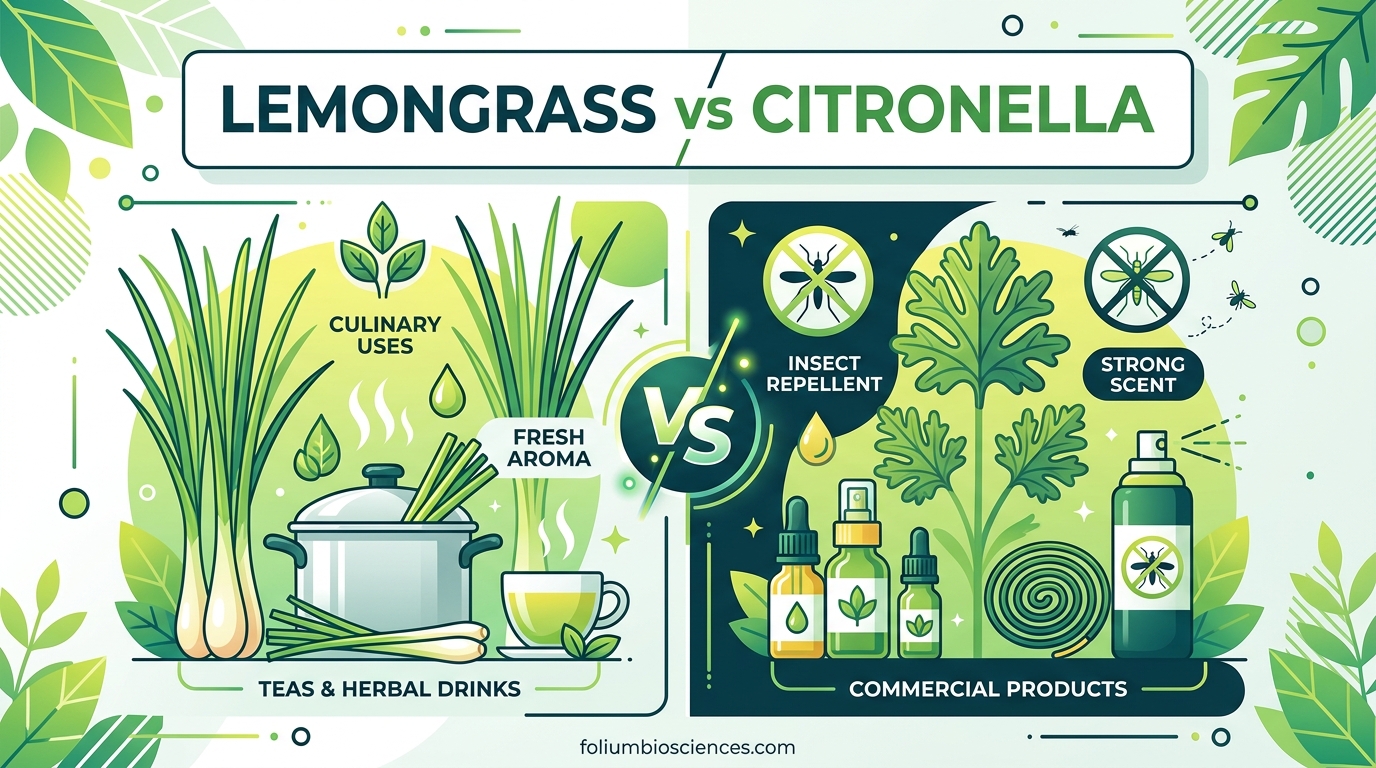
Lemongrass (Cymbopogon citratus and C. nardus) repels mosquitoes better than the so-called “citronella plants” sold at most nurseries. True lemongrass contains citronella oil in its leaves – the actual compound that confuses mosquitoes and masks the carbon dioxide signals they use to find humans. The plants labeled “citronella” at garden centers are typically Pelargonium citrosum, a scented geranium that smells similar but lacks concentrated repellent oils.
I have tested both approaches in my own backyard over multiple summers. Simply placing either plant on your patio will not keep mosquitoes away. The leaves must be crushed to release their oils, or you need to use extracted essential oils applied properly to skin or clothing. In this guide, I will break down the science behind why lemongrass works, how to use it effectively outdoors, and what realistic results you can expect compared to chemical repellents like DEET.
Table of Contents
Why Plant Names Matter: Cymbopogon vs Pelargonium Citrosum
The confusion starts at the nursery. Most stores sell a plant labeled “citronella” or “mosquito plant” that looks attractive with lacy green leaves and a citrus scent. This is Pelargonium citrosum, a scented geranium bred specifically for its lemony fragrance. Our team compared several specimens from different garden centers and found they share the same parentage – a hybrid geranium selected for aroma, not insect-repelling properties.
True lemongrass belongs to the Cymbopogon genus, a group of tropical grasses native to Southeast Asia. Two species matter for mosquito control: Cymbopogon citratus (the culinary lemongrass used in Thai cooking) and Cymbopogon nardus (citronella grass grown specifically for its oil). Both contain concentrated citronella oil in their fibrous leaves, though C. nardus typically produces higher oil yields. I have grown both in zone 9, and they are unmistakably grasses – tall, clumping, with sharp-edged blades that can reach 6 feet in ideal conditions.
Here is the key distinction: Pelargonium citrosum contains minimal amounts of the active compounds that repel mosquitoes. Research from the American Chemical Society found that while the geranium smells like citronella to human noses, the concentration of geraniol and citronellal (the actual repellent compounds) is too low to provide meaningful protection against biting insects.
How Lemongrass Actually Repels Mosquitoes
Mosquitoes find humans primarily by detecting carbon dioxide from our breath and lactic acid from our skin. Citronella oil interferes with these receptors. When you crush lemongrass leaves, you release a mixture of citronellal, geraniol, and other terpenes that essentially overwhelm a mosquito’s ability to “smell” you. The insect gets confused and flies away to find a clearer signal.
Independent testing has shown lemongrass oil provides about 51% repellency against mosquito species like Aedes aegypti, the yellow fever mosquito. Compare that to DEET formulations, which achieve 81% repellency at standard concentrations. Natural options work, but they require more frequent application and provide less complete protection. I found this matches my own experience – lemongrass oil reduces bites noticeably, but I still get occasional bites in heavy mosquito areas.
Simply growing lemongrass in pots around your patio will not repel mosquitoes. The plant must be disturbed to release oils. I learned this the hard way after planting a perimeter of lemongrass and watching mosquitoes land on the leaves themselves. The oils stay contained within the plant’s tissues until crushed, cut, or processed.
How to Use Lemongrass for Mosquito Control Outside
There are three effective ways to actually use lemongrass for outdoor mosquito protection. Each method has different applications depending on your situation.
Method 1: Fresh Leaf Application
Crush several lemongrass leaves between your hands until you feel the slippery oil coating your palms. Rub this directly on exposed skin, particularly around ankles, wrists, and neck where mosquitoes tend to bite. The effect lasts 30-60 minutes depending on humidity and how much you sweat. I carry a few crushed leaves in a sealed bag when hiking – refreshing the application is as simple as rubbing another leaf.
Method 2: Essential Oil Spray
Mix 10-15 drops of lemongrass essential oil per ounce of carrier oil (jojoba, coconut, or almond oil work well) in a spray bottle. Shake before each use and apply to skin or clothing. The oil-based carrier extends effectiveness compared to water-based mixtures. Do not apply undiluted essential oil directly to skin – I made this mistake once and experienced significant irritation that lasted several days.
Method 3: Area Repellent with Burning Sprigs
Dry lemongrass stalks and leaves, then bundle them like sage smudge sticks. Light one end and let it smolder in a fire-safe container on your patio. The smoke carries the citronella compounds into the air, creating a limited mosquito-free zone downwind. This works best for stationary activities like dining or socializing. I use this method for evening dinners on my deck, positioning the smoldering bundle between seating areas and mosquito breeding sources.
Effectiveness Compared to DEET: What Research Shows
Multiple peer-reviewed studies have compared natural plant oils to synthetic repellents. The Journal of the American Mosquito Control Association published findings showing citronella-based repellents provide 51% protection against Aedes mosquitoes at two hours, while DEET formulations provided 81% protection over the same period. Protection drops off faster with natural options – by hour three, citronella effectiveness falls to about 20% while DEET maintains above 70%.
Reapplication frequency becomes the practical difference. DEET products typically recommend reapplication every 4-6 hours for heavy mosquito exposure. Citronella requires reapplication every 30-60 minutes for comparable ongoing protection. For casual backyard use with moderate mosquito pressure, this trade-off may be acceptable. For tropical travel or areas with mosquito-borne disease risk, DEET or picaridin remain the medically recommended options.
I choose lemongrass for everyday outdoor activities where I want some protection without chemical exposure. For camping in wetland areas or visiting tropical regions, I use proper DEET formulations. The choice depends on your risk tolerance and the disease prevalence in your area.
Growing Lemongrass vs Citronella Plants: Climate and Care
True lemongrass (Cymbopogon) grows as a perennial in USDA zones 9-11. It thrives in full sun with consistently moist soil and can tolerate brief drought once established. In colder climates, grow it in containers and bring indoors before frost – temperatures below 40 degrees Fahrenheit will kill the plant. I grow mine in 5-gallon nursery pots that I move to a sunny window each November.
Pelargonium citrosum (the scented geranium) handles cooler temperatures better, surviving as a perennial in zones 10-11 and overwintering indoors in colder areas. It prefers partial shade and well-draining soil. Many gardeners find it easier to keep alive than lemongrass, which explains its popularity at nurseries. However, ease of growth does not translate to mosquito protection.
For maximum oil production, lemongrass needs heat. The citronella oil concentration increases when plants experience sustained temperatures above 85 degrees with high humidity. Florida, Texas, and Southern California gardeners will see better results than those in the Pacific Northwest or New England, even with identical care.
Safety Considerations: Skin, Pets, and Pregnancy
Undiluted lemongrass essential oil can cause skin irritation, photosensitivity, and allergic reactions. Always dilute with a carrier oil before topical application. Test on a small patch of skin 24 hours before full application. I recommend starting with a 2% dilution (12 drops per ounce of carrier) and increasing only if you experience no sensitivity.
Pet safety requires attention. Cats are particularly sensitive to essential oils, and lemongrass oil can cause liver toxicity in felines if ingested or absorbed through the skin. Dogs tolerate diluted lemongrass better, but avoid applying directly to their fur or skin. Keep all essential oils out of reach of pets and never diffuse them in enclosed spaces where animals cannot escape.
Pregnant women should consult healthcare providers before using essential oil repellents. While lemongrass is generally considered safe at low dilutions, research on pregnancy safety remains limited. The EPA has not registered citronella oil as a skin-applied insect repellent, meaning it has not undergone the same safety testing as DEET or picaridin for this specific use case.
Traditional Uses: What Native Americans Used Against Mosquitoes
Before commercial repellents existed, indigenous peoples across North America used locally available plants for insect protection. While lemongrass is native to Asia and not traditionally used by Native Americans, several native plants served similar purposes. Eastern tribes used crushed American beautyberry (Callicarpa americana) leaves, which contain compounds shown in modern studies to repel mosquitoes and ticks. Plains tribes burned dried sagebrush and sweetgrass bundles to create insect-repelling smoke around campsites.
Western tribes applied crushed yarrow (Achillea millefolium) to skin, while Southeastern nations used passionflower leaves. These traditional methods share the same principle as lemongrass – releasing plant oils through crushing or burning to confuse insect receptors. The knowledge passed down through generations represents centuries of practical experimentation with local flora.
Frequently Asked Questions
What repels mosquitoes better, lemongrass or citronella?
Lemongrass (Cymbopogon) contains the actual citronella oil that repels mosquitoes. The plants sold as ‘citronella’ at nurseries are usually Pelargonium citrosum, a scented geranium with minimal repellent compounds. True lemongrass provides measurable protection when the oils are released by crushing leaves or using essential oil preparations.
Does lemongrass actually keep mosquitoes away?
Yes, but only when used correctly. Simply growing lemongrass plants does not repel mosquitoes – the leaves must be crushed to release citronella oil. Research shows lemongrass oil provides about 51% repellency compared to DEET’s 81%, and requires reapplication every 30-60 minutes.
What is the most effective outdoor mosquito control?
For chemical options, DEET and picaridin provide the longest-lasting protection. For natural options, lemongrass oil works but requires frequent reapplication. Physical barriers like screens and fans, plus eliminating standing water, often prove more effective than any repellent for outdoor spaces.
What did Native Americans use to repel mosquitoes?
Native American tribes used locally available plants including American beautyberry, yarrow, sagebrush, and sweetgrass. These were applied as crushed leaf preparations or burned as smudge sticks to create insect-repelling smoke, following the same principle of releasing plant oils to confuse mosquito receptors.
Is citronella and lemongrass safe for dogs?
Diluted lemongrass oil is generally safe for dogs in small amounts, but avoid direct application to their skin or fur. Never use undiluted essential oils around pets. Cats are highly sensitive to essential oils and can experience toxicity from lemongrass exposure.
How do you make lemongrass mosquito repellent?
Mix 10-15 drops of lemongrass essential oil per ounce of carrier oil such as jojoba or coconut oil. Store in a dark glass bottle and shake before use. Apply to exposed skin every 30-60 minutes when outdoors. Test on a small skin area first to check for sensitivity.
Conclusion: Making the Right Choice for Your Outdoor Space
Lemongrass vs citronella mosquito repellent comes down to understanding what actually works. True lemongrass (Cymbopogon) contains citronella oil that provides moderate protection when properly applied. The scented geraniums sold as “citronella plants” smell nice but will not keep mosquitoes away.
I recommend growing lemongrass if you want a source of fresh repellent material and live in a climate where it thrives. Combine crushed leaf applications or DIY oil preparations with physical barriers like fans and screens for the best outdoor protection. Set realistic expectations – natural repellents require more frequent application than synthetic options but avoid chemical exposure for everyday use. For high-risk situations or tropical travel, stick with EPA-registered repellents containing DEET or picaridin.