
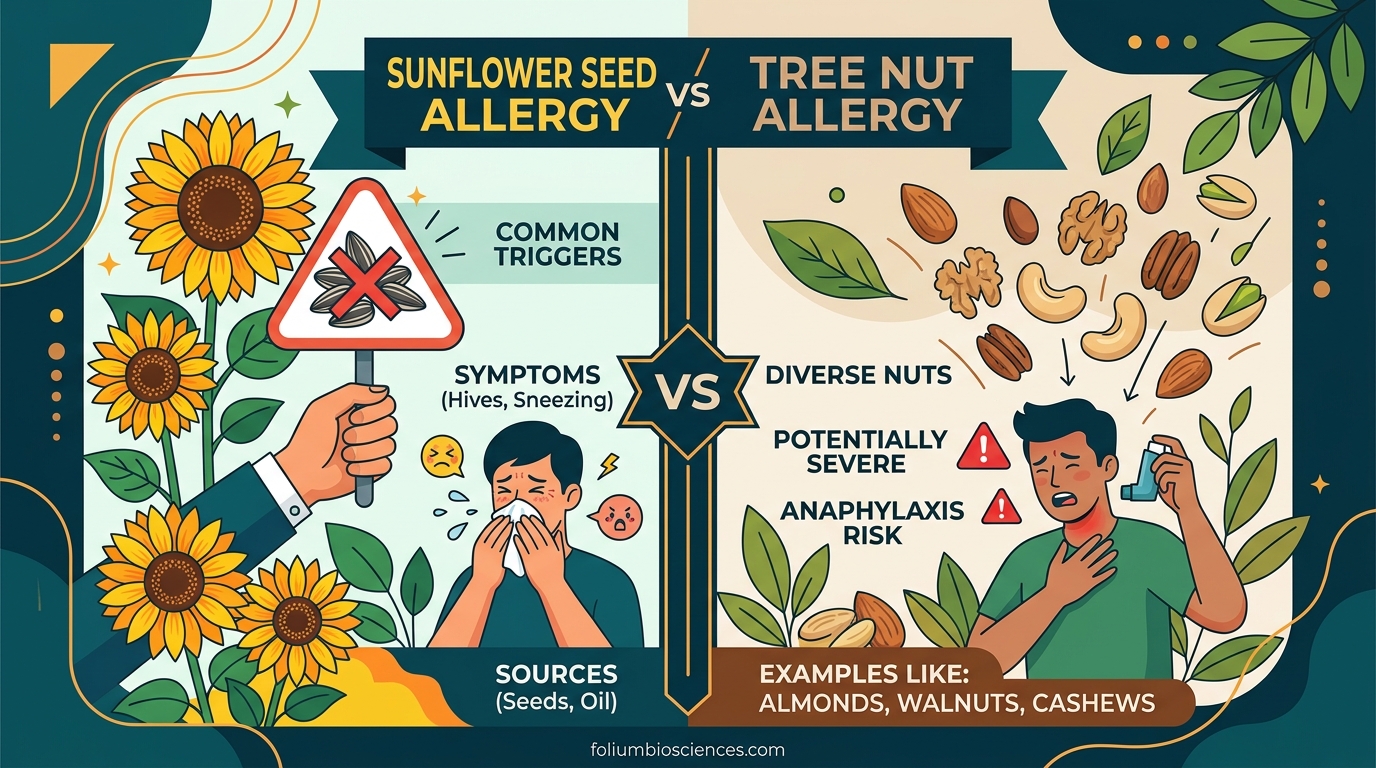
If you have a tree nut allergy, you may have wondered whether sunflower seeds are safe to eat. This is one of the most common questions we receive from readers managing food allergies. The short answer is that these two allergies are distinct, though the relationship between them is more nuanced than many people realize.
Sunflower seed allergy and tree nut allergy involve different botanical classifications and different immune responses. Understanding the distinction matters because it affects what foods you can safely include in your diet and which ones you need to avoid. This guide breaks down the science behind these allergies, explains cross-reactivity, and provides practical advice for staying safe.
Table of Contents
Understanding Seeds vs Nuts: The Botanical Distinction
The first step in understanding these allergies is knowing the fundamental difference between seeds and nuts. A sunflower seed is exactly what its name suggests: a seed from the sunflower plant (Helianthus annuus). Seeds develop from the ovary of a flower and contain the embryonic plant along with stored nutrients.
True tree nuts, on the other hand, come from specific botanical families. The FDA recognizes eight tree nuts as major allergens: almonds, Brazil nuts, cashews, hazelnuts, macadamia nuts, pecans, pistachios, and walnuts. These nuts develop from the fruit of various trees and have distinct protein structures compared to seeds.
This botanical distinction matters because your immune system reacts to specific proteins. When you have a tree nut allergy, your body produces immunoglobulin E (IgE) antibodies targeting proteins unique to tree nuts. Sunflower seeds contain different proteins, which is why most people with tree nut allergies can safely consume them.
What Is Cross-Reactivity in Food Allergies
Cross-reactivity occurs when your immune system recognizes similar proteins in different foods as the same threat. This happens because some protein families share similar molecular structures. When IgE antibodies designed to target one allergen encounter a structurally similar protein, they may trigger an allergic reaction even though the food itself is not the original allergen.
The 2S albumin protein family plays a significant role in cross-reactivity between certain seeds and nuts. These small, sulfur-rich proteins are found in sunflower seeds as well as several tree nuts including Brazil nuts, pistachios, and hazelnuts. When someone sensitive to 2S albumins encounters them in multiple foods, reactions can occur with each exposure.
However, cross-reactivity is not automatic. Research shows that most people with tree nut allergies never develop reactions to sunflower seeds. The proteins may be similar enough to confuse the immune system in some individuals, but the overall likelihood remains low. This is why proper allergy testing is essential rather than making assumptions about what is safe to eat.
Sunflower Seed Allergy: Prevalence and Risks
Sunflower seed allergy is considered rare compared to peanut and tree nut allergies. Studies estimate that less than 0.5% of the population has this allergy, making it one of the less common food allergies. However, when it does occur, reactions can range from mild to severe, and it can develop at any age.
Some people first discover their sunflower seed allergy through unexpected reactions to foods they assumed were safe. Sunflower oil, sunflower lecithin, and sunflower butter (often marketed as SunButter) can all trigger reactions in sensitive individuals. This is why reading ingredient labels is critical, even for foods that seem unrelated to seeds.
Occupational exposure is another risk factor worth noting. Bakers, food processing workers, and others who handle sunflower seeds regularly may develop allergic sensitization through inhalation or skin contact. Reddit communities discussing food allergies frequently mention occupational concerns as a factor their healthcare providers did not initially consider.
Tree Nut Allergy: Overview and Common Types
Tree nut allergy affects approximately 0.5% to 1% of the population in the United States, making it one of the nine major food allergens recognized by the FDA. Unlike peanut allergies (which are legumes, not nuts), tree nut allergies involve nuts that grow on trees and have distinct protein compositions from one another.
Almonds and cashews are among the most commonly reported tree nut allergies, but each type presents its own challenges. Some individuals are allergic to a single tree nut, while others react to multiple types. Research from the American Academy of Allergy, Asthma, and Immunology indicates that about 40% of people with tree nut allergies also have peanut allergies, suggesting overlapping immune system sensitivity.
The severity of tree nut reactions varies widely among individuals. While some experience only mild symptoms, others face life-threatening anaphylaxis from even trace exposures. Tree nut allergies are also notable for being lifelong in approximately 90% of cases, unlike some other food allergies that children outgrow.
The Cross-Reactivity Connection Between Seeds and Tree Nuts
Despite their botanical differences, cross-reactivity between sunflower seeds and tree nuts does occur in certain circumstances. The key factor is protein similarity, specifically within the 2S albumin family. When these proteins share enough structural homology, the immune system may react to both.
Research published in allergen encyclopedias confirms cross-reactivity between sunflower seeds and Brazil nuts, mustard seed, and pistachio. All of these foods contain 2S albumins that can trigger reactions in sensitized individuals. However, the frequency of this cross-reactivity remains relatively low, meaning most people with tree nut allergies will never experience a reaction from sunflower seeds.
What complicates matters is that some individuals may be independently allergic to both sunflower seeds and tree nuts without any cross-reactivity between them. This is called co-occurrence rather than cross-reactivity. Distinguishing between the two requires proper diagnosis by an allergist who can identify which specific proteins trigger your reactions.
Specific Tree Nuts with Reported Cross-Reactivity
Among tree nuts, Brazil nuts have the most documented cases of cross-reactivity with sunflower seeds. Both contain 2S albumins that share structural similarities, and case studies have documented patients experiencing reactions to both foods. If you have a Brazil nut allergy, exercise caution with sunflower seeds until you receive proper testing.
Pistachios present another notable cross-reactivity concern. The 2S albumin proteins in pistachios show homology with those in sunflower seeds, making pistachio-allergic individuals more likely to react to sunflower seeds. Hazelnuts have also been implicated in cross-reactivity reports, though less frequently than Brazil nuts and pistachios.
Walnuts and cashews round out the tree nuts with reported cross-reactivity, though these connections appear in fewer documented cases. The pattern emerging from clinical literature suggests that if you have reacted to multiple tree nuts, particularly Brazil nuts or pistachios, you may want to undergo testing for sunflower seed sensitivity before adding seeds to your diet.
Recognizing Allergy Symptoms
Allergic reactions to sunflower seeds and tree nuts share similar symptom patterns because both trigger the same immune pathway. Symptoms can appear within minutes to hours of consumption and range from mild oral irritation to life-threatening anaphylaxis. Recognizing these symptoms early can save lives.
Mild to moderate symptoms include hives, itching, tingling around the mouth, stomach cramps, nausea, and skin redness. These symptoms often develop first and may progress if left untreated. Oral allergy syndrome, characterized by itching and swelling of the lips and throat, is particularly common with seed and nut allergies.
Severe symptoms warrant immediate emergency attention. Difficulty breathing, wheezing, throat tightness, swelling of the tongue, dizziness, and loss of consciousness are signs of anaphylaxis. If you or someone nearby experiences these symptoms after eating a food containing sunflower seeds or tree nuts, administer epinephrine immediately and call emergency services.
The S.A.F.E. acronym provides a helpful framework for anaphylaxis response: Seek emergency care immediately, Allergen identification, epinephrine administration, and follow-up with an allergist. Having an epinephrine auto-injector readily available is essential for anyone with a severe seed or nut allergy.
Diagnosis: How Allergies Are Tested
Self-diagnosis is never appropriate for food allergies, including sunflower seed and tree nut allergies. Misdiagnosis can lead to either unnecessary dietary restrictions or dangerous unprotected exposure. An allergist can perform tests that definitively identify your specific triggers and sensitivities.
Skin prick tests involve placing a small amount of allergen extract on the skin and observing for a localized allergic reaction. This test provides rapid results and can test multiple allergens simultaneously. Blood tests measure IgE antibodies specific to particular allergens, offering another diagnostic option particularly useful when skin testing is not feasible.
The oral food challenge remains the gold standard for diagnosis when other tests are inconclusive. Under medical supervision, you consume gradually increasing amounts of the suspected allergen while being monitored for reactions. This test can confirm whether you truly have an allergy or if previous reactions were caused by something else, such as contamination.
Discuss your complete symptom history with an allergist before testing. Mention any foods you have avoided and why, any reactions you have had to seeds or nuts, and whether anyone in your family has allergies. This information helps your allergist interpret test results accurately and develop an appropriate management plan.
Foods to Avoid with Sunflower Seed Allergy
Sunflower seeds appear in more foods than most people realize. Beyond obvious sources like trail mix and granola bars, sunflower seeds and their derivatives hide in breading, salad dressings, sauces, and processed snacks. Learning to identify these hidden sources is essential for maintaining safety.
Sunflower oil is a common ingredient in processed foods and restaurant dishes. While highly refined oils typically undergo processing that removes proteins, some sensitive individuals react to residues remaining in the oil. Cold-pressed sunflower oil is more likely to contain protein traces and should be avoided if you have a confirmed allergy.
Sunflower lecithin deserves special attention because many people with seed allergies are uncertain whether this ingredient poses a risk. Sunflower lecithin is a byproduct of sunflower oil processing and may contain trace proteins. If you have a severe sunflower seed allergy, consult your allergist before consuming products containing this ingredient.
Sunflower seed butter, often sold as SunButter, is a popular peanut butter alternative. While this product is safe for many people with nut allergies, it absolutely must be avoided if you have a sunflower seed allergy. Always check ingredient labels and be aware that cross-contamination during manufacturing can occur even when sunflower seeds are not a listed ingredient.
Cross-Contamination Risks and Management
Cross-contamination occurs when allergens transfer from one food to another during processing, preparation, or storage. For people with seed and nut allergies, cross-contamination is one of the most significant risk factors for accidental exposure, even when the food itself does not contain the allergen.
Shared equipment poses a particular concern for sunflower seeds and tree nuts. Many manufacturers process multiple products on the same equipment, and cleaning procedures may not completely remove allergen residues. Look for products labeled “processed in a facility that also processes tree nuts” or similar warnings to assess your risk tolerance.
Restaurant dining requires extra vigilance. Kitchen staff may not fully understand allergen cross-contamination risks, and menu items that appear seed-free may contain hidden sunflower ingredients. Calling ahead to discuss your dietary restrictions with restaurant managers is a practical step many food allergy advocates recommend.
Home kitchens need careful management too. If one family member has a seed allergy while others consume sunflower seeds or tree nuts, keeping separate cooking utensils, cutting boards, and storage areas reduces exposure risks. Cleaning surfaces thoroughly after preparing allergenic foods helps prevent accidental contact reactions.
Living Safely with Multiple Allergies
Managing multiple food allergies simultaneously presents unique challenges. When you must avoid both tree nuts and sunflower seeds, your food options narrows significantly, and meal planning requires extra attention. However, with the right strategies, maintaining a varied and nutritious diet remains entirely possible.
Explore alternative sources of nutrients typically found in seeds and nuts. For example, if you cannot eat Brazil nuts due to allergy concerns, talk to your doctor about whether a selenium supplement might be appropriate. Working with a registered dietitian can help you identify nutritional gaps and safe alternatives.
Always carry emergency medication regardless of how careful you are. Epinephrine auto-injectors are life-saving tools that should never be left behind. Consider wearing medical alert jewelry that identifies your specific allergies, making it easier for emergency responders to provide appropriate care if you experience a reaction and cannot communicate.
Connect with support communities for people managing food allergies. Reddit forums and other patient communities offer practical advice that healthcare providers sometimes overlook, such as which brands have reliable allergen labeling practices and how to navigate social situations safely. Learning from others’ experiences can reduce anxiety and improve confidence in managing your allergies daily.
When to See an Allergist
Any suspected food allergy warrants professional evaluation, but certain signs make an allergist visit especially urgent. Severe reactions, reactions to multiple related foods, and difficulty identifying the trigger food are all situations that benefit from specialist assessment.
Do not delay seeking care if you have experienced symptoms consistent with anaphylaxis. Even mild symptoms can progress to severe reactions on future exposures. Each reaction carries risk, and proper diagnosis helps you understand which foods to permanently avoid versus which might be safely reintroduced under medical supervision.
Regular follow-up appointments matter even if your diagnosis is stable. Allergies can change over time, and new sensitivities may develop. Your allergist can also update your management plan as new treatments become available, such as emerging immunotherapy options currently under study for various food allergies.
Children especially benefit from early and ongoing allergist care. Allergies can affect growth, nutrition, and quality of life in children, and pediatric allergists are trained to address these developmental concerns alongside allergy management. Establishing care with a trusted allergist early sets the foundation for lifelong safety awareness.
Frequently Asked Questions
Can someone with a tree nut allergy have sunflower seeds?
In most cases, yes. Sunflower seeds are botanically seeds, not tree nuts, and typically do not cross-react with tree nut allergies. However, rare cases of cross-reactivity have been documented, particularly with Brazil nuts and pistachios. Always consult an allergist before introducing new foods if you have a tree nut allergy.
Is a sunflower seed technically a nut?
No. Botanically, sunflower seeds are seeds from the Helianthus annuus plant, not nuts. True nuts come from the Fagaceae family (oaks, beeches) or Juglandaceae family (walnuts, pecans). While seeds and nuts share some protein properties, they are distinct botanical classifications.
What tree nuts have cross-reactivity with sunflower seeds?
Brazil nuts, pistachios, and hazelnuts have the most documented cases of cross-reactivity with sunflower seeds. This is largely due to similar proteins in the 2S albumin family found in these foods. Walnut and cashew cross-reactivity has also been reported but is less common.
Is it normal to be allergic to sunflower seeds?
Seed allergies, including sunflower seed allergy, are considered rare compared to peanut and tree nut allergies. However, they do occur and can cause serious reactions. Sunflower seed allergy is estimated to affect less than 0.5% of the population, but those with existing nut allergies may be at higher risk.
Conclusion
Understanding the relationship between sunflower seed allergy and tree nut allergy empowers you to make informed decisions about your diet and safety. While these allergies are distinct conditions, cross-reactivity can occur in certain circumstances, particularly with Brazil nuts, pistachios, and hazelnuts due to shared 2S albumin proteins.
The key takeaway is that most people with tree nut allergies can safely consume sunflower seeds, but this is not universal. Proper allergy testing by a qualified allergist is essential before introducing any new potentially allergenic food into your diet. Never rely on assumptions or partial information when your health is at stake.
Stay proactive about reading labels, managing cross-contamination risks, and carrying emergency medication. With the right knowledge and preparation, living safely with food allergies becomes manageable. Consult an allergist for personalized guidance tailored to your specific sensitivities and medical history.