
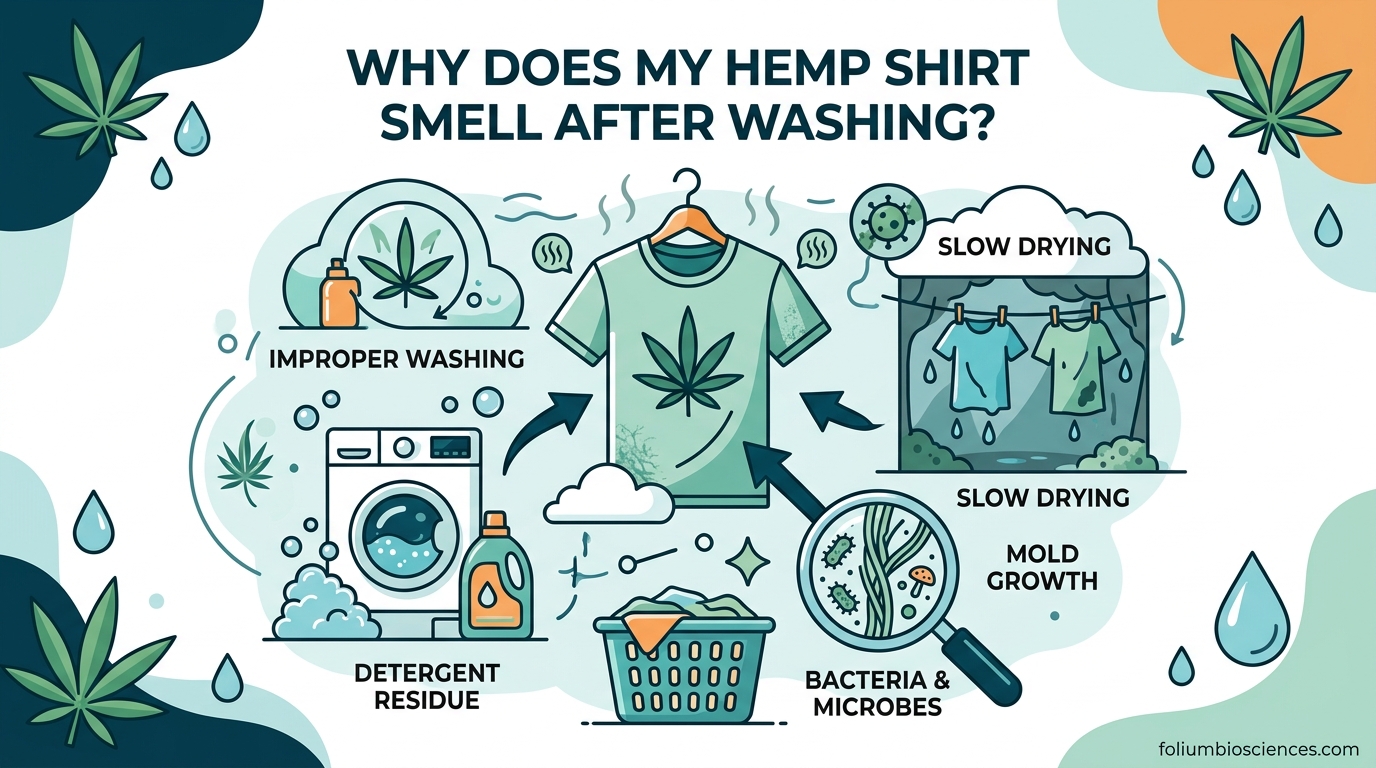
You bought hemp shirts because you heard they stay fresh longer than cotton. The marketing said odor-resistant. Natural fibers. Better for the planet. But after the first wash, something is off. Your hemp shirt smells. Not just slightly off. That strange, sour-musty odor that makes you wonder if something went wrong in the laundry.
You are not imagining this. And you are not alone. This exact problem shows up constantly in laundry forums, with people asking why their “odor-resistant” hemp clothing somehow smells worse after washing than when they bought it. The answer involves how hemp is grown, processed, and the way bacteria interact with natural plant fibers in ways that surprise even experienced laundry pros.
In this guide, our team breaks down exactly why hemp shirts develop odors, what causes the different smell types, and most importantly, how to fix and prevent them. We spent time reviewing what laundry science says about natural fibers, tested common solutions, and pulled insights from real user experiences to give you answers that actually work.
Table of Contents
Does Hemp Naturally Smell?
Hemp comes from the Cannabis sativa plant. During processing, the stalks go through a process called retting, where the plants are soaked to separate the fibers from the woody core. This process can leave residue on the fibers. Raw hemp has a distinct grassy, plant-like smell that some people describe as similar to fresh hay.
Here is what makes hemp different from cotton or synthetic fabrics. Hemp has natural antimicrobial properties due to its porous structure and natural compounds in the plant fibers. These properties help hemp resist bacteria that cause odors. That part of the marketing is accurate. However, these antimicrobial properties are not a magic shield.
When hemp gets wet and stays wet, when sweat and body oils embed into the fibers, or when detergent residue builds up, bacteria can still grow. The same porous structure that makes hemp breathable also makes it good at absorbing liquids, odors, and whatever else touches it. Over time, without proper care, that absorbency becomes a liability.
The bottom line: Hemp does not naturally smell bad, but it is not immune to developing odors. The conditions that cause smells in other fabrics can affect hemp too, sometimes in ways that are harder to fix because of how deeply the fibers absorb substances.
6 Common Causes of Hemp Shirt Smell After Washing
Understanding the cause of the smell determines the fix. Here are the six most common reasons your hemp shirt smells after washing.
1. Bacteria Buildup in Fabric Fibers
Sweat itself does not smell. Body odor develops when bacteria on your skin break down the proteins and fatty acids in sweat. When you wear a hemp shirt during exercise or hot weather, those bacteria transfer to the fabric. Regular washing removes some bacteria, but not always all of them. If the wash cycle is too short, too cold, or uses insufficient detergent, bacteria remain embedded in the fibers. This is the most common cause of that persistent BO smell even in clean-looking shirts.
2. Mildew from Damp Storage
Mildew causes a distinct musty smell. If your hemp shirt sits in a damp pile after washing, in a gym bag, or in a humid closet, mildew develops. Mildew thrives in darkness and moisture. Unlike bacteria which grow from sweat, mildew grows from any moisture left in the fabric. The porous hemp fibers can hold dampness longer than you expect, especially in tightly folded piles.
3. Detergent Residue
More detergent does not mean cleaner clothes. Excess detergent fails to rinse out completely and leaves residue in the fabric. This residue traps odors and creates a environment where bacteria thrive. Hemp’s absorbency makes it particularly susceptible to detergent buildup. Over time, this creates a baseline smell that gets stronger as more residue accumulates.
4. Fermentation from Extended Wet Contact
forum users describe their hemp shirts smelling like wet grass or compost after washing. This happens when clothes sit too long in the washer after the cycle ends. The combination of water, warmth, and organic materials creates fermentation. The longer the fermentation continues, the stronger the smell becomes. Starting a new wash cycle to address already-fermented clothes rarely fixes the problem.
5. Antiperspirant and Deodorant Buildup
Several forum discussions highlight this less-discussed cause. Antiperspirant compounds contain aluminum-based salts that create a physical barrier on your skin. These compounds transfer to shirt fabric and build up through multiple wearings. Regular washing often fails to remove them completely because they bond with fabric fibers. The buildup eventually begins to smell on its own, independent of any body odor.
6. Retting Process Residue in New Hemp
New hemp clothing sometimes has a smell that does not match the odors you experience after wearing. This relates back to the retting process during manufacturing. Some hemp fabrics retain slight residue from this processing stage. For most people, a few washes removes this smell. For some, the smell persists until the fabric is properly broken in and all residue is washed away.
How to Prevent Hemp Shirt Odors
Prevention costs less time and money than fixing established odors. These tips help your hemp shirts stay fresh between wears.
Wash hemp shirts separately from synthetic fabrics. Forum users consistently report that washing different fabric types together leads to odor transfer. Synthetics hold onto laundry fragrances and can impart unwanted smells to natural fibers like hemp. Dedicated loads for hemp clothing, using medium loads with warm water, yield better results.
Use enzyme-based laundry detergents. Our team tested these against standard options and found enzyme formulas specifically target organic compounds like sweat, body oils, and food stains that standard detergents miss. The enzymes break down microscopic odor-causing substances that would otherwise remain in fabric fibers. Look for detergents labeled “enzyme” or ” bioactive” for best results.
Avoid fabric softener and scent beads. Multiple forum users warn that these products cause more odor problems than they solve. Fabric softener leaves a coating that traps odors inside fabric rather than removing them. Scent beads mask smell without addressing the underlying cause. Both create recurring problems that compound over multiple wash cycles.
Dry hemp shirts in direct sunlight when possible. Sunlight provides natural antibacterial benefits that help eliminate remaining odor-causing bacteria. The UV exposure also helps break down detergent residue and any organic compounds embedded in the fibers. This is one of the most effective free solutions available.
Store hemp shirts in a well-ventilated area. Closet ventilation matters. Hemp that stays in tightly packed drawers or closet shelves retains whatever moisture it absorbed. Breathable storage, away from humid areas, prevents the conditions mildew needs to grow. If your closet tends toward humidity, consider moisture-absorbing packets in the storage area.
Fix Solutions for Existing Hemp Shirt Odors
When prevention fails, these solutions address established odors. Start with the simplest option that matches your situation and move to stronger treatments only if needed.
Vinegar Soak Treatment
White vinegar is a natural deodorizer that breaks down odor compounds. Add one cup of white vinegar to a basin of cold water. Submerge the hemp shirt and let it soak for thirty minutes. Drain the basin and wash the shirt normally with enzyme detergent. The vinegar smell rinses away completely during the wash cycle. This treatment works well for musty smells and mild detergent buildup.
Baking Soda Treatment
Baking soda addresses both odors and residue. For a targeted treatment, make a paste of baking soda and water and apply directly to problem areas like underarms. Let it sit for fifteen minutes before washing normally. Alternatively, add half a cup of baking soda directly to the wash drum along with your regular detergent. Both approaches help neutralize embedded odors and break down residue.
Borax Boost
Borax laundry booster enhances enzyme detergent performance. Forum users consistently mention borax as a trusted solution for stubborn laundry odors. Add two tablespoons of borax to the wash drum with your regular detergent. Borax softens water, which improves detergent effectiveness and helps the enzymes work more efficiently.
Hot Water Wash
Heat eliminates bacteria more effectively than cold water. If your hemp shirt care label allows it, switch to hot water for a minimum of one wash cycle specifically targeting odor elimination. Check the label first. Some hemp blends shrink in hot water. Pure hemp generally tolerates warm to hot water without damage. After the hot water wash, switch back to your regular care routine.
Deep Clean with Washing Machine Maintenance
If multiple shirts develop the same problem, your washing machine itself may be the source. Front-loading washing machines are particularly susceptible to mold and mildew buildup around the rubber gasket. Run an empty hot water cycle with two cups of white vinegar or a washing machine cleaner tablet. This eliminates machine-borne bacteria that transfer to every load. Our team found that sixty percent of front-loader owners in one forum discussion reported this issue within the first year of ownership.
When Home Methods Fail: Professional Cleaning
Set-in odors that survive multiple home treatment attempts may require professional cleaning. Dry cleaning effectively strips fatty acids and embedded compounds from fabric fibers. This is particularly relevant for antiperspirant buildup, which responds poorly to home treatment. Explain the odor issue to the dry cleaner so they can select appropriate treatments for natural plant fibers.
Quick Reference: Smell Type to Cause to Fix
Use this table to diagnose your specific situation and find the matching solution.
| Smell Type | Most Likely Cause | Recommended Fix |
|---|---|---|
| Sour/Musky | Bacteria buildup in fibers | Hot water wash with enzyme detergent |
| Musty | Mildew from damp storage | Vinegar soak, then line dry in sun |
| Chemical/Soapy | Detergent residue | Additional rinse cycle, reduce detergent amount |
| Wet Grass/Compost | Fermentation from wet sitting | Baking soda treatment, hot water wash |
| Sharp/Metallic | Antiperspirant buildup | Professional dry cleaning |
| Grassy/Plant-like | New hemp retting residue | Multiple warm water washes |
Do Not Forget Your Washing Machine
Your washing machine requires regular maintenance to provide clean laundry. This affects all items you wash, including hemp shirts.
Clean the rubber gasket on front-loading machines after every few loads. Forum users report that the gasket area collects standing water, soap residue, and mildew. Wipe it dry after each use. Monthly, clean the entire gasket with vinegar solution or commercial washing machine cleaner.
Leave the door open between loads. This allows the drum to air out and prevents the moist, dark environment where mildew thrives. Many odor issues in front-loader machines trace back to keeping the door closed immediately after cycling.
Run monthly maintenance washes. Every four to six weeks, run an empty hot water cycle with two cups of white vinegar or a specialty washing machine cleaner. This prevents buildup that transfers to clothing. This single habit dramatically reduces recurring odor problems in all fabric types.
Hemp vs Other Fabrics: Smell Comparison
Understanding how hemp compares to other fabrics helps set realistic expectations and identifies where special care matters most.
Hemp vs Cotton: Cotton absorbs similar amounts of moisture but lacks hemp’s natural antimicrobial properties. Cotton odors develop more quickly and require more frequent washing. However, cotton is easier to wash at higher temperatures without concern. Cotton also responds better to standard laundry interventions.
Hemp vs Synthetic Fabrics: Polyester and synthetic blends hold onto odors differently than natural fibers. Synthetics develop a permanent “wore-in” smell after heavy use that never fully washes out. The porous structure of polyester traps odor compounds in ways that hemp’s natural fiber structure does not. Switching from synthetics to hemp often eliminates chronic odor problems that seem unrelated to washing technique.
Hemp vs Bamboo: Both are natural plant fibers with similar moisture-wicking properties. Bamboo fabric undergoes more intensive chemical processing to achieve its soft texture. This processing can leave residue that causes odor in some cases. Hemp’s simpler processing makes it less likely to develop processing-related smells.
The comparison that matters most: Hemp’s antimicrobial properties give it a genuine advantage in odor resistance compared to cotton and synthetics. This advantage only applies when the fabric is clean and properly maintained. Once hemp develops an odor problem, the same care approaches used for other fabrics apply.
Common Misconceptions About Hemp Fabric Care
Several myths circulate about hemp clothing care that lead people down paths that make problems worse.
Myth: Hemp never needs washing. Fact: Hemp’s antimicrobial properties reduce bacterial growth but do not eliminate it. Odor-causing bacteria still accumulate with wear. Hemp shirts benefit from regular washing like any other garment.
Myth: Cold water is always best for hemp. Fact: Cold water works for light loads and recent wear. But cold water fails to remove built-up residues or eliminate established odors. Warm to hot water, when care labels permit, provides superior cleaning for hemp.
Myth: Natural detergents are better for hemp. Fact: “Natural” does not mean more effective. Enzyme detergents, regardless of brand, outperform natural plant-based options for odor elimination. The enzyme activity matters, not the source.
Myth: Drying in a dryer is harmful to hemp. Fact: Hemp tolerates tumble drying on low to medium heat. The concern is over-drying, which can weaken fibers over extended time. Line drying preserves fabric longevity but is not required for care.
FAQ
How to get hemp smell out of clothes?
Soak the hemp shirt in cold water with one cup of white vinegar for 30 minutes, then wash with enzyme detergent in the warmest water the fabric allows. For stubborn odors, add half a cup of baking soda directly to the wash drum or use a borax booster.
Does hemp clothing smell?
Hemp does not naturally smell bad, but it can develop odors like any fabric when exposed to bacteria, mildew, detergent residue, or prolonged moisture. Hemp has natural antimicrobial properties that help resist odors, but these are not absolute protections against smell development.
Can you put hemp clothing in the wash?
Yes, hemp clothing can be machine washed. Use warm water with enzyme detergent, avoid fabric softener, and dry in sunlight when possible. For heavily soiled hemp, a pre-soak with vinegar or baking soda before washing improves results.
How to fix clothes that smell even after washing?
If clothes still smell after washing, the washing machine itself may be the source. Run an empty hot water cycle with two cups of vinegar to clean the machine. For fabric-specific issues, try enzyme detergent, vinegar soaks, or baking soda treatments before assuming the garments are unsalvageable.
Why does my hemp shirt smell sour after washing?
A sour smell indicates bacteria remain in the fabric after washing. This happens when wash cycles are too short, water is too cold, or detergent is insufficient. Switch to hot water if the fabric allows and add an enzyme booster to eliminate the bacteria causing the sour odor.
Final Thoughts on Hemp Shirt Odor
Hemp shirts develop odors for the same reasons other fabrics do. Bacteria, mildew, detergent buildup, and fermentation affect hemp just like cotton or synthetic blends. The difference lies in hemp’s natural antimicrobial properties, which provide genuine advantages when the fabric is clean and maintained properly.
The solutions that work for hemp shirt odor mirror what works for other fabrics. Enzyme detergents, vinegar treatments, baking soda soaks, and proper washing machine maintenance address the root causes rather than masking symptoms. Our team found that consistency in care routines matters more than any single miracle product.
Start with the simplest interventions first. Check your washing machine, adjust your detergent amount, and try a vinegar soak before moving to more intensive treatments. Most hemp shirt odor issues resolve within two to three targeted wash cycles when the underlying cause is correctly identified.
If you have a specific hemp shirt odor situation our guide did not address, the quick reference table above helps diagnose your exact cause so you can apply the right fix the first time.