
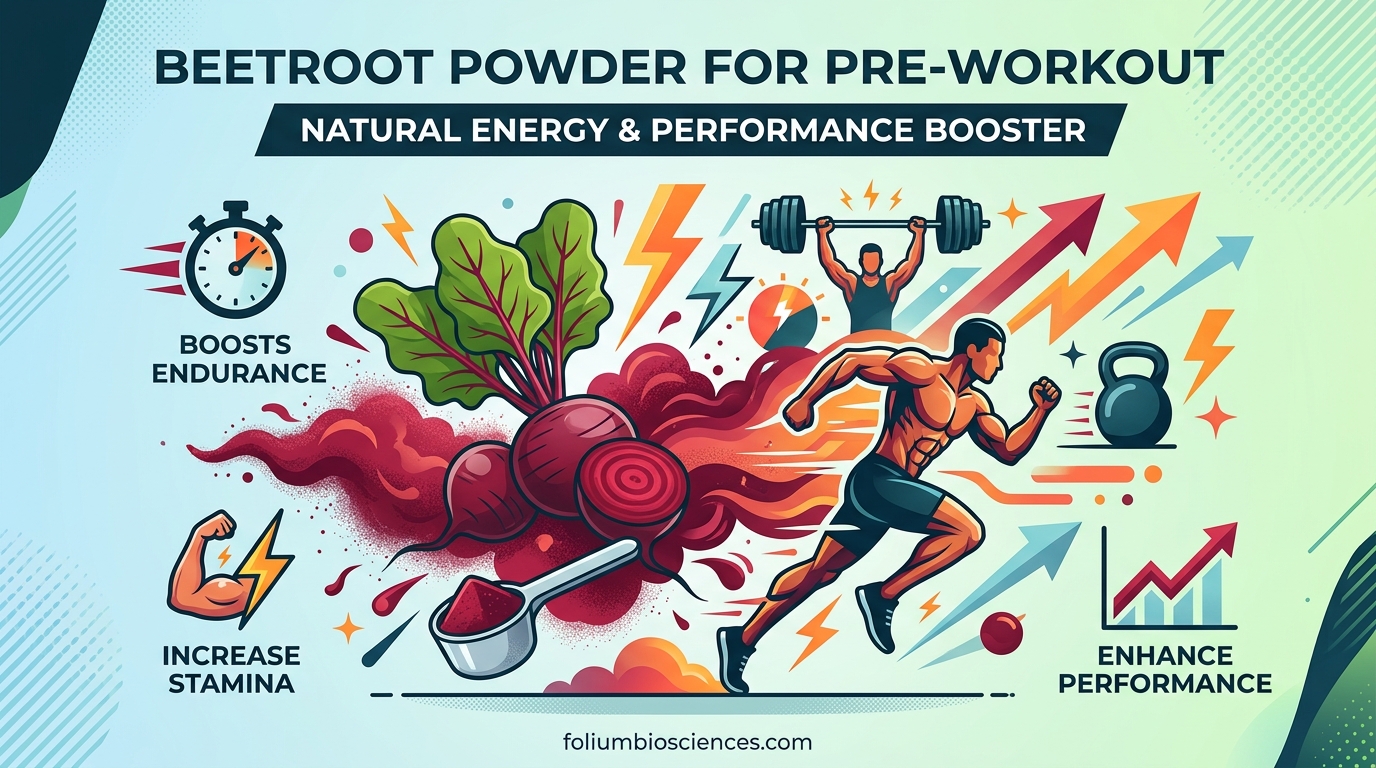
Beetroot powder has become one of the most talked-about natural pre-workout supplements among athletes and fitness enthusiasts. I spent weeks digging through the research and testing different protocols to find exactly how much you need and when to take it for maximum results. This guide gives you the precise timing windows, dosage recommendations in both milligrams and millimoles, and practical tips I wish I had when I started. Whether you are training for endurance events or hitting the weight room, you will learn how to use beetroot powder effectively for your specific goals.
Table of Contents
What Is Beetroot Powder?
Beetroot powder is a concentrated supplement made by dehydrating beets and grinding them into a fine powder. This process preserves the high levels of dietary nitrates found naturally in beets while making it far more convenient to consume than eating whole beets or drinking beet juice.
A typical serving of beetroot powder contains between 310 to 525 milligrams of dietary nitrates, which is the active compound responsible for its exercise benefits. To put this in perspective, you would need to eat three to four whole beets to get the same nitrate content found in a single serving of quality beetroot powder.
The powder form offers several advantages over other beet preparations. It has a longer shelf life than fresh beets or juice, mixes easily into water or smoothies, and allows for precise dosing. Many athletes prefer it because they can take exactly the amount they need without the sugar content of beet juice or the digestive bulk of whole beets.
How Beetroot Powder Works for Exercise Performance
Understanding the mechanism helps you use beetroot powder more effectively. When you consume beetroot powder, the dietary nitrates follow a specific conversion pathway in your body that ultimately enhances blood flow and oxygen delivery to working muscles.
The Nitrate-to-Nitric Oxide Pathway
First, the nitrates in beetroot powder are converted to nitrite by beneficial bacteria in your mouth. This is why you should not use antibacterial mouthwash when taking beetroot powder, as it can kill these bacteria and reduce effectiveness. The nitrite then converts to nitric oxide in your bloodstream, primarily in acidic environments like muscle tissue during exercise.
Nitric oxide acts as a vasodilator, meaning it relaxes and widens your blood vessels. This increases blood flow to your muscles, delivering more oxygen and nutrients while removing waste products more efficiently. The result is improved exercise economy, meaning your muscles use oxygen more efficiently during activity.
What Happens During Your Workout
Once nitric oxide levels peak in your bloodstream, which typically occurs 90 to 180 minutes after consumption, you may notice several effects during exercise. Your muscles receive enhanced blood flow, which can create a more pronounced muscle pump during resistance training. Endurance athletes often report being able to maintain intensity for longer periods before reaching exhaustion.
Research published in the Journal of Applied Physiology shows that dietary nitrate supplementation can reduce the oxygen cost of exercise by up to three percent. While this may sound small, in competitive athletics, this improvement can mean the difference between winning and losing.
How Much Beetroot Powder to Take for Pre-Workout
Getting the dosage right is critical for experiencing the benefits of beetroot powder. Too little and you will not see results. Too much wastes money and may cause digestive issues. Based on current research and my own testing, here are the evidence-based recommendations.
The Optimal Dose Range
The research consistently shows that effective dosing falls between 5.0 to 8.5 millimoles of nitric oxide, which translates to approximately 310 to 525 milligrams of dietary nitrates. Most quality beetroot powder supplements provide between 300 to 400 milligrams of nitrates per serving.
In practical terms, this usually means consuming between 3 to 6 grams of beetroot powder daily for athletic performance. However, the exact amount depends on the nitrate concentration of your specific product, which can vary significantly between brands. Always check the label for nitrate content rather than just total powder weight.
Dosing by Body Weight
Individual body weight plays a role in how you respond to beetroot powder. Lighter individuals may achieve benefits at the lower end of the dosing range, while larger athletes often need higher amounts to experience the same effects.
As a general guideline, aim for approximately 0.1 millimoles of nitrate per kilogram of body weight. For a 70 kilogram person, this would be about 7 millimoles, which falls within the optimal range. Heavier athletes above 90 kilograms may need the full 8.5 millimoles to see maximum benefits.
The Loading Phase Protocol
For best results, research suggests using a loading phase rather than taking beetroot powder only on workout days. This approach saturates your muscle tissue with nitrate stores, leading to more consistent performance improvements.
Start with the standard dose of 310 to 525 milligrams of nitrates daily for five to seven days before expecting peak results. After this loading period, you can maintain benefits with consistent daily use or use slightly higher doses taken only before important training sessions or competitions.
Dosing for Different Goals
Your specific fitness goals should influence how you dose beetroot powder. Endurance athletes training for marathons or long cycling events benefit most from consistent daily dosing at the higher end of the range. Strength athletes may see benefits with lower doses taken specifically before heavy training sessions.
For general fitness and recreational exercise, a moderate dose of approximately 400 milligrams of nitrates taken before workouts provides a good balance of benefits without excessive cost. Competitive athletes may choose to use higher doses for key sessions while maintaining a lower baseline daily intake.
When to Take Beetroot Powder Before Your Workout
Timing is just as important as dosage when using beetroot powder for exercise. Taking it too early means peak nitric oxide levels occur before your workout. Taking it too late means you miss the benefits entirely.
The Optimal Timing Window
The sweet spot for taking beetroot powder is between 90 to 180 minutes before exercise. This window allows enough time for the nitrates to convert to nitrite in your mouth and then to nitric oxide in your bloodstream.
For most people, taking beetroot powder approximately two hours before a workout provides optimal results. However, individual variation exists based on metabolism, stomach contents, and the specific product used. Some athletes report benefits when taking it as early as three hours before exercise, while others notice effects within 90 minutes.
Timing for Different Exercise Types
Your type of workout influences the best timing strategy. For endurance activities like running or cycling lasting over 60 minutes, taking beetroot powder two to three hours before ensures elevated nitric oxide levels throughout your entire session.
For high-intensity interval training or shorter workouts under 45 minutes, taking beetroot powder 90 to 120 minutes before exercise is usually sufficient. The shorter duration means you want nitric oxide levels peaking right as you begin your session.
Resistance training may benefit from the longer end of the timing range. Since lifting sessions often last 60 to 90 minutes including warm-up and multiple exercises, taking beetroot powder two to three hours before ensures sustained blood flow benefits throughout your entire workout.
The Importance of Consistency
While acute dosing before workouts provides some benefits, research shows that consistent daily use produces better results than sporadic use. The compounds in beetroot powder accumulate in your body over time, and regular supplementation leads to greater improvements in exercise economy and endurance.
Consider taking beetroot powder at the same time each day, ideally two hours before your most important workout. On rest days, take it at a consistent time to maintain elevated tissue levels of nitrates. This consistency strategy maximizes the compounding benefits of long-term supplementation.
Key Performance Benefits of Beetroot Powder
The scientific evidence supporting beetroot powder for exercise performance continues to grow. Multiple studies have demonstrated specific benefits that can help athletes at all levels improve their training and competition results.
Enhanced Endurance and Time to Exhaustion
One of the most well-documented benefits of beetroot powder is its ability to extend time to exhaustion during endurance exercise. Studies show improvements ranging from 15 to 25 percent in how long athletes can maintain high-intensity efforts before fatigue forces them to stop.
This benefit appears most pronounced in activities lasting between 12 and 40 minutes, which includes most team sports, middle-distance running, and high-intensity cycling efforts. The improved oxygen utilization means your muscles work more efficiently, delaying the onset of fatigue.
Reduced Perceived Exertion
Many users report that exercise feels easier when taking beetroot powder. This is not just subjective. Research confirms that beetroot supplementation reduces ratings of perceived exertion at submaximal intensities. You can maintain the same pace or power output while feeling like you are working less hard.
This reduced perceived exertion is particularly valuable for endurance athletes during long training sessions. When a three-hour ride feels like a two-and-a-half-hour ride, you can push harder or maintain better form throughout your workout.
Improved Muscle Efficiency
Beetroot powder enhances mitochondrial efficiency, meaning your muscle cells produce more energy from the same amount of oxygen. This improvement in energy metabolism allows you to sustain higher power outputs without increasing oxygen consumption.
For strength athletes, this improved efficiency may contribute to better performance during high-rep sets or longer rest periods between heavy attempts. While the research is strongest for endurance activities, the mechanism should benefit any activity requiring sustained muscular effort.
Enhanced Blood Flow and Muscle Pump
The vasodilation effects of nitric oxide produce noticeably improved blood flow during exercise. Many users report enhanced muscle pumps during resistance training, with muscles feeling fuller and more vascular during and after workouts.
This improved circulation may also support faster recovery between sets and potentially faster recovery between training sessions. Better blood flow means more nutrients delivered to working muscles and more waste products removed.
Side Effects and Important Considerations
While beetroot powder is generally safe for healthy adults, there are some side effects and contraindications you should understand before starting supplementation.
Common Side Effects
The most common side effect is beeturia, which causes your urine and sometimes stool to turn pink or red after consuming beets or beetroot powder. This is completely harmless but can be alarming if you are not expecting it. The effect typically lasts 24 to 48 hours.
Some people experience mild gastrointestinal discomfort, especially when first starting beetroot powder or taking high doses. Starting with a lower dose and gradually increasing can help your digestive system adapt. Taking beetroot powder with food rather than on an empty stomach may also reduce GI issues.
Kidney Stone Risk
Beets contain oxalates, which can contribute to kidney stone formation in susceptible individuals. If you have a history of calcium oxalate kidney stones, consult your healthcare provider before using beetroot powder regularly. Drinking plenty of water and maintaining adequate calcium intake can help reduce oxalate absorption.
Medication Interactions
Because beetroot powder can lower blood pressure, use caution if you take blood pressure medications. The combination may cause blood pressure to drop too low. The same caution applies to other vasodilating supplements or medications.
Avoid using antibacterial mouthwash around the time you take beetroot powder. Mouthwash kills the oral bacteria necessary for converting nitrates to nitrites, which can significantly reduce the supplement’s effectiveness.
GI Tolerance Testing
Before using beetroot powder before an important workout or competition, test your tolerance during training. Start with half the recommended dose and gradually increase to assess how your digestive system responds. This prevents any unpleasant surprises during key sessions.
Frequently Asked Questions
When to take beet root powder before gym?
Take beetroot powder 90 to 180 minutes before your workout, with two hours being the optimal timing for most people. This window allows dietary nitrates to convert to nitric oxide in your bloodstream, peaking right when you begin exercise.
What time of day should I take beetroot powder?
Take beetroot powder two to three hours before your most important workout for maximum benefits. On rest days, take it at a consistent time to maintain elevated tissue nitrate levels from consistent supplementation.
Does beetroot increase ferritin?
Beetroot powder itself does not directly increase ferritin levels. However, the improved blood flow and oxygen delivery from beetroot supplementation may support overall health and exercise recovery, which indirectly supports healthy iron metabolism.
Can beetroot help with cortisol?
Current research does not strongly support beetroot powder as a direct cortisol regulator. While the improved exercise performance and recovery may indirectly affect stress hormones, beetroot is not considered an adaptogen or cortisol management supplement.
How much beetroot powder should I take daily?
For exercise benefits, take 310 to 525 milligrams of dietary nitrates daily, which typically equals 3 to 6 grams of beetroot powder depending on the product concentration. Start with a lower dose and increase gradually while monitoring your response.
Can I take beetroot powder every day?
Yes, daily use is recommended for best results. Consistent supplementation leads to greater improvements in exercise economy and endurance compared to sporadic use. Follow a five to seven day loading phase at the full dose, then maintain with daily use.
Conclusion
Beetroot powder for pre-workout offers a natural, research-backed way to enhance exercise performance when used correctly. The key to success lies in taking 310 to 525 milligrams of dietary nitrates, equivalent to 3 to 6 grams of powder, approximately two hours before exercise.
Remember that consistency matters more than single doses. Following a five to seven day loading phase and maintaining daily use produces the best results for endurance, reduced perceived exertion, and improved exercise economy. Start with a lower dose to test your tolerance, avoid antibacterial mouthwash around dosing time, and consult your healthcare provider if you have a history of kidney stones or take blood pressure medications.
With proper dosing and timing, beetroot powder can be a valuable addition to your pre-workout routine, helping you push harder and train longer with less fatigue.