
A veterinarian-reviewed guide to safe omega-3 supplementation for your dog
Fish oil is one of the most commonly recommended canine supplements, prized for its omega-3 fatty acids EPA and DHA that support skin health, joint function, and more. But getting the dosage right by weight is essential for safety and effectiveness. This guide covers everything you need to know.
Table of Contents
Why Fish Oil Matters for Dogs
Fish oil provides two key omega-3 fatty acids: EPA (eicosapentaenoic acid) and DHA (docosahexaenoic acid). Unlike plant-based omega-3 sources, EPA and DHA are already in the form your dog’s body can use directly. These compounds help reduce inflammation, support brain and eye development in puppies, promote a healthy coat, and aid joint mobility in older dogs.
Understanding EPA and DHA in Fish Oil Products
Not all fish oil supplements are the same. The actual EPA and DHA content varies widely between products. When choosing a fish oil for your dog, always check the label for:
- Total EPA + DHA per serving – This is what actually counts for your dog’s dosage.
- Form of omega-3 – Triglyceride forms are generally better absorbed than ethyl ester forms.
- Source of fish – Wild-caught small fish (like sardines or anchovies) are preferable for purity.
- Freshness – Oxidation renders fish oil ineffective. Look for products with a “best by” date well into the future.
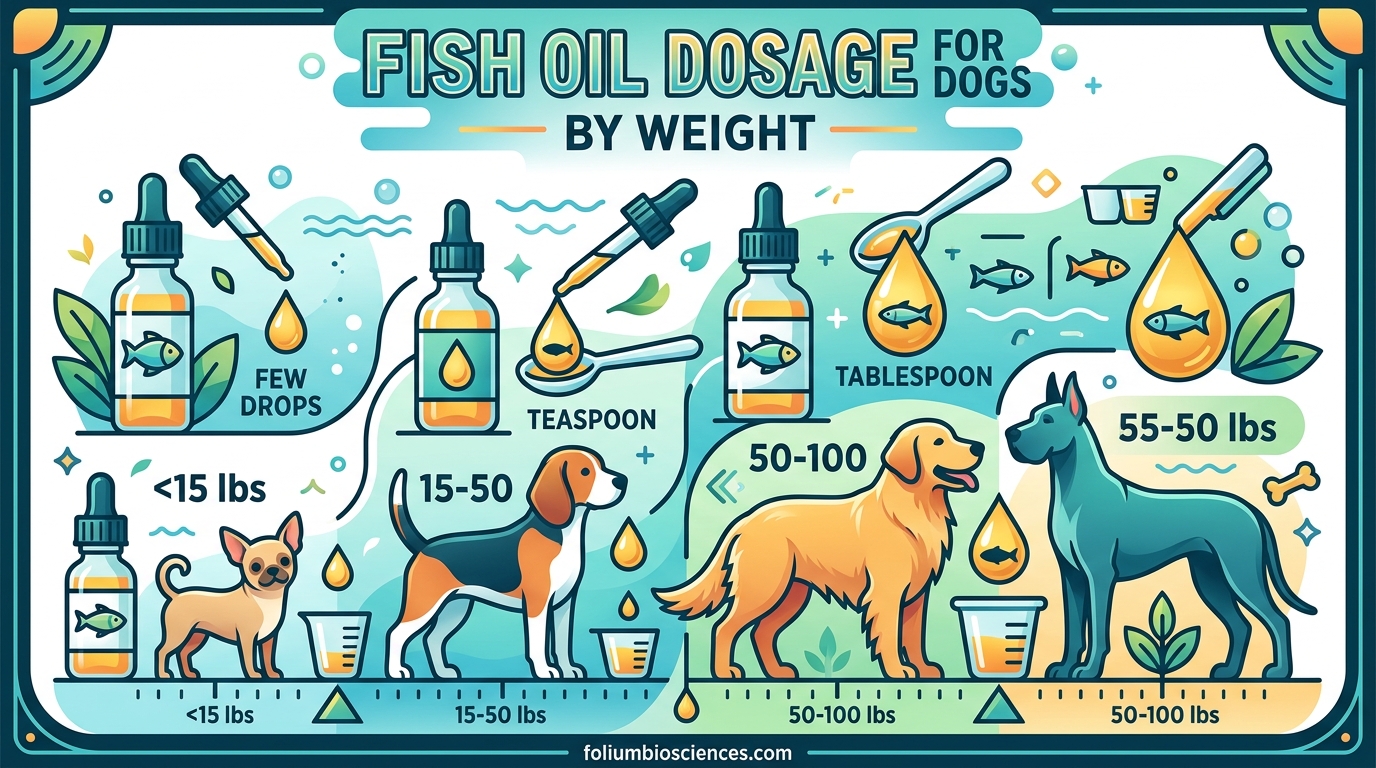
Fish Oil Dosage Chart for Dogs by Weight
The following chart provides general dosage ranges using combined EPA+DHA amounts. Always confirm with your veterinarian, especially for dogs with health conditions.
| Dog Weight (lbs) | Dog Weight (kg) | Low End (mg EPA+DHA/day) | High End (mg EPA+DHA/day) |
|---|---|---|---|
| 5 lbs | 2.3 kg | 100 mg | 250 mg |
| 10 lbs | 4.5 kg | 200 mg | 500 mg |
| 20 lbs | 9.1 kg | 400 mg | 1,000 mg |
| 30 lbs | 13.6 kg | 600 mg | 1,500 mg |
| 50 lbs | 22.7 kg | 1,000 mg | 2,500 mg |
| 70 lbs | 31.8 kg | 1,400 mg | 3,500 mg |
| 90 lbs | 40.9 kg | 1,800 mg | 4,500 mg |
| 100+ lbs | 45.5+ kg | 2,000 mg | 5,000 mg |
How to Calculate the Right Dose for Your Dog
Follow these steps to determine the correct fish oil dose:
- Weigh your dog using a scale or estimate based on breed averages.
- Determine the EPA+DHA content of your fish oil product by reading the supplement facts label.
- Calculate the dose using the range above, dividing the total daily amount into one or two servings.
- Adjust based on your dog’s condition – dogs with arthritis or skin allergies may need the higher end with veterinary guidance.
Special Considerations
Puppies and Young Dogs
DHA is particularly important for developing puppies’ brains and eyes. Supplementation should be approached conservatively and only under veterinary guidance to avoid excessive doses.
Senior Dogs
Older dogs often benefit from fish oil for joint support and coat health. However, senior dogs with compromised immune systems or those preparing for surgery may need adjusted doses. Discuss any existing medications with your vet, as fish oil can interact with blood thinners and some anti-inflammatory medications.
Pregnant or Nursing Dogs
Pregnant and nursing dogs have elevated nutritional needs, but indiscriminate supplementation can harm developing puppies. Never give fish oil supplements to a pregnant dog without explicit veterinary approval.
Signs Your Dog May Need More Fish Oil
Watch for these common indicators that your dog could benefit from omega-3 supplementation:
- Dull, flaky, or itchy skin
- Excessive shedding
- Joint stiffness or difficulty rising
- Hot spots or skin irritations that recur
- Dry, brittle coat
How to Give Fish Oil to Your Dog
Fish oil supplements for dogs come in multiple forms:
- Liquid fish oil – Can be mixed into food. Start with a few drops and increase gradually.
- Soft gels – Given whole or pierced and squeezed onto food. Store in the refrigerator to maintain freshness.
- Chewable tablets – Often flavoured and work well as treats or hidden in pill pockets.
Regardless of form, always give fish oil with a meal to improve absorption and reduce the risk of digestive upset.
Potential Side Effects and Drug Interactions
While fish oil is generally safe for most dogs, be aware of potential side effects:
- Digestive upset – Gas, diarrhea, or nausea, especially when first starting.
- Bad breath or fishy burps – Normal and harmless, though sometimes inconvenient.
- Vitamin E depletion – Long-term high-dose fish oil can deplete vitamin E, so some products include added vitamin E.
- Bleeding risk – High doses may increase bleeding time, especially if combined with NSAIDs like carprofen or aspirin.
Key Takeaways
Fish oil supplementation can be a highly effective way to support your dog’s skin, coat, joints, and overall wellness when done correctly. The most important principles to remember:
- Dosage should always be based on your dog’s weight and the actual EPA+DHA content of the product.
- Start at the low end of the recommended range and increase gradually only with veterinary approval.
- Quality matters – choose reputable brands that disclose their EPA/DHA levels and undergo third-party testing.
- Consult your veterinarian before starting any new supplement, particularly if your dog has a health condition or takes medications.
When in doubt, your veterinarian is your best resource for determining the safest and most effective fish oil dosage for your individual dog.