
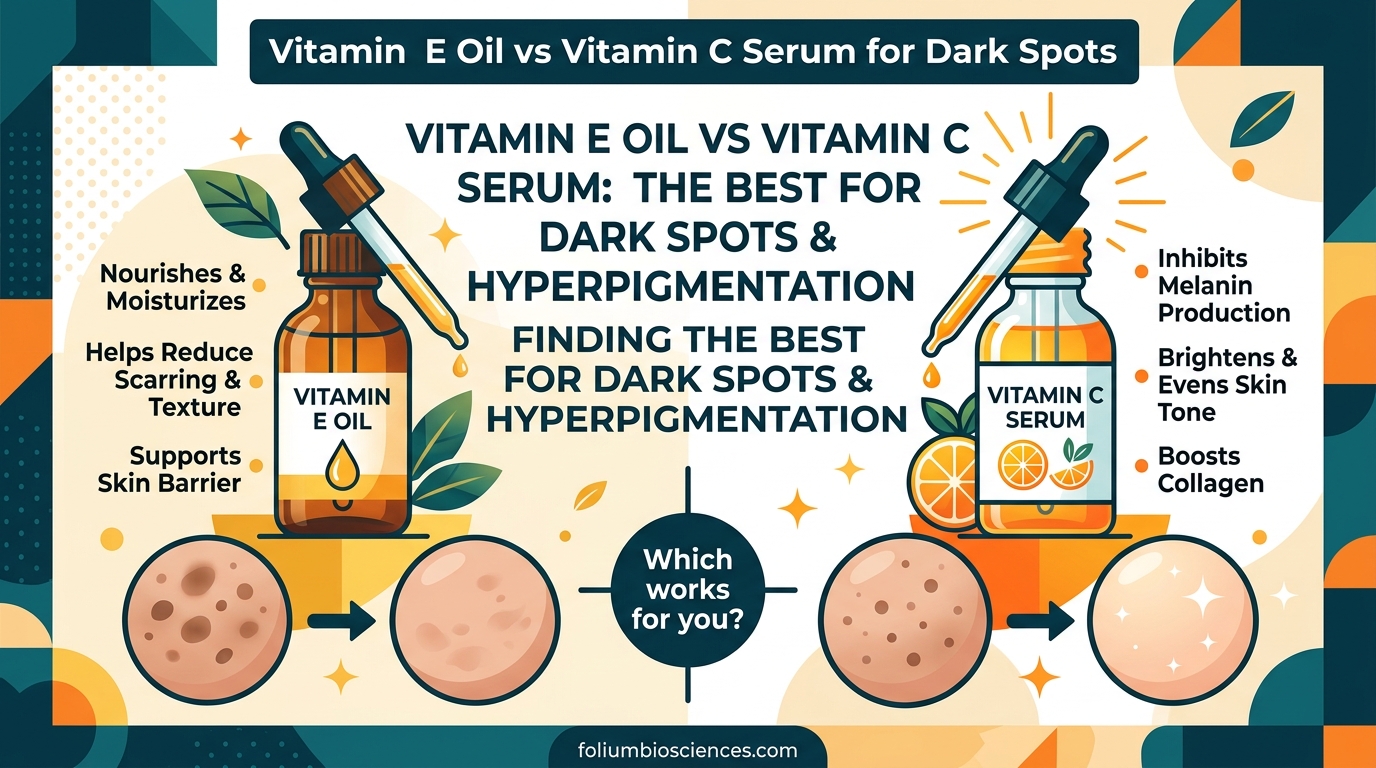
If you are staring at dark spots in the mirror and wondering whether to reach for vitamin E oil or vitamin C serum, here is the short answer: vitamin C serum wins for actively fading dark spots. Vitamin E oil plays a different but valuable supporting role. I have spent months digging into the research, reading through hundreds of real user experiences on skincare forums, and testing both ingredients myself to give you a clear, honest comparison.
The debate around vitamin E oil vs vitamin C serum for dark spots comes down to how each ingredient works at a cellular level. Vitamin C (ascorbic acid) directly inhibits the enzyme that produces melanin, which is what causes dark spots in the first place. Vitamin E (tocopherol) is a fat-soluble antioxidant that strengthens your skin barrier and protects against future damage but does not directly stop melanin production.
In this guide, I will walk you through exactly how dark spots form, what each vitamin does (and does not do) for hyperpigmentation, and give you a clear verdict on which one to pick. I will also explain why using both together might be the real winning strategy for 2026.
Table of Contents
How Do Dark Spots Actually Form?
Dark spots, also called hyperpigmentation, appear when your skin produces too much melanin in certain areas. Melanin is the pigment that gives your skin its color, and it is produced by cells called melanocytes. When these cells go into overdrive, you get patches of darker skin that can take months or even years to fade.
The trigger for this overproduction is an enzyme called tyrosinase. Think of tyrosinase as the ignition switch for melanin production. When UV rays hit your skin, when inflammation occurs from acne, or when hormonal shifts happen (like during pregnancy), tyrosinase gets activated and tells melanocytes to pump out more pigment. That is how sun spots, acne marks, and melasma all share the same root cause despite looking different.
This matters because the most effective way to fade dark spots is to either block tyrosinase or speed up the turnover of pigmented skin cells. That is exactly where vitamin C shines, and it is also why vitamin E, while beneficial, takes a more indirect path. Understanding this mechanism is the key to choosing the right ingredient for your specific dark spots.
Free radicals from UV exposure and pollution also play a huge role. They cause oxidative stress that damages skin cells and triggers more melanin production as a defense response. Both vitamin C and vitamin E are antioxidants that neutralize these free radicals, but they do it in different ways and in different parts of the cell.
Vitamin C Serum for Dark Spots: How It Works
Vitamin C serum is widely considered the gold standard for brightening skin and fading dark spots, and the science backs this up. The primary active form, L-ascorbic acid, works as a tyrosinase inhibitor, meaning it directly slows down the enzyme responsible for melanin production. Fewer melanin-producing signals means your existing dark spots gradually lighten over time.
Beyond targeting melanin, vitamin C also boosts collagen synthesis. Collagen is the structural protein that keeps skin firm and smooth, and increased collagen production helps your skin turn over pigmented cells faster. This dual action of slowing melanin while accelerating cell renewal is what makes vitamin C serum so effective for hyperpigmentation.
As a water-soluble antioxidant, vitamin C works in the aqueous (water-based) parts of your skin cells. It neutralizes free radicals generated by UV exposure before they can trigger the oxidative stress cascade that leads to more dark spots. Research published in dermatological journals has shown that topical vitamin C can reduce melanin index scores by up to 20% with consistent use over 8 to 12 weeks.
What Concentration and Form Works Best?
Not all vitamin C serums are created equal. L-ascorbic acid at a concentration between 10% and 20% delivers the best results for dark spots. Concentrations below 10% may be too weak to see noticeable fading, while going above 20% increases irritation risk without adding much benefit. The pH of the serum also matters — it needs to be below 3.5 for optimal absorption into the skin.
Other forms like sodium ascorbyl phosphate and tetrahexyldecyl ascorbate are gentler and more stable options. They work more slowly but are better choices if you have sensitive skin that reacts to L-ascorbic acid. From what I have seen in user forums, people who stick with a consistent 15% L-ascorbic acid serum for at least three months report the most dramatic dark spot fading.
Timeline for Results
Patience is essential with vitamin C. Most users start noticing subtle brightening around the 4 to 6 week mark, with more visible dark spot reduction at 8 to 12 weeks. Forum users on r/SkincareAddiction consistently report that real, noticeable fading of stubborn hyperpigmentation takes 3 to 6 months of daily application. The key is consistency, not concentration.
One common concern I see is whether vitamin C serum can initially make dark spots look worse. This is rare but can happen if the serum oxidizes or if you are using a formula with irritating ingredients. A high-quality, fresh vitamin C serum should not cause this effect. If you notice increased pigmentation, check whether your serum has turned brown or orange, which signals oxidation.
Vitamin E Oil for Dark Spots: What It Can (and Cannot) Do
Vitamin E oil (tocopherol) is one of the most popular skincare oils, and for good reason when it comes to skin barrier health. It is a fat-soluble antioxidant that protects cell membranes from oxidative damage, locks in moisture, and has notable anti-inflammatory properties. But when it comes to actively fading existing dark spots, vitamin E has real limitations that are important to understand.
Unlike vitamin C, vitamin E does not inhibit tyrosinase or directly reduce melanin production. It does not target the biochemical pathway that creates dark spots. What vitamin E does extremely well is strengthen the skin barrier, soothe inflammation, and protect against UV-induced free radical damage that causes new dark spots to form. Think of it as prevention rather than correction.
Where vitamin E shines for dark spots is in supporting the healing process. Post-inflammatory hyperpigmentation, the dark marks left after acne or eczema flare-ups, can benefit from vitamin E because it reduces the inflammation that drives that type of pigmentation. Users on r/Blackskincare and r/30PlusSkinCare report that vitamin E oil helps newer post-inflammatory marks fade faster, especially when the skin underneath is still healing.
When Vitamin E Oil Helps With Dark Spots
Vitamin E oil is most useful for dark spots in specific situations. If your hyperpigmentation is fresh and inflammation-driven (like recent acne marks), vitamin E can speed up healing and prevent the mark from darkening further. If you have dry or sensitive skin that cannot tolerate vitamin C serums, vitamin E provides antioxidant protection without irritation. And if your primary concern is preventing new spots from forming, vitamin E reinforces the skin barrier against environmental damage.
When Vitamin E Oil Falls Short
For established, long-standing dark spots like melasma patches that have been present for months or years, vitamin E oil alone will not make a significant difference. The same goes for deep sun spots and age spots. These types of hyperpigmentation require a tyrosinase inhibitor like vitamin C (or stronger actives like niacinamide, kojic acid, or hydroquinone) to see real lightening. Users who expect vitamin E to fade old dark spots often end up disappointed after months of use with no visible change.
Another limitation: pure vitamin E oil can be heavy and comedogenic for some skin types. Forum users on r/SkincareAddiction frequently report breakouts when using undiluted tocopherol oil on acne-prone skin. If you want the benefits without the heaviness, a lighter serum or moisturizer containing vitamin E is usually a better option than straight oil.
Vitamin E Oil vs Vitamin C Serum for Dark Spots: Side-by-Side Comparison
To make this comparison as clear as possible, I have broken down the key differences between these two ingredients across the factors that matter most for dark spot treatment.
- Primary mechanism: Vitamin C inhibits tyrosinase to reduce melanin production. Vitamin E protects cell membranes and reduces inflammation.
- Solubility: Vitamin C is water-soluble and works in the fluid parts of cells. Vitamin E is fat-soluble and works in cell membranes and lipid layers.
- Direct dark spot fading: Vitamin C actively lightens existing dark spots. Vitamin E prevents new damage more than it corrects existing spots.
- Results timeline: Vitamin C shows visible fading in 8-12 weeks. Vitamin E results are subtle and take longer to notice for pigmentation.
- Best skin types: Vitamin C suits most skin types but may irritate sensitive skin. Vitamin E is ideal for dry, sensitive, or compromised skin barriers.
- Collagen support: Vitamin C directly stimulates collagen synthesis. Vitamin E protects existing collagen from degradation.
- UV protection: Vitamin C provides mild photoprotection. Vitamin E absorbs UVB light and strengthens the barrier against sun damage.
- Texture: Vitamin C serums are lightweight and water-based. Vitamin E oil is heavier and better suited for dry skin or nighttime use.
- Stability: Vitamin C oxidizes quickly (look for opaque, air-tight packaging). Vitamin E is more stable but can go rancid over time.
The bottom line from this comparison: vitamin C serum is the active dark spot fighter, while vitamin E oil is the protective barrier builder. They target different parts of the dark spot problem, which is exactly why dermatologists frequently recommend using both.
So, Which One Actually Wins for Dark Spots?
The clear winner for actively fading dark spots is vitamin C serum. Its ability to inhibit tyrosinase and directly reduce melanin production makes it the more effective choice if your primary goal is to lighten existing hyperpigmentation. This is not a close call based on the available research and real-world user experiences.
However, the answer gets more nuanced depending on what type of dark spots you are dealing with. Here is how I would break it down:
For melasma: Vitamin C is the better choice. Melasma involves deep, stubborn melanin overproduction, and you need a tyrosinase inhibitor to address it. Vitamin E alone will not make a meaningful dent in melasma patches.
For sun spots and age spots: Vitamin C wins again. These spots form from cumulative UV damage driving localized melanin production, and vitamin C directly targets that pathway while also providing antioxidant protection against further damage.
For fresh acne marks (post-inflammatory hyperpigmentation): This is where vitamin E becomes more competitive. Fresh inflammatory marks respond well to vitamin E’s soothing, healing properties, especially if your skin is still recovering from the acne itself. Newer PIH marks can fade noticeably with vitamin E in 4 to 8 weeks.
For dry, sensitive skin with dark spots: Vitamin E may be the better starting point. If your skin barrier is compromised or too sensitive for vitamin C serum, building up the barrier with vitamin E first will make your skin more resilient. You can then introduce vitamin C gradually once your skin is stronger.
The real answer for 2026 is that the “winner” depends on your specific situation, but for the majority of people dealing with established dark spots, vitamin C serum delivers faster and more noticeable results.
Can You Use Vitamin E Oil and Vitamin C Serum Together?
Yes, and you probably should. Vitamin C and vitamin E are one of the most well-documented synergistic pairs in skincare research. Studies have shown that combining vitamins C and E provides roughly double the photoprotection compared to using either antioxidant alone. They work in complementary parts of the cell — vitamin C in the watery cytoplasm and vitamin E in the lipid membranes — giving you broader antioxidant coverage.
There is also a recycling effect between the two. When vitamin E neutralizes a free radical in the cell membrane, it becomes oxidized itself. Vitamin C can actually regenerate oxidized vitamin E back to its active form, meaning the two ingredients keep each other working longer. This is why so many dermatologist-formulated serums combine both ingredients in a single product.
Application Order: What Goes First?
The correct layering order is vitamin C serum first, then vitamin E (either as a separate oil or in your moisturizer). Vitamin C is a water-based serum that needs direct contact with clean skin for maximum absorption. Vitamin E, being oil-based, should go on top as it creates a protective seal that locks everything underneath in place.
Here is the step-by-step routine I recommend:
1. Cleanse your face with a gentle cleanser and pat dry.
2. Apply vitamin C serum to clean, slightly damp skin. Wait 1 to 2 minutes for it to absorb.
3. Apply your regular moisturizer or hyaluronic acid serum if you use one.
4. Apply vitamin E oil or a vitamin E-containing moisturizer as your final skincare step (before sunscreen in the morning).
5. Finish with broad-spectrum SPF 30 or higher. This is non-negotiable if you want to see results, because UV exposure will keep triggering new dark spots.
Morning vs Evening Routine
Most dermatologists recommend using vitamin C serum in the morning because it provides antioxidant protection against daytime UV and pollution exposure. Vitamin E can be used both morning and evening. At night, vitamin E oil works beautifully as the final step in your routine to support skin repair while you sleep.
If your skin is sensitive and cannot handle both ingredients at the same time, you can split them: vitamin C in the morning and vitamin E at night. This approach is especially helpful during the first few weeks when your skin is still adjusting to vitamin C.
Layering With Tretinoin
This is one of the most common questions I see on skincare forums. Tretinoin is a powerful retinoid that speeds up cell turnover and is itself effective for dark spots. However, layering tretinoin directly over vitamin C serum is not recommended because the combination can cause significant irritation, especially if you are new to either ingredient.
The better approach is to use vitamin C in the morning and tretinoin at night. This gives you the tyrosinase inhibition from vitamin C during the day and the cell turnover benefits of tretinoin at night without overwhelming your skin barrier. You can apply vitamin E oil before tretinoin at night as a buffer if you find tretinoin too harsh on its own.
How to Use Each Ingredient for Best Results
Getting the Most From Vitamin C Serum
Choose a serum with 10-20% L-ascorbic acid in a pH range below 3.5. Apply 3 to 5 drops to clean, dry skin every morning. Give it 60 to 90 seconds to fully absorb before applying anything else. Store your serum in a cool, dark place and replace it if it turns yellow or brown, which means it has oxidized and lost potency.
Be patient with the process. Vitamin C takes consistent daily use for at least 8 weeks to show visible dark spot reduction. Skipping days or switching products too frequently will set back your progress. Find a serum your skin tolerates well and commit to it for a full three months before evaluating results.
Getting the Most From Vitamin E Oil
Use a few drops of vitamin E oil as the last step in your evening routine, or mix one drop into your moisturizer if pure oil feels too heavy. If you have oily or acne-prone skin, opt for a moisturizer that contains vitamin E rather than using straight oil, which can clog pores and trigger breakouts.
Vitamin E is most effective when applied to slightly damp skin after a moisturizer or serum, as it seals in that hydration. For dark spot support, pair it with your vitamin C serum in the morning and use it alone at night. Consistent use will strengthen your skin barrier over 4 to 6 weeks, making your skin more resilient and better able to respond to active treatments like vitamin C.
Common Mistakes to Avoid
The biggest mistake I see is expecting overnight results from either ingredient. Dark spots took time to form and they take time to fade. Switching products every two weeks because you do not see instant change is the fastest way to see no change at all.
Another common error is skipping sunscreen. No antioxidant, no matter how effective, can overcome ongoing UV damage. If you are treating dark spots without wearing SPF 30+ daily, you are essentially trying to empty a bathtub while the faucet is still running. Sunscreen is not optional in any dark spot treatment plan.
Finally, avoid using vitamin C with other strong acids (like AHAs or BHAs) in the same routine, especially when starting out. The combined exfoliation and low pH can irritate your skin barrier. If you want to use chemical exfoliants, alternate them on different days or use acids at night and vitamin C in the morning.
FAQ
Which is better for dark spots, vitamin C or vitamin E?
Vitamin C is better for actively fading dark spots because it inhibits tyrosinase, the enzyme that drives melanin production. Vitamin E does not directly target melanin but supports the skin barrier and reduces inflammation. For most people with established dark spots, vitamin C serum will produce faster and more noticeable results.
Will vitamin E oil get rid of dark spots?
Vitamin E oil alone is unlikely to significantly fade established dark spots because it does not inhibit melanin production. It is more effective for preventing new dark spots by protecting against UV damage and supporting the skin barrier. For fresh post-inflammatory marks from acne or eczema, vitamin E may help speed up healing, but for older hyperpigmentation, pairing it with a tyrosinase inhibitor like vitamin C produces better results.
Which is better for your face, vitamin C serum or vitamin E oil?
It depends on your skin type and goals. Vitamin C serum is better for brightening, fading dark spots, and boosting collagen. Vitamin E oil is better for dry skin, strengthening the skin barrier, and soothing inflammation. Many dermatologists recommend using both since they work synergistically, with vitamin C in the morning and vitamin E at night.
Does vitamin C serum bring out dark spots?
Vitamin C serum does not cause dark spots to darken. However, if the serum has oxidized (turned brown or orange), it may temporarily tint the skin. Some people also experience mild purging or increased sensitivity when starting vitamin C, which can make existing spots appear more visible due to surrounding redness. Using a fresh, properly stored serum should not make dark spots worse.
Can I put tretinoin over vitamin C serum?
It is generally not recommended to layer tretinoin directly over vitamin C serum because the combination can cause significant irritation, especially for sensitive skin. A better approach is to use vitamin C serum in the morning and tretinoin at night. This separates the two actives by 12 hours and gives you the benefits of both without overwhelming your skin barrier.
How long does it take for vitamin C serum to fade dark spots?
Most people start seeing subtle brightening at 4 to 6 weeks of daily use, with more noticeable dark spot reduction at 8 to 12 weeks. Stubborn hyperpigmentation like melasma may take 3 to 6 months of consistent application. Results depend on the concentration of vitamin C, your skin type, sun protection habits, and how long the dark spots have been present.
The Bottom Line
When it comes to vitamin E oil vs vitamin C serum for dark spots, vitamin C serum is the clear winner for actively fading existing hyperpigmentation. Its proven ability to inhibit tyrosinase and reduce melanin production makes it the most effective single ingredient for this specific concern. Vitamin E oil plays a valuable but different role, protecting your skin barrier and preventing future damage.
The strongest approach for 2026 is not choosing between them but using both. Vitamin C in the morning to fight dark spots, vitamin E to strengthen and protect your barrier, and sunscreen over everything. Consistency and patience will always beat switching between products hoping for faster results.