
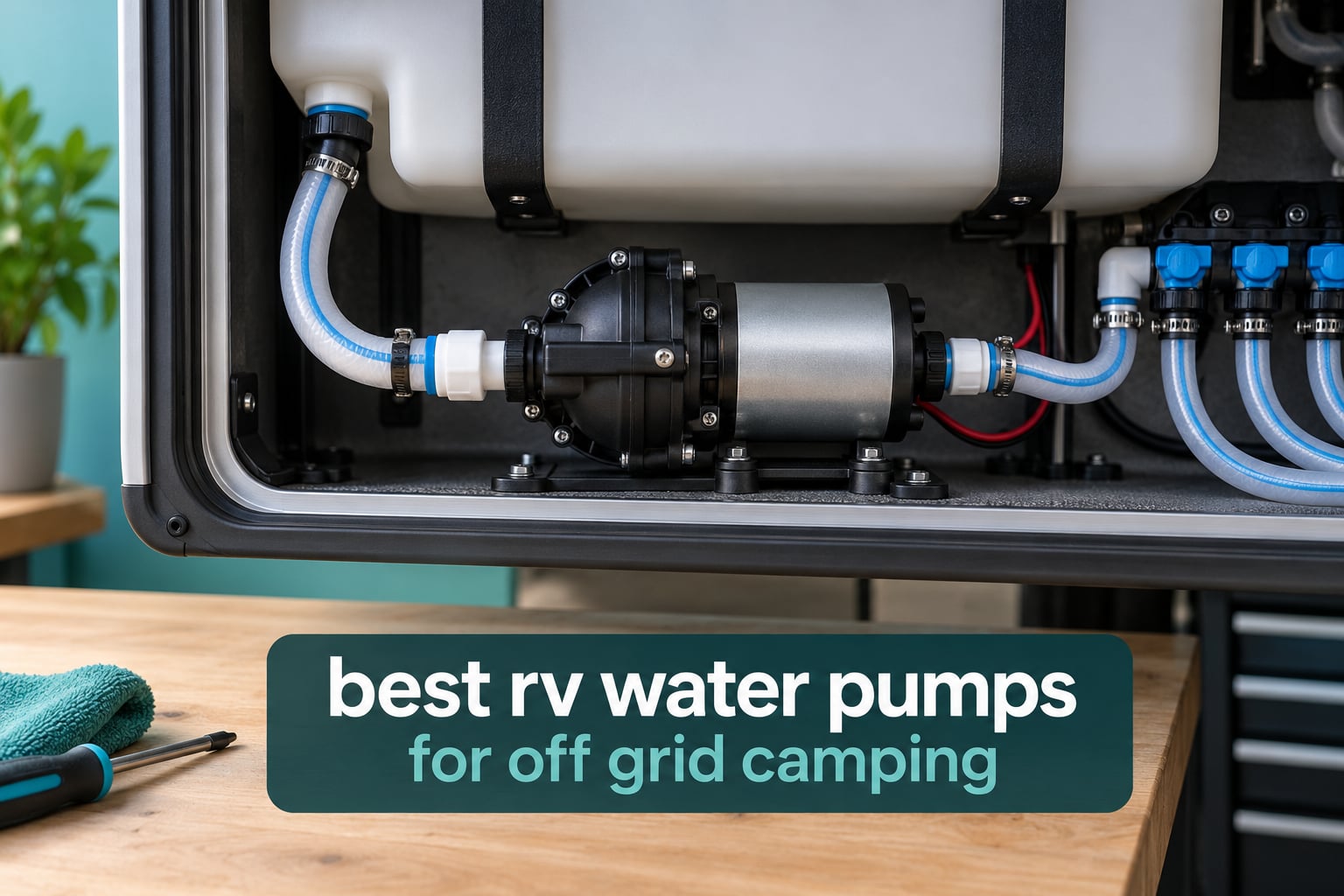
An RV water pump is a 12-volt DC diaphragm pump mounted under the camper that draws from the fresh water tank and pressurizes the plumbing to the sink, toilet and shower. Its pressure switch starts the motor when a faucet opens and stops it once the line reaches set pressure, so the pump only runs while water is actually moving.
That last detail is why the pump matters so much off-grid. There is no city water connection to fall back on at a dispersed site, and the pump is normally the highest-amperage 12V appliance on the rig. We compared ten of the most-proven models against published flow, pressure, draw, lift and duty-cycle figures to find the best RV water pumps for off grid camping.
Our criteria were simple. We wanted a real flow number in gallons per minute, a stated shut-off pressure, a published current draw where one exists, a self-priming lift that matches how people actually mount a tank, and dry-run or thermal protection so a forgotten faucet does not end the trip. We weighted reliability and warranty above raw flow, because a pump that stops mid-week in the backcountry costs you more than any extra half-gallon per minute.
A note on freshness: the most-read roundups on this topic are still built around superseded model numbers, so we re-checked every specification below against current manufacturer listings for 2026. If you are still shopping for the rest of your off-grid kit, our guides to portable 12V refrigerators and atmospheric water generators cover the other two appliances that decide how long you can sit still.
Table of Contents
Top 3 Picks for Off-Grid Water
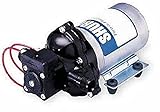
SHURFLO 2088-554-144
- 3.5 GPM
- 45 PSI
- 3-chamber diaphragm
- Thermally protected motor
- One-way check valve

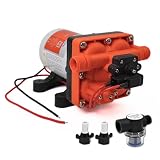
These three cover the three situations we see most. The SHURFLO 2088 has more service history behind it than anything else on this list, the RecPro is the cleanest drop-in swap for the ubiquitous 4008 mounting pattern, and the SEAFLO 42 is the pick when potable certification and a four-year warranty matter more than brand familiarity.
All 10 RV Water Pumps Compared in 2026
| Product | Specifications | Action |
|---|---|---|
| SHURFLO 2088-554-144 |
|
Check Latest Price |
 SHURFLO Revolution 4008-101-E65 SHURFLO Revolution 4008-101-E65 |
|
Check Latest Price |
| SEAFLO 42 Series |
|
Check Latest Price |
 ECO-WORTHY T33 ECO-WORTHY T33 |
|
Check Latest Price |
 SEAFLO 33 Series SEAFLO 33 Series |
|
Check Latest Price |
 MAXZONE 4.0 GPM MAXZONE 4.0 GPM |
|
Check Latest Price |
 Kohree 5.5 GPM Kohree 5.5 GPM |
|
Check Latest Price |
 DICMIC D420 DICMIC D420 |
|
Check Latest Price |
 SEAFLO 21 Series SEAFLO 21 Series |
|
Check Latest Price |
| RecPro 4008-101-A65 |
|
Check Latest Price |
Two patterns jump out of that table. First, the self-priming lift numbers fall into two distinct camps: the RV-specific pumps cluster around 4 to 6 feet, while the industrial and irrigation designs quote 98, 102 and even 1000 meters, which is marketing headroom rather than a real install constraint. Second, published current draw appears on only some listings, so treat any amp figure you cannot verify as unverified.
1. SHURFLO 2088-554-144 – The Most Proven 12V Workhorse
Precitrade Shurflo 2088-554-144 Fresh Water Pump, 12 Volts, 3.5 Gallons Per Minute, 45 Psi
3.5 GPM at 45 PSI
3-chamber positive displacement
4.8 pounds
12V DC
Pros
- Proven design with the largest review base in this roundup
- 3.5 GPM handles a shower and a sink together
- One-way check valve blocks reverse flow
- Thermally protected permanent magnet motor
- Metal construction in a compact 8.5 by 5 by 4.5 inch body
Cons
- Listing spec sheet shows a garbled 35 gpm flow figure alongside the 3.5 GPM headline
- 45 PSI shut-off is modest for a high-head shower head
- Draw is not published
- so battery budgeting needs a measured figure
With more than 6600 reviews averaging 4.6 stars, the 2088 is the pump we recommend when a customer asks for one answer. It is a positive displacement three-chamber diaphragm design rated at 3.5 GPM and 45 PSI, driven by a thermally protected permanent magnet motor. The one-way check valve stops the line draining back into the tank every time a faucet closes.
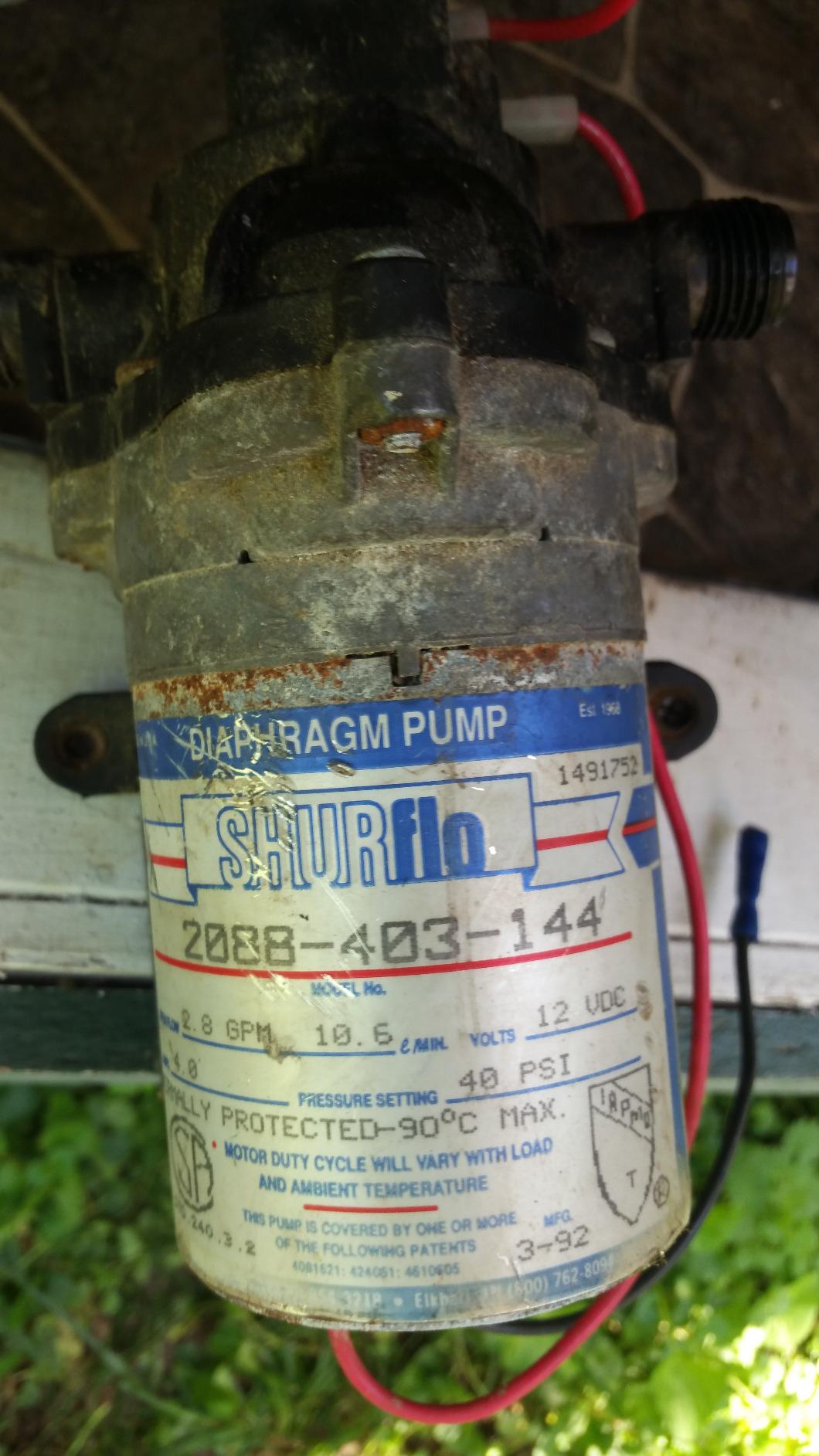
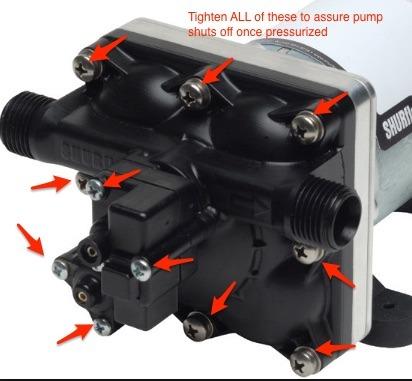
Owners describe it consistently as dependable rather than silent, a low growl that you notice less once the system is pressurized. That combination is exactly why it has stayed in service on so many coaches for so long. Airstream owners in particular have traced unusually loud versions of this same symptom back to loose mounting screws letting the rubber bushing resonate, not to a failing pump.
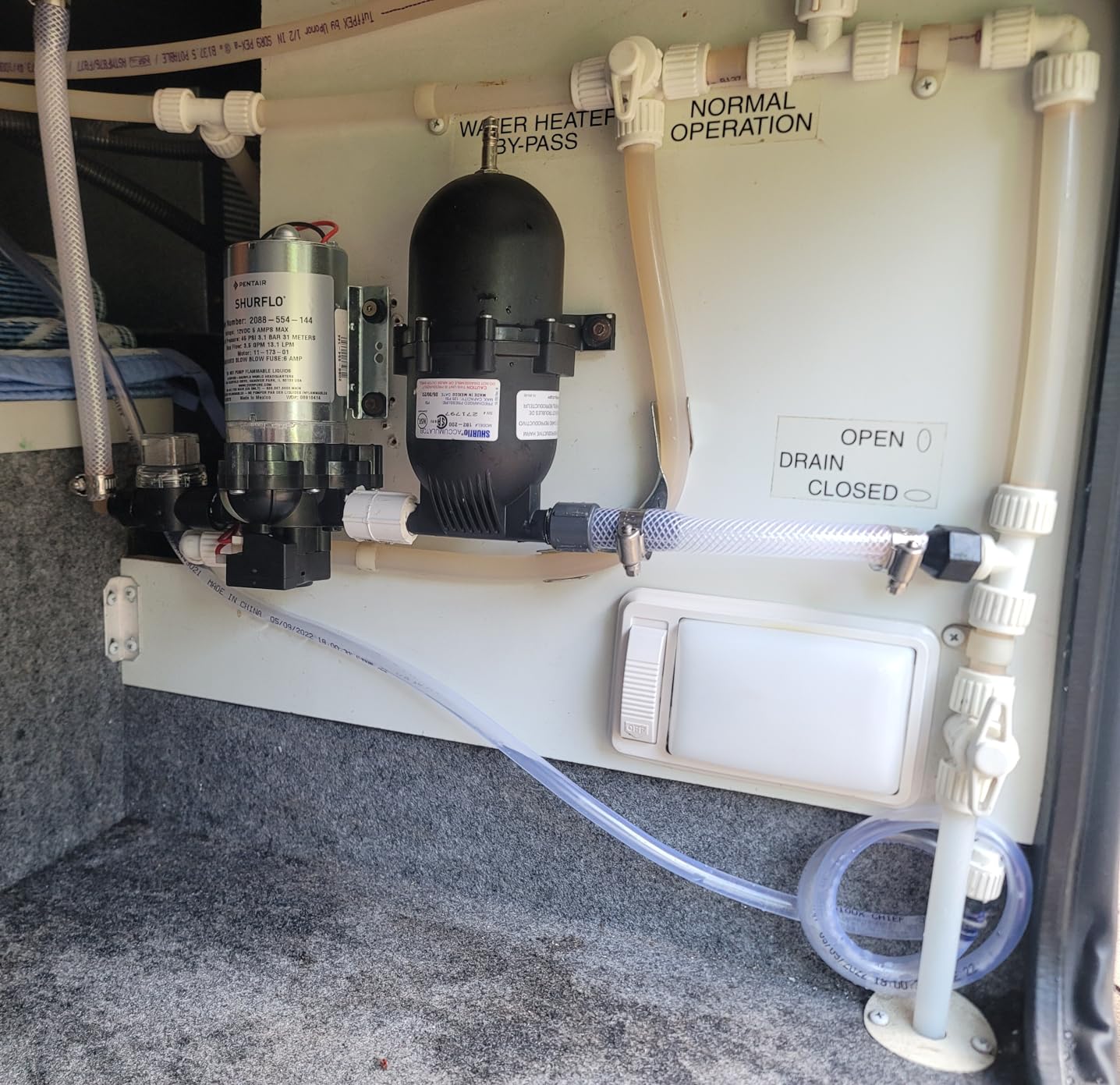
Our off-grid note is straightforward. This is a 12V DC unit drawing from your house bank, and the flow rating is high enough that a shower and a cold tap can run at once. On a 200Ah bank the running load is significant, so pair it with a small accumulator to cut the number of start cycles.
One thing to know before you buy: the published product details for this ASIN carry a flow_rate value that reads 35 gpm, almost certainly a typo carried over from the 3.5 GPM headline in the title. The physical specification is 3.5 GPM. The maximum lifting height field is listed at 12 feet, which again exceeds the usual RV norm and should be read as capability rather than a design requirement.
Who the 2088 suits
Full-time RVers who would rather not think about the pump and a family of two who both shower in the morning. Anyone replacing a failed 2088 or 2088-422-144 gets a direct behavioural match, and anyone with a battery bank of 200Ah or more has the capacity to absorb the running load without watching state of charge fall.
It also suits people who plan to keep the rig for years. The 2088 is the model most often carried as a spare because the pressure switch and diaphragm parts are widely available, and knowing the part number matters more off-grid than it does at a campground with a service bay down the road.
Where the 2088 falls short
45 PSI is modest if you have swapped in a high-head rain shower head that wants 50 PSI or more at the wand. In that case the water arrives at lower pressure than the fixture was designed for, and you either accept a softer spray or drop back to a lower-flow head.
It is also not the quietest option here. Reviewers consistently call it audible, and in a small van or a trailer with a bed directly above the plumbing bay, the growl carries. If sleeping through a partner’s shower is the priority rather than absolute reliability, look at the SHURFLO 4008 or the SEAFLO 33 further down.
2. SHURFLO Revolution 4008-101-E65 – The Quiet One
PENTAIR SHURFLO Revolution 4008-101-E65 RV Fresh Water Pump 12V 3.0 GPM 55 PSI Quiet Automatic Demand Diaphragm By-Pass Pump
3.0 GPM at 55 PSI
Self-priming to 6 ft
Run-dry capable
4.5 pounds
Pros
- Roughly 10x noise reduction reported against older Shurflo units
- Shuts off as soon as pressure builds
- Thick rubber feet damp vibration
- Low draw suits tank sensor panels
- Compact body fits a tight plumbing cabinet
Cons
- Pressure switch and bypass usually need tuning with a small Allen wrench after install
- Manual describes the adjustment but not clearly where the screws are
- Right-angle fittings are often needed on existing plumbing
- Costs more than most 3.0 GPM rivals
The Revolution 4008 is the upgrade most rigs deserve. It puts out 3.0 GPM at 55 PSI open flow from a body measuring 4.75 by 5.5 by 11.5 inches, which matters when your plumbing bay is the size of a shoebox. The internal bypass valve reduces short cycling, and the thermally protected motor is run-dry capable.
What separates it from the 2088 in daily use is the acoustic profile. Owners report an order of magnitude less noise than the older Revolution pumps, and the thick rubber mounting feet damp the vibration that otherwise travels up through the floor. Our team has found the difference obvious in a fiberglass van, where the older units rattle against the tub.
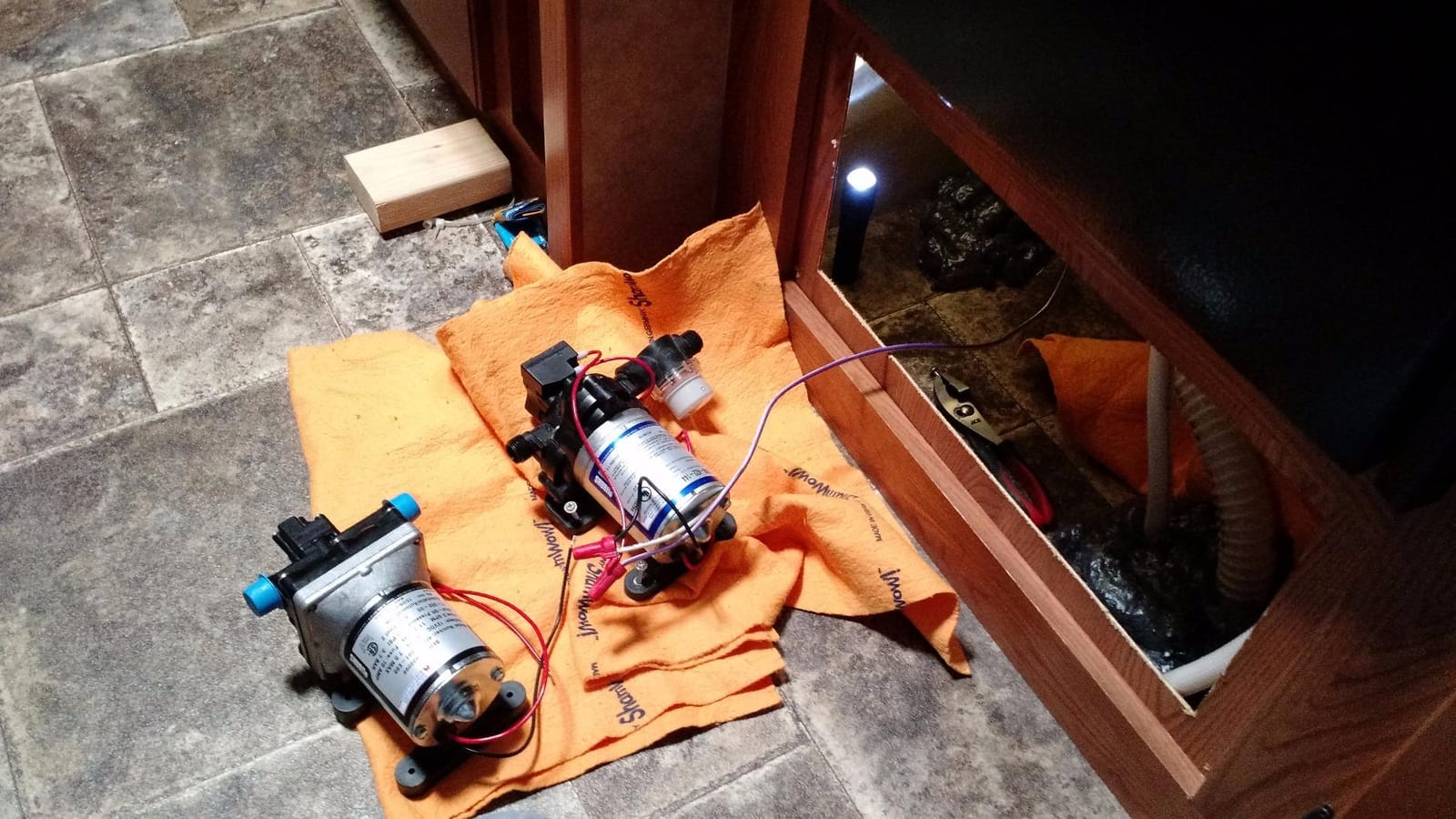
The build uses EPDM, polypropylene, Santoprene, stainless steel and zinc plated steel, which is a good sign for longevity in a damp bay. The listed best sellers rank puts it at number 6 in RV Water Pumps and Accessories, so it is genuinely moving units rather than sitting as a catalogue item.
Two practical notes for off-grid installers. First, expect to spend five minutes tuning the pressure switch after mounting, because the factory setting rarely matches an existing accumulator tank. Second, budget for right-angle adapters if your plumbing runs the old way, since the ports are positioned for compact mounting rather than for arbitrary hose routing.
Why the 4008 works for boondocking
Its low current draw is the headline. It pairs cleanly with SeeLevel-style tank sensor panels, and on a modest LiFePO4 bank the running load is short enough that an 8-minute shower is a rounding error rather than a battery event. Combined with the noise reduction, it is the pick for full-time living where a pump that wakes people up gets replaced.
It is also the mechanical opposite of a headache: it replaces common 4008 series units, so a swap in an existing cabinet rarely means moving a single line. For a van build starting from bare floor, plan the bay around its 11.5 inch height before you commit to a pump bay layout.
Where it disappoints
Price is the first thing people notice, since it commands more than most 3.0 GPM alternatives. That premium is difficult to defend on flow alone, because several cheaper pumps match the 3.0 GPM figure. What justifies it is the quietness, the bypass behaviour and the fact that the switch and bypass are adjustable rather than fixed.
The documentation is the weak point. The manual references the adjustment procedure without clearly showing where the screws sit, so first-time installers sometimes tune the wrong component and conclude the pump is faulty. If you are comfortable with a small Allen key it is a five-minute job; if you are not, ask at install time.
3. SEAFLO 42 Series – Certified Potable at 3.0 GPM
SEAFLO 42 Series 12V RV Water Pump, 3.0 GPM 55 PSI, 4-Year Warranty, On-Demand Fresh Water Pressure Pump with Bypass, Self-Priming for RVs, Boats, Marine & Off-Grid Use, UL Listed
3.0 GPM at 55 PSI
7.0A max draw
Self-priming to 6 ft
4.8 pounds
Pros
- Certified to NSF and ANSI CAN 61 and 372 plus NSF 24 and UL 778
- Continuous 3.0 GPM at 55 PSI suits several fixtures
- Self-priming to 6 ft and safe to run dry
- Internal bypass cuts short cycling and noise
- 4-year limited warranty
- Rubber base reduces vibration
Cons
- One-star share runs roughly 8 percent
- higher than the best in this category
- Fixed 55 PSI shut-off with no user adjustment
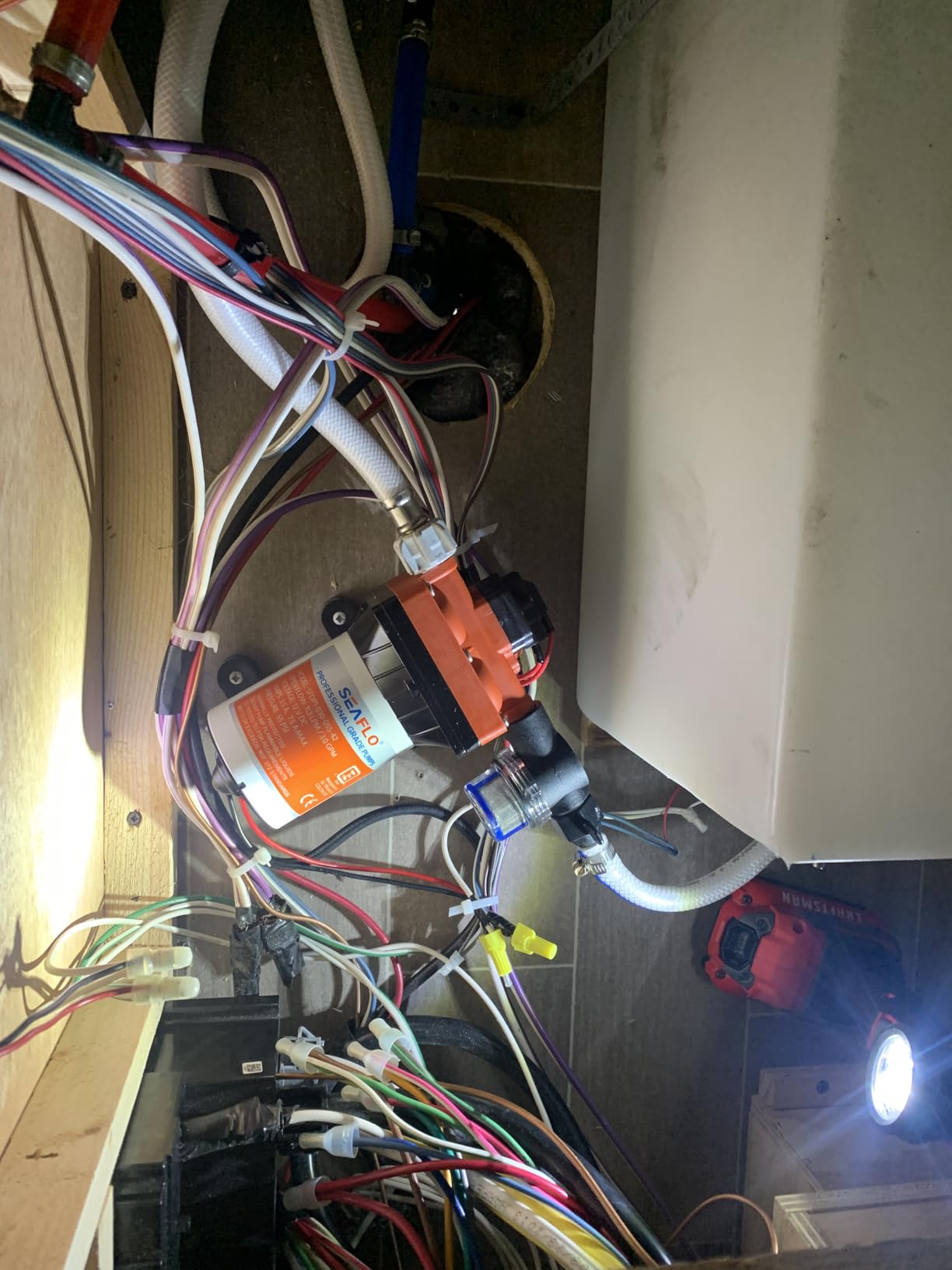
The SEAFLO 42, model SFDP1-030-055-42, is the pick when you want documented potable certification rather than a claim. It is certified to NSF/ANSI/CAN 61 and 372, NSF 24 and UL 778, built around a nylon pump head with a PPS cover, EPDM valves and seals, and a Santoprene diaphragm.
Specs are unambiguous: 3.0 GPM at 55 PSI, 7.0A maximum draw, self-priming to 6 feet, run-dry protection, and half-inch MNPT ports on an industry-standard mount footprint. The box includes a 51S01 strainer and a 51F01 fitting, so most installs need one extra elbow rather than a parts run.
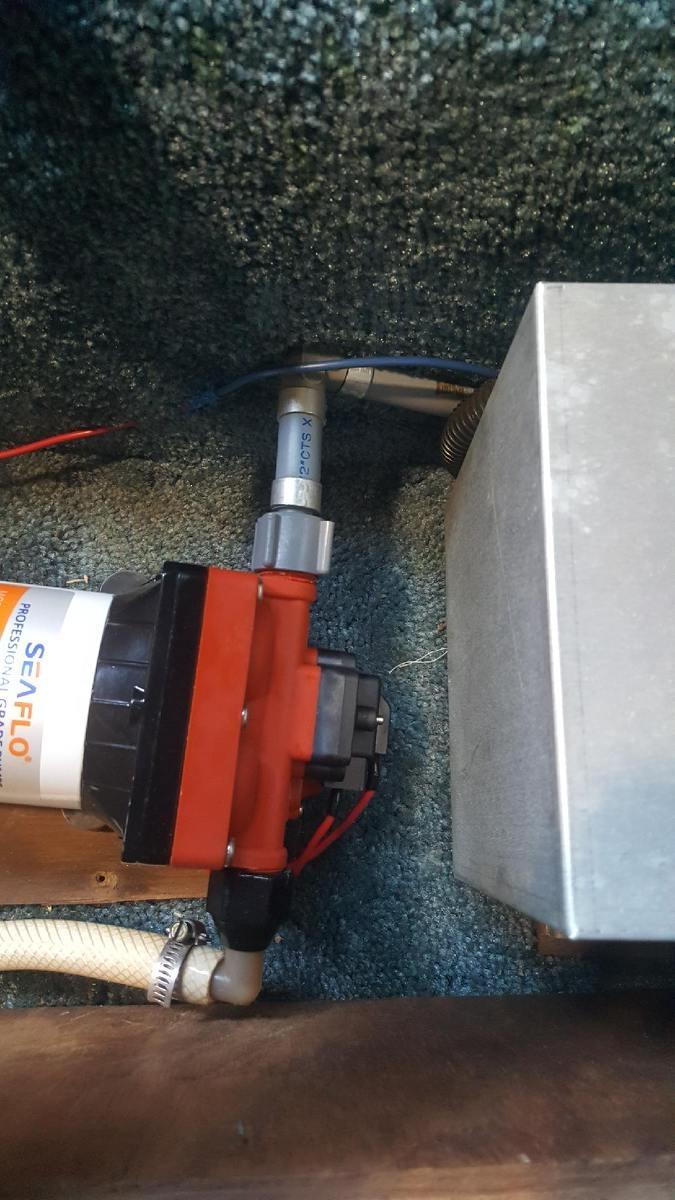
It ranks third in RV Water Pumps and Accessories with 2276 reviews at a 4.4 average and 75 percent five-star share, which is a good signal for a product sold in volume. The rubber mounting base is a small thing that makes a large difference in a small space, because most of the noise people blame on a pump is structure-borne vibration from the mounting feet.
For anyone running drinking water straight to a galley tap, the certification is the deciding factor rather than a nice-to-have. It is also a marine-grade choice in practice, since the listing names marine and off-grid use alongside RV.
When the certification earns its place
If your fresh tank gets filled from a creek, a campground spigot or a rain catchment, you are going to add a filter regardless, and a certified wet end keeps the conversation straightforward. It is also the right call for anyone who has had a plastic taste in their water and wants to know exactly what is in the wetted path.
At 3.0 GPM and 55 PSI this is a multi-fixture pump. It will carry a shower and a sink together, and the bypass keeps the pressure switch from hammering when you crack a tap for a glass of water, which is a real battery saving on a dispersed site.
What to watch
The 55 PSI shut-off is fixed rather than adjustable, so you cannot dial it down to protect a delicate fixture or to match an accumulator tank. On older plumbing with long runs and multiple outlets, that rigidity can mean more cycling than a pump with an adjustable switch.
Reviewers also flag a one-star share around 8 percent, which is normal for a high-volume product but worth noting. The recurring themes behind those reviews are shipping damage and pressure switch failures. Carrying a spare pressure switch on board is cheap insurance for any long trip.
4. ECO-WORTHY T33 – Adjustable Pressure and Deep Lift
ECO-WORTHY RV Fresh Water Pump 12V DC 3.5GPM 45PSI with Pressure Switch, 12Volt Self Priming Water Pressure Diaphragm Pump On demand for RV Yacht Camper Sprayer Food Truck Black
3.5 GPM at 45 PSI
6.0A max draw
Adjustable 35-80 PSI
Self-priming to 9.8 ft
Pros
- 3.5 GPM flow with generous vertical lift capability
- Pressure adjustable across a 35-80 PSI range
- Self-primes to 9.8 ft for flexible tank placement
- Thermal overload and dry-run protection built in
- 4-year manufacturer warranty
Cons
- Lowest average rating in this roundup at 4.2 with a 13 percent one-star share
- Some reports of rapid cycling under light demand
- Pressure range often needs tuning after installation
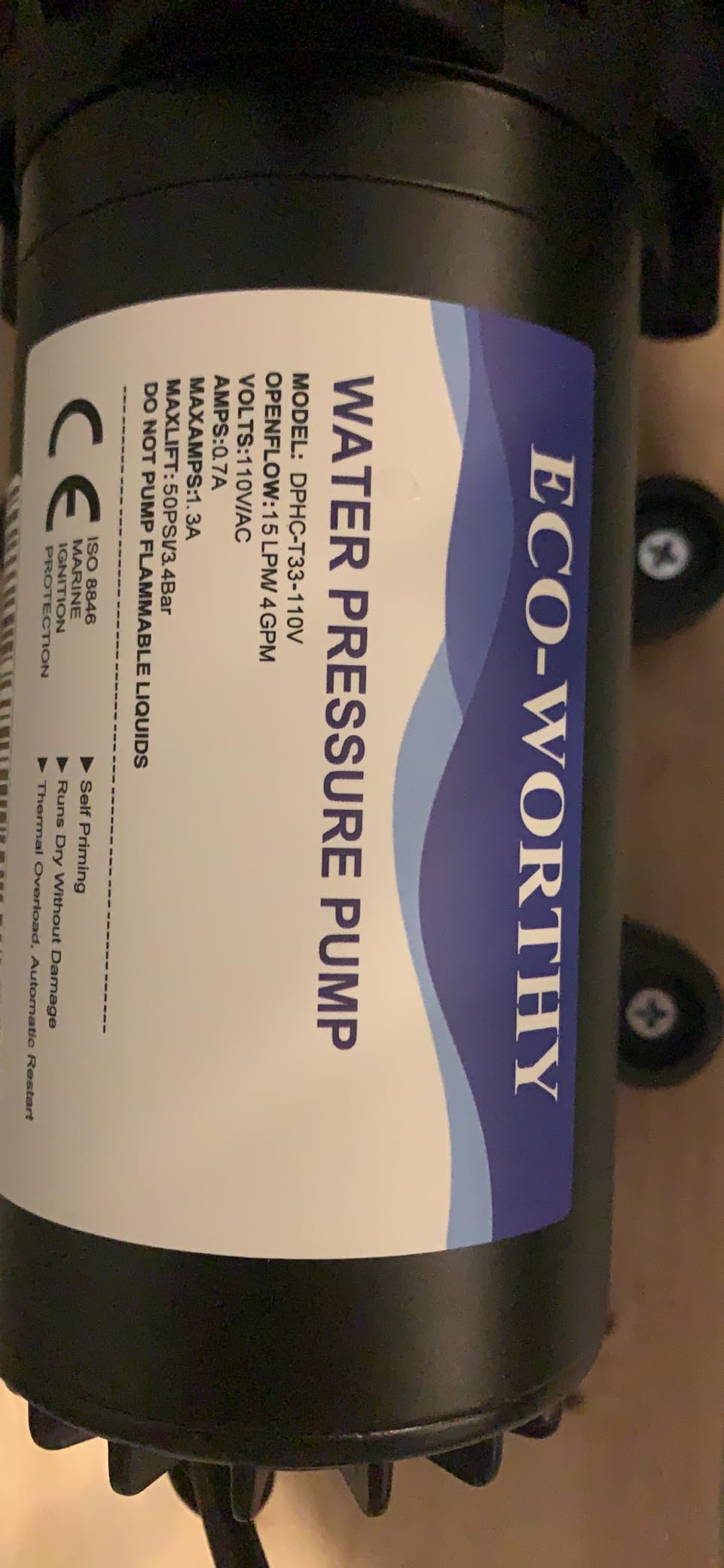
The ECO-WORTHY T33, model DPHC-T33-12V, is the adjustable-pressure option. It outputs 3.5 GPM with the pressure switch preset at 45 PSI, and the range can be tuned from 35 up to 80 PSI. Maximum draw is listed at 6.0A, which is the second lowest figure in this roundup.
The self-priming lift of 9.8 feet is the number that stands out. Almost every RV-specific pump in this list manages 4 to 6 feet, so the T33 gives you real flexibility when the tank sits under a dinette or in a raised service bay. The vertical lift capability is quoted up to 98 feet, which is a static rating rather than something you will ever use in a camper.
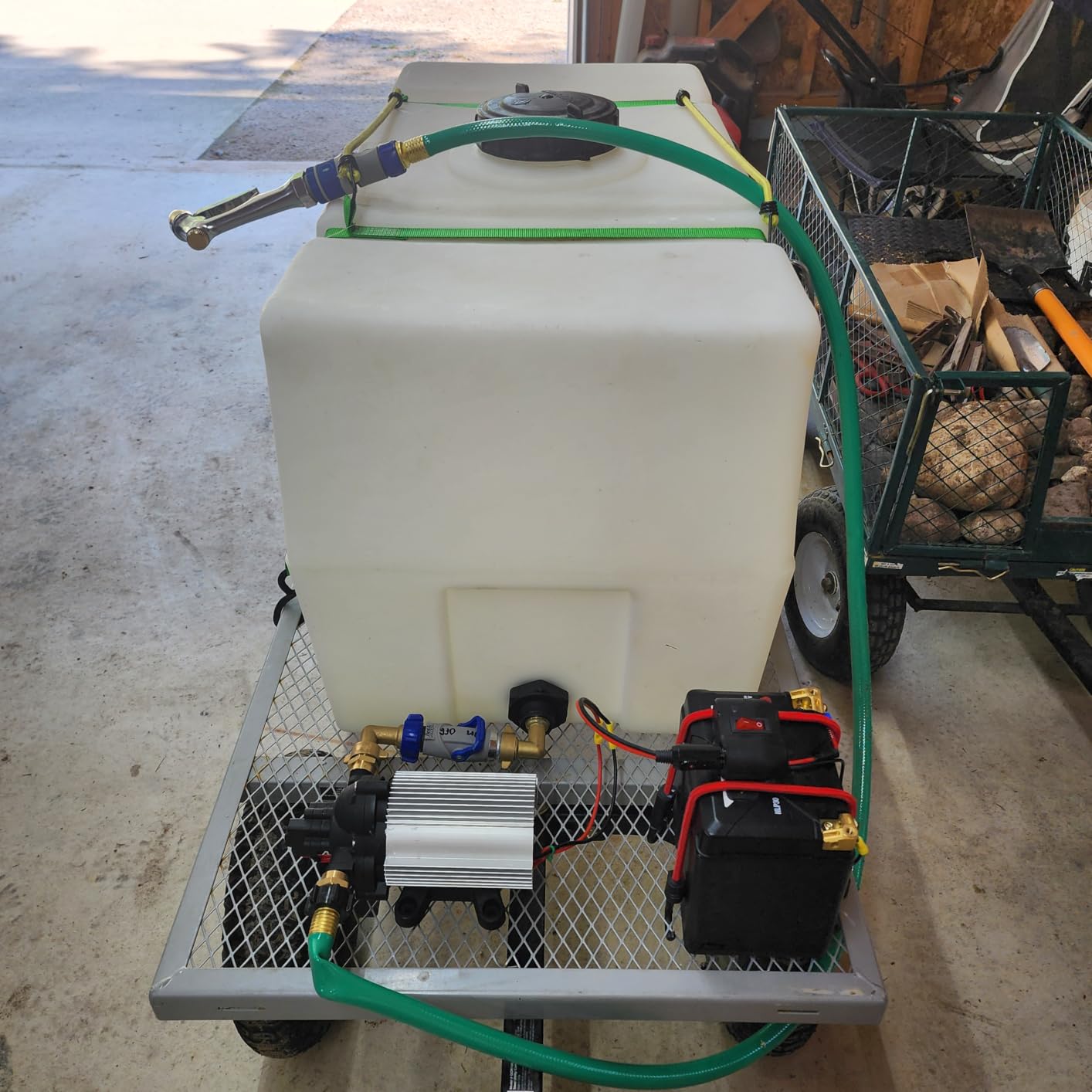
Thermal overload protection cuts out above 70C, and the pump is rated to run dry without damage, which matters when you are winterizing. The body is stainless steel at 4.9 pounds and 11.38 by 5.59 by 5.59 inches, so plan for a longer footprint than a Revolution series unit.
It ranks first in Diaphragm Pumps with 2831 reviews, so this is a heavily sold product. The 4.2 average is the lowest here, and a 13 percent one-star share is the highest, which is a fair trade to weigh against the adjustability.
Where adjustability pays off
People running long pipe runs in a bus or a large trailer hit a specific problem: the pump reaches its shut-off pressure before the far end of the system does, so the last tap is weak. Being able to drop the shut-off point into the mid-thirties with a screwdriver fixes a class of problems that no fixed-switch pump can address.
It is also a good pump to tune to an accumulator tank. If you have fitted a small pressure vessel to smooth cycling, the adjustable switch lets you set the cutoff to suit the tank instead of the other way around. At 6.0A it also sits comfortably on a modest solar and battery setup.
Where it frustrates owners
The rating tells the story. A meaningful minority of buyers report rapid short cycling under light demand, and some report early failure. Short cycling is the single biggest killer of diaphragm pumps because every start cycle wears the pressure switch, so if your rig has many small outlets, add an accumulator before you notice the problem.
Adjustability cuts both ways as well. Because the range spans 35 to 80 PSI, a unit left at the wrong setting will feel wrong, and a few reviewers report needing to tune it after install. If you want a pump that works correctly the first time without thinking about it, the SEAFLO 42 is the more predictable box.
5. SEAFLO 33 Series – Quiet Drop-In at 45 PSI
SEAFLO 33 series RV Water Pump – 12V, 3.0 GPM 45 PSI Diaphragm Pump, Self Priming On Demand Fresh Water Pump for RV Camper Boat Marine, Self Priming Pressure Pump, NSF UL 4-Year Warranty
3.0 GPM at 45 PSI
3-chamber, up to 4 fixtures
Self-priming to 6 ft
4.5 pounds
Pros
- Exceptionally quiet
- reviewers rate it below Jabsco and Shurflo units
- Rubber base minimizes vibration
- Includes strainer filter and two half-inch barb fittings
- 3-chamber design serves up to four fixtures
- 4-year warranty with thermal overload protection
Cons
- Some owners report shut-off below the advertised 45 PSI
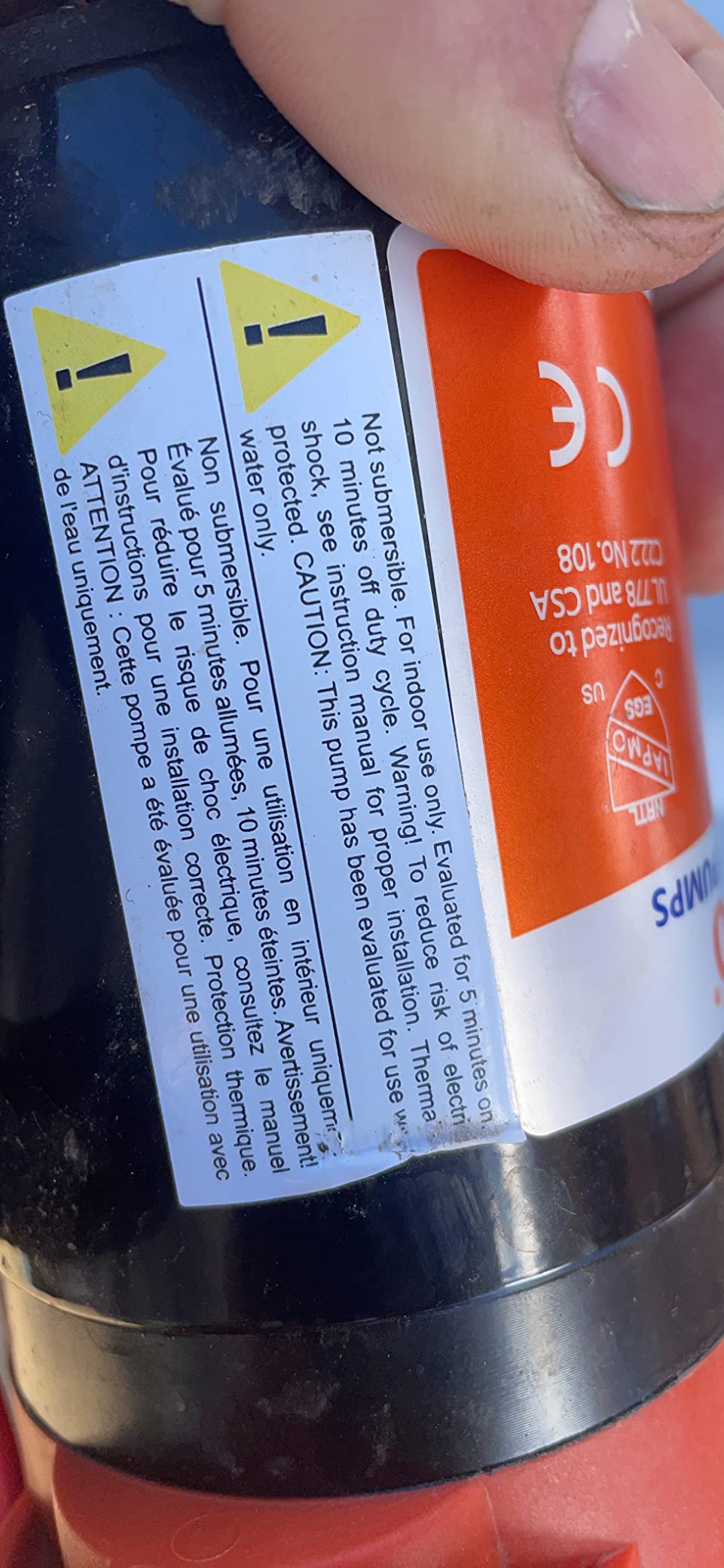
- Motor duty cycle limited to roughly 5-10 minutes on and off
- One report of a pressure switch that would not shut off
- Not freeze tolerant so winterizing matters
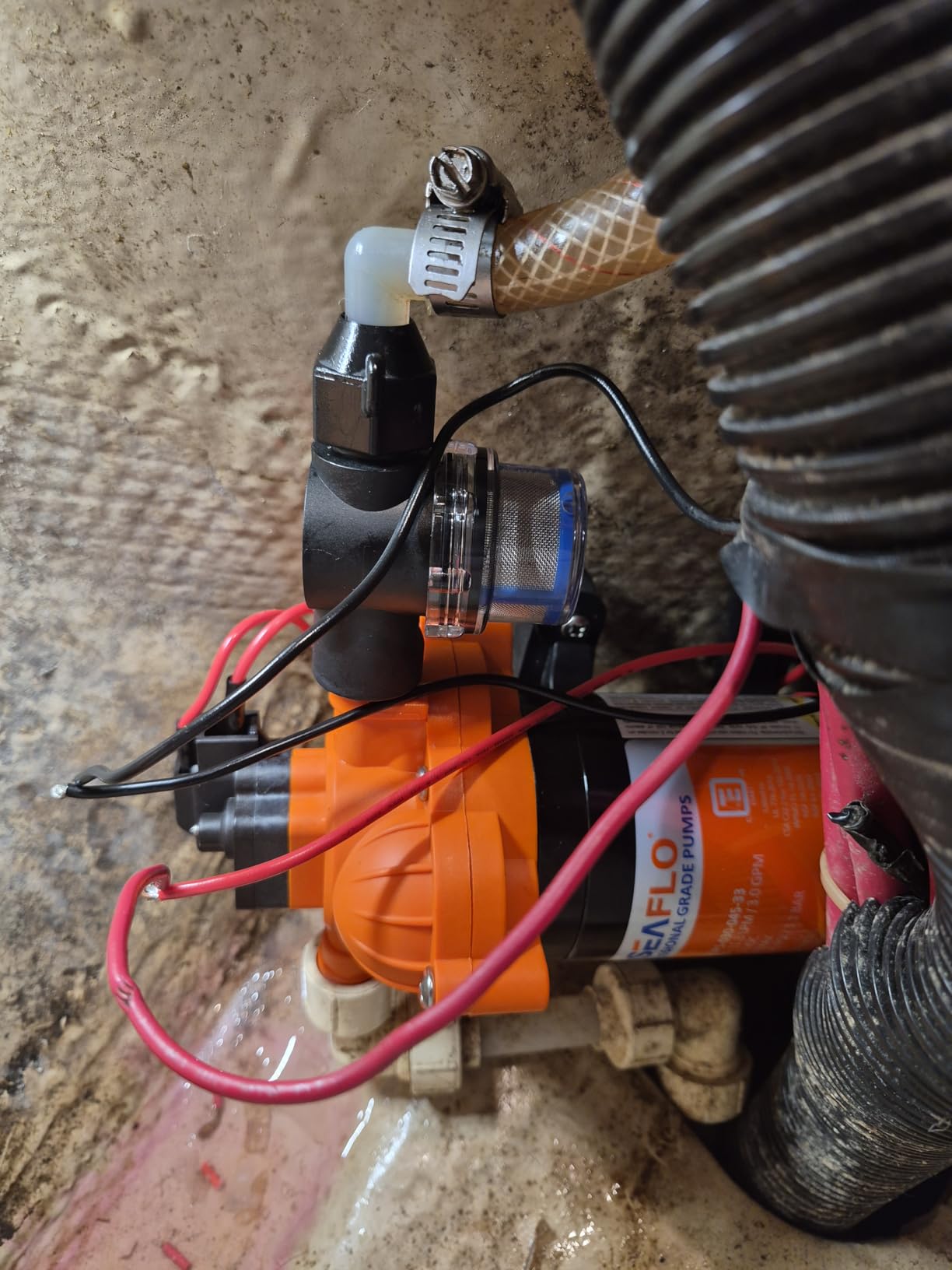
The SEAFLO 33, part number SFDP1-030-045-33, is the quiet one in the SEAFLO range. Reviewers consistently place it below the Jabsco and Shurflo pumps it replaces in noise terms, which is the metric most people actually care about. It runs 3.0 GPM open flow with a 45 PSI shut-off from a 4.5 pound polypropylene body.
Unlike the smaller 21 series, this is a three-chamber design and the manufacturer rates it for up to four fixtures. It is self-priming to 6 feet and run-dry capable, with EPDM valves, a Santoprene diaphragm and half-inch MNPT ports. The box includes a 51S01 filter, two 51F001 fittings and instructions.
At 594 reviews and a 4.4 average with 75 percent five-star, the sample is smaller than the 42 series but the sentiment is unusually consistent, which usually means the product does what the listing claims. It ranks first in Boat Water Pressure Pumps, and the marine heritage is obvious in the sealing and the 140F maximum recommended temperature.
It is a straightforward drop-in for the common RV and boat pump footprint, which means the swap is usually a 20-minute job with two bolts and two hoses. That simplicity is worth a lot when you are doing repairs in a parking lot rather than a workshop.
Why the duty cycle matters for boondockers
The listed motor duty cycle of roughly 5 to 10 minutes on followed by the same off is the single most important number on this product for a dispersed site. It means the 33 is built for household use, where nobody showers for half an hour, and not for filling a tank or running a long outdoor rinse.
For a couple or a solo camper with a normal shower, that is completely fine. If you have four people all showering after a long drive, or you use an outdoor shower on a hot afternoon, the pump will be working outside its comfort zone and the motor will run hot. In that case step up to a 4.0 or 5.5 GPM unit.
What reviewers flag
Two recurring caveats. Some owners measure actual shut-off pressure below the advertised 45 PSI, so if you need a precise figure for a pressure-regulated fixture, measure rather than assume. And one review reports a pressure switch that failed to shut off, which is the failure mode that drains a battery if you do not catch it.
Freeze tolerance is the third. Nothing in this category is freeze tolerant, and the SEAFLO 33 is no exception, so an unheated trailer in a cold snap needs a water heater or antifreeze in the wet bay. Drain-down is part of winterization, not an optional extra.
6. MAXZONE 4.0 GPM – High Flow for Wash-Down Work
RV Fresh Water Diaphragm Pump 12 Volt DC 4.0 GPM 50PSI, On Demand Self-priming Industrial Fresh Water Pressure Pump for Irrigation Boat Sprinkler Faucet Caranvan Marine Camper Sprayer
4.0 GPM at 50 PSI
8.0A max draw
Includes strainer and adapters
Self-priming
Pros
- 4.0 GPM flow available in a mid-range body
- Noticeably quieter than the pump it replaced for several owners
- Fits standard mounting footprints for a clean swap
- One owner reports 4 years of daily solar battery operation
Cons
- Durability is inconsistent with several reports of failure within weeks to months
- Short lead wires and mounting holes may not line up
- Spurs at the faucet without a small pressure tank
- Limited duty cycle under sustained heavy demand
The MAXZONE is a 4.0 GPM pump with the pressure switch preset at 50 PSI and 8.0A maximum draw. The 1.5A pressure switch is worth noting separately, because it is the part that actually decides whether your battery notices a faucet opening. Body material is iron, copper and nylon across 5.7 by 5 by 10 inches at 4.5 pounds.
It is not only an RV pump. The listing names irrigation, boat, caravan, marine, camper, sprayer and wash-down applications, and the box includes a 50 mesh inlet strainer plus two half-inch barbed hose adapters. That combination makes it the sensible choice if you want one pump for domestic water and an outdoor rinse tap.
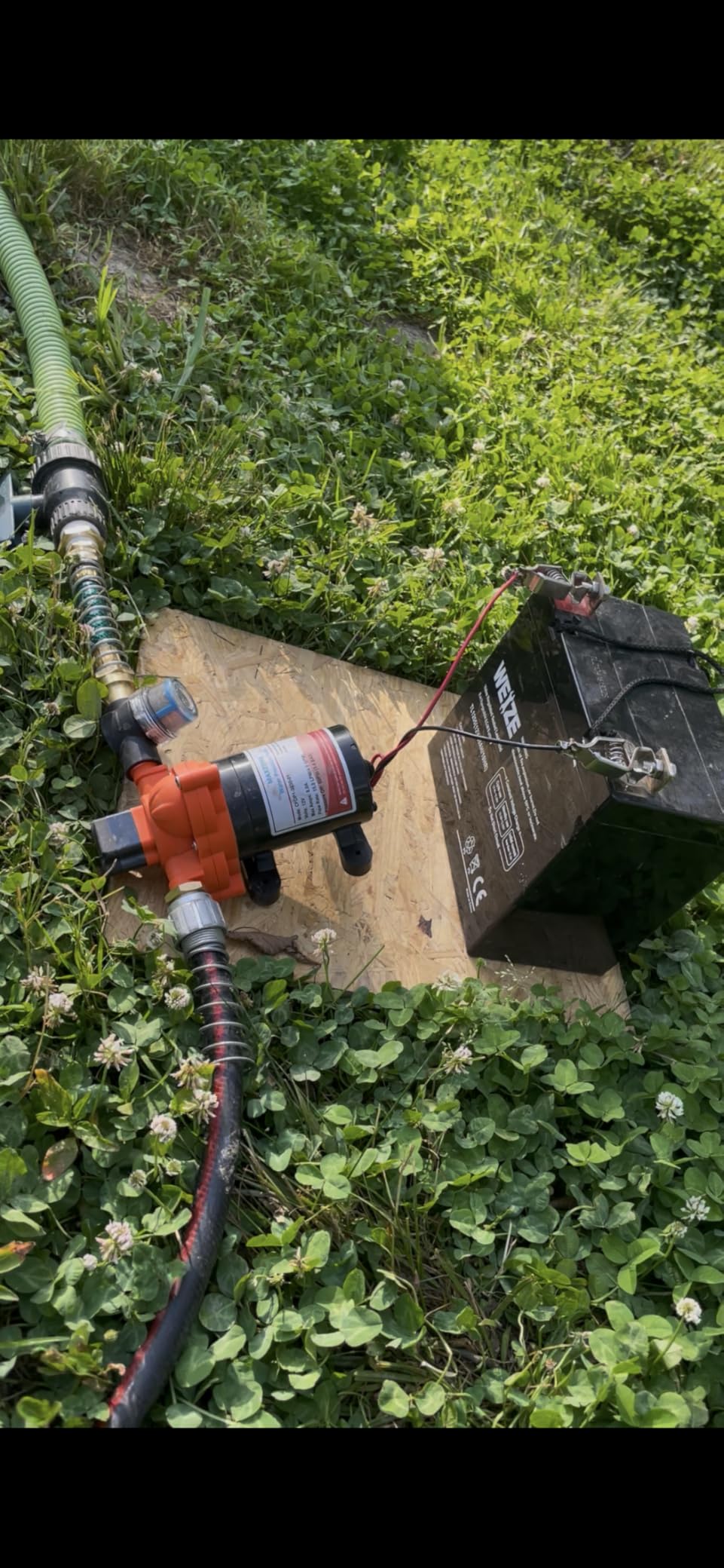
One owner reports four years of daily operation on a solar-charged battery, and that is exactly the scenario this category should be judged on: daily use, unattended charging, no workshop nearby. Several others found the same pump noticeably quieter than the unit they replaced, so the noise complaint is not universal here.
Maximum inlet pressure is listed at 30 PSI, which is a good reason to fit a check valve if you ever tee this into a municipal line. Self-priming is quoted to 102 feet, again a static capability figure rather than an install target.
Best used for more than showers
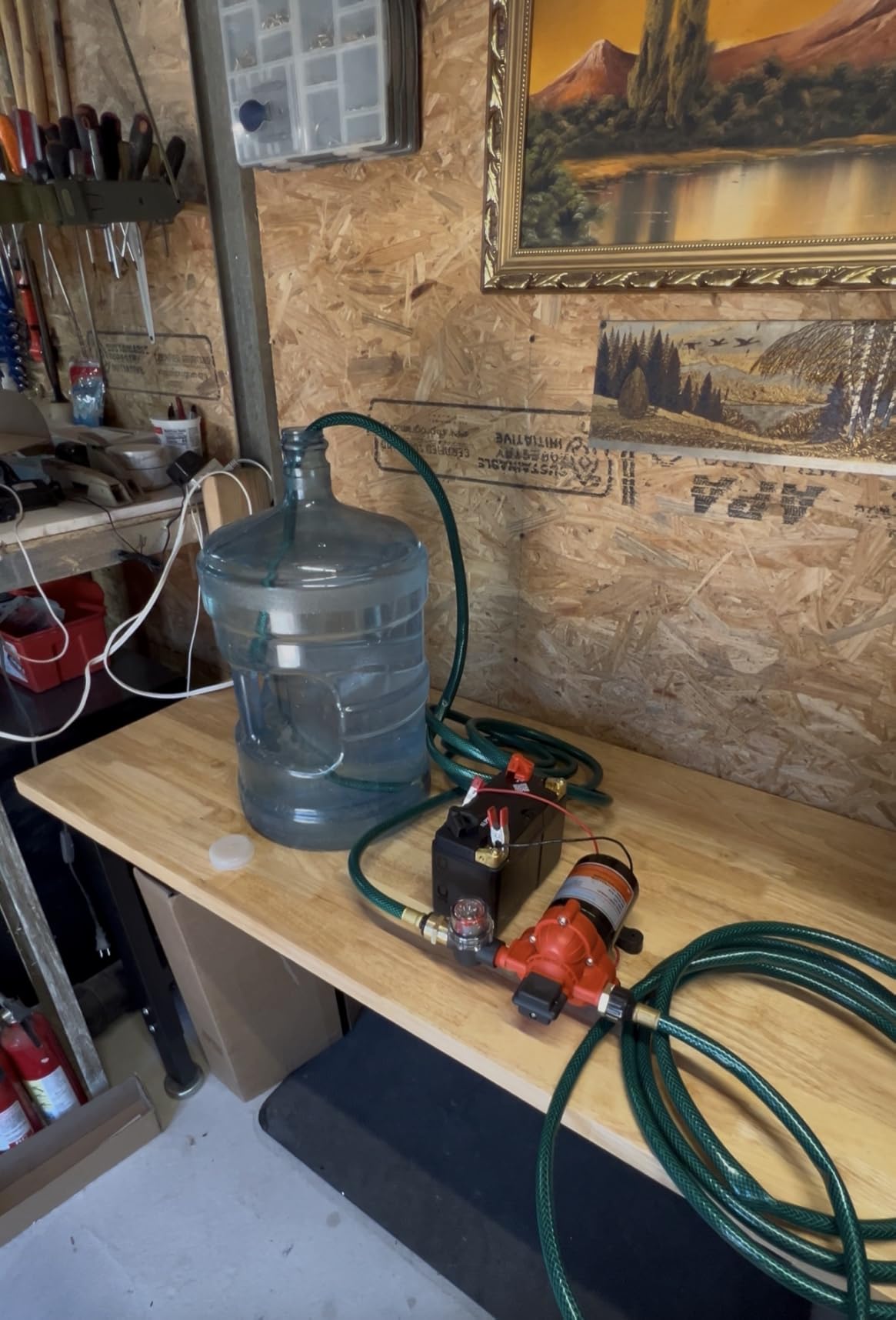
If your water needs go beyond a sink and a shower, this is where 4.0 GPM earns its place. Rinsing off after a ride, washing a dog, hosing down gear or running a portable camp shower for two people at once all benefit from flow that a 3.0 GPM unit simply cannot deliver. The included barb adapters make temporary hose hookups painless.
It is also a reasonable choice for a fixer-upper where the existing plumbing is not worth matching exactly, because it fits standard footprints. Nothing about it requires a bespoke bay, and the strainer in the box protects the inlet from the debris that ends up in a creek draw.
Why durability is the concern
Across 539 reviews at a 4.4 average, the split is clear. Several one-star reviews report failure within weeks or months, and the pattern is consistent enough that we would treat this as a pump to carry a spare of rather than the only pump on a full-time rig. The 4-year service report from one owner shows it can last, but the variance is the issue.
Two smaller problems worth knowing. The lead wires are short and the mounting holes may not match your tank or panel, so plan a longer harness. And the pump spurs at the faucet unless you add a small pressure tank, which is a cheap fix that also extends switch life.
7. Kohree 5.5 GPM – For Running Two Fixtures at Once
Kohree 12V RV Water Pump 5.5GPM 55 PSI, Self-Priming Diaphragm Pump
5.5 GPM at 55 PSI
8.0A draw
Self-priming to 3 meters
6.1 pounds
Pros
- Highest flow rating in this roundup at 5.5 GPM
- Drop-in compatible with the common 4008-101-A65 and E65 mounts
- Hose adapters
- inlet filter and Teflon tape included in the box
- Self-primes to 3 meters for flexible tank placement
Cons
- Heaviest unit in this roundup at 6.1 pounds
- Only a 1-year manufacturer warranty against SEAFLO's 4 years
- Some buyers report pulsing flow that needs an accumulator tank
- A small share of reviews report early motor failure
The Kohree HY1734 is the flow leader here at 5.5 GPM open flow with a 55 PSI pressure switch and 8.0A draw. What makes it interesting for a van conversion is the compatibility line: it is built as a replacement for the 4008-101-A65 and 4008-101-E65, two of the most common pumps in North American campers.
At 407 reviews and 4.3 stars, the sample is modest but the positioning is clear. The included kit is unusually generous: hose adapters, an inlet filter and a strip of Teflon tape, which covers everything except the fittings you need to match your existing plumbing. It is CE certified for RV fresh water and marine applications.
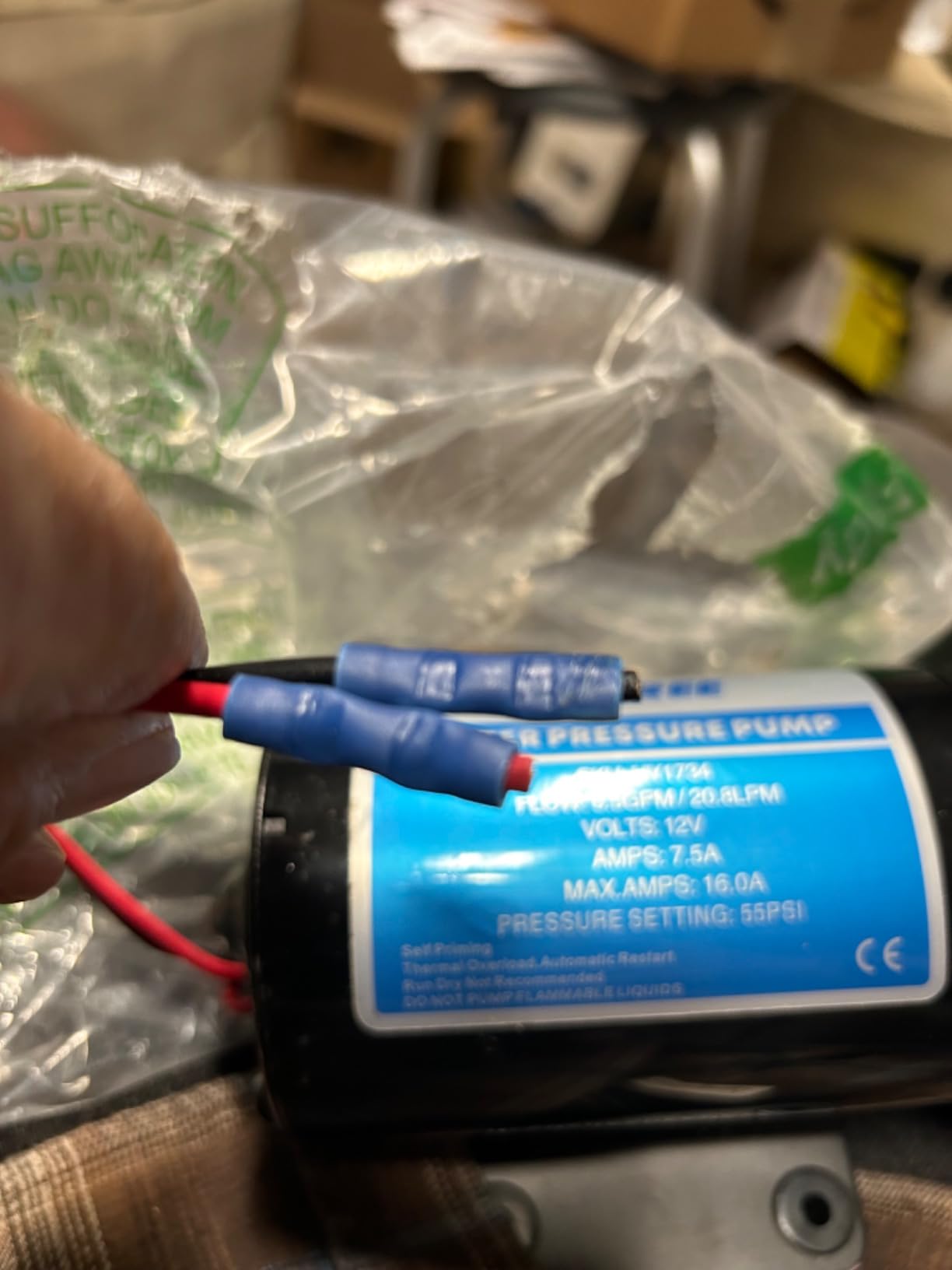
Self-priming to 3 meters gives you about 10 feet of suction lift, roughly double the RV-specific pumps, so a tank mounted low or a long suction run is not a problem. The polypropylene body is the largest in this roundup at 12.01 by 5.51 by 4.92 inches and 6.1 pounds, so it is not for a tight van floor.
Owners who came from a 4008 report a direct swap with no plumbing changes. That is a real advantage over chasing raw flow elsewhere, because the alternative is usually re-plumbing a bay you do not want to touch.
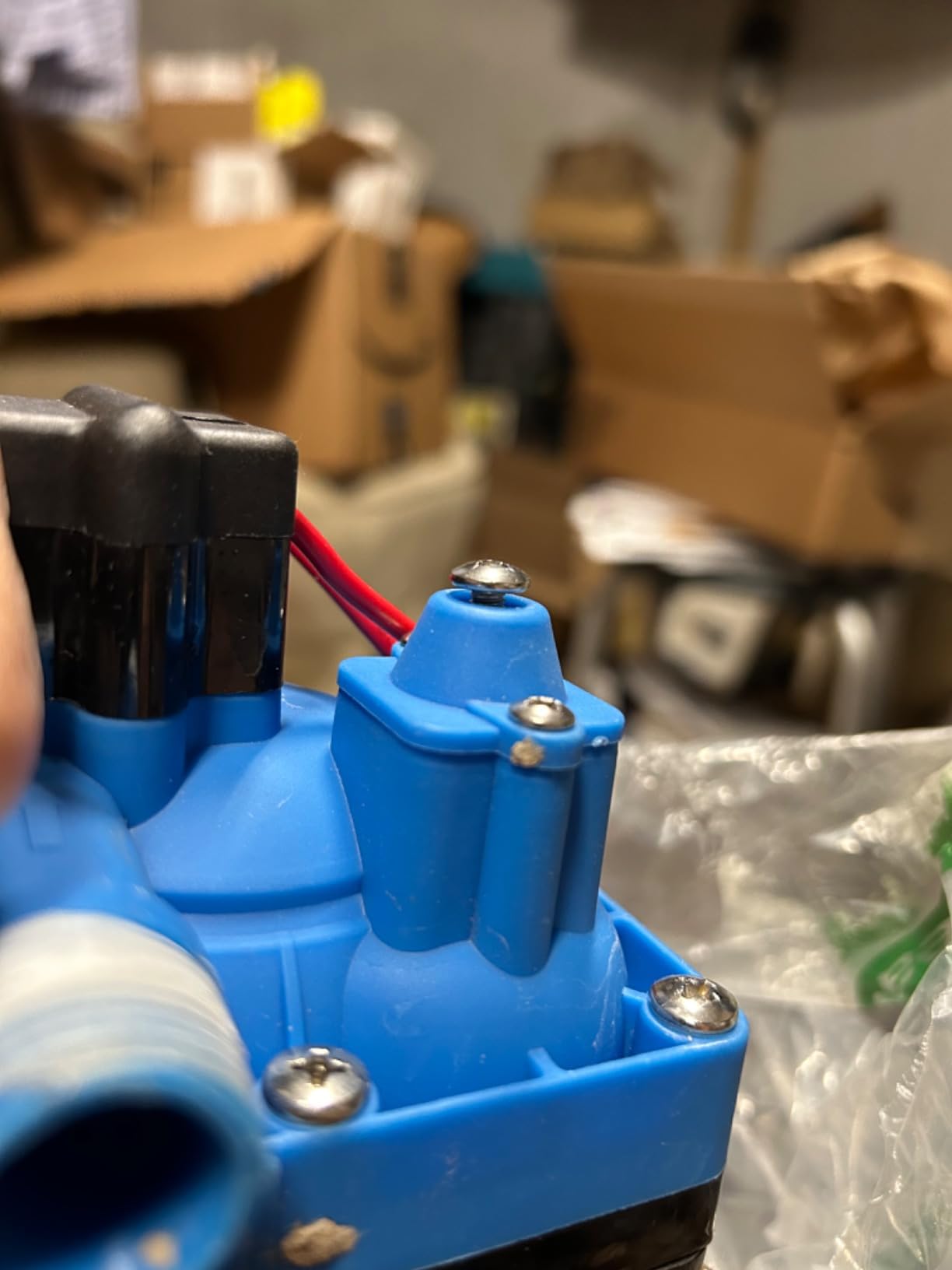
Who actually needs 5.5 GPM
Two fixtures at once. A shower and a kitchen tap running together, or a shower plus an outdoor rinse. If you are a family of four who all shower in a narrow window, this is the flow that keeps the morning from turning into a queue. Below that level of demand, the extra flow is capacity you pay for in amps and never use.
Because it drops into the 4008 mount, it also makes sense as a capacity upgrade on an existing coach rather than a full re-plumb. Check your bay depth first, because the 12 inch length is the trade you make for the flow.
What the warranty gap means
A one-year manufacturer warranty against four years from SEAFLO is the single biggest gap in this list, and on an off-grid trip that gap is expensive. Warranty length is a reasonable proxy for how long a manufacturer expects the product to last and how confident it is in the seals and the motor, and buyers are right to notice it.
Some buyers also report pulsing flow that only resolves once an accumulator tank is fitted, and a small share report early motor failure. With an 8.0A draw and no adjustable switch, budget for a pressure vessel and carry a spare switch if this is your only pump.
8. DICMIC D420 – The Exact 4008 Mounting Fit
RV Water Pump, 12V DC 3.0 GPM 55 PSI, Self-Priming Diaphragm Pressure Pump
3.0 GPM at 55 PSI
7.5A draw
Replaces 4008-101-A65 and E65
2.17 kg
Pros
- Exact drop-in replacement for 4008-101-A65 and E65 mounting holes
- One-piece diaphragm with internal bypass and built-in check valve
- Includes the fittings and hardware needed for a direct swap
- Strong and efficient pressure at 4.6 stars with 81 percent five-star reviews
Cons
- Louder and more vibration-prone than the pump it replaced in at least one install
- No explicit warranty length listed in the product details
The DICMIC D420 does one job and does it precisely. It is a 3.0 GPM, 55 PSI, 7.5A diaphragm pump listed as a replacement for Shurflo part numbers 4008-101-A65 and 4008-101-E65, and reviewers confirm the mounting holes line up exactly rather than approximately.
That accuracy is the whole proposition. A one-piece diaphragm with an internal bypass and a built-in check valve is a simpler assembly than a multi-piece design, and the bypass is what stops the rapid cycling that wears a pressure switch out. The pump is thermally protected and safe to run dry.
When the exact fit matters more than refinement
It matters when you are on the road with a failed pump and no workshop, or when your plumbing cabinet is physically too small for anything else. Bring the pump, two bolts and two hoses, and you are running water again. For van builders working from a floor plan, a known footprint is worth more than a specification sheet.
The 7.5A draw is mid-range, so on a typical 200Ah bank it sits between the 4008 and the high-flow pumps. For a couple or a solo camper with one shower at a time, that is the right weight of appliance.
Where it falls behind the original
At least one reviewer reports this being louder and more vibration-prone than the pump it replaced, and specifically calls it out as noticeable when mounted under a bed. That is the single most-cited flaw and it is worth taking seriously in a van, because mounting location fixes it more reliably than any pump swap.
There is also no stated warranty length in the listing. That is a genuine information gap on a part you are relying on far from a dealer, so confirm coverage before you commit if this is your primary pump.
9. SEAFLO 21 Series – The Small Battery Bank Choice
SEAFLO 21 Series Water Pressure Diaphragm Pump – 12V DC, 1.2 GPM, 35 PSI, Adjustable Pressure Switch, Self-Priming, Quiet Operation, Durable Compact Design for RV, Boat, Off-Grid Use – 4-Year Warranty
1.2 GPM at 35 PSI
4.0A draw
Self-priming to 4 ft
1.3 pounds
Pros
- Very low 4.0A draw suits solar and small battery banks
- Compact at 1.3 pounds for van builds and marine galleys
- Runs about as quiet as a room fan thanks to rubber isolation feet
- Adjustable shut-off pressure protects fixtures and reduces cycling
- NSF and ANSI CAN 61 and 372 certified with a 4-year warranty
Cons
- 1.2 GPM only covers a single sink or light fixture
- Not suitable for a shower or multiple fixtures at once
- Three-eighth inch barb ports are smaller than the half-inch MNPT most RV plumbing uses
The SEAFLO 21, part SFDP1-012-035-21, is the pump for rigs where power matters more than pressure. It moves 1.2 GPM to a 35 PSI adjustable shut-off while drawing only 4.0A, which is roughly half what most of this list pulls, and it weighs 1.3 pounds across 6.65 by 3.94 by 2.44 inches.
It is self-priming to 4 feet, run-dry safe with thermal protection, and rated for intermittent duty with a 140F maximum. It is also certified to NSF/ANSI/CAN 61 and 372 and NSF 24, ignition protected, and backed by a four-year warranty. That combination of certification and low draw is rare at this end of the market.
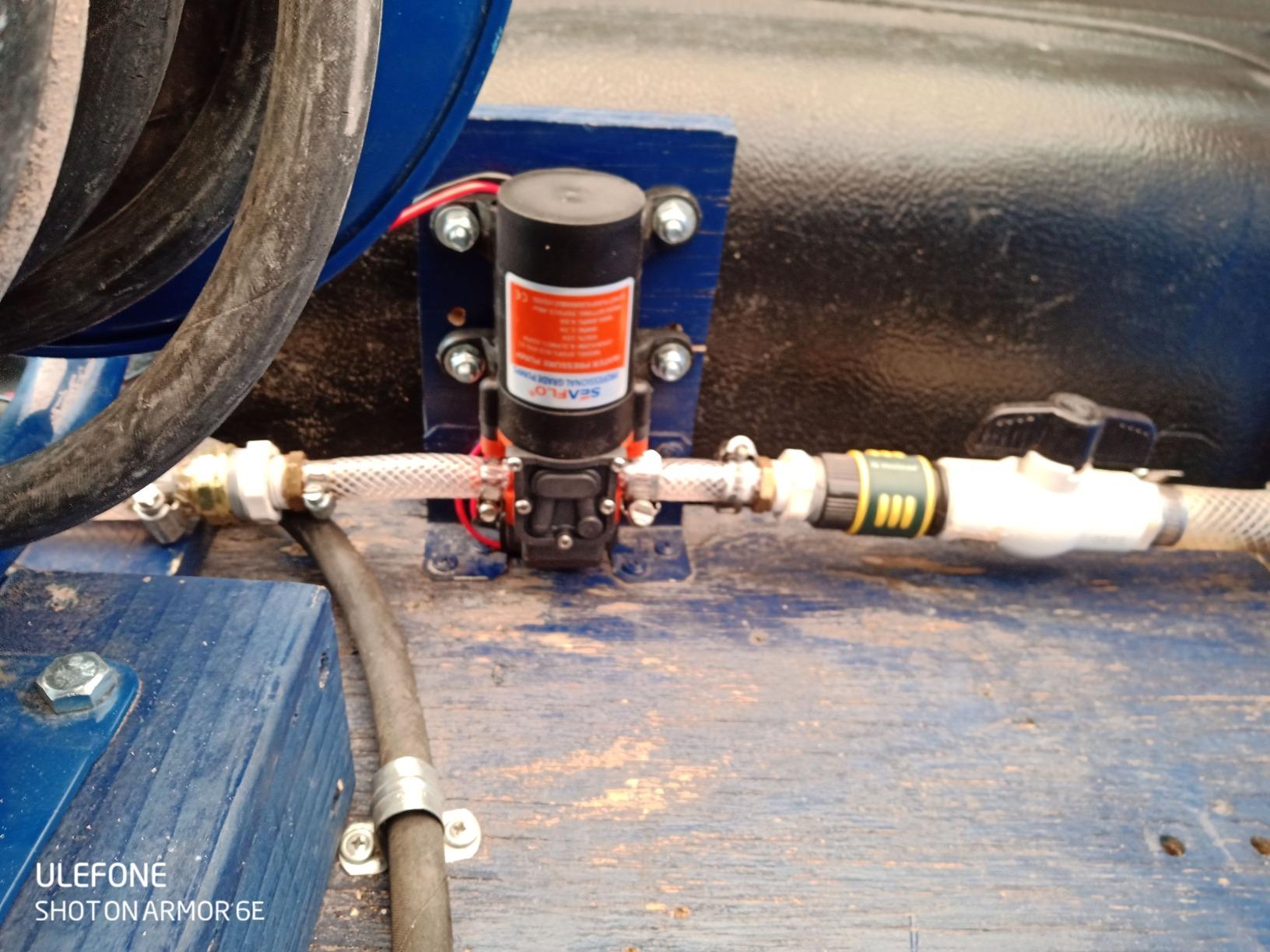
The rubber isolation feet are what produce the reported near-silent running, comparable to a room fan rather than a diaphragm growl. With 1870 reviews at 4.3 stars and 70 percent five-star, it is a well-sold unit that holds a middling average, which usually reflects a flow ceiling rather than a quality problem.
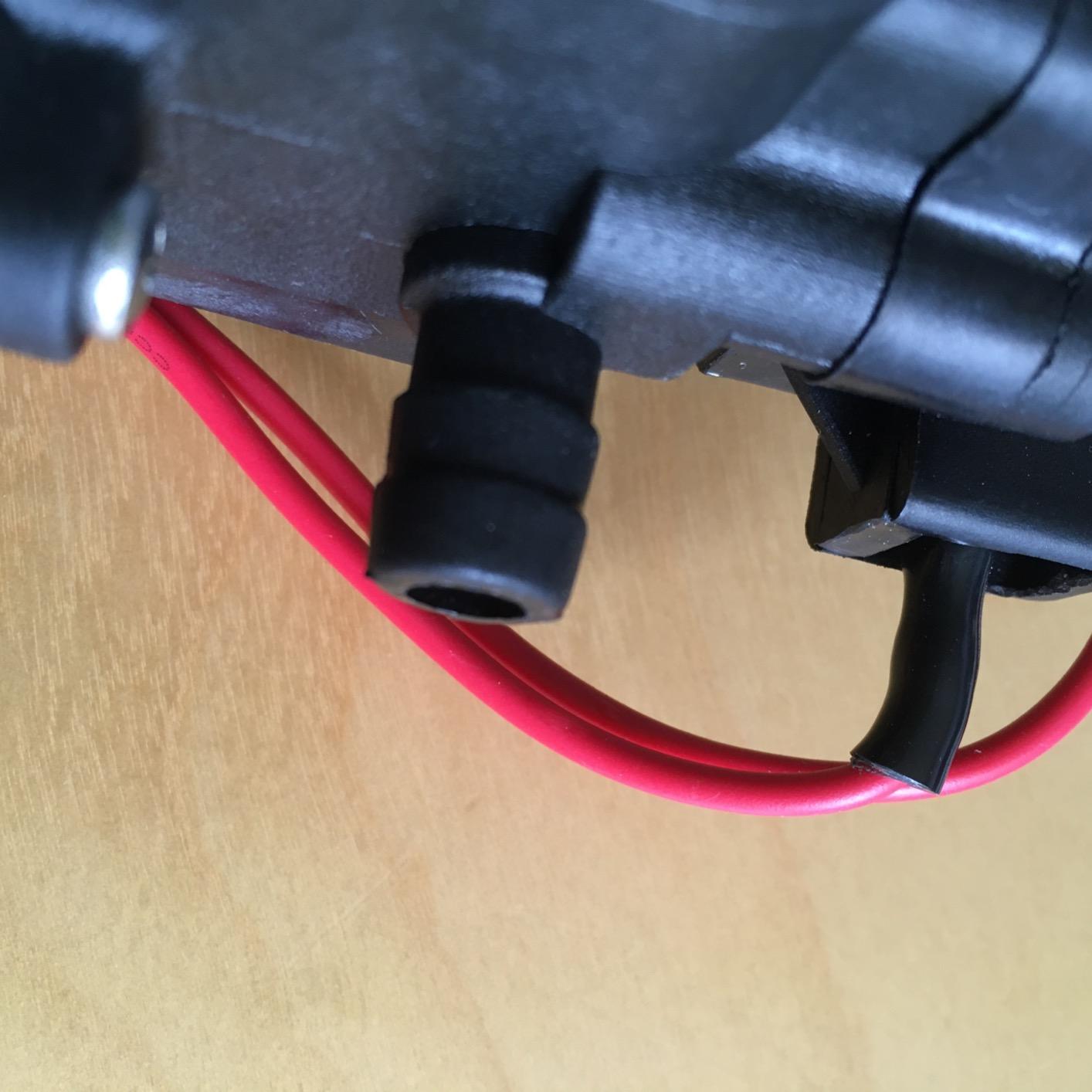
The wiring detail is worth noting for a solar build: it comes with 18 AWG leads 13 inches long on a two-pin connection rather than a house-style plug, so you are wiring it permanently rather than plugging it into a socket.
Where 1.2 GPM is genuinely enough
A handwashing tap, a galley sink, a marine basin, an outdoor camp shower used by one person at a time, or a small cabin fed by an in-ground tank. Community consensus on off-grid forums is that a standard 12V pump of this class is sufficient for a tiny house where nobody expects a full shower pressure.
The maths is the reason to like it. At 4.0A, the running load is small enough that a modest panel array and a small bank keep up, which is exactly the constraint that decides whether a solar-only build is pleasant or frustrating. It is also the easiest pump here to mount in a tight service space.
Why it will disappoint you if you expect a shower
1.2 GPM is a trickle at a shower head, and no amount of accumulator tanking changes that because the limitation is the pump, not the pressure. Buyers expecting shower service rate this accordingly, and that is a fair reaction to a mismatch rather than a defect.
The three-eighth inch barb ports are also smaller than the half-inch MNPT used by most RV plumbing, so you will need adapters to mate it into an existing RV system. Confirm your port sizes before ordering, because that conversion is the only fiddly part of an otherwise simple install.
10. RecPro 4008-101-A65 – Direct Swap, Quiet and Dry-Run Safe
RecPro RV Water Pump Direct Replacement for Shurflo 4008-101-A65 3.0 GPM 12V Self-Prime Camper Water Pump
3.0 GPM at 55 PSI
45 PSI shut-off
Self-priming to 9 ft
Built-in check valve
Pros
- True direct replacement for the 4008-101-A65 that fits existing mounts
- Very quiet with low current draw for battery and solar systems
- Runs dry safe and thermally protected
- Handles a shower head and aerated faucet better than low-flow replacements
- 3799 reviews at 4.6 stars with 80 percent five-star
Cons
- Ships without retail packaging
- Costs more than generic aftermarket equivalents
- Bypass pressure can sit above the switch setting on some plumbing
The RecPro is a rebuild of the Revolution pattern rather than a copy of the label, and it takes the same part numbers, 4008-101-A65 and 4008-101-E65, which are the same pump. It runs 3.0 GPM at about 55 PSI with shut-off at 45 PSI, self-primes to 9 feet, and measures 4.9 by 4.3 by 8.1 inches.
The one-piece diaphragm with internal bypass is the design feature that matters most over a long life. It stops the rapid cycling that kills cheaper pumps, and the built-in check valve prevents backflow into the fresh tank, which is what causes that tell-tale trickle from the faucet after everything is off.
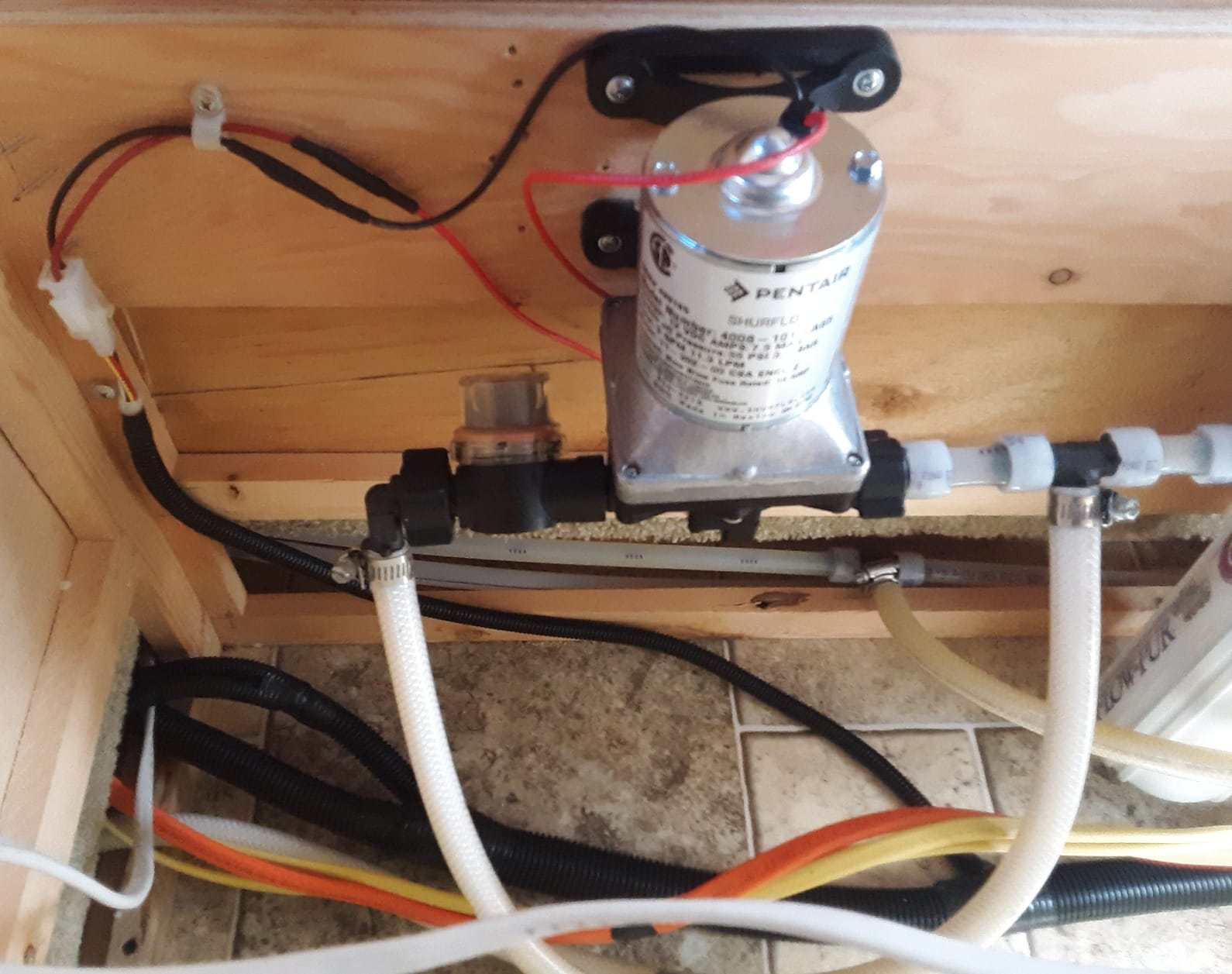
At 3799 reviews and 4.6 stars with an 80 percent five-star share, it is the second most proven pump in this roundup. Reviewers describe it as restoring quiet, low-current, dependable pressure to systems that had been running noisily for years, and it handles a shower head and an aerated faucet far better than the low-flow replacements people sometimes fit to save money.
It is thermally protected and safe to run dry, which is what you want in a coach that will sit unheated between trips. The 9 foot self-priming figure gives you more mounting freedom than most RV-specific pumps.
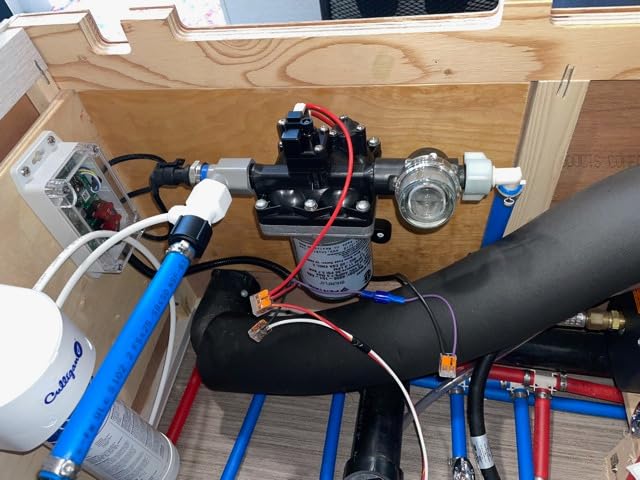
Why a rebuild rather than the original
For most owners the deciding factor is availability and certainty. The original 4008 pattern is ubiquitous, so a replacement that fits the existing bolts, hoses and bracket removes the guesswork entirely. For a van build, that also means you can design the bay to a known footprint instead of measuring a product photo.
The low current draw is what makes it attractive off-grid, because it behaves like a SHURFLO Revolution in daily use without the premium that the branded unit carries. If you are running on solar, this is a pump sized to be charged rather than sized to be impressive.
What you give up
It arrives without retail packaging, which is not a real problem but does mean there is no box to check the model against on arrival. It also costs more than the generic aftermarket equivalents, which is the whole point of a premium tier but worth naming plainly.
Finally, on some plumbing the internal bypass pressure can sit above the pressure switch setting, which shows up as a pump that seems to run longer than expected. It is adjustable in the usual way with a small Allen key, so treat it as a five-minute install task rather than a fault.
How to Choose a 12V Water Pump for Boondocking
Start with flow and be honest about how much you use. A solo camper or a couple washing at separate times needs 1.2 to 3.0 GPM. Two people showering back to back, or a shower plus a sink running together, needs 3.5 to 4.0 GPM. Households running two fixtures simultaneously need 5.5 GPM, and that is the point where flow becomes a luxury rather than a requirement.
Pressure is the second filter. Most RV plumbing is happiest between 40 and 60 PSI, which is why this list clusters there. Pumps that cut off below 40 PSI feel weak at a rain head, and pumps set above 60 add stress to fittings and hoses for no benefit inside a coach.
Third, look at amp draw where it is published. Only six of the ten listings here state a maximum draw, ranging from 4.0A to 8.0A. Where a figure is missing, measure it with a clamp meter during a shower rather than trusting a headline, and plan the panel and bank size around the measured number.
Fourth, decide which pump type you actually need. The four categories are constant speed demand pumps for an onboard fresh tank, variable speed pumps that ramp flow to demand, high volume pumps for multiple fixtures, and manual or transfer pumps for external sources. The distinction matters because a demand pump and a transfer pump solve different problems.
A demand pump pulls from the onboard fresh tank and pressurizes the plumbing. A transfer pump moves water into that tank from a bladder, a jug or a truck-mounted tank. Dry campers on the Forest River Forums describe the common setup of running a 12V RV water pump from a rear truck electrical plug with an inline on/off switch, which is a transfer use rather than a pressurizing use. If you are filling from outside sources, budget for a second pump rather than trying to make one pump do both jobs well.
Fifth, add an accumulator tank. A small pressure vessel smooths the pressure switch cycling, cuts the number of starts per hour, reduces faucet pulsation and noticeably extends pump and switch life. It is the cheapest reliability upgrade in this entire category, and the models that spur or surge without one tell you so in their own reviews.
Sixth, mount for noise rather than shopping for it. Most perceived pump noise is structure-borne vibration travelling through the floor and bed frame. Use all four mounting screws, use the rubber isolation feet or bushings supplied, and never leave a mount partially tightened because a hose is in the way. That single habit fixes more noise complaints than swapping models.
Seventh, check certification if you drink the water. NSF/ANSI/CAN 61 and 372 plus NSF 24 covers the wetted materials, and UL 778 covers the pump as an appliance. The SEAFLO 42, SEAFLO 33, SEAFLO 21 and RecPro all carry documented certification in their listings, which matters when a tank gets filled from a creek, a spigot or a catchment.
Finally, buy from a source that honours a warranty. Marketplace listings and grey-market pumps often arrive with no support path, and a two-year electric pump life expectancy means you will eventually need that support. If you are a full-time RVer, we also cover manual well pumps for off-grid homes for sites with no city supply at all.
What an 8-Minute Shower Costs on Battery
Here is the arithmetic nobody in this category publishes, and it takes about ten seconds. Multiply the pump’s maximum draw by the running portion of an 8-minute shower, then divide by 60. On a 200Ah LiFePO4 bank that turns a shower into a small fraction of a percent of capacity, which is why pump choice affects battery planning far less than most people fear.
A pump drawing 4.0A for eight straight minutes uses roughly 0.5 amp-hours. One drawing 8.0A over the same period uses about 1.1 amp-hours. Real numbers land lower still, because an average shower has the water off part of the time, but a running pump is a running pump and the peaks matter for a small bank.
What actually drains a bank is not the pump, it is cycling. A pump that starts and stops forty times in a shower costs far more than the same pump running continuously, and the worst offenders are usually the ones with no accumulator tank. That is the real argument for a pressure vessel, and it is an energy argument rather than a comfort one.
The practical consequence for solar is encouraging. A 200W panel array and a 200Ah bank have ample headroom for showers on any pump in this list, even the 8.0A units. The failure mode on solar-only builds is rarely total capacity; it is starting a pump in the morning after an overnight draw down, when state of charge is low and a high inrush trips the protector.
Troubleshooting a Pump That Will Not Behave
Work in a fixed order, because the symptoms overlap. A pump switch that lights but does not engage, a pump that runs without water, and a pump that never stops all present differently but share the same first three suspects.
First, confirm the pump switch itself. If the switch lights and the pump does not run, or you hear nothing at all, the switch is the most common failure and the cheapest to replace. If the switch does not light, trace back to the fuse first, then to the ground wire, because ground failures hidden inside the coach are notoriously hard to find and are a leading cause of switches that test fine in isolation.
Second, check for airlock and tank level before condemning the pump. An empty or nearly empty fresh tank, or a suction line that has drawn air, produces exactly the running-but-no-water symptom. The community test that catches this fastest is to pull the pump outlet tube and see whether water drains back out. If it drains, the prime is lost and you are looking at a suction side problem, not a failed pump.
Third, look at the pressure switch for a pump that will not stop. A switch stuck closed, or a bypass setting above the switch point, means the pump runs indefinitely and quietly drains a bank overnight. Adjusting the switch and bypass with a small Allen key resolves most of these, and the 4008, RecPro and ECO-WORTHY all expose adjustments for exactly this reason.
Fourth, reset rather than replace when a thermal protector has tripped. A pump that ran dry or ran long will often restart after a cooling period with the switch cycled off and on. Repeated resets on a pump that keeps running dry point to a plumbing problem, not a motor problem.
Fifth, expect noise to be an install issue before a product issue. Owners have traced loud pumps back to three of four mounting screws loosening over time, letting the rubber bushing resonate. Tighten all four, confirm the bushings are seated, and only then consider a quieter model. Dealers have even been known to quiet pumps by stuffing PEX lines with pool noodles rather than replacing anything, which tells you how much of the noise is plumbing-borne.
Sixth, do not overlook freeze damage. Nothing in this category is freeze tolerant, and a split wet bay on an unheated boondock site ends the trip. Drain the lines and the pump between stays, and run the system dry before closing up for the season.
Finally, know what you can carry. A spare pressure switch, a spare fuse, a handful of hose clamps and an inline shutoff valve are the parts that turn a ruined trip into a ten-minute repair. Our related guide to composting toilets for off-grid rigs covers the other fixture that shares the same wet bay and the same winterization routine.
Frequently Asked Questions
What is a water pump on a camper?
An RV water pump is a 12-volt DC diaphragm pump mounted under the camper that draws from the fresh water tank and pressurizes the plumbing to the sink, toilet and shower. A built-in pressure switch starts the motor when a faucet opens and stops it once pressure is reached, so it runs only while water is being used.
What is the best 12 volt caravan water pump?
The SHURFLO 2088-554-144 is the safest general answer, delivering 3.5 GPM at 45 PSI from a three-chamber diaphragm design with a thermally protected motor and a one-way check valve, and it carries more than 6600 reviews at 4.6 stars. For a quieter system the SHURFLO Revolution 4008-101-E65 is harder to beat, and for documented potable certification the SEAFLO 42 Series leads.
What is the quietest water pump for an RV?
The SEAFLO 33 Series and the SHURFLO Revolution 4008-101-E65 are the quietest options here. The 33 has a rubber base and three-chamber design that reviewers rate below Jabsco and Shurflo units, while the 4008 reports roughly ten times less noise than older Shurflo pumps. On small rigs, mounting with every screw tightened and the isolation bushings seated matters more than the model.
Why is my RV water pump running but not pumping water?
An empty or nearly empty fresh tank and air drawn into the suction line are the most common causes. Pull the pump outlet tube and see whether water drains back out. If it drains, the prime is lost and the problem is on the suction side, not the motor. A clogged inlet strainer, a frozen line or a failed check valve produce the same symptom.
Why won’t my RV water pump stop running?
A pressure switch stuck closed, or an internal bypass set above the switch point, will keep a pump running indefinitely and can drain a bank overnight. Check the fuse and ground before suspecting the switch, then adjust the pressure switch and bypass with a small Allen key. If a thermal protector has tripped, let the pump cool and cycle the switch before replacing anything.
What are the four types of water pumps?
The four practical types are constant speed demand pumps, variable speed pumps that ramp output to match demand, high volume pumps for running two or more fixtures at once, and manual or transfer pumps with no electrical draw. Demand pumps pressurize an onboard fresh tank, while transfer pumps move water into that tank from a bladder, jug or external source.
The Best RV Water Pump for Your Off-Grid Setup
For most rigs, the SHURFLO 2088-554-144 is the best of the best RV water pumps for off grid camping because it has more real service history than any alternative, with 6623 reviews at 4.6 stars. If noise is what keeps you up at night, move to the SHURFLO Revolution 4008-101-E65. If you drink the water and want documented certification, choose the SEAFLO 42 Series.
Match the flow to the household rather than the marketing. A single occupant or a couple washes fine with the SEAFLO 21 at 1.2 GPM and 4.0A. A family of four showering together needs 4.0 GPM or more. Whatever you choose, fit an accumulator tank, tighten all four mounting screws and carry a spare pressure switch, because those three habits decide how long the pump lasts. Our off-grid appliance picks are collected in our self-contained composting toilets and portable refrigerator guides.