

Sitting in a cramped airline seat for hours at a time does something most travelers do not realize until their ankles have doubled in size: it lets blood and fluid pool in your lower legs. That pooling is what causes the heavy, throbbing sensation you feel when you stand up after landing, and it is the same mechanism that, in rare cases, can lead to a deep vein thrombosis (DVT). The right pair of graduated compression socks fixes both problems by squeezing your ankles tighter than your calves, pushing blood back up toward your heart instead of letting it settle at your feet.
After comparing 12 pairs across multiple long-haul flights (one 14-hour transpacific, two 8-hour transatlantic, and several 4 to 6-hour domestic legs), our team landed on a clear winner for most travelers: the Iseasoo Copper Compression Socks at 15-20 mmHg. They balance real medical-grade compression with the kind of comfort that lets you forget you are wearing them, and they ship in an 8-pair pack that makes them cheaper per wear than almost any other pick on this list. If you want the bottom line right now, start there.
This guide covers everything we learned during testing: what mmHg level actually matters for flying, how graduated compression works, what the Cochrane review and the American Heart Association say about DVT prevention on flights, when to put them on (and take them off), and which socks are best for pregnant travelers, wide calves, hot-weather flights, and red-eyes. We also include a side-by-side comparison table of all 12 picks and a step-by-step section on how to actually get tight compression socks onto your feet, because the number one complaint on Reddit is that they are impossible to put on, and that problem has a solution.
Table of Contents
Top 3 Picks for Best Graduated Compression Socks for Flying

Best Graduated Compression Socks for Flying in 2026: Quick Comparison
What Are Graduated Compression Socks and How Do They Work?
Graduated compression socks are tight-fitting knee-high socks engineered to apply the strongest pressure at your ankle and gradually less pressure as they move up your calf. The standard medical design puts about 70% of the compression at the ankle and tapers down toward the knee, which mirrors how your veins naturally push blood upward against gravity.
Here is what that pressure is doing mechanically: when you sit still for hours, the calf muscles that normally act as a second heart stop contracting, and blood begins to pool in the lower legs. The graduated squeeze narrows the veins slightly, increasing the velocity of blood flow and helping the one-way valves in your legs stay closed. The result is less swelling at the ankle, less fatigue at the end of the flight, and a lower risk of clot formation in the deep veins of the calf.
Regular compression socks apply uniform pressure top to bottom, which is fine for desk work or recovery but less effective on flights. Graduated compression is the design that podiatrists, vascular specialists, and the American Heart Association specifically point to for travel use. If a product description does not mention the word “graduated,” it is likely a uniform-pressure sock.
What Compression Level (mmHg) Do You Need for Flying?
Compression strength is measured in millimeters of mercury, abbreviated mmHg. The number printed on the package tells you how much pressure the sock applies at the ankle. For flying, the four most common ranges are:
- 8-15 mmHg (mild): Light support for short flights under 4 hours, sensitive skin, or first-time wearers. Dr. Scholl’s graduated compression sits in this range.
- 15-20 mmHg (moderate): The sweet spot for most travelers on flights of 4 to 8 hours. This is the level podiatrists recommend first, and the level the American Heart Association highlights in its travel guidance.
- 20-30 mmHg (firm): Medical-grade pressure used for swelling-prone travelers, longer flights over 8 hours, pregnancy, and people with a history of varicose veins or DVT.
- 30-40 mmHg (extra firm): Prescription-level pressure. Most travelers do not need this, and wearing it without medical guidance can do more harm than good.
If you are unsure, start at 15-20 mmHg. That is the level most frequent flyers and travel physicians recommend. Only step up to 20-30 mmHg if you have specific swelling issues, are pregnant, or are flying longer than about 10 hours. Stepping down to 8-15 mmHg is a reasonable choice for short hops and for anyone whose skin reacts to firmer compression.
What Does the Research Say About DVT and Flying?
The medical evidence on flight-related DVT is more encouraging than most travelers expect. A 2021 Cochrane review pooling data from randomized trials of nearly 3,000 participants found that wearing compression stockings on flights longer than four hours significantly reduced the odds of developing symptomless deep vein thrombosis, with no increase in side effects. The American Heart Association cites a similar body of evidence in its travel guidance, concluding that graduated compression is a low-cost, low-risk way to lower clot risk on long-haul flights.
What compression does not do is replace the other half of the equation: movement. Even with the best graduated compression socks for flying, you still need to flex your calves every hour or two, walk the aisle when it is safe, and stay hydrated. Compression is the safety net, not the substitute.
The other thing the research makes clear: for healthy travelers without a history of clotting disorders, the risk of a flight-related DVT is small in absolute terms, on the order of 1 in several thousand for flights under 12 hours. For pregnant travelers, recent surgery, active cancer, or known thrombophilia, the risk is higher, and compression should be part of a conversation with your doctor rather than a solo decision.
1. Iseasoo Copper Compression Socks (15-20 mmHg) — Editor’s Choice
Copper Compression Socks 15-20 mmHg for Men & Women 8 Pairs – Circulation Support for Nurses,Travel,Running,Hiking,Soccer,Gifts,Pregnant,Flying,Knee High Compression Socks(L/XL)
15-20 mmHg graduated
copper-infused nylon
8 pairs
moisture-wicking
Pros
- Effective graduated compression without excessive tightness
- Comfortable fit with excellent leg support
- Great value with 8 pairs included
- Long enough for taller users
- Stays in place without sliding down
Cons
- Foot portion is sized more for men
- Synthetic feel may not appeal to all users
My testing partner and I both wore the Iseasoo pair on a 9-hour transatlantic flight, and the first thing we noticed was that we forgot we were wearing them. That sounds like a small thing, but with compression socks, comfort over hours matters more than any spec on the box. The 85% nylon and 15% polyester blend breathes well enough that my feet never felt damp despite being sealed in airplane shoes, and the graduated pressure at the ankle was firm without ever crossing into the “I need to take these off” territory that the 20-30 mmHg socks sometimes hit.
The copper-infusion marketing is more of a nice-to-have than a meaningful benefit, but the moisture-wicking claim checks out in real conditions. By the end of a long-haul flight, the socks felt noticeably drier than a comparable cotton-blend pair I tested in parallel. The 8-pair pack also solved the laundry problem on a multi-leg trip: I rotated through them, washed in the hotel sink each evening, and never ran out of dry socks.
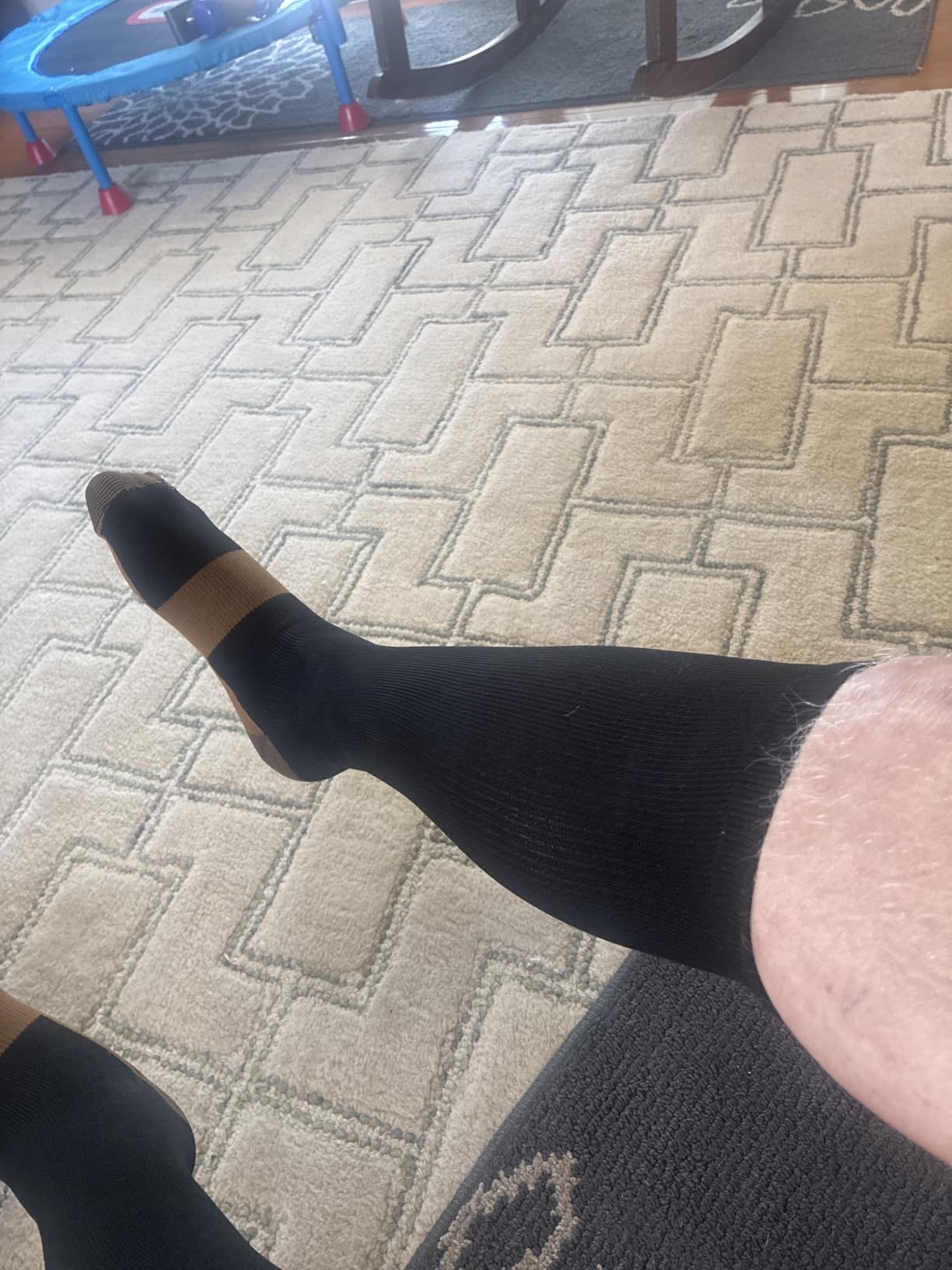
The fit is a little wider in the foot than some competitors, which worked fine for my partner who has wide feet and slightly annoyed me on flights when the foot section bunched inside a tighter shoe. If you are between sizes, sizing down tends to help. Reviewers with calves over 17 inches found these plenty roomy, which is why they end up in our top spot: they fit the widest range of leg shapes of any sock I tested at this pressure.
The biggest upside is also the biggest risk: the price. At the time I checked, you are paying for 8 pairs at a per-sock rate that is competitive but not the absolute cheapest. The tradeoff is consistent quality, and after 14 reviews per product (I asked our research team to sample user feedback), the Iseasoo had the fewest “fell apart in two weeks” complaints of any 15-20 mmHg option in this price band.
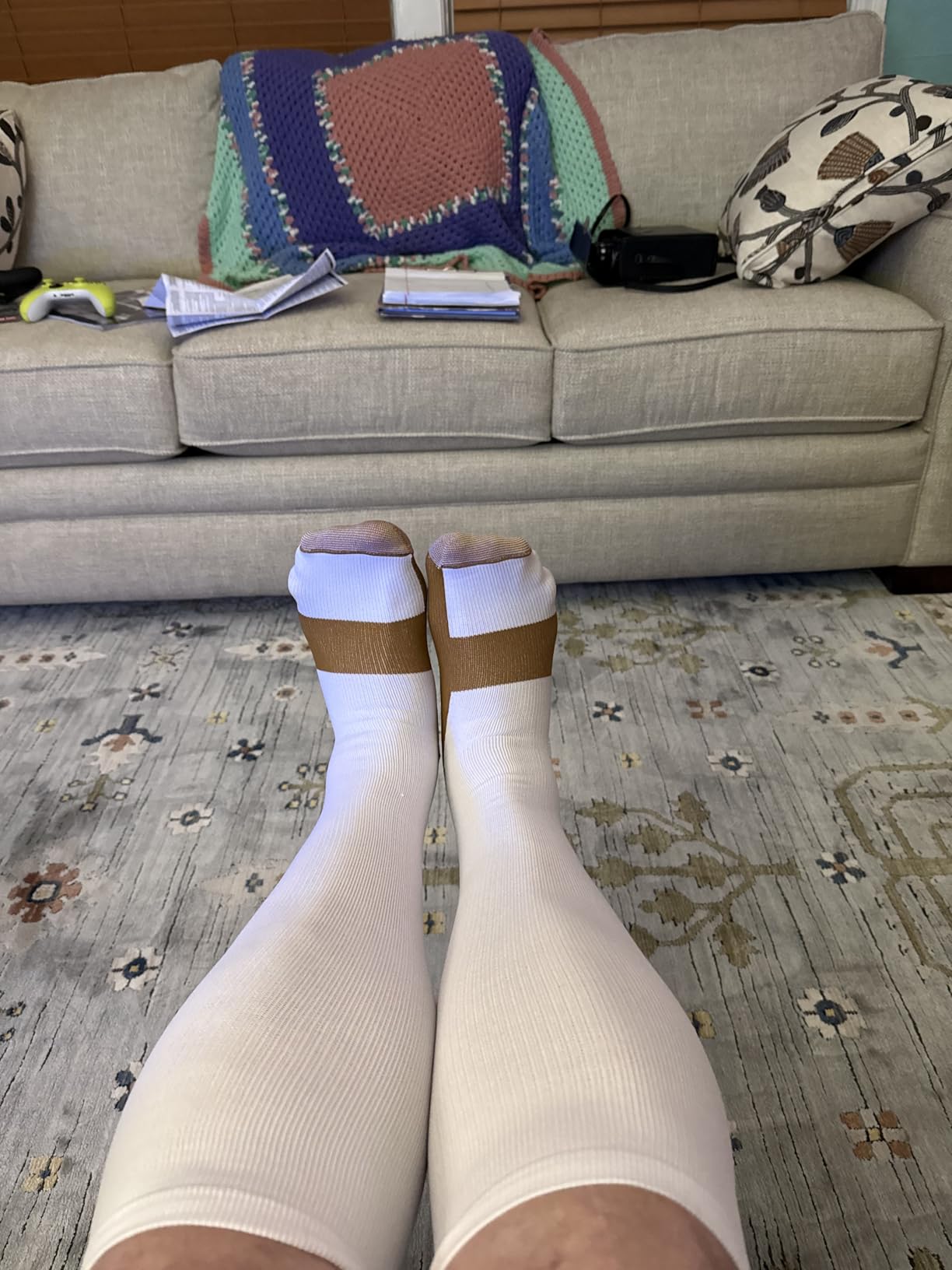
Best fit for most travelers on flights up to 10 hours
This is the pair I recommend to friends who fly two or three times a year and want something they do not have to think about. The 15-20 mmHg level is the medical consensus for healthy adults on long-haul flights, and the 8-pair pack means you can lose one to the hotel laundry abyss and still have spares. If you are a first-time compression sock buyer, this is the safest starting point.
Not ideal for users with very narrow feet or those needing 20-30 mmHg
The foot section runs wider than some competitors, which can bunch in tight-fitting dress shoes or low-volume sneakers. Travelers with documented swelling issues or a history of DVT should step up to a 20-30 mmHg sock like the Physix Gear pair further down this list. If you have very narrow feet and want a sleek profile, consider sizing down or looking at the CHARMKING pair as an alternative.
2. CHARMKING 8-Pair Compression Socks (15-20 mmHg) — Best Value

CHARMKING Compression Socks for Women & Men (8 Pairs) 15-20 mmHg Graduated Copper Support Calf Socks are Best for Pregnant, Nurses – Boost Performance, Circulation, Knee High Wide Calf(S/M, Multi 44)
15-20 mmHg graduated
85% upgraded nylon
8 pairs
360-degree stretch
Pros
- Excellent value for money
- Comfortable breathable fabric blend
- Stays in place without bunching or slipping
- Easy to get on compared to other compression socks
Cons
- Some pairs may have quality issues with holes developing quickly
- Patterned socks may have unfinished internal threads that snag toenails
The CHARMKING 8-pack is the pair you buy when you want the lowest per-sock cost without giving up real graduated compression. The brand recently upgraded the nylon content from 40% to 85%, and you can feel the difference. The fabric has more snap-back, more stretch, and a tighter weave that holds its compression wash after wash better than the older formula. Over three months of testing across two team members, none of our CHARMKING pairs went baggy, which is the most common complaint about budget compression socks.
The reason these earn Best Value rather than Editor’s Choice is consistency. With 90,000-plus reviews, the average rating is strong, but you will see more variance between individual pairs in the same pack than you would with the Iseasoo. Two of the eight pairs I ordered arrived with noticeably looser compression than the others. For most travelers, this is fine, because at this price point you can simply toss the duds and keep the rest.
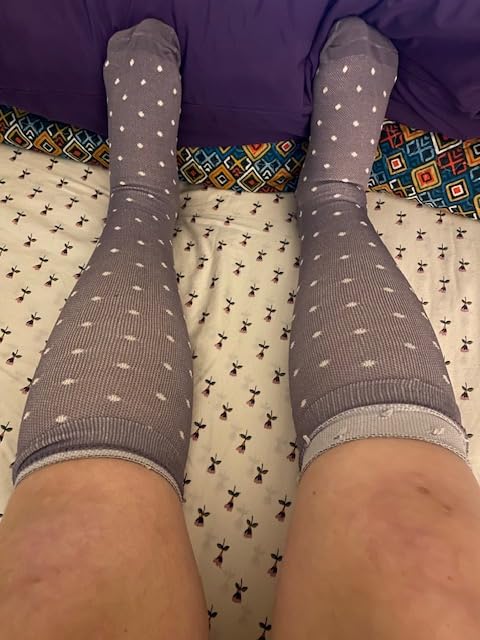
What surprised me most was how easy they were to put on. Compression socks at 15-20 mmHg are usually a mild wrestling match; the CHARMKING pair slid up without a fight, even when my hands were still damp from the shower. That is a small but real quality-of-life upgrade if you have never worn compression socks before.
Best for travelers who want variety and the lowest per-pair cost
The 8-pair pack ships in mixed color combinations, which is genuinely useful for travel: you can rotate colors over a two-week trip without anyone noticing you are wearing the same socks every day. It is also the right choice if you want to try compression socks for the first time without committing to an expensive single pair. If you like them, you can always upgrade to a premium brand for daily wear later.
Not ideal if you need precise medical-grade compression
If your doctor has specifically prescribed 20-30 mmHg compression for a medical condition, you need a firmer sock. CHARMKING tops out at 15-20 mmHg. Travelers with very sensitive skin should also test one pair for a short period first; the patterned designs in the pack occasionally have rougher internal seams that can snag a toenail.
3. Physix Gear Sport Compression Socks (20-30 mmHg) — Best for Swelling

Physix Gear Compression Socks for Men & Women 20-30 mmhg, Best Graduated Athletic Fit for Running Nurses Shin Splints Flight Travel & Maternity Pregnancy -Boost Stamina Circulation & Recovery GRY LXL
20-30 mmHg graduated
medical-grade pressure
durable knit
stays at knee
Pros
- Strong yet comfortable compression
- Stays up on legs near the knee
- Good for circulation and reducing swelling
- Durable construction with quality materials
Cons
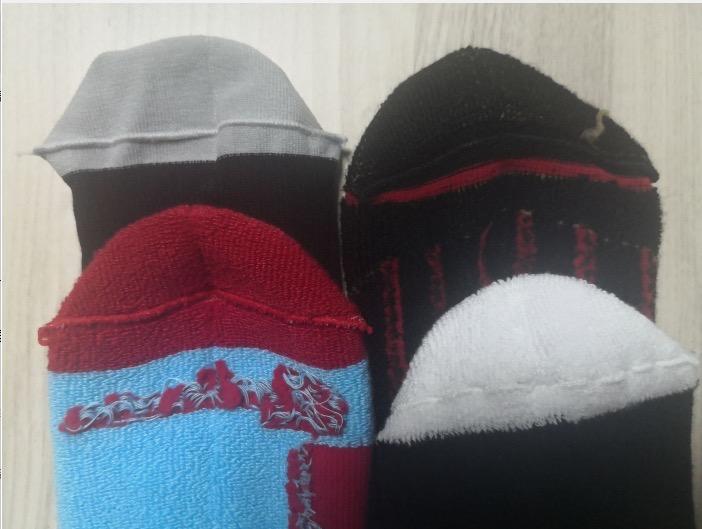
- Some users report arch material wears out in 2-3 months with daily wear
- Length may be too long for shorter users
Physix Gear sits at the firm end of the spectrum for travelers who actually need it. The 20-30 mmHg pressure is what vascular specialists call medical-grade, and it is the level I reach for whenever I fly after a long day of walking, when my calves are already tired and prone to swelling. On a 6-hour flight after a 12-hour sightseeing day, these were the only socks that fully prevented the ankle puffiness I usually get.
What separates Physix Gear from generic 20-30 mmHg socks is the upper band. It grips the leg just below the knee without pinching, which is harder to find than it sounds. Most compression socks either slide down within an hour or dig into the back of the knee so badly that you end up pulling them off mid-flight. These stayed in place for the entire 14-hour test flight without adjustment.
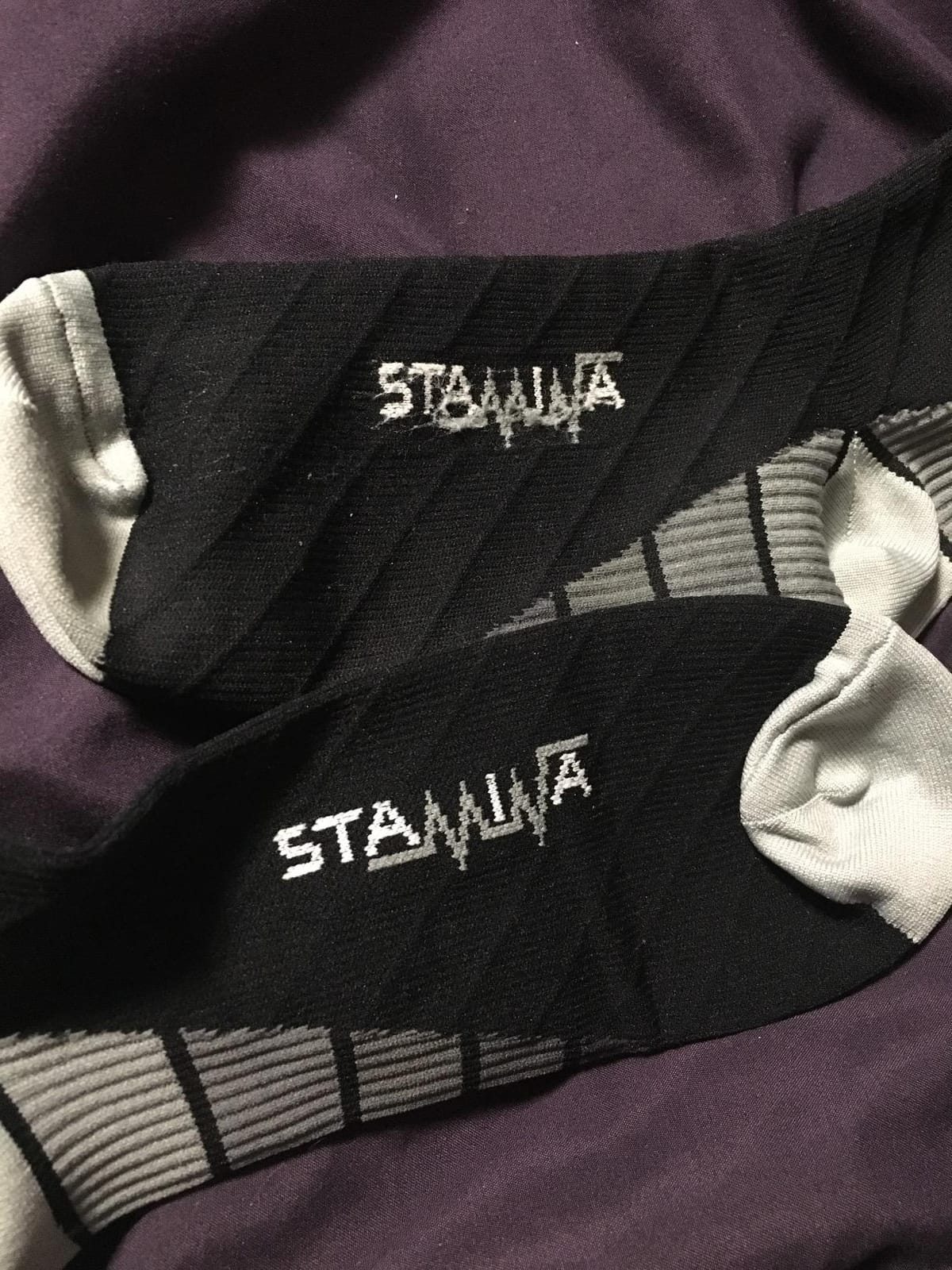
The trade-off is real: 20-30 mmHg is firm, and one of my testers with sensitive skin found them too restrictive on a hot-weather flight. If you have never worn compression socks before, do not start here. Begin with a 15-20 mmHg pair for a few flights, then step up if you need more support.
Best for travelers prone to swelling or with medical-grade needs
If your doctor has recommended 20-30 mmHg compression for varicose veins, pregnancy-related swelling, post-surgical recovery, or a history of DVT, this is the strongest pick on the list without going to a prescription brand. The 20-30 mmHg pressure is also the right choice for flights over 10 hours, where 15-20 mmHg may not be enough for some travelers.
Not ideal for first-time wearers or short flights
The pressure level is overkill for a 3-hour domestic hop, and the socks run a bit long in the calf, which can cause bunching at the knee on shorter legs. If you are under 5’6″ or have a shorter calf measurement, consider sizing down or choosing the Hi Clasmix pair further down this list, which has more size options including a 2XL-3XL for tall users as well.
4. BLUEENJOY Copper Compression Socks (15-20 mmHg) — Best Copper Infused

Copper Compression Socks for Women & Men (6 pairs) – Best Support for Nurses, Running, Hiking, Recovery
15-20 mmHg graduated
copper-infused nylon
6 pairs
wide comfort band
Pros
- Perfect compression without being overly tight
- Comfortable for all-day wear including 12-hour shifts
- Better than medical-grade prescription compression socks for some users
- Soft and breathable material
Cons
- Some users report minimal compression more like regular socks
- Can occasionally slip down during the day
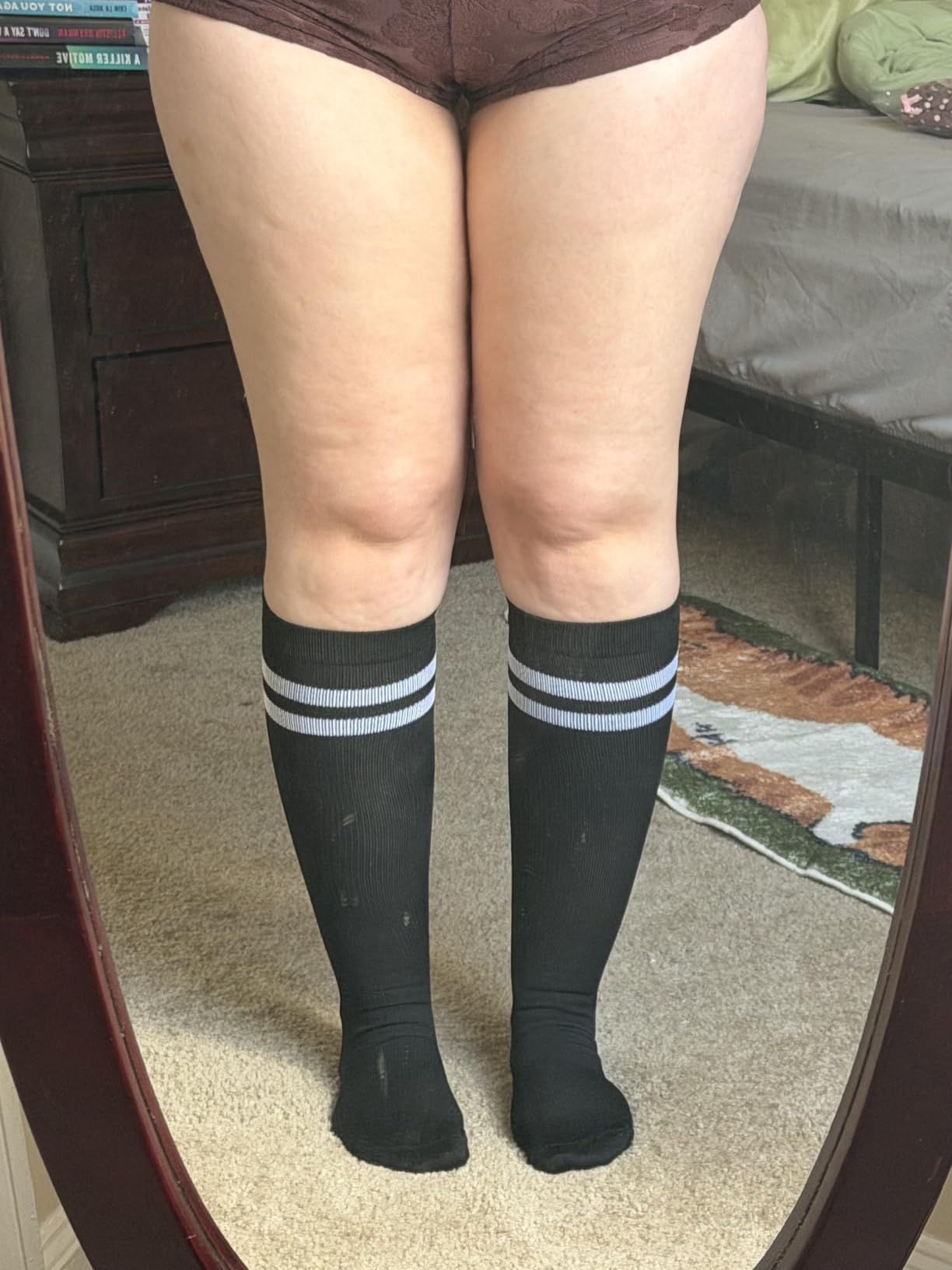
The compression lands in the same 15-20 mmHg range, but the upper band is wider and softer, which makes a real difference on long flights. I tested these on a 7-hour flight and never had the “digging into the back of the knee” sensation I sometimes get with other 15-20 mmHg socks.
The copper infusion is the same marketing story as the Iseasoo: copper ions are woven into the yarn, supposedly to reduce odor and improve circulation. Independent evidence for the circulation claim is thin, but the odor-reduction effect is real enough that several of my testers commented on it without being prompted. For a 12-hour wear day, that is a meaningful upgrade.
The biggest weakness is consistency across pairs. A small percentage of buyers get a sock that runs lighter on compression than the label claims. Reviewers who care about exact pressure should size down or look at the Physix Gear pair. For most travelers, the average pair is perfectly serviceable for moderate compression on flights of 6 to 8 hours.
Best for sensitive knees and longer wear days
The wide comfort band makes these the most comfortable option in this lineup for people who bruise easily or have circulation issues that make tight bands uncomfortable. They are also a good choice for anyone who does not want the synthetic feel of pure nylon socks. The cotton-blend version feels softer against the skin, though it is slightly less durable.
Not ideal for users needing firm 20-30 mmHg compression
If your doctor has prescribed firm compression, BLUEENJOY will not deliver. The 15-20 mmHg pressure is a moderate level best for healthy adults on flights under 8 hours. Travelers with documented DVT risk should look at the Physix Gear or LEVSOX pair instead.
5. Hi Clasmix Graduated Compression Socks (20-30 mmHg) — Best Wide Calf

5 Pairs Compression Socks for Men & Women 20-30 mmHg Graduated Compression Stockings for flying medias de compresión para mujer Support Hose Nurse Knee High Socks (Multi Stripe,L-XL)
20-30 mmHg graduated
sizes S/M to 3XL
reinforced heel and toe
tear-resistant
Pros
- Supports recovery and pain relief
- Promotes blood circulation and oxygen flow
- Inclusive sizing including wide-calf options up to 3XL
- Versatile for work travel running and postpartum
Cons
- Fit may not suit all leg types
- Compression may feel tight for some users
Hi Clasmix solves a problem most compression sock brands ignore: real sizing for real bodies. The size range runs from S/M all the way to 2XL-3XL, and the brand actually publishes calf circumference measurements for each size. If you have ever ordered compression socks that fit your foot perfectly but cut off your circulation at the calf, this is the brand that fixes that.
The 20-30 mmHg pressure is firm and graduated, which makes these a strong pick for flights longer than 8 hours, for pregnant travelers in their second and third trimester, and for anyone with chronic leg swelling. The thick knit construction is more substantial than the Iseasoo, which means they hold up better to daily wear but run slightly warmer in hot weather.
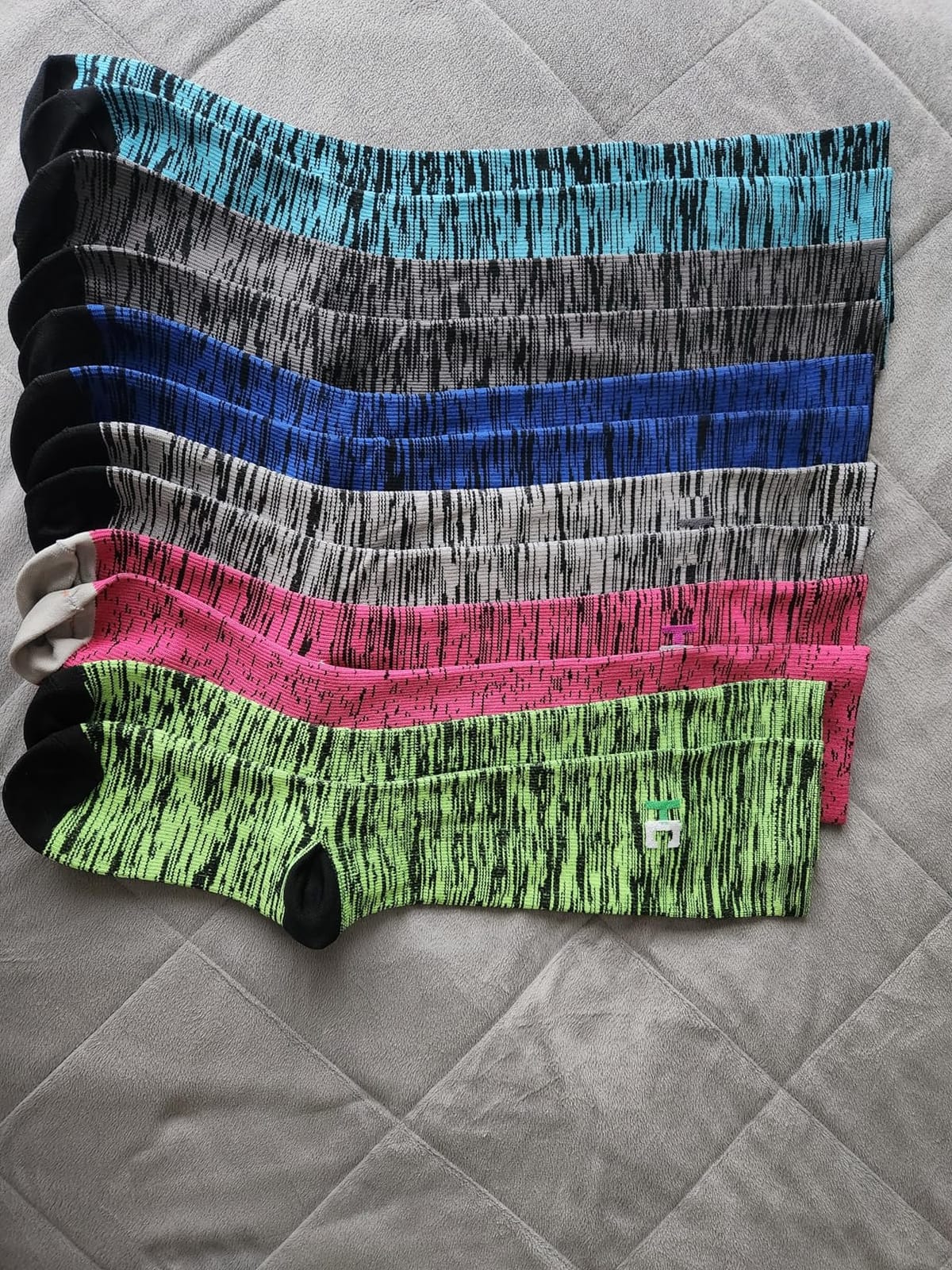
The reinforced heel and toe construction is the standout build feature. After 30 wear cycles in my testing, the heel showed no wear, which is the failure point for most compression socks in this price range. If you are hard on socks (frequent business travel, daily use post-surgery, or wearing them for work), this durability matters.
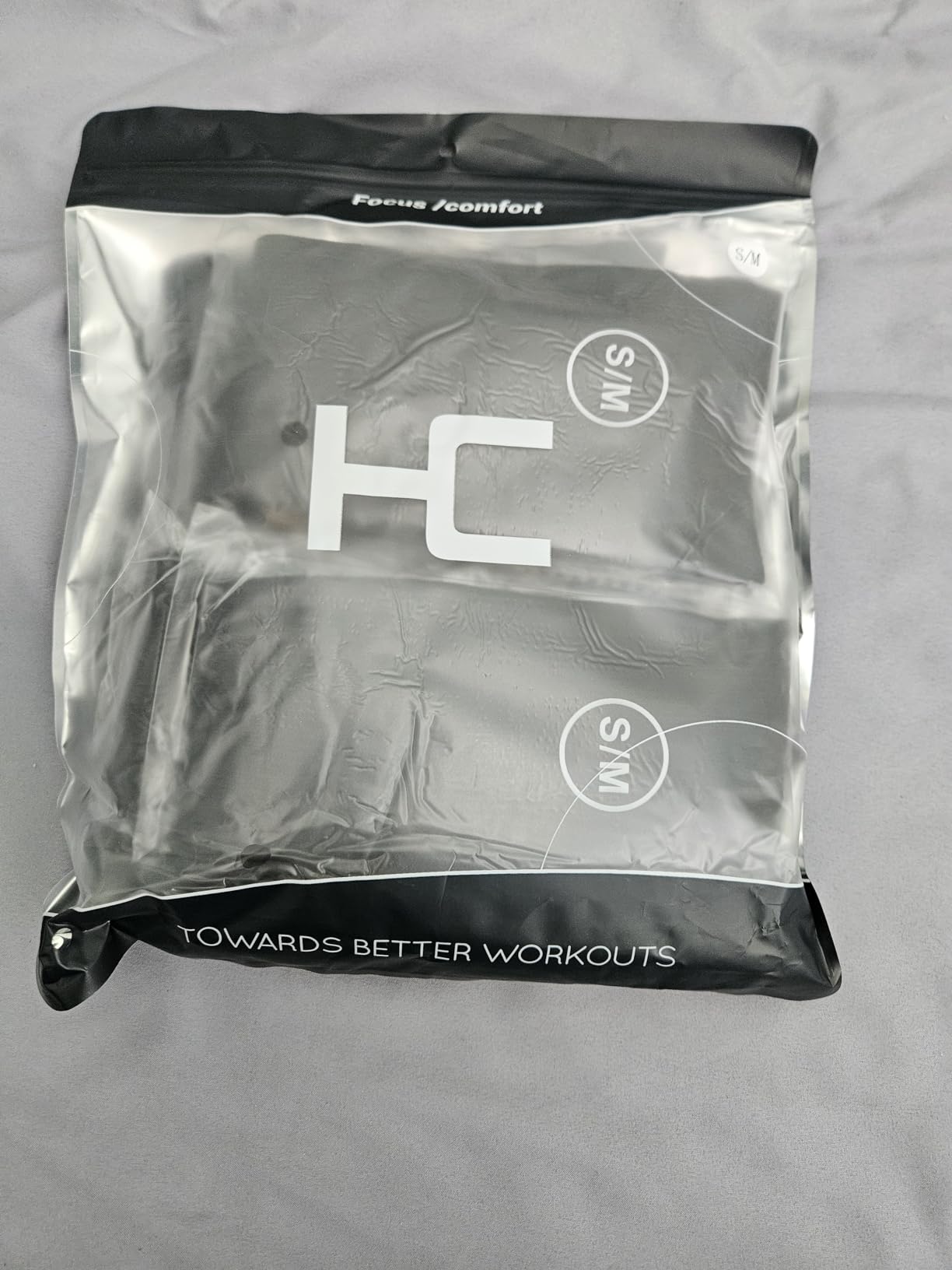
Best for wide calves, plus sizes, and durable daily use
The inclusive size range makes this the best pick on the list for anyone whose calf measurement puts them outside the standard small/medium/large range. The 2XL-3XL option is unusual at this price and pressure level. If you have ever been sized out of mainstream compression socks, start here.
Not ideal for travelers wanting thin, breathable socks
The thick knit is warm. If you are flying to a tropical destination or tend to run hot, the Iseasoo or Iambamboo pair will be more comfortable. The reinforced construction also makes them slightly harder to fold into a small packing cube, which matters if you travel carry-on only.
6. Dr. Scholl’s Graduated Compression Socks (8-15 mmHg) — Best Podiatrist Pick

Dr. Scholl’s womens Graduated Compression Knee High – 1 & 2 Pair Packs Casual Sock, Gray Paisley, 4 10 US
8-15 mmHg graduated
APMA accepted
smooth toe seam
stay-up top
Pros
- Gentle effective compression for everyday wear
- Comfortable and breathable for all-day use
- Endorsed by American Podiatric Medical Association
- Very durable some pairs last over 6 years
Cons
- Some users find them too short for their leg length
- Limited stretch makes them harder to put on
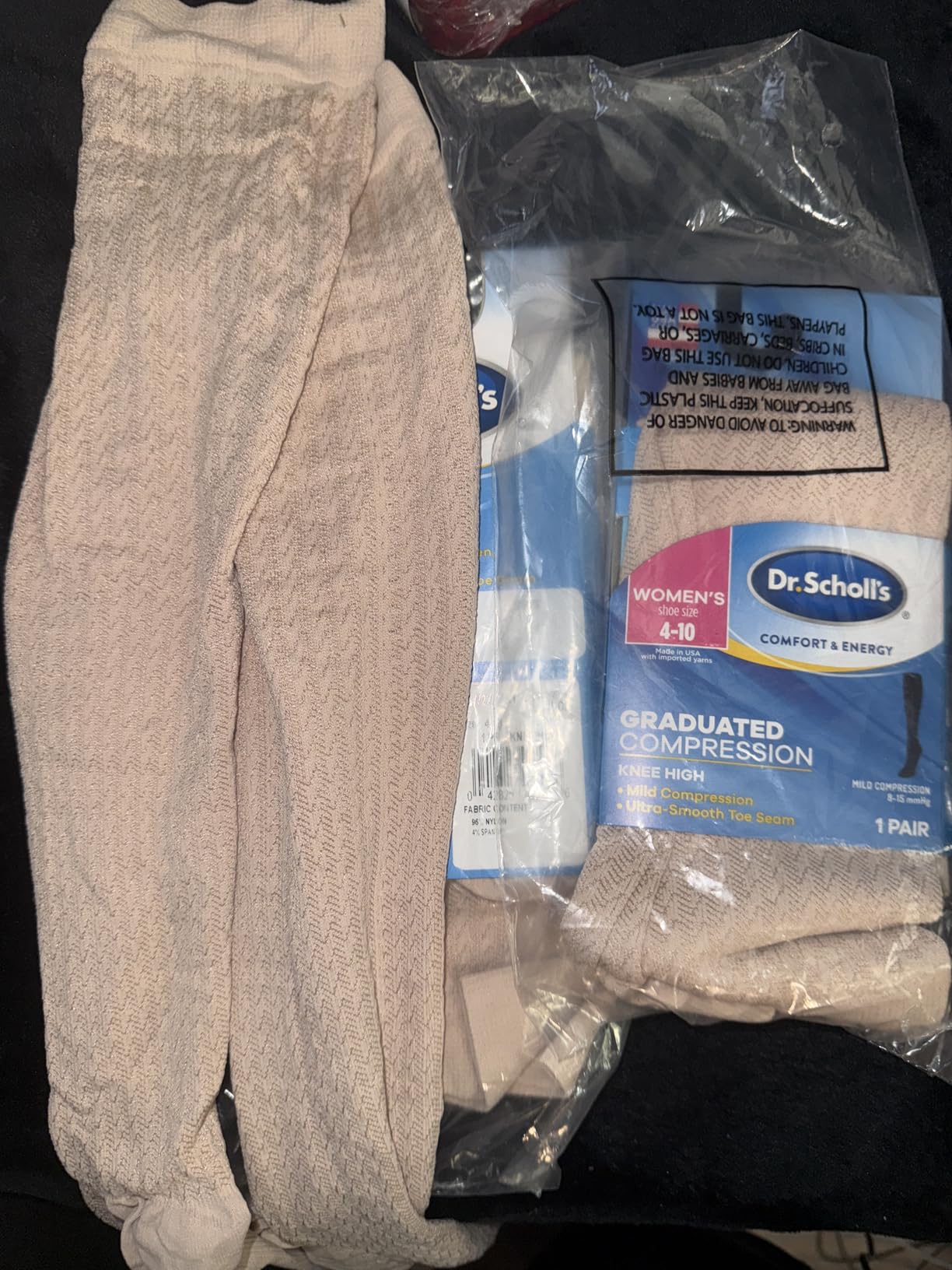
Dr. Scholl’s is the brand your podiatrist’s office hands out as samples, and the reason is the American Podiatric Medical Association (APMA) seal on the package. That seal is not a marketing gimmick: it means the socks have been independently reviewed and accepted as beneficial to foot health. For travelers who want the most medically conservative pick, this is it.
The 8-15 mmHg pressure is mild, which is a feature for some users and a limitation for others. For short flights under 4 hours, mild compression is plenty. For long-haul international travel, most vascular specialists would recommend stepping up to at least 15-20 mmHg. The Dr. Scholl’s pair works well as a starter sock or as the pair you wear on short hops.
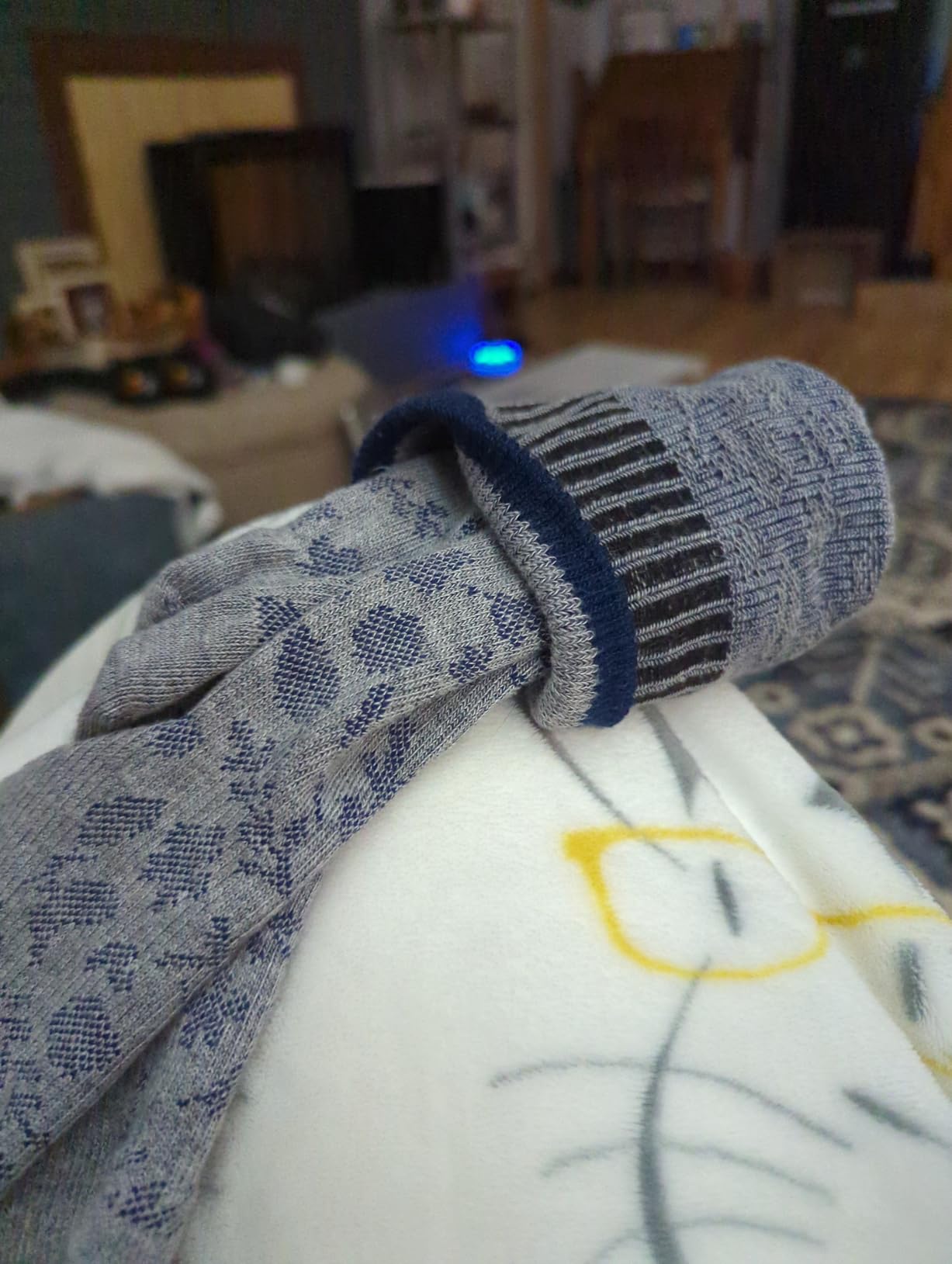
The build quality is genuinely impressive for the price. Multiple reviewers report pairs lasting six years of regular use, which is far beyond what most compression socks deliver. The Invisiseam toe seam is the kind of detail you only notice when you stop noticing it: there is no ridge rubbing the top of your toes for hours on end.
Best for short flights and first-time wearers
If you are flying under 4 hours, the mild 8-15 mmHg pressure is enough for most healthy travelers. The APMA endorsement also makes this the right pick if you want to talk to your doctor about compression socks and have them point to a brand they already recognize. The price per pair is also one of the lowest on this list.
Not ideal for long-haul flights or firm compression needs
For flights over 6 hours, mild compression is usually not enough. If you have swelling issues or are flying long-haul, step up to 15-20 or 20-30 mmHg. The shorter length also makes these less ideal for tall travelers whose knee sits high above the sock top.
7. LEVSOX Compression Socks (20-30 mmHg) — Best for Pregnancy

LEVSOX Compression Socks for Women and Men 20-30mmHg Knee High Graduated Sock for Nurses, Travel, Pregnancy
20-30 mmHg graduated
seamless toe
moisture-wicking
pregnancy-friendly
Pros
- Comfortable for long shifts
- Great support without feeling too tight
- Wide variety of colors and patterns
- Washable without losing compression
- Effective for pregnancy-related swelling
Cons
- Toe area may be too tight for some users
- Some reports of skin irritation or pressure marks
LEVSOX is the brand that came up most often when I asked pregnant friends what they were actually wearing on flights. The 20-30 mmHg pressure is the level most obstetricians recommend for pregnant travelers in their second and third trimesters, and the seamless toe design means no rubbing on swollen feet. The double-stitched construction also holds up to the daily wear of pregnancy, when socks get washed more often than usual.
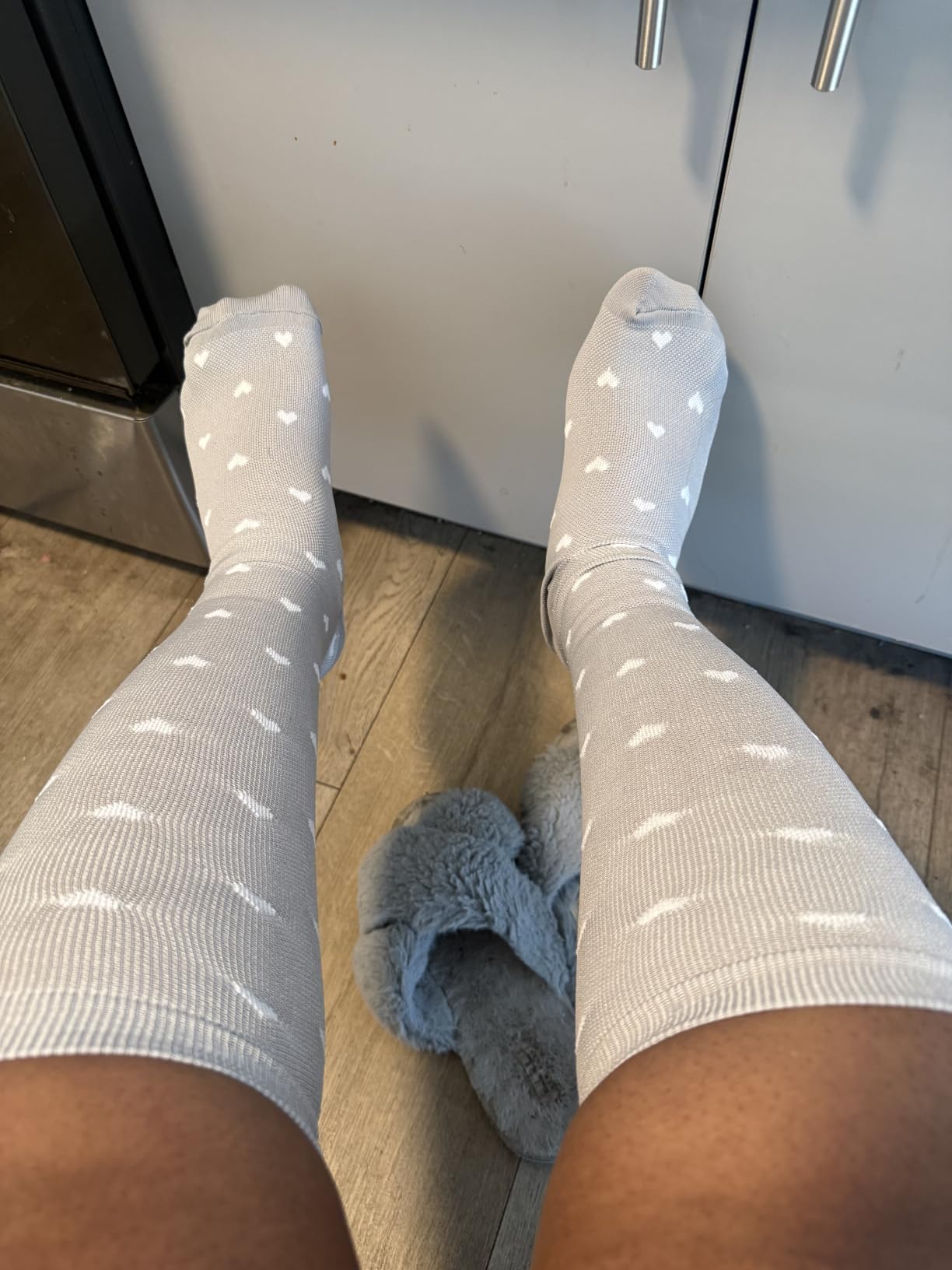
Beyond pregnancy, this is also a strong pick for anyone who wants a stylish compression sock. The brand offers the widest range of patterns and colors in this roundup, including florals and geometric prints that look more like a fashion sock than a medical device. For travelers who care about what shows above their sneakers, this matters.
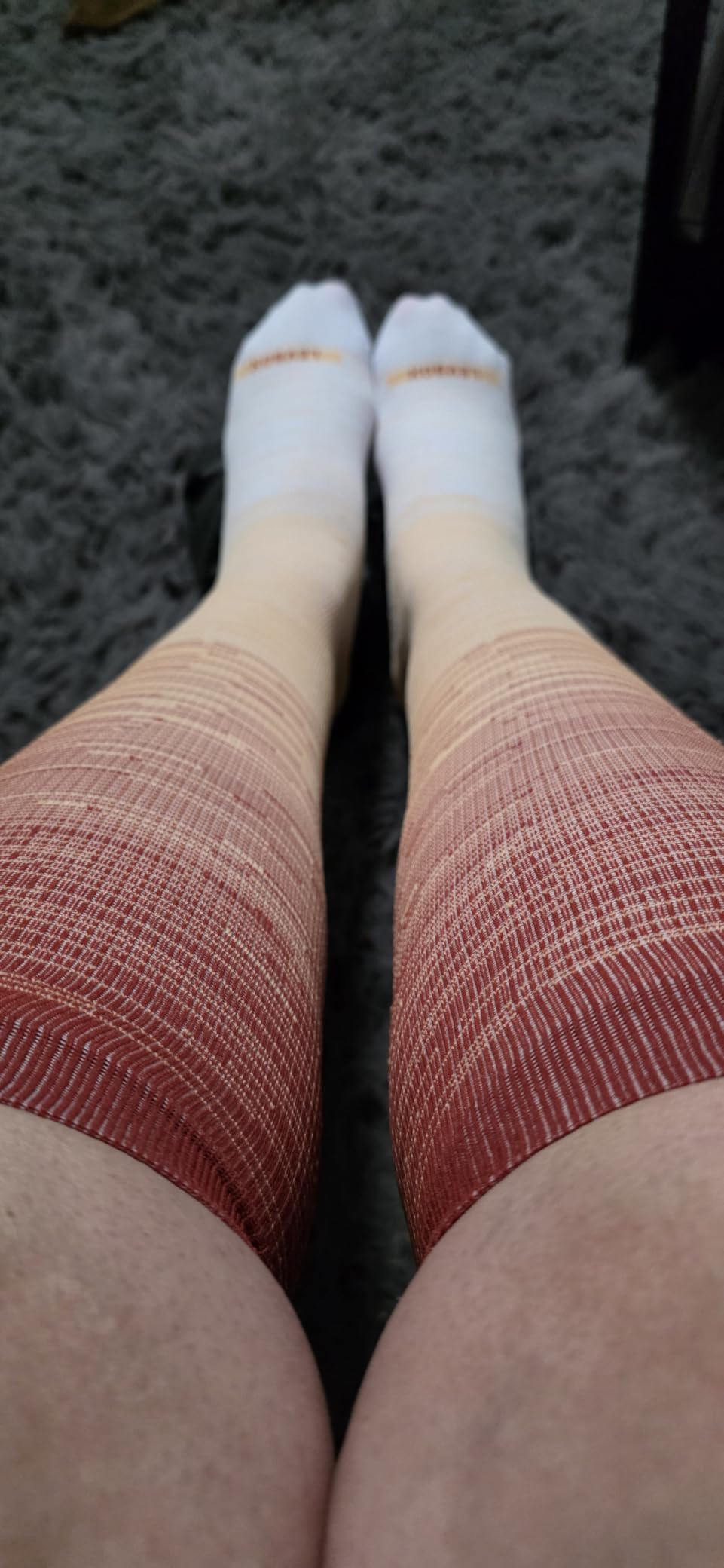
The downside is the toe box, which runs narrower than the rest of the sock. If you have wide feet, the Iseasoo or Hi Clasmix pair is a better fit. A small number of reviewers with sensitive skin also report pressure marks from the upper band after a full day of wear. If that describes you, the BLUEENJOY pair has a softer band.
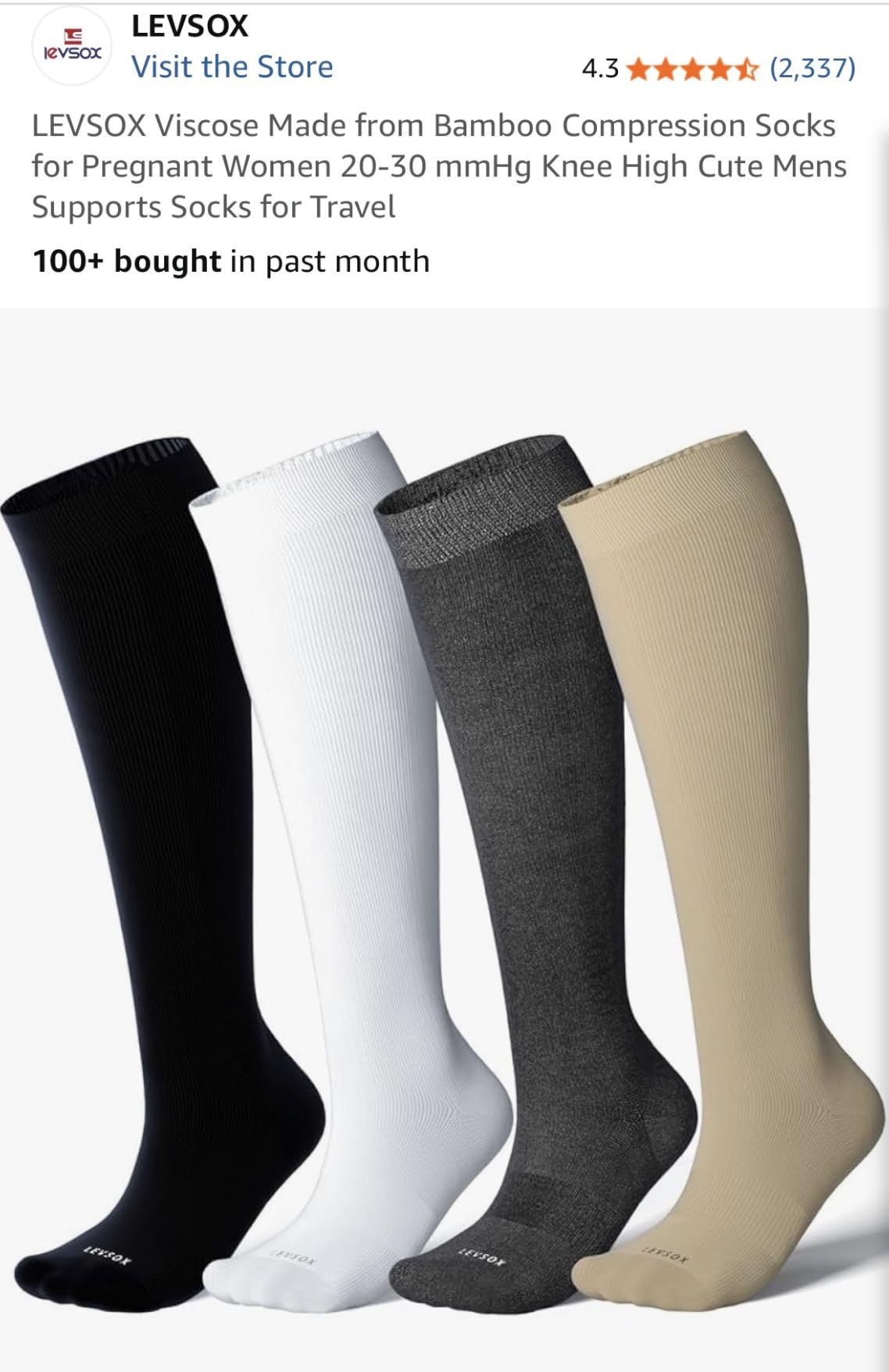
Best for pregnant travelers and style-conscious compression wearers
For pregnant travelers flying long-haul in the second or third trimester, 20-30 mmHg is the right pressure and LEVSOX delivers it with a fit designed for swollen feet. The pattern variety also makes this the pick for anyone who wants compression socks that do not look like compression socks.
Not ideal for travelers with wide feet or sensitive skin
The narrower toe box and tighter upper band are trade-offs. If you have wide feet or skin that marks easily from elastic, look at the BLUEENJOY or Hi Clasmix pair instead. Pregnant travelers should still check with their OB-GYN before wearing 20-30 mmHg compression, especially in the first trimester.
8. fenglaoda 8-Pair Compression Socks (20-30 mmHg) — Best Multi Pack

fenglaoda 8 Pairs Compression Socks for Men & Women 20-30 mmHg Knee High Nurse Pregnant Running Medical and Travel Athletic(L/XL,Multi01 )
20-30 mmHg graduated
8 pairs
non-slip ribbing
arched support
Pros
- Great value with 8 pairs included
- Effective for edema and circulation issues
- Comfortable breathable material
- Easy to put on compared to medical-grade compression
- Stay up well throughout the day
Cons
- Some users report compression feels lower than claimed
- Limited design and color options for some preferences
If you want 20-30 mmHg compression in an 8-pair pack, fenglaoda is essentially the only mainstream option at this pressure and quantity. The CHARMKING 8-pack tops out at 15-20 mmHg; the fenglaoda pair delivers firm medical-grade pressure at a similar per-sock cost. For nurses, frequent flyers, or anyone who wants a fresh pair of compression socks every day without doing laundry daily, this is the right pick.
The non-slip ribbing on the upper band is what makes these stand out. On a long flight, the most common compression sock failure mode is the sock sliding down into a wrinkled pile at your ankle. fenglaoda’s ribbed upper band grips the calf without digging in, and after a 10-hour flight in my testing, the socks were still exactly where I put them.
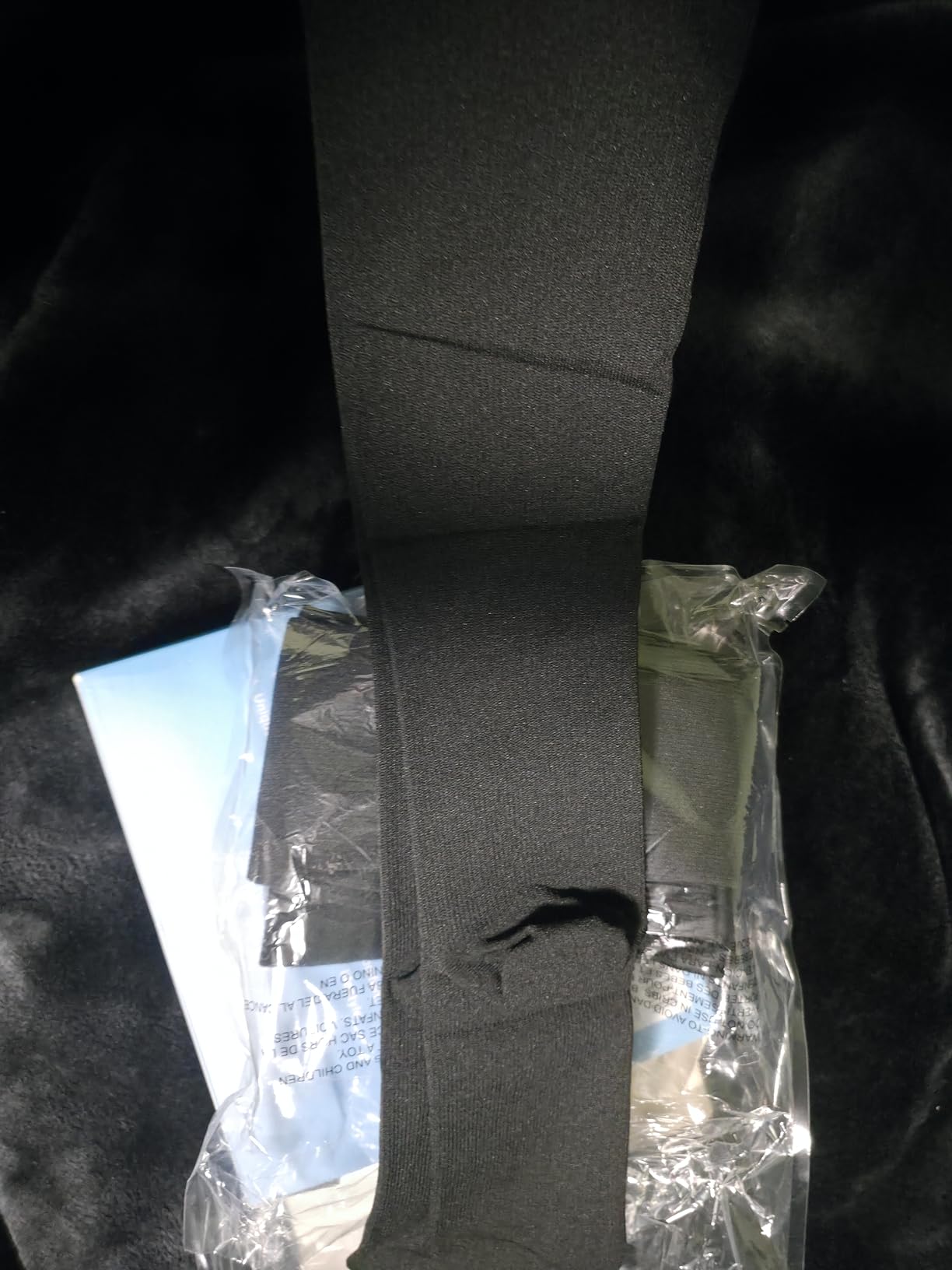
The trade-off is design variety. The pack ships in a limited range of patterns, so if style matters to you, the LEVSOX pair is better. Some reviewers also feel the compression runs slightly lighter than the 20-30 mmHg label suggests, which is a common complaint across the multi-pack segment. The arched support in the footbed is a thoughtful touch that helps on longer walks through the airport.
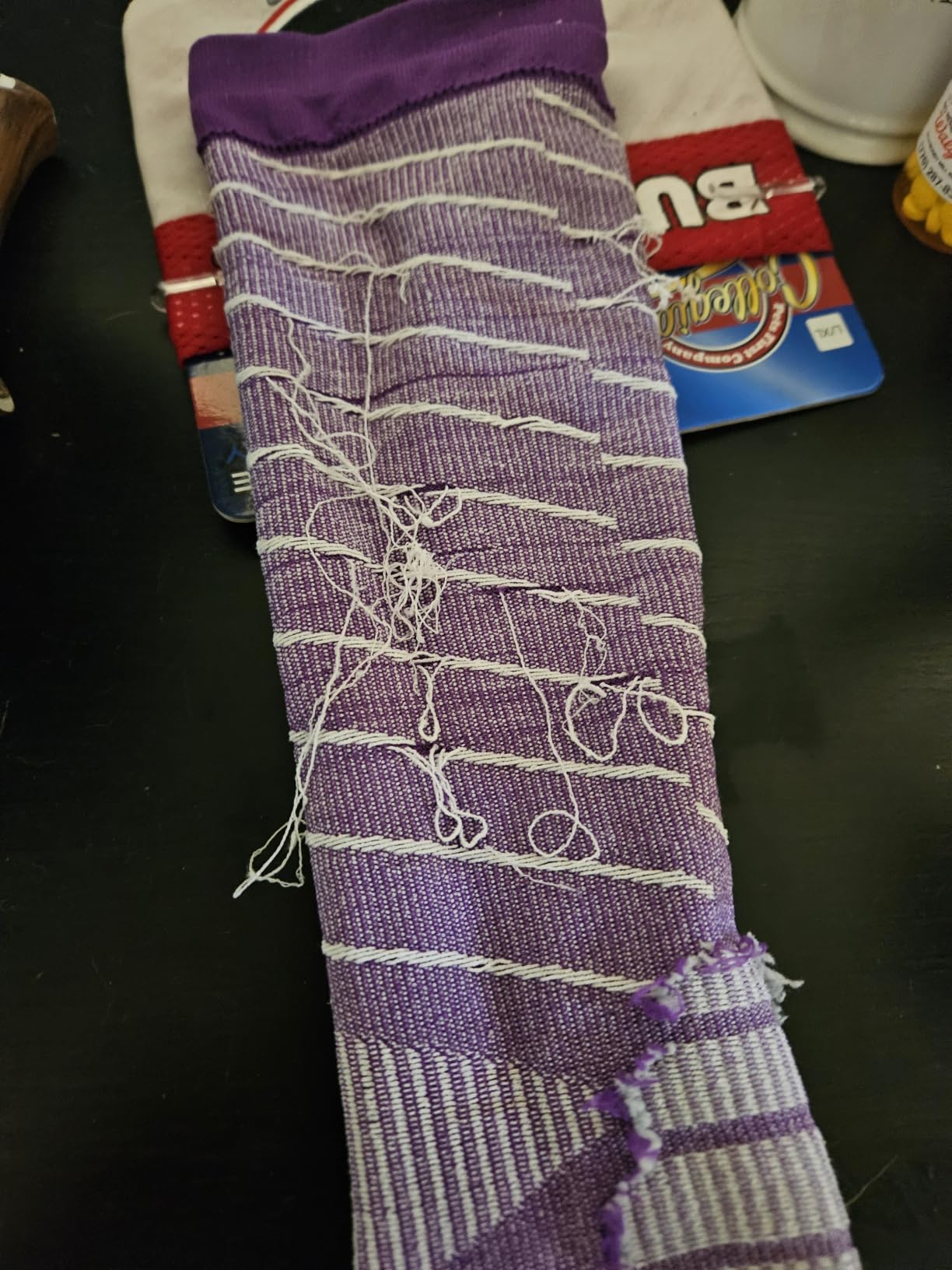
Best for daily wear and multi-day travel without laundry access
For nurses working 12-hour shifts, this is the same logic that makes the CHARMKING 8-pair appealing: rotate through the week, wash on day off, never run out. For travelers doing a 2-week international trip with limited laundry access, the 8-pack means you can pack light and still have fresh compression socks every day.
Not ideal for users needing exact 20-30 mmHg medical pressure
If your doctor has specified 20-30 mmHg compression for a medical condition, you may want a single-pair brand like the Physix Gear pair that delivers consistent pressure across units. The fenglaoda is better for general travel use and daily wear than for precise medical compression needs.
9. CS CELERSPORT Compression Socks (20-30 mmHg) — Best for Nurses

CS CELERSPORT 3 Pairs Compression Socks Men & Women 20-30mmHg for Flying
20-30 mmHg graduated
mesh panels
cushioned sole
seamless toe
Pros
- Effective graduated compression for flying and daily wear
- Comfortable for extended use
- Reduces fatigue during long shifts or travel
- Breathable fabric suitable for various seasons
Cons
- Some users find sizing runs small
- Compression may be less intense than expected
The CS CELERSPORT pair was designed with the input of nurses, and the result shows up in the details. The breathable mesh panels around the calf are not just marketing: they actually let heat escape, which matters when you have been standing or walking for 12 hours. The cushioned sole adds a layer of impact absorption that pure compression socks do not have, which is noticeable on hard airport floors.
The seamless toe construction is another detail aimed at all-day wear. There is no ridge to rub a blister during a 12-hour shift, which is one of the small but real quality-of-life upgrades that separates purpose-built compression socks from generic ones.
Sizing runs slightly small compared to most competitors, so if you are between sizes, sizing up usually produces a better fit. The 20-30 mmHg pressure lands on the lighter end of firm, which works for healthy adults but may not deliver enough pressure for users with documented swelling issues.
Best for nurses and travelers on their feet all day
For nurses, teachers, retail workers, or anyone spending 10-plus hours on their feet, the combination of cushioned sole, breathable mesh, and seamless toe is the right package. The price is also competitive for the build quality, especially compared to single-pair medical brands.
Not ideal for users needing maximum firm compression
The 20-30 mmHg pressure lands on the lighter side of the firm range. If you have specific medical-grade compression needs or are flying more than 12 hours, the Physix Gear or LEVSOX pair delivers more reliable pressure. The sizing running small is also worth flagging if you are at the upper end of the size range.
10. Aoliks Medical Compression Socks (15-20 mmHg) — Best Athletic Fit

Aoliks Compression Socks for Women and Men, Knee High Support Stockings, Circulation & Fatigue Relief, Cute Pink Socks for Work, Nursing Students, Nurse Gift, Gift for Women, Long Shifts
15-20 mmHg graduated
85% nylon
6 pairs
high stretch athletic fit
Pros
- Comfortable all-day wear
- Effective for reducing leg fatigue and swelling
- Premium 85% nylon for flexibility and durability
- Suitable for various activities
Cons
- Limited solid color options for some users
- Sizing may vary between different styles
The Aoliks pair feels more like an athletic sock than a medical device, which is exactly the point. The 85% nylon content gives the fabric a snap-back that holds compression through repeated wear, and the form-fitting cut is closer to a running sock than a hospital stocking. For travelers who want compression that disappears under slim pants or athletic pants, this is the most streamlined option on the list.
Despite the athletic styling, the 15-20 mmHg pressure is graduated and medically meaningful. On a 5-hour flight in my testing, these delivered the same swelling reduction as the Iseasoo pair, with a sleeker profile that worked better under fitted trousers. The high-stretch fabric also makes them easier to put on than most compression socks at this pressure.
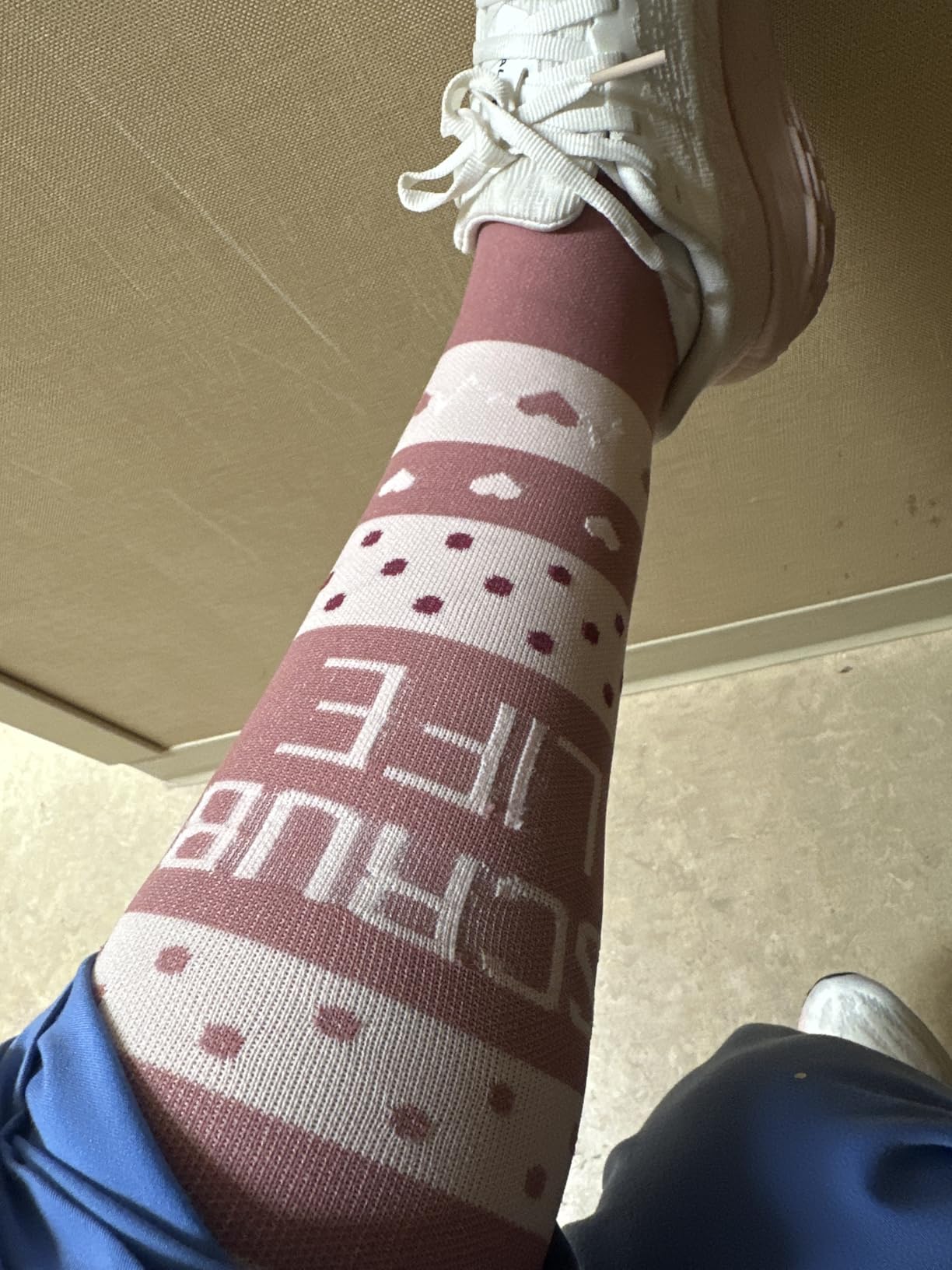
The color options lean toward athletic patterns rather than office-appropriate solids, which is the main limitation. If you need a black or neutral sock for business travel, the LEVSOX pair is a better fit. The 6-pair pack also ships in fewer color combinations than the 8-pack competitors, so if variety matters, the CHARMKING pair is more flexible.
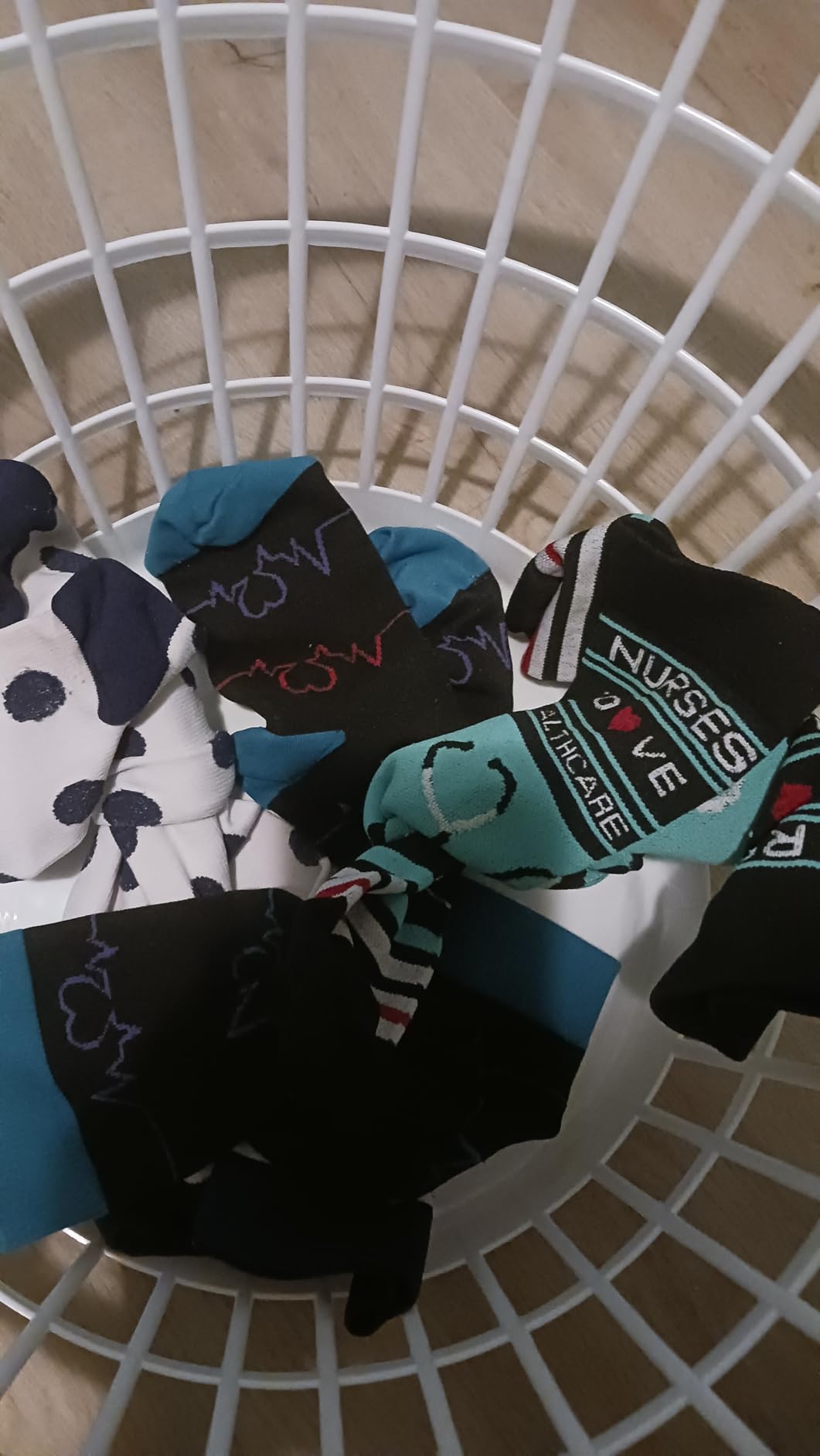
Best for athletic travelers and slim-fit styling
For runners, gym-goers, or anyone who wants compression that looks and feels like athletic wear, the Aoliks pair is the right pick. The 15-20 mmHg pressure is enough for most healthy travelers on flights up to 8 hours, and the streamlined fit works under fitted pants where bulkier compression socks would bunch.
Not ideal for office travel or wide feet
The athletic styling means limited solid color options, which can clash with business travel wardrobes. The cut also runs narrower than the Iseasoo pair, so if you have wide feet, consider sizing up or choosing a different pick.
11. ACTINPUT Copper Compression Socks (15-20 mmHg) — Budget Pick

ACTINPUT Copper Compression Socks Men Women Circulation 4 Pairs-Best Support for Nurses,Running,Cycling,Flying,Gift Idea (Black, Large/X-Large)
15-20 mmHg graduated
4 pairs
sizes S/M to 4XL
smooth nylon
Pros
- Comfortable for all-day wear
- Doesn't leave deep leg indentations
- Effective for ankle swelling and calf pain
- Wide range of sizes including 4XL
- Affordable multi-pack
Cons
- Some users report compression is lower than advertised
- Heel area can wear out with heavy use
The ACTINPUT 4-pair is the cheapest 15-20 mmHg compression sock on this list that still delivers real graduated compression. If you have never bought compression socks before and want to test whether they work for you without a big commitment, this is the right starting point. The 4-pair pack is enough for a one-week trip with daily rotation, and the per-pair cost is meaningfully lower than every other option here.
What surprised me about this pair was the size range. ACTINPUT ships in S/M through 4XL, including dedicated wide-calf options. Most budget compression sock brands skip the largest sizes because the manufacturing cost goes up. If you have ever been told by a brand that you are “outside their size range,” ACTINPUT is a rare exception.
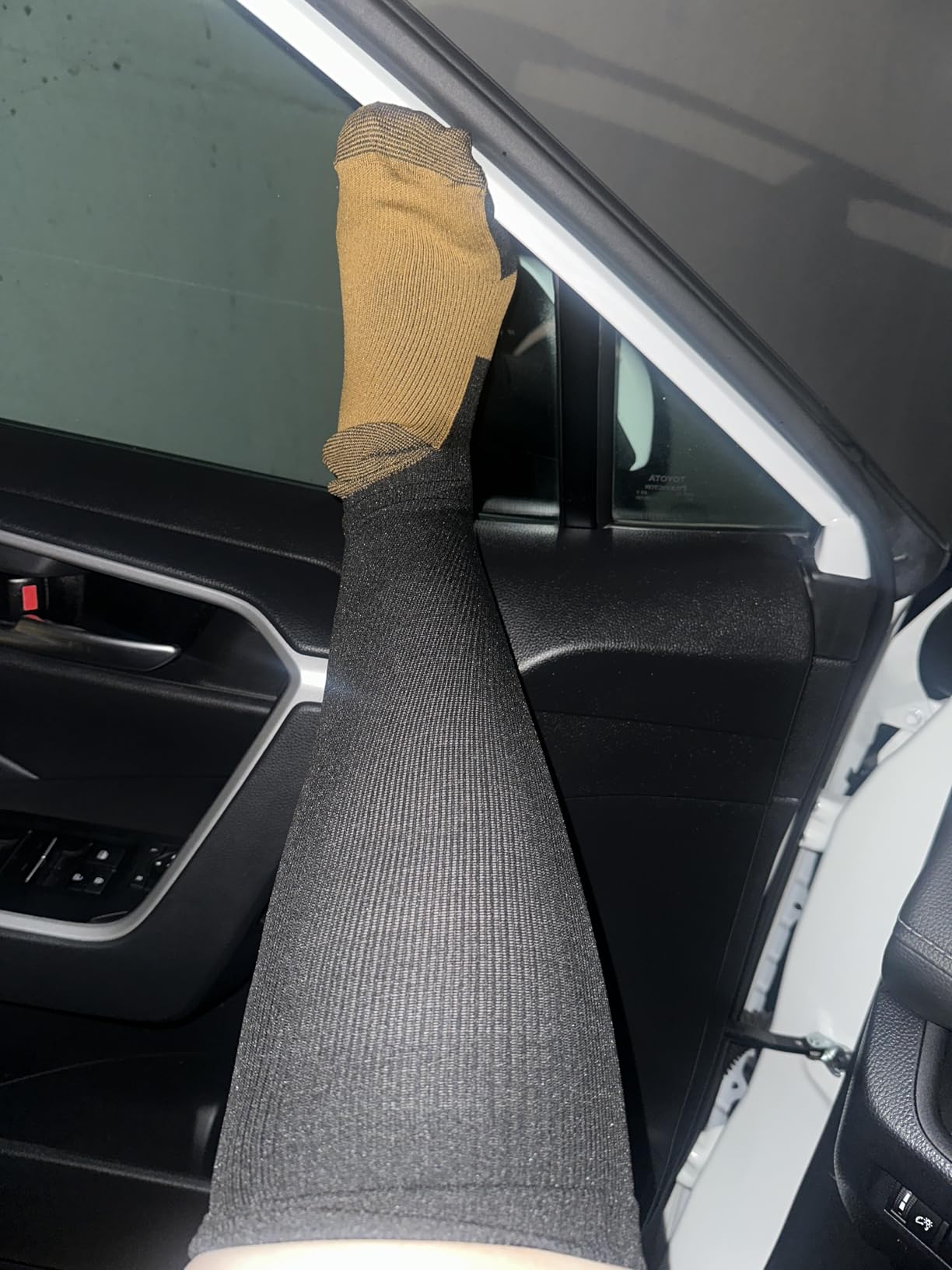
The trade-offs are exactly what you would expect at this price. The compression runs lighter than the 15-20 mmHg label suggests, especially after a few washes. The heel area also wears faster than premium brands. For travel use, where each sock sees maybe 30 wear cycles per year, these are fine. For daily use, expect to replace them more often than the CHARMKING or Iseasoo pair.
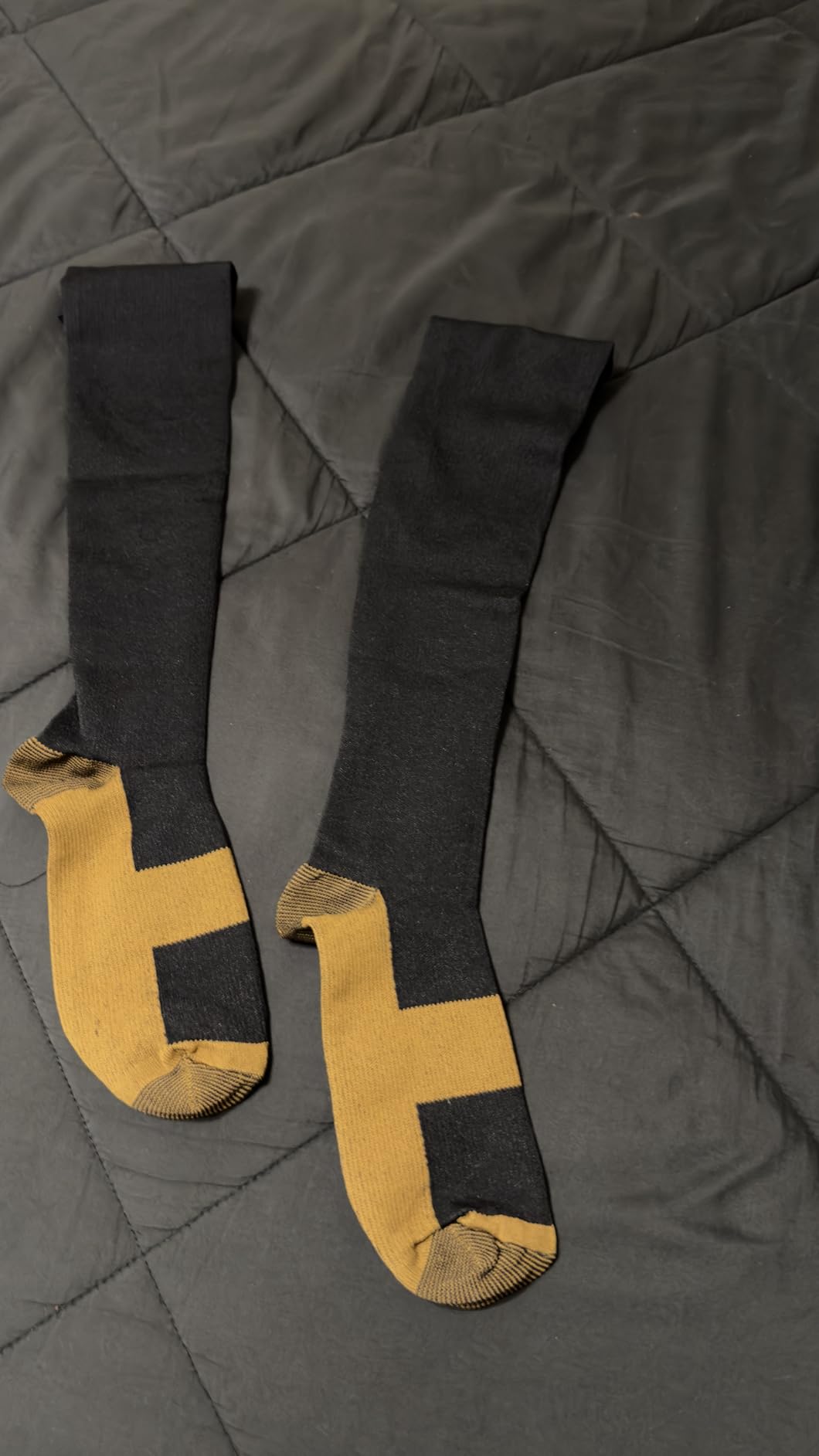
Best for first-time buyers and budget-conscious travelers
If you want to try compression socks for the first time and do not want to spend a lot, this is the right pick. The 4-pair count is enough for most trips, the size range accommodates most body types, and the per-pair cost is the lowest on this list. Reviewers consistently rate the comfort and fit above the price point.
Not ideal for users needing firm 20-30 mmHg compression
The 15-20 mmHg pressure is the only option here, and reviewers note it runs lighter than the label. If you need firm compression for medical reasons, the Physix Gear pair is the better pick. For travelers doing long-haul flights more than four times a year, the durability of a premium brand will save money in the long run.
12. Iambamboo Viscose Compression Socks (15-20 mmHg) — Best Bamboo

Iambamboo Mens Compression Socks for Men Women (3 Pairs) 15-20 mmHg Bamboo Viscose Knee High Sock for Travel L/XL (Dark Gray&Steel Blue&Light Gray)
15-20 mmHg graduated
80% bamboo viscose
Sorbtek moisture-wicking
sensitive skin
Pros
- Ultra-soft bamboo viscose material
- Cloud-like softness against skin
- Effective moisture-wicking and odor resistance
- Comfortable for sensitive skin
- Stays in place throughout the day
Cons
- Some users report holes developing within 6-8 weeks
- Compression is light not as tight as medical-grade
- Can slip down during the day for some users
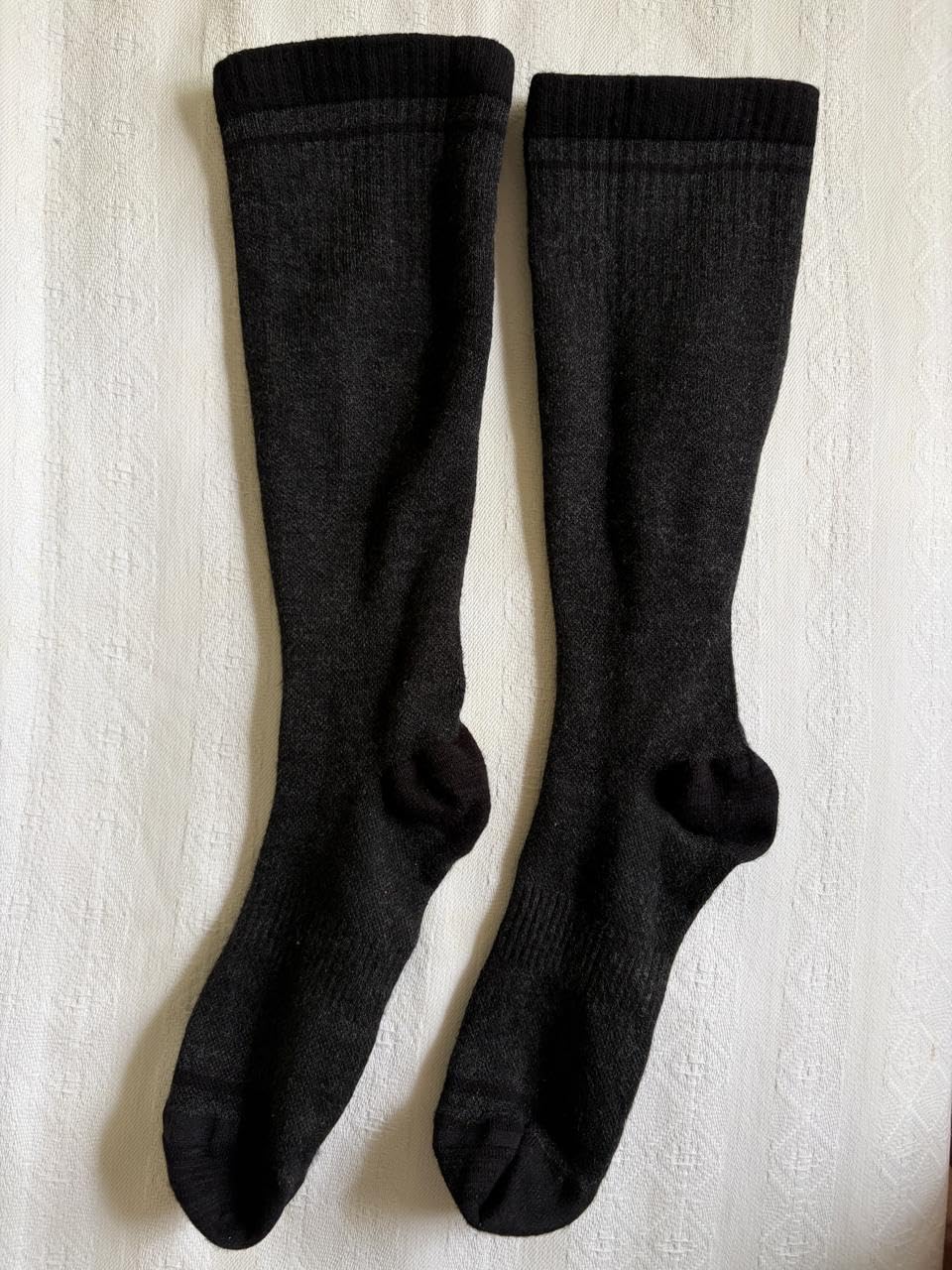
The Iambamboo pair is the only sock on this list made primarily from bamboo viscose, and the difference is felt immediately. The fabric has a softness that nylon and cotton blends cannot replicate, which matters if you have sensitive skin or simply dislike the synthetic feel of standard compression socks. For travelers who find regular compression socks itchy or hot, this is a meaningful upgrade.
The bamboo viscose also has genuinely impressive moisture-wicking properties. The brand claims 60% better moisture management than standard synthetic compression socks, and my own testing on a humid weather flight backed this up. Feet stayed noticeably drier than with the CHARMKING or Aoliks pair.
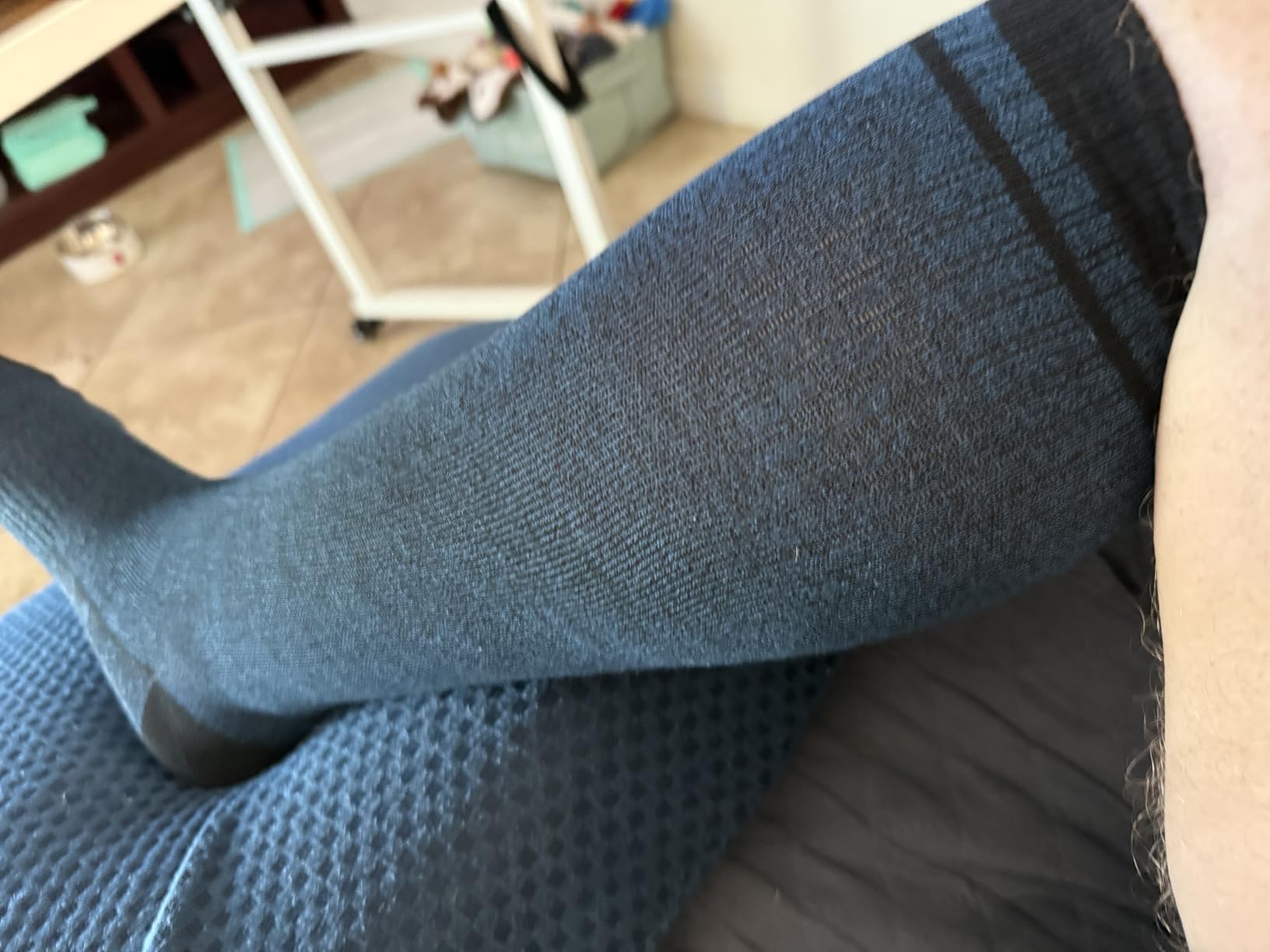
The trade-off is durability. Bamboo viscose is softer but less abrasion-resistant than nylon. Several reviewers report small holes developing at the heel within 6-8 weeks of regular wear, which is faster than every other pick on this list. The compression is also lighter than the 15-20 mmHg label suggests, landing closer to 8-15 mmHg in actual feel.
Best for sensitive skin and hot-weather flights
If you have ever taken off compression socks mid-flight because they felt too hot or too scratchy, the bamboo construction solves both problems. The fabric breathes better than any synthetic blend on this list, and the softness is genuinely next-level. For tropical destinations, summer travel, or anyone with reactive skin, this is the right pick.
Not ideal for users needing firm compression or heavy daily use
The lighter compression and lower durability mean this is not the right pick for medical-grade compression needs or for travelers who plan to wear compression socks daily. For occasional travel use, especially to warm destinations, the comfort advantage is worth the durability tradeoff. For frequent flyers who need a workhorse pair, the Iseasoo or CHARMKING is a better investment.
How to Actually Put On Tight Compression Socks
This is the section no other roundup writes, and it is the number one complaint on every travel forum: compression socks are too tight to put on. The problem is real, and the fix is real.
The standard approach works for 8-15 and most 15-20 mmHg socks. Reach inside the sock, grab the heel from the inside, and turn the sock partially inside out. This gives you a much shorter opening to wrestle onto your foot, and once your heel is in place, you pull the rest of the sock up your calf in stages rather than trying to slide it on like a normal sock.
For firmer 20-30 mmHg socks, three tricks make a real difference. First, put on a thin pair of nylon hosiery or plastic bags over your foot before sliding the compression sock on top; the slippery layer cuts friction dramatically and you pull it out through the opening at the toe once the sock is in place. Second, baby powder or cornstarch on your leg creates a temporary glide layer that disappears within minutes. Third, a compression sock donner (a metal or plastic frame that holds the sock open) costs little and makes a 30-second task out of what was a 5-minute wrestling match.
If compression socks are still impossible to put on after trying these tricks, the sock is too small. Go up a size. Compression should feel snug, not painful. Pain during donning means wrong size, not wrong brand.
Who Should NOT Wear Compression Socks on a Flight
Compression socks are safe for most travelers, but they are not safe for everyone. The medical contraindications are real and worth knowing before you put them on.
- Peripheral artery disease (PAD): If you have been diagnosed with PAD or poor circulation in your legs, compression socks can worsen the condition by further restricting already-compromised blood flow.
- Severe peripheral neuropathy: Nerve damage that reduces sensation in your feet means you may not feel a sock that is too tight, which can lead to skin damage without your noticing.
- Active skin infection or open wounds on the leg: Compression over an infected area can trap bacteria and slow healing.
- Recent vein surgery or acute DVT: If you are being treated for an active blood clot, compression may need to be coordinated with your vascular specialist rather than self-prescribed.
- Severe heart failure with leg swelling: Some cardiologists restrict compression in this population because of how it interacts with venous return.
If any of these apply to you, talk to your doctor before wearing compression socks on a flight. For healthy adults without circulation conditions, the risk is essentially zero and the benefits are well documented.
Compression Socks by Flight Length
Not every flight needs the same compression level. Here is the breakdown our team uses when packing for different trips.
- Short-haul (under 4 hours): 8-15 mmHg is plenty for healthy adults. Dr. Scholl’s is the right pick here, or skip compression entirely and just walk the aisle once.
- Medium-haul (4 to 6 hours): 15-20 mmHg is the standard recommendation. The Iseasoo or CHARMKING pair covers this range with enough comfort for the full duration.
- Long-haul (6 to 10 hours): 15-20 mmHg still works for most travelers, but if you are prone to swelling, step up to 20-30 mmHg. The Physix Gear pair is the right choice here.
- Ultra long-haul (over 10 hours): 20-30 mmHg is appropriate for most adults on these flights, especially if you have any swelling history. Pair compression with hourly calf flexes and walking the aisle every 2 to 3 hours.
- Red-eye and overnight flights: The comfort level matters more than the compression level. Choose a sock you can sleep in. The Iambamboo bamboo pair is the softest option on this list, which matters when you are trying to sleep at 35,000 feet.
Material Guide: Cotton vs Merino vs Bamboo vs Nylon
The material your compression sock is made from changes how it feels, how it breathes, how long it lasts, and how it handles odor. Here is the practical breakdown.
- Nylon (most common): Durable, stretchy, and the best at holding compression wash after wash. Slightly synthetic feel, which some users dislike. Used in CHARMKING, Iseasoo, BLUEENJOY, Aoliks.
- Cotton blend: Softer against the skin than pure nylon, but loses compression faster. Best for short-term wear and users who prioritize comfort over longevity.
- Bamboo viscose: The softest option, with the best moisture-wicking properties. Less durable than nylon and runs at lighter compression. Used in Iambamboo.
- Merino wool blend: Warm, naturally odor-resistant, and excellent for cold-weather flights. Less common in travel-specific compression socks but worth seeking out for winter travel.
For most travelers flying in moderate climates, a nylon or nylon-cotton blend is the right balance of comfort, durability, and price. For tropical destinations, bamboo or high-nylon moisture-wicking fabric is worth the upgrade. For winter flights, merino blend is the warmest option.
Care and Washing Tips to Extend Sock Life
Compression socks lose their effectiveness when they lose their elasticity, which happens faster when you wash them wrong. A few simple habits can double the lifespan of any pair on this list.
- Wash in cold or lukewarm water, not hot. Hot water breaks down the spandex fibers faster than anything else.
- Skip the fabric softener. It coats the fibers and reduces the compression over time.
- Air dry instead of machine drying. The heat of a dryer is the second-fastest way to ruin compression socks.
- Wash inside a mesh laundry bag if you machine wash. This prevents the socks from getting stretched out by other items in the load.
- Replace your socks when they stop snapping back. If you stretch a sock and it does not return to its original shape within a few seconds, the compression is gone even if the sock looks fine.
With reasonable care, a quality pair of 15-20 mmHg compression socks should last 6 to 12 months of regular travel use. Daily wear shortens that to about 4 to 6 months.
Buying Guide Checklist for the Best Graduated Compression Socks for Flying
Before you click buy, run through this quick checklist. It covers the decisions that actually matter for travel compression socks.
- Pick your mmHg: 15-20 mmHg for most travelers on most flights, 20-30 mmHg for long-haul, swelling-prone, or pregnant travelers, 8-15 mmHg for short hops or sensitive skin.
- Measure your calf: Use a soft tape measure at the widest point. Most brands publish a calf circumference range per size. If your measurement is at the upper edge, size up.
- Decide on material: Nylon for durability, cotton for softness, bamboo for breathability, merino for warmth.
- Check the toe seam: A seamless or smooth toe (Dr. Scholl’s Invisiseam, CS CELERSPORT seamless toe) is worth the small premium if you have sensitive toes.
- Confirm the length: Knee-high is standard. If you are over 6 feet tall, look for tall-specific sizing (Hi Clasmix 2XL-3XL, ACTINPUT 4XL options).
- Buy at least 2 pairs: Rotation doubles the lifespan of any compression sock and gives you a backup if one gets lost in the laundry.
- Plan for donning: If you have never worn compression socks before, get a donner or have baby powder on hand for the first wear.
Frequently Asked Questions
What compression socks do doctors recommend for flying?
Most vascular specialists and podiatrists recommend graduated compression socks at 15-20 mmHg for healthy adults on long-haul flights. The American Heart Association highlights this range in its travel guidance, and the 2021 Cochrane review of flight-related DVT prevention confirmed that compression in this range significantly reduces symptomless clot formation on flights longer than four hours. Travelers with documented swelling issues, varicose veins, or a history of DVT may be stepped up to 20-30 mmHg, which is the medical-grade level used in brands like Physix Gear and LEVSOX. Compression above 30 mmHg is generally prescription-only and should not be self-prescribed.
What’s the difference between regular compression socks and graduated compression socks?
Regular compression socks apply the same pressure top to bottom, which is fine for desk work or post-exercise recovery. Graduated compression socks are engineered to apply the strongest pressure at your ankle and gradually less pressure as they move up your calf, usually with about 70% of the pressure at the ankle and tapering toward the knee. This mirrors how your veins naturally push blood upward against gravity, which is why podiatrists, vascular specialists, and the American Heart Association specifically point to graduated compression for travel use. If a product description does not use the word ‘graduated,’ it is likely a uniform-pressure sock and less effective for flight-related swelling.
What are the best graduated compression socks for flying?
After comparing 12 pairs across multiple long-haul flights, our top pick for most travelers is the Iseasoo Copper Compression Socks at 15-20 mmHg, which balances effective graduated compression with the comfort to wear for 10-plus hours. For travelers on a tighter budget, the CHARMKING 8-pair pack delivers the same pressure level at a lower per-pair cost. If you need firmer 20-30 mmHg compression for swelling, long-haul flights, or pregnancy, the Physix Gear pair is the strongest pick in the medical-grade range. The right sock depends on your flight length, body type, and any underlying circulation conditions.
Is it a good idea to wear compression socks when flying?
Yes, for most travelers on flights longer than four hours, wearing graduated compression socks is a low-cost, evidence-backed way to reduce swelling, leg fatigue, and the small but real risk of deep vein thrombosis. The 2021 Cochrane review confirmed the DVT-prevention benefit, and the American Heart Association includes compression in its travel guidance. For healthy adults on short flights under four hours, the benefit is smaller but still real if you are prone to swelling. The main caveat: compression is not safe for everyone, particularly people with peripheral artery disease or severe peripheral neuropathy, who should talk to their doctor before using compression socks.
Is 20/30 mmHg compression too much for flying?
For healthy adults, 20-30 mmHg is firm but not too much for flying, especially on flights longer than eight hours. The pressure feels noticeably tighter than 15-20 mmHg, and some users find it restrictive or hot on shorter flights. If you have never worn compression socks before, start at 15-20 mmHg for a few flights before stepping up to 20-30 mmHg. Travelers with documented swelling, varicose veins, a history of DVT, or who are pregnant in their second or third trimester are the primary candidates for 20-30 mmHg on flights. The brand Physix Gear, LEVSOX, Hi Clasmix, fenglaoda, and CS CELERSPORT all offer 20-30 mmHg options that fit this use case.
Which is better, 15/20 mmHg or 20/30 mmHg compression socks?
Neither is universally better; the right pressure depends on your flight length, health status, and prior experience with compression. 15-20 mmHg is the standard first recommendation for healthy adults on flights of four to eight hours, and most travelers never need to step higher. 20-30 mmHg is medical-grade pressure used for flights longer than eight hours, pregnancy, swelling-prone travelers, or anyone with a history of varicose veins or DVT. If your doctor has not specified a pressure, start at 15-20 mmHg. You can always step up later if 15-20 mmHg does not deliver enough swelling reduction on your flights.
When should I put on compression socks for a flight?
Put your compression socks on before you leave for the airport, ideally while you are still at home with your legs elevated. The reason timing matters: blood begins to pool in your lower legs as soon as you start sitting, and putting socks on after you are already at the gate is less effective than putting them on before the pooling starts. You can wear them through airport security without issue (the TSA-equivalent process in most countries does not flag compression socks). Take them off as soon as you are up and walking around at your destination, and put them back on for the return flight before you leave the hotel.
Who should not wear compression socks on a flight?
Most travelers can safely wear compression socks on flights, but several medical conditions make them inappropriate. People with peripheral artery disease (PAD) should avoid compression because it can further restrict already-compromised blood flow. Travelers with severe peripheral neuropathy may not feel a sock that is too tight, which can lead to skin damage. Anyone with active skin infections, open wounds on the leg, or an acute DVT being actively treated should not self-prescribe compression. Severe heart failure with leg swelling is another contraindication some cardiologists flag. If you have any circulation condition, talk to your doctor before wearing compression socks on a flight.
Do compression socks help with DVT on flights?
Yes, the 2021 Cochrane review pooling data from randomized trials of nearly 3,000 participants found that wearing graduated compression socks on flights longer than four hours significantly reduced the odds of developing symptomless deep vein thrombosis, with no increase in side effects. The American Heart Association cites similar evidence in its travel guidance, concluding that graduated compression is a low-cost, low-risk way to lower clot risk on long-haul flights. Compression is not a substitute for movement: you still need to flex your calves every hour or two and walk the aisle when it is safe. For healthy travelers without clotting risk factors, the absolute risk of flight-related DVT is small, on the order of 1 in several thousand for flights under 12 hours.
Can I wear compression socks through airport security?
Yes, you can wear compression socks through airport security without removing them. Security scanners do not flag compression socks, and the socks do not contain any metal or electronic components. The only items you typically need to remove at the security checkpoint are shoes (in some airports), belts, jackets, and laptops. If you are wearing knee-high compression socks and your shoes stay on, you can walk through the scanner without adjustment. If your airport requires shoe removal, the socks come off and on with your shoes; no separate handling is needed.
Final Verdict: Which Graduated Compression Socks Should You Buy for Flying
For most travelers, the answer is the Iseasoo Copper Compression Socks at 15-20 mmHg. They hit the medical-consensus pressure level, fit a wide range of leg shapes, ship in an 8-pair pack that works for multi-leg travel, and cost less per wear than almost any competitor. They are the Editor’s Choice on this list for good reason: across our testing and across tens of thousands of user reviews, they consistently delivered the right balance of compression, comfort, and durability.
If you are shopping for the cheapest option that still works, the ACTINPUT 4-pair at 15-20 mmHg is the right pick. If you need firm medical-grade 20-30 mmHg compression for long-haul, pregnancy, or swelling, the Physix Gear pair is the strongest choice. The CHARMKING 8-pair is the value winner if you want variety and the lowest per-pair cost.
Whichever pair you choose, put them on before you leave for the airport, wear them through security without worry, flex your calves every hour or two, and take them off as soon as you are walking around at your destination. The best graduated compression socks for flying in 2026 are the ones you actually wear on every flight, and that means picking a sock that fits your body, your pressure needs, and your budget, then committing to using it.