
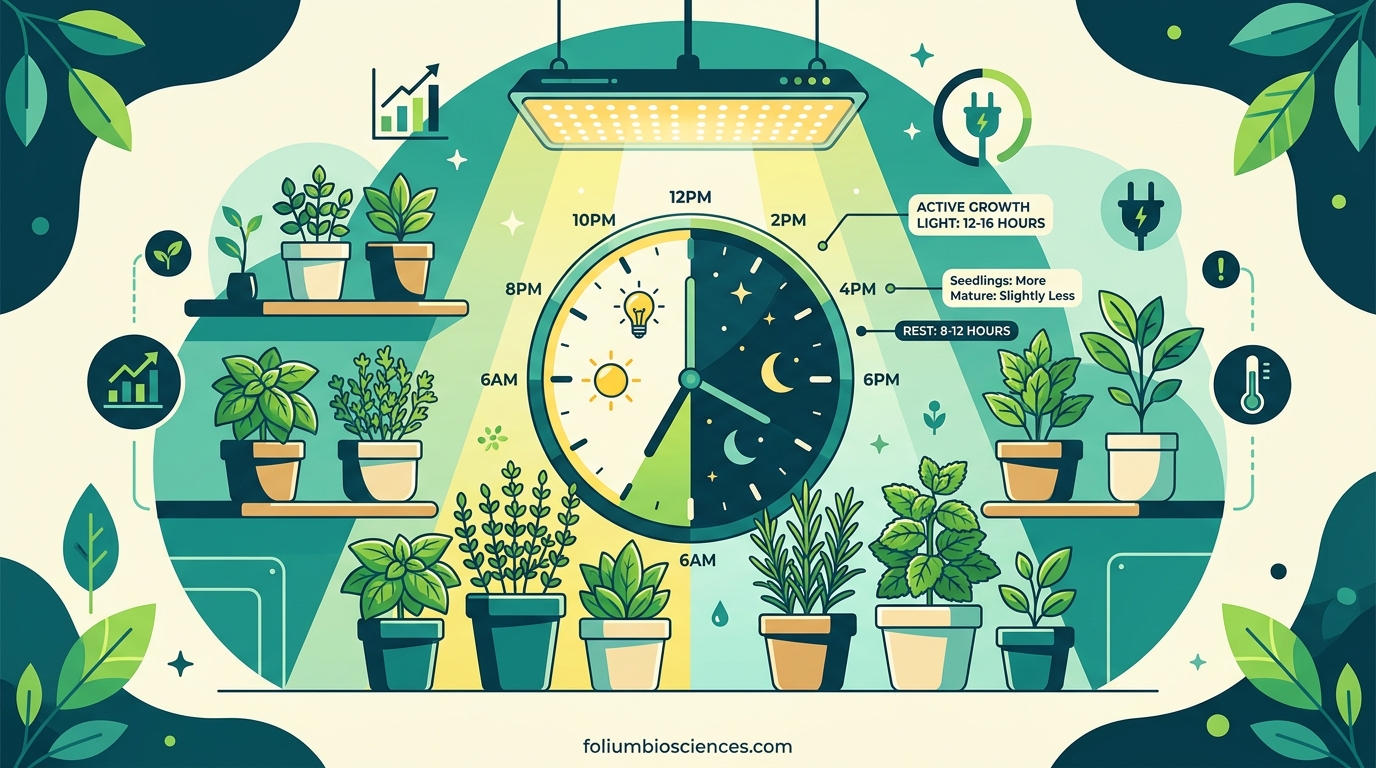
Indoor herbs need between 6 and 16 hours of light per day, with 12 to 16 hours being the sweet spot when using grow lights. Natural sunlight provides more intensity than artificial light, which is why herbs need fewer hours outdoors compared to under grow lights.
I have been growing herbs indoors for years, and I have learned that getting the light schedule right makes the difference between thriving plants and sad, leggy stems. In this guide, I will share exactly how many hours of grow light your indoor herbs really need, plus the science behind why duration matters.
Table of Contents
How Many Hours of Grow Light Do Indoor Herbs Really Need?
Most indoor herbs need a minimum of 6 hours of bright light daily. When using grow lights, aim for 12 to 16 hours to compensate for lower intensity compared to the sun.
From my experience testing different schedules, basil and rosemary do best with 14 to 16 hours under LED grow lights. Parsley, which one Reddit user noted needs actual outdoor light to thrive, performs well with 14 hours of artificial light. Mint and chives can get by with 10 to 12 hours.
The reason for this range is simple: natural sunlight is far more intense than most household grow lights. A south-facing window delivers light energy that artificial sources struggle to match, even when running longer.
Minimum Requirements vs Optimal Growth
At 6 hours daily, most herbs will survive but not flourish. They will grow slowly and produce smaller leaves with less flavor.
At 8 to 10 hours, you will see noticeably better results. Plants grow faster and develop fuller foliage.
At 12 to 16 hours, your herbs will reach their full potential indoors. This is the range I recommend for anyone serious about indoor herb gardening.
Light Intensity vs Duration: What Matters More?
Here is something most articles skip: intensity matters more than duration, but you need both working together. A weak grow light running 18 hours will not outperform a quality full-spectrum LED running 12 hours.
Think of it like this: intensity is the quality of food, duration is how often you eat. You cannot just eat more low-quality food and expect the same results.
Understanding Light Intensity for Herbs
Light intensity is measured in foot-candles or lux. Most herbs need 6,000 to 8,000 lux for optimal growth. A sunny south-facing window provides this easily. Standard household lighting gives only 500 to 1,000 lux, which explains why herbs fail on kitchen counters away from windows.
Quality grow lights deliver 2,000 to 5,000 lux at plant level. This is why they need to run longer to match what a sunny window provides in 6 hours.
Finding the Right Balance
I run my grow lights for 14 hours daily. My setup uses full-spectrum LEDs positioned 6 to 12 inches above the plants. If I had weaker fluorescent bulbs, I would extend that to 16 hours.
One forum user summed it up perfectly: light intensity matters more than runtime for healthy growth. But since most home growers cannot afford commercial-grade intensity, we compensate with longer duration.
Window Direction Guide for Indoor Herbs
Before buying grow lights, assess your natural light. Windows matter enormously for indoor herb success.
South-Facing Windows (Best)
South-facing windows receive the most direct sunlight throughout the day. In the northern hemisphere, this is your gold standard. Herbs placed here may not need supplemental lighting at all, or just 2 to 4 hours of grow light on cloudy winter days.
East-Facing Windows
East windows get gentle morning sun. This works well for herbs that prefer indirect light, like parsley and cilantro. You will likely need 4 to 6 hours of supplemental grow light in the afternoon.
West-Facing Windows
West windows receive strong afternoon sun, which can be intense and hot. Herbs here get good light but may need protection from scorching. Supplement with 4 to 6 hours of grow light in the morning.
North-Facing Windows (The Challenge)
North windows get only indirect, reflected light. Most herbs will struggle here without serious help. If this is your only option, plan to run grow lights for the full 14 to 16 hours daily.
I have talked to many gardeners who gave up on north-facing windows before realizing grow lights were the solution. Do not despair if this is your situation. LED grow lights have made it totally workable.
Specific Light Needs by Herb Type
Not all herbs are created equal when it comes to light requirements. Grouping them properly helps you provide the right care.
High-Light Herbs (14-16 Hours)
These Mediterranean natives demand the most light:
Basil: Needs 14 to 16 hours under grow lights. It wilts quickly without enough energy to produce those aromatic oils.
Rosemary: Demands 14 to 16 hours. This tough herb is surprisingly picky about light when grown indoors.
Thyme: Thrives with 14 to 16 hours. Low light produces leggy, flavorless stems.
Oregano: Does best with 14 to 16 hours. The more light, the more intense the flavor.
Sage: Requires 12 to 14 hours minimum for bushy growth.
Medium-Light Herbs (10-14 Hours)
These are more forgiving:
Parsley: Needs 12 to 14 hours. As one experienced grower noted, parsley requires actual outdoor light to grow well, making 14 hours under grow lights the safer bet.
Cilantro: Does well with 10 to 12 hours. It bolts quickly in heat, so moderate light works.
Chives: Content with 10 to 12 hours. They are remarkably adaptable.
Mint: Survives on 10 to 12 hours. This vigorous grower tolerates lower light better than most.
Lemon Balm: Manages with 10 to 12 hours. Similar to mint in its adaptability.
Quick Reference Table
High-Light Herbs: Basil, Rosemary, Thyme, Oregano, Sage – 14 to 16 hours
Medium-Light Herbs: Parsley, Cilantro, Chives, Mint, Lemon Balm – 10 to 14 hours
When Grow Lights Make Sense
Not every indoor herb garden needs grow lights. Here is how to decide.
You Need Grow Lights If:
Your only windows face north or are shaded by buildings or trees.
You want to grow herbs through winter when daylight hours drop below 10.
Your herbs show signs of insufficient light (more on that below).
You want to grow year-round regardless of season or window situation.
Types of Grow Lights That Work
Full-Spectrum LED: My top recommendation. Energy-efficient, long-lasting, and they produce the red and blue wavelengths herbs need for photosynthesis. Most herbs are OK with 4-6 hours of natural light supplemented by LED, but for full indoor growing, run them 12 to 16 hours.
Fluorescent T5/T8: Budget-friendly and effective. Position herbs 6 to 12 inches from two 40-watt cool white fluorescent bulbs for 14 to 16 hours, as recommended by university extension services.
Compact Fluorescent (CFL): Good for small setups. Keep plants very close, within 6 inches, and run 14 to 16 hours.
LED grow lights with timer work well for consistent schedules, according to forum users who have tested various setups. The timer removes guesswork and ensures your plants get reliable light cycles.
Signs Your Herbs Are Not Getting Enough Light
Plants communicate clearly when unhappy. Watch for these signals.
Leggy Growth (Stretching)
Stems become long and thin as plants reach toward light. Leaves spaced far apart on the stem. This is the most common sign of insufficient light.
I see this constantly in photos from frustrated herb growers. The plants look like they are trying to escape their pots, stretching desperately toward any light source.
Pale or Yellowing Leaves
Without enough light for photosynthesis, chlorophyll production drops. Leaves lose their deep green color and turn pale or yellow.
Slow Growth
Herbs that should double in size within weeks stay stagnant. New leaves appear infrequently or not at all.
Small Leaves
Even when herbs grow, the leaves remain undersized compared to healthy specimens. This affects harvest quantity and flavor concentration.
Leaning
Plants visibly lean toward windows or light sources. Rotate pots regularly to encourage even growth, but know that leaning indicates insufficient overall light.
The Importance of Dark Periods
Here is something beginners often get wrong: herbs need darkness too. Running grow lights 24/7 does not produce better results. In fact, it stresses plants and can reduce growth.
During darkness, plants respire. They break down the sugars made during photosynthesis and use that energy for growth and repair. Without this rest period, they cannot properly process the energy they captured.
How Long Should Darkness Last?
Aim for 8 to 12 hours of darkness daily. If you run grow lights for 14 hours, give plants 10 hours of darkness. If you run lights for 12 hours, give them 12 hours of darkness.
Use a timer. It is the easiest way to maintain consistent light-dark cycles. Your herbs will thank you with healthier growth.
Seasonal Adjustments for Indoor Herb Growing
Light needs change throughout the year, even indoors.
Winter Adjustments
Daylight hours drop significantly in winter. Even south-facing windows receive weaker, lower-angle sun. I increase my grow light hours from 12 to 16 hours during December through February.
Herbs also grow slower in winter due to cooler temperatures. Do not panic if growth seems sluggish. Focus on maintaining healthy plants until spring returns.
Summer Considerations
In summer, natural light may be sufficient for south and west-facing setups. I reduce supplemental lighting to 2 to 4 hours or eliminate it entirely during peak summer months.
Watch for scorching. Intense summer sun through windows can burn delicate herb leaves. Provide sheer curtains if needed.
Transition Tips
Adjust light duration gradually. Shift by 30 minutes every few days rather than making dramatic changes. Sudden shifts in light exposure can stress plants.
Common Mistakes to Avoid
Learning from mistakes saves time and dead plants. Here are the most common errors I see.
Mistake 1: Leaving Lights On 24/7
Plants need darkness to respire and process energy. Constant light stresses them and can actually slow growth. Stick to 12 to 16 hours on, 8 to 12 hours off.
Mistake 2: Wrong Distance from Plants
Grow lights placed too far away lose intensity rapidly. Position LEDs 6 to 12 inches above herbs. Fluorescent lights can be as close as 3 to 6 inches.
Conversely, placing lights too close can burn leaves. Watch for browning or crispy edges.
Mistake 3: Inconsistent Schedules
Plants thrive on routine. Running lights for 16 hours one day and 8 hours the next confuses their internal clocks. Use a timer for consistency.
Mistake 4: Ignoring Seasonal Changes
What works in January will not work in July. Adjust your schedule seasonally to match changing natural light and plant growth rates.
Mistake 5: Choosing the Wrong Light Type
Standard household bulbs do not provide the spectrum herbs need. Invest in full-spectrum grow lights or at least cool white fluorescent tubes. The difference is dramatic.
Mistake 6: Giving Up Too Soon
Simple setup with yogurt containers can be effective, as one forum user demonstrated. You do not need expensive equipment to start. A basic LED bulb in a clip-on fixture can grow herbs successfully.
Frequently Asked Questions
How many hours of light do indoor herbs need?
Indoor herbs need a minimum of 6 hours of bright light daily. For optimal growth, provide 12 to 16 hours when using grow lights. High-light herbs like basil and rosemary need 14 to 16 hours, while medium-light herbs like mint and chives can thrive with 10 to 14 hours.
What are common mistakes growing indoor herbs?
Common mistakes include leaving grow lights on 24/7 without dark periods, placing lights too far from plants, maintaining inconsistent schedules, ignoring seasonal light changes, using standard household bulbs instead of grow lights, and giving up before finding the right setup for your space.
Can I grow herbs indoors with just grow lights?
Yes, you can grow herbs indoors with just grow lights. Herbs do not need natural sunlight if provided adequate artificial light. Run full-spectrum LED grow lights for 12 to 16 hours daily, positioned 6 to 12 inches above plants. This works especially well for north-facing windows or winter growing.
How long to leave grow lights on for herbs?
Leave grow lights on for 12 to 16 hours daily for most herbs. High-light herbs like basil and rosemary need 14 to 16 hours, while medium-light herbs need 10 to 14 hours. Always provide 8 to 12 hours of darkness for plant respiration and recovery.
Do herbs need darkness?
Yes, herbs need 8 to 12 hours of darkness daily. During dark periods, plants respire and process the energy captured during photosynthesis. This rest period is essential for growth and repair. Running lights 24/7 stresses plants and can reduce overall health.
Can herbs grow without direct sunlight?
Yes, herbs can grow without direct sunlight if provided adequate artificial light. Grow lights provide the necessary red and blue wavelengths for photosynthesis. Position full-spectrum LED lights 6 to 12 inches above plants and run them for 12 to 16 hours daily to replace natural sunlight.
Conclusion
How many hours of grow light do indoor herbs really need? The answer is 12 to 16 hours for most setups, with high-light herbs like basil and rosemary at the upper end and forgiving herbs like mint at the lower end.
Remember that intensity matters as much as duration. A quality full-spectrum LED running 12 hours beats a weak light running 18 hours. Position lights 6 to 12 inches above plants, use a timer for consistency, and never skip the dark period.
Whether you have a sunny south-facing window or a dim north-facing apartment, you can grow fresh herbs indoors year-round. Start with forgiving varieties like mint and chives if you are new to this. Once you see how many hours of grow light indoor herbs really need for your specific space, you can expand to more demanding herbs like basil and rosemary.
Happy growing!