
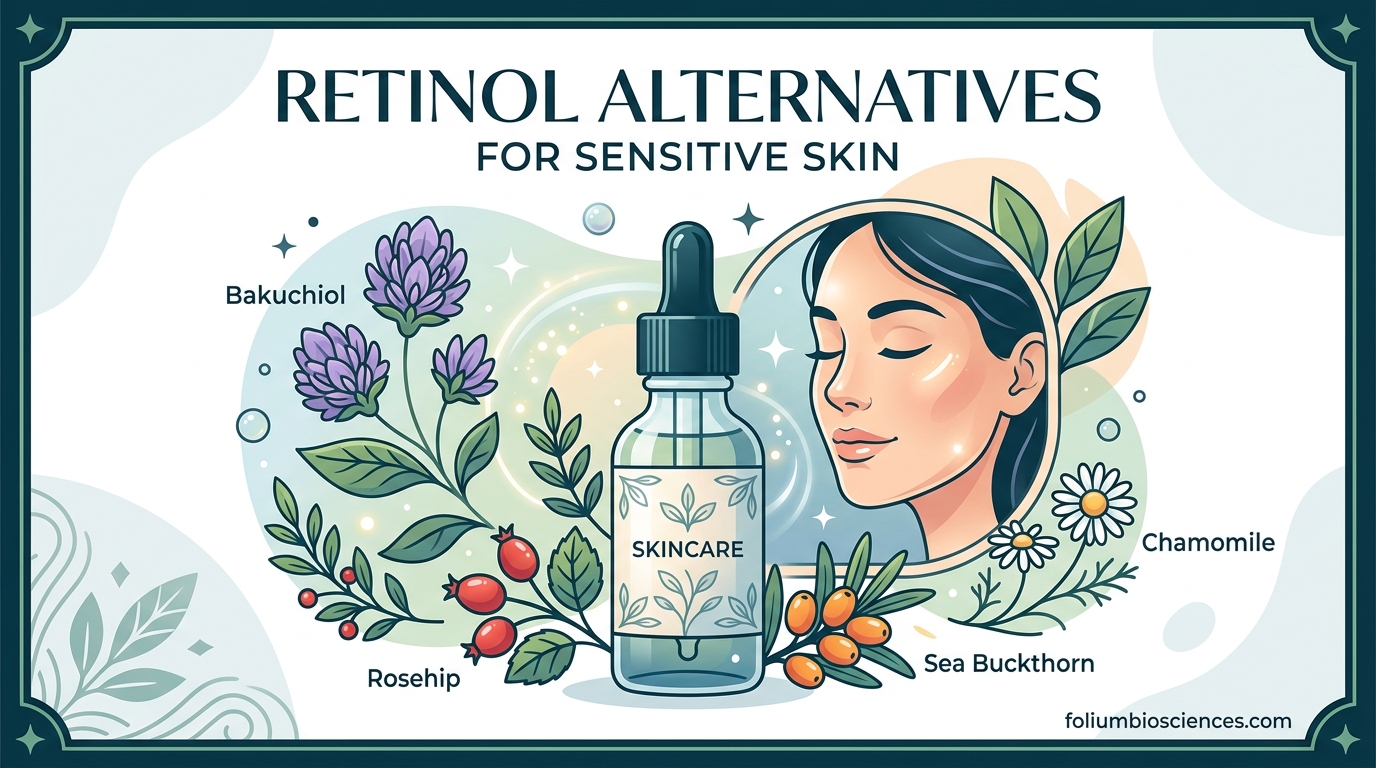
If you have sensitive skin, you already know the struggle. You hear everyone raving about retinol for anti-aging, but the moment you try it, your face turns red, starts peeling, and feels like it is on fire. I have been there, and so have thousands of people searching for retinol alternatives for sensitive skin that actually work without the burn.
The good news is that nature offers three standout options: bakuchiol, rosehip oil, and carrot seed oil. Each one delivers anti-aging benefits through a different mechanism, and each one is gentler than prescription retinol. In this guide, I will break down exactly how each ingredient works, who it is best for, and how to choose the right one for your specific skin concerns.
Whether you are dealing with reactive skin that cannot tolerate any retinoid, or you are pregnant and need to avoid retinol entirely, there is a plant-based alternative that fits your needs. Let us get into the details.
Table of Contents
Why Sensitive Skin Reacts to Retinol
Retinol works by speeding up cell turnover and stimulating collagen production. That sounds great in theory, but for sensitive skin types, the process is too aggressive. The rapid shedding of skin cells causes the exact symptoms most sensitive skin sufferers dread: redness, flaking, burning, and tightness.
The mechanism behind this irritation is straightforward. Retinol binds to retinoid receptors in the skin, triggering a cascade that accelerates how quickly your skin cells divide and shed. For people with a compromised skin barrier or reactive nerve endings, this process overwhelms the skin’s ability to cope. The result is what dermatologists call “retinol burn” — a combination of inflammation, dryness, and sensitivity that can last days or even weeks.
According to dermatologists, the irritation typically peaks within the first two to four weeks of use. Some people push through this “purge phase” and eventually adapt. Others never do. A 2019 study published in the Journal of Clinical and Aesthetic Dermatology found that up to 50 percent of retinol users experience some degree of irritation, and sensitive skin types are disproportionately affected.
This is exactly why natural retinol alternatives have surged in popularity. People want the collagen-boosting, wrinkle-reducing, skin-brightening benefits without the painful side effects. They also want options that are safe during pregnancy and breastfeeding, since retinol is strictly contraindicated during both.
From what I have seen in skincare communities like r/SkincareAddiction and r/30PlusSkinCare, the three ingredients that come up most often as viable retinol alternatives for sensitive skin are bakuchiol, rosehip oil, and carrot seed oil. Let us look at each one in detail.
Bakuchiol: The Plant-Based Retinol Alternative
What Is Bakuchiol and Where Does It Come From?
Bakuchiol (pronounced buh-KOO-chee-all) is a naturally occurring compound extracted from the seeds and leaves of the Psoralea corylifolia plant, also known as the babchi plant. This plant has been used in traditional Ayurvedic and Chinese medicine for centuries to treat skin conditions. Modern skincare has zeroed in on bakuchiol because it mimics retinol’s effects on the skin without triggering the same irritation response.
How Bakuchiol Works
Bakuchiol stimulates collagen production and promotes cell turnover through a different pathway than retinol. Rather than binding to retinoid receptors (which trigger the irritation cascade), bakuchiol modulates gene expression in a way that produces similar anti-aging results. A landmark 2019 study published in the British Journal of Dermatology compared bakuchiol directly with retinol and found that bakuchiol produced comparable improvements in wrinkle depth, pigmentation, and overall photodamage after 12 weeks of twice-daily use.
The critical difference was in side effects. The retinol group reported significantly more facial skin scaling and stinging. The bakuchiol group reported virtually none.
Key Benefits for Sensitive Skin
Bakuchiol offers several advantages that make it the leading retinol alternative for sensitive skin types. It is non-irritating even at higher concentrations, typically formulated at 0.5 to 2 percent. It is photostable, meaning it does not break down in sunlight the way retinol does, so you can use it during the day without worry. It also has anti-inflammatory and antioxidant properties, which actively soothe sensitive skin rather than aggravating it.
Users in skincare forums consistently report visible improvements in skin texture and fine lines within 8 to 12 weeks. Many describe bakuchiol as a “gentle retinol” that delivers real results without any adjustment period.
Who Bakuchiol Is Best For
Bakuchiol is ideal for anyone who has tried retinol and could not tolerate it. It is also one of the most recommended retinol alternatives for pregnant and breastfeeding women, since it is not a vitamin A derivative and has no known contraindications during pregnancy. If your primary concerns are fine lines, uneven texture, and loss of firmness, bakuchiol is likely your strongest option among the three alternatives covered here.
Rosehip Oil: Nature’s Source of Retinoic Acid
What Is Rosehip Oil
Rosehip oil is cold-pressed from the seeds of wild rose bushes (Rosa canina or Rosa rubiginosa). Unlike rose essential oil, which is distilled from petals, rosehip oil comes from the fruit of the rose plant — the small, round “hips” that remain after the flowers drop their petals. This oil has been used for centuries in traditional medicine and has gained massive popularity in modern skincare for its unique nutritional profile.
How Rosehip Oil Works as a Retinol Alternative
Rosehip oil contains small amounts of natural trans-retinoic acid, which is the active form of vitamin A that retinol converts to in the skin. This is what gives rosehip oil its retinol-like properties. The concentration is low enough that it rarely causes irritation, but high enough to deliver noticeable benefits over time.
Beyond its vitamin A content, rosehip oil is packed with omega-3 and omega-6 fatty acids (particularly linoleic acid), vitamins C and E, and a range of antioxidants. These compounds work together to support the skin barrier, reduce inflammation, and promote skin regeneration.
Key Benefits for Sensitive Skin
Rosehip oil is deeply moisturizing without being heavy or pore-clogging, making it suitable for sensitive and acne-prone skin alike. The omega fatty acids help repair a damaged skin barrier, which is common in people who have overused retinol or harsh exfoliants. Users frequently report brighter, more even-toned skin within 4 to 6 weeks of consistent use.
One important note from forum discussions: some users found rosehip oil alone was not potent enough for significant wrinkle reduction. It works best as a gentle, nourishing option for overall skin health rather than a targeted anti-aging treatment. For stronger results, many users combine it with bakuchiol or layer it under a more active ingredient.
Who Rosehip Oil Is Best For
Rosehip oil is excellent for dry and dehydrated sensitive skin that needs both nourishment and mild anti-aging support. It is safe during pregnancy and breastfeeding. If your primary concerns are dullness, uneven skin tone, dry patches, or a compromised skin barrier, rosehip oil is an outstanding choice. It is also one of the most affordable retinol alternatives available.
Carrot Seed Oil: Beta-Carotene Powerhouse
What Is Carrot Seed Oil
Carrot seed oil is steam-distilled from the seeds of the wild carrot plant (Daucus carota). It is different from carrot oil, which is typically a carrier oil infused with carrot root extract. Carrot seed oil is a concentrated essential oil with a warm, earthy aroma and a complex chemical profile that includes daucol, carotol, and significant amounts of beta-carotene.
How Carrot Seed Oil Works as a Retinol Alternative
Carrot seed oil is rich in beta-carotene, which is a precursor to vitamin A. When applied to the skin, beta-carotene can convert to retinoic acid in small amounts. This gives carrot seed oil a retinol-like effect, though it is less direct than either bakuchiol or the retinoic acid found in rosehip oil.
Where carrot seed oil really shines is in its antioxidant content. It is loaded with carotenoids, flavonoids, and other compounds that neutralize free radicals and protect against environmental damage. This antioxidant protection helps prevent the collagen breakdown that leads to wrinkles and sagging in the first place.
Key Benefits for Sensitive Skin
Carrot seed oil is known for promoting cellular turnover and skin regeneration. Users report improvements in skin elasticity, tone, and overall radiance. It also has natural antifungal and antibacterial properties, which can benefit sensitive skin that is prone to breakouts or infections.
An important distinction: because carrot seed oil is an essential oil, it should always be diluted in a carrier oil before applying to the face. Using it neat (undiluted) can cause irritation even in non-sensitive skin types. A 1 to 2 percent dilution in a carrier like jojoba oil or rosehip oil is a good starting point.
Who Carrot Seed Oil Is Best For
Carrot seed oil is best for people with sensitive skin who want antioxidant protection alongside mild anti-aging benefits. It is particularly good for mature skin dealing with environmental damage, sun spots, or loss of elasticity. It is also considered safe during pregnancy when used topically at proper dilution, though you should always consult your healthcare provider. If your skin is both sensitive and prone to dullness or uneven tone, carrot seed oil is worth adding to your routine.
Bakuchiol vs Rosehip vs Carrot Seed: Head-to-Head Comparison
Now that we have covered each ingredient individually, let me put them side by side so you can see exactly how they stack up. I spent weeks comparing clinical data, user reviews, and forum discussions to create this straightforward breakdown.
Potency and Anti-Aging Effectiveness
Bakuchiol is the most potent of the three, with clinical research showing results comparable to retinol for wrinkle reduction and collagen stimulation. Rosehip oil offers moderate anti-aging benefits through its natural retinoic acid content. Carrot seed oil provides the gentlest anti-aging effect, working primarily through antioxidant protection and beta-carotene conversion rather than direct collagen stimulation.
If your main goal is measurable wrinkle reduction, bakuchiol comes out ahead. For overall skin health and nourishment, rosehip oil is the winner. For antioxidant protection and a subtle glow, carrot seed oil is the pick.
Gentleness and Irritation Risk
All three ingredients are significantly gentler than retinol, but there are differences. Bakuchiol has the lowest irritation risk, with studies showing virtually no adverse effects even at 2 percent concentration. Rosehip oil is also very well-tolerated, though rare cases of contact dermatitis have been reported in people with specific plant allergies. Carrot seed oil must be diluted properly; otherwise it can cause irritation since it is an essential oil by nature.
Pregnancy and Breastfeeding Safety
Bakuchiol is widely considered the safest option during pregnancy and breastfeeding because it is not a vitamin A derivative. Rosehip oil is also generally regarded as safe, though its natural retinoic acid content means some dermatologists recommend checking with your doctor first. Carrot seed oil is considered safe when properly diluted, but the beta-carotene to vitamin A conversion pathway leads some healthcare providers to recommend caution during pregnancy.
Results Timeline
With bakuchiol, most users report visible improvements in skin texture within 8 to 12 weeks of consistent twice-daily use. Rosehip oil users often notice brighter, more hydrated skin within 4 to 6 weeks, though significant anti-aging changes take longer. Carrot seed oil results tend to be gradual, with improvements in skin tone and radiance becoming apparent over 6 to 10 weeks.
Ease of Use
Bakuchiol is the easiest to incorporate into a routine because it is typically sold as a serum or moisturizer that you simply apply like any other product. Rosehip oil is applied as a facial oil, usually 3 to 4 drops patted onto damp skin. Carrot seed oil requires the most care since you need to dilute it in a carrier oil before use. If simplicity matters to you, bakuchiol or rosehip oil are the more convenient choices.
Quick Comparison Summary
- Bakuchiol: Best for wrinkle reduction, most studied, easiest to use, safest in pregnancy
- Rosehip Oil: Best for hydration and brightening, most affordable, great barrier support
- Carrot Seed Oil: Best for antioxidant protection and radiance, requires dilution, most complex to use
How to Choose the Right Retinol Alternative for Your Skin
Choosing between these three ingredients comes down to your specific skin type, primary concerns, and how much effort you want to put into your routine. Here is a straightforward framework I use when recommending retinol alternatives for sensitive skin.
Step 1: Identify Your Primary Skin Concern
If fine lines and wrinkles are your top concern, start with bakuchiol. It has the strongest clinical evidence for anti-aging and the most direct comparison to retinol in published research.
If your skin is dry, dull, or dealing with an impaired barrier, rosehip oil should be your first choice. Its omega fatty acids will help rebuild your skin’s protective layer while providing gentle anti-aging support.
If you are focused on environmental damage, sun spots, or want an antioxidant boost alongside your existing routine, carrot seed oil is a solid addition.
Step 2: Consider Your Skin Type
For oily or combination sensitive skin, bakuchiol serums absorb quickly without adding extra oil. Rosehip oil works well for normal to dry skin since it provides additional moisture. Carrot seed oil can work for any skin type when properly diluted, but it is especially beneficial for mature skin that needs extra nourishment.
Step 3: Can You Combine Them?
Yes, and many people do. Bakuchiol and rosehip oil work beautifully together. Apply bakuchiol serum first, let it absorb for a minute, then seal it in with a few drops of rosehip oil. This combination gives you bakuchiol’s collagen-stimulating power plus rosehip oil’s barrier-nourishing fatty acids.
You can also add a diluted drop of carrot seed oil to your rosehip oil for an antioxidant boost. Just be careful not to overdo it. More is not better with essential oils, even natural ones.
Step 4: Patch Test Before Going All In
Even though these ingredients are gentler than retinol, sensitive skin can react to anything. Apply a small amount behind your ear or on your inner wrist and wait 24 hours before putting anything new on your face. This is especially important with carrot seed oil, which needs proper dilution to avoid sensitivity reactions.
Step 5: Be Patient With Results
Natural retinol alternatives work more gradually than prescription retinoids. Give any new ingredient at least 8 weeks of consistent use before deciding whether it works for you. I have seen too many people abandon a perfectly good product after two weeks because they expected overnight transformation. These ingredients are effective, but they take time.
Frequently Asked Questions About Retinol Alternatives
What can I use instead of retinol for sensitive skin?
The three most effective retinol alternatives for sensitive skin are bakuchiol, rosehip oil, and carrot seed oil. Bakuchiol has the strongest clinical evidence, with a 2019 British Journal of Dermatology study showing results comparable to retinol for wrinkle reduction. Rosehip oil provides natural retinoic acid along with nourishing fatty acids. Carrot seed oil delivers beta-carotene and powerful antioxidants. All three are significantly gentler than retinol and suitable for sensitive, reactive skin types.
Is carrot seed oil like retinol?
Carrot seed oil works similarly to retinol but through a less direct pathway. It contains beta-carotene, which is a precursor to vitamin A. When applied to the skin, beta-carotene can convert to small amounts of retinoic acid, producing retinol-like effects such as improved cellular turnover and skin regeneration. However, the concentration is much lower than prescription retinol, making it far gentler but also less potent. Carrot seed oil is best used for its antioxidant protection and skin-brightening benefits rather than as a direct retinol replacement for deep wrinkle treatment.
What do Koreans use instead of retinol?
Korean skincare often relies on bakuchiol, centella asiatica (cica), and snail mucin as gentler alternatives to retinol. Bakuchiol has become particularly popular in K-beauty formulations because it provides retinol-like benefits without irritation. Korean beauty brands were among the first to embrace bakuchiol in their anti-aging products, often combining it with hydrating ingredients like hyaluronic acid and ceramides for a gentler approach to skin renewal.
What do Japanese use instead of retinol?
Japanese skincare traditionally favors ingredients like rice bran oil, camellia oil, and licorice root extract for anti-aging and skin brightening. In recent years, bakuchiol has gained traction in J-beauty as well. The Japanese approach typically emphasizes gentle, consistent care over aggressive treatments, making bakuchiol a natural fit. Fermented rice extracts (kojic acid) and seaweed-based ingredients are also commonly used as alternatives to retinol in Japanese skincare routines.
Is bakuchiol better than retinol for sensitive skin?
Yes, bakuchiol is generally considered better than retinol for sensitive skin. A 2019 clinical study found that bakuchiol produced comparable improvements in wrinkles, pigmentation, and overall photodamage to retinol, but with significantly less scaling, stinging, and irritation. Bakuchiol works through a different receptor pathway than retinol, which means it does not trigger the inflammatory response that makes retinol intolerable for many sensitive skin types. It is also photostable and safe for daytime use.
Does rosehip oil contain retinol?
Rosehip oil does not contain retinol itself, but it does contain small amounts of trans-retinoic acid, which is the active form of vitamin A that retinol converts to in the skin. This means rosehip oil provides some retinol-like benefits without requiring the conversion process that can cause irritation. The concentration is low enough to be gentle on sensitive skin while still offering noticeable improvements in skin tone, texture, and hydration over time.
Finding Your Ideal Retinol Alternative for Sensitive Skin
Bakuchiol, rosehip oil, and carrot seed oil each offer a real path to healthier, younger-looking skin without the irritation that makes retinol unbearable for sensitive types. Bakuchiol leads the pack for clinical evidence and wrinkle-fighting potency. Rosehip oil excels at nourishing and repairing the skin barrier. Carrot seed oil provides powerful antioxidant protection and a gradual brightening effect.
The best part is that you do not have to choose just one. Bakuchiol and rosehip oil pair beautifully together, and a drop of diluted carrot seed oil can boost your antioxidant protection. Start with the ingredient that matches your top concern, give it at least 8 weeks, and adjust from there. Your sensitive skin deserves effective care without the burn.