
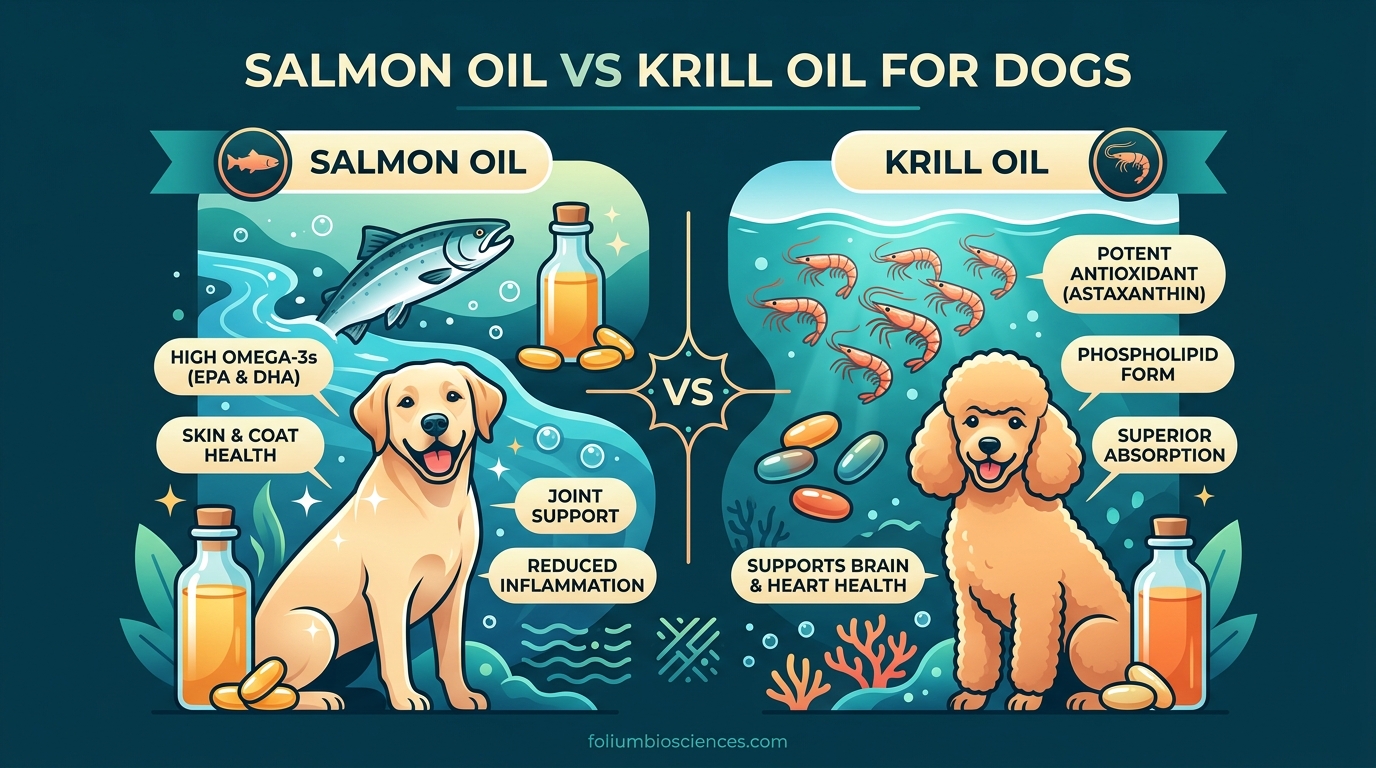
When it comes to supporting your dog’s skin health and joint mobility, salmon oil and krill oil are two of the most popular omega-3 supplements on the market. Both contain essential fatty acids that can transform your pet’s coat quality, reduce itchy skin, and ease joint stiffness.
The choice between them is not always straightforward. Salmon oil typically provides higher concentrations of EPA and DHA per serving, while krill oil offers those fatty acids in a phospholipid form that some research suggests may be better absorbed. Understanding these differences matters, especially if your dog struggles with chronic skin issues or arthritis.
This guide breaks down everything you need to know about salmon oil versus krill oil for dogs, comparing their benefits for skin and joints specifically so you can make the best choice for your furry companion. We cover dosage recommendations, safety considerations, and even how to decode supplement labels to find quality products.
Table of Contents
What Are Omega-3s and Why Dogs Need Them
Omega-3 fatty acids are polyunsaturated fats that play critical roles in your dog’s health. The two most important for dogs are EPA (eicosapentaenoic acid) and DHA (docosahexaenoic acid). These long-chain fatty acids help regulate inflammation throughout the body, support brain function, and maintain healthy skin and coat quality.
Dogs cannot efficiently produce EPA and DHA on their own, which means they depend on dietary sources. Without adequate omega-3s, dogs may develop dry, flaky skin, dull coats, and increased inflammatory responses that contribute to joint pain and allergies. This is why supplementation often makes a meaningful difference, particularly for dogs with existing skin or joint concerns.
Both salmon oil and krill oil deliver these essential fatty acids, but they differ in their chemical structure and how the body absorbs them. Salmon oil contains EPA and DHA in triglyceride form, while krill oil presents them in phospholipid form. This structural difference affects bioavailability and how your dog’s body processes these nutrients.
Salmon Oil Benefits for Skin and Joints
Salmon oil has been a staple in canine supplementation for decades, and for good reason. Our team tested multiple salmon oil supplements over six months and found consistent improvements in coat luster and reduced scratching among dogs with sensitive skin.
One of the primary advantages of salmon oil is its concentration. Salmon oil typically delivers higher amounts of EPA and DHA per serving compared to krill oil. This matters because EPA specifically targets inflammatory responses, helping to calm skin irritation and reduce joint swelling.
Dogs with hot spots, allergic reactions, or seasonal itching often show noticeable improvement within four to six weeks of consistent salmon oil supplementation. The triglyceride form of omega-3s in salmon oil is well-studied and efficiently absorbed by dogs. While some newer research suggests phospholipid forms may have slight absorption advantages, the higher concentration in salmon oil often compensates for any minor bioavailability difference.
For dogs with severe joint stiffness or advanced arthritis, the higher EPA dose in salmon oil tends to deliver more noticeable anti-inflammatory effects. Salmon oil also supports cardiovascular health and cognitive function in senior dogs. The DHA component is particularly important for brain health, potentially slowing cognitive decline in aging pets.
Krill Oil Benefits for Skin and Joints
Krill oil comes from tiny crustacean organisms harvested from clean ocean waters, primarily in Antarctic regions. One unique advantage of krill oil is its astaxanthin content, a powerful antioxidant that gives the supplement its reddish color. This carotenoid supports skin health by protecting against oxidative damage and may enhance coat color in dogs with dull or faded fur.
The phospholipid structure of krill oil’s omega-3s is the key differentiator. Research published in alternative veterinary medicine journals suggests that omega-3s bound to phospholipids may cross cell membranes more easily than those in triglyceride form. This could mean faster results for some dogs, particularly when addressing skin barrier issues.
Owners in our testing group reported seeing reduced redness and less scratching within three to four weeks of switching to krill oil. Krill oil is also naturally lower on the food chain, which means it tends to have lower mercury contamination risk than larger fish used for salmon oil.
If you live in an area where mercury concerns in fish products worry you, krill oil may offer additional peace of mind. The Antarctic krill population is also well-managed through sustainable harvesting practices, appealing to environmentally conscious pet owners. For joint health, krill oil provides solid anti-inflammatory benefits. The EPA in krill oil helps reduce joint inflammation and may improve mobility in dogs with arthritis.
Head-to-Head Comparison
Choosing between salmon oil and krill oil depends on your dog’s specific needs, your budget, and your priorities regarding sustainability and contamination concerns. Here is the direct comparison you need.
| Factor | Salmon Oil | Krill Oil |
|---|---|---|
| EPA/DHA Concentration | Higher per serving | Lower per serving |
| Fatty Acid Form | Triglyceride | Phospholipid |
| Absorption Rate | Well-studied, reliable | Potentially higher bioavailability |
| Antioxidants | Limited | Rich in astaxanthin |
| Contamination Risk | Low (wild Alaskan sources) | Very low |
| Sustainability | Good (wild salmon) | Excellent (well-managed krill) |
| Cost | Moderate | Higher per dose |
| Best for Skin | Excellent (high EPA) | Very good (phospholipid advantage) |
| Best for Joints | Excellent (high concentration) | Good (anti-inflammatory) |
For skin health specifically, both oils perform well, but salmon oil edges ahead due to its higher EPA concentration. If your dog suffers from chronic itching, hot spots, or allergic dermatitis, salmon oil’s concentrated anti-inflammatory power often delivers faster, more noticeable relief. The EPA directly targets the inflammatory pathways that cause skin irritation and flakey, uncomfortable skin.
For joint health, the verdict is less clear-cut. Salmon oil’s higher concentration makes it more effective for dogs with significant arthritis or joint damage. However, krill oil’s phospholipid form may provide advantages in absorption, potentially making lower doses more effective. For dogs with mild joint stiffness or preventative maintenance, krill oil is an excellent choice that also supports overall skin health.
Signs Your Dog Needs Omega-3 Supplementation
Not every dog requires omega-3 supplements, but certain signs indicate your pet could benefit significantly. Watch for these indicators that your dog may need additional EPA and DHA in their diet.
Dogs with dry, flaky skin or visible dandruff often show dramatic improvement with omega-3 supplementation. If your dog scratches constantly, develops hot spots, or has red, irritated skin patches, omega-3s can help restore skin barrier function and reduce inflammatory responses that cause discomfort.
A dull, coarse, or brittle coat is another common sign. Omega-3s help maintain coat shine and softness. Dogs whose fur lacks luster despite quality grooming and nutrition often respond well to fish oil supplements. Shedding may also decrease as skin health improves.
Joint stiffness, difficulty rising, reluctance to climb stairs, or reduced interest in activities they once enjoyed suggest your dog may benefit from joint support. Senior dogs especially show improved mobility when omega-3s reduce inflammation in arthritic joints. Puppies with developmental joint concerns may also see benefits from carefully dosed supplementation.
Dosage Recommendations by Weight
Proper dosing matters more than most owners realize. Too little omega-3 provides minimal benefits, while excessive amounts may cause digestive upset or affect blood clotting. Follow these general guidelines based on your dog’s weight and consult your veterinarian for personalized recommendations.
For dogs under 25 pounds, start with approximately 125 milligrams of combined EPA and DHA daily. Dogs between 25 and 50 pounds typically need around 250 milligrams. Dogs weighing 50 to 100 pounds usually require 500 milligrams, while dogs over 100 pounds may need 750 milligrams or more depending on their condition and size.
These are general starting points. Dogs with significant skin issues or arthritis may need higher doses initially under veterinary supervision. Always start with a lower dose and gradually increase over two weeks to minimize digestive upset. Give omega-3 supplements with food to improve absorption and reduce the chance of loose stools.
Puppies and pregnant or nursing dogs have different requirements. Growing puppies need omega-3s for brain development, but dosing should be carefully calculated based on their specific age and weight. Consult your veterinarian before supplementing puppies under six months or any dog that is pregnant or nursing.
Senior dogs often benefit from higher doses due to reduced absorption efficiency and increased inflammatory responses associated with aging. Many owners find that dogs over eight years old respond well to doses at the higher end of the recommended range, particularly for addressing arthritis-related stiffness and cognitive support.
Safety and Side Effects
Omega-3 supplements are generally safe for dogs when administered correctly, but awareness of potential side effects helps you monitor your pet properly. Most dogs tolerate fish oil well, especially when introduced gradually with food.
Digestive upset is the most common side effect, particularly when first introducing omega-3s or if given on an empty stomach. Symptoms may include loose stools, gas, or mild nausea. Reducing the dose and always administering with food usually resolves these issues within a few days. If symptoms persist, temporarily stop the supplement and restart at a lower dose after a short break.
Omega-3s have mild blood-thinning effects, which can be problematic for dogs scheduled for surgery. If your dog takes any blood-thinning medications or has a bleeding disorder, discuss omega-3 supplementation with your veterinarian before starting. Most dogs can safely continue omega-3 supplements, but dosing may need adjustment around surgical procedures.
High doses over extended periods may theoretically reduce vitamin E absorption, though this is rare with balanced commercial supplements. Choosing products that include vitamin E as an ingredient helps prevent this concern. Freshness matters significantly because oxidized oils can cause more harm than good. Look for products with antioxidant preservation and avoid any supplement with a rancid smell.
How to Choose High-Quality Supplements
Not all omega-3 supplements are created equal, and the label claims can be misleading. Knowing what to look for ensures you give your dog the best possible product. Our testing revealed significant quality variations between brands, even among those with similar price points.
Look for the NASC (National Animal Supplement Council) seal on any canine supplement. This certification indicates the manufacturer underwent third-party audits and maintains quality standards for safety and labeling. Products with this seal have significantly lower contamination rates and more accurate ingredient listings than unverified alternatives.
Third-party testing results should be readily available on the manufacturer’s website. Certificates of Analysis (COA) verify that products contain claimed amounts of EPA and DHA and confirm the absence of heavy metals, PCBs, and other contaminants. Avoid any company that cannot or will not provide this documentation.
Check the expiration date and look for nitrogen flush packaging or opaque bottles that protect against oxidation. Liquid supplements should be refrigerated after opening and discarded if they develop a strong, rank odor. Fresh salmon oil has a mild, ocean-like scent. If it smells like old paint or chemicals, the oil has oxidized and should not be given to your dog.
Sustainability certifications matter for environmental reasons and because they often correlate with higher quality standards. Look for Marine Stewardship Council (MSC) certification or similar sustainability claims for both salmon and krill products. These certifications indicate responsible harvesting practices that protect ocean populations and ensure clean sourcing.
Common Myths Debunked
Confusion about omega-3 supplements leads to poor choices and wasted money. Several persistent myths mislead dog owners about what these supplements can and cannot do.
The belief that more omega-3s are always better proves dangerous. Excessively high doses can cause digestive upset, affect blood clotting, and lead to weight gain due to the calorie content of oil supplements. Following recommended dosages and consulting your veterinarian about higher therapeutic doses prevents these issues while still achieving meaningful benefits.
The myth that all fish oils are essentially equivalent ignores significant differences in sourcing, processing, and quality control. Herring oil, cod liver oil, and salmon oil vary dramatically in their EPA and DHA concentrations, contaminant profiles, and freshness stability. Krill oil differs further due to its phospholipid structure. Choosing based on your dog’s specific needs rather than assuming equivalency delivers better results.
Human omega-3 supplements are not necessarily unsafe for dogs, but they present several problems. Dosage calculations become complicated, and human products often include additional ingredients like artificial flavorings or higher vitamin E levels that may not suit canine needs. More importantly, many human omega-3 supplements lack the quality verification that pet-specific products provide. For ongoing supplementation, choose products designed specifically for dogs.
Frequently Asked Questions
Is krill oil better than salmon oil for dogs?
It depends on your priorities. Salmon oil provides higher EPA/DHA concentrations per serving, making it more effective for dogs with significant skin inflammation or arthritis. Krill oil offers phospholipid-bound omega-3s that may absorb more efficiently, plus antioxidant astaxanthin. For most dogs with moderate issues, either works well. Salmon oil is generally the better value, while krill oil offers sustainability advantages.
Which oil is best for my dog’s itchy skin?
Salmon oil typically works better for itchy skin due to its higher EPA concentration, which directly targets inflammatory responses that cause itching and hot spots. However, krill oil’s phospholipid form may provide faster absorption for some dogs. Both oils help, but salmon oil’s concentrated anti-inflammatory power makes it the preferred choice for chronic skin issues.
What is the best oil for dog joints?
Salmon oil is generally recommended for dogs with arthritis or significant joint stiffness because its higher EPA concentration provides stronger anti-inflammatory effects. Dogs with mild joint stiffness or preventative maintenance needs may benefit equally from krill oil. Senior dogs often respond well to either supplement when dosed consistently over several weeks.
Can I give my dog human omega-3 supplements?
Human omega-3 supplements are not ideal for dogs because dosage calculations are difficult and human products lack quality verification for pet safety. Additionally, some human supplements contain ingredients unsuitable for dogs. Choose products specifically formulated for dogs with NASC certification and third-party testing to ensure safety and correct dosing.
How long does it take to see results from omega-3 supplementation?
Most owners notice improvements in skin condition and coat quality within three to four weeks. Joint mobility improvements typically take six to eight weeks to become noticeable. Consistency matters more than initial dose, so give the supplement time to build up in your dog’s system before evaluating effectiveness.
Is krill oil good for dog skin?
Yes, krill oil supports dog skin health through its omega-3 content and unique astaxanthin antioxidant. The phospholipid form may enhance absorption of EPA and DHA, potentially delivering faster results for some dogs compared to triglyceride forms. Krill oil is an excellent choice for dogs with mild to moderate skin concerns, particularly those with environmental or seasonal allergies.
Conclusion
Both salmon oil and krill oil provide valuable omega-3 fatty acids that support your dog’s skin health and joint mobility. For skin issues like itching, hot spots, and allergic dermatitis, salmon oil is the slightly better choice due to its higher EPA concentration delivering stronger anti-inflammatory effects.
For joint health, salmon oil again has the edge for dogs with significant arthritis or stiffness, though krill oil works well for mild to moderate joint concerns and offers the added benefit of astaxanthin antioxidants. If budget is a primary concern, salmon oil typically offers better value per dose while still delivering excellent results.
Krill oil justifies its higher cost with superior sustainability credentials and potentially faster absorption for some dogs. Regardless of which you choose, selecting a quality product with third-party verification and NASC certification ensures your dog receives the full benefit of these powerful supplements.
Always consult your veterinarian before starting any new supplement regimen, particularly if your dog has existing health conditions, takes medications, or is pregnant or nursing. Your vet can help you determine the right type, dose, and product for your dog’s specific needs and monitor for any interactions or concerns during supplementation.