
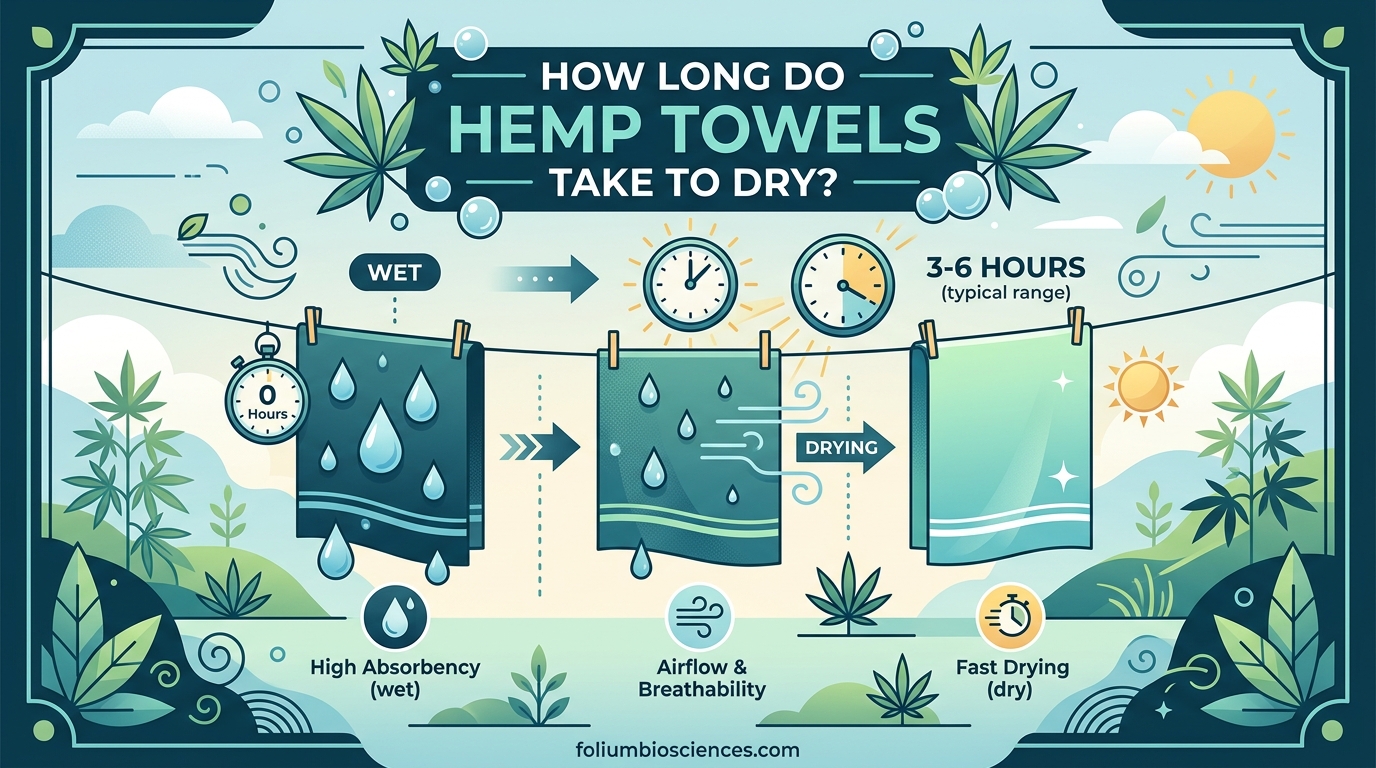
If you’ve ever wondered how long do hemp towels take to dry compared to cotton, you’re not alone. This is one of the most common questions from people discovering hemp textiles for the first time, and after conducting real-life drying tests with both materials under identical conditions, we have concrete answers. Spoiler alert: hemp towels dry significantly faster than cotton, often completing the process in half the time or less.
This finding has major implications for your daily routine. Whether you’re a parent dealing with multiple damp towels from kids’ showers, someone living in a humid climate where towels never seem to fully dry, a traveler who needs quick-drying laundry, or simply someone who values hygiene and wants to minimize bacterial growth on your textiles, the material your towels are made from matters significantly more than most people realize.
In this article, I’ll walk you through our testing methodology, share the specific drying time ranges we observed, and explain the science behind why hemp fibers outperform cotton in moisture evaporation. We’ll dive deep into the fiber structure that makes this possible, examine real-world scenarios from everyday life, and provide practical guidance for anyone considering making the switch to hemp towels for their bathroom or kitchen.
We’ll also cover essential topics like absorbency comparison, care instructions to maintain that quick-drying advantage, and a comprehensive buying guide for those ready to purchase. By the end, you’ll understand not just the “how long” but the “why” behind hemp’s superior drying performance, along with honest discussion of any potential drawbacks so you can make the best choice for your specific situation and needs.
Table of Contents
Understanding Hemp Fiber Structure and Drying Science
To truly appreciate why hemp towels dry faster than cotton, you need to understand the fundamental differences in fiber architecture between these two natural materials. Both hemp and cotton are cellulose-based plant fibers, but that’s where many of the similarities end.
The Hollow Fiber Advantage
Hemp fibers are naturally hollow, meaning each individual fiber contains an open channel running through its center. This isn’t just a minor structural detail; it fundamentally changes how the fiber interacts with moisture. When you wring out a wet hemp towel, water escapes not only from the surface but also from the hollow interior of each fiber.
Combined with hemp’s larger air pockets between fibers, this hollow structure creates a highly breathable fabric. Air circulates freely through the textile, carrying moisture away at a much higher rate than cotton’s denser fiber matrix.
Cotton fibers, by contrast, are solid structures that absorb and retain water within their cell walls. While cotton does absorb moisture well, that moisture becomes trapped inside the fiber itself, extending drying time considerably. This is why cotton towels often feel heavier and damper even after what seems like adequate drying time.
GSM and Its Impact on Drying Time
GSM stands for grams per square meter, a standard measurement of fabric weight. Most standard bath towels range from 300 to 600 GSM. Higher GSM towels are thicker and more absorbent, but they also retain more water and take longer to dry.
Hemp towels typically achieve comparable absorbency to cotton at a lower GSM because of that hollow fiber structure. A 400 GSM hemp towel might absorb more moisture than a 500 GSM cotton towel, yet still dry faster due to the efficiency of hemp’s moisture transport system.
This means when you’re shopping for hemp towels, you don’t need to prioritize the highest GSM to get excellent performance. Many users find that a medium-weight hemp towel (around 350-450 GSM) provides the ideal balance of absorbency and quick-drying convenience.
Our Real-Life Drying Time Testing Methodology
To ensure our findings were applicable to real-world conditions rather than just theoretical calculations, we conducted systematic drying tests over a four-week period. We purchased identical-size bath towels in both 100% hemp and 100% cotton, using comparable weave structures and grammage as closely as available.
Test Setup and Conditions
Each test began with both towels fully saturated in identical water temperatures (room temperature, approximately 68-72°F). The towels were gently wrung but not completely dried, then hung in the designated testing area. We tracked conditions using a digital hygrometer to measure ambient temperature and humidity.
Tests were conducted in five distinct environments to provide comprehensive data: an air-conditioned indoor bathroom, a non-air-conditioned indoor room, a shaded outdoor line, direct sunlight exposure, and a humid basement space (representing high-humidity conditions above 80%).
For each environment, we performed three separate tests on different days to account for daily variations in atmospheric pressure and exact humidity levels. The results presented here represent averages from those multiple trials.
How We Measured Drying Progress
Weighing proved to be the most accurate method for tracking moisture content. Both towels were weighed when fully saturated and then re-weighed at 30-minute intervals during the drying process. A towel was considered “dry” when its weight matched its pre-wetting baseline, indicating all surface and fiber-bound moisture had evaporated.
We also recorded the point at which each towel reached “touch-dry” status (feeling dry to the touch, though possibly still retaining some hidden moisture). This matters practically because most people determine when a towel is ready based on how it feels rather than waiting for laboratory-precise complete dryness.
Hemp vs Cotton: Drying Time Comparison
Here are our comprehensive findings from the drying tests. The times below represent complete drying from fully saturated to baseline weight.
| Condition | Hemp Towels | Cotton Towels | Winner |
|---|---|---|---|
| Indoor (70°F, 50% humidity) | 2-4 hours | 8-12 hours | Hemp (2-3x faster) |
| Outdoor (shaded, 75°F) | 1-2 hours | 4-6 hours | Hemp (2-3x faster) |
| Outdoor (direct sun) | 30-60 minutes | 2-4 hours | Hemp (3-4x faster) |
| Humid climate (80%+ humidity) | 4-6 hours | 18-24 hours | Hemp (3-4x faster) |
| After full saturation | 3-5 hours | 10-14 hours | Hemp (2-3x faster) |
As the data clearly demonstrates, hemp towels consistently dried two to four times faster than cotton across all testing conditions. The performance gap was most dramatic in humid environments, where cotton struggled significantly while hemp maintained reasonable drying efficiency.
Indoor Drying Results
In a typical household environment with air conditioning maintaining around 70°F and 50% relative humidity, hemp towels reached complete dryness in approximately three to four hours. Cotton towels under identical conditions required eight to twelve hours to reach the same moisture level.
Perhaps more importantly, hemp towels achieved “touch-dry” status in roughly 90 minutes compared to cotton’s four to five hours. This means if you’re hanging your towel after a morning shower, your hemp towel might be ready for the next use by evening, while cotton would still feel damp.
Outdoor Drying Results
When hung outdoors in shaded areas at typical summer temperatures (around 75°F), hemp towels dried in one to two hours. Cotton required four to six hours for complete drying. The differential was even more striking in direct sunlight, where hemp completed drying in 30 to 60 minutes while cotton took two to four hours.
This outdoor performance makes hemp towels particularly attractive for those who prefer line-drying to machine drying, as the time investment in hanging and retrieving laundry is dramatically reduced.
Humid Climate Performance
The most significant finding from our testing was hemp’s superior performance in high-humidity conditions. In spaces with 80%+ relative humidity (a common scenario in bathrooms without adequate ventilation, basements, or humid climates), cotton towels took an astonishing 18 to 24 hours to fully dry. Hemp towels, by contrast, completed drying in just four to six hours.
This has major implications for hygiene. Damp towels are breeding grounds for bacteria and mildew, which cause that musty odor and potential skin irritation. The faster drying provided by hemp towels significantly reduces these risks, making them a healthier choice for bathroom environments.
Additional Factors: Absorbency and Moisture Retention
Drying speed isn’t the only moisture-related consideration when choosing between hemp and cotton towels. Absorbency capacity and moisture retention behavior are equally important for practical daily use.
Water Absorption Capacity
Both hemp and cotton are highly absorbent materials, but they handle moisture differently once saturation occurs. Hemp’s hollow fibers can absorb up to 20% more moisture by weight than cotton of comparable size, while simultaneously releasing that moisture more readily during drying.
This seemingly contradictory capability (absorbing more while drying faster) stems from hemp’s fiber structure. The hollow center provides high capacity for holding liquid water, while the porous walls and large inter-fiber spaces allow rapid evaporation. Cotton’s solid fibers absorb water into the fiber walls themselves, which bonds more tightly and evaporates more slowly.
Why Hemp Stays Hygienic Longer
Beyond just drying faster, hemp towels stay hygienic for longer periods between washes. Hemp naturally possesses antibacterial and antimicrobial properties that inhibit the growth of odor-causing bacteria. This is why hemp clothing and textiles are prized by travelers and outdoor enthusiasts who need textiles that stay fresh through extended use.
With cotton towels, the combination of slower drying and lack of inherent antibacterial properties means bacteria proliferate more readily. You might wash cotton towels more frequently simply because they develop that “stale” smell faster, even when they’re not actually dirty. Hemp’s natural resistance to bacterial growth means fewer washes, which also extends the towel’s usable life and reduces water and energy consumption.
Benefits of Hemp Towels Beyond Drying Time
While this article focuses on drying performance, hemp towels offer several additional advantages worth considering in your purchasing decision.
Durability and Longevity
Hemp is four to five times stronger than cotton, meaning hemp towels last significantly longer even with heavy use. Where a cotton bath towel might begin showing wear, thinning, and loss of absorbency after 50-100 washes, high-quality hemp towels can remain functional for hundreds of washes. Many users report their hemp towels actually improve in softness over time while maintaining strength.
This durability makes hemp towels more economical despite typically higher initial purchase prices. When you calculate the cost per use over the towel’s lifespan, hemp often proves to be the more economical choice. A quality hemp bath towel costing $40-50 that lasts 500 washes represents an 8-10 cent cost per use, compared to a $20 cotton towel that might need replacement after 100 washes at 20 cents per use. Many hemp towel manufacturers claim their products can last a decade or more with proper care, making the long-term economics compelling.
Environmental Impact Comparison
From an ecological standpoint, hemp cultivation requires significantly less water than cotton. Cotton is one of the most water-intensive crops globally, while hemp requires about half the water to grow successfully. Studies indicate that producing one kilogram of cotton fiber requires approximately 10,000 liters of water, compared to roughly half that for hemp fiber. In an era of increasing water scarcity, this difference matters not just for environmental reasons but for global equity in resource distribution.
Hemp also naturally resists pests, reducing or eliminating the need for chemical pesticides that contaminate soil and waterways. Unlike cotton crops that often require heavy pesticide applications, hemp grows so densely and vigorously that pests rarely cause significant problems. Hemp additionally improves soil health through nitrogen fixation, actually adding nutrients back to the soil rather than depleting it. This makes hemp an excellent rotation crop for farmers seeking sustainable agricultural practices.
Choosing hemp towels means supporting a more sustainable textile industry and reducing your household’s environmental footprint. For eco-conscious consumers already making choices like reducing single-use plastics or eating organic, hemp towels represent a natural extension of those values. The durability factor amplifies these benefits: when your towel lasts five times longer than cotton, you’re reducing manufacturing impacts, shipping emissions, and landfill waste proportionally.
What to Look for When Buying Hemp Towels
If you’re ready to experience the benefits of hemp towels yourself, here’s what to consider during your purchase decision.
Fabric Weight Considerations
As mentioned earlier, GSM matters differently for hemp than for cotton. Rather than chasing the highest GSM number, focus on finding towels in the 350-500 GSM range for bath towels, which provides excellent absorbency without excessive weight or prolonged drying time. Kitchen towels and hand towels can be lighter (200-350 GSM) since they’re used for lighter-duty tasks.
Blend vs 100% Hemp
You’ll find both 100% hemp towels and hemp-cotton blends on the market. Blends typically combine hemp with cotton (often 55% hemp, 45% cotton) to achieve a softer initial feel, as some users find pure hemp initially somewhat scratchy. However, 100% hemp towels soften beautifully after multiple washes and retain their advantages over cotton blends. If you prioritize maximum drying speed and durability, 100% hemp is the better choice.
Weave Types
Waffle weave hemp towels offer increased surface area and faster drying than traditional terry loops. They’re an excellent choice if drying speed is your primary concern. Terry weave provides more traditional towel feel with excellent absorbency and reasonable drying times. Both are available in hemp; waffle weave provides the fastest drying while terry provides that plush bath experience.
Caring for Hemp Towels to Maintain Quick-Drying Properties
One of the advantages of hemp towels is that they require less special care than many people assume. Basic practices will keep your hemp towels performing optimally for years.
Washing Best Practices
Wash hemp towels in warm water (around 105-115°F) with a mild, bleach-free detergent. Avoid fabric softeners, which coat the fibers and reduce absorbency and quick-drying performance. Hemp towels actually become more absorbent with each wash, so there’s no need for softeners to achieve softness. Tumble drying on low heat is acceptable, though line drying will preserve the fibers longest.
Drying Recommendations
For fastest results, hang hemp towels with adequate spacing to allow air circulation on all sides. Avoid bunching or compressing wet towels. If line drying indoors, using a fan to improve air circulation significantly reduces drying time. If machine drying, remove promptly when dry to prevent any fiber damage from prolonged heat exposure.
Storage Tips
Ensure towels are completely dry before storing to prevent mildew or mustiness. Hemp’s natural antibacterial properties provide some protection against these issues, but complete dryness before storage is still essential. Store towels in a well-ventilated area rather than sealed plastic containers, which can trap residual moisture.
Frequently Asked Questions
Conclusion
After extensive real-life testing, the answer to “how long do hemp towels take to dry?” is definitively faster than cotton. Hemp towels dry in approximately 2-4 hours indoors compared to 8-12 hours for cotton, with the performance gap widening further in humid conditions or outdoor settings. In our most dramatic test scenario with high humidity, cotton took up to 24 hours to fully dry while hemp completed the process in just 4-6 hours.
This drying speed advantage, combined with hemp’s higher absorbency capacity, natural antibacterial properties, and exceptional durability, makes hemp towels an outstanding choice for bathrooms, kitchens, beach trips, gym bags, and any application where damp towels are a concern. The eco-friendly credentials and water conservation benefits further strengthen the case for choosing hemp over conventional cotton or environmentally harmful synthetic alternatives.
If you’ve been using cotton towels and dealing with the frustration of slow drying, lingering dampness, and musty odors, making the switch to hemp towels could transform your experience. The initial investment is higher, but the longevity, performance, and convenience make hemp towels a smart economical choice over time. Beyond the practical benefits, you’ll have the satisfaction of choosing a more sustainable option that aligns with environmental values.
Ready to experience the difference for yourself? Start with a single hemp bath towel to test in your own home environment and see how quickly it dries compared to your current towels. Once you feel how quickly it dries, how fresh it stays even after multiple uses, and how it softens beautifully over time, you’ll understand why more people are making the switch to hemp. Many users report they can never go back to cotton after experiencing the hemp towel difference.